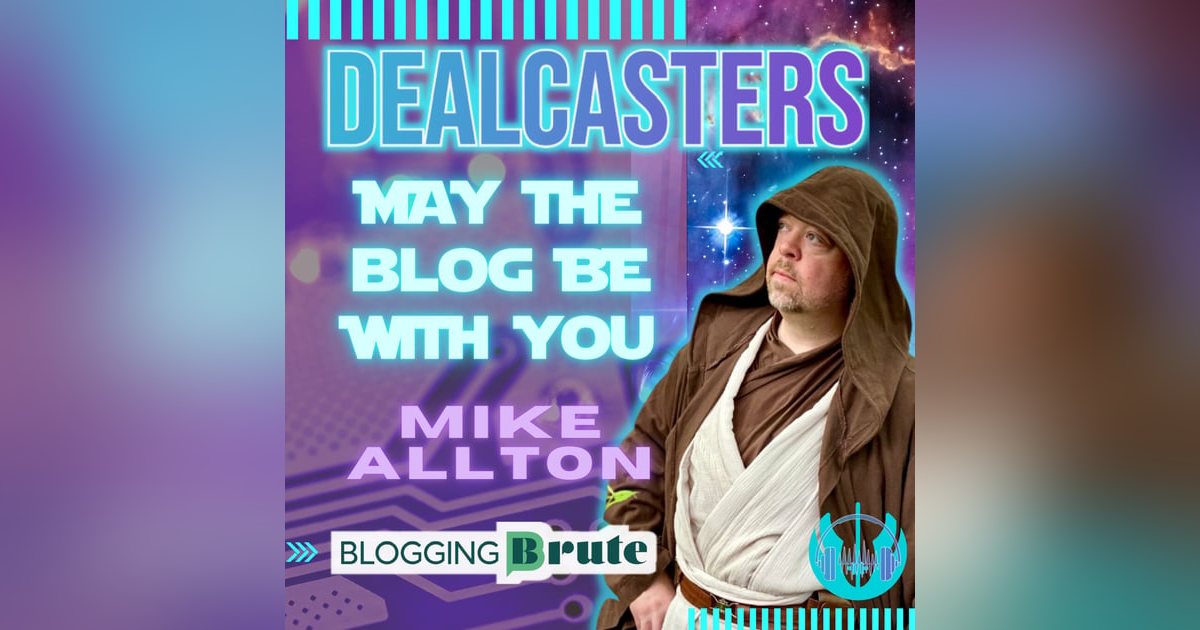
Mike Allton - May The Blog Be With You


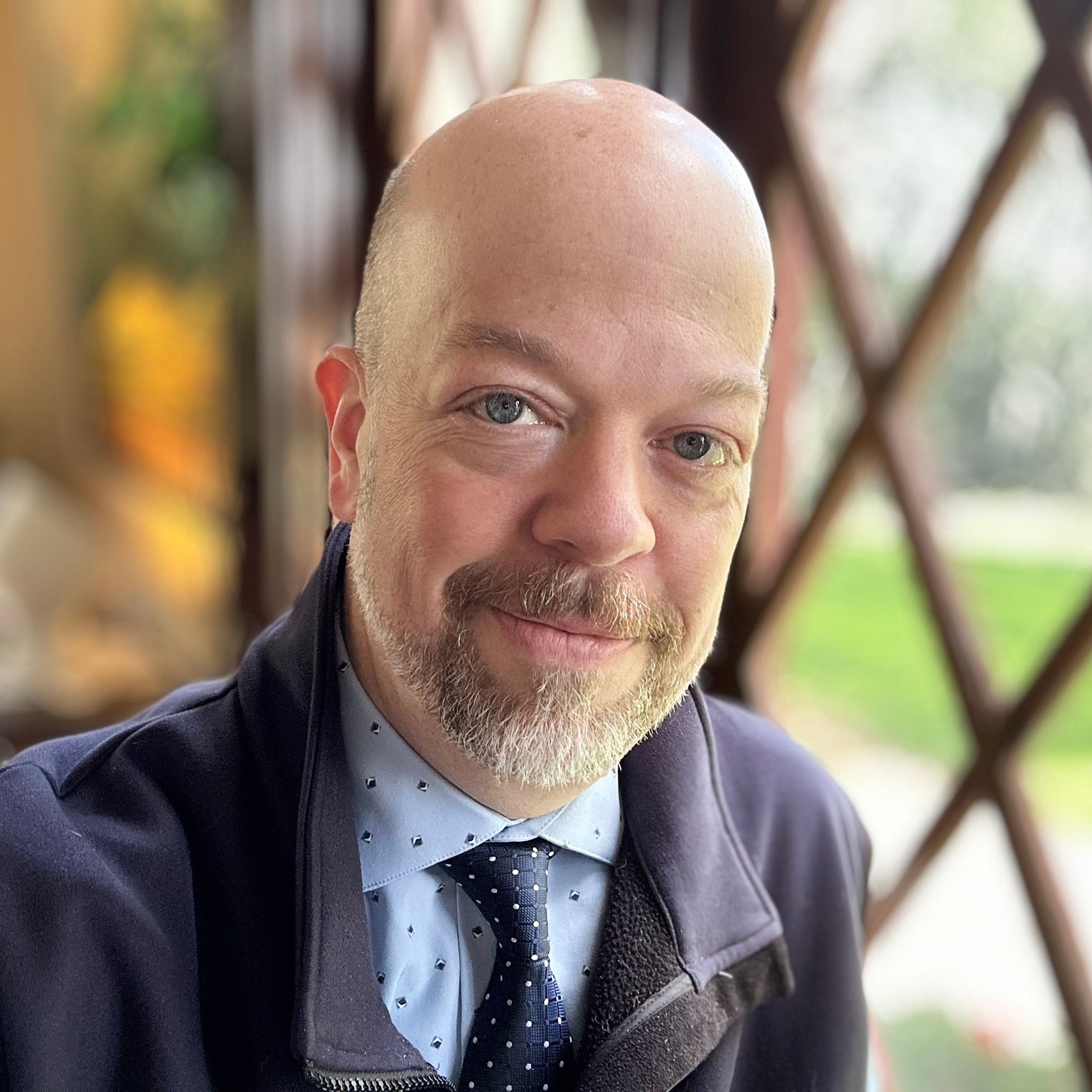
Mike is an award-winning blogger, speaker and author at The Social Media Hat & Blogging Brute, co-founder of 360 Marketing Squad and Brand Evangelist at Agorapulse. He is also the co-author of the book, 'Ultimate Guide to Social Media Marketing'.
👤Connect With Mike:
✅ https://www.thesocialmediahat.com/
✅ https://www.facebook.com/allton
✅ https://twitter.com/Mike_Allton
✅ https://www.linkedin.com/in/mikeallton/
✅ https://www.instagram.com/bloggingbrute
✅ http://socialmediabook.shop/
✅ https://www.thesocialmediahat.com/feed/
This Full video episode available for free at: http://allton.dealcasters.live
All of the products discussed in this podcast can be found here: http://dealcasters.shop
All video episodes available for free at: https://dealcasters.live
👤Connect with Dealcasters:
🎧Grab all these great episodes as an audio podcast at: https://link.chtbl.com/Dealcasters
🎥Catch all the full episodes on replay or live at: https://dealcasters.live
Follow Dealcasters:
Dealcasters Mike Allton Logic Bounce Podcast Framework
===
Jim Fuhs: [00:00:00] Not only is he, uh, have a company, the social media hat, he's the blogging brute, but he's also now the head of strategic partnerships at Agora Pulse, which is one of the best social scheduling tools, and they're always improving it, making it easy. For those of you that are social media managers to do your job, he's recently co-authored a book with several amazing creators, Jen Herman, Stephanie Lou, Amanda Robinson, and uh, Eric Uto called The Ultimate Guide to Social Media.
So Chris, I think it's about time that we bring on the Jedi Master of blogging. Mike Alton,
Mike Allton: welcome Mike. Thanks guys. I appreciate that introduction and I wanna say your intro for the entire show. Was amazing. I was loving that. I mean, we, we didn't talk about, I, I'm a video producer, right? I've done shows for Agora Pulse and none of the intros that we ever produced were that good.
And it [00:01:00] was funny you even had, uh, Jennifer, my old social media manager in that intro talking about how such a great host you guys are, so kudos to you. Thank you. Yeah. That
Chris Stone: we're always gonna put that at the very end of that video because it's, it, you know, it just can't help but make a smile when Jen Watson says, um, you know, I love, you're the best guys.
You're the best. You know, it's just like, ha. You know, it's just that reassuring thing before we go live. But yeah, she was our first guest on, on deal casters. Um, so Awesome. Yeah. Pretty, pretty awesome. So, yeah. Thanks. Thanks for joining us, Mike. Yeah.
Jim Fuhs: So Mike, uh, you know, you've been in this space for, for quite a while.
I mean, uh, you've been doing blogs for, for, for years. Um, and I think sometimes people think like, well, why should I write a blog and. You know, there's a lot of reasons why they should, uh, tell. Tell us a little bit about what got you started in blogging and how you've seen that, uh, progress [00:02:00] into, to where you've gotten to where you are today.
Mike Allton: Well, you're right that, that we first met on Google Plus virtually, and then we got to meet in person over dinner at Social Media Marketing World a number of years later, a number of years ago now from this perspective. But yeah, I started blogging when I own an internet marketing business over 10 years ago, and I learned the hard way that I wasn't writing about the right things at the right time for that particular business.
And so I was trying to sell websites and that sort of thing, but I was writing about social media and in that process I discovered that I really loved to write. It wasn't something that I knew about myself. I wrote a lot in college, but I never enjoyed it. And I discovered that, wow. I. I'm actually kind of good at teaching people how to do things, particularly through the written word.
So I started the social media hat, it was almost exactly 10 years ago, and started creating blog content about social media, about email marketing, about SEO, particularly about Google Plus at the time, [00:03:00] which was really huge, particularly in the marketing circle. Yes, it was a social network and a lot of us had a lot of fun and some success on that particular network, and it kind of parlayed itself into an entire career that I did not expect.
I didn't go to school for this, I didn't plan for this, but I used Google Plus primarily as a platform to network and connect with other people, and that led to becoming a chief marketing officer that led to writing books, which, you know, coing this one, as you said, and eventually led to me joining Agorapulse and being in charge of their relationships with influencers and other brands.
Jim Fuhs: Yeah, that is amazing. And, and it, isn't it funny how, you know, I would say even, I think Chris and I both, right? We both had. Previous careers. I never thought that I would be alive on Amazon, let alone with YouTube, but at all right. I didn't know this was even gonna be a thing. And so I think it's just amazing how so many opportunities start if you're open to just understanding how things will change.
And so, [00:04:00] I mean, did you ever imagine that you would be, uh, I mean, and I know what you love about, part of your job with Agora Pulse is you get to travel to France.
Mike Allton: I do, I do. In fact, I've been looking back a lot this week because this week is the three year anniversary of um, an an annual retreat that we did, uh, in France.
Gore Pulse is based in Paris. We have offices, uh, right, uh, just a couple blocks, uh, from the Louvre in Paris, which is amazing. And, uh, so I started with Gore Pulse in 2018. Went in April, 2018, uh, to visit with, with Emrich, the CEO. Uh, stayed with him for a week or so and worked side by side with him to get acclimated.
And then a couple months later we had our annual retreat, which is just mind blowing. They rent out a chateau in the French countryside. They bring the entire company. We're a global company, I mean, the whole company there. And we spend a week at this Chateau team building, workshopping, playing, working, you know, the works.
[00:05:00] And so Facebook has been kind enough to show me a lot of those memories this week, which is pretty amazing. And as you said, I would never have dreamed that I would be in a position like this working for an international company, traveling to France and other places. You know, getting to go to San Diego, which is one of my favorite cities in the us.
And I should point out this is all because I blogged. This is all because I blogged on a regular basis and developed a reputation, not as a blogger, but as an educator, as a relationship builder, as a marketer. All from written content. Now you could do it from video. You guys are doing it right now with video, which is fantastic.
I prefer to write, that's my preferred medium. But it's all possible if you're out there creating content on a regular basis.
Chris Stone: I think that's amazing. And I, and you know, and so many people, they're, they're gonna talk about the news, shiny, flashy object, whether that's live streaming or, or Amazon Live, or, or clubhouse or Twitter spaces or, or all of these things that are, you know, lighting up and the other things that are, that are coming.[00:06:00]
And it, it almost, it, I don't wanna say it's a forgotten art, right? But it, it's like one of the things that people aren't mentioning until after they've mentioned a few others, yet you've always stayed really consistent with that. And I know that there are a lot of people that will throw out names like Seth Godin and they'll throw out, you know, names like these and it.
It's like when you say blog, now people are just sort of like, you know, they think that that was so, you know, whatever year it was in the past, and they're forgetting about the effectiveness of writing a blog, whether you have a, an, an immense passion to do it. Like obviously you do, um, or not. Like, I think, you know, a lot of, especially entrepreneurs, they're just not even, you know, leaning back into that.
And I don't wanna say back like it's, you know, let's do throwback Thursday and talk about blogging. I mean it, so how would you, how would you explain, um, how would you explain that to someone who's, [00:07:00] who's, you know, new in the entrepreneurial world and they're, they're, you know, they're experimenting with live streaming and podcasting and all of these things, and they're putting a blog on the back burner.
Mike Allton: I would first say, I totally understand because I. You, you've, you've said it very well, there are a lot of new mediums available today that weren't available 10, 20 years ago. Social audio, what is that? That was not a thing. Certainly live video is a relatively new thing. I mean, many people forget that Google Plus was one of the original platforms for live streaming video.
We used to do hangouts on air up to 10 people at a time, and that was like nothing, right? You didn't need third party software or tools or anything like that. That was a thing back then. And yet people are like, why should I still blog? Right? And that's because if you open up Google today still, and you type in something that you want to buy or something that you want to solve, something that you want to know how to do, most of those results, they're text.
You're not [00:08:00] seeing podcasts. Mm-hmm. In the search results. You're not seeing tiktoks, right? You're not seeing clubhouse rooms in the Google search results. You're seeing articles, you're seeing blog posts, you're seeing FAQs, you're seeing news releases, text information. Yeah, there's some YouTube search results at the top and bottom.
Those have gotta be really good, but it's mostly text, so I love it when people are passionate about live video. I love it when people are passionate about podcasting because they're creating great content, and all that content can be easily changed into written content. Take the transcript, clean it up, introduce it, make it a wow factor, and then put it on your blog.
That's all you have to do. It's not hard. You don't have to recreate the wheel, but if you're doing the video or the audio first, turn it into written content so that it will rank for Google.
Chris Stone: Yeah. That's great. And you mentioned TikTok. That's right. Some, you know, some people take so long to create these stories that last 24 hours [00:09:00] on a platform.
It's like you could take, you know, maybe the same amount of time, like you're saying, cleaning up your transcript from your, from a live stream and from a podcast. And you get so much more longevity and evergreen effectiveness when you can be found and, you know, hopefully make some money eventually while you sleep.
And, um, you know, when you, when you post something and you know it's got, you know, a shelf life like this, why, why are you taking so much time where you could, you could focus more on, on writing and get that effective, uh, search engine, uh, optimization like you're talking about. That's, uh, that's great.
Mike Allton: Absolutely.
Jim Fuhs: Yeah. I mean, Mike, um, you, you've, you've seen a lot of this stuff going on. I mean, I. Do you think? And, and, and actually one thing that Mike taught me, Chris, that I, that I think about all the time is, I think one of the fears of writing is you feel like, oh, I've gotta make it into this SEO masterpiece, and I gotta [00:10:00] put keywords in all this.
And Mike's advice, you're gonna be shocked at how simple it is, right? Like, you speak. And I was like, wow. I never thought, you know, 'cause I'm thinking, oh, I gotta, I've gotta think about my grammar and all this. But I, I, I just, I've always loved that, that advice, Mike. And I think even whether when I'm, even when I'm giving a talk or whatever, I always think, right, just be yourself.
Mike Allton: Yeah, absolutely. I would say for most of you watching right now, you're probably in business of some kind. And there are probably times at your date, throughout your week and month where you're on a phone call. A client or you're on a video call with a client or a prospect and you're teaching them something if you, whether you, you know, think you are or not, you, you are, you're answering their questions and you're teaching them about your business, about your industry, about the way that you go about doing things.
And if you could simply bottle up what you're [00:11:00] saying and pour into a blog post, that's probably gonna be already like nine tenths of the way towards being totally optimized for search, because it's going to resonate with your audience. And that's one of the most important things. If you can resonate with your audience, with your text, or your videos or your podcasts, and get them to listen and share, that's going to increase your traffic and your time on site and those kinds of metrics that people are going to get to it even better because Google sees that and ranks it even higher.
Yes, it's great if you can, you know, do some homework in, in research the keywords that your target audience is interested in and making sure that you're using them in your title. And some of the headings, there's some, there's some basic SEO tips and tricks and rules that are good to know, but for the most part, yeah, just share what's on your mind.
Share what you would say to any customer or prospect over the phone, over an email, on a [00:12:00] social media post. These are all sources for content, for inspiration. I, I teach people often to use Evernote to capture those ideas. And you can use any note taking app that you want to use. I use Evernote and if I am responding to an email and I'm writing more in two or three paragraphs, teaching somebody something, right, how to use a gore pulse, for instance, or how to use a content pyramid to to rank content or how to use Twitter, blue, copy and paste it, put it into Evernote, turn that into a blog post.
Because if you've got three or four paragraphs already, you're, you're basically there, right? You've probably already written five or 600 words. Add some some context, add some next steps, add a call to action at the end. Now you've got great blog content and you're answering people's questions, and that's always gonna resonate with the audience.
Chris Stone: I love that. It's, it's almost like forgotten content. I, you, I, and as you're, as you're talking, I'm thinking to myself, geez, I'd love to be able to go back into my scent [00:13:00] files and, and just, you know, search for all of these things. And I'm like, well, I, where do I even start? Right? And so I, if you start right now and say, write it down, you know, like, like pull it aside, pull it aside for later.
And then you could always, like you said, go back and, because, you know, it's like drinking water outta a fire hose throughout the day. Right? You, you know, three hours later you're like, God, what was that idea? Oh, you know. So, you know, lots of times you're hammering out stuff and you don't realize later that you can take that, repurpose that, uh, in the, in the written word like you're talking about.
It's not, it's not as daunting. You, you don't make it sound as daunting as, as, as it, it, at least for me, in terms of, you know, writing a blog and starting a blog and like Jim started bef, you know, talking about before we got on today about implementing what, what he wants to do for, for his blog. You make it sound so easy, Mike, I guess that's part of, part of, you know, part of your gig right?
Is to, is to make that sound easy.
Jim Fuhs: That's [00:14:00] my job. And he does, he he, he really does. He, he's got a, a great, in fact, Mike, are you getting ready to offer or currently offering your course again, I know periodically you do have a, a course you do open up for folks that wanna learn how to blog.
Mike Allton: Yeah. Well, it's interesting because a year ago before the pandemic.
I launched the blogging bootcamp and it was going to be, it was a 10 week bootcamp, right? Where every single week I was going live with a brand new lesson in a private Facebook community. And everyone who was in the community obviously, you know, would watch the lesson, watch the video, learn how to do something, and then they had a week to go do whatever it is that we talked about that week, whether it was keyword research or promoting a blog post or writing.
And then come back the next week, new lesson review how you did right? And, and, and go on from there. And then the pandemic hit. And a lot of people were asking me, my God, I just lost my job. Or uh, you know, things have [00:15:00] changed quite dramatically and I kind of need this now. I don't wanna wait 10 weeks.
'cause I did it was gonna do it every quarter, right? So April 1st was gonna be the first week of the, of the new bootcamp, and they didn't wanna wait until June to have gotten through the entire bootcamp. Be ready to really launch their blog and really start launch their content marketing efforts, uh, to promote their business.
I said, okay, what if I let you into the Facebook group now and all the, all the videos are there still from that first quarter? My original intent was to either just take 'em all down and, and redo 'em or launch a new group. I hadn't really gotten to that part of the planning yet, but I said, okay, I'll just let you all in right now.
I'll let you fly access, OnDemand access right now and you can go through it all on your own time. And so I ran it that way for a few quarters, uh, through about basically all of last year. And a lot of people were, that helped a lot of people, right? Because they were able to just go through it as fast as they [00:16:00] wanted to.
I mean, you could go through all 10 modules in a day if you really wanted to and knock 'em out and get started in that week. And I remember being, you know, in that same kind of a position 10, 12 years ago where I didn't have a full-time job. I was trying to start a new business. I didn't have. Clients, many, if any, clients.
So I didn't have a lot of work to do. I had all kinds of time to write. Now I was trying to figure it out on my own back then, so I didn't know necessarily what to write about. Whereas my students today, now they have a plan. They have a, a complete roadmap in front of them of here's what to write about, here's how to succeed, here's how to actually take that content and put it and promote it and guide the readers into an actual business result.
So then late last year, I decided, okay, um, this is working okay. But those videos, they were originally live [00:17:00] streamed into a private Facebook group for the people who were in that group. I was literally talking to folks like Mark Boker, who runs a comic book shop in Li Ohio, who's no longer a student. I mean, he's still there, right?
But he's not one of the people who's watching the videos today. So. I figured I need to re redo this. And I wanted to do it in a way that if, if these are gonna be on demand, first of all, they need to be evergreen. And second of all, I want to be able to monitor who's watching them and how they're doing.
Because when I did it live, I could see if Mark or Jim or anybody was in the audience, right? I could see if they were dropping comments and I could see if they weren't right. So I knew who during that first bootcamp was participating and I could check in on them. Beyond that, now, I don't know. I have, I have no idea.
Last, you know, the, the three quarters of last year, who watched those videos? Of those students, you know, who, who enrolled and they joined the group. But I, I can't see 'cause Facebook doesn't tell you who watches what videos. So I migrated everything into [00:18:00] Thinkific, shot all new videos, updated 'em, shot evergreen content, put 'em into Thinkific, added, I don't know, a dozen or so other I.
Videos and modules. Some of them were videos that I'd done, uh, like talks and, and workshops and things. Other others of them were, uh, brand new shorter videos that I just filmed on. You know, how to build a podcast, uh, out of, out of your blog, for instance, put it all into Thinkific and, and just re-released it, uh, just last month, in fact.
Uh, so it's still up, it's still available as a blogging bootcamp. It's still based around this idea that you're gonna go through 10 core facets, right, of blogging and content marketing. And I should point out, this is good whether you're looking to blog as a actual full-time thing, right? Where you wanna start, like a travel blog or a food blog or something like that.
But it's just as applicable for the business that they just wanna use content marketing to promote and build their business. Whatever that business is, right? Whatever, it doesn't really [00:19:00] matter. So the principles are the same. You're creating content to drive organic search. Convert that search traffic into leads and sales.
Chris Stone: You, you mentioned a couple of times, um, the word evergreen and, um, that's, that's such a, that, that's such a, uh, not a, not a dream, but it's like, it, it's something that's such a massive goal for any content creator, right? Because if, if right now, Jim and I wanted to say, say, here's how you, here are the steps that you go through to get live on Amazon tomorrow, they could change.
In fact, you know, we've already got videos that were up last week. Yeah. The goalposts change all the time. And I think this is a great transition maybe into talking about the book, right? Because you, you're talking about, uh, the ultimate guide to social media marketing and social media is changing every second.
I mean, there's just new stuff that's happening. Oh, look, there's this, and look, there's this, and everybody's now doing, you know, trying to [00:20:00] copy this and, and there's the bunch of things coming. And, you know, and we talked to Mitch Jackson, um, a few months ago as well, who wrote a, wrote a book on social media as well.
And so when, uh, I guess let's, let's get into the book and kind of talk about how you and the other authors put that thing together and how you, uh, sort of constructed it so that you're not talking about, you know, in, in this exact moment. This is exactly what you should do for these exact platforms and how you make that something that's going to live on, uh, for, for a very long time.
Mike Allton: Yeah. This was one of the, the, the things that I've done in my life that I'm most proud of. Um, I don't know how, how better to phrase that. This was a collaboration between, like you said, Stephanie Lou, Jen Herman, Amanda Robinson, and Eric Ow. Now Stephanie, Jen, and Amanda and I run the 360 Marketing Squad, which is a private membership group that we started because [00:21:00] the four of us were in a personal mastermind, right?
So it's just the four of us talking to each other over chat in a Facebook group every day, week after week, supporting and helping each other. And this was just one other thing that we've done to help and support each other. So it's a really interesting, powerful example of what people can do when they collaborate.
Right? So to get to your question, as we were thinking through, Hey, maybe we should write a book, um, Jen had contacts, she'd worked with Eric on the Instagram for Dummies books. And this is what Eric does. He is a professional author. That's all that he basically does, right? He works on his own books, he contributes to other people's books.
And so he's got wonderful context in the publishing industry. And he'd been talking to Entrepreneur press about the idea of doing an ultimate guide to social media. They've got this whole series of ultimate guides, and he approached Jen and me and we said, well, you know, if we're gonna do it, we've gotta get the whole band together, right?
So we thought through how we [00:22:00] could approach a book, because you are 100% right. Things about social media are changing every day. Now, some days they're dramatic, some days they're not so dramatic. But regardless, there's change every day. And yet there are core threads to social media marketing that are the same every day.
They've been the same for years. One of 'em is relationship building, right? I'm on this show 'cause I've known Jim for years, right? Chris? We just met today. But Jim, we've known for a long time and he knows me, he knows what I can talk about. He knows how I speak, right? We didn't have to have a pre-call check to see how I would do on this show.
He, he kind of knew what he was getting when he invited me on. Maybe he didn't know quite so much Star Wars, but he had an idea, I think. Right? And so that's, that's relationship building. So we have a whole chapter about influencer marketing, relationship marketing that really has very little specifics about social platforms.
And so that's how [00:23:00] we went into this project. There's a few chapters upfront, most of that, that Eric wrote, 'cause he's a very great technical writer and researcher. Huge editors up front. But talk about the mechanics of the platforms. Uh, you know, if you're gonna share a post to, uh, Facebook. The image is gonna be this dimension because we knew going into it that that's the kind of stuff that's gonna change on a regular basis.
And quite frankly, it'd be really easy to know that, okay, these three chapters, we're going to have to revisit them in a year, in two years and come out with a second edition and a third edition and so on. But the heart and and soul of the book that's talking about things like how to have a great live presence on live streaming platforms, whatever those platforms are, that, that was one of the really beautiful things that we did, right, where there's a whole chapter about live streaming that's not really very technical.
It's really more about how you connect with your audience using live video. And so you can [00:24:00] read that chapter and go live on Twitch, or you can go live on Amazon or you can go live on LinkedIn. Doesn't really matter because the principles are the same. So that was, that was what we tried to do.
Chris Stone: Yeah. And the, the tech is gonna change, you know?
And, you know, speaking of tech, you know, we've got people chiming in on, on Amazon, uh, doc Rock and Monty Weaver. You know, speaking of, speaking of, uh, of tech, those guys are, are at the forefront, uh, of that. But I, I love how you just said, you know, why, why we're not gonna talk about specs and we're not gonna talk about this, but like, those principles, you know, uh, our children, grandchildren, and their children after that, it's like being, uh, being present, being social.
Like it's social media people. You know, we had, we had Jeff c on here not too long ago, and, and he's, he's saying some of these, these same principles that you're talking to, it's like. Um, and you spoke about your relationship with Jim. You guys met, you guys may have not met face to face, but you [00:25:00] met somehow and connected somehow in social media.
And you weren't just a follower, you weren't just someone that was retweeting every once in a while or, or, you know, hitting in the, hitting the thumbs up button. You're actually having a social relationship with someone. And we can, we can't have relationships with everyone, but it really is important to, to have those relationships and be social as a part of social media.
Jim Fuhs: Yeah, and I think to add to that, yeah, go ahead. And it wasn't like Mike was trying to sell me or I was trying to sell Mike. It was just about following and getting to know each other and what each other did. And I think that's what a lot of people miss when they start out. They feel like, oh, I gotta set up this social profile and I gotta tell everybody what I'm selling.
It doesn't work that way. And, and so for those of you watching on LinkedIn. Stop sending connection request where you wanna sell us right away because it doesn't work. Get to know us first.
Mike Allton: No, it doesn't work. In fact, one of the things that, that like it hurts me is when I have a new [00:26:00] connection on LinkedIn and I want to message them.
'cause I'm excited for the connection for whatever reason, and I have to stop myself because I don't want to appear like a spammer, even though I'm not sending them a spam message. I just know from experience, if I get an a message from someone that I just connected with on LinkedIn, it's, it's not gonna be good.
It's, it's gonna be salesy. Um, but, but, but to your point, Chris, it's funny because, um, well two points. First of all, Jim, that, that, that dinner that we first met face-to-face at was at the Hyatt restaurant a few years ago. Jeff c was at that dinner. I remember it very, very well. You, your wife was there. Uh, Leslie Samuel was there.
We had a great time. I. And, uh, going further back, Jeff sees another old, old friend of mine. He was one of the first people that kind of set me straight about how to use social media. I was using Google Plus, relatively new to the platform, relatively new to social media. I'd been doing web design and internet marketing, trying, failing at that.
And, and Jeff was one of the first people that [00:27:00] recognized the quality in the content that I was creating. And the, the total lack of quality in the social presence I was creating. I was basically spamming the links. And he was one of the ones that came to me. He said, Mike, you, you need to not use Google Plus in this way.
You're basically doing it wrong. Um, so I took that lesson to heart and have used it ever since. And just the other day I was looking back an article I wrote on LinkedIn, PL Pulse back when that was a thing. Now it's just LinkedIn articles, but, uh, years ago they had bought Pulse and integrated this. It was kind of a separate thing.
And I wrote, um, how. How do, how not to be social on social. It was basically an article about being social on social media and looking back, I mean, I wrote it in 2016 and it's still relevant today. I need to go back and updated it. 'cause I had a lot of Google Plus references. Um, but the concepts are the same.
Right. Be so cool. Didn't be generous. Did
Chris Stone: I hear or see or read somewhere [00:28:00] that Jeff, uh, actually came up with the name Blogging Brute? Did I get that right? Yes.
Mike Allton: No, you,
Chris Stone: uh,
Mike Allton: yeah, absolutely.
Chris Stone: Okay. I
Mike Allton: thought,
Chris Stone: I thought, yeah, we did a
Mike Allton: show, we did a show a number of years ago that he was the host and I was a number of, uh, panelists.
Uh, it's kinda like, uh, I was his Ed McMahon to Johnny Carson where uh, he had the Man Pinterest Tips show and we would go live on Google Plus, um, about once a month or so and bring a guest on. We had Rebecca Ruiz and Peg Fitzpatrick and, um, one, one particular show I I I, I've been blessed with some really fun.
Really fun clients in in the past. Uh, the composer of the Terminator Music was a client of mine and the producer Pretty Woman was a client of mine, Gary w Goldstein. So I made the connection to Jeff and we brought Gary on as a guest one, one time to talk about, uh, what it takes to get ahead in Hollywood.
And it's just, Gary's such a wonderful human. He's a wonderful guy to just sit and listen to. [00:29:00] So the format of the show was Jeff's the host. I'm a co-host along with Stefan Hian and, uh, Les Doi, and I think there was one of the guy back then. So we brought on Gary and each of us are taking turns, asking Gary questions, just like you guys are taking turn, asking me questions.
Well, while Stefan's asking his question and Gary's answering, I'm typing in my Evernote and I'm taking notes about this fantastic interview of Gary w Goldstein. And within about 15 minutes of the broadcast ending. I had my blog post done. I've been writing it while we were talking, and I published it.
And Jeff's like, you're just like some kind of blogging bro. Look at you. You published this post and we just like hung up with Gary minutes ago. And so that was the reputation, and I'd already been blogging a lot. Um, so it fit and I liked it. And, uh, a few years later when I was looking for a way to spin off my blogging efforts from the social [00:30:00] media hats, blogging, brute was the, was the word that came up.
Jim Fuhs: Yeah. And, and Mike, I remember too, uh, one of the things, one of the reasons why you did that spinoff, and this is kind of one of those interesting things about blogging, is under social media hat, from what I remember you saying is you had so many different things that you were writing about that it actually was almost counterproductive.
And so I think that was part of the reason for, for kind of doing this, this restart.
Mike Allton: Yeah, that's exactly right. Because I started to learn, and this is all self-taught again, that through my own mistakes, Google sees blogging and social media as two different things because they are. And so I, I was creating this blog, the social media hat.com as a site about all things online marketing, not knowing beforehand that that wasn't such a good idea.
If you're gonna call your thing social media hack, you probably should focus on social media, [00:31:00] not so much the other stuff. So I had, and this happened because I had an article called How to Start a Blog. And with that particular article, I had done my homework. I knew the traffic for that particular phrase, how to start a blog.
Very well searched. People want to know how to start a blog. And I knew what the competition was like. And so I knew when I wrote the article that what I was writing should outrank what was already ranking. Uh, Brian Dean calls this a skyscraper technique where you've got an article, a topic that you wanna rank for.
You go out and you research the competition first, and then you create something that's better than them, right? Not, not to put them down, but what I was creating was longer, more thorough, more researched, this should rank, and yet it wasn't, it wasn't ranking and it was published in the social media hat.
And as I started to dig into the why, I started to uncover the fact that, gosh, I've got at the time about a hundred articles on blogging and content marketing that were published to the social media hat.com [00:32:00] and we're languishing, right? No traffic at all. 250 visitors and a quarter for all that content.
And yet the site overall was doing great. I get tons of traffic every day to Facebook articles, to Twitter articles, to LinkedIn articles, nothing. No love for the blog, right? So I moved everything and that was, uh, almost a year and a half ago. Moved everything to a whole new domain, blocking route.com, migrated it all to a WordPress site, uh, cleaned it up and boom, instant traffic, I mean, almost overnight traffic to this site now, instead of two 50 visits in a quarter, I'm getting two or three times that in a day just because it's, that's amazing.
It's now a focused site all about that particular topic.
Chris Stone: So it, because you had put it as a part of so many other things, that that's basically what was, what was competing, you were competing against yourself in a sense. Yeah. Instead
Mike Allton: of that. Yeah, I could say it that way,
Chris Stone: absolutely. Wow. Yeah. [00:33:00] I mean, SEO for me, it, it's like I, I know enough to be dangerous maybe.
Um, but it's just so, it, it's gotta be something that, um, you, uh, and I think you mentioned it earlier, it's like, that's kind of where I want to be because things, things are changing. It's like you can, you can hire someone that's an expert if it's really a problem, uh, for you, but it's like. You could literally spend every minute of every day trying to study how, um, to, to maximize your search for your podcast, for, uh, for your blog, for your live stream, for everything.
Um, and I've always found it's like, you know, figure out what those principles are, follow those principles and don't freak out every once in a while. You're not gonna get found as much as you are and you're not gonna things. And you could maybe try to figure that out and, you know, but I, you know, Jim knows this.
I'm a perfectionist. And so if I start going down those huge rabbit holes and SEO's, one of them, um, you might never see me again. Um, so I, I have to, I have to put things in boxes and, [00:34:00] and, and cut the cord when I'm like, okay, I'm spending too much time on, on, on this SEO stuff. So what would you say, uh, would be the principles that someone who's writing a blog, and I know you do other things, you have podcasts and, and, uh, you, you live stream.
What are some some good principles that, that someone could, um, sort of rely upon when it comes to, to doing stuff for, uh, for SEO optimization?
Mike Allton: Well, I love everything you just said because I'm, I'm the same in, in so many ways. I don't want to learn the nuance of SEO. I don't wanna be doing SEO day to day out.
That's not what I enjoy. I enjoy writing and sharing knowledge and that sort of thing. So it, it's a great question from that perspective. And I know we've got Laura Williams in the audience who's like, she says she just started a blog this weekend, which is great. Congratulations to Laura. So, my best advice to people like you is first and foremost, be as focused as you possibly can.
Don't do what I did, which is to write about everything under the sun that could possibly pertain to online marketing or worse, you know, apple [00:35:00] had their event today and seven, eight years ago, I would've been live blogging the Apple event. The problem with that is people who are interested in Apple products today aren't necessarily in the market to start a new website, have their Twitter profile analyzed and maintained, or anything else that I might have sold them, right?
They're not my target audience. So I learned the hard way. Focus as much as possible in your content, on your target audience, in as narrow and niche as possible. If you think you're too narrow, probably narrow in a little bit more, and then stop. Use tools like SEM Rush or Google Analytics to back that up with data, right?
So you, you think about what you want to focus on and then plug that into the tool and see, okay, are people actually searching on how to blog or how to do content marketing, you know, or how to go live on Amazon, because they probably are. But you wanna know for a fact exactly how many [00:36:00] people per month are searching on those topics.
And make sure that you're focused on an audience that you can actually reach. So start there. Have your target focused and your, and your, your audience focused your, then while you're doing that research, write down the specific keywords that you're gonna focus your entire blog about, your entire business about, and then start to get some ideas on some specific posts that you can actually write.
This is gonna help you because you don't have to create every single post focus on search engines. Some of them should. You mentioned evergreen content before, before we started talking about the book, right? And when you're writing blog content, some of it's gotta be evergreen. It's great to have a post that's very timely and relevant and newsy.
Like if, if Apple products are of interest and they are relevant to your target audience, then by all means write about today's announcements. Whatever came out, I didn't have a chance to read about 'em, you know, but whatever was shared today about what's coming [00:37:00] next with Mac Os and iOS, by all means, blog about that.
I got interviewed late last week by, uh, an article, uh, by a site called The Drum about Twitter, blue New subscription service about Twitter. And they wanted to know what I thought about it, which is pretty cool. And so I shared some thoughts about Twitter Blue and their new subscription service and why that was relevant to businesses.
But that's not Evergreen content. In six to 12 months that article's dead. No one's gonna be searching about that. Or, you know, what does Twitter Blue mean today for marketers? So we want to create some evergreen content in the mix and to, for it to be evergreen, that means there's gotta be search intent.
It's a topic I talk a lot about to my students. Put yourself in the shoes of your audience at different stages of the buyer cycle when they don't even know that they've got a problem, to the point where they know they've got a problem, they're even aware of what the solution is, and now they're comparing and contrasting vendors and possible providers of that solution.
And make sure that you're creating [00:38:00] content for every step along the way so that you can guide those readers, those prospects, and turn them into customers at the point of sale.
Chris Stone: God, this is so much, this is so much a, a similar to podcasting because, you know, I, I don't know how many times Mike, I've, I've spoken to, you know, uh, people, potential clients, whatever, about starting a podcast and, you know, a, they don't know who they're talking to.
Um, you know, b they don't know. They're like, well, you know, I'm gonna keep it, you know, it's gonna be, you know, topical and it's gonna be about, you know, kind of like this. And this is so much general and it's so important, like you said, to niche down. And then if you can niche down even further, um, and especially in, in, in blogs and, you know, I don't, I don't know, there's probably, what, 700 million blogs in the world or something like that last number I saw.
Right. And now there's, there's like 2 million [00:39:00] podcasts. And so, yeah. 'cause for a, for a while there, it was like, you know, blogs upon blogs upon blogs. But I would imagine, and you know, I, I, I'd love to know if, if, uh, if you feel the same way. It's like so many people would start a podcast and then after like six or eight episodes, they quit.
Because they don't see those immediate results that they, um, that they hoped that they would get, that they think that other podcasters get. Is that the same way for, um, for people who start a blog? Do they just get going and then after two, three months they're like, well, I'm just, I'm not getting the, um, I'm not getting the SEO, I'm not getting the business.
I'm not getting whatever they wanted to get when, as the purpose for them starting that blog.
Mike Allton: That is 100% the truth and 100% what happens regardless of the medium, right? You can look at people who've started live shows. You can look at people who've started podcasts. You can look at people who've started blogs and so often they'll [00:40:00] start, they don't get the results that they expected, that they hoped for, and then they'll stop and they'll quit.
Now, what is so important is what do they do next? Right. Do they stop, analyze, pivot, and restart, either on the same medium or another medium, or do they just quit and just go do something else with their, with their time? You know, that's, I think a real measure of the success of somebody that their drive, right?
Do they have the capability inside to fail? And then take a look at that failure analytically and decide, eh, well that didn't work, but here's why. Right? I can figure this out. I can go get some help. I can talk to some people, I can ask them whatever the case might be. 'cause you just made a really good, uh, point that I felt because I started a podcast late last year, early this year.
Um, and I went about 16 episodes or so and [00:41:00] did not get the results that I expected or hoped for. So I stopped and I'm looking back and saying, okay, well why didn't I get the results? I hoped for or expected. So everyone says, Hey Mike, you should start a podcast. But they don't tell you how. They don't tell you what you should start a podcast on, that actually is gonna work, right?
They just say, Hey, you should start a podcast 'cause you happen to have a good mike and you sound great. Okay? So start a podcast. That didn't work. And to your point, I don't think it was focused enough. I don't think my podcast was focused on the right audience with the right content at the right time.
Which is kind of a cliche to say it that way, but it's true. I was very broad in my podcast. It was, I called it Marketing Hyperdrive. And I was, uh, sharing kind of thought leadership type content for the most part. And I, I think it was too high level, too broad, not focused enough on the right audience. Now I can fix that or I can pivot and, and, and [00:42:00] focus my attention in other ways.
But a lot of people, they just quit. Yeah, they just put up their hands. Oh, it didn't work. I'm
Chris Stone: done. So let me ask you this, did you like to do the podcast? Did you like doing it?
Mike Allton: Um, it's still not my favorite medium, which is another one of the lessons that, um, I, I was taught many years ago. Um, Tony Robbins son, Jared Robbins has a consulting business and he and his wife do business consulting.
And I had, uh, the distinct pleasure of, of, of chatting with Amanda for, I don't know, 15, 30 minutes. And this has been a number of years ago. But obviously what she said really impacted me. 'cause she talked about leaning into your strengths. At the time it was about some other topics, but the, the message was the same.
I'm a really good writer and every time I start to go into other directions, I'm taking a risk, right? I'm taking a [00:43:00] risk that I'm going to be spending time doing something that I'm not as good at as I am when I'm writing. It's kinda like what you said early on about people who spend hours creating 15 second, 32nd short form video clips that only last 24 hours and they're gone.
Gosh, what if you'd have spent that time writing an ebook or writing some really great emails to your audience or writing a blog post or an article? So I don't know if I'll go back to podcasting in that sense because I'm not convinced yet. It was the best use of my time. I've got some other projects I'm working on now that are really focused on writing, and we'll see later this year.
Time might free up and I might say, you know what? Let me go back to the podcasting, change things up. We'll see.
Chris Stone: Yeah. The reason why I ask is that, you know, um, and not, it's not, it, I would imagine it's the same with blogging in terms of like, when someone does that fade where they, they do X amount of episodes and then stop.
Um, it, it's like, I'll tell you, I'll [00:44:00] work with you to get yourself back up and running is what I'll tell these people. But if you don't really want to do it, if you're not passionate about it, you just feel like you've got to do it, don't do it. Nobody wants to listen to a podcaster that doesn't want a podcast.
Right. You know, just like you, you should stop, you know, and find something else. And I would imagine, like, if, if you don't wanna write, um, you probably shouldn't continue to do a blog. I mean, it's important to figure out how to, how to do that. But like, if it's not enjoyable, I mean, I don't know if anybody, if, if you're putting out your best work, if you're not into it.
Mike Allton: Oh, no. Yeah. Find a way to create content. In a medium that you do enjoy. Because you're right, most people don't like writing. That's just, that's just the truth. That's the, um, that's the challenge that I'm always facing with new students, right? They don't like to write, at least they think they don't like to write.
And so we have to figure out, okay, well what do you like to do? Do you like to talk to people? [00:45:00] Do you like to interview? Because you're creating great content right now, right? That we can turn into a blog post if we wanted to. And like for me, I don't like the sound of my own voice, so I didn't, I never enjoyed listening, re-listening to my podcast episodes and editing them.
Oh my gosh, that was painful. So painful. So I would much rather just write and, and create the content that way. But you know, Stephanie Lu and I were talking today and it was funny 'cause she was doing landscaping over the weekend and she's like, I should just pay somebody. To do this. And I was like, yes, I'm exactly the same way.
I pay people to do my landscaping. I pay people to paint or do stuff like that around the house because that's not my skillset, number one. So they're automatically gonna do a better job than I am because they're doing it every day and I am not. Right. And number two, if I'm not gonna do a great job at that particular thing, then there's probably something else that I can be doing that's a much better use of my time that I can probably charge [00:46:00] for rather than, you know, and it is just, that's, you're right.
That that's what you should do is focus on what you're passionate about.
Chris Stone: Yeah. Yeah. And so Ryan Swanstrom is, uh, is on Amazon and, um, he's talking about this very thing about taking these live interviews and turning those into podcasts. And you talked about taking live streams and taking podcasts and doing transcripts and turning them into blog posts.
And so. Um, to answer Ryan, uh, for, for what we do on deal casters, we, um, we are seeing, um, more traffic, uh, by doing it. Um, we don't necessarily have a, um, a blog per se, but weran, we transcribe every single one of our live streams. And when we release these as a podcast, it's inserted into, into the podcast, and that's gotten us all kinds of SEO, um, for that.
And we have a process, Mike, it's not perfect. Um, and we use D script as our, as our [00:47:00] transcription, um, yep. Service. And, and so, uh, you know, it can, it can re remove all of my ridiculous, you knows, and ahs and, and ums and, you know, talk about someone who hates to hear their own voice and whatnots. Um, but, and you know, it never gets words like deal casters, right?
Because of course we coined it, right? So, so we've got to, you know, you have to search for words and do that whole find replace thing. What, um, you must do this a lot. So, I mean, maybe what are some of your favorite, um, software tools that you would use for transcription and maybe some, some pointers on, on process for that?
Mike Allton: Well, DS script is great. Um, that's probably one of the best tools that, that you could use for the exact reason that you said. You can see, you can do find and replace, you can see the text and remove the text like you're editing a Word document and that'll pull it out of the audio. It'll pull it out of the video, uh, which is, which is just mind blowing.
And then there's so many other ways you can repurpose that. I will say though, [00:48:00] that there's, there's pros and cons to this approach where we're starting with a live video. Particularly an interview and turning it into content. The pro is, we've been talking for 55 minutes and I talk relatively fast, which means we've probably hit the 10,000 word mark already in this broadcast, which means as a 10,000 word blog article.
That's phenomenal. We've talked about so many things, it's keyword rich. The problem is, we've talked about so many things, right? We already talked about how with my old website, I was hitting email marketing and SEO and blogging and well, we've kind of done that in this broadcast. It hasn't been hyper-focused as a broadcast, as a piece of content on one particular topic.
And the other kind of flaw to this approach to creating content is you don't know what I'm gonna say before you bring me on. You know what questions you're gonna ask, right? So you kinda have a general feel for the topics that we're gonna talk about, but you don't know. You don't know exactly what I'm gonna say, which means [00:49:00] you don't control how the broadcast is gonna go and you can't control the content.
So. This is great. Generally speaking, top of funnel, high level content. This is what's going to get people to your site to learn more about you, to learn more about the topics that were discussed, particularly if you could pull this out, maybe turn this into three or four different broad, uh, blog posts where you cut it up, right?
And you focus on some very specific topics that we talked about. Like you could just do the SEO stuff that we kind of hit on, right? As a blog post, you're still gonna want to create some other kind of content that is a little more me, uh, middle of funnel and bottom of funnel, right? We didn't compare and contrast anything.
We didn't talk about price that would've impact your target audience and help convert them into customers. So for that, you'd want to either create a video, you're on your own and run it through DS script to get that transcript or just write the content, uh, and, and direct it if you're gonna do that, but you really prefer [00:50:00] to.
Talk, maybe you've got somebody on the team who can write the script for you and you read the script into the camera, and then edit that into a nice video and then into a blog post. All of the, uh, podcasts that I did were actually email newsletters that I read, and I, and I was gonna do some of them as video and decided, no, I'm just gonna read them.
Um, but most of my other presentations are read. I don't like speaking off the cuff. I don't mind interviews like this, but right when I'm doing a presentation, like a webinar or video or, or something like a, like a training lesson, I don't like speaking off the cuff. I wanna make sure that I hit my points, that it's very clear and directed and structured.
I don't wander off on tangents, so I script it and I've got my camera right here that I'm pointing at, which is just above and behind my monitor. And I can take an Evernote window where I've got my script and put it right here underneath the camera. So I can read and [00:51:00] I'm looking at the text, but the camera thinks I'm looking at it and I can record, and I can do that whether I'm doing live or I'm recording, uh, um, you know, prerecorded, uh, like for a webinar, something like that.
And so if you're creating content for your business, you want to create content, you wanna create content that ranks content that converts, make sure you're not relying solely on an interview type format because you'll struggle to find real success with your content. Mm-hmm. You wanna mix in some of that other kind of format.
Chris Stone: Yeah, everybody, everybody has different processes. I'm not, um, I, I'm someone that I can't, I can't script it out, but I do need structure. I do. So I, I use just sort of like high level, you know, kind of, kind of headings. And so, but you're right, if you, if you leave it conversational, you could just go all, you know, off onto wild tangents.
And I think if you have more of a mind, like what you're talking about, like this is content that's going to be evergreen. These are, [00:52:00] these are more important than you think, you know. Um, Jim and I always talk about when, when we go live, I. That this could be, you know, our last live stream, or this could be something that will live, you know, forever, right?
So don't, you know, if you think like that, you know, you're gonna take things a little bit more seriously, and maybe we haven't taken it seriously enough, Jim, and we need to have, we need to be, we need to be talking about price, and we need to be talking about all these other things that we didn't cover, uh, with, with, with Mike.
These are, these are fantastic tidbits, and I know that there's, um, you know, Annette, um, from, from Easel, uh, uh, she's in the chat. She wants to see your setup at some point. So, you know, maybe that's a behind the scenes thing that, uh, um, that, uh, you could show at, uh, at some point. But, uh, yeah, this has, this has been amazing for sure.
Jim Fuhs: And, and Mike, what I actually have
Mike Allton: that as an article. I'll post the link in our chat
Jim Fuhs: quick. Uh, a quick question from Ryan, and then I wanted to get into, uh, your, your events you've got coming up. [00:53:00] Um, Ryan wanted to know if you could explain Cornerstone content for a blog.
Mike Allton: Yeah, so what Ryan's talking about is if you use WordPress and you use one of the best SEO plugins for WordPress, that's SEO for WordPress by Yost, their plugin talks about cornerstone content and what they're meaning by that is kinda like what I would talk about as a pillar piece or a top of a, uh, content pyramid where it's really important you've created this piece of content with the sole purpose of educating and converting your target audience into paying customers.
And so what Yost is trying to do there is help you identify or identify for you what's your cornerstone piece of content and what other piece of content do you have ranking to it or, uh, linking to it. I'll give you an illustration. So when I'm teaching people how to create blog content [00:54:00] that ranks for Google search, I.
I said, look, you have a service that you sell or a product that you sell, and consider that the top of a pyramid. Just visualize a pyramid in your mind. And below that, you're gonna want a piece of content that really just dives deep into that particular topic that your product or service solves for.
Like, let's say you wanna sell remote live video production, right? That's what you wanna do. You wanna sell that as a service. So you want a piece of content at the very top that talks about what is remote live video production, what does that even, you know, mean? And then below that, you're gonna have a series of articles that dive deep into some subtopics.
Like what is live video? What is remote live production? What is, uh, the equipment that you need, right? We just shared, uh, that article that I wrote for Stephanie's blog about how I use A-D-S-L-R camera and this mic and so on. So you create that and then you start to create below these levels. Some blog content, top 10 [00:55:00] cameras for, you know, remote live video, top 10 apps for remote live production, right?
Like I'm using ECA to broadcast, and then that's going into your Streamy yard setup, and that's going out to all of your channels. Fantastic. Let's create some blog content about that. So now you've got like this pyramid visualization where, and this is just within your own mind. You've got your top most thing that you wanna write for, and some articles below that that go into deep dives on that topic.
And then some blog posts below that, right? That attract attention. Now if you flip that upside down, you've got a sales funnel where you've got people coming at the top on the high level stuff, top 10 articles and top 10 on tools and, and those kinds of things. And they, they learn more and they, and they click on the links to learn more about remote live video production.
They realize, oh, Jim does remote live video production. Let me learn more about what that might look like. And then you eventually end up on the service page or the product page that you're trying to sell people. Now, Yost. You identify that as a cornerstone piece of content within your site so that Yost knows, [00:56:00] oh, this is the thing that they want to be known for.
This is the thing that they want to rank in Google search. And then Yost will help you identify that other pieces are linking to that. It'll, it'll warn you if you try to select too many other cornerstone pieces of content. 'cause you can't mark every article Cornerstone. That doesn't make sense. There should be just a few pieces of cornerstone content within your site that you wanna rank for.
And that's the process that you can use to actually rank for search.
Jim Fuhs: Wow, that's amazing. So Mike, um, you've been doing some events quarterly and under, uh, your, uh, you know, big hat with Agora Pulse. You've got another one coming up. And fortunately for Agora Pulse, it's the day after, the second day of Prime Day and not during prime day.
I was very, because you planned it out, like competing before you planned it out, before they announced the dates. So, so tell us about this event you've got coming up. 'cause I, I knew, I'm sure we [00:57:00] have viewers that could really benefit from, uh, from what you've got coming up.
Mike Allton: Yeah, so this is one of the things I've been doing for a couple years now as pretty much every quarter put on a virtual summit, bring in speakers from the social media industry.
People who are ambassadors for Go Pulse or not, as long as they're influencers and they're speakers and they're, they're really good educators. That's really the important part. Like Jim, I've been so blessed that you've been, uh, a presenter. I think it too, maybe if I passed summits, if I remember correctly.
Yes. And so we focus on different things every quarter. The last three quarters we focus on different platforms, LinkedIn, Twitter, and then Instagram. This quarter we're focused specifically on digital marketing agencies. We kind of changed a little bit how we were doing things instead of focusing on a platform or, um, a a type of marketing, usually social media.
We're now focused on a segment. So if you're a digital marketing agency of any size solopreneur, all the way up to, you know, you've got a hundred [00:58:00] employees and you're servicing a thousand clients, this is the event for you. We've got Jay Bear, Stephanie Lou, Christopher Penn, amazing speakers. Mary Rodriguez from Microsoft is gonna be there talking about brand storytelling.
And the whole point of this entire event is to help agencies at every level, not just about social media, but how to price your services, how to pitch prospects, uh, how to grow and scale your agency. And the cool part is, even though it's obviously focused on agencies. I bet every single one of you watching and listening right now could go to social.agorapulse.com/summit and find something, some session that would help you.
I bet virtually every business business would benefit from listening to Miria Rodriguez teach you how to tell your brands story through social, through content, through email, through all of your channels. I bet every business would [00:59:00] benefit from sitting in on Chris Penn's session on analytics and learning how to really measure how your business performing.
Yeah. It's all from the perspective and the lens of a agency, but the cool part is it's free. So if you're listening today, check it out. And this is, I was just telling this to a, uh, uh, one of my own personal subscribers. She emailed me today and she said, Hey, Mike, um, oh, I, well, she was a. I don't remember her business now.
Sorry. It was, it was a small business. It was like a massage parlor or something like that. And she's like, I just moved to a new area. So that's her problem. She had an existing business, moved it to a new geographic area, and she said, is this summit for me? Is this something I should do? And I said, well, what I just shared with you, it's for digital marketing agencies.
So most of the content is geared to agencies, but it's free. So take a look and if you see a session or two that might be [01:00:00] worth your time, sign up, attend. It's free. It's on June 23rd. There's nine live sessions that happen in sequence throughout the day, so you can just sit and enjoy and learn from Jay and Stephanie and Mi and Yvonne Hyman and so many more, and then all the other sessions.
Are gonna be on demand and then there's an expo hall where you can check out some really amazing tools and partners like Stream Yard's gonna be there, eca m's gonna be there, call Rail's gonna be there, marketing props are gonna be there. And then there's speed networking first thing in the morning, which is so cool.
We started that last quarter and people loved it so much or brought it back. You jump in for 30, 45 minutes and the system automatically pairs you with one other person for five minutes. Just enough time, Chris, for you to say, Hey, I'm Chris and I do this, that, and the next thing and you can meet me here and why are you here, Mike?
And I can say, well, hey, I'm Mike and I'm here to learn about this. And you know, before you know what, you're onto the next person. The cool part is at the end of the 30 minute timeframe, you've met six other [01:01:00] people-ish. Now you've got six new contacts and friends, and you can follow 'em on the platform. You can chat with them one-on-one throughout the day.
Say, Hey, I did you hear what Chris Penn just said? I was in his session. He was talking about how you can use Google Analytics for free to measure the performance of your sales funnel. And you'd be like, oh yeah, that was amazing. And then you can meet 'em again at the midday break where there's gonna be table talks.
And just like when we were at like live sessions, like general, remember, uh, we, we'd go to, you know, social media marketing world in San Diego and at the lunch break they'd have all these tables with flags and you could sit down on a table and you know that, that said LinkedIn live or bots or Facebook ads or whatever topic you wanted to learn about or chat about.
And you sit down and you meet those people. Same thing with these platforms, uh, with, with the event on, with the summit on the 23rd. So whether you're a dig digital agency or not, check it out, but if you are a digital agency, sign up. Today, [01:02:00] this is an event you're not gonna wanna miss.
Jim Fuhs: Absolutely. And I know we're signed up, or I'm signed up.
I think Chris has signed up. I, yeah, because you could, you can watch it for, is it a month afterwards if you can't make it live?
Mike Allton: Yeah, we usually leave it open for 30 days, uh, for the on demand viewing, because quite frankly, there's, there's, there's more material than you can possibly watch in a day. Uh, we're up to about 30 on demand sessions on top of the nine livestream sessions.
Chris Stone: Amazing. Amazing. That's a killer lineup. And anyone that's watching, listening, what are you waiting for? I mean, why not, um, you know, improve yourself and not have to pay, uh, anything to do it. And, and like there's just, there's so much rich, um, information, uh, available to you. I've, I've done, I've, I get, I don't know, three or four of these that you guys have done, um, online and every time I just.
I get so behind in everything else, but I feel so, you [01:03:00] know, like it's, it's helped me so much in, in that. And so, um, this is, this is fantastic. Make sure you guys go to, uh, social dot agora pulse.com/summit. Uh, so for those of you unmuted on Amazon, and Jim, I see you put that in the chat. And of course, doc Rock is very active on the Amazon Chat Doc, thank you for, uh, thank you.
That's awesome. For following. He says that EEC Camp's community manager, uh, is a very, uh, handsome guy. I'm, I'm not, uh, I dunno that Mike, you're, you're a super popular guy. That's why we have people like Doc Rock and Anette McDonald, uh, in, in the chat. And, and you know, this entire time we've talked about blogging, we've talked about the Agora Pulse Summit, and we never even talked about Star Wars.
I mean, we kind of did. Um,
Mike Allton: I mean, this joy's been over my shoulder the whole time and nobody said anything.
Chris Stone: No, no chat activity about Star Wars whatsoever. Has it? It hasn't jumped the shark. It'll never [01:04:00] talk about evergreen content. Oh.
Jim Fuhs: Well, Mike, thank you so much for joining us. Um, you know, maybe next May the fourth you can come back 'cause we do a Star Wars, uh, episode just for that day.
So I think you'd join it. I would be happy to, but, uh, this was, this has been a lot of fun. Great. Great. Knowledge is always shared by you. Mike. Thank you so much for joining us and, uh, thanks for having
Mike Allton: me.
Jim Fuhs: We, we'll have to, have to have you again sometime and look forward to seeing, uh, seeing you at the summit in, uh.
Two weeks Wednesday.
Mike Allton: Yep. Thanks for reminding me. It's coming up. Oh man, I'm
Jim Fuhs: nervous.
Chris Stone: Alright, everybody, make sure, uh, that you go and pick up the Ultimate Guide to Social Media Marketing. Go to the AGO Summit and go to blogging brood.com. If you're thinking about starting a blog or maybe you just wanna read a really good one, start there.
And as always, don't fear the gear.
Jim Fuhs: Thanks for listening to deal casters. [01:05:00] Congratulations you've taken another step forward in your content creation journey. Please don't forget to hit the subscribe or follow button here in your favorite podcast player so you can be reminded every time we drop an episode,
Chris Stone: we love hearing from our listeners and viewers.
And if you're wanting to watch our shows live on Amazon, feel free to follow deal casters live as well at deal casters live. Follow us on Twitter or subscribe to our YouTube channel where we also included added content that you cannot find anywhere else.
Jim Fuhs: If you have questions about this episode or have something you want us to review, you can also email us at deal casters at deal casters live.
Thanks again for listening and you know the deal. Don't fear the gear.