Marion Abrams - Spartan Up & Grounded Content


There is nothing that Marion Abrams of MadMotion cannot do: she is not just a multiple Emmy-nominated filmmaker – but also oversees some of the world’s best podcasts at Spartan, has her own podcast with Grounded Content and also coaches podcasters in all walks of life.
You’re not only going to fall in love with Marion’s stories – but also the amazing person that she is.
This Full video episode available for free at: https://rebrand.ly/mariondeal
All of the products discussed in this podcast can be found here: https://rebrand.ly/MarionList
All video episodes available for free at: https://dealcasters.live
Follow Dealcasters:
Full Episode Transcript:
Who doesn't love a good story? Do you think you've got good stories? Do you ever wonder if these stories can help you with your business or your life goals, this amazing guest of deal casters does exactly that there's nothing that Marion Abrams cannot do. She's not just a multiple Emmy nominated filmmaker, but also oversees some of the world's best podcasts.
It's Spartan has her own podcast. With branded content and also coaches podcasters in all walks of life. You're not only going to fall in love with Mary Abram's stories, but also the amazing human being that she is smart.
What's up. I feel like such a rock star with that introduction. love the open you guys do. That's so cool. The video, it's really nice. That's fun. When you've got somebody like you, that has a lot of content to choose from and, be able to pepper it in that's. That's awesome.
And we met on clubhouse. Clubhouse comes up every time. The last, I dunno, 10 shows that we've done and it's such a great way to meet people like yourself. But then I saw a video that you did on Instagram. And I was watching it, but of course un-muted and started listening to it. And I was like, wow, that voice, the boy.
That sounds awesome. I wonder if she does voiceovers and then I'm thinking to myself, of course, as a podcaster, as a tech nerd, I'm thinking, what's your set up? What's your Mike? What does she got? Because you had to, you didn't have the camera pointed at the mic like you do now. And then I found out. I speak into the same mic as you.
Why does my voice sound like butter? Like yours? What's the problem. You know what it is craziest thing. And I love telling people this, when I first got into this business, I was so camera shy that when I had to test the mic and say like one, two, three testing, my face would turn bright red. Like I couldn't even get on camera.
And it turns out. And then when I was editing, like years later, I'm editing and I did a scratch track. So for those that don't know, like you're doing an edit and you don't have your professional voiceover yet. And so the editor will just record their voice kind of time things out and they call it a scratch track.
And I did the scratch track and the client came in and she said she didn't recognize my voice. And she said, who did that track? That's the worst sounding narration I've ever heard. So the reason I tell you all that is to say you just gotta practice. Yeah. Put your headsets on doc in the mic, you try some different things.
You try different energy levels, different distance, different sides of the mic, different tone of voice, different energy. And like you figure out what and the great thing is you don't have to go live and no one else has to hear it. You can just plug it into your computer and just get, do those reps.
We talked to yesterday to Tali Shannon, and she equated the microphone as a dumbbell. Yeah, exactly. Yeah. The more you use it, the more reps you go through it, the more you're just more comfortable speaking, you're more comfortable here. Like it's the first time anyone's ever heard their voice speaking anywhere, right?
I'm sure it was horrifying, but. As a, as an editor, you've probably heard your voice a gazillion times. Are you your own worst critic or are you at this point? You're just like so crazy. I've I was able to like, get past a point. There was a point where it was just like, Oh God, it's my voice.
But I've now been helping other people do this for 30 plus years. I don't want to say I'm old, but I'm old. And and I realized it's. A lot of them were really bad at it when they started. And then I work with them and they get really good at it. And all of a sudden I was like, why don't I just do that with myself?
And so now I actually it sounds terrible. I like listening to myself when I have an episode of my show, I'll listen to it like two or three times, I'll be like, yeah, I liked this part. I liked it. Like I enjoy it now. Exactly. And I think a lot of podcasters don't realize that it's not just about some sort of promotion for themselves, but do you feel like.
You've gotten to meet such interesting people, made friends, such a, it's such a social sort of thing. It's such a, it's a smaller pool than I think a lot of people really. Yeah. Yeah. There's definitely, there's like the people that are into podcasting. And one of the things for me has just been like, it attracts.
A diversity of people because the subjects are almost infinite. But there's some kind of unifying thing about these people that they're, they want to express themselves in a way. And it's this mix of creativity and entrepreneurial mindset and independent. There's all these things that kind of work.
And so yeah, I love that. And then with Spartan up. So up until until COVID we recorded all our interviews in person and we've been doing it for eight years and we have something like 650 episodes. We made a lot of people. We met a lot of people. We went a lot of places. We had a lot of a lot of monopods left in taxi cab trunks, and all that stuff.
So all of these people that you've met and yeah, I'm sure like we should get in a Spartan up and unwrap that. Cause I'm super interested in that I'm going to, I'm going to nerd out galore when it comes to that. And the development of there's nothing. A podcast or likes better than someone nerding out on their stuff.
It's always makes me happier. So all of these things, people that are working on this, you probably are too humble to admit, but Spartan up is a massive podcast and it's not just about. If you're someone that doesn't know that casually knows what Spartan races are and it's, the super hyper aggressive, marathon superhuman kind of thing.
It is that, but the podcast is about mindset. And so even if you're not like some, Spartan warrior or whatever, you really can be inspired by a lot of people on this. So I'm curious, like you're working with these people and it was all in person. COVID happens. How afraid or how technologically inclined, where everyone did it just go into the ether and some people just couldn't do it virtually.
They couldn't do it remotely unless it was physical. Or how did that go? So w one of the interesting things is the guy that started Spartan race. He lives in Vermont, which is where I live. And that's how we met many years ago. Like actually before Spartan had started and I had a background in sports television, he was putting on events.
We lived a half a mile apart in a town of 500 people. So it was pretty. And it was inevitable, but he temporarily relocated his family back to the farm in Vermont. So we were able to record a few things there. We did some socially distance stuff. We'd set up the podcast mix outside, put the headphones on, stay 10 feet apart and record.
We did some of that. But if you were to see my early setup, It was like very analog for a digital setup. If that makes sense, start ugly. That's what I'm always like. I just take the stuff I have, and and move it around. And one of the things, the great thing about doing Spartan up was so we would record all the episodes in person.
And the main host is Joe de Sena. He's the founder and CEO of Spartan and. Not only is he a super athlete, but he's also a busy guy he's starting this huge company. And there were moments where we'd be in a taxi cab, he's on a phone call. I've got all my equipment. So everything we had to do, the podcast with, I had to carry with me and I had to carry usually my overnight bag as well, because we never spent more than one night in one place.
So you're off the plane. You're taking a cab from the airport to somebody's office, where you're going to record a podcast and you've never been there before. And And so I'd have, my clothes and my camera and my microwave, like all my stuff. And and he'd be on the phone and he'd be getting out of the taxi and handed me his credit card as he walked away on the phone so I can pay for the cab.
So I'm, trying to pay and get all my stuff and, run it after him with all the equipment. Hence the monopods in the trunk on more than one occasion. But what it did was it was like talk about the dumbbell. It was like, repeat repeat, repeat. Every day could be five, 10, 15 interviews in a day.
A whole bunch of different locations, outdoor on the street in New York city, in an office, on an Island, on a ship, like in a taxi, we've done it all. And so you get to all the equipment becomes an extension of you and it really is. You forget that it's tech, it's just what you do.
You just figure, like what's the best tool for this solution and how do I make it work? And I would imagine having that experience that you did, and now you're working with a lot of other podcasters, right? You were in, and these are podcasts, not necessarily just starters, right? You're working with people that.
Are maybe afraid of or just don't understand like I can't do that. It's outside. It's here. That you can't do that. Guess what, you've done it, you've done it over and over and know how to do it. And again, it just comes back to that. Let's work for the reps.
Let's get yourself used to it. So much of it is people just getting past that so they can work on the content. So do you work with the podcasters on not necessarily all of that tech stuff, but like what they're talking about developing that whole game plan for them.
Here's what I like to tell people. This is a pencil, right? You can't write without a pencil, but nobody thinks that's what makes a writer. So yeah, I need a microphone, but that is not like what it's about. That's not, what's going to make you a great podcaster, yes. I certainly can. My big thing is a couple of things.
One is looking at your goal and when, I mean your goal, like not the big why, the deep, why, but do you want to make money off of this thing? Do you want to have great conversations? Do you want to meet people? Do you want to serve your community? Like, why are you doing it? And what are your resources and do they match, and then once that's all there and sometimes that is, do you buy a $75 mic or do you use a studio or, that's, there's that part of that resources and goals. And then you get into the whole what is the subject? How are you being strategic? How are you choosing guests? How are you working with the guests?
How do you elevate your conversations? To achieve your goals, but also just sound good, have a great conversation. Be interesting to the audience. That's the main thing, right? How do you keep it? Interesting. The other thing I think about is like the, I think there's a misconception generally when someone hears podcasts, they think that they're good.
There's the gazillion podcasts out there. And that there's just, and when we're, when I say podcasts, audio podcasts. So like grounded content obviously is. Is your podcast. I know you do video for the podcast, but I don't know if you necessarily have a video show for the correct. It's actually been really nice doing grounded content, which is more my personal podcast, and just doing audio.
It's actually freeing after 650 episodes of Spartan up, which are every single one is video. It's kinda nice not to have to deal with that, to be honest, to just focus on the conversation. And it's interesting, cause Marion, we know at pod Fest, there was a lot of talk about adding a video component to your podcast.
So I guess you've seen both ends and I think there's still space for both. I don't think it has to be an either or, what are your thoughts on that? Yeah, a hundred percent. For us, we actually get a significant number of views on YouTube. And I think what works on YouTube is different than what works in audio.
But again, for us, I suspect that a lot of people just go to YouTube because they don't want to deal with the podcast player or they don't know about it. It's like everybody knows how to do YouTube. And so I think a lot of people they're not necessarily watching. But they're using it. My kids play a song on, they want to find a song and they don't want to pay Spotify or something.
They open it up on YouTube. They play the song. I suspect a lot of people are just playing the podcast on YouTube, even if they're not focusing on the video. I just think like the more places you can be, you want to be where people are listening and the more places they can find you the better, a hundred percent, I'm a big fan of casting the net as wide as you could go.
It's like when Amazon launched podcasts, And I, you immediately go to the Amazon music player and you go to the web and you see it enemy. And, my nerd mind goes to and I'm comparing it to all these other podcast players. And then I think to myself, Oh, my gosh. Now the phone book just got like inordinately higher, right?
There's an amazing amount of people now that are listening to grounded concept that are listening to Spartan up. And so your reach just goes astronomically up from there. But I agree with you, I think as a podcast or that is maybe just doing pure audio and you want to get up on YouTube. I also think if you can do it relatively easily, repurpose it and just get it up there.
You're going to get some views. But I think the ones that the podcasters that are I don't want to say crushing it on YouTube, seeing some sort of impact on YouTube are the ones that are like saying, okay, I'm going to lean into this on audio and I'm going to lean into this YouTube.
And maybe it's a different version. That's a little more visual. That's luring people into the different avenues. And that's what I liked about like on the latest podcast you did this. Steve what's his last name? I'm sorry. Just this guy was ridiculous. He was hilarious. Oh yeah.
Yeah. You did a video on extincting Sam's yeah. Yeah, he's great. He was great. He's got a book called Bluefishing, which is which is a really cool book. That I should have, I didn't read the whole thing before I finished it after it. I wish I had finished it before. Cause it was so good. The podcast is called grounded content.
I just listened to her interview with Jessa Jessica Cuprimine, who is with she podcasts. It's an amazing. Interview and of course the Spartan up podcast as well, that we've talked about a Spartan race for the mind, which I think is as a killer. Yeah. It's life changing. There's it's so there's this idea that there's a, you're the average of your five best friends, right?
There's that you've heard that, but some of us can't always surround ourselves with the people that maybe are going to lift us up. And that was the idea behind the podcast. We're three days a week. And every time you listen, you're going to be elevated a little bit. And it works on me. Like I listened to it.
I listened to every episode, even if I recorded it, edited, it, produced it, whatever my role was in the episode, listen to everyone and it keeps me. From getting stuck in my own kind of spinning my wheels or getting stuck. It keeps me motivated, keeps me inspired. It gives me little nuggets tips. Like I use it totally.
That's the advantage of a lot of people are like, how can you be a video editor? How can you be an audio editor? How can you edit all of these podcasts? It was like, guess what if you're an entrepreneur, you get to choose your work. And so there's some of these clients that I get to work with, I get done editing a podcast.
I feel awesome. And I don't feel like I just got done with something that was work. It was, and it took a while to get through it, but You hear, even if you hear things over and over again, somehow you're hearing something different that made a hundred percent. So I'm interested if we could go backwards because I know you were massively involved in film and again, you may be too humble, but there's a lot going on with you in terms of what you did with filming.
And I know you were involved in, in, you said sports, so it was skiing probably. And. A lot of what you did filming what happened in Vermont and all of that. What, if you could maybe walk us through a little bit of that, but how did that move into the podcasting space?
I know you touched on, how is Spartan up and everything, but now you've just gotten this huge bug. Are you looking to go back into film or are you still doing a little of that? So what's going on there. Yeah. Yeah. That's, it's a good question. And it's one, I have to think about it a little bit, but look, the thing that I love to do is help people tell stories.
And help people make connections through their stories. And I like to do it with pictures. I like to do it with moving pictures. I like to do it with sound, film is all of them together. Podcast is just the sound. I It's fun and exciting. And honestly, it's probably the only career that would have kept me interested for this as long as it's been.
Because I've done things from standing at the starting line, oh, here's a great one. He used to shoot the the us freestyle nationals for...
[0:01] Who doesn't love a good story, right? Do you think you've got good stories? Do you ever wonder if these stories can help you with your business or your life goals? This amazing guest of DealCasters does exactly that. There's nothing that Marianne Abrams cannot do. She's not just a multiple Emmy-nominated billmaker, but also oversees some of the world's best podcasts at Spartan, has her own podcast with grounded content, and also coaches podcasters in all walks of life. You're not only going to fall in love with Marion Abrams' stories, but also the amazing human being that she is. Spartan Up.
[0:44] Marion Abrams! What's up? I feel like such a rock star with that introduction. You are. You absolutely are. I love the open you guys do. That's so cool. The video, you know, it's really nice. That's fun. You know, when you got somebody like you that has a lot of content to choose from, and be able to pepper it in, that's awesome. And we met on Clubhouse. Clubhouse comes up every time in the last, I don't know, 10 shows that we've done. And it's such a great way to meet people like yourself. But then I saw a video that you did on Instagram.
[1:17] And I was watching it, but of course, unmuted and started listening to it. And I was like, wow, that voice. Boy, that sounds awesome. I wonder if she does voiceovers. And then I'm thinking to myself, of course, as a podcaster, as a tech nerd, I'm thinking, what's her setup? What's her mic? What has she got? Because you didn't have the camera pointed at the mic like you do right now. And then I found out I speak into the same mic as you. Why doesn't my voice sound like butter, like yours? What's the problem? You know what is the craziest thing, and I love telling people this. When I first got into this business, I was so camera shy that when I had to test a mic and say like one, two, three testing, my face would turn bright red. Like I couldn't even get on camera, And then when I was editing, years later, I'm editing, and I did a scratch track. So for those that don't know, you're doing an edit, and you don't have your professional voiceover yet. And so the editor will just record their voice, kind of time things out, and they call it a scratch track. And I did this scratch track, and the client came in, and she said, she didn't recognize my voice, and she said, Who did that track? That's the worst sounding narration I've ever heard.
[2:31] So the reason i tell you all that is to say like you just got to practice, yeah put your headsets on docking the mic you try some different things you try different energy levels different distance different sides of the mic different tone of voice different energy and like you you figure out what you like and and the great thing is you don't have to go live and no one else has to hear it right you can just plug it into your computer and just do those reps We talked yesterday to Holly Shannon, and she equated the microphone as a dumbbell. Yes, exactly. The more you use it, the more reps you go through it, the more you're just more comfortable speaking. You're more comfortable hearing it. Because if the first time anyone's ever heard their voice speaking anywhere, I'm sure it was horrifying. But as an editor, you've probably heard your voice a gazillion times, right? Are you your own worst critic, or are you at this point, you're just like... You know what's so crazy? I was able to get past a point. There was a point where it was just like, oh, God, it's my voice, right? But I've now been helping other people do this for 30-plus years. I don't want to say I'm old, but I'm old.
[3:42] And I realized a lot of them were really bad at it when they started. And then I work with them, and they get really good at it. And all of a sudden, I was like, why don't I just do that with myself? And so now I actually like it sounds terrible. I like listening to my song. When I have an episode of my show, I'll listen to it like two or three times. I'll be like, yeah, I like this part. I like that. I enjoy it now. Exactly. And I think a lot of podcasters don't realize that it's not just about some sort of promotion for themselves. But do you feel like you've gotten to meet such interesting people, made friends? It's such a social sort of thing. It's a smaller pool than I think a lot of people realize. Yeah, yeah. Well, there's definitely, there's like the people that are into podcasting, right? And one of the things for me has just been like, it attracts a diversity of people because the subjects are almost infinite, right? But there's some kind of unifying thing about these people that they want to express themselves in a way. And it's this mix of sort of creativity and entrepreneurial mindset and independent, like there's all these things that kind of work. And so, yeah, I love that. And then with Smart and Up, so up until COVID, we recorded all our interviews in person. And we've been doing it for eight years. And we have something like 650 episodes.
[5:06] So we met a lot of people. We met a lot of people. We went a lot of places. We had a lot of like a lot of monopods left in taxi cab trunks and all that stuff. So all of these people that you've met and I'm sure like we should get into Spartan Up and kind of unwrap that because I'm super interested in that. I'm going to nerd out galore when it comes to that and the development of... There's nothing a podcaster likes better than someone nerding out on their stuff. I mean, it would make me happier. So all of these people that are working on this, you probably are too humble to admit, but Spartan Up is a massive podcast. And it's not just about... If you're someone that doesn't know, that casually knows what Spartan races are, and it's, you know, sort of like this super hyper aggressive, you know, marathon superhuman kind of thing. It is that, but the podcast is about mindset. And so even if you're not like some, you know, Spartan warrior or whatever, you really can be inspired by a lot of people on this. So I'm curious, like you're working with all these people and it was all in person.
[6:17] COVID happens, how afraid or how technologically inclined were everyone? Did it just sort of go into the ether and some people just couldn't do it virtually? They couldn't do it remotely unless it was physical or how did that go? Well, so one of the interesting things is the guy that started Spartan Race.
[6:41] He lives in Vermont, which is where I live. And that's how we met many years ago. Actually before Spartan had started. And I had a background in sports television. He was putting on events. We lived a half a mile apart in a town of 500 people. So it was pretty, it was inevitable. But he kind of temporarily relocated his family back to the farm in Vermont. So we were able to record a few things there. We did some socially distanced stuff. We'd set up the podcast mics outside, you know, put the headphones on, stay 10 feet apart and record. We did some of that. But, yeah, If you were to see my early setup, it was like very analog for a digital setup, if that makes sense, you know? You start ugly, right? Yeah. So I'm always like, I just take the stuff I have, you know, and kind of move it around. And one of the things, the great thing about doing Spartan Up was, so we would record all the episodes in person. And the main host is Joe DeSeney, he's the founder and CEO of Spartan. And not only is he a super athlete, but he's also a busy guy. He's starting this huge company.
[7:54] And so, you know, there were moments where we'd be in a taxi cab. He's on a phone call. I've got all my equipment. So everything we had to do the podcast with, I had to carry with me. And I had to carry usually my overnight bag as well because we never spent more than one night in one place. So you're off the plane. You're taking a cab from the airport to somebody's office where you're going to record a podcast. And you've never been there before.
[8:18] And so I'd have, you know, my clothes and my camera and my micro, like all my stuff and he'd be on the phone and he'd be getting out of the taxi and handing me his credit card as he walked away on the phone so I could pay for the cab. So I'm, you know, trying to pay and get all my stuff and, you know, running after him with all the equipment, hence the monopods in the trunk on more than one occasion. Right, right. But what it did was it was like...
[8:44] Talk about the dumbbell. It was like repeat, repeat, repeat, repeat every day. Could be 5, 10, 15 interviews in a day, a whole bunch of different locations, outdoor on the street in New York City, in an office, on an island, on a ship, like we've done in a taxi. We've done it all.
[9:06] And so you get to sort of like all the equipment becomes an extension of you. And it really is, you forget that it's tech. It's just kind of what you do. You're like, what's the best tool for this solution and how do I make it work? And I would imagine having that experience that you did and now you're working with a lot of other podcasters, right? And these are podcasters, not necessarily just starters, right? You're working with people that are maybe afraid of or just don't understand, like, well, I can't do that. It's outside. It's here that you can't do that. Well, guess what? You've done it. You've done it over and over and over and you know how to do it. And again, it just kind of comes back to that. Let's work for the reps. Let's get yourself used to it. So much of it is people just getting past that so they can work on the content, right? So do you work with the podcasters on, you know, not necessarily all of that tech stuff, but like what they're talking about, developing that whole game plan for them. Here's what I like to tell people. This is a pencil, right? You can't write without a pencil, but nobody thinks that's what makes a writer, right? So yeah, I need a microphone, but that is not like what it's about. That's not what's going to make you a great podcaster, right?
[10:31] So yes, I mean, I certainly can. My big thing is a couple of things. One is looking at your goal. And when I mean your goal, I mean like, not the big why, the deep why, but like, do you want to make money off of this thing? Do you want to have great conversations? Do you want to meet people? Do you want to like serve your community? Like, why are you doing it? And what are your resources? And do they match? You know? And then once that's all there. And sometimes that is, do you buy a $75 mic? Or do you use a studio? Or there's that part of that resources and goals, right? And then you get into the whole, what is the subject? How are you being strategic? How are you choosing guests? How are you working with the guests? How do you elevate your conversations?
[11:18] To achieve your goals, but also just sound good, have a great conversation, be interesting to the audience? Like, that's the main thing, right? How do you keep it interesting? And the other thing I think about is, like, I think there's a misconception, generally, when someone hears podcasts, they think that there's a gazillion podcasts out there, and that there's just... And when I say podcasts, I mean audio podcasts. So, like, grounded content, obviously, is your podcast. I know you do video for the podcast, but I don't know if you necessarily have a video show for the podcast or live show. It's actually been really nice doing grounded content, which is kind of more my personal podcast, you know, and just doing audio. It's actually kind of freeing. After 650 episodes of Spartan Up, which are every single one is video, it's kind of nice not to have to deal with that, to be honest, to just focus on the conversation. Well, and it's interesting, you know, because Marion, we know at PodFest, there was a lot of talk about adding a video component to your podcast.
[12:25] So I guess you've seen both ends. And I think there's still space for both. I don't think it has to be an either or. I mean, what are your thoughts on that? Yeah, 100%. I mean, for us, we actually get a significant number of views on YouTube. And I think what works on YouTube is kind of different than what works in audio. But again, for us, I suspect that a lot of people just go to YouTube because they don't want to deal with the podcast player or they don't know about it. It's like everybody knows how to do YouTube. And so I think a lot of people, they're not necessarily watching, but they're using it. I mean, my kids play a song, you know, they want to find a song and they don't want to pay Spotify or something. They open it up on YouTube, they play the song.
[13:08] So I suspect a lot of people are just playing the podcast on YouTube, even if they're not focusing on the video. I just think like the more places you can be.
[13:18] You want to be where people are listening, and the more places they can find you, the better. 100%. I'm a big fan of casting the net as wide as you could go. It's like when Amazon launched podcasts, and you immediately go to the Amazon Music Player, and you go to the web, and you kind of see it. And my nerd mind goes to, well, and I'm comparing it to all these other podcast players. And then I think to myself, oh my gosh, now the phone book just got inordinately higher. Right. There's an amazing amount of people now that are listening to Grounded Content, that are listening to Spartan Up. And so your reach just goes astronomically, you know, up from there. But I agree with you. I think as a podcaster that is maybe just doing pure audio and you want to get up on YouTube, I also think like if you can do it relatively easily, repurpose it and just kind of get it up there, you're going to get some views. But I think the ones that the podcasters that are sort of, I don't want to say crushing it on YouTube, but, you know, seeing some sort of impact on YouTube are the ones that are kind of like saying, okay, I'm going to lean into this on audio. And I'm going to lean into this on YouTube. And maybe it's a different version that's a little more visual, that's kind of luring people into the different avenues. And that's what I liked about like on the latest podcast you did, this Steve, what's his last name? I'm sorry. Just this guy was ridiculous. He was hilarious.
[14:45] Oh, yeah, yeah. And you did a video on... Even the Steeping Sims, yeah, yeah. He's great. He was great. He's got a book called Blue Fishing, which is a really cool book.
[14:56] That I should have, I didn't read the whole thing before, I finished it after, and I wish I had finished it before because it was so good. Marian's podcast is called Grounded Content. I just listened to her interview with Jessica Kupferman, who is with She Podcasts. It's an amazing interview. And of course, the Spartan Up podcast as well that we've talked about, A Spartan Race for the Mind, which I think is a killer hook. Yeah, it's life-changing. It's like, so there's this idea that there's, you're the average of your five best friends, right? There's that, you've heard that. But some of us can't always surround ourselves with the people that maybe are gonna lift us up. And that was kind of the idea behind the podcast. We're three days a week, and every time you listen, you're gonna be elevated a little bit. And it works on me. Like, I listen to it. I listen to every episode, even if I recorded it, edited it, produced it, whatever my role was in the episode. Listen to everyone. And it keeps me from getting stuck in my own kind of spinning my wheels or getting stuck. It keeps me motivated, keeps me inspired, gives me little nuggets, tips. Like, I use it. Totally, that's the advantage. A lot of people are like, how can you be a video editor? How can you be an audio editor? How can you edit all of these podcasts? It was like, guess what? If you're an entrepreneur, you kind of get to choose your work.
[16:16] And so there's some of these, you know, clients that I get to work with. I get done editing a podcast. I feel awesome. Right. And I don't feel like I just got done with something that was work. It was, and it took a while to get through it. But like, you hear, even if you hear things over and over and over again, somehow you're hearing something different that may be missed. So I'm interested, if we could go backwards, because I know you were massively involved in film. Yes. And again, you may be... Too humble, but there's a lot going on with you in terms of what you did with filming. And I know you were involved in, you said sports, so it was skiing probably. And a lot of what you did filming what happened in Vermont and all of that. What, I guess if you could kind of like maybe walk us through a little bit of that, but how did that move into the podcasting space? I know you touched on how is Spartan up and everything, but now you've just gotten this huge bug. Are you looking to go back into film? Are you still doing a little of that? So what's going on there? Yeah, it's a good question, and it's one I have to think about a little bit. But look, the thing that I love to do is help people tell stories and help people make connections through their stories.
[17:38] And I like to do it with pictures. I like to do it with moving pictures. I like to do it with sound. Film is all of them together. Podcast is just the sound. It's fun and exciting, and honestly, it's probably the only career that would have kept me interested for this as long as it's been, right? Because I've done things from standing at the starting line. Here's a great one. I used to shoot the U.S. Freestyle Nationals for skiing. And have you ever seen inverted aerials?
[18:12] That's when the guys go off the jumps like this and they're doing like flip, flip, flip, flip, flip. So I had a camera position. The jump is like this and I'm standing with my back to the jump looking straight up as the people are flipping over me. So everything from that to interviewing an insurance salesman. And it's all interesting. right and you get to you know i've gone to south africa and been on a safari with land rover i've gone to greece and traveled in the peloponnesian islands and visited traditional greek weavers all the crazy stuff with spartan over the years so it's a great career because if you're a curious person you know like you said if you like it it doesn't feel like work i always say like don't tell my clients but i would do this for free right, Your secret's out now. Yeah, yeah. Nobody will watch. It's all right. Well, and we talked about the tech as it relates to podcasting, but I mean, in the film industry, it's insane.
[19:18] And when you were doing more of the film stuff, and now there's, what, 10K cameras or whatever that are in the huddles of NFL games, and these ridiculous, you know, the tech is ridiculous. But at the end of the day, It's like some people are getting great shots, photography and great shots, you know, filming with older cameras. They just know how to manipulate it and how to do it. And so, I mean, how is tech, is it parallel to what you're doing in podcasting? Yeah, I mean, this is actually the thing about the pencil actually came years ago when I was working in video editing and people were freaking out because all of a sudden there was nonlinear digital editing. It became affordable. Everybody bought it. And they were like, well, you know, this is terrible. And it was like, it's not the equipment. It's not the edit system. You know, all those trends are going to keep happening and you can either freak out about it or you can just enjoy it. And you think about, you know, the camera that I'm using, right? My primary camera, I have another one behind the screen here. That used to be like a 45-pound thing that sat on my shoulder and didn't do half of what that does. I couldn't shoot slow-mo. I couldn't shoot stills. I didn't have the same range, the same light range, you know, from light to dark. This thing...
[20:44] I'm holding it in my left hand, it's tiny, it's light, it's unobtrusive, I can shoot anywhere. What kind of camera are you using, Marion? That is a Sony Alpha 6500. Again, it's not the most expensive, it's pretty similar to the a7S, but it's cheaper. But as far as the image quality, it's exactly the same, it doesn't have some of the bells and whistles. But if you know what you're doing and you know why you're doing it. A lot of people can just use this, use their phones. 100%. The cameras that are in the phone, you know. Cameras are great. Yeah. I mean, it's like one of those things where, boy, if I had that when I was a kid, right? Oh, my gosh, yeah. But you were asking about the technology, you know, and that's the thing. It's like you can do so much more with less. And you can get upset about it because you're getting, you know, left behind or you can get excited about it because there's potential. I like to tell this story. You have a second for what editing used to be like? We have as many seconds that you want to share with us. So you stop me if this gets boring. But this is, okay, so you've done video editing or audio editing.
[21:56] So you're putting two shots together and you want to add 10 frames. First shot is a little too short. You say add 10 frames. So you go plus 10, hit return, right?
[22:06] So in film, in the old days, if you wanted to add 10 frames, First of all, you had three people in the room because you had the editor, the assistant editor, and the third assistant or second assistant, which was me in the old days, right? My first job. And so the editor would say, you know, I want to add to this clip. The assistant editor would look up what film reel it was from. And I would go and get a box off the shelf that had that reel of film from that shoot. And it also had the reel of sound that had been synced to it. And you would take these two reels and you would put it up on a special table that literally had two cranks that you would turn, right? And so you'd put the reels on there and you'd wind through it to, you know, 15 minutes in where the shot was. And you'd find the shot and you'd pull that down and you'd use the little, it was like a little thing you hit to cut the film open, splicer. Splice. Yes. So I'd splice open the film, cut out the 10 frames. I'd have to put something called fill-in there so that it stayed in sync with the audio. I'd put a 10-frame piece of fill-in, wind it back, put the two reels in the box, put the box on the shelf, take that piece of 10 frames, and bring that to the editor, and she could splice it in. Wow. That's how you add frames. That's why it was so expensive to do editing that way in the old days. Right. And there was nothing worse than handing that over and then finding out you did it wrong. And then you go back.
[23:35] And there is free software available right now for you to download, whether it's DaVinci or whatever, that does that in nothing. thing. And the great thing about it is you can now teach yourself because it is free. You've got your phone, you've got the free software. And with editing, you just do it. You look at it. Does it look right? No, let me try this. Do it again. You can actually, as long as you don't have the pressure of a deadline or a client, you can teach yourself. The access to YouTube, right? It used to be like, you know, how do I learn this? Well, I'm going to have to go to a university or I'm going to have to find out somebody that could just do it for me. I think there's a store that they do that for you where they can take all, you know, whatever. Now search it on YouTube. Somebody's doing it. 100%. Right. So it's a great source for education. And you can watch YouTube at double speed, which is what I do pretty much all the time. Oh, that's a good hack. That's the secret. That's the secret. Wow. Well, I do edit at double, sometimes faster speed.
[24:42] Don't tell anybody, Jim. Don't tell any of my clients that I edit at double speed. You just told them, not me. Yes, I guess I did. Cat's out of the bag. Marion, so you made this transition from film to podcasting, which in and of itself is really fascinating. What do you really... What is it that you really enjoy about being not only a podcaster, but you also have a business where you're helping people get started on their podcasting journey. Can you tell us a little bit more about that as well? Yeah. Well, should I jump back and tell you how I got into podcasting, or should we talk about that one?
[25:24] So, I don't know if you guys know Joe DeSena or who he is. He's the founder of Spartan Race, and he's a character in his own right. And he was my neighbor. And as I said, I had had a background in film and sports and lived down the street from him, So we started working together and his first book was coming out and he wanted to promote it. And he had been interviewed on a couple of podcasts to promote his book. And he found when he started traveling around the world after that, when people came up to him that knew him, it was because they'd heard him on podcasts. And so he said, we got to do this. And so he and I just started kind of trying some ideas. And he's, you know, being the way he does business. He's like, how soon can we do it? You know, and I said, I don't know. We'll figure it out. So when I started the podcast, I was using all the, originally I was using all the film techniques. You know, I had lavalier mics on, wireless lavaliers. We're shooting it on film, multi-track, all this stuff, and doing it on location. And we kind of came up with a plan. At first, we were going to do... There was a podcast at the time called Barbell Shrug, and there were four guys, and they were CrossFit guys, and they would go and they would do kind of like mini films. So we thought, all right, well, we'll do four hosts. We did probably 20 episodes with these four hosts, and none of those have been aired. And then that worked.
[26:49] Now, it was sonically or content-wise? Content-wise. Okay. All right. Content-wise. Yeah. We had some great guests. Unfortunately, there was some nuggets in there that it's sad they never happened, but we just did not get the groove. Right? It just was not quite there yet.
[27:05] And then Joe thought he had the opportunity to interview Richard Branson and we thought, well, that would be kind of cool. And so we went to his island, and that's a whole other story. It's a great story. But we recorded that interview, and that's when we kind of thought, okay, here's a format that works.
[27:25] Joe and I go travel around. He interviews the people. We come back, and we had a set of four co-hosts, and we would have them do an intro, and then at the end, they would do a discussion about the topics and kind of their take on or response to what the interview was. And so that was our format right up until COVID. We would do them that way. The success of the podcast has been amazing. Are there any stories that you've heard of people being impacted by the podcast? I know that you spoke at, I caught your, and for those of you who are fangirling like I am right now, your podcast movement talk is on YouTube. And some of those stories that you told about Spartan Up and how that helped you in terms of resilience and some of the fears that you had. Are there any of those stories you'd love to maybe share here? Yeah, let me think about this. One of the guys that we talked to early on, because when I was getting ready for this, I thought, okay, what are some of the guests? And I opened up, I actually was looking at some of the archival footage because we're actually going to do a series kind of telling some of those old stories. So I was looking at some of the older stuff and there's this one guy, they call him Tony the Fridge.
[28:45] And he lives in England, and he runs ultramarathons. Do you guys know what an ultramarathon is? That's a very, very, very long, 100 miles. It's about double the marathon length I've heard. Yeah, so technically, an ultramarathon is anything over a marathon. Some are the 100 miles, 200 miles, 500 miles. So this guy runs ultramarathons with a fridge on his back. Now, it sounds absurd, but when you hear him speak, it'll give you goosebumps. It is so powerful because he talks about the metaphor of the burden that he carries for others and that he carries for people that couldn't carry it themselves. And he tells, like I get goosebumps now, he tells these stories of, you know, cancer survivors or even family members who've lost a cancer survivor, you know, somebody. And he says, like, if I can do this, you can do it. I want to give up. I'm carrying this burden for you. And he has the stories of, like, you know.
[29:47] Running into, he's running over the hills, and there's a woman standing on the side of the road, and she says she was waiting for him, and that her child had just passed away of cancer, and she, it meant so much to her that he was doing this, and he had actually fractured his foot. And he said, at that point, I had to keep going, you know? And he tells, it's just, I can't do the story justice. The guy, he tells very, very powerful stories. So there's those kind of stories, these just incredible people that have either chosen these struggles or those that haven't chosen them. You know, people who were injured, people who were born with different conditions, and how they have taken that and turned it into this superpower almost. There's a guy we interviewed pretty recently. You can look him up, Shea Eskew. And at age six, he was burned all over his body.
[30:56] And he's now one of the top-ranked Ironman athletes. Wow. And when he interviews you, he'll play a prank and he takes his ear off because he's got a prosthetic ear. But if you hear the stories, it's not just that this guy was burned as a child. You hear, I had no idea what it's like to go through because, and I don't want to get too gruesome, but when you get severe burns like that, the tissue doesn't grow.
[31:23] And so he had surgeries year after year after year, you know, over 30 years. Just the brutality of what he had to go through. And it just gives you perspective. I mean, it puts your day-to-day struggles in perspective. And then we also have these guests that are almost like hackers. You know, we have guys like Andrew Huberman, who is a neurobiologist. And he talks about how dopamine works and how, you know, getting sunlight will help you feel better. and help you set your sleep cycle. And so just getting all these little cues, it just kind of keeps you on track. You get one little, like a little hint and it helps keep you moving forward. And it has definitely impacted my career. Yeah, I can tell. And I can tell just how passionate you are about it. I mean, I think, you know, when the casual, you know, and it's in the fitness category. Right, right. But I think so many fitness podcasts are about actual fitness, like, you know, train with, you know, maximum aerobic fitness, and, you know, here's the nutrition aspect of that. And I'm sure you touch on those things, but there's so much that all of this is mental. All of this is so mental. And, you know, I've run a number of marathons myself, and one of the things that tricked.
[32:47] Not tricked, but that was the tipping point for me when I decided I'm going to do this is I have a relative who's done, you know, I don't know, 12 different Ironmans or something.
[32:59] And he was, he was, you know, I was running and he was like telling me, you know, you need to do a marathon, you need to do a marathon, you need to do a marathon. And finally, he just said this. He said, Chris, you're already running. All you got to do is just do the training. Right. And I was like, wait a minute. He goes, you just do the training. And when you get to the training, you know, and then you just kind of scale down, the marathon is just automatic. You just have to have the mindset when you run the marathon not to overdo it, you know, because that's what everybody does, right? And then their first marathon, which I did. I didn't bonk, but, you know, I ended up, yeah, I definitely felt, you know, I definitely nudged against the wall. But it was that that hit me. And he said, all you got to do is do the training. And then once I did it and just kind of, you know, just shifted and just said, all right, I'm going to stay this course, I did it. And then I did it again and then I did it again and then again. And so I think so much of this is mental and so much, I love that you guys do this on a podcast because...
[34:04] The video thing is, and what we're doing on video right now is also going to be on audio. We're going to repurpose it for a podcast. But podcasting is so much more sometimes intimate, maybe. People are in a different place. Maybe they're listening to it on their commute. Maybe they do like I do when I go on my runs. I'll listen to podcasts or whatever. It's very different than a video that you may be thumbing by on your phone or maybe putting up on the big screen while you're, you know, got one eye open on the couch. So to speak. But just fantastic podcast. I'm such a fan and I love that whole sort of mindset that it's not just about the fitness, right? It's not just about the nutrition. Those things are touched on, but it's really about taking these nuggets from people and applying it to everyday life, really. Right. And it kind of goes both ways, right? So there's the things, these life lessons that influence how you are as an athlete. But there's also the big part, which is the challenges that you take on and you overcome as an athlete or as a person doing an athletic endeavor, right, that you can then bring into the rest of your life. So there's this guy, do you know who Charlie Engel is? Charlie is an ultra runner. He was in a film called Running the Sahara. He's done unbelievable, unbelievable feats.
[35:28] And he says, basically, he does them because he wants to get to the place where he thinks he has nothing left and he wants to give up. And then he wants to keep going. And that essential kind of experience is.
[35:45] Really, he's found it to be life-changing, you know, and he's somebody who also runs as part of his recovery from addiction. But that, you know, we talk about that in Spartan, right? You go over obstacles, literally and metaphorically, and there's so many people whose lives are changed by taking on that course, doing something they didn't think they can do, doing it anyway, and saying, okay, there's that bar that's been set. Now I know that I can do these things, you know, and I can apply that to my job, to my family, to my studies. So that's kind of our mission is it's that life lessons help you in sport and those lessons from athletics help you in life. Amazing. And I, you know, I think, you know, so many times people will go into the weight room and they'll, you know, they'll work out and they'll tear down their muscles and then the muscles get stronger. But they don't realize that they can apply that mentality to so many other things, right? their minds, what they do. You almost have to, I don't want to say that go through a struggle and force yourself into a struggle, but you have to put yourself through something to get to the other side to be better. And that's the beauty of doing it in sports, right? You don't have to do something that's going to be traumatic to your life or your family.
[37:05] And I may not be as extreme as the Spartan founder, but basically he says, and there's a lot of truth to it, which is like, life is going to throw things your way.
[37:16] No matter how lucky you are, life is going to throw challenges your way. And so if you can practice, like you said, like going to the gym, like using the microphone, like practice overcoming difficult situations, you're going to train those muscles, those, you know, mental, energetic, positivity, whatever those are, to handle the stress, to know you can come out on the other side. And so he actually believes you should purposefully put yourself into struggle, put yourself into challenge, put yourself into failure, and that these races, you know, and other athletic pursuits like that, do that in a way that's safe. You know, nobody's life is at risk, nobody's family or job or relationships, but you can put yourself in the face of struggle and you can overcome it and you can just kind of practice that process. It's interesting because for me too, I see like the parallels going through.
[38:13] Both, you know, Marine Corps bootcamp and officer candidate school and jump school. A lot of that is, right, it's like it's to break you down, to build you up and you, you know, have to face your fears and you sometimes do fail, but right. You have to, you have to get back up. And, you know, I love the phrase too, right. Where you fail forward, like you're never going to be perfect. And I think where the Spartan I can see really helps people is it puts them into that challenge that they have to gain some mental toughness to overcome. And to your point, if you can realize what you've just done, you can apply that to so many other things in your life. And yeah, I just, when the Spartans started, I was already old. So I know I probably should think about it, right? Listen, you know, and I want to be clear here. Like I am all in on this stuff, but I'm not a super athlete. I've got two teenagers and my boys and I, starting when they were eight or nine, we would go out together and we would do the Spartan Sprint, which at Killington it used to be, it was about five miles. And it would take the top competitors two hours and it would take us four or five, but we just go out there and do it. Now they wait for me. I used to wait for them, now they wait for me and we still do it together every year.
[39:35] This is the great lesson all the ultra runners tell me. The mental game is the same.
[39:42] If for some people running a mile.
[39:47] Is a challenge for some people running 10 miles, for some people running 100 miles, right? And so as long as you're challenging yourself, doesn't matter whether it's a marathon, an ultra marathon, whatever. Yeah, I mean, it's a great point that you bring up, Mary. And I think some of it is, it has to do with, you know, comparing yourself to other somebody. I mean, you could be inspired by ultra runners, you know, whether it's David Goggins or, you know, all of these people that are just, you know, amazing people that are inspiring. But then you think, God, I could never do that. You know, like, I just can't. And I think that message that you just talked about is, okay, well, if you can't do that, you don't have to do that. What will challenge you? Right. Is it two miles? Is it a half a mile? Right. You know, is it, you know, let's, you know, find that and challenge yourself. And, you know, Jim says this a lot, get 1% better every day. Yeah, that's great. And I think that's, I think if you can, if you have that mentality, like, okay, I ended on a plus. I didn't, I didn't back up today. I got, you know, you know, maybe you get 5% better one day. That's cool. You know, that's great. And you should like, but the next day, get 1% better. You just keep, keep trying to challenge yourself to that. And I love, I love that message because I think too many times, podcasters do this too, right? Right. compare themselves with somebody else. And you know what, I was just going to go there.
[41:13] So I've actually harnessed this for myself. I start doing these challenges. And so for me, fitness-wise, I say run one mile every day. It's not a lot, but I literally go out the door and go for a run every day. I run a mile. And it's as much like an endurance challenge in a way, because it's rain or shine, busy day, quiet day, go out, run a mile, right? But I took that same kind of structure and I did a, that's how I started doing video, you know, content. I said, okay, I'm going to, you know, when the pandemic started, I said, it's time for me to come out from behind the camera and get in front of it. And I challenged myself to do, you know, I did a challenge to do three videos and then I did a challenge to do a video every day for a month. And so this stuff works whether you're creating content or whether you're doing an athletic pursuit. You've got to tell somebody. And you've got to tell somebody who you care, what they think about you, right? Yeah. For me, that voice that was like, I have to keep my word, was yelling louder than the voice that was saying, really? Do you really want to do that? Do you really want to? You know? And so it made me do it.
[42:25] Yeah. Accountability is huge. It absolutely is. You know, you can't. Well, you can do it alone, but it's a lot harder. You surround yourself with people that are going to help you sharpen those irons. And whether it's a content creation journey or your partner for your fitness or your trainer or whoever you're working with, try not to do it alone. It's a little easier to do it. And it's a good thing I have Jim Fuse with me that I could partner with dealcasters live because otherwise, this would be a complete and total failure, Marion.
[43:05] I want to kind of come back to Marion, what you're doing to help people with your business in regards to if they're looking to get podcast coaching, starting a podcast. How does that work? Yeah. So actually, I was just thinking, we've been having a great conversation. I've been enjoying it, but I feel like I haven't given any great information to people that are watching. So one of the things that I think about when I help people with starting a podcast, it's actually super simple. I have my five steps, my five Ps. And I couldn't believe they all started with P when I started figuring this out. Okay, there's purpose. Why are you doing the podcast? And that to me, it's not your big why. Again, it's are you doing this because you want to meet people, to monetize, to sell a class, to network, because you want to express yourself, because it's a creative expression. There's a message you need to get out, serve your community, that part of the purpose. Okay, so that's your first P. Your second P is your point of view. What makes you unique? Who are you? Why do you stand out? What's your unique take on the world that makes your podcast different from everybody else's? How do you see things? Third P, process. That's not as exciting. Do you hire an editor? How do you book guests? All those kinds of processes. Who are your guests? How do you assess those? That's your third P. Fourth P is exactly what we've been talking about, practice.
[44:33] Right? Be confident, start ugly, like Chris Cremizzo says, right? Just go start, practice, get better. You can practice before you launch, or you can practice after you launch, but just keep practicing, keep running through the set of steps. And then number five, the fifth P is promote. You've got to promote yourself, because if you just launch a podcast and you don't tell anybody about it, they're not going to find it. And so you do those five things, and then when you finish them, you start again, and you go back to the top, and you start assessing, and you go back through all five again and again and again.
[45:07] That's the part that's not the pencil, right? Again, the mic matters. You need a mic, you can't record yourself without it. You can get into it just like a great painter will know their brushes, and they'll know what brush matters for what occasion, but don't get hung up on that stuff.
[45:25] If you do those five P's and you work through all those steps, that's how you'll find you know find excellence wow that's that's gold I think you know no seriously it's like there's two there's so much there's so much out there where people go I know I need to start a podcast because you know podcasting is hot or I have a business and this other business has a podcast so I need a podcast and they they just start plowing and they just fire up a how to start a podcast in Google, and they get going, and they figure out their hosting platform, and they buy the headphones, and they buy the microphone, and all of a sudden, they got a podcast. But guess what? Just because you have a podcast doesn't mean it's a good podcast, right? And so, you know, the purpose is so monstrous because...
[46:14] It's like, okay, if you're an author, if you're a trainer, if you're like, whatever, it's like, do you want to sell more books? Do you want to drive more business for your, you know, more revenue for your business? Like you said, you talked about this early, build a community. Do you want to impact something? Do you want to get rich? Okay, that's a reason, right? It's a longer game, right? But it's a reason to start a podcast and then figure out who you're talking to, solve their problems, be unique. I love that. I love the point of view. It's like, but don't get hung up on it, right? It's like, you know, someone says be unique, then they think, well, this person's doing that, this person's doing that, this person, be yourself. Right, because you could be a podcaster on the exact same topic, but it's you, right? It's you, so it's totally different. My voice is not for everyone. Phil's voice is not for everyone. Jim's voice. Marion, your voice is not for everyone.
[47:11] But, you know... Exactly. Don't make that stop you because you're going to be live in 90 countries and there's going to be people listening to you from India. There's going to be people listening to you from Kazakhstan. I mean, I can't believe the country lists that we see of these people that listen to a podcast. And then you hear that feedback and you're like, God, that means the world to a podcaster to just hear how someone else has been impacted because sometimes it feels a little lonely almost as a podcaster. You record all that stuff and you throw it over the fence and hope someone's listening to it. But how do you work with podcasters to kind of get over that aspect of it? Yeah, you know what I love? A friend of mine, Lisa Orkin, and she's another podcaster you might have heard of or you might know of. And we were doing a clubhouse chat, and she said to somebody.
[48:09] They were talking about audience growth and getting started, and she said, that's the beautiful thing is when you start, your audience is small. And as you get better, your audience grows. You wouldn't want to have the huge audience on day one because you're not ready for it.
[48:25] So get out there and just start, and then you start finding your audience. And the other great thing is they will find you to a certain degree. You've got to promote it. You've got to get out there. But I mean, the right people will kind of trickle in and the people who you're speaking to. And you're right. It is like on Clubhouse, you get that immediate feedback. And that's really helpful because you can kind of workshop an idea and you get a sense of what the audience responds to. But podcasting also gives you that space to really kind of process your own ideas and find your own voice before you get kind of waylaid and distracted by what everybody else is asking for. Because the first 10 people that listen, they may not be looking for what you want to give them. And that doesn't mean you need to change. It might mean you got to find a different 10 people. And so it's all about kind of, again, it's like an iterative process. And so you start and you start thinking about why you're doing it. And like you said, it might be a business reason, might be a personal reason. You know, one of the clients I worked with, she said, this is the best training I've ever done for executive presence. She actually never launched her podcast. But she said, what I have learned in terms of executive presence and how to speak from, you know, in confidence and grounded and solid and clear, what she learned that way.
[49:50] Really altered her career, even though she never actually launched the podcast. So your reasons can be varied. But if you know the reason, then you start tailoring that strategy so that you can actually achieve those goals, whatever they are. This has been amazing, Marion, and we knew it would. But thank you so much for taking the time and sharing tons of huge gold nuggets. It's been And it's been an honor for us to be able to share this time with you. Thank you, Marion. And let people know, where's the best place to connect with you? I would say Mad Motion, everything. Mad Motion is my website. I'm on Instagram at Mad Motion on Twitter. I'm even Mad Motion on LinkedIn. So just find me there. You know, DM me. Do you have a favorite platform? Where do you hang out? I spend a lot of time on LinkedIn and a lot of time on Instagram. Yeah, the videos are great on Instagram. Of course, we met on Clubhouse. Although I haven't, you know, I haven't been on Clubhouse that much. Maybe you have been, but we haven't joined each other in any rooms.
[50:51] But we'll have to do that again soon. Yes. Yeah, we should definitely do that. You guys make this really easy. I just want to say that this was fun. It was relaxed. You guys are super pro. I'm learning a lot from just watching your setup and how you do things. Thank you. Thank you. All right. Take care, everybody. And as always, don't fear the gear. Thanks for listening to Dealcasters. Congratulations. You've taken another step forward in your content creation journey. Please don't forget to hit the subscribe or follow button here in your favorite podcast player. So you can be reminded every time we drop an episode. We love hearing from our listeners and viewers. And if you're wanting to watch our shows live on Amazon, feel free to follow DealCasters Live as well at DealCasters.Live. Follow us on Twitter or subscribe to our YouTube channel, where we also included added content that you cannot find anywhere else. If you have questions about this episode or have something you want us to review, you can also email us.
[51:52] Music.
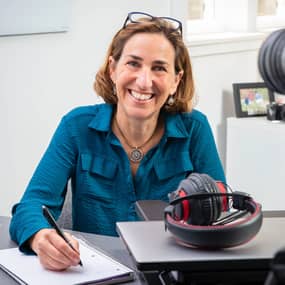
Director of Content at Dartmouth Health / Co-created Spartan Race’s podcast with over 45 million views and listens / Shares about social, editorial YouTube & web content creation & strategy


