Lois Creamer - Make Money Speaking
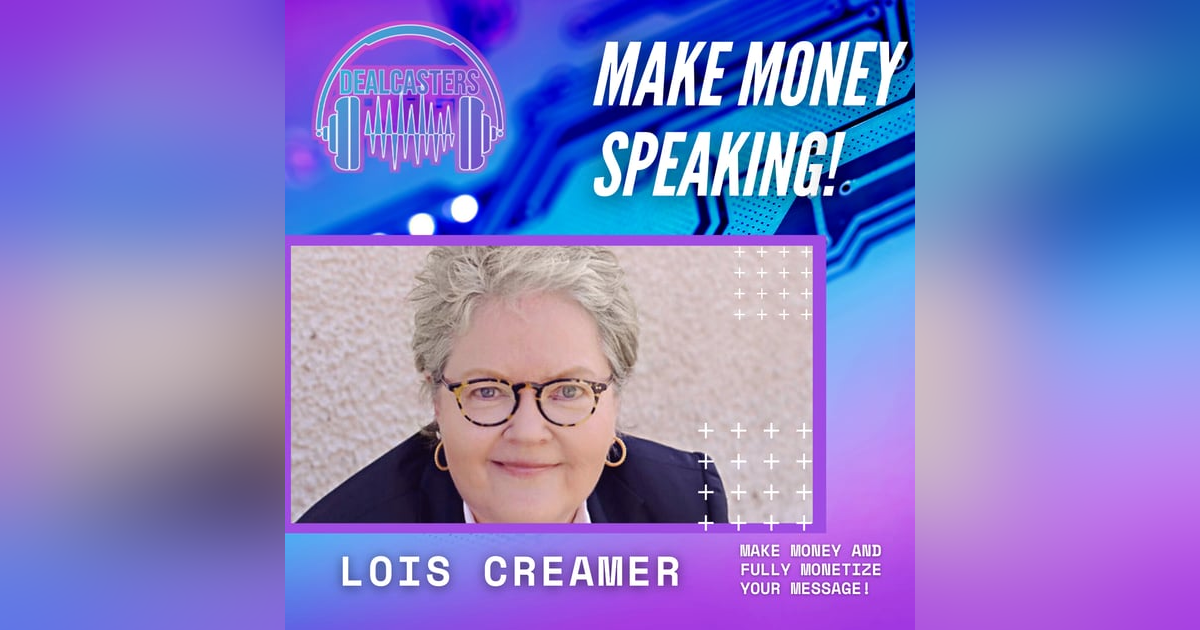


When experts want to book more business, make more money, and maximize their results, they call Lois Creamer. She’s the author of “Book More Business: Make More Money Speaking” and “The Speaker Author: Sell More Books and Book More Speeches”. Lois works with speakers, consultants, and subject matter experts who want to fully monetize their intellectual property.
👤Connect With Lois:
✅ https://www.bookmorebusiness.com/
✅ https://www.facebook.com/loiscreamer/
✅ https://twitter.com/loiscreamer/
✅ https://www.linkedin.com/in/loiscreamer/
✅ https://www.youtube.com/user/bookmorebusiness#p/u
This Full video episode available for free at: http://lois.dealcasters.live
All of the products discussed in this podcast can be found here: http://dealcasters.shop
All video episodes available for free at: https://dealcasters.live
👤Connect with Dealcasters:
🎧Grab all these great episodes as an audio podcast at: https://link.chtbl.com/Dealcasters
🎥Catch all the full episodes on replay or live at: https://dealcasters.live
Follow Dealcasters:
Lois Creamer - Make Money Speaking
===
Jim Fuhs: [00:00:00] So ladies and gentlemen, out of the great state of Missouri and the city of St. Louis, please welcome our amazing guest, Lois Crane. Welcome.
Chris Stone: Hi guys. How are you? Doing well, Lois. How are you wearing the St. Louis Red. Great. Um, beautiful, beautiful, beautiful. Also, I noticed your book has that red and black and white vibe.
Was that intentional? Is that the, you're exactly correct.
Lois Creamer: Oh, I'm sure it was just totally subliminal.
Jim Fuhs: So Lois, tell us about yourself. I mean, you have an amazing story. I, I remember listening at NSA and you kind of told us, like, you, you don't have the typical story I think of, of folks, but you definitely are not one that's, uh, not willing to take risk and, and go for it.
Lois Creamer: Well, thanks. And you know, I'm thrilled to be with you guys and very honored to be asked. Thank you so much. Um, you know, I am one of those, uh, business owners who never planned on [00:01:00] having my own business. No one is more surprised than I am that I find myself doing this. Um, I worked for a major corporation, fortune 10 Company, United States Steel Corporation, right out of college in marketing and sales, and then adopted a baby.
My husband and I adopted a baby, and I stayed home a number of years. That's what I wanted to do. Then got a call from one of my college friends who said, I just gave somebody your name to call. Uh, she was in an office suites and he was a professional speaker. She said, he's gonna call you. He's looking for somebody in sales and marketing.
And I said, well, I don't wanna go back to work yet. I don't even wanna work full-time. So I hung up the phone and 10 minutes later this gentleman called and. Through a series of meeting him in person and telling him I wasn't a fit, that I would only work part-time. We ended up, of course, working together and he offered me a part-time [00:02:00] job that I could not refuse.
And I got some, uh, great opportunities early on. The National Speakers Association asked me to speak to staff of speakers at their national convention. Most professional speakers are solopreneurs and don't have staff that sell 'em. So the room is filled with speakers. And, um, I started thinking after doing this a few years, I wonder if there could be a business in this room for me.
And so I, I went in this will date, this will date all of us. I went in to my compact computer. You're not gonna find that on Amazon. Um, and thought to myself, you know, if I were to do this, if I were to open a consultancy for speakers to grow their business, what have I learned after working with a real, um, top speaker in the market?
And it turns out I learned more than I thought after writing it all down. And so I thought, you know, I think I'll try this and I'll give it a couple of years. If I don't make money, I can [00:03:00] always go and work for somebody else. Like I have all of my happy life. And, uh, so in 19 98, 22 years ago, I can't even believe it.
Um, I decided I'd try it. And I was fortunate. I got business right away from some of those people who were sitting in my audiences who heard that I started my own business because I spread the word that I did. And, um. It just took off. And so no one is more surprised than I, you guys to be here, but I'm having a lot of fun as you can imagine.
This is a very niche business. All I do is work with speakers. The only speaking I do now, uh, are to groups of professional speakers all around the world. And, um, when I first started out, I did some sales programs for corporate sales teams for a number of years, but then stopped doing that and just do this, and I absolutely enjoy it.
Chris Stone: That's amazing. I, I, you know, and, and hearing that story, it makes me think about, you know, the only time now that you're speaking, you're speaking in [00:04:00] front of professional speakers. Yeah. It's, it's sort of like if you're, uh, in a band and you're playing in front of other people that are, that are in these great, amazing bands, it's like, I feel like.
Is everyone judging every little iota and thing that I'm doing? How, what's that like, what's that like going up in front of, you know, I can imagine, you know, if you're speaking in front of your, your key audience, you can look at it like that, but you're also speaking to experts about speaking. How does that, how does that play out mentally for you?
You know, you would think that this would
Lois Creamer: be a crazy idea, quite, quite frankly, but I'll tell you something. No one wants you to succeed more than an audience of speakers. They are not being critical. They are rooting for you. And that's what I found out early on, or I probably would've been too, uh, scared to go ahead and do it, but I have found them to be the best audience in [00:05:00] the world.
But also, as you just said, I am in front of my target market every time I speak to speakers. So the onus is on me to do a good job. And, um, so after doing this about 20 years, I feel like I'm on the right road. And I, you know, I thoroughly enjoy it. I thoroughly enjoy it. I, and through, because of Covid and because we've been, um, uh, I, I don't wanna say held hostage, but some people are beginning to feel that way.
Um. I've had opportunities all over the world. I spoke to a few months ago from right here where I'm sitting to 10 chapters in India, professional Speakers Association, India, and it was at dark 30 in the morning. St. Louis time, prime time in India. But I mean, think about that. That is just amazing. And um, so I've taken the opportunity, had the opportunity to speak all over the world in this last year.
It's been a lot of [00:06:00] fun and without the jet lag or the long layovers, so that's a plus. Yeah,
Chris Stone: and I would imagine, uh, you know, we use the word pivot, right? I mean, it probably overused, but you know, there's a, i in speaking with, you know, a number of people that, you know, keynote speaking and speaking was either a large part of their business or maybe almost all of it.
Um, and maybe they have some books and some other things, but they were pretty much on the road. And then all of a sudden last March, it dried up completely. Yes. Now people are starting to get a little more comfortable, but now it's at a very minimum going to be hybrid. Right. There's always going to be some sort of virtual component, even if there are people that are comfortable.
In the room. So I would imagine over the past year you've been working with some people that hadn't even had to worry about tech. They, they show up and they do their thing on a stage and somebody else is handling all of the tech, and now all of a sudden they're in their home office and they're like, I don't have a camera.
[00:07:00] Uh, I don't know how to use Zoom even. Um, so how do you work with someone to help them to, to lean into this, this virtual space?
Lois Creamer: Well. It's really a matter of just saying you can sit and wait and do nothing. And if that was your choice, man, has it been a long year? And who would've dreamed it would be a year?
And we're still talking about it. Um, the interesting thing when the shutdown first happened, I think everybody was sitting back saying, how long is this gonna be? What's gonna happen? I kept telling my clients, go virtual. I have been using virtual, working with my consulting clients for a long time because I think it's important for me to see them, their reaction to what I'm suggesting.
You know, if I give them a great idea, what I think is a great idea, and they're going, okay, you know, I want to be able to see that body language. And um, so I told speakers that you better get comfortable with virtual and you [00:08:00] better start getting some experience. Because you have no choice. And the interesting thing happened that a couple of months in when this we, we saw that this didn't have a certain end date.
Uh, corporations and private businesses started using virtual learning and started hiring speakers virtually. And I told my clients, now is the time to challenge these companies that the act of just having a meeting is an act of engagement. Engaging a scattered workforce now when everybody's working outta their homes.
But also you can't afford to fall behind the competition. You can't afford to just sit and wait. You need to keep people learning and growing. And so the switch to virtual for pe, anybody that heard me, I told 'em to get on board. And it is true. A lot of us have, a lot of us, I'm including myself, have had to up our game, our AV game, uh, getting a good microphone.
[00:09:00] Lighting, uh, I got a new computer. Um, things that you need to really have a good virtual presence because right now this is how we're being judged and if we're not doing a good job here, we're never going to get an opportunity to be in front of them when the pandemic ends. And what I see coming out of this is a hybrid, uh, meeting industry.
What we know is this. That people now know they can learn virtually. We know that it attracts a lot of people. I wa I was on a panel, uh, and I was listening to a panel. I wasn't on the panel. I was listening to a panel and on this panel was the head of Microsoft Teams and he was saying that in 2019 they have, have a user conference.
These tech companies have user conferences. You guys are probably very familiar with them. I bet the audience is where thousands of people all come to these little tiny [00:10:00] cities in California and end up staying two hours away in hotels because there's nowhere to stay. And they had 4,200 people in two 19 at at Microsoft for their uh, users conference.
And then last year they went virtual. And what a good advertisement for teams to be able to go virtual. But you know how many people they had attend that conference? 50,000. 50. Incredible thousand. Now, why would they ever consider not having at least a virtual aspect to their meetings ever again? They'd be foolish because they attracted literally people from every continent in the world who may have never traveled, who would not have ever traveled to that tiny California city.
So we know that virtual is a good option for many people, and the outreach that is possible is compelling. What's going to [00:11:00] be a challenge for professional speakers and consultants and experts is going to be, I think, how do I engage an audience sitting in front of me as well as people sitting in front of a camera?
How do I engage them and how do I handle that? How do I price it? How do I handle recordings? Because we know that if you're going to be on virtual, the odds are it's going to be recorded. What kind of influence, uh, can I, uh, or how can I capture the, how can I protect my intellectual property when that's done?
So there are a lot of questions going forward, but going forward, we are indeed, and I think it's going to be hybrid.
Jim Fuhs: Yeah, I, I think Chris and I both would agree with you. I mean, we've talked about that a lot. And I think to your point, I mean, why would you, as much as you know, and it's that whole thing like, oh, we wish that things would go back to the way they were before.
But to your point, I mean, they tend Xed the [00:12:00] number of people attending that conference. Why would they go back to the other way? It, it just doesn't make any sense. And that is really, I think, to the key challenge is how do you. Balance that engagement with people sitting in front of you and the people that aren't there.
And uh, and you know, but I think that's the amazing thing about the technology, right? It's this constant evolvement. In fact, it kinda segues nicely into something that you started doing. I dunno if you started in December or a little bit before then, but let's talk about Clubhouse because I could see where Clubhouse or Twitter spaces and some of these audio programs maybe can be a key tie in.
To these hybrid events, but, but tell us about your, um, we'll just call it Lois's Adventures on Clubhouse and what that's done for your business.
Lois Creamer: Well, I heard about Clubhouse on social media. Go figure, huh. And, um, I literally downloaded the app and just started listening to what people were doing, and [00:13:00] I thought it was interesting.
And in fact, I tuned into. Somebody and I, I have to say I don't remember who it was, was having a little um, uh, meeting on marketing. So I thought, well, listen to that. That was really good. I got some great ideas and then I thought, why don't I get on there and just see what the heck happens? That's exactly what I did.
I just titled the show, make Money Speaking, which is the subtitle of one of my books. I went on and go figure. People showed up. They just asked me questions and I answered them. Um, and then, uh, couple of people subsequently who had joined me on a, I decided I'll come on every Monday. So there's some continuity.
People always know when I'm gonna be on. I decided to set a time though I'm on sometimes as a guest or with some other people, but my own program every Monday at Sixth Central and a couple of people who were there said, Hey, we'd like to co-host with you. We'd like to, [00:14:00] to join you and co-host. I have two co-hosts now and we're on every Monday, and we typically pick a little theme that we talk about for the first 30 minutes.
Uh, I do a two hour show. I know some people go on there for 3, 4, 5 hours and I thought, this certainly is not me. I'm not gonna do that. Two hours is my max. Um, but I'll tell you, it's been a lot of fun. I got followers very quickly. It's so interesting. Just like any other platform. Um, I think a lot depends on what you put in the profile on Clubhouse.
That's the keys to the kingdom. What are you putting on there? That promo is promotional for you, for people to take a deeper look than just listen on clubhouse. So I've put up some, um, downloads for people who are listening to shows. If I'm having a theme on, uh, positioning, I'll put an article on positioning or a chapter from my book on positioning There.
So I [00:15:00] think that that's going to be the key, but ton, I've sold a lot of books on, um, for my clubhouse appearances and, um, that's been fun. So I look at it as a way to promote what I do and also a way. There are lots of times that people who are just thinking about doing this for a living, we'll get on and ask a question and, um, I, I tell them about a product you guys that I created, uh, years ago, a CD.
Uh, and it's 50 minutes of me giving you every reason not to get into this business. That's really what it is because a lot of people think speaking, oh my gosh, you get paid that for an hour. You've gotta be kidding me. I'm in the wrong business. And a lot of people don't realize that when they start this business, they spend 99% of their time marketing and 1% on the platform.
That it's hard to get any opportunity and we only, uh, get an opportunity, uh, [00:16:00] you know, early on. It's just fortuitous when you get your first opportunity and then you've got to leverage the heck out of that. So it's not an easy industry to get into, quite frankly. Um, and I feel like I'm very real with people.
I want their expectations to be real. About it. And I'm one of those people who don't say, just jump into it. It's fun. Uh, obviously I like it, but it's a difficult, difficult industry.
Chris Stone: Yeah. And I, I love how you said. That you're real about it. And we're, we, we, uh, are capturing that energy here virtually. And I think a lot of people forget that the phone or an audio only thing that's actually virtual and that's another way for you to transfer that energy.
Yeah. Um, that you would have maybe on a speaking stage. It's just another opportunity, an another way to broadcast yourself in, in some way, shape or form, and people are connecting with you. Then they're going to your [00:17:00] videos, then they're going, that's right, getting your books and all of that. It's just another avenue that you can, you don't always have to go with what everyone else is doing or what, uh, you, you know, you may not be comfortable with it, but it's an, it's an incredible opportunity.
While there are stages that are dark and, and collecting dust. To, uh, be able to, to show that to people. So I, I love how you've leaned into that and you have these, these great, you have this great sound, you have this, you know, and a lot of people are, are, you know, leveling up on, on Clubhouse and buying, you know, road caster pros and Yes.
And huge $400 microphones. Yep. But. You don't really need to worry about buying all of that gear to just lean into it because I think you said to us like, your phone is all you really need. Yeah.
Lois Creamer: I use a headset and, and my phone and, um, it's, it, the quality is great. Um, if it weren't, I would, I would upgrade that, but quite frankly, the quality is great.
You [00:18:00] know, I think of it just like any social media platform. Try it. Are your buyers there? Are people there who can buy you there And, um, on Clubhouse? Mine are, will they? I don't know. And kind of what I decided was I'm committed to this every Monday at six o'clock central until it stops being fun for me.
And when that happens, I'll do something else. But right now I'm really enjoying it. But I think that that's, you know, social media could just suck the life out of people. You've got to find where are your buyers and what is, uh, what do they like to hear from you? And then leverage the heck out of that platform or platforms.
But I'm not active on every pla for, for example, Pinterest. I, I put a couple things on Pinterest, I think two years ago, and that's the last time I've looked at it because my buyers aren't there. Yeah. So I'm not [00:19:00] gonna spend time, uh, doing it and, um, uh, you know, I can be found on a lot of social media. I'm very active on it, but I'm really spending quality time on the platforms that bring me the results that I need for my business.
Jim Fuhs: Amazing. And, and Lois, what do you think, uh, what for for speakers, what do you think those platforms are? Is it Twitter, is it LinkedIn? I mean, I don't know so much that it would be TikTok or some of those things. I mean, what, what are your thoughts there? I don't,
Lois Creamer: it's not TikTok for sure. I, I, I think that LinkedIn is the most, um, productive platform for professional speakers because it is where business leaders gather.
And bus, the people who buy speakers, decision makers gather. That's where speakers need to be, where the buyers are, the people who can write the checks, and so I think LinkedIn is where I tell my clients they need to be really focused and make sure they're putting out great content, [00:20:00] consuming great content, and engaging and connecting with decision makers or people who can drive a decision.
Um, I, I still like Twitter. I, I have to say I still like it. I could pretty good engagement on it. Um, I think it depends upon what you're doing really. I am at very active on Facebook. A lot of speakers are not necessarily for their business. That's the difference. But I have a membership group. Uh, I meet weekly with a certain number of speakers, a private membership group.
I run on Facebook. I host it on Facebook. And, um, so I'm, I'm pretty active myself. I'm most active on LinkedIn, Facebook, and Twitter, and now Clubhouse. But you've got to find where you're gonna be most effect.
Chris Stone: Yeah. Lo I I, you know, we've got, um, we've got your book here. Um, and, uh, I, I wanted to touch on that because I know, um, it's, it's something that you've sold a lot on Clubhouse and we, we hope to sell a lot for you [00:21:00] on, on Amazon as well.
And you, you touched on. The pandemic and, and you know, we're, hopefully people are starting to feel like we're coming out of this thing Yes. A little more comfortable with, uh, vaccinations and, and all of that stuff. Right. And so, you know, everyone talks about getting back to the quote unquote, uh, you know, normal.
But we, but you've touched on the fact that it's at a minimum, you know, likely to, to be hybrid. So how do you. When you're working with a speaker, you know, pre pandemic or now feels like the wild West in terms of how they would determine a pricing structure and how they, what they would charge for going here or going there.
So when you're working with speakers, and I know there's, there's a huge laundry list of names of, of speakers. Jeffrey Gemer, just like a, a huge amount of great, fantastic speakers that you've worked, worked with the resume's very long of, of very, uh, great speakers, but. When you're sitting down and talking or, or working with someone virtually to determine what, how they [00:22:00] should price a keynote speech, a virtual speech, like how does that work?
Lois Creamer: That's a great question. And I think one of the hardest decisions when you're in an intellectual property business, like speaking, and that's the business I consider myself in. It's an intellectual property business. People are buying what I know or what I write, what I teach. I think the biggest, one of the biggest challenges is setting a price to the value of your intellectual property.
And so, you know, in a simplistic way. I would say, well, it's what the market pays. Typical people who do what you do, which is, uh, you know, doesn't answer your question at all, right? Uh, but what you need to do is this. You need to look for other speakers who speak on similar topic areas, similar, similar expertise.
See what they're charging and see how [00:23:00] long have they been in the business, what kind of clients do they have? And I think that this is a good way. Uh, kind of a good barometer to decide what my fee should be coming out of the gate. I think that that, um, it's going to be interesting as we get into hybrid how we're going to price this, because when we shifted to hybrid, everybody and their mother were asking you to discount because it was hybrid.
I never understood this because I, you know, I, I said at first, it's the value of my intellectual property, not my delivery system. Why does it matter if I'm standing in front of you or I'm on camera doing it? It's the value of my ideas, tactics, and techniques that you can utilize that you're buying. Um, I, but the reality is this, that whether you are speaking in person before covid, in person after covid, or virtually, [00:24:00] everybody wants to negotiate.
And it the, this is not an unusual thing to be asked to negotiate. I thought that it's unusual for people just to automatically discount a virtual event. When I've been doing virtual events, I work sometimes even harder virtually, right? Because I'm concerned. I want people engaged. I want them to enjoy what they're doing.
I don't want them falling asleep. You've gotta gauge how long can I speak before they nod off, you know, that kind of thing. Um, so in some ways I think it's harder. Of course, the only layover I have is in my kitchen, so there's a big advantage to time saved than, uh, getting on an airplane. And I, I'll tell you, one of the things I realized early on, I don't miss airports as much as I thought I would.
Um, and I'm going to be choosing now probably to do most of my events, uh, internationally virtual. And, um, if, uh, a speech is in a city, I don't wanna go [00:25:00] to, uh, this might sound arrogant, but I probably will do it. I have gray hair now. I can be picky, but, um, but I think price wise, getting back to what you said, I think there's gonna be this combo plan now when we, when we, uh, get out in the marketplace.
And I think it's already starting and you are going to have to set a price for. In person plus virtual. And then you've still got that recording and it's up to you to manage as much as you can that recording the value of that recording to someone. And it's also your responsibility to stipulate how that will be used.
And I realized that, uh, if somebody records it, I'm not gonna know a lot of times that they're gonna use it. I mean, let's be real. I gave that up long ago. In an intellectual property business, be prepared for people to share what you do. I call it [00:26:00] marketing. I used to call it aggravating. I call it marketing now, but, but for example, um, I tell my clients this, if they're going to record a virtual stipulate, how long they can use it.
So for a period of six months, you can use this in-house. You can't use it outside of your company, you cannot sell it anywhere. Monetize, right? Because if anybody makes money on it, you should make money on it. Not That's right. And then in a period after a period of six months, the onus is on the speaker to connect with them and say, would you like an updated program that you can use for another six months?
Chris Stone: Boom.
Lois Creamer: And uh, so this is the way it's gonna be because in the before times, guys, in the before times, we actually pre had a lot of control over that video. Uh, more control over that video than we do now. But that's just the reality of it. And I don't pretend to control what I can't control. [00:27:00] And how many people are going to go sue somebody are gonna actually fees.
To go sue somebody. Um, very few of us mere mortals will be doing that. So, um, but I do think that you have to be aware of all of the, all of the different ways people are going to use what you do and make sure that, that they value this and it's your responsibility to make sure they value it. But do an online search for fees that is not hard to find out.
In fact, there's a platform. Called E speakers. The letter E speakers, I think it's dot com, could be.org, that lists every member of the National Speakers Association as well as other groups. And they typically have their fee or fee range in there. Mm-hmm. And you can get an idea for their experience. In doing so, remember you, you can always go, your fees are always going to be raising as you have [00:28:00] more experience.
So if you start out too high and nobody hires you, that's a clue. If you start out too low and everybody wants on your calendar, that's also a clue. So I, yeah, I say that, um, my calendar always has ruled my, uh, fee. I have always thought, am I too busy? I wanna hear a little pushback. When I stop hearing pushback, that's when I know I'm probably not charging enough.
Chris Stone: Yeah.
Jim Fuhs: You know, Chris and I were talking about that earlier with, uh, with something we're working on and, and Right. It's that, it's like, well, they really didn't push back. I guess they didn't ask for enough, but then it's too late. Uh, it did. And I guess that, that's probably Lois. How do you help speakers, I guess, in a sense, overcome that?
It's like, am I really worth that much? Yeah. Or do you say, look, if you don't ask it, you're, you're just being silly. I mean that, 'cause I know for, I think that's. Because there's a lot of live streamers as, as an example, and [00:29:00] podcasters that probably would like to become speakers or they're being asked to speak virtually.
Sure. And Chris and I have done that on Amazon Live, but we're doing it for free. But the reality is there's not a lot of people speaking about Amazon Live as an example for some of these other things. First of all, let me
Lois Creamer: give you a virtual slap for doing it free. Here's, here's the thing, and you just said this.
Well, Jim. You can ask for a fee and somebody can say, no, forget it. What if you lost? If they say that nothing. Nothing. I, I have something that I say all the time. You risk a yes every time you ask for something. Are you willing to take the risk?
Chris Stone: I like that risk a yes,
Lois Creamer: because if, if, if I were you and I said, you know what?
We've got this great platform. We're Amazon Live guys. We have a lot of followers. And you give them a price and they say, well, we don't have a budget for this. You can [00:30:00] always say this, if I could waive my fee, what else of value could you offer me?
Chris Stone: Mm-hmm.
Lois Creamer: And
Chris Stone: then you, you, you could tell you were a born salesperson.
Well, like that is, that is a fantastic way to sell it. Absolutely is. And what would it take to
Lois Creamer: put you in this car today? Exactly. Which is not my kind of selling, but my kind of selling is anytime anybody asks for anything, you ask for something in return, they asked to lower your fee. If I could do that, what else of value could you add to make this commensurate with what my other clients pay me?
This is what I think you should be asking if you feel confident in that. Fee and confidence really comes from experience. Confidence comes from me, me going in, doing an event, having a happy client, them happily handing you a check and you going on your way. [00:31:00] That's how you get confidence and it's how you get confidence in asking for money.
Sadly, the only way to get confidence is to do it. And you always have a fallback to say, uh, and I never say free speaking, by the way. I always say I may be willing to waive my fee in consideration of certain things. So if somebody says, I have no money, or if somebody low balls you and wants to give you a hundred dollars Amazon card, which is not a bad thing, uh, for Amazon or us, um, we can say, we can say, if I could do that.
What else of value? Because this, my other clients pay my fee and so I would need to have some value and I've got a whole chapter in my, uh, book, more business, make money speaking book on. What do you consider value? What would be valuable to you that you can ask for? Uh, because I think that that's important.
Ed people are always asking us to negotiate fees. That is always going to be the [00:32:00] way it's going to be. We just have to be prepared for that. And we also have to be confident in what we have to offer. And, and that comes from doing it.
Chris Stone: That's amazing. So, and the other thing, I think it's, it's related to pricing and it's also related to, you spoke earlier about how, um, when you are on stage and you're speaking to other speakers, and those speakers are, they are rooting for you.
Yes. The entire time. And it reminds, uh, me and, and, and Jim of. The podcast community, some of the live streaming community that we're in, it's a, you know, iron sharpening iron, um, you know, it's gonna lift all ships if we can kind of work together. Yes. How important is community for, uh, for this, for keynote speakers and the, and this, the whole speaking, uh, business?
Incredibly important.
Lois Creamer: And that's why I think that this shutdown has been so hard on, on speakers. Mm-hmm. This can be a very lonely business. Most of us are solopreneurs. [00:33:00] I am working in the same office I've worked in for 22 years, so staying home was not new to me. Having this as home base rather, uh, but, uh, and a lot of speakers are just like me and outsource, uh, I outsource a few things in my business, but they don't come here and work in my office.
So it can be kind of a lonely business. And so missing, uh, chapter meetings, uh, like Jim just said, I just did a chapter meeting for the Atlanta chapter of NSAI go all over the country and, and do these all the time. And I have friends and clients in every chapter after all these years. And I really love going, it's like old homely.
And so you really do miss this when, uh, when we can't gather with our peers. Uh, and really when you think about it, people who are used to working in an office are relegated to a home office. They're missing community in many [00:34:00] ways, uh, just as well. And so one of the challenges has been how do I create community virtually?
That's been the people who have done the best. Virtually are people who realize that. And, uh, organizations that allow some community building within a virtual program like GA room gatherings, uh, national Speakers Association did their winter meeting virtually. We're doing our convention in July in person and virtually right now, we can have 250 people there in person.
We usually draw about a thousand. We think they're gonna raise it to 500 before July before it happens. But still we're going to have virtual as well as in person. And so how do those people virtually create communities? And so what NSA did for the winter meeting, we had gathering places between speakers, between programs, uh, where we said, if you just wanna gather with people, [00:35:00] talk about, we had rooms that followed up on a certain speaker's topic, rooms that you could just go to and eat lunch.
Put your lunch in front of the camera, eat it with people. So you look for different ways to create community, but that really has been something that, um, that we've missed. I've missed it. Certainly. I have missed it. I haven't missed the flights, but I've missed the people at the end of those flights.
Jim Fuhs: That, that is amazing.
Lo Lois, what, what do you see as I, I mean, I even think based on some of the things that you talk about. Your booking more business doesn't even just apply to, uh, speaking, but like in the case of some of the Amazon influencers that may be watching this is how to partner with brands. 'cause we get a lot of offers now where these brands wanna give us things for us to show it on our show as an example.
Sure. But it kind of goes back to there's only so many people that have the ability to do this. So I, I [00:36:00] like your idea of like, you know, well hey, we're going to do that, but I. What do we get in return if you're not going to pay us? Yes. To have the product on there. Yeah.
Lois Creamer: That's what you, you know, it's not selfish to ask what's in it for me if you're a business.
So I'm not shy at all about asking what's in it for me. I'm not shy at all if I say, you know, if I could do that, if I could waive my fee, what else can you do for me? I'm also not shy about having a list of things that I consider value. Now that prospect might have even, I always say ask and then be quiet and see what they say, because I've been offered some things much better than what I was ever gonna ask for.
And so, so God forbid I limit myself by giving them my own take on this. But I, I do think that, um, it, it is not a selfish thing. And when you do that, it, it, it can be a win-win for both of you. And I [00:37:00] think that a good partner would want there to be something in it for you.
Chris Stone: So
Lois Creamer: you need Yeah, I mean,
Chris Stone: yeah. You need to ask, I'm sorry.
And I, I, I think that's, I think that mentality is, is brilliant because I think in a lot of people that get in their own head, there's that fear that you're missing out and that someone else is getting something. That you aren't going to get. Right. A con. And it's, it, it, like Jim said, it could be a content creator.
It could be a speaker, it could be anyone that is trying to sell something. Yes. You're getting approached and you're thinking, well, if this is their offer, are there 20 other, uh, people that do that? I what I do? Yes. And they're getting that and I'm not, what am I missing out on? No, I mean, and that what you're saying just flips it completely.
Lois Creamer: Well, I just think that it. A lot of people think, well, if I ask for this, am I being, what am I looking like? I'm not shy. You know, you can always say no, that, that, and really being able to say, you know what, this doesn't work for me, but I wish [00:38:00] you good luck.
Chris Stone: Mm-hmm.
Lois Creamer: Nothing wrong with that. And, um, you know, I became comfortable with no years ago, guys, um, you know, not to take things personally when something I didn't like didn't come to fruition.
Um, and or when, um, somebo, I talked to somebody and they decided in the end to, uh, not use my services. You know, I, I look at everything. This, this is probably very simplistic and, um, but I'm pretty simplistic. If somebody said, you know what? This doesn't work for me for whatever reason, you're too expensive.
I don't like your personality. I never work with anybody with gray hair. I don't know what it is. I always say to myself. I'm just not a fit for whatever reason. And I literally say that to the person, even though they might say, I hate your personality. I'm saying, it doesn't sound like I'm a fit. But I wish you good luck on your journey because I do.
There's enough business for me, [00:39:00] uh, that I don't, and I don't want the responsibility of appealing to everybody.
Chris Stone: That's great. And it doesn't, you know, if, if you take that mentality, I'm not a fit, then you don't take things weirdly and personally. That's exactly it. Oh, was was, am I not good enough? Yep. Do, do I, is there something about how I look, how I present myself?
All of those things that can creep in that mind junk. And then it prevents you from getting that next thing because it just works against you. I love, I love that mindset. It's awesome.
Lois Creamer: I, you know, I look, I tell speakers this. If you're uncomfortable, and I hear this a lot from speakers, well, I'm uncomfortable talking about myself, which I just say, well get over it.
Kind of like my virtual slap I gave you guys, you need to get over it. Um, but I, I do think that you are your own best advocate. You have to be your own best advocate. And you have to be able to negotiate to really make a living doing this. You know, I, I always say this [00:40:00] when I go to the grocery store and I was just there yesterday and I get a gallon of milk and a loaf of bread, and it's 4 25.
I never say to the cashier, would you take $2 for this? Yeah. You know, I just don't, it, it's either a fit or it isn't a fit for what, for that reason. It's, it's obvious. But with us, with our own pricing, it, it, it's a little bit more fluid. The situation is a little bit more fluid, but I do pretty much end up saying, this is either a fit or it's not.
And that is the way that, that I put it in my mind and I always think that, uh, what is right for me will come to me, what isn't will go somewhere else and they'll get what they need value-wise somewhere else. And I might sound like an idiot, but. So far it's worked for me.
Chris Stone: Yeah. And I think I sometimes it's worked, uh, in, in, in the businesses that, that I've been involved with, sometimes you [00:41:00] send them on their way and say, we're not a fit.
And uh, you know, we feel like you're getting nickeled and dimed and it's like, you know what? This isn't working and they're just shopping around and they're coming back.
Lois Creamer: That's absolutely right. That has happened several times to me. Um, and I, you know what, and I think, and this is not manipulative. I think sometimes when you just say, you know what it, I, for example, I had a gentleman call me about, I wanted to talk to me about working with me.
So we talked. Then he called again. The next day we talked again, and the third day he called me in a row with more questions and I, I said this, if you don't know by now whether I'm a fit for you, I'm probably not. Of course he immediately hired me after I said that. But I didn't know other great sales technique, what was gonna happen.
My point was, look, it is what it is, right? And, uh, I'm either a fit or not. And, and I never assume I'm a fit for everybody [00:42:00] because I'm not,
Jim Fuhs: uh, for whatever reason. This has been, this has been amazing. Lois. We'll have to have you back if you come back sometime. Absolutely. And, and tonight on Clubhouse. What will you be talking about for those folks that might want to join and thank you, listen to you for the first time.
Lois Creamer: Um, tonight on Clubhouse, we're going to talk about selling by outcome. I have this big belief, especially when selling intellectual property services. That what people like to buy are the outcomes that we bring them when we work with them, not the systems that we bring or the five steps to whatever they want.
What does, will the outcome look like for me? What will my people do differently as a result of listening to you and your program? So that's what we're gonna talk about. We talk about that for, um, I usually. Um, talk about it for 10, 15 minutes and then we start taking questions, but then it's questions really about anything [00:43:00] speaking and, um, but we always like to have a theme going in to get things started.
So that's, that's our theme tonight.
Chris Stone: That's amazing. And so for those of you who are, who are watching, um, on Amazon and listening later maybe via podcast, make sure you go check out Lois Kramer on Clubhouse, and of course, go to book more business.com. Grab this book. It's amazing. It, uh, it, it applies pre, um, during post pandemic.
Doesn't matter. Lots of fantastic principles for you as a speaker, but also as a content creator. Lois, I can't believe how much. I'm not a speaker. I don't have aspirations to be one necessarily. Um, but I got a ton of great intel. Thank you. From you. This has been amazing. Thank you. And thank you so much for sharing your time with
Jim Fuhs: us.
What a pleasure. And thank you so much. Thank you Lois, so much for joining us and look forward to. Continuing to learn more from you, and we hope to have you back again sometime. [00:44:00] 'cause you know, I think we just scratched the surface of some of the things that you can teach to folks here on Amazon.
Lois Creamer: Well, it's been my joy, privilege to be with you guys.
Appreciate you both. Thanks so much.
Chris Stone: Thank you. Thanks so much, Lois. And as always, from a Jim, myself and Lois, don't fear the gear.
Jim Fuhs: Thanks for listening to deal casters. Congratulations, you've taken another step forward in your content creation journey. Please don't forget to hit the subscribe or follow button here in your favorite podcast player so you can be reminded every time we drop an episode.
Chris Stone: We love hearing from our listeners and viewers, and if you're wanting to watch our shows live on Amazon, feel free to follow deal casters live as well at deal casters live. Follow us on Twitter or subscribe to our YouTube channel where we also include added content that you cannot find anywhere else.
If
Jim Fuhs: you have questions about this episode or have something you want us to review, you can also email us at [00:45:00] deal casters@dealcasters.live. Thanks again for listening and you know the deal. Don't fear the gear.
I.
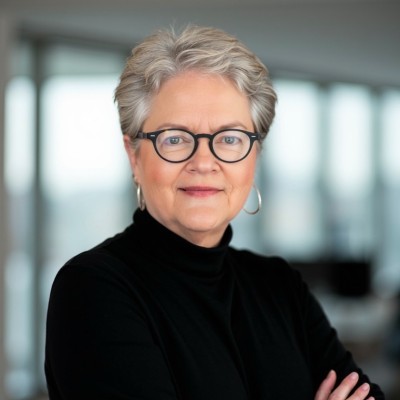
When experts want to book more business, make more money, and maximize their results, they call Lois Creamer. She is the author of “Book More Business: Make Money Speaking” and “The Speaker Author: Sell More Books and Book More Speeches” with Cathy Fyock. She works with speakers, consultants, and subject matter experts who want to fully monetize their message.


