Kevin Kolbe - Stay Focused On Success
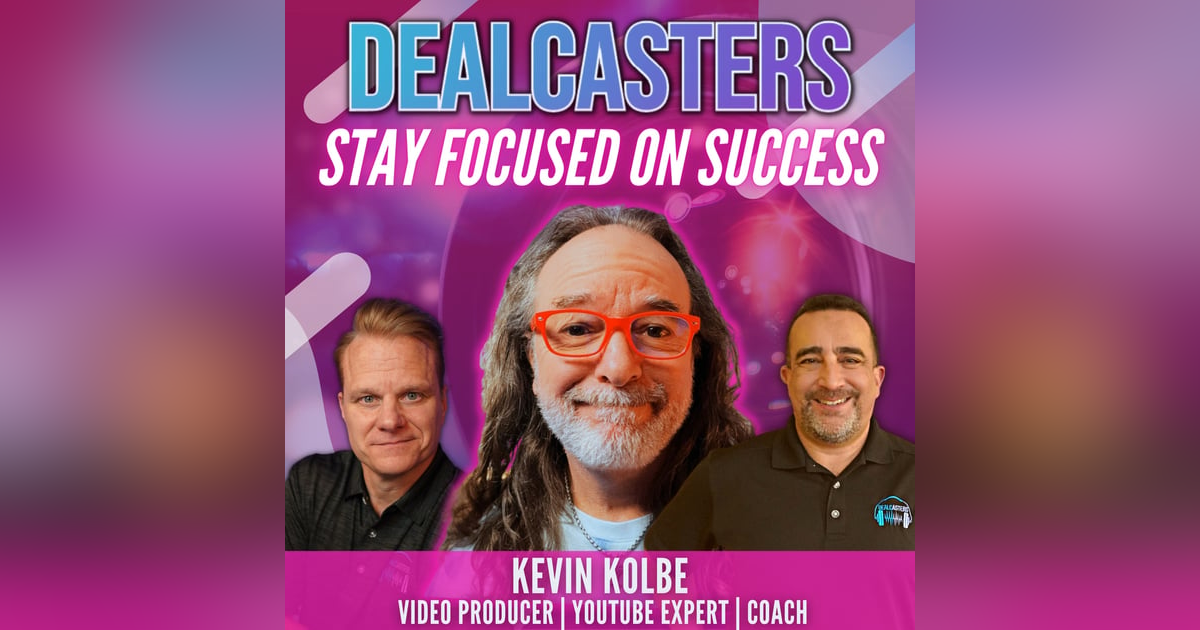


Kevin Kolbe is a TN-born, NC-based video producer and coach. He's been in media for a long, long time. Kevin started out on the radio, then got into TV working for FOX, NBC, CBS, and ABC affiliated stations in Nashville and Raleigh. After TV, Kolbe started his own video marketing business and now gets to help non-profits, businesses, and entrepreneurs around the world get into and do more with online video. Kevin is also a husband, dad of three - including one with special needs - and a Jesus freak.
👤Connect With Kevin Kolbe:
✅ Official: https://kevinkolbe.com
✅ YouTube: http://youtube.com/kevinkolbe/?sub_confirmation=1
✅ Twitter: https://twitter.com/kevinkolbemedia
This Full video episode available for free at: https://KevinKolbe.Dealcasters.Live
All of the products discussed in this podcast can be found here: http://dealcasters.shop
All video episodes available for free at: https://dealcasters.live
👤Connect with Dealcasters:
🎧Grab all these great episodes as an audio podcast at: https://link.chtbl.com/Dealcasters
🎥Catch all the full episodes on replay or live at: https://dealcasters.live
Follow Dealcasters:
Jim Fuhs [00:00:01]:
I'm excited that, you know, once again, Jim, like, how do you get these how do you get these guests? I mean, Amazon Live, you have if you don't have any idea who Kevin Colby is, boy, you are in for a treat. Just sit back. You're living under a dreamyard cup. Yeah.
Chris Stone [00:00:21]:
Yeah. No. I I'm I'm so excited. I got I got to meet Kevin, early this year virtually, albeit, cause he came on as a guest on, social chatter with, with our friend Christian Karasevich, who and then he also came on Launch Your Life, our podcast slash YouTube. And so we've really gotten to know Kevin. Kevin's a a great guy. I mean, I think I think we would say he's the kind of guy we could hang out with in real life. I just think he's, he's so much fun, and he's, he's really doing some amazing things with creating video, whether it's live or recorded.
Chris Stone [00:00:57]:
I know he uses Ecamm and one of your favorite tools and a tool that I I'm gonna have to go watch his videos, which is, Final Cut Pro because I because I'm I'm making that leap. That's part of my 2021. I'm gonna start doing all this stuff that you've been been doing so that in case you get sick, I can live. But, let let's bring Kevin on because he's got a lot of great things to share with us today.
Jim Fuhs [00:01:20]:
Yeah. Absolutely. So without further ado, Amazon Live, would you please welcome video coach, marketing specialist, and content creator overall overall great dude, mister Kevin Kolbe of Kevin Kolbe Media. What's up, Kevin?
Kevin Kolbe [00:01:35]:
Hey. Sorry. I'm I'm trying
Chris Stone [00:01:36]:
to I'm texting my my mother trying to explain the Internet to her. I'll I'll be in just a second.
Jim Fuhs [00:01:40]:
Oh, okay.
Kevin Kolbe [00:01:40]:
No. We'll wait. Turn it on. Oh, never mind. I'll do this later. She refers to it as the Facebook. And I can say that because she she doesn't have Internet.
Chris Stone [00:01:52]:
Well, that that's how that's kinda how we joke around too sometimes, Kevin. You know, like, I've told people that, you know, my parents are getting an an echo show for Christmas. I've said it multiple times, but they're not watching us on Amazon Live, so they still have no idea.
Kevin Kolbe [00:02:06]:
Yeah. It's you know, I've I've given up on trying to get them something. I you know, in in fact, for years, I couldn't even get her a a VCR, a VHS machine because it was like, well, I'm afraid I'll mess it up. And it's like, you you you turn it on and off.
Chris Stone [00:02:19]:
That's all you do. You put the tape and you have to play. So Oh, so it's something out there for me. I got the other brand.
Kevin Kolbe [00:02:26]:
It's like, I just buy everything and just figure it out and break it and then send
Chris Stone [00:02:29]:
it back. And then and then you you guys may remember this, especially you, Chris, because you worked for Sony. You know what my mother started out with? The Sony Betamax. Oh. Yeah.
Jim Fuhs [00:02:43]:
Which actually had higher video quality than VHS.
Kevin Kolbe [00:02:46]:
Yeah. Beta over VHS.
Jim Fuhs [00:02:49]:
Yeah. But, you know, the, you know, the consumers were
Chris Stone [00:02:52]:
They lost a lot of choices.
Kevin Kolbe [00:02:54]:
Yeah. My first VHS machine cost like $900 It was the size of a coffee table. It had a remote that, you know, wasn't that long that all it did was like, start stop. That's it. And I remember the, the place I bought it from was like a furniture store. Cause you know, that's where you'd go to buy your V and they had a wide selection of like 30 movies. That was it.
Chris Stone [00:03:26]:
Yes. Yes. You go to days when you would when you would run to the the different video, VHS stores, I don't even want to call them anymore, to get that tape so you could watch it that weekend with your family because if Blockbuster was out, you were so upset. Right?
Kevin Kolbe [00:03:42]:
Or if it was an extra long movie, you'd get both cassettes. That's right. You know? And it and then you get the insert cassette to and people right now are like, what are the heck are you talking about? It'd be like, insert insert tape two, insert tape two, and then you'd find out the goober in front of you hadn't rewound it.
Chris Stone [00:03:58]:
It's like,
Kevin Kolbe [00:03:59]:
it's gonna take an hour and a half to rewind this movie. Right.
Jim Fuhs [00:04:02]:
And then you had to grab the VHS rewinder companion to your right? And then this would rewind your tapes before you had to so for those of you who are watching, you're not gonna get a VCR tape in our carousel. You know? You're not going to you're not gonna get a Betamax the size of a coffee table, unfortunately. Although that actually would be awesome. I could see, like, hipsters buying that Oh my word. Yeah. All over the world. And so if you've unmuted now and you're hearing, what we're talking about right now, Dealcasters Live is not just about drilling down through products that are on sale today or that, you might be able to, to get to work on your content creation. We like to interview experts in the field.
Jim Fuhs [00:04:41]:
We like to, you know, interview influencers. And, you know, one of the biggest that we know is is Kevin Colby who's who's joined us today on Dealcasters Live. So if you wanna know, what the experts use and what they might suggest for you, even if you're just starting out or or doing all that stuff, there is no better person, to talk to today than to Kevin Kolbe. So I appreciate that. And, yeah, and, and soak it up. And and so, Kevin, I just wanted to to take this opportunity and tell you thank you because, you know, Final Cut Pro was, you know, was something that, I I leaned into, I don't know, eight months ago. And so it didn't take me long to just find your videos. Of course, you know, if you f FCPX and YouTube, and, eventually, you're gonna you're gonna find your way to a Kevin Colby, video because you're doing it right, you know, with the you know, all of the thumbnails and TubeBuddy and and all of that, but also the content.
Jim Fuhs [00:05:38]:
And that's really the most important part. Right? You can check all the boxes with YouTube, and everybody thinks they have the easy button and the special sauce for Yeah. Getting yourself found on on YouTube. But you've really found a a great way to develop, content concisely so that if even if you don't know that much about final cut, I just found my way just, okay. I'm going to the next video. I'm oh, you know, every time I'm watching, I'm learning a little something else that I can apply to, to what I do. So thank you for that. And Sure.
Jim Fuhs [00:06:10]:
Thank you. Yeah.
Chris Stone [00:06:12]:
Yeah. So, Kevin, tell tell our, our viewers, you know, what is the the Kevin Colby story? I know we were kind of joking beforehand that, you know, you have a have a face for radio. So, how did you get to where you are today?
Kevin Kolbe [00:06:27]:
Well, ironically, I did start in radio. I when I was a kid, I I thought, you know, I I really I wanted to be a lot of different things, but I was fascinated with radio. And I had a chance to get into radio and and even got to work at the station I listened to, for a long time growing up. I thought, wow, this is the coolest thing. And, then I at some point, I had a chance to get into television. And I didn't I mean, all I knew about TVs, I could spell it. TV. I had a pretty good shot at it.
Kevin Kolbe [00:06:58]:
And it was a very small station, which actually became one of the first, groups of stations affiliated with, the new network that was starting called Fox. And I worked in television for a long time in, Nashville and stations associated with Charlotte and in Raleigh and, ended a run well, I was, I think I was with the last company about twenty four years, something like that. I was a creative director at a Fox station. So it's funny how it kinda came full circle and led just an amazing creative team, far more creative than me, but I was I I'm I'm still to this day cool with that. The position went away and I thought, you know, how do I use my gifts? How do I do these things? And after chasing some other positions, it just didn't happen. I just started my own, video marketing business. And I just I like to help people do video and get into video and use video to grow. And and I think a lot of folks I work with, you know, they're not really techie people or gearheads.
Kevin Kolbe [00:08:00]:
They just wanna be able to figure out some things, and and they know they want things to look better. So that's what I've done most of my career. I mean, I've I've been very blessed with working with amazing people at great stations and, just getting a lot of cool swag too.
Chris Stone [00:08:21]:
And you can never complain about cool swag. That's for no
Kevin Kolbe [00:08:24]:
No. No. The funny thing is for a long time at Fox, you know, we'd we'd get this cool swag that would last longer than a lot of our shows. And it was like, oh, well. It was a great water bottle, but I don't remember the show.
Jim Fuhs [00:08:39]:
Oh, wow. The most memorable part of the new show is the is the water bottle. That's that's amazing.
Kevin Kolbe [00:08:44]:
You know? And it was so funny because I I would go to a conference every year, and and we would get to see the pilots ahead of time. And the the pilots that they had picked up and, you know, and they're doing their job a lot of times. And then we I mean, there was a lot of great shows that launched. And then there were ones, and they'd be talking it up, and they'd show the pilot, and we'd look at each other going, oh, this is horrible. This is you can sell this all day long. Ain't nobody gonna watch this, you know, like, like, episode two or three. It's like it's going on hiatus.
Chris Stone [00:09:14]:
Yeah.
Kevin Kolbe [00:09:16]:
But I got a great water bottle. And that was the most important thing to us.
Chris Stone [00:09:19]:
And and, you know, it's probably like, you know, baseball and hockey cards. I know Chris has got a hockey card he's very curious about right now that he owns where you might make some money off of it because there were so few of them.
Kevin Kolbe [00:09:30]:
Yeah. Yeah. Yeah. And what and the cool thing is, I mean, there were some there were some neat things. Like, one of my favorite shows of all time still is 24. And so I got, I mean, I got to go on a on a, a VIP junket to, New York when, they brought back, Live Another Day, got to meet Kiefer and the the cast and and do a lot of cool things. But, you know, every once in a while, you would get some neat stuff for a show that you liked. And, it was it was really neat.
Kevin Kolbe [00:09:57]:
But also the fun part was just giving away promoting shows and keeping up with tech, you know, on that side too. So that was neat.
Jim Fuhs [00:10:04]:
Yeah. Our careers, Kevin, kind of aligned from the standpoint, you know, even though yours is television and mine was the the music business, and you've you've, transitioned to your your own company as as have, I, But in the end, you're still working with with content creators,
Chris Stone [00:10:20]:
and you're
Jim Fuhs [00:10:20]:
still helping them in their journey and and really, you know, having them focus on their art. And, you kinda help them, you know, do that. So I I guess I'm curious. Like, are most of the people that you work with, somewhat beginner level? Are are they, sort of intermediate? Is does it does it vary? And and maybe who do you prefer, you know, I guess, working with?
Kevin Kolbe [00:10:46]:
Anybody that has good credit. I'm good. Pay me up front. You know, I mean, I've got a heart for nonprofits. I always have. I just I love I love the folks that, you know, they're really not in it for the money and and there's a cause behind what they're doing, whatever it might be. So that's that will always remain something that I just I love to do. But, you know, I just I wanna help people just just grow in video.
Kevin Kolbe [00:11:19]:
I mean, I I've joked about this, but I think there's some truth in is that, you know, my ego died a long time ago. When I'm working with a client is that, you know, if what I'll always say to you if you're a client is your success is my success. It's gotta work for you. And I I've I've got a client that is a is a friend of mine, and we've produced five, six ish, online courses together. And she'll still to this day say, you know, what do you what do you think? And I'm like, what do you think? But but we kind of produce it together. We trust each other. And to me, that's that's worth so much. So, you know, I I'm not a I'm not a a troubleshooter.
Kevin Kolbe [00:11:59]:
Hey. Can I, you know, can I book you and figure out my camera? Yeah. I mean, I can do that, but I I would rather take peep people through a process. I mean, I have several clients right now that either are wanting to start a video podcast. Actually, one was gonna do a podcast, and I convinced them one why don't you make it a video podcast? And that way, you kinda do one thing and use it twice, and they like that. And other ones are just wanting to maybe, you know, get have their presentations look better. They don't know that they'll go back to public speaking or at least anytime soon. And so I just I I just I love people, and I love helping them and explaining it because it makes me learn it too.
Kevin Kolbe [00:12:38]:
And that and that's the other part of it that I like.
Chris Stone [00:12:41]:
That's cute. And yeah. And and, you really hit on something, Kevin, that I I find fascinating because Chris and I talk about all the time. Because, like, when Chris and I first met, we met at a podcast meetup here in Atlanta. And Chris was I mean, I think he maybe had started, but Chris is like the podcaster. He's he's the sound snob of of the crew here. And I was the live streamer. But what we've seen a lot of is to your point is like, it's like this I don't know if it's emerging, but, you know, the Valley's podcast is like, I'd really like to do video.
Chris Stone [00:13:11]:
Yeah. And, you know, like Christian and I would with launcher live have have done that when we interview people like you where we're like, Hey, let's make this video. So we can put it out there on YouTube and people can, like, see the interaction because not everybody's gonna think to go listen to a podcast. I think that's it's fascinating and and especially what what do you guys think? Do you think that's where the future is headed? Or do you think we'll always kinda have this separation?
Kevin Kolbe [00:13:37]:
So I have a theory. It's my prediction for at some point, I think it's gonna happen. I I think the next thing that YouTube will get into is podcasting. I mean, if you think about it, I mean, they've they've dominated video. Absolutely, positively dominated video, search video. Right? They're and now they're they're experimenting with short I mean, shorts, literally vertical video of sixty seconds or less. They've got community, which is almost kinda like can be a mini blog on there. I was I was reading something that Roberto Blake wrote the other day, and I thought it was like a blog post, but it was really good.
Kevin Kolbe [00:14:19]:
And and they've got their their version of Patreon, you know. So what's missing in all this? I think it's podcasting, and I think that's why we're seeing things like, what's the Apple thing? Clubhouse that's just launched. Now Twitter's gonna do theirs. And and, you know, Alexa's had their voice thing for
Chris Stone [00:14:39]:
a
Kevin Kolbe [00:14:39]:
while. And to me, it's just an actual transition of, well, if people are already putting it on here, why don't we take on the Spotifys and the iTunes? That's my gut. They don't return my calls, so I don't know if that's true
Chris Stone [00:14:55]:
or not. But, I mean, the the
Kevin Kolbe [00:14:57]:
thing is, you know and I'll say this, and I'll probably contradict myself when I launch another podcast. And it'll just be a podcast only. There's nothing wrong with that. But if you're just starting out or or you're doing something and you wanna start a podcast, at least consider the video podcast, even if it's just a solo, because it's easier just to shoot it and never use the video than just do the audio and then think later, well, maybe I should have put video to it. I'm not a fan of just posting a podcast with just a slide or a graphic. I I think that is almost misusing it, even though it's everybody's prerogative. I think it's almost misusing the space as opposed to a talking head, which somebody can engage with, but also maybe listen to in the background.
Jim Fuhs [00:15:44]:
I a % agree with that, and I think we're we're kind of aligned too. It's sort of like there there's there it's it's not peanut butter and chocolate. Right? Yeah. It's like, you can't just say, oh, I'm I'm I'm creating an audio only podcast Yeah. And then I'm just gonna plop it onto YouTube because it's the second biggest search engine in the world and expect people are going to want to watch it or that it's going to get found and all of those things. You have to treat YouTube, for what it is, which is a very visual medium. And so if you have recorded an audio podcast and you have a visual component that you can work alongside it but, also, I think, audio podcast is, you know, it's very intimate. It's very, like, your, you you know, commute, you know, walking the dog, running.
Jim Fuhs [00:16:29]:
You know, it's more you know, so you could listen to a podcast for an hour Yeah. An hour and a half. On YouTube, it's kind of a lot to ask of someone to sit and watch your video for an hour and a half.
Chris Stone [00:16:41]:
Oh, yeah.
Jim Fuhs [00:16:42]:
Yeah. It's so so you almost have to, make a different version, you know, one for the other. But I do you know, YouTube in in, you know, Clubhouse you mentioned and Twitter, there's a lot of there's battle for that space, for that intimate audio only space. And it it would seem conceivable and maybe not all that difficult for YouTube to have audio only podcasts So you can stay on their platform, get the ads, you know, and and everything that they want out of you. And you don't need to go to Apple podcasts. You don't need to go to Spotify. You don't need to go to Google podcasts. You can just stay on YouTube.
Chris Stone [00:17:18]:
So well, and let's not forget to Chris, look what Amazon has just recently done. I mean, we're now you know, our podcaster on Amazon Music. I mean, Amazon, you know, we're live on Amazon. So Amazon, who already has, you know, a database of gosh, knows how many people from all their shopping habits is now also has this information that they could very easily serve up like, Hey, because you like, Final Cut Pro. Oh, Kevin, Kevin will be back. Yeah. Fell off for sure. Because you got Final Cut Pro, you could easily you know, you might like this video, because I think they sell the software like that on there.
Chris Stone [00:17:58]:
And so I think it's really kind of a fascinating thing how how this stuff is evolving. And I think that, Kevin brings up a fascinating point that, you know, we could actually see YouTube move into the same space because you could say, right, Amazon's kind of, in a sense, maybe gone the other way around, because we think of them more of as an audio space, as opposed to a, you know, a video space, but now they're moving into the video. Now, granted, they have their Prime Video, but that's more like, you know, it's the TV shows. It's the it's the movies. But, you know, by entering now into this live creator space, right. Like they have with Amazon live, I think that they've really, you know, made it, made it very, very interesting.
Jim Fuhs [00:18:51]:
I agree. And so, Jim, I think, I think this is probably a good time while, Kevin is rejoining us. Just to mention the contest that we do have going on. So those of you, who have chosen to unmute and, and are listening, to us, all you've gotta do once you, you know, once you've unmuted and you hear my voice, there's a follow button, and it's above, Jimmy's head. And if you hit that follow button and then, take a screenshot, with either with your phone. I know most of you are watching on desktop. You can take a screenshot that that shows that you're following us. And then, once you do that, you can email us at contests@dealcasters.live.
Jim Fuhs [00:19:39]:
That's contests@dealcasters.live. And once you do that, we are giving away some prizes, compliments of StreamYard. Jim, we've got some swag and another gold gift.
Chris Stone [00:19:54]:
You could get one of these giant no. I'm telling you, it is giant StreamYard coffee mugs. That's that's one of the gifts. We've also got a t shirt. I don't have the pillow, but they've got a really nice pillow with the duck, which no one's really quite sure what the name of the duck is. But we've we've been told that they may release that at some point to let people know who the duck is. And who knows, maybe we'll have a contest. And then, and then we're also giving away a year of the basic plan, which has a $240 value for those of you that might be watching right now that are thinking about getting started on live streaming, or maybe you've been holding back from, you know, multi streaming because of, you know, finances or whatever.
Chris Stone [00:20:42]:
So, you know, StreamYard is what we're using to produce this show. You know, so it's really, really helpful. But, you know, why don't we while we're also waiting for Kevin to jump back on, because right, that's what happens with live streams. I wanted to go ahead and show people it's in the carousel right now. And that's, I actually won this Joby three k from Kevin, because Kevin actually was having a contest. But this is an amazing piece of gear. I mean, you talk about solid and right in it, you can you can bend it. Right? I can sit here and and bend it like I just did here.
Chris Stone [00:21:16]:
And, and I can hold it in different areas. What I like too is you can have your phone like, I actually have the mount, which is also in the carousel that allows me to upload my phone. And, you know, this has got a level in it in case you want to make sure you're level, but just a really solid piece of gear. And I think, you know, a lot of times we don't think about how we're going to, you know, make things work when we when we put things on our on our tables or stands. So this is really, you know, I I really think it's cool. It's built originally to work with your, camera. And there he is. He's back.
Chris Stone [00:21:55]:
But, we were just talking about the Joby that, that I won from your contest, Kevin. And, I know you've got
Kevin Kolbe [00:22:01]:
I think my inter Internet actually went down. The interwebs that
Chris Stone [00:22:05]:
you know, that's the beauty of live video. Right? It happens. Yeah. Prepared and not we we didn't scream. We thought about it, but, we we just What the heck? What happened? Yeah. Sorry about that. No. No.
Chris Stone [00:22:18]:
We no apologies needed. But, yeah. So that yes. I was just telling people about the the Joby, GorillaPod. You know, I really think it's it's great. You've I know you use it. Chris uses it as well. Yeah.
Chris Stone [00:22:32]:
And and this thing's it's it's a great deal right now. But, but yeah, so, yeah, so check that out. But, yeah, I wanted to get back. Because Kevin, one of the things that that I find fascinating about what you do is you, you know, like, right now, your background and Chris and I talk about that all the time. You just look so good. You know, as Chris would say, sometimes we sound like butter. But you just look like a like a beauty king because queen just wouldn't sound right.
Kevin Kolbe [00:23:02]:
Thank you. I appreciate that. But you're
Chris Stone [00:23:04]:
a big fan of Canon. Yes. And I know, you have a video where you talk about the, the Canon m 50. Yes. Like, you know, and and right there, the starter camera. Right. But, what what exactly what do you like about Canon? What is it that really, I guess, gets you, you know, like because I and I know we have we have your your camera in the carousel, plus the one you're using now, which I believe is the, m six mark two.
Kevin Kolbe [00:23:33]:
Yeah. Yeah. Yes. Which which is is nominal. I mean, once I bought the m six mark two, and I played around with the m 200, I believe it was. Is it m 200? I think it was. And which was fine, but I'm not a big fan of cameras that I can't ever plug microphone into. So if you're looking for a camera, always something to think about is, does it have an external jack? Like, I used to have a Canon g seven x mark two, great little camera, but you couldn't hook up a a microphone to it.
Kevin Kolbe [00:24:05]:
And that can be an issue. So I ended up, for live streaming, I I wanted to I I typically don't produce in four k, but I wanted to live stream in four k. And the m six mark two is phenomenal. I I I go for I started four k and sometimes it gets down converted. But, yeah, I, you know, I and and some people may say, yeah, maybe, you know, you you you're getting too blind to to brands and stuff like that. And and my thing is, I don't care. I mean, I like mics. I love Rode mics because they work.
Kevin Kolbe [00:24:38]:
And to me, the Canon cameras, they're not perfect. I mean, they've got issues, and and I know there's, you know I I wish the the m 50 mark two had more things that were new on it than just a couple of things that Canon did. I also realized Canon's a business. They're in business to make money. But one of the things that I like about Canon is their autofocus is absolutely amazing. They have a ton of lenses, and I think their cameras are just easy to use. I mean, you know, one of the things that people will say is, like, you know, well, the m 50 is just a beginner's camera. Here's the thing.
Kevin Kolbe [00:25:18]:
You know, I you know, there might be cameras that are less complicated to start with, but I've seen some amazing things done with an iPhone, which I consider one of my cameras, and some really, like, just crap stuff done with expensive gear. So I wouldn't if you're looking for a camera, you know, think about budget and stuff like that. But to me, Canon just works. They're easy to deal with. There's tons of accessories. But, again, the autofocus, oh, man, it's just it's let me say it since you've already said it. Well, it's butter. So what
Jim Fuhs [00:25:52]:
what makes their autofocus so much better in your opinion than some of the other, cameras that you may have tried?
Kevin Kolbe [00:25:58]:
And and, you know, I and I've heard that Sony has an amazing autofocus, especially in the, I think, the a 6,600 and some of them like that. Just I I don't know how it all works inside, but, I know in in in, like, the the Hollywood world, they do this thing called a rack focus. People see it. They probably don't even know it where, like, you know, all of a sudden, if you focused on the camera behind me, you know, I would go blurry as the camera came in. Well, a lot of times what I've done is because all of my screens will, you know, they're just touch screens. I can just like, if I'm working with a client and they wanna zoom in on something, I'll just touch it. And the camera will almost duplicate that rack focus because of all the the the systems inside that I don't understand. I just know it, it works and works so well.
Kevin Kolbe [00:26:52]:
Most of the time, I use facial, autofocus, just because it is absolutely so good.
Jim Fuhs [00:27:00]:
So, I guess for for someone who is watching right now on Amazon and they're they're they're seeing, you know, the these cameras and maybe they don't you know, they wanna upgrade from a from a webcam or, you know, they're they're a gamer and they're they're they're they're just wanting to to elevate their game a little bit. And there's all kinds of acronyms and terms being thrown around in in terms of of cameras. One is DSLR. One is mirrorless. There's and so, I guess, in in layman's terms maybe for, for someone who's who's looking at that and saying, okay. I wanna I wanna improve from I mean, obviously, everyone should know by now the camera that's built into your laptop or your computer is, you know, can can be pretty much hot garbage. So you you're gonna wanna you're you're gonna wanna upgrade, but, you know, DSLR, mirrorless, like, where should someone go if they're just wanting to to upgrade from Yeah. In just a maybe a webcam level?
Kevin Kolbe [00:27:58]:
Yeah. And I think that's a that's a great question. Yeah. The the the FaceTime cameras and laptops, the it's it's like the worst possible camera other than maybe a flip phone that, Red uses on Blacklist, which evidently still works. But I also will say, though, if that's the only thing stopping you from creating content, then use the laptop camera. I think too many people wait to get the right gear until they're gonna produce content. And I joke it's like having enough money to get married. You're never gonna have it, and and it ain't gonna last that long when you get married either.
Kevin Kolbe [00:28:36]:
Right? There is no perfect gear. There's there's, gear people like. There's there's bad gear, but there's not perfect gear. And and webcams are fine, and they've, I mean, they've come a long way. But what I typically say is what people will say in these groups, a lot of Facebook groups, so, you know, well, I I need to I need to get a better camera. What should I get? Well, what, why do you need one? What are you gonna do with it? What's your budget? Because I could tell you about a $400 camera or a $2,000 camera. And the $2,000 camera may be phenomenal, but you might be okay with the $500 camera. Mhmm.
Kevin Kolbe [00:29:17]:
So what's your budget? What are you gonna do with it? You know, are you going to mount it to a desk? Are you gonna be hiking with it? Does it need to be weatherproof? And so there's a lot of things that that people don't think about. And then, you know, does it come with a lens? Does it come with a mic? Does it come with lights and stuff like that? And and I don't say all that because it's easy to for people to go with it. I ain't ever get any gear if I gotta think about all that. But, you know, if you go buy a car, you know, you gotta think about the tires and the oil and everything else that comes with it you need. Right? And there's ways to save. I personally think a lot of kit lenses are fine. Here's the thing. I think I think there are these terms out here that the professionals, which I guess I am one, but I take issue with this.
Kevin Kolbe [00:30:06]:
The professionals are
Chris Stone [00:30:07]:
like, well, you don't wanna use a kit lens.
Kevin Kolbe [00:30:09]:
Why not? Why not? What is wrong with the kit lens? I've shot client work that they loved, that's done well with a kit lens. Should I give it back? I mean, so you can do some amazing things with maybe what comes with it. So, you know, the the the big thing, like Chris is saying, you know, what's the difference with some of these terms? You know, DSLRs were around before mirrorless, and it just means they've got mirrors in them. There's more working parts. They're usually a little bulkier and maybe heavier. And then mirrorless has come along. They're usually lighter. Like, the m 50 is smaller.
Kevin Kolbe [00:30:46]:
It's light. I've got a Canon, SL three that's a little bulkier. But the mirrorless has fewer working parts. They're probably a little bit more trustworthy in terms of just working. But, you know, I think you have to ask yourself, what do you wanna do? What do you need to do with it? Does it does it need dual purpose? That's one of the things I always ask my clients. Do you want something that you can take with you? Because even like, let's talk mics for a second. You know? Are they gonna mount a mic to a desk, or do they wanna be able to take it with them? Because that will change that dynamic as well. So, I I would say just, you know, I wouldn't look for best camera.
Kevin Kolbe [00:31:31]:
I would look for or at least when you're when you're doing your research, look at how people are using them. You know, again, I love Canon. I know I know Sony makes great cameras. I don't know much about a lot of them. In fact, my my friend, Diana Gladney, and I, we give each other crap all the time. You know, I've told her about, you know, that she's gone to the dark side. She's turned her back up and she's, no, I'm not. You know? And I told her I did try and order a set Sony, and it got back ordered.
Kevin Kolbe [00:31:56]:
So, evidently, God didn't want me to have one. And then that's the conversation we have. But I you know, there there's so many cameras out there. I would say don't don't overspend. You know, maybe and you can find great deals everywhere, everywhere. And, you know, just just, you know, buy one and and play with it and try it. You know, the best thing you can do is hit record and post it and see what it does. You know, just don't buy it and stick it in a box and go, well, one day,
Chris Stone [00:32:26]:
one day, I'll I'll create something. Kevin, and you brought up something earlier that I think it was was very interesting comment from my perspective, you said, I'll live stream in four ks, but I don't necessarily record it. Okay. And I find it fascinating how sometimes all these people want to like live stream in four ks. But some of the platforms that they want to go to now mind it, you're a YouTuber, it works. But you can't even do four ks on Facebook. Oh, yeah. Let alone 1080p.
Chris Stone [00:32:56]:
So if you're going to be a Facebook Live person, why are you gonna spend thousands of dollars to get this high end camera when probably, like you said, that something like the Canon m 50, if you want the camera is a great place to start. And I think the microphone one is a great, conversation as well. I know, you're a fan, of of Rode. I think we both would agree that Rode's a great product.
Kevin Kolbe [00:33:20]:
Yeah.
Chris Stone [00:33:21]:
In fact, we were gonna put the wireless goes in the carousel, but apparently, they're they're hard to get right now.
Kevin Kolbe [00:33:26]:
Yeah. Yeah. They're they're they're great. Yeah. I mean, the thing about four k I mean, you from what I understand, you can you can live stream on Facebook ten eighty p if you're a gamer, but everything else is 07:20. But I think you just nailed it on the head. Think through, and I speak from experience of buying and then thinking sometimes. Think through what what you really need it for, and and maybe it makes sense to to get a little bigger that you can future proof depending on what you're gonna do and what your business is and things like that.
Kevin Kolbe [00:34:03]:
But goodness, you can spend a ton of money on gear, a ton and accessories that you really don't need. Like, well, I in fact, I won't say who it is. But there was a YouTuber, I don't know, a year or so ago that did a video, about if you really wanna get more client work, you need to buy a gimbal. And I thought that is the dumbest thing I've ever heard in my life ever. I've never had a client or known of a client to ask me anything about my gear ever. They want to know how's it going to help them grow their business? How much is it gonna cost? When's it gonna and and and when are they gonna get it? And if I show up with a gimbal or a slider or name it, I they never go, well, I'm glad you brought that, Cause I think we're gonna do that. I don't even know what it does. So, but yeah, I mean, and you know, as far as microphones too, again, anybody that know, I mean, all you gotta do is go on YouTube and, and, and type in, you know, what is the best microphone for? And and you're gonna get you're gonna get all these opinions, and there's nothing wrong with that.
Kevin Kolbe [00:35:14]:
I mean, there's absolutely nothing wrong with that. Oh, yeah. It was just going on and on. But, you know, I gotta tell you, I I've I've been able to create some cool stuff with little things and and and the the Rode Wireless GOs. Oh my word. They're just, they sound good. They're easy to use, and and they pair when you turn them on. And and and if people watching this don't know what that means, it's like years ago, if you had wireless, you'd have to find the channel.
Kevin Kolbe [00:35:45]:
Maybe you can relate to old walkie talkies. Remember, I I'm or the or the CB radios. Hey. I'm going over to channel six. You know? And you click it. Right? Well, the wireless goes or the the Rode wireless goes when you turn them on, there's a transmitter and there's a receiver, and the transmitter has the mic built in. It's just they work. As long as they're charged up, they work.
Kevin Kolbe [00:36:06]:
And to me, whether you're a if you're a beginner, ain't that great? And if you're somebody that's me, that's not quite a beginner, ain't that great? Because that's one less thing I gotta worry about. And, the the client I was talking about earlier, the silversmith, that's how we shoot our audio, and we clip it right under here. In fact, I got a little magnet for it, and we put a little piece of tape here so it doesn't and the audio sounds phenomenal because she's down like this a lot. So if I was mic ing up here, you wouldn't hear. If I was mic ing under here.
Jim Fuhs [00:36:42]:
So, Yeah. A lot of people, a lot of people when it comes to video, when it comes to YouTube, and I I know you're you're we've stressed a lot about audio, and audio is is, like, paramount.
Kevin Kolbe [00:36:56]:
It's it's Oh, yeah.
Jim Fuhs [00:36:58]:
For in doing video, if your audio is hot garbage, no one will watch or be able to hear what you're really trying to communicate. I mean, maybe they'll be able to read the captions. But, you know, if you're in a big room and Oh, yeah. There's no carpet and you've got you know, the only mic that you've got is is, you know, on your camera across the room or or whatever
Kevin Kolbe [00:37:19]:
Mhmm.
Jim Fuhs [00:37:20]:
It's it's like you've got to have that lapel or you've got to have, like, a really good boom if if if it works, like you said, directionally. But audio is like, you know, it's not it's not even like buying a $400 mic or No. Or even a hundred dollar mic. You just need to make sure that the sound source is close to where the microphone is Yeah. Is not picking up everything else that's going on and bouncing around, the room. So I'm I'm I'm glad that you that you're touching on audio.
Kevin Kolbe [00:37:49]:
Well, let me let me throw something out too that that, you know, I think it's easy. It's easy for for to get into the well, it it's gotta cost if it's gotta be it's gotta cost more to be good. And some things some things you are gonna get what you pay for, granted, but not everything. Like, for the longest time now I can't tell you why I changed. I just it's what I do. You know? It's like I I've got everything I need. Oh, look at that. But I still have an Audio Technica ATR 2,100 mic.
Kevin Kolbe [00:38:21]:
I in fact, I found out about it, I think, from Pat Flynn watching one of his videos.
Chris Stone [00:38:24]:
It's a
Kevin Kolbe [00:38:24]:
great mic. Fantastic mic, comes with, two different types of cables, a little cheap mic stand, which is not great, but it comes with it. And it's, like, under $70, and it sounds phenomenal. But I think what happens is people that don't you know, they they're just they're not really sure. They go, well, it can't be that good. You know? Because this guy over here uses that big mic, and it's, like, at least 3 or 400. Yeah. But, you know, are you gonna record an album? I mean, are you know, what are you gonna do? So just try it.
Kevin Kolbe [00:38:58]:
And, you know, I just it it if people would I think there's a fear of gear. I don't know what to get, and I don't know what to buy. And I think all these people say I need this, and it's just, like, start with the basics. You're right. Audio, though, is is the is the most important part of video. You know, we'll put up with crappy video, but if I can't hear you, I I'm just I'm I'm just not gonna stick around. And, you know, and it just you can find some really good deals and refurbished. I don't mind buying refer.
Kevin Kolbe [00:39:34]:
I, in fact, today I just bought another camera because why not? Right. It's my own Christmas gift to me. I'll tell the wife later when it's in stocking. But, you know, I bought it refurbished. You know, it comes with a guarantee just as good as the new one, and I saved probably a hundred and $50.
Chris Stone [00:39:57]:
Wow.
Kevin Kolbe [00:39:58]:
That I can use to buy something else.
Jim Fuhs [00:40:00]:
I'm all about I'm all about refurbished and and last year's model. Right? I mean, it's Yes. You know, everyone wants to jump at the new, you know, model 128 because that's the new whatever. Yeah. It has a, you know, new bell and a new whistle. But it then that usually means last year's model comes down. Yeah. And that's that works for me.
Jim Fuhs [00:40:20]:
And I think what we're what we're kind of all talking about is, like, find something that that absolutely works for what you need it and get good at using that.
Chris Stone [00:40:28]:
Yes.
Jim Fuhs [00:40:29]:
You know? Don't Yeah. Just go, I'm getting that because Joe Rogan has it, and I'm getting that because, you know, this influencer has it or whatever, and that's the best mic or that's the best camera or whatever. It's like, get get the right camera for you Yeah. And get it the best you possibly can, and then you can graduate once you start making and and you feel like you need a better, more expensive piece of
Chris Stone [00:40:49]:
Yeah.
Kevin Kolbe [00:40:50]:
It's it's better to use what you've got and start creating and getting your message out there and helping your business than waiting till you get the right gear, which doesn't exist. And then then I'll start.
Chris Stone [00:41:04]:
It'll always be something. Well, and and to your point, you know, as well, it's like, a lot of these people don't realize, I mean, you've gone through this journey. That's the journey that Chris and I have just started when it comes to as an example with YouTube monetization. It's not going to happen overnight. I'll sit there and say, Well, I'm going to invest all this money, I'm going to have this channel. And next month, I'm going to have dollar bills falling from the sky, because it's not going to happen. No. You know, so I think, you know, if anything, I always, you know, kind of preach the just try to get better 1%.
Chris Stone [00:41:38]:
Yeah, every time you go live. And so if it starts out, it's the microphone, like you said, with, you know, the the ATR 2,100, very similar to the Samson q two use that that Chris and I are using right now. And this was about a $70 microphone. But to your point, it it's a USB mic and an XLR. So I started out with USB, and then I was like, oh, I can get a sound interface and still use this mic. So I felt like, Oh, what a deal. And I love your your idea about the about refurbished cameras. I'm gonna have to talk to you when we get get done with this so we don't upset Amazon.
Chris Stone [00:42:10]:
But but I I've thought about that myself. It's like, why get a brand new camera? Because all these, you know, photographer snobs, like, I don't need this anymore, and they get rid of it and go get a new one. You know, so guys like like me and Chris can afford to get that get the camera because it also goes back to where you're going to use it. Yeah. Yeah. You know, most of my videos so far has really been, you know, using the desktop, you know, I keep saying I'm gonna start doing a little bit more remote. So as people joke, sometimes I'm not in front of the comedy club wall all the time. So I like it.
Kevin Kolbe [00:42:46]:
See, it works. And Chris's background works. You know, I I'm not I am not I'm not a fan of green screen at all.
Chris Stone [00:42:54]:
Yep. We're not.
Kevin Kolbe [00:42:55]:
I I I you know, unless you've got, like, Marvel studio size budget, it typically doesn't look real. You know? I saw one of the group today. It's a lady
Chris Stone [00:43:08]:
shout around the ear.
Kevin Kolbe [00:43:10]:
Why does my webcam look so bad? I'm like, because it doesn't look like you're really there. I mean, you know, there's nothing you're gonna do that's gonna give you that depth. I like I just like real. And so sometimes I think simplifying the process so you can put more of that energy into your message is where you need to be. You know? And so brick background, the guitars are really sweet. You know, it's, you know, it it I mean, and there's there's things you can do Right. To enhance even that without spending a ton of money, By the way, so Amazon's not upset, you can buy refurbished on Amazon.
Jim Fuhs [00:43:46]:
Oh. Yes.
Kevin Kolbe [00:43:48]:
So there you go.
Jim Fuhs [00:43:48]:
I was gonna say that earlier. Yes. Yeah.
Kevin Kolbe [00:43:50]:
Your show's been renewed. Yeah.
Jim Fuhs [00:43:53]:
Exactly. It's about it's about, having being interesting with your background and not distracting. And Yeah. Like, a lot of times, the green screen just because it's like, I I can't help but stare. Like, what is that person hiding? Like, what is why did their ears just disappear? What is happening back there?
Chris Stone [00:44:09]:
There? I was I was on a call with a guy one day,
Kevin Kolbe [00:44:10]:
and he kept doing move and every time he moved his arms, they would disappear. Yes. And I thought it was fascinating, but distracting at the same time.
Chris Stone [00:44:18]:
Right.
Kevin Kolbe [00:44:19]:
But, you know, the other thing too, and I and maybe this gets off gear a little so you guys can tell me if if I need to stop. But, you know, my my office studio is a converted bedroom that's 11 by 13. And I can probably get four to five different shots out of here by just moving the camera, changing the angle, standing up, sitting down, changing the light. And so people think, well, I've gotta have a major, a big studio. No, you don't. I gotta have all this gear. No, you don't. What's your message? What's your content about? You know, and focus on that.
Kevin Kolbe [00:44:51]:
And if you don't wanna do a lot of production, go live. You still need to do some production, which I think gets undersold sometimes, but there's no editing and all this other stuff. Now, I mean, I realize if you wanna repurpose it, that's different, but, you know, just do live.
Chris Stone [00:45:08]:
Yeah. Right on. Well, and I love too how your camera because you're using a camera and not a webcam, that you are able to have that blurred effect. And it really keeps the focus on you because I think that's the other thing. I mean, yeah. So to all of you that might be watching right now, if you're on Zoom or use Zoom, stop it with the virtual backgrounds. Yes. I'm so tired of of watching virtual backgrounds and meetings.
Kevin Kolbe [00:45:33]:
Like, just We know you're not at the beach. We know you're not a stormtrooper. Stop it.
Chris Stone [00:45:43]:
But, but, yeah, I mean and and I love the idea of of of using the the different camera angles. I think that's kind of one of the next thing I'm, you know, thinking about how I can set it up, you know, just to, you know, so because I even in, the video I was watching earlier to you today, where you kind of showing how you were just, switching. And in fact, while we're talking about switching, because I know this is something, Chris, you just bought. And I know that, you're a big fan of it too. And that's the Elgato Stream Deck, the 32 key. Tell me tell me about that. I I think it's it's fascinating. It's definitely on my I need to I need to create an Amazon wishlist.
Chris Stone [00:46:21]:
So maybe my my
Kevin Kolbe [00:46:23]:
Oh, yeah. I I I have one that is way too many items in it. I think the only other thing I have this larger is my my Netflix queue of the shows I'm gonna watch one day, you know? So the stream deck, the first so here's the mistake I made. The first stream deck I bought was six buttons because I thought it's all I'll need. And I did one live stream, and I thought I'm sending this thing back. There's there's not enough because in Ecamm, you can control scenes. And I know that it's coming to StreamYard, that they're working on that integration, and that'll completely change things. And Wow.
Kevin Kolbe [00:46:58]:
So then I had a 15 button. And then not too long ago, I I upgraded to a 32 button. And for anybody that really doesn't know, and and the Stream Deck is not it doesn't matter whether you're on a Mac or PC. I don't think. I'm on a Mac. I think you can use it because it just hooks in USB.
Chris Stone [00:47:17]:
Mhmm.
Kevin Kolbe [00:47:18]:
But so, like, I use my Stream Deck all the time for just daily tasks. Like, I I've I I create shortcuts on there. So I've got one for Facebook, StreamYard, YouTube Studio, Ecamm, Google Drive because I'm lazy. And so I'll just click it, and I'll just open up that program, messengers, my docs, if I wanna write or whatever. It's just quicker. But then when I'm when I'm in Ecamm, I create my scenes, and that's how I'm using it for my show. And I don't know how StreamYard will end up doing theirs, but it's just an easier way. You could even do it with a presentation, because there's built in, I think, now things for, PowerPoint and Keynote.
Kevin Kolbe [00:48:03]:
Even my, like, my main light here is a Elgato key light.
Chris Stone [00:48:08]:
Mhmm. And
Kevin Kolbe [00:48:08]:
I can control it now with the Stream Deck. I can control the brightness, the temperature on and off. And, it to me, I always hesitate to say is it a must have, but I I think it is. I think it really is because you can do so much stuff with it. I know some guys that use, use it for editing. I tried it, but I would I just I was I was so used to the keyboard, but you can add, like, little hot keys and shortcuts in there if you're editing, and it'll just speed up your editing like that.
Jim Fuhs [00:48:37]:
Wow. That's interesting. I need to try that. I I also have the the 32. And, yeah, to your point, it's like, I I used it because I was doing a number of presentations, and I was, sick and tired of being brought into Zoom or GoToMeeting or whatever and and not being in control, of of what I was presenting. And, you know, all of a sudden, your entire screen's being taken over by PowerPoint, and you're, like, a little square up into the corner.
Kevin Kolbe [00:49:03]:
Yeah. And
Jim Fuhs [00:49:04]:
it's like, okay. You know, and Jim knows this because one of the presentations we did together, I was like, I'm gonna figure out how to do this so that we are both on the screen as well as our presentation and that we're in control of it. And, you know, I'm flipping through the slides with a button and flipping through another look and just, you know, like you said, just program all that stuff in Ecamm with those scenes and just touch of a button. And then when you wanna go back to a single talking head, just boom. You wanna drop in a lower third. All of that kind of stuff is, is super seamless. And, you know, you can't get too tricky, though, because if you get too flashy and tricky, then it then it distracts people from from what you're saying. But it's Yeah.
Jim Fuhs [00:49:43]:
The professionalism can it it goes from here to here when you when you can see someone that's doing that kinda stuff versus someone that's, like, sitting here like, can you see my screen? I I'm sharing my PowerPoint. Can everybody see that?
Chris Stone [00:49:56]:
And you're listening. Am I on? Hello? Is this thing on? Hello?
Kevin Kolbe [00:50:02]:
It was working a few minutes ago. Yeah. And and there's little tricks you can do, like, in in StreamYard. Like, I always know and I stream your in my stream deck. I always know, like, the if I'm going live, like, the the bottom button all the way on the right is always, my close. Always. And that way, I know when I'm ready to end, I can just my finger can just go down and hit it. I know that my main camera's in the upper left.
Kevin Kolbe [00:50:29]:
I know there's a a mute button in the lower left. So you can create these tricks in there, and you can stack your show as we used to call it in in television, however you want, but it just makes it, it makes it easier. And I mean, even if you were just, if you were going live, you could create your show that way. And literally what I always call it is, you know, is go live to tape. It's what we actually used to call it, where it you're doing it live, but you're recording it, but you're you're almost by the time you're done, you're you've
Chris Stone [00:51:03]:
got to produce show with lower thirds and everything. So even I guess, Kevin, my question would be, like, similar, like, to scenes in Ecamm because Chris and I have started to use Ecamm a lot more. In fact, it's kind of funny sometimes because we will use Ecamm as a virtual cam in Streamyard. Yeah. Because we do like the fact that we can multi stream with Streamyard, but still have the functionality of Ecamm. And I think, you know, maybe someday they'll all come together as one big happy family. We'll see. But, but I think when you're wanting to take your virtual presenting, or even, you know, recording to the next level, you need tools like Ecamm to really do that, or it's gonna be extremely difficult.
Chris Stone [00:51:45]:
Yeah. And,
Kevin Kolbe [00:51:46]:
you know, I and I think that's, you know, some of the clients that I have, they they want, you know, they were used to being on stages and giving TED Talks and that, you know, and they got the clicker, and now that's changed. So
Jim Fuhs [00:52:01]:
how can
Kevin Kolbe [00:52:01]:
they make it look better? You know, how can they easily add some things to it? And, you know, and and and that is one of the things when you when you can help and I mean, all my graphics are built in Canva. And so, and this is probably a whole different show, but, you know, you start thinking of how does this graphic fit into the show? Where do I want my camera to be in there? So I've actually designed graphics where my camera is just more of a picture and pictures over on one side, and I've got the graphics running on this side. And I don't want it to overtake the show, but I want it to enhance it. And and little things like that can really set you apart. And again, that's where the Stream Deck just comes in handy. And, you know, if you if you're not used to using that, I mean, you can have I mean, it's like 99 profiles or something silly. So I just create a different profile for a show. So like I did a black Friday deal show.
Kevin Kolbe [00:53:00]:
I just did something different. And I had a, I was speaking with, or doing a virtual thing that week. So I just created a different profile for it, but then you can borrow from different folders. And so, like, if I have a name, super, that I like, I don't recreate it five times. I just use it for another scene. And it just and and that that really helps your, production speed things up.
Chris Stone [00:53:26]:
And and that was kind of my question is, like, can you do multiple profiles? So then it's not like if this is for your YouTube setup, it's this profile benefit the live so that that's that's great. So I get I guess cause a lot of people talk about the ATEM mini pro and the, and the ISO. Is it, is it really enhanced that or is that like, they're like separate tools? I mean,
Kevin Kolbe [00:53:49]:
They're separate tools. I don't, I don't have the ATEM. I I from what I understand, it is more of a of a camera switcher, I think, more of an input, you know, as opposed to the now you can use this you can use Stream Deck that way too. So, like, if you had three cameras, you can set them up all in there. And in fact, if you you referenced the video, I don't know if that's one you saw, but I did a did, like, a quad split where I had my webcam, my iPhone, my m 50, and the m six to show the difference in what they looked like and and how it worked. You can easily do that. You can use your, you can use your iPhone. I use an app called shoot clean camera feed.
Kevin Kolbe [00:54:29]:
It's, $4, but it turns my iPhone into a webcam without any you know, it's clean HDMI if you think about it. There's nothing on the screen, and it's and it's great. But, yeah, you you you can definitely borrow. And and so, like, I'll have a folder that just says YouTube live. I have another one called behind the live, which is the show that that I've I've done with Ecamm. I'll have, you know, something I did over here, and I may just borrow something from here, here, here, and it's just bringing it all together and putting it out there on the feed, makes it nice. The key though is where you store it, because it's just pointing. So I learned the hard way when I had some stuff stored on my desktop, and then I moved it over to an external drive, and all of a sudden it was gone.
Kevin Kolbe [00:55:16]:
So excuse me. I just keep a folder now on external drive that's called, like, live show elements. And anything I create. If I don't know if I'm going to use, I'll drop it in there. And then I have other folders for other shows. So I'm always pulling from there. And that way they'll always be there. If that makes sense.
Chris Stone [00:55:34]:
It does. Yeah. I'm gonna hide your What is about this.
Kevin Kolbe [00:55:37]:
One of my $3 things.
Jim Fuhs [00:55:40]:
Oh, nice. One of the things I like about it is, like, you know, you're not talking about this, and we're not talking about this because it's like, oh, you know, this is, like, this great piece of gear that's it it's all about simplifying what you do so that you can communicate more effectively in in in what you wanna do. So this this, you know, whether it's a switcher or whether it's the, the Stream Deck and and utilizing Ecamm or whatever software you're using, it's about, like, your your eyes are always on it. You're engaging. You're you're creating something easily, And so your your entire focus is your content and and what you're saying and and then delivery of it. All of that is is there, not because you wanna be able to be flashy with with the, you know, flying in lower thirds and, you know, you know, all of that stuff that can be distracting. It's like, look. This is going to take what I'm saying and make it more effective and reach more people.
Jim Fuhs [00:56:35]:
And, it's, it it's definitely a great I mean, the Stream Deck was was like a a great purchase for me as well. It's just it it's kind of an easy button, or 32 of them anyway.
Kevin Kolbe [00:56:45]:
It is it is very easy, to overcomplicate things and overproduce it. And the reason I know that is because I can do it. And I and I remember after reading Sean Cannell's book, YouTube secrets, and I I wrote down somewhere, you know, stop overthinking it and stop overproducing it because it's so easy. Oh, I'll I'll just do this, this, and it's like, wait a minute. What does that have to do with what I'm even talking about? You can do that with gear. Something that I say a lot is that gear won't make you more creative. It can help you create, but it it won't make you any more creative. And I think that's, you know, just something that how much do you need, but what are you doing? You know, just always come back to that to the message and the content.
Kevin Kolbe [00:57:31]:
And you may not need as much as you think.
Chris Stone [00:57:36]:
Yeah, no, I think that I think that's extremely, extremely powerful. I think, you know, and I I think I even look at it, the stream deck is like, what a lot of people don't think about, you know, this is where, you know, I, I guess my Marine Corps background, it's about creating systems for success. Stream Deck allows you to have a system so everything becomes repeatable, easy to do. And so you can just, you know, it becomes an almost a no brainer, you got to make sure you pick the right folder, right checklist. Because the worst thing that could happen is you pick the wrong folder and like, wait a minute, that's not the graphic I want. Yeah. Yeah. But I think that I think is a great, great points.
Chris Stone [00:58:14]:
And I think, there's really just a lot of great value here today and letting people know, you know, what those things are. But so so what would you say, Kevin? Do you have you found the mirrorless cameras? Because I've seen them a couple times when we could go out and see things in person. They're really fascinating. I mean, do you do you like the mirror over the, the mirrorless over the DSLR?
Kevin Kolbe [00:58:38]:
I do. I mean, I you know, so this one is a mirrorless. The m six mark two is a mirrorless. The m 50 is a mirrorless. I do have a Canon SL three, and then I just ordered a, Canon RP, the EOS RP. And I I got it refurbished. I do because I think they're lighter and there's there's less moving parts. They send they seem to be somewhat more, depending on what you're doing, somewhat more, they they they they act faster if that makes sense.
Kevin Kolbe [00:59:14]:
And then a lot of times too, you know, they've they've gotten a little better with the processing and stuff like that. I the funny thing is I don't really use them that much for photography. Most of my photography is shot with my iPhone. And I've got an I had up until recently, I had an iPhone eight plus, and it finally the the home button died on it, so I got an 11. Just because there was a good deal on it, and it was still a good phone. So, but mirrorless, you know, you need to think about the lenses. You might have to get a different mount. Like, I've got a little a little bitty mount that goes onto my m 50, which allows me to use almost any lens I want, older lens, lenses that aren't even made for that camera.
Kevin Kolbe [01:00:00]:
This camera right here that I'm using is a Canon, but actually has a Sigma sixteen millimeter lens on it that will fit natively on there. And this by far has probably become one of my favorite lenses because of the blurred background. Yeah.
Chris Stone [01:00:16]:
And I and I saw that's something you talked about. You really like it because you it'll literally still go on that Canon without any Oh, yeah. Mount? Yep. Right.
Kevin Kolbe [01:00:24]:
Yeah. There's no mount. It'll go on that. It'll go on my m 50, and I don't need the, the adapter. Whereas opposed to so, like, the Canon m 50, there's there, I think, is their m series lens. So I've got, like, a, 22 millimeter that fits natively on the m 50, which is probably my other favorite lens. But if I use my 24 to 70, I have to use a little adapter on there, which does and and the nice thing is you can still get the autofocus. You still get everything.
Kevin Kolbe [01:00:52]:
But, I mean, if I do this, that should focus on my hand and then just Good. Yeah. That's, you know, that's that's the beauty of it. Is it back in time?
Chris Stone [01:01:02]:
Yeah. Yeah. In there.
Jim Fuhs [01:01:04]:
Wow. Yeah. That's killer.
Kevin Kolbe [01:01:07]:
So it's, you know, it's it's nice. And and the distance isn't that far back either. It's just wide enough, you know, which is another thing to think about when you're, you're looking at lenses. How wide do
Chris Stone [01:01:19]:
you
Kevin Kolbe [01:01:19]:
want? How, I mean, the aperture on this will go all the way down to 1.6, which just means I can let more light in, you know, which also then helps with the depth. So if it's, if it's, you know, like a higher, f stop, then you may not get as much, you'd have to do other things to like, like really be further away from it. But this, and, and I think this lens, I think it's like 300. I mean, it's it's under $400 you know?
Chris Stone [01:01:50]:
And I don't I don't say
Kevin Kolbe [01:01:51]:
any of that. Like, it's just cheap, but compared to some lenses Oh, yeah. Right. Is cheap. Right. Right. Right. So, Kevin, I
Jim Fuhs [01:01:58]:
would so you have, you have multiple cameras going on, and sometimes you're using multiple cameras in the same
Kevin Kolbe [01:02:04]:
Hey, Chris. I don't have the problem. You had the problem. Okay. Not me. Not because I have multiple cameras. No. No.
Kevin Kolbe [01:02:09]:
No. No.
Jim Fuhs [01:02:13]:
I I don't have a problem. I don't have a problem.
Kevin Kolbe [01:02:16]:
No. I don't. I don't. Please take my card. No.
Chris Stone [01:02:17]:
I don't. Please. Honey, I need the other piece of
Jim Fuhs [01:02:21]:
How much how much do you worry about, you know, different brands and different camera types and sort of the color you know, difference in color science. And when you're switching between cameras, it doesn't look completely, disparate, you know, from, you know, the one you've you're using primarily versus another camera. Do you worry about that that much? Do you try to adjust it and attenuate it so that it looks kind of seamless? Is that something
Chris Stone [01:02:44]:
that you can do?
Kevin Kolbe [01:02:45]:
That's actually that's a great question. So for a a a period of time, I had two m fifties. And it was the first time ever where I've had multiple cameras that I had two of the exact same. And the reason I did that, the reason I told myself I did that is so when I went on a shoot, if I need it, if I needed two cameras, I could set them up exactly the same. Now they might have different lenses and that will affect it some, but the if the same lighting is there and they're working, plus if one went down, that's the lame excuse, then I could always have the other one. So, yeah, there is something to be said about being able to match cameras. But having said that there's also tricks you can do, in, in final cut with like an adjustment layer and color grading where you can make different shots, different cameras kind of look the same, to a degree to a degree. But, yeah, I don't I don't I just don't worry about that that much.
Kevin Kolbe [01:03:50]:
I mean, you know, the funny thing is things that'll bother me won't bother anybody else. Right. You know, it's it's like how I watch movies and TV shows. I watch it to be enjoy I had to enjoy it and be entertained, but then I also watch it to figure out how they did that. Why did they do that? How did they shoot that? I mean, I've ruined movies and television for my wife who used to get watched me and and she'll go, hey. Did you did you see that? And I'm like, I'm sorry. You used to just be able to enjoy it. But that's how I so if if I'm watching a video, and I realized that even a live stream that that that one camera doesn't quite match, I notice it, and it'll bother me when at the end of the day, it really doesn't matter.
Kevin Kolbe [01:04:30]:
You know? Because, again Now
Chris Stone [01:04:32]:
you know what I have to put up when it comes with Chris on an audio. Oh, yeah. You hear that? Like, what?
Jim Fuhs [01:04:37]:
I've I've ruined, yeah, I've ruined podcasts and, you know, you know, his entire music collection.
Chris Stone [01:04:44]:
Yeah. Oh, yeah. Yeah.
Kevin Kolbe [01:04:45]:
Did you hear that? Hear that? But, yeah, I mean, it's it depending on what you were doing, it is something to think about. You know, I I did some work this year with with our church, and and they were trying we were trying to do some stuff, you know, because of COVID. We were trying to do some some, not concerts, but music and and things like that, and they wanted to use multicam setup. And sometimes it was tough to get those cameras when you'd punch from one to the when you punch when you'd go from one to the other to look even similar, you know? And sometimes you'd have to say, this is just this is what it's the best we can do, you know? But even things like zooming in and things like that can affect it, you know, how far the lens throw is. So I don't know. I don't I again, I I think it's little things like that that we creators Mhmm. Just imagine people are just like, oh, I'm not watching that anymore. And people are out there going like, what? Wait.
Kevin Kolbe [01:05:43]:
What? What are you talking about? I thought it was pretty good.
Jim Fuhs [01:05:45]:
Yeah. Yeah. Yes. Yeah. Eventually, you learn you learn how to do that stuff. But if you take too much time on the front end worrying about it to to the earlier point, you're just you're not creating it. And that's the most important part is to to get started, start ugly as our our buddy, Chris Kramitsa, would say, and, get it out there. And then, you know yeah.
Jim Fuhs [01:06:06]:
I mean, if you make a mistake here and there, we we all make mistakes. And and, heck, Jim made a mistake about six minutes ago. No one else noticed but me. But, you know, we all make mistakes, and we'll we'll we'll solve them.
Kevin Kolbe [01:06:17]:
Yeah. I took an intermission, right, in the middle of the show.
Chris Stone [01:06:19]:
How about that?
Jim Fuhs [01:06:20]:
Well, you know, she hated us.
Kevin Kolbe [01:06:22]:
Done it better than perfect. And I and and I agree. Now, you know, if if you were doing, you know, like, a a commercial for a client or something like that, you always want it to be the best it can be. And, again, I, you know, I I I'm a perfectionist, which which is bad when when it comes to creating content. But, you know, again, just it it's it's more about creating and the things that we get all wound up about that is just all it is is an excuse to keep from doing. So,
Chris Stone [01:06:51]:
yeah. No, this is, this has been great, Kevin. Kevin, what's the, what's the best way for people to connect with you?
Kevin Kolbe [01:06:58]:
Visa.com. There's things on there that, that you can do if you wanna check out my YouTube channel and subscribe to it. I'd love that too. And that's Kevin Kolby as well. I'm also on on on Twitter and Instagram at Kevin Kolby Media. But but if you wanted to start somewhere and find out a little bit more, my website, kevinkolby.com, would be a great place to start.
Jim Fuhs [01:07:19]:
And speaking of your YouTube channel, you just crossed, a milestone. Right?
Kevin Kolbe [01:07:24]:
Yeah. This year has been crazy. When I finally got serious and focused about my YouTube channel, when I finally did what I told everybody else to do, go figure, I really saw it grow. And, yeah, I think, a couple of weeks ago, I, hit 2,000 subs. When the growth thank you. When the growth took off this year, I had some goals that I wanted to, get to a thousand subs by, the August 1. And I got there July 31, thirtieth, '30 first, how many ever days it has. And then I said, you know, it would be really great if I could get into the YouTube partner program, which means you're monetized among some other things by the end of the year.
Kevin Kolbe [01:08:04]:
And I got there by, mid October. And then I thought, okay. Maybe I can get to 2,000 subs by the end of the year, and I got there a couple of weeks ago. So, that's awesome. So it's good. But, you know, I mean, the numbers are good. And and with with different levels on YouTube, you get to, enjoy other things like a custom URL and and being in the partner program and things like that. But the the best part is just connecting with a community.
Kevin Kolbe [01:08:33]:
And and YouTube is my place to to share and teach from and connect with and just love it. Love it. It's my core platform. Absolutely love it.
Jim Fuhs [01:08:42]:
Yeah. Well, man, it's been it's been great having you on the show. And for those of you who are watching, you know, go subscribe to what I consider the best, channel for learning how
Chris Stone [01:08:52]:
Oh, thank you.
Jim Fuhs [01:08:53]:
You do live streaming, you know, editing your video. He makes he makes it, you know, easy enough for, you know, a a dummy like me to, or or Jim, to understand. Kevin, thank you so much for for for joining us, man.
Kevin Kolbe [01:09:07]:
You're very kind. Thank you for having me on. I appreciate it. Thanks.
Chris Stone [01:09:14]:
Thanks for listening to Dealcasters. Congratulations. You've taken another step forward in your content creation journey. Please don't forget to hit the subscribe or follow button here in your favorite podcast player so you can be reminded every time we drop an episode. We love hearing from
Jim Fuhs [01:09:32]:
our listeners and viewers. And if you're wanting to watch our shows live on Amazon, feel free to follow Dealcasters Live as well at dealcasters.live, or follow us on Twitter, or subscribe to our YouTube channel, where we also included added content that you cannot find
Chris Stone [01:09:49]:
anywhere else. If you have questions about this episode or have something you want us to review, you can also email us at dealcasters@dealcasters.live. Thanks again for listening, and you know the deal. Don't fear the gear.

Kevin Kolbe is a solo content creator and author.
Kevin has over 30+ years of experience in video production, creative strategy, and marketing. After being on the radio for several years, Kevin moved to TV and working at FOX, NBC, ABC, and CBS affiliated stations, including leading an award-winning creative team for one of the most recognized FOX affiliates in the country.
Some of his clients have included Sony Pictures Television, Ecamm Live, StreamYard, Riverside, Uscreen, Curtis Media Group, Deep South Entertainment, Capitol Broadcasting, and various businesses, non-profits, and other content creators.
On his YouTube channel, Kevin shares tips and encouragement to help creators over 40 do more with online video.
Kevin is a husband, dad of three kids, including one with special needs, and a Jesus freak.


