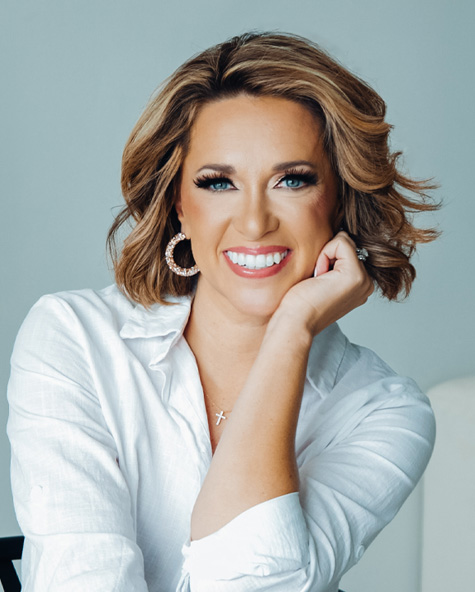
Kelly Roach - How To Be A Category Of One


In a world of trending fads, unqualified "influencers" and surface-level tactics that leave business owners exhausted, overwhelmed, and far from profitable.... Business Strategist Kelly Roach’s new book “Conviction Marketing” helps entrepreneurs uncover the secret ingredient to achieving authority and industry leadership in their field.
Kelly transforms overworked entrepreneurs into seven-figure CEOs by teaching them how to leverage timeless business principles, employed by billion-dollar corporations, with the most powerful online marketing speed and agility strategies of today.
Conviction Marketing isn't like other marketing books! Instead of teaching you to chase social media marketing trends that change week by week, this book will help you teach you a unique approach to building thought-leadership in your marketing, even in the most saturated online markets.
In Conviction Marketing entrepreneurs will learn how to:
▶️ Stand out on social media
▶️ Create marketing messaging that connects with dream clients
▶️ Create real influence online
▶️ Leverage a SIMPLE marketing strategy that can be applied to any social media platform
▶️ Create an online brand that commands attention
▶️ Grow their business with an authentic marketing strategy that represents who they really are
📖 Grab Kelly’s new book “Conviction Marketing” : https://amzn.to/3xazM4Q
👤Connect With Kelly Roach:
✅ Official: https://kellyroachcoaching.com/
✅ Facebook: https://www.facebook.com/kellyroachshow
✅ Instagram: https://www.instagram.com/kellyroachofficial/
✅ LinkedIn: https://www.linkedin.com/in/kellyroachint/
✅ YouTube: https://www.youtube.com/c/KellyRoach
✅ Twitter: https://twitter.com/kellyroachlive
This Full video episode available for free at: https://KellyRoach.dealcasters.live
All of the products discussed in this podcast can be found here: http://dealcasters.shop
All video episodes available for free at: https://dealcasters.live
👤Connect with Dealcasters:
🎧Grab all these great episodes as an audio podcast at: https://link.chtbl.com/Dealcasters
🎥Catch all the full episodes on replay or live at: https://dealcasters.live
Follow Dealcasters:
Chris Stone [00:00:01]:
Would you please welcome to Dealcasters, the one and only former NFL cheerleader and Fortune 500 executive turned eight figure entrepreneur, successful podcaster and author of the new book Conviction Marketing. Would you please welcome to dealcasters Kelly Roach.
Kelly Roach [00:00:20]:
Hello.
Chris Stone [00:00:21]:
Hey. Yeah, I keep expecting, like, applause. Like, we should have, you know, we should have canned applause, you know, when you get an intro.
Kelly Roach [00:00:28]:
I was just going to say I was just going to say what, no applause? I mean, come on. I was getting into the bio. I was ready for the action. No, that's great to be here with you guys.
Jim Fuhs [00:00:38]:
Yeah, it's great to have you, Kelly. Kelly, as I was saying, I've been working with you and what has grown into an enormous team. I think it's been going on four or five years. And I love how you have evolved your business as a coach, and you go into that in the book of how things have changed. And one thing that you don't do is you don't sit still. Right. I love in the book how you talk about that continuous learning process and how you've got the pyramid and everything, what inspired you to write another book. Right. This is your third or fourth book now, I think.
Kelly Roach [00:01:18]:
Yeah, absolutely. It's my fourth and I'm working on a new one now, actually. And I think the biggest thing with Conviction Marketing is that we now live in a world where people, of course, understand that content is so critical. If you're building an online business, it is your entire online store, right? It's how people discover you. It's how people fall in love with your brand. It's ultimately how people make the decision that they want to buy from you. So that is a great thing, right? And the beautiful thing about social media, look what we're doing right now. We have the ability to live stream 24 hours a day, seven days a week, from the comfort of our own homes, even in yoga pants if you want to, right? Or a pair of beach shorts or whatever the case. So this is amazing, but I noticed a very kind of scary trend over the last three or four years. And I actually wrote the book Conviction Marketing before the Pandemic, and I ended up putting it on hold for a couple of years because there was so much craziness, and I was pivoting my way through, leading my clients and my team through all of that. But I noticed this trend where content began to shift into this follow the leader mentality, where everyone that taught at my level in the market was saying, just find the trending song and let's sync to it. Go copy whatever the fat is. Actually, people were building their whole business on saying, this is what's popular today. Do this, create that, replicate this, copy that. And I said, wow, this actually defeats the entire purpose of creating content, right? Content should be an extension of your visionary leadership, of your thought leadership. Content should be the entry point through which you have a sense of expression for your unique perspective, your unique ideas, your philosophy and the value that you bring to the market. And I think that we completely lost sight of what the purpose and where the impact of content really comes from. And so I watched a lot of entrepreneurs spinning in these cycles where they were chasing these fads and trends as people were saying oh, do this today, do that tomorrow, you need to focus on this now, copy that. And by the time they learned how to do ABC XYZ, the trend had already changed to something else. And so it was just this endless cycle of entrepreneurs feeling overwhelmed and frustrated and stuck with the content creation process, because they were constantly chasing this mirage of, oh, if I just do this, then I'm going to be successful on social media. So I wanted to write a book really detailing out the process and the mentality through which I built an eight figure company and through which I've helped hundreds of entrepreneurs to build six, seven and eight figure companies. Doing leadership based, thought provoking, very intentional content, not following trends, not doing the latest, greatest bad, not singing or pointing or lip syncing or dancing, but instead really focusing on adding value to the market. And so I wanted to not just write a book that was my opinion on why this is important or giving people encouragement that they don't need to do those things. But I really wanted to map out a system and a process that people could follow to learn this methodology and to be successful achieving their business goals without compromising their values or really losing the impact that they could make through their thought leadership work online.
Chris Stone [00:05:09]:
That's amazing. I'm glad you're saying that because I think a lot of times someone will look at somebody else not necessarily as an influence and then they try to do the exact same things that someone else is doing thinking that they will achieve the same sort of success. That whomever it is and that person's taken right. You've got to develop your own thing. So what do you say to someone that says well, I'm just not a creative person I can't come up with this viral video or this way of doing TikTok or social media.
Kelly Roach [00:05:44]:
Yeah, well that's the really interesting thing is that when you create content based on trending things, a lot of times you can create virality, you can create a lot of engagement on that content. But what people have forgotten is that it's not the engagement, it's the conversion into action that matters. And so when I teach people about content and when I focus on content creation myself, I would rather create a thought provoking piece of content that adds value, that gets five likes. But someone opts in and either applies for a consultation or joins my launch, then I would rather have someone that I have 1000 people that comment on this funny video that I made. But of those thousand people, think about it. How many of your ideal client are sitting and spending time scrolling on social media, commenting on funny videos? That's the problem, is that people are getting this positive reinforcement in the wrong way for vanity metrics that don't actually put dollars and cents in the bank. So I think creating that distinction of understanding the difference between engagement versus conversion and thinking about who do you want to attract and what are their behaviors, right? So I'll give an example of myself. I could go create these silly, funny, really engaging pieces of content online, and I could throw them out there all day long and get way more engagement, more follows, more likes, more comments than I do on the content that I create. But here's what I know. My vision and my goal in my business is to work with business athletes, people that actually want to build substantial, profitable companies. Well, here's the deal. Look at the behavior of those people. Those people are busy building their businesses. They're not sitting and scrolling, watching funny videos and commenting on silly, stupid lip syncs all day. They're actually working on building their business. They're only going to click to pay attention to my content if I'm talking about a specific topic that they're like, oh yeah, I actually need more information on that. Oh yeah, that's relevant to a problem that I have in my business right now. Okay? It's worth me stopping what I'm doing to go listen and engage in that because it's going to add value to move my business forward. So I think separating those two things is really important. And then the other thing, just to come back around with your question, a lot of people say, oh, I can't come up with the topics or I can't come up with what to do, or I'm not creative like you said. When I was building my podcast, and I went from I'm in the marketing category, which is one of the hardest categories, most competitive, hundreds of thousands of shows. I was so deep on the rank, you couldn't even find me unless you typed in my name up to number eight. And what I did to achieve that was as people came into my ecosystem, I actually asked them, what do you want to learn? What topics interest you? What would excite you? What would you love for me to create a podcast episode on? And so I listened to my audience and I really tapped into what is going to motivate them to set aside 20 minutes to spend with me listening to my show. And so you don't have to be creative. You don't have to come up with all the ideas. You don't have to be this Uber like creator, right? You just have to listen to your audience, pay attention to their wants and needs and create things that are really well crafted just for them.
Jim Fuhs [00:09:21]:
Well, and I think one of the things, too, and I felt like when I read the book and I saw Ross brand, was kind of saying the same thing in the comments. Like, thank you, Kelly, for saying I don't have to do TikTok, right? I don't have to do all these things just because that's what the majority is. Like, oh, you've got to be here, you've got to be there. Focus on what you're good at, right? I love how you talk about you start the process with how to information, but then you've got to kind of go from there and it really is eye opening, right? It's a lot simpler than we try to make. It like we get too complicated.
Kelly Roach [00:10:00]:
So simple. It's so simple. That's the thing. And it's so funny because the same people that have been teaching how to go viral or how to create these high engagement pieces of content following these trends are now coming back around and saying, original content is making a comeback. People don't want these lip syncs anymore. And I'm like making a comeback. It never wasn't it never wasn't performing. It's just that people were playing follow the leader. And just as you said earlier, Chris, I teach people to become category of one, meaning you stand out in the market as being the best in the world at what you do. If you are copying someone else's content, you already compromise your entire brand because you have no opportunity to be the best. You've already said, well, the best I could possibly be is the second best version of this other person instead of this unique brand of my own that has this unique perspective and vision for how I'm making an impact.
Chris Stone [00:11:03]:
Yeah, we've got a friend that's another Amazon Live creator and he joined us at VIDFEST last week. His name is Chris P. Giles, and he went on stage and people were talking to him about vanity metrics and followers. And he says, I don't chase subscribers. I chase the checks. And so, very much like what you said, you have to be able to not get the rush from all of the people liking and all of that kind of stuff and really determine who you're talking to and what problems you solved in your podcast. This is the other thing that I love. And folks that are listening to us or watching right now, either on Amazon or the other tubes, go and subscribe. I guess we can't say subscribe. It's free. Follow the Kelly Roach Show podcast. Fantastic podcast. And she mentioned that it's approximately 20 minutes. And whenever I listen to podcasts and I listen to a ton of them, kelly, you're always pounded with ad. Not always. You're pounded with ads. Sometimes the first time you hit the play button, you're hearing ads, maybe there's mid roll, and then are you going to get to the point? Are you going to get to the point in your podcast, even in what you say in your intro, you use the phrase no fluff, and it is 20 solid minutes of content that you give. This is not something that you're paying for. This is not something and so you talked about asking everyone what they wanted in a podcast. Was all of that intentional? Was that based upon what you asked your community?
Kelly Roach [00:12:38]:
Everything is everything is incredibly intentional. I mean, people ask me all the time why I don't have sponsors on the show. I build an eight figure business on free content. So the last thing that I want to do is dilute my show, which is 20 minutes of rock solid, heavy hitting, like, bam, you're going to come in, you're going to get what you need, and you're going to get on the road. It's way easier for me to offer that for free and let people then progress through my ecosystem and then invest 30,000, 50,000, $100,000 to work with me than saying, oh, I might be able to get this $5,000 a month podcast sponsor. And I'm not saying there's nothing wrong with sponsors. I would consider sponsors in the future. But that's not something right now that aligns because right now the highest value is if you can create this very potent, really unique experience for people where I always say, if you can create church, right? If you can create church where people say, the one thing I'll never miss, the one thing I'm going to show up for every single week is I'm going to listen to Kelly's show. That's a fan for life, that's going to be a client for life, that's going to be someone that tells their friends, someone that shares your show, the value of that is immeasurable because there's going to be a ripple effect, right?
Chris Stone [00:13:53]:
Yeah, absolutely. Would you say that one of the top ways of marketing is that share button? I mean, that just still is like one of the one biggest drivers of any algorithm is how many times people are sharing it with others.
Kelly Roach [00:14:09]:
Yeah, absolutely. And it's staying power. That's the biggest thing. And I talk a lot about this in the book because most people, when they think about marketing, they're only focused on the front end of let me get in front of more people and let me get a click, a comment alike. They're not thinking about the fact that the vast majority of people are going to spend weeks, maybe months, sometimes years, progressing through this process before they make a buying decision. So the introduction to you is nothing. It's your ability to get them to want to stay with you and stick with you throughout this relationship building process, to go from know to like, to trust to buy. And that's the problem when you're focused strictly on that front end, tactical based marketing. Yeah. That's going to get more engagement up front. But you're not thinking about that process. Follow through to completion. Like you said earlier, chasing the check. Right. You're not thinking about that. Follow through to completion. And absolutely getting people to be brand ambassadors and advocates of the brand where they're like, I got so much value from this person for free. You need to come listen. You need to come be a part of their world. There isn't a better testimony than that. Right?
Jim Fuhs [00:15:26]:
Yeah. And you kind of take that next step and you came up with an acronym in the book and it's care more. And I think it's so powerful, right? Because when we get these, you turn these into friendships. It's not like, oh, it's just a customer. You have to like right. It's giving back and realizing that these people, once they get connected to you, could be connected for life. So do you want to talk a little bit about how you came up with that?
Kelly Roach [00:15:52]:
Yeah. Again, it was something very similar. So when I was building my company and this was long before this is when I was a baby, baby company, right? Like, I was maybe six figures, maybe not even six figures yet, I was really looking at the coaching landscape, and I could see once again that the entire mentality and focus of people in the world of coaching was very transactional. It was, how do I get the most clients the fastest? Never talk to them again. Like, literally, that is the mentality. Like, get them in, never talk to them again. Get them to pay and then move on and sell to more people. And I said, wow. I said, if we could focus obsessively on caring more about the value and the results that people get, we will grow faster and we will outperform everyone in the market. And that's exactly what happened. I mean, we just won Ink 5000. You saw we got the regional award out of millions of people in the southeastern part of the US. So it's funny because I always say, do the right thing for the right reason, and you're always going to win. You can take shortcuts. You can take shortcuts with your business, you can take shortcuts with your relationships, you can take shortcuts with your marketing. And you may feel or it may look like on the surface that you're jumping ahead more quickly, but in the end, it's never what works out. And so when I had that observation of the space, I was like, we're going to focus on accountability. We're going to focus on human interaction, we're going to focus on really being obsessed more than anything with our customers results. Right. Not just the front end payment, the back end ROI of how has their life changed by interacting with us. And I believe that that's how we became category one in the coaching space. I mean, we're one of the only female Led eight figure companies in the online space. And I truly believe the CareMore model is like the heartbeat of how that happened for us.
Chris Stone [00:17:47]:
It's amazing how you've done that and how you've scaled, and now you're turning this around and not only are you just scaling your existing, but you're helping other people do the same. And there's a lot of people that listen to the show, watch the show that may be solopreneurs or entrepreneurs, like maybe with a VA or something like that, and they get stuck, right? Maybe it's fear, maybe it's budget. I'd love to know, since you have so much experience with this, what keeps people stuck from gathering more people on their team in order to scale if you're a smaller business?
Kelly Roach [00:18:33]:
Yeah, I think that in many instances, the hiring process is a huge learning curve for business owners. Because when you begin to expand your team, you are learning what's going to work in your company, what's going to work for this role, who do you need, what do you need? All of those things. And for a lot of business owners, and this is statistically true, it takes three to four hires to find the right person for a role. So what happens is a lot of business owners go through what I call the Boomerang Effect. And I wrote about this in one of my other books, Bigger Than You. It's here on Amazon. And I talk about the Boomerang Effect, where business owners bring someone on, they quickly offload a whole bunch of work on them. The person doesn't end up being the right fit, or they're not trained properly, or they don't understand the true what, how, when of the role. And then it ends up boomeranging, back on the plate of the business owner. And now it's a big old mess and it's way more work and it's harder to manage and all of those things. And then I basically see that a lot of times, business owners, when that happens, they pull back completely from hiring and they say, I'll just do it myself. It's less work, it's easier, I'll just do it myself. But we all know that without a team, there's no ability to scale, there's no ability to grow in a sustainable way. And it's why I wrote bigger than you. I think that really educating business owners on how to help team members to become successful within their organization and also how to understand the learning curve that you are going through as a business owner is so essential so that you have the patience and the follow through to get to that end result.
Chris Stone [00:20:20]:
Well, not to mention too, if you're doing everything in your business and you're pulling that back and saying, I'm going to do it myself, what does that leave you in your personal life? What does that leave you in your family life? And in your spiritual life, all of the things that are sort of maybe outside of what you're doing to allow yourself to be a more happy person loving what you do, right?
Kelly Roach [00:20:45]:
That's it. That's exactly it. If you have no freedom, if you are working endlessly on menial tasks and entry level things that a team member could easily be doing for you, it really defeats the purpose of being a business owner. Right? So team is absolutely essential to make the impact that you want to make in the world, to make the difference that you want to make, to make the money that you want to make and to keep your sanity. But it is a process and it is a learning curve. And I think it's really important to understand that if you've had struggles with building team, you're not alone. It's par for the course. It's a learning curve we all go through, right?
Jim Fuhs [00:21:23]:
Yeah. Kelly, you've done that. What have you found? Has been some of the keys. I think sometimes people feel like, oh, this is my role and there's nothing more. So do you look for people that are growth oriented, that want to keep learning, that want to push the boundaries? Do you think that's important as well, hey, if I'm with this person or this organization, how can I continue to grow later? Because I know, like, Nicole, who works directly with me, has been with you for quite a while. I know she's one of your key team members. How did you go about doing that?
Kelly Roach [00:21:56]:
Yeah, I mean, that's the thing is you look for people that have that drive for never ending learning, that love to grow, that love to learn, that want to push the limits, that aren't scared by challenges. You're looking for people that are kind of ready to go on that wild ride with you and can enjoy the process. And I think flexibility is one of the most important characteristics in a small business because we all do 100 jobs, right? One day you're working on this, the next day it's on that. So flexibility, pliability, passion for learning, passion for being of service and someone that is not scared by big goals and big expectations.
Chris Stone [00:22:40]:
So back to conviction marketing, because that's one of the big reasons why we're here. And for those that are here on Amazon, it's down in the carousel. It's Kelly's Brand new book and we have a number of influencers that are in the house, including none other than Ross Brand, who's the reason why dealcasters exist. Thanks for joining. Ross says this is one of the best interviews he's ever seen in a live stream. And Kelly, if you don't know who Ross Brand is, basically if there were a Mount Rushmore of live streamers, ross's mug would definitely be on it. So that is a major compliment. So specifically related to influencers, one of the things that the book talks about is how to create real influence online. Obviously, everyone has their own brand, hopefully their own voice, and they're not making a fax copy of a written napkin of somebody else or whatever. But what are some commonalities or maybe some sort of linchpins for someone who's an influencer that really wants to create real influence online as opposed to be just sort of a copy of someone else? Or how do they blaze their own trail?
Kelly Roach [00:23:50]:
Well, it's really interesting and I think this is one of the things that's very counterintuitive about building a successful brand online. And it kind of coincides with everything that we've been talking about here today, which is that I think a lot of people think that becoming an influencer online is about having the fanciest videos or the best marketing tactics or the latest, greatest sexiest, most exciting thing that you're sharing. What I have found in becoming a true influencer myself, I move thousands of people to action every day. I taught the live launch method to over 40,000 people around the globe, help hundreds and hundreds of business owners grow their companies. It's really the more boring stuff, which is continuity, it's consistency and it's adding immense value over time. It's people knowing what to expect from you. It is people that trust you with their life, right? If I show up one day and I'm talking about conviction marketing and then I show up next week and I'm like, hey guys, I'm going to do this tutorial on how you can lip sync and get this viral video and all of that, that immediately breaks trust. And what we see online is that in people's attempt to build influence, a lot of what they do is they're like a ping pong ball, right? Because they're trying to keep up with the trends, they're trying to do the things they think they're supposed to be doing. And what happens is that actually breaks trust. If I'm going to follow you and I'm going to see you as my mentor, I'm going to see you as the person that I invest in, or that I follow, or that I listen to your show every single week, or that I most importantly share. We talked about the importance of shareability. I want to know that I can trust that when I do that, you're now an extension of me. So if I recommend you, you are an extension of me. I want to know that there is going to be continuity of trust, of values, of what to expect from this person. Right? So the thing that I think is so interesting about building influence online is myself and a lot of the people that you see out there that have built influence. We build influence by this level of tenacity in our commitment to consistency. It is delivering free, over the top value every single day to the market for years and years and years. It doesn't happen overnight. I always say every overnight success is 15 years in the making. Right. It's just we just so happen to find out about that person when they're having their moment and you're like, oh, my gosh, this person came out of nowhere and they're just killing it. And then if you actually read their bio, you would see, no, that person has been in business for 15 years. They were doing the work all along. It's like now they're just finally having their moment because they did the work. So preparation met opportunity, and now you're seeing that. Right. So there are some counterintuitive things with building a business, I think. And that's why I do things like writing the bigger than you book and writing the conviction marketing book. I try to write on topics where there aren't other books for entrepreneurs because these are the misunderstood concepts that take people in the wrong direction that aren't beneficial to them. Right, yeah. That's a little bit of how I see the world of influence, for sure.
Chris Stone [00:27:18]:
It's incredible perspective because you're not thinking about on social media, just being a trumpet of here's what I'm doing here's. The next thing I'm doing here, you're actually thinking about how or why that person would share that content and how that represents them. It's obviously very selfless, but.
Jim Fuhs [00:27:36]:
It messed.
Chris Stone [00:27:37]:
My head up in a good way, Kelly, so I appreciate that. I can tell you're a pretty good coach.
Jim Fuhs [00:27:42]:
Now you know why she's my coach, Chris.
Chris Stone [00:27:44]:
Right, exactly.
Kelly Roach [00:27:45]:
Thank you.
Chris Stone [00:27:46]:
Exactly. So for those of you who are watching and how lucky are you that we have Kelly Roach here live on Dealcasters? If you have a question, please put a queue in front of it in the chat and we'll be sure to ask it. And Kelly, we do have a question from our friend Ross Brand here. Back to the conversation about hiring someone. Is it better to hire a team member who wants to learn from you to one day do what you do or someone who is committed more to an admin behind the scenes role?
Kelly Roach [00:28:21]:
That's a good question. I'm going to answer it kind of differently. But there is a distinct answer. So when you hire someone who wants to one day do what you do, within a matter of weeks, maybe months, that person is going to decide that they can do what you do and they can do it better than you. And so they're going to study you, they're going to learn from you, they're going to get all of your training and then they're going to go compete with you. I don't think people competing with you is a problem because if you're building a category of one brand, it doesn't matter because they're never going to be you. However, the problem with it is it wasted time, wasted money constantly starting over with team, which is why I teach a lot about the distinction between an entrepreneur an employee and an entrepreneur, an. Entrepreneur is someone, and I see my team as entrepreneurs. Nicole's an entrepreneur. Danielle is an entrepreneur. 25 plus entrepreneurs on my team. These are people that have an entrepreneurial spirit. They're business builders. They have the same characteristics of an entrepreneur, but they don't want to go be a business owner. Many of my team members actually have been business owners before and realize that's actually not for me. I want to do the thing that I'm really good at, and I want to be the best at it. I don't want to do these thousand jobs as a business owner where you're not really getting to do that thing that you love anymore. You're really focused on sales, marketing, operations, finance, HR, legal, all those other things. So an employee is just kind of a plugger, right? They don't care which way the wind blows. They just want to clock in, clock out and get their paycheck. An entrepreneur is an internal business owner that sees themselves as an owner of their space within the company. And they're going to learn from you. They're going to grow with you. They're going to ebb and flow with you. And then an entrepreneur is someone that is okay with doing all of those elements of what it takes to be a successful business owner. So I think it's very important to be really careful of people that say they want to do what you do. I haven't seen any instance in which that has worked out well, to be perfectly honest, and not for me and not for my clients well.
Chris Stone [00:30:33]:
And it also takes experience to be able to get to a point where you have this type of knowledge, right? So it's interesting the way you're taking an interest in their career path. You have to understand what's next. Where are you going there? How can I get you there? And if it doesn't happen to be on team Kelly Roach. Okay, that's okay. Now I know what I have right now. I can still manage my team and help this person because as I found, being a manager in other companies, it's like you never know if you help someone get another job somewhere else, how that may come back to you. And not only just going through the experience, but that person may be someone you need help from in the future.
Jim Fuhs [00:31:14]:
Right?
Kelly Roach [00:31:15]:
100% never Burn Bridges I mean, I came from Fortune 500. I still go back to this day, and I do consulting for them. I come in once a month and I do leadership trainings for their VPs and their executives. And I was just last night, I was audio messaging with one of my past employees, and she was saying, you're the person who showed me that I could have my dream. Like, that my dream could be possible. And I think so many people make a huge mistake with burning bridges with past employers. I would just definitely say, I think that's really important. And wherever possible, building bridges, not burning them, will help you in every area of life. So just something to keep in mind.
Jim Fuhs [00:31:59]:
And this kind of goes back to something you talk about in the book as well. And in the book you talk about like, yes, we all have competition, but when you're trying to become a category of one, don't get so worked up and worried about what they're doing. Focus on what you're doing. And I thought that was kind of refreshing because so many times we see people like, oh, well, if I copy what so and so is doing, I'm going to become successful. And that's not necessarily the case, is it?
Kelly Roach [00:32:26]:
No, absolutely. I mean, someone could take my social media posts, they could take my launches, they could take my content and they could repost all of it. And that doesn't mean that they're going to get a response or have any success. There's something innate and something that is distinct about coming from a place of creation, intuition, life experience, knowledge, expertise. A lot of people think that if they do what someone else successful does or say what someone else successful says, that they will replicate those results. That's not the case. That's why one of the first things that I did when I was beginning to scale my business was I disconnected from all of my competitors. I got off of all of their email lists, I unfollowed them, all of those things, because I didn't want to unconsciously be absorbing what they were doing and create from a place of this is what my market is talking about, or these are the topics I didn't want there to be any influence. I wanted to create from a place of intuition, of expertise, authenticity. And I think that really, really helped me a lot with creating the distinction of the brand because it's not a replica of what someone else is doing. It is unique and distinct. And I always say I think it's important when you're starting a business, you have to assess market viability and you have to gain an understanding of the landscape in order to understand how to position yourself and how to integrate into the market. So I do think that adds value when you're beginning to get started in business. But I do believe when you get into marketing your business and really growing your company, you have to have a cut off point where it's like, let's take the pacifier from the baby now you got to figure out how to pick up the bottle and drink right? And I think that the sooner that you get to that place in your business, the more fun you're going to have because you're actually creating things that are inspiring and exciting to you versus creating things from a place of, well, everyone's talking about this, so I better add value or comment on this, that or the other. And I think that also sets you free. It really sets you free when it's not, if this, then that right, it's more so who are you here to serve and what is your message for those people and how do you believe that you can add value for them?
Chris Stone [00:34:57]:
Amazing. One of the great ways to market and has been for the past number of years, especially in the past few years, is podcasting. And how do you keep someone who either just started a podcast maybe even a year ago to someone who's thinking about starting a podcast to sort of maybe turn off the noise and understand that podcasting isn't something that even though you might see something on an algorithm or on your screen or on YouTube that says you can get a million downloads in six days by just following these four steps, and all the things that are lies. Quite frankly, how do you keep someone, get them to ignore the noise and understand what a thing like podcasting or some other form of marketing that may be more of a long game.
Kelly Roach [00:35:51]:
Yeah, I talk a lot about podcasting and it's really interesting because I think people really struggle with committing to things that are long range and are not transactional. But I think the best marketers and the best business builders are the people that are willing to invest in playing the long game. And so I talk a lot about the importance of creating your legacy body of work. And I believe podcasting is the absolute best way to create that legacy body of work. That and writing books. It's why I'm always working on those two things. And again, I think it's like, are you a transactional fly in the ointment or are you someone that's really looking to build a business of substance that's going to stand the test of time? And what I talk about a lot with podcasting, and I said this from the day I started mine, and I still say it today, over 800 episodes in, is that algorithms change every single day, but people wanting to throw in earbuds and get motivation, education and information, it's never going to change. It's never going to change. And it's such a unique format because it's the only format where people can be completely free, hands free eyes, doing other things in their life while getting an education online. I mean, there's nothing else like it.
Chris Stone [00:37:16]:
It's an intimate format. You're catching somebody on their commute to work or walking a dog or going for a run. And again, it's thinking about your ideal listener and then giving them information that they could use. I love the fact that you just said, I'm going to make this in 20 minutes or less and it's just going to hit. And you never asked me, but originally you asked your community, I must be a target demo, I guess. But that is all very intentional, but it doesn't come across that way at all. It comes across like she's just hanging out and talking to this killer other podcaster. Or maybe it's just you just giving information. It's very unassuming, yet incredibly valuable. And I know that wasn't on accident. It probably came with a few mistakes. Can we go back to episode one and maybe just pipe this in? Would you be happy with episode one? You think episode 800 was better than episode one?
Kelly Roach [00:38:19]:
I would hope so. If I didn't get any better over 800 episodes, then we had some issues, right? Yeah.
Jim Fuhs [00:38:25]:
Well, Kelly, you go back to something you said earlier, right? So many business owners think transactional. And the other thing you talk about is it's the journey, right? And this is something that even in my own mind, right? It's like some people say, it's not a sprint, it's a marathon. No, it's beyond a marathon. And you even talk about that in the book, right? It's like a journey. And you continued to evolve your business. It's more than really one business. And also, as you talk about this, you started another. Is it brand your courage? I hope.
Kelly Roach [00:38:57]:
I'm saying give her courage.
Jim Fuhs [00:38:59]:
And that's a whole nother thing you're doing to kind of give back and inspire the young women of our generation that they can be like Kelly Roach someday, right? And I think it's amazing. It gives me hope for Chris, you didn't have daughters, but I do. And so those are one of those things that it's great for them to have role models like Kelly. And a funny story, Kelly, when my oldest daughter found out that I knew you, she was, like, shocked. She's like, you know, Kelly Roach in a good way.
Kelly Roach [00:39:33]:
Oh, that's wonderful. Yeah. And that's the thing. I think that when you're in it for the long haul and you have this vision for your life and your business that spans decades, not a few weeks, you take steps to invest in creating things from a place. Of building legacy and creating generational wealth and creating transformational change in the world versus just saying, well, what do I need to do today to get a sale? Right? And that's not very motivated in the long term. Right. Which is why I think a lot of business owners kind of lose their fizzle, their sizzle when you don't have a North Star that you're working towards and something that is very deep inside of you that you're being driven by, it's hard to keep going, because running and growing a business is hard. It is. And I know that is the opposite of what everyone wants to hear, and it's the opposite of what they're bombarded with on social media every day. But, Jim, you know this about me. I've been talking openly about that from day one. I'm like, this is really freaking hard. Don't do it if you don't want to work your tail off. I say to people with the great resignation. I'm like, if you're resigning right now because you have a hard boss and you work too long hours, please don't start your own business because you're going to get a way harder boss and you're going to work way longer hours for way less money, right? And that's the other side of the great resignation that no one is talking about, right? So it's a journey, it's a marathon, it's not a sprint. So I think keeping that stuff in mind is really important.
Chris Stone [00:41:14]:
When I was doing podcast consulting, you know how the term pod fade is? You do what, six or eight episodes and then you quit, right, because you don't see the quick numbers. You're not in it for the long game. And then they just give up. And I used to be like, you got to keep going, got to go do consistency. It's got to keep doing that. And finally I was like and I'm listening to these episodes and they just don't sound like they're into it. And I'm like, you know what? This is not for you. If you love this, do something else. It's a crazy thing. You could preach consistency all day long, but like you said, that's a little tough love there.
Kelly Roach [00:41:55]:
I think it's coming back to having a deeper why and a deeper thing that's driving you. And the consistency comes from you having a North Star that you care deeply about, that you keep at the forefront of what you're doing each day. And I think that's a really important thing that we all need to be reminded of because you start each day, you have a plan, you want it to go a certain way, and then five minutes in, you're like, okay, guest today is not going right in that direction, and it's constantly doing those little course corrections, right?
Chris Stone [00:42:31]:
Exactly. So do you think a lot of people will soak up information from this show? Hopefully, but other shows that you've been on, but also from other people? And is one of the things about, like, for me, I have lots of different influences, right? But none of them am I going and doing an exact sort of Xerox copy facsimile of what that person is. Maybe Simon Sinek, maybe whomever you kind of pull in little nuggets and all those are kind of cobbled together to create what is me. Is there trouble with doing that? Am I doing it all wrong?
Kelly Roach [00:43:11]:
I don't think there's a doing it wrong. I think there's only us identifying what our unique calling is and then acting in authenticity with that. And I think different people are inspired in different ways. I think different people are motivated in different ways. I think different influences have a different impact on people. I think it really comes down to knowing what is the difference that you want to make, what is the outcome that you want to create, and what is the most authentic way that you can go forward and really answering that, calling for your life. Because we have limited time here, and I say this all the time, we have such limited time and every day that hourglass is going from the top to the bottom. So it's like, who do you want to be with this life that you have? Right?
Jim Fuhs [00:44:00]:
So true. Yeah. And it's funny, right? We were talking about this yesterday with Stu Heineckey, right. It's like when people say, oh, we can get back to you in a few months. You don't have months, right? You got to be decisive, you've got to be resilient. And that's something that you have definitely been and even I've noticed, right, because I've been with you for several years, how you continuously change the program to better serve us. And I'm sure some of it's from feedback. And so I love how the cohort are working. It's really something that probably several years ago I wouldn't have understood, but now it's kind of like you're matching up people that are kind of at about the same level right now and it's helping all of us be better.
Kelly Roach [00:44:45]:
For sure. Yeah. And that's the thing, you can't be afraid of feedback. And feedback is really the way that you can evolve effectively the fastest. And so that's a big thing for us. We're always asking for feedback and it's just not taking things personally, right, and using it to learn and grow and also it's having the courage to introduce new concepts to the market. When I started teaching about twelve month programs, everyone was like, you're insane. Everyone in the coaching world buys six week courses, right? When I introduced the Live launch, everybody was like, no, we use slide decks and we use pre recorded videos. And a lot of the stuff that has really created distinction for us in the market was stuff that was radically different than what people were used to. And it was a willingness to say, I'm going to commit to sharing this idea. And I understand that people may not understand it right away, and a commitment to saying, but I'm going to keep teaching this concept over and over again until they get it. Because it's superior. And I know it can get people better results. They just have to get their head around it. And I think that's why patience and being humble is so important, because in the beginning they may not get it. And in the beginning people might be like, yeah, what are you talking about? That's not what we're looking for. But over time, you will build an audience of people that really believe in and get the fact that you're bringing ideas to the market that are designed to add value with their highest purpose and their highest good in mind, and they will trust you with their life, with whatever you say and do. But that takes years and years and years and years of you being that person that shows them over and over again, I can trust you. I can believe you. You don't lead me in the wrong direction. You stand behind what you say. You do what you say you're going to do. You live what you teach. And that's why not changing what you're doing, constantly changing niches, changing what you teach, changing your opinions, changing this, changing that. Because then people are like, well, who is this person? Really? I actually don't know this person because I thought I knew them last week, but apparently this week they're someone else, right? So that's that patience. It's that continuity over time.
Chris Stone [00:46:57]:
Killer stuff. So ladies and gentlemen of the book buying public here on Amazon, and if you're listening to the audio podcast later, a book is in the show notes. It is Conviction Marketing from Kelly Roach and those that are watching on Amazon and hitting a bunch of stars. I'm seeing all kinds of stars, so.
Jim Fuhs [00:47:17]:
There may be a lot of people.
Chris Stone [00:47:18]:
Clicking on that book, and for good reason. Conviction marketing is down there in the carousel, plus all of Kelly's books and Alexa Briefing podcasts. I mean, Kelly, pretty soon, like, you're going to have your own Amazon shop page with all kinds of goods. Is that coming? Are we going to have like Kelly Roche?
Kelly Roach [00:47:39]:
It is coming. The whole merch line is coming. Business athletes. Nice. You heard it here first. Don't tell anyone.
Chris Stone [00:47:47]:
Tell us a little bit more about.
Jim Fuhs [00:47:49]:
That because I love that phrase, business athletes. Tell us a little bit more about that.
Kelly Roach [00:47:55]:
One of the things that the coaching world teaches is that everyone's going to be an overnight millionaire. They're going to be working 4 hours a week and sipping drinks on an island. And that sends a lot of dreams to the graveyard. Because when you set expectations that way and then people can't attain those expectations, people are frustrated, disappointed, and a lot of times give up. And I've taken a very different approach and I've coined this phrase, business athletes. And I've talked about the fact that in building a business in our world today, you have to run the drills the way an athlete does. So you have to commit to your business the way an athlete commits to their sport. And so we have all these phrases and methodologies and words that we use and all of that. So we're creating a product line around that that is really for the person that has this very high vision and standard and set of goals for their life. That really embodies Jim, you know, like the unstoppable mindset, right? So that's kind of what's coming with that.
Jim Fuhs [00:49:00]:
Very exciting.
Chris Stone [00:49:01]:
That's like Kobe Bryant, right, is the perfect example of that. One of the greatest basketball players of all time worked his tail off every single day. And his regimen is documented all over the Internet. Once you get to the top, you don't just sit there because it won't be long before you're out of a job. You got to be a lifelong learner and you got to continue to put in the work. That's amazing. Business athletes. Well, is it going to be like fitness type gear maybe?
Kelly Roach [00:49:34]:
Yeah, like T shirts and hoodies and all that kind of stuff? Yeah, very awesome.
Chris Stone [00:49:39]:
Well, be sure to let us know so we can add it to our dealcasters world because we'd like to assume that you would like to be a part of it because you're here on the show with us and we just can't thank you enough for taking the time.
Jim Fuhs [00:49:53]:
Yeah. And I did want one last thing. Kelly, there's something special you've been doing with some of these book sales. Would you like to talk about that?
Kelly Roach [00:50:03]:
Yeah. Oh my gosh, I'm so glad that you brought it up because this is the month actually. So when we launched Conviction Marketing. So I've been a long time, I've been donating to charity water for many years now and clean drinking water is one of my core philanthropic passions. And a couple of years ago, we built our first well. We fully funded our first well in Malawi. And when we launched the Conviction Marketing Book, we invited anyone who wanted to buy a book bundle to be a contributing member to building our next well, which is kicking off actually this month in Nepal. And so all of the sales from those book bundles that we sold during the launch are going 100%. 100% of the profits are going to building our next water project in Nepal, which actually is kicking off this month.
Jim Fuhs [00:50:51]:
That is so awesome. It shows you the kind of person that Kelly is. That's one of the reasons why started with a podcast, right? That's what intrigued me. And then taking the next step. So that's where I think people need to think about that. Kelly, where's the best place for people to connect with you?
Kelly Roach [00:51:12]:
Well, I would say start with the podcast. I think you said it best. Kelly wrote show. There's over 800 episodes. You can binge that thing on every topic under the sun related to mindset, building your business, scaling online, and definitely come back and connect with me on Instagram. You can message me and just say, hello, Kelly Roach official. But the podcast is a great place to start. I mean, just you can scroll through and pick episodes on all sorts of different things and I guarantee it will make your life better in some way, shape or form.
Jim Fuhs [00:51:43]:
Thank you.
Chris Stone [00:51:44]:
Nice. Well, we are dealcasters. We like to give everybody deals and that was just a guarantee, right? So there's no greater deal than that to be getting free information from Kelly. And we hope that you get a bunch of followers on that podcast because it is absolutely fantastic. Why wouldn't you take 20 minutes out of your day? But you might be able to binge about four or five or six episodes on our own. That's just a little thing. But anyway, Kelly, thank you again so much. It's been an honor. And for everyone else who's here on the book buying public on Amazon, be sure to pick up Conviction Marketing. And as always, don't fear the gear.
Jim Fuhs [00:52:28]:
Thanks for listening to Dealcastle. Congratulations. You've taken another step forward in your content creation journey. Please don't forget to hit the subscribe or follow button here in your favorite podcast player, so you can be reminded every time we drop an episode.
Chris Stone [00:52:48]:
Watch our shows live on YouTube, follow us on Twitter or subscribe to our.
Kelly Roach [00:52:59]:
YouTube channel.
Chris Stone [00:53:02]:
That you cannot find anywhere.
Jim Fuhs [00:53:05]:
If you have questions about this episode or have something you want us to review, you can also email us at dealcasters at dealcasters live. Thanks again for listening, and you know the deal. Don't fear the gear.