Darryll Stinson - How To Dominate Life After Sports


Darryll Stinson is a former Division 1 athlete, author, speaker, and suicide survivor. He speaks to give hope to the hopeless.
As a spiritually-directed business coach, Darryll helps heart-centered speakers grow profitable and innovative speaking careers using his Next Up Speaker success strategy.
As a former athlete, Darryll recognizes that every player needs a coach. Every year he invests thousands of dollars into being coached by a variety of others. He's had the opportunity to be coached by some of the top entrepreneurs and spiritual leaders on the planet, including Jack Canfield, Bishop T.D. Jakes, Jen Gottlieb, David Meltzer, Pete Vargas, Pedro Adao and John C. Maxwell.
👤Connect With Darryll:
✅ https://www.darryllstinson.com/
✅ https://secondchanceathletes.com/
✅ https://www.instagram.com/stinsonspeaks/
This Full video episode available for free at: http://stinsonspeaks.dealcasters.live
All of the products discussed in this podcast can be found here: http://dealcasters.shop
All video episodes available for free at: https://dealcasters.live
👤Connect with Dealcasters:
🎧Grab all these great episodes as an audio podcast at: https://link.chtbl.com/Dealcasters
🎥Catch all the full episodes on replay or live at: https://dealcasters.live
Follow Dealcasters:
Dealcasters Darryll Stinson Logic Bounce Podcast Framework
===
Jim Fuhs: [00:00:00] Darrell, uh, since then walked in the room and trust me, guy my size, seeing a guy that size, oh, you're gonna notice him. And he, he might've noticed me. He is like, who's that short guy? So we started to have a conversation and, uh, you know, when I started to hear his story and just, I mean, he is a professional speaker for one amazing, uh, presence.
He helps other speakers, uh, you know, he's been on. The TEDx stage, and, and he's written this book, he's worked with the National Football League players associated to say, well, Jim, is that, well, Darrell has a really, uh, it's, it's an amazing story in the fact that Darrell is still here. Darrell was a division one athlete at Central Michigan University, uh, and got injured, but he was so, uh, I guess you could say, and he may say, uh, say this.
Obsessed that he had to make it to the NFL. He ruptured a disc in his lower back [00:01:00] and he just did all the things you probably shouldn't do and he started taking painkillers and everything 'cause he was bound and determined that he was gonna play NFL football and sports was such a big part of his life that when he lost all that, he felt like he had lost everything.
It was his identity. His, his story not only ties into athletes, but folks like me, veterans, right? People going through transition. 'cause a lot of times, and I think Chris, even when you left your, your last, uh, you know, job, it's kinda like, what am I gonna do now? That was my identity. And so, you know, uh, you know, this is a very serious, you know, subject.
I mean, Darrell, uh, you know, attempted suicide and thank God I. He failed. And, uh, because of that, he finally, you could say, saw the light and, and maybe felt like, you know what, God put me here for a [00:02:00] reason. And, and so, you know, I haven't finished his book yet, but I, I've been reading it and it's just, it's an amazing story of, uh, you know, of resilience, uh, you know, watched his TED Talks and, you know, even now I think Daryl would tell you that, you know.
Depression isn't something that just automatically goes away, but I think by being aware of it, being able to talk about it, that, uh, you know, he, he's a gift to us. Uh, I, I'm so glad that, uh, that he wasn't successful in that aspect and that, uh, he is, you know, helping others, you know, he's founded Second Chance Athletes.
And so folks, it is my honor and privilege to welcome. He is a, a large man in many ways. Daryl Stinson,
Darryll Stinson: no need for me to say [00:03:00] anything like he said it all. You know my story now. Um, I will, I will make one disclaimer. Okay. Uh, the picture that you saw. This is not the same jacket, so I do have more than one suit jacket. This is actually a different shade, so it's okay y'all. I do not, you know, I'm not Arthur. I do not wear the same outfit every single day,
Chris Stone: Arthur.
Darryll Stinson: Wow. I haven't heard that one in a while.
Chris Stone: Yeah. Oh.
Darryll Stinson: Awesome. I love Arthur. Yeah.
Chris Stone: Thanks so much for coming on, man. This is, um, this is, like I said, this is, this is an honor for us. When Jim told me that he had, he had met you, uh, at an event and, um, that, uh, that you were coming on deal cares, I was like, uh, you know, yeah, I know who this is.
And, uh, you know, we're, we were out, you know, obviously, uh, super excited, uh, to be able to, to talk to you and, um, you know, for, for those that. Maybe are, are hidden, have been hidden under a rock, um, and, and you know, maybe sort of heard what Jim [00:04:00] was saying or maybe are just now tuning in. And I know you've told this story a million times, Darrell.
Um, but I think it's, I think it's important for people just to, you know, to kind of like lay the foundation here and kind of set the table for, for what you've, you know, you didn't automatically become this big entrepreneur and, and keynote speaker. And, uh, coach and all of the things that, that you're doing just overnight, it, it came, uh, it came at a price.
Right? And it, and, and there was a, there was a lot of, and I think a lot of people that become successful, uh, successful, not just financially Right. Successful in what they're doing. And, and I, I look at someone like yourself and I, and I, and I see, I see success, right? A lot of people see, you know, uh, PE people successfully walking on their private jets and, and all of these things, but they don't hear about the hard stuff, uh, and the hard work and the things that they've gone through to get mm-hmm.
To where they're at. And so if we could just start there and just maybe, maybe talk about, um, the [00:05:00] road it took for you to get to where you're at.
Darryll Stinson: Um, so where, where you at from in Michigan? Chris, where, where at? Uh,
Chris Stone: I grew up, uh, 32 Mile in Van Dyke, Romeo.
Darryll Stinson: Oh, Romeo. Yeah. Okay. North of Detroit. Yeah. I, I, I played with, I played in Romeo a couple of times. Oh yeah. Uh, the fact there's a really good guy. What's his name? Blake. Blake c Berry.
Chris Stone: Oh, I know Blake C Berry.
Are you kidding me?
Darryll Stinson: Are you serious? Yeah, I played with him. I
Chris Stone: know the c the whole cush Berry family from Romeo. Yeah, absolutely. Oh,
Darryll Stinson: dude, I haven't seen him since high school. Yeah. The dude was a sniper from the three point line. Oh, yeah. So yeah, we played, uh, a, a whole year together. It was, it was fun. He was a great player.
I don't, I, I, I didn't follow his journey, but he was a great player. Wow. I'm, I'm surprised I remember that name. I feel smart now. The concussions have not taken all money. Brave. Right. [00:06:00] But anyways, I am from Jackson, Michigan. Uh, for those of you who don't know where that is, it's about an hour and a half west of Detroit, small town.
And, uh, if you know Tony Dungy Oh yeah. Tony Dungy and I are the only famous people from Jackson. Okay. Uhhuh. And, uh, I grew up a very smart intellectual kid. My mother put me in a. Advanced learning classes because she noticed that I was very smart and that meant that I was one of two black students in an all white class.
There was nothing wrong with this. I, I wasn't made fun of. It actually worked to my advantage. I was one of the smartest kids in the class. People cheated off my test. They laughed at my jokes. They called me go, and so I thought, remember I'm in third grade, that since they liked me, everyone in the school must like me, right?
One day I'm walking back from class, uh, from a bathroom break, and I've got this big wooden pass in my hand. I don't know why they used to do that, y'all, the nasty wooden pass is to [00:07:00] let you know that you were going to the bathroom. And I see this group of black students circle together and they're just cracking jokes and stuff.
I'm like, man, I'm gonna go and get in on the jokes. So I walk over to 'em and I say, what's so funny? Nobody answers. I'm like, I'm, I've always been like one of the tallest kids in class. And I'm like, I know they, I know they see me, so let me speak up. Maybe they didn't hear me. And I was like, Hey y'all, what's so funny?
And just as soon as I was saying that somebody turned towards me and said, your was funny, white boy, and they all erupted in laughter. And I walked away feeling ashamed, rejected. And I didn't know what that meant. So I literally went back to class and I asked them, I said. Why are they calling me white boy when I'm clearly like, clearly black, you know?
And that's when I was known. That's when I figured out that I was known in our school as the black kid that talks and acts white. Okay? Air quotes. Uh, I share that because that was the [00:08:00] moment that would be pivotal to a lot of, of my mental health challenges, because I believe this lie, who I was authentically wasn't enough to be liked or loved by other people.
And for you, it might not be sports, it might be that everyone at work got invited to go out for drinks except for you. It may be a bad divorce you went through. It may be a sales quota you didn't meet. Rejection has a way of making us feel like we're not good enough. And that's what I felt and that began this journey of changing who I was authentically to fit in with other people.
So let me, let me pause there and see what you guys.
Chris Stone: I gotta say that. So did was
like, according to them, right? So they're saying, you know, uh, you know, so, so let me, let me try to be more athletic. Was that, was that Dr. A [00:09:00] drive for you or?
He's my first cousin,
Darryll Stinson: his mother, my auntie got shot and killed in broad daylight. Um, and he had to come move in with us 'cause his dad was in prison. Chaz had already come from the streets. He was from a different part of town. He was popular with the black crowd. He. I wasn't yet. So when he moved in with me, he brought in that whole group of friends that were like peer pressure, and they were laughing at my clothes, made fun of me.
And that's when I really started to get into like selling drugs and, uh, skipping school and trying to, you know, do things that you're not supposed to be doing at that age. And I, that's when I really started to conform. What happened is that I was being torn between my two friendship audiences. So I, I always say it this way, uh, sports gave me the freedom to not have to choose between the racial divide in my [00:10:00] community.
So it didn't matter if I was going to the bonfire with the white folks or the basement party with the black people, I could come, I was invited 'cause I was the elite athlete. And that started happening around the eighth, ninth grade is when I started to really get traction. My athleticism caught up to my height.
So. Yet, very much so. Uh, sports kind of was that saving grace. But it still was an issue because anytime you attach your identity to your activity, you make poor decisions. You start to sacrifice self on the altar of whatever's more important than you. And, and that's what I did. I, I, I did everything for the identity of an athlete, whether or not that was the best for me and my self-care.
Chris Stone: Jim mentions, you know, and this is probably, uh, well, actually it is probably more people are identifying their [00:11:00] job, their level of, you know, where they're at in a job. I'm senior VP of, you know, whatever. I'm, I, I'm at this level. I'm, I'm trying to achieve, this is who I am. Right? Yeah. How, um, how do you, how do you break free from that?
How, how, um, I, this isn't an easy answer, I understand this, but it's like, how do, how do you, how does someone work to not do that? To, um, to work away and say like, listen, this is just a job. You know, without this, you're still a father, you're still a mother, you're still a husband, you're still a wife, you're still a, you know, you still have a family.
Oh, you read a book? Is that what you do? Segue
exercise to
Darryll Stinson: try is try introducing yourself without mentioning what you do from a job standpoint. Right. And, and it's tough. If you were, you know, most people, Hey, hey, hey, what do you do? You know, that's how we [00:12:00] identify with people. So don't be surprised when our identity is attached to what we identify to.
So that would be my, my first thing is try introducing yourself by what you like, by, uh, uh, who you are, by, uh, what you prefer to do in a sense of. Of how you prefer to be. So, I, you know, it's funny, I, people always say, you do, you go first, Darryl. And I'm like, okay. So my name is Darrell. I enjoy long walks on the beach.
I love spending time with my, my three daughters. I love going to the movies by myself. Um, I sometimes see my depression as an invitation to creativity. So I will write songs and raps and poems from that. And so I, it, it's less about my doing and more about my being, right? Like, this is who I am, I care about, I wanna be known for how I love and for how I give my, my core values are faith, integrity, family.
So those are the types of things that you can say and [00:13:00] introduce yourself without trying to use your title and your job description.
Chris Stone: For, and then you go explain what your job is. It's like, well, that's not who I am. Why am I, why am I telling that person? Well, who my job is? That's not who I am. They wanna know who I am and what I do. Yeah. Yeah. Um, I do that for eight hours a day. That's not me. Yeah. There's another, what? What's the math, Jim?
16. Is there another 16 hours in the day that, that, that's
Jim Fuhs: me.
Chris Stone: Don't ask, don't ask me math. Come on now. Okay. Alright.
Mm-hmm. Less than
Darryll Stinson: 20 people. And I was like, I want to see something because I get why we do it. We're just trying to get context to, you know, what a person's life is like, and then to see, usually it's that networking function, so you're trying to see how you can collaborate. So if that's the, the, the outcome, I wanted to see what would happen [00:14:00] if we changed the, the income, because here's what I, here's my theory that I was testing.
That when people go around and give their job description, that that gives you a, let's say, level one bond with them. Okay. I see that. Uh, Chris does video and he's got his podcast, Mike and Darrell's a speaker and his setup doesn't look as awesome as Chris. So now Chris can come help Darrell with his setup so he can look hd and like his teeth is actually white, so.
I know, I know. I'm like, hint, hint, hint. He's like, it's scrolling at the bottom, Darryl. It's scrolling at the bottom. So anyways, um, that's step one and I get why we do that. The step two, what we're really trying to get to, I believe, is, are we connected on a greater level? So, hey, okay, we got some synergy. We compliment each other, but do we share the same values?
Are we headed in the same direction? Do we care about the same things? [00:15:00] That's a greater level of connection. So I went around the room and I said, let's try it. Everyone has to introduce themselves without using their title or their job description. And you know, everyone went around the room and they did it.
And I asked them, how was that experience for you? And they were like, phenomenal. I want to connect with this person, this person, this person, because we align on a deeper level. I'm not sure what, how we're gonna work together. I just know I resonate with what they said. I cared about their value, their priorities, and I was like, ah, see it worked.
So that would be, that
Chris Stone: would be my advice. Yeah.
To creativity. Do I got that right? Mm-hmm.
Darryll Stinson: Yep.
Chris Stone: That's what I, I mean that I, once I heard that, I was like, you know? Mm-hmm. And I said, mm-hmm. Okay. I want to know about that. Right? Yeah. Because I mean, yeah, I, [00:16:00] I'm a creative as well. You could see instruments behind me and, you know, like I, I just create creative stuff that I do, not just musically, but.
Um, when I hear it's an invitation to creativity mm-hmm. I go, huh, yeah. I've never really heard it that way. You know, you, you, you hear people that have been depressed and they will create something out of that. Mm-hmm. Mm-hmm. Um, how have you done that? Um, like what's, uh, when you say it's an invitation to creativity, what's, what's that process look?
What does that look like for you?
Uh, I was
Darryll Stinson: feeling hopeless. Uh, you know, I got big dreams and sometimes when you have big dreams, uh, you wonder if anyone sees what you see. Uh, you sometimes feel alone. I. [00:17:00] Oftentimes you can't settle with certain friends who you'd love to settle with, but your life pulls you apart because of different direction.
No different than you choose a different college. And, uh, I don't know. I just, I was just, I was in a rut and I couldn't put myself out and I was doing all of my, my thing and I was, I just, I was just feeling hopeless. And, um, I reminded myself that sometimes depression is an invitation to create. So I. Got in tune with myself and I'm like, what do I really need right now?
And I pulled out a blank sheet of paper and I just said, I'm just gonna write, uh, to create something. Maybe someone in this world feels the same way that I do. Maybe they feel hopeless. And I started to think about when these feelings of hopelessness started. And I remember it was when I was a kid. It was moments like I shared in the episode that I felt rejected.
It was all these moments that, that I'm like, man, if I. If I could have just had hope at a young age, [00:18:00] that would've been helpful because when you're hopeless, sometimes you feel helpless. And so I said, you know what? I'm not the only one who feels like that. I actually, you know what? We all need hope. You know, we all need hope.
This is for the kids that don't know. All they gotta do is hold on. You know, we all need hope. This is for the kids who don't know. All they gotta do is hold on. And then I wrote like. Hold onto your faith. Don't let nobody shake it. And if they talk about your clothes, don't even let it phase you. And if they talk about your looks, don't even pay attention.
You ain't gotta listen. They entitled to their own opinion. Here's what I discovered. It's the people who talk bad about everybody else. They do it to feel better about themselves. Haters. So just be you and don't you worry about a thing. Them storms gonna come, but dance in the rain. Keep your head up 'cause life will try to push you down.
Every smile is just a frown turn upside down perspective. So count your blessings. You got the power to turn every loss into a lesson. So [00:19:00] quit stressing. 'cause bad days don't mean that you got a bad life. And sad days don't mean that you got a sad life. I said Bad days don't mean that you got a bad life 'cause you still got hope.
And my daughter says,
Chris Stone: no, we all need hope.
Darryll Stinson: And that became the we all need Hope song.
It is available for free on YouTube. Okay. The, the original instrumental does not belong to us, so we posted it for free.
Chris Stone: Okay.
Darryll Stinson: Uh, but it, it has been a great, tremendous help and blessing to other people.
Chris Stone: Yeah. We
Darryll Stinson: were planning to do a, a hope tour here in Gwinnett County before Covid, and then Covid slapped us in the face.
So, uh, coming soon, 2022.
Jim Fuhs: What you said. I, I remember when I first retired where I would run into other, uh, you know, retired marines and it is interesting, right? Like they would have to introduce themselves like, oh, I'm, you know, Colonel [00:20:00] so-and-so, or Sergeant Major, so-and-so. It's like, why can't you just say I'm Darrell? Or I'm Chris.
Mm-hmm. Like, they, it was so hard for them to let that go and what, you know, sometimes the. The joke. 'cause I know, you know, you've been working with, uh, some veterans group, Daryl is the fact that, you know, like, who are you, right? Mm-hmm. Mm-hmm. Your past is great. You accomplish things just like with, you know, athletes.
You know, there's so much that you talk about in the book. It's like, you know, it's kind of like the, the Bruce Springsteen song, glory Days, right? We all live in the past of when we were, you know, oh, I remember when I was this or that. It's like, but who are you now and what are you gonna do in the future?
And I think, uh. I, I mean, like I said, from, from what I was seeing and read it, you know, so much of it is like, what is your purpose? And I think that's something that, uh, you talked about as well in your TED Talks, I think a little bit is like, you know, how, how do you define your purpose? And a lot of people really kind of define it the wrong way, don't they?[00:21:00]
Chris Stone: Future. Thank you. That
Darryll Stinson: makes me feel special. My nursery rhymes are going platinum. Yeah,
I love it. I love it. Uh, perhaps I'll share another one later, but yeah, I, I, I think that, um, and see, I don't lost my train of thought. 'cause they, they inflamed my ego.
Chris Stone: What, what's the question? Purpose,
Darryll Stinson: back to purpose. Oh, okay. I believe your purpose should be as unique as your fingerprint is. Right. And, and this and this.
My, my belief in this came because I knew I could be successful at something else other than sports. I didn't think that I would be fulfilled by anything else other than sports. And so when I survived my suicide attempt and I came out and I'm like, okay, I, I'm here. I, God speared me. What's my purpose? And I'm looking for, I.
What do I do? And so I'm [00:22:00] searching everything. I'm studying every major world religion I'm looking at, uh, Viktor Frankl's Man, search for meaning Simon Sinek y uh, Rick Warren's, Purpose-Driven Life. Uh, I've done a ton of leadership retreats where that was the intent that you kind of find your, uh, what is it called?
Healthy Disregard for the Impossible, or whatever they call purpose. Right? Um, yeah, that's a, that's a good for, I know, healthy disregard for the. Impossible. I love that. Um, that, that was, that was from Leader Shape. Yeah. That was a great experience for me. It was a, a week long leadership experience, but I got to this place to why I, that was a huge shift is through all of these, all of this research, I, I learned that, that that was a, where I was erroring, I was trying to find, I was trying to make my purpose what I did versus who I was or why I did it.
It was a huge shift. So I stopped looking for, okay, my purpose is to be an actor, or my purpose is to be a speaker, or my purpose is to be an author, a podcaster. And I [00:23:00] started to look at what's the underlying motivation to that and, and one couple of ways. Number one, it's chapter, I don't know, four in the book or something.
And I, and I list 22 purpose discovery questions that help you find your highest, most authentic purpose. I've, I've, you know, anyways, so, uh, but I'll give you a couple of things to think of. You know, you've probably heard like what would you do if you knew that money wasn't an option? Right? Uh, because oftentimes we talk ourselves out of our dreams because money's not an option.
But that still leads you to what? Not why? So I say, I want you to close your eyes and I want you to describe the perfect world that you envision. Literally just describe everything you see. How are people interacting? How's the government structure, what's the environment look like? What's your family?
Just like describe the the perfect world that you see. Okay? And, and, and write it down in detail. And here's what happens. Every [00:24:00] single time, the way that I describe it is different than how Jim was. Is different than how Chris would because we often view the world through the lens of our purpose. When I was doing a article, uh, I used to write for my university.
I was a PR person and I did a lot of marketing there. Central Light Magazine, all this stuff. I did this, uh, story on a young lady who, uh, was a chemistry major and she won a Fulbright Scholarship Award, which is a very prestigious award. And I was interviewing her and trying to get to know her, and I asked her a question jokingly, and I was like, Hey, like, do you just walk around and see chemical compounds and makeups all the time?
And she was like, yes, I do. I was like, wait, you're serious? She's like, yeah, like, like people see the camera, people see the mic, people see, you know, the sound pads. I see what the chemical makeup of it. There's what, what's the word that I'm looking for? Periodic table, right? She sees that. [00:25:00] Because she sees it through the lens of her purpose.
Why? Because she believes that life is a, a, I don't know she how she described it, but it's a, uh, it's an equation. It's a, it's a, it's a chemical reaction. It's flowing together. So she, part of her purpose is to make connections, uh, through like periodic table connection. Like, I, I can't even describe it 'cause it's her purpose.
That's what I'm talking about. Uh. You ask yourself, why do I, why did I describe the world that way? Why do I care about those things that was mentioned in the world that I described? And they say that when you ask yourself why five times, you'll get to the core of what your underlying motivation really is.
So you start off, okay, so, so, so, so why do you podcast? And it's like, well, because I want to add value to people. Well, why do you care about adding value to people? Because when I was a kid, I didn't really feel like anyone was speaking value into me. And I'm, I'm being the voice that [00:26:00] I wish I had. Okay, well, why does that matter to you?
Because I don't feel like anybody should be alone and without a voice and da, da da. Well, why does that? And you just keep drilling down until you in tears and you're like, you know, and it happens and it's in there. And I believe we all can find it because here's my greatest belief. Is that when we find our highest purpose, we will operate at our greatest effectiveness.
The better I learn how to use the functions of my car, the better I am with the car. So there's so much buttons and features and functions to you. You can't put you in a box. That's why you're a podcaster. That's why you're a father. That's why you're a husband. That's why you're a deal maker. That's why you're a creator.
And the reason why you're. Frustrated and unfulfilled is 'cause You keep thinking that your purpose is what you do rather than why you do it. And you don't wanna be caged in the box because you were never meant to be in the box. You're supposed to break out of that thing 'cause you have a higher purpose.
And what you do is often an expression of that purpose. So my purpose is to help people tap into the abundance by being their authentic self. [00:27:00] I do that through speaking. I do that through writing. I do that through courses. I do that through other means, live streaming. See the difference. It drives what I do.
I gotta calm down. I'm sorry. I'm excited. No, please don't. The reason why I'm getting so passionate about this, by the way, is because this, this is what drove my depression. This is what made life unfulfilled. This is what made me feel like, like people kept saying you, you know, Darrell, just find something that you're passionate about.
I'm like, I was passionate about sports. I was passionate about sports. I'm not passionate about anything else. So you're telling me I don't have purpose. Which leads to what? Depression thoughts. Not wanting to be here. 'cause I don't have purpose. When I found out that my purpose was not what I did, I had something higher.
Now it didn't matter. Take my job away, take my career away. I still got purpose. Take my girlfriend away, which happened. I still got purpose. Take my fiance away. I still got purpose. Don't take my wife away. I like my wife now. Don't take her away.
There we go. [00:28:00] She's listening in the other room. I had to calm down.
Chris Stone: Okay. You said what? Yeah. What one less cup of coffee for Darryl tomorrow, but, um, no, seriously, man. This is, um, this, this is ama, you know, so many people talk about it. And this is why I love live streaming, Darrel, is because yes. You can, you can see it in you right now on the screen.
There is, there is not an ounce of you that doesn't believe every single thing that you're saying. And, um, it's, it, it comes across and, um, it took, it took a long, hard road, uh, to get there. And, um, you know, it's, it's amazing to see that. And, you know, I, I would. You know, I wanna, I wanna kind of like, we're, we've gone off into, like, I had a, I had a whole bunch of notes and a whole bunch of questions I wanted to ask, but maybe we'll do another, we'll do, we'll do another one.
But one of the things I did want to ask is, is I. I had a conversation a while back, [00:29:00] um, with, uh, with a gentleman who does human resources and his job was to work with players, um mm-hmm. And some of the players were still, uh, on rosters and others were either. Injured and lost their, uh, gigs, uh, or, um, they were supposed to be great and it didn't work out for them, right.
They were just, they were going to be top, whatever, and mm-hmm. Maybe they got some money, maybe they got a lot of money, and that just fell apart for them. Um, and his job was to work with them to help them get into the corporate world. Right. Not, not necessarily What you're talking about was like, let's get, let's get the mind.
Right. Right. There's a lot of, there's a lot of mindset in there. There's a lot of, there's a lot of junk that, you know, maybe needs to get unpacked and worked on before you can just like, you know. Expect someone to put on a suit and go do an interview with Home Depot or something like that. Right. But that was his gig, was to do that.
And he told me the story about how he worked with a former player who I [00:30:00] won't name here, who, um, tore his ACL and uh, in his second season and had a ton of money and didn't really do well with the money. Like, uh, you know, he does, did the typical thing. Took care of family, took care of friends, took care of his.
And, and didn't really think about anything, but I'm gonna do this and I'm, I'm, and so when the bottom fell out, the ACL got ripped and it was time to figure out what the he was supposed to do. He sat down and was, did an interview, did an okay job, was offered a job, and the job I think was like $70,000 a year, and he stood up and said, $70,000.
That's my walking around money and walked out. Uh, he said that's, that's the kind of, that, these are the kind of, he said it's not everyone, but these are the kind of people that I'm dealing with. Um. When I I is, do you have any, like, what's the mentality, I guess, if the [00:31:00] athletes that you talk to, um, the athletes that you're, um, that you're, you know, speaking to, um, is that, is there a mentality like that?
I know the NFL used to do like a symposium, I guess they still do that for rookies to try to help them with their finances, help them with sort of like, you know, take care of this, that, and the other so that you can make sure that, uh, you have a life after. The three seasons, you may, you may exist in this league or something like that.
Is that, um, I know this is a really long question, but I kind of wanted to just kind of put it out there and see if there, if there's any experience that, that you've got in terms of the mentality there.
Hierarchy of needs.
Darryll Stinson: Right. So one, you know, you gotta get your finances stable. You gotta make sure that you, you have, you know, employment and housing and. You're not gonna be bankrupt, divorced, or addicted to drugs. Like, you know, 78% of former, uh, NFL players end up like that within three years. [00:32:00] 78% within three years of retirement.
Yeah. Mm-hmm. Um, and. And, and, and that's the fallacy, right? That because you become a professional athlete, you're just rich and famous and successful and everybody's LeBron James. And that's not, that's not, that's not the reality. Not everyone gets that average salary, every sport's different. So the, the mentality is that, uh, I, I come in that self actualization stage, right?
So, yeah, you know, I love job placement organization. This is why our organization partner with Athlete Network 'cause they do a lot of the job placement stuff. Uh, a great partner of ours and have supported us and we've done launches with them and Chris Kowski for mental health, but this is for the athlete and, and the self alation.
Like I don't want to just find something to do. I want to be fulfilled by what I do. I don't want to just, uh, be fulfilled by what I, what I do. I also don't wanna, wish I could snap my finger and go back [00:33:00] to what was I. Because that's no way to live, and that's how I came up with the book, by the way, because I noticed that I had reached a point in my life where I was, my best days were in front of me, not behind me.
I didn't have any glory. I mean, I had glory days, but. But the glory days, the mindset of that, think about that. It's just all downhill from here,
Chris Stone: right? Mm-hmm.
Darryll Stinson: And I'm like, man, I don't care if you're Michael Jordan. You're not supposed to think that way. That's a terrible way to live. That's depressing.
You're just, you know, slowly rolling to the bottom. Like, this is terrible. No man. There's dreams, there's purpose for you to fulfill. So, uh, the mindset is that, is that there's something just as or greater in life. Uh, for you to do and for you to accomplish that all that you've been through has accumulated your network, your experience, your brand equity, and to an athlete, that that is a launching pad that you get to start with to accomplish something new.
And this is why I was so sad that Kobe Bryant passed away. 'cause I was like, I had so many [00:34:00] plans. Like he was like a perfect example of how to transition wealth. Mm-hmm. I'm not saying he didn't have problems or anything like that, but he understood that the mindset. Is that my purpose is greater than this sport.
Mm. And that's why there's this movement, uh, called more than an Athlete because they're starting to realize that I'm more than this. The only challenge that I don't like that comes with it is it's still a job title. So, more than an athlete doesn't mean that I'm more than what I do. It means I'm an athlete in an entrepreneur.
I'm an athlete and a musician. I'm an athlete into this. That's the only thing I don't like about it, but I, I like the spirit of it, which is I'm more than what you see.
Chris Stone: Wow. I love that. Yeah. Yeah. Kobe and there, nobody worked harder either. I mean mm-hmm. Just nobody worked harder. I mean, he, you're right.
There was more than just basketball for sure, but when it came to basketball, I mean, that dude was, yeah. He worked harder than, he's a beast. Anyone else, man, and I, I use him for tons of analogies. Tons of like, he's, he is, uh, [00:35:00] he's definitely the example of a lot of things, and that's why, I mean, he's just like the mom.
He's awesome.
Darryll Stinson: Yeah. Literally the day before he passed, um, we were doing a small group and they were like, the icebreaker question was like, if you could do work with anybody in the world, who would it be? And I was like, Kobe Bryant. The next day he passed away. Oh, I was devastated. I was devastated. So,
Jim Fuhs: yeah.
You know, it's, it's funny too, 'cause Right, you know, like I said, I see that similarity. It's kinda like, you know, service members, right? That if they do a career and they retire really at a young age. A lot of times thirties, early forties, and it's like, well, what's next? Right? What's your purpose now?
Because I think they, they got so caught up in that world, so similar to athletes that have a, have a career, it's like, well, what are you gonna do next? Right? Because you know, you're no longer in that role you were before and there's not always a lot of opportunity, and is it gonna be fulfilling? And I think, [00:36:00] uh, you know, I was fortunate that I found, uh, you know, doing what I do now, working with Chris and, and others in the, in the marketing space.
But I enjoy it. Right? I, right. I enjoy getting to talk to great people like you, Darrel, and just having fun, uh, you know, being myself. And, and I think that's part of the challenge is how do you, you get there and I didn't, it's not like it happened overnight, right? It took me, I think, uh. Six, seven years from the time I retired to finally figure out this is what I want to do.
Mm-hmm. And that's probably where having help from someone like you would've maybe helped me, you know, be more focused. And I think just like the divorce rate with athletes, you see a lot of that too with the, the military. And I think even in, in mine and Chris's generation, it seems like there's a lot more of these.
As soon as the kids graduate from high school, the parents are going separate ways. Yeah. It's really, it's really sad with, uh, what we've got going on there.
Darryll Stinson: Yeah. Because it makes people feel like their whole world is crumbling. And [00:37:00] what was really real, you know, was, was the memories that I thought where you were in love was that real?
You know, my, my wife's been through that, so I understand that really well. Yeah.
Chris Stone: Yeah.
I.
Yeah, often we talk to content creators, whether I'm talking to somebody about doing a show, a podcast, or in the business that, that I have outside of this. Um, you know, and most of the time I'll ask somebody, well, well, what, you know, what's your podcast for? Like, you know, why are you doing it? And the answer is going to be, well, I don't know.
Somebody told me I was a good pod. I would be a good podcaster. Well, it's not really a reason. Um, well, I wanna make, I wanna make money. Okay. Well, that's a reason I, I don't necessarily feel like it's, you know, fantastic, but it is a reason. But, um, you know, it's gonna take a long time, but then mm-hmm. I never really thought about going down the why.
Well, well, why do you wanna make money? Oh, because of this. Well, well, why is it, you know, and, [00:38:00] and so that's, that's really resonating with me. I, I really feel like mm-hmm. I only, I don't think people stop at the first why they do. And, and they think it's just gonna smack 'em in the face and that, that's it.
Okay, I'm done. Right. There's so many often like, boom, easy button go and I can just do this, and then I can watch a couple YouTube videos. Yeah. And, uh, then I, all of a sudden I have a CRM system and I'm an entrepreneur. Um, and they, they don't understand that there's hard work involved, uh, in order Yeah. In order to do that.
So, speaking of hard work, I really want to touch on the book and, um, you know, I, I'm, I'm looking here that this, this came out, um, at the end. This came out less than a year ago. So it, it came out during, uh, the pandemic. Yeah. Um, so I know I've, we've talked to a couple of other, uh, authors. That had done that, was it a, was it a struggle for, in terms of publishing, um, and, and getting that out?
Because I'm, I'm guessing it was written long before October of last year, right? [00:39:00]
Darryll Stinson: Somewhat. I've been, I've been working on the material for, I. The long I, I, I won't even wanna tell you, it's so embarrassing. Uh, but I've evolved, you know, and every time I got ready to put it out there, I'm like, scratch. I learned so much new stuff.
It's terrible, you know, which was, which was honestly the hardest thing about pushing it to market was that I was like, but wait, 'cause you know, there's some mental health stuff in here. Mm-hmm. But. I could put, I could probably write a whole nother book about mental health right now because of how, how much I've learned and all the speaking I've done.
And you just hear where people really get stuck at and I'm like, I just wish that was in the book, like right now. But I don't wanna go through updating it anyways. I gotta write another book. Right? Yeah. I do have 20 books that I will write. 20. 20, okay. Uh, 20.
Chris Stone: That's your goal is 20?
Darryll Stinson: Yes. That's a good goal.
And,
Chris Stone: and how, which, which number is, is who am I after sports?
Darryll Stinson: One.
Chris Stone: Okay, so you got 19 to go. That's, uh, yeah. Okay. Wow.
Darryll Stinson: Okay. Um, so the book, [00:40:00] right? So I realized that I was, I was at this place that, um, we, we talked about where I was living my current life or I was living, like my best days are in front of me and everyone was not.
So I asked myself, what did I do to get here? And I kind of started to say, okay, well first I did this, and then I did that. And that became the core of the book, my athletes transition roadmap. So I'll give you the overview really quick. And by the way, this applies to anyone who's in a season of transition.
The examples that I use are for athletes, and I know I'm gonna get to your question, but I just wanted to give people an overview in case they were like, Hey, what's the book? So the first chapter is acceptance. So when you lose something, it's, you gotta go through the five stages of grief. Okay? Uh, the point of the five stages agree is that you get to this place where you've accepted that that chapter in your life is closed.
So I'll give the example from an athlete standpoint of like, you're not passing out the demo tape every time the game comes on. You're not talking about the plays you made. Uh, you know, we're, we're watching water polo and you're talking about how you won [00:41:00] your high school track meet. You haven't accepted that your, your career is over yet.
You, you, you still are living as if you're trying to prove how good you could have been or should have been as an athlete. You, you try to prove how good your marriage should have been. You, you try to prove how right you were in the marriage. Oh, you try to prove how awesome of an executive you were, you're still stuck in the past.
Mm. Okay? So you gotta come to a place of closure. The second, once you come to that place of closure is to believe this is all mindset. You cannot achieve what you cannot conceive in the mind. And so you cannot say, I'm gonna find something while having a subconscious belief that nothing's gonna be better than what you had before.
So this is how you elevate your mindset to match the goal you want. Okay? All right. And, and, and by the way, any goal you wanna achieve in life, right? Ask yourself, what's the thought that I need to think most consistently to achieve the goal? Because oftentimes our subconscious [00:42:00] is in dramatic competition.
What we want. Okay. The third phase is to discover. So I've accepted that it's done. I, I believe that my future is brighter than my past. Now I gotta figure out what am I, what, what is my future? And because I'm not just what I do, I need to find my highest purpose. So this is where you go through the purpose discovery questions.
You find your unique purpose statement, uh, and now you know everything to say yes to, and everything to say no to. 'cause it has to align with that purpose. Okay. Then you go, I know my purpose. Now I gotta go pursue it. I gotta go do something. I gotta get some wins under the belt. This is stuff that typically athletes tend to know.
This is the transferable skills that help them to be an elite athlete. How do you transfer that into life beyond sports? Okay, so this is all stuff that's just high performance habits, morning nighttime routines, mindset stuff a little bit, but a lot of it's time management and and routines. Okay. So now you're rolling.
You're getting traction. You're, I hate the word climbing the ladder, but you're starting to become the well-known expert [00:43:00] in your industry. And then you've got persistence. You have to keep going. When the going gets tough, life is going to hit us all in the face. And so do you have a plan? And this was my greatest mistake as an athlete.
My greatest mistake as an athlete is that I had a system of success, but I didn't have a system of self care. I'm gonna repeat that. I had a system of success. I knew how to stay up late, wake up early. I knew how to be coachable, work in the team, but I did not have a system of self-care. I didn't have journaling.
I didn't have meditation. I didn't have reflection. I didn't have affirmations. I didn't have, um, uh, uh, uh, breath work. I didn't know how to control that stuff. I had no. System of self-care. And that was my greatest thing. And so what I talked about in the persistence chapter is how can you develop a system of self-care so that you do not sacrifice self on the altar of success?
Wow.
Chris Stone: Why do you feel, uh, that you may have avoided that? Did you feel like maybe you didn't need it, or do you feel like other [00:44:00] people, you know, why? Why is there no self-care? Like I could stay up late and wake up early and I'm fine. You know, I can. You know, I can drink and, and you know, I don't need to do these breathing exercises or journaling or these things.
'cause it doesn't, you know? Why do you think people avoid it?
Darryll Stinson: It's a phenomenal question. I'm gonna say something that might sound offensive. I do not currently think this way. Okay. This is how I thought, to be honest with you.
Chris Stone: Okay.
Darryll Stinson: Because everybody who came and talked about that stuff, I did not respect 'cause they were soft.
Chris Stone: Gotcha.
Darryll Stinson: That's the real reason why. Sure. It's, and it's the same way, right? It ha it happens to me. Right. So I'm doing, I'm doing pretty well as an entrepreneur, right? Uh, but there's people that are doing better than me and mm-hmm. I remember going to a, a corporate organization. I'm doing the training and I'm crushing it, but I can see that there's a couple of guys in the front row who just don't respect me because my suit's not nicer than me.
Mm-hmm. So they're like, man, he ain't got more money than me. [00:45:00] I, since I have more money than him, I know more than him. Right, and it's wrong. You know, and I'm not saying I know more than everybody, but what I'm saying is I didn't respect people. Now, there is a trick and, and this has helped me to reach the old version of Darrell, is that I have to con connect, uh, the mental health priority to the productivity when I can help people to see that this is not a, a, a, a conversation that's contrary to their success.
It's not like, Hey, slow down, achieve less and rest more. That's not the point of self-care. The point is that you actually optimize your performance. Right? That's the point. Right? But you do it from a healthy place. And so when I can connect those dots for them and they say, whoa, whoa. Wait, wait. You mean to tell me by being, okay.
So we talked about purpose, and I know you were stuck there. Uh, we, we talked about, uh. I, and I give this example of my TEDx talk, one of, [00:46:00] one of one of my, uh, clients or whatever was, uh, she was talking about her purpose statement. We were trying to help her figure it out. And she's an actress and she was just like, I don't know.
I just like to act. I just like to act. And she couldn't figure it out. So we did our little thing. We, you know, went through the book, all that stuff. And then she came from this generic, like, my purpose is just to be a good person. And it was like real generic, like, you know, to be a good person and to add value to the world, to my purpose is to connect people.
Through art and conversation in order to create a more compassionate, empathetic, and beautiful world that's way different than I'm an actor, right? Or an actress. In her case, and I told her this, now, when you show up on the scene, you'll be operating from a sense of purpose when everyone else will be operating from a sense of passion, who you think is gonna win.
Okay. Alright. So, um, I, I kind of went off on a tangent there. I don't even know if I answered the question, but I, I hope that was valuable. I feel like it made sense to somebody. This has, this has all been valuable. Definitely a hundred
Chris Stone: percent valuable. [00:47:00] Yes, man. All right. Um, this has been amazing. I know, I know we're running up at the top of the hour, um, and I want to be sure that, uh, those that are, are watching here, uh, in the car buying public of Amazon, um, have.
Checked out the book here. Uh, who am I after Sports? We're gonna do a little, uh, screen share here, or, or Jim's gonna hold it up. Uh, I guess, but, uh, we're gonna do, uh, hang on a sec. Let me add this. So here we go. Um, this is Darryl's book. Who am I After Sports? Uh, available on, uh, on Amazon and, um, an athlete's roadmap to discover new purposes, new purpose, and life fulfilled.
Available hardcover, paperback, and kennel. And look at this. There, there's us live on the page. How, how about that? Inception? That's pretty cool. Um, but in any event, Darrell, this has been, um, this has been amazing. I mean, we could, we could probably go on for, I know I could maybe, uh, [00:48:00] maybe you'd be like, nah, dude, uh, I got, you know, I got entrepreneur stuff to do.
I could man. But, um, this has been a, this has been absolutely amazing. Um, and I am just, uh, I feel honored to, um, to have not only have you on the show, but to get to know you a little bit better, uh, as well, uh, because you're obviously a tremendous human being. And, uh, I love the story. I love the fact that, uh, you're genuinely in it.
To help people. And you know, people say that all the time, right? But, um, are they really, um, are they really doing it? And, uh, man, you're doing it in spades. You are just, and, and, um, it's, it's been an inspirational conversation, uh, just to say the least. Uh, so man, thank you so much for classing up the joint here.
On deal casters and, uh, you know, wearing a different jacket. Um, you know, it's always, that's always good to see. He's got two jackets, right. Darrell,
Jim Fuhs: what, uh, one thing, what, what is it that you're working on [00:49:00] now that, uh, that our viewers might be interested in, and what, what's the best place for people to connect with you with?
Darryll Stinson: Yeah, just hit me up. Uh, I'm, I'm Google Bull. Uh, just hit me up. I'm on LinkedIn and all that stuff to, uh, connect with me, buy the book, support the book. Um. I am very passionate in this season in my life of connecting with, uh, entrepreneurs who want to tell their story. I just, uh, I'll tell you, I'll tell you why is this okay?
Sure. Um, so here's why I tiptoed public speaking for years, even as a paid speaker, I went to a conference. It was about 200 youth there. I spoke at the end of the line waiting to say thank you for speeching was this girl who, uh, changed my life. She was crying and she came up to me and she said, sir, I just wanna say thank you for [00:50:00] sharing your story.
There is something about hearing your story today that gave me the strength to come out about mine. Last year, my parents dropped me off at an orphanage. This was a 14-year-old girl. She said, I couldn't figure out what was so wrong with me that they just decided they didn't want me anymore. And so she pulled up her wristband and she showed me the cuts on her wrist.
She said, you're the first person I'm telling this to. Wow. Wow. I could have never guessed that. I just thought about, man, how many times did I say, oh, I'll figure it out later. I'll take public speaking seriously later because of my insecurity, because of my comfort and, and, and, and how many more people was I leaving like her out there,
Chris Stone: right?
Darryll Stinson: And, and, and, and I know people don't have to have some mental health or overcoming [00:51:00] suicide or overcoming trauma story. They can just be helpful to another person. Think about some of the business coaches you have. Think about how you help people with podcasting. Think about how that changed their life, changed their business, changed their family.
Imagine if you can use speaking as a tool to impact more people. There's so many opportunities. There's thousands of events and there, and I feel like it's one of the greatest ways, just like live streaming, which is a form of speaking to connect with people. 'cause you feel their heart and people don't care how much you know 'til they know how much you care.
So that's what I'm passionate about right now. And, uh, it, it's, it's, it's a mission that I'm on to elevate the voices and the platforms of other people. And I, I'm pretty good at it too. I just, I can, I can like, you know, like not me as a speaker, but I'm much, much better, right. As a coach who helps people find their story.
So, and I've got, I've got the proof to show it. So do you help them with humility
Chris Stone: too, Darrel? No, I'm kidding. I'm kidding. [00:52:00]
Darryll Stinson: So it's, it's not pride. I know, I know. To own, to own what you're good at. A hundred
Chris Stone: percent. It's
Darryll Stinson: actually a form of false humility. When you don't, if I told you your livestream setup is nice and because you don't want peer prideful, you tell me.
No, it's not. You just, you're, you're you, you have false humility.
Chris Stone: Mm-hmm.
Darryll Stinson: Yeah,
Chris Stone: I'm stand standing down. Standing down.
Darryll Stinson: I know, I get that a lot. I get that a lot. You know, people, it's so funny, people attach things. I had a mask that had DS on it and 'cause of my brand. Darryl Stinson. Mm-hmm. And somebody said, oh, you're so arrogant, you're so prideful.
And I was like, really? Do you have a business card in your pocket?
Chris Stone: Yeah, it's no different. Oh, oh, I know, I know. It's runner level. Yeah. There's, did you ever wear a name tag, right? Yeah, it's the same thing. Yeah. You're just mad because you didn't think of it like, right, right. Yeah. It's like I was, uh, I was in bands for years and our, the lead singer and our band would always wear the shirt of our band, and people would give him, you know, they give him [00:53:00] crap all the time.
They'd be like, why are you wearing the shirt of your band? It's like. I love my band. Why wouldn't I wear a shirt of my band? You know? Yeah. It's kind of like, it's it, yeah. Take the opportunity to always be branding too, you know? It's, uh, always right. Uh, that's,
Darryll Stinson: uh, always be branding,
Chris Stone: baby. That's it. That's it.
See, this has been awesome. Awesome. Thank you so much. Thank you. Thank you. It's a thank you. And, and, uh, do we, is there a date where we could go catch you, speak virtually or in person anytime soon?
Darryll Stinson: Oh, absolutely. I don't even know what my calendar I'm in, like I'm on tour. I'm Florida, California, Sedona, Arizona.
I'll be Wisconsin, Alabama. I think my next one coming up is, uh, Florida Institute and it's, uh, next weekend. Okay. And are, are those on the website? Uh, they'll, you gotta just follow me on social. I'll, I'll, I'll cross promote the events and things like that. You'll catch 'em. Awesome. Yeah. Awesome. Awesome. Yeah.
Thanks. Yeah, we'll be
Jim Fuhs: happy to promote 'em as well.
Darryll Stinson: Yeah. Awesome. Thank you Daryl so much. Good,
Chris Stone: man. I appreciate it. Uh, [00:54:00] appreciate it Darryl. And, uh, for those of you who have hung out, uh, there's a ton of chat here in Amazon. I'm sorry we didn't get to it. We were, uh, we were talking about purpose so much, uh, that we didn't get to it, but, uh, you that was so
Darryll Stinson: nice.
So that's the way of saying Darryl was talking too much. No, not at all.
Chris Stone: No. Like, uh, it's okay. It's okay. Uh, ne has got some great comments. He says, as someone who faced debilitating mental health challenges as a young man. Uh, I co-sign everything that Darryl just said. Bravos.
Darryll Stinson: Wow. Wow. Thank you for sharing that.
Thank you.
Chris Stone: Thank you, uh, again. Seriously, Darryl, this has been amazing and thanks so much and for, uh, for everyone else, uh, who is here. As always, don't fear the [00:55:00] gear.
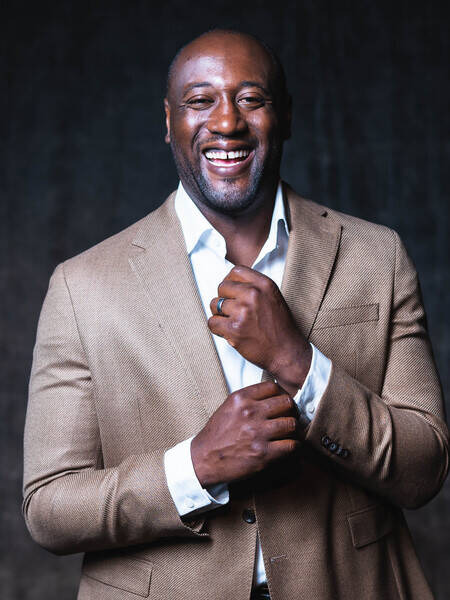
2 Mil+ View TEDx Speaker | Keynote Speaker | Story Architect | Executive Coach
Darryll played defensive end at Central Michigan University from 2008-2011 where he supported his team as they won a MAC championship and became a 23rd nationally ranked team. He now holds a Bachelor's degree in Integrative Public Relations and has continued his studies under industry game changers such as Les Brown, Grant Baldwin, and John C. Maxwell. Darryll founded Second Chance Athletes, a holistic athletic transition company, in 2017 to give athletes a second chance to succeed in life without the demands of sports. He speaks professionally all over the U.S. (and beyond) and has been featured on FOX, ABC, NCAA, and some of the top podcasts in the world. Darryll has mentored and taught entrepreneurs, business and religious leaders, athletes, youth groups, and many more how to curate their individual leadership style, find their authentic voice, and develop a foundation of solid mental health habits to overcome adversity and live a life of productivity, passion, and purpose.
When he is not working, Darryll enjoys rapping, reading, entertainment, sports and spending time with his brilliant wife and three amazing daughters.


