Why Your Fifties Are Your Power Decade for Career Reinvention
Introduction: Busting the Myth of Late-Career Stagnation
For decades, society has quietly peddled a deeply flawed narrative about aging and professional life: that by the time you reach your fifties, you are supposed to quietly coast toward the finish line. We are told to keep our heads down, wait for retirement, and avoid making waves. This outdated script suggests that innovation, pivoting, and starting anew belong exclusively to the twenty-somethings fueled by caffeine and venture capital. But this myth couldn't be further from the truth. In reality, your fifties are not a time for stagnation; they are your ultimate power decade for career reinvention.
When we examine the trajectory of a modern professional life, the decades spent building a career are not just a buildup to retirement—they are the foundational runway for your greatest act. If you have been feeling the itch to change direction, start a new business, or completely redefine your professional identity, you are not having a mid-life crisis. You are experiencing a mid-life awakening. In this post, we are going to explore why your fifties give you an unfair advantage in the modern marketplace, how to step away from exhausting grind culture, and why bringing your whole self to your next chapter is the smartest move you can make. This conversation deeply connects to our recent podcast discussion, which you can listen to in full by checking out Julie Riga: AI Is Not Coming for Your Job. The People Who Know AI Are.
Why Your Fifties Are Your Ultimate Power Decade
Why are your fifties the power decade? The answer lies in the unique intersection of wisdom, emotional intelligence, and accumulated competence. When you are in your twenties and thirties, much of your professional energy is spent learning the ropes, proving your worth, and navigating corporate politics. By the time you reach your fifties, you have survived industry shifts, economic downturns, difficult bosses, and restructuring. You possess pattern recognition that younger professionals simply cannot replicate.
Pattern recognition is a superpower. When a crisis hits, you have likely seen a variation of it before. You do not panic; you diagnose and solve. Furthermore, by your fifties, you care less about external validation and more about meaningful impact. This shift from seeking approval to seeking alignment clears away immense amounts of mental clutter. You stop chasing titles that look good on paper and start pursuing work that resonates with your core values. This clarity is precisely what fuels a successful career pivot.
Society often tries to convince us that aging is a liability in the workplace, particularly when it comes to technology and rapid change. However, wisdom combined with curiosity is unbeatable. While younger workers may understand the native mechanics of new tools, seasoned professionals understand the nuance, ethics, context, and human impact of how those tools are applied. Your fifties give you the authority to lead conversations, not just participate in them.
Beyond Overwork: Trading Grind Culture for True Leadership
One of the most dangerous traps professionals fall into—often spanning decades—is grind culture. We wear our exhaustion like a badge of honor. We answer emails at midnight, take on three jobs worth of responsibilities, and pride ourselves on being the hardest workers in the room. But let us be honest: being the hardest worker in the room often just means you are carrying the inefficiencies of a broken system on your back.
Before the rise of modern automation and artificial intelligence, burnout was already running rampant. Many of us fell into the trap of doing our job rather than being ourselves. We tied our entire self-worth to productivity metrics, task completion, and corporate output. But doing your job is entirely different from being your job. Tasks can be automated, delegated, or streamlined; your unique human essence cannot.
Transitioning into your power decade requires a conscious break from this cycle of overwork. True leadership is not about putting in the most hours or suffering the most stress. It is about strategic thinking, cultivating relationships, mentoring others, and creating space for innovation. When you stop acting as an over-functioning taskmaster, you open up the mental bandwidth required to design your next chapter. Reinvention cannot happen when you are too exhausted to think about tomorrow.
Leveraging Decades of Experience in the Age of AI
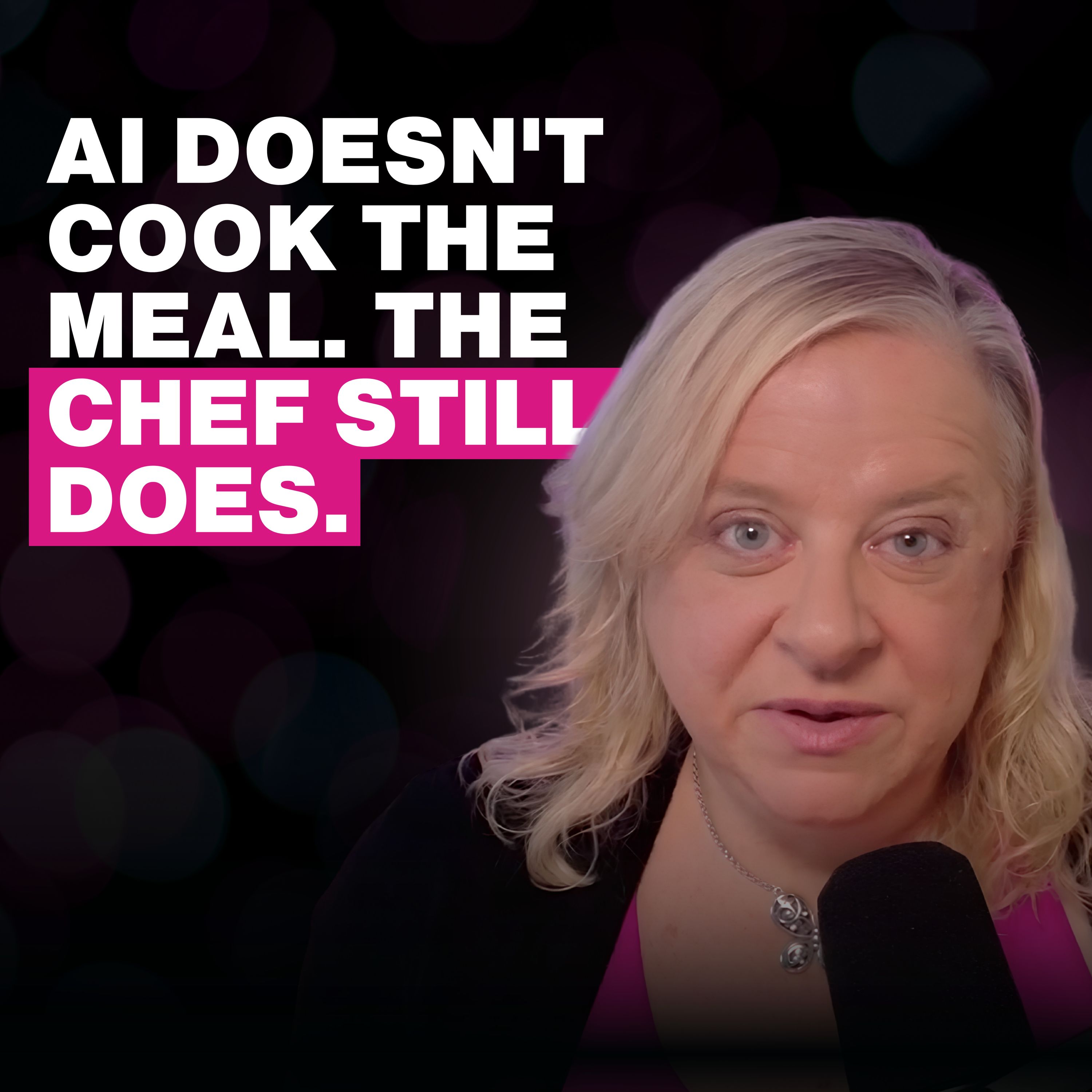
There is a lot of fear circulating right now about artificial intelligence replacing human workers. Headlines scream about robots taking over jobs, leaving seasoned professionals wondering if their decades of experience are suddenly obsolete. But as we discussed in our recent episode, AI is not coming for your job; the people who know how to use AI are.
More importantly, AI is changing the nature of work by taking over the mundane, repetitive administrative tasks that drained the creativity out of our days for decades. Think about all the hours you spent formatting reports, sorting data, and managing logistics. AI gives back the creative space that years of overwork took away from you. Instead of viewing technology as a threat, seasoned professionals should view it as a powerful assistant.
Your decades of experience mean you know what good looks like. You understand strategy, emotional nuance, negotiation, and high-level problem-solving—areas where artificial intelligence falls completely short. AI can generate text or analyze data, but it cannot read a room, build trust with a skeptical client, or inspire a team through a crisis. Your presence, your critical thinking, and your ability to communicate are entirely irreplaceable. When you combine your hard-earned wisdom with modern tools, you become an absolute powerhouse.
The Phase Two Framework: Building What Is Next
Waiting until traditional retirement age to figure out what you want to do next is a recipe for regret. Ideally, we should start building our next phase much earlier—in fact, brilliant framework thinkers suggest laying the groundwork long before you need to make the jump. But if you find yourself in your fifties realizing that your current path no longer serves you, the time to build Phase Two is right now.
What does building Phase Two look like in practice? It starts with an honest inventory of your skills, passions, and pain points. What parts of your career have brought you the most joy? What problems in the world do you feel uniquely qualified to solve? Reinvention does not mean throwing away everything you have done up to this point; it means taking the best parts of your professional history and repurposing them into a new vehicle.
Whether you want to launch a consulting practice, start a mastermind group, write a book, or pivot into an entirely different industry, your fifties provide the financial stability, network, and credibility to make it happen. You are no longer guessing whether you have what it takes. You have a track record. Building what is next is about intentionally designing a life and career that honors who you have become, rather than staying trapped by who you used to be.
Reframing Imposter Syndrome During a Career Pivot
Whenever you attempt something new—especially later in life—imposter syndrome loves to crash the party. You might catch yourself thinking, "Who am I to start a business at this stage?" or "Will people take me seriously in this new field?" We often view imposter syndrome as a personal defect, a sign that we are out of our depth and about to be exposed as frauds.
However, we need a radical reframe of imposter syndrome. What if feeling like an imposter is not a sign that you are unqualified? What if it is simply a sign that you are in the wrong place? When you outgrow a room, the discomfort you feel is not inadequacy; it is the friction of a growing mind constrained by a small environment. You feel like an imposter in an old, outdated role because you have already evolved past it.
When you step into your power decade and embrace reinvention, expect to feel that initial resistance. It means you are stretching, learning, and doing something that matters. Lean into the discomfort. Remind yourself of the decades of challenges you have already conquered. You are not starting from scratch; you are starting from experience.
Conclusion: Bringing Everything You Are Into Your Next Chapter
Your fifties are not the beginning of the end of your professional story; they are the preamble to your most impactful chapter yet. By casting off the burdens of grind culture, harnessing the power of modern technology rather than fearing it, and reframing the doubts that hold you back, you unlock a level of professional freedom that younger generations have yet to experience. You have earned every ounce of your expertise, and the world desperately needs what you have to offer.
If you are ready to stop just doing your job and start building a legacy that reflects your true self, you do not have to do it alone. To dive deeper into these concepts, hear powerful strategies for navigating career pivots, and learn how to position yourself for the future of work, make sure to listen to our related episode: Julie Riga: AI Is Not Coming for Your Job. The People Who Know AI Are. It is time to bring everything you are into what comes next.