Why Independent Creators Are Choosing Comic Books Over Hollywood
Independent creators are increasingly bypassing traditional Hollywood gatekeepers to build comic book empires, retaining complete intellectual property ownership and creative control. By leveraging sequential art instead of pitching to studio executives, writers and artists can bypass the grueling development hell of the film industry while cultivating direct relationships with dedicated fans.
Key Takeaways
- Comic books allow creators to maintain 100 percent creative control without studio interference or forced script rewrites.
- Retaining intellectual property rights ensures creators reap the long-term financial rewards of their original universes.
- Sequential art serves as a viable, low-barrier testing ground for cinematic concepts and character development.
- Direct-to-consumer distribution platforms and digital publishing have eliminated traditional publishing gatekeepers.
- Balancing a day job in technical fields like electrical engineering can provide financial stability while funding creative ventures.
The Cost of Hollywood Compromise
For decades, aspiring storytellers viewed Hollywood as the ultimate destination. Writers spent years crafting screenplays, hoping a manager or agent would take a chance on their vision. However, the reality of the studio system often involves endless rewrites, notes from executives who prioritize market trends over artistic integrity, and the constant risk of having your intellectual property changed beyond recognition. When you sell a script to a traditional studio, you frequently surrender ownership, leaving you with little to no control over the final product or its future iterations.
This creative dilution is precisely why many modern creators are shifting their focus toward independent comic books. Instead of waiting for a green light from a studio executive who may not understand the source material, creators can produce their own graphic novels and comic series immediately. The medium of comics offers the exact same scope of world-building and narrative depth as a blockbuster movie, but with a fraction of the production overhead and zero compromise on the creative vision.
Retaining Intellectual Property Rights
One of the most significant advantages of building a comic empire rather than pitching to Hollywood is the ownership model. In the comic book space, creators typically own their characters, universes, and storylines outright. If a comic book series gains traction, the creators retain the merchandising rights, licensing opportunities, and adaptation potentials. They do not have to split profits with a massive conglomerate that merely facilitated the distribution. This economic independence allows artists to reinvest directly into their craft, hire talented illustrators, and expand their fictional universes on their own terms.
Comics as a Visual Incubator for Cinematic Universes
Interestingly, comic books are no longer just an alternative to Hollywood—they are increasingly becoming the ultimate testing ground for cinematic storytelling. When a creator launches a comic title like Hunter Ninja Bear or Star Riders, they are essentially publishing a fully realized visual storyboard. Fans vote with their wallets, proving the viability of the characters and the lore in the real marketplace.
Studio executives are well aware of this shift. Today, Hollywood frequently looks to independent comic books for pre-vetted intellectual property with existing fanbases. By building a comic empire first, creators arrive at the Hollywood negotiating table from a position of immense leverage. They are no longer desperate writers asking for a chance; they are established brand owners with a proven, enthusiastic audience.
Overcoming the Gatekeepers Through Direct Distribution
The democratization of publishing has fundamentally altered how creative works reach the masses. Platforms like Amazon, Apple Books, and specialized comic distribution networks allow creators to put their work directly into the hands of readers across the globe. You no longer need a massive publishing house to validate your work. This direct-to-consumer model requires a shift in mindset, transforming the artist into an entrepreneur who must understand product development, marketing mastery, and community engagement.
Balancing Technical Careers and Creative Ambition
Building a comic empire rarely happens overnight, and many successful creators balance demanding day jobs while pursuing their artistic passions. For instance, transitioning from an analytical field like electrical engineering into the world of creative storytelling requires immense discipline. Rather than viewing a day job as a hindrance, savvy creators use it as a financial runway that funds their creative ventures without the pressure of having to make rent from issue one.
Dreams do not have an expiration date. Many creators find that their artistic vision matures and becomes more refined later in life. By applying structured, strategic thinking to their creative endeavors—treating storytelling not just as a hobby, but as a legitimate business—professionals can successfully bridge the gap between their analytical day jobs and their Hollywood-sized comic dreams.
Conclusion
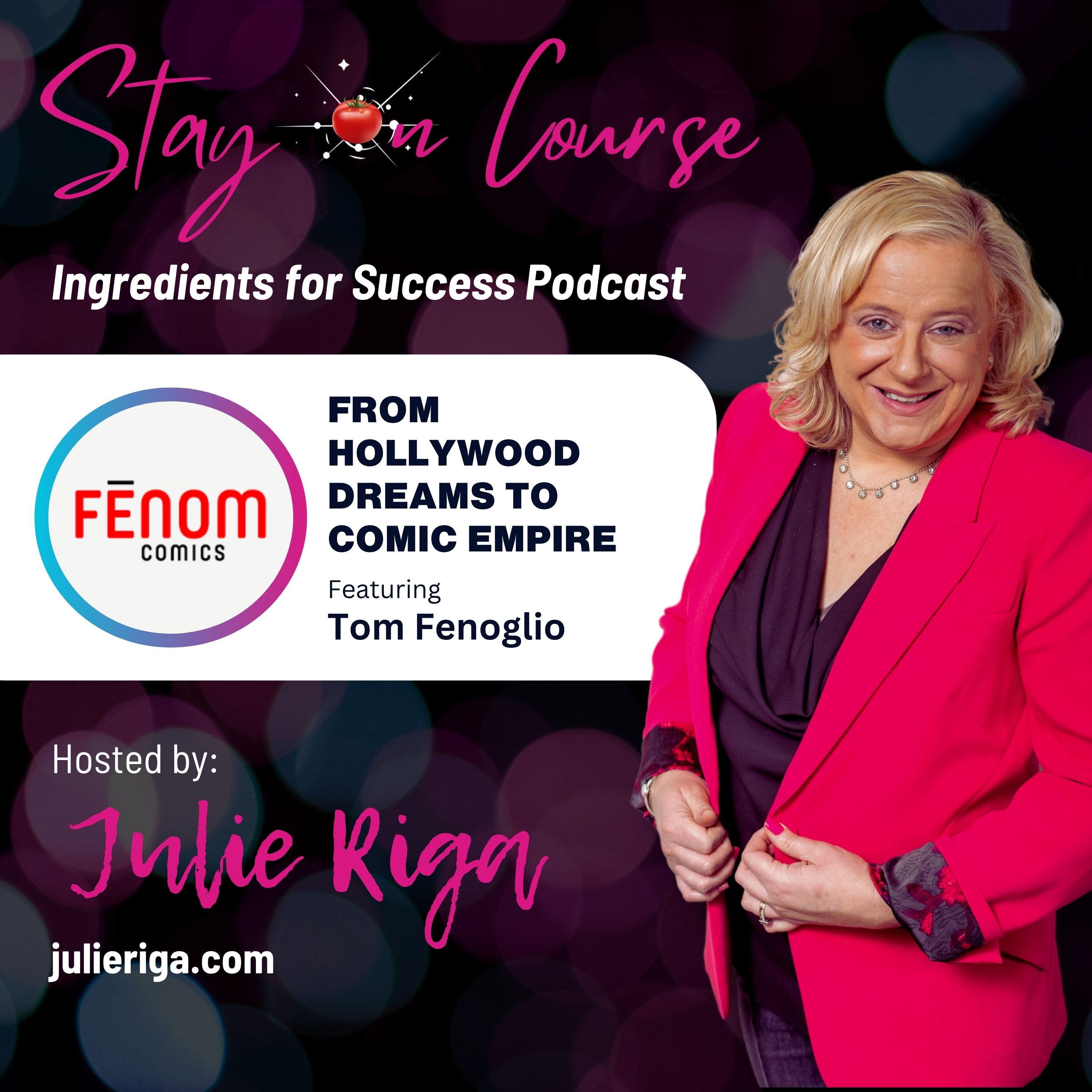
The path from dreaming about Hollywood to building an independent comic empire requires resilience, trusted partnerships, and a commitment to authentic storytelling. By choosing comics over traditional studio systems, creators secure their creative freedom and build lasting intellectual property. To hear more about this inspiring journey, listen to Listen to the full episode featuring Tom Fenoglio on The Stay On Course Podcast with Julie Riga. Dive into the full conversation to learn how you can keep your creative dreams alive and stay on course.
Frequently Asked Questions
Why do creators choose comic books over traditional Hollywood studios?
Creators choose comics because the medium allows for complete creative control, immediate publication without gatekeeper approval, and 100 percent ownership of intellectual property and future licensing rights.
How do independent comics help with Hollywood pitches?
Successful comic books act as a visual proof-of-concept with a built-in fan base. This gives creators immense leverage when negotiating with Hollywood studios because the market viability of the intellectual property is already proven.
Can I build a comic empire while working a full-time job?
Yes. Many creators balance technical or corporate day jobs to provide financial stability while treating their comic ventures as disciplined entrepreneurial projects outside of standard working hours.
What are the key ingredients for success in independent comics?
Success requires trusted partnerships, well-thought-out product development, authentic marketing, and a refusal to let creative dreams fade regardless of your age or career stage.