#365 Fractional Ownership, Remote Careers, and the Future of Online Business with Mike Swigunski


 Apple Podcasts
 Spotify
 Castro
 RSS Feed
 Castbox
 PocketCasts
 RadioPublic
 TuneIn
 In this episode, Roy sits down with Mike Swigunski, entrepreneur, investor, and #1 bestselling author on a mission to help millions of people Earn From Anywhere. Mike traces his path from a small Missouri suburb where he didn't take his first flight until 18, through running a university study-abroad program at 20, to a devastating turning point at 22 — losing his mother to breast cancer just a month before graduation — that pushed him to book a one-way flight to Europe rather than take a safe corporate job. He shares how he became employee #4 at Empire Flippers, helping scale it into a 100-person remote team and the world's largest curated marketplace for online businesses, and the "POWER" framework he built from watching thousands of acquisitions to identify what actually makes a business valuable. They dig into the platform risks of Amazon FBA and affiliate businesses, the coming shift toward advertising inside AI chat tools, the real craft behind his TEDx talk and the hero's journey structure behind it, his NOMAD framework for choosing where to live abroad, and his new venture, Dividends — a platform letting everyday investors put as little as $100 into fractional ownership of cash-flowing online businesses.
Timestamps
0:02 – Introducing Mike Swigunski
1:12 – Getting the pronunciation of "Swigunski" right
1:40 – From small-town Missouri to catching the travel bug at 19
2:01 – Running the University of Missouri's Prague study-abroad program at 20
6:49 – Losing his mother at 22, and the one-way flight to Europe that followed
7:00 – Becoming employee #4 at Empire Flippers
9:42 – The POWER framework: what actually separates successful businesses from the rest
13:24 – The platform risk of Amazon FBA, fake reviews, and hijacked seller accounts
15:14 – Ads coming to AI chat tools, and why the subscription model can't sustain the infrastructure cost
18:20 – His book, Global Career: How to Work Anywhere and Travel Forever
20:08 – Preparing for his TEDx talk, and the public speaking course that built his foundation
24:55 – Roy's own travel experiences, and where to go for energy and safety
25:27 – The NOMAD framework for choosing where to live abroad
29:14 – Comparing Chiang Mai, Koh Samui, and Bangkok
30:40 – Introducing Dividends: fractional ownership of cash-flowing online businesses
32:45 – Average returns investors can expect, and the 1.75x return structure
33:44 – The $100 minimum investment and why he chose that entry point
34:56 – Why Dividends isn't built on blockchain or crypto
36:06 – SEC filing, KYC, and the onboarding process through WeFunder
37:44 – Why Reg CF crowdfunding was chosen over Reg D
41:49 – The long-term vision for Dividends
42:03 – What else Mike is working on, including business acquisition consulting
43:21 – The middle path: buying a business and running it part-time with a small team
45:10 – Where to find Mike and his work
About Mike Swigunski
Mike Swigunski is an entrepreneur, investor, and #1 bestselling author on a mission to help millions of people Earn From Anywhere by building location-independent careers, online businesses, and scalable income streams. As employee #4 at Empire Flippers, he helped scale the company into a 100-person remote team and the world's largest curated marketplace for buying and selling online businesses, playing a key role in facilitating more than $120 million in acquisitions. He is the founder of Global Career and Dividends and has built multiple six-, seven-, and eight-figure remote companies while traveling to more than 100 countries. Mike is also a TEDx speaker and a recognized voice in remote work, online business, entrepreneurship, and modern investing.
Connect with Mike:
🌐 Website: https://globalcareerbook.com
💰 Dividends: https://dividendscapital.com
🔗 LinkedIn: https://www.linkedin.com/in/mikeswigunski
📺 YouTube: http://www.youtube.com/c/MikeSwigunski
📸 Instagram: https://instagram.com/mikeswigunski
👍 Facebook: https://www.facebook.com/MikeSwigunski
🔗 About Your Host (Roy Coughlan)
🎙️ Explore more podcasts: Find all podcasts at the PodFather Network
🌐 Website: https://roycoughlan.com/
🤝 Need help running your business? If you are looking for a Virtual Assistant and get reliable support for your daily operations.
👥 Virtual Assistants: https://va.world/
🧠 Brain Upgrade: https://brainupgrade.org/
🌟 Private Members Group: The Authority Alliance — A Foundation of Experts for entrepreneurs, coaches, and thought leaders to connect, collaborate, and grow their authority together: https://theauthorityalliance.com/
🤝 Connected Leaders Academy: A Private Networking Group in 50 US States & 49+ Countries with 700+ Members: https://connectedleaders.academy
#RemoteWork #DigitalNomad #OnlineBusiness #Investing #Entrepreneurship #TEDx #SpeakingPodcast #PassiveIncome #BusinessAcquisitions #LocationIndependence #GlobalCareer #Dividends
Mike Swigunski
[Speaker 2] (0:02 - 1:08)
Welcome to the speaking podcast. You can find all our episodes on speakingpodcast.com. My guest today is Mike Swigunski, entrepreneur, investor, and number one bestselling author on a mission to help millions of people earn from anywhere.
As employee number four at Empire Flippers, Mike helped scale the company from an early stage startup into a hundred person remote team and the world's largest curated marketplace for buying and selling online businesses, playing a key role in facilitating more than 120 million in acquisitions. He since founded Global Career and Dividends, built multiple six, seven, and eight figure remote companies, traveled to more than a hundred countries, and delivered a TEDx talk, Mike is recognized voice in remote work, online business, and modern investing with insights featured in Forbes, CNBC, and Entrepreneur. So welcome to the show, Mike.
[Speaker 1] (1:09 - 1:12)
Thanks so much for having me, Roy. I'm excited to dig in here.
[Speaker 2] (1:12 - 1:25)
Yeah, no problem. So I have to, I mean, this is on YouTube Bitches and Rumble, but I wanted to make sure the name is right, but you might just show it to me, because I think it's good, because then people will remember how you actually showed the surname.
[Speaker 1] (1:25 - 1:39)
Oh, yeah. My name has been, with a hard Polish last name, you kind of figure out how to teach people. So the way I do it is Swig, Gun, and then Ski.
That's easy. It looks hard, but once you hear it the first time, it's a lot easier.
[Speaker 2] (1:40 - 2:00)
Yeah. No, I'm very good. So, I mean, like what you're doing in your career and being in a hundred countries, you know, you'd expect a guy that's going to be like 50, 60 or whatever, but you're a young guy.
So I suppose just kind of tell us a bit of your career before joining this company, that you were the fourth employee, like what you were just doing to get there.
[Speaker 1] (2:01 - 6:48)
Yeah. So I was, I'm originally from Wildwood, Missouri, which is like a super small, like suburb of St. Louis, Missouri. And I didn't really travel much growing up.
Like we would go on the occasional road trip around the US, but I didn't get on my first flight until I was like around the age of 18. And I really started catching the travel bug. My dad took us over to seas in Italy and Spain when I was around like 19.
And then I was just really loved it. So I found a way to go back through study abroad, studied abroad in Italy the following year. And I just really loved it.
I was coordinating trips, coordinating soccer matches with like the Italian students and the American students and the organizers of the university were like, hey, you're pretty good at this. You should apply to be a student manager. And so I applied to be the university of Missouri study abroad student manager.
And they selected me to be in charge of the Prague Czech Republic program. And that was a really like huge opportunity because you're basically teaching a university course at the age of 20. You're taking students abroad.
You're doing all the marketing and sales. So you're kind of running the whole study abroad business. And they gave me one caveat.
They're like, hey, we had seven students last year. If we don't get 15, we're going to cancel your program and you're going to be out of an internship or job basically. So I kind of just took that like, hey, I was studying business and marketing.
And I really enjoyed the process of getting enrollments and selling the program and taking in charge of these marketing initiatives. Long story short, we increased the enrollment to the maximum of 35 that year and then 45 the following year. And both universities were happy because they've got a more successful program now.
The students were happy because there's more people involved and it just kind of snowballed into being this like, hey, this is a great thing. But during this time as I was doing it, I just got more exposure to living and kind of being in charge of working abroad that I was like, hey, how can I do this longer term? And so my senior year of university, I was kind of going down these two paths.
One was like I had offers from corporate jobs in corporate America. And then I was like, oh, I got to take these students to Europe. Why don't I try to find something there?
And kind of deciding this was like really difficult time because my mother, she was diagnosed with stage four breast cancer two years prior. And during this time, she went into remission the first year. We were very optimistic and then unfortunately came back.
And so about a month before I graduated and was supposed to go to Europe with these students, she sadly passed away. And so this is one of those times that's like, I think from a young age, you know, I was twenty two at the time. Life just kicked me in the face and it really showed me, hey, life is precious.
You need to figure out what you want to do and you need to live life to the fullest because it can be taken from you at an early early age. And so that really pushed me to to really consider what path I want to go down. And so I decided to follow my dreams, what I knew my mom would want me to do.
And so I booked a one way flight to Europe, led this final summer program and started searching for a job in Europe. And the first place I started looking for was the university where we were taking students. And, you know, since they kind of saw all two years of me working with them and all the results that I was able to achieve, they helped me get a really great job teaching financial economics at the age of twenty two.
So that was my first job out of university was as a professor. And it really was this like amazing opportunity where I was able to teach. I was able to improve my public speaking, understand and get to work closely with the students and the faculty.
And basically it was that lightbulb moment that, hey, a life abroad is possible. And this was back for context. This was 2011.
There wasn't a lot of opportunities to really work abroad. There's a lot of visa hurdles back then. And so this was that lightbulb moment like, hey, I can actually live abroad.
I can travel and build a global career while doing it instead of just taking off for two years and then having to come back and start from scratch. I was like, how can I actually build a life abroad? And so that's that's basically the context.
I know it's a lot, but it's interesting.
[Speaker 2] (6:49 - 6:59)
I know, but it's relevant. Yeah. Yeah.
Very good. So coming in. So I suppose you were number four employee in this empire flippers, I think it's called.
Yeah.
[Speaker 1] (7:00 - 9:40)
Yeah. So once I was working in the Czech Republic as a professor, I realized, hey, I want to keep traveling and I truly wanted to have a remote job. It's just all the remote jobs back in 2011, 2012 were for tech savvy people, IT professionals, developers.
And my experience was like marketing and business. So eventually I slowly started working abroad. So I worked in Australia, New Zealand, and also worked, studied my MBA in South Korea.
And all those jobs, like I eventually started having like a hybrid remote job and then I had a fully remote job, but I still had to be based in Australia. And long story short, how I got connected to Empire Flippers was I met somebody when I was studying my MBA in South Korea who was working there. He was employee number three.
And a year later, he had posted a job opening on Facebook. And so I was looking for work. The tech startup I was working at basically ran out of funds.
So it was like perfect timing. I applied. And one of the things that I really, you know, after going through the interview process was it was actually a pay cut, a pay decrease than before.
So I really had this like mental barrier. I'm like, I can go find work in New Zealand at this rate. And or I can go to this like another startup.
It's full. It's had the opportunity to be fully remote. But I just saw like even though it was like a pay decrease, I saw so much more, let's just say growth potential there.
And I liked the industry. I knew I would learn a lot in a short period of time, which I was, you know, was true. And so joining as employee number four, it was just one of these awesome experiences because we're working in a penthouse in Vietnam.
There's like four or five of us all working together and you're working crazy hours, but you're just all working towards the same mission that it doesn't even really feel like work. It felt more like you're just kind of all on this mission to improve the business. And so, yeah, that was kind of like my entry point to joining Empire Flippers.
And then during my four years there, we grew it to a hundred remote employees, the Inc. 500 fastest growing company every year for over five years straight. And yet learned a lot about how the Internet is monetized, saw more than a billion dollars of profitable online businesses.
And it gave me like just really, I guess, a clarity on, hey, you can actually make a good income and a good business from anywhere in the world.
[Speaker 2] (9:42 - 9:55)
And what do you think was the secret to getting from that? Because I mean, so many people aspire to get a business that starts off small. What could you see?
What was different to other companies that don't make that?
[Speaker 1] (9:57 - 13:22)
Yeah. I mean, I think behind every entrepreneur, there are a lot of failures. You have what's called survivorship bias, especially at a broker where we had a pretty strict criteria.
So we only accepted about 20% of businesses that were submitted. And one of the criteria was it had to be profitable. So that puts a lot of businesses out.
It had to be in English. It had to be above a certain profit threshold. And so we rejected quite a lot of businesses.
And I think the things that differentiate the successful and the businesses that grow is they really just keep going with it. They don't give up on the first failure, the second failure, the third one. They take what they learn from those businesses and keep improving.
And so every person that I really, you know, every business that was fairly successful, they understood how to drive traffic, drive that traffic and convert it into customers in an affordable way. Because there's a lot of businesses that can drive traffic through paid ads. You can go spend $100,000.
But if it doesn't convert at least a 1.1 ROAS, you're basically not going to be profitable. So the best people are able to do that in a way that's affordable and something that's going to stay for longevity. And so the businesses that I saw like the most success, I built like a power framework.
And basically, those are like, you control the price, you control the offer, you control the customer data, the who, and then you have a recurring revenue element. So those four key elements are what I saw in a powerful business. And you'd be surprised how many businesses can't control their prices.
So anybody who's an affiliate business on Amazon, you can't control the prices of your product, you can't control your commission rates. Not to say that these are bad businesses, but AdSense is another one on YouTube, you can't control your CPMs, your AdSense like affiliate rates or how many clicks you're getting. So focusing on products where you can control the price, you can control the offer.
There's a lot of businesses where from point A to point B, whatever the outcome is, you're relying on other governments, officials, macroeconomic factors. The example I like to use is Amazon FBA fulfilled by Amazon. So if you ever bought anything on Amazon, about 60% of Amazon's revenue comes from small businesses, third-party sellers who are buying products from overseas.
And so they've got that macroeconomic factor of, hey, I'm buying something from overseas. I have taxes, tariffs, and now oil prices. You have all these other factors that are out of your control.
Then you get it to the United States and then Amazon has their storage fees, their fees for charging shipment and fulfillment. And then you have all these other just things that you can't really control along the way. And you don't actually get your customer data.
I saw my book through Amazon. I don't know who bought it, but it is a great distribution center for that. And they handle everything, but it's not really something that I would want to build my business off of.
The book is basically to get exposure as a top of funnel, and then they come into your network and you collect those details and data to help people solve whatever problem they're looking to solve. Right.
[Speaker 2] (13:24 - 14:05)
I had a guy on my Awakening podcast, I remember it was the fifth episode or something like that, and he was selling a load of health stuff through Amazon. And then they're selling it themselves. So they're learning, oh, this is working.
Why pay? Why make them a lot of money? And then they just do it themselves.
And that's happening probably by the millions as well, which is a shame. And I mean, I often thought that with the books, you'd be selling so many books, but how do you know it's not 10x what they're actually telling you? Because you don't have real control unless you have a way of tracking it that the people have kind of scan QR code, but how many people even do that?
So it's a very hard one to know the truth.
[Speaker 1] (14:06 - 15:13)
Yeah. There's a lot of risk for Amazon can really disrupt by making their Amazon basic products. I've seen it firsthand where they were the number one seller in their category.
Amazon comes in, and of course they've got control to just divert all that traffic to you, to them. And they know the numbers, they know the profit margins, and they can put businesses out of overnight. But yet the real risk is Chinese sellers coming in who basically there's no trademark real way to shut them down.
They're doing a lot of more, let's just say, shady stuff like fake reviews, buying old Amazon accounts, and then shifting that over. So if you've ever seen an Amazon page that has like thousands of reviews and you go through, I'm like, this is for a toothbrush, but I'm buying like a chair. Why is this?
Because they bought that Amazon account and were able to somehow change the product. So there's a lot of things. I've personally made multiple millionaires from people selling their Amazon businesses, not to say that you can't make money with it.
It's just not a business that I would suggest starting today or necessarily even buying because of all these platform risks that come with it.
[Speaker 2] (15:14 - 15:35)
You were talking about the AdSense and the other thing. Today I saw something that I hadn't seen before because I use a few different AOEs and I've plowed in stuff like, but I use the graphics for a chat GPT. And now they have ads.
And I mean, I'm paying for these. I'm not using the free versions. I don't know if you've seen that.
No, there's ads appearing. And I'm like, okay, I don't want this. Have you seen that?
[Speaker 1] (15:36 - 16:58)
I haven't seen the ads, but I know like when you look at the cost of all the infrastructure to run a GPT, you understand very quickly that the $20 per month, or even the $200 per month, it isn't a business model that's going to be able to support all of this storage, all the data usage, all the energy. So the path to actually for those companies to make money, they need to have ads and they need to have some other way for themselves to monetize, because the subscription model isn't going to add up to enough to be able to fund it. And so it's really like a loss leader now where they're just kind of trying to use the subscriptions to kind of fund something to prove that the business model can work.
But I really think it's going to be this thing where the top players, they just start adding in advertisements or suggested products where you say, hey, what's the best company or what's the best service for this space in the city? And you'll be able to bid on it just like you do for Google ads, right? You can be the top search result.
And I think they'll have to disclose, but it will still eventually, I think, turn into that model where the advertisers will be able to bid on placement for all these GPTDs.
[Speaker 2] (16:59 - 17:53)
I think where it's going is that they're getting people so reliant on it and then they're going to just increase the costs and charge, because I've heard of, like I was talking to a guy recently, he works for the commission and like the amount that they're paying and like for tokens and stuff like that. And I think they'll eventually just charge, because I went into Manus and it was one of the better ones at the time. And that was just like after a few days, it was like a hundred bucks, a hundred bucks.
It was like every single thing you were doing. And I was like, all right, no, the other ones are working better for me. But I think eventually they'll all be like that.
And people, like they're going to get lost in the marketplace unless they start paying. So yeah, the ads will help. And I suppose people would probably prefer to see the ads than do that.
But as you say, the Google, that's the way it was always like, you'd always see the top ones. People are paying to be up to top. They do get, you know, they're on the first page, they do get more sales.
So yeah, it's going to replicate.
[Speaker 1] (17:53 - 18:19)
Yeah. When you just look at the search volume and how much like money it costs to run everything, it's just, they have to go that direction at some point. I think they are just waiting to have more of the market share and then eventually they'll switch over to that.
Very similar to like, I don't know, Netflix or any of these streaming services where it was kind of just a few liters and then it got more fragmented. So it'll be interesting to see how it all pans out. But yeah, it's an interesting time.
I'll say that for sure.
[Speaker 2] (18:20 - 18:25)
Yeah. So you mentioned the book, so you might just say the name of the book and what you're covering in it.
[Speaker 1] (18:25 - 20:06)
Yeah. So the book is called Global Career, How to Work Anywhere and Travel Forever. You can find it at globalcareerbook.com.
Basically, it covers my journey of working and traveling in 100 different countries. And I would say it's more of a practical how-to tied in with a little bit of a memoir. And the whole idea was, hey, I've been living overseas and the number one question I was getting is, how do you do it?
How can you actually live abroad for an extended period of time? And so I basically did some initial research and talked to people who had traveled a lot. And I was like, have you ever lived abroad or do you know anything about these working holiday visas in these countries?
And so it's a combination of just how you can study abroad, how you can work remotely or build the business abroad. And so it kind of follows this path that I've seen a lot of people take where they go abroad for vacation, then they study abroad, and then they really love it and they want to work remotely for a little bit. And then they love that and they eventually want to just live abroad.
So it's basically a, in the United States, I was like, hey, we kind of have this one career path where it's go to high school, college, and then you graduate, you get a job and that's it. And it's like the only path that we're presented. I was like, there's a lot of other paths out there.
This one isn't for everyone, but it's something that people can do. And there's all these tools and resources and ways to do it. And that's basically what the book breaks down is how you can actually live abroad while building a career and monetizing it and essentially building a life that allows you to earn from anywhere.
[Speaker 2] (20:08 - 20:30)
Excellent. So you've, you've done a TEDx as well. And I already, you know, there's like a lot of hours put into it.
So tell what the TEDx is about for us, but also then preparation for it, because obviously, you know, you said you were like a professor and kind of teaching people. So, you know, obviously public speaking wasn't an issue for you, but I suppose TEDx is a different setup.
[Speaker 1] (20:31 - 24:53)
Yeah. So again, yeah, from teaching in my twenties, I got very comfortable with public speaking. I took a public speaking course, thanks to my dad as well.
He was like, you need to learn, learn how to public speak better and get good at this. And I was like, all right, well, so I took a course in college and then, you know, becoming a professor at a young age, I just got comfortable. And it is just a lot of getting reps in like anything.
And in my public speaking course, you're, you're learning, you're, you're recording yourself. They had these special, like small rooms you could rent with a camera. And again, that's back in 2010, the tech was pretty, pretty old.
And you would record yourself and then you would just go through it and like, okay, this phrasing sounds a little off. I'm like really stuttering here. Or like, I have all these filler words that I'm using.
The most common is, you know, um, this, that, you know, these types of filler words. And you're slowly just watching footage. And somebody who played a lot of sports, I was just kind of used to it.
I was like, all right, what did I do wrong in this, uh, in basketball, in this play? And it's kind of the same thing. You're watching your own self, which is hard to do.
And you're just trying to make small incremental improvements. And so that kind of like gave me a really good foundation. And that's like the, I think what 90% of people struggle with is just getting comfortable speaking in front of an audience, right?
The other 10%, the thing that separates a professor from Tony Robbins, right? The, the goat of public speaking is having a very clear message, a clear lineage of what you're going to talk about, and a story that resonates with people. And so that was basically what I think I had a good story.
I'd lived the, you know, a pretty interesting life, but it was hard to really get that down into an 18 minute talk that was appealing and helpful for an audience. And so the, the most common like storytelling technique is just the hero's journey. 95% of movies, books, they all follow this.
And it's more or less, well, how my TEDx instructor structure. And I worked with speaking coaches. I've worked with speaking coaches with Tony Robbins, and they all kind of say the same thing.
You practice a lot, you build a story. And then that story is always needs to have a catalyst because that catalyst helps people relate to why you're doing what you're doing. If you don't talk about that aspect, and that was like the hardest thing for me to talk about, it's still hard to talk about losing my mom at the age of 20, even though this was, you know, years and years ago, it's still a hard topic, but I had multiple coaches and speaker coaches say, Hey, this is like beneficial over, I don't know, 60, 70% of people in the world have been impacted by a loss due to cancer. It's very like, you know, relatable and people want to be able to relate to you and understand your origin story. And so if you look at any superhero, right, the Batman origin story, there's a reason they show that scene with his parents, right?
It builds him into the person and it gives that context on why he's so adamant to fight crime, because he lost his parents to it. It really is that deep connection that ties everything after. And so that's basically what I learned from working with the world's best speaker coaches, you need to build a story that's relatable, inspiring, and valuable for your audience.
And it's not an easy thing to do. But I think anytime in life that I've wanted to improve something, I've always had a coach or person who's an expert in that area, sort of helped me along from sports at a young age to business to speaking. And so the TEDx talk is very different because you have, I think the hardest part is you got to fit a lot into 18 minutes.
And then there's just a lot of things that you look for, for making a good TED talk. And one of the things is, does it resonate? And does it actually help your audience?
[Speaker 2] (24:55 - 25:25)
Excellent. So I like traveling as well. I haven't been to 100 countries, probably 40 or something like that.
But I'm always curious. I mean, to be in 100, for me, it's kind of like the energy. I remember the energy in Costa Rica was probably one of the best.
And I kind of look at safety as well. In Brazil, I didn't feel safe at all. I said, I don't want to go back there.
So I've been to loads of different places. So curious energy-wise, and I suppose other things as well that would go, all right, you need to put this on your bucket list.
[Speaker 1] (25:27 - 29:14)
Yeah. So I would say, again, traveling to a lot of countries, I've basically lived my 15 years abroad. And I lived in Europe, when I was living in Prague, especially.
You can go on a train to a new country, like be in a new country in four hours. And so it just kind of became this thing where I was also remote working and able to slow travel in a lot of countries. But I always had a hub.
I would say I've always been based somewhere. The longest I would typically travel is like three to four months at a time, where you're literally just living out of a suitcase or traveling from, you go to a place, you like it, you stay there longer, and you just kind of build an open-ended itinerary. But for me, I would say the people who do this long-term, they always have a hub and they always find a city where they can travel from.
And the great thing about Europe is you can fly somewhere for a hundred bucks to a new country. You can take a train, you can go on a road trip. It's pretty easy to travel.
And I basically, I wrote an article for Forbes about a nomad acronym and it's network opportunities, mobility, amenities, and desirability. And so those factors are what I use to help people decide where should you live. If there's no good network or community, it's going to be hard to really build that.
And again, these are all at a different level. There's some people who network is number one for them, right? For individual, like single guys, network is going to be different.
I'm married. I've got a wife. I've got my partner.
I've got my best friend with me. So network is important, but it's not the number one thing that I look for. But at different stages in my life, it was.
So certain cities are going to be more prone to that. For example, Chiang Mai, Thailand is probably one of the easiest places to set up shop with and build a network because there's so many expats who are living there. There's so many digital nomads there, but it kind of, you know, there's other parts where it doesn't really, I don't know, excite me personally.
So you're just kind of looking at like, what are those things that you're looking for? What are the priorities in your life right now for that chapter? Go and try a few places and live there for at least an extended period of time to really figure out, is this a place where you want to live long-term?
And so you've got the network, the opportunities would be like visas. Is it easy to actually stay there? Thailand has a really great visa process, which is the five-year destination Thailand visa.
And so before living in Prague, I was living in Koh Samui, Thailand for about two years. And so yeah, that's basically, you just take a look at that framework and understand, okay, this is priority number one through five, and then you decide, okay, what, which country or location is going to benefit this. But I would say the biggest misconception I see is people think you need to be super wealthy or have a ton of money to live abroad, especially coming from the U.S. Like 90% of the world is making around $2,000 a month, and even in Europe. So you can live almost, if you're making over $2,000 a month, you can live a more luxurious life than the local does in about 90% of the world. So I think that's the biggest misconception that people have, because they go on a two-week vacation, they're in the hotels and the most expensive cities and areas, and so they're not getting that longer term yearly rates or even monthly rates. So yeah, that's basically how I think about it.
[Speaker 2] (29:14 - 29:30)
And it's interesting because I went to Thailand as well and Chiang Mai, I thought it was lovely. And I went to Koh Samui for the second weekend, people were lovely, but Bangkok didn't like it, it was all smoggy, sleazy, and I couldn't get out of there as fast as possible. But the other two places that you mentioned, I really enjoyed.
[Speaker 1] (29:31 - 30:39)
Yeah, it really is one of those things, like you can read about it, you can talk to people. I always say, like, do your research, try to talk to at least a few expats who live there and have at least lived there for over a few years. Because I think if they're just there for two or three months, you're kind of in this honeymoon phase.
But then people who've lived there for a few years, they'll be pretty blunt, like, hey, traffic's bad, basically in Bangkok. If you're not in a good area, you're just going to spend your whole life in traffic. It is very congested, a little bit smoggy, but there's a lot happening.
And for some people, that's important. They want to always be able to go where the party is, where the event is, there's so much stuff happening there. But the community, even though there's probably 100 times more people, expats living in Bangkok, the community is better in Chiang Mai, because it's smaller, it's closer knit, it's not so spread out and spaced out.
So yeah, there's a lot of different ways to think about it. But you just got to go and kind of like, at a buffet, you go try a bunch of things, and then you double down on the stuff you like.
[Speaker 2] (30:40 - 30:43)
So just kind of touch on what you're working on, though.
[Speaker 1] (30:44 - 32:43)
Yeah, so at Empire Flippers, basically, it's the marketplace for an individual to sell their business and an individual to buy a business, right? It's a great company, I still do deals with them quite frequently. But what I realized after talking to literally 1000s of people who want access to the cash flow of a business is a lot of them don't have the time, they don't have the capital, and they don't have the expertise to fully buy, own and operate an online business.
And so that's essentially why I created dividends is it's a platform that allows fractional ownership of these established recurring revenue online businesses. And it shares the dividends with investors. So these micro acquisitions and micro businesses, and when I say micro, I mean $10 million valuations and below.
So these businesses are established, but they're usually fairly small team size, usually like one or two technical founders, and they've gotten the product market fit correct. And so typically, they're looking to exit, we're able to buy the business, grow it and then turn it into an investment vehicle for passive investment for basically anybody around the world who's looking to focus on cash flow. There's 100 different options for long term appreciation, there's real estate bonds, the S&P 500, where you're kind of focused on the long term cash flow or the long term appreciation.
But there's not really many good options out there if you want to have monthly or quarterly actual cash flow. And that's the problem we're looking to solve, is to basically have another income stream for users who don't want to go through the two to three years of trying to like build a side hustle. They just want to invest their money, get the capital back and not have to really think about it.
[Speaker 2] (32:45 - 32:50)
And what kind of returns are people getting average now rather than the best ones?
[Speaker 1] (32:51 - 33:43)
Yeah, so the average, what we're anticipating in our estimate, there's no guarantees in this, but we're averaging 12 to 15% ARR, annual rate of return. And then our IRR, because we basically have an acquisition and then we have a two to three year hold period. And so we're exiting that.
So typically, right now, we're raising where if you invest, you get a 1.75x return on your investment. So if you invest $10,000, you're getting back $1,750 and you're still getting the long term equity in the company. So it's kind of like you're getting the short term cash flow and then you're also getting the long term upside of our goals to build this into a billion dollar empire.
And so you're getting the long term and the short term investment all in one.
[Speaker 2] (33:44 - 33:55)
And is there a minimum? Because sometimes, someone doesn't like an idea of a hundred bucks or a thousand bucks or something like that, you need to put what's your kind of minimum amount?
[Speaker 1] (33:55 - 34:55)
Yeah, so we're raising on WeFunder. If you go to WeFunder.com slash dividends, the minimum investment is $100. So that was our whole goal with this is to prove that there is demand.
So we launched, already raised $170,000 from launching from 85 investors all around the world. And the reason we structured it like this, I'd been approached to build funds that are private, you have to be accredited, you have to be inputting at least $50,000 to $100,000. But I just realized that there's so many private funds out there.
I want to make this accessible to people around the world. It fits my mission of helping millions earn from anywhere. Because there's people who aren't in the US, who aren't an accredited investor, who still want access to this cash flow and ecosystem.
And so that's why we built it this way. And so yeah, it's a lower entry point. And again, we're really got some good momentum going here.
[Speaker 2] (34:56 - 35:01)
And are you bringing it in on the blockchain or keeping it separate?
[Speaker 1] (35:01 - 35:29)
No, it won't be crypto. We might at some point develop our own sort of like internal currency. But right now, it's going to just be essentially you'll get a share.
And then that share will come with revenue, revenue sharing. And so you'll get revenue sharing from the underlying asset. The reason we didn't do the crypto space is because there's a lot of like regulatory issues.
And it was just easier to keep it this way for now.
[Speaker 2] (35:30 - 35:54)
Yeah, no, because I'm looking at them kind of that through real estate deals. And the problem is it has to be the government has to be connected with it, because otherwise it doesn't work. Because you know, you could set it up and you could have it sold and all and people think they're holding, you know, the token worked X amount and doesn't even exist.
So it has to be connected with when you're doing legal contracts with the government because otherwise it doesn't really work.
[Speaker 1] (35:55 - 36:05)
Yeah, no, especially like where we just filed everything with the SEC. And so we had to structure it in a certain way to make it, you know, make sure everything's above board and accredited.
[Speaker 2] (36:06 - 36:15)
And what's the kind of whether it's 1000 bucks or 10,000 or even 100,000, what's the onboard and is it the usual KYC that they have to go through? What's the process?
[Speaker 1] (36:16 - 37:42)
Yeah, so if you go to WeFunder, you can basically do all the documentation, all the, you know, sync your bank account, KYC. And, you know, for every country, they collect all the documentation. And that's basically why we're using WeFunder is we were basically going to build a similar platform with a similar process.
So you put in the amount you want, you click your bank account, you sign the documents, and then you're good to go. It's like a less than a five minute process. And so WeFunder is more or less a platform for startups, and 99% of them are focused on that, let's just say that five to 10 year sort of bet, right, you're betting on a unicorn or business that IPOs, the IPO, your shares get converted, and then you can sell those shares for a much higher amount.
That's a very like, great, there's a lot of options for startup investing. But there's not a lot of options out there that just focus on the dividend aspect of monthly or quarterly cash flow. And so we're focused, we're platform basically focused just on that.
So that's kind of how we differentiate ourself and why we chose WeFunder is our more or less beta test to say, hey, there's people who are interested in this, retail investors want this. And so now we're just talking to angels and VCs to, you know, to really get our $1 million raise is our goal over the next few months.
[Speaker 2] (37:44 - 37:51)
And what's the kind of long term vision? Because you seem to me like a guy that plans well ahead, and you know, what's going to be on the horizon.
[Speaker 1] (37:52 - 38:57)
Yeah, long term vision is to have this as a platform, that's really an additional source of income for people where they can say, hey, instead of keeping my money in a bank account, I can invest it and earn two, three, four times more. Of course, there's more risk that come with it. But they can take a portion of that additional money that's just sitting there, and they can really put it to better use.
And so that's more or less the long term goal, and to have billions of dollars worth of online businesses, because this market is very fragmented. There's a lot of people who have these assets who want to take some chips off the table, and they're willing to sell it and we can offer them a better multiple than if they were just going to sell it outright. And they can still keep some of the upside.
So it's essentially adding a whole new asset class. Because right now, you can invest in these really mature companies through the stock market, but they've already kind of gone through all that hyper growth. And that's basically we're getting these companies a lot earlier, where we can more or less control a lot of that growth.
[Speaker 2] (38:58 - 39:22)
And you know, the platform that you're using, because you mentioned the SEC and everything. So obviously, you're kind of making sure everything is the dots, T's crossed and everything is okay. Are they making sure that the people come in?
Because obviously, there's other companies use that platform that aren't kind of just getting people's money and doing a Houdini disappearing? Are they kind of making sure everything is kind of kosher before they allow them to go on the platform?
[Speaker 1] (39:24 - 41:10)
Yeah. So again, there is like a diligence check, you have multiple calls with people, and you basically have to structure it in a way where you're being more transparent. And for my process, I can only speak from my experience.
It's been for you know, like most people are investing in that 10 year long term company, but a lot of times they don't pan out because they don't IPO or they aren't able to get that product market fit. So I think a lot of people understand that this those businesses are more of a gamble, where ours is a little bit more of a sure thing, because we're already buying something that's cash flowing. It's already proven to work.
But even in that there's still, you know, things that can go wrong. So as far as like, the background of how it's being fundraised, it's called a reg CF, which is crowdfunding. And that allows unaccredited investors from around the world, and it allows you to actually market it, there's a lot of stipulations with a reg D, where they have to be accredited, you can't really talk about it anywhere publicly.
So that's why we chose the reg CF, because there's a lot more transparency around it. And that's one of the things that unfortunately, this market, in general, the private markets and private equity, they aren't super public about it, surprisingly. And so that's one thing we also want to change is to be as transparent about the businesses, what goes into creating the cash flow and improving that cash flow.
And so also like adding a little bit of an educational, I guess, addition to that. So we're really wanting in our early investors to understand how all the underlines and insights work as we're building things.
[Speaker 2] (41:11 - 41:29)
I suppose when you bring people in as kind of a smaller level as well, they're more inclined to kind of promote it. So depending on the business, but it can get more exposure, as opposed to high level investors that get involved in something, they're just going to keep them themselves or their own little groups.
[Speaker 1] (41:29 - 41:48)
Yeah, no, that was exactly like our thought process was, hey, let's get a lot of people who are going to be our let's just say our ICP, our ideal client profile. And let's get them as our evangelists, our first investors, and also our first users and customers of the platform.
[Speaker 2] (41:49 - 42:03)
Nice. Yeah. So I mean, you're, you know, serial entrepreneur, like you've done a lot of things.
So what else is on the pipeline for you? What else are you working on? Is all your energy going into this basket of books and stuff planned?
[Speaker 1] (42:04 - 43:20)
Yeah, right now, nothing as far as like books, I publish YouTube videos every week about acquisitions about online businesses, I put a lot of energy into creating content there. I have a weekly newsletter that I put energy into. But yeah, I would say like all my business energy is going into either building dividends, or I do occasionally do consulting for people who want to buy a business themselves.
Typically, they have 100 to $200,000 or above, it's kind of like the starting point. And they want to buy a business to replace their their income. And so business, let's just say around making $10,000 a month in profit over trailing 12 months is going to be valued at anywhere from $300,000 up to $600,000.
Depending on a lot of different factors about the business, the makeup, the churn rate, the industry, how long it's been, is it increasing in revenue every year, staying flat or decreasing? And so yeah, that's where I'm putting all my energy is into dividends, making this the biggest investment platform out there is the goal.
[Speaker 2] (43:21 - 43:34)
And just curious, because I mean, like some people they go, that'd be a decent return, but I don't want another job. Is there cases where they can come in and buy something and keep all the pieces moving, obviously for a fee? Does that exist?
[Speaker 1] (43:35 - 45:08)
Yeah, so again, it's kind of like the two paths we have here is dividends is completely passive investment, you don't have to get your hands dirty. Then there's the middle ground, where you're buying the business, but I'm helping you structure it in a way that it's not like a 40 hour job, but you still need to run it. And depending on the size, that's why I love the like, let's just say 500k to 750k, because you have a lot more like wiggle room to fill those gaps, where we'll usually buy from an entrepreneur, they're running a lot of the day to day themselves.
And then we'll just put in place like a team or a VA for $500 to $1,000. But they're working 30 to 40 hours, and they're running all the day to day processes. But you still have to manage a person, you still have to do some work, right?
It's not 50 hours a week, but it might be five to 10 hours a week. And so those are just kind of the two options. Now, the problem with the middle option is it's just such a small market, right?
The market of people who have 500,000 who want to run a business and get their hands a little dirty and have some experience. That's a smaller market than the just want a passive investment. And 12 to 15% is a much higher rate of return than basically anything else out there.
And that's just on the annual rate, when we flip and sell the business, it's typically higher. So you have the two to three years of the whole period, then when we sell it, that's when you're getting a lot of your investment back.
[Speaker 2] (45:10 - 45:26)
I love what you're doing, because I like, you know, that the small boy can come in, and from 100 bucks onwards can kind of get going. And sometimes they just keep reinvesting, and eventually they become, you know, they build up their assets. So it's great.
So listen, totally enjoyed it. You might let the listeners know where they can find you.
[Speaker 1] (45:28 - 46:10)
Yeah, thanks, Roy. Appreciate that. And again, I'm Mike Swiginski on all the social media platforms, LinkedIn, Instagram, shoot me a DM.
I love talking with people, happy to set up a free conversation. If there's some way that I can help you out. You can visit GlobalCareerBook.com, you can get my audio book for free. Or you can go to DividendsCapital.com. And our WeFunder page is linked there. You can see all the investment opportunities that are available, all the terms.
And you can also see on Global Career Book, all my social media and other ways to get in touch. So yeah, don't be a stranger. And Roy, thank you so much for having me.
[Speaker 2] (46:10 - 46:41)
Yeah, no problem. And I'll make sure I put the links for all the audio and the video. Thank you.
That's all for the speaking podcast. You can find all the episodes on speakingpodcast.com. Find everything about me, scan the QR code, or go to RoyConn.com.
Find all my different businesses. And I've got two private business groups as well, if you're interested in that. I've got a virtual assistance business, so go to va.world. Be sure to give us a thumbs up, maybe share with three friends. I mean, check out Mike's book, do the same thing because, you know, when you give a review, it really helps. It shows it to more people. Until next week, take care.

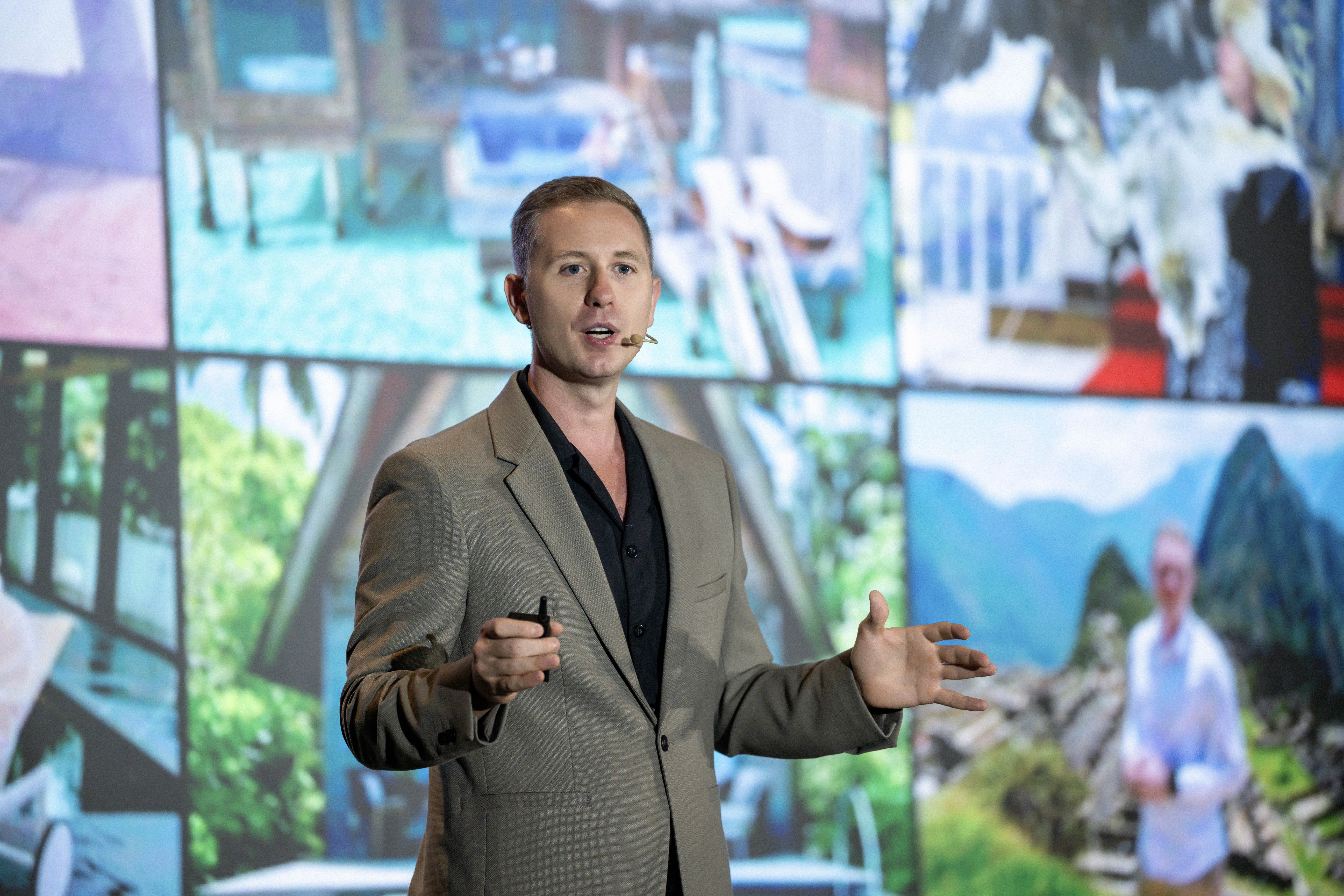
Swigunski
Mike Swigunski is an entrepreneur, investor, and #1 bestselling author on a mission to help millions of people Earn From Anywhere by building location-independent careers, online businesses, and scalable income streams.
As employee #4 at Empire Flippers, he helped scale the company into a 100-person remote team and the world’s largest curated marketplace for buying and selling online businesses, while playing a key role in facilitating more than $120 million in acquisitions.
He is the founder of Global Career and Dividends and has built multiple six-, seven-, and eight-figure remote companies while traveling to more than 100 countries.
Mike is also a TEDx speaker and a recognized voice in remote work, online business, entrepreneurship, and modern investing.