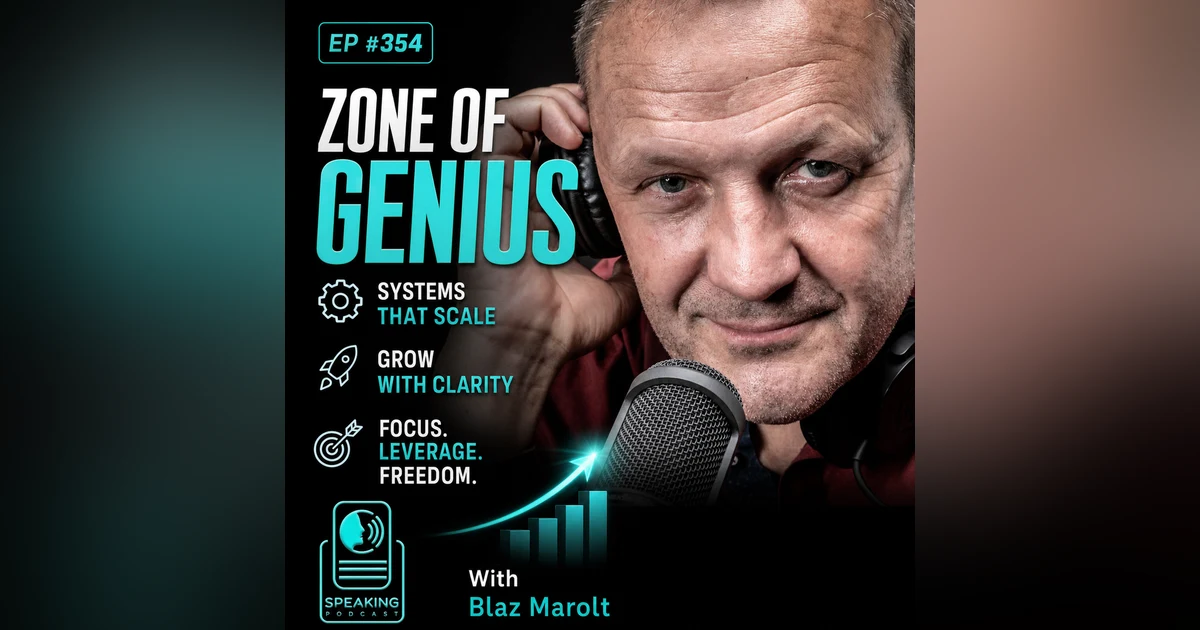
#354 The Zone of Genius: Blaz Marolt on Operational Systems for High-Growth Entrepreneurs


 Apple Podcasts
 Spotify
 Castro
 RSS Feed
 Castbox
 PocketCasts
 RadioPublic
 TuneIn
 Are you a business owner feeling like the biggest bottleneck in your own company? Do you dream of financial freedom but find yourself buried in 20−an−hourtasks?InthisinsightfulepisodeoftheSpeakingPodcast,wesitdownwithBlazMarolt,anex−militaryofficerandWestPointgraduatewhohastransitionedhishigh−stakesleadershipexperienceintoamissionforbusinesssystematization.Blazhelpsentrepreneursscalingpastthe20-an-hour tasks? In this insightful episode of the Speaking Podcast, we sit down with Blaz Marolt, an ex-military officer and West Point graduate who has transitioned his high-stakes leadership experience into a mission for business systematization. Blaz helps entrepreneurs scaling past the 20−an−hourtasks?InthisinsightfulepisodeoftheSpeakingPodcast,wesitdownwithBlazMarolt,anex−militaryofficerandWestPointgraduatewhohastransitionedhishigh−stakesleadershipexperienceintoamissionforbusinesssystematization.Blazhelpsentrepreneursscalingpastthe500k mark to build robust operational infrastructures, allowing them to stay in their "zone of genius." We discuss the "two-week vacation test," the 80/20 rule of profitability, and why even the most successful companies often operate in a state of hidden chaos. Whether you're a solopreneur or leading a team of 20, Blaz provides actionable strategies to fix your systems, empower your team, and finally achieve the freedom you started your business for. Timestamps Timestamp Topic Description 0:00 Welcome & Introduction to Blaz Marolt 0:45 Blaz's Mission: Helping business owners stay in their zone of genius 1:56 The Bottleneck Founder: Why things break down after $500k 2:43 Military Roots: Graduating from West Point and the Slovenian Military 3:42 Transitioning to Business: Boosting production by 50% in electronics 4:34 The IT Leap: Getting hired with only Excel, PowerPoint, and Word skills 5:21 Scaling a Food Delivery Giant: Growing 59x in the Balkans 6:22 The Chief of Staff Role: Doubling revenue for a US coaching company 7:03 The Young Founder Challenge: Overcoming perceptions in leadership 8:16 Military vs. Business Organization: The shocking reality of corporate chaos 9:53 The 80/20 Rule in Sales: Identifying loss-makers vs. profit-makers 11:37 Minimum Order Quantities: Why selling 100 components can be a disaster 12:54 Educating the Sales Team: Making them suffer through the production process 14:13 The Key Person Risk: Why your business shouldn't depend on one individual 15:52 The Soviet Machine Analogy: Planning for capacity and quality 31:19 The 250-Page SOP Trap: Why simple, one-page processes win 33:05 AI in Business: Using it as an assistant, not a replacement for thinking 35:01 The Amazon AI Mistake: Why quality assessment still requires humans 38:42 The 90-Day Operational Audit: What to expect in the first three months 40:53 Educating Employees: Why change management takes longer than system setup 42:52 The 20-Time Rule: Why you have to repeat instructions to be heard 60:42 Blaz's Final Advice: Defining your goals as a founder 61:16 Where to Find Blaz: LinkedIn and networking conversations 61:42 Outro: RoyCoughlan.com and the PodFather Network 🔗 Where to Find Blaz Marolt •LinkedIn: Blaz Marolt (Connect and mention Roy's podcast) •Services: Operational audits, system implementation, and fractional Chief of Staff roles. 🔗 About Your Host (Roy Coughlan) •Listen to this episode on Podbean: https://speakingpodcast.podbean.com/e/blaz-marolt-systematizing-success/ •Explore more podcasts: Find all podcasts at the PodFather Network •Website: RoyCoughlan.com •Need help running your business? If you are looking for a Virtual Assistant and get reliable support for your daily operations. •Virtual Assistants: VA.world •Communities: BrainGym.fitness •Learn about a Private Networking Group in 50 US States & 39 Countries with 640+ Members: https://connectedleaders.academy/ #SpeakingPodcast #BlazMarolt #BusinessSystems #OperationalExcellence #ScalingBusiness #Entrepreneurship #MilitaryLeadership #Productivity #SOPs #BusinessGrowth #RoyCoughlan #ZoneOfGenius #TimeFreedom #ManagementConsulting
Welcome to the speaking podcast and you can find all the episodes along with my eight podcasts and everything else I'm doing on roycon.com or just scan the QR code. My guest, we connected on a business group that we're both members of. And yeah, I had a fantastic call.
Slovenia, I believe is where he resides. Ex-military, incredible background, because if you look at him, you think he's a teenager, but obviously, you know, a little bit older, but he looks very young and help people because I suppose when people start a business, you know, they think, yeah, financial freedom, everything, freedom, freedom, freedom. And then it gets burnout or stress.
And I think with your experience and systems and everything, you're helping businesses, I believe up to like 1.3 million. But yeah, please, welcome to the show. Thank you.
Blaž Marold. I probably butchered. No, you didn't.
Actually, this has been the best pronunciation I've had in any of the podcasts or any of the shows that I did. I've been so awesome. Yeah.
Thank you for having me on. It's awesome. Yeah.
So I'm from Slovenia, been in the military and exactly what you said, it's I help business owners pretty much build their operational systems and I help them being and staying in their zone of genius. Usually, people have a big vision, what they want to do, they want free time and everything else pretty much, right? It comes with being an entrepreneur and also, you know, usually have a lot of money, get a lot of money. But when they start getting into the weeds, then the operational systems in the background, especially where they usually grow like from 500K above, especially if there's a service based business, then things start to break down and they are pretty much the bottleneck.
And the operating system is the founder. And I kind of help them get out of that. And as I tell pretty much every single one of my clients, my goal is for you to take a nice, long two week vacation without checking your phone or email while you're on that vacation.
No, yeah, exactly. And I think most people are guilty of that. And I suppose because like when we were having our chat, we were talking about the military and I want you to kind of go through your military experience.
But then you were telling me what you were doing. And I kind of thought this guy is like in his twenties. It's like, but when you get your experience, I was like, I know I understand why you're doing what you're doing.
So you might. I don't know. Can you remember? So you might get it kind of similar because I think it's important if they hear it like I heard it.
Yeah. So, yeah. So I went to the US Military Academy at West Point, graduated in 2012.
Then I went back to the Slovenian military. I was there for five years. So until 2017.
In 2016, I actually got my MBA as well, since I was thinking about going into business. And then so January 2017 was when I left the military and I became a plant production director for around for a company that was producing electronics. So kind of like overvoltage protection.
And I was leading their four departments of 120 employees, pretty much was there. We did an amazing job. We grew like by 50 percent.
And if anybody knows at that point, the car industry was booming and the majority of our orders were for the car industry, pretty much like legitimately we didn't have any capacity. Increased capacity by 50 percent, decreased cost by around 20, 30 percent and the productivity of each and every single individual by 20 percent at least. Then I was kind of burned out after.
You know, years in in leadership positions, and I went into I.T. And as I think I told you, like my claim to fame in that meeting with the HR manager and the managing director that were hiring me when they asked me, what do you know about I.T.? And I was like Excel, PowerPoint and Word. That's the only thing I knew. So I still got hired and I got hired for projects.
So I was doing projects in Vietnam, Czechia and also Romania, several million euros worth projects. And after two years, I kind of said I.T. wasn't exactly for me. I love the camaraderie and all of that.
But then I got the opportunity to become a head of operations for a food delivery company that was coming in Slovenia, grew that up by like by 15, 59x, I think, from the previous company that were bought. I was the only person in operations at that point when we started, grew the team up then six months later. So that was in the beginning of 2022.
I got promoted to the regional operations director role for eight countries in the Balkans and 100 plus million euros of P&L pretty much did there that as well. Then I kind of gotten tired of working 12 hour plus days and I became a chief of staff for a career coaching company where and that career coaching company was specifically based in the US. And my goal was kind of like what I'm doing right now is to grow it from 600K and we grew it to 1.2 million.
And the year that I left, it was going the goal for the revenue was 2.4 million and they were actually going to achieve it. And pretty much I did all of the systems, productivity, how to organize ops and and that stuff. And then I wanted to go on my own.
I wanted to become an entrepreneur. So pretty much first I started with a career coaching and leadership coaching. And one of the things that I kind of always failed to recognize was that I still look really young and I failed to recognize that actually may be an issue with people wanting or not wanting to hire me.
So but it wasn't kind of a line. And now what I'm doing is, as I told you, since this year, I am helping businesses systematize their operations and or lead also their teams and making sure that the founder can be in their zone of genius, does what they want to do and or especially that they're doing the $300, $400 per hour task instead of like the $20 per hour tasks that are usually the big bug for the founder. And yeah, that's my short.
Yeah. So when you went to the first job after doing so many years of military, how was that transition feel? For me, it was amazing. Like, so I first thought that, you know, when I went away from the military, I thought the military is not organized because every single business should be more organized and better led because they're doing it for money.
In the military, you know, we train, train, train all the time. But unless we were going to war or some operation, then we were just training, right? And we weren't producing any money and stuff. And boy, was I wrong.
I found out that pretty much the transition at that point, everything was in chaos. Like legitimately, they didn't know how to plan their operations or their production. They didn't know in the end of the month what was going to be produced.
And I was stupidly shocked. So we started with that, just understanding what we were producing. Then one of the issues with, if you know any, like over-voltage protection is that if it's a protection from, let's say the, like the environment, right? Like those kinds of things are like really large, but then we also had the microscopic ones when you actually had to look through it through a magnifying lens, right? So the kind of like the planning system was done.
You need to make me 10 million pieces. And that was it. If you had 20 days, you have to make me 5 million, 500,000 pieces per day.
And nobody asked, can we, how many can we actually create? What is the capacity of any machines or anything like that? And slowly then I started pretty much to plan this, redid all of the planning, all of the production, the way it's done. And also, and this is where later on, I left the company due to it was I got my hands into what sales was doing and everybody else, because I didn't like the way they were selling things. They were only selling it just to sell, not for the company to actually get profit.
We found out later on that, you know, the PRAD rule 80-20, the 20% of our, what we were selling was actually giving us, of course, 80% of revenue, but the 20%, so the top 20 that we were selling components, 10 of them were a loss makers, five of them were breakeven and only three or four of them were actually making us profit. So we kind of switched all of that. Yeah.
I couldn't believe it. And I was a production guy. Like I shouldn't even be doing this.
I shouldn't even be caring. So yeah, it was, um, it was, it was, it was a nice challenge to say the least. And even if you're going to touch on the sales, because I mean, you, you're saying like, I mean, the way that it works sometimes is people are paid based on the orders to get not on the profit margin and they'll drop it just to get it in the door without realizing.
And it should be structured in such a way, the higher you get, the more bonus you get that way. They're not going to, it's not a race to the bottom. And there's so many companies do it that way.
And this is what we actually changed. I was like, like, because I was working closely with the general manager at that point. Right.
And we were just talking and you could just see like every single day, two or three times the sales manager came in and was like, Hey, general manager, I need your signature so we can lower the price because otherwise they wouldn't be buying. And that was really pissing me off because the products that they were actually, um, selling were not profit makers and were just an annoyance to make. Right.
So then I was like, no, the salespeople needs to get paid like what you said. Yes. They need to sell a certain amount, but they also have to have the profitability.
And the one, the other thing that I also demanded that they, that we would be doing is the minimum, minimum order quantity. Because at that point we were producing, so one of our machines was making 80,000 components per shift. But then those people, like our salespeople were selling it just by 100 components and they were selling it at the same price as if we were selling 80,000.
Right. And if you know, and especially the machines, uh, that was also one of the drawbacks was the machines were from the Soviet union. So they needed a lot of maintenance and a lot of- You were weighing them up, did you? Like almost, yeah.
Like it took us 15 to 20 minutes just to retool them for like a specific product. And if you know that, if they only ordered a hundred components instead of 80,000, like it took us longer to rewind the machines and like calibrate them for, then it was for us to actually make those a hundred, a hundred components. So I forced them to do that.
And the way I did it was, um, I just refused to, to do those orders. I was like, I'm not doing them until you actually give me a reason to. And it's strange that companies don't bring in their whole staff and walk them through it, explain what exactly is needed, why 80,000 is X and a hundred is like two X, three X or whatever the reason being, because we're actually losing out on this machine being able to produce something that can generate more income.
So, and actually that actually happened. I made the whole sales department go with me because they were complaining that we, we had like one test batch that they wanted to do or for like 50 components. Right.
And I would, I was refusing to do it for five months. And then I was like, no, we're going to be doing them. But your whole sales team is going to come up and they're going to go.
And we're going to go through the whole manufacturing process for that day. You guys are going to be there. I don't care what you have.
You're going to be there so that you're going to see what we have to do. And when I was showing them, because they were so, they were so proud. They were like, it's a hundred percent profitability for it.
Like they were paying two euros per component and we should be only costing us like one euro or something like that. Right. And then I showed them, look at the time.
We have to make a hundred components to get 50 quality out because of the issues. They never sold that one again. Because yeah, I made them suffer.
It was like, if you're going to make me suffer, I'm going to make you guys suffer. So like with the systems, because I worked for a mechanical contractor. They're now the biggest mechanical electrical contractor in Ireland.
And I was running multi-million pound jobs. But I also was kind of making operational maintenance manuals and also systemizing everything. Because I saw, for example, air handling units, you know, like the machines for having the people would do them in such a way that the pipes written, there was mistakes that were costing a lot of money.
So I was having checklists for that. And also the whole running of a job and the saving of files and everything, which meant that if I get hit by a bus in the morning, somebody comes in and they can take. And they, you send me them on sites.
Cause we had like the ISO, I don't know, I said 9,001, whatever it is. Yeah. Yeah.
Yeah. That one. Yeah.
Yeah. And I remember going to an electrical plant where we were working. And it was like, it was just a disaster.
And people, he just got their folders, threw them into the back of the car, had one folder and then yeah, you pass her. So like I lost total respect for ISO because it was like, yeah, they're not going to cut off the hand that feeds them because the reason for it to work properly is that someone can come in and just change over and everything is working in a system. But like, and I mean, even at high level, like they weren't doing that.
It was like, everything was kind of, and like, this is even big companies, not a big farm. I saw the same, like everything on paper, they're like making it look like we're a desperate dog. People haven't a clue.
Like they were just, everyone had their own system. And if someone was missing, then the whole equation just didn't work. And they're like, what do we do? So, I mean, you must be seeing that constantly.
It is. And like, this is what we kind of call like the key risk factor, right? A key person risk or a key machine risk or whatever it was, right? And since we're talking about the production job that I was in, right? One of the biggest shocks that I had was we were doing like 55% of the orders for the automotive industry. And as anybody, if anybody knows the automotive industry, they are sticklers, specifically Germans for ISOs and everything has to be just on time.
Everything has to be done. Like you cannot have a delay of even one day because legitimately in the contract, it says if you cause the delay of our production, you're going to be fined. Like I think it was at 1.3 thousand euros per minute for our company.
If we missed one day, we would go bankrupt because we wouldn't be able to pay. And the machine that was producing those products was only one machine built in the 19, I think 1975 or something like that in the Soviet Union. And I was like, guys, like, you know that this is what our production stands on.
Like, this is the only machine that we have. You know what the answer was? It was made in the Soviet Union. It's going to work for another 30 years.
I was like, guys, this is not how you plan stuff. And I was like losing my mind, right? We did get another machine, which was a whole process in itself. They were actually producing, they made a machine because they thought they were going to be selling some other things.
But then that machine, which was like four times as fast and way more quality, it has a lot more quality, was just sitting there because it didn't have the orders. And my question was, right? It was like, can we switch those components that we're supposed to be making there to the ones that we're making in this super duper Soviet style 75 machine? They were like, yeah, but it's going to take us two months. I was like, and what's the problem with that? It costs money.
And I was like, how much does it cost? Oh, a lot, 5,000 euros. I was like, I'm going to sign it right now. I don't care because we're going to be doubling our capacity.
We're going to be refusing the key risk or in this case, the key machine risk, right? And if we're only looking at founders, the majority of founders are the key risk. Because like you said, if you get hit by a bus, good luck, nobody is going to know what's happening or the majority of time, because everything is in your head and we just can't have that. This is why I tell them you're going to go on a two week vacation once I'm done with you.
And I've actually seen a factory that was doing a lot of stuff and they had brand new equipment just sitting there because it meant learning something new. And you're going, this is like a Rolls Royce versus a ladder. And you're happy with the ladder because it's working.
Yeah, and the other thing was, I left before this happened, but when I was, so again, production director, the one thing that was really annoying me was the machines that were 40, 50 years old. They were not up to par anymore. We were just, we were almost scamming our clients.
It's like, yes, those are the top quality machines. And we're actually, you know, when you said about ISOs, right? And the inspectors, when the people that were actually inspecting our plants, so from our buyers, we showed them completely different machines, the ones that were like more modern. It was like, no, no, this machine is working for you guys.
And then we covered the other one that was actually doing it. But what we did, right, was we went to Taiwan, like Taiwan is the leading producer of those machines that we were working with. The whole project, I made the whole project work.
We did it, I left afterwards. So then I got a call from one of the persons that was still working there and they were like, Blash, you know, those machines, they're really fast, but they don't work because we tried to stifle the Taiwanese for like 20k, 30k, a thousand dollars, and they didn't want to help us anymore. So they sent us machines that don't do quality control.
Because we didn't want to talk with them, right, because if you know, also Asian culture and every other culture, right, you want to be respectful with them and you want to help them. And they knew way more than we did. But when they switched and they only cared about money, like, hey, we're going to lower the cost by 5% of this project, the Taiwanese were like, okay, cool, we're just not going to give you what you need.
And you only signed for that one, we're not going to help you. And then they had the machine there that was not doing anything. It costs like 1 million euros and it would have modernized 85% of the overall production.
And it would have been faster, like I think three or four times with needing only five people instead of 30 that we were using at that point. Everything would have been awesome. But because people are like legitimately stupid at some points and they don't want to invest the time with their company, with the relationships, they lost a big opportunity because of that.
And I'm just curious, do you look into, because sometimes a company starts off with the founder and then he just kind of grows and grows. And it depends whether you're, I don't know what you call it frugal or do you watch every penny. But like, for example, if it's a production and you can have waste plastic, some people pay to get it collected.
Others get paid. Because people come in and this is the way it is. Just kind of nobody kind of thinks, hey, can we actually reduce the cost? Can we actually sell this instead of give it away? So is that something that you look at as well? I pretty much look at the whole operational costs and everything, because like one of my mantras is like if the operations is lean and efficient, like you can grow your revenue as much as you want and the profits are just going to rise.
And just and also like what you said, look at different ways you can get revenue, right? Like selling plastics, right? Like selling other material that you don't need. And yes, they will pay you. People will pay you just to take it off your hands.
And pretty much when I go in, I analyze and I look into every nook and cranny, like what we can do and what can we do better, right? The only question is, do we want to do this now or do we want to do this later? Depending on how much time and costs are going to be right now, let's say for automation, do we want to automate that? Or would it be easier, let's say, to get a VA or just somebody to do it for an hour a week or something like that, right? Because especially with smaller businesses, things change so fast, especially if they're in the growth stage with like six figures and they're going up to seven figures. If you can't get a positive ROI on an automation or anything within a year, then at least at that point, for me, it's not worth it because probably you're going to change your offer. You're going to change something that is just going to cost you more money upfront and not getting the ROI that you should be getting with the automation or insert whatever project optimization you want to, right? And I know that like some companies, they just have this specific thing, but there's other times they may own a building and, you know, lease out some of the parts.
I moved, it was 2007 and we got a commercial property and I changed it over to recycling. And at the time, everyone was like, I was like carbon and segregating and everything. And I reduced it by a third on it.
Like, because it was over two acres and, uh, you know, 1,500 meters, but also there was a, a big corridor and one of the things I was like, this is a waste of time. So I put in a door and rented that space to the guy. And he was happy because he could have a filing system on the thing.
Also every single thing I was putting in sensors and everything, but it's like, I rarely like, cause every time I'm going somewhere, I'm just looking and I'm seeing waste and how they're. Yeah. And I think like, sometimes people think, oh, we have to pay someone to come in, but the reality is you can save them 10 X or maybe it might cost them for the first year you're with that thing just keeps going.
And like for the next 10 years was pure money in his pocket. Yeah. And I mean, and if we're looking specifically with founders, right.
It's like, Dave, usually as a founder, you have a vision and you want either freedom or you, you are really passionate about some service that you're providing. But what then happens is, and the word that I absolutely don't like is hustling, right? Oh, I'm going to hustle day in and day out. And founders don't even have the time to like what you said, like, hey, I'm going to rent out this part because it's way more efficient.
The other person is going to be happy. I'm going to be getting revenue or I'm going to be cutting costs somewhere. They don't do that because they don't have the time to just think strategically or just, you know, take the two, three hours, go on a walk because we've been so primed with, I would say the Instagramification of TikTok, Instagram or whatever that stuff needs to happen right away, right away.
Otherwise it's not worth it. And, or, you know, people that are on LinkedIn and they're posting, hey, I work from 5 a.m. to 9 p.m. I'm the macho person. I am the best.
Like if you can't work 14, 15 hours a day, you're useless and you're not being productive. And then people try to replicate this. But in essence, this is not how we're supposed to work.
This is not how our brain works. You need time to reflect. And when you actually take a step back or you hire somebody to fix your operations or something like that, you actually are going to be 10x-ing way faster than you would be alone because you have the time to be in your zone of genius, what you do really well.
And nobody on their deathbed said, I wished I worked all the hours. It's always about relationships and traveling and everything. Why did I work so hard? Like, so it's, so when you're dealing, because I mean, when people are scaling up, there's not just a one man show that's got, they've got a few different people.
But sometimes like what I've seen is like the entrepreneur, the founder, the ego gets in the way. It's kind of my way or the highway. So you can bring them gold and they'll still look at the bronze thinking normal, the bronze is better.
How do you navigate when they're ego driven? So one of the things that I've promised to myself now that I'm, I have my, my, my own business is that I will not work with people that have an ego or that I can't work with. And the way I kind of think, the way my offering at the moment is done is, of course, I'm going to give every person a 30 minute free consultation to see if I like the person, if I don't like the person, if it makes sense, right? To even go into business. And then without a doubt, we're going to be doing an operational audit, right? So the cost is a little bit lower, but I want this person without any like, Hey, can we do it in any other way? I want this to happen because at that point I'm going to have two or three hours of touch points with this person when I'm going to be doing the operational audit for in about two weeks, I do it.
And at that point I can, I can, I can see, do I want to work with this person? Is this person the ones that, that the one that will be receptive of what I tell them or are they going to be like stubborn and say like, Hey, it's either my way or the highway. And usually I'll tell them like, I mean, good luck, like find somebody who's going to be willing to suffer for what you're paying them, but you're probably not paying them enough. Right.
And for founders that are also thinking about things like, Oh, I have a team, they're going to be telling me this, right? They're not. Because let's say if I come in, I don't need your business. It's nice that I have your business, but I have other clients.
So I'm financially stable. Whereas when I was also employed, that was my only source of income. So as a founder, we need to, as founders, we need to understand that our employees want to survive and want to keep their paycheck.
If they're going to go against you, usually like what you said, their ego comes into, into place and they're going to be firing you. Especially if you're a contractor, if you're in the U S where they can just fire you the next day. So that, that kind of thing.
Yeah. And legitimately, I will not work with people that I don't see me working long-term plus that I don't kind of cannot connect in a, I would say deeper sense that I know they can trust me and I can trust them. And regarding kind of, I suppose SOPs on, is it notion versus the folder with the thing, because it depends, like usually trades people and people hands-on prefer the paper, whereas office can kind of, so do you do both or how do you navigate that? Um, I, I can do both.
Like, because I'm so, because I mean, I would prefer of course online because I usually do it with service providers, unless they're like somewhere in my vicinity, because you know, I just can't jump to onto a plane, go to the U S for a couple of days and check their environments. But I would always say, do it online, notion, whatever, like a thing, like you use pretty much, because if you write it on paper or something like that, that can get lost really easily. You will not know where it is.
You're going to be scrambling. And let's face the fact that in the majority of cases, the SOPs are written wrong because we're not in the best way because the majority of people don't even, don't even look at them or don't even read them. Um, so one of the, like the things that I had to do in my last full-time job as a chief of staff was I was writing some SOPs, you know, what, one of the worst feelings was that I knew that nobody's going to be reading that SOP except for the CEO, because he wanted this to be done.
And I told him, so he was like, no, I want this SOP because we need to have it. And I want them specifically like this, this, this, this, this. I was like, nobody's going to be reading them because it's useless at this point.
And, um, yeah, uh, it happens. So if I have any advice to give to people who are, um, writing SOPs, make them so that they are not read like a technical manual that puts people to sleep. Because legitimately you need five W's who, what, where, when, why.
And if you can answer that, even in a, in a paragraph or two paragraphs, that can be your SOP. You can expand it on later, but you just need the person to know what they're doing, where, why, and when, and, um, don't try and make it 10 pages just, just, just because, just because you, just because you thought that, um, an SOP should be five pages, six pages, seven pages. And it needs to be meticulous.
It doesn't need to be. And. Cause I've seen it as well, where people, they overkill, they go like, they give us, and like, I even got tired looking at one of them was like, what issue of this you must do this, press this to this, to this, to this.
And then they're on realistic in the time and not saying something would take 10 minutes when, you know, like it takes an hour or more. And then they're making the person feel inadequate because they're looking at this. So like, I, I think it shouldn't be overwhelming.
It should be as simple as possible and explaining it. Because when, when it's like that, it's like, you're looking at it and you just get tired looking at it. It's basically like having a to-do list of 30 items.
Instead of saying, okay, what's the most important five, right down five, you get five done, then you can do another five. But yeah, when you look at 30, you just, and you go to sleep, you just don't want to do nothing. Yeah.
That's exactly what happens always. Like with me, like when I see an SOP and, um, so the last SOP I saw, I, it had, I think 240 pages. And I was like, dude, like, I'm not reading this one.
Like straight up, I am not reading it because I can guarantee you there is no value in it. If you want a 240 page SOP, sorry, 241 page SOP. That one page was more.
Yes. And I mean, it's like, why? Even like somebody writing this, it's probably, it took them weeks to write it. And nobody's going to be reading it.
Like just say like, it was a waste of time, put it somewhere else and then either just do a video or do whatever it, like do one pager. If you can't explain a process in one or two pages, then something is wrong in the majority of cases. And what you said, right? With the SOPs, then you need to do this.
If it's this, if it's this, the, what, why we are doing standard operating procedures, SOPs is because it should be standardized. Like legitimately 95% of all of the operations or whatever the SOP covers should be written in one or two pages. The rest of them are exceptions and they have to be treated as exceptions.
If the exceptions are the rule, then something is wrong and you just legitimately cannot write SOPs because something is wrong within the operational process that, and usually this is where the founder comes in. I'm going to decide everything. Everything needs to go through me.
And they become the biggest bottleneck. And then the SOPs can be legitimately written in one sentence, ask the founder, ask the business owner, because that's the SOP. And this is where usually founders burn out because they just don't have the capacity to decide everything and be everywhere all at once.
And I assume, like say the ones for 240 pages, yeah, there's people come in and they're justifying, you know, they get two months instead of something that could have took them a week or something like that. But also with the AI, because like you can feed it and go, oh, create SOPs for this. And then, and like, I even get say projects to price, like, cause we can do apps and different things.
And somebody asked me to, to price a game. And I was like, I just saw all this stuff. And I said, I'm not reading it.
I just said, you've done that by AI. You know what I did? I actually put the 60 odd pages into AI and I said, write that and explain it to me as if you're telling a 10 year old child. And then I got a small little thing and I said, okay, so that's what she said.
Got on the call. I said, so you mean you're doing this, this, this? And I said, that was by AI, wasn't it? Uh, yeah. And the problem is there's people using AI and they're not even reading it.
They're just, they're just cutting and pasting. And then they're expecting the employees to follow something that doesn't even make sense. Yeah.
It's, it's, so this is legitimately laziness in, in its best form. I, I, so I love AI. I use it pretty much every day, but the way I use it is bouncing ideas.
Give me a completely different opinion or like when I'm filming YouTube videos and stuff like that. Hey, can you give me some of the resources or some of the articles that I should be reading for that specific subject? And then don't summarize it to me or summarize it to me, but give me the links to the actual articles because we know AI is just making things up like most of the time. Right.
Uh, and that's how I use it. I use it kind of like as my personal assistant, but I, I will never allow it to do the thinking instead of me because AI is not, it's a, it's a large language model. That, that's what it is at the moment.
It's only scrapes information and it can make things up, especially because it wants you to constantly talk with it because this is how the companies get money. And they're going to be saying, Oh, you're amazing. Like this is such a great strategic decision making.
Like you are, you should be like the president of the world or something like that. Right. Because you're such an amazing person.
And then you talk with us for five, six, seven hours. And then of course you buy the monthly subscription and that's it. And the thing with that as well is like at the start you were doing something and if you fed it a very good question, you got brilliant answers.
It was great. But then now it's like, and you want ABC? Oh yeah, that sounds good. You want DEF? Yes.
Before, you know, you've got 70 pages and you end up doing nothing because if you just said, all right, now I have what I want, go away and do it. And as you mentioned it, Lion, I mean, I've moved all my podcasts from Spotify because they started removing some of my shows and I just thought, okay, I need to move them over and the information, the CSV file to all the stats wouldn't go across. They said, no, we are not giving it in any other format and everything.
So then I lost all my numbers with a lot of the shows and like hundreds of thousands, but one didn't go across. It was The Awakening. And I've actually recorded it.
I'd done it just the other day. Yeah. I got onto Kimi and I was paying for Kimi and I uploaded all the CSV and the way Padbean wants it and all this.
And it says, oh yeah, we can see that you got, I don't know, 357,000 downloads. Don't worry. Just transfer your RSS feed.
I was over three hours actually in the end and said, sorry, we made a mistake. And I'm like, I just went back to zero because you had told me it's okay. Everything is organized.
And it's like, so now it's like, you have to be extreme because, and I mean, it's not that I'm using a freebie, like, you know, I'm paying for something. And when it tells you, yeah, no problem. We have all the stats.
We have the CSV file. This will work. And what it was doing actually, it was giving me a file.
It says, I can't even download that. We're not able to do that. And then can you just create this? Whereas like ChattyPT can create an Excel file or something like that.
Yeah. You know, and it's like, so yeah, it can be frustrating, but the problem is, as we're saying, a lot of people are lazy. Just say, yeah, create me this.
And then they tell all the stuff, hey, you must learn this. And then more people know it and then they lose respect as well. So they don't even engage in something that they shouldn't have been doing anyway.
Yeah. I mean, and just look at LinkedIn, like, because I spend a lot of time on LinkedIn since it's where I conduct most of my business. And it's like, everything is like AI, right? Or like everybody's saying, like how amazing AI is.
Like AI is going to solve the world. It's going to solve all of your problems. Just put in my prompt, just tell it.
Or if you're not using AI, you're already lost. Like you're going to lose your job, like within a year or so, right? And then we get Amazon, right? And all of the other companies. I think Amazon is the latest one that they fired, like a bunch of developers.
And they used AI to produce their code. And now they're having serious issues because they made a big mistake. Since they didn't do quality assessment, they didn't do testing and all of that.
And AI cannot do that. And I'm legitimately waiting for the meme. You know the memes from IT when it says like, but it worked on my computer.
Yeah, we're not going to give your computer to the customer. I'm just waiting for the meme that's going to say, it worked on my AI. Yeah, we're not giving your AI to the customer.
Like, because this is what's happening. And then you're spending probably months on development with AI. You're firing the know-how, the teams, because you want to save money for, of course, I mean, every company wants to save money.
But then you don't test correctly. And then in the test environment, you don't see any mistakes. You put it in production and then the whole thing crashes.
And you lose way more money than you would have if you just kept the know-how from the people and just use AI as a supporting mechanism productivity tool, not the ones that's going to be all and all. And it's going to be your personal IT developer. So you mentioned that like the phase one is about two weeks.
So the phase two then I saw was like operational infrastructure. It's like 90 days. So are you able to do a lot of that by just having access? Or must you actually be hands-on, be there doing this? As long as I have access and as long as I have, like, let's say if you hired me, I would need to have, of course, constant communication with you.
I would need to go through what you're doing at the moment. And usually this is what is done in the operational audit phase at the beginning. So it's a little bit easier for both of us.
And what we discover in the operational audit, that's what we're going to do in 90 days. Usually, I know that people really love or want to have the whole infrastructure done. In most cases, that's not possible.
We can do like two, three, four, most immediate bottlenecks. And to see that, hey, these are the results. And then kind of like do next steps.
Because it takes a little bit, it takes some time depending on where you are. Right. If you're a solopreneur, it will be a lot easier.
I can do like almost 100%. I can do the whole operational infrastructure. If you have like 20 employees and you're having operational problems, then it's going to be taking a little bit more time.
And not because we can't do the operational infrastructure, but because we need to educate the employees on how to use those. And usually that takes more time than actually implementing the overall systematization of the processes. Because we're still humans.
We don't like change. And we like to do it the way it was done. And what I usually tell people is like, what do we do in month one? If you have 20 employees, we're going to be reinforcing month two and three.
Whilst working on other things. But at the end of month three, in the end of 90 days, we're going to be seeing results for what we did in the first month. Because it just takes time for people to start understanding what they need to do, how they need to do it.
And we need to be, you know, always present and always say, this needs to be done. We can't use any loopholes or stuff like that. But in essence, yeah.
90 days is usually we're going to see like really good results. And I remember like I was doing a lot of real estate, a lot of renovations and I had a team of about 10 people in the office and I had everything kind of systematized. And like I made the stupid mistake of thinking I'll tell you and then you'll know what to do.
I realized you have to tell people about 20 times before it actually. Exactly. And it was like, it used to frustrate me.
I'd say it and I'd go, I told you last week that if you're doing something, these are the checklists so that we don't get caught. We have proper contracts and all that. And I'd just go in as if like I didn't have that conversation.
And then I realized I just have to keep repeating. And then when I see something was then systemized and it was okay. Oh yeah.
But that's kind of frustrating. Like, I mean, for me, like I've had a lot of different companies happening. I suppose dealing with the employees, it can be nice in ways and having the comadre and just everything is, but it can suck the energy out.
Like, I feel like you're an agony aunt or when you're saying, Hey, do this this way. Same in the construction in Ireland. Like I set up systems that would save us a fortune.
And I was working on a bonus system that I had a gut salary, but also like 5% above profits. So I was watching every penny. And then I'd see people doing stuff that I had in a book that was like, and it costs five, 10 grand.
And you're going, what are you doing? Because I was like, but it's, it's so it's, I suppose. Like, that's just the way human nature, isn't it? You can't just tell. Yeah, it is.
Because like, so when we're looking at our brain, right. It's like, we don't like change. We want things to be.
So in neuroscience terms, it's, we are avoiding danger. And for us, avoiding danger is doing any change. We're going to be actively against that.
What you said, right. Even, hey, you're going to get a bonus if we do it like this. And they're like, no, I don't want to do it.
And it's their subconscious mind that's actually doing this. And this is one of the most, the biggest frustrations that I had when I was employed with, so my CEOs and stuff. And especially the ones that either didn't understand how IT and IT infrastructure worked or operations as a whole.
Because let's face it, CEOs usually are visionaries. Like I said, like I think a countless of times. Today, but they usually don't know how to lead good operations.
And because for them, it's like, hey, I'm just going to decide something. And from tomorrow, like you said, it's going to happen. No, it's not.
You need to first do the operational machine, operational systems. And then you need to teach people how to do it. And that takes 80% of the time.
Most of the time, it takes 80% to actually start implementing and making sure that people do what they're supposed to do. And that's kind of like also like my third offer when you're talking about 90 days. And then I also offer, hey, I can also lead a team instead of you.
Because I've heard a lot of, so specifically here working with coaches, founder coaches, they want to coach. They love coaching. They don't want to deal with a team.
They don't want to deal with like all of the background and stuff. And this is where I kind of come in and make sure that the team is reporting to me. I'm held accountable.
They're held accountable. And we make, you know, great things happen for the founders. So they can be in their zone of genius.
And I always tell one thing to the founders. However much time you think we're going to need to implement this stuff. If you think one month, it's going to be three months because of the human factor.
I would love it to be for one month because then I would be able to do a lot more projects and I would be able to charge a lot more just for that month. But it doesn't happen because we always need to think about the human psychology and the human element here. And I remember there was a person working for me that I think, I don't know if it's called Lean Manager 5S or something like that.
That she, and like we had a load of folders because we were managing loads of properties as well as developments with loads of stuff going on and lots of folders. But she had a tapes system, a colored tape at an angle. Because people would be taking a file, but then you know, and it was brilliant because you know straight away, Hey, something's missing.
Who's got that? They ask somebody put it on there under the ground, under their desk. And you're going, Hey, this is an important part. But it was like a simple thing, but it was like straight away.
You could see, Oh, there's something missing here. Yeah. I mean, and like those systems and what I always try and tell, like whatever founder I meet, it's like start doing systems or start thinking in systems and building systems while you are alone.
Because for us, I'm alone right now. The easiest thing for me to do is I have everything in my head and I don't need to type in any reports, any SOPs or anything like that because I just do everything. But then when I grow, that becomes an issue.
And the longer it takes you to not systematize stuff, the longer when I go in and help you, is it actually going to take me to then systematize? Because you already have like an operational machine or you have 20 people, you have clients that we also then need to take care of. Like when we're doing changes, my first thought is how is this going to affect the client? If I want to cut costs, is the client's experience still going to be the same? If the answer is yes, perfect. We do it.
If the answer is no, what are the risks? What can we do? How can we mitigate this? And this is kind of like the other thing that usually founders don't have is risk mitigation and risk assessment. Because it's like, hey, I just thought of this brilliant idea, let's just do it without thinking about what the second or third effect costs and risks are going to be. And that's what I also do.
And this is why people are frustrated at times with operations people and people like me, because we're always like, hey, let's take it easy a little bit. Let's think about what we're trying to do and actually see, is it even worth it for us doing a thing? Not just because a founder says, hey, I feel like it, I think it's going to be great. It's like, no, I don't buy it.
Give me the numbers, give me the reasoning, and then we can operationalize it. And like my own experience, I'm just curious, have you come across this? So I was really kind of systemized in Ireland with the different companies I was working. So I was like in full control, even though I had big teams and everything, but I kind of, I'd go in and I'd have different engineers and foremen and stuff.
So they'd work to my system. So that was grand. And when I came here, when I started building up, one of the persons that started working me at the start was really systemized.
So like, as I say, with the tape and then like I get into my creative zone, because like, you know, there was lots of companies going on. And so I get a bit messy, but then I need this, I need that. And they were brilliant at doing that.
And eventually, like, you know, a lot was real estate, the whole crash, everything got wiped up and just, but then I found that like, it took me a while because I kind of, I took my organization skills. I just gave it away. I know, yeah, like with the podcasting, I've been there, I've, I'm close to 2000 that I've, and I'm really systemized with everything I'm doing.
Yeah. But have you seen that where people, they kind of, they get systems in place and then they go into their zone because I think you have to, like, just from my own experience, you, I think you can't do that. You have to understand the whole lot and know where it is, as opposed to, oh, it, Johnny there or Mary there was able to get file A in 10 seconds because of Mary's out sick.
It, you know, you, you kind of have to talk the understanding and I, I'm like, I was guilty of that. Yeah. So this is, this is one of the things usually that almost like right now without like any differences is when I go into and help a company, right.
I always tell them, do you have a customer or client journey map? So where the client is, right. And then like what you said, we can systematize pretty much everything because I need to know at exactly where is every single client that we have. And if we have that, like you said, like you can then do other things.
You can be a visionary, you can do whatever you want and you can apply all of these things to, you know, like your 20, 30, 40 businesses, right. Or how many podcasts you have, right. And also if, like you said, like Mary is sick, I can just put one other person there.
And if I have the correct procedures, what has to happen? They're going to be, yes, they're going to be, of course, like what we were talking before, they're going to be slower. They're not going to be able to do it in 10 minutes. They're going to be doing it in like an hour, hour and a half.
And that's fine because they're only covering for that person. And if you have that, then you're golden and you can be in your zone of genius. You can be the visionary CEO or founder or, you know, whatever you want to be.
Like the only other point that I always talk about with founders or whoever's leading the team is have redundancy. So the one thing is usually the founder is the one that knows everything. Then when you hire people, you have one person knowing, let's say operations or the other person knowing sales, right.
When this grows, you also have to have at least two people knowing the same operation or whatever they're doing. If you have one person in sales, somebody else should also understand how sales is done, especially if the founder is too busy. And usually I tell people it's like the founder can be the third person to understand this or know this, but then you always have to have two people.
If one goes sick, the other one can cover for them at least initially. And that's where redundancy is. But usually I get pushback on this because it tends to cost a little bit more since you probably have to have at least one extra person that, you know, can cover some of the stuff or you're not going to be as efficient operationally as you would want to be.
But if you're growing, that is legitimately the best possible way to do it because you're slowly going to be growing people into the roles and then just adding people when you have the trigger point or the milestone of revenue of clients that you know you will need to hire again and then grow. Right. The thing is like when you have an epic team, it's like realistically somebody should be sitting down with somebody for the day and go, all right, you're my number two and then have a number three.
And every person does that. But what usually happens is they don't know and they're just told, all right, no, you better do this because this is way more important than that. And they're just lost, like, and then they feel inadequate and then the person comes back and starts giving out to them.
And then you create a bad atmosphere in the workforce because, you know, someone's just after moving somewhere they shouldn't have, but they didn't know because they weren't trained properly. Because like the thing is as well as whether it's sales, right? And a lot of the time, not just systems, but like to train them. Most of them, they just assume if you're doing this and no, you're doing that, you know, exactly.
They don't train them in the whole process of how to do it. No, they don't. And one thing that I always ask founders and or the majority of times is like, if you hired somebody right now and you give them your documentation, would they be able to understand what your business is about and how to in generally how your business operates within the first 30 minutes or an hour? If that answer is no, then somewhere you haven't done the proper documentation, you don't have stuff written down because then what's going to happen, like you said, they're going to be doing something.
You're going to tell them to do something, put a pencil from point A to point B, and then people won't know why it happened. Somebody else that's going to need that pencil is not going to be seeing them in point A because the CEO told them to do something else or whoever did this. So kind of like my test for if the operation is systematized and good or the overall client journey is where it should be is if you give me right now, your whole operational system, like the way it's systematized, can I understand it within an hour? If I can, you know, just in a general sense, if I understand it, then you've done something really well that the majority of businesses don't usually do.
And if you're, whether it's production lane or whatever, but if you've got say, if there's 20 people and yeah, like we mentioned, you need to kind of reiterate it so many times and just kind of explain it, maybe more training, more training, but there's always one or two. They know better and they kind of, and they end up ruining it. Like when you're three months down the line or whether it's a month, whatever, and everybody's on board, do you have to have the hard conversation? These two guys are actually, they're not, they're actually costing us money because they think they know better.
So in general, the way, so I do it at the beginning, right? When we have, we're doing this operationally thing, like what you said, right? Like we're implementing this and I talk with those two people, one or two people, one on one, what's wrong? What are your, you know, limitations, reservations? Why are you even doing this? Right. Because maybe they're going to be telling me something really amazing that I haven't figured it out where I can just explain it to them. Then I'm going to see if I've made the change in their thinking, right? So after another week, I'm going to have, again, a conversation with them.
Usually for all of my direct reports, I always have a one-on-one on a weekly basis and then team meetings as well on a weekly basis. And then if that doesn't work in one-on-ones, I'm going to call them out in front of everybody so that they can explain it in front of everybody. And usually that works because if they don't have the arguments, if they have the arguments, we're going to be solving them in a one-on-one that if I made a mistake or if something doesn't work right, right? But usually in the majority of cases, those people are there just because they think they need it to be contrarian.
They don't like things or they just, I just like it the way it was. We've always done it like this and I don't want a change, right? And what happens then is, then I usually tell the business owner also, if we're coming to that point where the person is openly challenging and they're really defined, even after, you know, I call them out or we call them out during team meetings and stuff, it's like, be prepared. This person is either going to leave or we may have to fire the person because they're going to be ruining the implementation and the rest of the stuff for everybody else.
And in general terms, usually those kinds of people were not fitting the culture or what we envisioned or what the founder has envisioned. And there are always people like that in it. And it's just the way, unfortunately, it goes.
Either you're going to cut them in the worst possible scenario, right? Or they're going to be there and they're going to be poisoning the well slowly, right? So when you have like a bunch of apples, just one rotten apple is slowly going to spread to everybody else. And that's what we kind of have to prevent. And unfortunately, what happens is that the majority of time you spend with those people, not with your best performers, with your best people, but you have to spend it with the people that are usually your worst performers or that are actively undermining you.
We had a lot of plumbers and fitters and, you know, cause we could have small jobs going as well. And I learned fast that, you know, if it was a five-man job and you've got one B or C player, it's better to have four men. And they get it done faster.
Give them a bonus as if there's five men. So, Hey, if you get this done in three days, I'll pay you for three days. And they get it done in one day.
They'll work 14 hours. They're all happy. Everybody gets paid.
But what happens is when you've got that C player, they just all slow down and they drag out the job. And they're looking at this guy going, why am I breaking my balls when this guy doesn't care? And it's like some people find that hard to believe, but there's times you get rid of someone and your productivity goes way up. Oh yeah.
Yeah. And, uh, one of the things here is because we always have to have to look at, uh, so if you ever watch Simon Sinek, right. He said it like really well.
Like trust and performance, right? Um, and a lot of times we only look at KPIs. Is the person performing really well? Right. And we have a top performer, but if you don't trust him, if the person isn't culturally fit, like what you said, he's going to be ruining everybody else's experience and he can be the best performer ever, but the rest of your 18, 15, 20, whatever people you have are going to be worse performance.
And when you fire this person, they're all, their, their performance is going to increase. Their trust is going to increase. But also one of the other important things is that KPI KPIs are not the end all be all for the companies.
Also, it needs to be culture, the vision that people feel good and they want to work with you and for you. But the issue that a majority of managers and leaders have is that that takes a lot of time, a lot of effort, and you can't measure it really well. Is a lot of times it's like instinct.
Am I doing it well? Am I doing it right? Am I actually having the hard conversations? Because us confronting people is something we don't like to do or the majority of us don't like to do. I don't like to talk with, you know, right. You did a horrible job or like, Hey, you are the worst performers or, or think like, think like that.
I'd rather be doing something else or trying to mitigate the situation. And one of the worst things, like any, if there is one advice I can give to founders and stuff is don't solve your problems with, with throwing money at the problem, especially with the worst performers. Do not try and bribe them, legitimately bribe them with extra cash, extra pay.
Because what you just said is other people are going to be seeing this and they're going to replicate the same patterns and the same behavior because you just rewarded the worst performer or the person that's the loudest. Yeah. Well, finally, when, like you do the 90, you know, the two week first part and what's kind of the future then? Because obviously when someone gets gone, but sometimes they're keep scaling, is it that you can come back in or do you kind of do a monthly checkout long-term? What do you think? Yeah.
So long-term is, so by, you know, the, the 90 days, right. We are going to be already know, we're going to know if we're a complete fit, if we want to work together long-term. And usually for those, then I just have like a monthly retainer.
Hey, I can, you know, work with you for a monthly fee. We're going to be deciding on what kind of projects I would work or do you want me to actually lead your operations team or fulfillment team, whatever you need, that I'm going to be personally be leading them and have an actual team. Or do you want me to just work on a case by case basis on a project by project basis? I'm also okay with that.
But usually if the company is growing, in the majority of cases, you will want somebody that already knows what's happening and they will usually retain me for a longer period. And then, then it's just a question of what we agree upon, how long, what are the goals and what is pretty much your goal as a founder as well. Like, where do you want to become? What do you want to do? Or do you want the strategic advice? Me just, you know, talking with you.
Hey, this is where you should be. Should your operation should be going, your business should be going, or do you want me to be more, I'm going to say in the trenches as in like executing the, your vision that you have for your company and or your operations. Excellent.
Listen, totally enjoyed it. You might let the listeners know where they can find you. The best way to find me is on LinkedIn.
I'm there every day, all day. And just send me a message, connect with me. Tell me, Hey, I met you through Roy's podcast and I'll be more than happy to have a conversation, a networking conversation, just a call.
I'm an open networker and I enjoy all and any conversations. Perfect. I'll make sure I've got the link spot in the audio of the video.
Thank you very much. Thank you. So that's all for the speaking podcast.
You'll find all our episodes along with my podcasts and my other businesses, podcast coaching. If you want to do a podcast tour, help with that. And I've got the virtual assistance business.
You'll find everything at RoyCoughlan.com. Sure to give us a thumbs up, if you like what I've written and share it with three friends, not 10, just three, because it makes a difference. Until next week, take care.

Podcast Coach
Serial Entrepreneur and host of 6 Podcasts. All 6 got to the Top 5%. 5 got to Top 1% and 4 to Top 0.5%.
I am a podcast coach so can help you do the same.
I can help you get on other successful Podcasts.
I help clients get on the Top Rated Podcasts to promote their business or book.
I have produced and edited over 1,100 Episodes include over 100 live with top guests like Miki Willis, David Icke, Thomas Renz, Sherry Tenpenny and more
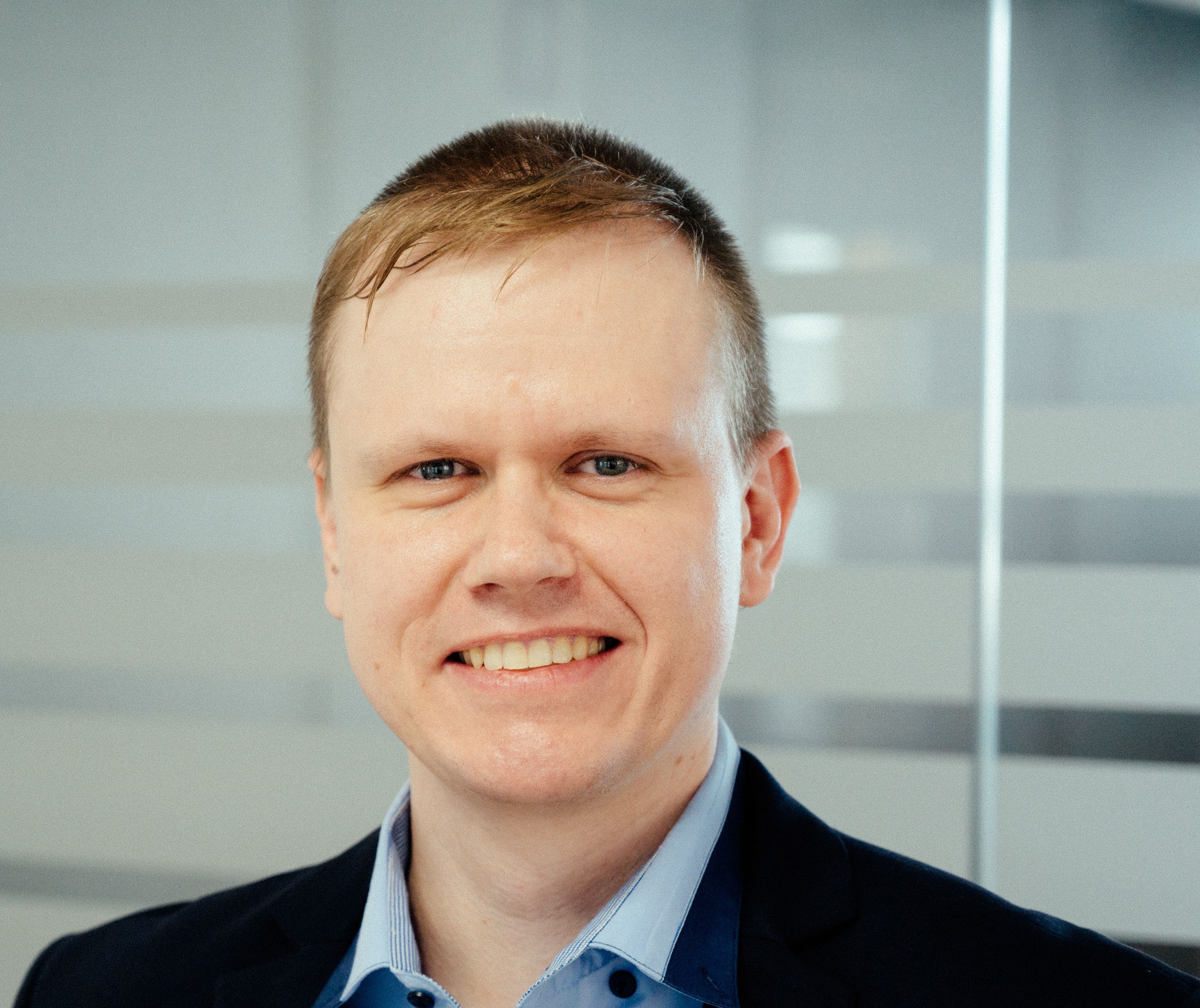
Blaz is a United States Military Academy Graduate, who's worked in operations in 5 different industries spanning from Plant Production Director, Head of Country operations, Regional Operations Director of 8 countries and COO. He is now a fractional ops partner for entrepreneurs who want to run and grow their business operations without stress or fear, save 10+ hours weekly and finally take that long deserved vacation