Creative Reset: Burnout Recovery with Lexi Reid
Burnout doesn't always announce itself with a crash; for many high-achieving professionals, it’s a slow-burn reality characterized by constant stress and emotional exhaustion. In this episode of the Recovery Catalyst Podcast, we explore practical mental health and healing tools for navigating career-driven burnout through the lens of Lexi Reed’s "Creative Reset" approach. We discuss how nervous system regulation and micro-creative breaks can interrupt the stress loop, offering a path to susta...


Burnout doesn't always announce itself with a crash; for many high-achieving professionals, it’s a slow-burn reality characterized by constant stress and emotional exhaustion. In this episode of the Recovery Catalyst Podcast, we explore practical mental health and healing tools for navigating career-driven burnout through the lens of Lexi Reed’s "Creative Reset" approach. We discuss how nervous system regulation and micro-creative breaks can interrupt the stress loop, offering a path to sustainable recovery that doesn't require "real art" or hours of free time.
In this episode, we cover:
- How to identify the subtle signs of "slow-burn" burnout before it reaches a breaking point.
- The science of shifting your nervous system into a parasympathetic "rest and digest" state using simple sensory tools.
- Addressing the unique burnout drivers in STEM and high-expectation careers, including invisible labor, people-pleasing, and the constant need to outperform.
- Practical ways to set boundaries that protect your time and support long-term emotional recovery.
About Our Guest
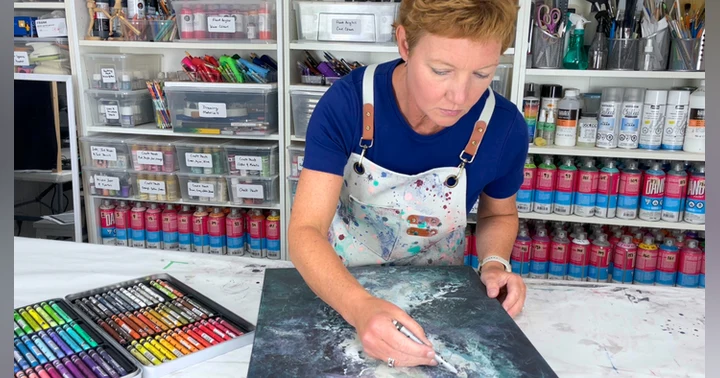
Lexi Reed is a trained research scientist and working artist who developed her "Creative Reset" approach after navigating intense professional burnout during the pandemic. She now helps women in high-pressure careers use quick drawing prompts, mindfulness, and reflection to surface their needs and build healthier, more sustainable boundaries.
- Website: lexireidstudio.com/
Thanks for listening to this episode of the podcast! If you enjoyed today’s conversation, please follow, or subscribe to the show so you never miss an update. Want to connect? Visit me at podpage.com/recovery-catalyst/
00:00 - Burnout And The Creative Way Out
01:24 - Pandemic Pressure And Burnout Warning Signs
04:18 - Doodling As A Low-Pressure Reset
09:30 - Women In STEM And Invisible Labor
13:15 - Creative Reset Exercises That Reveal Patterns
22:00 - Grounding Tools For Parasympathetic Calm
23:44 - Saying No Gets Time Back
25:16 - Reclaiming Lost Creative Identities
34:06 - Paper Versus Digital For Real Play
43:21 - Where To Start With Mind Art
46:44 - Final Takeaways And Ways To Connect
Burnout And The Creative Way Out
SPEAKER_00
Welcome back everybody to the Recovery Catalyst Podcast. I'm your host, Kat York, and today we are talking about a subject that affects everybody. Not only in recovery, but every person on the planet has experienced this. What is it? Burnout. And burnout is an all-too common reality, especially for those in high-pressure analytical fields. But what if the strategy to overcome it was easier and more accessible than we think? My guest today, Lexi Reed, is not only a creative wellness coach, an artist, but also a scientist. You can explore her work at LexiReedStudio.com. Lexi is here to discuss how we can integrate practical, low-pressure creative tools into our busy lives to regulate our nervous systems just for a couple minutes a day and foster long-term well-being. Whether you're working in STEM or just feeling the weight of professional expectations, this conversation offers real-world strategies that you can use immediately. And with that, I would like to welcome Alexandra Reed
Pandemic Pressure And Burnout Warning Signs
SPEAKER_00
to the show. Welcome.
SPEAKER_02
Thanks, Kat. I'm very happy to be here. Um, yeah, just to give you a quick little insight to who I am. Um I've always been a lover of both art and science, but my parents very much encouraged me to go for more of the quote sure thing. And so I went into science. I did the whole academic ladder. I did the bachelor's, the master's, the PhD, the postdoc. And yeah, so I was a trained research scientist. Um, but I found I didn't love being at the bench. And so I looked, I moved from academia, I went to work for a not-for-profit that led me to federal government. And it was, you know, I always sort of followed the opportunities. It wasn't like a set linear path. Um, and I ended up working for a consulting firm that uh developed medical devices and which was super interesting, but also a lot of pressure. And I know this is the uh all about recovery. And for me, recovery was about recovering from burnout. And that's what got triggered for me. And I didn't know the symptoms. A lot of people go through burnout and they don't realize they're burned out until you know it's like they boil the frog, right? The water just gets hotter and hotter and suddenly you're shut down. And for me, that occurred uh during the pandemic. Like everybody, I was working from home, I was juggling work responsibilities. Um, my husband had come home the day before and claimed the home office. So I was up in our bedroom on a folding table and a rickety chair and my laptop. And my kids, one had just started middle school, one had just started high school. And my company had landed a huge government contract to develop ventilators. And these are the early days of the pandemic and we didn't have vaccines. So we we were working 24-7 to get these ventilators built and out into the hands of the public. And so we worked 24-7. And yeah, I just say all these factors led me to burning out. Um, you know, and some of the symptoms would be just I couldn't sleep at night because I kept thinking about work. I'd be starting to snap at my family. It's like, you know, you like they say, you have one nerve left and you're getting on it. And and but I also mentioned I had a love of art as well. And my release used to be to go uh into my studio and either paint or make collage. But when I was burned out, I burned out creatively as well. And I just go into my studio and stare at my supplies. And I was like, I can't even contemplate picking up something. So that's the other thing about burnout is it it numbs everything.
Doodling As A Low-Pressure Reset
SPEAKER_02
Everything becomes there's no sharp colors anymore. Everything gets kind of grayed out. And for me, the path out of burnout was gradual, much as getting into it was. Um, and you're gonna laugh. It actually came from just starting to doodle on these endless Zoom calls. And I'd never been a doodler before. Like I always was a bit of an artistic snob. I'm like, oh, doodling, that's not my that's not for me. Like, if you're not gonna sit down and make a painting, like what are you doing?
SPEAKER_01
So I love that.
SPEAKER_02
Yeah, yeah, kind of funny that way. But I started finding that just doing these repetitive drawings was almost meditative. And I could feel like my shoulders relaxing, my breathing slowing down. And being a scientist, I'm like, there's got to be some evidence to back this up. And so I started looking into art therapy, which led me to coaching because I really liked positivity mindsets. And so I started trying to figure out is there a way to make to take these creative exercises from art therapy, but have a more forward focus than a reflective, uh, because a lot of therapy is always looking back into your past and kind of digging into it. And I wanted to sort of marry the creativity with, you know, positivity and um, you know, goal focused, like forward focused. Um I guess being proactive versus reactive, you know, coming from the medical environment, right? Like there's there's a difference between having a wellness device like a Fitbit, which is helping you stay active, as opposed to, you know, pacemaker, which is keeping your heart beating, right? So um, anyway, long long-winded to who I am and how I got here, but there you go.
SPEAKER_00
No, I I'm thinking back to like you know, the time of the pandemic when we were all locked in and just endless Zoom calls and just I'm I'm picturing you like in your house, like your husband took your took the office over. You have two uh two children, you know, you're trying to get all these ventilators out which the pressure I can't even imagine what that was like 24 hours a day, what that must have felt like on the inside to have that much pressure on you. And you talked briefly about burnout, uh, the not sleeping and the snapping. Did you was there ever a point where you're just like, oh my god, I gotta step away from this a little bit? Like just like did you ever think about just like just leaving it completely from all that pressure?
SPEAKER_02
Definitely, you know, there is that sense of I just want to throw everything up in the air, and that's that includes the career, that includes includes even family, right? Like there's just that sense of I just want to go and be a hermit in the hills feeling, which I didn't give into. But yeah, there is that definitely sense of I just want to pull the covers over my head and hide, which you know, that and that's fairly typical of burnout as well, is is that sense of I can't cope with anything, right? And I have no path forward, so I'm just gonna freeze. It's that they they talk about you know the fight or flight response, but there's also freeze as part of that, as and I had to fight to not give into that because again, there's you know, you couldn't for me, I didn't want to let my you know co-workers down, I didn't want to let my family down. And so I was like, but I have I can't keep going, right? I can't keep pushing. So I needed to find an alternative way to move forward. And yeah, for me, getting back to my creativity was a way to kind of get out of that free that frozen state, right? Like it's okay, little tiny, you know, chips at the ice to kind of it's like a little trauma zoom calls. Yeah, just and and starting to follow where those little sparks were, right? Like, you know, they talk about sparking joy. And I think I'd kind of smothered the joy. So it was like trying to figure out how to get it back. But in order to get it back, you also had to do different things, right? Like if you want to be healthy and run a marathon, you don't just start by putting on your running shoes and just going for it, right? Like you start training for it. And for me, I had to train myself how to get out of what got me into burnout. And you know, you don't end up in burnout like overnight, right? It is a series of steps. Like you, you know, you keep answering those emails at all times. You say yes to everything because you don't let people down. And for me, and this is what I do with a lot of my coaching clients, the first thing we do is talk about setting boundaries, and which is hard, right? It's hard for I would say it's especially hard for women to set boundaries because quite often we come from a people-pleasing culture, right? Um and we're the caregivers. And I know for my generation, they nickname it the the sandwich generation because we could still be caring for children and elderly parents. And so there's you know,
Women In STEM And Invisible Labor
SPEAKER_02
additional responsibilities there as well. So you can't just yeah, throw it all up in the air and run away, much as that is tempting at times.
SPEAKER_00
And then I wonder like being in the research field and the STEM fields. I imagine it must be the the expect are the expectations different for women as far as pushing harder, like trying to Did you ever feel pressure to prove yourself more in these fields?
SPEAKER_02
Oh, definitely. And you know, you can you can look at the numbers too, right? Like it's I would say in elementary, middle school, even high school, the numbers are about evenly split between guys and girls going into sciences and enjoying maths. And suddenly those ratios just drop when you hit your your undergrad, um, you know, and grad school, it just drops and drops and drops. And and women, certainly a lot of the women professors that I worked with, they said they had to basically outperform their male colleagues. And, you know, there was a study done at quite a few universities where it showed that women were earning 80 cents on the dollar compared to their male colleagues, which is terrible, right? Like doing the exact same job and sometimes more, because you know, there's a lot of what is called invisible labor that women do. And that does come down to that extra committee work and you know, family responsibilities. And that's not recognized when you come up for your annual review or you're having a grant reviewed, right? None of that. The only time it gets called into question with a lot of women scientists is oh, we notice a gap in your you know publication record. You know, what happened there? And it's like, well, I had children, you know.
SPEAKER_00
So I should have run that by you. I'm sorry.
SPEAKER_02
Yeah, it's like, well, there's this gap here. And I'm like, mm, yeah. And a lot of women find that, you know, even when you go for jobs, like you'll go for um a postdoctoral fellow. So that's like the the research position where you're not quite a student anymore and you're not quite a professor. You're in that sort of limbo state.
SPEAKER_01
Okay.
SPEAKER_02
And you could be going up against a guy equally, you know, you both have the same publication record, but the guy seems a safer bet for the university because he's not going to go on maternity leave. He's not gonna step away from the teaching responsibilities. Um, and that happens not just in science, but certainly it, you know, when I started working for this engineering firm, yeah, very, very few women actually took maternity leave. In fact, quite a few of them, they pressured their husbands to take paternity leave because they said, I can't walk away from this because I can't catch a break on my project, right? I can't leave it. And they felt so responsible to the work that they were, you know, basically have the baby go back to work a couple of weeks later. Um, so pretty crazy pressure that way.
SPEAKER_00
That's insane to think that it comes down to those big of a choices, like you have to choose between your career or being, you know, taking time to enjoy being a new mom bonding with your family, your baby. That you just you have to make that woman has to make those difficult decisions. Um and it's no wonder that you face burnout, like you said. That creativity just goes right out the window, there's just no space or time for it. And when I'm I'm
Creative Reset Exercises That Reveal Patterns
SPEAKER_00
curious, when did when did coaching come into come into play for you to try to help women through this?
SPEAKER_02
Actually, quite recently. Like I was beginning to develop these exercises for myself, and being a scientist, I wanted to test them. And so I actually reached out to a group of women um at all different stages of careers. Like some were just starting their, you know, masters, their PhD, some were looking at doing med school, others were, you know, midlife career and feeling that I'm feeling stuck in my career. What do I do? To starting a new business, you know, they decide to go and become an entrepreneur like myself. And so different stresses, different life choices, but we're all sort of experiencing similar flavors of challenges. And yeah, so I started working with them. I developed this what I call the creative reset program. It was 12 weeks because there's a lot of literature that support, you know, that at least three months of doing to change the habits, right? Like that's that's part of, you know, where we talk about establishing boundaries, being able to say no, um, figuring out where your energy, where you want to put your energy. So a lot of these exercises were reflective in sort of trying to figure out what your baseline was and what you'd like the future to look like. And then almost reverse engineering. If you want to have that future, what the heck do you need to do now? And baby steps to get there, right? Not just like, again, coming back to that marathon analogy, don't just start running, you know, the marathon distance, you build up to it gradually.
SPEAKER_00
Okay. That's that's big because you don't just jump into creativity, you have to really do some it's on some soul searching and figuring out kind of where you are and what you want before you even step into that creative mode.
SPEAKER_02
And a lot of these women hadn't been creative in years. Like they said, oh God, I don't even know if I can do this program because yeah, I haven't done, I've never, you know, one, they're worried, I've never been artistic. And I was like, this isn't about, you know, creating fine art. It's just about visually expressing some things that are in your head and putting it on paper. Because there's a big difference between writing things out and drawing them, like it's different parts of your brain. And there's a lot of unconscious that suddenly shows up when you start drawing it because we're very good at symbolizing things. And with visual symbols, they're very personal to your life. Like if I ask you to picture a red balloon right now, you're gonna have a certain context for that. And for some people, they may think of the Banksy drawing with the little girl holding the red balloon. Or if you've ever seen Stephen King's It, you might think a creepy clown with red balloon, right? It's a lot of our visual imagery is based on what we're exposed to growing up and our experiences. And that, if you tap into that, it it brings up a lot of um just some unconscious perspectives and it's out of your head and it's on paper. And what's neat about that is you can come back to it a week later, a month later, a year later, and you can see what you're feeling and experiencing at that sort of snapshot in time, and then see where you are now. So it's a you know, I I follow up with a lot of the women that go through my program, you know, three months later, a month later, you know, sorry, a month later, three months later, year later, and just seeing where they are now in their lives. And they said it's really great to have almost this little creative portfolio of just what was I feeling and what did I want to keep from that, and what did I want to give up.
SPEAKER_00
So it's not so much trying to create this fine piece of art you can hang in your home. It's more about it sounds to me from what I'm feeling, like processing and kind of working through things in an unconscious way. Is that correct?
SPEAKER_02
Yeah, it's and that's what I, you know, when I have a lot of women hesitating, oh, I'm not creative, I'm not artistic. It's like, well, can you do Pictionary? You know, can you do hangman? Okay, we're good. Like And what's interesting is, you know, just I try to keep it as simple as possible, you know, blank piece of paper, pen or pencil. But as they go through the exercises, they're like, oh, suddenly I want to add color. Suddenly I want to like, you know, they start elaborating and playing with it and becoming more expressive. But it's like they have to kind of like get through that bottleneck of having that sort of all that visual stuff cramped up. And then it's like, okay, I'm giving myself permission to play. It doesn't have to be a perfect picture, it's just kind of getting some thoughts and feelings out in a visual way.
SPEAKER_00
And what is that after you work with if you begin working with a woman and she she does some of the soul searching and the exercises? And it sounds like like journaling, would that be correct? Some of it is journaling. Is that correct?
SPEAKER_02
Yeah, there's definitely um there's sort of the prompts to do the drawing, and then there's a series of prompts or questions to reflect on what you put into the drawing. You know, can you see under you know some underlying themes that keep popping up? Can you, now that you looked at your drawing, what's missing from it, which is really telling as well, because when you're in it in the moment, and then you're, you know, you have that you have the intuitive while you're in it, and then you have the analytical when you're looking at it, right? So you're stepping into two different modes as well. And you know, I had one woman sort of go, Oh, I, you know, and it was this exercise where you're moving towards a lighthouse, and that's sort of symbolizing your goal and the light you're following. And you have a boat and you can put things in your boat that help you get across. And she was like, I didn't put a life jacket in my boat. I was like, Oh, what does the life jacket to you mean? She's like, safety, security. It's like, why didn't I like put that in my, you know, why did I just sort of jump in the boat and go? So it's it's those little, you know. Uh, I had another exercise where it's like you have sort of your day on one side of the shore and what your challenges are, and then you have what you want to move towards on the far side of the shore, and you draw a bridge between them. Right. And so many women draw these little rickety bridges with like planks are missing, the ropes are freed. I'm like, you can draw any bridge you want. You could draw like you know, the Golden Gate bridge. Why are you deliberately making something so hard for yourself? And they're like, You're right. Why am I drawing? Like, I could have like, you know, and it's you know, one woman had a troll under her bridge, and she's like, I'm like, I'm like, what is the troll? She's like, it's me. Like, I'm the troll. I'm the one who's gonna back. Like it's those little, it's when you have that shared drawing and you can talk about it, right? Like all those thoughts had been kind of swirling in your head that are unconscious. It's suddenly you're like you can tell a story, you can kind of see where you are in that journey as well.
SPEAKER_00
And these are, and from from what I've read, and correct me if I'm wrong, these are these are like pauses, they're not like taking hours to do these things, they're like shorters. Oh, yeah.
SPEAKER_02
Yeah, yeah. They they can be like five, 10 minutes, you know, it's it's kind of up to you how elaborate you want your drawing to be, right? Like if you're good with just getting a few lines on the paper and some swirls and that means something to you, that's great. Whereas if you want to make a beautiful picture because that speaks to you, that's you know, I I don't qualify the quote the result, right? It it is it's as much as you want it to be, but I do find over time the drawings do get more elaborate, which I find quite interesting. It's like they suddenly, and what's also interesting is by doing these creative exercises, they start looking for more creativity in their daily lives. You know, they're noticing they're paying attention to, you know, leaves on the trees, like just suddenly noticing things visually. Um, we have another exercise called filling your cup, and you basically draw, you know, typical coffee mug, whatever that looks like to you, and the things that give you joy, give you energy. And one of the women I was talking to said, you know, now I'm looking around at things I want to fill my cup with, like, and it's it's just again of of drawing awareness, right? Drawing intent, um, as opposed to going on autopilot because you're just rushing from one to do list to the next to do list.
SPEAKER_00
And what are the benefits of in your brain of taking these pauses?
Grounding Tools For Parasympathetic Calm
SPEAKER_00
And doing these um these writing exercises.
SPEAKER_02
There's a lot of things where even just um there's a grounding exercise that I like to do where if you draw just lines in time with your breath, that act of sort of that sensory motion of your hand moving, the sense of the pen in your hand on the paper, in tune with your breathing. Your breathing will slow down. And suddenly you're instead of drawing sharp lines, you're starting to draw wavy lines. And that's just a very simple grounding exercise. You could draw on time to music. You know, there's some exercises that are really good where again, now you're using an auditory. So you're you're trying to bring in multiple senses. And a lot of that is getting more into what we'd say the parasymthetic, um, you know, the the rest and digest response, as opposed to central executive where you're just planning, planning, planning and executing. Um, so it's it's again, but it's always not one or the other. It depends what you're doing with, you know, are you in the middle of drawing it and thinking and feeling, or are you looking at your picture and telling a story? So it's nice because it taps into both sides of that.
SPEAKER_00
And I imagine this would carry over. Um, well, let me start with this. When women um, I know you said you work with women from later all stages of their career, some um pursuing like their masters, um, some fully established in their careers. Um, have you seen a benefit? Have they spoken of a benefit to their careers after like tapping more into this creative side?
Saying No Gets Time Back
SPEAKER_02
Yes, I do a lot of follow-up um, I'd guess testimonials, I guess, or case studies. And, you know, I always ask, what was the biggest barrier to doing the coaching program? And they said, lack of time, this perceived of, oh God, I have yet another thing to do. And how do I make time for this? Because I'm so busy with everything else. And and I ask at the end of the program, you know, what's one of the biggest benefits you've had? And they're like, I have all this time now. And I'm like, where did the time come from? It's like, it's because I've put boundaries and I've learned to ask for help. I've learned to delegate, I've learned to say no to the, you know, committees that um, you know, just people took for granted that I was always going to say yes. And now I can pick which committee I want to actually be on. And so suddenly this what had been a barrier to doing the program suddenly is a benefit because now they do have this, you know, how do you put a value on more time? It's it's impossible to put a dollar value on it, but you could, you could say, you know, I earn this much at my job, and now I have more time for myself and my family. And you know, that that I would say is is one of the biggest common benefits that I see throughout um from women going through the program.
SPEAKER_00
And what have been some of the some of the benefits for you personally, um, having worked on your creative side and even coaching? What have been some of the benefits for you to help women live with through these things?
Reclaiming Lost Creative Identities
SPEAKER_02
I would say it's definitely helped me sort of get in tune with my creativity. I'm actually thinking of getting into writing fiction, which I it's funny, like in in high school, I remember I used to write stories in English class, and then I started dating a guy in high school, and he was an excellent writer, and I was like, okay, that's gonna be his thing. I'll just do fine art. And I I shut down the writer part because I didn't want to be in competition, which you'd think I was a bright kid, what am I doing? But it was it was like, oh no, you can be the writer and I'll be the artist. And and so I stopped writing. You know, I did blogs, I did, you know, I wrote for work. I wrote, you know, standard operating procedures, you know, technical blogs, marketing things, but I I haven't written creatively since high school. And I signed up this fall after, you know, talking with one of my coaching clients, and and she was saying how she's she's tapped back into her writing. And I was like, I need to do that. And that was, you know, for me, it was like it was suddenly permission for myself. And so yeah, I'm actually taking a creative writing course in the fall, and I'm totally freaked out about it because I haven't done creative writing since since high school. So, but you know, doing, you know, my husband's like, Oh, that's really interesting. I thought you'd do a fine art course. I'm like, yeah, but that's that's not pushing me out of my comfort zone. You know, writing something creatively is a lot harder for me. So it's so I'm being, you know, if I'm being this example of a creative wellness coach, I kind of have to like take my own medicine.
SPEAKER_00
I love that you're doing it.
SPEAKER_02
Yeah, because I I do want to show that what I'm doing works for my clients and it works for myself as well, too. But had I not done that coaching with that particular client and her coming back to her writing, and I kind of live vicariously through that, I'm like, I should be writing. Like it was just one of those light bulb moments of, oh, this is what creativity that I've squelched in my life. And it's so funny because here I am thinking, oh, I'm an artist, I'm super creative. But that was a part of me that I kind of had, you know, kind of boxed up and put away. So yeah, that was so that's been a benefit to me because it's it's something I didn't realize I was missing.
SPEAKER_00
I love that. I mean, I I'm a little sad that you felt like when you were a young girl, you had to give up like that part of you. Um, but I'm happy that you're tapping back into that side of you.
SPEAKER_02
And it's funny because I didn't realize until I was sort of talking through that. And again, you just kind of repress the memories. It's so weird. Like you're just like, oh, I you know, of course I did that. You know, of course I went into art, of course I kind of gave up writing. But it's not until you like start looking at it with more adult eyes, you're just like, oh, why did you do that? Right? Why did you feel you needed to do that? And yeah, I was like, it was my first real boyfriend, and I didn't want to like push him away, and I didn't want to out compete him. Like it was just you can see where all the those pathways get laid, right? And we do make those compromises in our life, right? You know, maybe we don't show up as much as we could at work because we're afraid of looking, yeah, like a show-off, right? They always tell you that in the school, like stop showing off. And so you stop showing off.
SPEAKER_00
Yeah, then you stop writing and you stop exploring your talents, and it's that's that's really but I'm happy that um that you do think someday there could be like a book in your future, like writing a book about um your coaching and exercises that you do and things like that.
SPEAKER_02
I would love to do that. Like I'd love to one, I would love to help other women just also on that journey, but I also love the idea of writing a book that I would love to read, right? Like I do, like I read for escape. I read for entertainment, right? I love, you know, I've always been a big reader and I would love to write the book that I would love to read. I just have to figure out how to do that.
SPEAKER_00
Now, do you coach full-time or or do you still work in research at all?
SPEAKER_02
I actually um, it's funny. I'm now working part-time as a bookkeeper, which again, I was not a career path that I thought I would choose, but it's allowed me a lot of flexibility because I can work from home and I can do the coaching, but it also gives me a bit of, you know, coaching is very um emotionally draining for me. Like it's because I am in there and it's kind of nice to switch into bookkeeper mode where it's very, you know, debits and credits, and you know, you pay the bills, you take your revenue in. Like it's very black and white. Like it, it is literally balancing the books. And for me, it kind of just it grounds me in a different way. It satisfies the sort of science logical, linear side when I kind of need to reset my emotional well of, you know, I've been there for my clients and I've absorbed a lot of what they're saying. And they do caution that often with um, you know, therapists and coaches that we tend to absorb our uh clients' stories. And for me, I find I think I would find it very difficult to do for me personally, coaching full-time. I think I need that that, and I'm also, you know, I am a scientist and an artist, and you know, we are multifaceted people. So for me, it's kind of nice to take a break from bookkeeping, do coaching, and then take a break from coaching and do bookkeeping and and just sort of bounce back and forth a little bit and I'll add writing to it. So there we go.
SPEAKER_00
Is it is it because I hear you doing all these things and not only do I hear boundaries, but like um, you know, it's and we talked a lot about time. And do you more operate like your time management more flexible or is it more structured?
SPEAKER_02
It's funny. If I am feeling super anxious, I need that structure. But if I'm feeling in a good place, then I am fine to kind of just show up and see where the day leads me. So it is kind of informed by what, you know, like uh I just went through selling my house. And so, you know, all the things that are involved with getting your house ready for sale is, you know, getting rid of half the stuff in your closets and painting it so it looks new and cleaning it so it looks great, and then the house old. So it's like great, okay, now I gotta pack everything and move everything. So during that time, I have to say that I had no time for creativity, that creativity was just funneled into how do I fit all this stuff into a box in a way that it's gonna work. And so I've taken the summer a bit to again kind of just unwind that because you know, we had uh our house was uh being, you know, the possession date was June 1st. It's like, okay, we have a deadline and we have to be out of the house and it has to be clean and empty. And so that was a very structured time that was so structured, I couldn't do creative things. And now it's kind of I have some breathing room, I have some headspace. But it's interesting, I start craving that structure again, which I think also led me to taking this class in the fall because there's that school has a very set structure. And I deliberately look for classes that were in person because I want that student experience. I don't want to sit on a Zoom call.
SPEAKER_00
You're probably so done with Zoom.
SPEAKER_02
I did my bookkeeping certificate on Zoom and I did six hours of bookkeeping. Oh my god. So I've done that, I learned a lot, but I also learned that you know, I'd like to be in a classroom with people for real.
SPEAKER_00
Well, thank you for joining me on Zoom, even though it's you probably had like so much Zoom in your lifetime.
SPEAKER_02
But I live on an island, so it also makes sense, right? Because if I had to like, you know, fly everywhere to do these things, it wouldn't happen either. So I love the technology, but I hate the technology.
SPEAKER_00
Yeah, it's like I think like again it goes back to that word, like like boundaries, you know how to use it. And that's one thing that do you do you feel sometimes? Like I'm curious. We've talked a lot about like like hand drawing and how important that is.
Paper Versus Digital For Real Play
SPEAKER_00
What is what are your thoughts on um people who use like programs on the computer to draw? And that like what are kind of the pros and cons versus using like your computer versus using like paper and pen?
SPEAKER_02
Well, it's funny. I mentioned I do collage, and one of the reasons I like collage is because it allows me to go into the studio and I can make painted paper and images, but it doesn't have to I don't have to make anything, right? I can just sort of make the the materials to make something, so it kind of you know scratches that creative itch without having the pressure of making something finished. And I think I looked at actually doing digital collage like with the iPad and Procreate, but for me personally, I missed that actual physical, you know, interaction like with the paint. And and for me, I needed that physical, you know, it it was fun playing with the iPad instead of moving, you know, digital brushes. And you know, I I love the ease of how quick it is. And you know, a lot of the people I know that were using Procreate, um, which again is just one iPad program, but they could do these elaborate digital works, you know, multiple layers. And yeah, for me, it looked beautiful, but it seemed to be driving towards that final result at, you know, and maybe there's an argument. Maybe I just wasn't getting that full sense of play with it. It just seemed to be very end result focused, right? Because you're able to pick something that was almost pre-made, you know, it's like, oh, I already have a brush that can do that. Whereas if I were in the studio, I'd be like, I'm having a hard time making this stroke look that way. Whereas with the computer, you're just like, oh, I'll just pick that brush and off it goes. So there's, I wouldn't say there's for me, I like the hands-on tactile ness of it. Um, but I definitely, if it's a more intellectual create creative exercise, I can see why Procreate and those types of programs work. It's just for me personally, I do like being messy in the studio. And that's part of the process.
SPEAKER_00
I feel like that that that I feel like that might feed into just like letting go a little bit. Um allowing yourself to be a little messy, not having to be so um, you know, put together all the time. It's okay to like if some paint spills or um something like that. And was it hard for you to get to that point of allowing it to be a little messy?
SPEAKER_02
It's it's again, they they there's a lot of what they call the uncanny valley. It's where your your taste exceeds your ability. So you have this you know beautiful landscape in your mind, but man, you can just not get the trees to go the right way or the colors to go the right way. And as an artist, that's super frustrating because you can see it in your head, right? But you can't make you can't make it. Um, so I've tried to dial that back and just go, is it good enough? Right? Like, and that's hard, right? Because it's like, what is good enough? What is done? And it's like, when when can you walk away from it and still be happy with it? Because many artists, you could tinker with it forever, right? Like, oh, let me just add one more thing. Oh, I've added too much, let me take it out, let me add it back. Like you you could play with it. And I'm sure it's probably like writing as well. You could revise and revise, but at some point you just have to say, okay, the novel's done. I gotta get some readers, and and then you start the process again. So I think we just have to be okay with the final result, whatever that quote, final result is. And you know, that's in life as an art with anything, right? So yeah, just giving, try not to be fixated on perfection. I think that's and that's a lesson that I'm still learning as I go.
SPEAKER_00
Now, and you and you sell some of your works on your website, is that correct?
SPEAKER_02
Yeah, I definitely that was a decision that I made with also some encouragement from my husband. He's like, it'd be really nice if he recouped some of the costs of the art supplies. I'm like, like, yes, honey, it would be. Um, and that's how a lot of beginning artists start is like, can I just make my material cost back? Right. And yeah, and but I will say, doing I used to do a lot of um sort of pop-up art shows like art in the park, and you know, I'd have the 10 by 10 booth and I'd fill up our minivan with all of my works, and then I'd have to set it all up, and then I'd have to take it all down, and then I and again, still juggling family and work. And yeah, I will say I much prefer selling online, but it's a whole different challenge of trying to reach your audience as opposed to going to an art show, and the people that show up at the art show want to buy art, so they're already self-selected in some ways. Yeah, whether they want to buy your art is a different question, but they at least are in the mood to buy art. So um, yeah, there's there's definitely pros and cons to being in real life with the art because people can see it and they can, you know, touch it if you let them. And but and they can ask you questions, right? Whereas if you're selling online, you have to do the whole song and dance routine regularly. And yeah, sometimes I just find it's like, well, I'm gonna put the stuff on the website and if somebody sees it, great, but I don't have time to like push it. So, and yeah, it's like any business, right? Like it's it's how do you how do you tell a story that makes somebody want to either be your coaching client, buy a piece of art, read your book, right? It's it's again building that relationship in whatever way. Um, and yeah, there's only so many hours in the day.
SPEAKER_00
That that is a powerful um theme that I hear, like learning to accept that what you're what you're doing and who you are is good enough.
SPEAKER_02
Yeah, good feedback on that one.
SPEAKER_00
Well, I I imagine, I imagine, like, was it hard for you to to to sell your paintings like A, because they're probably very personal to you, and B, for you to believe that like you know, someone would would would buy it? I feel it was that was there, was it was it difficult for you to get to that point?
SPEAKER_02
It's funny, I and I've had this conversation. I had a business coach for a little while, and when I started my coaching business, because I was like, I want to learn from a quote real coach. And she's like, You have no problem applying the label scientist to yourself. And I'm like, Yep. She's like, you have no problem applying the label artist to yourself. I'm like, Yep. Why do you have an issue applying the label of coach to yourself? And I was like, oh. And for me, it's because I hadn't fully stepped into that identity yet. But for me as an artist, I've been making art since I was a kid. And for me, putting that art out there wasn't as hard as putting myself out as a coach. It's because it had been such a part of my identity for so long. Whereas this is, I'm sure I'm gonna find it super hard becoming, quote, a writer, because it's again not part of my identity yet. And I say yet, it's always yet, right? You know, the more I coach, the more I I ease into being a coach. And you know, you don't freak out that your client's gonna have a meltdown because you're like, oh, I can I know how to deal with that. Okay. And and I think a lot of what art for me, selling art was it's like I've made my peace with it and that piece can go. Like I that's the other thing with with art, is you have to be okay with sending your babies out into the world, right? And it's kind of neat thinking they're somewhere out there on somebody's wall, hopefully.
SPEAKER_00
I love that. Sending my babies out into the world. I love that. Because that's like a part of you out in someone's home or their office. And that must that must be a very gratifying feeling when when someone buys one of your paintings.
SPEAKER_02
Well, it's funny. I there's a woman that I used to work with, and she bought three of my little paintings, and she said, Yeah, I'm buying them as gifts. And I was like, Okay. And then I came into her office later on. I'm like, Oh, you still have the painting. She's like, Yeah, I couldn't give them away. Which I was just like, Oh, that's so lovely. What a feeling. It's just like you really wanted to keep them. And yeah, so that was just one of those, yeah. Like I didn't, I totally didn't anticipate seeing them in her office. So yeah.
SPEAKER_00
That must have been a wild moment for you for her to walk in and like see a painting somewhere else, other than like your home or your studio.
SPEAKER_02
Yes, it was, and especially since I didn't expect to see them, yeah, because I I had figured they were long gone. And yeah, so yeah.
Where To Start With Mind Art
SPEAKER_00
So I'd love to I'd love to give you a moment to talk a little bit about your website and your coaching and any anywhere people can find you.
SPEAKER_02
Yeah, easiest way in the internet days is definitely to go to my website. Um, so I do have two websites. I have sort of my art one, but they do link to each other. But I'd say for the coaching side is mindartwellness.com. And on there, there's lots of resources if you're interested in getting a taste of the creative coaching. There's uh you can sign up. It's like a five-day challenge. Each day you get an email with a link to a video and some prompts. And so you get a nice taster of that. Uh, I do send out a weekly newsletter, so you can sign up for that. And same thing, you get a creative prompt each week to try out. Um, so yeah, that's that's and my email's on there. So if you want to reach out to me directly, you can as well too. So mindartwellness.com.
SPEAKER_00
And you also do offer like a clarity call, like a kind of like see if it's a right fit type of thing. Yes.
SPEAKER_02
Yes, I'm actually thinking of renaming the clarity call to the chemistry call.
SPEAKER_00
Oh, I like that.
SPEAKER_02
Yeah, because again, it plays on the scientist part, but it's also that building the chemistry between you, right? So yeah. So that's been something I've been I want to do some tinkering with my website and and share a lot of these testimonials I've been collecting as well, too. So it's I find when people talk about their experiences, it's like it's like anyone that wants to see a review of your like, why did why did this person love this thing? And if they can see themselves in that person, they're like, oh, maybe this will work for me. So yes, I also on my to-do list is to add all that stuff to my website at some point, too. But definitely feel free to check it out.
SPEAKER_00
Your website is beautiful, there's a lot of good information there too. Um, and your blog is wonderful too. It's a very extensive blog, there's a lot of different categories and wellness and brain health and burnout, and it's just a lot of great information. And you can tell how much work um effort and energy you put into you know your coaching just by like the care you put into the website and speaking about what you do. And I think it's really beautiful what you're doing. Um helping women through these difficult chapters in their life of burnout, trying to come back to their creativity and figuring out you know they didn't really lose it. It just kind of got buried a little bit.
SPEAKER_02
No, that's and you know, I'm the living example of that. So I can be the poster child for my own coaching.
SPEAKER_00
Well, think is there anything else you want to leave us with for today?
SPEAKER_02
No, it's been a pleasure chatting with you. Um, definitely, you know, people want to reach out to me. I'm you know, I'm also on LinkedIn because a lot of the women I work with are on LinkedIn because you know, we're all professionals going through this life. So feel free to look me up there as well.
SPEAKER_00
And I will keep all I will put all those links in the show notes as well. Um the best ways to reach Lexi. And I want to thank you for joining us today for taking the time out of your your very busy schedule with all the different hats that you wear. Um talking with us a little bit today about what you do and inspiring us to maybe pursue that creative side a little bit. So thank you for today. I appreciate it.
SPEAKER_02
It's been my pleasure.
SPEAKER_00
Thanks for having me.
Final Takeaways And Ways To Connect
SPEAKER_00
And that is another wrap on this episode of Recovery Catalyst Podcast. I want to extend a special thanks to Lexi Reed for joining us today. And as always, if you want to reach out to me, you can find me at podpage.comslash recovery catalyst. That link will be in the comments below. And we'll see you next time.
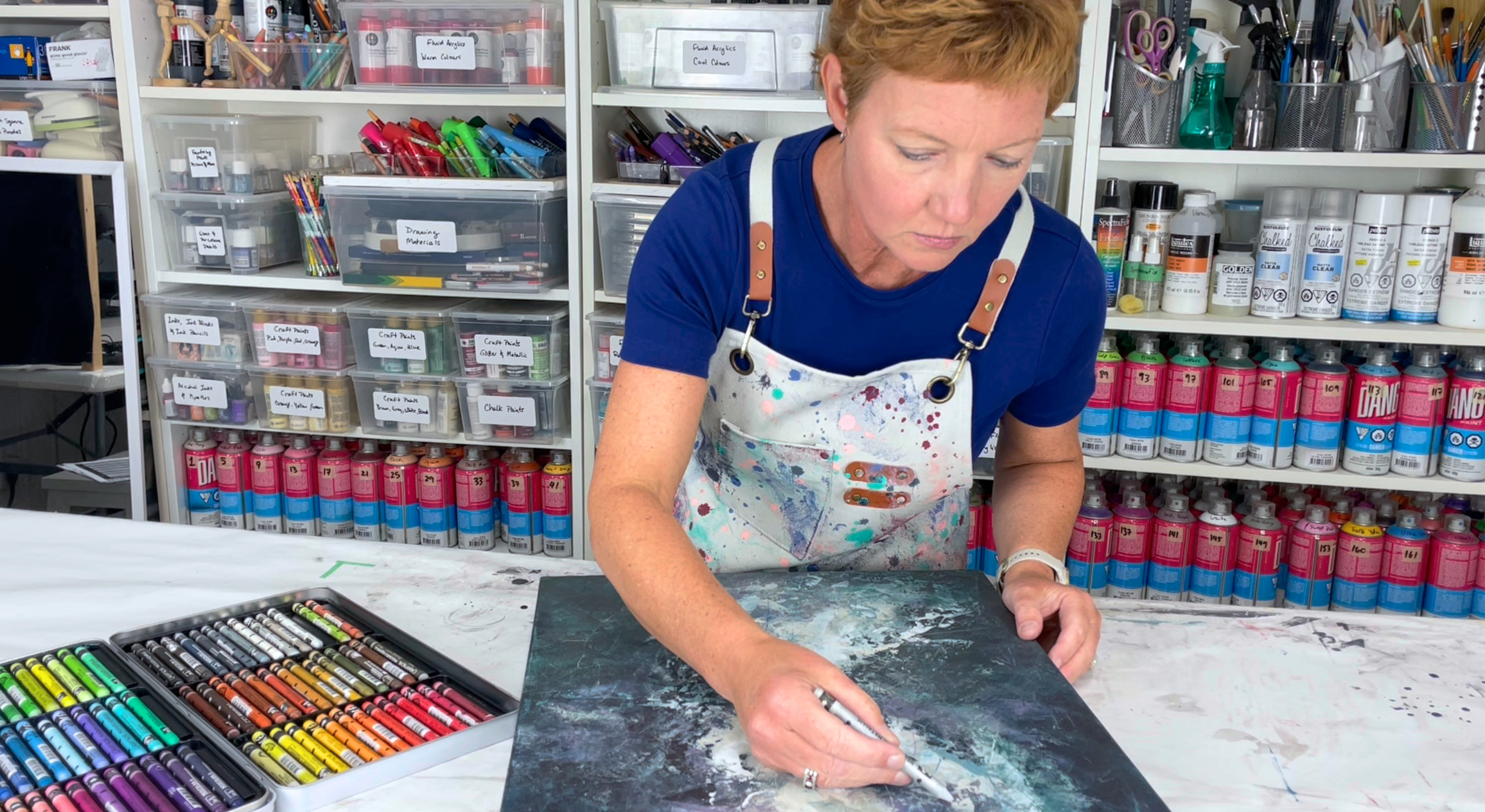
Artist/Scientist/Creative Wellness Coach
I’M LEXI. AND I’VE BEEN THERE TOO.
I spent years working in science, government, and medical devices. I knew how to get things done. I knew how to keep moving.
Until I couldn’t anymore.
During the pandemic, I burned out. Completely. Even finishing a painting felt impossible.
What helped me return to myself were small creative moments. A few minutes with colour. A simple drawing. Nothing perfect. Just space to breathe.
The science supports this too. Mindful creative practices help regulate the nervous system, reduce stress, and create space for reflection.
Now I share what I’ve learned through my art, free resources, and a group coaching program built for women like us.