Spotting the Slow Burn: Recognizing Burnout Before It Breaks You
Welcome back to the blog! If you have ever felt like you are running on fumes, yet somehow still managing to hit every deadline, answer every email, and show up for everyone else in your life, you are definitely not alone. We live in a culture that glorifies the grind. We wear our busyness like a badge of honor, often waiting until our bodies and minds completely shut down before we admit that we need a break. But burnout rarely starts with an explosion. More often than not, it begins as a quiet, smoldering ember that gradually consumes your energy, enthusiasm, and joy until you wake up wondering how you ever got to this point.
In this post, we are going to dive deep into the concept of the "slow burn"—how to spot the early, subtle warning signs of chronic stress, why high-achieving professionals and STEM workers are particularly vulnerable, and how you can reclaim your peace. If this topic resonates with you, I strongly encourage you to check out the accompanying podcast episode, Creative Reset: Burnout Recovery with Lexi Reid, where we unpack these exact strategies in detail.
Introduction: The Quiet Creep of Slow-Burn Burnout
Most of us have a misconception about what burnout looks like. We picture a dramatic movie scene where a high-powered executive bursts into tears, throws their laptop out the window, and walks out of the office forever. While dramatic crashes do happen, the reality for most driven individuals is much more insidious. It is a slow creep. It sneaks up on you over months, or even years.
At first, you might just feel a little extra tired on Monday mornings. Then, you notice that your morning coffee doesn't pack the same punch it used to. Over time, tasks that used to take you an hour start taking three. You begin to feel a low-grade resentment toward projects and people you used to love. Because you are still performing, still delivering results, and still meeting expectations on the outside, nobody notices—and often, you don't notice either. You just assume that this level of exhaustion is the permanent price of admission for being successful. But it doesn't have to be.
Identifying the Subtle Warning Signs Before You Crash
Because slow-burn burnout develops incrementally, your brain normalizes the decline in your well-being. To catch it before it turns into full-scale exhaustion, you have to look for the subtle red flags that your internal operating system is flashing.
One of the earliest markers is a phenomenon known as micro-detachment. This is when you find yourself physically present at your desk, in a meeting, or even hanging out with friends, but mentally you are completely checked out. You are just waiting for the moment you can be alone again. Another subtle sign is the erosion of your patience. If you find yourself snapping at small inconveniences—like a slow internet connection, a delayed text, or a simple question from a colleague—your emotional bandwidth is running dangerously low.
Physical symptoms also begin to whisper before they scream. You might experience persistent tension in your jaw, unexplained headaches, tightness in your chest, or a persistent wave of fatigue that a full night's sleep just cannot cure. Sleep itself often becomes disrupted; you might fall asleep out of sheer exhaustion, only to wake up at 3:00 AM with your mind racing about tomorrow's to-do list. Recognizing these signs early is the ultimate act of self-preservation.
Why High-Achieving Professionals and STEM Workers Are Most at Risk
While burnout can impact anyone, certain populations are uniquely prone to the slow burn, particularly high-achieving professionals, academics, and those working in STEM (Science, Technology, Engineering, and Math) fields. Why is this? It often comes down to the intersection of demanding workloads and specific psychological profiles.
In STEM and high-expectation careers, success is often tied to intellectual output, problem-solving, and continuous innovation. There is rarely a clear "finishing line." When you finish one project, a dozen more immediately take its place. This creates a perpetual cycle of urgency. Furthermore, high achievers often suffer from perfectionism, impostor syndrome, and a deep-seated belief that their worth is directly tied to their productivity. If you believe that resting means you are falling behind, you will naturally override your body's signals to slow down.
Another major driver is invisible labor. Whether it is mentoring junior staff, managing team dynamics, or keeping track of the micro-details that keep a project afloat, high-performing individuals often take on a massive cognitive load that is never officially listed in their job descriptions. This invisible labor depletes your mental battery long before you ever log off for the day.
Shifting Your Nervous System with Simple Sensory Tools
When you are trapped in the slow-burn cycle, your nervous system is likely stuck in a chronic "fight or flight" response. Even when you are sitting safely on your couch watching television, your brain is processing background stress as a constant threat. To reverse this, you don't necessarily need a two-week tropical vacation—though that would be nice! You need ways to actively signal safety to your nervous system throughout the day.
This is where simple sensory tools come into play. Your nervous system responds instantly to sensory input because it bypasses the overactive cognitive brain. Simple practices like holding a warm cup of tea and intentionally focusing on the heat radiating against your palms, taking five slow breaths with an exhale that is longer than your inhale, or stepping outside for sixty seconds to feel the cool breeze on your face can act as mini-resets.
These micro-interventions tell your vagus nerve that you are safe right now, in this exact moment. By repeatedly cueing your parasympathetic nervous system—the "rest and digest" state—you begin to lower your baseline cortisol levels, giving your mind and body the physiological space they need to begin repairing the wear and tear of chronic stress.
Introducing Lexi Reed's Creative Reset Approach
When we talk about recovery, many people assume they need to pick up a massive new hobby, commit to painting canvases every weekend, or spend hours journaling. For an already exhausted professional, that just feels like one more item on the to-do list. That is why the insights shared in our recent podcast episode are so revolutionary.
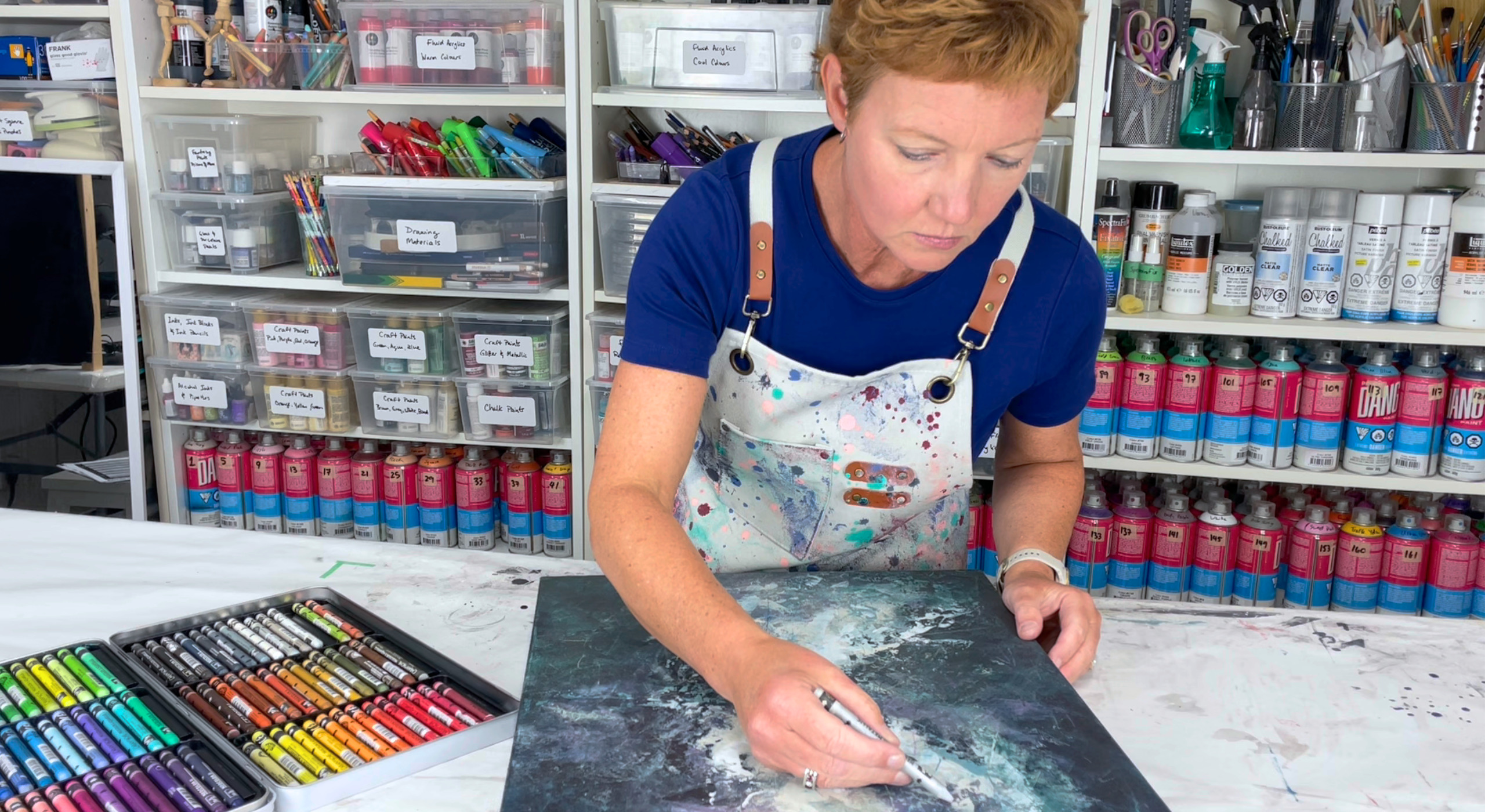
During our conversation, Lexi Reed introduced her brilliant "Creative Reset" approach. Lexi is a trained research scientist and working artist who experienced severe burnout during the pandemic. She realized that traditional wellness advice wasn't cutting it for analytical, high-achieving minds. Her approach leverages micro-creative breaks—such as quick, unstructured drawing prompts, color associations, or short reflections—not to create "real art" to hang in a gallery, but to bypass logic and surface what the body and mind actually need.
These creative exercises act as a bridge between your logical analytical mind and your repressed emotional state. When you allow your hand to move across a page without judgment or a desired outcome, your subconscious mind speaks up. It tells you where you are holding tension, what boundaries you need to set, and what parts of your life are draining your vitality. It is a low-pressure, high-impact way to reconnect with yourself.
Setting Boundaries to Protect Your Time and Energy
You can regulate your nervous system and engage in creative resets all you want, but if you return immediately to an environment that constantly drains your energy, you will just end up back at square one. Sustainable recovery requires rigorous, compassionate boundary setting.
Boundaries are not walls designed to keep people out; they are guidelines designed to preserve your capacity to show up authentically. For high-achievers, setting boundaries often triggers intense guilt. You might worry that saying "no" to an extra project makes you a team player, or that logging off at 5:00 PM means you are not dedicated enough.
To protect your time and energy, you must reframe boundaries as a professional necessity rather than a personal luxury. Start small. Practice saying no to low-impact requests that do not align with your core goals or values. Establish clear communication windows where you do not check work emails. Remember: every time you say "yes" to something that drains you, you are inherently saying "no" to your own well-being, your health, and your long-term sustainability.
Actionable Steps for Sustainable Emotional Recovery
Recovering from the slow burn is not an overnight fix; it is a gradual unlearning of habits that got you into burnout in the first place. As you move forward, try implementing these actionable steps into your daily routine:
- Audit Your Energy Daily: Instead of asking yourself "What do I need to get done today?", start your morning by asking, "How is my energy tank right now, and what do I need to preserve it?"
- Build Micro-Pauses Into Your Schedule: Set a timer every 90 minutes to stand up, stretch, take ten deep breaths, and completely disconnect from your screen for two minutes.
- Embrace Imperfect Creativity: Try Lexi Reed’s method of using low-stakes creative prompts or doodling without an objective to let your subconscious release stress.
- Protect Your Transition Times: Create a hard ritual between the end of your workday and your evening routine—such as a short walk, changing clothes, or listening to a favorite song—to signal to your brain that work is over.
Burnout does not mean you are weak, broken, or incapable. Often, it simply means that you have been strong for too long in an environment that asks for more than it gives. By spotting the slow burn early, regulating your nervous system, embracing low-pressure creative outlets, and setting firm boundaries, you can step off the treadmill of chronic exhaustion and build a truly sustainable professional and personal life.
If you are ready to dive deeper into these strategies and hear directly from an expert who has walked this path, make sure to listen to the full discussion on the Creative Reset: Burnout Recovery with Lexi Reid episode. Let's start prioritizing our well-being before our bodies make the decision for us!
Beyond 'Just Take a Pill': The Exhaustion and Stigma of Managing Anxiety