
From Marketing Struggles to Branding Triumphs with Rachel Lee


 Apple Podcasts

 Castro

 RSS Feed
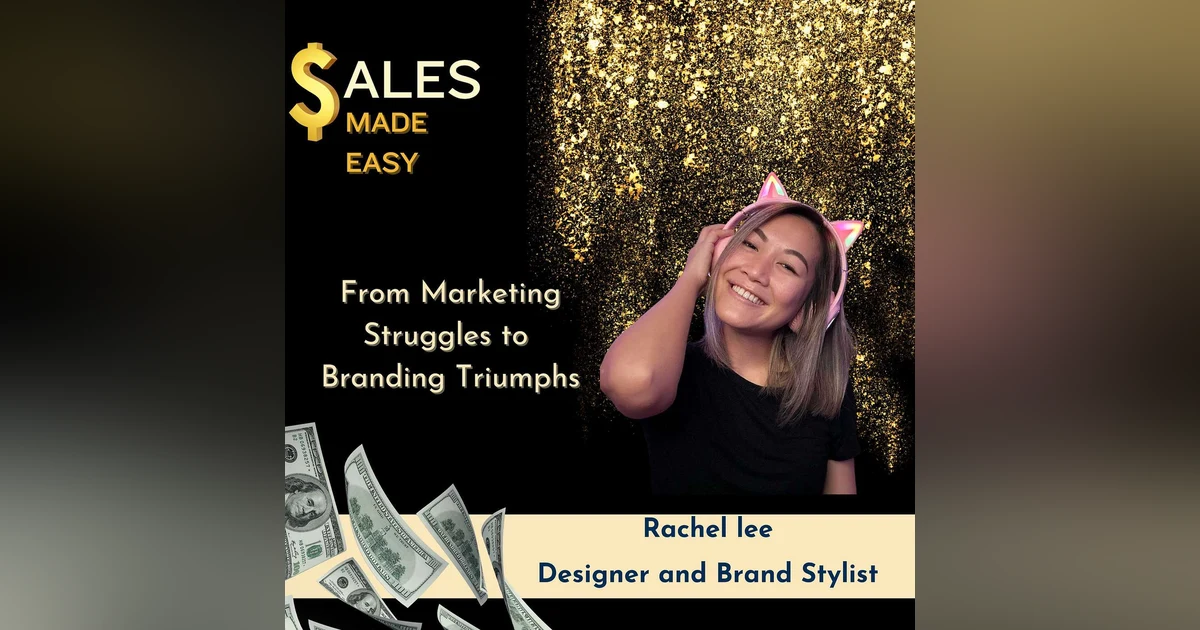
In this episode of Sales Made Easy, our guest, Rachel Lee, a marketing expert, designer, and brand stylist, delves into the world of branding and expressing individuality in business.
Join Rachel and Harry as they navigate the challenges of standing out in a sea of sameness, embracing authenticity, and transforming sales conversations into a co-creative process focused on finding the perfect fit for clients.
Rachel Lee specializes in helping disruptive brands and neurospicy entrepreneurs showcase their uniqueness through their brand. Dive into her journey of replacing "sales" with "fit calls" and discover how authenticity can be your greatest business asset.
Connect with Rachel Lee on LinkedIn to explore more about her unique approach to branding and marketing.
- Website: https://racheltylee.com/
- LinkedIn: https://linkedin.com/in/racheltylee/
- Instagram: https://instagram.com/racheltylee/
0:00 I like to say that when it comes to branding and being more open and authentic about who you are, it makes the decision so much easier for your potential customers to know whether or not they want to go on a second date with you. Welcome to Sales Made Easy, a podcast for business and personal growth. Join Harry Spaight, as he hosts sales experts and business owners who share their journeys of personal growth and business success now, here's your host, Harry. Wow. I am pretty excited about this conversation.
0:40 I have yet to have a conversation with my guest is wearing really bright ears and they just fit perfectly and I want some. So Rachel Lee is joining us and she is a marketing expert. She's a designer and brand stylist that helps disruptive brands. And Neuro spicy entrepreneurs find the sparkle in their brand and develop a unique look that people recognize and remember you for. And we want to be remembered. And after this conversation, I'm pretty sure you will be remembering Rachel Lee.
1:22 So welcome to the sales made easy podcast. Thank you for having me. I'm so excited to be jamming out with you today. Oh yes, this is going to be a blast. So Rachel why don't you tell us a little bit about what it is you do? I kind of described it, but I'd like to hear in your own words. What this neuro spicy stuff is, it's a fancy term on the market that a lot of neurodivergent people use to describe themselves, but with a little bit more of an edge where it describes people who think differently. Now, I know that there is a scientific classification for it, but I personally think everyone Is a little crazy inside.
2:05 I don't care what you identify as. We are all a little crazy and we all think in completely different ways. And what I love to do is to highlight that fact and then help people extract that and bring that out in the way that they present themselves, because, you know, when you look online, especially in the world of business, it's like a sea of sameness, everyone looks the same. Every business, every coach and consultant has this semi. Corporate looking branding with a little bit of fun, but no, seriously guys, like everyone is special and unique and has some elements of you that is different. And what I love to do is I love to help you draw that out, like help people see how different you are so that they know if you are or aren't the right fit for them right away.
2:54 It's just like matchmaking, put out what you want to attract. And I basically help you with translating that into the online space. Yeah, and you're so genuine. It's like I remember in our previous conversation, you have the headset on with the ears that are lit what is the way to describe this? Is it my describing it accurately from the people who don't see you on video? Yes, it's it's pretty much like one of those gaming headsets. It's like this, these pink headphones with cat ears on top and they light up with fun rainbow colors. And it's a common question that I have when people see me on zoom, they're like, what is that on your head?
3:35 Is that a zoom filter? I'm like, Nope, these are just my headphones. And so when we're chatting, you basically, you said, look, if you can't get past this, I'm not for you. Right. And this is what I love about our conversation earlier is that you, you are who you are and you, what you just described a lot of us, myself included struggle with being who we really are because we don't want to offend people, or we feel like we have to toe a certain line. So that we come across as professional or whatever the brand is that we're trying to highlight. So talk to me about where we might be mistaken there.
4:19 Absolutely. And I want to bring it back to the fact that business is Just a fancy way of saying people helping people. And when you simplify it down into those basic building blocks, the only way that you can form a connection is if you know someone and trust them. And trust is built based on Knowing exactly who it is that you're talking to and the full spectrum of that, where I, the trust that I have in someone only goes so far when I only see a fraction of who you are, the rest that is underneath the iceberg. There's a lot of assumptions and questions. And at least personally for me, I feel like the people that I develop a deep sense of trust in, I see.
5:00 Everything. And when I see everything and decide that that is still okay, that allows me to go farther into the deep end with them. And I often feel like in the world of business, we are told that professionalism has to look and come off a certain way. And I understand it is a blanket standard, but the caveat to that is, well, if You present yourself according to the standard and everyone does the same thing. Well, how are you going to stand out and how are people going to be able to tell if you are or aren't the right fit for them? Because as we know, no business is the same. You might use the same things on paper, but the reality is the way that you provide your service is different.
5:45 The people who resonate with you as a service provider Is completely different. And it's our responsibility to be able to communicate that difference so that honestly, on behalf of our customers, they don't have to spend a whole lot of time and energy. It's kind of like going on the dating circuit. Are you the right fit for me? Do I like you? Do I want to go on a second date? It's the same thing over and over again. And it's exciting. So I like to say that when it comes to branding and being more open and authentic about who you are, it makes the decision so much easier for your potential customers to know whether or not they want to go on a second date with you. If I were to run with that analogy and oftentimes, yeah, I find that we tend to.
6:30 Water down who we are and what we're actually like, and it doesn't serve our clients because it feels like there's something under the table there. We're afraid of showing ourselves because we're afraid of scaring people away, when in reality, they actually want to know. It's better to know everything up front right away than to find out later after they decide to go on five dates with you. So that's everything for me. So good. And so true. I just put out a LinkedIn live on the value of trust and in sales and in business, and we're so oftenly hoodwinked.
7:11 Right, where people make promises, we buy stuff that we think that we think is worth the money, and we find out that it isn't, we pay for services thinking we're going to get one thing, and we find out that we're really not getting that. And there's a lot of tricks and manipulation and things just don't work out. So I just love the approach. It's just this way. You don't have to think about it. Be who you are. And take care of the client, right? Take care, businesses help people helping people. So I love what you said and it just makes perfect sense to me. So this idea of trust in your business. You know, where you're, I mean, where you're trying to help businesses to show who they are, who they are, what their identity is being genuine.
8:02 What are some of the challenges that you find in this sea of sameness when you're speaking to people. What are a couple things that stand out. I often find that when it comes to branding, people have a very backwards approach to presenting themselves where they look at everyone else in their industry, take a look at how their packaging and presenting themselves and then ask, okay, based on everything that I see, how can I be similar, but also different in comparison to that? And while that works mostly from a business brand perspective, because it goes down to brand positioning, It's like asking, it's like presenting yourself based on what you want other people, or what other people want to see from you, rather than asking yourself, who am I and how can I let that shine?
8:54 It's very backwards, but if you think about it, you're not actually Addressing the core of the problem if you're going from the outside in approach, you're not even asking yourself who am I first you're asking, well, who, who should I be based on what other people are looking for. And when we, like, start, say it like that, of course, everyone's going to be like, Oh, wait a minute. Like that isn't brand identity. That's just, fancy positioning. Whereas at least the approach that I like to take is ask it, doing it from the inside out and asking, well, what's this vision that you have that you want to create for your brand? Who are you? For personal brands and then for businesses, well, what's the thing that really makes you unique genuinely?
9:39 Like, is it something about your service? Or is it the experience that you create for your customers? Is it your attention to detail your care or whatever it is? What's the thing that makes you different and unique? And then how can we find a creative way to express that so that you automatically shine and are completely different from all of your competitors. And when you start from an inside out approach. Automatically, there is no competition because there is one, you, only you will do your business the way that you do. So why don't we just highlight that and then start with that when it comes to your branding and the way that you market yourself? Yeah, that's really good. I love what you just said too about competition.
10:21 People worry so much about it and it's just makes very little sense to me. Is that in a sense that you have your friends. And you have people that are drawn to you for the traits that you put out in the world, and your customers and your clients are going to be drawn to those same traits. And if you're worried about the competition, you just got to find people that like you for who you are and what you stand for, instead of worrying so much about. Competition is at least that's my thought. What's is are you thinking similarly? Absolutely. And I can even draw back to my own personal experiences as a recovering people pleaser.
11:06 I grew up in a setting where. I was the version of me that I thought everyone else wanted to see my friends, my family. I also grew up in a church where my parents were really involved and I felt a lot of pressure to be this version of me that everyone else wanted to see the good girl, the straight A student. I was like all, I checked off all of the boxes and I. didn't give myself the space to ask myself who I wanted to be and how I wanted to present myself to the world until, I'd say, a lot later in the more recent years. And the feeling of being able to do that is oddly freeing, I would say, where when you're going from the outside in approach, you feel so much pressure.
11:55 And you'll realize that you're never going to be able to please any, everyone anyway. It's impossible. But when you go from the inside out, it suddenly relieves all of that pressure where you already know, regardless of what's happening out there, I am happy with the way that I'm presenting myself. I know the value that I bring to the table and I'm just going to put it on full display for the world to see. And whoever that may attract Let them come and whoever it pushes away, they were not meant to be a good fit for me. Anyway, I wouldn't have liked talking to them or working with them. So that is okay. And that's actually desirable. I don't want to be wasting my time with people who aren't the right fit. And neither would other people want to waste their time talking to me if they aren't going to be the right fit anyway.
12:41 Yeah, 100%. And you know, you're probably late 20s, maybe 30 ish. And you're finding out as funny when you said later, later in your life, you're finding out that you're a people pleaser and that you have to let go and find out who you are. There are people much older. that are still trying to figure this out and have the regret that they've never really lived the life that they wanted to live. So kudos to you for finding this out and thinking about this in your twenties which is absolutely amazing. So one of the things we spoke about earlier in a previous conversation was this.
13:23 Idea of selling you are very good in your business, but then when you went out on your own, what was the surprise for you when it came to selling? Oh, man, sales. Especially in the earlier years for me, it was a, it's weird for me to say it. It felt like a dirty word to me where I didn't like the energy that sales carried for me, mostly because I went into business without any conception of what it even meant to do sales. I just realized, Oh, in order for me to share my gifts to the world and help people in the capacity that I would like to, do it myself.
14:04 I'm gonna have to do this thing called sales in order to get clients. It's just gonna have to be a part of the business, but I never had any formal sales training. I didn't even know what it meant. I just knew that it was a conversation in which I would talk to somebody and basically ask for their money. That's what it equated to in my brain. And it was very hard for me to figure out how to do sales in a way that felt natural, where I, it, Just felt like having a conversation with someone about how I can help them. Of course, fast forward many years. It's much easier for me now, but in the first few years, it was so clunky. I, I literally avoided sales conversations.
14:45 I would talk myself out of opportunities to have those conversations with people because it just brought so much tension up and of course. That affected my business in a very negative way. So I'm sure there's a lot for us to unpack here, but that's where I started. That was five years ago, but that's where I started. Oh my goodness. And I think what you just hit was virtually everyone who has started a business that doesn't have a sales background. It is a massive wake up that selling is required. So What were you thinking as to how the business just out of curiosity, how was the business supposed to come in, in your mind?
15:25 Was it all a hundred percent marketing and you didn't really have to communicate with people or what was happening up there between those cat ears? Yeah, it was actually, it was actually very much exactly what you described where somehow it never occurred to me that, Sales was the bridge between marketing and me receiving money to serve my clients where there's a very critical point of, turn, like, turn, turning the tables where marketing is all about getting people on board with what you're doing, getting them excited, getting them. Thinking about what could be painting the picture of here's what your life would be like after we work together, but you still need to have that very critical conversation or moment where people say yes, and I unfortunately did not have that part of the process curated well enough so that I would.
16:20 Do an amazing job of getting people all excited thinking about the possibility of what it would be like to work on their brand. And then I would totally drop the ball in the sales conversation where I wouldn't show up with the same level of confidence. I would fumble on my words. I wouldn't even have the right words to describe what it is that I do to make the ask in a way that didn't feel weird and sleazy to me. Like I would just totally fumble it and create a, there was a gap in the. Experience that I was trying to create for my customers, even from a branding perspective, where I do my best to make sure everything is consistent from what you see online to when we hang out on zoom to down to the way that I deliver my service, I do my best to make sure that it's consistent.
17:04 And in the first few years, Everything was amazing, except for that one conversation where I would have to talk to people about what it would look like to actually work together. And for the longest time, that was the bane of my existence and I avoided it like the plague, which unfortunately, that meant that I relied so heavily on my marketing and. To get clients that it was like spray and pray. I think that's a term that I used a lot where I would put stuff out there and then just cross my fingers and hope that that would somehow magically translate into people throwing their money at me. And even though there was a lot of interest. I still realized that I needed to find a way to capture that energy that was coming my way and then turn it into an opportunity.
17:48 So that's sort of what I was working with in the first. Wow. Yeah. So much good there. And you learned obviously, but how many opportunities do you think you just missed out on? Because of your feelings about sales, would you say, I mean, ballpark countless dozens. I feel like I talked to so many amazing people in the first few years who definitely expressed interest in working together with me, but I wasn't able to carry myself with that same level of confidence that they did. They wanted to see during the sales conversation to let them know that I was the right person to be helping them with their problem.
18:34 And as a result, after I fumbled and dropped the ball in those conversations, a lot of people decided just to DIY their branding, or maybe go work with somebody else because in that moment, I didn't present myself as the clear. One and only option that they should be working with to help them with their branding. Right. And so you're, you have so many skills when it comes to the personal branding and the branding in general. Why couldn't people pick this up and say, she's for me? What, what do you think you are missing? I feel like a lot of it was having a hard time figuring out the right language to use, especially in a sales conversation.
19:17 In a way that felt like me, because what I do is personal branding, the way that I show up, it, it has to be consistent. The, the way that I show up in a sales conversation, honestly, in my mind, it's the same as when I'm hanging out with people. I see Everyone on the same plane. I am the same me in any single given situation. And my ideal situation, the ideal situation is that I would be the same in a sales conversation, but because there was an inconsistency, I felt like I was under serving people and I wasn't showing a good example of here's what. Personal branding is actually like because there was a dip inconsistency when I had that conversation.
20:00 And I feel like one of the missing pieces for me was finding the language that felt natural to me in a sales conversation. So in the world of sales and marketing, we have certain words like Leads, which tends to make it sound like people are numbers, which that I, I don't like thinking about people that way. And it messes with my, literally, it messes with my attitude and my mindset. When I go into a conversation to chat with someone about how I can help them. So certain words that I've really needed to rewire in my brain some other words, for example, where I like to use the word invitation. A lot when it comes to making the ask, I invite you to work together with me.
20:43 Let's hang out. Let's make something cool together. Let's co create this experience where I don't want to feel like I'm pitching somebody. I'm not here to give people what they don't need. I'm here to. Get a gauge of where are you at, and then see if I can help you get to where you need to go. We both bring equally important halves to the puzzle in order to form the bigger picture and over time I've learned to find the language to accurately describe what I want that process to feel like but it was very difficult because in the beginning there is no guide book. There are no guidelines around what are the right words to use in a sales conversation. There are words that I know that are effective, but does it make sense when it comes out of my mouth?
21:28 Maybe not. Right. So I had to find the Rachel equivalent of those words in order for me to show up with the same level of consistency in my sales conversations, as I show up in every other aspect of my business. Yeah, so good. Are you converting leads? What does that even mean? What does that even mean to a potential buyer? Right? It's like, yeah, my lead conversion is terrible. It's like, so we're talking about onboarding or bringing clients into your business. We're calling this lead conversion and it is, there's so much wrong with that on the human level that you described is that we treat people like a number. We think about, I have to convert for those of us who have a religious background, that's a word we don't love anymore.
22:15 And then it's like, we're, we're more worried about closing. Then potentially creating something together, which is beautiful, right? I love what, how you arrived to that from the fear and the awkwardness to this, really a beautiful place. And I'm sure people love you for, you know, how you can bring them to this point of becoming a client. How did you go from where you were to this? Let's co create some magic here. Yeah, that's a great question. In the beginning, it was a lot of trial and error.
22:58 It's like, you know, how you have to take a bunch of wrong turns before you realize where you need to go. So the first Few years was a lot of fumbling around and discovering what I did it like about the sales process. And once I was able to pinpoint those things, thankfully, I've had a few coaches and mentors that I've worked with over the past who helped me massage out the knots. In my sales process, and I learned bits and pieces from a lot of my different coaches. The word co create is something that I actually picked up off of one of my mentors who has a consent based sales process. And that's actually what initially drew me into working together with them because they led with the fact that.
23:42 The sales, it has to be a co creation where it's not about you giving someone something that they don't need. It's about you showing up and having a conversation with someone who needs help and then seeing if you're the right fit to be helping them with it and then figuring out based on what they need, how can you create something beautiful together? So I would say it picked up a lot of pieces from a lot of different people, but over time I've Finally, I get to finally say, finally, I have come up with a system that works for me and feels good. And honestly, there's always still room for improvement. So I'm looking now. I, at least I get to say, I look forward to having those conversations with people because in my mind, I've actually eradicated the word sales in my mind.
24:27 That is, that isn't even a thing. I actually call those types of calls. It's a, it's a fit call. It's, it's a call where we get together to see if we're the right fit, you know, that you've got a problem. And I know that I offer a certain type of solution. Now, it's just a matter of having a conversation about, am I the right fit for you? And in the case that the answer is no, I never let someone walk away without being served. So I tell them, Hey, well, if I'm not the right fit, I know a whole bunch of people who might be the better fit to serve you. Or I can totally direct you to resources that would be able to support you. Because at the end of the day, I realized people are coming to me to ask for help because they trust in me and my expertise.
25:09 And that's something that I, I don't hold that lightly. I take that as a really big responsibility. And regardless of if I'm the right fit or not, I want to make sure that you walk away feeling like you got supported in some way that you were heard, that you were understood. And that you walk away with something that helped you. If not me, then someone else, because the whole process is about making sure that someone gets helped. And because I've been able to switch those gears around in my brain, suddenly sales is something that I'm interested and excited in because I built my business to help people. And if you bring it back to the core of why you're doing this, then suddenly everything becomes so much easier. Yeah, it, you know, I love what you said about the word fit.
25:51 It's a fit call versus a sales call. So good. I'm, I'm learning from you by the way here. So when you say you're still learning, I'm still learning. And that's just such a great. You know, mental picture does this fit? Do we fit for each other? Do we fit each other? It's really, really good. It's, you know, I look at sales as serving. And so when people say to me, I really hate sales. I just say, substitute the word serving for sales. And when you say I hate serving, I mean, then you shouldn't be in business, but if you look at selling as serving and you know, every, every step of the way you're serving, you're helping people solve a problem.
26:39 Or you're providing a need for them. How is that not serving? I mean, if you're doing it only for the money and you don't care about the outcome and you're just going to take people, I mean, there's a small percentage in sales that's like that. I don't know what the percentage is, but a lot of entrepreneurs and solopreneurs who are doing this are not like that. They're not just doing this for the money. Because they're struggling if they're in sales and they can't use the sales word, that tells me they're not doing it for the money, right? They're trying to make an impact, trying to make the world a better place, and they want to earn a living doing it. So all the things that you're doing.
27:20 Have you found your way through the coaching and the mentors? If you didn't have that, where would you be today? Do you think? Well, I would just be straight up and say, I wouldn't have a business. I wouldn't have been able to sustain what it is that I'm doing. And I would be working at some job right now, full time, because as we know, a business is only functional when you have clients and at some point I would have run myself dry. Trying to help people, but being too shy to have that conversation with them. And I would have ended up also not just being just quitting my business and going back to a full time job.
28:02 I wouldn't feel like I would have made that level of impact that I sought out to make in the first place. I started my business not just because I wanted to find a way to do the thing that I love for living, but I genuinely wanted to use the gifts that I have to help people. And I would have walked away with a sour taste in my mouth thinking, Oh, geez, like I had so much to offer, but no one, wanted to work with me. And I feel like I did all of this set up all this infrastructure, but I wasn't able to help the number of people that I really wanted to, and I would have just felt really sad and disappointed with myself if I didn't figure out the How to do sales in a way that worked for me, because as we know, a business doesn't run if you're not earning money and you can't earn money until you have those types of conversations with your clients.
28:49 So I'm very thankful to say that that is not the situation that I'm in. And, and I get to say that I enjoy having these conversations with people because at the heart of it, it's about. Finding the right people that I can help so that I can make the world a better place that is my contribution to this. I love it. Yeah, it's so easy to tell that you have your willing you're desiring to make an impact. And I just love what you said about the value of selling right it's not. If you didn't do it. You would have missed out on knowing about the impact you could have made. Right. And so now thankfully you can make the impact and it will just keep getting better.
29:32 It's amazing to me that people who are relatively new to business. And they think, well, so and so got started and it only took them a year. I mean, I've seen people quit their job and go all in no sales experience whatsoever, and they expect that they're going to onboard clients in a matter of months, well, you have to be. Incredibly lucky, in my opinion, in order for that to happen because selling and learning the nuances and overcoming the feelings of this awkwardness in the beginning for many of us And especially if you're not in the sales arena, this could take a long time to develop on your own.
30:23 It can be shortened with some help, but you still have to develop, a word I don't love, a pipeline of people who are showing interest because the people that show interest today May not be ready to do something for months, possibly years. Have you experienced that? Absolutely. Especially with the work that I do, I have to emphasize, and I actually tell people all the time that branding is something that you plan a very specific. Point in your business journey to invest in. It's not something that you just off the cuff decide, I want to work on my branding. No, it's actually something that you plan on.
31:05 And there are actually key points within the business cycle in which it makes sense for you to be working on your branding. And those are the points at which I tell people, okay, now's the right time for us to be having a conversation. And most of the time when I meet people, they're somewhere in between. They're not quite at that point where they're ready yet, but they're thinking about it and they want to get more information so that they can plan for it so that when they are ready, they know exactly what to expect. They know who to talk to, they know how much it costs, and they're preparing for it. It's, it's like one of those things you have to prepare for it. It's not like off the cuff. I Oh, I wake up and I realized I want to work on my branding. Let's drop a few thousand dollars and let's just make it happen.
31:47 It's not like that at all. It's a lot of talking to people, planting seeds, educating people, letting them know, Hey, well, when you're ready to invest in your branding, here's what it looks like. And here's what it can do for you based on where you're at in your business cycle. Here's where you're at. And here's where I would recommend that you would. Think our plan to invest in your branding, but it's a not now later thing, but in the case that you're ready, I am here and you know where to find me. So it's just a lot of planting seeds and showing up to water them every day. Right, exactly. And so the showing up and watering every day that, how do you do that for them? That's a, that's a good question. That's a good question.
32:29 I, and this is where I usually switch to the marketing side of my brain where I love using social media as a way not just to broadcast content. I feel like I see a lot of people doing that nowadays. And that also leaves a weird and icky taste in my mouth. It's the same feeling as when, like, you get into a sales conversation and people are just pitching you when I see people doing the same with same thing with marketing. Okay. Blasting your stuff all over the internet every single day, the same type of content and expecting to get here, hear back from people. That's the same thing in my brain as just pitching someone without listening to them. Right? Like it's, it's a pet peeve of mine. And I like to say that the way that I like to upkeep my relationships with people is that I treat social medias.
33:13 The platforms, the way that it's meant to be used, which is it's a social thing. It's a two way conversation where I do post things, but I share and I talk directly to the people who are in my audience and I engage with them. Through my posts, through my DMs, I do a lot of two way interaction where I can confidently say I pretty much know almost every single person in my network. There is not one stranger in there by choice. And if I reach out to them and they choose not to respond, at least I did my due diligence. But I'm actually very intentional about my network where every single person who reaches out and connects with me, I do my best to give you a follow back, send you a message, say, hi, tell me about you.
33:57 I want to like, you just came into my world. I want to learn more about you. And then I nurture that relationship through my content. So it's the art of one, having a one to many relationship. That is a nuance that I think. People are still learning to develop. I know we've moved online for many years now due to the pandemic, but it's still an art that I think people are still developing fluency in terms of how to communicate with people online in a way that is time and energy efficient, but also still gets the results that you're looking for. So I lose, I use the word marketing very loosely when I describe the way that I interact with people on social media. But I just say, I. Facilitate my relationships with people using social media as a one to many relationship building platform, but I use it the way that it's meant to be used.
34:47 It's a social activity for me. So I, I just talked to a lot of people through a lot of my content and through DMS. All right. So I am a person that's interested. I express interest to you, and then I realize it's not for me right now, so I'm out there. How do you stay in touch with me so that you're there, but you're not in my face, saying, I'm here, Harry you said you were interested I'm waiting, I've got the doc, I've got the contract ready to sign. So I know you're not doing that.
35:27 So what is it you would be doing for someone like me, real, putting it to a face to this? Yeah. So I have a two pronged approach. I like to diversify where from a sales perspective, I do set dates where I intentionally just check in on people. I don't like using the word follow up because that implies that I'm like chasing you for something. But I recognize that every person who had a conversation with me about their branding at some point, they were looking for help and whether or not it was The right time, or I was the right person. I still want to check in on them and make sure that they got the support that they're looking for. So I actually do set follow up dates in my tasks and reminders so that I'm just more intentional about like once in a while, maybe like six months.
36:15 I could just give you a poke and be like, Hey, how's it going? It's been a little bit since we last talked. How, how are things going with you? Like, tell me, tell me all the deets. Right. And, and that's just the direct from a sales perspective, The direct relationship building part, but also I do my best to make sure that I'm connected with all of my contacts on social media. So as I'm posting things, I am talking about all sorts of things that are related to branding, sharing my own personal things. And it's very much like the relationship you have with your friends. You're just scrubbing through social media and Oh, all of a sudden you. You see them and you're thinking of them and there it's, it's about staying in touch without always directly being in conversation.
36:56 And that's the, that's sort of the two pronged approach where once in a while we'll have a direct interaction. I'll just poke you to say hi, see how you're doing, but also you're still seeing my stuff popping up in your feed. So I'm around and in your sphere, even though we're not always talking. So that way, like I find a good balance of I'm not in your face, but you don't forget about me. Right. Yeah. It's really good. The the thing that I'm struggle with is when people, I don't hear them, see them on social media. And then I get a DM from them and it's, Hey, Harry, I've been thinking about you. And I'm like, I know you've been thinking about me.
37:38 All right. When you say that you've been thinking about me, it's like, I know that you want me to be your client. You're not showing up though in my feed, and you're not showing up on my posts. So the only reason you're staying in touch is for me to consider you in the, and I'd much rather look at people who are commenting and supporting me as potential partners versus the one that. Disappears and so forth. So what's your thought on that? Absolutely. I have so many pet peeves surrounding that, but I honest us. And that's why I always go back to the fact that it's about building relationships with people. And if, and even if I didn't run a business and I'd super simplified everything for myself, I would ask myself, well, how would I just normally interact with my friends and family when I see their stuff on social?
38:28 Of course, I'm going to. Comments on their posts say happy birthday or congratulations on your anniversary. I'm going to be interacting with you because I care. And I feel like people often forget how to do the human thing when it comes to following up and doing the sales thing. It's about. Actually just nurturing that relationship like people forget to do the human thing. Right. And just showing that you're paying attention. I see what you're doing. I'm engaged and I'm involved. And that's where people usually drop the ball, and it sounds silly but It's actually a plight that I see in the whole world of business.
39:09 Cause I know what experience I don't like, and whenever people treat me that way, or they send me that DM and they send me, Oh, Hey, just following up with you on that conversation we had previously, I shut them down right away. I will let you know when I am ready to have a conversation and I, and so please. Just please leave me alone. That's nice of you. Yeah. I just ignore them. Yeah. I prefer to be up front where I'm the type. I mean, personally for me, like one thing that I recognize is based on the type of buyer that you are, those are the types of buyers that you attract. At least that's what my my coaches and mentors have told me. And I've actually found that's pretty accurate.
39:50 So for me, the type of buyer that I am is I know exactly what I need, and when I need something, I will reach out directly to you, and I will, I will be ready to buy already. I would have done all of my research, and I'll send you a DM and say, Hey, I, I actually need your assistance on this thing. I already know what your packages are. Please let me know how And when I can get started, that's the type of buyer that I am, where I don't, I don't need you to pitch me. I know exactly, I know everything, but I won't reach out until I know that I am ready because I don't want to waste your time. And I don't want to waste my time on needless conversation. So, because that's the type of buyer that I am, I know that my clients are the same. They do their research, they take their time, but when they reach out, they are 110 percent ready to move forward because everything out was already laid out on the table.
40:38 Hmm. So good. Yeah. You don't have to bug those people. You don't have to be in their face. And you just kind of, you have to just let the clock tick sometimes, right? You throw, you put the water out, the seed is out there, your water, and then you just kind of have to let it go. It's like, they'll be ready when they're ready. I did everything that is in my power. And then I'm going to put them in the, I will see where they are in a few months or whatever. It's amazing how people resurface when they're ready. And it's like, they say things like, I've been thinking about you, Rachel. And it's amazing. You messaged me.
41:19 I've been wanting to, and you know, you hear these things. It's just like, they're out there. And you just got to keep doing the right thing. So really great stuff, Rachel. So let me ask you, I've probably have not asked enough, but can you describe really what it is you do and then where people can find you so that you're such a gracious guest and love the energy or make sure that people who are listening can find you easily? Thank you. I appreciate that. Oh, and it comes to the way that I work. I like to tell people that there are two halves to the work that I do, where the first half is having a conversation with you about your brand.
42:04 What is your brand? Who are you and what Is it that you're trying to put out into the world? What do you want people to know you for? And then helping people just find that clarity piece of, and that's the inner work, right, let's figure out who you are and what you're trying to put out into the world and get really clear on that picture first, what's your message, what's the thing that you stand for, what's the thing that. actually makes you special. And once we know exactly what those things are, then the second half of what I do kicks in, where I do have a background in design. I was the art kid growing up. And as a grownup, I'm still the art kid. I, I just seem to have this superpower where after a 90 minute conversation, The energy that I feel from you into a signature style that people see and recognize you for so that the moment that they see you online, they feel you right away.
42:53 And then they just get sucked down the rabbit hole. So that's basically the two halves of what I do, where we talk about who you are, and then we find a creative way to capture that and showcase that online. So that we become, you become a magnet that attracts all of the right people into your sphere. So I know banding can be complicated, but that's where I like to keep it simple. There's two steps, two halves to what I do. Step one and step two. Everyone goes through the same process for me. So good. Do people, I've got to ask this question, probably throw you off, but do people say, I don't know who I am ever? I feel like there are actually a surprising number of people and it takes a A lot of bravery to have these types of conversations.
43:35 I'm going to first off acknowledge that but I do my best to create a safe space where it's okay to say, Hey, I do know who I am, but I haven't created space within my business to really express that. And I feel stuck and I feel hemmed in by the way that I'm presenting myself through my business, because I feel like I'm only showing a small part of who I am. And the way that I present myself, it doesn't feel right. And most of the people that I talk to are actually like that. I think everyone knows who they are. Everyone knows how awesome they are, but they feel like the way that they're communicating about it only captures a fraction of how cool they are.
44:15 They're like, they only see the professional side of me, but on the side, I I like this crazy nerd and I live on a farm with chickens and I have all of these weird and cool hobbies that I also want people to know about, but haven't found a good way to integrate it with the business so that people can see your difference. So most of the times people I talk to are in that boat. Everyone knows how cool they are. They just haven't figured out. How to capture and translate that, but that's where I like to co create with my clients and let's brainstorm some fun and creative ways on how you can express that in a way that feels good for you, but also still gets you the results that you're looking for. Excellent. And where are my people find you, Rachel Lee?
44:59 I like to say that I'm all over the internet, but where I personally like to hang out the most is Instagram. Of course, because I'm highly visual. If you want to see some eye candy, come find me on Instagram. I'm also on LinkedIn though. A lot of my people are on LinkedIn as well. My handle is the same on both of those platforms. It is Rachel T Y Lee, and I'll make sure that the links are available so that if you guys want to come connect with me you. So we'll make sure the links are in the show. No, this has been a blast. Rachel, Ty Lee. I don't know if I'm saying that right, but so good. Great stuff. Thank you.
45:39 Yeah. Thank you for having me. Thank you for listening to Sales Made Easy. If you found value in our conversations, please subscribe and leave a review. Our goal is to provide practical strategies for growing your business while staying true to your values. Remember, six. Success in sales is about serving your clients. Serve first and the selling will follow.