When Your Fairytale Ends: Surviving Illness, Divorce, and Rebuilding Your Life | Heather Krueger
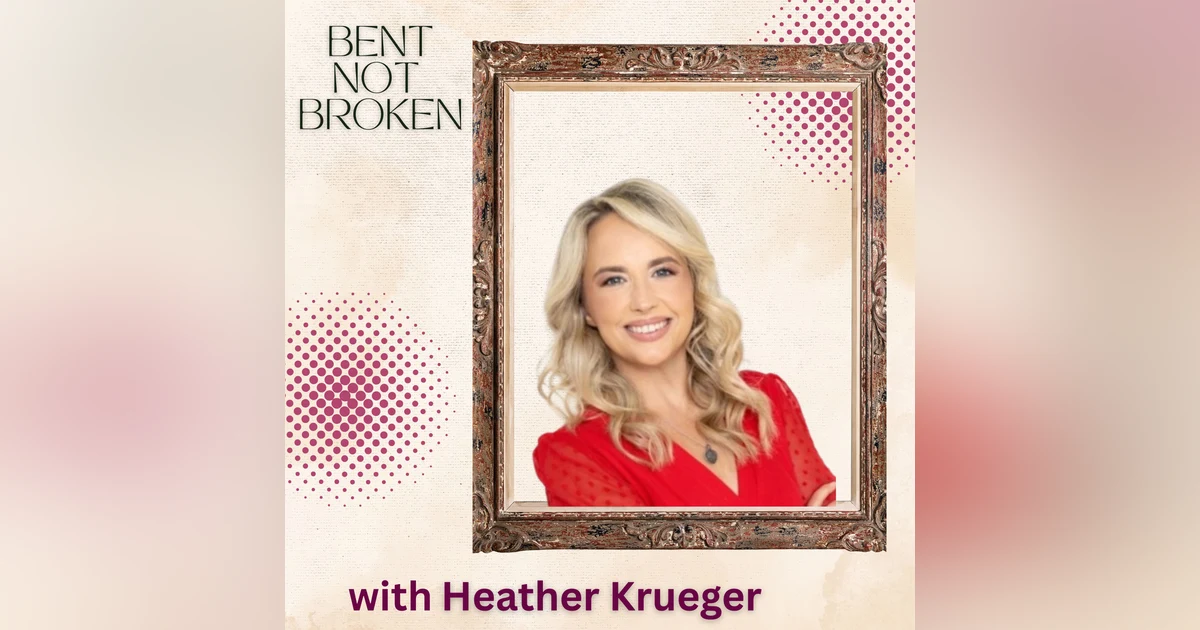


Many of us grow up believing in the fairytale ending — that finding the right partner will lead to happily ever after. But life sometimes takes us down a very different path.
In this powerful episode of Bent Not Broken, Coach Deborah Griffiths speaks with Heather Krueger, a liver transplant survivor whose incredible story inspired the Hallmark movie Once Upon a Christmas Miracle.
At just 25 years old, Heather was told she had less than a 50% chance of surviving two more months due to autoimmune hepatitis. What followed was a life-saving liver transplant, national media attention, and a journey that forced her to redefine what happiness, love, and resilience really mean.
Heather opens up about surviving a life-threatening illness, navigating divorce, and discovering that true “happily ever after” isn’t about someone saving us — it’s about rediscovering our own strength, purpose, and ability to rebuild.
This episode is for anyone navigating divorce, major life transitions, health challenges, or rebuilding their identity after life changes.
About Heather Krueger
Heather Krueger is a liver transplant survivor whose journey inspired the Hallmark movie Once Upon a Christmas Miracle. After being diagnosed with autoimmune hepatitis and facing a life-threatening prognosis, Heather received a life-saving liver transplant and has since dedicated her life to raising awareness about liver disease prevention and proactive health.
She has shared her story on major platforms including Good Morning America, The Today Show, and national media outlets.
Website: therealheatherkrueger.com
Enjoyed this episode of Bent Not Broken: Life After Divorce with Deborah Griffiths?
Don’t forget to rate, review, and subscribe on Apple Podcasts and Spotify so more people searching for life after divorce, divorce recovery, co-parenting, dating after divorce, and healing from gaslighting can discover this empowering podcast. Every review helps others find hope, inspiration, and practical tools for thriving after divorce.
Explore more resources: Visit BrokenToBoldness.com
for coaching, workshops, and guidance on divorce recovery and life transitions.
Follow Deborah Griffiths for daily empowerment and support:
- Instagram: @BrokenToBoldness
- Facebook: Broken to Boldness
Remember: divorce may bend you, but it does not break you. You are stronger than you think, and your bold new chapter starts now.
Disclaimer: The commentary and opinions available on this podcast are for informational and entertainment purposes only and not for the purpose of providing legal or psychological advice. You should contact an attorney, coach, or therapist in your state to obtain advice with respect to any particular issue or problem.
Welcome to another episode of Bent Not Broken. Heartbreak and trauma may feel like the end of your story, but here it's the beginning of a bold new chapter. I'm your host, Coach Deborah Griffiths, and this is the space where women rise, rebuild, and rediscover their purpose. Remember this truth. You are bent, not broken. Many of us grew up believing that if we just found the right partner, life would fall into place. The fairy tale ending, the prince charming, and the happily ever after. But life has a way of teaching us that real strength comes from within. Today's guest faced a moment that changed everything. Heather Krueger was given less than a 50% chance of living another two months before receiving a life-saving liver transplant. Her incredible story later inspired the Hallmark movie Once Upon a Christmas Miracle and has been shared on Good Morning America, The Today Show, and other national platforms. But what Heather discovered through her journey is something many people going through divorce and major life transitions eventually learn. That our true happily ever after isn't about someone coming to save us. It's about rediscovering our own strength, purpose, and the courage to build a new life. Heather, I am so glad you're here with me today and welcome to the show. Thank you so much for having me. I'm happy to be here. Take us back to that moment that changed your life. What was going through your mind when your doctors told you that you had less than a 50% chance of living for the next two months?
SPEAKER_01My initial response was I laughed. And I think it was one part of being in shock at two weeks before my 25th birthday, being told this. You think you're invincible, or at least I did at that age. And so that was my initial. I laughed, and she said, No, Heather, I'm serious. And then after that, I believe it was just my personality that I wasn't going to take that as an answer. And I chose to fight it instead of cave to it, I guess, or become more scared than I already was about the diagnosis in prognosis.
SPEAKER_00So by fighting it, did you what do you mean by that? Getting second opinions, doing more research on your condition on the internet, you know, God for, you know, we're not supposed to do that, I know, but I think we all do. We all want to know more about what's going on. What are some of those steps? What did that look like for you?
SPEAKER_01So for me, six months later, I did get a second opinion at Mayo Clinic, and they told me the same thing. It was autoimmune hepatitis. And looking back now, surprisingly, I never did any of my own research. I never looked anything up about it. I never looked up the transplant process, the surgery, anything. Because oddly, in my mind, I just figured that I was going to survive it. So I didn't even put myself in that position to start Googling and seeing maybe the horrors or the negative effects of what comes with all of that.
SPEAKER_00Sounds like that's part denial in a way. But at the other point, but that sense of denial was also what put you in the right mindset to survive.
SPEAKER_01Yes, you were absolutely right. It probably was denial, but in a sense, it probably protected my mindset at the time as well. And I had a lot of family support, so that helped. And no one around me was negative, nobody ever acted like I was dying. Even my mom said, I never thought you were going to die. So I think having that community of positive around you and just kind of taking the initiative as far as journaling and different things like that, I think what helped kind of coast me through.
SPEAKER_00Okay. Facing something that life altering often shifts our perspective. How did that experience change the way you view relationships, love, and what truly matters in life?
SPEAKER_01I can remember very soon after my transplant, I went to, shouldn't have been going to a fast food restaurant, but I did stop at a fast food restaurant with my mom. And we had ordered, I sat down, I went back up to get napkins or something. And there was a gentleman at the front desk that was just like berating the this new worker. You could tell he was training about the price change of whatever on the menu. And I just stood there in amazement. And the guy went and sat down. He walked steamed out. And I looked at the guy and I'm like, I almost just died. And like this guy needs to find a real problem. So as far as shifting my perspective, I think we get sometimes caught up in the day-to-day BS. Yeah. When you're faced with something like that, it really shows you what does and doesn't matter in life. I think it shifted my perspective as far as saying goodbye to my mom if I was just going to run to the store. Or if my sister was going out, I would think, oh gosh, I hope I see her again. And maybe that was a trauma response, a little extreme, but it just made me think deeper about my relationships and what would happen if this person wasn't here anymore, or I got a phone call that something happened.
SPEAKER_00Yeah, it definitely shifted that for me. That's a big shift. Many of us grow up believing in the prince charming fairy tale. I know I did. Cinderella was my favorite princess. Did your experience challenge or redefine what happily ever after means to you? And perhaps you want to go into a little bit of you found love all through this process. So tell us a little bit about that.
SPEAKER_01So yes, I had a living donor and we ended up dating. So my whole liver came out. I received 55% of his.
unknownOkay.
SPEAKER_01So the liver's the only organ that can regenerate. So within two, three months, the portion that I got was full size, grew back to full size, and his grew back to full size. We started dating. And very quickly after, I would say about a year and a half later, we got married. So I married my organ donor. And at the time, I felt like, oh my gosh, you know, he saved my life. If he would do this for me, what wouldn't he do for me? And I think I got very wrapped up in that, where it was just this extreme sense of gratitude. And I thought this was my fairy tale. From there, sorry, what was your question?
SPEAKER_00How did your experience or challenge or redefine what happily ever after means to you?
SPEAKER_01So I've been someone who, for whatever reason, through from my teenage years into my 20s, when I met my husband, I always had a boyfriend. Always had a boyfriend. And after going through what I went through, getting married, and then unfortunately things did not work out with him. And I thought that was my fairy tale. Why do I feel like I need to have that acknowledgement or companionship or there's something there? You know, like a sense of security, a sense of security, maybe someone adding to my, I feel like I've never had enough confidence and self-esteem. So it's like I had someone there to give me those compliments or boost me along. And after the divorce, I realized nobody can do this for me besides me. And that fairy tale, as great as it sounds, and I still believe in finding someone, and I still believe in love, I just view it a little differently that nobody can make you happy unless you already feel fulfilled inside. You know, I feel they can add to it, but if you're empty on the inside or you're missing something and you're constantly searching for someone else to fill that void, it's not gonna work or you're gonna be lacking eventually, it's gonna come out.
SPEAKER_00So I agree. And I was going to go back to something you said about your liver donor. Do you think that because he saved your life in essence, that put blinders on you when you started dating? Oh, absolutely.
SPEAKER_01I look back now and I'm like, man, the questions I would have asked or pushed more for better answers or a bit of avoidance on his part. And again, I was younger, you know, this is my transplant this month will be 11 years ago already. So looking back, yeah, totally. It was blinders on. It was, I think, such a euphoria of oh my gosh, I'm alive. And also, like I said, like I think I mistook such a huge sense of gratitude for this true love fairy tale. And that put up a bit of tunnel vision on my end.
SPEAKER_00Yeah, for sure. For many women navigating divorce or major life transitions, there's a moment when everything they believed about their future changes. What helped you find strength during your most uncertain moments?
SPEAKER_01I feel like what helped me find strength was one, I had my parents who were very supportive and understanding of me and the situation. So that definitely helped, especially on the financial end and having to move back home at you know, 30 when you're not expecting to ever do that. It was my sense of faith that okay, I almost died. Yes, divorce is another like major life-changing thing, and you never get married thinking you're going to get divorced. You know what I mean? But I'm like, if I can get through something that almost killed me, you know, my own body trying to kill me, I can get through something like this. And also, I'm not the only person who has gone through a divorce. That was something I had to get over because I felt it was a sense of embarrassment for me. Because no one in my family is really divorced besides one or two people. So, you know, getting over that embarrassment factor that I'm not the only one. And fear of failure. You feel like a failure? Yeah. Yes, yes. Yeah. And even though, like, I knew I tried everything in my power, counseling, this, that, and everything to salvage the marriage. So getting over that failure factor. But just my faith and my hope that got me through the transplant and knowing that everything is temporary. Trying to remind yourself everything is temporary. In the moment we feel like you're never going to get through it or your life's over, or you're never going to meet someone again. But just being able to hold on to get through that point is what kind of kept me going.
SPEAKER_00Now, your story was later turned into a Hallmark movie called Once Upon a Christmas Miracle. What was it like seeing such a personal chapter of your life portrayed on screen?
SPEAKER_01That was very surreal, very bizarre, especially because they used our real names in the movie. So they used Heather, they used my sister Ashley, my mom Kathy, my dad Bill. So all the names were the same. We also had a few cameos, Chris and I, my ex in the movie towards the end. So it was very surreal. But then there was this other part of me that even though when they were filming it, Chris and I were not in a good place in our marriage. I felt that maybe there's a greater purpose in all this, and it's going to help someone else. So that's also kind of what I held on to, even though my life was crumbling around me. Had you hoped it would salvage the marriage, maybe? At that point, I didn't think the movie would. Okay. We were still going through counseling. We had bought a house. We were going through an adoption process to adopt a baby. So I was holding on to those last couple things that maybe something would turn around. But yeah, yeah, those that was tough because I, in a way, I felt like I was living a double life because I was supposed to be excited for this movie. And you know, behind the scenes, we're going to counseling and sleeping in other rooms, separate rooms.
SPEAKER_00So that had to be very surreal. Did you feel like in a way that it was portraying you more like a fraud?
SPEAKER_01It's funny you use that word because I have said that to people. Like I felt like a fraud. Like I, you know, and then when the movie K premiered, they flew us to Los Angeles and premiered at the Grove and Red Carpet, you know, the whole deal. And I'm just like, oh my gosh, if people really knew what was going on. And but at the same time, I'm like, but this is reality. This isn't the fairy tale that everyone portrays. And maybe this will help people because people go through divorce and adoption processes, have trouble with infertility, are stuck in marriages for financial or whatever reasons that they are going through, struggling. My hope was always just that in the end, it would help somebody get through it.
SPEAKER_00That's a good that's a good reason. I sometimes our hardest experiences become the foundation for our purpose. How did surviving the health crisis inspire your mission to help others prevent liver disease?
SPEAKER_01So I've learned a lot over these past few years about liver disease and being able to reverse and prevent it. A lot of things that I wish I knew when I was going through it. I've done a lot of research, both Western medicine and like Eastern medicine, holistically, different things we can do. So I've spoken with a lot of people and people have reached out to me, which makes me feel good. Like that kind of became my purpose, showing them my strength and helping them through. You know, I've gotten messages that because of you, I'm gonna keep going, or my sister needs help. Can you give me some advice on this? So I think between just coaching, talking to people, and then coming across different things naturally that can help people that not necessarily Western medicine always tells you about, or you know, our practices. What I'm sorry? Our practices, right? Right. You know, there are tons of studies out there that we can naturally reverse fatty liver disease. And it's kind of crazy because one in four Americans have fatty liver disease.
SPEAKER_00I'm gonna ask you if you knew what the stats were. One in four, that's a lot.
SPEAKER_01Yes. Teenagers and kids are getting it, starting to get it younger and younger because things you wouldn't think of, like our fruit juices that have all the sugar in it, or things with high fructose corn syrup. It basically tricks the liver and it does the same thing process-wise as alcohol would do. So kids are getting and teens are getting it younger and younger now because the liver just can't process it, and the whole metabolic process is the same. So informing people on nutrition supplements detoxing that I feel like a lot of other countries do, and we just don't do it here.
SPEAKER_00No, are you talking about like liver detoxing?
SPEAKER_01Yeah, yeah, yeah.
SPEAKER_00I've heard of like that, yeah.
SPEAKER_01Milk thistle, turmeric, you know, anti-inflammatory type things that calm the liver down.
SPEAKER_00And we take our body for granted. I think we we we we do, you know, uh the the eyes that we can see with and the ears we can hear with, and it's not until maybe you fall and break a bone, or like you said, you had a liver, liver issue. Even the fact that our liver can regenerate itself, yeah, it's incredible. Yeah, our body is incredible, and yet we don't do enough to appreciate it.
SPEAKER_01And I think we yeah, no, I agree. And I think we uh sometimes brush off different symptoms that our body is trying to tell us, or like, oh, we're just getting older, oh, we're tired. Like we ignore things, and our body's always trying to talk to us and it's always trying to heal itself. So not waiting to get checked out, which I know is a scary thing to do, but nobody wants to go to the doctor or the dentist.
SPEAKER_00I get it. Oh, yeah. When someone's going through a major life upheaval, whether it's divorce, illness, or loss, what are some of the first steps they can take to begin rebuilding their life? Good question again.
SPEAKER_01I would say start prioritizing your own self-care. Just little things that can help you through the day. Gratitude, I feel, is a big thing. So either in the morning or at night before you go to bed, three things that you are grateful for. Even if we had the worst day, it could be the sun was out today. The flowers look pretty. It seems silly, but as the day goes up or days add up, it does help you kind of put things into perspective. Another thing I did, which took me a while because I'm stubborn and I didn't think I needed help. And it's always been hard for me to ask for help because I'm maybe my ego or pride full, but was I did get a coach or mentor, or you know, even if you have a close person at your church, whatever, to kind of help with that process in your perspective as far as your mindset. For me, I kind of slipped into a negative mindset a few years after the transplant, and I didn't even realize it. So I had a coach that would point out to me, you told me like five times today that you're tired. I get you're tired. Stop telling me you're tired. It's not gonna change the more you tell me. So getting a good mentor or just someone you can accountability partner, start writing for me, like short-term goals, even if it's something minute, just to start moving you forward, uh, get a good focus. Trying to think what else did I do. The journaling was a big thing for me. It really was just getting my like a brain dump, or I started it before my transplant where I would go on Pinterest and just get like positive quotes. This might not work for everybody, but for me, it kind of checked me on those days where I felt like I was slipping or getting depressed, or more of a negative mindset. So I would write down positive quotes, fighter quotes, different Bible scriptures, and I would read those, and that I felt gave me a boost to kind of get through the rest of the day. I think also if you struggle with a lot of anxiety as I do, you look ahead so far, and that causes more anxiety. So trying to just take one day at a time or one hour at a time can cut that anxiety and lessen the pressure on yourself to get where you want to go.
SPEAKER_00All good thanks. Thank you. You often speak about proactive health and prevention. What are some of the biggest misconceptions people have about liver health and lifestyle choices?
SPEAKER_01Okay. So for me, being young and being diagnosed with liver disease, people automatically thought that it was alcohol. So, yes, it could be. Mine was not. It was non-alcoholic. It was autoimmune hepatitis. So, one, not not automatically assume that it's because someone is destroying themselves. Another thing was uh one of the big misconceptions from all like the studies that I have looked at and read is your nutrition and exercise really can reverse fatty liver disease over time. So that's one thing. Another misconception, I would say for me, if you're someone who's had a transplant, what I struggled with, what was hard was people think it's a cure-all. And I'm sure that's how people think with other medicines or diseases too. And it was a band-aid. I had that was my only option because of this. I was at stage four. So I got the transplant, and now you're on medicine that you have all these side effects from that. So that was a hard thing for people to try to understand. And also not just liver disease, but other diseases, whether it's like depression or diabetes, the whole invisible illness thing, I think is very hard for people to understand because you look fine. What do you mean? Why aren't you back to work? Why aren't you going to school? Why aren't you, you know, doing this? Because I look great, but but you don't feel great. Right. I'm like, if you can, you know, switch bodies for a day. So that I think was a big misconception that people just couldn't comprehend, you know, maybe I wasn't progressing in my my professional or personal life as quickly as they thought I should be after.
SPEAKER_00Well, but that's understandable. So you've got the liver transplant. Does that mean that you're cured from this hep autoimmune thing, or can that come back? How does that work?
SPEAKER_01So I was told that it can come back. So I still to this day, I mean it's almost 11 years later, and to this day I still go for blood work every three months. Okay. Because they just want to keep track of the liver and kidney numbers. So yeah, unfortunately, they said it could come back, but that's why they watch it so closely.
SPEAKER_00Okay. But for now, your health, you're in good health.
SPEAKER_01Yes, I didn't deal with any rejection. My numbers have been good. Thank God. So that's great news. Thank you.
SPEAKER_00If someone is listening today, feels like their life didn't turn out the way they expected. Maybe their fairy tale ending didn't happen. What would you want them to know about second chances and creating a new future?
SPEAKER_01So I would want them to know that their life isn't over, even though it may feel like it. I'd want them to know that a lot of times when we're going through something life-changing and traumatic, we question or we ask why, and we don't get those answers in the moment. You might not get those answers five years later, two years later. But I promise, eventually, when you look back, things start to connect and you see the reasons why things turned out the way they did. And you still cannot, you may not want to accept it or you may not like it. I mean, I would not have chosen the path that I've been on. I would not have chosen to go through those things. But I can kind of kind of connect the dots now and see that this was the path that was supposed to happen. And also, I would not have become the person I am today and all the life lessons and the strength and the ability to keep moving forward if I had not gone through that. So I feel like just keep going, even if things do not make sense. I feel like eventually they will. And sometimes things turn out better than what you had thought. I always thought that I wanted to have children, and then that didn't work out. And now I'm a little older and I'm like, well, maybe that just wasn't supposed to be. Maybe I'll be a great aunt to my sister's kids when she has kids. It just you have to, I feel, detach from maybe what your younger self thought, and also detach from what society, the societal norms put on you, or family, or when do you get married? You got a boyfriend, when do you have kids? Like, I feel like that can be a lot of pressure, and you have to silence that because your own peace and healing is way more important than hitting these goals that people think you should be at a certain point in your life.
SPEAKER_00I agree. Heather, this has been a great discussion. How can listeners get a hold of you, learn more about you? Do you have a website and to learn also more about liver disease and how it can be prevented?
SPEAKER_01So you can find me on social media, um Facebook, uh, Instagram, LinkedIn. My email is Heather Kruger, K-R-U-E-G-E-R 23 at gmail.com. And I have a website, LiverealHeatherKruger.com.
SPEAKER_00So those are some of the options for me. Perfect. I'll have all of that in the show notes as well. Awesome. Thank you again. Really appreciate your time. Thank you so much for having me. It was great seeing you. Thank you for listening to today's episode of Bent Not Broken. I hope that this episode reminded you that even through life's toughest moments, you are bent, not broken. If this message inspired you, please share, rate, review, and subscribe, as it helps us reach more women who are ready to rise and rebuild. And until next time, keep living bold and walking in your purpose.