When Life Changes Overnight: Rebuilding Your Life & Finances with Donna Jean Kendrick
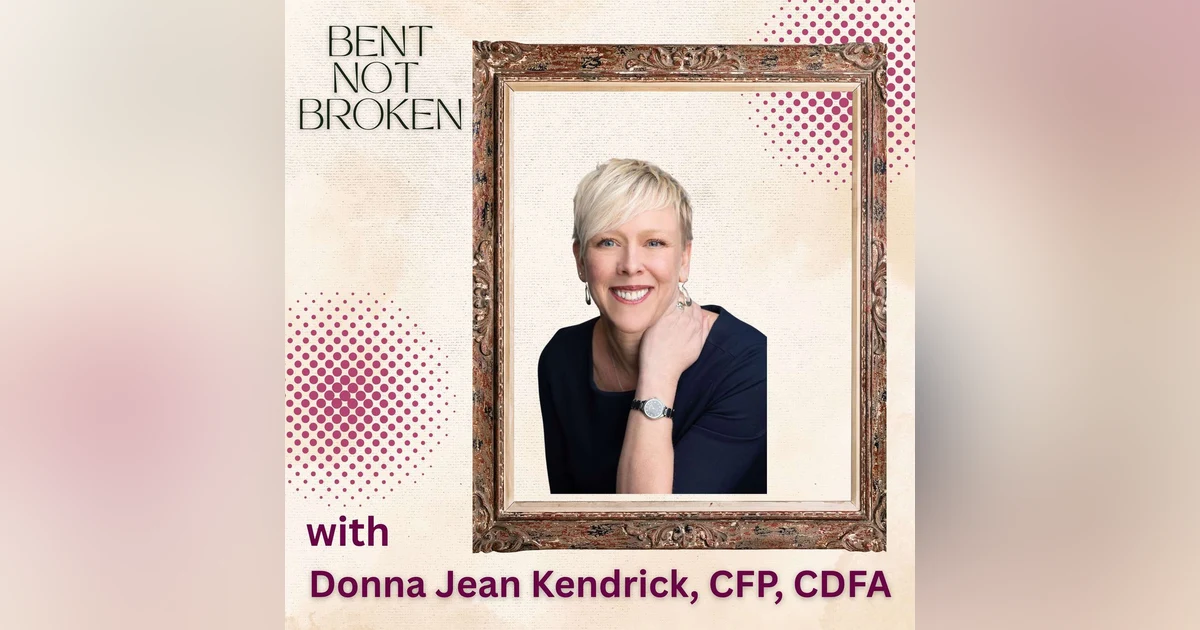

What happens when the life you planned suddenly disappears—and you're left wondering, “Am I going to be okay?” Whether you're facing divorce, widowhood, or another major life transition, starting over can feel overwhelming. You're grieving the life you thought you would have while simultaneously being asked to make some of the biggest financial decisions of your life. In this episode of Bent Not Broken: Life After Divorce, Coach Deborah sits down with Donna Jean Kendrick, CFP® and CDFA®, foun...


What happens when the life you planned suddenly disappears—and you're left wondering, “Am I going to be okay?”
Whether you're facing divorce, widowhood, or another major life transition, starting over can feel overwhelming. You're grieving the life you thought you would have while simultaneously being asked to make some of the biggest financial decisions of your life.
In this episode of Bent Not Broken: Life After Divorce, Coach Deborah sits down with Donna Jean Kendrick, CFP® and CDFA®, founder of Sephton Financial and author of The Divorce Money Map: Taking Control of Your Finances Before, During, and After Divorce.
Donna knows what it means to have life change without warning. At just 40 years old, she unexpectedly lost her husband and found herself raising three children while trying to figure out what came next. At the time, she was earning just $17,000 a year working part-time and suddenly had to face questions about income, credit, savings, raising her children, and her family's financial future.
That devastating loss eventually inspired Donna to reinvent her career and become the kind of financial professional she needed during her own darkest season.
Today, she helps people navigate the financial realities of divorce, widowhood, remarriage, blended families, and starting over.
In This Episode, You'll Learn:
- Why major financial decisions shouldn't all be made in the middle of emotional overwhelm
- The difference between immediate, transitional, and long-term financial decisions
- Why Donna recommends building a six-month emergency cash reserve
- What “sudden money” is—and why receiving a divorce settlement, life insurance proceeds, or money from selling a home can lead to emotional spending
- Why checking your credit report is so important before, during, and after divorce
- How joint credit card debt can continue affecting your credit after divorce
- Why you need to understand exactly what you own and owe
- How to begin establishing financial independence if your spouse traditionally handled the money
- Why keeping the marital home isn't always the best financial decision
- The importance of updating beneficiaries, wills, healthcare directives, powers of attorney, and other financial documents after divorce
- How Donna rebuilt her career after becoming a widow at 40
- Why she created The Divorce Money Map to help people organize their finances before meeting with an attorney
- How setting 30-day, 90-day, one-year, three-year, five-year, and ten-year goals can help you begin moving forward
- The power of resilience, forgiveness, and learning to live the “next best minute”
Three Steps You Can Take Right Now
If you're newly separated, divorced, widowed, or simply afraid of your financial future, Donna recommends beginning with three practical steps:
1. Start building your cash reserve.
Work toward having approximately six months of basic living expenses available—not necessarily your current lifestyle expenses, but what you truly need to keep your household functioning.
2. Get your financial house in order.
Gather account information, statements, passwords, insurance documents, and other important financial records. Know what accounts exist and make sure you have access to your own financial information.
3. Review your credit.
Pull your credit report and understand which accounts are in your name, which are joint, what balances exist, and whether there are accounts you may have forgotten about or didn't realize were open.
A Powerful Reminder About Starting Over
One of my favorite moments in our conversation came when I asked Donna what Bent Not Broken means to her.
Her answer was a reminder that after divorce, loss, or another life-changing experience, we shouldn't expect to be exactly the person we were before.
Like a tree bending in the wind, we may lose some things along the way. We may lose relationships, financial security, dreams, or pieces of the life we once knew.
But bent doesn't mean broken.
We can stand tall again—perhaps differently than before—and that's okay.
If you're wondering whether you can rebuild financially after divorce or loss, this episode offers both practical steps and something equally important: hope that your next chapter can still be a good one.
About Donna Jean Kendrick
Donna Jean Kendrick is a Certified Financial Planner™ professional and Certified Divorce Financial Analyst® and the founder of Sefton Financial. After unexpectedly becoming a widow at age 40 with three children, Donna transformed her personal experience with grief and financial uncertainty into a new career helping others navigate major life transitions.
She is also the host of Widow, Wisdom & Wealth and the author of financial guides addressing widowhood, blended families, and divorce, including The Divorce Money Map: Taking Control of Your Finances Before, During, and After Divorce.
Donna's Website where you can purchase her books and obtain resources: https://donnajeankendrick.com/
Enjoyed this episode of Bent Not Broken: Life After Divorce with Deborah Griffiths?
Don’t forget to rate, review, and subscribe on Apple Podcasts and Spotify so more people searching for life after divorce, divorce recovery, co-parenting, dating after divorce, and healing from gaslighting can discover this empowering podcast.
Every review helps others find hope, inspiration, and practical tools for thriving after divorce.
Explore more resources: Visit BrokenToBoldness.com for coaching, workshops, and guidance on divorce recovery and life transitions.
Follow Deborah Griffiths for daily empowerment and support:
- Instagram: @BrokenToBoldness
- Facebook: Broken to Boldness
- LinkedIn: Broken to Boldness
Remember: divorce may bend you, but it does not break you. You are stronger than you think, and your bold new chapter starts now.
Disclaimer: The commentary and opinions available on this podcast are for informational and entertainment purposes only and not for the purpose of providing legal or psychological advice. You should contact an attorney, coach, or therapist in your state to obtain advice with respect to any particular issue or problem.
What happens when the life you carefully planned suddenly becomes a life you never expected? Loss, divorce, and starting over don't just change our relationships. They can change our identity, our confidence, and our entire financial future. And when you're already overwhelmed emotionally, figuring out what to do with your money can feel almost impossible. My guest today understands that experience both personally and professionally. Donna Kendrick became a widow at just 40 years old when her husband passed away unexpectedly, leaving her to raise her three children while navigating grief and some very big life decisions. That experience ultimately led Donna to reinvent her career and become a certified financial planner professional and a certified divorce financial analyst. Today, Donna is the founder of Sefton Financial, where she specializes in helping families navigate major life transitions, including widowhood, divorce, remarriage, and blended families. She's also the host of Widow, Wisdom, and Wealth, and the author of several financial guides, including her newest book, The Divorce Money Map: Taking Control of Your Finances Before, During, and After Divorce. Donna's story is really about something we talk about often here on Bent Not Broken. When life changes without your permission, how do you find your footing and begin writing your next chapter? Donna, welcome to Bent Not Broken.
SPEAKER_00Oh, thank you so much for having me. I really enjoy being here.
SPEAKER_01Yes, me too. Let's start with your story. You were only 40 when your husband passed away. And suddenly you were raising three children on your own. What do you remember most about those first days and months when the life you knew changed so dramatically?
SPEAKER_00Yeah, I mean, oof. God, I'm already almost to tears already. Oh no, it's all good. It was 13 years ago, right? But you can go right back to that moment. And I remember standing there, literally the the evening he passed, thinking, oh what now? Right? Like all of those dreams, all of those future goals, all of our shared expectations for the next 10 years, 20 years, kids' weddings, educating them, all of it. Just changed, right? Because not only did I just lose my husband who I shared those dreams with, but I lost the breadwinner, right? I was only making $17,000 a year working part-time, like so many spouses. And I say, well, majority of us ladies, I had taken a break from my full-time employment to follow his career. He had worked abroad, and so it was kind of difficult for me to carry on my career while we were moving almost every two years. What was I going to do next? How was I going to pace this all together? And I had an eight-year-old, an 11-year-old, a 12-year-old. We had just moved two to three months beforehand. So all of our extra cash was kind of wound up into that real estate transaction. So I'm a financial planner now. We always talk about cash reserves, three to six months of what you need in case there's an unemployment or a pandemic or a death. We had used all that for the deposit on the house. So I was looking at no credit cards in my name, right? I should have known better, but it was just life. We were young, we're bobbing and weaving. So when he died, his shared credit, if I was an authorized user on his card, went to and no extra cash and no income. And oh my, what next? Yeah.
SPEAKER_01Wow. There's an emotional side of loss, but there's also the practical side. So when someone is grieving or separating or going through a divorce, they're often expected to make enormous financial decisions at exactly that time. And they're the least emotionally equipped to make them. What do you tell someone in that position?
SPEAKER_00Yeah, I mean, so here what we work with now, and that's why we specialize and niche our market into these families in transition, because we do it a little differently. I like to say we add a little love back into financial planning, but what we're really doing is being very patient and being very empathetic because there's some decisions that have to be made right away. There's some forms that have to be submitted right away. And then there's decisions that we can actually put on pause. Maybe that's for the transitional time, right? So there's the immediate decisions, there's the transitional decisions, and then there's those long-term decisions. If someone would have asked me within the first year of Greg dying, oh, tell me about retirement. What are your dreams? Like, do you want to have a second house? I probably would have marched out of that conference room because there was nothing dreamy about my life that time. The dreamy part was waking up every day, putting two feet on the ground, brushing my teeth, maybe my hair, right? Like that's the things I was trying to accomplish at that moment. The kids look much better than me for that whole first year. But yeah, so now I'm actually going back to school again because I really believe in learning because sometimes we only know what we know. So we have to go out and learn more and experience it. And I'm with the Financial Transitionist Institute, and they always say that there's three different or many different stages, right? So there's the for many people in divorce, or if they know someone that's going to pass due to maybe a long-term illness, there's that anticipation of what's going to happen. And then the ending, the divorce finalizes, right? Or that person passes. And then we have what's new, right? Like, what are we going to process now? And through there, sometimes excitement and freedom, a new opportunity. And then a lot of that is grief and confusion and overwhelm. And I'm sorry, we sometimes we all just get nervous and we freeze, right? Like we just freeze and we don't do anything because we don't know what to do next. And then when you get through that processing stage, that's where you start to have that long-term growth, that anticipation of what's next, the ability to dream or to think longer. So we are always trying to say, where are these decisions we have to make? And that's all we're making for decisions right now, right? As well as what's next. And that goes for good and bad. Sometimes trying to bring new funds in if we don't have any. And sometimes in either divorce or widowhood, all of a sudden a whole bunch of we call it liquid money comes to us. Maybe you sold the family house and now you have $200,000 free cash, not tied up in IRA. What are we gonna do then? I'm live in Philadelphia and I say when I'm depressed, I like a tasty cake. I like to eat that chocolate cupcake and I just like to eat it quick, right? And I know it's not good for me, and I know it's off my diet, but it just makes me feel better. A lot of people do that with cash. I deserve that Corvette. I deserve that trip. There's a bit about that. We're sometimes just trying to make ourselves feel after that whole anticipation and that ending part, right? But we have to be so careful because for many of us have we call it sudden money. Who hasn't we haven't had money like that before? All of a sudden a life insurance comes in or that settlement comes in. And what do we do next? Are we making those best decisions? So I always love to open up what I call a holding account, which is like, okay, so if we get 200,000, here's 20,000 into your regular checking and savings. The rest of it, my financial advisor is going to put in a holding account, FDIC, guaranteed, just sitting there making a little bit of interest, right? But it's just not readily available. You have to call someone and be like, hey, can you transfer that? That call is sometimes just that barrier to giving a 24 hours before a bad decision or an expensive decision. Is that helpful?
SPEAKER_01Very helpful. What are some of the more immediate decisions? Like, especially someone's going through a divorce or they just lost their husband or spouse.
SPEAKER_00I've mentioned it already in this conversation, cash reserve. You're on your own now. So you need to have six months of your basic living, not lifestyle, basic living. What bills do you have to pay for it not to go on your credit report as a missed payment, right? What do we have to pay to keep our car and not have someone repossess it? Those are the basic living costs. Are we eating out all the time? No, we're trying to cover just having oodles of noodles and maybe a salad here and there, right? So take that, and I always recommend that someone living into a new situation, divorced and now maybe having to live in an apartment on rent, track what you're spending for three months. I'm not endorsing anything, but many of my clients use, if they need the paper, they actually use a journal called Clever Fox. And you can get it on like Amazon, places like that, all the different formats of it. But physically tracking everything you're doing for three months, if you're an app junkie, tons of great apps out there. And then that basic cost of living, multiply that times six. That's your cash reserve. You want to have that put aside that as your first savings goal. And if maybe you have one of those lump sum payments of liquid cash that goes aside. When I say liquid cash, that's something you can get to in 24 hours. It might be a CD that can be broken, a money market account, a savings or we can call it cold hard cash. Wrap it up in butcher paper and put it in your freezer. Cold hard cash. That's it. I don't care. Don't tell anyone. Just put it in there, right? The second thing I always say too is make sure you pull your credit report. And you can do that at annualcreditreport.com. And if you haven't done that in the process of a divorce, even before the divorce settlement, it's really important. You want to make sure what accounts you have open, what accounts are in your name, where does your credit stand. The credit report won't tell you that FICO score. It's going to tell you what accounts are there, what balance are being used. Because unfortunately, some people find out after the fact that maybe there was an account opened jointly that they didn't know about, and that wasn't part of the discovery in a divorce. It doesn't mean it was intentionally left off. It might have been that Macy's or Sears card back in the 1990s, right? That you both got. Like we're gonna we're gonna say everyone's playing fair here. That's a big thing. So make sure you have your cash reserve, make sure you pull your annual credit report. And then the third thing that I would always do is just making sure that what you want for the next two years, your goals. So those I still call those immediate goals. Those next two years are very clear. And I always say write them down, right? So what do I where do I want to be in three years? Where do I want to be in one year? Where do I want to be this quarter? Where do I want to be this month? And it's not and be I want you to be optimistic. I want you to write them down. I want you to read them to yourself every day. A sentence for each. And I'm talking about your finances. Like I want to be independent, I want to be out of credit card debt, I want to have a down payment for a second home, right? It's always, I don't mind people putting out on rent after a transition, especially divorce, because sometimes you're just finding your new self. You don't know if your job's still gonna be here. Like getting wrapped up into another house, even though I love real estate as an investment, might not be what we need when we're emotionally making decisions at the same time. It's a holding period, just like that holding account I'm talking about. Look at like an apartment as okay, I'm just gonna breathe here, right? And then you make big decisions. But I always say three-year goal, one year goal, quarter goal, 30-day goal, what am I doing today? Not asking a dream. I'm just saying directional to get yourself moving in that right direction as you make decisions. You'll find as the days go on, you make decisions saying, Well, that helped me get to that three-year goal in your back subconscious of your mind.
SPEAKER_01Even if you had to put a post-it notes on your refrigerator or on your bathroom mirror, keep those goals forefront and remind yourself every day. Yeah, how does credit card debt you experience this all of a sudden? The credit cards were gone because they were pretty much joint or in your husband's name. And I I know back in back in the day that was that was the thing. But how do women going through divorce or just losing her husband navigate that? All of a sudden, they they don't have any credit to their name.
SPEAKER_00Yeah, I mean, it's a huge thing. I was lucky, I had one card, American Express, kept me on because I had an account before I married my husband, and then they kind of morphed it into one account for us. And to this day, I am very, very loyal to them. I am just simply because that is the one thing that gave me credit that gives me my 35 years of credit history right now. But these are the things that actually make a difference. How do we deal with it? One, if you are taking, like, let's say it's a divorce situation, that's something to navigate with your attorney or your mediator, like who's taking the debt? Is it getting paid off? Is there life insurance to cover the debt if you took it on the other person? Things like that. You can negotiate as part of the divorce. A lot of it is also it's just a math game. Is this one at 16.9%? Is this one at 5%? Right. And I know a lot of people talk about the juggle of like, hey, I'm gonna do salad transfer, pay 3%, and then I have a whole year. Well, that might not be a horrible idea if you're gonna get away from a credit card that's 16.9%. You don't have too many hits on your credit. We always say try to keep it to less than two a year if you can. We call it a full credit hit. If you're gonna buy a car or put down for a house. And again, let's think about that three-year goal. What do I want in the next three years? So, how do I have to be careful with my credit if we're applying for a new credit card, right? Those things all can affect your credit score, as well as the amount of credit you have available to you and the percentage of credit used. Those are things we have to be really careful of as we're moving forward. I think another thing we want to just make sure of too, especially for our widows and widowers out there. Sometimes if it was purchases in our late spouse's name that did not support the family, be able to have those removed. So we recommend you getting representation and calling each credit card company. I've seen many times where nope, you guys have to pay that. Like that was for groceries, it's on you. It's a family support, right? And then I've seen times being like, you're you're right, you didn't get anything at the store that wasn't you, right? So very separate that way. But I would always say have a credit advisor, or if you have an attorney or your financial advisor, share those phone calls. Because again, the world's spinning. You have seven different phone calls you have to make, each one a little different. That one was joint, one was just authorized user. You can see what purchases versus the spouse made, things like that. But is that helpful?
SPEAKER_01Very helpful. So if you're getting a divorce and you're giving up the debt and your ex or soon-to-be ex takes, say, the American Express debt and you take on the Macy's debt, how can a woman protect herself and her credit score should the ex-spouse fail to make those payments on that American Express card? Or I guess vice versa, if you fail to make your payments, how do you do that or navigate that without affecting your own credit score?
SPEAKER_00What you have to just remember, too, is that you have credit in your name, so does your ex-spouse, and then you have credit that credit cards or accounts that might be held jointly. So again, anything you do affects your score. Anything they do affects theirs. Anything done jointly affects you both, right? Like I always use this example and I'm not proud. Signed a student loan for my daughter, and she was in charge of all the payments. She missed a payment for $80 and then missed the makeup payment for the next $80 and kept it very quiet from her financial planner mom until mom saw her credit score go down. I was furious with her because I would have given her the 80 bucks to make sure my credit score didn't go down. But you don't listen to your mom, right? So it didn't absorb. For those, you want to make sure that part of the divorce settlement is your name goes off those cards. So make sure before you agree to anything that you are calling America Express or you are calling Macy's, and your name is taken off. And if not, then really reconsider if this is part of the negotiation. If you're selling a family home, it might be okay. We're gonna take the cash from the home. We both need it for a deposit on a new home, but we're gonna pay off that debt, right? Because I don't want it being carried in my name. Many of the times they will actually end the card, but not end your obligation to keep paying, if that makes sense. That makes sense. Everyone needs a card in their own name.
SPEAKER_01Correct. Okay. So you had an interesting experience where you actually decided to reinvent your career. How did you go from navigating your own loss to deciding this is the work I'm meant to do?
SPEAKER_00So before this, I mean, I was still my blessing for my parents, I was well educated. I had my master's, I did financial forecasting for the pharma industry. Again, gave up my career to follow my husband abroad. And there was just something in me. Maybe it was the nuns of the Eastern Orthodox high school that scared me to death because I wasn't Eastern Orthodox and I didn't know what I was walking into, but they just put such a grit, such a drive into us. No was never an option, or I can't was never an option. So I think I always just knew deep in my belly I was going to be okay. I knew I was educated, I knew I had a little zest to me, right? I knew what hard work was, you know, came from a blue-collar family, saw my dad just maybe not be there for dinner and maybe not be there when the sun came down, but we certainly had food on the table, right? Like he just would just go for it. And I was like, okay, I know I've seen that example. I can do it. So yeah, I was working part-time. And so I did keep that part-time job that was in my kids' school. So that way I could mimic their schedule. We had three kids in three different schools, and this the years went on. One in the high school, one in the middle school, one in the grade school, right? And so as a sole parent, it's all I could do to make sure that I knew who had off on, you know, the 19th of whatever. Who knew? Right. So that worked for me. But I had that, my late husband and I had a financial planner before he passed. So we did have life insurance intact, right? And which was really phenomenal. That's what allowed me to educate my kids later in life and keep my home. So I knew I had that. But I moved financial planners. About 70% of women usually do after a loss or transition in their lives, simply because maybe you weren't the point of contact for that financial planner. You didn't really have the relationship, or you just needed something different. And that's what I needed. So I actually reached out to my sister-in-law. Her girlfriend had a husband who passed suddenly of a heart attack, four young kids, and I knew she was okay watching her from afar. And I was like, Can you call her? Can you find out who her financial planner is? Whoever it is, I'm gonna talk to them. That's the person that became my financial planner, right? And it was just so wonderful. Like he really did slow the roll. He always had tissues on the table if I needed it. He looked horrified when I sobbed in his room, but it was simply because I was a little overwhelming. I'm dramatic, but he was so good about it and just really allowed me to be like, okay, you do need to go back to work. You have about this much time if we keep X amount of dollars out of life insurance. Social Security came in for my kids, right? So you can kind of keep things together for about two years. Then after that, mama, you gotta start making some more money, right? Like your kids are gonna age out, you're gonna lose social security. I always say that to my divorce clients like child support isn't forever. Alimony can go away if you don't have life insurance backing it. So we need to know what we have to bring in. And so at that two-year mark, I really did look back at what was most impactful to me during that time of loss. And it really was that help of that financial planner, that man that was just so patient, and his team that just took me through Social Security, how to apply, helped me. My husband was a big fan of US savings bonds, the paper ones. Yes. They audited all of those so I could go cash them in. Like they were my team when I couldn't make these decisions for myself. And so yeah, I went to my financial advisor, was like, hey, for this career thing that you said I had to do. He's like, Yeah. I was like, I want to do what you did for me. He's like, whoa, but he actually gave me all of the education that I would need. I did go back to school to take the CFP coursework. It wasn't even licensed state or federally yet. I wanted to make sure I liked this business because I wasn't going to go recreate my career for it. I went back to school while my kids were still in school. I was still working part-time. So it was me nights and weekends studying, sitting next to the baseball field, studying, and then mentored under that advisor for three years in the middle of the pandemic, hung my own shingle, we call it Stefton Financial is the name of my company. That's my maiden name, given for that blue-collar dad of mine who said he would never have his name on a door. He doesn't have now.
unknownRight.
SPEAKER_00And then we just stayed in mission. That's really what I say. Like I had a blessing of this huge change in my life, which I can call it a blessing now, but I would never, I don't think I ever would have done this type of work, which is so fulfilling and holds hands of the people who need it and makes such an impact on not just my clients' lives, but the next generation. We're even finding the impact of helping somebody with their finances when they're the sandwich generation. They have to take care of their parents and their home while they're still raising kids. Like a lot of divorcees are in that. They're just trying to get their own boots back on, and here comes mom and dad. It's like, oh god. So it's just such a blessing. And yeah, that's it. I would never turn back time.
SPEAKER_01Never love that story. So you just wrote a book called The Divorce. Divorce money map. Why did you feel this particular book needed to be written? And what do you want someone going through a divorce to understand before they start negotiating their financial future?
SPEAKER_00So we wrote two other books. One was The Guide to Widowhood, one was a guide to blended families. And yep, my publisher's like, all right, here comes the guide to divorce. And I just, it didn't feel right. The other story, the other ones were stories. One, my own story of widowhood and the stories of many of the widows I worked with and experienced. The other one was my own stubborn story about blending. I am remarried again. We have six kids under one roof. It's wonderful. But I went in kicking and screaming, not like, oh yeah, getting married again. I wasn't losing this independence I fought so hard for. Now, back it up. I did, and it's wonderful. So glad I did. But that's what that was about. Even though I have my CDFA, I just didn't feel right writing a book about divorce of stories. These people are in their own story. They're trying to slow that whirl, right? The swirl that's going around them, like that sandstorm. And what I've seen with so many of the clients I worked with is that they are paying hundreds of dollars per hour for their divorce attorney to help them organize their finances simply for discovery, simply for what's it going to cost them to be them. Can they afford to keep the house? Things like that. And a lot of these attorneys are great in the courtroom, but they don't have a degree in finance, right? I only know one attorney who has a master's of finance, and he's one of the ones I recommend all the time because I really believe people need this. And so I went to my publisher. Can I do a workbook? I just want to give people who maybe most of us have one person in the relationship that's savvy with the money. The other person is savvy with trust, right? And if you're not that savvy person with the money, you don't even know where to start. So this workbook takes you from pulling your annual credit report. What do I own? What do I owe? What credit cards are in my name? What is not? And a lot of this can be done. I always say, like, hide the book under your passenger's seat in your driver's car if you have not made it public that you think you're headed towards divorce, because you do want access to all that information, right? We all usually have a lockbox or that filing cabinet under the bed. Well, you want to go start looking there, right? We want to start looking for life insurance policies, things like that. We want to pull our credit. And so this really shows us from the left to the right of the book what information do we need? Where's our income? Where are our liabilities? What's an asset I had before the marriage? What did he or she have before the marriage, right? What did I might inherit? A lot of people don't understand the actual financial rules to some of that money if it was still in your name versus being brought over and put in a joint account. So this book takes you through that roadmap. So by the time you get to your attorney, you can hand them the front page of the book and be like, hi, this is me financially. It's gonna help with discovery and hopefully save you hundreds of thousands of dollars. Well, hundreds of dollars. I hope the divorce didn't go to thousands. But yeah, that's really what it's about. And then a lot of the pages duplicate. What's it gonna cost me to be me after the divorce? Let's do it again, right? Not that we're trying to dream, but we're trying to say, all right, what do I need to stay afloat? What do I need to ask for in this divorce, or how much of my own salary do I need to make sure I preserve? That's a big part of it.
SPEAKER_01And I love that because you're it's part of going back to what you said before about having the goals and stuff in place. So if you know you're heading for a divorce, you do have to plan on what your life is now versus what it could be right after the divorce, what you need to do, what you need to have, if kids are in the picture, how much money are you gonna need to raise them? So I love the idea of that workbook.
SPEAKER_00Yeah, thank you. And I'm gonna add, we actually have those pages in the back of the workbook. Okay. We have your 10-year goal, your five-year goal, your three-year goal, your one-year goal, the next 90 days, the next 30 days, but we have it broken out into what is your, what do you want from yourself, the personal goals, the goals for the community, the goals for my career, the goals for my mission, right? Like we want everyone to remember that they are a whole person because sometimes you just feel like you're reactive or you're shattered or you're just less than. Well, no, we want every little part of you to really be focused because it's not just, like I said in the beginning, putting my feet next to the bed that day. Someday you feel like that, but we want everyone to remember they're a whole person moving forward. And the other part of the book we have is 365 really like squares of Monday, Tuesday, Wednesday, Thursday, Friday, Saturday. And it's not really a planner, it's for those conversations. So many conversations happen when you're going through a divorce, like this attorney and this mediator and this child supports, you know, safe line and everything else. And I want everyone to be able to have a place to just grab and write down who that was, what the conversation was. And then that way you can actually refer back to it in a chronological way. That's what it's there for.
SPEAKER_01Great idea. You know, fear can play a huge role in financial decisions after divorce. How do you help someone separate the question, can I afford this from the fear that says I'm never going to be okay financially again?
SPEAKER_00Yeah, that's a big one. That's pretty much the main answer that everyone's looking for is am I going to be okay? And that's a lot of what we have to look at is okay, what do we want from our lives after the divorce or after the loss? Right. And that's the answer that we have to get to. We don't know what the next day holds, but we can help try to predict are we going to be okay tomorrow morning when we wake up? Right. And a lot of that too is we call it protection planning also. Do we need to get life insurance on that ex-spouse to make sure we can cover alimony should they ask, right? Do I want to get life insurance for myself to protect my kids since I had to just take on a mortgage on my own, right? Like that might be the asset I want to leave them. Do I have my estate documents updated? My will, my health care directive, my power of attorney, because you certainly don't want your ex-spouse making healthcare decisions for you, right? And so if you don't update those bad boys really quick, it could happen, right? Well, that handles itself outside of the will. That's beneficiary designating, right? A lot of us forget to go back in and move that spouse off. So am I going to be okay? These are these small actions of that protection plan that made you feel like you're in control again. And so we can help with the numbers, right? And really say, okay, if you spend $3,500 a month on everything outside of rent, you'll be within the parameters as long as you keep working and earn X amount of dollars that we can keep it going. But the actions to feel like you're in control of your life again, yeah, that's the protection plane. That's those movements. Anything we can control, we're going to. And that's the empowerment part of it.
SPEAKER_01One of the themes of this podcast, Bat Not Broken, is that starting over doesn't mean starting from nothing. Looking back at the woman you were at 40, what strengths did you discover in yourself that you didn't realize you had at the time?
SPEAKER_00Okay. I didn't realize how resilient I truly was. And so after my husband passed, and after I even started in this career, I went back to become a grief recovery specialist. Best thing I ever did. Because it really shows you on a timeline of life all the bumps in the road up until now. And all those bumps in the road, right? That we were like, oh yeah, that happened. Oh my God, we don't realize how much we learned from it. And so through that process, you go back and be like, okay, yeah, like when I was younger, my parents divorced. What did I learn from that? Right. And I learned that it was okay to be alone, right? Like I was strong, right? Like my mom had to go back to work and I could handle dinner. Like, that's how I felt when I like did my Roy Rogers shift and came home and made dinner for my mom and the whole bit. I knew I could stand on my own two feet, right? And so when I lost my husband, I was like, wait, wait, wait, wait, I can stand on my own two feet. Like I can be in this house on my own. I can do this. So resiliency was a big thing that I learned. I think another thing I learned was forgiveness for myself, right? You make some decisions as a sole parent, and when you're on your own, and sometimes in grief, and sometimes in anger and frustration, right? And maybe it could have been handled different, right? I always say you can't control what someone else does, can't control what God does. You can only control what you did. And a decision you made is a decision you made. Keep moving forward. But sometimes we have regret or sometimes we hurt someone's feelings because we're taking care of just us for a little bit. And it's okay to forgive yourself, and it's okay to ask someone to forgive you, right? Because I had to go back to someone in-laws about two years later and be like, ooh, I know I told you to butt out of my business, but I knew you just cared. I'm sorry. Big love there. Big love there. So resiliency, asking for forgiveness and actually just to live the next best minute. That is something I just stand by. You anything could happen to our kids, to ourselves, to our house, to our nation, to anything. So what are you gonna do in the next best minute that just fills you with joy? And I swear when you make decisions that way, everything seems great and hopeful and wonderful. So it didn't always feel that way. It does now.
SPEAKER_01I love that advice. I want to end with for the women listening right now who may be newly separated or recently divorced or widowed, and they're simply terrified about their financial future. If she feels lost and doesn't know where to begin, what are the first three things you would tell her to do this week to begin taking back control of her life and her finances?
SPEAKER_00One, the cash reserve. Start saving towards that, getting cash put together, give it to your mom, give it to your sister, give it to your best friend, but having some cash available, big thing. Another thing, passwords. Make sure that you are getting your credentials, that you have your passwords pulled together, that you're organized. We call it getting the house in order. It's your financial house, understanding your credit moving forward. I really lean in to even my blended families, that annualcreditreport.com that we said. For my blended families, we asked them to both pull a copy and then trade at the table. Like you're now showing all your wares to this person as you should, because you're about to get married again. But things really do happen. You either forget about accounts or you don't know they were open. So cash reserve, organize yourself, get those passwords pulled together. So many things are out there digitally, right? Start either get a password aggregator electronically and start putting them together and actually taking statements that you can and starting to save them. Like some things that are just paper. If you can get them on a PDF version and a document, try that. Try that and then pull that annualcreditreport.com. It is it is eye-opening.
SPEAKER_01Great. Donna, we call this show Bent Not Broken because life can bend us in ways that we have never imagined. But those experiences don't have to define the rest of our story. What does bent not broken mean to you today?
SPEAKER_00That we are not the person that we were before, right? Like we're bent, we're different, right? Not every road is straight, right? Doesn't mean that anything's wrong with us because we weren't the person we were before the divorce, before the loss, and that's okay. Who could expect us to be the same person? Now, deep in our core is our soul, probably right there. Yeah, we have our core who we are, but bent, not broken is exactly it. In the wind, trees bent, right? They have to. It's part of it, and sometimes they lose leaves along the way, right? Because the wind's so hard. You're gonna lose parts of you. You might lose friends, you might lose finances, you might, but at the end, you're gonna be standing tall again, but different. That's okay.
SPEAKER_01Thank you so much, Donna, for this conversation today. I'll have all of your information in the show notes. And again, I thank you and appreciate your time and all the great advice you'd provided. Thank you. Thank you for having me. Much appreciated.