The Rise of Gray Divorce: Why Women Are Leaving and What Comes Next
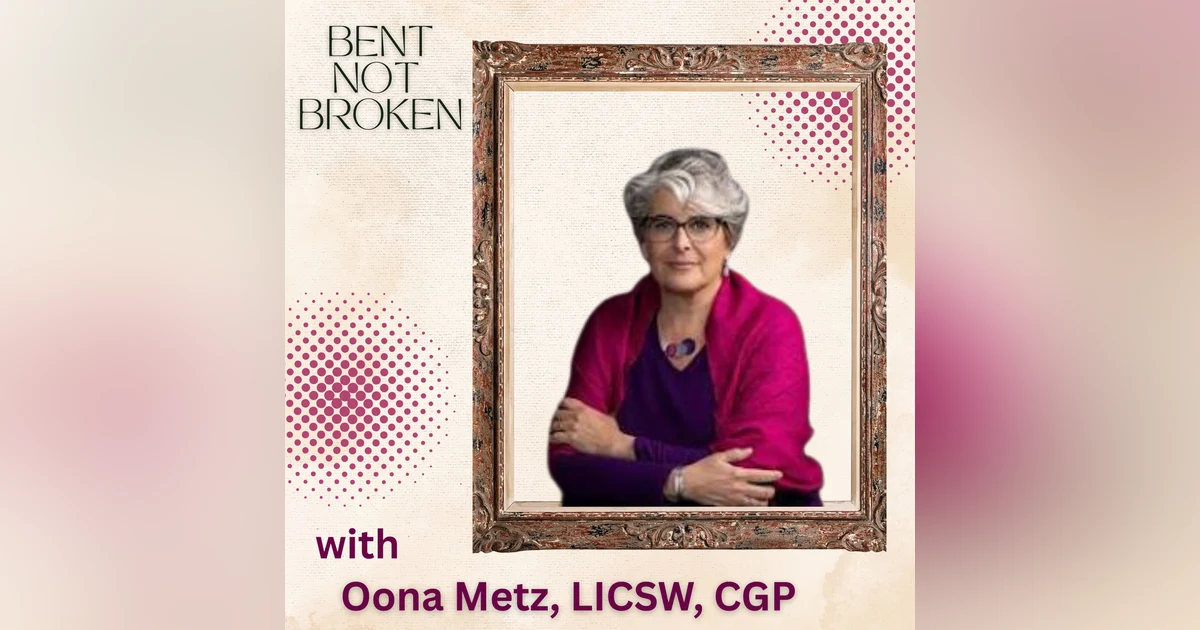


Today’s guest is Oona Metz, a licensed clinical social worker, certified group psychotherapist, and Fellow of the American Group Psychotherapy Association. With 30+ years of experience supporting women through major life transitions, Una brings deep insight into one of the fastest-growing divorce trends: gray divorce.
We explore why divorce rates for couples over 50 have doubled, how identity shifts after decades of marriage, and the hidden losses many women grieve—from retirement dreams to changing family traditions. Una explains why women often carry guilt about “wasted years,” how to reframe long marriages with compassion, and why financial fear is so common in later-life separation.
Oona also shares powerful guidance on:
- Navigating adult children’s reactions
- Rebuilding confidence and emotional autonomy
- Dating again—or choosing not to
- Creating new traditions and chosen family
- Turning gray divorce into a catalyst for growth and reinvention
We also discuss her new book, Unhitched: The Essential Divorce Guide for Women, which offers emotional tools, financial guidance, and real-life stories to support women at every stage of the divorce journey.
If you’re navigating life after divorce—or supporting someone who is—this episode is packed with wisdom, validation, and practical steps for rebuilding your next chapter with clarity and strength.
Learn more at oonametz.com.
💬 Enjoyed this episode of Bent Not Broken: Life After Divorce with Deborah Griffiths?
Don’t forget to rate, review, and subscribe on Apple Podcasts and Spotify so more people searching for life after divorce, divorce recovery, co-parenting, dating after divorce, and healing from gaslighting can discover this empowering podcast. Every review helps others find hope, inspiration, and practical tools for thriving after divorce.
🌐 Explore more resources: Visit BrokenToBoldness.com
for coaching, workshops, and guidance on divorce recovery and life transitions.
📲 Follow Deborah Griffiths for daily empowerment and support:
- Instagram: @BrokenToBoldness
- Facebook: Broken to Boldness
- LinkedIn: Broken to Boldness
✨ Remember: divorce may bend you, but it does not break you. You are stronger than you think, and your bold new chapter starts now. ✨
Welcome to another episode of Bent Not Broken. Heartbreak and trauma may feel like the end of your story, but here it's the beginning of a bold new chapter. I'm your host, Coach Deborah Griffiths, and this is the space where women rise, rebuild, and rediscover their purpose. Remember this truth. You are bent, not broken. Today's guest is a powerhouse in the world of mental and emotional wellness. She's a licensed independent clinical social worker, a certified group psychotherapist, and a fellow of the American Group Psychotherapy Association, with more than 30 years of experience helping individuals, families, and groups navigate life's major transitions. She specializes in supporting women through life's turning points, whether it's stepping into a new career, ending or beginning a relationship, becoming a parent or an empty nester, or coming out to family and friends. She believes these transitions aren't just challenges, they're powerful opportunities for insight, healing, and meaningful change. Welcome to the show, UNAMET. Thank you so much.
SPEAKER_01I'm really pleased to be here today.
SPEAKER_02Great. I want to turn our discussion today to what's now being termed gray divorce. And it seems to be happening almost 40% of divorces now are occurring with couples that are age 50 and older.
SPEAKER_01That's right. Yes, the rates of gray divorce have really skyrocketed in the last few decades. The rates for gray divorce for people over 50 have doubled, and for over 65, they've tripled. And I've certainly seen that in my practice. In fact, just in the last two days, I've gotten two calls from women in their 70s.
SPEAKER_02How does gray divorce challenge a woman's sense of identity when so much of her adult life has been defined by marriage, caregiving, and possibly shared roles?
SPEAKER_00Mm-hmm.
SPEAKER_01Yeah, I think for people who've been married for a very long time, some people who are getting divorced after 60 or 70 have only been married for less than 10 years, but many of those people have been married for their entire adult lives, right? For longer than they weren't married, right? If they're in their 60s, they might have been married for 40 years. It is a huge shift in identity as well as in terms of finances, but it's an enormous shift in identity.
SPEAKER_02Why do you think this is occurring more now than say maybe even 10, 15 years ago?
SPEAKER_01I think partly it's because we're all living longer. Some people are saying if they still have another 20, 30 good years left, they're not necessarily, they don't necessarily want to spend it with their spouse. I think also people are having kids later. And so kids are going off to college when people in the old days, kids went off to college and people were still in their 40s. But now a lot of times people are in their 50s when kids go off to college, and we know that's also a big time that divorces happen. And with the, you know, in happening right alongside the empty nest phenomenon, right? I also think women are making more money and able to support themselves. And so they are oftentimes the one who's deciding, I don't want to do this anymore. I can make it on my own. In the old days, women had to have a partner in order to afford to live in a house and support themselves. But now that's less and less true.
SPEAKER_02And it also goes back to the 70s or 80s when women could finally get a checking account in their own name, not having the mail to be on the account with them. I think more women have the ability now to get loans. And more women have entered the workplace in the last 15, 20 years, even when I got married back in the late 70s. Times have definitely changed. Many women stay because of time invested. How can women in long-term marriages release the guilt or shame that's tied to the wasted years and reframe those years as meaningful, even if the marriage ends?
SPEAKER_01Well, it's very rare that somebody has a long-term marriage that's just bad every single minute of every single day. So I think recognizing the good things that came out of that marriage is a helpful reframe. Like a lot of women will say, uh, my marriage didn't work out, but I'm so glad that we did have these kids or we did have some good years together. There's something called the sunk cost fallacy. Um, this idea that just because you've spent all this time or investing in something, you should continue to invest in it. But that doesn't actually make sense. You should invest in it if it's good for you in the present and in the future, not just if you have already invested in it, right? If you think about, well, I've had this car for 20 years, it's been a good car, so I keep putting money into it, even though it's not working for me, right? We don't do that. And I think oftentimes it's hard to leave a long-term marriage. And so people think, well, I've put so much time in, I guess I should stay.
SPEAKER_02In gray divorce, what are the hidden losses women often grieve, such as shared retirement plans, social circles, future expectations, and why are those losses sometimes harder than the divorce itself?
SPEAKER_01Oftentimes in a long-term marriage, if people get to the point of having a divorce, it may be that the marriage has not really offered them much anyway, but they do like the role. People like the role of being in an intact family. And that's a huge loss, oftentimes, that people are giving up. If you have the holidays, if you're the person who hosts the holidays and the kids and the grandkids all come over, it's nice to think that you're in an intact family and hard to go with the loss that might happen if you're in two houses now. You know, subscribe to this myth that we're gonna grow old together, right? And nobody really knows what's gonna happen in the future, but we believe this myth that we're gonna be together and spend our aging years together. And sometimes that works out and sometimes it doesn't, but kind of giving up that sense of a future together can be another kind of hidden loss in gray divorce.
SPEAKER_02It all goes back to that illusion or what society expects. We grow up, we're expected to kind of meet our Prince Charming or whoever, our partner, and get married, have the two kids, have the white picket fence, and life is happily ever after. That's not the case.
SPEAKER_01For well, we know that 50% of marriages end in divorce, and so many people, that is not the case. And yet I think everybody still thinks when they get married that they'll be the ones to beat the odds, right?
SPEAKER_02We all hope that anyway, but life sometimes doesn't happen that way.
SPEAKER_00That's right.
SPEAKER_02How does divorcing later in life change the relationships with the adult children and what boundaries are important when children expect parents to stay together for the family's sake?
SPEAKER_01Hmm. That's a great question because there's so much out there about how divorce impacts little kids, about custody agreements and how to tell the kids you're getting divorced and all of that. But I think there's so much less written about dealing with an adult child of divorce, and they're impacted too. I've seen that play out in two major ways. One is sometimes adult children are worried about their parents in a new way, um, worried about them being alone, worried about what's going to happen to them if they're not with a partner or how the divorce will impact them. Sometimes, if the divorce happens because of what I'll call naughty behavior, if the adult children know about that, they could have a lot of feelings in gray divorce. There's more likely that people might share some details with adult children. Sometimes I've seen cases where the adult children are very angry with one of the partners if there's an affair or if there's financial or emotional abuse happening. What's really important in gray divorce is to model to the children that you yourself are getting help, you know, that you're getting support so that they are not worried so much about you and that you're showing them that when you go through something hard, the most important thing to do is to get support for yourself. So hopefully they will too, and inevitably when they go through something hard in their life.
SPEAKER_02That's a great point. Another aspect is financial fear. What unique emotional challenges arise when women face that financial reorganization, the retirement uncertainty or even reduced earnings years after a long marriage?
SPEAKER_01Yeah. I mean, that is very real, right? And I think is a really good reason why women need to have a good attorney and a good financial person who can guide them rather than making all those decisions themselves. You know, it's still the case that a lot of women are not the ones who are in control of their finances or in charge of their finances in a marriage. And what I've found is that women oftentimes have a lot of fear about finances and how it all works and what to do. What I say to them is hire somebody that's going to help you with this. You know, you're not going to do your own plumbing, right? You hire a plumber for that. It's not that you have to know every single skill. If you need some electrical work done in your house, you hire an electrician. If you break your leg, you hire a doctor to fix it, right? Same thing with finances. I think you don't have to go get an MBA or understand the difference between stocks and bonds and all those things, but you could hire somebody that can explain it to you and take care of it.
SPEAKER_02How can women distinguish between divorcing because they're truly ready versus feeling pressured by circumstances such as health or aging or the sense that time is running out?
SPEAKER_01That's a good one. I've I'm a therapist and I've worked with hundreds of women who've gone through divorce because I specialize in it in my practice. My experience is that women do not act on divorce impulsively at all, especially women in later life. It's only after years of trying to improve things that women decide that they want to initiate a divorce. I think it's a very personal decision. It's up to each person to decide what they want to do and how they want to spend their time. Um I mean, I think we do know in terms of health, the research in terms of health is pretty upsetting in that when uh women have a very significant health crisis, which is more common as we get older, 22% of the time their husbands leave. Wow. There's a huge number. And the reverse is not true. When uh men have a major health crisis, 3% of the time women leave. So that's also another factor in terms of grade. You're more likely to have a major medical event happening the older you get. And if you are a woman who's married to a man, there's a 22% chance that he's not going to stick around for your medical care. And so that's another factor in terms of gray divorce. A very sad one, I think.
SPEAKER_02Yes, because I'm thinking of part of the wedding vows, you know, till death do us part, and sickness and in health until death do do us part. You've made this vow and yet you leave.
SPEAKER_01Well, I think women have been the caretaker when the caregivers for much of the marriage, and men can't adjust to that shift.
SPEAKER_02Very much part of the women, you know, our makeup. We have a tendency of being caretakers and caregivers comes more naturally to us than probably a male to a woman.
SPEAKER_01Yeah. I think it's more natural and it's a societal expectation, you know, that's kind of baked into society right now. I think we are beginning to change that, but the change is coming very slowly. Whereas I think women's women have been able to make big strides in terms of income and career. I think the caregiving has come more slowly in terms of equality.
SPEAKER_02Now you've recently written a book and it's soon to be released. Tell us about it.
SPEAKER_01Oh, thank you for asking. My book is called Unhitched the Essential Divorce Guide for Women. We have parts in there about gray divorce. It really stems from my work leading divorce support groups for 15 years. Continue to lead three groups every week in my practice outside of Boston. And I've learned so much from leading all of those groups that it was time to write a book. It's finally coming out.
SPEAKER_02I have to admit, I've started reading it. I got an advanced copy, and I like it. You offer so much practical advice. And it doesn't matter how old you are or how young, it is applicable, even from what you're talking about, the finances, retirement, things of that nature. But I also love the stories you put in there. And it is so very relatable. So thank you for that. I think it's going to be a good read and a very good resource for anyone considering or wanting to go through a divorce.
SPEAKER_01Thank you. It was very important for me to include vignettes of women who were getting divorced because I think divorce can feel really isolating. People can feel very alone with it, even though the divorce rate is so high. The stories are ways of helping women feel exactly like what you said, that they can relate. They're not alone. They're not the only ones going through this.
SPEAKER_02How does your book, How Women Reframe the Fear of Being Alone Later in Life, into an opportunity for self-trust, peace, and emotional autonomy?
SPEAKER_01Great question. I believe that divorce is both something that's very heartbreaking and stressful. And I think if people do the steps of grieving that I've outlined in the book, there can be an incredible opportunity for growth, healing, and transformation. In marriage, women are very accustomed to thinking about what everybody else needs, what their spouse needs, what their kids need, what their boss needs, you know, what their neighbors need. And I think divorce offers an opportunity for them to really think about what it is that they need, what they want. And that can be very transformational.
SPEAKER_02It is, because so often we put ourselves on the back burner. And I'm the first to raise my hand on that one. And to have that transformation, that mindset shift, thinking, oh, it's time for me. What do I want?
SPEAKER_01That's right.
SPEAKER_02Where do I want to go? Where do I see myself in five years, in 10 years? Where do I see my health? And what areas do I need to work on?
SPEAKER_01Yep. And in the book, I provide exercises so that people can really reflect on exactly those kinds of questions and more and really think about, spend time for themselves thinking about what it is that they want and need in this phase of life. So yeah.
SPEAKER_02What mindset shifts are necessary when approaching dating or even choosing not to date after a long-term marriage, especially when trust was broken or the confidence feels fragile?
SPEAKER_01Mm-hmm. Great question. So here's what I have seen in my practice. Some women tell me they never want to date again. They're done. They just really like their freedom. They like getting to do whatever they want to do on their own schedule, and they just feel like they don't want to pick up anybody's dirty socks ever again. They have great friends, great family, great activities, maybe a great job, and they are perfectly happy to be like that. I always say that is great for now. That might be forever, and you might change your mind in the future, and that's okay. All of those things are okay. Then I have another subset of women who say, I want to date, but I don't want to live with anybody anymore. I'd like to find somebody that we could go out to dinner together, maybe we travel companion, like a companion. And maybe it's a romantic companion, maybe it's not, but not somebody that they're gonna live with. Vicki Larson wrote a great book called Living Apart Together. And it's about being in a relationship where you're together, but you live in separate homes. And that works for a lot of women. And then there are some women who say, Oh, I want to date. I've got years left, and I love the romance and I love the dating and being with somebody. So one of the things I would say is just if you're in that category, make sure that you have enough time between your divorce and dating because your heart is very tender. And sometimes what I've seen is if people are dating too quickly, the first breakup comes, even if it's not a breakup, even if it's like we had two dates and then he never called me back. That can feel very, very painful. Just because your heart is pretty tender when you've gone through a divorce. So I just caution people to take their time. Date yourself first before you date other people, is what I'd say.
SPEAKER_02I love that. I love that. How can women create a new definition of family after gray divorce, particularly when traditions and holidays and maybe even extended family dynamics are disrupted?
SPEAKER_01Mm-hmm. That's a great question. And that's one of the hidden losses in gray divorce, is that sometimes people lose their in-laws, you know, even if they've been very connected for years. Sometimes the in-laws can't stay connected, and that can be sad. I think it's important during the holidays to think about what traditions you want to keep that you really love and what new traditions you want to make. I think if you just look at it as, oh my God, we've lost this tradition or that tradition, if it's just about loss, then it's going to be a lot harder to get through the holiday. But if it's about thinking about the things you really still appreciate, and then thinking about new things you want to do and making new traditions, I think that is really important. And our definition of family has really expanded. We have biological family, we have adopted family, we have stepkid family, and we have chosen family. And your chosen family can be your friends, right? Or your neighbors. So important to figure out the people in your life that make you feel good, that you have fun with, and build some traditions with them, whether they're biologically related or not.
SPEAKER_02Great answer. In what ways can gray divorce become a catalyst for growth, purpose, and reinvention? And how does this stage of life uniquely support deeper self-awareness and clarity?
SPEAKER_01Great question. As we were saying before, there is a way in which the divorce can offer an opportunity to think anew about what it is that you want because you're not going to be spending so much time thinking about what your spouse needs and wants. So there really is a way for you to shift the focus back onto yourself and do some of that work, which I think is very important. I think also with people who are getting divorced who are much younger, sometimes they are looking for somebody to date somebody who's going to be a parent to their children to step in as a step parent role, or if they haven't had children yet, to have children with. But in the older years, you're not looking for a parent or a step parent for your children. You can really be looking more for just somebody who's just for you, right? And if you are not interested in dating, then I think it's a wonderful time to take that energy that you did spend in your marriage and figure out what hobbies you want to do, what volunteering you want to do, maybe what next steps you want to do in terms of your career. So there can be a lot to offer there.
SPEAKER_02Thank you so much for sharing your insight on gray divorce. How can the listeners purchase your book or pre-order your book and maybe get to know more about you and your work?
SPEAKER_01Well, I think by the time this podcast airs, the book will be out and available wherever books are sold. Amazon, Barnes and Noble, Target, and any local independent bookstores. I also have a website, unamets.com. It's o-o-n-a-m-e-t-z.com. I have free resources on my website, podcast episodes and essays, and free legal and financial resources. So I really encourage people to hang out on my website and get all the information you need and get in contact if something inspires you. Great.
SPEAKER_02And for my listeners, I do encourage you to check out her website. And if you are in the process of a divorce or get a divorce, get her book. She's got a lot of practical advice. Thank you, Una, for joining us today. Really appreciate the conversation.
SPEAKER_01Thank you so much for having me.
SPEAKER_02Thank you for listening to today's episode of Bent Not Broken. I hope that this episode reminded you that even through life's toughest moments, you are bent, not broken. If this message inspired you, please share, rate, review, and subscribe, as it helps us reach more women who are ready to rise and rebuild. And until next time, keep living bold and walking in your purpose.