Starting Over After Trauma: How to Heal, Rebuild Confidence & Find Your Voice Again | Caralyn Dryer


What if the moments that nearly broke you were actually the beginning of your healing, recovery, and purpose?
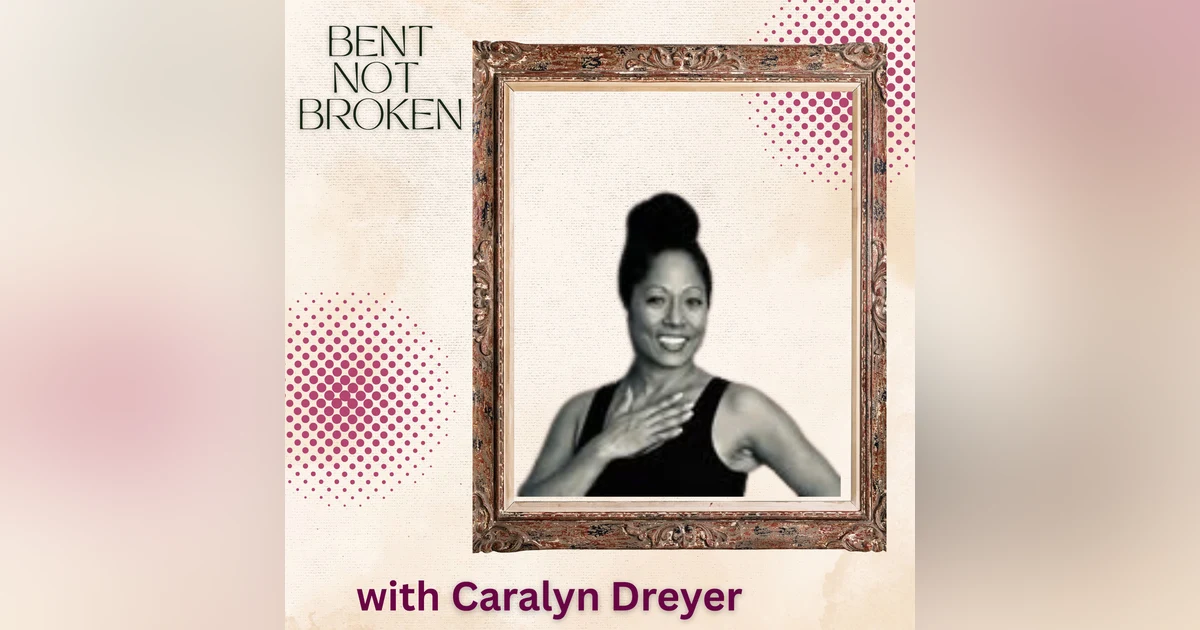
In this powerful episode of Bent Not Broken, Coach Deborah sits down with Caralyn Dryer for an honest and deeply emotional conversation about surviving trauma, rebuilding life after emotional pain, and reclaiming your identity after everything falls apart.
Caralyn shares her personal journey through sexual assault, domestic violence, anxiety, depression, emotional trauma, and a suicide attempt — and how she slowly learned to heal, rebuild confidence, and move beyond survival mode.
For many women navigating divorce, emotional abuse, trauma recovery, or major life transitions, healing can feel overwhelming and nonlinear. Caralyn explains why emotional recovery is not about becoming a completely different person, but about reclaiming the parts of yourself that were lost through pain, fear, shame, and survival.
Through her work in forensic psychology, blogging, and podcasting, Caralyn now helps others navigate emotional healing, mental health recovery, and rebuilding life with greater resilience, honesty, and purpose.
What You’ll Learn in This Episode
- Why healing after trauma, divorce, and emotional abuse is not a straight line
- The difference between surviving life and truly beginning to heal
- How emotional trauma, anxiety, and depression can keep people stuck in survival mode
- How to recognize when coping mechanisms are no longer helping you heal
- Practical tools for managing emotional triggers, anxiety, and self-doubt
- Why self-talk and self-compassion are essential for rebuilding self-worth
- How to reclaim your identity and confidence after trauma or divorce
- Why expectation management is an important part of emotional recovery
- How to stop living for other people’s approval and reclaim your voice
- The truth about living well while continuing to navigate mental health struggles
Key Takeaways
- Healing requires intentional choices, not just awareness
- Recovery after trauma and divorce happens one step at a time
- You are not broken — you are rebuilding after emotional pain and survival mode
- Hope grows when you acknowledge your past while reclaiming your strength
- Starting over after trauma can become the beginning of a more authentic, purposeful life
This conversation is raw, hopeful, and deeply validating for anyone trying to heal after life falls apart emotionally and searching for a path forward with courage, resilience, and hope.
Connect with Caralyn Dryer
- Find Caralyn on Instagram and LinkedIn
- Access her blog Darkness to Dialogue and podcast Through the Darkness via her social links
Enjoyed this episode of Bent Not Broken: Life After Divorce with Deborah Griffiths?
Don’t forget to rate, review, and subscribe on Apple Podcasts and Spotify so more people searching for life after divorce, divorce recovery, co-parenting, dating after divorce, and healing from gaslighting can discover this empowering podcast. Every review helps others find hope, inspiration, and practical tools for thriving after divorce.
Explore more resources: Visit BrokenToBoldness.com
for coaching, workshops, and guidance on divorce recovery and life transitions.
Follow Deborah Griffiths for daily empowerment and support:
- Instagram: @BrokenToBoldness
- Facebook: Broken to Boldness
- LinkedIn: Broken to Boldness
Take the Living Bold Assessment
Remember: divorce may bend you, but it does not break you. You are stronger than you think, and your bold new chapter starts now.
Disclaimer: The commentary and opinions available on this podcast are for informational and entertainment purposes only and not for the purpose of providing legal or psychological advice. You should contact an attorney, coach, or therapist in your state to obtain advice with respect to any particular issue or problem.
Welcome to another episode of Bent Not Broken. Heartbreak and trauma may feel like the end of your story, but here it's the beginning of a bold new chapter. I'm your host, Coach Deborah Griffiths, and this is the space where women rise, rebuild, and rediscover their purpose. Remember this truth. You are bent, not broken. What if your darkest moments didn't define you, but instead became the very foundation of your purpose? Today's guest, Carolyn Dreyer, is a mental health recovery advocate, writer, and survivor who has turned profound pain into powerful impact. Having lived through trauma, including sexual assault, domestic violence, and a suicide attempt, Carolyn now uses both her lived experience and her academic background and forensic psychology to help others navigate anxiety, depression, and the complexities of healing. Through her blog, Darkness to Dialogue, and her podcast, Through the Darkness, she shares a deeply honest and hopeful message. Recovery isn't linear, but it is possible, and it can be meaningful. Guided by her five pillars of recovery, Carolyn is empowering others to rebuild, rediscover their identity, and learn how to live well, even in the presence of ongoing challenges. This is a conversation about resilience, truth, and finding your voice, even when the journey feels impossible. Welcome, Carolyn, to Bent Not Broken. Hi, Deborah. Thank you so much for having me. Glad we could finally catch up. Absolutely. You've been incredibly open about your experiences. What was the turning point that led you to share your story publicly?
SPEAKER_00There were a couple of turning points. One of the major turning points was a couple of years ago. I want to say it's getting to be maybe three years ago, the passing of Mike Filese from the Suffering Podcast. He passed away from suicide. And I had never had the chance to meet him in person. But the first time I shared about my sexual assault on Instagram, he had been really supportive and said, you know, if you ever need to talk, I'm here for you. You're so brave. Keep telling your story. And when he passed away so suddenly, it really hit me really, really hard for some strange reason. I would guess because of unprocessed grief and things of that nature. But his passing made me not want to ever be in that dark place again, but also share some of the things that I've been through so that someone else maybe can get out of that dark place or avoid it. Once I started sharing my story, I was like, I know that there's at least one person out here that can relate. And that's the one person that I would like to show them some light and hope. And then my son, of course, is always a motivating factor for me, especially when it comes to mental health. I want him to be able to remember me one day for having been resilient, not having given up. I just want to set a good example. I really try to practice what I preach in terms of like being a mom, but certainly even with sharing my story, like a lot of the tips and stuff that I give are things I use myself. So yeah, it's been a great journey thus far for sure.
SPEAKER_01Now you survived trauma, including sexual assault and domestic violence. How did those experiences shape your understanding of mental health and recovery? Oh my goodness.
SPEAKER_00I strangely enough, I think after I survived the sexual assault and the domestic violence, I really didn't make a connection with mental health. I mean, I knew I was experiencing anxiety and depression as a result of those things, but I didn't really understand how mental health is tied into the healing process. When you think about physical health, you go take care of the wound or an injury, while trauma is kind of like an injury to your mental health and your nervous system. So when I decided to really dive deep into the healing process, which for me was getting out of two decades long worth of just being stuck in like the self-awareness phase, like I was totally aware of the impacts that like the domestic violence had on me. I couldn't trust people, you know, like the depression, the anxiety. So I just realized that there is such a connection with that mental health. And when you get beyond the point of self-awareness and you start using the tools to help maintain your mental health, it just kind of all fits together. I think there's so many misconceptions about mental health out there. And people just now are realizing it's intertwined into everything, even if you haven't been through trauma. Everybody has physical health, everybody has mental health. It's just a matter of if you're mentally healthy or mentally ill, just physical illness and things of that nature.
SPEAKER_01So I want to go back to something you just said. You went through two decades of self-awareness.
SPEAKER_00I knew how the traumas had impacted me. I knew that, let's say I could be quick to become irritable because of some of the trauma, but I never was taking that next step to try to overcome that stuff. I knew I needed to heal, but I guess I just it took me a really long time to determine the tools that I needed and to even realize that I have been living in survival mode. So the skills that I had weren't working with the healing process. They were working with the survival mode. So I guess in my mind, I figured that me being in survival mode and still going to work and doing this and that was me healing. And I was like, okay, aside from flashbacks and stuff like that. So I just was just stuck and always wondering why I am not ever progressing. And it's because I wasn't recognizing that the tools I had were not meant for that part of the journey. It was meant for the next step.
SPEAKER_01You speak about living with anxiety and depression. What does living well with mental illness look like for you today?
SPEAKER_00What I was thinking about how far I've come when it comes to, for example, if I get triggered by something, I now face those things head on, but I look at those things as signals right now. Instead of getting more so wrapped up in the feelings that come with it, I recognize that if I am getting triggered by certain things, this is kind of indicating that maybe there's some stuff I didn't really address properly that I thought I did, or just facing things head on is me living well. As scary and as uncomfortable as it is, I have to say, embracing the discomfort is me living well. It sounds like the opposite, because you wouldn't think that you living well is associated with challenges and obstacles. But I think I'm so used to avoidance and distraction. And I wasn't living well that way, clearly, because things were resurfacing over and over again. Now I'm living well because I'm addressing those things because I do have those tools to make it through a panic attack. Or if I'm having like a rough day with depression, I now know little steps that I can take instead of always trying to reach for those bigger steps. It's those tiny steps like matter the most.
SPEAKER_01So living well is not necessarily living easily. Yeah, exactly. Yeah, that's a good way to explain it. It's just when life happens and it does every day. Sometimes the moments are good ones, and sometimes they're not so good. But when they're not so good, it's having the tools and the toolbox to get you through it.
SPEAKER_00And I mean, I always knew about journaling and meditation and the importance of like fresh air and stuff like that. But because I was able to just keep living life in survival mode, I figured, well, as long as I'm not like biting someone's head off or, you know, making terrible life decisions, I guess these tools are working for me. But that's what happens when you've lived in survival mode. I figure I've probably lived that way for at least 20 years. I'm 44 now. I wouldn't doubt if I developed some of that survival mode in childhood, even because of being adopted and some of the racial issues that I dealt with. So it's all about understanding that sometimes the tools you've been using for years and years and years sometimes just aren't working.
SPEAKER_01When did you really realize that those tools weren't working and you needed to retool the toolbox? Oh man.
SPEAKER_00That's a good question. Because again, it's like the times that I wasn't doing so hot, it's not like I didn't know. I was just good at making sure other people didn't know. So I had to, I guess honestly, I think it's just a matter of I'm at that age now where I just I don't want to waste time on specifically things that aren't good for my mental health. For example, my own family is not a safe space for me mentally. And I've had to distance myself from that situation. So it's just it's a tricky, it's a tricky thing.
SPEAKER_01Sounds like it's learning to be in tool with your thoughts and your feelings.
SPEAKER_00Yeah, I think a couple of years ago, one indicator, I had made a really big mistake that hurt somebody. And I was really angry at myself. And I remember that night looking in the mirror and telling myself, I hate you. That was just being so terrible to myself. And while I was doing that, I was like, what are you doing? This is crazy. Like, why are you telling yourself you hate yourself instead of recognizing that you're human, giving yourself some grace? You know, people make mistakes. But I think I've had little moments like that where instead of engaging in that and going down a spiral, I now recognize, whoa, you shouldn't be speaking to yourself this way. This is counterproductive. We've been doing this this far, and it's not been working out so hot. So it's time to change that stuff around a little bit.
SPEAKER_01So part of the healing for you is putting that pause button on sooner rather than later to be able to step back and say, whoa, whoa, whoa, look in the mirror. Yeah, I I like myself. Yes, I made a mistake. But I'm a good person.
SPEAKER_00Yeah, absolutely. And I think the whole self-talk thing has always made, like I talk to myself a lot. We all do, you know, like, oh my gosh, I forgot the trash or whatever. But the part about telling myself, like, you're nice, you're kind, you're this, you're that, that was always so awkward and uncomfortable, even in my own company. And that's like a huge red flag there when you're not even okay with your own company unless you're beating yourself up. Like that's a huge problem. And even to this day, it's still kind of awkward for me to tell myself positive things because it's an uncomfortable thing. I tar I'm getting used to taking compliments years. Someone would comment, oh, your outfit looks nice. Well, of course, my response is, oh, well, not really. Instead of just saying thank you. I didn't start doing that until like my 30s. People were like, Carolyn, just say thank you. So yeah, it's it's all these awkward things. It's like reparenting yourself as an adult in a lot of ways. Like teaching yourself new things is just so it's different than teaching yourself to build a house or finish this puzzle. It's just so weird to teach yourself how to be kind to yourself because you would hope that at some point you would already know that, but some people just don't learn that until later on in life. Right.
SPEAKER_01One of your core beliefs is that healing is nonlinear. Can you walk us through what that really looks like in real life?
SPEAKER_00I think one of the biggest misconceptions that I had about the healing process was that once you tackle a challenging time or an obstacle, that's it. Like you're just gonna go on your merry way. And from that point on, I didn't really realize that healing is not a straight line for so many reasons. And one of them is a lot of times we're gonna have to take steps back, or we're gonna have something that maybe stalls our process for a little bit. It's a continuous process, but it's not a smooth one in that there's always gonna be those challenges, those bad days, those bad minutes. So I think that was one of the biggest things that I learned is, and it can be something as minor as like stubbing your toe, but it's like there's literally always gonna be something that might kind of hinder you in some form or fashion. So I think that's one of the main things. And another thing is I thought that you reached like an end point. Because I can remember a few years ago wondering why am I still feeling like this? Like I thought I reached the end and like I'm healed. And then you just, I don't know, like you just never have to deal with that stuff again. But that's the furthest thing from the truth. And again, I think it's important to remind your listeners also that the process is different for everybody. Although we do have similarities, one technique might work for this person, one person might be able to move on in one month, and someone might need the rest of their life. So you can't compare yourself to others. That can be a huge hindrance. I used to do that watching other content creators who went through similar things as me, and they were at the stage where they were able to share their story without crying, or they had these grand insights. And I used to be like, why did I miss? Like, why am I not to that point? But that's because that's not my journey, that's their journey. So there's so many different things, but I'm glad to be sharing my take or perspective on it because maybe there's someone out there that can relate.
SPEAKER_01Oh, absolutely. You emphasize that recovery is built on choices and not reactions. What are some small but powerful choices that helped you begin your healing journey?
SPEAKER_00A huge one was expectation management. I've spent pretty much all of my life under the assumption that you treat others the way you want to be treated. So I took that quite literally and saw it because I'm spreading kindness and being courteous and polite and not trying to screw people over or be evil, that that's what I was going to be receiving. Well, no, that's not the case. And once I realized that I can't expect me in other people, that really changed everything. Cause now, if something doesn't work out, I'm like, well, I wasn't really expecting it either way. But it's just easier for me to handle disappointments now that I'm able to manage expectations. And if I am disappointed, it's easier for me to just kind of look at it as a lesson or whatever it needs to be in that moment and then press on from that. So I think that's a big one. And then just not caring what people think. I've spent a lot of my life doing is really caring what people think. That's not to say I don't try to be polite and courteous. It's just if I want to share this part of my story and someone disagrees or they don't see that part of my story from the perspective as me, I just can't really care about that. Because if I care about that, then I'm gonna start censoring who I am and I'm gonna stop being authentic. So those are some big things that I've been discovering.
SPEAKER_01Do you think sometimes we think people are talking about us or thinking about us much more than they really are? And we give that person an essence power over us.
SPEAKER_00Yes. I deal with that actually with my social anxiety. That's a big thing. I had to start telling myself because I've struggled with body image issues for a good portion of my life and am in recovery from eating disorders, going for a simple walk without having baggy clothes on is so challenging for me because I think everybody's looking at me and judging my body. But first of all, the street I walk along is extremely a busy street. Most people are speeding. So by reminding myself that in a nice way of speaking, I'm not as important or as exciting to others as I think I might be. Not that I'm not a great person, but it's just everyone's got much better things going on in their life to really be concerned with A, that someone's walking down the sidewalk and B, who that person even is or what they even look like. Now, there are some mean people out there that have time in their day for those things. But generally, I do think that we walk around maybe being a little self-important sometimes. You got to find that balance between being confident versus being arrogant and thinking like, oh, everybody wants to hear from me and that type of thing. So yeah, I do think that that is a struggle for a lot of people, even myself.
SPEAKER_01Let's shift gears and we're talking about your five pillars. Rebuilding identity is one of your five pillars. How do you begin to discover who you are after trauma or mental health struggles? And tell us a little bit more about those five pillars.
SPEAKER_00I speak a lot from the standpoint of being a trauma survivor. You have to rebuild your identity in terms of, and here's the tricky thing with that is I'm realizing that a lot of who I am now as a more healed person, I have some of the same traits that I had when I wasn't as healed. So I think we shouldn't always necessarily be looking for a new identity, but we should recognize that some of the stuff from our past isn't bad. I've always had a sense of humor. Sarcasm is maybe not always an acceptable trait, but I've always been sarcastic. I've always been a kind person, I've always been respectful. So those things are not necessarily new. They've always been there. So I kind of like to think that we do take some of our former identities along with us because some of that stuff is just built into who we are as a person. And I think I talk a lot about the importance of like self compassion and again having that positive self talk and reminding yourself that whatever you're striving to be, or wherever you're trying to go, like it's okay if you're not getting there as fast as you thought, or it's okay if the plans changed and you have to take a different direction. Have to have that compassion for yourself because a lot of our journeys are spent on our own. Because when we're transforming and moving on to different phases in our life, we're letting go of for me personally, and I think a lot of people experience this, you're letting go of friendships, relationships, and things of that nature. And there's a lot of our healing journeys that we have to face on our own. My divorce was a perfect example. It was pretty much just me and my son and a couple of friends that I would talk to. But other than that, I was in charge of getting myself up every day and giving myself those pep talks.
SPEAKER_01You talk about hope and honesty coexisting. How do you balance being real about the struggle while still holding on to hope?
SPEAKER_00Well, for me personally, hope comes from me reminding myself of the things that I've survived. But in order to appreciate that I've survived those things, I have to be honest about what I went through and how it has affected me. I'll use my divorce again as an example. It took me a long time to be honest with myself with how I got in that situation, because there were two people in the marriage. Two people had to work to get it to this point. So, in order for me to be hopeful for the future, I had to be honest about what I'm coming out of so that I can learn those lessons. And anytime you're learning a lesson and you're able to overcome that, I feel like that translates into hope because the next time you find yourself, you know, maybe having to take a few steps back, you can remember, like, oh, that's right. I've already survived X, Y, and Z. I'm gonna survive this too. To me, that's hope, like knowing that you will survive whatever comes your way.
SPEAKER_01How has your work through your blog and your podcasts impacted your own healing journey?
SPEAKER_00I think just talking about things. I've always had diaries and journals. It's always been easier for me to do written communication than verbal communication. So I feel like it's just allowed me a different avenue to have like that confidence in my own voice. It's in this process, I've been embracing the sound of my voice literally and figuratively, because I have been such like a silent type introvert person who just was. I'm an overthinker when I talk. I there's probably very few people that get true organic like conversations from me because my mind is constantly, oh my gosh, am I looking funny? Am I making a weird face? Oops, I shouldn't have said that. So it's a learning process, actually. It's like a relearning to be a verbal person because I was so shut out from like friends and family for so many years that it's like a reintroducing myself like back into society. So it's a weird experience.
SPEAKER_01No, I understand and I can relate because even through my own podcast, I feel like I have finally found my voice. Yeah, so it sounds like you have found your voice that was silenced for so many years. Yeah. Due to the trauma and domestic violence. So, writing the podcast, the blog, you have found your voice.
SPEAKER_00Yeah, absolutely. And I think the biggest accomplishment of all is the podcast. Because, like I said, writing is my comfort zone, easily my comfort zone. But I was like, no, it's time to start speaking up. Like everyone else is speaking up out here. Why can't I? And I'll put it this way too, because I'm gonna backtrack and say that there was a point in time where I was very vocal, but it was not in a positive way. I was like misattitude, snapping at people. The sarcasm was running rampant during those days. So I will re-say that in that I'm learning to use my voice in a more balanced way. I either was going the people-pleasing route, or on the other end of the spectrum, I'm letting someone have it for cutting me off in traffic or whatever example you want to put in there. So I'm finding like a good, balanced, healthy, confident voice.
SPEAKER_01I love that. For anyone listening who may feel alone or overwhelmed right now, what would you want them to know about recovery and their ability to heal?
SPEAKER_00I would want them to know that recovery is possible. Believe me, recovery is possible. Even two years ago, I would have never envisioned myself being in the part of the healing process that I'm in, where I feel comfortable sharing with others. I feel comfortable talking to myself in a kind way. It's possible. I'll tell you what, there's been times where I was like, well, I guess this is all life has to offer me. Let's just embrace it, come what may, and just thinking like nothing could ever get better. A lot of that is we have to take ownership also. Now, granted, there are a ton of supportive people, heroes out there, if you will. But as the saying goes, you do have to be your own hero, and you have to be the one to decide that you want change and you want something different. But with that being said, you also have to understand that recovery is recovery. Um, recovery from drugs and alcohol, from eating disorders, from trauma. It's going to come with its setbacks, but with as many setbacks as you have, you're going to have just as many, if not more, happier, more healed times.
SPEAKER_01I would agree. Carolyn, this has been a great discussion. Thank you for joining the show. How can our listeners know more about you? Do you have a website? Get your blog, your podcast. I'll put all of the information in the show notes.
SPEAKER_00The easiest way is to find me on Instagram or LinkedIn because I have links to my blogs on there, my podcast. I have a link tree link on there. But the easiest way, honestly, to find any of my stuff is to go on social media.
SPEAKER_01Okay, perfect. Thank you again for being on Bench Not Broken and appreciate the discussion. Thank you for having me. Thank you for listening to today's episode of Bent Not Broken. I hope that this episode reminded you that even through life's toughest moments, you are bent not broken. If this message inspired you, please share, rate, review, and subscribe, as it helps us reach more women who are ready to rise and rebuild. And until next time, keep living bold and walking in your purpose.