Starting Over After Trauma: Healing Functional Seizures, Limiting Beliefs, and Life After Divorce
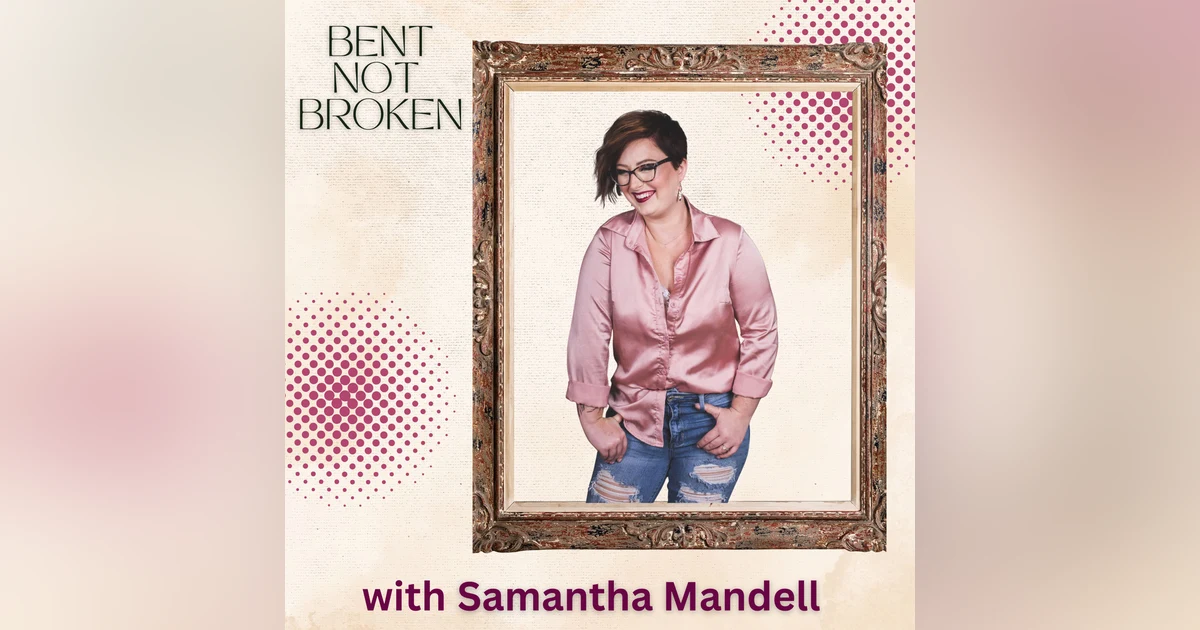


In today’s episode of Bent Not Broken, Coach Deborah explores a powerful starting over after trauma story with Samantha Mandell, whose journey through functional seizures (PNES) became a profound path toward healing after heartbreak, rebuilding identity, and reclaiming life.
Samantha shares how her life-altering diagnosis led her to Rapid Transformational Therapy (RTT)—a modality that accelerates emotional recovery, helps release limiting beliefs, heals broken relationships, and restores confidence in recovery. Her transformation inspired her to begin starting a podcast, step into her purpose, and help women navigate divorce healing, gaslighting recovery, and post-divorce life with compassion and courage.
In This Episode, You’ll Learn About:
- How unresolved trauma can show up as functional seizures
- Why the body holds trauma and how RTT shifts the subconscious for post-divorce healing
- How limiting beliefs formed in childhood affect life after divorce, dating, identity, and confidence
- The role of perfectionism in keeping women stuck in broken relationships
- How RTT helps rebuild worthiness, trust, and confidence after divorce
- What real transformation looks like when creating new beginnings after divorce
Samantha also shares lightning-round insights on navigating separation, establishing boundaries, finding post-divorce confidence, and remembering that even in hard circumstances, you are stronger than the pain.
This episode is a powerful guide for anyone seeking divorce recovery, divorce empowerment, healing after separation, or rebuilding identity after divorce—and a reminder that you are never broken, only becoming.
Connect with Samantha:
Ready to rebuild your life after divorce?
Join Coach Deborah’s Divorce Support Recovery Workshop on Eventbrite—your next step toward boldness and empowerment, emotional healing, and celebrating victories as you begin starting over with confidence.
💬 Enjoyed this episode of Bent Not Broken: Life After Divorce with Deborah Griffiths?
Don’t forget to rate, review, and subscribe on Apple Podcasts and Spotify so more people searching for life after divorce, divorce recovery, co-parenting, dating after divorce, and healing from gaslighting can discover this empowering podcast. Every review helps others find hope, inspiration, and practical tools for thriving after divorce.
🌐 Explore more resources: Visit BrokenToBoldness.com
for coaching, workshops, and guidance on divorce recovery and life transitions.
📲 Follow Deborah Griffiths for daily empowerment and support:
- Instagram: @BrokenToBoldness
- Facebook: Broken to Boldness
- LinkedIn: Broken to Boldness
- Divorce Recovery Workshop: Click here to register.
✨ Remember: divorce may bend you, but it does not break you. You are stronger than you think, and your bold new chapter starts now. ✨
Welcome to another episode of Bent Not Broken. Heartbreak and trauma may feel like the end of your story, but here it's the beginning of a bold new chapter. I'm your host, Coach Deborah Griffiths, and this is the space where women rise, rebuild, and rediscover their purpose. Remember this truth. You are bent, not broken. Today on Bent Not Broken, I'm joined by Samantha Mandel, a recovering perfectionist who turned a life-altering diagnosis of psychogenic non-epileptic seizures, otherwise known as PNES, into her greatest breakthrough. What began as terrifying seizures became the catalyst for healing, identity reclamation, and launching her podcast skirts up. Now a rapid transformational therapy practitioner, Samantha helps women release trauma, reclaim their power, and remember this truth. Your diagnosis is not your destiny. Welcome, Samantha.
SPEAKER_01Hi, thanks for having me.
SPEAKER_00Oh, you're very welcome. So let's dive in. You said you went from believing you had epilepsy to discovering your seizures were PNES.
SPEAKER_01If it's easier, we can call it functional seizures. This is another name for it, and it makes so much more sense.
SPEAKER_00Thank you. What was that moment like when that diagnosis changed? And how did it shift your healing journey?
SPEAKER_01That's a great question. It was devastating. When I was told that my husband was relieved, and he was like, this is the best possible outcome ever. And I was like, How is it the best outcome ever? It just feels like I'm on a whole new level of crazy. They're in my head, that's what's causing them. And it was isolating. The neurologists, once they diagnosed it, don't really give you any better suggestion on what to do next. So it was really on me to figure out who can help me through this and what does that look like. Can you describe what it is? Yeah, functional seizures are when you have compound trauma that you don't handle and don't process so your body can compile it up. A lot of times, people who get physical elements from PTSD or compound PTSD can get blindness, immobility. In my case, it was seizures. So what that is, it's basically the trauma your brain cannot handle anymore. So the next best thing is to shut down. That's how it presented in me.
SPEAKER_00Very interesting. There's a good book called The Body Keeps the Score. And it deals with past traumas, some that we may not even be aware of, but our body remembers it. It's a very interesting book. Now, you are a rapid transformational therapy or RTT practitioner. What exactly is RTT and how does it help? And did it help you?
SPEAKER_01Yeah. So I had gone through multiple therapies at the beginning to process through and get to a better place. When the seizure started, is when I started my podcast called Skirts Up. It was a hobby for me to talk with my friend and to talk through how lost I was. And then as we started having guests on, the guest would teach me something that I would really like, really dig into and grow from. And so it was through a guest on the podcast that led me to RTT. They were talking about their journey that led them to it. When I started looking into it, it was interesting. There's a synchronicity where something that you're meant to look into will keep popping up into your life in one way or another. So that's what synchronicity is. I had this guest, they're talking about it. Then a week later, I'd never heard of this before. And another person talks about how, oh, I tried RTT and it was really crazy and it helped. I was like, okay, well, there's a sign. So I looked into it and learned that rapid transformational therapy, it's a modality that was created by Marissa Pierce. And basically, it's a combination of multiple different types of therapy, differs from this modality to others, is a lot of times we'll spend years in talk therapy with our therapist trying to talk through the root cause and coping mechanisms. And it's great, but it can take a long time. It can take years. What I learned with rapid transformation or what about it is that you don't have to know exactly what it is that you're working on. We're going to go into a light state of hypnosis. It feels no different than when you're driving down the road and then you get to your destination. You're like, oh crap, I how did I get here? It's just that simple. And we'll regress and ask your subconscious mind where your binge eating came from. And you'll be surprised at what your subconscious mind will remember and tell you. Your subconscious mind makes up 95% of your memories, all of your emotions and your beliefs. So it's a big deal.
SPEAKER_00I've heard that about our subconscious. So this actually expedites the talk therapy then? 100%.
SPEAKER_01Yeah. You can resolve many issues in as little as one session.
SPEAKER_00Many of our listeners are familiar with trauma, but maybe they don't understand limiting beliefs. What exactly are limiting beliefs and where did they typically form in our lives?
SPEAKER_01Limiting beliefs are basically what shapes you. So your mind works by basically habits, what you see over and over again. For instance, a lot of your listeners, myself included, I'm not divorced or haven't been divorced, but I've been in relationships that's that's very similar. When you get divorced, you wonder, how did I get into this relationship? How did I fall for this? How did I not see signs? What you may not realize is that a lot of what you saw in your parents gave you the belief that these behaviors are comfortable. Maybe it was a very close family member, or how your mom and your sister interacted to where your internal belief system is that's normal, that's safe. And you unlearn a limiting belief. That's the magic of neuroplasticity. Our brains learn by repetition, even though our brains have been programmed to believe that things like narcissistic behaviors are normal and safe, we can, by repetition, reprogram our brain to unbelieve that and believe in the healthy aspects.
SPEAKER_00Now, how long does it take to unlearn a limiting belief? Because they say 21 days that you create a new habit. Does that work for the same? An unlimiting belief?
SPEAKER_01Yeah, it's so funny. When before I got married, we were in premarital counseling, and something that always stuck in my brain was I remember the premarital counselor said, three weeks makes a habit. And so I've always tried to just go off of that. And then when I started the RTT process, again, that is an actual scientific study that it takes 21 days, three weeks to change your habits. So during our session in RTT, we will go and visit. It's called a regression. We'll go visit three important scenes in your life that maybe you don't even realize were that impactful. We'll talk through those and you'll the client will come up with the connecting beliefs, like what happened and what did I feel in all of these scenes that have led to my presenting problem today, and we'll shift that belief and realize that that's not who you are today, and drop that. And then we will create a recording. This recording is custom-made to you and what we talk about and what you see. And you listen to this recording once to twice a day for 21 days because your mind creates what it sees. Your body follows what your mind sees. So the point is the more you hear, the more positive things that you want to replace it, your body's gonna respond and your mind is going to be familiar with that, and that's what you're gonna seek.
SPEAKER_00So it helps make that mindset shift to being, you know, to like I am enough, I am worthy of these things that might lead to unlimiting beliefs.
SPEAKER_01So for instance, one of the biggest things that I saw the differences is through my seizures, not quite understanding them. And when you have these kind of symptoms caused by PTSD, a lot of times your brain does not have the proper connection to emotions. So what was really hard figuring out what was going on was they'd be asking me, what triggers this? Like, you must be stressed right before these happen. I'm like, no, I'm not stressed. I'm really calm. Like, I don't know. Then had to realize that I don't know that I'm stressed. Things start moving slower. I can see people talking to me, but I don't know what they're saying. Those are the signs that I had to pick up on. Flashing lights, that's a really big stimulation that would trigger that as well. It's shocking and it just would trigger one. It limited what I could do because I would think, okay, my friends want me to go to this concert with them. I really, really want to go to this concert, but there's gonna be big flashing lights, really, really loud music. I'm gonna be embarrassed because I'm going to fall and I'm gonna have a seizure in front of all these people, the concert's gonna stop and it's gonna be embarrassing. And because this is the whole image that I've made in my mind, when I go to that concert, that's exactly what's gonna happen. But if I think I'm gonna go to this concert, I'm gonna have so much fun, the lights are gonna be beautiful, and we're gonna have a great night. It doesn't happen. And it's been proven it hasn't happened.
SPEAKER_00So, how do some of these unresolved emotions or trauma get stored in our body? You mentioned seizures. What else can it do to us physically?
SPEAKER_01There's been lots of studies, psychologists have found uh blindness. And actually, a neurologist that we had on my podcast and her own family had one family member become blind, and one family member that also started having the seizures. Other things that can occur are there's been studies of a limb being unable to be used. So they can't figure out through x-rays, and and it's perfectly fine. So there was one individual that really the only thing they could think of was amputating a healthy arm that they couldn't figure out what was wrong with it, and as a last-stitch effort, went to a psychologist to talk through what could possibly be happening. And yes, it was because of a traumatic event that he didn't even remember. Like his brain had protected him from the severity of that situation, and so his arm was just locked in that position. People have not been able to walk in general because of something that has happened. Pretty much anything that you can't explain that the doctors can't help you explain, there's no medical reason for it. And it causes that frustration of, well, then what's wrong with me? I strongly believe that it is because of a trauma effect that we can work on through RTT.
SPEAKER_00In your experience, what kinds of problems or patterns can RTT be used to help resolve?
SPEAKER_01Oh my gosh, really anything. It's pretty powerful. The thing you're struggling with.
SPEAKER_00Okay, so we know about trauma. It can get into our brains, our subconscious, and help us with trauma. But anything like you've mentioned overeating, some of the bad habits that we pick up, maybe overspending, maybe drinking, yes, smoke, OCD. All right.
SPEAKER_01Autoimmune disease. People with autoimmune diseases have seen a significant improvement in their symptoms as well.
SPEAKER_00You also focus heavily on identity, sex, and relationships. Why do these areas often get hit the hardest when someone has experienced trauma? That is a great question.
SPEAKER_01And I don't have a scientific answer to give you.
SPEAKER_00I know that from a practitioner standpoint, what you've seen.
SPEAKER_01How does that so what I have found is that a lot of times, and it doesn't have to be a sexual abuse trauma, the individual cannot have been raped or sexually attacked, but from how they grew up. Like let's say the individual was in a really religious, strict upbringing. Like I have one individual that grew up in the Mormon church, and what they're taught is purity, and there's very strict regulations on how you can act, how you can date, who you can date, and when you can have sex. You grow up with that belief that sex is bad, sex is gross. Like I have to look a certain way. And later in life, that leads you to bel you don't you don't explore yourself, and you're just very limited on what you're able to learn. There's so much that you can learn about yourself and your identity that sometimes you're just not able to growing up.
SPEAKER_00So another way it sounds like RTT can be very liberating. Yes, absolutely. So many women, and I'm gonna raise my hand as being the first one to admit this, struggle with perfectionism and people pleasing. How did those traits show up for you and how did RTT help you release them?
SPEAKER_01Perfectionism is very near and dear to my heart as well, because it's one of those things that really prevents you from doing almost anything, like starting a podcast. Perfectionism can stop you from even starting because I don't really know what I'm doing. I don't really know what I want to talk about or how I want to talk about it. And I don't even like exactly what I said. But that doesn't mean it's not great. It may have not been perfect to you, but someone listening is like, that's exactly what's going on. That's exactly what I needed to hear because that's how I feel. And it's just perfectionism will stop you from posting something that is helping other people because it's not perfect to you. So with me, it stopped me from that. I actually took a pause, let me not exaggerate, but it put me off on getting graduated in RTT because it's like, holy smokes! I know what I'm doing and I know I'm good at it, but when did I become an adult? Am I good enough to be helping people figure out their stuff? I don't think I even have my stuff figured out. But what RTT can do is help you really go back. Why do you feel like you have to be perfect to create something and to help people? For me, I think it stems from feeling like the only attention I would get from the father figure would be if I was perfect in the aspects that he wanted me to be perfect in. So that forever, I don't want to put anything out that's not perfect because otherwise it won't be good.
SPEAKER_00I totally can relate to that. In fact, I'll share this with you. I have a vision board in my office, and the first of the year I had about eight or nine goals for this year, right? Well, the very bottom one was to start a podcast. And it's like I've been looking at it all year. And I finally did it in October. But you kind of have to cut the cord, and a lot of it is fear. And I know the acronym for fear is false evidence appearing real. I can totally relate to we find all of these excuses like I'm not good enough, or what if I say the wrong thing? And I've had to realize, you know, there's editing tools that can help you work on that. If you say something you can cut it out and re-record, or whatever the case may be.
SPEAKER_01We started our podcast actually while I was still actively having seizures. And so that was one of the things that was really embarrassing in some of our earlier episodes with all the medications and stuff that I was on, my brain would totally forget what we were even talking about mid-sentence. I would stutter, and that was hard for me to put out there, but it's very human.
SPEAKER_00Yes.
SPEAKER_01That's what you gotta learn.
SPEAKER_00For listeners who feel stuck in old patterns or unhealthy relationships, what is one belief shift that they can begin to change today? Change is possible for one. Ask me the question again. For listeners who feel stuck in old patterns or unhealthy relationships, what is one belief shift they can begin to change today?
SPEAKER_01A healthy relationship is available to them. When you get into unhealthy relationships, you begin to have the belief that a healthy, happy one is not available to me. And that is definitely one thing RTT can work on is it is available to you. And we can shift that mindset and gear towards healthier habits.
SPEAKER_00And that you are worthy to be in a healthy relationship. Yeah. What does healing actually look like when it's happening at the subconscious level instead of just the conscious mind?
SPEAKER_01There is a few ways. There's some people who notice it right away. So let's say we're working on quitting smoking. There's some people who will leave the session and just immediately be like, I actually don't, I'm not craving a cigarette right now. And I just stepped outside. This is interesting. There's some people that may, at the end of listening to the recordings after the 21 days, think back and go, oh, you know what? I just realized that I'm not washing my hands every time I see a sink. That's interesting. And it's a reflection of looking back. And then there's some people that don't even notice it in themselves, but then someone else, like their loved one that lives with them, will go, have you realized that you haven't been negative about anything that we've had going on? And then it's like, oh yeah, yeah, you're right. I am thinking more positively. And so there's just a there's three different ways that you can see change. And sometimes it's immediate and you feel amazing, and sometimes it takes you a little bit to see, but it's all still growing. With RTT, you also don't go through that period of long acceptance. Learning attachment styles, that was also devastating to me. And you feel alone and you don't know what to do with that. I feel like instead of sitting with that for so long, you can do RTT to process okay, I am a disorganized attachment person. Instead of just sitting with that, we can RTT to go back and figure out why that is, why was that created?
SPEAKER_00Will RTT work in 21 days? People have to extend it beyond the 21 days.
SPEAKER_01Usually what the specific thing is that you were working on should be significantly different after the 21 days. Every once in a while, humans are kind of like onions. You will pill away one aspect and do phenomenal after the 21 days, but then something else shows up. Maybe now there's a lot of anger. And why am I angry? And why now am I so angry that I don't want to trust anyone? And so now let's focus on that. Why are we not wanting to trust anyone? Why are we angry now? Now we're not sad. Sometimes it can be some layers to go, but I haven't really heard anyone do more than three sessions and not feel very successful in their results. Great.
SPEAKER_00If a woman is listening right now and thinking, this sounds like me, what would you want her to know about her power to heal and rewrite her story?
SPEAKER_01Oh, it's within you. You have to want it. You have to want it bad enough to do the work. I love helping people and I love healing people, but you have to look at yourself in the mirror and say, I don't want to be like this anymore. I want to be happy. I want to learn what that is for me because happiness and satisfaction, identity, it's not gonna be the same for everyone.
SPEAKER_00Very good. So I'd like to change focus here and do a little lightning round with you. Okay. I'm gonna ask you either a question or make a statement, and just give me one to two words that comes off the top of your head as I as I make this statement. Okay one word to describe your life before healing. Chaotic. One word for your life today. Enjoyable. Your biggest myth about healing trauma what you're dealing with is not forever. A belief you had to unlearn. People are not out to get you. A belief you live by now. Life is free when you let it be. Most freeing part of your transformation.
SPEAKER_01I'm really thankful that my husband allowed me to explore and develop into a whole new person.
SPEAKER_00A daily practice you refuse to skip.
SPEAKER_01Hmm. I am not good at keeping up with my daily practices. I'm not going to lie. But one thing that I do like to stick to, and it is really important if you can, is to write affirmations, add to it as you go. And every morning put it somewhere where you'll look, whether it's on your mirror or somewhere in your room, and verbally tell yourself these affirmations every day, because that's another way you're going to reframe your mind. Instead of looking in the mirror and going, well, my skin is still dry and peely, going, man, my face looks great today. I am going to be confident with how I look today. I'm beautiful. Yeah. I am beautiful. A boundary you wish you had set sooner. Mmm. I think boundaries in general. I think that when I think back, I didn't have boundaries, nor did I know what healthy boundaries were. Once I figured out what I needed, there's so many boundaries. I need to not be surprised and I need to have a plan. For me, a boundary is I don't want to be surprised. If you are wanting to, like for my husband, if he wants to go out on a weekend with a friend, please, you cannot tell me Friday, I know myself and I will react poorly. So as a healthy boundary, I need to know within a few days prior.
SPEAKER_00Yeah, notice, proper notice. A mantra for women reclaiming their power.
SPEAKER_01Redesign yourself to be the person that you want to be.
SPEAKER_00And the last one, favorite reminder for someone who feels broken.
SPEAKER_01You're never broken. There's always a new you that's waiting to emerge.
SPEAKER_00Perfect. Samantha, thank you so much for this great discussion. If our listeners want to get a hold of you, what's the best way they can do that? I will put that also in the show notes.
SPEAKER_01Yeah, you can reach me by my website, sweetsoulandwellness.com. It'll have my contact information and everything that I work with offer. I'm actually in a transitional moment right now where I'm trying to bring in other practitioners that have strong focuses in areas that I don't. So it'll be growing and whatever it is that you want to work on, I will have a practitioner for that.
SPEAKER_00Excellent. Samantha, thank you so much for this great discussion. I've learned a lot today about RTT and hope you have a great day. Thank you. You too. Thank you for listening to today's episode of Bent Not Broken. I hope that this episode reminded you that even through life's toughest moments, you are bent, not broken. If this message inspired you, please share, rate, review, and subscribe, as it helps us reach more women who are ready to rise and rebuild. And until next time, keep living bold and walking in your purpose.