Red Flags, Green Flags & Starting Over: How to Navigate Love After Divorce with Dr. Robin Buckley
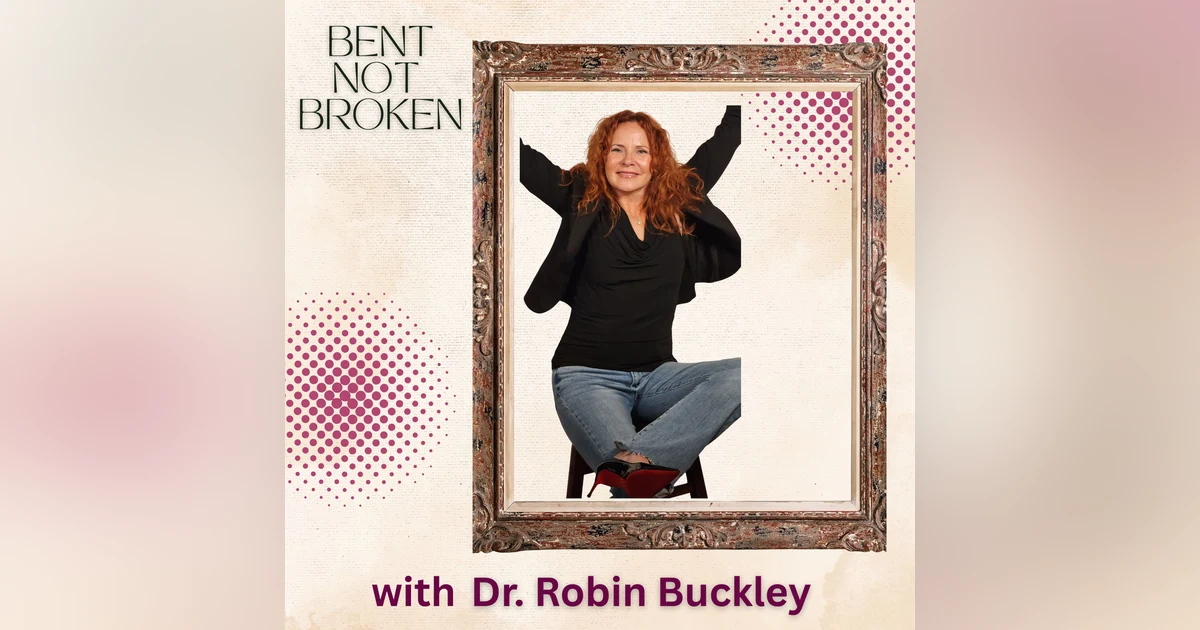


In this episode, Coach Deborah sits down with Dr. Robin Buckley, executive coach, PhD in clinical psychology, and author of Marriage, Inc. Dr. Robin blends business strategy, cognitive behavioral tools, and lived experience from two divorces to help people heal after separation and create intentional, healthier relationships.
We explore how to move from emotion-driven reactions to strategic thinking, how to evaluate red flags and green flags, and why role clarity and communication are essential whether you're rebuilding a relationship or starting over after divorce. Dr. Robin also shares how CBT rewires the brain after trauma, why a “one-year reset” is crucial after divorce, and how asking What do I want? helps you design your next chapter.
If you’re navigating divorce recovery, rebuilding confidence, redefining love, or learning to trust yourself again, this episode offers practical tools and powerful perspective.
Connect with Dr. Robin Buckley at www. drrobinbuckley.com and purchase her book, Marriage Inc. on Amazon.
💬 Enjoyed this episode of Bent Not Broken: Life After Divorce with Deborah Griffiths?
Don’t forget to rate, review, and subscribe on Apple Podcasts and Spotify so more people searching for life after divorce, divorce recovery, co-parenting, dating after divorce, and healing from gaslighting can discover this empowering podcast. Every review helps others find hope, inspiration, and practical tools for thriving after divorce.
🌐 Explore more resources: Visit BrokenToBoldness.com
for coaching, workshops, and guidance on divorce recovery and life transitions.
📲 Follow Deborah Griffiths for daily empowerment and support:
- Instagram: @BrokenToBoldness
- Facebook: Broken to Boldness
- LinkedIn: Broken to Boldness
- Divorce Recovery Workshop: Click here to register.
✨ Remember: divorce may bend you, but it does not break you. You are stronger than you think, and your bold new chapter starts now. ✨
Welcome to another episode of Bent Not Broken. Heartbreak and trauma may feel like the end of your story, but here it's the beginning of a bold new chapter. I'm your host, Coach Deborah Griffiths, and this is the space where women rise, rebuild, and rediscover their purpose. Remember this truth. You are bent, not broken. Today's guest is Dr. Robin Buckley, an executive coach with a PhD in clinical psychology and a specialization in cognitive behavioral methods. She's the author of Marriage Inc., the boardroom blueprint to a lasting love, and brings a unique perspective, blending business strategy with relationship healing. Having navigated two divorces herself, Dr. Robin now helps individuals rebuild confidence, heal after separation, and create intentional, healthier partnerships moving forward. Welcome to the show, Dr. Robin. I'm going to be here. I'm looking forward to this discussion because you've navigated two divorces yourself. How did your personal experiences shape the work that you do today?
SPEAKER_01When I look back, Deborah, hindsight and all that, I really wish I had someone explain to me what I try and help people with now, which is the idea of wishing and hoping and just expecting marriage to work itself out without a plan is truly ridiculous. I'm going to assume, Deborah, that there's very little in your life that you don't plan if you want it to be successful. We plan our vacations, we plan our finances, we plan our careers, we plan our meals. And yet when it comes to marriage, we wing it. And that's just crazy. It's too important of a construct for us to not have some strategy. And I do really wish I had I fell into the whole Disney Hallmark rom-com idea of marriage instead of, oh, maybe I want to really put some intention to this.
SPEAKER_00It's like we want to meet our prince Charming, and we're wishing that life will be happily ever after as soon as the prince puts the right shoe on Cinderella. Right.
SPEAKER_01And that's lovely. But how do we meet the prince? And where are the discussions with the prince? And what happens after the shoe fits? You know, there's a lot of things that I do know couples could head off if there was a plan.
SPEAKER_00What inspired you to connect boardroom strategy with marriage and partnership?
SPEAKER_01I have to give credit to my clients. I was doing a lot of work with female CEOs and business owners. And they would come and talk with me about business and career issues. Inevitably, we talk about, well, there was this conflict at work and they managed it really well, or there was this strategy session and they were able to really take the leadership role. And then we bring up their personal relationships, marriages or committed relationships. And I'd say to them, Well, you just did that at work. What strategies or skills did you use at work that you could do with your marriage? And they say, Oh no, that's different. It's marriage. And it got me thinking, why is it different? Why couldn't you use the communication skills or the conflict resolution skills or the strategic planning in your marriage because you do it so well at work? So I started really applying a lot of the leadership and business strategies when we would talk about the relationships. It wasn't this deep dive into the emotional aspect or the past. It was here and now and in the future.
SPEAKER_00Many people after divorce feel like they've failed. How does reframing a relationship like a business help release that shame and self-blame?
SPEAKER_01Yeah, it's a great question, Deborah. When a marriage or committed relationship ends, there's shame, embarrassment, really beating ourselves up. And all of that comes from our amenddila, that emotion-centered area of our brain that's trying to get us to avoid doing anything like that in the future. But when we look at it from a business lens, it reduces that emotionality. It allows us to say, okay, yep, that failed. For a lot of the clients I work with, we do a strategic analysis. What are the things that worked well? What do I want to replicate in a future marriage business? And what are the things I want to do differently? What can I learn from that? Instead of self-blame, it becomes a learning opportunity. What do I want to recreate? And what am I going to reframe or adjust so that I have a higher likelihood of success? I've done it wrong once, so now I'll do it differently.
SPEAKER_00Talk to us about red flags versus green flags.
SPEAKER_01Get this one a lot. Yeah. So red flags, I think people are really familiar with. That when you see a red flag in a relationship or with someone you're connected to, it is ideally, or at least how people think of it, warning sign, something to pay attention to so that you avoid potential hurt or heartache. And green flags are the things that you want to see that potentially are a sign of this is going to work. This is the type of person I want to be with. And our brain fixates on that. The challenge for a lot of people is they put more importance on the red flags. It's protective in nature. We don't want to go through the pain again. But when we train our brains to look for red flags, then our brains are only going to look for red flags. They're going to overlook the green flags. So I'm certainly not saying discount the red flags. It's important to have some type of balance between red and green, where you say, okay, that's a red flag. I want to pay attention to that. I just want to keep that in mind. But here's some other green flags. Then over time, you determine if there's more green flags than red. Are the red flags things that you can work with that can be negotiated that are not airhorns, but more like just silent nudges that you definitely want to have some strategies around with that person. Both are important, but I do believe in my experience, people put way too much the red flags. And our brains are lazy, Deborah. They're going to do what we tell it to do. And if we say look for the red flags, they're going to be like, cool, that's my job. That's all I'm going to see. And that's problematic.
SPEAKER_00It reminds me of when I need to make a decision. I have a pro column and a con column. The pro column would be all the green flags, and the con column would be all the red flags, and you have to outweigh it. It's almost taking the emotion out of it so that you can see clearly with the correct portion of your brain that needs to be.
SPEAKER_01That's the big you just nailed it. It's taking the emotion out so we can think strategically with the frontal lobe of our brain, which is the strategic, logical, rational part of our brain. When I work with clients, you talked about the two columns. Often, if we're not doing red and green flags, we'll talk about negotiables and non-negotiables. What are the things that either you're looking for or in your relationship that you have some flexibility or wiggle room on? The things that aren't going to just be deal breakers. I use the example of my husband that I love yoga. He does not. That was not going to be a deal breaker for us because I can do yoga by myself. But every once in a while he'll participate. He doesn't enjoy it. He complains the whole time, which is funny to me. That's negotiable to me. A non-negotiable is something that absolutely not. It's typically things that go against your values or things that are really important to you. Some of my couples, it might be, I really want to have children, but this person I met has no interest or hates children. That might be a non-negotiable where it's like we have no future together. One of my non-negotiables when I was dating was kindness. I would not go on a second date with anyone who is not kind, particularly to servers or people taking care of us. So a waitress, a hostess, an Uber driver. If you are unkind to someone, that just goes against one of my core values. Now, if you spout off something, then you're like, oh my God, what is wrong with me? I am so sorry. I should not have taken that out on you. Cool. You I can work with because you had that awareness that that was not appropriate. But we've all met people who are just, that's how they function. And that is just not one I'm willing to be flexible on.
SPEAKER_00Agreed. In marriage, Inc., you talk about role clarity. Why is confusion around roles so damaging in relationships, especially after separation?
SPEAKER_01Yeah, it's so important. Again, using a business model. It is very rare you go into a successful business and it is not clear who's the CEO, who's the CFO, who's the fleet manager, who's the HR person. We have roles delineated at work for the reason of making sure people know their lane and we're also not wasting effort outside of our lanes where people are stepping on each other's toes. In relationships, this is really important to know who's taking care of what aspects of our life together in order for it to work. And in separation or divorce, this can also continue to be true that when you're going through those processes, who's taking care of what? Where are we in terms of managing this? Are there some tasks or chores that we do together still to try and, if it's separation, to try and reclaim the relationship? Or is it beyond that? And where are the tasks and roles in order to make sure that the the ideally the divorce doesn't end up into complete emotional disintegration?
SPEAKER_00I'm assuming co-parenting is part of defining in those roles because that can be challenging in and of itself.
SPEAKER_01Having been there, yes, and not having someone who is willing to do role delineation becomes impossible. People just don't know what the expectations are, what their place is in terms of facilitating that arrangement and how to make it work. And you're involving other human beings, the little ones that are going to get caught in the crossfire. So it's being very clear on what we do, how we do it, and the chores and tasks associated with each.
SPEAKER_00For listeners just starting over, what's the first systems reset you recommend after divorce? Systems reset after divorce.
SPEAKER_01Do you mean personally, individually, or collectively as a couple? Personally, individually. I think it is really important for individuals. I typically recommend one year. One year to be alone, to really understand what happened. And the reset is doing the analysis. And we talked about that a little while ago, Deborah. Like what happened that it didn't work? How can I reframe the thoughts around that? It's not that I'm not a relationship type. There were things within the relationship that I might have contributed to, but that just didn't operationally work. So that reset of stepping back from the failure and being able to clearly articulate where the breakdown was without placing blame, because as you and I both know, that's what a lot of people do. It's hard to say, oh yeah, I totally screwed that up. So it's easier to place the blame. And there's so much hurt going on. Placing it outside of ourselves is protective, but it doesn't serve us and it delays the healing process. So I would say that's the reset. Time alone to truly reflect. And the reflection, ideally, you also learn what you really want, not what you need, it's what you want in your future, whether that's with someone or not.
SPEAKER_00Decision-making confidence often takes a hit after emotional turmoil. How can cognitive behavioral tools help rebuild trust in yourself?
SPEAKER_01That's a great CBT to me, so this idea of cognitive behavioral therapy, but I call it cognitive behavioral strategies, because it's not therapy all the time, is the idea of reclaiming power over your own brain. That's what it really comes down to. Understanding that you don't have to function just from your amygdala, your fear-driven emotional part of your brain, and you actively can switch it back to the prefrontal cortex, which is your logical, rational, emotional management part of the brain. CBT allows us to change our brains at the neural level. So we are talking science here, so that our brain works as our ally instead of our adversary. That's where CBT comes into play. I'll say to my clients all the time the strategies are easy. These are not rocket science. The challenge is developing the strategies into habits so that you start to do them faster. And then over time you do them automatically. That's the power. But it's hard. It's hard to rewire your brain after you've been living and doing the same things for decades. But when you start to apply strategies based on cognitive behavioral research and science, your brain starts to function the way you want it to. And when it comes to healing and developing future relationships, that is incredibly powerful to have this wonderful organ actually working with you instead of against you.
SPEAKER_00Now, I'm curious for women and men coming out of toxic relationships that have been living a lot in that fight or flight mode. Does it take longer for them to come and retrain their brain with the CBT? I would say absolutely yes.
SPEAKER_01I'd love to say, no, it's so easy. Again, from that protective, hyper-vigilant aspect. So yeah, it's going to take extra time to get rid of those neural passages that were there for our protection and that hypervigilance and build the neural pathways that are actually going to facilitate relationships and not hold us back in that defensive mode. It breaks my heart when people say, Well, that's just who I am. I'm like, no, it's not. This is not your personality. This is not something you can't undo. This is simply your brain. It's been rewired for one type of relationship. And thankfully, no, it'll take some work, but you can rewire it so that it functions differently in a healthy relationship.
SPEAKER_00Communication breakdown is a common theme in divorce. What's one practical communication framework listeners can apply immediately?
SPEAKER_01In a relationship they're trying to make work or when they're in divorce?
SPEAKER_00Probably that they're trying to make work. Let's talk with that one first. Yeah, I like that one too.
SPEAKER_01So when it comes, you're absolutely right. Communication might be the number one. If I actually was going to pick one thing, I think that would be one thing I would tell couples to focus on. So when it comes to communication, I would say the the initial, an easy one, we'll start with an easy one. To build communication. And again, it sounds silly, but is assigning chores. Let me explain that. When I talk to couples and I say, okay, communication, they usually sometimes they roll their eyes or they sigh. So I want it to be simple for people. Assigning roles is easy. You sit down together. This is not a dictatorship. You don't sit down and tell your partner what they're going to do and what you're going to do. You sit down together and say, okay, what are the logistics of how we manage our life? What are the details weekly that are necessary for us to take care of? Taking out the garbage, getting emptying or filling the dishwasher or changing the catlet or whatever it is. And you talk together about who's going to do what. Maybe it's that I am way better at putting dishes in the dishwasher because I am a ninja when it comes to that. Like I was good at Jenga. I'm good at adult Django with the dishwasher. So that would be something I would like to do. And your partner says, cool, because I'm like a raccoon on meth when it comes to filling the dishwasher. So that rolls a sign. I have a better sense of smell. I can pick up when the garbage is just about to turn. I'm going to be the one to take care of the garbage. Cool. Okay. We both hate the cat litter. We can either do rock, paper, scissors, or we can decide, I got it one week, you got it the other week. It is an easy, low-level, typically not emotional way to start to build communication. Because it's not just you do this, I do that. It's the why, why should I be the one? Is it my strength? Is it my preference? Do I like it? It's an easy way for couples to just start, especially the ones that the communication is really broken down. Because it's not about emotion. It's not about the romance or love of their relationship. It's just logistics. So it's a very safe place to start. And then after that, there's lots of other ways to build connection and communication.
SPEAKER_00I like that because I think sometimes we get caught in the little things like taking out in the trash. And over time, it can build resentment.
SPEAKER_01You're absolutely right. When couples blow up over you didn't put your socks in the hamper, it's never about the socks. It's the 20 other things that happen. And it's still not about those 20 things. It's about that feeling heard, feeling overlooked, feeling disregarded. That's what it really is about. So if you can start to do, as you said, those little things. And I heard you say you're going to take care of the garbage. And then you did, that's building trust. So you've accomplished so many things in this simple act of assigning chores together, because I will underscore the together. This again is not an authoritarian approach. It is having the communication together to take care of that. And then the next step goes a little deeper.
SPEAKER_00How can someone use goal setting, not just in dating or relationships, but in rebuilding their life after divorce?
SPEAKER_01Yeah, I remember this. Goal setting is interesting. That year after divorce, ideally a year or more after divorce is really understanding what you want, not just in a relationship, but more importantly, what do you want in your life? What does that look like? Because once we can establish that for ourselves, then we can communicate it to any potential future partners. And I think that's the mistake a lot of people make that we get caught up in relationships, we get caught up in planning a potential wedding, and we don't really think about how all of that is going to line up with where we want to get to in the future. And after divorce, at least what I've witnessed, is people all of a sudden have this open space ahead of them. And it's like, I don't even know where to start. I don't know what I want, especially if it's a divorce that it was a 25-year marriage, and I haven't even thought about that in 25 years because it was always about everybody else or providing for the family. So when you're able to sit down and ask one question, what do I want? And sometimes it takes people weeks to months to just let that question settle. Not what I need. What am I looking for? It's what do I want? And I love those conversations with clients because listening to them all of a sudden say, Oh, oh my gosh, I used to love to throw pottery in college. I haven't thought about that in decades. I'm gonna go try that. How cool is that? Or I haven't even thought about my physical health in decades. What's something I'd really love to do with that? I don't know, but let me go try Pilates, let me go try yoga, let me go try a spin class because I don't know what I like. It's really exciting to watch people start to ask the want question and start to explore.
SPEAKER_00So it's really going back and getting in tune with yourself, maybe your younger version of yourself of what aspirations and dreams that you had that maybe got put aside and you want to revisit. And granted, some of the aspirations and dreams change over time. Our likes and dislikes can change over time as we experience life. But I like that it's like looking at a blank canvas, and now you get to paint the picture, is like, well, what picture do I want to paint?
SPEAKER_01Yes. And the want is key because when we say we need something, again, going back to the neuroscience, it triggers our amygdala that, oh my God, I need this, I'm desperate for it. I should have it. I need, you know, I have my must do this instead of what do I want? That's where when you talk about goal setting, that's what allows the prefrontal cortex to jump in because now it's remembering, it's thinking, it's processing instead of, oh my God, I got to do this, which shuts down creative thinking and planning.
SPEAKER_00What do you say to someone who's afraid of entering a new relationship because they don't trust themselves anymore?
SPEAKER_01That's so hard. Usually I teach people a lot about how their brain works. And I know we've talked about it several times in our conversation. Because when we understand that your lack of trust is coming from a protective place in your brain, it's concrete. This is not theoretical. Your amygdala is trying to get you not to do things that might result in the same kind of hurt. That's all that's happening. That when you don't trust yourself, your brain is. Actively trying to say, don't do it again, because it didn't work out so well last time. And when people begin to realize that it's not some flaw in their personality, it's just their brain trying to take care of them, that reduces the emotionality and the self-blame. People begin to explore the more rational thinking of, okay, this is not about trusting myself. This is about getting the part of my brain that can think about this more logically online. And how do I do that? And then going through some strategies to do that. People are so hard on themselves after the end of a relationship. Sometimes it's just okay. What's my brain trying to do here? And how can I get it to do what I want it to do?
SPEAKER_00Looking back now, what's one lesson from your own divorces that completely changed how you define success and love?
SPEAKER_01Oh, one? Just one, Deborah. Okay. I would say, and I am currently remarried for the last time. For sure. Good read. I would say the ability to evolve together, the ability to change and adapt to each other. I've been going through Perimetablas. That has been a whirlwind of new learning and lack of knowledge and all of that. And it has changed me physically, it's changed me emotionally. And without being able to have the ability to communicate with my husband, and without his ability to evolve with me, not for me and not for, but letting me evolve and then evolving so that he can be my partner in parallel, it wouldn't work. And so that ebb and flow of, okay, now it's your turn. And it might not be something you should say out loud, but you're now going through something that I want to be part of if you want me to be. Absolutely. I love offline questions when they pop in. The book is on Amazon. It hit bestseller status in September. That was congratulations. Thank you. It was a lot of fun. And if they want to reach me for direct questions, they can use my website, which is drrobinbuckley.com. I am on every possible social media except for X. So TikTok, Instagram, LinkedIn, easy to find me by the same nomenclature, Dr. Robin Buckley.
SPEAKER_00Perfect. I'll have all of that in the show notes as well. Thank you so much. This has been a great conversation. And I know I've taken away a couple of great tidbits. So I'm sure the listeners will too. I appreciate it. Thank you so much for your time. Thank you. Have a great day. Thank you for listening to today's episode of Bent, Not Broken. I hope that this episode reminded you that even through life's toughest moments, you are bent, not broken. If this message inspired you, please share, rate, review, and subscribe, as it helps us reach more women who are ready to rise and rebuild. And until next time, keep living bold and walking in your purpose.