Personality Types in Marriage & Dating: How to Understand Yourself and Strengthen Relationships | Marita Littauer Tedder
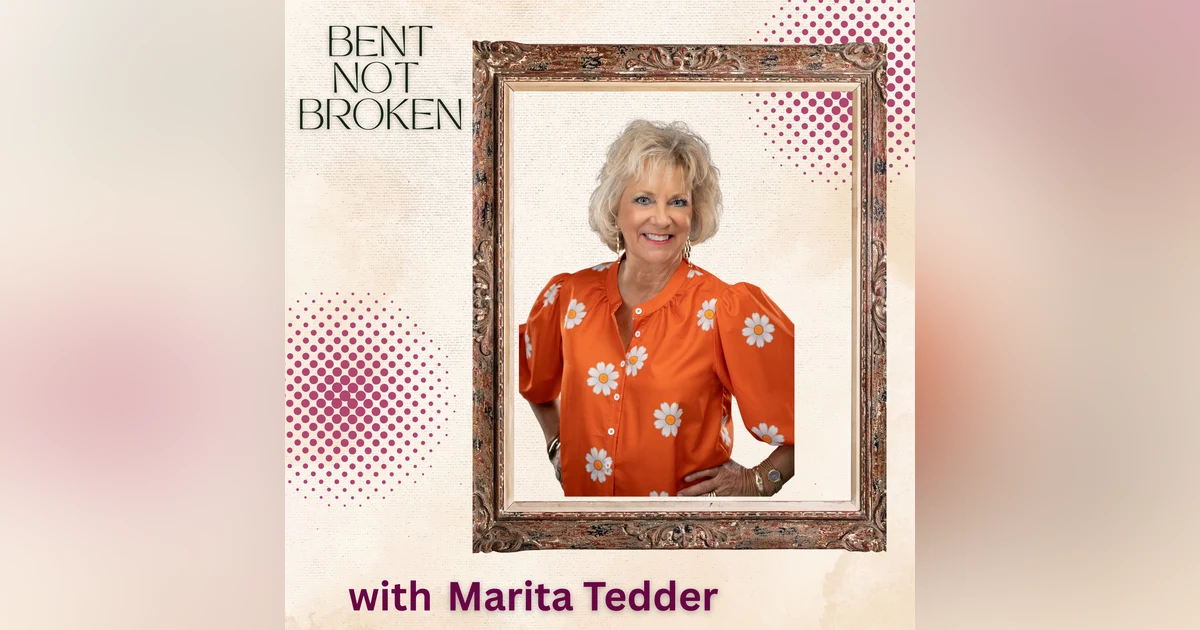


In this episode, I sit down with author and speaker Marita Littauer Tedder, co-author of Wired That Way, to explore how understanding personality differences can transform your relationships.
Rooted in the classic four temperaments first identified by Hippocrates, we break down the four personality types—Sanguine, Choleric, Melancholy, and Phlegmatic—and how they influence communication styles, emotional needs, conflict patterns, and attraction.
We discuss:
• Why opposites attract (and how to make it work)
• How to identify personality traits while dating
• The difference between personality types and personality disorders
• How personality awareness can reduce conflict in marriage
• Rebuilding confidence and identity after divorce
• Living your best life after 60
If you’ve ever felt misunderstood in your marriage, struggled in dating, or wondered why relationships feel hard, this episode offers practical tools for healthier communication and stronger connection.
📚 Resources Mentioned
- Wired That Way – Available on Amazon
- Online personality profile: ThePersonalities.com
- Best Life Project: Best-LifeProject.com
💬 Enjoyed this episode of Bent Not Broken: Life After Divorce with Deborah Griffiths?
Don’t forget to rate, review, and subscribe on Apple Podcasts and Spotify so more people searching for life after divorce, divorce recovery, co-parenting, dating after divorce, and healing from gaslighting can discover this empowering podcast. Every review helps others find hope, inspiration, and practical tools for thriving after divorce.
🌐 Explore more resources: Visit BrokenToBoldness.com
for coaching, workshops, and guidance on divorce recovery and life transitions.
📲 Follow Deborah Griffiths for daily empowerment and support:
- Instagram: @BrokenToBoldness
- Facebook: Broken to Boldness
- LinkedIn: Broken to Boldness
✨ Remember: divorce may bend you, but it does not break you. You are stronger than you think, and your bold new chapter starts now. ✨
Welcome to another episode of Bent Not Broken. Heartbreak and trauma may feel like the end of your story, but here it's the beginning of a bold new chapter. I'm your host, Coach Deborah Griffiths, and this is the space where women rise, rebuild, and rediscover their purpose. Remember this truth. You are bent, not broken. Marita Litauer Tetter is an author, speaker, and entrepreneur with more than 50 years of experience helping people understand themselves and strengthen their relationships. The daughter of renowned author Florence Littower, Marita was immersed in the personalities from childhood and continues that legacy today through her writing and speaking. Based in Lubbock, Texas, she remains passionate about inspiring others to live with authenticity, purpose, and intention. Welcome to the show, Marita. Thank you. It's good to be with you today. Let's get started. You spent decades teaching about personality types. What are the different personality types? And why is it important that we understand our own personality type?
SPEAKER_01Well, the personalities I think are really important in all relationships. In fact, I don't know how people get along work-wise, marriage-wise, friend-wise without this understanding. We like to start with the basic idea of the four personalities. And these ideas were not original to me. I learned it really from my mother, but it was not original to her either. What the origination of the concepts of the personalities go back more than 2,000 years to the great Greek thinkers such as Hippocrates. And he, back then, with the limited medical and scientific knowledge, he made the same observation that many of us make today, and that is people are different. And he tried to figure out what makes people different. And he concluded that what made people different is that they had different fluids in their body. Now, he was actually probably a little more right than we've given him credit for all these years, because really it's DNA today. So it's, you know, it is what fluids are in our body, so to speak. But he created words in Greek to define these four different personalities. And they are the sanguine, the cheric, the melancholy, and the phlegmatic. And anyone who has any medical background knows that the word sanguine has to do with blood. So those words describe fluids that Hippocrates perceived made people different. But because those words are Greek to most people, I've added to them a modern day adjective and a color to help people remember them. I always tell people it doesn't matter whether you use the Greek term, the modern day adjective, or the modern-day adjective and the Greek together, or you'll use the colors because the concept here is that this is not about labels, it's about relationships. So with that background, the four basic personality types, I like to start with what I call the popular sanguine represented by the color of yellow. And I like to start with that first, not just because it's what I'm about 55% of, but because that person is actually the easiest to identify. And I like to kind of present it this way because I like to have people think about themselves. Of course, you can't help when you listen to something like this, thinking about, well, what am I? But I really like to teach this with an emphasis on understanding those other people. And that's why being able to identify other people by what I call the visual clues is important. So for the popular sanguine, we are the ones who talk with our hands. We tend to be loud. We like loud clothing, we tend to have a loud voice. We are the ones that people throughout our life growing up, we've been shushed forever. And we tend to be late, but we're very friendly. They're the one the child, the popular sanguine child, you probably said about that child. Oh, he's never met a stranger. And that would be true, and that would represent that popular sanguine personality. Of course, there's many more clues I can give you, but for the sake of time, that's just a quick overview. Okay. Then I like to jump to the one that's the opposite of the popular sanguine. And for those who are listening today, if you can picture a piece of paper with four squares on it, two on the top, two on the bottom, put the popular sanguine person on the top left. And then the next is the perfect melancholy represented by the color blues, and put that one on the bottom right on your piece of paper. And that one is the opposite of the popular sanguine. As I said, represented by the color blue because they are deep and thoughtful individuals. And while we call the sanguine the popular sanguine, the fun, loving, outgoing one, the melancholy is the perfect melancholy, not necessarily because they are perfect, but that is their goal in life, is perfection. And sadly, they expect that from everybody else. Now, that perfect melancholy personality tends to be depressed a little bit more than the other personalities, because think about it, when your goal in life is perfection, when have you had a perfect hour, let alone a perfect day, week, or month? And so when your goal is perfection, you're going to be disappointed more than other personalities. And so this person tends towards depression more than the other three personality types do, but they are very thoughtful, sensitive, introspective kind of people. And the perfect melancholy is on the bottom because, and you notice that if you think about it, the color's a cool color because they're more the introvert, where the popular sanguine is the extrovert. Now, on the top, next to the popular sanguine would be the powerful tolerant personality. And we represent by that by the color red, kind of like a fire edge, because that's the person who charges in where others fear to tread. And you recognize this person more by the atmosphere in the room when they enter, because this person doesn't enter a room without being noticed. And a lot of it is their heaviness of their feet when they walk in. They're kind of like plunk, plunk, plunk, plunk. And you know that they are there. This is the person who, if they say, let's just say, go from their office to the copier room, they never get to the copier room and go, no, why am I here? Where those of us who are the popular sanguine, if we go from point A to point B, if we run into people along the way, we're gonna stop and talk. And we may remember where we were going, but when we get there, we're like, now what was I here for? And no, we have to go all the way back, look at what we were doing, and then start all over again, but not the powerful collar, because they're driven and they're goal-oriented. Now, sometimes people consider that to be rude. You know, if they go from point A to point B and they pass by all these people and they ignore them, those other people are like, well, she's really rude. This person is the one that says, Oh, you always know where you stand with me. And they view that as a virtue, but in a way, it's an excuse for rudeness because they tell people things that are often inappropriate or that, you know, it's just harsh to hear, but they view that as a virtue. Now, then the opposite, the powerful caliber personality is the peaceful phlegmatic represented by the color green. And so that one would be on the bottom left corner if you're picturing those four squares. And the peaceful phlegmatic I mentioned last, not because they're least important, and it's important that I say that, because these people often feel least important. They're the background person, they're the person who doesn't have a strong opinion, and therefore they kind of fit in anywhere in a in a classroom of children. You've got the popular sanguine who's talking away and talking to everybody and not doing the work. You have the powerful choleric who's kind of the teacher's pet and telling everybody else what to do. And then you have the perfect melancholy who's sitting quietly at his desk doing his assignment, and you have the peaceful phlegmatic who's looking out the window, but not causing any trouble. So it's kind of easy in life for that person as an adult to kind of feel like their whole life they've fallen through the cracks. This is the one that if you were to say to them, would you like coffee or tea? They will usually say, Oh, I don't care. It doesn't matter, whichever's easiest. And the fact is, they really don't care. And occasionally when this person feels strongly about something, they hold that opinion so tightly that they're often believed to be stubborn. But in general, they're very flexible. But when they do believe something or want something strongly, they can be really hard-nosed about it. And it kind of confuses people because they're so easygoing. And then they're like, why? You know, and this is my husband. And when he wants something, he seldom voices when he does voice an opinion, when he wants to do something or he wants to buy something or go somewhere. If he voices an opinion, I pretty much drop everything to go and do or make that happen for him because he so seldom cares about anything. So that's a quick overview, and just to wrap that overview up. Generally, no one is 100% any one personality. I mentioned I'm about 55% the popular sanguine, about 45% the powerful tolerant. And those are both the hot personalities represented by the color red or yellow and red, and they're both the extroverted personality. So when you get both of those in one person, you get someone who's kind of turbocharged. And I often have people tell me, you wear me out just watching you. And it's true, I am kind of turbocharged, and my husband is these two, which are both the introverted, low-key kind of personality. And he has admitted that if it wasn't for me, he would probably never leave the house other than to go to work. But he would just stay home every night and sit in his chair and watch TV. But I have to schedule, I have to make sure he knows on the schedule what my expectations are. Part of that perfect melancholy. And just for the record, he's a CPA. So he's in a perfect role for him. He can sit in a windowless office all day long doing taxes, and uh he's he's okay with that. It would make me absolutely crazy. So, quick overview of the four basic personalities.
SPEAKER_00I appreciate that. And for our listeners, Marita is actually holding up a color-coded square. So I will try and find a way of getting that visual. Okay, perfect. No problem. It's interesting because the way the squares are, it very much shows how opposites can attract. And we hear that so often. Is that a good thing or a bad thing? Or is it just we just have to be cognizant of those personalities? And because so many times people get into relationships not realizing, oh, you really are my opposite, and I really like to go out, but you're just so much of a homebody. And that can and that can cause some friction. So, how can people become more aware of this when they're dating or when they're in a relationship?
SPEAKER_01Yeah, and that it's I believe that God designed us to be attracted to someone who's opposite from us, and you know, we have opposite strengths and opposite weaknesses. So where he's strong, I'm weak. He says to me, dates, times, and numbers are not your friends. And he's a number guy, and so I need that in my life. I need someone who can handle all that. He realizes that if it wasn't for me, he'd never get out of his chair. So he was attracted to me because I bring life, I bring joy, I bring bubble to his life. However, living with me day in and day out can be tiresome for him. And so we have to learn about the personalities. And I think understanding that is so important. Again, in my life, I understand that sitting in the recliner is important to my husband. And so instead of nagging him, like, well, why don't you get this done? I'm running around doing stuff, I seldom sit. And it's when we understand that we can appreciate those differences. I've learned, as silly as it is, I've just started recently sending him a text on Sunday. Now we live in the same house, we sleep on the same bed, we go to church together. If I send it to him in writing, I send him kind of the schedule of the week. Here's what I have going on, and here's what I expect from you. And as silly as it is, I have learned to send it as a text because then he can think about it. He doesn't have to respond to me immediately. We were at an event last night and yesterday morning. He asked me, so what time are we going to this thing? It was really a thing for him. We went to see Emmett Smith, the Dallas Cowboys player, at a presentation. Do I care about going to hear Emmett Smith? No, not really. But when the opportunity came up, I presented it to him and he said yes, he'd like to go. So I took care of that and made that happen for him. But understanding that, now, my husband is my second husband. Okay. My first husband was also melancholy, but he was the melancholy choleric combined. And he was almost 100% that perfect melancholy personality, so much so that it was difficult to determine what was his secondary, except that with him, I was always in trouble because I was late. I didn't always follow through with what I said I would do. I was always in trouble with him. And he, his powerful coward part, was always unhappy with me. I never measured up. My husband now, who's the bottom to the low key, I am never in trouble with him. I mean, never in trouble. But you would think that me grew up with this. My mother started teaching this material when I was nine years old. You would think if anyone would know better than to marry someone opposite, you would think it would be me. But instead, I've done it twice. I fell in love with someone, um, I dated some guys, we had a lot of fun together, but somehow that's not where I ended up. I intentionally wanted to marry someone the second time who was more like me. That we could just float life and have a good time, but that's not who I fell in love with. So it's I think it is very natural that we're attracted to someone who's opposite from us.
SPEAKER_00That's very interesting. So when we're dating or beginning a relationship, what are some visual clues that we can observe that would tell us that maybe they are opposite or maybe they are like us, but that habit or trait might end up being something that really irritates the dickens out of us and could be a deal breaker for marriage or anything long-term.
SPEAKER_01Well, first off, I believe that any marriage can work if both parties want it to work and are willing to do what it takes to make it work. Usually one party is more willing than the other, as was the case for me in my first marriage. And when I came home from a vacation and he moved with a girlfriend and he had moved out. So, you know, there's only so much you can do.
SPEAKER_00Right.
SPEAKER_01So let me preface that. Every relationship takes work. If you think of children on a playground who think of best friend through high school, you think of bosses and coworkers, every relationship takes work. But if you're willing to put in, it's not really so much work as it is effort. And observing that personality is one of those things that if you know what to look for as you asked, so in a car, just to give you an example, you go on a date, a guy comes and kicks you up, and you look at his car. If everything in his car is like it is brand new, even if it's five years old or whatever, chances are he's that perfect melancholy. My ex-husband at one point in their life had a brand new car, which we were not in a financial place most of our married life to have brand new cars. And he had a brand new car, and he would not allow me to eat in that car. And I would kind of be, well, why do they have drive-through restaurants if I can't eat in the car? And his answer was once a car smells like oh de French fry, it always smells like french fries. And I didn't really think that was a bad smell, but see, he's a perfect melancholy. And so you get into that car where everything looks perfect, you know you've probably got yourself a perfect melancholy. I mean, there's a slim chance he just had it detailed for the date, but probably he's a perfect melancholy. If you get into the car and there's fast food wrappers in the back, receipts on the floor, papers on the back seat, you know you have yourself probably that popular sanguine personality who kind of lives in their car. The personal space, if you could see, I mean, you kind of can see a little back here, but I keep that fairly tiny because it shows. But if you could see my whole desk space, it's I've had I've had people say to me, I don't know how you can work at this desk. It gives me a headache just looking at it. That's the popular sanguine personality. The powerful choleric, if they point their finger a lot, have hands on the hips a lot, have an expression of disgust a lot, like, how could you be late? You how could you do this to me? That's gonna be the powerful choleric personality. And if you've got someone who can't decide where you should go for your date and wants you to figure it all out, you know you've got yourself the peaceful phlegmatic. So that you can't, if you especially if you know, this is a quick overview, right? Of time to spend more time, you can read my book, Wired That Way, but the it's it's really quite easy to identify the personality of others. Now, of course, if someone goes into a personality disorder like narcissism, you know, that's beyond what we're talking about here. But we're talking about the average person out there who's a generally good, well-meaning person. Not we're not talking about those that have gone on into personality disorders, although the personality disorders do kind of line up with these personalities. The narcissist, for example, tends to be the one who is the top two, the tolerant and the sanguine, and the obsessive compulsive tends to be the perfect melancholy. And you can kind of see if you're familiar with that those terms, how that is going to line up. They've kind of gone overboard in their characteristics.
SPEAKER_00You answered my question because I was wondering if there's a way finding, you know, red flags when we're trying to observe these people. And, you know, one of them is, and I was involved with one myself, a narcissist, you know, and and that's different. You're right. It's a personality disorder, it's not necessarily the personality type. But it does, they do tend to line up.
SPEAKER_01But someone's kind of gone over the board, and that's what makes it a disorder. Yeah, it's actually harder, I believe. And that's not my area of specialty, but to identify in dating because dating someone's on their best behavior usually.
SPEAKER_00Yes, and that's why it takes more than one date. And you know, really take, you know, and be in different situations with that person so you can observe. Them in those different situations and how they react. And then you can see, okay, are they really the melancholy or the sanguine, or is this beyond that? And it could be a personality disorder. So it's really important not to put the blinders on and to really be open and yes. For women who miss who feel misunderstood in their marriages or relationships, how can personality awareness bring clarity instead of conflict?
SPEAKER_01Well, I believe that once you understand what your spouse, and you're asking about women, so we're gonna assume then we've got a man, if he's a decent human being, like we discussed, not a personality sort of, but overall he's a decent human being, but the two of you are not connecting. I have found very often that if even just the woman, and honestly, usually it's the woman who's well willing to work on their marriage, not always, but usually it is the woman who's more willing to work. If she can first identify his personality, and we've given some of the clues here to do that, but if he can she can stop and look at him and go, okay, he got he is opposite from me, and he's that perfect Melancholy, or he's whatever. First, you identify the personality. The second thing that's really helpful then is to understand his personality. And in the book wired that way, we have a whole list of strengths and weaknesses of each personality type. And so then you begin to understand. Using my marriage again, my husband likes to sit in the recliner. He comes home from work, and I have said for years, as I've taught this material about that peaceful phlegmatic, the color green, that that person, when they come home from work, they literally need 30 minutes in the recliner. And if you're a woman with little kids at home and you've been home with the kids all day, and you're dying for your husband to get home so he can give you a little bit of a rest, and you try to the minute he walks in the door, and usually if he's phlegmatic, she's probably gonna be collaring. So she's gonna be that bossy one. At least that's how he's gonna see it. And he walks in the door and she starts attacking him and nagging him. And I need you to take the trash out, and I need you to do this, and start on him the minute he's in the door. That is gonna be a bad thing. He is not gonna respond well to that because he's been working all day and he literally needs a half hour in his recliner. So I've been teaching this for years, and then I married a peaceful phlegmatic, and he comes home and he needs 30 minutes of the, I mean, he really does. And he one day said to me, You're my first wife who's ever understood me. And see, because I understand that he's a phlegmatic. No, because I understand his personality, I let him have 30 minutes in the recliner. I let him, I understand that that is important for him. So that's what I mean by understanding is important. And likewise, he understands that for me, time with my girlfriends is important because I need fun. I need to have fun. And that gets us to my third thing, which is really where the rubber beats the road. And that is once you identify the personality and you begin to understand them and adjust your expectations accordingly. Then, lastly and most importantly, you can begin to meet their emotional needs, right? But each personality comes pre-packaged with emotional needs, and what I need is not what he needs. And we tend to give each other that old golden rule do unto others as you would have them do unto you. But that doesn't work in this because we all want, we need deep down different things. And when you start, if the woman is willing to do what I've just described and starts meeting her husband's emotional needs, even if he doesn't change at all, even if he doesn't do anything, you can see really almost overnight changes in a relationship. And assuming he's a decent guy, he's gonna start to notice something. It may take months, but as you start adjusting your approach to him and working to meet his emotional needs, assuming he's a decent guy, he's gonna start to notice something different. And he might ask a question, and then you can say, Well, you know, I learned about the personalities, and I've got this personality profile here. Would you mind taking this personality profile? And then we can talk about it. And then when you look at the strengths and the weaknesses, as I discussed earlier, when you look at that, it's like the paper is talking rather than you. It's not like you are saying, well, you are this, you know, they're looking at strengths, they're looking at weaknesses, and it really opens up a discussion.
SPEAKER_00For someone rebuilding her life after divorce, how can knowing her personality type help make her make better decisions moving forward?
SPEAKER_01Well, it's important to understand what we each need, and those emotional needs are important. The perfect melancholy, for example, needs sensitivity and space. And so that's important for them to realize. And as they begin to rebuild their life, she would want a perfect melancholy, would want to build a life for herself where she has sensitivity and space, where she has space where she feels safe and where she feels comfortable, and where she has structure in her life. That's that scheduled kind of thing. And so that's really important. So each personality like that has things that they need, and that revolves around emotional needs. So, again, for me, I need fun, I need attention and approval, and I don't always get that from my husband, and that's okay because I understand how he is, that he loves me in his way, which is not necessarily what I really wish for, but I have girlfriends, and my girlfriends provide that fun for me. And so realizing what you need in your life is important as you begin to rebuild.
SPEAKER_00I like how you said you need the good girlfriends, and then you've got your husband and stuff, because I think too often we might put too much focus on the one person, like our partner. And they cannot be ideally, they are not the be all end-all for us in order for us to be whole ourselves. We have to have that coming from different avenues, friends, family, our spouse, our hobbies, what we like to do, what we enjoy, and have that time to do that so that we can continue to learn and grow ourselves.
SPEAKER_01Yeah, it's unreasonable to think that one man is gonna take care of everything for us, right? I agree.
SPEAKER_00Many women but we may wish he would. Well, sometimes I think there's a lot of people that want that prince charming to come on the white horse and rescue them from everything, but that's not how life works.
SPEAKER_01No, you know, very unrealistic, very unrealistic, yeah.
SPEAKER_00They'll be disappointed all the time. Absolutely. Many women lose themselves in long marriages. How can personality insight help a woman reclaim her voice and identity?
SPEAKER_01Again, I think it's it's beginning to look to meet his needs. Now, again, I'm saying meet his needs because we can't change that other person. I like when I'm teaching this material to reference the Bible verse, Romans 12, 18, which says, if possible, so far as it depends on you, be at peace with all men. Now, if that verse simply said, be at peace with all men, that is not something we can do. But if possible, says, I know this is a goal, it's not really attainable, but try it, aim for this. And then it says, so far as it depends on you. So to me, that puts the onus on each and every one of us to do what we can in that relationship, and understanding our spouse is a big part of that, and they may not ever change. There are certainly times when the marriage does need to end, and of course, if there's abuse or anything like that, that's a different situation from what we're talking about today. But I just have found throughout the years that I've been teaching this material, that if one of you, and in our case, we're talking about the woman, can begin to make some changes and how you approach him and try to be a little more, you know, whatever it is that really irritates him about you, then you know, you try to tone that down, especially when you're with him or whatever. You're gonna begin to see if it's a decent guy, he's gonna begin to come around. And if he doesn't, and you're doing this for long periods of time, you sometimes you do have to realize that you know, he's not ever gonna come around. And you need to make a decision of is this situation so bad that I cannot live with it for the rest of my life? I mean, I've got a friend right now who's actually coming to see me tomorrow, and you know, I just I look at her her life and her marriage, and you know, they've kind of made it work for them, but she's over 70 now, and it's just like, are you gonna live like this for the rest of your life? Are you ever going to be, and I'm not a fan of divorce, certainly. But in this particular case, this brand who's coming to visit me, and she's coming, it gives her a boast. She's gonna come be with her friend, and she's from where I used to live in a different state, and you know, sometimes there are those times where you have to say, you know what? I cannot live the rest of my life like this. And sometimes you do come to that point. You do, and that happened to me, so I understand. And sometimes, sometimes you gotta cut those losses and and start over. I mean, I I truly, I never imagined that I'd be first off, I never imagined I'd get divorced because I know all this relationship, so I've written books on marriage, and certainly if there was ever anyone who was gonna get divorced, it wasn't gonna be me. But I, in my new marriage, I just never knew I would have such a wonderful life. And you know, my husband is not perfect, there's but by no means. And I wish he wanted to go places and do, you know, all my stuff. But you know what? He's a great guy, he takes good care of me and he gives me a lot of freedom. And I'm I'm living my best life now. I really am.
SPEAKER_00Good for you. And as part of that best life, you've launched the best life project focused on women that are 60 and over. What inspired that shift in your work?
SPEAKER_01Well, honestly, it was a dream. It was like while you're sleeping dream, not a like Martin Lizard saying, I'd have a dream. No, I had a dream at night. And in the dream, my mother, who I've done all this personality work with, and she died in 2020. But in my dream, my mother was in heaven. And when I in my dream, when I saw her body, her person, she wasn't the little old lady she was when she lived with me at the end. She wasn't this dynamo that she was on the stage at the height of her career, and she wasn't a teenager. I don't know, you know, I don't really know how old she was, but the perception I woke up with was she was maybe 45, 50. But what stuck with me when I woke up and looked back on that dream, whatever age my mother was, she was in her best life. And I thought about what are we gonna be when we're in heaven? I have no theological background for this. This is just what I thought. I thought, you know, we're gonna be in heaven whenever we were when we were at our best, at our very best. And then my thoughts started to go, and so if it was me, when would I what would I be in heaven? And I thought similarly, it's not the me standing in front of thousands of people getting applause at giving a speech somewhere, you know, and that what I concluded is it's me now, it's this, me, wrinkles and all. I'm living my best life, and so that's really where the original idea of best life came from. And there's a longer story to it than that that's listed in some of the original posts on the blog. But I have a variety of people who write blogs that I post on there, and we get some of them have thousands of views, they all get at least hundreds of views, and we have women from all over the country, all over the world, really, but it's all English speaking, who who read the blog, respond, and really feel like they get insight, inspiration, and instructions for their life because our life changes when you you know, I recently retired, you're off an empty nest, which is a whole new phase, and it's kind of a different period of kind of rediscovering who you are and what's important to you.
SPEAKER_00That's a great project. I love it. Why do so many women feel like life is over after 60? And what would you say to challenge that belief?
SPEAKER_01I think for a lot of women, I'm thinking of my sister in particular, but a lot of women they devote their life to their children. And there's nothing wrong with that. Others devote their life to their career. There's also nothing wrong with that, but they've poured every their time and their energy into children or career or both. And when they retire, the kids are gone. Suddenly, and often you're stuck with this band that you don't even recognize anymore because you've both been living your own life. And it begins to feel like, well, who am I? I certainly have found that this time where I have time, health, which is a huge component, and resources, I've got a whole new life ahead of me. And that intersection, that's the sweet spot. Time, health, and resources. And so we provide for women who read this blog lots of examples of things, but lots of ways to kind of reinvent themselves, look at life differently, and realize that there's a whole lot of years left. And as long as they have time, health, and resources, they have a lot of places to go.
SPEAKER_00I agree. If a woman listening today feels bent but not broken, what is the one practical step she can take to begin living her best life right now?
SPEAKER_01I would say, as we've talked about today, is to first begin to look at herself and what her personality is. Because often by the time you get to be the age that we are, you've had so many inputs in your life. You've had people telling you what to do and how to do it and how you're supposed to behave. And it can leave someone by the time they get to be retired, empty-nessed, really at a loss as to where do I go now? Who am I even? You know, what do I want to do? And so it takes some introspection and looking at the personalities is a great tool to help you see who you are at your core. And then it may so for some people, it takes some time to kind of peel the layers away and figure out who they really are. And once you figure that out personality-wise, it can really help you with a lot of direction because you understand much better what's important to you at this phase in your life.
SPEAKER_00Marita, this has been a great conversation. So appreciate your time. How can listeners get a hold of you? Get your book, find out about your personality tests. What's the best avenues I can do? Put everything answers. So yeah, okay.
SPEAKER_01The easy answer is Amazon.com. Okay. And in fact, for Kindle Unlimited members, my book, Wired That Way, is free on Amazon. And they actually currently have it for sale for less than I have it for sale on my own website. So if you just want the book, I encourage people to go to Amazon. We have an online personality profile and a paper personality profile that my father created when I was nine years old. So this is a product that has definitely been proven by the test of time. And in fact, yesterday I shipped 300 personality profiles to Malaysia, 100 to California, and 30 to Illinois. So we sell a lot of these PayPal profiles all over the country and even cross the pond, as they say. But we also have it available in an online version. And that website is thepersonalities.com, just the word T-H-E, and personalities.com. And there's an online personality profile there. It's $4. And then we talked about Best Life Project, and it is best hyphenlifeproject.com. And the hyphen is important. Without the hyphen, you'll go somewhere else, but it's best-lifeproject.com.
SPEAKER_00Perfect. I'll have all of that in the show notes. Again, thank you so much. This has been that graphic for the show notes. Okay, perfect. This has been a fascinating discussion. So appreciate your time. Thank you so much. Thanks. It's been great to talk with you. Thank you for listening to today's episode of Bent Not Broken. I hope that this episode reminded you that even through life's toughest moments, you are bent not broken. If this message inspired you, please share, rate, review, and subscribe, as it helps us reach more women who are ready to rise and rebuild. And until next time, keep living bold and walking in your purpose.