Lost in Silence: Healing From Trauma, Shame & the Fear of Living Authentically | Barb Rebon
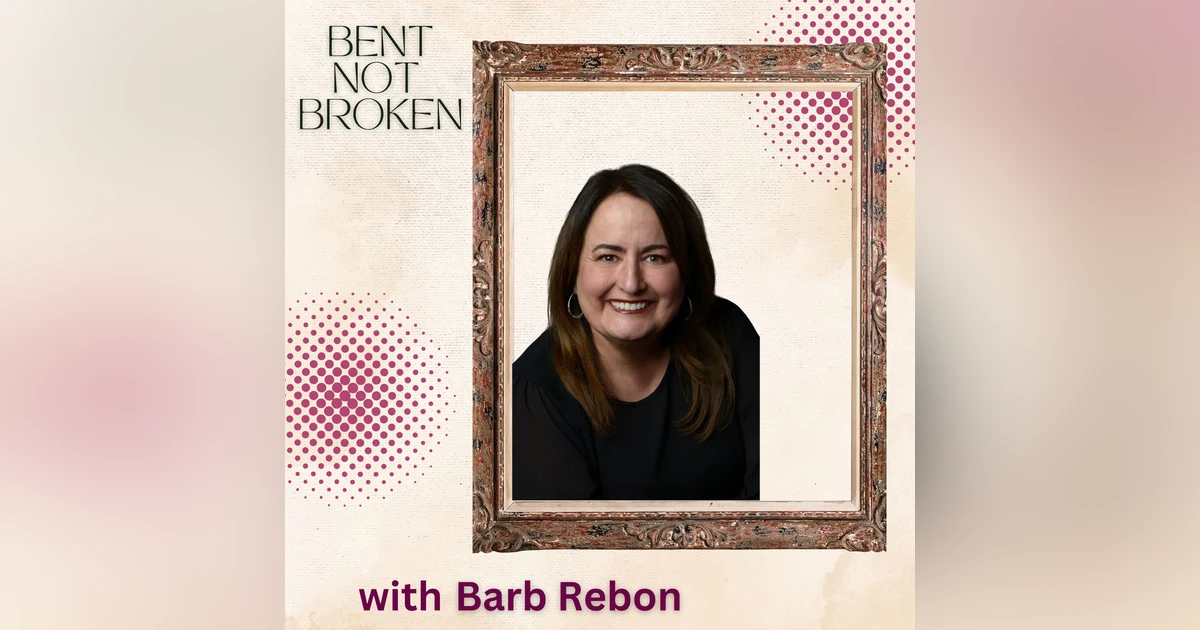


What happens when the life you built no longer aligns with your truth — when years of silence, emotional pain, trauma, and hiding who you are leave you feeling lost, broken, and disconnected from yourself?
In this deeply emotional episode of Bent Not Broken, Coach Deborah sits down with Barb Rebon to share a powerful story of healing, recovery, reclaiming identity, and starting over after a lifetime of silence.
For more than 26 years, Barb dedicated her life to education, helping thousands of students and families. But behind her successful career was a painful private struggle shaped by childhood sexual abuse, shame, fear, emotional trauma, faith conflict, and identity suppression.
In her upcoming book, The Heartbeat of My Silence, Barb opens up about what happens when your inner world slowly falls apart while trying to survive in silence.
This episode explores:
- Surviving childhood sexual abuse and emotional trauma
- Living for decades feeling lost, ashamed, and emotionally disconnected
- How silence and suppression can deeply impact relationships, identity, and purpose
- Wrestling with faith, sexuality, and self-acceptance
- The emotional process of reclaiming your voice and identity later in life
- How therapy, safe relationships, and storytelling help people heal and rebuild
- Why starting over can become the beginning of freedom, healing, and authentic living
Barb also shares the life-changing moment that sparked her transformation after watching country artist Shelly Wright publicly come out and tell her story — a moment that helped Barb realize she no longer wanted to live hidden by fear and silence.
This conversation is raw, honest, and inspiring for anyone navigating trauma recovery, emotional abuse, identity struggles, life transitions, or the painful journey of rebuilding after years of silence.
Key Topics Discussed
- The emotional weight of living in silence
- Trauma recovery and long-term emotional healing
- How shame and fear keep people emotionally trapped
- Faith, identity, and reclaiming self-worth
- The power of storytelling in healing and recovery
- Learning to rebuild your life with authenticity and purpose
- Why healing often begins the moment you stop hiding
About Barb Rebon
Barb Rebon is a lifelong educator with over 26 years of experience impacting students and families. In her debut memoir, The Heartbeat of My Silence, she courageously shares her journey through trauma, faith, identity, and self-acceptance—offering hope and healing to others walking a similar path.
Resources & Links
- The Heartbeat of My Silence (Coming Soon – Target Launch: May, ahead of Pride Month)
- Available soon on: Amazon, Barnes & Noble, and Barb’s upcoming website
- Barb's website: http://www.barbararebonauthor.com/
Enjoyed this episode of Bent Not Broken: Life After Divorce with Deborah Griffiths?
Don’t forget to rate, review, and subscribe on Apple Podcasts and Spotify so more people searching for life after divorce, divorce recovery, co-parenting, dating after divorce, and healing from gaslighting can discover this empowering podcast. Every review helps others find hope, inspiration, and practical tools for thriving after divorce.
Explore more resources: Visit BrokenToBoldness.com
for coaching, workshops, and guidance on divorce recovery and life transitions.
Follow Deborah Griffiths for daily empowerment and support:
- Instagram: @BrokenToBoldness
- Facebook: Broken to Boldness
- LinkedIn: Broken to Boldness
Take the Living Bold Assessment
Remember: divorce may bend you, but it does not break you. You are stronger than you think, and your bold new chapter starts now.
Disclaimer: The commentary and opinions available on this podcast are for informational and entertainment purposes only and not for the purpose of providing legal or psychological advice. You should contact an attorney, coach, or therapist in your state to obtain advice with respect to any particular issue or problem.
Welcome to another episode of Vent Not Broken. Heartbreak and trauma may feel like the end of your story, but here it's the beginning of a bold new chapter. I'm your host, Coach Deborah Griffiths, and this is the space where women rise, rebuild, and rediscover their purpose. Remember this truth. You are bent, not broken. What happens when the life you built in silence no longer matches the truth in your heart? Today's guest, Barb Rabon, spent 26 years as a dedicated educator, touching the lives of thousands of students and families. She built a meaningful, impactful career, one filled with leadership, service, and purpose beyond the classroom. But behind that life was a story she kept hidden for decades. In her powerful new book, The Heartbeat of My Silence, Barb shares her journey through trauma, faith, identity, and ultimately self-acceptance, moving from silence to truth and from fear to freedom. This is a conversation about healing, courage, and what it really means to step into who you truly are. Welcome to Bent Not Broken Barb. Thank you so much, Debbie. I appreciate you having me on this podcast. I'm looking forward to this conversation. I love the title of your book, The Heartbeat of My Silence. It's very powerful. But what does that phrase mean to you, and how did that silence shape your life for so many years?
SPEAKER_00So when you think of my title, The Heartbeat of My Silence, I carried silence, so many different silences in my heart for decades. And when you think of silence, it suggests quiet, no sound. And yet the heartbeat is the opposite of all that. You hear the heartbeat, and the heartbeat suggests life. That silence was living within me, and it was deafening, and it was loud inside of me, and I carried it with me everywhere I went, and it caused me a lot of shame, a lot of guilt, a lot of pain until I allowed that silence to shatter, and I allowed others to hear that silence.
SPEAKER_01Very powerful. What was there one particular incident or incidence that led you to the point of breaking that silence?
SPEAKER_00Well, as I shared a moment ago, there were many silences. There was abuse, sexual abuse by not just one individual being my father, but by several. Her name is Shelly Wright. She's a country music artist. And she was on the Oprah Winfrey show in 2010. And I loved Oprah Winfrey. So I was watching her show, and I see this beautiful woman on the show, and she is coming out for the very first time to the entire world coming out as Lesbian. And I thought to myself, there's a woman like me, and she's in the public eye, of course, at a much greater scale than me, but I too related to her story because as a school teacher, I am also in the public eye. But I could never just say I'm gay. So when I watched Shelly Wright on this show, I just cried the entire time. And right after the show, I went to Barnes and Noble and purchased her memoir, Like Me. I read the whole book and just cried through it all because it resonated with my life. And that was the beginning. That was my silence starting to shatter. It took five more years, but that was the beginning.
SPEAKER_01Did you ever seek any kind of psychological help from a therapist or a coach in dealing with these feelings that you started putting a name to?
SPEAKER_00The first time I even went to counseling was when I was 16 years old. So I had been sexually abused in fifth grade by my father and other individuals in my life, also in my youth, but I really didn't get any type of help. I never had any type of counseling. And the first time that I received counseling was when I was 16 years old. I had been in the convent for about seven months. And it was there that I shared with the superior during one of our monthly retreats that I had been sexually abused by my father. And she just embraced me and said, I'm so sorry, Barb. And we're going to get help for you and know that God loves you. And that is the first time that I had counseling. And from then on, I continued through counseling for many, many years. And eventually I started seeing a therapist to help me understand my sexuality, but not only to understand it, to accept myself. Because I just couldn't, I just couldn't accept who I was.
SPEAKER_01Did that have a lot to do with your upbringing? And you mentioned convent. I'm assuming Catholicism, your face Catholic? Okay.
SPEAKER_00So I was raised Catholic and I was a practicing Catholic. I went to a private Catholic school since second grade. So yes, you know, this was a mortal sin. God did not create us to love someone of the same gender. So everything in my upbringing in the Catholic Church and being taught by the sisters, and just told me that I was wrong, that it was a sin, that I would go straight to hell. And so I carried that with me. So much so that in my late 20s, when I fell in love with the first woman that I really had a strong connection to, I thought to myself, well, I'm gonna just stop believing in God. Because if I stop believing in God, then I don't have to worry about whether or not it's a sin or whether I'm gonna go to hell. I'll just stop believing in God. How did that work for you? To not work for me at all. But that's how much it tortured me. It it tormented me because every day it crossed my mind I'm living in sin. If I die, I'm going to hell. And not only that, but what will people think? Teachers that I work with, parents, what will they think about me? Will they still think that I'm this kind, loving, amazing teacher because I'm gay?
SPEAKER_01I totally understand. And I will share that I too am Catholic. Went to parochial grammar school, all girls Catholic high school. And this was during the 60s. This was post-Vatican II. So there was a lot of change going on in the church. I can kind of remember this, but there was still a lot of that emphasis of like what you just said. You know, if you do this, you're gonna go to hell. If you miss church on Sunday, you're gonna go to hell. There was, I always kind of joke that Catholics do guilt very well. And so I'm guilty as myself. Even the fact when I went to divorce, I had trouble reconciling that with my faith. It's like, what how is God gonna view me? Am I going maybe to purgatory or am I going to hell? Because you know, because of that. But I do think there's been a lot of change in the church. There's still more change that needs to get done, it's much more accepting. And I'm at a place in my life that you know God created us as we are, and we are to love one another, and we're to love ourselves.
SPEAKER_00I agree with that.
SPEAKER_01Sometimes it's hard to walk that walk, but it is sometimes I have to remind myself that every every day, you know, even to take that time to love myself, that I am valued.
SPEAKER_00I I do believe that when you say that God created us, and at one point in my life I realized once I had finally come out to a few friends, and they accepted me, and my always accepted me. So we're not the issue, I was I was the issue.
SPEAKER_01Sometimes we're our own worst enemies.
SPEAKER_00Yes, yes, and when I realized that I was telling a few friends here and there, and they accepted me, it made me realize, you know, if another human being who is imperfect, flawed, broken, has their own experiences and things that they can have gone through, if they can love me and accept me, then how much more God who created me loves and accepts me. And I really held on to that, and that gave me a lot of comfort. God created me, He loves me, and this is who I am.
SPEAKER_01Well said. Now you also write about it, and you just alluded to it about your experiencing the sexual abuse when you were in the 10th grade. Looking back now, how did that trauma influence the choices you made afterwards, including eventually entering the convent?
SPEAKER_00So the sexual abuse occurred in fifth grade.
SPEAKER_01Oh, I'm sorry.
SPEAKER_00That's okay. It occurred in like fifth grade. And honestly, I didn't know I had trauma. You know, this sexual abuse occurred in the one incident I was told by my father that it's okay. This is how God wants us to love each other. I didn't know any better. I was like nine or ten. So I say fourth, fifth grade. I have a hard time remember exactly, but I think I was like nine or ten. And I remember him saying that to me a lot. So when I finally told my mom, it may have been like six or seven months, that I jumped out of my dad's car because we were supposed to go to the beach for a long weekend. And I thought, I can't go. If I go, I know what's gonna happen to me. So about two blocks away from my house, I jumped out of my car, started running home, crying. And I told my mom, I knocked on the door and she's like, weren't you going to the beach? No, mom, dad has been abusing me. And but my mom didn't have the understanding to get me help because she herself was living in her own dysfunction. So I never really got help, never really knew that I had trauma, or that the reason I had such a bad attitude sometimes in school, in grade school, and I would answer the nuns back and, you know, slam the door, or sometimes, you know, was unkind to my peers, I didn't realize that it was coming from a place of trauma and hurt. And it wasn't until I went to the convent at age 16, as I shared earlier, that I spoke to my superior and told her about the abuse. And then she got me counseling. And again, I didn't enter the convent because I was thought I was running away from something. I deeply felt a call to live that life of prayer and service to others. I I wanted that. I didn't enter because I thought I was or knew I was gay, or because I had trauma, or because I've been sexually abused. I none of that connected until, of course, now when I look back, does is there some other reason? Perhaps, but I didn't know it at the time. Yes, she did believe me. But and she did want to call the police, but I said, No, mom, don't call the police because you know, as children, we blame ourselves. And I thought the police was gonna take me in, and I was gonna get in trouble. So my mom did want to do that, but she didn't. And of course, I'm the child. She could have certainly said, no, honey, that's not gonna happen, and then pursue to call the police, but that never happened. Like I said, I never received any type of counseling or anything, we just didn't talk about it, and I just carried on with my life.
SPEAKER_01What finally gave you the courage to break it and share your truth publicly?
SPEAKER_00Well, as I shared before, listening to Shelly Wright and then reading her book, of course, I had an amazing therapist that I met with for years and spoke to and just try to work this out. And I just came to a point where I no longer wanted to be silent, and it was in 2015 where I met a woman, and I thought, okay, well, she's gonna be visiting me in the summer, and I've been invited to certain events, and I'm gonna take her with me, and I'm going to introduce her as the person that I'm dating, but that only happened after, again, reading Shelly Wright's book and years of therapy, and also sharing with a few friends beforehand and seeing how they accepted me, that gave me the courage to finally just say, I'm okay, and God loves me, and this is who I am.
SPEAKER_01Now you mentioned entering the convent when you were 16. How long were you in the convent? Did you take your final vows, or were you in the process of doing that? Describe that those years in that life.
SPEAKER_00I did not take my final vows. That takes four years to become a temporary professed sister. I entered the first convent when I was 16. I was a senior in high school. So I finished my high school senior year in Boston within the convent. I was there for a year and a half. And that stage is called the pre-postulancy stage. Some orders call it the aspirant stage. So you're getting to know the community, they're getting to know you, but you're living the life of the sisterhood. But no, I was not a professed sister. When I left Boston, I went back to Tampa, which is my hometown, and I worked with the sisters that I had been raised with. And I was very close to them. My world revolved around them. And two years later, I entered their convent. Now you might wonder why I didn't enter them from the beginning. Well, because at the time, part of their requirement is that your parents had to be married in the Catholic Church, and my parents were not married in the Catholic Church. So some orders had that requirement, others did not. However, this particular order, they made an exception for me, and it went all the way to the Mother General in Rome, and they accepted me. So that was the second time that I entered the convent and I was there for one year. Again, well, why did you leave, Barb? You know, and you entered twice because it's not an easy life. It's challenging, although it's a beautiful life for the women that are called to live that life. I was carrying a lot of trauma and a Lot of pain and so much that I had not resolved in my own life. And then throw sexuality into the mix of all that and trying to figure out whether I'm gay or not. It was just not the call for me. And I realize that later on in life. But I don't regret any of that time that I spent with the sisters. I believe that it's part of the reason of who I am today.
SPEAKER_01Did that experience eventually help you find or come to terms with your own sexuality? Did you have any experiences with the nuns when you were in the convent?
SPEAKER_00Yes, I did have some experiences, and I would invite the audience to please read the heartbeat of my silence. It's very telling. However, it was also very difficult for me. And those experiences broke me. And then I had to put myself back together. So yes, there were some experiences, and they caused a lot of pain.
SPEAKER_01Sorry to hear that. So you leave the convent, and then will you go to college and become an educator, a teacher?
SPEAKER_00Yeah. So I went back to my hometown and I started at a community college because I needed to support myself. So I worked at my elementary school as a teacher's aide. I went to community college at night. And then I transferred to a university where I continued with a program that provided night classes and Saturday classes so that I could work and support myself and pay my schooling and my books, etc. And I graduated in 1995 with my bachelor's degree in education. And I've had the best career. I love my profession. I've been teaching now 30 years, and I've taught in public, private schools from fourth grade all the way up to eighth grade. And it's been a beautiful journey. My students, my colleagues, my parents. It's definitely been my calling in life to be an educator.
SPEAKER_01Excellent. And now you're an author. Yes. Good for you. What was the emotional process of writing this book? You know, were there moments that were particularly difficult, or did you find there was an unexpected healing in this journey?
SPEAKER_00I think it was it definitely was healing. And it just liberated me even more so. You know, I just started writing and I didn't even know where I was gonna start. But I heard once someone say, just start writing. And so I did. And Shelly Wright, whom I met in 2019, because she came to my house for a private house concert. And when I drove her to the airport that evening, she said to me, Barb, you must tell your story. And two years later, I started to write. So as I was writing, it's interesting how much comes back to your memory, right? I remember someone asking me, Barb, how did you write this? Did you like pull out a whole bunch of journals that you've kept through the years? And I said, No, not really. It just, it's just all in my mind, right? And I just started writing, and one chapter just led into another chapter. And there were times where I stopped and reflected, wow, like I'm 56 now. And I thought, I went through that, or I did that, or I experienced that. And they were hurtful, hurtful moments, and I survived that. And I I came through that. And here I am today.
SPEAKER_01I can relate, it took me about five and a half weeks to write my book. And it was 25 I joke, it's 25 years in the making, but for me to finally get her to sit down and tell my story. And once I did, it just all came out. It's like, whoa. But when I typed the words the end at the very last page, I realized how much I had how far I've come. And I had to sit back and say, wow, you went like you just said, you go through this stuff, you don't realize it because you're in the thick of it when you're going through it. But it's when you take that pause and sit back and realize, yeah, I did do that. You are capable, you are a brave person, you are courageous, you're very capable. So kudos to you.
SPEAKER_00Thank you.
SPEAKER_01Your story is one of growth and acceptance. What did self-acceptance actually look like for you in practice, not just emotionally, but in your everyday life?
SPEAKER_00Being able to articulate those words that I'm gay, to just be able to say that, or to be able to share that I'm visiting my girlfriend, you know, or my girlfriend and I, you know, went here or there, were taking a trip together, you know, those were things I could never say. For several years, I was in a hidden relationship. So I was in a relationship with a woman, but to the outside world, they saw me as a single woman. And I wasn't, I was living a double life. So the hardest thing was, you know, everyone would talk about their plans over the weekend, you know, as I sat at the lunch table with my colleagues and what they did with their spouses or their children. Well, I knew I had done some special things too with my partner, but of course I couldn't say that because no one knew. And so now I live authentically. Everyone that knows, or if someone asks me, what are you doing? Oh, I'm meeting my girlfriend, you know. So that's probably the big the biggest part of it that I've been able to articulate those words freely that I'm gay.
SPEAKER_01So going back to discussing with your colleagues at the lunch table what you did for the weekend, how did you answer them?
SPEAKER_00I always had a generic answer. I went with my friend to the movies, or I just hung out at home and cleaned the house or worked in the yard. It was always generic, but it was hard because everybody was talking about what they did and there I sat. And sometimes I didn't say anything. That was difficult, and it pretty much happened in every building that I was in because it's what we do, we share conversations about our lives and what we've done. And there was a whole part of your life that you couldn't share. No, and and I was in a committed relationship, and no one knew about it. I was living a lie. I suppose to some degree I was. Yes, yes, and shame and guilt. Yeah.
SPEAKER_01For listeners who may be carrying trauma, shame, or confusion about their identity, what would you want them to know about the power of telling their story?
SPEAKER_00I would say to them, share your truth with someone that you know is not going to judge you, is going to accept you, and love you. And that's what happened with me. I still remember sitting in the back of my classroom with a dear friend of mine, Kathy. And I remember crying to her, Kathy, I can't, I can't take this anymore. I love a woman. And Kathy just hugged me and counseled me, and she's the one that connected me with this amazing therapist. So that's what I would say to somebody who's struggling, and find that person. And it might be the parent, but it might not be. It might be a friend, a colleague, because there's young people struggling with their sexuality. There's, you know, young adults. There could be individuals like me. I'm 56 now, but I struggled until I was 45. Find someone that can encourage you, that will support you, and and look for resources. Like I was looking, and I came across Shelly Wright. You know, and she changed my life. And I hope that that my book, my words, my story in the heartbeat of my silence will help others. And if it's just one person, like Shelly Wright helped me, and look where I am. So that's what I would say to somebody who is struggling with accepting themselves. That above all, God loves you, and God created you, and you are a unique human being, and you're okay. Tell your story. Let others hear your silence loud. Let it hear it loud, let them hear it loud.
SPEAKER_01Amen. If you could speak to your younger self, the girl who experienced the trauma and they struggled in silence, what would you say to her today?
SPEAKER_00You're going to be okay, Barb. I know it looks dark. I know you don't understand. I know you feel that you don't have the support of a mother and a father. But you're not alone. And you have the sisters. And the sisters were my saving grace. They were my world. And the child within me embraced them and loved them. And they loved me.
SPEAKER_01Your book is almost ready to be published. Do you have a date of when it's going to be launched?
SPEAKER_00Our goal is the end of May, because Pride is the month of June. Excellent. Yes.
SPEAKER_01Will people be able to purchase it on Amazon, Barnes and Noble, all those good sites?
SPEAKER_00Yes. They will be able to purchase all those places. However, I am also putting together my own website where they can purchase the book from my website. And I'm also going to create other elements on the website for the reader to connect with me personally. And I will be sharing that information with you here within the next week so that your listeners can also have that information.
SPEAKER_01Perfect. And I'll put all of that in the show notes so people can pre-order on your website or wait till it actually is published and launched and go to Amazon or Barnes Noble or their favorite book store and get the book. It's I love the title. Thank you so much. This is a very powerful conversation we had today. Kudos to you. Wish you all the best.
SPEAKER_00Thank you, Debbie. Again, I appreciate you having me on your podcast.
SPEAKER_01Thank you for listening to today's episode of Bent Not Broken. I hope that this episode reminded you that even through life's toughest moments, you are bent not broken. If this message inspired you, please share, rate, review, and subscribe, as it helps us reach more women who are ready to rise and rebuild. And until next time, keep living bold and walking in your purpose.