Lost in Debt After Divorce? How to Rebuild Your Finances & Stop Living in Survival Mode | William R. MItchell


What if the financial system was never designed to help you rebuild after divorce — but instead to keep you overwhelmed, emotionally stressed, and trapped in debt?
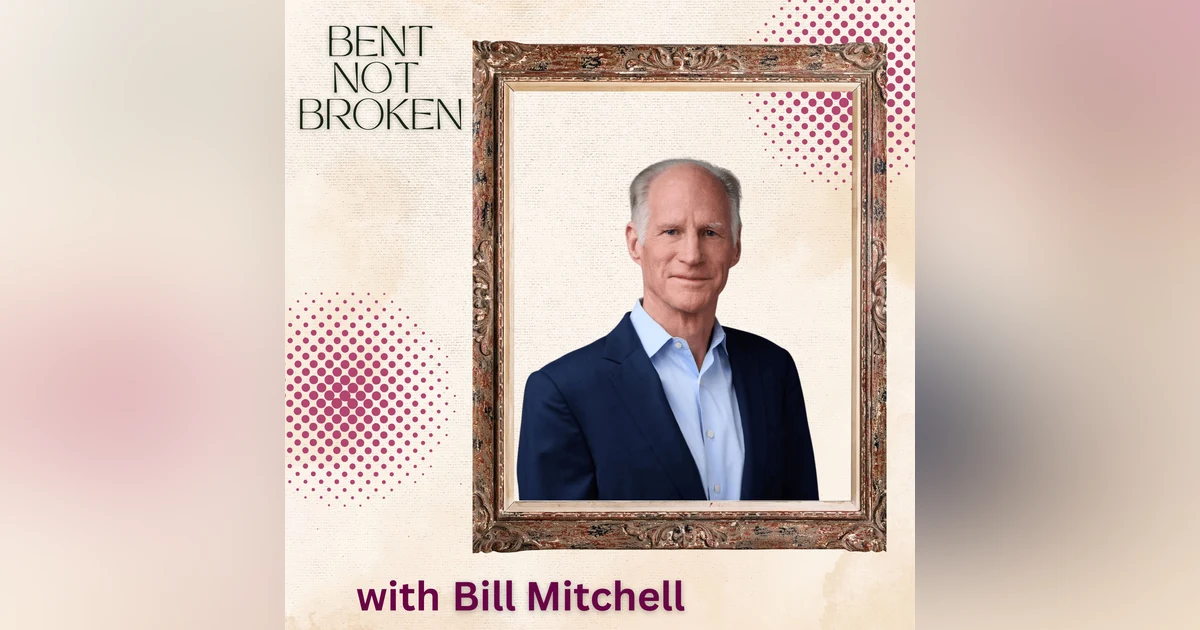
In this powerful episode of Bent Not Broken, Deborah sits down with William R. Mitchell, a nationally recognized attorney and debt relief expert, to uncover the truth about credit cards, debt, financial recovery, and rebuilding financial stability after life falls apart.
For many women navigating divorce, single motherhood, emotional abuse recovery, or starting over after marriage, financial stress can feel crushing. Reduced income, legal expenses, emotional burnout, and overwhelming debt often collide at the exact moment women are trying to heal and rebuild their lives.
This episode explores:
- Why credit card debt can quietly keep women trapped after divorce
- How financial stress impacts emotional healing and recovery
- Why your credit score is not a reflection of your value or self-worth
- The emotional reality of starting over financially after marriage falls apart
- Practical strategies to regain control of your finances and rebuild stability
- How debt, shame, and overwhelm can keep women stuck in survival mode
- Why financial healing is a critical part of divorce recovery and rebuilding your life with purpose
Practical Financial Recovery Strategies Shared
- The Snowball Method for paying down debt and rebuilding financial confidence
- How to evaluate debt settlement, negotiation, or bankruptcy options
- When stopping payments may become part of a debt settlement strategy
- How to legally stop collection calls and reduce emotional stress
- Why gaining clarity over your finances is the first step toward rebuilding stability
- How to prioritize your family’s wellbeing while recovering financially after divorce
For Single Moms & Women Starting Over
If you are choosing between paying rent, feeding your children, or making a credit card payment, this episode is an important reminder that your survival and your family come first.
Deborah and William remind listeners:
- You are not broken
- You are not failing
- You are not alone in this recovery journey
You are rebuilding after divorce inside a financial system that often leaves women feeling lost, overwhelmed, and unsupported. But with the right knowledge, strategies, and mindset, it is possible to heal financially, reclaim your confidence, and create a more stable future after divorce.
Resources Mentioned
- Legal Edge Debt Solutions (Free tools, assessment, and resources)
- Free book: Say Goodbye to Credit Card Debt
- Debt Relief Resources Guide (includes creditor communication templates)
Enjoyed this episode of Bent Not Broken: Life After Divorce with Deborah Griffiths?
Don’t forget to rate, review, and subscribe on Apple Podcasts and Spotify so more people searching for life after divorce, divorce recovery, co-parenting, dating after divorce, and healing from gaslighting can discover this empowering podcast. Every review helps others find hope, inspiration, and practical tools for thriving after divorce.
Explore more resources: Visit BrokenToBoldness.com
for coaching, workshops, and guidance on divorce recovery and life transitions.
Follow Deborah Griffiths for daily empowerment and support:
- Instagram: @BrokenToBoldness
- Facebook: Broken to Boldness
- LinkedIn: Broken to Boldness
Take the Living Bold Assessment
Remember: divorce may bend you, but it does not break you. You are stronger than you think, and your bold new chapter starts now.
Disclaimer: The commentary and opinions available on this podcast are for informational and entertainment purposes only and not for the purpose of providing legal or psychological advice. You should contact an attorney, coach, or therapist in your state to obtain advice with respect to any particular issue or problem.
Welcome to another episode of Bent Not Broken. Heartbreak and trauma may feel like the end of your story, but here it's the beginning of a bold new chapter. I'm your host, Coach Deborah Griffiths, and this is the space where women rise, rebuild, and rediscover their purpose. Remember this truth. You are bet, not broken. What if everything you've been told about credit, debt, and financial freedom was designed to keep you stuck? Today's guest is pulling back the curtain on an industry most people don't fully understand, but one that impacts millions of lives every single day. William R. Mitchell is a nationally recognized attorney, author, and expert in debt relief and settlement. With over two decades of experience and a rare 360-degree perspective representing both consumers and major debt resolution companies, Bill has helped thousands of people break free from overwhelming debt and reclaim their financial future. If you've ever felt trapped by credit cards, confused by your FICO score, this conversation is for you. Welcome to Bent Not Broken, Bill.
SPEAKER_01How are you, Deborah? Thanks for having me on.
SPEAKER_00I'm doing great. I'm very excited about this conversation because I'm sure I'm going to come away with some tidbits as well. So let's dive in.
SPEAKER_01Good.
SPEAKER_00You've worked on both sides of the debt industry. What's something most people don't realize about how the system actually works?
SPEAKER_01Well, I'm a business lawyer here in Orange County, California. And through being a business lawyer, I represent a lot of owners of small business and entrepreneurs. And by representing a number of entrepreneurs, I met people who got into the debt relief industry, some of them over 20 years ago. It's what I'll call a marketing-based business. There is a service component, which is the settling of the debt, but it's primarily driven by marketing and sales. Key perspective that I want to share with the consumers is when you get into financial trouble, amazingly you will find yourself bombarded by solicitations. Those are people who, just like your creditors, access your credit information, know you're in trouble, and are trying to sell you a solution. So here you are with a financial burden, struggling, and now you're getting bombarded with these solicitations. So one of my perspectives I learned is that consumers unfortunately sometimes are sold a solution that's not right for them rather than trying to figure out the solution that's best for them. And that's one of the key takeaways I got as an attorney for these clients. To flip it, when I started representing consumers, that's how I learned so many people were in the wrong situation. That I would hear the consumer who had been sold a solution that either they didn't understand or was not right for them.
SPEAKER_00That's a great point because I've seen some of these solicitations come, you know. I think we all are bombarded with credit card solicitations, you know, these transfer year fees, 0% interest for 12 months, 18 months, right with a much lower interest rate. And then if you don't pay that off in that time, then it's if you read the fine print, that interest rate really skyrockets.
SPEAKER_01And Deborah, if noticed, everything you get from a bank regarding your credit card is fine print. There's a few provisions that they pull, but everything else is in the smallest print legally possible.
SPEAKER_00You really need that magnifying glass to see it. So many of our listeners are women who have gone through a divorce, maybe they've left a toxic relationship. Their self-esteem is already pretty low. But one of the things that's important, not only in recovering and healing themselves emotionally and physically, but it also financially.
SPEAKER_01Now, on every credit card statement, there's a box that says, how long it will take if you only make the minimum monthly payment. Most people gloss over that, but it's right there on my credit card statement, 22 years.
SPEAKER_00That's a long time.
SPEAKER_01But the point is, it's a trap. It's a way for them to trap you in the cycle of debt. So it's I haven't solved your problem about how they manage it, other than to be careful not to get trapped, because then your dollar is going more towards interest that doesn't buy you anything than actual paying off the debt.
SPEAKER_00Okay. So for the single mom who has to choose between paying rent, buying some groceries, or paying that credit card bill, what should they prioritize without hurting their future?
SPEAKER_01Well, you know, the rent, food, and car.
SPEAKER_00Okay. So put the credit card last.
SPEAKER_01Yeah. Keep in mind that a lot of people fear the FICO score. Yes. It's become almost a deity. But keep in mind that the FICO score was invented by the creditors. And it's a score that the creditors use to tell you how well you are playing their game. And remember, the credit score doesn't have any connection to your financial well-being. It has to do with your likelihood to pay back alone. Okay. That's why if you have little or no debt on your credit card, it hurts your credit score. They like you to have debt on your credit card. They like you have around 30-35%. That's an optimal amount to have on your credit card to make your FICA score work. But if you've got other things, don't get sucked into, I got to cheat somewhere else. Don't cheat your kids, don't cheat your landlord, don't cheat your car to pay off that credit card. If someone who actually gets behind, where you just say, I'm barely making my minimum monthly payments, then you need to think about your debt options. And if you're a renter, in other words, you're not protecting equity in your home. This doesn't sound right, but you're almost in a better position because you have more flexibility. Someone who has equity in their home can't go down and file for Chapter 7 bankruptcy and wipe out their unsecured debt because they have wealth. But if you're just someone who's renting, all of a sudden debt settlement or chapter seven are very viable options for you.
SPEAKER_00How can a single mom realistically start tackling debt when she has little to no extra income each month?
SPEAKER_01Well, it depends how little you have, but let's start with the easiest way. The easiest way is if you're able to pay your minimum monthly payments and have a little more, take one credit card, make the minimum monthly payment on all the other credit cards, but one, and then make an extra payment on that one card until you've paid it off.
unknownOkay.
SPEAKER_01And then you do that again with the next card. I'm stealing this idea from Dave Ramsey. It's called the snowball method. I'm willing to steal good ideas from anybody, Temperatures, but it does work. Now, if you can't make the minimum monthly payments, that's not going to work. And you need to think about something else. You need to think about chapter seven, credit counseling, or debt settlement. Just to throw in a quick plug, I have a website called legaled solutions.com. I plug it not only as I like visitors, but because it has content in there that's useful and it also has an assessment that a consumer can plug in their information and their goals, and it lets them know what debt option is kind of best for them based on their financial situation. So it's helpful.
SPEAKER_00Perfect. I'll have that information in the show notes as well. Thank you for sharing that. If a single mom, or rather, any woman or man is being harassed by debt collectors, what are their rights and how can they protect themselves without adding more stress?
SPEAKER_01Well, there's the Fair Credit Protection Reporting Act. And that is the federal law that protects consumers from undue harassment. And there's basic protections, the law that they can't call before eight o'clock in the morning or after five o'clock at night. But what I would suggest you do is write them a letter. I know we live in the age of text, but if you want to send a law, a legal notice to somebody, send it in a letter. If you've got the time, send it certified, but that's not essential. The key is you send the letter, you keep a copy of it, and you ask them not to call you anymore. And they have to abide by that.
SPEAKER_00I think I also heard that they're not supposed to call you at work, or you can ask them to do that as well.
SPEAKER_01On my website, I have a booklet called Debt Relief Resources. You can download that for free. Doesn't cost you anything. In there, it has a standard letter that you would send to your creditor asking them not to harass you.
SPEAKER_00So we have that federal protection. Do each state have their own set of protections as well as on to layer on top of that Fair Debt Act?
SPEAKER_01Many of them do. I live in California. There's the Rosenthal Act. Uh, that's protection. Certain states, New York, New Jersey, uh, California, probably are going to have those acts. States that are more rural, southern states are less likely to have those acts. I talk to consumers in about 36 states, and the law is different. How a consumer is treated in South Carolina is not the same as how they're going to be treated in California. Not saying California is bad, South Carolina is different because it's different things, but there's a little bit of old school justice still, a little bit in the south, less so in the northeast than in the west.
SPEAKER_00Got it. Is debt settlement a safe option for single moms, or are there risks that they should be aware of before considering it?
SPEAKER_01Well, Deborah, it's both. It works, but there are risks. And let me just talk about the good part. It works. Meaning if you put yourself in a position to settle your debt with the creditors, and I'll talk about how you do that in a second, they will reduce the debt. They will discount the debt anywhere from 30 to 50 percent, sometimes 60, but usually it's it's 40 to 50 percent. But to get there, you have to stop paying on your credit cards. A creditor will not negotiate the settlement of a debt with you until you're in default and they've charged off the debt. That that is a fact. And so if you get behind on your credit card and you pick up the phone and you say, I'm a single mom and I'm struggling, the person you're talking to about the phone at B of A or Wells Fargo Chase can't discount your debt. You have to be in default and you have to be charged off for them to discount that debt. And that's usually 120 to 150 days following your last payment. So surprise, surprise, you stop making that paying them, you will get collection calls. Your credit score will plummet, but it will put you in this position to negotiate a settlement of the debt. So I've told you the positive thing that they will settle your debt and your risks, lower credit score, the collections, possibly even getting sued. You could do this on your own, or you can hire a debt settlement company. But if you're someone who simply cannot pay back the amount of debt you have, debt settlement works. This is the difference between debt settlement and credit counseling. Credit counseling is good if you have a temporary problem, but you have stable income and you're trying to restructure your existing debt. But that is a plan to pay back 100% of your debt owed, just spread out over time at a lower interest. Debt settlement is an actual reduction in your amount of debt. So you have to figure out what you want to do, what you want to accomplish.
SPEAKER_00And whatever decision you make, there's a little bit of consequences, and it would it could impact your credit score more significantly than the other. And correct me, but my understanding also is if you actually settle the debt and settle it for a lesser amount than what is owed, the bank, whether it's Wells or Chase or whatever, could send you like a 1099 or one of those IRS forms saying, well, you have to actually claim that on your taxes for the following year.
SPEAKER_01Deborah, you have done your homework or or or you pick this up elsewhere, but that's 100% true. If you have a debt for $10,000, you settle with Bank of America for $5,000, they may send you a form that says you received a $5,000 benefit and you should report that. I will say this, they don't always send it. And I am not providing legal advice when I say this, right? But I would never report that on my IRS form that I received that, and I would make the IRS find it and hunt me down. That's okay again, that's personal advice, not legal advice.
SPEAKER_00I got it, got it. But again, full disclosure, transparency, and in that whatever option you take, there's consequences with everything we do. Every choice we make, there's pros and cons. So weigh those pros and cons.
SPEAKER_01And in each choice, the negative impact to the creditor, whether it's chapter seven bankruptcy or debt settlement, where they're losing the principal that they charge, is just going to have greater consequences. The least consequence is if you do a loan consolidation where you consolidate your debts. So you're just paying lower interest. It has very little consequence. Next less consequence is credit counseling. It's gonna, they are gonna report it. There is some consequence, but you're paying back 100 cents on the dollar, so it's less consequence. Next negative consequence is debt settlement. The most negative consequence is chapter seven bankruptcy or any kind of bankruptcy, because then that's reported on your credit report for seven to ten years.
SPEAKER_00Many single moms worry about their credit score because they want to provide stability for their kids. Should that be the main focus, or is there something more important?
SPEAKER_01I, as we talked about a little bit earlier, your credit score is important when you're gonna make a large purchase. In other words, if you're gonna buy a home in the near future, buy or lease a car, yes, you want to dress up your credit score. You want to have a good score. So that's important. But if you've got a debt problem, you're more than likely not gonna be buying a house in the next year or buying a brand new car. And what I would tell you is your debt problem is a more important priority than your credit score. And in the short run, you're better off tackling the debt problem, having your credit score take a hit, because if you tackle your debt problem, you're reducing your amount of debt. A credit score is a picture in time of your credit worthiness. That means your credit score is dynamic. I would ask you or your listeners to go pull out old credit scores. They're not identical, they move around. So if you tackle your debt, you're gonna have a short-term hit. But when you tackle your debt, you pay down that debt. So if you have less debt over time, your credit score is gonna go back up.
SPEAKER_00Got it. What are some financial traps that specifically impact single moms more than others?
SPEAKER_01And I'm gonna be a slight old school sexist pig for a second. I think we live, we grew up in a world where financial affairs were the domain of the man, it's less so today. But I think there's still a habit in some cases that the woman is not paying as close attention as she should. And that's changed enormously in our lives. Every consumer has to be aware. And if you're preparing for, going through, or on the other side of divorce, part of that process, and it's mostly an emotional process, but it's also a financial process. So it requires taking ownership of your financial empire, no matter how big or small that is, to learn some basic financial literacy to navigate. That also includes learning about credit cards and the traps that we're talking about.
SPEAKER_00There's so much shame around debt, especially for moms who feel like they should have done better. What would you say to her?
SPEAKER_01Let me tell you this. That's a great point. And I'm the banks have no shame of making as much money as they possibly can. The banks have no shame in manipulating the financial system to put vulnerable people in a worse off position. They have no shame in trapping you in a cycle of debt that they hope is endless. And you as a consumer. Consumer has to do what's in your best interests. Period. It is pure dollar and sense.
SPEAKER_00Good point. If you could sit down with a single mom who feels completely overwhelmed and financially stuck, what are the first two to three steps you tell her to take today?
SPEAKER_01Again, this is you're talking to an old school lawyer, and I'm going to say, first of all, de-emotionalize it. Stop being overwhelmed, shameful, worried, and really just look at what you have. And if you need to get a friend, a family member, an expert to help you look what you have and sort through it so you understand what is your, you know, everybody has a financial empire, whatever it is, and to understand what it is, whether it's your investments, your savings, your deductions at work, are you setting aside any savings? Gain plan your financial universe. And the sooner you tackle that and gain, and you know this, so much of getting through something is walking, stepping forward, walking through the fear, walking through the anxiety, and you take that first step and you feel better. And then you take the second step and you get some measure of calm and control. And you just have to kind of, again, not stop worrying about it, stop being scared of it, and step into it. And a lot of times it's action and knowledge is what you need to kind of get on the other side of those things.
SPEAKER_00I would agree with that. I sometimes will say action brings clarity. Take that baby step.
SPEAKER_01It's you know, you've read a lot, you've been through your own experiences. It's it's tried and true to advice, really.
SPEAKER_00It is.
SPEAKER_01And information is also powering.
SPEAKER_00Absolutely. Absolutely. Bill, this has been a great discussion. Thank you so much for your time. If listeners want to get a hold of you, do you have a book or and say your website again? So Yeah.
SPEAKER_01My my website is legaled solutions.com. And on that website, I do, I just literally am just releasing my book, Say Goodbye to Credit Card Debt. And the debt relief resources that I mentioned earlier, and the book, Say Goodbye to Credit Card Debt, are both available at legaled solutions.com. And they're both available for free.
SPEAKER_00Wow, that's great. Thank you. Thank you again for your time. This has been a great discussion, and what a wealth of knowledge for our listeners. And hopefully they will take some of the sage advice if they need it.
SPEAKER_01Perfect. Hey, enjoyed it very much. Thank you.
SPEAKER_00Thank you. Thank you for listening to today's episode of Bent Not Broken. I hope that this episode reminded you that even through life's toughest moments, you are bent, not broken. If this message inspired you, please share, rate, review, and subscribe, as it helps us reach more women who are ready to rise and rebuild. And until next time, keep living bold and walking in your purpose.