Is Divorce Real? From the Fifties to The Future: How Television Influenced Modern Family Life with Julie Lokun
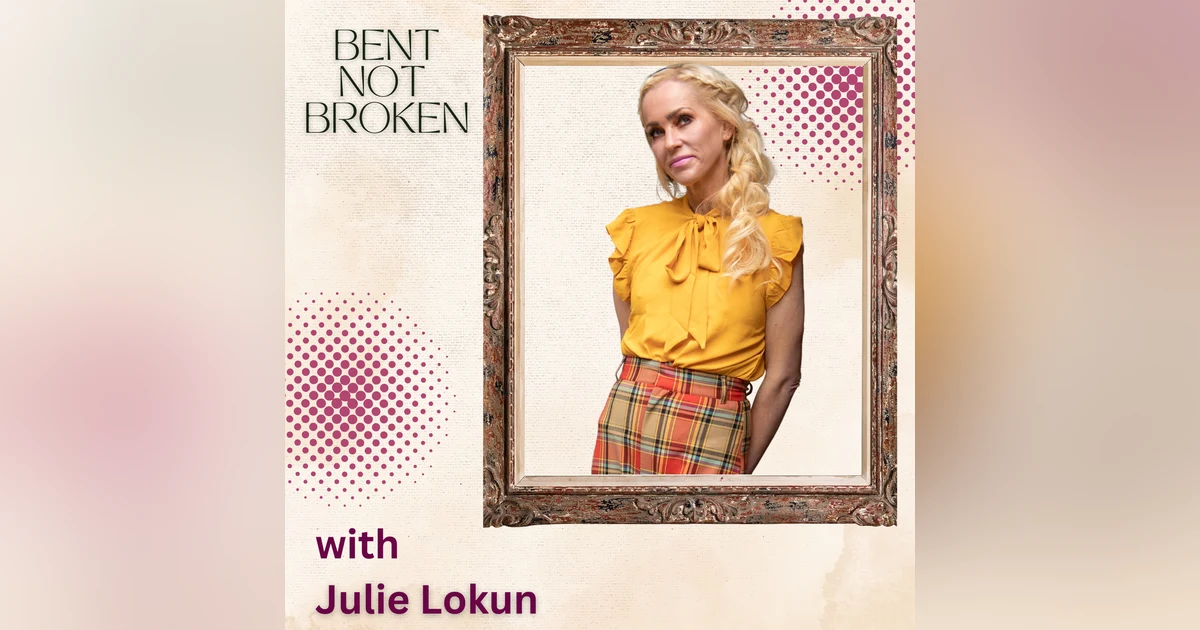


In this fun episode of Broken to Boldness, host Deborah Griffiths joins forces with media strategist and visionary Julie Lokun, JD, to unpack how television has defined, distorted, and ultimately diversified the American family.
From the black-and-white idealism of the 1950s nuclear family to today’s kaleidoscope of blended, single, and chosen families, Deborah and Julie trace how media both mirrored social change and molded our collective identity. They reveal how each decade’s programming—from Leave It to Beaver to Modern Family—captured the cultural tension between appearance and authenticity, and how storylines about marriage, motherhood, and divorce evolved alongside America’s laws and values.
Through a lens of media analysis and human truth, Deborah and Julie explore what happens when the picture-perfect family portrait begins to crack—and real stories of resilience emerge. This is not just a conversation about entertainment; it’s a deep reflection on how our screens have shaped the way we see ourselves, our relationships, and what it means to belong.
Key Themes:
- 1950s: The rise of the nuclear ideal—prosperity, conformity, and moral storytelling.
- 1960s–70s: Feminism, no-fault divorce, and the first signs of liberation on TV.
- 1980s–90s: The “family values” façade versus the reality of working parents and blended homes.
- 2000s–2020s: The new media family—diverse, inclusive, and emotionally complex.
- How television became both a mirror and a molder of family evolution.
Modern Takeaway:
The image of the “perfect family” was a production. What emerged in its place is a more authentic, multifaceted portrait of love, survival, and connection. Deborah and Julie invite listeners to consider how the stories we consume continue to redefine what it means to be family in a changing world.
Listen to this episode and reexamine the stories that shaped your own.
Connect with Deborah Griffiths:
Connect with Julie Lokun, JD:
💬 Enjoyed this episode of Bent Not Broken: Life After Divorce with Deborah Griffiths?
Don’t forget to rate, review, and subscribe on Apple Podcasts
and Spotify
so more people searching for life after divorce, divorce recovery, co-parenting, dating after divorce, and healing from gaslighting can discover this empowering podcast. Every review helps others find hope, inspiration, and practical tools for thriving after divorce.
🌐 Explore more resources: Visit BrokenToBoldness.com
for coaching, workshops, and guidance on divorce recovery and life transitions.
📲 Follow Deborah Griffiths for daily empowerment and support:
- Instagram: @BrokenToBoldness
- Facebook: Broken to Boldness
- Eventbrite Events - Register for a monthly Divorce Recovery Workshop
✨ Remember: divorce may bend you, but it does not break you. You are stronger than you think, and your bold new chapter starts now. ✨
Welcome to another episode of Bent Not Broken. Heartbreak and trauma may feel like the end of your story, but here it's the beginning of a bold new chapter. I'm your host, Coach Deborah Griffiths, and this is the space where women rise, rebuild, and rediscover their purpose. Remember this truth. You are Bent, not broken. Welcome to another episode of Bent Not Broken. I'm really excited today because my next guest is a legal eagle and the facilitator of dreams who is changing the trajectory of underserved entrepreneurs using their voice to make an impact. As a mom of four boys, she has learned to leverage her power to lead a bustling household while also serving as the founder of the MediaCasters and the iconic conference CreativeCon. In addition, my guest is a best-selling author and podcast host of two shows, which rank in the top 1.5% globally. She helps individuals and organizations share their stories through publishing, presenting, podcasting, and public relations. Please help me welcome to the show the one and only Julie Loken. Welcome, Julie.
SPEAKER_02Well, I'm very humbled, Debbie Griffiths. Thank you for that wonderful introduction. And I can't wait to dive deep into today's episode and understand what is going on in today's culture.
SPEAKER_01What's happening here? You know, it really is shocking to think about the divorce rates and the broken homes. I'm excited about today's episode because we both decided to delve deep into television and how that media may be shaping or maybe breaking down the concept of family and how it talks about divorce. So, Julie, did you know that television came into being really in the late 1920s? But it really wasn't introduced to the public until 1939 at the World Fair in New York City. Most of us probably realize that TVs came into individual households in the late 1940s, and really by the 1950s, most households had a television. What I find interesting is looking at each decade and realizing what was going on in the world versus how TV was portraying at, including any mention of portraying of families and divorce and even raising families in divorced households. This is post-World War II prosperity. You got the baby boom, you got suburbanization, and then you have the Cold War anxieties. So, Julie, what were some of the TV shows at that time?
SPEAKER_02Well, the one that comes to mind immediately is I Love Lucy. Yes. That was the iconic show of an up-and-coming couple that were trying to make it in their industry, a comedic show, Hilarious. And I think it was maybe one of the first shows that ever portrayed a pregnancy on television because that was Captain. It was. And if you remember, they had separate beds. Right. How did they how did Lucy get pregnant? I'm wondering. I don't know. I don't think they were even allowed to say the word pregnancy or I'm pregnant on TV. They were very creative. She sang, I'm having a baby, or he was singing, I'm having a baby. Yes. Very creative, but they were the epitome of just a lovely couple, a fun couple. And you know, they reflected the times because no one spoke of divorce, but ironically, Lucy and Desi, they're behind-the-scene antics, and their relationship was not on an even keel at that moment in time.
SPEAKER_01Not even what was being portrayed on television. So behind the scenes showed a very different picture. And we know more about that nowadays than we did, than I'm sure the audience did back in the 1950s. You know, another show at that time was Father Knows Best. And I remember growing up watching those reruns along with Leave It to Bieber. I always thought it was funny is how these women are in dresses while they're cleaning the house. And, you know, and the father comes home, you know, from the day at work and everything is hunky-dory. Beautiful. It was beautiful. Right, right. Perfectly dressed, right? Their makeup. Everything. And then you got these well-behaved kids. But, you know, any conflict that was being shown ended up really with immoral lessons. You know, they didn't really, you know, really do any fight, but maybe somebody was had struggling in school and didn't want to tell their parents or things of that nature. So they showed a little bit of conflict to tell the story and keep the audience tuning in. But it all ended on a happy note. Life was happy, life was good. And then we move into the 1960s. This is when we have the civil rights movement, the Vietnam War, the counterculture, and feminism is starting to emerge. What were some of the shows that you liked from the 1960s, Julie?
SPEAKER_02And to be fair, I did not live in the 1960s, so I don't have a great foundation of shows in the 60s. Can you give me a couple ideas about shows that you loved in the 60s? I was a big fan of reruns. Once we get into the 70s, then I'll really have a lot.
SPEAKER_01Yeah, mostly in the 60s was reruns for me too. But you've got a fun show like Bewitched. Oh, I love Bewitched. Yeah, right. You know, that was a nutty show too, right? It it was. But again, this was a happily married couple, and of course, she had her comedic antics of who wouldn't want to twitch their nose and have the house clean. Right. But one show they started emerging was Julia. And Diane Carroll was the lead on that. And she portrayed a widowed black woman. She was a nurse. So that's the first time they start portraying, still in the late 60s, start portraying a single mother raising a child. And then probably everyone's all-time favorite, the Brady Bunch, that emerged in 1969. That show didn't talk about divorce. We have a mother and a father who were widowed. Their other spouses died, and they bring in a blended family. So we see for the first time a blended family coming into play.
SPEAKER_02And that aligns with the civil rights movement. It was the big time of unrest in the United States. So that is a great reflection of what was going on in the United States.
SPEAKER_01True. And you know, I remember watching. Something controversial back then, too. I'm sure it was. But again, I think people were still looking for some way to escape. Because I remember the six o'clock news sitting down at dinner with the family, and the news would start portraying how many casualties were going on each day from the Vietnam War. So that's the first time a war was being brought into the family living room. You remember that, Debbie? I do. I do. I do. I remember listening to the news, and it's depressing when you're sitting there at dinner, like, why are we hearing about all this? I didn't quite understand all of it, but I do remember hearing later on that was the first war that was actually brought into the living room.
SPEAKER_02Seeing the visual images makes it feel like it is a part of your life as opposed to reading it in a newspaper or just seeing the images because you can see it in real time. It changes the way you react.
SPEAKER_01Shows a reality that I don't know that we were all ready to see. You know, war is brutal, as we know. All right. So let's go to the 70s. Oh, women's language. Women's Lib is coming into play. And then did you know No Fault Divorce begins in California? They started it in 1910. Right, right. And then we had the oil crisis. Remember that with the long lines and to go on odd even days to get your gas? I really don't. I've read my history books. I remember my parents having to do that, and they remember that conversation. Anyway, so what were some of the shows that you remember from that time?
SPEAKER_02First of all, okay. To be honest, it was Sesame Street and Mr. Rogers. The Brady Bunch and the Partridge family were woven into my consciousness in the 70s. Right. Those family shows, which oddly enough, were not intact families. They were not nuclear families that we were used to seeing, like in the 50s and maybe in the 60s. So things were changing, and we were getting used to seeing families that didn't look like mom, dad, brother, sister, you know, just that normal nuclear family. And it started to become normalized. Carol and Mike Brady. Where how did they have six kids? Three boys, three girls, or a widow and widower. I mean, just seems so perfect. No, I never questioned that. And then the Partridge family, where was the dad? It was all starting to become normalized in the 70s. The family unit looked a little different in the 70s.
SPEAKER_01Yeah, we didn't really question it or think about it because again, everybody was kind of happy. And I think Shirley Partridge, the mom for the Partridge family, I think she was a she was widowed as well. So single parent. She was a single mom with you know five kids, and then they take their show on the road. One show that talked a little bit about divorce was One Day at a time. That's right.
SPEAKER_02And here was one. I don't know how widely popular that was, but that was a real gritty story of a woman that was trying to make it as a single divorced mother.
SPEAKER_01Right. And they actually showed her as a divorced mom. So it was slowly starting to become the word divorce was actually starting to be said on TV and starting to show some normalcy, I think, to a divorce situation. But again, I don't think what was always portrayed is actually what's always real, what really happens in a normal household. And TV, I think, has a way of sugarcoating things. We need that sense of escape, or maybe we need that sense of hope that life could be that way.
SPEAKER_02Speaking of sugarcoating, how about that Archie Bunker? He really sugarcoated everything.
SPEAKER_01And you know, that show would probably not be on the air today. I don't think so. But it and and it probably wasn't almost going to be on the air back in the 70s, but it did, I think it was CBS that brought it on the air. And, you know, but again, we saw open debate uh about gender roles and generational conflict between Archie and Edith and Meathead.
SPEAKER_02If you look back, I think he emotionally abused Edith by calling her dingbat. He was not nice to her.
SPEAKER_01No, he was not nice to her.
SPEAKER_02No, no. Uh again, those are. We kind of took it as a generation. We thought it was funny, right?
SPEAKER_01And I think if you were to ask the generation at the time, I see my grandparents actually more like Archie and Edith. That's probably how they talk to each other. It was a generational thing, and it played off in the 70s as being kind of funny. There were some morals to the, you know, a moral story to it as well. But it that show certainly would not be, I don't think, accepted today on the air.
SPEAKER_02There was a divorce in that sitcom as well. Michael and Gloria were divorced at the end of the sitcom. I think so, yeah. Yeah. So that really showed a grittier side to life, not the rose-colored glasses that we typically liked back then.
SPEAKER_01Yes. Well, I think sometimes we still do, but really what show do you watch right now that's rosy and happy? Oh.
SPEAKER_02I'm gonna give you five seconds to answer that.
SPEAKER_01I don't think there is anyone right now because so much reality TV between all the real housewives, those series. You got Sister Wives, which we love, which we do love. I find it very interesting. I am not surprised by the fact that polygamy does not work. They're prime examples of that, and dysfunction and narcissism, and everything else that goes into it. Yeah, yeah.
SPEAKER_02It's a lot. So we're in the 70s, we're seeing this little bend, if you will, if we're on the bent, not broken, right, you know. The broken roadmap. Yes, it is there's a little bend in the family structure. You're you're feeling it, you're feeling it because people are ready for change. People don't like the patriarchy in the 70s.
SPEAKER_01They want things a little bit more real, yeah, but yet not 100% real.
SPEAKER_02Right. And then comes the fun loving 80s. Exactly. This is the decade I should be living in right now.
SPEAKER_01Well, you know, I always love the music, and I love the 80s. You know, I love the music from the 80s. That's just a kind of good time.
SPEAKER_02Who were you in the 80s? Were you in college or were you in high school? Where were you were you making babies in the 80s? Yes, I was. I had two in the 80s. She was making babies in the 80s.
SPEAKER_01I was making babies in the 80s.
SPEAKER_02That rhymes, yeah. Okay, so you were making babies in the 80s, and so that was the Reagan era. The Reagan era. Yeah. So that so that was a time of a lot of optimism. We felt really powerful as a nation. We were bringing that wall down, right? And we felt powerful. It was a time when it was just fun. We were wearing neon, we were wearing plastic bracelets, jelly shoes. Our hair was big as heck. The hairstyles were nuts. Shoulder pads was fun, shoulder pads, the styles crazy. I can't even believe that we were allowed to wear that stuff. It was just a fun time that really had no meaning to it in terms of style. But where were those shifts within the family? I mean, you were making babies in the 80s. I was graduating middle school, going into high school, figuring out guys and probably screwing it up, doing a lot of probably nutty things that we won't talk about here. But what was the family dynamics and culture like back then, in your opinion?
SPEAKER_01Well, it showed two different things. We had shows then that really epitomized the traditional family, like the Cosby show and family ties and even growing pains. And then you have a show like Kate and Allie, who showed two divorced women who came together to build a home. So it's it's a little bit of a uh dynamic there when you got still people are wanting that good old family values. You know, the those shows like the Cosby Show at Family Ties, they almost remind me going back to the 50s. Those type like the Leave It to Beaver, you know, yeah, but although the women didn't wear dresses cleaning their house, there was more that epitome of the family being together.
SPEAKER_02I see the strong dynamics in the mothers. I see the juxtaposition of the Huxtables and the Keatons, which are the Cosby show, and family ties that was must-see Thursdays, wasn't it? Must see Thursdays. And they were the strong family units. And what was very cool is that we had one family represented that was a strong, wealthy black family, which was the Cosby family. And of course, we know what happened to Bill Cosby and his fall from fame.
SPEAKER_01Fall from grace. Yeah.
SPEAKER_02Fall from grace. We had that juxtaposition of really stronger women, mother figures, and then we had the Connors of Roseanne and the married with children, right? And then I started learning what dysfunctional families that were intact looked like.
SPEAKER_01Right.
SPEAKER_02The Bundies and the Connors. Yep. Right.
SPEAKER_01So we had that and then we had this. Right. And really the Bundies and the Connors were blue collar workers, basically the middle class. Whereas, like I think the Cosby.
SPEAKER_02And we never saw that before, did we? The blue collars.
SPEAKER_01No, we really well, maybe the bunk all in the family started a little bit of a little bit of that. But definitely, you know, the Connors was the typical blue-collar family. And there's nothing wrong with that. It was just a different type of that was being being shown. And again, the comedic timing of Roseanne and John Goodman and the kids, it made for a great show. Made for a great show. Which goes to the 1990s. That's really when we had the end of the Cold War. That wall finally came down. But we had culture wars and latchkey kids. Remember that term?
SPEAKER_02I do. And flannel. I remember wearing a lot of flannel.
SPEAKER_01Flannel? Okay.
SPEAKER_02You don't remember that, do you?
SPEAKER_00Well grunge bands.
SPEAKER_01No, no, I don't. Sorry. That's okay. That's okay. Can't remember what I was wearing. Again, I my third baby came along in the 1990s. So I was in a blur. I was busy being a mom and raising kids. But the TV shows at the time. This is interesting. Full House. Full House is a very popular show. But it shows a widower who has his friends. They all live together and they all co co-parent three girls. A different family. Yes. A blended family. Then you have the Fresh Prince of Bel Air, where you have extended family that steps in. And then there was the step-by-step show that had Patrick Duffy and Suzanne Summers. They were a blended family.
SPEAKER_02The nail we're starting to really normalize step families, blended families, divorced families. It's almost becoming unequal. Like the nuclear family is almost going away in these television shows.
SPEAKER_01Right, right. In the 1990s, it starts to go away. You've got the single dads, you got the blended clans, you got extended kin. Divorce is now common and they often portray it either through comedy or through specific episodes. And, you know, there's a lot more emphasis on co-parenting. Very, very interesting. Now we move into the 2000s. Remember Y2K?
SPEAKER_02Yes, this is when I start making babies in the 2000s. I do remember Y2K, and still regular TV channels had a lot of power on us. The CBS, NBC, ABC, and then the Fox Network really started to come in. The 90210s, the Melrose place really had a grip on us. We weren't inundated by cable or streaming at that point. I know a lot of you listening might not even know what we're talking about. So there weren't as many options. We had limited options. We were glued. Yeah.
SPEAKER_01Yeah. Yep. Yep. Absolutely. I'm not sure when cable television finally came in. It might have been in the 2000s, but I remember growing up in the Los Angeles area, we had more than the just the three basic channels of ABC, C B S N B C. We had a few more channels. But I think for most of the country, you had basically those. Three channels, and you either used rabbit ears to get the reception, or I remember dad climbing up on the roof to attach the antenna to get TV reception. Oh, yeah, yeah, yeah. That was all before cable.
SPEAKER_02But do you remember when you actually had to get up to change the channel?
SPEAKER_01Yes. Uh actually, my sister and I were the remote for my dad. He would say, go change it to channel two, or can it go change it to channel seven? Yeah, we were his remote. But yes, I do remember. And it's so long ago, but it really wasn't that long ago. But yeah, remote TV has really changed us and spoiled us and probably led us to be more of a couch potato than ever.
SPEAKER_02Right. I wonder, as a society, a collective society, how much weight we've gained since the remote control has been invented.
SPEAKER_01That's a good question. We'll have to research that. Let's Google that. Let's Google that. But in 2000s, you know, you had Desperate Housewives. Did you ever watch that show?
SPEAKER_02I did. That was huge. And I think that really was the onus in the beginning and the spark for reality television.
SPEAKER_01I think you're right, because it talked about affairs. It talked about divorce and it talked about secrets.
SPEAKER_02Everything that was soap operas. Well, we got to talk about soap operas too. Oh, yeah. All my children, one life to live, as the world turns. Yep. My stories, my mom watched all my children religiously. I mean, that's where I learned a lot of lessons.
SPEAKER_01Forgot that was daytime TV. And you know, a lot of those shows started on radio. And then when TV became more popular, they switched it. I just remember reading that some of the soap operas were maybe 15 minutes, and then it went to 30 minutes, and then some of these shows went to hour-long episodes.
SPEAKER_02The era of soap operas and thinking about how Aaron Spelling had really crafted and built such an empire with the nighttime soap operas from Dynasty to 90210 to everything on Fox to the Melrose Place to Love Boat to Fantasy Island. And that is where all the secretive, sensual, bad things that I wasn't supposed to watch as a child, I would be watching. And that's where you saw all the breakdowns, the slaps and the fights and the divorces. And I would see my mother watching it at night, and I'd be peeking in the door. But Aaron Spelling was a true pioneer in teaching me all the true crisis America was in because I think he reflected America's crisis quite well at the time.
SPEAKER_00Right.
SPEAKER_01But I have no idea. I was naive. No, and I I remember watching the Knotts Landing and Dallas and Dynasty. And, you know, to some extent, it was a world that we really couldn't relate to because these were all wealthy, you know, basically wealthy people. Maybe Knott's Landing was more close to middle class America than obviously in Dynasty or Dallas. But yes, you had divorced. They were struggling with their marriages. They were struggling with their kids. So we saw some more real life scenarios, but enough of the glamour and glitz to let us escape for just a little bit.
SPEAKER_02Do you think that was going on in the 1930s, 40s, 50s, but just not portrayed on television at that time?
SPEAKER_01Oh, this is all human nature affairs and marriage and maybe even divorce. Divorce was still kind of taboo, but people got divorced. It's been going on for years. I mean, probably since Adam and Eve, honestly. Uh, but you know, we just the media has not always been up to date with the current realities, and it takes them a while to kind of move through those social norms. And remember, there was back in the day with I Love Lucy, they couldn't even say the word pregnancy. Now, today's TV, I don't think there's any rules. You hear swearing on TV.
SPEAKER_02You can basically watch people conceive a baby on TV. You yeah, pretty close.
SPEAKER_01Or having a baby, and having a baby, yeah, pretty close. How about the 2010s? This is when we had nationwide legalization of same-sex marriage. Oh, yeah. We had the Me Too movement, and now we have the streaming revolution. Wow. So some of the shows, and I think this is really getting into modern times, is modern family.
SPEAKER_02Right? That that is one of the funniest shows, if you ever watch those reruns. It's so funny. And I love that one of the main characters is a gay couple. They're hilarious, and I love how they interact with the other family members. Again, it's the media normalizing relationships and the dips, falls, rises of different kinds of relationships. So the media does perpetuate what it sees in life and culture at its time.
SPEAKER_01Right, right. Yeah, I think that's a perfect example of gay dads and blended clan. Um and now we're kind of coming up to our 2020s.
SPEAKER_02We've got even quantify now. There are too many television shows.
SPEAKER_01There's too many in the 2020s, we're we've dealt with COVID. That's true. Remote work. We've seen some social justice uprisings. There's there is a spotlight on mental health, and there's a rise in what's known as the gray divorce.
SPEAKER_02Oh, yeah, the gray divorce.
SPEAKER_01The gray divorce.
SPEAKER_02Yeah, that's a real trend now.
SPEAKER_01It is. Uh there's more people over 50 getting divorced. You know, they're they make up 36% of the divorce. I'm taking them for half. Yep. Yep.
SPEAKER_02Yeah, that I've heard that from many people. The gray divorce is a rising trend. You know, I think at that point you say to yourself, all right, girl or guy, I it's only downhill from here. So I either leave now and take these last years I have of vitality, or I just like stick it out and just, you know, live a separate life, but live in the same house.
SPEAKER_01You know, and if it's rising or it's there's been an increase now because women have become more independent. There's been more women in the workplace, they know that they can support each other. It's a lot different than in the 50s and 60s. Yeah, that's true. When maybe they were unhappy, they were stuck and they really didn't think of any way out. Um, but you know, I mean, I know for example, it really wasn't until the late 70s when women couldn't even get their own checking account.
SPEAKER_02Right?
SPEAKER_01Isn't that insane? So, you know, that up until you know, up until then, women were really stuck. They couldn't have their source of income or source of money to to to pay the bent, you know, to pay the bills, pay the rent, to get food on the table.
SPEAKER_02So a man had to sign a loan for a car. You couldn't even get a car. Yeah. Yeah. And through history, I knew you could get divorced, but you could only get a divorce on the grounds of infidelity. And that put a lot of pressure on men and women in terms of getting a divorce. I have a question for you, since we're talking historical context of divorce media. Who is the biggest, most cataclysmic divorce in history that you remember that just shook the world and everyone was shocked by? Just that one big divorce that you're like, oh my gosh.
SPEAKER_00You're talking about like a famous person? Yeah, famous person that everyone was shocked by.
SPEAKER_01I can't even come up with one. I honestly can't think of one right now. I'm sorry.
SPEAKER_02Like the Vanderbilts. That was a big one. They were the richest family in the United States. Or Nicole Kidman and Keith Urban, who are getting divorced right now. I mean, that's not in history.
SPEAKER_01No, no, and I think it is shocking because we didn't see that one coming, and it's still so new, and we, you know, we don't. It's so new, and I feel bad for for especially the children. Do you get shocked by people getting divorced anymore? No, I'm not shocked by it. I feel sad.
SPEAKER_00You do?
SPEAKER_01Yeah, I feel sad because having gone through a messy divorce myself, I know the impact it can have on the kids, especially if there's kids and you know involved. I know the impact of the of the of the family structure, like if you, you know, with with parents, grandparents, and mostly even of yourself. The work that's ahead dealing, processing the pain. How do you make a life now that I'm single in divorce? I when I hear it, I'm sad because I know, and I'm sure it it's whatever the case may be, it's it's justified. And I get it, people grow apart, people change, but it's still sad.
SPEAKER_02Yeah. I mean, but are you desensitized to it? I and I'm talking even the Hollywood divorces. I know I imagine you were very upset as I was when Kim Kardashian and Kanye West got divorced. But you become desensitized to it. I am thinking in terms of Hollywood and the evolution of the media. I have become desensitized to it. A little surprised, Keith Urban and Nicole Kidman, because we do invest in their relationship a little bit. We do fall in love with them, their love story, everything seems perfect, and then boom, they're done. Right. And then we get so interested. Like, what happened? Who did who wrong? And we do enjoy the rise as much as the fall, but I think us as a culture, we become desensitized because of the media, and the media becomes a facilitator, just as we've seen in this arc throughout the decades.
SPEAKER_01No, there's a lot of truth to that. Let's look at Ben Affleck and Jennifer Lopez. I mean, you know, again, they're on again, off again, on again, off again. And, you know, that's where you get desensitized when you see certain people that don't seem to appreciate the marriage, you know, what it means, their values, it and it seems that they just think of it as easy come, easy go. You know, it's like changing your underwear. You can change your spouse. And that's where you get desensitized really quickly, is when you see repeat, repeat, repeat. And it's like, okay, when are these people going to grow up and figure out why they're repeating these mistakes?
SPEAKER_02Because they don't care. It becomes just a habit for them. Marriage becomes a habit and they have good lawyers and they have good prenups. So there's not much risk. They probably should be going to therapy or counseling and figure out why they do this all the time. Right. Where do you think the media portrayals of marriage are headed? Where do you think we are going in the 2030s, 2040s? Or do you think we're staying the course, Debs?
SPEAKER_01I think we're gonna probably stay the course. We might see a little bit more portrayal of what it's really like with maybe visitation when the kids come and go, whether some of those struggles it will be somewhat sugar-coated because that's what TV does. But I'm hoping that they open up and show some of those struggles, how hard it is the kids, what divorce goes through. And even for the parent, the struggles that they have to go with keeping a job, uh not much less finding a job, keeping it, and having to do it all, you know, having to keep the house clean, keep the keep food on the table, cook, do the grocery shopping, you know, I like to see a little bit more reality to that. Giving people hope and ideas. But I'm an idealist. I always hope. That's why we need you. We need more people like you. We really didn't talk about reality TV. You know, again, we've got the Kardashians and Sister Wives and all that. How real do you think reality TV is?
SPEAKER_02It's not real, it's real enough to make us as consumers, as content consumers, believe it's real. They craft storylines prior, but it looks real enough. I mean, if you watch the Kardashians, who walks around with hair and makeup like that, beautifully quaffed clothes? They're working their storylines for sure. They don't just roll out of bed and the camera's on. So it is real to an extent, but their storylines are pre-crafted and hair and makeup for sure. I would say pretty much on every reality TV show that's out there.
SPEAKER_01Yeah, it's real, but not real. Reminds me of that old commercial for memory cassette tapes, you know. Is it real or is it yeah, is it live or is it memoric says that glass was breaking from some opportunity?
SPEAKER_02To some extent. They they try to make it more salacious so they can keep their jobs, they can keep their paychecks. It works, sometimes it doesn't work.
SPEAKER_01Yeah, and I'm wondering how they buy it themselves.
SPEAKER_02Do they start realizing, did they lose themselves in in the divorce rate is very high amongst the real housewives. So it's it's just a sad commentary on what's going on in our culture and what really matters at the end of the day. Unfortunately, most things are driven by the almighty dollar. And keeping up appearances, yes, it's nice to live a comfortable life. And there's nothing wrong with a nice lifestyle, but if it dictates how you behave, if you're railroading over people that are most important to you, that could cause a problem going forward for sure.
SPEAKER_01I agree with you wholeheartedly. And on that note, I want to thank you, Julie, for this exciting episode. And it's been a great conversation looking at history and looking at television and thank you, how uh how family and divorce is being portrayed in the media. So thank you so, so much. Appreciate it.
SPEAKER_02I had so much fun. This is so much fun, and you are doing great things here on Bent Not Broken. So grateful for you, Debbie. You are changing the world. Thank you, Julie.
SPEAKER_01One step at a time, right? One step at a time. Thanks again. Thank you for listening to today's episode of Bent Not Broken. I hope that this episode reminded you that even through life's toughest moments, you are bent not broken. If this message inspired you, please share, rate, review, and subscribe, as it helps us reach more women who are ready to rise and rebuild. And until next time, keep living bold and walking in your purpose.