From Red Flags to Resilience: How MaLinda Perry Rebuilt Her Life After Divorce
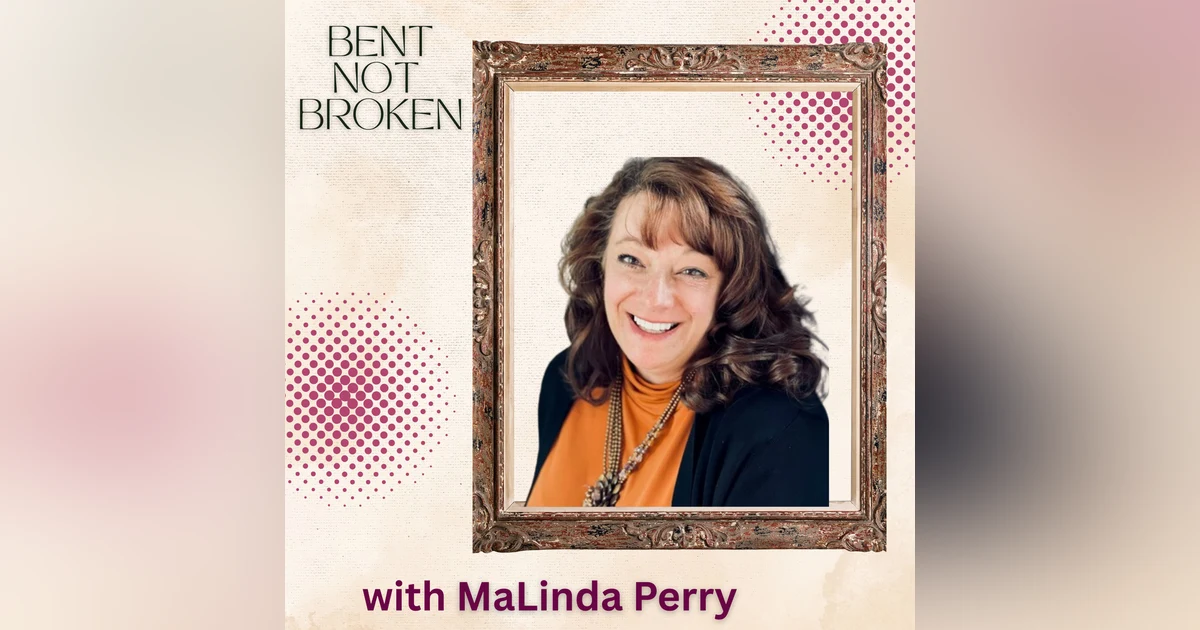


In this inspiring episode, Deborah sits down with MaLinda Perry—KBIS award-winning leader, Gallup Certified Strengths Coach, bestselling author, and founder of Happy Girls Don’t Do That. MaLinda shares her powerful divorce story, from ignored red flags and emotional manipulation to rediscovering her identity through strengths-based healing.
MaLinda opens up about the moment her bonus daughter told her to run, the unpredictable meanness she lived with, and the “gut feelings” she pushed aside. She reveals how journaling, gratitude practices, and understanding her Gallup strengths helped her rebuild confidence, reclaim her voice, and step into the happiest version of herself.
She also shares her simple but life-changing technique: “Delete, delete.” A mindset reset anyone recovering from trauma or divorce can use.
Today MaLinda empowers women worldwide to recognize their value, stop accepting emotional abuse, and embrace the strengths that make them powerful.
Connect with MaLinda:
malindaperryconsultingllc.com
malindaperry@gmail.com
💬 Enjoyed this episode of Bent Not Broken: Life After Divorce with Deborah Griffiths?
Don’t forget to rate, review, and subscribe on Apple Podcasts and Spotify so more people searching for life after divorce, divorce recovery, co-parenting, dating after divorce, and healing from gaslighting can discover this empowering podcast. Every review helps others find hope, inspiration, and practical tools for thriving after divorce.
🌐 Explore more resources: Visit BrokenToBoldness.com
for coaching, workshops, and guidance on divorce recovery and life transitions.
📲 Follow Deborah Griffiths for daily empowerment and support:
- Instagram: @BrokenToBoldness
- Facebook: Broken to Boldness
- LinkedIn: Broken to Boldness
- Divorce Recovery Workshop: Click here to register.
✨ Remember: divorce may bend you, but it does not break you. You are stronger than you think, and your bold new chapter starts now. ✨
Welcome to another episode of Bent Not Broken. Heartbreak and trauma may feel like the end of your story, but here it's the beginning of a bold new chapter. I'm your host, Coach Deborah Griffiths, and this is the space where women rise, rebuild, and rediscover their purpose. Remember this truth. You are bent, not broken. Today's guest is Melinda Perry, a KBIS award-winning industry leader with over 20 years of experience empowering professionals to lead with confidence and purpose. She's a Gallup certified strengths coach, best-selling author, keynote speaker, and founder of Happy Girls Don't Do That. Melinda is known for her strengths-based approach to leadership and growth, helping individuals and businesses uncover what makes them powerful, collaborative, and creatively unstoppable. Whether she's on stage, coaching one-on-one, or writing, her mission is clear to help people recognize their strengths, build confidence, and ignite meaningful transformation. Welcome, Melinda. Thank you for being here. It's nice to be here. Thanks for inviting me. Great. So you have a divorce story. Do you want to take a minute or two to tell the listeners? Well, one, one I think was a little bit more impactful to you than the other. So you want to share a little bit about what happened there?
SPEAKER_00Sure. So I was at a point in my life where I was feeling, I guess you would say, like a failure. I had to move home. There was some stuff. My dad was sick. I moved home with my son and met a man through my son and his son and hockey. They played hockey together and moved forward very fast and got married for hindsight's 2020, but for all the wrong reasons. I thought it would get me out of the situation living with my mom. I was looking for that house and the family and the dream and all of that to make grown-up decisions. And um I even ignored all the red flags along the way and just told myself, oh, it'll be fine. I can make it work. And long story short, after it was all said and done, I was a great bonus mom. And I think that all my friends would tell you he married me to raise his kids. And I grew to accept that. And when we parted, it wasn't pretty, but I still kept the relationship with his kids. I'm still that bonus mom. I tell my oldest bonus daughter, she's my daughter by chance and my friend by choice. We've had a beautiful relationship for the past 20 plus years since the divorce. I got her when she was 15 and in a lot of trouble. It was a beautiful friendship and relationship that moved through. And so now I can honestly say she's a great friend. That's awesome. That's awesome. What were some of those red flags? Well, we were driving to our first little getaway together. It's a long drive, five hours. And in Wyoming, there is nothing in those five hours. Prairie is what it was. And I remember saying to him, just trying to get to know him like you do when you're getting to know somebody, what would your friends think about me? Or what are your friends like? And he said, I don't have any friends. They're either all dead or they're in prison. I was thinking at that point, I don't know you well enough to be going on this. I think I need to know more. And then the second thought was, I have no service. So how do I call my mom or dad to come get me?
SPEAKER_01Oh, wow.
SPEAKER_00That's so there's a red flag there. After the first year, I spent every New Year's Eve alone. His reasoning was he needed to be in Nebraska with his mom. Fast forward many years, I found out he was having affairs in Nebraska. I had that gut red flag feeling, and it was right, I should have listened to my gut. There were things like that, you know, that moved through the eight years that we were together. I just pushed it all away. I figured I could, if I pushed it down far enough, the red flags would just disappear. They would just go away. They don't do that.
SPEAKER_01No, they don't. They just get bigger. Yes. Until one day, what was the turning point where you saw the light and you knew you needed to leave?
SPEAKER_00One of the earliest ones is my bonus daughter and I were in Denver on a girls' getaway and we got lost at night. He had called and was really ugly over the phone. I hung up and she said to me, just leave him. He's mean, he's ugly, you deserve better. Just be done. I will.
SPEAKER_01And that was his daughter telling you this. Wow.
SPEAKER_00Yeah, his daughter, she was 17 at the time. And she was like, just run, just run. You deserve better than that. So that was the first red flag. And then he just kept getting meaner. Like there is this unpredictable meanness about him. I later did some research and found out that there's a condition called irritable male syndrome. And he fit all the boxes. I took the little test in front of the book and checked off, like 90% of all of them checked off. He at the time was willing to take the test as well. There was one for the spouse and one for the husband. And he took it as well and handed me the book and said, Yep, sounds about right. And I'm going to have good days and bad days, and you're just going to have to deal with it. And I said, This is genetic. Like this research has been done. This is genetic. So if you're not going to do it for me, at least do it for your son. Your dad committed suicide. You know, what you choose to do with your life is yours, but I don't want that for your son. And he just threw his hands up the air and said, I'm not interested, but thank you. And I was like, okay, neither am I then. There was a point where I just had to say, Missy was right. I needed to move on.
SPEAKER_01So you're known for empowering others through strengths-based leadership, but your divorce was a deeply personal turning point. How did that experience challenge you with what you thought you knew about your own strength?
SPEAKER_00So my strength certification came after this. And what I learned was there's all these barrier labels people put on you growing up. We can call them barrier labels, we can call them backhanded compliments, we can call them whatever you want, but they still feel ugly. What I realized after I got my certification was my whole existence with him was filled with manipulation and backhanded compliments that made me feel like I was inadequate in so many levels. Like I wasn't good enough. I I didn't deserve this. I was, it was a form of manipulation I wasn't aware of. And when I started to lean in to who I really was, lean into my strengths and go, I'm strategic. I'm a strategic thinker. I'm an outside of the box thinker. I'm creative. I'm highly adaptable. That's what got me in trouble was my adaptability would run amok to suffice the relationship. But then I also found out that I'm reactive. What part of that did I own in that horrible relationship? It was being reactive. I could take that lesson all the way back to my first marriage and being reactive, a reactive individual. And that strength is in there. You know, I have command and activator and all of these strengths when it's being used on the ugly side. I like to tell my clients when it's in the gutter eating peanut butter, it's not very pretty. Being reactive was that one thing that I brought to the table that wasn't very pretty. Instead of being able to take a step back and understand where the person was coming from, I immediately took offense to it. And I think a lot of us do that when we hit so many roadblocks and speed bumps and we're trying to get over the mountain. We become tired and exhausted and frustrated and all those things that cause us to be reactive. And learn that was probably the biggest life lesson I could have was that I didn't need to be reactive. I could still make my point and be kind and be loving. I didn't need to react to everything that came across my timeline, if that makes sense.
SPEAKER_01During divorce, many women feel like they've lost their identity. Was there a moment when you realized you needed to rediscover who Melinda was outside of the marriage?
SPEAKER_00Um I think it came in little chunks, like little pieces. But I was strategically I knew that if I took everything out of the house, he would sell it out from under me. So I kept my office and kept playing nice and kept everything there so that I felt like I could move forward with the plan. I was slowly starting to get my pieces back as I was also learning that he was having affairs with my clients. He was going to Nebraska for the weekend to have affairs with other people. And I had figured out he had done something on my computer. He was on sites that shouldn't been on, that was showing in my computer history. He was there, his email and password was showing up on my computer. And so I was able to see where he was going and what he was doing. And it confirmed a lot of things. My friends would say, Why are you doing this? Just be done. Why are you punishing yourself? And all I could say was, I need to make it safe for my son. I need the transition to be safe for all of us. And fair, balanced and fair. And so I think I started seeing a glimpse of who I was in little bitty chunks and understanding that when we lose ourselves, we need to stay grounded and listen to the people that love us most. When there's manipulation involved with relationships, the worst part is manipulating you to feel like you're not good enough for anybody else, or that you're a problem with your family, or that your family is a problem, or that your friends are a problem. And that's a very common story in a lot of divorces and relationship issues. I had to start listening to that girl that was so strong. I'm a world traveler. I did all these amazing things and I had an incredible life. I was a little girl full of grit and resilience. And I had to find that person in order to make everything move forward. And I think it's hard, but had I not listened to everybody else, I don't know how appropriate this is, but it fits. At one point, we had separated and I still had everything at the house, and it was his birthday. And one of my friends and her mother saw me out at the mailbox and drove up to see what I was doing. And I said, Well, it's his birthday. I need to get him something. Her mom, I'm just going to give you an image. If you've ever seen Monsters Incorporated, Roz is the secretary lady with the red rouge cheeks, and she has this really raspy voice and goes, Get him a box of condos, he'll be fine. That spoke volumes to me because she saw what I was choosing to push under the rug. It was that breaking point that I needed, but it was also what I needed to get my feet out of the mud and start making actions to move forward.
SPEAKER_01What steps did you take to find yourself again?
SPEAKER_00I started, I did kickboxing. I immediately, when I got everything out of the house, dove in a little bit deeper in my relationship with my son. I was very determined to make his life right. So we did hockey, and my mom was very gracious in the fact that she let me sit at home and I bought the Dr. Phil book, I bought Joe Osteen, I bought all of this stuff and journaled and journaled and journaled about who I was and what part of it I owned. It was really important to me that I not ever make the same mistakes or blaze the same trail that I had just come off of. And I think that was the best and the most cathartic thing I could have done for myself. I couldn't afford a therapist at the time, so I had to dig into who I was and what that looked like. It changed my perspective. It taught me how to find gratitude. And as we teach everybody, gratitude is not something you're born with. It has to be taught. While my grandma taught me happiness and positivity was a choice, nobody had taught me what gratitude looked like. And so I started practicing that and I came up with the technique because you have all these triggers, right? When you're getting divorced, a smell, a taste, a food, a song, a place, a location, whatever their triggers all the time. And I was finding myself just on edge and angry about everything. And so I developed a trigger um thing. My brother's trigger um was still uh was don't care, don't care. And I I couldn't use that because it wasn't what I was about. So I would, every time a trigger popped up, I would say delete, delete. Because I knew on a computer, if you hit delete, delete, it was immediately gone. Then the trick is to immediately mind shift to something that makes your heart happy, that literally puts a smile on your face. You can experience with all five senses. Can I smell it? Can I see it? What does that feel like? And my go-to was puppy kisses. Like there is nothing better for me than puppy kisses, the warmth, the giggles. They're just wonderful to me. Wagging tails and just the fluff. And so that was my go-to. I would say delete, delete, and then immediately think of puppy kisses until my thought of that trigger was gone. And sometimes I'd have to do it two or three times in a row. Once I got that thought, I would think of something. I would say a couple of things that I was grateful for. I'm grateful that my car's paid off, or I'm grateful that, you know, and sometimes the only thing I could find was Diet Coke. I was grateful for Diet Coke. And I'm like, there's got to be more to this gratitude thing than Diet Coke. And so I really started working on puppy kisses, what my gratitude was, till eventually there were no triggers. My brain automatically went to what I was grateful for instead of what I wasn't, what those triggers were. I'm so blessed in that because I think that's probably where the thought of happy girls started, because I had to realize that his ugliness was not a direct reflection on me. It was about him, not me.
SPEAKER_01Yeah, I love that. I especially love the delay, delete. That's so appropriate. And I think that technique will help a lot of listeners as well. Thank you for sharing that. So you just mentioned happy girls don't do that. How did your divorce influence the message behind that brand? And what does it truly mean to you today?
SPEAKER_00The message was a long time coming, but it was very much as I was coaching people who were bullied. He was a bully about everything, not just to me, but to his own kids and my son and other people that I knew. When I would coach, I would tell people, you're strong, you're beautiful, you have great strengths, you bring a lot to the table. It's not about you, it's about them because happy girls don't do that. I found I was much happier being a happy girl than being somebody who felt broken and beaten up all the time. His anger was not a direct reflection on who I was. That's where happy girls started and morphed into that. I really wanted not just, I wanted everybody. At some point, there's 300 million women in the world. At some point, every single one of us is going to be bullied by someone. That's sad to me. Very sad, very scary. And you think about what it does to us, because according to Gallup, empathy and harmony are predominantly female strengths. Just like strategic and command are predominantly male strengths. They just show up more. I didn't want women to feel like they deserve that, or young girls. And it's starting earlier and earlier. Preschool now is when bullying starts. And we know that it's generational. So it's a taught behavior. I don't want anybody to have to go through that. I think we all bring this unique value to the table. And what a better way to learn it than through happiness and positivity.
SPEAKER_01I agree. Even if you take a look at the domestic violence statistics, it's really sad. I think it's one in three teenagers will experience some form of domestic violence by the time that like they're into their 20s. And that doesn't necessarily mean it's physical abuse. So we're talking a lot of emotional abuse here, and bullying ties right into it.
SPEAKER_00Exactly. It starts with bullying. Yes, boys get bullied as well. And and and I've been asked to write a I'm writing a happy girls book. I've been asked to write one on boys, and that one will come after. But it's it's a different, it looks differently. Girls own it differently than boys do. Bullying drops by 57% when just one hero steps in and you don't even have to know them. So we have a campaign, hashtag just one hero, that and your hero will stick with you forever. My hero was in ninth grade and we still talk. He's still my hero. It brings a lot of value sometimes when you don't have it. If somebody steps in and they're your hero, you look at yourself differently. You look at yourself with value, and it means a lot. It also changes the trajectory for the bully as well. They will go until they're stopped or have a reason to stop. And sometimes it just takes one person.
SPEAKER_01There's often a pressure to stay. Strong after divorce. How do you define strength now and how has that definition changed since your marriage ended?
SPEAKER_00I was pretty strong. I was stubborn and reactive. But when I started studying strengths from the Gallup standpoint, everyone has 34 strengths. So we all have 34 according to Gallup. And we start learning them as young as two years old. So I think the biggest message or what I can bring to the table is when we're broken and going through a divorce and we're feeling like we're so broken and we're so lost, and we just don't know how we're going to go on any further. Knowing your strengths and what you bring to the table and diving into those brings so much volume. It makes you, when you can see yourself, how others really truly see you and what that looks like and how powerful it is. I think the growth comes so much faster. And so understanding that I thought I had to be this disciplined person. Even in the marriage, I felt like the house had to clean every morning, like deep clean every morning before I went to work. Dinner had to be on the table at five o'clock. To me, it was torture to live to those standards. I'm number two, adaptability. I thrive in chaos. I love it. Like, interrupt me a thousand times. Having four kids in the house with all of their friends was beautiful to me. Having to have dinner on the table at five was agony. I didn't like it. It was not who I was. And so understanding that and being able to bring my strengths up and let them flourish, I think, brought a whole new understanding of what I brought to the table. And what I brought that what I was doing wrong, I was pulling from the bottom, which is like pulling a tree up by its roots. And, you know, every and miserable at it. Think how exhausted you'll be if you're pulling a tree up by the roots every day. Instead of living who I was, genuinely who I was. And even him embracing who I was. He didn't like the authentic me. That was one of the red flags I pushed down, trying to make me be more like his mother or somebody like that. I was never going to be that person.
SPEAKER_01If you could speak directly to the women who feel broken by divorce, what would you tell her about the version of herself waiting on the other side?
SPEAKER_00I would, that's a good question. I would say your version is so much more impactful and beautiful than what he has given you credit for.com and it's M-A-L-I-N-D-A. My email is Melinda Perry email. If you Google me, it should pop up pretty quick. I'm part of the Mission Hope series. I've been in volumes three, four, and five. And volume six will be out in January, I'm told. So Roddy and the Happy Girls Don't Do That Book currently. And yeah, I just I'm out there. I know you can, I know you can find me. So, and I'm welcome. If you have questions or just want to chat, shoot me an email and I'll be happy to let you see what you truly are.
SPEAKER_01I love it. And I'll have all of that information in the show notes as well. Well, Linda, thank you so much for this conversation. I've loved it. And hope you have a great rest of your day. Thank you so much.
SPEAKER_00Thank you so much. I thoroughly enjoyed it. It's been a pleasure.
SPEAKER_01Thank you for listening to today's episode of Bent Not Broken. I hope that this episode reminded you that even through life's toughest moments, you are bent, not broken. If this message inspired you, please share, rate, review, and subscribe, as it helps us reach more women who are ready to rise and rebuild. And until next time, keep living bold and walking in your purpose.