Feeling Lost After Divorce? How to Rebuild Your Confidence, Purpose & Identity | Tina Eliana
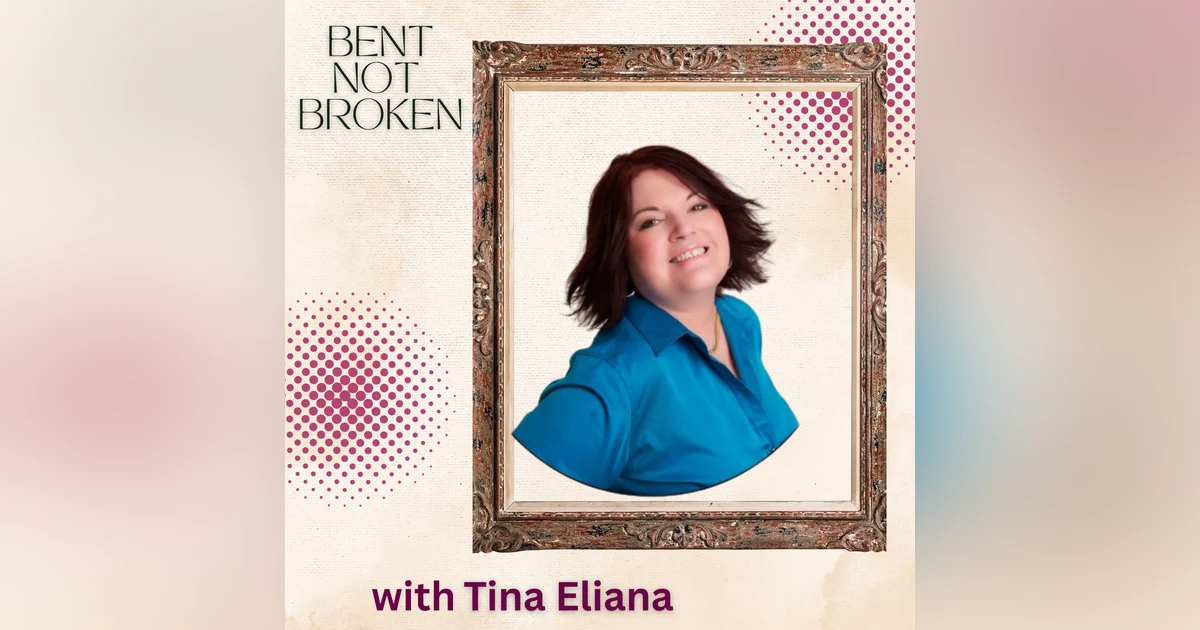


What happens when life falls apart and you’re left feeling lost, broke, emotionally exhausted, and unsure who you are anymore?
In this powerful episode of Bent Not Broken, Deborah Griffiths sits down with leadership strategist, speaker, and author Tina Eliana to discuss healing after trauma, emotional abuse, divorce, and life transitions that force you to start over from scratch.
Tina shares how leadership isn’t about titles—it’s about the choices you make during the hardest moments of your life. From childhood wounds and emotional abuse to rebuilding confidence and reclaiming your identity, this conversation is filled with hope, resilience, and practical wisdom for anyone trying to heal and move forward.
If you’ve ever felt lost after divorce, financially broke after a major life change, or emotionally stuck in survival mode, this episode will remind you that recovery is possible—and so is purpose.
In this episode, we discuss:
- How emotional abuse and trauma impact self-worth
- What to do when your life falls apart
- The courage it takes to start over
- How to rebuild confidence one step at a time
- Why healing and recovery begin with small intentional choices
- How to reclaim your voice, identity, and purpose
- The hidden leadership strengths many women already possess
- Why your past does not define your future
Tina also shares the inspiration behind her memoir, Even the Sweetest Jam, a story about turning life’s hardest moments into growth, healing, and purpose.
If you are rebuilding after divorce, emotional trauma, or a season that left you feeling broken, this episode will encourage you to heal, reclaim your power, and begin creating a life that aligns with who you truly are.
Connect with Tina Eliana at https://tinaeliana.com
Ready to Rebuild & Heal?
Learn more about Deborah’s Living BOLD program:
https://calendly.com/brokentoboldness7/boldnessblueprint
Enjoyed this episode of Bent Not Broken: Life After Divorce with Deborah Griffiths?
Don’t forget to rate, review, and subscribe on Apple Podcasts and Spotify so more people searching for life after divorce, divorce recovery, co-parenting, dating after divorce, and healing from gaslighting can discover this empowering podcast. Every review helps others find hope, inspiration, and practical tools for thriving after divorce.
Explore more resources: Visit BrokenToBoldness.com
for coaching, workshops, and guidance on divorce recovery and life transitions.
Follow Deborah Griffiths for daily empowerment and support:
- Instagram: @BrokenToBoldness
- Facebook: Broken to Boldness
- LinkedIn: Broken to Boldness
Take the Living Bold Assessment
Remember: divorce may bend you, but it does not break you. You are stronger than you think, and your bold new chapter starts now.
Disclaimer: The commentary and opinions available on this podcast are for informational and entertainment purposes only and not for the purpose of providing legal or psychological advice. You should contact an attorney, coach, or therapist in your state to obtain advice with respect to any particular issue or problem.
Welcome to another episode of Bent Not Broken. Heartbreak and trauma may feel like the end of your story, but here it's the beginning of a bold new chapter. I'm your host, Coach Deborah Griffiths, and this is the space where women rise, rebuild, and rediscover their purpose. Remember this truth. You are bet, not broken. What if leadership isn't something you earn, but something you choose every single day? Today's guest, Tina Eliana, believes leadership isn't defined by titles, but by the decisions we make when no one is watching. With over 30 years of experience across multiple industries, she helps individuals move beyond potential into purposeful, intentional action. As a strategist, speaker, and author of Aspire, Inspire, Lead, Tina brings practical insight on how to lead with clarity, resilience, and responsibility. Because leadership isn't about a position, it's about a choice. Welcome, Tina, to Bent Not Broken. Thank you so much for inviting me. I appreciate being here. Let's get started. You say leadership is a daily choice, not a title. What does that really look like in everyday life, especially for someone who doesn't feel like they're a leader?
SPEAKER_01That's a really great question. And it really is about, first of all, your mindset and reflecting on what is it that you really do? A phrase that I know that makes me almost cringe sometimes is when I hear a woman say, I'm just a mom. To me, that is the greatest role you will ever have in life. And no, there's not going to be a company come along and give you a title necessarily, but you're in a role. You're in a role of creating a life and producing a future productive member of society. And that's a an honor for a parent to get to do. And so within even just parenting, it's what qualities about you do you want your children to emulate? Who are you aspiring to be in your life? And then it can also go into then your community. What are you doing within your community? As a leader, you know, oftentimes the helpers are the leaders. They're the ones that they're making sure everything happens, but they want to minimize what they do. And so by just reflecting and realizing and accepting that you are a leader in everything that you do in life, and that it is a position of walking through life. It's an honor, in my opinion, to be able to demonstrate for others what life is like when we help one another out.
SPEAKER_00I love that. And how you started off with saying, I'm just a mom, I can resonate and I'm going to take it one step further because when I got divorced, I was a stay-at-home mom. And even being able to help in the classroom, you know, through PTA activities and things like that, there was always this, oh, she's she stays at home. Oras there's other women that couldn't participate, and understandably so, they were in the workplace. But just having that stigma right there is hard. And like you said, whether you're a career mom or a stay-at-home mom or just a mom, you play a huge role in your child's life.
SPEAKER_01Absolutely. And as you said, there's different types of moms for the career moms. What you're doing is you're showing your children, hey, I'm choosing to have this career that's outside of the home and be a mom. For those that are the stay-at-home moms, what you're doing is you're teaching your children. I choose to be a CEO and CFO within our home and be a mom. It's not an or, it's an and. And think about it. Oftentimes the stay-at-home parent is the one making sure the bills are met and the budget and they're getting the groceries in there and they are keeping the house organized. People have no idea if they've never done it. But it's truly running your home is like running a business.
SPEAKER_00Oh, absolutely. And I'm gonna add to that is getting the kids to school on time and following up with homework or getting them to soccer, little league, football training, all of that stuff. It's organization. It takes huge organization skills to maneuver all of this. Absolutely.
SPEAKER_01And I want to go back to you said talked about the PTA moms. I remember when I was a kid, we had uh at Halloween. I remember my mom worked, she was a single mom. She worked three jobs, and she surprised me one Halloween and she borrowed a costume from somebody, and she showed up in that. Now here I am, 50 years old. It's you know, 40 something years later. I remember that not because she showed me that you can show up in whatever capacity you have in front of you. And so that's what I want people to hear. For those of you that have the opportunity to go into school, my childhood friend Michelle, we always had Christmas, all the parents would make these gifts and the kids could bring money and go shopping. And my mom was not able to come do that with me. But my friend Michelle's mom, she said, Come on, Tina. And she included me in that shopping experience. And I remember that because I got to also watch how she led her child through. And so you are influencing and leading people when you don't even realize it.
SPEAKER_00Absolutely. What's the biggest misconception people have about leadership that's actually holding them back from stepping into it?
SPEAKER_01The biggest misconception is I'm not qualified. Whether it's I don't have enough experience in a workplace, I don't have enough education, I don't come from the right background. I know what it's like to be bullied. I dealt with that when I was a kid. And that gets in your formative years and it starts getting sometimes a negative mindset. Sometimes it's a matter of just going, I'm not who bullies told me I was. It is looking in the mirror and seeing the uniqueness of who you are and overcoming, however you want to call it, that education will come, experience will come. Where you come from does not influence where you're going. Who I am today is not who I used to be, and who I am now is not who I'm going to be. It is a constant evolution. So all of the titles, all of the stigmas, those are what usually hold us back from stepping into leadership and letting others look at us as if we aren't equal to them.
SPEAKER_00I'm curious, how do you define leadership?
SPEAKER_01Leadership is recognizing your influence in your everyday life and with the people around you and accepting that there is an ethical responsibility in your choices and what you do.
SPEAKER_00Was there a defining moment in your own life where you realized you had to choose leadership for yourself instead of waiting for it?
SPEAKER_01I feel like I've always been an adult. I remember when I was three years old, I realized that all of my friends had a mommy and they had a daddy. But I only had a mommy. And I didn't understand why I didn't have one. And so I just asked my mom one day, you don't I have a daddy. And obviously she was caught off guard with it, but she found a way to explain it to me. And uh I was raised in a Christian household. And so my response to her was, don't worry, mommy, Jesus will take care of us. And I remember that conversation because looking back, I took on an emotional responsibility for my mom. I felt like I needed to step, not knowing understanding it then, but as a child, he wasn't there to want to take care of my mom. So I was going to take care of her. And so I have really been a leader my entire life. But as far as when did I step into it, into leadership, I was about 22 years old. I had been the volunteer at a nonprofit organization, and something happened. The executive director chose to leave. And her staff went with her. Half of the volunteers went with her. And I knew every aspect of running the organization. And so on a Friday, a board member called me and said, Can you be here on Monday to keep the doors open? You're the only person that knows how to run it. I only had a high school degree. I thought, who am I to go keep something running? But I showed up. And for four months, I was the acting executive director of a nonprofit organization. And because there was newsletters to get out and there was still clients to be seen, and there was a community to still serve. And so that experience and that education, it came in real time. It came in getting in there and rolling up my sleeves and saying, I may not be the perfect person, but I'm gonna want be the one that's gonna be the bridge. I'm gonna be one the one that showed up. And that's when I first recognized the leadership leader within me.
SPEAKER_00And people saw that. Oh, absolutely. Yeah, absolutely. They saw that you showed up. Number one, that's a huge step. And number two, you took charge, you knew what needed to get done, you got everything organized and was able to either delegate it out or accomplished it yourself to keep the ball rolling.
SPEAKER_01You know, like I said, that was when I was 22. It's 30-ish years later, and that organization is still thriving. It is big. I mean, it is just serving a massive part of the community. And I feel like I had a small part in that, but to just see the leaders that came after and to pick that up, pick up that manual. And sometimes leadership is also recognizing when it's no longer your time to have those responsibilities as well.
SPEAKER_00That's a very good point. Now you were very young to step into this role. Did you have to overcome any prejudice, so to speak, from older people? And it's like, well, why is she doing this? She's only in her 20s. I'm in my 40s because I've lived longer. I should have that role.
SPEAKER_01I I did. And I've always looked younger for my age. And so at 22, I looked 15 or 16 years old. And I remember walking into a state meeting of directors, and I had my jacket and I had my briefcase, and someone said, Oh, whose kid are you? And someone had thought I was somebody's child that it come along with other parent. And so I had that to overcome. As far as the people that came in and the volunteers, I didn't have a lot of that kind of issues, more surprise of, oh, you're the one here. Oh, okay. I had really myself to have to overcome because there were some difficult conversations I had with clients that I didn't even understand what they were going through. But what I learned is I don't have to have walked your path to see that you are a human that has value and has a worth, and just needs someone to say, I'm here for you. I love it.
SPEAKER_00You've had a long accomplished career, but behind that, what were some of the harder seasons that shaped you into the leader you are today?
SPEAKER_01Some of the harder seasons were personal traumas and not having a support system to understand how to work through trauma. And then what happened was trauma, and when you have multiple and they start to compress, eventually that's going to come out. And that's what happened with me. And I ended up having to push pause on some things in life to ultimately work through what those traumas and the impact that they had on me. And I am a huge advocate for mental health. It is vital. I think we start teaching our kids now, just like you go to the pediatrician, just like you go to the dentist, there are doctors and specialists for every part of our body. And if it's in our body, it's our responsibility to take care of it. And I know that now. And my brain is my most sacred possession. And so it's been through a lot of healing. And so what I say is even when you feel like I've been through so much, it's going to be so hard to get through this. I can't just overcome it. My thought process was it's like just with losing weight. Man, I have a hundred pounds to lose. I'm never going to be able to lose it. So I don't try. So if I could just work on one little trauma, if I could just work on one little thing and that little healing, and I can start to see my worth. And so that helps me heal. And that's really where what that was my biggest obstacle is getting over those traumas.
SPEAKER_00Good for you for recognizing that and for doing the hard work. That in itself takes a lot of courage and strength. And but yet it's so rewarding.
SPEAKER_01It really is. And part of working through my traumas was looking at my role and my responsibility with that that were in those situations and not excusing people that did things, but first recognizing how I was, because I don't want to repeat patterns. And both my husband and I have been married almost 14 years. And when we were first dating, we were at a store, and I cannot even tell you what it was, but something kind of irked me. We all have the same amount of time. Do we want it to be loving and nurturing, or do we want it to be conflict and chaos and name-calling? And so that's kind of just been a mantra within our relationship. If there's something that there's a disagreement on, we talk about it, but we do it with respect. And so that's really where I'm at in my life right now. And what I've needed was really just healing and not wanting to repeat in my marriage. And when I started doing that, then I started looking at, well, what are some things in where I've maybe been a leader that I didn't quite make the right decision in this? And so just like everything else, there's lessons learned and you move forward from it. Absolutely.
SPEAKER_00For someone who feels stuck, overwhelmed, or disconnected from themselves, where is the first step back to clarity?
SPEAKER_01I remember when I was just trying to get through the worst, worst trauma of my life. My husband was talking about one day in the dreams, and I said, you know, I don't have the capacity to dream right now. I don't even, I can't even think an hour ahead, much less a day or a week, a month, a year. And he kindly said and lovingly said, Well, then I'll dream for you until you can dream again. And so for me, that first step was what's just one little thing I can dream about? What's one little thing I can look forward to? For me, it was getting to take a shower, going in and just the ability to just let myself go take a shower. And it's truly just finding those little minute things. It doesn't matter if that comes easy for other people. Their journey is not yours, and vice versa. So if you're sitting there in trauma and you're like, I don't even have the ability to go take a shower, go get a washcloth and just wash your face. Do whatever it is you can do wherever you're at that moment that can give you a success. And those successes will start to build on one another. The other thing I would say is find someone that you feel comfortable to be a support system. We cannot do life alone. We are meant to have other people. Maybe that's somebody in real life. So maybe it's somebody that you trust that's within a group or an organization that you're part of. But find somebody that can speak that life into you. I agree.
SPEAKER_00What are a few daily habits or disciplines from your book, Aspire, Inspire, Lead, that can help someone rebuild confidence and step into leadership again?
SPEAKER_01One of the first steps that I talk about is first look at who are you aspiring to be? What are those qualities that they have that make you want to aspire to be them? And then assess yourself. I tell people if characteristics were on a shelf at a store, what would you need to go buy and put in your cart that would then make you that person that you want to then be that you are aspiring to? So that's really the first steps in just assessing yourself, assessing the people that you want to aspire to. And at the same time, who are you inspiring? Who are those looking up to you and trusting that you're going to make those right decisions? Start there making those lists and then build.
SPEAKER_00Great advice.
SPEAKER_01You have a very unique purpose in this world. Everybody has a unique purpose. I remember being raised with uh saying that everybody is somebody because God doesn't take time to make a nobody. And so everybody, you have worth. If life has made you think like you no longer have worth, if people have they are the past. Look to your future. And what would you want that to be like if you had all the power of the world to make life what you would want it to be? And then start there because you are worth it, you have value, and you are so loved.
SPEAKER_00Now you have a memoir going to be soon published. Tell us a little bit about that.
SPEAKER_01My memoir is called Even the Sweetest Jam. And it's inspired by a movie, Sweet Home Alabama. There is a scene where the Reese Witherspoon's character is upset and distraught over something, and her mom's sitting there cutting fruit. And she says, you know, mom, I think I bet you think I've gone and ruined things good now. And she says, you know, don't start telling me what I think. Take this fruit here. Some people might call it ruins, but I think it's the almost ruined ones that make the sweetest jam. And so my memoir is about looking at those times in my life where I felt I was almost ruined. Circumstances made me felt like I was ruined, or people tried to make me feel that way. And what I've seen is it is those most difficult times that have made the most impact on my life that has made the sweetest jam of who I am.
SPEAKER_00I love that. How can listeners purchase your books or learn more about you?
SPEAKER_01So they can go to my website. My author website is Tina Eliana, T-I-N-A, E-L-I-A-N-A.com. That's where all the news is. I'm on releasing a podcast, jam sessions with Tina. So I will be releasing updates there. And I am on Instagram and Facebook as well.
SPEAKER_00Great. I'll put all of that in the show notes. If something in today's conversation spoke to you, don't ignore it. That pull you feel, that's your next step. Leadership and healing aren't about having it all figured out, they're about making one intentional choice today that moves you forward. So here's my challenge. What's one decision you can make today that aligns with the life you actually want? And then go do it. And if you're ready to go deeper, if you're ready to stop circling the pain and start rebuilding with clarity, confidence, and purpose, I invite you to join me inside Living Bold. This is where we take everything you're hearing on this podcast and turn it into real transformation, step by step together. You can learn more. The link is in the show notes. And if this episode resonated, share it with someone who needs to hear this reminder today. You are not broken. You are becoming. Thank you, Tina, for being on the show. Thank you so much. Thank you for listening to today's episode of Bent Not Broken. I hope that this episode reminded you that even through life's toughest moments, you are bent not broken. If this message inspired you, please share, rate, review, and subscribe, as it helps us reach more women who are ready to rise and rebuild. And until next time, keep living bold and walking in your purpose.