Acquired, Not Courted: Surviving 30 Years with a Covert Narcissist with Mia J. Hanks
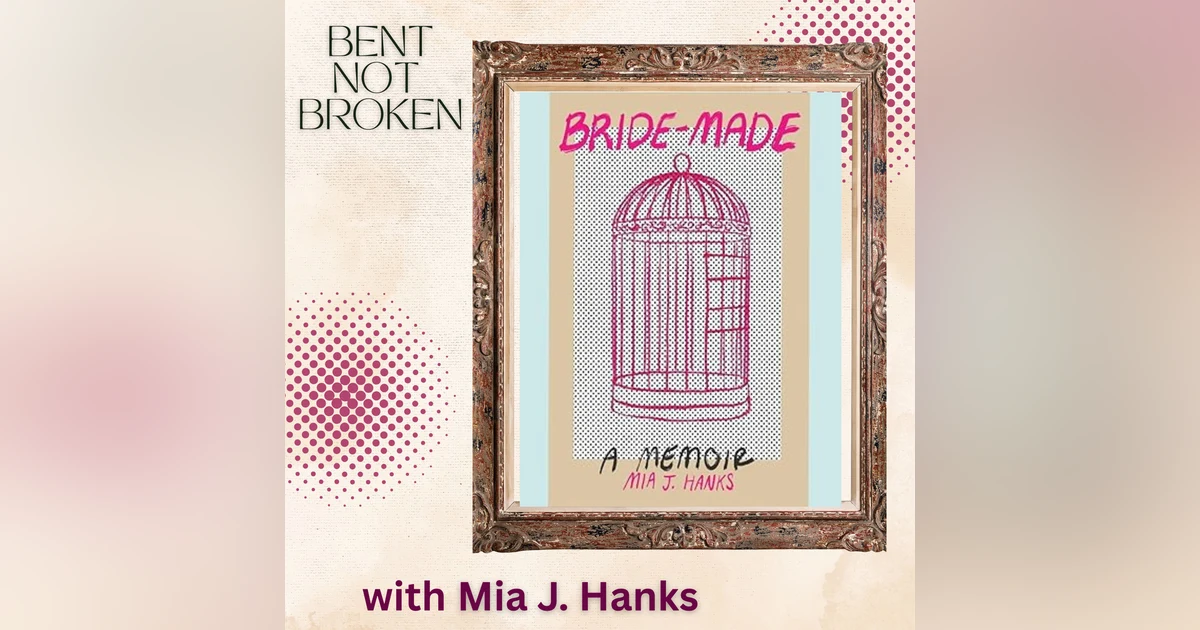


Award-winning author Mia J. Hanks joins Coach Deborah to share her powerful journey of surviving nearly 30 years with a covert narcissist—a partner who appeared perfect in public but was emotionally abusive behind closed doors.
Through her memoir Bride-maid, Mia offers hope to survivors struggling to understand why love can feel like control. She reveals how writing became her healing tool, how shame keeps victims silent, and how true freedom begins with reclaiming your story.
If you’ve ever questioned your worth in a relationship, this episode is a reminder:
You were never too much. You were just with someone who gave too little.
💡 “I hadn’t been courted—I had been acquired.”
🔗 Learn more at miajhanks.com
📖 Get Bridesmaid on Amazon
💬 Enjoyed this episode of Bent Not Broken: Life After Divorce with Deborah Griffiths?
Don’t forget to rate, review, and subscribe on Apple Podcasts and Spotify so more people searching for life after divorce, divorce recovery, co-parenting, dating after divorce, and healing from gaslighting can discover this empowering podcast. Every review helps others find hope, inspiration, and practical tools for thriving after divorce.
🌐 Explore more resources: Visit BrokenToBoldness.com
for coaching, workshops, and guidance on divorce recovery and life transitions.
📲 Follow Deborah Griffiths for daily empowerment and support:
- Instagram: @BrokenToBoldness
- Facebook: Broken to Boldness
✨ Remember: divorce may bend you, but it does not break you. You are stronger than you think, and your bold new chapter starts now. ✨
Welcome to another episode of Bent Not Broken. Heartbreak and trauma may feel like the end of your story, but here it's the beginning of a bold new chapter. I'm your host, Coach Deborah Griffiths, and this is the space where women rise, rebuild, and rediscover their purpose. Remember this truth. You are bent, not broken. Trigger warning. This episode discusses topics such as emotional abuse, narcissistic relationships, trauma, and recovery. These conversations may be difficult or triggering for some listeners. Please take care of your emotional well-being. Pause or step away if needed. Today's guest is Mia J. Hanks, an award-winning author and survivor of narcissistic abuse. Her powerful memoir, Bride Maid, shares her 30-year journey with a covert narcissist and offers hope and healing for others walking a similar path. Mia is passionate about raising awareness and reminding survivors that they are never alone. Welcome, Mia. Thank you for having me. Oh, you're very welcome. So let's get started. You wrote, I had not been courted. I had been acquired. That's a powerful realization. Can you take us back to that moment when you first began to see through the smoke and mirrors of your marriage?
SPEAKER_01Yeah. So I met my now ex-husband when I was 19. And we got married. I was 21. So I was very, very young, very naive. I had come from a very sheltered background, a what I like to call an idyllic childhood. I didn't have experience with narcissists or narcissism. I really didn't know what that was. It just wasn't something that I ever thought I would encounter. And so those red flags, you know, it took a long time to start to see them and start to understand what they were. But I noticed very early on that my husband had no empathy. I mean, just none. He could not self-reflect. He could not see things from other people's points of view. He couldn't put himself in someone else's shoes. And it just seemed like there was a barrier in the wall. And he was cold. Yeah, I definitely early on, I did feel more, I didn't understand what I was feeling, but it definitely felt like I was more of a possession rather than a partner. That's very accurate. I felt as though I had been a choir.
SPEAKER_00I understand that feeling. Can you give us some examples of the lack of empathy that he might have shown towards you?
SPEAKER_01Yeah, definitely. You know, I the first thing I can really remember is early in the marriage when I was sick with the flu or some sort of virus, rather than being sympathetic towards me or trying to help me, his response was to be angry. He was mad that I was sick. And I thought, this is really strange. Who gets mad because their partner is sick? That makes no sense. But again, because I was young and naive and didn't understand things like emotional abuse, psychological abuse, you know, I thought, well, it's just a personality quirk. And I think partners of narcissists tend to think, if I just hold on a little bit longer, it's going to get better. Eventually it's going to get better. But these people, they don't have empathy. Some have low empathy, but some have no empathy. And it really is, I think probably any victim of narcissistic abuse would probably say it's the first big red flag that they see.
SPEAKER_00On the outside, you describe appearing to be the perfect couple, but inside it was a different story. What were some of the earliest red flags that you can now recognize in hindsight?
SPEAKER_01When we would be out in public, he would be over the top nice to me, very complimenting, always telling people, oh, isn't she great? Isn't she so beautiful? Building me up to make himself look good. And he's looking like the perfect partner, right? Everybody thinks he is the perfect husband. But then behind closed doors, it was completely different. And instead of being complimentary, like he was when people were around, he constantly would degrade me. You're not, you're not smart. You um are not smart enough to handle things, you mess everything up, you don't know anything, and constantly trying to break down my confidence. So it was like this push and pull. It was really strange when we would be out with people, he couldn't be nicer. And then behind closed doors, he couldn't be meaner. It really does mess with you psychologically when you constantly have this back and forth and you're not sure. In the early days, I wasn't sure what to believe. And then as time went on, it became evident that his true feelings were behind closed doors. And out in public, it was just a mask.
SPEAKER_00So to family and friends, he appeared to be the perfect husband. And, you know, obviously behind closed doors is a different story. When did you ever open up to family and friends that you thought that there were issues? And if so, what was their reaction? Were they surprised because of the charming personality that he showed to others?
SPEAKER_01I never did open up to anyone. The exception is my parents who were with us a lot. They actually witnessed all of this. They knew what was going on behind closed doors. They were the only ones. To everyone else, I was very much ingrained early in our marriage to protect his ego, to protect his image. He's wearing this false mask out in public. And really, I'm coming along beside him, helping him keep up this false image of himself. I'm out there saying, yeah, he's so great. Why was I doing that? Because I thought it was my job. And I think there's this embarrassment factor that we don't want people to think we're struggling. I wanted people to think I had it all together. In my mind, it was just the lesser of two evils to perpetrate this lie and say, yeah, it's great. He's great. We have the perfect marriage. We're the perfect couple. And that's what I did for a long, long time.
SPEAKER_00There's a lot of shame that victims of narcissists, I think, feel until they cut that cord and start beginning that healing process.
SPEAKER_01Yeah, definitely. That was one of the reasons why I found it so difficult to leave because there is shame. I now have to go and tell everybody that, yeah, I left and our marriage wasn't perfect and it didn't work, you know, and I stayed for nearly three decades. And you worry, who's gonna believe me? Because I've been saying how great this guy is all these years. And now to have to flip a script and say, well, actually, that was a coping mechanism. And now let me tell you the truth. It's hard.
SPEAKER_00You wrote, ours was not an equal partnership. I owed him, and he owned me. How did this dynamic shape your sense of identity over the years? And what helped you begin to reclaim it?
SPEAKER_01He really did feel ownership, and he really did feel like I owed him. You know, he was the breadwinner. He was making this fantastic salary and providing this wonderfully comfortable life for us. He thought that he deserved all the accolades. Anything that I did was downplayed, overshadowed. It was just not important. Everything he did was of the utmost importance. You know, he was so wonderful. And so he really felt like really from a financial standpoint, that I did owe him. You know, look at me. I'm providing this great light for you and this beautiful house and the maid and a nice car. You have all these things you owe me. And that's really the dynamic that we had throughout the whole marriage. He really was better than me, or so he felt. And he's on a pedestal, and I have to praise him at every turn. So definitely that was our dynamic.
SPEAKER_00For listeners who may not understand the term, can you explain what living with a covert narcissist looks and feels like on a day-to-day basis?
SPEAKER_01It's much of what we said about how out in public they're so nice and so charming to the general public. The covert narcissist will appear as anything but a narcissist. Trying to get people to believe that, you know, actually this person is a narcissist. Nobody wants to believe that because they see this generous, kind, very caring, empathetic person, funny, all-around good guy. But behind closed doors, they're a monster. That's what makes the covert narcissist so dangerous because it is hard for the victim to ever get anybody to believe them when all everybody sees is this charming guy.
SPEAKER_00Understood. After nearly 30 years, what was the turning point that gave you the strength or maybe even the clarity to finally leave?
SPEAKER_01It was a number of things, but one of the big things was my physical health. It had been rapidly declining the last few years of our marriage. I was living in this state of fight or flight all the time. And that stress is not good. Stress can really cause problems for your physical body. I didn't realize how much stress really could hurt you. I was suffering from chronic pain, headaches, stomach aches, very regular panic attacks and all of these things because I was living in that fight or flight, walking on those eggshells all the time. So that was the big reason I realized it was not sustainable for me to continue to live like this. Just narcissism, most people don't know that it actually gets worse with age. It does not get better. Every passing year was a little bit worse than the last. And his level of control escalated into something that was becoming terrifying to you. And so I just felt like to save myself, I was gonna have to make an exit.
SPEAKER_00Had you spoken with any doctors or gone to any therapy to talk about these symptoms and what was going on with you?
SPEAKER_01Yes, I did after I left. I did find a therapist who was very well versed in narcissism. And that was a huge help. I think I was looking for permission. Of course, I had permission from my family, right? They wanted me out, but I needed somebody else to tell me it's okay to leave. This is not good, and you need to leave. Toward the end of our marriage, my husband and I were in marriage counseling. Interestingly enough, it was his idea. He loves therapy. And this was in his mind a way to manipulate and get what he wanted. You know, he could go and tell the therapist all these things that were wrong with me. And he thought he would manipulate the therapist. Fortunately, we were seeing a marriage therapist who saw the red flags and kicked him out of therapy after about maybe seven, eight, or nine sessions, said, I can't help you anymore. But that therapist ended up being someone I met with later on. She told me, you know, that this isn't good. This is toxic. And if you want out, you really need to go. That was the nudge I needed to finally say, okay, it's okay for me to leave. I'm a very big proponent of therapy. I think that there's some really good things that can come from that.
SPEAKER_00How did the process of writing Bridemaid help you make sense of the experiences and find your voice again?
SPEAKER_01It was interesting. I found it very healing, which I didn't expect. There's something about being able to put these stories and these things down on paper, document these things, in that it's freeing because I felt like I could let these stories go. I didn't have to hold on to these things that had happened to me. Now it's documented and I could be free of it. So it was very therapeutic. And it was a surprise. I really wasn't expecting it to be that way. I really hope that even though I got a benefit from it, being that it freed me, I'm hoping that it will help other people find that validation that they need. The other interesting thing was I had lived with this narcissist for nearly three decades, and our crazy life became my normal. The things that I was dealing with day to day, that's all I knew. That's what was normal to me. And I found that when I was writing these stories and all these things that had happened, I thought, wow, this is kind of bad. I think we don't realize when we're in it how bad it really is until we find ourselves telling somebody else. And then you hear these words come out and you think, I can't believe I lived like that. What was I thinking? It was an interesting process writing this book.
SPEAKER_00Your book has resonated deeply with survivors of narcissistic abuse. What message do you hope most readers take away from the story?
SPEAKER_01I hope people will see that narcissists are not likely to change and you have a life. There's a way to get out, even though you feel stuck. There are resources out there, and you don't need to stay in a toxic relationship, especially one that is psychologically harmful. You absolutely can get out. There's a way out, there's resources, there's people that can help you. And I just hope people can feel validated in their decision to leave a toxic partner.
SPEAKER_00What were some of the first steps you took to rebuild your life after leaving? And what advice would you offer to someone who's just beginning that journey?
SPEAKER_01I think the first step for me was it was therapy. And again, finding the right therapist who had some knowledge about narcissism was very helpful. Forming a support group, a small group of people to talk to is really, I think, as is as important as therapy. And I think a lot of people think we need this big group, just a few people really is all you need. It's not about numbers, it's more quality over quantity. But finding that group that you can talk to, finding people that will stand by you and support you, and really just giving yourself time. You're not going to heal overnight. You may never heal fully. This type of abuse changes people. But really be patient with yourself and practice self-care. Get rest when you need it. Take care of yourself. Listen to your body. These are things I did not do while I was married. So it was a lot to take on. Um the freedom, the overwhelming freedom, was exciting and kind of scary at the same time. So that was something that was interesting to me. But yeah, definitely you need to set some plans in place to start taking care of yourself. That's the biggest thing.
SPEAKER_00Bridemaid earned the Gold Literary Titan Book Award. That's an incredible honor. What did that recognition mean to you personally and professionally?
SPEAKER_01I was surprised. I was very honored to get an award. It makes me feel this book can help people. I felt a little more confident. It's hard to put a book out there, especially your own personal story. You don't know how it's going to be received. I was really honored that it was received well. It makes me want to give it to more people, especially those who really need to hear this message.
SPEAKER_00Agree. For those who are still caught in toxic relationships who might feel trapped or hopeless, what words of encouragement would you like to leave them with today?
SPEAKER_01The biggest thing I would like to tell people is you're not stuck. You can feel stuck and it feels daunting, leave, especially if you've been in this relationship for a long time, that it's never too late to get out. You can do it. And really, there is such a better life on the other side of abuse. And if someone wants to purchase your book, what's the best way for them to do so? The easiest way is on Amazon. It's available in ebook format and paperback. And also my website, MiaJhanks.com, there is a link to the Amazon page to purchase. Purchase and leave me a review.
SPEAKER_00Excellent. Thank you, Mia, for taking the time to share your powerful story. We really appreciate it. Thank you so much for letting me come on today. Thank you for listening to today's episode of Bent Not Broken. I hope that this episode reminded you that even through life's toughest moments, you are bent, not broken. If this message inspired you, please share, rate, review, and subscribe, as it helps us reach more women who are ready to rise and rebuild. And until next time, keep living bold and walking in your purpose.