How can engaging in self-care help combat burnout?


 RSS Feed
What are some critical elements in Cordingley's coaching program for leaders?
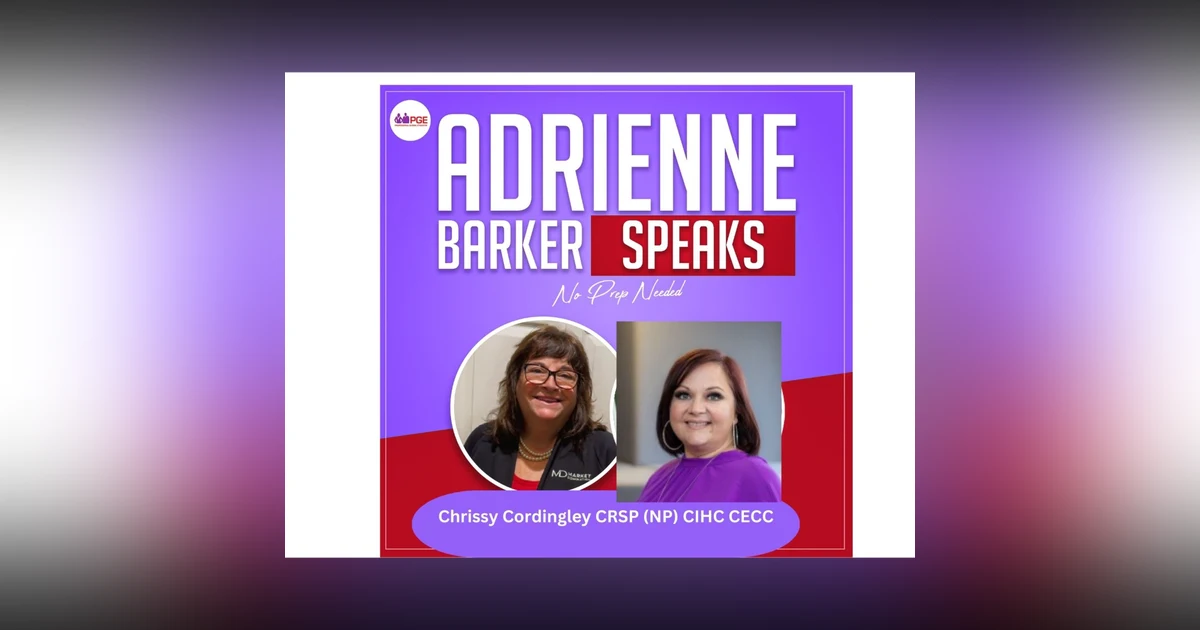
Chrissy Cordingley, managing director of Ignite Purpose Kitchen Canada and host of the Flare Up Show, is deeply invested in autoimmune disease support communities. Her perspective on this matter is shaped by her challenges and experiences as a person living with an autoimmune disease. Uniquely empathetic, she recognizes the importance of creating a safe space for sharing stories so that individuals living with similar conditions feel understood and less isolated. Through her podcast, she aims to normalize the discussion around autoimmune diseases and emphasizes the importance of community support. Chrissy's experiences have sustained her belief in the power of shared narratives and communal comfort in combating the psychological struggles associated with autoimmune diseases.
Key Takeaways:
00:00:33 - Autoimmune Disease Support Community
00:09:01 - Personal Growth and Goal Setting
00:10:32 - Transformational Package for Leaders
00:20:29 - Burnout Signs and Prevention.
00:21:56 - Self-Inclusion in Activities
Quotes
(00:18:06) "Being seen is dopamine, being heard is oxytocin." - Chrissy Cordingley.
(00:22:06) "What's missing is you. If you are not taking yourself into the equation, you will burn out because you're going to be doing a lot of things that aren't for you." - Chrissy Cordingley" - Chrissy Cordingley
Connect with Chrissy on LinkedIn: linkedin.com/in/chrissy-cordingley
0:01 All right. Wow. Talk about technical difficulties. And I only have one thing to blame. It's me. Because somehow, I don't know. So Chrissy, hi. Welcome, Chrissy. Hello, everyone. Now, OK, so full disclosure, I have met Chrissy. I was on her podcast. She's absolutely lovely. Welcome, Knowledge. So. Chrissy's got to introduce herself because I got nothing and no prep needed. I don't have a paper in front of me. Chrissy, hi, tell us about yourself. Thank you. So good to be here. I love your energy. I love spending time with you. I've been looking forward to this ever since we booked it. My name is Chrissy Cording -Lee. I live in Winnipeg, Canada, which is known for winter, more than anything else. And I did have a lovely snowy hike this morning, which was lovely in the snow and in the and in the sunshine. It was beautiful. And I am the managing director of a company called Ignite Purpose Canada, which is a subsidiary of a global company called Ignite Purpose. We do human centered performance coaching and consulting. And then I also have a podcast, which you mentioned, which is called the flare up show. And I started it a few years ago because I have an autoimmune disease. And I found that by sharing my story and hearing other people's stories about it, it just made me feel less alone and less. It gave me some hope just to be around other people. that could sort of relate to what I was going through, because it was very isolating at the time. And that has sort of just grown
1:34 into its own thing. Now it's not just about overcoming flares. It's actually about people that have come to me, which is great stories, great experience, just sharing cool things about how they've overcome in life and all the ways that they've leveled up in different ways. So it's been really exciting. So thank you. Thank you for participating in it. I'm gonna say this, I don't feel like it's misery loves company, but I know when I'm dealing with my kidneys, I like reading about other people in pain. So I'll go onto the Facebook and I'm like, oh, they're dealing with this too. And no matter how painful I am, I'm almost addicted to like other people's stories help me. So I'm not so unusual. Yeah, it's like normalization, right? And sometimes when we have those really strange aches and pains or we forget how painful it is, cause we go out of a flare and then we get into a flare, we're like, oh does this is something really wrong this time and then we read these stories and like oh no this is all normal again I remember this now I just sort of forgotten the pain this is normal I'm okay relax which we know stress is not good for autoimmune either so yeah I think that it's really important what you're doing because it it lends it an arm and a leg and an ear and all of that to those of us that are dealing with the same thing and and you know may have to get up and go to work no matter what the pain is because they don't have an employer that understands or maybe they leave their job to work for themselves uh but don't realize they have clients right that still
3:04 have you have to work for it so yeah it's really interesting so this night so so is this a i don't want to use the word like a franchise but this is it kind of like a franchise yeah Yeah, you know, it's a really interesting story and it's a very unique company and the situation that I'm in with them is pretty unique too. It's just one of those stories. So it actually stems from my podcast. So in 2022, I was still working in the corporate world and I had been working in executive leadership and I had taken on a new role with a new company and sort of gone really south quickly and I never really experienced that. I've been successful. pretty much ever have been. I'm pretty easy to get along with.
3:47 And I do good work. I know I do. So it was it was a really unusual company. And I decided to say, you know, I'm too old for this stuff. Like, I'm going to go find something else. I took a chance and quit without a backup plan. And I'm a single mom. And at that time, I was really just sort of in my spare time looking for work. I was amping up my podcast and I met the CEO of Ignite Purpose in Australia, Christina Foxwell, because she talks about love in the workplace and what compassion actually looks like in leadership. And I'm like, it's amazing. Come chat. So we chatted. We had a great time. We really connected. And then what happened was, so now I'm out of a job. I'm a single mom and we do get employment insurance here. So I had a little bit of cushion, but then shortly after I met her and it's not her fault because it was online she didn't pass COVID to me but I got very sick with COVID and because of my autoimmune I ended up with a brain injury so and then I was incapacitated for at least a month I couldn't walk properly I couldn't talk everything was like slurred I look like I had late stage Parkinson's. I was in this sort of state of seizure. It's called serotonin syndrome.
5:02 So my brain wasn't able to regulate the chemicals in my body. So it was spiking and then crashing. And it's fatal if left untreated. But it was because of the spikes in the serotonin and the melatonin and that it led to really crippling anxiety and other mental issues as well. So back to my purpose, sorry it's a long story, but Christina had kept in touch with me after that podcast and so she was kind of there to see me go through that and then get back on my feet and still figure out how to make sure my family wasn't homeless during you know these times and the different ways that I legally and morally made money in the state that I was and we became good friends and I just really appreciate her support. And she's like, no, I've been thinking about expanding.
5:57 Maybe we can start with Canada. How would you like to join? And so that's where it started. And I was really keen on it because the reason we connected was her philosophy on leadership and how you treat people. And I'm like, yeah, that's a cause I can get behind. And it just came at a time when I was really looking for something. So it just fit right in. So that's where we're at. Well, I love the story because you really are highlighting the relationship factor. And so wait, let me make sure I understand this correctly. So you had her on your podcast? Yes. That's how you develop the relationship.
6:37 See, everyone, you should have a podcast. Talk to Seth Green from Market Domination. He'll do a great podcast for you. Because at the end of the day, that's really the reality. And then, well, I mean, it helped that she was caring and compassionate and understanding and saw through everything that you're going through that this, that you would be able to be amazing. So I, wow, all the stars lined up beautifully. Yeah, it's been, it's been fortunate. And I mean, there's still healing and growth and all those wonderful things, but it's, it's just, it's unbelievable. I actually, just the other day dug up an old thing that I had written 10 years ago about what my ladder of success looked like. What would it mean to me if I was successful? What are the things that I would need to climb in order to be, you know, a whole successful person? And it was really interesting because I hadn't seen it in a decade. I was doing some cleaning and I pulled it out and I'm like, oh my God, I'm successful. Like I had done all the things. Like I went right from just being healthy in body and mind, which I am now. to having goals, which I do to get creative and curious. So I'm doing podcasting and hanging out with cool people like you. Next one was communicating and peer growth.
7:49 I'm expanding my community to amazing people like you. And then the top one was being influential. So sharing my message and I'm like, oh my goodness, like I was in tears because it's been such a ride and there's been so much heartache and hard and challenges and obstacles that I'm like, It didn't matter like and whatever comes my way again. There's just another ladder to climb. That's all and I can do it. I Love that. Of course. I have to ask that question. What's next? Yeah. Well, actually it's funny I've been sitting here looking at my ladder of success and my goals are a little bit different especially as I you know approach 50 and I Just really oh, thank you. Hey, that's cuz I've been mature. That's funny. My my spouse is came to Canada as a refugee from the Middle East many years ago, and he always says, you know, even though he's eight years younger than me, he's like, I'm 41, and my brain is 100. You're 49. And I'm like, and I'm six, six on the inside. He's like, yes, yes, you're a child. I'm like, I know, it's the best I've ever been able to hold. We're on the playground together, you and I. I love it. So my ladder of success now is changing a bit because it's sort of like enjoying, like there's a little bit. So I'm thinking about things I want to enjoy.
9:08 I want to be in nature. So that's one thing that I've been doing every day. Like I said, cold ice snow doesn't matter. I'm getting outside and I'm finding a tree to go hug. So there's also going to be, I've also put down being very careful about whose advice I allow to affect my emotions. So that's been a. big growth because as you get more exposed in your success and you're more out there you're also prone to catching more opinion and even maybe criticism right so really learning not to take that to heart because i'm very sensitive as well so so those are sort of the next and i i do i am putting out a uh an individual coaching practice in my spare time because i have tons of that uh but that will be focused around wholeness so it'll be for people like me, especially when I was going through those deep dark times, like what's wrong with me? What am I missing? You're not missing anything.
10:03 But let's figure out what you need to focus on to just get one step closer to being whole. So yeah, excited. There's lots of cool things going on. Okay, so thank you for the sound bite. I really appreciate that. You made my life easier because what you said was so amazing. So I'm like, oh, okay, that's gonna go. That's gonna be your own little post. Chrissy got me out of my own little post. Thank you, Chrissy. No, really, and this is amazing. All right, I know that you have to run. Quick question though. For Ignite, is it a membership base? No, we actually work with corporate clients. So it's... The people that come to us are usually they have companies between 50 and 250 employees. They have executive teams that are maybe trying to figure out how to upscale, keep still that professional but personal touch, those relationships. We take people through a transformational package where we teach leaders how to grow themselves first.
11:00 Even if they don't think they need it, they do. We all need to work on ourselves. Then we get to now that you're evolved, how do you teach your people to evolve to where they want to be? And then third, how do we bring you all together so that you can work like a cohesive team and honor each other's individuality and diversity? So it's really cool. But yeah, so it's not a membership thing. You can follow us. We do lots of cool webinars and things for free that anybody can engage in. And I'm always happy to talk. But generally, clients hire us and we work traditionally that way. with coaching and consulting and facilitating and, yeah. What's your cutoff? Do you have to go now? No, I've got about 10, 15 minutes, so we're good. So I'm curious, who's your target market? Are they HR, vice presidents of companies?
11:48 What does that look like? Our main program is executives, so it's executive teams, and that's because... And I've experienced this myself and probably you've experienced this yourself. You sort of like all your career, you're like, I can't wait to get to that top boardroom and to get to those meetings. And then you get there and you're like, this is the most dysfunctional meeting I've ever been in. These people are all trying to talk over each other. They all dislike each other. They don't know how to interact. Whatever got them here is not what they're doing now, right? Like they may be good at leading their own teams, but they're having a real hard time being a team. And when there's that fog at the top, it does miss down to everybody else in the organization. So that's generally who we work with is those. So we look for people that are like, my boardroom is a war room. Okay, we can help you. We can help you bring that back into like, doesn't mean you have to agree or love each other to death, but let's show you how to function. right, and communicate so you can still be cohesive and get a message to your people. And, and then we have another layer that we do work with other managers or HR. We tend to partner when we work with HR, we work we look for people that are looking to partner. So I always tell HR people, you know, God, yes, you're amazing, you can do it all, but you don't have to do it all. You can be resourceful. You don't have to do all the coaching yourself. You don't have to do all that yourself. You can bring in outside people to help you with that, because that's a lot. That's a lot, right, when you start getting into some of those stories. Yep. Chrissy,
13:21 OK, I'm sure I'm going to really get everyone mad at me when I say this, but I find that this was my reality, serving on a variety of boards. Nobody if you want to get mad at me, just send me your hate mail DM me and give me your phone number Okay, so so here's I'm gonna say Men talk a lot They share way more in a boardroom than their counterparts They will start with stories and then bang bang the gavel hits the meeting has started They will then when they got the floor or the table. They can't stop talking.
14:01 They don't know how to make a point. Hey, Chrissy, here's what I believe. This is what we should do. What do you all think? It's like 20 minutes of the same thing being repeated 100 times. Now I love audio rooms. I hear it the same thing in audio rooms. They tend to talk over each other. So they don't allow someone to speak. A lot of egos can tend to be at the table, which really makes it hard. And then you've got someone like me and everyone thinks, oh, she's such a, she's, you know, so outgoing and blah, blah, blah extrovert. No, no. When I go in the boardroom, I need rules.
14:42 So because when, so when I do the boardroom and I've been chair many times, I make sure everyone understands Robert rules of order. I like order. I don't like popcorn style. I don't do well with that. So, and I know that there's people like me, so I make sure I ask everyone, hey, Joe, do you have any thoughts? Hey, Chrissy, do you have any thoughts? I make sure I touch everyone because you're always gonna be someone who's not comfortable speaking up. So I think that what you're doing is so important because everyone comes together and, you know, it's for a good cause. But when I get to the point, when I feel like, ugh, gotta go to another board meeting, ugh, it's a lot of fighting. Now I've lost, so like, why do I want to do it? Like, it's always been like something of, yeah. So what do you do? I'm like, this is common, right? Yeah, it's super common. And it's funny, because I was in a meeting not too long ago where actually there was an executive and a chairman like literally shouting at each other. And we're like, OK, I think we need time out. Like, recess, let's go.
15:48 I think what we try to teach people is not just in the moment but teach them those skills and to practice those skills everywhere not just in the boardroom because it doesn't make sense so enter the boardroom and now forget all the rules of decorum and conversation and human dignity like that still applies in that room. We talk about getting getting really curious about if you find yourself talking a lot and talking over and not allowing space for silence, then you're not allowing time for thinking. Why are you uncomfortable with there being silence, right? That's the thing. That's what I look for. If someone's comfortable with silence, then I know that they're in thought, right? And they're being thoughtful and they're probably going to respond, not react, because they're allowing that pause. We need breaths.
16:37 we breathe for a reason. The other thing I like to teach executives too because sometimes they're like oh this is like we're just going to sing kumbaya and all this girly fluffy stuff. Sometimes we get accused of being a female company and we're not. We do have men on our team as well. But the science, so I'm part of a network called the neuroplasticians network. It's a global network for people that like to work with neurodiversity and working with the science behind how the brain works and why we actually communicate the way we do with each other. So I like to explain to them that there's actually a formula if you want performance. There's a formula that you follow in your conversations. Number one is dopamine.
17:17 People want to feel good. That's when you see them. So when you see someone and you're like, hey, good morning, or like you walk into the board and you're like, good morning, everybody. It's great to see you. Thank you. Just like you and I, right? We feel good. We're smiling. We're excited. And that's dopamine. That's a chemical reaction in the brain. So when you recognize someone and you make them feel good, give them a compliment that's genuine. That creates a dopamine, which means, hey, I feel kind of good right now. The next step is oxytocin, which is the security feeling. And we can only develop the feeling of trust and security and that safety in order to think clearly and have creativity if we feel trust. And the way we feel trust and we get oxytocin is when we're allowed to speak and be heard.
18:05 So. Being seen is dopamine. Being heard is oxytocin. And then the last one is where you do get to talk and that's epinephrine and that's that little jolt of motivation. So now when they're happy and they're feeling secure, you now have earned the right to give them a guidance or a suggestion which gets them moving towards performance. And that's science. Like this isn't like girls or boys. Everybody's brain works this way. So you're doing a retreat. So I picture how important this is and how needed it is. I also know where it's really important. I love lifetimes. I just want to say that I love drama. It's fun for me to watch a little drama. But if I want to watch the school board and the drama, it's crazy. At one time, in Kissimmee, right next to Disney World, the school board was, they were crazy.
19:00 So at one point I called the chair and I said, I said, listen, I'm here in Celebration, Florida, and how's your daughter, April? And she goes, what do you mean? I go, should I know your daughter's name? Should you be actually in a bored mood picking up the phone and talking to your daughter, telling that you're going to meet her outside and then naming the school? I'm like, does that make sense? And then by the way, the other guy who got up, took his coat off, barged out of there. And so because I don't have that much knowledge, I said to her, you should just you should put a sticky note on everyone's area when they're live and say we are live and then give them some like little tips like don't answer the phone. Watch what you say. Yes, it's like what we learned in kindergarten, but unfortunately we do have to teach, but I love that you're doing this and I do want to say a lot of these meetings that are being held online and people are watching.
19:55 We're watching you and a lot of people you're making. You're embarrassing yourself. You have to stop. And so you have to call Chrissy and get some really good advice. I really need this because I love the drama, but like, I'm not thinking to myself, wow, I really want to like, you know, do business with you or work with you. It's just, it's not right. And remember, no matter where you are, give everyone a chance to speak. Understand that not everyone is comfortable. Chrissy, you gave such great information today. I can't wait to do, you know what's weird? I can't wait to actually do the show notes because there's so many people. I was speaking for a friend yesterday. I was teaching a short class on burnout and preventing burnout and what are the signs of burnout. And when we got on, I'm like, ah, because she's funny.
20:39 She's very planned and organized. And I tend to be a little more, like you said, present. I have this like, it'll be OK to be present and just say what comes up. Right. Like that takes practice. But I feel secure, especially with you, in order to do that, because you give me dopamine and oxytocin. And I said to her when we came on, I made her laugh though, because she was very like planned. And I said, I can't wait to hear what I have to say today. Like. I love that. Run and enjoy each other. Like life is short. There's something likeable in everybody. You just got to really. I love that. If you're a positive person, other people, if you're not positive, you're not going to actually say that.
21:23 But one more thing, one more thing. All right, burnout. What's the opposite of burnout? Like, I'm going on a little cruise, so Monday I will be in the Bahamas somewhere. I'm concerned that I actually miss what I do. I love what I do so much that I'm thinking, what is it called when it's not burnout, but like, burn up? Like, I can't wait. And I already know that. That's not burnout, because burnout is when you actually stop enjoying the things that you love doing. That's not burn out. What's the added passion? You're you're passionate. You're enthusiastic, right? Like you're you you what I said yesterday was Often when people are at burnout, they ask themselves like what am I missing? Why am I not getting in there? Why am I not enjoying this anymore? Like what is wrong with me and what's actually missing is you if You are not taking yourself into the equation You will burn out because you're going to be doing a lot of things that actually aren't for you for whatever other reason, whether it's expectations, whether it's survival, whether it's like pressure from family or societal expectations, right? So really bring yourself. So if you're going on vacation because you're excited and also because that gets you excited to come back to work, that's not burnout.
22:37 That's that's engagement. That is you, Adrian, are living yourself. your best life first, which is what is the best. Thank you. Yeah, I love it. I love you. I can talk to you for there. You're really good. Where are you in Canada? Where are you in Canada? Are you by Niagara Falls? I'm in the central so people sometimes in the states ask if I'm from North Dakota, but I'm not. I'm just above North Dakota, so. OK, I won't be visiting for a while. OK, up to Daytona Beach. Where are you? Daytona Beach, Florida. Oh, I wish. Yes. I'll come next January when I'm just out. I'll be like, I'm going to visit Adrian. Yeah. Yeah. We're going to go visit and we're going to do board talks around. We're going to go around because it really is important. And if you're doing a SWAT, you need to ask, add Christy to your SWAT retreat. Yeah. It starts with a board, very, it starts with a chair and you know what I like? You know what, you know what all I need to really enjoy a chair is a nice smile. Yeah, when they smile and they look like they're enjoying themselves and they're happy they're comfortable You know, I love that that's that that I'm in all day long. Don't be robics. I'm happy too All right. Yeah, I want you to go Thank you, bye bye everyone thanks for joining us talk about brilliant bald and beautiful. That's Chrissy, bold enough to go live without worrying that there's no edits at
24:08 all. Any time. I'm at burp, it's all good. All right, have a great day.
