Politics Episodes

223
May 19, 2022
223. Attending a Lecture on Female Genius with Dr. Mary Sarah Bilder
In May 1787, George Washington arrived in Philadelphia to attend the Constitutional Convention. One afternoon, as he waited for the other delegates to show up so the convention could begin, Washington accompanied some ladies to a public lecture at the University of Pennsylvania by a woman named Eliza Harriot Barons O’Conner. Eliza Harriot, as she signed her name, had led a transatlantic life steeped in revolutionary ideas. On that May afternoon she argued in favor of the radical notion of Fem...
Guest: Dr. Mary Sarah Bilder

222
March 25, 2022
222. Winning a "Compleat Victory" at Saratoga with Dr. Kevin Weddle
The Battle of Saratoga in September and October of 1777 was a decisive turning point in the American War for Independence. The American victory over the British in northern New York put a stopper to London’s dreams of a swift end to the war, and convinced the French to openly declare their support for the colonial rebels. It was, in the words of one American participant, a "Compleat Victory." Yet, if we focus on the battles alone, we lose site of the entire campaign, the colorful personalitie...
Guest: Kevin J. Weddle
221
March 9, 2022
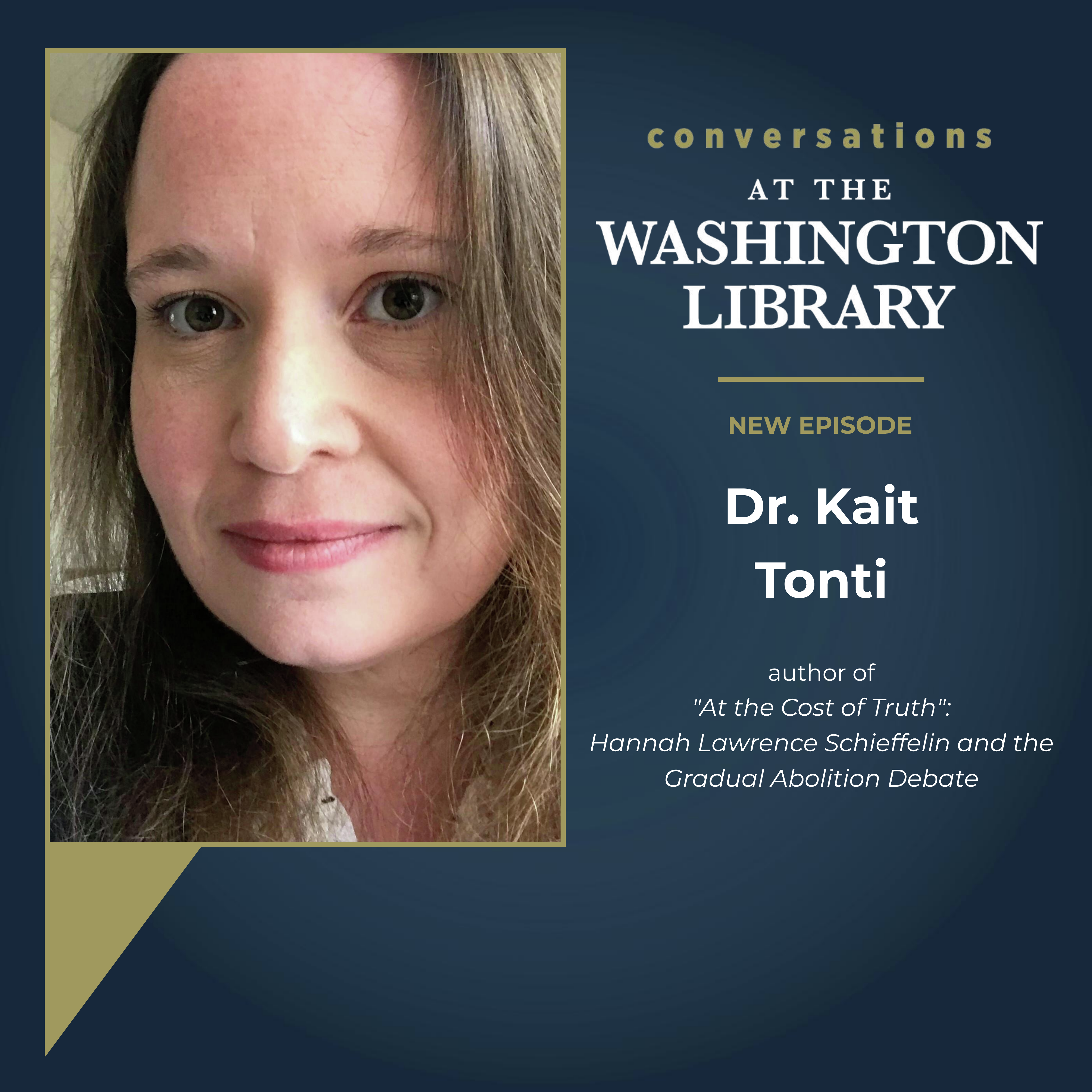
221. Reading the Political Poetry of Hannah Lawrence Schieffelin with Dr. Kait Tonti
Hannah Lawrence Schieffelin was an American poet who rhymed about some of the most important issues facing the early United States in the eighteenth century, including the British occupation of New York City during the American Revolution, the debate over the gradual abolition of slavery in the early days of the republic, and the legacy of George Washington. Schieffelin sat at the heart of the New York literary scene in these years, but until recently, most of her manuscript poetry remained u...
Guest: Kait Tonti

220
Feb. 18, 2022
220. Educating Early Americans with Drs. Mark Boonshoft and Andrew O'Shaughnessy
If you had been alive in eighteenth-century America, you would've had little opportunity for formal schooling or an advanced education. Unless you were among the elite or at least of some means, your chances of attending a local academy or Harvard College weren’t great. But the American Revolution ushered in a new era of education in the United States that paved the way for the educational opportunities we take for granted today. Education became seen as central to the survival of the republi...
Guests: Mark Boonshoft , Andrew J. O’Shaughnessy
219
Feb. 2, 2022
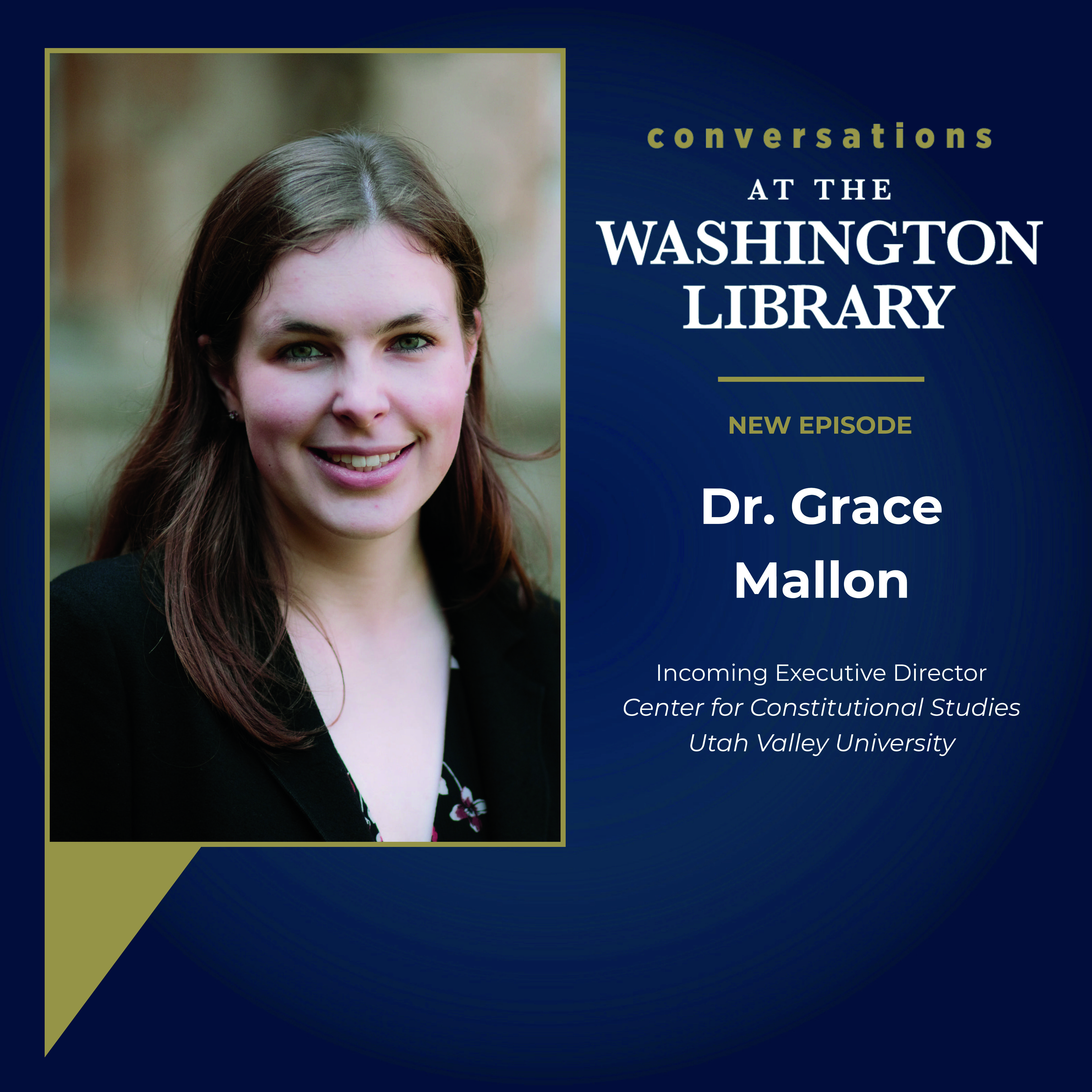
219. Negotiating Federal-State Relations with Dr. Grace Mallon
For years after the ratification of the Constitution, Americans debated how the Federal Government and the several states should relate to each other, and work together, to form a more perfect union. The success, if not the survival, of the new republic depended on these governments cooperating on any number of issues, from customs enforcement to Native American policy. But where there was collaboration there was also friction among them over matters like state sovereignty, slavery, and land. Un...
Guest: Grace Mallon
216
Dec. 23, 2021
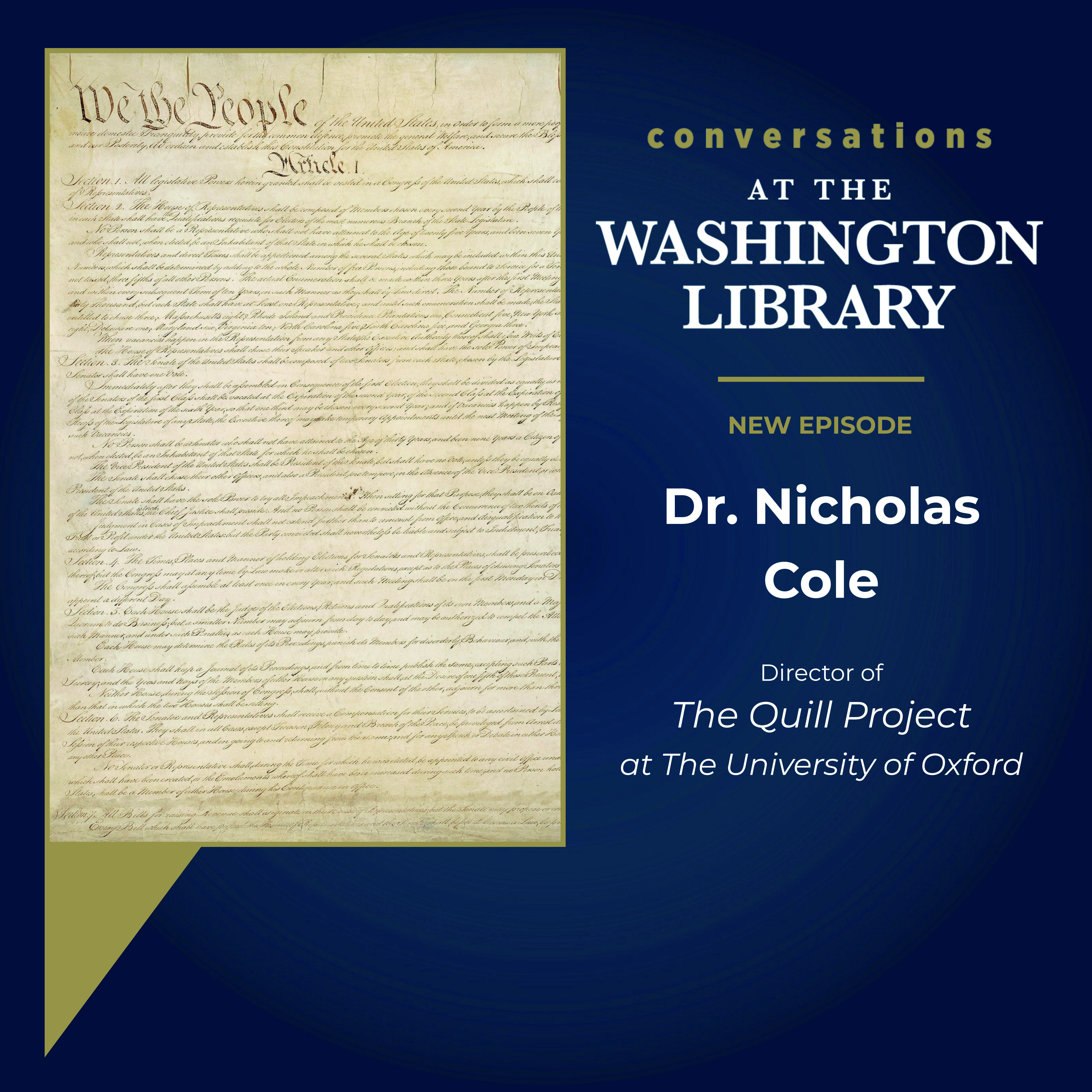
216. Digitally Deconstructing the Constitution with Dr. Nicholas Cole
When delegates assembled in Philadelphia in the Summer of 1787 to write a new Constitution, they spent months in secret writing a document they hoped would form a more perfect Union. When we talk about the convention, we often talk of the Virginia Plan, the Connecticut Compromise, the 3/5ths clause, and other major decisions that shaped the final document. What’s harder to see are the long days the delegates spent haggling over numerous proposed amendments, precise words, phrases, and ideas that...
Guest: Nicholas Cole
215
Dec. 2, 2021
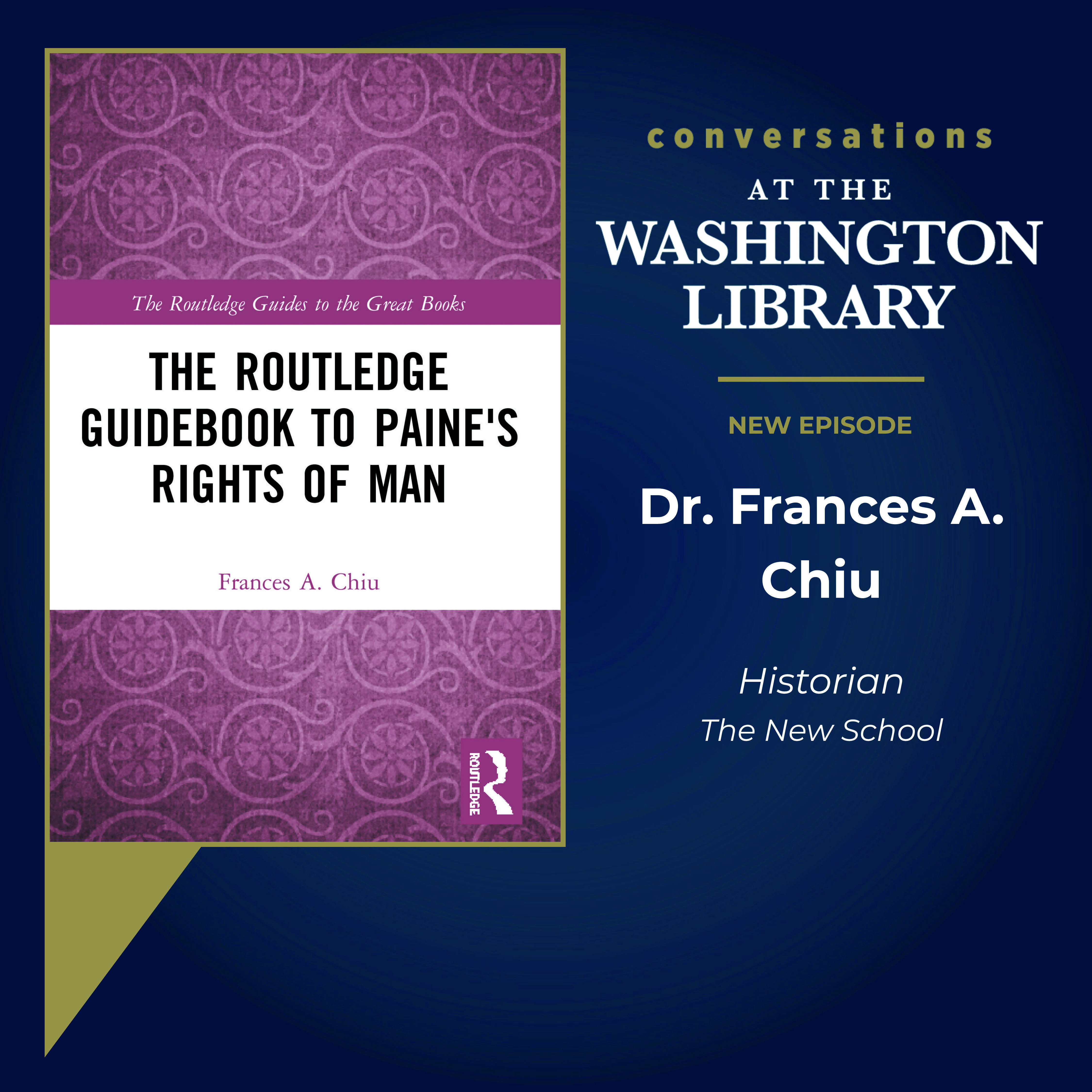
215. Reading Thomas Paine's Rights of Man with Dr. Frances Chiu
For most Americans, Thomas Paine is the radical Englishman, and former tax collector, who published Common Sense in early 1776. His claim that hereditary monarchy was an absurdity and that the “cause of America was in great measure the cause of all mankind” galvanized American rebels into thinking more seriously about independence than they had only a few months before. Paine would go on to publish The American Crisis and other writings during the America Revolution before trying to find his ...
Guest: Frances A. Chiu

214
Nov. 4, 2021
214. Weaponizing Settlement in Nova Scotia with Dr. Alexandra Montgomery
Although you might not realize it, in the years before the American Revolution, Nova Scotia was all the rage. People concocted various schemes to settle it, and the British government saw it as one of the keys to its new vision of empire after the Seven Years War. Nova Scotia has a fascinating, often troubled history. Indigenous peoples and European powers competed for the land, and access to the colony’s lucrative fishing grounds, drawing maps to stake their claims, making war, and in the case ...
Guest: Alexandra L Montgomery
210
Sept. 15, 2021
210. Winning a Consolation Prize with Dr. Abby Mullen (Summer Repeat)
Consuls are essential to American foreign relations. Although they may not be as flashy or as powerful as an Ambassador like Thomas Jefferson or John Quincy Adams, they’re often the go-to people when an American gets in trouble abroad or when a trade deal needs to get done. Consuls operate in cities and towns throughout the world, helping to advance American interests and maintain good relations with their host countries, all while helping you replace your lost passport. Much has changed about t...
Guest: Abby Mullen

208
Aug. 18, 2021
208. Harnessing Harmony in the Early Republic with Billy Coleman (Summer Repeat)
On September 14, 1814, Francis Scott Key began composing "The Star-Spangled Banner after witnessing the British attack on Fort McHenry. Of all the things he could have done after seeing that flag, why did Key write a song? And how did his new composition fit into a much longer history of music as a form of political persuasion in the Early Republic? On today’s episode, Dr. Billy Coleman joins us explore the power of music in the early United States, and how Federalists in particular used it a...
Guest: Dr. Billy Coleman
207
Aug. 4, 2021
207. Offering George Washington a Royal Gift with Professor José Emilio Yanes (Summer Repeat)
In 1784, King Charles III of Spain sent George Washington a token of his esteem. Knowing that Washington had long sought a Spanish donkey for his Mount Vernon estate, the king permitted a jack to be exported to the new United States. Washington named the donkey Royal Gift in recognition of its royal origin, and the donkey became somewhat of a minor celebrity when he disembarked from his ship in 1785. As it turns out, Spanish jacks like Royal Gift were highly prized animals in the Atlantic world....
Guests: Dr. José Emilio Yanes , Allan R. Winn, Jr.
206
July 22, 2021
206. Promoting Joseph Smith for President with Dr. Spencer W. McBride
The American Revolution dismembered a protestant empire. In the years during and after the war, states disestablished their churches, old and new denominations flourished, and Americans enshrined religious freedom into their state and federal constitutions. But claiming religious freedom in a democracy was not the same as enjoying it. In the republic’s early years, Joseph Smith, who founded the Church of Jesus Christ of Latter Day Saints, and his Mormon brethren learned all too well the diffe...
Guest: Dr. Spencer W. McBride
204
June 24, 2021
204. Raising Liberty Poles in the Early Republic with Dr. Shira Lurie
If you’ve taken part in a part in a protest recently, perhaps you carried a sign, waved a flag, or worn a special hat. But if you had grievances in the American Revolution or early Republic, you might have helped raise a Liberty Pole. Now, you may ask yourself, what good is a large wooden pole gonna do about my high taxes? And you may ask yourself, do I really want to lift this heavy thing? Turns out, as the days went by in the late eighteenth century, many Americans thought Liberty ...
198
April 2, 2021
198. Contesting Monuments and Memory in South Carolina with Dr. Lydia Brandt
The South Carolina State House Grounds is a landscape of monuments and memory. Since the capital moved from Charleston to Columbia in the 1780s, South Carolinians have been erecting, moving, and contesting monuments on the capitol’s grounds, using them to debate the past as they really argue about their present. Monuments and statues are the subject of great debate right now, not only in the United States, but around the world, and South Carolina’s commemorations can help us to understand why. I...
195
Feb. 18, 2021
195b. [En Español] Ofreciendo a George Washington un regalo real con el profesor José Emilio Yanes
Bienvenido a Conversaciones en la Biblioteca de Washington. Hoy, Jim Ambuske habla con el profesor José Emilio Yanes de la Universidad de Salamanca en España. Yanes es el autor del libro El Regalo de Carlos III A George Washington: El periplo de Royal Gift. El libro cuenta la historia de cómo un burro jugó un papel importante en la relación diplomática entre España y los nuevos Estados Unidos. Muchas gracias a Allan Winn, Jr. por traducir durante nuestra conversación. Gracias por escuchar....
Guests: Dr. José Emilio Yanes , Allan R. Winn, Jr.
195
Feb. 18, 2021
195a. Offering George Washington a Royal Gift with Professor José Emilio Yanes
In 1784, King Charles III of Spain sent George Washington a token of his esteem. Knowing that Washington had long sought a Spanish donkey for his Mount Vernon estate, the king permitted a jack to be exported to the new United States. Washington named the donkey Royal Gift in recognition of its royal origin, and the donkey became somewhat of a minor celebrity when he disembarked from his ship in 1785. As it turns out, Spanish jacks like Royal Gift were highly prized animals in the Atlantic wor...
Guests: Dr. José Emilio Yanes , Allan R. Winn, Jr.
189
Dec. 24, 2020
189. Confronting an Absolutist Monarch with Dr. Karie Schultz
In this season of religious renewal, we bring you a story of religious dissent. In 1638, many of King Charles I’s Presbyterian subjects gathered at Greyfriars Kirkyard in Edinburgh to sign the National Covenant. By renewing their own covenant with the Almighty, they also pledged to resist encroachments on church government by the king, and the innovations in doctrine he sought to make for the Church of Scotland. As we’ve discovered in previous episodes, the sixteenth and seventeenth centuries w...
Guest: Dr. Karie Schultz
187
Dec. 10, 2020
187. Winning a Consolation Prize with Dr. Abby Mullen
Consuls are essential to American foreign relations. Although they may not be as flashy or as powerful as an Ambassador like Thomas Jefferson or John Quincy Adams, they’re often the goto people when an American gets in trouble abroad or when a trade deal needs to get done. Consuls operate in cities and towns throughout the world, helping to advance American interests and maintain good relations with their host countries, all while helping you replace your lost passport. Much has changed ab...
Guest: Abby Mullen
181
Oct. 22, 2020
181. Electioneering Rage with Kelly Fleming
In 1784, British men went to the polls. It was a pivotal contest in the aftermath of the American Revolution, following a slew of prime ministers who had tried and failed to form governments that satisfied the British electorate, and King George III. British women played a critical role in this election, even though they could not vote. They canvased for votes according to very specific social customs, and accessorized their clothing and bodies to signal support for their respective candidates. ...
179
Oct. 8, 2020
179. Revitalizing Myaamia Language and Culture with George Ironstrack
In the eighteenth century, the Myaamia people inhabited what are now parts of Ohio, Indiana, Illinois, and Wisconsin. More commonly known in English as the Miami, the Myaamia figure prominently in the early history of the United States, especially in the 1790s, when war chief Mihšihkinaahkwa (or Little Turtle) co-led an alliance of Miami and Shawnee warriors that defeated successive American armies in the Ohio valley before meeting defeat at the Battle of Fallen Timbers in 1794. In the battle...
177
Sept. 24, 2020
177. Harnessing Harmony in the Early Republic with Billy Coleman
On September 14, 1814, Francis Scott Key began composing "The Star-Spangled Banner after witnessing the British attack on Fort McHenry. Of all the things he could have done after seeing that flag, why did Key write a song? And how did his new composition fit into a much longer history of music as a form of political persuasion in the Early Republic? On today’s episode, Dr. Billy Coleman joins us explore the power of music in the early United States, and how Federalists in particular used it a...
176
Sept. 17, 2020
176. Hunting Satan in Scotland and the Atlantic World with Michelle D. Brock
The Prince of Darkness wrought havoc on the souls of seventeenth-century Christians living throughout the Atlantic world. Whether they called him Satan, the Devil, Beelzebub, or by any other name, Lucifer tempted men and women to break their covenant with God in Heaven and do his dark bidding on Earth. At a time of great religious upheaval, when the Protestant Reformation swept through Europe and across the ocean to England’s American colonies, fears of Satan’s malevolent influence and the sear...
169
July 30, 2020
169. Re-investigating an Early American Murder with Jessica Lowe
Season 5 of Conversations at the Washington Library is just around the corner. Until then, we're happy to bring you Jim Ambuske's recent live stream chat with Dr. Jessica Lowe of the University of Virginia School of Law. Long-time fans of the podcast will recognize Dr. Lowe’s name from an episode Ambuske recorded with her in 2019. Their live stream conversation gave them a chance to go much deeper into the horrid crime at the heart of Lowe's book, Murder in the Shenandoah: Making Law Sovereign ...
166
July 9, 2020
166. Mobilizing the Will of the People with T. H. Breen
We're excited to bring you Season 5 of Conversations at the Washington Library in a few short weeks. But in the meantime we’ll keep you entertained as promised. Today, we bring you the audio version of Executive Director Kevin Butterfield’s recent live stream with Dr. T.H. Breen. Breen is the William Smith Mason Professor of History emeritus at Northwestern University. He has been a leading scholar of colonial America and the Revolution for the past several decades, and long has been intereste...