Who We Trust and How We Receive Advice : A Leadership Living Lab
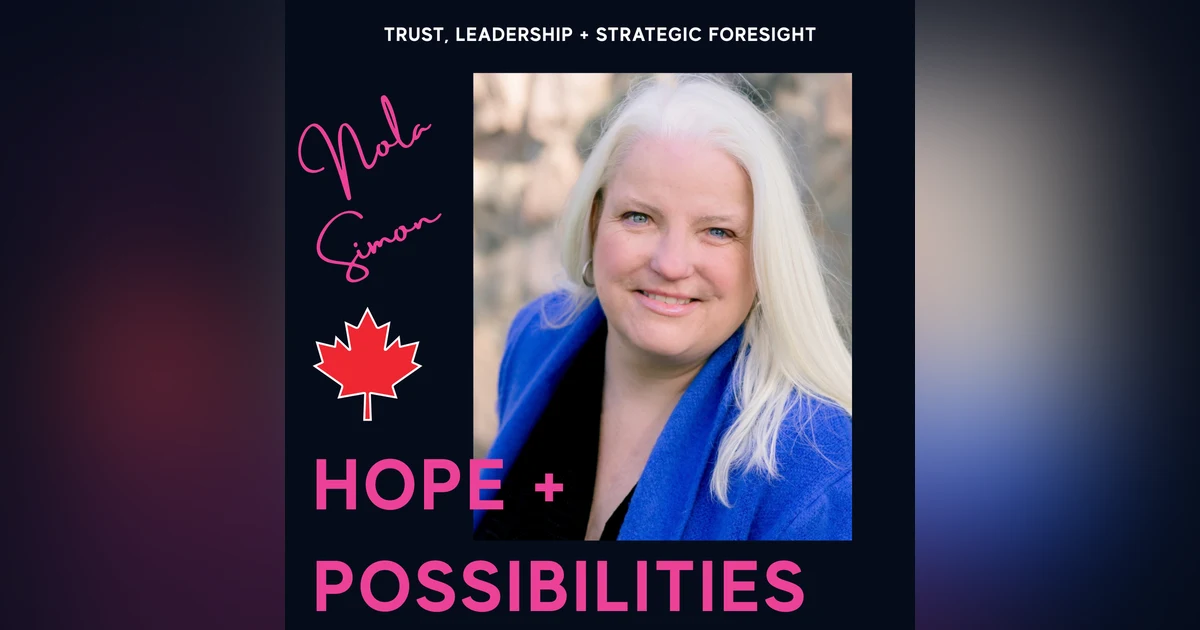


My last episode was about giving advice. This one is about the other side: how we receive it.
I start with the type of advice. There's the advice you go looking for and the advice that shows up uninvited. Then there's the question of who you actually trust, and how you filter what's useful from what isn't.
Advice doesn't have to come from someone who knows you. Mentorship is usually personal: parents, other adults in your life, coworkers, industry experts, even someone you're only loosely connected to. It's interactive and shaped around you. There's also thought leadership, where someone shares their expertise through books, TED Talks or videos without ever knowing you. That's a parasocial relationship, and it raises its own questions. How do you decide who gets your attention? And what happens when that person changes?
I've lived this. When I first hired my coach, her focus was career advice, resumes and storytelling. Then she moved into meditation, and later went back to work full-time in leadership development. Adapting as she adapted was a real shift for me. Honestly, it turned out to be a gift, because it made me look at why her change mattered to my own story.
We see the same thing with musicians and actors. When they move in a new direction, fans want more of the same. I'm seeing it in thought leadership too. Someone else's growth can threaten the story we've built about how they're useful to us. Stepping back to look at why is useful identity work, and I don't hear many people talk about it.
I also talk about:
- A post this week asking why people who know you struggle to support you when you leave corporate work, and why they fall back on "go get a real job"
- Neuroplasticity as a gentler way to understand why some people can't adapt to your change, even when they care
- Building your own board of directors. I'm drawn to people with broad backgrounds across industries and roles, many of them 20 years older than me, and I balance that with younger voices
- Paying attention to people who make you uncomfortable, and working out whether the problem is their content, their delivery or your own bias
- A creator whose "cool millennial manager" positioning got my back up, and what I learned once I saw it as an intentional method for drawing in the audience she wants
Power and influence matter in how you use them, and just as much in how you let others influence your choices. That's the part of receiving advice I don't think we talk about enough.
Resources
- My previous episode: A Leadership Living Lab: The Future of Advice and Mentorship
- Rachel Botsman, Who Can You Trust? How Technology Brought Us Together and Why It Might Drive Us Apart (2017)
- Rethink Moments with Rachel Botsman (podcast): Apple Podcasts · Spotify
- Rachel Botsman's Rethink newsletter: rachelbotsman.substack.com
- Rachel Botsman on Instagram: @rachelbotsman
- Dorie Clark, Reinventing You: Define Your Brand, Imagine Your Future
- Dorie Clark on Instagram: @dorieclark
- On the Level with Margaret Heffernan (Substack): heffernanm.substack.com
- PR Breakdown with Molly McPherson (Substack): mollymcpherson.substack.com
- The PR Breakdown with Molly McPherson (podcast): mollymcpherson.substack.com/podcast
Share your story
Has someone influenced you, or failed to? I'd love to hear the details. Podcasts aren't usually interactive, but I never stop trying. You can reach me by:
- Email: nola@nolasimon.com
- LinkedIn: linkedin.com/in/nolasimon
- Threads: @nolasimonsayings
- Substack: Everyday Futurism (@nolasimon)
00:00:23,852 --> 00:00:24,641
Hi, I'm Nola.
2
00:00:24,653 --> 00:00:31,213
I'm the host of the Hope and Possibilities
podcast, and I wanted to talk a bit about
3
00:00:33,500 --> 00:00:34,839
Receiving advice.
4
00:00:34,869 --> 00:00:40,529
My last episode was about giving
advice, but it's equally important
5
00:00:40,617 --> 00:00:42,558
to think about how we receive.
6
00:00:43,948 --> 00:00:48,505
And first of all it's the type of advice.
7
00:00:48,690 --> 00:00:55,419
So what do you do with unsolicited
advice versus advice you seek out?
8
00:00:56,164 --> 00:00:58,312
And who do you actually trust?
9
00:00:58,763 --> 00:01:04,063
And if you are receiving either
type of advice, how do you filter
10
00:01:05,371 --> 00:01:09,740
what's really useful and where
do you look for the advice?
11
00:01:09,800 --> 00:01:14,578
And it does not actually
have to be personal advice.
12
00:01:14,586 --> 00:01:18,827
So when I'm talking about
mentorship, generally the idea
13
00:01:18,911 --> 00:01:24,073
is that you're receiving it from
somebody that you know personally.
14
00:01:24,085 --> 00:01:29,512
So like whether that's parents or,
other adults in your life or, coworkers
15
00:01:29,514 --> 00:01:34,915
or colleagues or industry experts
or somebody that you have a tenuous
16
00:01:34,920 --> 00:01:38,064
connection to at, at, at any point.
17
00:01:38,118 --> 00:01:41,314
That's a certain type of advice
because it tends to be more personal,
18
00:01:41,314 --> 00:01:45,484
it tends to be more interactive,
it tends to be curated to yourself.
19
00:01:46,019 --> 00:01:56,023
But there's another type of advice that
honestly I find useful, and that is
20
00:01:56,544 --> 00:01:59,634
the thought leadership aspect of it.
21
00:01:59,678 --> 00:02:02,960
So this is somebody who
doesn't know you at all and is
22
00:02:02,978 --> 00:02:04,898
producing content of some sort.
23
00:02:04,901 --> 00:02:08,857
So whether that's TED Talks, whether
that's books, whether that's videos.
24
00:02:09,122 --> 00:02:14,103
However you consume their thought
leadership type content, whether you
25
00:02:14,103 --> 00:02:18,608
wanna call it thought leadership or not,
it's some type of expertise that they're
26
00:02:18,609 --> 00:02:23,624
sharing in a way that you're consuming it-
27
00:02:25,967 --> 00:02:27,452
Without knowing them personally.
28
00:02:28,967 --> 00:02:31,219
It's a parasocial
relationship essentially.
29
00:02:31,738 --> 00:02:36,477
And how do you decide who to follow?
30
00:02:36,488 --> 00:02:38,091
Who-- how do you decide
31
00:02:40,352 --> 00:02:47,651
which people really receive your
attention, and how does that change?
32
00:02:47,726 --> 00:02:52,580
And also, how do you adapt as they change?
33
00:02:52,594 --> 00:02:55,487
So for example I mentioned
that I had a coach.
34
00:02:55,596 --> 00:02:59,905
Initially when I first hired her,
she was very focused on career advice
35
00:02:59,928 --> 00:03:06,427
and preparing resumes and writing a
book about storytelling and, she had
36
00:03:06,428 --> 00:03:08,141
some theater practices involved too.
37
00:03:08,141 --> 00:03:11,817
But then she really significantly
shifted into meditation.
38
00:03:12,319 --> 00:03:17,089
She said herself that she has a habit
of once she actually gets passionate
39
00:03:17,089 --> 00:03:20,948
about something, it becomes her
whole personality, and so she pivoted
40
00:03:20,957 --> 00:03:23,730
her brand really to embrace that.
41
00:03:23,768 --> 00:03:28,631
And then she ended up going back to
work full-time for a company and got
42
00:03:28,631 --> 00:03:33,748
into leadership development and really
got away from the type of coaching
43
00:03:33,758 --> 00:03:36,158
that I originally hired her for.
44
00:03:37,097 --> 00:03:44,940
And that was a real shift to be able to
adapt with her as she adapted herself.
45
00:03:44,967 --> 00:03:51,122
And honestly, in lots of ways it's
been a gift because you get to analyze
46
00:03:51,153 --> 00:03:53,600
how you're reacting in terms of
47
00:03:57,997 --> 00:04:00,661
what that story means to you, right?
48
00:04:00,664 --> 00:04:05,078
I find this honestly with
pop stars and people who act.
49
00:04:05,244 --> 00:04:09,465
They put forth a certain type of
work, and then if they change,
50
00:04:10,360 --> 00:04:12,604
people are reluctant to let that go.
51
00:04:12,661 --> 00:04:17,282
And a lot of times, especially with
musicians, if they shift the type
52
00:04:17,282 --> 00:04:19,801
of music that they're producing
53
00:04:23,173 --> 00:04:28,343
People can't adapt and they
don't like the new stuff.
54
00:04:28,358 --> 00:04:32,181
They want them to do more of the
same because it's almost like they
55
00:04:32,183 --> 00:04:37,990
fulfill that need, again, going back
to that parasocial relationship.
56
00:04:38,929 --> 00:04:45,778
And of course, nobody really has the
ability to say whether somebody is going
57
00:04:45,779 --> 00:04:50,430
to produce that or not but I'm seeing that
a lot with thought leadership is there's
58
00:04:50,431 --> 00:04:56,421
a reluctance to allow people to shift and
change and adapt and move into different
59
00:04:56,432 --> 00:05:02,520
types of work because it changes the
story of how that person is useful to you.
60
00:05:04,170 --> 00:05:13,461
And just having that ability to step back
and analyze why somebody's development
61
00:05:15,043 --> 00:05:20,171
can threaten your own personal story,
that's actually a useful skill to work
62
00:05:20,175 --> 00:05:26,200
through in terms of your own identity
and your own development, and that's
63
00:05:26,254 --> 00:05:30,659
something that I've never really heard
anybody really talk about significantly.
64
00:05:31,142 --> 00:05:34,927
Although this week there was actually
somebody posted about the fact of
65
00:05:35,729 --> 00:05:39,361
people who step away from corporate
and get into freelancing or some
66
00:05:39,362 --> 00:05:42,974
other type of work that isn't
necessarily a straightforward job.
67
00:05:43,876 --> 00:05:48,858
And basically she was like, "Why
is it so hard for people who know
68
00:05:48,859 --> 00:05:54,758
you to be supportive, to let that
go, to have a real understanding of
69
00:05:54,759 --> 00:05:56,477
how you're changing and adapting?"
70
00:05:57,088 --> 00:06:01,314
And why do they often just
resort to go get a real job?
71
00:06:01,431 --> 00:06:04,988
Like, why is that such a hard transition?
72
00:06:05,015 --> 00:06:09,649
And again, I think it comes down to
that identity piece of it, if you're
73
00:06:09,661 --> 00:06:16,981
changing who you are and how you
make money, and y- your identity is
74
00:06:16,981 --> 00:06:21,067
shifting because of the work that
you do, how does that impact them and
75
00:06:21,067 --> 00:06:22,964
how does that shift their identity?
76
00:06:23,471 --> 00:06:30,343
And if they're not able to adapt and
they're not able to let that go, what
77
00:06:30,343 --> 00:06:32,870
does that say about their ability?
78
00:06:32,877 --> 00:06:36,975
And I ended up saying to this person,
and in lots of ways it's easier to think
79
00:06:36,977 --> 00:06:42,461
about it as it's not that they don't
care, it's about neuroplasticity and how
80
00:06:42,486 --> 00:06:49,352
their brain is forming new connections and
learning and adapting in real time, right?
81
00:06:50,089 --> 00:06:54,772
People… Some people just don't have the
type of brain that has the capacity to
82
00:06:54,774 --> 00:06:56,788
be able to build those new connections.
83
00:06:57,302 --> 00:06:58,137
And it's not
84
00:07:02,483 --> 00:07:08,838
It's biological more than it's actually
based in personality or ability, right?
85
00:07:08,861 --> 00:07:11,288
It's just fundamentally how
86
00:07:13,924 --> 00:07:14,637
they think.
87
00:07:16,226 --> 00:07:20,440
And it's related to their brain
chemistry and the neuroscience of
88
00:07:20,440 --> 00:07:24,179
it rather than any type of instinct.
89
00:07:24,428 --> 00:07:29,135
And sometimes that's an easier thing
to hear rather than, "I've explained it
90
00:07:29,135 --> 00:07:30,882
400 times and they still don't get it.
91
00:07:30,882 --> 00:07:35,920
I don't understand why it's so
difficult to pay attention," right?
92
00:07:36,030 --> 00:07:40,932
And it's not necessarily about the
fact that they're not paying attention.
93
00:07:40,934 --> 00:07:47,452
It's about the fact that they just
don't have that mental flexibility to
94
00:07:47,453 --> 00:07:50,343
be able to build that new connection.
95
00:07:51,605 --> 00:07:57,676
And that is a reality of how
we receive feedback and how we
96
00:07:57,676 --> 00:08:03,670
trust people to influence our
decisions in real time, right?
97
00:08:04,029 --> 00:08:04,788
So
98
00:08:06,789 --> 00:08:13,612
it's useful if you are a person who's
seeking out information and advice whether
99
00:08:13,613 --> 00:08:19,261
that's, something personally curated
to you or something that you're paying
100
00:08:19,262 --> 00:08:21,770
attention to that's publicly available.
101
00:08:22,606 --> 00:08:25,784
Who really forms your
board of directors, right?
102
00:08:25,807 --> 00:08:29,783
Because it's probably not just one
person, because everybody has a different
103
00:08:29,796 --> 00:08:34,191
background, everybody has a different type
of skill set, everybody has a different
104
00:08:34,214 --> 00:08:36,152
understanding of how the world works.
105
00:08:36,923 --> 00:08:43,986
I tend to be drawn to people who
have a broad background, who have
106
00:08:44,011 --> 00:08:48,331
worked through multiple different
industries and skills and roles.
107
00:08:48,679 --> 00:08:52,995
A lot of times the, the people that I pay
attention to are 20 years older than I am.
108
00:08:53,482 --> 00:08:55,892
But also I do look for
balance in that too.
109
00:08:55,892 --> 00:08:59,559
Like that coach I mentioned, she's a
good eight years younger than I am.
110
00:09:00,012 --> 00:09:03,474
And sometimes I look at the people
who actually make me uncomfortable,
111
00:09:03,477 --> 00:09:07,488
and I try to figure out what it is
about their positioning, what it is
112
00:09:07,488 --> 00:09:09,664
about their advice and expertise.
113
00:09:09,669 --> 00:09:13,078
Is it that it's invalid the stuff
that they're actually sharing,
114
00:09:13,610 --> 00:09:20,579
or is there something about
their delivery that I need to
115
00:09:22,970 --> 00:09:28,046
assess to see if that's a
bias that I need to let go of.
116
00:09:29,718 --> 00:09:33,183
There's a creator that I follow,
and she she tends to position
117
00:09:33,187 --> 00:09:36,918
things of, she's working with these
really cool millennial managers.
118
00:09:37,673 --> 00:09:40,675
And I recognize that
as a marketing tactic.
119
00:09:40,676 --> 00:09:45,043
She's positioning herself as one
of them, and if you are a really
120
00:09:45,045 --> 00:09:50,212
cool millennial manager, you want
her to think that you're cool.
121
00:09:50,291 --> 00:09:54,568
You… She's positioning herself as
one of them, and it's about belonging
122
00:09:54,570 --> 00:09:56,066
more than it is anything about that.
123
00:09:56,460 --> 00:10:01,259
But that positioning really got my back
up because for one, I'm not a millennial.
124
00:10:02,125 --> 00:10:07,561
So I'm like, "Why is she focusing on that
type of positioning?" And it's really
125
00:10:07,562 --> 00:10:12,566
come down to she knows her audience,
and she's positioning herself so that
126
00:10:12,576 --> 00:10:18,774
she's actually drawing in people who
hear that and go, "Ooh, she's talking
127
00:10:18,789 --> 00:10:24,234
about me," rather than, someone like
me, where she's actually actively trying
128
00:10:24,234 --> 00:10:31,484
to alienate because she-- I'm not the
type of personality that she values.
129
00:10:32,439 --> 00:10:35,742
And so it's not anything to
do with either one of us.
130
00:10:35,769 --> 00:10:39,108
It's just this is what her intention is.
131
00:10:39,109 --> 00:10:46,956
This is her method, and I'm reacting to
that in real time because sometimes I
132
00:10:46,967 --> 00:10:51,104
think some of the things that she says
are interesting, but at the same time, I'm
133
00:10:51,123 --> 00:10:53,278
alienated, and I wanted to understand why.
134
00:10:53,611 --> 00:10:57,399
And it's not because I have a bias.
135
00:10:57,486 --> 00:11:03,457
It's because she's actively
facilitating that bias to draw
136
00:11:03,481 --> 00:11:05,634
people that she wants more of to her.
137
00:11:06,568 --> 00:11:11,458
But to be able to filter through that,
because you can feel it in your body is
138
00:11:11,458 --> 00:11:17,468
a real-really useful way of understanding
how you allow people to influence you.
139
00:11:18,295 --> 00:11:23,437
And power and influence is a
really important critical skill
140
00:11:26,417 --> 00:11:33,440
both in how you practice it yourself,
but also how you allow others to
141
00:11:33,440 --> 00:11:35,827
influence your choices and decisions.
142
00:11:36,316 --> 00:11:38,612
And that's the aspect of
143
00:11:41,525 --> 00:11:44,617
receiving advice I think that
we don't talk about enough.
144
00:11:45,616 --> 00:11:49,517
So I'm gonna leave that there for thought.
145
00:11:49,523 --> 00:11:52,329
I'm gonna put in some resources in
the show notes, so if you're looking
146
00:11:52,329 --> 00:11:54,595
for that, it'll be in the show notes.
147
00:11:54,851 --> 00:11:56,880
Again, I'm interested in your stories.
148
00:11:56,881 --> 00:12:00,749
If you have a specific story about
how somebody influenced you or not
149
00:12:01,288 --> 00:12:04,954
these are great things to look at and
analyze, and I'd really appreciate
150
00:12:04,954 --> 00:12:06,841
you sharing that kind of detail.
151
00:12:07,642 --> 00:12:12,383
It, it's an opportunity to be
interactive, and it doesn't usually
152
00:12:12,384 --> 00:12:15,455
happen on the podcast, but I
never stop trying, so thank you

