A Leadership Living Lab: The Future of Advice and Mentorship
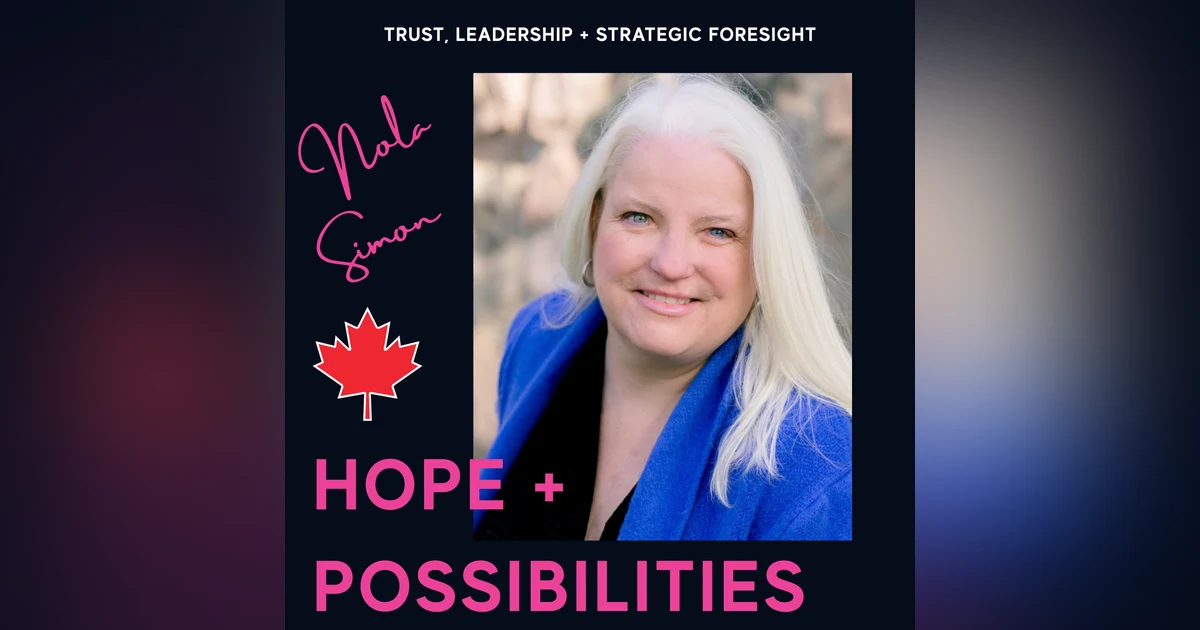


A Leadership Living Lab: The Future of Advice and Mentorship | Episode 1
How do I advise my kid?
It's one of the questions futurists get asked most. What should they study? What skills will be in demand by the time they graduate? Honestly, it's the most approachable version of futurism there is, because almost everyone ends up giving this kind of advice. Parents do. So do aunts and uncles, godparents, neighbours, and every leader who has someone show up asking for their perspective.
This episode launches a new Living Lab series about how we give advice when nobody knows the future.
I start with my daughter. She spent years preparing for a science degree, including a lot more math than she was ever happy with. Then we toured the campuses, and she hated every tour. Her plan said science, but her body was telling a different story. She let the plan go, took a gap year, and ended up studying social work, with art kept as something just for her.
That's the pattern I want to dig into: we prepare for an imagined future, and then the reality of living it reshapes the plan. It happened to me too. I took math, minored in history, and ended up in financial services account management, working with American customers. Not exactly a straight line, right?
In this episode:
- Why parenting is a futurism project, and why that makes giving advice a leadership skill
- Margaret Heffernan on making decisions in the moment without enough data
- How a few campus tours changed my daughter's plan
- Why the day-to-day reality matters more than the plan on paper
- The advice we recycle ("go in early, stay late") and what happens when nobody's in the office to see it
- Unlearning skills, and letting go of the parts of our identity that built our careers but won't build someone else's
Three questions to ask before you give the advice:
- Is my advice still true for their world?
- What will their ordinary day actually look like?
- What's one small thing they can test before they commit?
Bring it to the Living Lab. Send me your questions, what you've tried, or your own advice at nola@nolasimon.com. You can also leave a review with your question in it. I may feature it in a future episode.
Want to see what a Living Lab looks like? I started investigating AI on this podcast back in 2021, and those episodes became an accidental Living Lab. You'll find them at nolasimon.com/podcast.
What advice have you been asked for lately, and how much of it is still relevant?
00:00:29,173 --> 00:00:33,166
Hi, I'm Nola Simon, and I'm the host
of the Hope and Possibilities podcast.
2
00:00:33,608 --> 00:00:38,528
I'm embarking on a new series
where we talk about careers
3
00:00:38,706 --> 00:00:42,987
and the future of work and
4
00:00:45,042 --> 00:00:48,558
It's honestly the easiest
version of futurism that
5
00:00:48,560 --> 00:00:50,920
people have available to them.
6
00:00:51,579 --> 00:00:57,702
People are used to thinking about
how jobs will lead them to be able to
7
00:00:58,232 --> 00:01:03,576
satisfy goals, how it will lead them
to be able to afford the lifestyle
8
00:01:03,599 --> 00:01:05,630
that they want to engage with.
9
00:01:05,943 --> 00:01:10,195
But they're also used to actually
giving advice to other people
10
00:01:10,377 --> 00:01:15,003
about how work will build a future.
11
00:01:15,408 --> 00:01:18,971
And so commonly, it is a question
that futurists get, which
12
00:01:18,972 --> 00:01:20,755
is: how do I advise my kid?
13
00:01:21,107 --> 00:01:22,809
What do I advise my kid to study?
14
00:01:23,469 --> 00:01:30,374
What skills are going to be in demand
once my kid graduates from school?
15
00:01:31,127 --> 00:01:38,536
That's a really approachable way to
engage in futurism because it's so
16
00:01:38,536 --> 00:01:44,803
applicable, and it's so pervasive, and
it's something that happens for everyone
17
00:01:47,843 --> 00:01:52,271
at every stage of life
throughout history, right?
18
00:01:52,373 --> 00:01:58,197
But the general frame of it, a
lot of people understand parenting
19
00:01:58,199 --> 00:02:01,627
to be a futurism project.
20
00:02:01,950 --> 00:02:07,315
How do you prepare one
generation for the next?
21
00:02:09,401 --> 00:02:10,983
And that's really what it comes down to.
22
00:02:11,008 --> 00:02:16,014
And that can be directly for people
who are parents, but can also be
23
00:02:16,015 --> 00:02:18,504
people who influence those kids.
24
00:02:18,534 --> 00:02:23,340
Your niece, your nephew, your
neighbors godchildren, however
25
00:02:23,340 --> 00:02:25,854
you have family connections.
26
00:02:26,213 --> 00:02:32,489
But even just as a leader even if you
aren't necessarily, deeply involved in
27
00:02:32,795 --> 00:02:38,374
close family ties, as a leader, you're
constantly exposed to people who are
28
00:02:38,376 --> 00:02:43,109
making decisions for the future and
people are going to ask your perspectives.
29
00:02:43,150 --> 00:02:50,849
So how do you mentor, and how do
you give advice in a way that helps
30
00:02:50,878 --> 00:02:53,134
people prepare for the future?
31
00:02:53,416 --> 00:02:58,300
And that's really where the opportunity
of this living lab is how can we-
32
00:03:00,704 --> 00:03:10,669
take our specific experience and advise
others when we don't know the future.
33
00:03:10,965 --> 00:03:16,287
We have uncertainty
about what is possible.
34
00:03:16,650 --> 00:03:18,169
The advent of
35
00:03:20,302 --> 00:03:24,129
AI is going to probably
influence how things
36
00:03:26,792 --> 00:03:30,010
change and develop in the world
of work and we really don't
37
00:03:30,012 --> 00:03:31,447
know what that looks like.
38
00:03:31,519 --> 00:03:32,992
And it's everywhere.
39
00:03:32,992 --> 00:03:34,131
It's pervasive.
40
00:03:34,586 --> 00:03:37,165
But what are the things that
are going-- not going to change?
41
00:03:37,269 --> 00:03:38,743
And what will change?
42
00:03:38,774 --> 00:03:40,666
We don't know for sure, right?
43
00:03:41,171 --> 00:03:43,842
So how do we prepare
44
00:03:46,702 --> 00:03:51,524
for something that we don't
exactly know the shape of.
45
00:03:53,691 --> 00:03:57,465
And I heard Margaret Heffernan,
who's a professor, who is
46
00:03:57,484 --> 00:03:59,744
also an author of many books.
47
00:04:00,260 --> 00:04:05,072
She actually has been brought in to
do leadership practices with, police
48
00:04:05,110 --> 00:04:07,251
or some kind of security force.
49
00:04:07,255 --> 00:04:12,010
What she was saying is when you're
actually dealing with an event like a
50
00:04:12,012 --> 00:04:18,534
bomb or something that is supposed to
explode and has immediate risk, if you
51
00:04:18,560 --> 00:04:26,419
don't make decisions in the moment without
sufficient data, the bomb goes off.
52
00:04:26,880 --> 00:04:27,602
People die.
53
00:04:28,818 --> 00:04:37,233
So how do you make decisions in the
moment that don't feel safe or secure?
54
00:04:37,794 --> 00:04:44,864
And, your may-- your work might
not involve that level of risk, but
55
00:04:44,870 --> 00:04:49,159
that uncertainty, that ambiguity,
we can all get better at making
56
00:04:49,160 --> 00:04:50,803
decisions in the face of that.
57
00:04:52,151 --> 00:04:57,646
So I'm gonna give you an example
of how I advised my daughter
58
00:04:57,808 --> 00:04:59,483
when it came to university.
59
00:04:59,557 --> 00:05:02,817
So initially, she wanted to
go to school for science.
60
00:05:02,835 --> 00:05:05,161
So over the years, we had prepped.
61
00:05:05,166 --> 00:05:10,580
She knew what courses to take wha-
what she would need to have in her
62
00:05:11,014 --> 00:05:14,556
toolkit to be able to qualify for
the programs that she was looking at.
63
00:05:15,010 --> 00:05:17,982
So that meant that she took a lot more
math than she was ever happy with.
64
00:05:18,413 --> 00:05:22,123
But when we came to the reality
of signing up and enrolling in a
65
00:05:22,123 --> 00:05:27,087
university what we found was when we
toured the campuses and we talked to
66
00:05:27,087 --> 00:05:30,664
the people who were involved in the
science program she was considering,
67
00:05:31,626 --> 00:05:33,722
all of it made her desperately unhappy.
68
00:05:34,693 --> 00:05:36,969
Those tours were not positive tours.
69
00:05:36,989 --> 00:05:40,079
She hated the whole experience.
70
00:05:40,957 --> 00:05:45,390
And for me, I'm looking at this going,
"You may have it in your head that
71
00:05:45,393 --> 00:05:50,830
science is where you fit, but your body is
really telling you a different story, and
72
00:05:51,047 --> 00:05:58,179
you're not happy with how this is going
to look like to live on a daily basis.
73
00:05:58,181 --> 00:06:01,799
So you might be able to go
to school and enroll in this
74
00:06:04,744 --> 00:06:08,784
But the reality of showing up at
class every day and doing all of
75
00:06:08,785 --> 00:06:13,816
the work that's going to get you to
the degree, not to mention even if
76
00:06:13,820 --> 00:06:16,643
you finish the degree, this is the
type of work that you're gonna do.
77
00:06:16,753 --> 00:06:18,350
Is this going to really make you happy?
78
00:06:18,483 --> 00:06:19,265
And so
79
00:06:21,874 --> 00:06:25,085
her expectation that she
had prepared for years
80
00:06:27,298 --> 00:06:31,888
was something that she actually
decided to let go of in the face of
81
00:06:31,923 --> 00:06:37,274
the reality of imagining what the
day-to-day would actually look like.
82
00:06:38,366 --> 00:06:44,097
And so she actually let that go and
decided to take a gap year so she
83
00:06:44,098 --> 00:06:48,200
would have the space and time to be
able to think about what she really
84
00:06:48,202 --> 00:06:50,058
wanted and what she really valued.
85
00:06:50,058 --> 00:06:52,673
And she ends up studying social work.
86
00:06:52,897 --> 00:06:55,731
And initially she wasn't sure if
she actually wanted to take a minor
87
00:06:55,744 --> 00:06:59,991
in art, but again, the reality of
actually combining social work and art
88
00:07:02,520 --> 00:07:06,151
It's a really challenging combination
to find in Canadian universities.
89
00:07:06,193 --> 00:07:07,603
You wouldn't think it would be.
90
00:07:08,075 --> 00:07:15,530
But also the way that those degrees
and the mentality of the two different
91
00:07:16,347 --> 00:07:23,375
departments works and the process involved
and how you actually do the work and
92
00:07:23,375 --> 00:07:29,364
what's required just the time frames,
the type of commitment levels involved.
93
00:07:29,630 --> 00:07:32,908
The two programs don't combine very well.
94
00:07:33,851 --> 00:07:39,735
And so she decided to leave art as
a nice-to-have, a hobby, something
95
00:07:39,739 --> 00:07:44,199
that she could use to decompress from
the other work that she had to do.
96
00:07:44,900 --> 00:07:51,854
And so you go from a
theoretical and, overall
97
00:07:54,603 --> 00:07:59,065
prep for an imagined future, looking
at the reality of what it would
98
00:07:59,076 --> 00:08:02,607
be like to live, and you end up
in a completely different program.
99
00:08:03,651 --> 00:08:06,024
This also happens at work, right?
100
00:08:06,498 --> 00:08:13,946
I took math, and I minored in
history, and I ended up in financial
101
00:08:13,947 --> 00:08:20,246
services in account management
dealing with American customers
102
00:08:22,862 --> 00:08:25,564
Not exactly a straight line, right?
103
00:08:25,568 --> 00:08:31,182
So how many people really end up in jobs
that their degrees prepare them for?
104
00:08:31,625 --> 00:08:36,339
Now, if you add in AI, what changes?
105
00:08:37,031 --> 00:08:43,949
So I'd argue that the reality of how
you live the day-to-day is really
106
00:08:43,952 --> 00:08:45,727
where it's going to come down to.
107
00:08:45,729 --> 00:08:48,200
It's you can prepare as much as you want.
108
00:08:48,222 --> 00:08:54,099
You can test out, you can experiment with
AI but it's really when you're doing the
109
00:08:54,099 --> 00:08:59,249
work, how does that make you feel, right?
110
00:09:00,163 --> 00:09:03,006
When you wake up in the morning,
where do you go for work?
111
00:09:03,585 --> 00:09:05,168
What does your day-to-day look like?
112
00:09:05,190 --> 00:09:06,700
What do your meetings look like?
113
00:09:06,945 --> 00:09:09,706
How many people are you
engaged with during the day?
114
00:09:10,127 --> 00:09:12,319
Are you solely involved in a screen?
115
00:09:12,855 --> 00:09:14,552
How does that make your body feel?
116
00:09:15,889 --> 00:09:17,591
How do you feel validated?
117
00:09:17,611 --> 00:09:18,776
What questions do you have?
118
00:09:18,787 --> 00:09:20,702
Who do you turn to for advice?
119
00:09:21,095 --> 00:09:22,920
How does that build in a network?
120
00:09:24,225 --> 00:09:27,477
And how does that feel fulfilling?
121
00:09:27,485 --> 00:09:28,873
Who do you trust?
122
00:09:29,882 --> 00:09:34,828
A lot of that really is what we're looking
at, and that's how we give advice, right?
123
00:09:35,361 --> 00:09:39,605
And a lot of times what happens when
we're mentoring and we're giving advice
124
00:09:39,662 --> 00:09:45,102
to people who are younger than us
we're recycling what worked for us.
125
00:09:45,202 --> 00:09:50,196
The, the old adage of, you
know, go in early, stay late.
126
00:09:50,782 --> 00:09:54,117
Does it really matter if
nobody's actually in the office?
127
00:09:54,644 --> 00:09:58,379
Nobody sees you staying late and
there's nobody to actually go to a bar
128
00:09:58,379 --> 00:10:01,575
with after work because everybody's
working from home on Friday.
129
00:10:02,561 --> 00:10:08,960
It looks very different, and it's
going to be different, and it's going
130
00:10:08,960 --> 00:10:17,945
to continue changing as the world
evolves, as social norms change.
131
00:10:18,408 --> 00:10:20,536
And then so how do we advise people?
132
00:10:21,274 --> 00:10:24,461
A lot of it is based in identity.
133
00:10:25,457 --> 00:10:26,749
Who are you?
134
00:10:28,967 --> 00:10:33,251
You would never advise somebody to
go in and take a typing test and
135
00:10:33,252 --> 00:10:37,167
figure out how fast they could type
because nobody cares, because you can
136
00:10:37,170 --> 00:10:45,228
actually dictate how do you unlearn
the skills that we spent a lot of time
137
00:10:45,228 --> 00:10:47,974
learning but are no longer relevant?
138
00:10:48,460 --> 00:10:53,162
And how do we let go of
the identity pieces that
139
00:10:56,702 --> 00:11:04,495
built a career and built a livelihood,
but won't help anybody else build a future
140
00:11:05,806 --> 00:11:10,268
that's based on the reality that we've
got now and that is developing currently.
141
00:11:10,381 --> 00:11:13,072
That's really what the
challenge is, and that's what I
142
00:11:13,073 --> 00:11:14,683
envision the Living Lab to be.
143
00:11:15,017 --> 00:11:22,171
How do we break down the skills involved
sharing what works, and unlearning
144
00:11:23,497 --> 00:11:25,270
what's not helpful any longer?
145
00:11:25,815 --> 00:11:27,485
That's really what I'm looking at.
146
00:11:28,369 --> 00:11:29,461
So join me.
147
00:11:29,856 --> 00:11:33,999
This is the first episode,
and we'll go from there.
148
00:11:35,060 --> 00:11:38,743
And I'd love to hear your feedback
and your questions and your advice.
149
00:11:39,126 --> 00:11:43,680
This always works better when we've got
interaction and we c- we can look at
150
00:11:43,680 --> 00:11:45,220
the specific things that you submit.
151
00:11:45,506 --> 00:11:51,771
So if you wanna do that, you can
email me, nola@nolasimon.com.
152
00:11:52,293 --> 00:11:56,000
You can comment on social media,
just make sure you're tagging me,
153
00:11:56,000 --> 00:11:58,037
it's Nola Simon sayings everywhere.
154
00:11:58,626 --> 00:12:03,082
And you could review the podcast and
include your your questions you are
155
00:12:03,129 --> 00:12:08,174
looking for an example of a Living
Lab, I have a version of this on my
156
00:12:08,174 --> 00:12:12,623
website, which is nolasimon.com/podcast.
157
00:12:13,116 --> 00:12:17,430
There's a section on the Living
Lab that I've done for AI.
158
00:12:17,468 --> 00:12:18,958
I will link it in the show notes.
159
00:12:19,693 --> 00:12:20,530
Thanks for tuning in.

