Paul Bradley - The Pulse Of Your Online Community


Paul Bradley has been building community programs and teams for 10 years. He is the Global Community Manager for Agorapulse and is the Community Teammate and Aspiring Space Friend at Social Media Pulse.
👤Connect With Paul:
✅ Social Media Pulse Community: https://www.socialmediapulse.community/
✅ Twitter: https://twitter.com/PaulBradleyCMGR
This Full video episode available for free at: https://Paul.dealcasters.live
All of the products discussed in this podcast can be found here: http://dealcasters.shop
All video episodes available for free at: https://dealcasters.live
👤Connect with Dealcasters:
🎧Grab all these great episodes as an audio podcast at: https://link.chtbl.com/Dealcasters
🎥Catch all the full episodes on replay or live at: https://dealcasters.live
Follow Dealcasters:
Paul Bradley - The Pulse Of Your Online Community
===
Jim Fuhs: [00:00:00] So ladies and gentlemen, we are honored that we have the, uh, head of global community for Agora Pulse, and he's now got this project, social Media Pulse that we're gonna talk about, and he's gonna also maybe help us figure out what we can do to grow this Amazon community as well. So let's welcome Paul Bradley.
Paul Bradley: Hello guys. Welcome, sir. I, I can't believe you guaranteed that I wouldn't disappoint. I I'm not, I'm not, um, feel pressure. I'm not re I'm not reissuing that guarantee. That's your guarantee, right? So you're gonna have to carry me. I'm not. This is up to you.
Chris Stone: Well wait. You know, it's deal casters, Paul. We always like to give people a deal and I feel like a guarantee, like I, I'm so confident in you, Paul, that I can, I can do that.
I can guarantee it. Okay. That makes one of us. All right, let's go. So, um, so Paul, we, uh, we met you at Social Media Marketing World and, um, y you know, there, there are [00:01:00] certain people, like, I think everyone was just happy to be this, for a lot of people it was their first time actually at an, you know, in real life.
Conference and an event in San Diego. And, um, you know, it was great meeting you got along, um, you know, uh, as, as fast friends and, uh, it's really great to be able to, to connect here. And, uh, obviously we have mutual friends and, um, and, and coworkers. Uh, as far as Christine, uh, Gritman is concerned and obviously Deb and.
And, uh, it's a, it, it's kind of a small town in that respect, but it was the, the actual, I guess considered the actual launch of what is now, you know, known as social media pulse. Mm-hmm. And so, uh, for, uh, for those who are watching for the first time and are sort of like, what, what is this? Is this another thing?
Is this like some other Yeah. You know, whatever. Um, and they may not even have, they may have some sort of visceral idea of what Agorapulse is. And, uh, you know, I, I would love [00:02:00] to be able to just kind of roll it out to you and kind of talk about maybe at its core what, um, Agorapulse is Gemini are, are, are users and, and love Agora Pulse.
Um, and probably only use about, you know, 15% of the maximum, you know, capacity that this thing actually has, uh, for, for managing social media. But the social media pulse community, um, was launched there, which is what, you know, you're, you're headed up, uh, to do that. Can you maybe, um, sort of speak to what each of those is for, uh, for someone who are, who's just kind of like maybe a, has just maybe a general idea.
Paul Bradley: Yeah, so Agora Pulse, um, the mothership is a French company who is a social media management tool. Um, you know, you've probably heard of things like Hootsuite and Sprout Social. We compete in that space and we compete really well. Uh, we have the best reviews out of all of those companies and, and, and of our other competitors.
And really great stuff that you can do with the tool, managing multiple [00:03:00] social media accounts across platforms, clearing out your inbox across platforms, um, measuring your social ROI, one of the things I think is really cool, uh, that, that the, uh, product can do is I used to run a, a social media consultancy back in, you know, a hundred years ago, like 2009 to 12.
And I would lose clients all the time 'cause I could never officially like prove to them. How what they were paying me was coming back to them as more money, and it's quite simple, right? If I had something that could have shown me that, and this is, this is anecdotal, but it's not something I've even queued up.
It's so true though. When we, when we released this ROI tool, I was like. I might actually not be in the community business if, if this existed 12 years ago, which in hindsight, I'm glad it didn't because I love the field that I'm in. Um, but you know, I, I, I would lose clients all the time for that reason.
And everybody on the social media pulse team is somebody who's been either a sole proprietor or business owner in that capacity providing services. And we all kind of say the same thing. Um, and, and so, uh, [00:04:00] Agorapulse is, is a product that we really believe in. And ironically, social media pulse, the community that we've built has nothing to do with Agora Pulse, the product.
Okay. Um, so there is an odd distinction there. Um, we often call it the separation of church and state. Um, we, we don't market Agora Pulse here in the community. You know, when I began interviewing for this job a little over a year ago. I was really taken aback by the passion of Emeric, our, our CEO and Michael Alta, who's, who's my boss, um, our Chief Revenue Officer.
And they were just really wanting to do something for the industry and say like, we've got this, you know, we had the existing social media manager school mm-hmm. That, you know, Philis Care is still, is still, uh. Part of and, and, and, and running. And that Andrea Val had been a part of in the past, and, and people in our industry, they, they know that, um, property and, uh, we just after purchasing it two years ago, didn't have, like, couldn't come up with the right idea for how to steward it.
Um, and so this community idea was born out of a few [00:05:00] things. One, 'cause we wanted to have our own narrative around. You know, industry news around upskilling, around like helping people take responsibility for getting a better job and everything like that. And so that to us wasn't just the courses that we were developing in the school, it was kind of a bigger thing.
Right. And so as we all talked through it in the interview process, it was the three of us, it became this whole thing, um, which is social media pulse that is. A comprehensive one-stop shop for you to network with other social media managers who are like you. Who are people you want to be like? Who are people you're gonna be like, uh, who are people you used to be like, you know.
Service them, help them in whatever way you can and then, you know, turn that around and learn how you can get a better job. Um, either through the experiences of others or through the Pulse Academy, which is the, the next step of Social Media Manager School, which right now has seven brand new [00:06:00] courses. Uh, but it's gonna have more and it's gonna keep, keep morphing.
And we're gonna keep building this machine where our job board, which by the way, today, I. Amanda Robinson just told me that she got a job from our job board. It was just like one of those moments. Awesome. Yeah. Yeah. She, she's, she's working with Meta now because of our job board. So amazing. That's so meta.
Yeah. Yeah, exactly. And she's brilliant. That's why she got the job we're, we can't take that much credit. It is very meta though. Um, so, um, yeah, so, um, you know, it's, it's got a lot of working parts that are all meant to be sort of a soup to nuts place for you to come. Like the ideal state is. You think of a person who comes and has no knowledge of how to service clients or work on a social media team, and they start taking courses and they start interacting in the community and they start, you know, uh, helping other people.
Once they've learned something, they get certifications. Suddenly that same job, that job pops up like it did for Amanda, who has her own, you know, bonafides and [00:07:00] doesn't need anything that she's earned in, in our community, but. In this case, somebody could have earned the bonafides in the community, applied for that job.
And because of the way the job was posted, they know immediately that person's qualified because the certifications that we've given them are vetted by that, those very hiring managers and whatnot. So, um, it's all free. It costs nothing. Like I said, it's back to that sort of wanting to take responsibility for the industry, not wanting to pass on any cost to somebody who wants to become an expert in this industry, in this field.
Um, and sort of just like. Pass that along to them. And, and, you know, it's, it's a, it's a big part of how we feel like we can give, like, spread the values of Agorapulse, which internally Agorapulse is quite a benevolent company and it's quite a pleasant place to work. Um, and, and I can't restate that enough.
I, I tend to be somewhat cynical about some of these things and I've worked at some companies that have made me a little cynical or significantly cynical. I won't name them. Um, but. I'm not lying when I say that [00:08:00] about, about our company is, is the culture that Emeric has set from the top? He is, uh, he is the best.
So, um, yeah, we're, we're really, I'm really excited to have gotten this opportunity to, to run a community that's out there just specifically to help people, you know, and I've been doing that for 10 years. And when, when you, when you work in a support community or, or a marketing community, your goal is to help people.
But at the end of the day, the company's goal is for you to deflect calls or for you, you to drive people to buy products at the and and everything. So you can live as though all you care about is helping people. But it's not, it doesn't go both directions. In this case it does. So for me as a community manager, you always kind of have those two things in con in contrast with one another.
And I don't in this case, which is, which is kind of ideal. And so I'm really excited about it. Yeah. Because
Chris Stone: it's like, you know, it, it's powered by Agora Pulse, right? Yeah. But the, the. Yeah. What you're doing, you have to maintain trust with someone that there's, okay, when is the sales pitch coming, right?
Yeah. When am I gonna, you know, like, when is the [00:09:00] paywall coming? Like what, you know, all of that kind of stuff is, is, would you consider that a, an important part of community? Because I mean, how many times have, have. Some of us been involved in a quote unquote community or join somebody's thing only to be funnel pounded later by, you know, a chain of uh, CRM that all of a sudden it's like, how did I get into this thing where, um, you know, you have to break free of, of these other, like, non-trust sources and come to a place where it's like, Hey, guess what?
This is free. And, um, we're, we're, we're giving to you. It's a. It's an interesting balance that you guys have.
Paul Bradley: Yeah. Well, yeah. It's true that any, like, trust is, is the key thing in community. Like you want a community manager to have empathy. You want them to have curiosity, and those are the words I talk about from the personnel side all the time.
But from the community side, it's all about building trust, which takes empathy and curiosity. Um, because at the end of the day. With any community, any, any community that you're creating, you're [00:10:00] asking somebody to adopt something that they don't feel they need, right? You're, it's up to you to prove it to them.
And so you have to get them into the, you have to get into their daily routine in some capacity that, that is, you know, different from what they're used to. And so in order to do that, they're gonna have to trust you. And so that trust as well, you have to nurture it every day, and you can never break it.
Uh, in the course of our discovery process, you know, we were working to figure out what the pain points were for social media managers across the board, and I did that for months just interviewing people. And I talked to somebody who, um, had previously been heavily engaged in, in a competitor's community, and she said, you know, one day I.
They just sort of abandoned the project. Um, and, and they only abandoned it for like a month. Um, but they told us that it was, it was not, we didn't know how long it would be. They came back a month later, they tried to get us all back and we were done. It was like, that was it. You broke trust and, and, and now we're not doing it.
And so, you know, all it takes is for you to make the wrong misstep once or twice or [00:11:00] whatever. And all the work you've done for years can absolutely be out the window. So, yes, to your question, Chris, absolutely trust is. The most important thing in online communities, even when it's a contained online community, like, like I've worked for product communities where you get access to it because you are a customer of that company and you SSO in right from that product.
Those people still have other places to go where they can get information about that. You as a representative of that company, still have a lot of trust you need to build. Um, and that, so that's kind of where I started was, was I in for a number of years working for companies where there kind of wasn't, um, some trust about where they should be getting this information.
Where it's like, I'm getting it from this LinkedIn group, why should I get it from you? And one of the things I talk about all the time is you're talking about not using the rented land or, you know, doing things in different places. One of the things I think about is don't try to compete with. Uh, platforms that are doing things well already.
Like, I'm not gonna compete with Facebook. Like, if, if we wanna make this like a Facebook group, well, I, I'm not [00:12:00] competing with Facebook. Facebook does something and it does it well, and it does it well for those people. I want those people to develop a new, you know, canal in their brain about how to do something else or get information another way.
Um, and so kind of that's. That's what you're up against always. And that's what we were up against back in those days, trying to get people over from LinkedIn groups. And so it's, it's been the same game. It's just been a little bit different. So when you're talking about like moving away from like the traditional social media platforms, it's just an evolution of that same concept of.
You're constantly trying to get people to come to something like Amazon Live. Right. Which they mm-hmm. They don't necessarily know that's a thing, you know, and it's, it never ends and it seems to just be changing ever faster, you know? Yeah. The places where we consume this stuff.
Chris Stone: Yeah. And it sounds to me like, um, and, and we had this conversation in San Diego as well, you know, you can build a, a community on an existing thing like Discord or an existing thing like Slack or an existing thing, like, you know, all of, you know, Facebook groups or whatever.
You [00:13:00] intentionally built it somewhere else in order, uh, to, because you had experience doing that, but you also wanted to make it specifically for what you wanted to accomplish with social media polls.
Paul Bradley: Yeah, and so, um, one of the things about building community that I always say is, is if somebody tells you they know how to do it across the board, stop listening to that person.
Um, because the community is, is different. Every single use case that you enter into, um. And so I've done things in communities that have worked really well and I've taken 'em right to almost an identical community, right? Let's say the difference was it's a community for the same product owner, one in the us, one in Canada, and those same tactics fell flat in Canada because there's a difference between a Canadian person and an American person as much as we joke, you know, like culturally there's a difference and you, you have to think about those things.
Um, um, and, and so, you know, like when, when we're. Building community. Um, [00:14:00] that's, that's the most important thing from my perspective.
Jim Fuhs: Yeah. We've got, we've got a question on, on Amazon from, uh, Zach, uh, Mitchum. And he wanted to know, he just recently decided to start a paid community over a course and, um, what do you think of that?
I mean, do you think that's, you know, 'cause because if you think about what you guys originally had. With, you know, before you developed this, it was a school, right? It was a social media manager's school. Like you talked about. Now you've developed a new community, but you still have the courses there for the community to enjoy.
What's your, what's your thoughts on that?
Paul Bradley: I think it's great, you know, like, and particularly if you can get people to, to do it. In our case, I think that that, that making what we're doing free is a luxury that Agora Pulse has earned through its own success, right? But everybody has to, to eat, right? And, and, um, ultimately at the end of the day, there will still be things that, that our community is gauged on in terms of its [00:15:00] value and the spend in the company and everything like that.
So, um. I people who are, are trying to get out there and build community from scratch, obviously they, they need to try to build revenue. And so I think that when you're talking about a course and something you've put blood, sweat, tears, expertise into, you know, there's tons and tons of precedent, uh, for, for, uh, paid communities around courses.
To your point, the social media manager school. Right. And I think as well, if you are a practitioner individually, there's a living to be made there. Absolutely. If, if you're a practitioner at a corporate level with hundreds and thousands of employees, it better be, I think, your only business, right? Like, 'cause you're, you're competing in a massive space.
But if you're talking about somebody who's going out there on the hustle trying to teach people how to do stuff, build a course, build a name for themselves, make themselves an influencer, I think it's a great idea and that Zach, uh, should absolutely do it. Awesome.
Jim Fuhs: Yeah, and I think that makes a lot of sense.
I know Chris and I. We've been, [00:16:00] even with what we're doing with Amazon, that's kind of been the, the dev, I guess you could say. It's not necessarily debate, but trying to figure out like what makes more sense to start a community or maybe start with a mastermind and teach people the things we know as opposed to, well, we create a course and then we gotta get people to buy the course, and then we gotta make more courses.
And then of course, courses change. And so I think there's a dynamic when it's community because when you get the people in the community, I, it seems like, and we're, and we're both members of the social media Pulse community just to, to be, uh, upfront with everyone, right? People can ask questions and you sometimes can get a different perspective or actually get questions that you wouldn't have thought of, right?
'cause sometimes we think we know all the answers, and then somebody will ask you a question like, oh, I didn't think of it that way. And I, so I think. I don't know. Do you see that too, as kind of a difference between say, course versus community as well as it's as more interactive?
Paul Bradley: Well, right, right. I mean, obviously like the course ought to [00:17:00] have interaction.
Right. And so I think even going back to your question from before about, you know, using Slack, using discord, things like that, I also wouldn't say that those things are bad. Anybody getting together and, and having community is great. The way that we, the, the reason we did it the way that we did it. Um, was because again, we have that luxury, but also going back to the community is different every time we chose an open source solution and a, and a, and a kind of a tandem of solutions because of that feeling of, I don't know what we're gonna need or want, I don't know what, how this thing's gonna go.
And having used some of the more traditional, uh, online community platforms in the past. Been in a situation where it's like we evolved to need something new, and then they would tell us, it's not on your roadmap for two years, or this, this isn't on our roadmap now. And then you're in an even more deeper pit of despair because it's like, well the last thing you told me was in the roadmap for two years.
So this, if it ever even gets on there, it could be a decade by the time, uh, we do that. And so that's why we're doing it that way, you know? [00:18:00] Uh, but absolutely anything that you can build interaction around. Right. Um, and any way that you can do it, because yes, to your point, Jim, it's better with conversation.
Anything's better with a follow-up conversation.
Chris Stone: We've got another question from this one's from Zach. Um, uh, how should I price my community? I work with Fortune 500 accounts and nationwide marketing agencies for YouTube services now. So the price is way, uh, different. And then the second part of that question, uh, which didn't fit into one of my, uh, handy dandy banners, is should I offer a small amount of lifetime memberships?
IE one year cost is a lifelong membership for 10 people or so.
Paul Bradley: So, you know, I don't have a lot of experience, uh, just like straight up charging for a community. But one of the concepts that, that I, you know, I've thought about on a regular basis is I. Having [00:19:00] services within your community that you've developed and having people pay for access to that stuff, right?
Whether that's like a job board that companies pay for access to, a directory that companies pay for access to. Um, and I think that there's a lot of information out there in terms of how you would charge for things like that. And something in the question like this for Zach, I don't necessarily have an answer.
Um, 'cause I, I just haven't, I, I don't have his experience with, with providing those kind of services and, and or charging for a community like that.
Chris Stone: Well, I like, you know, and, and sort of what you, you spoke about earlier and why you used, uh, the service that you did is you didn't know quite yet, um, like if you needed to, you know, kind of like, well it seems to be going this way.
You want to be able to utilize something that morphs with it. You know, like, I think a lot of times we. We aren't in control of a lot, especially this stuff. Right? Yeah. And so all of a sudden, you know, Jim and I had this vision for what we wanted for this show. It is not what you see and hear right now.
Exactly. I can promise you that. Yeah. [00:20:00] But you, you, you move with it because you're not in control with it now. You don't do things that you, I. Um, you know, are, are opposed to, right. You know, you, you have lines that you draw for your quote unquote brand that you have, uh, you know, for, for this particular show.
But you can't, I mean, you could sit down and say you have this vision for exactly everything that you want for your community, for your brand and for whatever. But you gotta be malleable. You gotta be able to, to be like a shark. And, and, and do this. And kind of be like, because who knows if Elon Musk buys Twitter one day or who knows if, you know, whatever happens, um, you know, something else is launched or whatever, you're gonna have to, you're gonna have to shift or that rug gets pulled out from underneath you.
You're the community that you did, uh, have is gone because you weren't able to accommodate, uh, what. What they really needed and what you thought they did when you, when you started.
Paul Bradley: Well, yeah. And, and really actually, even in converse to like some of those, um, problems I've had on the [00:21:00] paid land, um, on, on the Reddit land, they're moving the ball all the time, right?
Like, and, and what the problem I had was, was being static and feeling like this, this was never gonna change so that I could accommodate my customers. But if you're, if you're on the major platforms, you never know what's gonna be tomorrow, right? And, and people make entire careers. Figuring out what's gonna happen tomorrow.
And in fact, those people are writing articles on social media posts because that's one of the biggest things social media managers told us was I need to have access to sources of authority who actually can track what's going on or who can get. Instagram to talk to them or whatever, when they make a change.
So I wrote one of those articles. I was, I was say, that's Christine,
Chris Stone: when Christine asked me to do that. Mm-hmm. And see, I think this is the other thing too, um, is that you'd be surprised at to how many people would, are, are, would like to give stuff like that. And I think that that's one of the things that I, I realized shortly into this thing, like how much content was being.
Given and offered into this. I mean, it's like, you [00:22:00] know, Judy Fox is writing all this great stuff. Like there's all kinds of great, um, a lot of, I couldn't believe some of this, this great content that is here and now. It may not exclusively be there. I mean, I guess maybe it is, but it, it is in one place where you can just kind of go in and search and say Instagram stories and you're getting like, like the best of the best.
And you could find something and you'd be surprised. I, I was. I mean, I was surprised. Not, I mean, listen, Agora Pulse, social media, pulse, you guys, Christine, Deb, fantastic people, but I'm like, oh man, this is like, you know, so I, I think a lot of times it's like, I mean, maybe you feel this way, Paul, like people are willing to give something to something, uh, like this.
Just kind of see what happens.
Paul Bradley: And that's another reason why you have to maintain that trust. Right. You know, because we're out there trying to do something of service to people. And so, you know, I think when we initially started this thing, to your point, [00:23:00] we wondered how people would react to the notion that, hey, we're SAS you to contribute, to try to be of service to people in a way that's, that they can upskill themselves without a cost.
And we ran into almost no. Nobody in, in, in opposition to that. And, and so we've also been overwhelmed by the flow of content that, to your point, Christine, that Deb have been able to bring in the people that they've been able to bring in and activate in the community. It's been super humbling. Um, not only that, Ruth Inman, our director of education, she has contacts, uh, you know, we've got the social media world covered with, with Ruth and Deb and Christine, or, or sorry, with, with Christine and Deb, but, and Ruth to another degree.
But, but Ruth brings in this academic. Uh, component that it really diversifies the group of people that we get to the community as well. And they're educators and she's got this assessment advisory board that she's built out of professors and people who own agencies who used to be in education. And they're really gonna help us professionalize our, uh, our certifications.
So we're, we're excited about that.
Jim Fuhs: [00:24:00] And, and another thing you're doing too, and this might help Zach think through this as well, is, and I know it makes me think about it, is like you have. These specific mastermind groups that are in specific areas? Like you have a group? Yeah. For educators, you have a group for kind of like the, the business owners that aren't maybe necessarily social media managers, but they want to have conversations about like, Hey, how do I market my business better?
Or you know, maybe bring someone in, I know Deb's talked about it, to help them think about like, well, how do I incorporate video, whether it's live streaming or recorded into our business processes, because that's a big part of what. People are doing on social can, can you talk a little bit more about
Paul Bradley: that?
People, yeah, people want to, that's a great point that you bring up. People want to talk to each other, you know, and that's what we found when we did Discovery, talking to 40, 50, 60 different social media managers of different personas. They talked about, I want access to people like me. I want people like me to be honest with me about their failures.
Um, you know, so then you're getting into con [00:25:00] conversations about I can't have it be in an open community because I don't want to talk about how I screwed up this big account last year. But I sure as hell want to talk with I. Somebody about how they screwed up theirs, and then maybe I'll talk about mine and then we'll learn from each other and we'll be on a private unrecorded audio call where we can't see each other's faces or something like that.
Um, and so that was one of those things where, where things kind of changed for me, like, like to your point of, you know, as a community manager, I. Would always say like, you can't have something that's in a contained environment. Community's all about being out in the open. But then when I thought about people saying that, that my business is contingent on this sort of persona, suggesting that I don't make mistakes.
And while there are certain people who might publicly admit one, there are more people who wouldn't don't. Those people deserve an opportunity to find that value in a contained group like that. And yes, right back to Zach, you know, if he can provide unique value that bringing people together. Bringing people to his community is spec can specifically [00:26:00] provide, then I think that, you know, he'll, he'll figure out what his price is.
Um, from there.
Chris Stone: Yeah. Yeah. And I think a, a lot of times just like, you know, we keep on going to Zach. Zach, you're like the Yeah. You're like the, the, the CogAT apparently now, um, on this thing. But I think, you know, like today was the day that Zach asked this question about this. Right? Well, you know, if you re rewind all of our sort of content creator Mark marketing lives somewhere along the lines.
We got better. Um, by asking someone a question, and if you ask that question in a vacuum or you try to do it yourself or you try to research it yourself. Um, you may get an answer, um, but it may not be a, a, a as great of an answer as you could if you just put it out into a community and see what ha what comes back to you.
And I think I, um, once people realize like. I can pull down this wall and pull down this one. I understand if somebody, you know, can't have that because of their job or whatever. I know LinkedIn used to be like that, [00:27:00] where it was, everything was just so buttoned up that you, you, everything had to be very like, um, professional resume, you know, sort of LinkedIn now.
I mean, you can't scroll without seeing emojis and people doing dances. Uh, like, it's like it's TikTok, but. Um, I think in order to get better, would you agree that sometimes you're gonna have to pull down a wall and put a question out there and hope that there's gonna be somebody in a valuable community like this that's going to give you an answer that's that's gonna help you?
Paul Bradley: Yeah. Well one of the things I used to talk about was the guy, I don't manage community for the person who, the question, I manage it for the 1000 people who get a solution from the answer that they, to the question they asked. Right. It's not about the first per, I mean, obviously the first person needs to ask it, but the power of community is a thousand people who get a solution from that one question next, and that's why over the years they've kind of called into question a lot of the metrics about community with lurkers and whatnot.
Because if you have a really good community where a person [00:28:00] asks the question and the first person provides solution, it doesn't look like there's much engagement because the next thousand people aren't saying anything. But they just went and solved their problem and moved on with their day and got benefits, you know, so.
So, yeah, like, ask your question. 'cause you never know how many people it's gonna help. We were having an academic conversation today as a team, um, about anonymous questions. Right? And, and how they can be serviced. Like, to your point, it goes back to what we were talking about before. There's an on a Facebook group, you can ask an anonymous question and the moderator can see it and they'll often ask it.
And I'd said in community, you know. Anonymity is, is for your, your burner Twitter community. It's about being yourself and getting an answer and, and your own voice is a big part of why your answer ought to be valued or, or whatever. But then we kind of came onto this idea of, well, what if we had anonymous questions group?
Because sometimes the questions people are afraid to ask are the ones they think will make them look dumb. And if they know, if we come out and say, Hey, 57 people asked us this question, here it [00:29:00] is. And somebody thinks. 57 people ask this, maybe I wasn't so dumb to ask it. Maybe next time I'll ask something.
So I, I do think that there's, there's, and this goes away from your, your question, I do think there's a world where we could have anonymity, but like, it goes against the how my brain works, which is everything ought to be back again. You know? So, so there always exceptions to the rule. Um, and you find them, you find them here and there, but yeah, you know.
It's getting people to change their behavior, getting people to ask questions. It's hard and off it goes back to trust. It goes back to trust. Like if you earn their trust over time, if somebody's coming to your community, um, years, maybe as a lurker. I, for, for instance, me, I, I taught myself community. I. 12 years ago or, or, or, or 10, 11 years ago when I started Intel by roaming my Android phone, I, I didn't know how to do it.
I would go to XDA developers. I was terrified to say anything to those guys, but I spent two years flashing the ROMs in and out and then eventually I started jumping in there and saying stuff, right. And it took, it took two years [00:30:00] and me, as I was a full-time community professional, um, and I still couldn't say anything 'cause I was so intimidated for all that time.
I try to make environments where you don't feel intimidated by the expertise of the people involved, but. Um, yeah. You know that the, the big barrier is that, is is somebody saying like, okay, I have, I, I need to get out there, I need to put myself out.
Chris Stone: Yeah. And I, we, we covered it last week on our show with, uh, Kelly, normal Mirabella and Kendra Loey, and you touched on it here, lurking.
And, um, uh, we, I do my, uh, a fair bit of lurking. It's not really creepy, but I think there's a ton of things that. You can learn by lurking, right? Um, and if, and you can obtain the answers to your questions like you're saying. If somebody gives a good answer and the 120 people also wanted to know, um, that answer, they got the answer and they moved on.
They, they were like, this is the answer, you know, that I need. But lurking, I think sometimes can help you because you guys are looking at the data too. You're, you're not [00:31:00] seeing, maybe, you know, everyone interacting, but you see the views, right? You see how many people, and I always say, um, Hey, listen, you might not think people are watching, but they are.
Yeah. And it may not be, uh, this show, it may be this show two years from now. It may not be this show. It may be an, uh, you know, another show. And we'll get calls and comments about things that we've done. A year and a half ago, um, or, you know, that that helped someone. And so why not give and just don't expect that, that whatever sort of return on your investment of time or, or whatever you gave to be immediate.
It, it may be a longer, a longer game, but yeah. Lurking is, um, lurking is another way to kinda learn stuff as long as you're, as long as you just don't sit back in consumption mode. Right. At some point, these, all of this information that's on social media pulses, people gotta use. Right. They gotta start doing it.
Paul Bradley: Well, yeah, but I mean, I also [00:32:00] wanna build places where people could potentially, you know, when I worked at Higher Logic, they create, they have a, a community management platform. I kept trying to get them over the course of the years that I worked there to build in the super lurker tracker because I, I think I invented super lurker as a term.
Maybe somebody else can claim it. I love it. I love, I love the super lurker, right? The person who is just getting value and they don't even see a need to say anything because they're just getting value from you all the time. And I also think about even like, like a light touch lurker. For instance, I had this Nissan car for years.
That the steering wheel would lock, and I couldn't get it started and I could never remember how to unlock it. God forgive me. Like I, for whatever reason, I couldn't retain that knowledge and I, I would just google like Nissan steering wheel locked or whatever, unlock it, and I would end up on this community that was public that I didn't have an account on, and it would unlock my, I unlock my car in two seconds, end up at the same thread every single time.
I never created an [00:33:00] account and it would save me from like. Having to call somebody to help me figure this out, like an idiot, right? So I didn't like these pro because I couldn't figure this out. And, and one of the things I talk about all the time with community is helping people not look like an idiot when they feel like one mm.
A a guy came to me once and said, I've got this thing bookmarked in the community, and it helps me every day when somebody brings up something that everyone knows I should know. I forget. And so it's like we've all been there in our job where it's like, oh God, you must know this. It's your job. You have to know it.
Otherwise we're, we're really losing. You're gonna lose some face. This guy said that to me and I was like, that's one of the more powerful things anybody's ever said is I helped you not feel like an idiot because we all know the power of of. When you know you're an idiot, but you're able to make people think you weren't.
It's huge.
Chris Stone: I can't think of
Paul Bradley: a better
Chris Stone: marketing line for the, for social media when you, oh, well, I guess, we'll, we'll come over it later. Don't feel [00:34:00] like an idiot join. I don't know. Oh my gosh. Um, yeah, Deb Mitchell says, that's totally me, and we've got a ton of people, um, in, uh, in the chat here on Amazon joining, and, um, the Twitter goddess has joined on, on Facebook, uh, as well.
Samantha Kelly, how are you? Chuck Crk. What's up? Um. The Queen of the Purple Army is, is lurk listening right now in a grocery store. So we have that. And off the jacks, Cheryl, um, what is up, she says, she proudly asks dumb questions, so I. Um, love that. You know what, I haven't heard a dumb question yet from Cheryl, but I can attest.
She asks lots of questions, which is good. That's how you get better, right? Um, yep. Zach, uh, Mitchum, who, um, you know, apparently has, has been a surprise guest all along here mm-hmm. Is, is very appreciative of, of all the answers. Lamont, Wayne, what is up? Um, you're lurking. You know, just bringing up, lurking brings [00:35:00] everybody into the chat, so apparently, yeah.
Lurk, lurk, lurk, lurk. If you're here lurking,
Jim Fuhs: let us know. We wanna know. Just type in there, just type in the word lurk and We'll, we're, we're good with that. Just so we can identify who our, who our lurkers are. That's right. So if you, you're
Chris Stone: on any of the other tubes, Twitch, YouTube, uh, Twitter. Uh, Facebook, LinkedIn.
Uh, head on over to Amazon, where our friends are here. Uh, going nuts. Doug Lehman, uh, breaking it down in layman's terms. Just join, uh, go to deal casters live. And we're joined here live with Paul Bradley of Social Media Pulse, who has, um, the, uh, two of the world's most amazing whiteboards? Um. Behind him. I know it's such a
Paul Bradley: great background.
Chris Stone: Right. We, we didn't put those in the Amazon carousel, unfortunately. We should have.
Paul Bradley: Yeah, we should
Chris Stone: have. They did come from Amazon, so. Oh, okay.
Jim Fuhs: Yep. Yeah. So, so, so Paul, what, Chris and I too, right. So, wanted to ask you the question, and [00:36:00] we talked about this a little bit before the show. What would you recommend we do in, in trying to start a community of, of, I guess, one people that are interested?
In becoming a part of the Amazon influencer program or wanna maybe get better. And two, should we try to create a community with those that follow us so they kind of know when we're going live because Amazon wants us to get followers, it's just not always the easiest thing to do. Um, how, how would you see that possibly working?
Do you have any thoughts on that?
Paul Bradley: Yeah, so I would say if you can identify who your followers are. Start interviewing them and asking them why they watch the show, what they like to learn from you, and what maybe they're learning from you or not learning from you that they'd like to learn. Um, I potentially, I could see you guys have had success in developing this show.
I'm sure there's a community of people who want to develop their own shows or figure out how to make money off of this that could provide that sort of unique value when you're saying, Hey, come learn how to do Amazon Live and, and make money off [00:37:00] of this. Uh, I think that's an opportunity for community, whether it's like paid or otherwise.
If you're just wanting to sort of give that away and, and say, you know, this is what we learned. We'd like to pass it along to you. Um. I think starts with though, with the people who are here today, you know, if, if they, if they are interested in following you, talking to them, saying, okay, all right, why do you listen to the show?
And in a lot of cases, you're, you know, some of these people, but in some cases you don't. And, um, figuring out what, what makes it unique to them, spreading it to other people who might find unique value there using social media, um, and using your management tool and, and, and targeting people. You know, I, I think those would all be good tactics.
And, and one of the things, so it's like. It always starts with who you got at the beginning. Um, and if you know your audience, you're lucky. And so in the case of of Agora Polls, we were lu really lucky to know our audience and have a lot of people who liked us that would talk to us. In your case, you've been doing the show, so imagine you've got a built-in audience, um, but then you could always just be looking out for the folk.
I mean, [00:38:00] you're gonna be, you're gonna be in Orlando, um, with all these like-minded people. I think, you know, the Amazon Live thing, when I first heard about it, like a year ago, I was fascinated because I, I'd never heard of it. I think a lot of people haven't heard of it. So spreading awareness, you know, A, what is this thing?
I never heard of it. I never knew it was a revenue stream. And then b, you guys have been doing it for a while, so you're experts, right? And so figuring out a way to sort of purvey that out to the masses, I think it'd be easy for you. Awesome. Awesome.
Jim Fuhs: And, and our, our other co-host, uh, Zach has another question.
If you're doing a paid community, should you offer a free membership for moderators to help your community stay, um, active. That's actually
Paul Bradley: interesting. I think moderators are, um, you wanna do anything to hang on to moderators, so offer them as many benefits as you can. Um, anybody who's, who's going to be active, um, in helping you out in managing a community is worth their weight in gold.
Uh, and so if you don't have a [00:39:00] pile of gold, find something. And, uh, and give it to them. So whatever value you can provide them, that's the kind of brainstorming you need to be doing on a regular basis. For sure.
Jim Fuhs: Yeah. Yeah. And, and I see that Deb says that, uh, I know Deb's been in communities, uh, probably, probably about as long as you Paul May, I know she's been doing it for a long time, since it's a strategy that totally works and that makes sense, right?
'cause they're giving up their time a lot of times. 'cause in a sense, they're like the, uh, the super fans that Pat Flynn talks about, that, you know, if they get to get more active and involved. They, they do it out of love of the community, probably sometimes more than anything else. And to your point, if you can roll more to more eventually, great.
And, and I've seen some cases too where people that maybe started out as community moderators, right, they've actually at some points got offered jobs by some of these companies. So I think that's, uh, that's a great, uh, great point. And also a, a very good question from, from Zach.
Paul Bradley: So when I was, yeah, it's a great, when I, and to, to, to that notion.[00:40:00]
When I was at a DPI started, I was the only community manager on staff and, and we had a really successful program support community built out. And we had moderators who are from our support team who out of the goodness of their hearts, would come in after a long day and clean up dozens of questions and three of them.
Um, Stephanie Voss Smith, who to this day is running community, um, for them, but she was, she was support. She had 10, 15 years of support under her belt. Stephanie Hertz, Janelle Cooley, these are all people that got hired into community Within a year or two of just starting to go there at a DP as something that was outside of their job function.
Their boss didn't tell 'em to do it. To your point, they just felt like. They wanted to help people who had problems with this product and they had the knowledge to do it, and they changed their careers fundamentally outta it. And that's, that's I think one of the fun things about it. You guys are in social media, I'm in community, I've been in social media.
Everybody who's pretty much over 30 and who's in this business has a story about how they kind of changed their career with this. You know? And I think community is a great option. Much like [00:41:00] social is much like social media. Pulse can help you change your career and pivot to something in social media.
I've seen a ton of it in community as well.
Jim Fuhs: Yeah. And uh, something too I want us to clarify for people, because I think sometimes, you know, social media pulse is not just for social media managers, right? It's for people that wanna learn it, right? That's part of the, the educational part and learning from people that have successfully done it.
So, I think I. Sometimes people may say, oh, well this is for people that are already social media managers, but that's not really the case. Am I correct there?
Paul Bradley: That is correct. Yeah. You know, and, and as we're building our audience that the full breadth of that will, will build out. You know, I think that at the beginning, you know, we're, we're up near a thousand members this stage.
We've promoted to a lot of people. We, we've promoted to people who, who know us and, and people who know us are gonna be more likely to come in at the beginning. But the, the real, the real goal is to be that zero to a hundred percent. Spectrum thing. So where you've got people who are at the high end of social media [00:42:00] management, influencers given keynotes and whatnot, there's value for them there.
Whether it's just to mentor people or to get their profile raised or to, you know, get, get, get, um, exposure to some things that they do so that they, you know, can move on and do more influencer things, but also that, you know, somebody could build from zero to that person. And thereby, if we think about that journey, we serve everybody in between.
Chris Stone: Yeah. And it's, yeah, it's, it, it's difficult to do, like when you come in at first and there's all of that. It's just, it can be overwhelming to someone that's, you know, on any, uh, part of that spectrum. So you, yeah. But you're, it sounds like you're building it the right way, and we've got some comments here about I.
Uh, and back to moderation and managing it. So a number of our viewers and listeners are solopreneurs, right? Yeah. They're, they have their, their own brand, whether they're streaming on Amazon or they have a YouTube channel or, you know, doing whatever they're doing, podcasting, et cetera. And of course they're building, um, this, [00:43:00] this tribe of people, this community, whatever we wanna call it.
And it, I, I guess, you know, for us as well, and, uh, initially before we started having, you know, teams that we, uh, you know, teams of people that we use to do our, our collective businesses. Doing it by yourself is a lot, it can take a lot of time, whether you're managing a Facebook group that may have a hundred or more people, but they're solid.
Right? They're, you know, like these are not just fly by night, you know, um, people, these are people, you know, it's all of that stuff. You wanna be responsive, you wanna be, you wanna manage a really great, it, it just feels like a lot of time or, you know, and, and I know at you're at a level now where you have teams of people, but what may be some practical sort of strategies.
Or for the solopreneur who is building that community and maybe even has a Facebook group or discord or has some of these things to where they're managing it, um, how do they sort of, uh, manage their time while also [00:44:00] being able to create and consume and get better?
Paul Bradley: I mean, it's something we talk about all the time.
You know, I talk to agency owners who say they, they are so focused on their current clients. They don't, they don't fully fill the top of the funnel. Or, you know, even myself, going back to when I was, uh, doing Twitter growth hacking and voice development for 50 clients, guess who's growth hacking and voice development suffered mine.
Right. You know, and so, um, totally understand when you are, when you are. Functioning, like doing everything on the hustle, working for yourself. So solopreneur, you know, um. Our community has sort of built off that persona and I, well, even though we're expanding it out, that's who we are. You know, all of us on this team have run our own businesses.
And so, um, you know, I think about that person all the time as it relates to community. I think to keep it simple is probably the best way to start. Right? Hmm. You know, if you focus on the people that you know and trust, get them together, have meaningful conversations, [00:45:00] maybe it functions more like a mastermind at the beginning.
Use it as 'cause. The worst thing too is like when you are on the hustle, anytime that you spend with somebody who's not paying you or doing something that's not getting you paid, it's just pushing back the time that that stuff is gonna get done. It makes it an hour later that night and suddenly you're working till 10 30, 11.
And it, it kind of is the same with community where we think about, um, I want somebody who's doing their job to, to not think, to go to social media pulse as a distraction from doing my job. I need to go over there because it's gonna help me do that job today. Um, so I think that if you get a community together, you're a solopreneur, you think about, okay, what's a group of people that I could get together where we're actually helping ourselves get business that day?
We're helping ourselves get better, gain skills, you know, be, be better at this thing so that we don't feel like we've just pushed back the end of our day by an hour. Maybe we've actually sped it up a little or we've sped up the [00:46:00] next week's days. Um. And so maybe that's a little bit of kind of a vague answer, but I think it's, it's the same idea that we talk about with community all the time, which is to like provide the maximum value and the kind of value that impacts day-to-day life, ending your day earlier, that kind of thing.
Jim Fuhs: That's right. 'cause I think sometimes we do work too much. And, uh, I think we got, we, we got time. I think for one final question Zach just brought up. And, uh, are great communities built better by being in a sub niche? Niche within a niche or being in a larger niche. That's, that's interesting. I hadn't thought of that.
Paul Bradley: Yes. Uh, I think great, great communities can be built, um, all of those ways. I think that really active communities can be in tiny little niches. Um, there's a report by Rich Millington, who's kind of a, a top voice in the online community game. And he is been around longer than anyone, uh, other than John O Bacon, but he's got a report out there, uh, that shows.
There was a [00:47:00] community of like 500 really active users that was the most active community or the most functional community that he, uh, audited over the course of several years. And that included some communities with like hundreds of thousands of people. Um, and so it just depends on how dedicated the people you get involved are.
So if people are really passionate, passionate about that sub niche of a niche, you know, then it's gonna be a great community. If people are really passionate about, you know, supply chain, which is just like an overarching thing, um, it's gonna be a good community. It just, it depends on the passion of the people you get involved, and it depends on your ability as a person running that community to.
Bring out that passion like to, to, to help people find their way to exhibit what they're passionate about. Um, even if they don't, they don't, uh, don't know they want to, you know, one of the things that's interesting to me that I've seen over the years is really introverted people get involved in community and become really extroverted.[00:48:00]
You might be at an event where you're recognizing this person as having been the most extroverted, awesome person in your community, and you meet them and they can, they barely speak or something, right. But community revealed something in them that they didn't even know was there. Um, so I, I think that, you know, that's, that's when, that's when something's been done.
Right? Right. And so, again, to dance around the question even more, um, it, it just depends on, it just depends on the level of, of excitement for the people who are involved.
Chris Stone: Amazing, amazing stuff. Thanks. Uh, thanks for all of this, Geraldine Wilkins. Thanks for joining us, uh, in, in the, uh, Amazon chat. Deb Mitchell, um, is, is not a super lurker today.
No. She, what, what do we call, what do we call the polar opposite of a super lurker? Deb Mitchell's on all the tubes. Super, super fan. Maybe. Oh, a fan, super, super fan of Paul Bradley. Probably, I dunno about deal casters just yet.
Paul Bradley: Uh,
Chris Stone: Deb is my partner in
Paul Bradley: crime. She's,
Chris Stone: she's the best. Yes. Yeah, it's a, it's a great team.
It's a great team over there. And, and the folks at, [00:49:00] at, at Agorapulse, uh, as well, um, uh, Darrell and, and, uh, and everyone there are just, uh, fantastic, uh, fantastic folks. So Paul, you gave us some, some items because you are a tech. Yeah. Can we say tech geek? Yes. Guru. What, what,
Paul Bradley: what should we call you? I would, I would fall short of Guru and just say, I like to buy a bunch of stuff.
Your free guru and use it. Yeah. Okay.
Chris Stone: Okay. Um, what's, uh, what's up Alex? So, um, yeah, there's a number of these items I'm really intrigued by because, um, you know, they are tech related, but. Kind of off my, my grid, uh, one was this anchor, uh, power bank. Yeah. Um, that I think you had, you had, uh, you had told me that you, you bought them for, for holiday gifts.
I think for, for people I bought eight
Paul Bradley: last year. Uh, wow. Yeah. 'cause first of all, I think there, there was a, there was a Dr. Dramatic reduction, but the reason I bought that is it's a portable power [00:50:00] bank that isn't that big. Yeah. If you have it on hand, that would be awesome.
Geez. Um, it's not that big and, uh, it will charge a MacBook Pro from zero to a hundred, which you don't find on a power or any laptop. But, you know, one of the things I've found over the years is if a, if a MacBook even takes a charge from your portable power bank. It'll destroy it within about 15 minutes and you'll get like 20%.
Whereas that thing, it's not going to, once you've gone from zero to a hundred on a MacBook Pro, it's going to, it is gonna destroy it, but it's gonna, it's gonna charge it all the way. And that goes for, I have like the new model of MacBook Pro and it will charge it all the way. Um, so I love that thing. I bought one for me and my wife and then when it came down for like buying gifts for the whole family, I'm notorious for buying chargers, particularly power delivery chargers.
So that's the one with the USBC? Mm-hmm. Uh, little thing in there, it charges your phone or any, it charges anything like two, three times faster. So like when I see people to this day with like a, [00:51:00] the normal USB port on their charger, I'm like. You're using the wrong cord. Whatcha doing your, your phone's gonna be there all day, so, right.
Chris Stone: Yeah. And I think now, now, you know, and then Jim and I talk about going to Orlando, um, next week for, for for Pod Fest and Vid Fest. And like, um, things are opening back up. We're gonna be, you're gonna be needing these portable chargers even now more than ever. Right. Uh, to, to steal Tim Stone's, uh, phrase.
But, um, yeah. So I, you know, I'm always on the lookout for a good, and, um, I'm a fan of Anchors stuff. I, I actually have, um, uh, two chargers, not this one, but I'm, I'm giving it a, uh, a, a very, uh, a laser eye. Um, but I love their, their portable speaker. Um, they have, um, oh, okay. Yeah. And it's in the best, uh, besides the sound.
Um, which is important for a portable Bluetooth speaker. Um, the battery is ama. I mean, I, I feel like I hardly ever [00:52:00] charge it, and I use it every day. I use it outside on my, on my back deck and I'm like, I don't, I can't remember the last time I charged it.
Paul Bradley: The anchor stuff, I won't buy anything of it. Like all my chargers are anchor.
I don't use any native chargers. It's all anchor stuff. So, and I, again, I'm not, I'm not, no one's even reached out to me. Anchor call me. Oh, they see you now? Yeah. They see you now. Yeah,
Jim Fuhs: that's right. Free. Free anchors for everyone in the social media. Pulse community. Not just kidding.
Paul Bradley: Would've saved me a bunch of money last Christmas.
That's for sure.
Chris Stone: And, uh, it, I, you've got a Samsung Q2 U microphone, which we, um, are, are big fans of. I think it's a, it's a new microphone, uh, uh, for you. Um, and I, and I think one of the things that I, I love mostly about the Q2 U, and I don't know if you've noticed this as well, is plug and play right, goes right into your, um, into your computer, but you can sound almost as good as Jim Fuse.
Um, we're just plugging. Oh, yeah. Oh yeah. [00:53:00] Like, you know, we'll do an ab test test later. Paul, you're just, I mean, it's close. All
Paul Bradley: right.
Chris Stone: It's a great microphone.
Paul Bradley: You're
Chris Stone: too kind.
Paul Bradley: Yeah. You're, you're still propping me up from that guarantee at the beginning. That's what this is. Oh, no, we've, yeah.
Chris Stone: No one, no one's gonna be cashing outta the guarantee.
This has been money. This has been money. Um, apparently David s says, the new iPad Pro is supposed to have wireless charging, the one that's coming out. I guess, oh,
Jim Fuhs: I've got, I have the newest one, I'll recent one to check one, and maybe it does,
Paul Bradley: maybe it does wireless. I haven't tried, but it's right here. You guys both bought it and didn't know if it did.
That's interesting. I mean, it's
Jim Fuhs: usc, I just charge it with, uh, the USBC cord, you know? Yeah. Like, yeah, and it lasts a while.
Paul Bradley: The thing for me is that like, I don't, I don't do much wireless charging. I, I have this thing here with it. It's like a stand. For my phone, and so I put my phone on that. It has like the mag safe.
Yes. And so that's the only wireless charging I do, just because it's so convenient that I just [00:54:00] like grab it or I look at it, or if somebody's gonna come to the doorbell, I, I just put that there. But for the most part, I find the power delivery cord so much faster than anything. And wireless charging I often think is slower than using, using a normal USB.
Hmm. So I'm throwing shade at wireless charging. That's, wow, that's, that's what's happening. No, that's a, that's a good, I hadn't really thought
Jim Fuhs: about that. I mean, 'cause with the Apple watch, you do have to do the, the wireless charging. 'cause that's kind of the way they, they designed it where you gotta kind of throw it on that little disc to charge it up.
And, uh, but I hadn't really, I've never thought about, and I'm kinda like you Paul, I usually just plug this stuff in. I mean, I have. Some of those mag chargers, like I do have one in my car. I do like that because with the case I have, I just stick it on the charger and it, you know, it'll charge up my phone as opposed to like, oh, I forgot my cable.
Right. That, that I wanted to charge my phone while we were, I'm using Waze and so I, that I've found to be, um, convenient. Yeah. But yeah, that's a, that's a good point. [00:55:00] We'll have to, we'll have to do some research, Chris, and see if it's, uh. What's faster? Like that could be a, that could be a video.
Chris Stone: Well, we're running across the top of the hour.
Um, and we didn't get through everything that you, that you gave us in the carousel, but what you did give us, Paul was an amazing conversation. I know Jim. Um, you know, I, I, I mean, this is just a amazing that, uh, we were able to share this past hour with someone who knows as much as you do, Paul, about this stuff.
I don't know about you, Jim, but I feel like, uh, everybody got a little bit better. Yeah.
Jim Fuhs: Oh yeah. And, and what's exciting, I mean, not only is, is as exciting, make sure you guys check out the chats. Uh, if not, we'll also share it, uh, in our show notes. When this, with the podcast, you can join the community for free.
And, oh, we gotta, we don't wanna get in trouble. Deb said to remind everyone that you do something on Mondays that, that they should pay attention to. I think it's like some sort of news that you put out.
Paul Bradley: Yeah. The social media news. [00:56:00] Yes. Please tune in for it. Yeah. And uh, what, what time is that at? It? It, it, you don't, you better find out.
So just come over on Monday. This is where you can find out. Right here. Yeah. Right. Go to social media, pulse.community. Um, find me on there. Message me on there. Um, and, uh, poke around. Yep. Awesome. Paul,
Chris Stone: thank you so much. Um, everyone here, uh, social media, pulse doc, community, go learn. Um, it, it's there, it's free.
Why wouldn't you want to do this? And Paul, thanks for making good on the guarantee. And as always, don't fear
Jim Fuhs: the gear. Thanks for listening to deal casters. Congratulations, you've taken another step forward in your content creation journey. Please don't forget to hit the subscribe or follow button here in your favorite podcast player so you can be reminded every time we drop an episode.
Chris Stone: We love hearing [00:57:00] from our listeners and viewers, and if you're wanting to watch our shows live on Amazon, feel free to follow deal casters live as well at deal casters live. Follow us on Twitter or subscribe to our YouTube channel where we also included added content that you cannot find anywhere else.
Jim Fuhs: If you have questions about this episode or have something you want us to review, you can also. So email us at deal casters, deal casters live. Thanks again for listening. And you know, the.
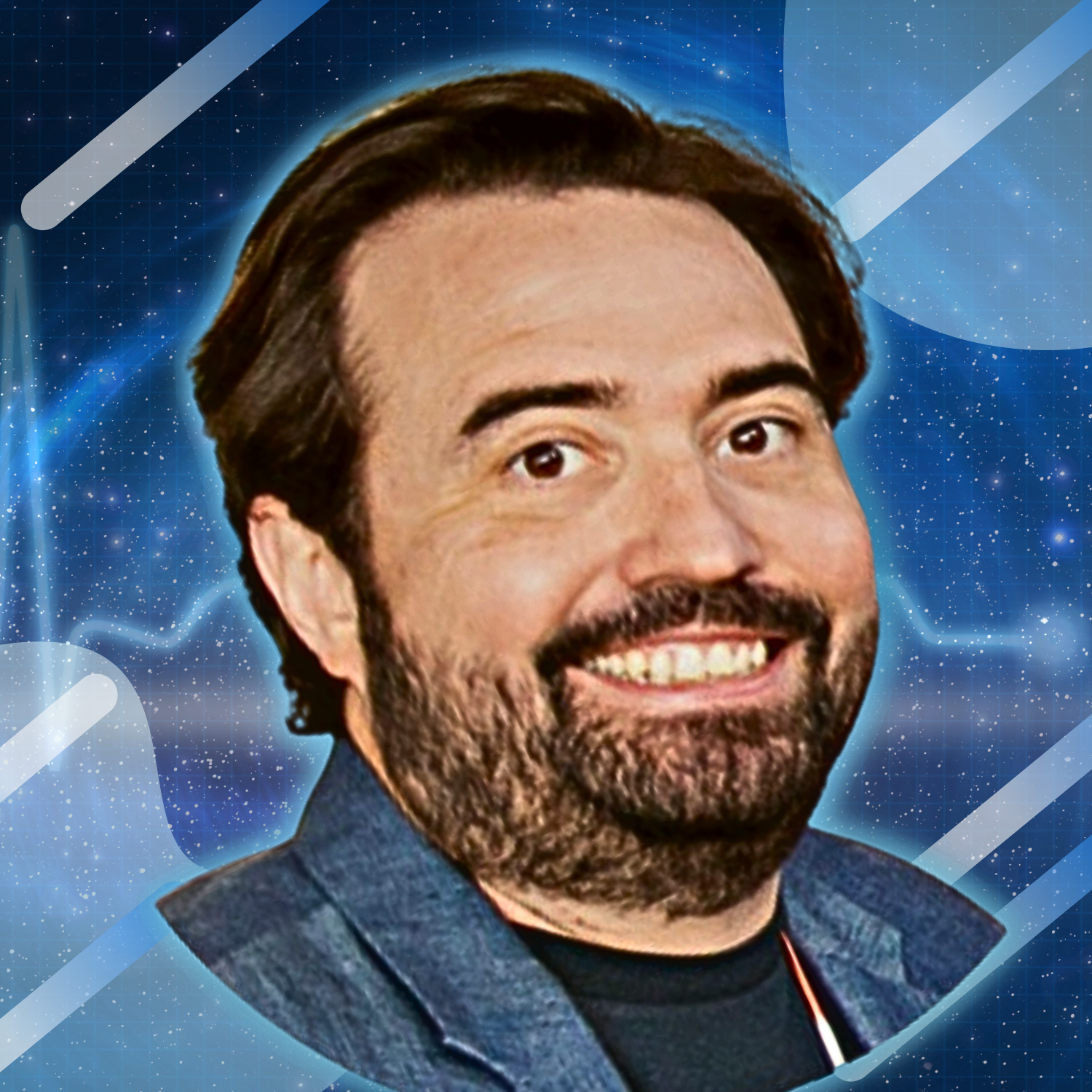
Paul Bradley has been building community programs and teams for 10 years. He is the Global Community Manager for Agorapulse and is the Community Teammate and Aspiring Space Friend at Social Media Pulse.


