Ep. #38: Take Nothing Personally: The Elegant Pivot Series
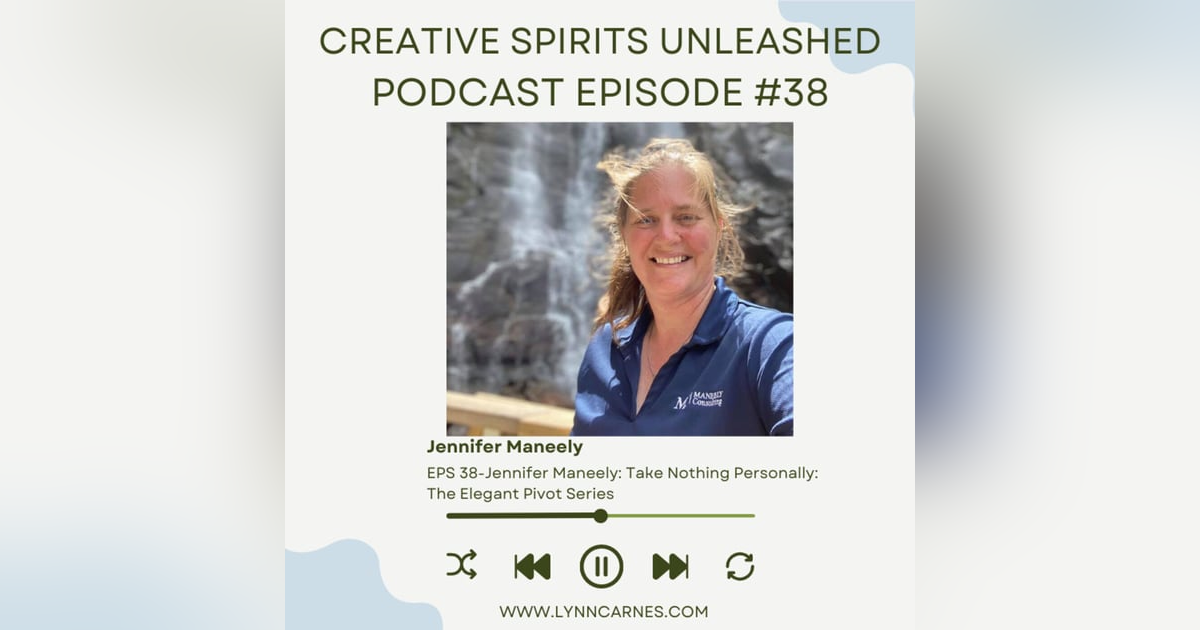


In my latest podcast episode, I again welcome daughter and colleague Jen Maneely. We are continuing our series on The Elegant Pivot, this time to dive into the practice of taking nothing personally. When a mother and daughter sit down to talk about taking nothing personally, anything can happen.
If we had tried to have this conversation a few years ago, it would have been like navigating a minefield. We would have tried to avoid each other’s hot buttons and not hurt the other’s feelings. Not so in this podcast. Instead, this conversation is full of productive tips on what to do in place of taking things personally, like pocket questions.
I love pocket questions. A pocket question is a premeditated question to ask instead of the reaction you typically have. They are a way to interrupt predicable patterns and open the door to something new. We go over several examples in this conversation, as well as some scenarios that show you ways to assume positive intent – even in circumstances where the it’s clear the other person might not have positive intent.
Additional Links
Guest Contact Info:
Website: ManeelyConsulting.com
Email: Jennifer@maneelyconsulting.com
Intro:
Welcome to Creative Spirits Unleashed where we talk about the dilemmas of balancing work and life. And now, here's your host, Lynn Carnes.
Lynn:
Welcome to the Creative Spirits Unleashed Podcast. I'm Lynn Carnes, your host. Today's episode is another in the series on my book, The Elegant Pivot. Today, we took on the chapter of take nothing personally. And of course, as I have done all along, I had my daughter, Jen Maneely, join me, we had such a good conversation, because as a mother daughter that works together, we have lots of opportunities to take things personally. And in this episode, we dive in to some of our times, where we have each taking things personally. And we also dive into strategies about how not to take things personally. It's a pretty rich episode, and I hope you enjoy this episode on taking nothing personally with Jen Maneely. Jen, welcome back to the podcast. Yes,
Jen:
here we are, again, I love it,
Lynn:
we have more chapters to go through from the elegant pivot. So today, taking nothing personally.
Jen:
This is this, this stems into so many areas of my life, it's not even funny. Well, you know,
Lynn:
I have to just say, there's a part of me that has this belief that once I write a chapter about something, and I'm in the middle of writing another book, now, there's a part of me that says you should have it figured out. So you should never have a problem anymore with this thing you're trying to teach. Yeah. To that, I have to say It's utter bullshit.
Jen:
I mean, it's just so like, these, that's the thing is like, these concepts are just a there is, there's just not a there there. There's just not, we're never gonna get to the point in which we never have a challenge. In some area, right, something's gonna pop up at some point. And that's what's so great about your book is is like, when the concept or when the things pop up, like, you know, taking something personal, right? How do we navigate it from that point?
Lynn:
Right. And, and it's really a practice. I'm thinking about a moment that you and I had, and I don't want to go into too much detail, because I don't like to tell stories about people. But I reacted as somebody you know, I took something personally, you watch me do it. And I just made a like, offhand comment to you like it was fat. Can you go boys, you just took that personally. Just like that. And I just looked at you. And I was like, Oh, my God. Yes, I did. No, I think I'm justified. Yeah, yeah. He not just ignore me. I think that was the circumstance. Somebody was ignoring me. And I just completely took it personal. And you go, maybe he's busy. Yeah. Oh, well, I hadn't thought about that. I mean, the thing is, what makes me think that I'm the center of the universe, that I'm the one that's making everybody do whatever.
Jen:
Yeah. Yeah, it is it and that's the thing is, it's like, it's just so automatic. We can do it and claim it as fact so quickly, of like, well, he just didn't Nord me or whatever. And it's like, but did he?
Lynn:
Like, you know, patch that he actually waved to you? And then went back to work? Yeah.
Jen:
Yeah. Like he was in the middle. It's like, oh, well, so if something I'm the Yeah, in the middle of something. And you know, just to say, hey, it's like, Hey, okay, bye.
Lynn:
Like, yeah, I want him to stop everything and write, you know, anyway. Oh, but but, you know, the thing. I don't know if I can't remember if I actually use this language I think I did in the book. taking things personally really is kryptonite. Like, if you know of the Superman story, it's like, if we're not taking it personally, then it can't hurt us. It's when we take it personally. That whatever's going on can hurt us. Yeah. So I want to I want to dive right in your story. Because we had a taking things personally kind of circumstance this week or not taking things Yeah, not taking things personally. Actually. It's an example of what can happen And it's probably some of the Diocese territory that you can get into with people, which is we call it mommy buttons sometimes.
Jen:
Right? But just to the parental triggers that we have. It's a
Lynn:
parental ship, right? Yeah, that language today, but it is the stuff that we keep carrying on. So you are getting served as a coach I am. And that you get opportunities to be coached to experience what it's like to be coached. And let you take it from here, but you don't win on some of the stuff because I'll tell you this, for anybody who's listening who hasn't been coached. And if you have been coached, chances are you know this, but your patterns that you operate with in work, tend to stem from the way you were raised, which deeply involved your parents, it is possible to operate in this world with not without being influenced with patterns with your
Jen:
parents. Well, and it's mercury. And it's really frustrating, how much they come up. But when you really think about it, it's like, that's where all of the teachings and the wiring and the belief systems and all that come into play. And it's like, it's it's in that upbringing, this is what this is how we're taught to behave in the world, right. And sometimes we misinterpret things. But
Lynn:
a lot of interpretation we're doing all the time that we don't even acknowledge
Jen:
all the time. And I was one of the great things about this particular certification, it's a long certification. And the first half of it is getting coaching, because you kind of have to understand what it's like to be coached before you can be a coach, right? And the experience, so we get an opportunity to work, we're more paired up with other coaches, and I was talking to him the other day. And, you know, this is this is the great thing about coaching is is they just ask a lot of questions, and then repeat back kind of what what they're hearing you say, right? And so he's, he's in the process of doing this. And he asked, he's asked me questions, and it's like, well, you know, where did this come from? And I don't know, probably three or four times in the in that conversation, I'm like, Hey, there's that damn mommy button again. And, you know, it'd be over something like a belief that I have about a fake. This is where I get a great opportunity to talk to you about my own mommy button. So we were, we were taking a walk. And I was excited. So that's the thing is, like, I was excited about the lessons that I was learning about the awareness of like, certain things that were coming up for me, as it related to like my belief system that impacts the way that I view the world that was created way back when, right. So
Lynn:
I was your mother, but not not as self aware as I am now.
Jen:
Right. So, um, one of the insights was that I have a hard time, I guess claiming my space. In terms of taking people's time. I have a hard time feeling like, this is my time, I'm going to take it in in one of the things that came up with that, and this is where we got a chance to, to debrief on this because I was like, I want to explore this, but it's a mommy button. So I don't want like, I know you're not going to take this personally, this is just a conversation because I was excited. And I wanted to talk to you about it. Right? Yeah. So I get to do this. So I started talking and I said, Well, I know how much you hate when people are like wasting your time, right? Like, you're quick. And these are these are my assessments. As I'm talking. I'm like, This is my assessment of things. This isn't the truth. But it's my belief around what I think is the truth. But it's so you're you're a quick thinker, and you want people to get to the point fairly quickly. Right? I think most people, I think most very true about me. Yeah. And I think that most people kind of want people that will get to the point they don't want a whole lot of storytelling, right? So this isn't like something new but I I'm love to tell stories. And I'm a detail person. So I want to go through all the details before I get to the point. This is like, no, no, you need to know this. But so from a very young age, I had a hard time believing like that I wasn't like, wasting people's time. So I just, I kept very quiet. So I was like, Well, I don't want to upset anybody, right. And so I always put people's stuff before my own in that way. And that's my work. Right? That's, that's how I perceive that. But what was great about that experience, and there was several mommy buttons I can't even entirely remember. But what was great was is that I was able to talk to my own mom, about the mommy button, because I knew you weren't going to take it personally. Because it's not personal. Right? In that in these beliefs, that was not a personal thing, even though it had a lot to do with you. It just wasn't personal. It's my stuff. Well, and
Lynn:
if I'm, if I do choose to take it personally, then it's because I think there's something wrong with me for being that way, or that you're accusing me of being wrong, right or bad. And it is true. I do like it my brain. Actually, this is a conversation I have a lot of times, especially with Ross, my husband, because he will start in the middle on something or start with the details. And I have to say, can you just give me some context? Like, I need you to orient me, are we talking about this, that or the other thing we have, we may have 15 projects going at any time. And they have common elements. So if he starts say, I want to talk about the fencing, and I'm like, Yeah, but the fencing were, or something like that. And it's just the way my brain thinks I'm a big picture thinker. Yeah, I do think in broad brushstrokes more than I do in tiny brush strokes. Right?
Jen:
Yeah. And, and this is something that I have had to learn with you. Because there are there were times where I would be going into a lot of the details. And you were like, can you please get to the point?
Lynn:
Tell me what we're talking about? Well, literally, I'm not hearing. Right. I'm so busy grasping my brain is like on a on a hunt. Right?
Jen:
And it's like, well, I'm trying to get there. If you would just let me just like, well, I need to know what we're talking about first. But you see here it was the thing was, it was really hard for us, because I would take that personally. Right? So it was hard when I was trying to explain something. And you would come in and be like, can you just tell me what we're talking about? Can you get to the point the can you like speed up or whatever? I will take that personally,
Lynn:
right? As if I was dismissing you, right? I was giving you time. And actually, so let's pick pick this apart. Because your your interpretation was I wasn't giving you the time to go through the details, right in the space. And for me, it has nothing to do with time or space. It's my brain needing to be oriented.
Jen:
Right. And so that was the thing is it would hit my dismissive button. Like you're just dismissing my whole idea. Well, and the reality is, is that you were like, I'm not dismissing your idea. I just don't know what your idea is yet.
Lynn:
You don't even know for sure. Like you and I were working together with different things like we had, you know, a blog and a website, and newsletter and all these different things. And sometimes I would just, I would just be like, are we talking about the newsletter? We're like, what are we talking about? Right? Yeah. And if you could just orient me, then I could, could get there. And I, it's interesting. I don't give myself a whole lot of judgment about that. But I do consider that like, I would like to be able to come at things from a different angle. You know, it just isn't how my thinking style is.
Jen:
Right? Well, and it's also like, I that you know, there were so many times where like I would be taking things personally and another one was, I would spend a really long time laying things out for like to present something to you, and that I had to do that. And this is something that I understand and about me now, because I've done a lot of work around this. But I do that for me. I do that because it helps me understand information. And my assumption is, is that the only way that other people can understand?
Lynn:
Oh, there is another assumption, right?
Jen:
And so when I would sit and want to go through all the time that I spent laying this thing out, and you were like, just give me the last slide, or give me the five minutes version of this. That again, was like, no, no, I spent a lot of time on this, you have to listen to this because I need to, but But here's where it's the personal thing, right? It's, I need to prove my worth. And how I'm going to prove my worth to you, is I'm gonna put together this presentation, and you're gonna sit through it, and you're gonna go through all the stuff that you don't really actually need to know about. But I'm gonna prove that I'm sitting here doing something.
Lynn:
That's big. Man. It's big. I can't even tell you how many times I've caught myself in that. And I have coached other people through it. And I've seen it. Yeah, yes, I need you to see how hard I'm working here. And because I need you to see that I'm worth it.
Jen:
Yeah. Yeah. Cuz you were, you were paying me as a salaried employee. And I had a lot of autonomy, right? And I kind of had to come up, you know, a, we had some set projects, but a lot of things. It was like just bouncing around ideas and coming up with projects, and how are we doing this? And it's like, here's an idea. And instead of giving you the short version and backing our way into, because you're like, just give me the main points here. But that was just it, it's like, it goes into that, taking things personally, when the reality is, is I wasn't understanding that one, it wasn't personal to how you like to receive information. It was there was a little bit of a clash there. And so that was really hard.
Lynn:
And also, you know, if you're, if, if you're doing if you're spending a lot of time on something, and you ask me to spend that equal amount of time with you. That is a waste of time for me. Because what I'm asking you to do is do this instead of me having to spend the time on it. Right?
Jen:
Well, and if, and, of course, and this is let's, let's just keep going here and diving deeper. If you tell me that I'm wasting your time. My most personal my proving myself is not going the way that I need it to go. Exactly. So it's like now way I am not wasting your time. And let me prove to you how much so we would spend a lot of time going back and forth. And then I would get really upset because I would take that personally because it's like, well, you don't you just don't honor my
Lynn:
work. Yeah.
Jen:
And this is, in the beginning, before we hit the record button, you read a great quote out of this chapter, that I'm like, Man that hits so close to home. What was that? What was that quote again?
Lynn:
So it says, we often do not realize how much we have our self worth wrapped in our work identity. And, you know, I see this with, with people who, you know, especially at my stage of career where people are starting to retire or move to do other things. And it's like, wow, who am I without my job? Yeah. And then we start to realize that we finished the sentence I am and then fill in your job, as opposed to like, for example, me saying I am an executive coach, or I am land. Well, who the hell is Lynn? Yeah. Are when I was a banker, I'm a banker. And that had all this meaning tied to it, you know,
Jen:
right. I'm a I'm an executive at a bank. And who am I without that? Yeah. I know, like a lot of college athletes will go through that when they transition. So they don't go pro. Right. Yeah. But their entire life has been around the sport that's done they have taken it as far as they can go. And all of a sudden when they graduate college and their their sport that they You've spent their entire life doing is now not part of their identity anymore. They go through this, like, who am I in this world? Now?
Lynn:
Yeah, that's, you mentioned the proving mindset. And the funny thing about the proving mindset, which basically is designed to show other people what you can do. It's a great driver for things like athletics and achievement. But it's not a great thing for what's going on inside between your ears, you know, your mind is not a place of peace. Yeah. Yeah. If you're so busy trying to prove yourself to other people, then you've kind of basically put the power and everybody else's hands about whether how you feel about yourself.
Jen:
Yeah. And it's so hard of cars, it is so great. But a lot of people get to the top level, they have such a proving mindset, they get to the top level, because they think that like, oh, once I've achieved the level, so like, a Olympics people? Yeah, you know, it's so amazing when, and I've talked to a couple of Olympic people. And I don't know if this is a trend. So I don't want to say that it's the assumption is, but it's a lot of those people are still very insecure about their abilities. Even though they're at they're like in the Olympics, or gold medalists, or whatever, and there's like, Yeah, but they still feel very insecure, because they still haven't achieved the thing that they wanted to achieve.
Lynn:
Just like, well, but I think a lot of people have this belief that when I get the thing, whatever the thing is, the metal, the money, the status, the position, the climb, climb doesn't even matter to them. And I know this is true for me, it's just when I get there, I will have fill in the blank peace of mind, I will be okay, I will be worthy, people will love me. But the truth is, for people who've been there, it that isn't the case at all, peace of mind, you know, I just did a video this week on my leg down about beating yourself up. And I just had this like incredible insight. Because when we take things that personally, that we start, like giving ourselves a bunch of crap, which I think we do to make ourselves better. Like, I think we beat ourselves up, because that's what it takes to get the money and the status and the position. Like we think that's the pathway there. But I realized that's like, you know, that's like running down the street. And you start realizing people are out to get you like you're trying to find a safe space. And you managed to get in your house, your own house, only to discover every room is filled with murderers. Or somebody to beat you over the head with a bat. Yeah, it's like, wait a minute, this is supposed to be my safe space. And there's somebody with a bat waiting to knock me over the head and every room. You know, that's how much sense it makes to beat ourselves up. It doesn't. And yet, I think we honestly believe it's a good thing.
Jen:
Well, and you, you talk a lot about the assumptions, because this is a lot of like that proving mindset is, you know, people think that oh, if especially if they're in in that role, so they're executives, and they're shooting to be the CEO of the company. And that's when they have arrived. Like they have achieved the thing that they wanted, they're at the top of the pyramid, and yada, yada, yada. And that's when everything is going to be oh, well, when I'm in charge. Yeah, you know, then everything and then you talk a lot about it's like, yeah, you're at the top of one pyramid. But now you're at the bottom of an entirely different one. That's correct. And, and so it's like, if you're sitting there going, well, once you've achieved the top of this pyramid, all only to discover that you're now I mean, isn't that life, right? So now it's like, well, now what? Because there's that sense of the reminder that at some point, you'll have to find peace with wherever you're at. Not thinking that peace is going to come when you've achieved the goal, right? Because then there's another goal.
Lynn:
The goal is never I mean, on on a subject of the CEO, you know, I wrote an article, it's actually you can get it on my website. If you just sign up for my newsletter at Linnet Linkara. I mean it limb cars.com. The it's called Five Reasons You don't want to be CEO. And one of the reasons is that you thought you were at the top of the pyramid, and you're actually at the bottom of the funnel.
Jen:
Because,
Lynn:
and, you know, most people know this, but it's still once I've coached several people into the CEO role, and to the person they've said, it's kind of the most shocking thing is how many different agendas they're now having to manage, that they don't have control over that or above them in the pyramid, if you will, like a board of directors and the community and investors and the regulators. And and, and, you know, and the truth is very few CEOs are actually running the organization, they usually have somebody under them an operations person that's doing most of the operations work. They're mostly the face of the company. So you're not even getting what you thought it was, which is the magic, that magic wand that says, hey, I'm in charge of everybody.
Jen:
Yeah, that's not it. Oh, it's that's
Lynn:
not what it looks like. And it's a, you know, it's a dance for them. And most of the people I work with love it, but they love it in a way that says it's different than I expected. And that's the, the thing about, like, what you're talking about heading for that end goal is, how do we break down what we're trying to do into smaller pieces. And be in this moment with the piece that's leading you to the goal, right, but not necessarily, you know, sort of jumping, huge leaps to each goal. Like, the more frames we can break something down into, like, if you think about a moving picture, it's a series of smaller frames, discrete frames. Yeah. And if we can take, take those pieces into smaller pieces, then we have more choices. And we are more in the moment. And more and more in the moment. All we have to know is can I do the next thing? Right?
Jen:
Well, and and it's, you know, going back to just kind of being in that moment, as we are not taking things personally, and being in not being in that proving mindset, then we can really start hearing things differently. And, you know, like, now, when you say something, something that used to trigger me. And when I was in the proving now I can just be like, okay, yeah, you know, something that used to frustrate me. I mean, here's the thing is, is Do you remember when we've, I guess really the whole time we were working together, there was always this? This grumpy Jin, right? We just call it
Lynn:
grumpy Jen, I would Yeah, I would look and go, Oh, God, and we're gonna have for grep agenda today.
Jen:
And that whole, all of like, grumpy Jin was really a lack of self worth in my role, right? So I'd wake up i, anytime you would say something to me, it would be you know, oh, I'm not doing my job. I'm not, you know, quit worrying about me. I'm okay. Right. Like, I'd be trying to prove myself. And, you know, when I started really looking at that, and making a change. Now, when you say the same things, it just doesn't. It's like, okay, it's whatever you want. And it's not personal anymore. Because I'm not trying to prove myself,
Lynn:
and it never was personal. It was I would just like it this way instead of the way you did it. So what that yeah, that's, but you know, back to the conversation we had you mentioned that we were walking and talking about your mommy buttons. Yeah, the thing that that could have been very, very triggering for me as your mother is. That I think a lot of parents have that proving mindset, which is, if if my kid is fill in the blank, I'm not a good parent. Now, I don't think they think that consciously. But I think a lot of our actions as parents and I know mine have in the past as well. And I'm not gonna say they haven't. They aren't necessarily in some ways now. But that we aren't trying to somehow prove to the world that we were a worthy parent. And when our kids go differently than we want them to go. We take wrong actions. Not because it's the right thing for the kid or the right thing for the circum circumstance, but because it's what we have to do to protect our own identity around Are we good enough parents or not? Right?
Jen:
Well, and it's, it's, it's one of those things where you I talk with a lot of parents and very, you know, stressful circumstances. And this this hesitancy to happen a lot. And it's not even just in, in the, in my, you know, business and stuff. But in general, I have yet to meet a kid, or a grown adult that wants to explore the stuff with their parents, right? Like they want to talk to their parents about what they quote unquote went through as a kid or what their interpretations because they're trying to gain clarity and insight on how to, you know, move forward into this world. Yeah, and a lot of parents get really shut down or defensive, or, you know, whatever it take it personally, like they did something wrong, because a lot of times parents have their own buttons of I'm a bad parent, like you're just saying,
Lynn:
and especially in context of the people you work with, because it's typically parents who have an adult child and addiction. Yeah. And they're looking for strategies to support the child. Yeah, yeah. Which isn't a child anymore, the young adult, usually who is in the grips of a drug. And we went through that you and I together, and I had a lot of noise in my head about what kind of mother am I that let my child end up like this? What Where did I go wrong? That's the question, where are they wrong?
Jen:
Where did I go wrong? And
Lynn:
how could I have prevented it? And what's wrong with me that I didn't?
Jen:
And the truth is, is that there's nothing and this is a deep part of the taking, taking nothing personally, right? It is deep. And this is the work. It's not,
Lynn:
especially because it is entirely possible, that I actually did do things that might have contributed. And how do I navigate that, while still not taking it personally, which means the thing I did makes me a bad person, because that's at the deepest level, what what taking things personally means is that I, I am basically allowing this thing to define me. Right?
Jen:
Well, and it's the understanding that we, you know, we, me being, you know, the person that had this substance abuse and in the addiction is, is that how things happen and how I perceive things, that's my journey, right? You can't help the way that I interpreted something that you did. There's no way to know how that's gonna play out anyway. There was a lot of things where it's like, well, we're just living life. And I'm, I'm trying to figure out how to deal with things, that there was nothing that you could do differently than what was done. Right. And so there's, it's, it's how do we navigate that without, like, you were just saying, how do we take ownership without taking things personally? How do we say, yeah, it's critical. Yeah. It's like, how do we, because there's so many times, and I'll just say this for me, where it's been really, really helpful to be able to have the conversation around a particular situation, that had caused me a lot of angst in my life, that we got to really dive deep into what was going on with you at that time. What was your thought process, and what was relieving for me was that I was able to understand better the bigger situation that I couldn't as a kid, I couldn't have and seen all the things that were really going on in the bigger picture, right? Because I'm a kid, or I'm young, I don't get to be I don't get to have all of that knowledge. But for you to go well, this is kind of what I was thinking. What I started realizing was that in a lot of the situations, there wasn't really a clear right answer, that you were literally just made the best decision at the time possible. With the facts that you had, there was nowhere else for you to go from there. Yeah. And isn't that what every parent does, which is I just made the best decision that I could at the time with the facts that I had, and had no way of knowing what the future held right
Lynn:
within the capacity that we have at that moment. And you know, That's the that's the other piece is we? We never know what's going on. Let's take it out of the parent child context and just put it out in the work world or anywhere else. Yeah. You know, think about all the things that are going on inside of you, inside of you, and all the touch points you have every day, all that's in your world. Nobody else can ever know that. And we can't know that about other people. We're seeing snippets. Yeah, we're seeing a moment in time and acting like we know everything. And then and then allowing one small action to enter into us and tell us what's wrong? Yes. And the question, really is, it's not about that. Like, if when I think about the story in the book about Joe, who, for I was taking things personally, when he said, Can we just do something different? And the reason it knocked me off for so long, is because he hit my button, which was, isn't it time for them, this team to do something different? Yeah. Right. And it was my, and I wasn't thinking about it from that. It was like, Okay, well, I could find myself but you can't fire me kind of an idea I had, right. Yeah. And so it caused me to think that he was telling me there was something wrong with me, which is not what he was doing. We've debrief that there's a podcast with Bill Goldsmith, that describes this story, because Joe, in the book is actually Bill Goldsmith, who's talked about this many times. So, if you recognize it, this is for things can actually, this is for taking things personally can actually be of your benefit. Because for years, I taught a self awareness program with my colleagues to Robertson, who's also been on the podcast. And people often in the self awareness program would say, but how do I find things out? I'm swimming in my own soup here. And we would call it the ways in there are different ways in while learning what you take, personally, is perhaps your best way in to say okay, yes, I take that personally. There's nothing wrong with me, but there's a soft spot. That's something I need to work on. Developing my courage and my confidence around,
Jen:
right? Well, and here's, here's the pivot. Right. So what you just said, it's like, in that moment, if we do take something personally, we don't have to respond in that way, right? Like, we can kind of pivot that and go, Okay, let's just stay with it. And do something different. Let's go into curiosity mode, or, I mean, ideally, it's like, Well, I'm just going to stop taking things personally. But it's not when we write when we take things personally, what's the strategy to pivot into doing something? And this is where I think pocket questions are so helpful. And you're really good at having, like, the tools for pocket questions. Okay. So when this comes up in your body, and you feel like this? What's a good question to ask? Because in the heat of the moment, sometimes we just kind of, for me, like my mind shuts down, I don't know what to do say where to go next. And then it's like, I just need a minute to get myself back grounded. And so how do we pivot in in, you know, ask a question. So in a lot of things, like, I think you have some really good pocket questions for us. So what are a good couple of pocket questions that people can ask just to kind of allow them a moment to get back grounded?
Lynn:
Well, this is something I have several of these in, in the book. And the pivot, like you said, the first pivot is to assume positive intent. And if you can start stipulating that you cannot know somebody else's intent, even if you think you do, then you can reach for that pocket question. And perhaps my most favorite one. And this I think, kind of comes out of improv. But it was back in the day when I was I was teaching change programs and we get a lot of some variation of that won't work. And the dance here is having something that says instead of yes, it will, which means now we're just gonna back and forth, right to say what will work and I don't have the book right in front of me for other ones, but to have have, you know, I often tell people to start scripting? What when they got to know they have a button? Script a question that gets you back. Right? where you came from, be prepared. Your assume positive intent, the next step is to get curious. And the getting curious can be actually, you know, basically asked or shown with a with the pocket question, right, like, this is the question I'm gonna ask.
Jen:
So let's Can we can we play a little bit here? Yeah. Here was my first thing. So we're gonna do like a little live coaching thing? I guess, maybe. So you go. So you just said with your example. You're in a meeting, someone has some sort of version, you're presenting something and someone has some sort of version of, well, that won't work. Right. Go to the question, what will work? So now you have someone? Maybe they're being provocative Peter in that moment, right? So let's just say that provocative Peter comes back at you at that point and says, Well, that's not my job. That's your job to figure out. So you tell me how that's gonna work?
Lynn:
As it does happen? Yeah. So
Jen:
where are we go from there? Well,
Lynn:
so what I usually like to say is, well, let's talk through the assumptions we're making here? Or can we go back to what we're trying to achieve here? Because the last thing now what? And when somebody looks at me and says, That's not my job? I'm like, Oh, the hell it is. So let's be clear, my first reaction, but sometimes it's sort of like, wow, okay, let's start over. Let's go back to what we're trying to achieve. Let's look at the i One of the questions I love to say is, what are the assumptions we're making here? Sometimes, especially when somebody is saying something that makes no sense to me, or they blurt something like they've a conclusion, because remember, one of the things on the chapter two of the book is about the ladder of inference. And we talk, we have a podcast on this, but we talk about people being talking at the top of the ladder of inference with their conclusions, right? What we want to do is get as low on the ladder of inference as we can, and talk about what is the data? So talk me through your assumptions. Take me through your thinking.
Jen:
So in that moment, when someone comes back at you, I just want to like think about that's a great, that's a great place to start is. In that moment, when somebody comes back at you goes, well, that's not my job to figure out. That's your job to figure out. And that's what we're doing here. kind of idea. And you come back with? Well, so let's go through, like, what are your assumptions in this moment? So that that piece is like, we're not taking it personally. And we get to invite them as part of the conversation. Right of going, there must be some assumptions that's happening. What are they? So how are you look like? How are you defined
Lynn:
other? Another thing you can do in that moment, by the way is say, are you willing to help us think through this? Yeah. So another pocket question that I use all the time and change. These are coming back to me as we're going through these circumstances. What often happens is people say, I just don't like the decision. And I will typically tell somebody to say it's okay, for you know, here's your pocket question. I totally understand. In fact, it is well within your rights to not like the decision. However, are you willing to operate with this decision? Because this is what we've decided? Yeah. So you just put it back on them? Are you willing to do this? Can I count on you to use the new system? Right, or can I count on you to greet the customers this way? Right, whatever it might be. Because if somebody just makes that blatant statement, for example, it's not my job. You have a lot bigger problem. Right? It's not their job. And they probably are not feeling safe. Right? Yeah. It is. So
Jen:
it's that it's, it's, it's that moment in which you can say I, it sounds like you're frustrated. And it may be coming out at me. But if I don't take it personally, I can say this person is frustrated, how can we are unsafe? How can we start making them feel safe? How can we start making sure they're being you know, heard? Is there is there something deeper? Like what's the assumptions here? What are this and so you know, a lot of that and this is I think, I can't remember if it's the next one, it may not be the next one. But there's that spirit of inquiry. too. Yeah, that's right. That's two chapters away. Right? Yeah. And we'll go into that deeper. But I think like all the things that we're talking about here is that, like, in that moment, when I'm maybe feeling like taking things personally, I have found for me that like, coming back and just asking some more questions and not making assumptions and in what they're responding to is really, really helpful.
Lynn:
Well, it's breaking it back. That's reason I go back to the assumptions. And you know, the thing, the picture I keep getting, because you know, you know, I talk a lot about the work I've been doing with horses. And the difference between watching somebody work with a horse that takes what the horse is doing, personally, versus the person that assumes that the horse is operating, like a horse, meaning a survival brain that's trying to do what you're asking them to, but doesn't know how. And the person who is taking it personally starts calling the horse and asshole, makes names up gets mad, starts trying to force, you know, anything to the person who's working with the horse that says, Oh, wow, maybe I was a little bit confusing. Let's go back to the beginning. You know, breaking it down, like one of the things I completely loved being able to learn, as I've had this experience over the last six months of working with horses regularly with the horses that I least was okay, when I got that kind of, it's not my job. Wait, you want me to go left? Not my job? Well, a lot of the moves, there's actually like 20 moves towards sending a horse out. But we think of it as one big flowing move. So it's sort of like, okay, well, let me break it down. Yeah, let me just see if I can sit on this side of you. Like, can we just hold that position? And so what the reason I'm kind of diving into this, as opposed to just not taking it personally, is, well, what are you going to do instead? Right, what you're going to do instead is when you're faced with a difficult situation like that, break it down into smaller pieces. Let's go back to okay, we're trying to take, we're trying to figure something out. That's 20 steps away. Let's go back to step one. Right? Because if step one isn't good, step two isn't going to be good. Right. And so keep moving forward. But go back to the beginning if necessary, right. Yeah. And I think that's why I like to reorient around. Wait a minute, let's remember what we're trying to achieve here.
Jen:
Yeah, yeah. And what are the assumptions because there's so many,
Lynn:
so much of corporate politics, if you actually look at what's happening in the halls of corporate America, a lot of times it has nothing to do with what they're trying to achieve. What we're trying to do is build a better mousetrap or build a better car, or, you know, create better cereal or whatever, whatever. We forgotten that. And we're so busy trying to figure out well, why did she get the credit and who's, you know, who's he sucking up to, and so forth, that you forgot about the car, or the cereal or the product that you're trying to make? Right? Right? People are so busy worrying about proving that they belong at the table that they're not doing. So going back to what we're trying to achieve here. And at the end of the day, what we're really doing is offering people a chance, at the deepest level, I think it's a chance to unleash who we really are in whatever it is we're doing. Right? Well,
Jen:
greatest spirits unleash unleash, because we're unleashing the full person. And
Lynn:
is so often it's a matter it's an art. It's the artist subtraction rather than the art of addition. So let me take away those buttons that that annoy me. Let me get rid of that stuff that I've used as my defenses. Because I do think we use taking things personally as a form of defense. Oh, yeah. And we can actually say taking offense is the same way. You know, if we can choose what we take offense to. And even though somebody says something offensive, yeah, it can't hurt us if we choose not to take it. Offensively if we can look at that person and go Whoa. Yeah, you know, I don't know what kind of dance you're in but I'm not I'm not joining
Jen:
well, and in a lot of times, there's like certain things that people would do that I you know, maybe they called me a name because they knew that it would rub me the wrong way. Right. And I learned from a very quick age when someone either maybe they came up with a nickname that I didn't like or whatever. The minute that I started getting upset about it that nickname kind of stuck like it took right. But whenever I dove into it, it just kind They fell away. You know, if when I didn't take it in any sort of way if someone was doing something like you know, even it if, especially if someone was trying to do it to get under my skin. I just went with it.
Lynn:
Yeah. It's really hard to get into your scan if you're like, Yeah, you know what I? Yeah, cuz I don't want this whatever they're calling. Yeah, that's true. Yeah. It's like, oh, I
Jen:
just don't want this one to stick. So we're just gonna dive right. If you're trying to get under my skin. We're getting
Lynn:
with you. We're gonna go that's, you know, that's the beauty. I alluded to improv earlier. And one of the core exercises and improv is yes. And so you take whatever is given you and you add to it. So, Lynn, you have such big stinky feet. Yes. And yeah. And then, not only do I pick stinky feet, look at my hands. We,
Jen:
I remember this was, we had this little group in recovery. And we were working through this like book club. And for some reason, and I don't know why. But the a lot of the boyfriends as a group, started calling, started calling us the cure book, cure book, cuties. And it was meant to be offensive, it was meant for us to get upset about it. And when a couple of the women came in and told us what the boyfriends were calling us, we were like, we like it, we're getting cool. And we kind of became that and we just kind of kind of embodied it. And then eventually it faded away. But at the same time, you know, we kind of owned it, too. We're like, Yeah, we'll go with it. Okay. Yeah. You know, yeah, and they, they never called us that again. But we still owned.
Lynn:
Well, so, as we wrap up, like, I'm gonna give everybody an exercise to do to show you what it feels like to not take something personally based on your story. And that is to think about something about yourself that you're really confident in. Maybe it's the color of your eyes, the way your hair is, you know, something that you just know that if somebody called you out on it, you you're like, it's just not gonna get to you because you know, you're okay. Yeah. That's this envision somebody trying like, I'm not very, I'm pretty skinny. So if somebody was to call me fat, it's just not can. I'm just gonna like, like, okay, a lot of things you can call me with fat is not what you write, like, you know, I do. Here's an example of an of another thing that I'd have a little more trouble with his I do kind of have slumpy shoulders, which I don't like. So if you say I have Slumped Shoulders, I'm more likely to let that get to me than if you call me fat. But what I what I envision is, when somebody when I think about somebody calling me fat and how I'd respond, that's how you can respond to everything. And, by the way, on the Slumped Shoulders, I work on it. Right? I don't want to end up being an old out, you know, having the dowagers hump when I get older, right? You know, I don't want to have osteoporosis or whatever. So that's an exercise for everybody listening is think about something you're confident in. And imagine somebody's trying to get under your skin around that. And notice how they can't. That's the same way it feels around everything. Yeah.
Jen:
That's a great final exercise.
Lynn:
That's the exercise. So any parting words before we wrap this up, Jim?
Jen:
No, I think this this was very insightful for me. In terms of just, you know, what is the exercise? I think a lot about that. For me of like, okay, if I was at my most confident, how would I respond to this? In this moment, it wouldn't be this. Like if someone handed me a million dollars. Today, right? There's very little that anyone could ever say to me for the next little while that would get under my skin. I need to like that's, that's where I need to, like, live
Lynn:
all over the place for people can't get under your skin. Yeah. Yeah. And the thing is, we are allowed to have our flaws. without it making us unworthy. Yeah.
Jen:
Well in being curious about them, right. So it's like, okay, well, if this does happen, get excited that we get to look at it. Like, oh, that post popped up. All right,
Lynn:
exactly. But I think the hardest thing in the human experience is to realize our own worthiness and that it can't be earned. Yeah, we don't have to earn it by being perfect or not making mistakes or not having flaws. Yeah. And finding that settled place within us that says we're okay, that's, that's the work. That's the work. It's deep work. Deep, deep, deep work. Well, thank you, Jan, as always, this was delightful. And for everybody listening. We look forward to seeing you on this podcast. And on the next one, you can give me voicemails on my website at Lynn currents.com. There's a little button on the side, just hit that button and it will let you leave me a live voicemail. And in the meantime, share this with your friends. And we will see you at the next podcast. Thank you for listening to the creative spirits unleashed podcast. I started this podcast because I was having these great conversations and I wanted to share them with others. I'm always learning in these conversations and I wanted to share that kind of learning with you. Now what I need to hear from you is what you want more of and what you want less of. I really want these podcasts to be a value for the listeners. Also, if you happen to know someone who you think might love them, please share the podcast and of course subscribe and rate it on the different apps that you're using, because that's how others will find it. Now, I hope you go and do something very fun today.


