#51 Kate Neligan: The Less than Perfect Road
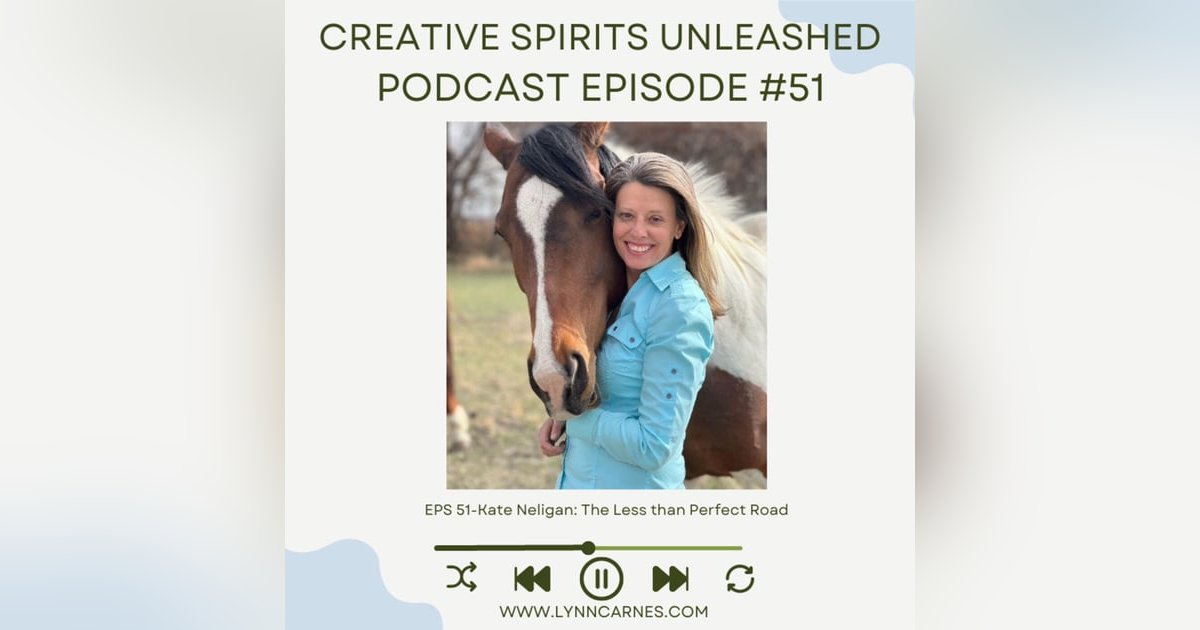


My guest for this episode of the podcast is Kate Neligan. From the first minute I spoke with her, I could tell Kate was the kind of coach that facilitates true change. In this episode, she speaks freely about her own transformation, and the less-than-perfect road that led her to embrace the journey more than the end goal. Kate also has a point of view about what makes a good coach and a good coaching fit. Most importantly, Kate realizes that the journey is never complete and continues to work on herself (which is one of the gold standards of a good coach from my perspective.)
Like many of us, she got ahead in the corporate world by saying yes to her own detriment. Balance went out the window, along with her sense of self. Through having a good coach, she found her way to a more fulfilling success, and now she helps others do the same.
Bio:
Kate Neligan is an Equine-Partnered Life/Business Coach who helps her clients with their intuition, emotional intelligence, and empowered leadership both virtually and in-person with horses. Kate left her VP of Marketing career at a movie studio to pursue her calling for the transformation that is possible from the human-animal bond. She is certified in Equine Experiential Education and has a Master's degree in Spiritual Psychology. Kate is passionate about helping women to thrive and is a best-selling author with stories in the books “The Power of Being a Woman” and “Women Will Save the World.” She is also an Animal Communicator & Healer and is published in the books “Animals” and “Nature” by Common Sentience. Kate is a motivational speaker with a TEDx talk on perfectionism. The Awakening With Equines certification program she created is for new or next-level equine-partnered coaches.
Topics
- How are the horses helping you to be a better coach?
- Working with horses can help you raise your pressure threshold, which will close your pressure gap.
- The most difficult challenge of being a visionary as a leader.
- Dancing the Tightrope.
- The human behind the armor and the judgey self.
- It’s the emotions that are the glue that stick everything together.
- You don’t get the adrenaline kick without getting the adrenaline.
- Are you safe at work? Do you feel like your boss plays favorites?
- Why more people in the corporate world need coaches -.
- Not one of my clients is in a job that they’re currently qualified for and it’s because the job is changing so fast
- You can’t be around 1200 pounds of pure intensity and focus and focus without being humbled.
- The pressure of being the translator between what is happening in the round and what work looks like.
- What would you like me to take off of my to-do list?
- How to say “no” to things that aren’t for you.
- What would be a piece of wisdom you would most want the audience to consider?
Contact Information
Website: www.kateneligan.com
Social Links:
Intro:
Welcome to Creative spirits unleashed where we talk about the dilemmas of balancing work and life. And now, here's your host, Lynn Carnes.
Lynn:
Well, welcome to the creative spirits unleashed Podcast. I'm Lynn Karns, your host. My guest for this episode is Kate Nelligan. From the first minute I spoke with her I could tell Kate was the kind of coach that facilitates true change. And isn't that what we're really looking for in our coach. In this episode, she speaks freely about her own transformation, and the less than perfect road that led her to embrace the journey more than the end goal. Kate also has a point of view about what makes a good coach and a good coaching fit. More importantly, though, Kate realizes that the journey is never complete and continues to work on herself. Which, if you've ever asked me whether you should get a coach or not, the first question I ask is, is that coach working on themselves? Like many of us, she got ahead in the corporate world by saying yes to her own detriment, balance went out the window along with her sense of self, along with a feeling that she could make the kind of changes in the organization that she wanted to. Yet through having a good coach, she found her way to a more fulfilling success, and now she helps others do the same. So who is Caitlyn? She's an equine partnered business life coach who helps her clients with their intuition, emotional intelligence, and empower leadership, both virtually and in person with horses. Kate left her VP of marketing career at a movie studio to pursue her calling for the transformation that is possible from the human animal bond. She is certified in equine experiential education, and has a master's degree in spiritual psychology. Kate is passionate about helping women thrive and is a best selling author. With stories in the books, the power of being a woman and women will save the world. She's also an animal, communicator and healer, and is published in the books, animals and nature by common sentience. Kate is a motivational speaker with a TEDx talk on perfectionism. Awakening, the awakening with equine certification program she created is for new or next level equine partnered coaches. You can find more information about her at Kate nelligan.com. And I would love to hear what you like about this conversation. All you have to do is go to the podcast page on my website at Lynn carnes.com and click on the send a voicemail button on the right hand side of the page is super easy to do. It helps me know what to do bring you in future episodes. While you're there. By the way, you can also sign up for the coaching digest, which is my weekly newsletter that has gobs of information, resources and so forth that I do not put out in the social media world or anywhere else other than to the subscribers of my newsletter. And that is a being added to all the time. So of course, please share this episode with your colleagues and friends. I hope you enjoy this episode with Kate Nelligan. Hey, welcome to the podcast.
Unknown:
Thanks for having me.
Lynn:
Yeah. So I have to start with the word intersection. Because you and I had a moment to chat before we started recording. And I am big on the intersections as you have picked up on between all kinds of different things in the intersection that striking me about you. You are also a coach. And as my listeners are discovering, I am starting to talk to a lot of horse people because horses have changed my life in a dramatic way. What would you say? How are? How are the code? How are the horses helping you be a coach? Oh, gosh,
Unknown:
I mean, so many ways. They're helping me be a better human. They're helping me be in my heart and to be in a space of more unconditional love and acceptance. So when I coach, especially with them, because I coach virtually and then I coach with them. I just find that I'm a better listener, I'm a better space holder. I'm a better version of myself. I'm truly in a place where there's so much less judgment. I mean, we're wired to judge as humans, we have these egos, but mine gets very dismantled because I'm with the horses. So they're just helping me to be a better coach by their energy field, right, who they're being and how much I love them. And then I watch other people love them and there's just immediate synergy and connection and beauty and so I I mean, I could go on and on, but they really truly, I knew when I started coaching back in 2009, that coaching, traditional coaching wasn't going to last long for me, because it's not, it's not really like who I am. And so I knew I had once the horses came in, and I had partners that I could do it forever. But until that I couldn't.
Lynn:
So you actually started in the, in the corporate world, right?
Unknown:
I did. I was in marketing in a movie studio at a Film Institute. A video on a man channel I was I was in marketing for a while in the in the film world. And I've always been a lifelong horse person, though I was, you know, it was a horse, Crazy girl. And I grew up riding, I competed in college. But I had no idea that horses were in this capacity of healing and coaching until, until really, I was leaving the movie studio world. And luckily, that intersection happened for me, between this old way of being in corporate America, and being an entrepreneur and being with the horses, like it was this beautiful, like redirection of my life.
Lynn:
That, you know, I, when I work with people, I don't all of my clients haven't worked with the horses, but a lot, you know, they're in corporate America, right? Like you were in. And this is one of the questions I held and they hold, which is, can they really help? Like, yeah, why would I leave the city and put on grungy clothes and boots that can get muddy, and take a chance of having to step in a pile of horse manure? You know, why would I do all of those things to help me be a better leader? Or a better team member, but mostly, most of my work is in leadership? And I just asked this question, and it's like, what was it that made you get it? Yeah,
Unknown:
I would love to know what you say to them. Because I find that the languaging around this is where we still lack things at times where it is hard to explain the magic of what happens in coaching with horses, it's still we struggle with it. But ultimately, they helped me basically become a more awakened version of myself because I went from an ego centric life to a more heart centered soul centric life. And that's what I really think they help corporate with as well, which is just slow down to actually physically get outside of the box. Because we know we have proof that creativity happens when you change routine, right? If you go sit by water, if you're in the shower, when you pause. So we know that there's going to immediately be more creativity when you're outside of the box. We also know that when you go outside of your comfort zone, and when you put yourself into situations that you may be a little fearful of or unsure of that you also start to boost immediately senses of self trust and self confidence. So that's going to naturally happen as well. And then you get to do like these actual embodied kinesthetic real time solution driven activities with horses that then help leaders become better leaders as well, because you're not talking about leadership, because the mind is so tricky combined, they can get information but it can bypass information really fast, too. Whereas the body takes things in and learns things by doing, which is why we call it experiential education. Right? So so there's lots of layers to like, why it works and how it can work. And I do find that the people who come for the first time have a little bit of like, I'm just going to trust this. Right. So it's their own inkling of intuition and inkling of heart that goes yeah, let me let me give this a chance. I think there's something here.
Lynn:
Yeah. And it's it is those people that have the, I've yet to have somebody, do some work with horses that didn't remember it. They haven't 100% always said, well, that changed my life. Because some of the work I've started doing, you know, you asked the question, What do I say to them? And there was kind of an early stage version of what I've said and what I'm saying more now. And in the early stage version, you know, I would talk about the fact that you are able to get a lot of things done because of your title. And because people are looking up to you because I'm working with a lot of people at the top. But But are you genuinely influencing them? Or are they doing it because they're afraid they'll get fired? Or they doing it because you're the you're the guy, you're the CEO or you're the whatever? And don't you can you feel that little bit of gap between why they're doing things and almost everybody can write? And I said the horse when we go work with that horse he you're not wearing your title. He didn't give a rat's ass who you are. He's gonna reflect back to you who you really are. And this is going to be how your people experience you. So if you want to know how people are experiencing, you go get with a horse. Beautiful. And that's, that's really powerful. But the, the next level that I have started working with is, that can also help you raise your pressure threshold, which will close your pressure gap. Because it kind of the the other gap that's there is, some things get you triggered in a way that you can't show up anymore. And they all we usually have examples that they've worked with, it could be when the board asked the CEO to leave the room unexpectedly. And they're out in the hallway going What the hell, and that's usually not the language they're using. Or just anytime, where you know, it's like, you feel like you really recognize you were triggered, you're off your game or whatever, the horse can actually help you raise the threshold at which that happens. And so this is one of the most powerful ways I know, for you to be able to be relaxed under the highest pressure that you're operating in. And when I can share that, that has become a pretty enticing message that, at dramatically has changed my life. So of it, that's that's the two things I've been saying. But it is the thing is I don't have a better way to do it than with horses. Like if somebody says, I want to raise my pressure threshold, but I don't want to work with horses. I'm like, Well, okay, I can only get you so far. Because you won't have the mirror, you won't have the mirror and the opportunities to rewire your brain. Yeah.
Unknown:
I mean, they could do the ropes, courses and scuba diving and like other intense things, but it but it's also, you're not working still with a sentient being then. And I think that's the difference is that there's so many things you can do that is experiential education. But you're leaving out the fact that you're getting another coach, right, and like, cautious about calling the horses coach because they're horses, and they're there, I see them more as role models, right. And for ways of being that we can learn from, because they're not coaching, and they're not coming up and asking you to direct questions, like questioning, you know what I mean, but they're reflecting quite a bit. And they're, they're highlighting and illuminating things for people. What I, what I found the first time I started doing this work, I was with addicts in recovery in in, in Malibu, and I watched the stories come out, like, oh, this horse doesn't like me, I have like, there were rejection issues that got surface because of course when say hello to them, or, or it turned the opposite way that horse is a jerk. And I was like, wow, these stories are so right there, right, all our rational thinking and our ego, yeah, you just saw right there. And it gets exposed immediately when you start to do an exercise with the horse. So for me, I just find like, you know, when I have worked with CEOs and executives, it's like their story of how they hold themselves comes out so quick, where you would never see it in any other contacts
Lynn:
anywhere. And this, to me, the story is everything. Exactly right. You know, it's like emotions are just information until we start telling a story about them. And oftentimes, that story is the thing that is interfering with the way we are in the world the way we want to be in the world. Yeah,
Unknown:
it's we hold to it, and then we don't change, right? Because we have either identity pieces, or we have past pieces, right? And so it's really about, you know, I just love that the horses are like, here's, here's what we here's what's going on in your field, right in this role of who you are. And then we as coaches get to be like, is that working for you? Is that not working for you? Right, like no judgment, but like, and I love that whole thing with executives, what got you here won't get you there, right? Because that next thing they need has to be done in a very different way. You can't solve the same problem. And you know, like that whole Einstein quote, you have to use a different type of thinking and a different solution. That's one of the four
Lynn:
that it's interesting, because that's one of the most difficult things I've had to work with different clients on as they rise up through the organization. What they want to be more they think that going up will give them more control. And it's actually less control. Yeah, so what's that? Yeah, yeah.
Unknown:
When I jumped from director to Vice President, it was wildly different. As a director, I was I was buffered by my bosses. I hit VP and simultaneously one of my bosses left. So I'm dealing with Chairman I'm dealing with CEO I'm dealing at you know I'm the leader of the dip hurt man. For my for my team. And I'm definitely yeah, I don't, I'm now I have more pressure, right I have more expectations. It also happened at a time when our business was taking off. And we were we went from being what I call the redheaded stepchild, like pushing in the closet is this new technology of video on demand to being the front runner, as DVD started to decline. And so like all all of a sudden, yeah, there was a lot less buffer, I had to really step into different, you know, expectations. And like, I didn't have as I don't know, if it was control I had, I had more responsibility, right. And so, and with more responsibility can come different pressures. Of course, some of my friends, what they do is are andalso clients, they've stepped from being managers, right, and they're really good doers, I'm a really good doer, I get a lot done, too. I was I was a workhorse. And then when you step up to that new level of leadership, the challenge is that they're like, Oh, my God, like, I'm not doing the work anymore. I feel successful. I don't feel like I'm productive. I and I go, yeah, now you have to manage all these people, you have to be a leader. They're like you, but I don't. I'm not I'm like what's bothering you that you're not getting the credit that you're not the one checking off things on the list. I said, your role is so important. Now, you are the influencer, you are the actual role model for all of these staff, their happiness, their livelihood is dependent on you and your abilities. And so it's like, now you have different types of pressure. But it's a whole new game, I've really had to work with some people on like, yeah, you're not the like, go to, you know, go get it done anymore. person here are the leader and
Lynn:
challenges. It's the most difficult challenge at all. Because you as you get more responsibility. You're also putting your career in the hands of more people that you can only influence you can't go do the work for them. Yes, it is a big one. And that's where I think horses are extraordinarily good, because we honestly only ever get anything done with a horse with influence. Yeah, I had one client who was a CEO, who had not had anything to do with horses, and I work with Bruce Anderson is the one and he's like the horse coach. So we work in partnership. And in this particular session, first, he had to just get over the size of the horses, because we had a particularly big horse, that that was it was so tall that it was I think that it's back was taller than his head, you know, it's a huge horse. And he picked a horse. And his job was to lead him to the round pen, and the horse stopped. And he's not strong enough to pull the horse. So the big question was, how does he get the horse to keep moving, and we had an entire scene around how his way of getting people to move in his organization was showing up right on the other end of the Libra with the horse. Yeah. Did he have like
Unknown:
his awakening moment where he's like
Lynn:
He did, he did. And actually what was interesting is he realized that he had always been leading from the don't, I'm just gonna use the bad, really bad word, but that don't fuck it up kind of leadership method. Right, which he hadn't realized is actually going to first cause people to have to think about how they're going to screw it up before they do it. Well. In other words, he wasn't Hey, and this is the thing I think is so beautiful about working with horses, and I have a five month old puppy I'm training as well, is learning to find what they're doing right and creating a mental picture for where you want them to go. Yeah, that's impeccable. Because with that clear picture instead of worrying about them doing the wrong thing you're creating for them the right thing. And to me, that's what being a visionary as a leader is, how do you create a beautiful, impeccable picture?
Unknown:
I totally completely agree. I had one of the coolest things I've ever seen. She was in a tech company as a leader. And I asked her to move a horse. And it's there's a there's a taking territory exercise that I've learned passed down kind of through Carolyn Resnick in the Liberty space, but where you move a horse and you stand in their space for a couple of minutes, and it can be hard for some women, I learned a lot in the corporate groups because women are either way you'll see really quickly if they're passive, or assertive. But what was so cool that day is she on her own volition had this awareness that if she created a visualization of the horse moving that the horse would and she she tried it first nothing works. She was using her body she was trying to use orders, right like or excuse me, she was trying Yeah, she was trying to use force she was trying to use that and then try it again. Take up Breath, pause, what is the outcome you want? Right? How do you want this to go and she visualized it. So as she visualized it, the horse was standing, blocking the exit of the round pen and just staring at her watching her. And as she visualized it, she took a couple steps forward, or slipped at her, and walked away, and stood away. And it was so easy. So beautiful, so clear, so quick. And I'm like, what, what happened? What was that? And she goes, I created a clear picture in my mind of what I wanted. And I'm like, that's the power of visualization. And it works with horses, and it works with everything. But it was so cool, because I'm like, yeah, that is actually how to create movement and space and things that we want in the world is that visualization, it's important to remember that too, as we start a year here, right? And and we want things to go, how do we visualize it? So yeah, it's so powerful.
Lynn:
And how often are we creating the thing we're dreading? Because we're so worried about it that we effectively are double tonguing. So we have a, we think we have a clear vision. But we also have an I'm really guilty of this, a list of 50 things that are gonna keep us from doing it. And so the picture in our mind is not a clear vision. It is a it is a it is a yes, no, yes. No, yes. No kind of thing, which I've learned also, in my writing lessons can create tremendous confusion for a horse when you're saying go stop, go stop, go stop.
Unknown:
Totally. Yeah, I can't imagine being over sometimes and caring people because they're like, my horse will say to me, sometimes, too, she'll just stop. It should be like, figure out what you want. Okay, sorry. Yeah, sure. And I have a really clear, because sometimes I'm like, Yeah, my energy says, Go, my butt is saying stop. And like, I can't imagine how they must tune so much out and try to figure us out when writing. That's a whole nother world. Yeah. And I know, one of my friends teaches visualization and writing because it is it's super, super powerful, but and visualization of how you want the whole lesson to go or the whole channel, right? Oh, session, but yeah, at USM. My master's is in spiritual psychology. And they talked about it as competing intentions. Three, it's
Lynn:
a good language. Yeah.
Unknown:
Do you want this, but you actually want this. And I have it sometimes, too. I'm like, Oh, I think I want to be, you know, perfect example is, you really want to be in a romantic relationship. But you really want your freedom. And you think if you're in the relationship, it's going to take away your freedom, right. And like, what's so interesting is I was talking to my horse about this the other night, because I talked to them. And she was having, she doesn't share her speech very easily with the other horse, my other horse. And so we were talking about connection, and she wants connection they both do. And I said to her, just because a horse comes into your space, doesn't mean it's going to take anything from you. And I said it to her. And then I said, well, I need to say that to myself. And it was like that immediate, we have the same overlapping issues. So I just kept, you know, I kept clearing, was doing that clearing work of like, we release a misunderstanding that just because something comes into your space, it's going to take something from you, right, and it was just a misunderstanding, or this kind of competing intention of we want closest, but we don't. And I find that a lot of clients too, like they want intimacy, but they, they really want to protect themselves too. And it's hard to have both. So, you know, it's just kind of weeding out what's going on and the different levels inside of us. So yeah, it was neat. It's so neat, though, when you know, like, a horse has similar issues to a client or to yourself, because then the healing happens for everyone when it happens, right? The horse
Lynn:
and the human. Exactly. So so that's the, to me, that idea of committee intentions is exactly what I mean by dancing the tightrope, which is the title of a book I just wrote, because it's how do you how do you pull the two things together, because we kind of all need intimacy like we are, none of us can live as hermits. It's, I think it's almost physically impossible for humans to do so. You know. And so you've got this need for intimacy. But we also really do have this like deep longing to be true to our nature and who we were born to be. And I think, in a lot of ways, that's our journey here on Earth, and it requires us sort of shining our unique spark. So, you know, if we feel like our Spark is gonna get dammed by being in an intimate relationship, and we're not dancing the tightrope, so it's sort of like, how do you protect the space for yourself at the same time, allowing someone else into your space? I think that's just a beautiful example of what I mean when I talk about dancing the tightrope.
Unknown:
I love it. Yeah, it's so funny. I literally for my birthday just recently did a ropes course for the first time. And it really was the tight there were literal tight rope high ropes, yes. And I was like literally managing at first It's just like, get it get through this, right, which is my old way of like, I do fight of the fight flight and freeze, let me just do it. The next one,
Lynn:
I will fight my way through.
Unknown:
I'm like I'm gonna do the next was breathing, focusing on looking forward instead of looking down looking for I want to go instead of where I don't want to go. And I know all of these tweaks because of the horses, right? Like I never would have known how to walk a tightrope without having worked with horses first because it apply. I mean, it literally applies to everything. And it's like, okay, where, because I've studied so much on a personal growth level. But I never really got it in my body in my way of being until I was with the horses, it was the last piece because in mind and body is where a lot of these programs go. Mmm, excuse me, mind and spirit is where a lot of stress programs go. The horse work is that was that missing piece for me it was the body it was the somatic. It's like what is your body doing when your eyes doing? What's your breath doing what your heart doing? Like, that's so important to me, you know,
Lynn:
and they're reading all of it. They're reading every and this was actually the same. I was trying to understand the book took me almost five years to write it was after a bad fall off of a horse. And I was trying to understand why it was working and what was different because I have like you've done a lot of work, and been to lots and lots of seminars and done meditative retreats and been out in the woods for weeks, and done clearing work and hours and hours and hours of meditation. But my pressure threshold was going up so much differently with the horse. And what I started realizing I call it no more road rage after the retreat, because I would be in the space of the retreat. And all was well you know, I was breathing and I was grounded. And I was centered and you know, all good. And then on the drive home, a truck would cut me off and middle finger came out and nothing had changed. Right now that can actually change in the wiring, the deep body wiring. And the first time I came back from my session with Bruce Anderson, which was a year and a half after my fall off the horse. I mentioned to him that on the way home, I said Yeah, I was I was pretty good. And then on the way home, you know, we stopped at this exit and there was this huge line. And I realized that you know, we were in a traffic jam. And I was wishing for my James Bond car to knock the traffic out of the way. And he just said great opportunity to work on patients. Yeah, and I went, Oh, and that was like the turning moment where it's like they are teaching me to embrace every moment as an operating opportunity to work on my tools. And if I can work on my mental tools in a traffic jam, then I can reach for them when I'm in the middle of the next whatever I need. Exactly, exactly.
Unknown:
I always say though, RAID road road rage is so much situational. I don't have it here in Colorado. But if you put me back in Los Angeles where I go to see clients it's I just I'm like, Ah, but no, you're right. It's like, yeah, and what I think is so cool, too, is like, I just find the awareness gets so triggered with horses. So like, people will just say, let's say they're 70% aware, right, which is very aware, but like, very when you work with horses, and next thing you know, it's you're just noticing more, you're like, Oh, I am not breathing as deeply or I am not choosing the loving response. Right I and so there's just this greater awareness and it can even happen after one session that I've seen for people where they're like, Oh, um, I know I'm doing this now. And I'm like, great, your awareness has grown, which to me is part of the awakening process why I've called my brand awakening but equines because I want people to grow in these emotional intelligence skills like self trust, and compassion and patience. But ultimately, it's also this just like growing your awareness of how you know that we always say what the coaching is how you do one thing is how you might do anything.
Lynn:
I use that all the time. In fact, I had an entire program built around how you do anything is how you do everything.
Unknown:
Exactly. And then I mean, I was thinking about the other day, I was like, Where was I think I was trying to park and I was doing something and I was just laughing at myself I was like how you do one thing is how you do anything and I'm like Alright, do I want to continue this and and I think that's the thing we have to so many people just think that they're this one way right but like we know we can change and so yeah, yeah, I just I love that the horses I feel like the horses see people's potential, and they know how much they can change and they hold for that right that There's no need to do by this time in this way. And there's no shoulds and half twos, but I just, I think the huge I think the verses read potential and then are able to support people in that becoming process.
Lynn:
Well, I, I have experienced them for sure seeing the human behind the armor and the judgey self that you talked about, you know, sort of that ego stuff. And you know, you just hit on something I took I did a, the how you do anything, how is how you do everything thing, I took some a small group of women, whitewater rafting, I've got a very cool place here, 30 minutes from me, where we can go on class four rapids in our own kayak. And class four is typically not something you get to do on your own, but the way they set it up is they actually position you so you, you're not like having to guide yourself to the edge, they figured out a way. And it's two or three cat class four rapids. Now the first there's a, there's a choice point before you ever get too far down the river where they get, you've seen some pretty scary stuff. And they say you can leave now, if you want to leave. Here's our last takeout point. Otherwise, you're going miles down the river, and you're going to carry your kayak, almost a mile up a hill to get us to the to the van to take us back home. So we're the first little bit somebody fell out. And she had to go through that choice point. And she decided to stay with it. And was so awesome. But what what really struck me at the end was the awareness piece. So this is what I feel like. The question is, what thing? Are you building more of value or more of your armor? And what I found at lunch was their tendency, and I had this myself I still struggle with this is I survived the river. But I don't ever want to go there again. Yeah. And to me, that's building more armor, right? It's, it's that part of you that says, oh, shoot that's over. And I said, What? Wait, look at what you did. Right? I want you to look at the person inside that did that that reached for that level of courage to keep with it? Yeah. And I want you to reward that inner person that's behind your armor. And you could see their eyes shift, especially the woman that stayed with it that had fallen out at the beginning. And just a little bit more of her unique shot Spark, I think started to shine that day. So you know, I don't think it's what you do. I think it's how you take what you do.
Unknown:
Yes, I completely agree with you. It's so funny, because I was just last night doing some healing work around loss and grief with my healer. And I lost a cat last year. And then we were doing quite frankly, we were doing some past life stuff. And I did have a whole lot of I can't go there. I don't want to deal with this, like IKEA. And the armor array is still up, I've lost horses. And I have a whole lot of like, I can't go through this again. And instead of knowing that the person who did go through it is stronger is wiser, is more compassionate is more loving is more connected. I honestly feel like my the awakening has happened through the loss and the grief and the spiritual pieces that have come to me my intuition has grown. My ability to be a healer has grown. A lot has grown my resiliency to still stay here when I'm in the like throes of grief. So it's interesting that you see that because I love that you can either grow your arm or you can grow. What I hear is the heart right and the heart for yourself. Like you're it's it is I always say all the work was down to self love work. And we're all still work in progress with that. Because of you know, just society and our childhoods and everything. But ultimately, yeah, I do I do feel that I do feel that and I it's a constant. I remember I think it was one of the horses said to me once you can have your heart can break but don't let it be a broken heart. Right, which is different. You know, like my heart did break and multiple times and seeing animals but it doesn't have to stay broken, which would mean you know, and but I also just think grief is such an interesting process because it can take you know or courage or fear is such an interesting process because I have some people that are terrified of the horses and just won't even they won't give it a chance. And then I've had people who are terrified who cry their way through being with the horses and come out little warriors and it will appear elsewhere. I had a girl corporate do it and cry her way in front of her entire team. So and the whole team was in love with her because she faced her fear in front of them. Right? She was so courageous. So yeah, and it's been a process for me. I mean, I didn't cry in front of anyone for many years until my master's program. And then I was like crying all the time getting rid of old stuff. But like, yeah, it's so beautiful that you said that because I'm really that applies to me, even in this Now moment of like, what I'm what I'm healing and what I'm moving through out of my energetic system, so it's not so sticky. And it's so clear, you know, but yeah, it can we can we
Lynn:
mentioned, you mentioned clearing earlier and sticky and sort of the philosophy that I've worked with, with, with my clients it and, and long before the horses, but it's sort of in the self awareness arena is, you know, it's the emotions that are the glue that stick everything together, like the emotions hold our old patterns in place. And we need them, like our patterns were created out of a need for the life that you were living at that time. And then when we want to get rid of them, and a lot of times the question I had, and in the corporate groups was, because they really hadn't had any self awareness was how do I What are my ways in? How do I find it like, because I'm so shut down, I'm so behind this armor that I don't know how to find it. And what I've come to realize is, without letting the emotions come up, you really can't clear them. And yet, that's the very thing we don't want to feel like I've now trained myself not to feel and yet it is through the emotions that I can change. Yeah. So how have you how have you like it's your sounds like you're working with a healer and I would welcome you to tell me anything you can tell me about your healer and how you do clearing. Because I'm really interested in all the ways that we can continue to free ourselves of our patterns, because they the patterns seem to be infinite for me, frankly.
Unknown:
I hear you, I know I do that too. I'm just like, Wait, I thought I was done with this. My mom calls this the spiral. So she's like, You think it's the same issue, but you've done a lot of work in healing on it, you're just set a different level of it. So you want to give yourself credit for the spiral. Because you're at a different level of consciousness with it, it looks like the same pattern. It's not it's healed. I mean stuff is, is layers, right? Like what I did last night was definitely huge tongue in a layer, but I can still feel there's some more and I'll do it. So I do most of my healing work with the horses to be really frank, I cry with them all the time, they will surface stuff for me that I didn't even know I had, quite frankly, that is just time to deal with. So I cry with them a lot. And they have done that for a lot of clients as well. You know, my master's program was very emotional based. It was very like, Okay, let's go talk talk about the stuff that you're upset about. And, and so people were crying all the time, I saw so much emotion and so much healing and clearing and all of that, that I became very used to it and very comfortable with it. So people will often come to me and start crying when they see the horses. I had a veteran ones come in. I said, just take a look in my horse's eyes. It was all I asked, you know, it's that soul gazing that soul connection, he just burst into tears. And I said, what's coming up for you? And he's had she really sees my pain. And I'm like, are you ready? Let some of that go. You know, because it's just one of those things that most of us don't, I was terrified of feeling angry for so long, that I would just shut it down until it got to a point where it was just like you have to deal with me. And so I cried for in my master's program, I cried for about four days straight in the desert of Palm Springs until I cleared my literally I've read so much of my energetic space. And I was like in bliss for weeks afterwards because and that's the thing I always say to people is like, it's never gonna feel good when you go through it. But what it's so worth it on the other side, right? Like you run a marathon, you don't think like, oh, that's all those miles are gonna feel so good on my body. Never think that, you know, it's gonna be hard. But it's the feeling of accomplishment and the feeling that you did it, that it's the same thing. It's like any race, it's like anything that you know is going to push you. We do it often to our bodies, right? We're willing to push our bodies to feel good, but like we need to do the same with the emotions because it's honestly the emotions are not going to kill us. You know, I have literally felt the mean if you ever filled me with my emotional healings, you'd be like, Oh my god, like it looks really bad. But it's okay because I just see it as me getting myself free. And I value freedom that's such a high level for myself and others that I'm willing to do it and the only way the only way you know honestly is through it.
Lynn:
As I say the only way out is through and you know one of the things I learned that was really shocking for me. I was talking to somebody who's a I guess a biochemist or something and we We're talking about how great a good endorphin kick feels, which is what you get when you finish a marathon or when I'm waterskiing. I'm a big water skier. I love the Kool Aid, but the but she said, you don't get the endorphin kick without getting the adrenaline kick first. And the adrenaline is the thing that kicks you into fight flight or freeze. In other words, if you don't have the chemicals that make you think you're gonna die, you're not going to get the chemicals that make you think, look, I'm alive. And so that actually helped me a lot. Recognize, okay, instead of being afraid of the things, you know, that give me an adrenaline kick. Recognize that that's the price I pay. For the other side? Yeah.
Unknown:
And it's so for me, it's so worth it. And I'm so not afraid of it anymore. That it's it's like, when I feel stuff, I just, I just go into it. Now I just do my best to carve space for what I have a hard time with. I'm curious what you think about this is like corporate is often corporate clients that come once a month, it's okay, it can take some time for people to dismantle armor. But in a group setting, there's this very like, unwritten rule that we're not to be emotional in corporate America. Yeah. And it's been there forever. I remember the first time I cried in front of a boss and I had to like, I had such a shame hangover. And then I'm like, Why oh, cry in front of anyone. Now what's the big deal like, but there's these rules that you can't be emotional. And then it just stifles a whole element of who we are as human beings. There's no humaneness at work because of that.
Lynn:
It's so true. And I've worked in both kinds of groups. One of one of my specialties is actually working with in tech teams, we call them working sessions. But what we're really doing is self awareness work, and team bonding, work and strategic work all at the same time. And in some of those sessions, I've had people tear up I've never had, I guess I shouldn't say that I have actually had people completely cry. And my job there is to facilitate what's happening in a way that they can see that as part of the work without putting anybody in a super vulnerable position. Yeah, and I've yet to have it be where people were worse off as a result of it. But when we did the self awareness program that I taught for, I was part of for 10 years, one of our rules was nobody from the same company could come to it, because we knew we were going to open them up and do some pretty significant clearing work during that week. And so if two people from the same company wanted to come, they had to come on different weeks. And if we were going through, for example, many times I sent clients through that were with the same company, it might take us two or three years to get there, the people through the program, you know, so that they could be in there and be able to really let go. Yeah, without being having to do it in front of other people. Yeah. So yeah, there is a rule, there's a rule there. That
Unknown:
is, it'd be really cool. Yeah. And then it's so interesting, because I remember I first when I first started working with horses, I brought two of my corporate executive friends out a pretty good name brands. And they were like, Hey, we can't do this in front of our staff. I'm like, why? Like, it's okay. And they're like, no, because we can't be that vulnerable. And we can't be that intimate. And I'm like, what would happen if you could, like, you know, like, we're pretending we don't have any emotions when we work. I mean, you see those people more than you see your family, like when we were doing a lot of in office work. I love that we're in a hybrid remote world. Now. I think that's one of the blessings of the pandemic, is that we can choose different work styles that work for us now and actually see our family more than, you know, our colleagues. But ultimately, like there is, I don't know how it happens when it happens. But I feel like I remember ringing reading megatrends, and they said, something that would happen at one point would be every company would have a spiritual counselor. So even if you couldn't do it with your boss, you would at least have someone at work or who you could be emotional, and if you needed to write, but it's like, I mean, the amount of companies that don't even have coaches yet still boggles my mind. Because if you train your employees coaching skills, that is incredibly powerful for their success and their productivity to be able to coach themselves and each other, but the fact of the matter is, like, I don't know how long we can pretend that we're not human. In this work world, and emotions, like when I tell people go into the bathroom, and breathe or talk to your inner child and tell her you're gonna cry at night at eight o'clock, because they're super triggered, and they're stuffing it and stuffing and stuffing and that's right. You know, how long can you and then you do shut down. You are in a numb state.
Lynn:
Well, you Oh, you are I mean, am I, one of my colleagues do Robertson who's who's been on this podcast has has been on a quest for this for years. She's who I talked to self awareness program with as well. And she has co developed with another company, a culture assessment that's based on Maslow's hierarchy of needs. Oh, cool, because we are human, we have those needs, and it gets to the core of are you safe at work? Do you feel like you can tell the truth to your boss, or you feel like your boss plays favorites? Because one of the worst things that happens in my mind and corporate life and it's everywhere, it's rampant is sibling rivalry.
Unknown:
And half the night and yeah, and having me
Lynn:
knowing the studio, I'm looking at, you know, knowing smile, right? Yes. And, and you can't get rid of it. But you could become a power with person instead of a power over under person. Exactly. And I think her work is revolutionary, but a lot of companies are still not understanding it. Or, actually, my theory is when they say the kind of data they would get if they did a culture survey of this type. They aren't ready for the answers, or they aren't ready for the for the trouble that it's going to stir up because everybody's asked these questions. And they're not ready to give them a safe place to land, to change the culture from what it is to what they would like it to be where people actually feel safe at work.
Unknown:
Well, it's like I watched one of the last company is that I was at they knew they had to do something with diversity and inclusion. Yes, they didn't know what to do. They had no roadmap, and their entire C suite was male, except for one. And there, you know, the organization was continuing to hire under this like very specific archetype, I'll call it. But it's like they they knew they need to do something, but they don't know what it is. And like I saw I watch a lot of these companies do it as a PR. Well, well, we know it like we do have a we have conversations about it. Yeah. So great. You're not doing anything. Right. You're having conversations. But it's there is a big gap between okay, we know there's an issue, but we don't know how to fix it. Right. And that that I think is where ideally because I do a coach, equine coaches in my certification program that wants to do more corporate work. And they we talk about how do you close the gap between I know, I need I want to pick something, you don't know how to do it, and then like, okay, insert horses as a potential solution. And then how do you educate that that can they can close the gap, right? And like, what is it take, and a lot of people want a quick fix in a team building. And it's like, that's, that will help but like, really, these longer programs is where, because we have seen from my master's program that growth is not a profit growth is not an event.
Lynn:
It's a process. That's correct. I wanted the first time I went to a self awareness program, I was like, where's my gold star? Can I just be declared, I want a certificate of self awareness. So I can hang it on my wall and be done with this shit.
Unknown:
Now, I have no more problems. Example. It's funny, because I did feel that way then in my master's and I raised my hand and I'm like, what now? And he's like, from now on, it's just karma. And I'm like, oh, but so it made me really think I'm like, what is that? You know? Okay, I need to just keep choosing wisely like conscious choice. But um, yeah, and there's, you know, there's so there's so much I love corporate work with horses because I find it such a challenge across the board, it's an and challenge to educate and enroll them. Number one, that's the hardest part. Once they're there, they see the value and they love it every time that I've experienced. And then it's the follow up, which is you know, change can change six times so now what do you implement and what what is the plan moving forward for and it's not always easy to teach emotional intelligence skills, right? Like these are practices day over day, you know, change that we know works, but when you do change them, and without a doubt, I'm a more compassionate person because of the horses 100% And also because I took two years in a spiritual psychology program and listen to people's like darkness, you know, and was able to like be the light through that process. We all were for each other, you know, but yeah, it's
Lynn:
it's like where are you take or do you take a spiritual psychology course or program?
Unknown:
It was in Santa Monica in California, it was two years and it really was led by two psychotherapist that are a couple that have done this for like 30 years and they created a two year program, the first really being 26 different communication skills. So like heart centered listening is a skill seeing the loving essence. A couple Can you name them, or is it Ron and Mary homak? Yeah, Ron and Mary Helena. And they've since changed the program a bit. And you can do more online. And it's not a master's per se anymore. But they're, they have a certificated certificate completion process. And it's just so powerful. I mean, the skills that I learned, I was like, Oh, I needed that, you know, and it really set me up to be a great coach. And then the second year you're doing, you're taking the hardest relationship you've ever had, and working strategically on on improving that, which was a game changer. You have a self care course, which you're really growing self care through new habits. There was a course on Dream manifestation, which is when I decided to leave corporate America. And what I did, kind of simultaneously as I was starting up the horse work was conscious media. So created an inspirational video channel, because I wanted to balance out my karma from working on horror movies for a while, which was just crazy. But I also love inspiring, inspiring stories, like that's a huge piece of like who I am. So yeah, it was it's just, it was a powerful two year program that when I got out, I was like, all of us wanted to be coaches. And I think it was because we wanted to pass on this information. We wanted people to have what we had, which was these deeply transformative processes, like our lives were just changing. We were manifesting so quickly, and it was like we wanted to give that to others.
Lynn:
You just nailed why more people in the corporate world need coaches, is because they don't have the information to have, let's call it 26 communication skills. Like I work a fair bit in the Diversity, Equity and Inclusion space. And what keeps coming up for me is the reason that it's not changing at the rate that it should be changing is because we're not willing to have those tough conversations about what it really means. Yeah. And it means everybody has to be able to be in good shape to have those conversations. And that's one of my specialties, I think, as well as getting people to a point of being really strong to face their own demons and face other people with their demons when they don't want to do it. Yeah, totally. And so yeah, this kind of knowledge, having a coach to help someone through that, like, I know what my clients get out of it. Like they they're like, How did I not have this before? How did I do this job?
Unknown:
Without this? Yeah, totally. Yeah. I know. Yeah,
Lynn:
I, I'm thinking back to my first coach. And I was literally I was literally in such a meltdown at my office that I had to leave for three days. Just had to clear my calendar and go up to the mountains. As before we lived in the mountains, I lived in Charlotte at the time, and like regroup and go, What am I going to do? Like, I have to have help. And I kept waiting for the company to get me a coach. And I came back to my husband and I said, I've got to have some help. I can't do this. And I've got this person that can be my coach, but they're not paying for it, I have to pay for it. And he looked at the price tag, and he's like, Oh my God, we can't do that. And I was like, This is my life and my career. And I can't afford not to do this. Yeah, yeah. And it changes every that that was a big moment for me. And it took a while for me to actually start realizing Most of the clients I have are paying for me out of their own pocket because they can't imagine life without a coach now. And generally, they're getting a pretty good return. I don't know, what do you find with your clients?
Unknown:
I love it. I know, I just had a client say to me, she goes the best money I spent last year was working with you and why great, like, what is it gonna do? You know, what does it take to do it again this year. And so it is truly like when we realize we can't do it alone. It's such a humbling experience. And then it becomes finding the right person, you know, huge fan on fit, because I've worked with different coaches and some of the fit and some haven't. And I feel strongly that we need to go through the process of finding a good fit for ourselves. And now I can't I don't need I can't really work with a coach, I have to work with a healer because I'm a little bit different. You know, she calls herself an intuitive coach, but I'm like I need you know, a lot of times like stuff will happen and I'm like, this isn't now this is some past stuff from another lifetime that's impacting me now. And can we clear it? And, you know, that's where I'm at in my journey and myself in my self awareness. And so it's different. But I definitely feel like we all need help and support because we all have things that happened to us and we were not meant to walk it alone and we sometimes have lot of blind spots. You know what, that's one thing I love about the horses is that sometimes the horses will show me stuff that like I wouldn't have seen about a client. If I was just coaching them on the phone for like, six sessions, the horses show it to me in the first session, and then I'm like, Oh, okay. Yeah,
Lynn:
definitely seen that.
Unknown:
Yeah, they shorten the process big time for people, which I love and, you know, exposed truths much quicker. So yeah, I think and that's my therapist now are like, enamored with bringing either learning to work with horses or bringing people to, you know, folks like ourselves that know how to work with horses, because they know that's gonna get they're gonna go faster with their clients healing journey. Or, and deeper. So yeah, I know, coaching is so valuable. It's so incredible. And that first leap is scary. But then when you do you see how it's not about people learn invest, you're not investing that money on like, the hour, people sometimes are like, well, how much how many hours or how many dollars, I'm like, don't run that math, run the math of like, what will happen if you don't change, and you get, like going through, it's going and you end up miserable, or without a job, or whatever it is, right? You go, you get to whatever it might be, versus course correcting right with some helpful support. That then allows you to have a life that you actually are very happy with and fulfilled by and connected to and your relationships and ruined. Coaching is everything people it's not just one area of life, right? We're and we're not the thing that I love that differentiates coaching and therapy, because I've done therapy too. Yeah, I've received therapy is we're not talking about the past, we're not going back and pulling stuff up. No, we're really talking about the now and the future. And what it is, you know, that we need to do in this Now moment to create a different tomorrow. And that's really what the horses are about to like, what's going on now.
Lynn:
It's exactly and not one of my clients is in a job that they're currently qualified for. And it's not because they weren't ever qualified for it, it's because the job is changing so fast, that it's growing out from under them. And the question is, if you think about athletes, they would never dream of going out and working without a coach,
Unknown:
the Olympics yeah, having enough for the Olympics, to
Lynn:
coach and take a sport where the competition keeps getting stronger and stronger, or the conditions to get more and more difficult or whatever, you know, they have a coach that helps them continually raise their game. But in the corporate world, you're expected to perform. And by the way, athletes are only performing a small percentage of the time versus corporate folks who are expected to be on sometimes 1215 hours a day, which is outrageous, but they do. But the thing I have found is that the clients that have figured out that their job is going to grow out from under them if it hasn't already. And that my job is to help them stay in the game at a high level and continually raise their game. And to give up, frankly, the assumption that they have to know the answer, because I think a lot of leaders think when they get promoted, I'm supposed to know how to do all this
Unknown:
completely. That is the all the time I completely agree with you. I had a leader once come to me, and he's just like, I don't know what to do. Like, I have to know the answer. When I go on to the meeting of the CEO. I go, No, you don't you're gonna look like if you think you know the answer, and you don't, you're completely incongruent. That's read through the energetic field. And I said, just say, That's a great question. I need to find an answer for you. Let me get back to you. Yeah, it's a respectful answer. See, that's the reason why I can dance with so many like high level peoples. I never feel like I need to have the answer. I always am like, I will go love God's interesting. Let me like, I'm not going to let that be something because it's not congruent. And it's not honest. And I value those things so much. But I've said that to so many leaders, like here's your script, right? And if they don't respect that, and they expect you to know everything right now, then that's a bad leader. Right? Yeah, great. So I said you you have permission to say, um, let me come back to you and then you go, you know, go do what you need to do resource wise to get to a place where you can, but now there's so much fear of like people feeling like they need to have the answers all the time. And I'm like, You can't live like that's way too much pressure and you can't live like that.
Lynn:
But they do and they become bullshit artists and I
Unknown:
know that too.
Lynn:
Tear it's a terrible game because that is not the way you know, the one of the biggest aha is I've had working with Bruce and the horses is it's my job to have a picture. Okay, but it's the horses job to tell me what to do when to do how to do. In other words, the horse will tell me how to do this. My job is the picture. And if you if you relate that to corporate, I'm reflecting on just recently, the Southwest Airlines meltdown, over the Christmas holidays, were the one of the pilots wrote a beautiful letter describing how long they've been telling the senior people their system was out of date. And that the software was not made for a time like they were in. But the CEO was more of a numbers guy and returns guy than he was an operations guy. Yeah. And so he wasn't letting the people tell him what to do, when to do how to do. Yeah. And thus missed the moment and you know, our space shuttle disasters both happened because they didn't hear from the people down below that the information didn't make it to the top the top that they had the answer. And it was the wrong answer.
Unknown:
Totally. Being humble is the most important piece of leadership. And that's what the horses teach because you can't be around 1200 pounds of pure intensity and focus and presence without being humbled at my mayor when she would, she would step on a CEOs foot, dismantle ego, and it happened, it happened. And I literally went, Oh, my god, stop it. Like I got so freaked out. She goes, he needs it. And his entire marketing message changed. I watched it change and the organization. And I saw him sit there and just go, oh my god, okay. And he's like, yeah, and then he starts talking about love out of nowhere. She literally stepped it out of him. Like, but no, that's the thing. Like, it's crazy. I've seen horses, cool humans, who have egos, they've done it to me. I mean, the only I remember the times I've been stepped on. I was in so I was talking to a friend and I was in such an egoic space in my marriage, like, I'm just gonna step on you. And I'm like, Oh, my God, right now paying attention talking too much being an ego. And I'm like, I looked at him like the I think I was like, Thank you. You know, thank you for putting me in my place, right and gentle ways. And I always say to them blue as gently as you can. Please get super big about it. Because
Lynn:
I'm that you're causing me to reflect on a moment. Because in May I got stepped on by my horse. It was not my it was soon to not be my horse anymore. But I think I was in one of those moments. And I still have that little bruise from where he stepped on my foot growing out of my toenail to remind me every day, that was the moment you left, where you want where you needed to be. And he showed you where to be.
Unknown:
Yeah, they do. They're so I mean, like how they know to even do that. It's like, you know, like, they we say you can't make it up, right? You can't you have no idea how they know what they know and how they're doing what they're doing. And it that's the magic part of it. It's also the they're aware, if you really look at it, it's just heightened awareness and heightened consciousness. But yeah, I mean, the thing with leaders is very much it's like, how do they become more humble to really, really listen, and to know the answers can come from anywhere, I think we're 100% moving to leadership circles, which is that great answers and great information comes full circle from anywhere, rather than this whole top down power over. And what I love about verses is they have a hierarchy, but it's not a top down hierarchy, right? They have a very cohesive communication system that, to me, like culture can really learn from looking at a horse herd because there's no better than less than, right? That's right. But there's a communication system that keeps them safe and keeps them together. And you know, there's there's really important things you can learn about leadership just watching our herd and communication styles. And you know, and I think a lot of it just comes down to, to knowing that there's more ways of living than just being driven by my ego. And that that was my biggest Spiritual Awakening was like, oh, yeah, my ego can't run the show anymore. And a lot of it happened when right before my persona was dying was, excuse me, I was leasing she died and she said to me leave with love. And it really shook me like the whole lead with love was this big. That's the name of her book. Our book is that because it really just dismantle this old I had to remember who I was when I was coming out of corporate America that I wasn't a man because I was living in that space. That I wasn't just a go getter doer that I had to be great. I had to remember that I had a whole body instead of just this head that was super active all the time, thinking and big. Bring it out. So you know, the horse has really returned me to like who I am, you know, to to like the whole of me because I had let go of so much inside of the corporate landscape. But I also find, you know, when people are going to choose to work with horses, corporate is going to choose to work with horses, I do find that having someone that has context that's lived inside of corporate, that knows their culture is really helpful, because there's a lot of people doing this work, and they're doing team buildings, and like, it's fine if you're doing a celebration, or you're having people come out and eat rock verses and all that. But if you're gonna really do deep culture and communication work with corporate leaders have in the context of knowing that, like most of their life is a fire drill. Most of their life is about needing to know the answer and like, helping them to like so coming from that place of compassion and understanding their way of being it's a different world than any of us live in just like I imagined, my mom was a teacher, she would tell me about working with students and parents and principals. And I'm like, that's a different world. That's its own little video system, right? So to know, the ecosystem that you're really wanting to help, I think, is really important. So
Lynn:
I actually could not agree more. Because what I have found is a lot of the way I work the best is when I'm the translator between what is happening in the round pen, and what is what work looks like, because I can see the identity because I was in it. And, and I ended a lot of ways because of the kind of clients I have, and hearing what they're doing, I still have sort of a foot in it, because I I know what that dynamic is, I sometimes walk the halls with them, and, you know, literally and figuratively of what their life is like. And it's a very unique kind of pressure. You just, you just nailed it the way you described it. And our whole life is a fire drill.
Unknown:
Yeah, it's what it is for them. I tell you guys about self care, and they're like, What do you mean self care? Like, my phones blowing up? Like, I know, I've worked with, you know, I have celebrity clients do you and it's a similar life. It's just, it's just, they're just constantly being grabbed at within, you know, stuff. So a lot of compassion for it. And it's made me want to live a very, like farm based like to say, with my horses, I don't want that level of pressure on my nervous system anymore. I live in money will make go back that amount. No,
Lynn:
I have a town of 1000 people, I'm on the land every day, you know, I go to the I go to cities. I mean, Asheville is our closest town. And I sometimes just let go, I have to get back out of here, you know, because I really like but you know what? I was gonna say I told a story in my, my book, The delicate art, how to say no, and unleash your performance. I had a client many years ago. And I said, Well, what are you saying no to? Because she was running around with their hair on fire. And our job at that moment was just to get her priorities down. I said, So tell me what you're saying no to. And she looked at me dead straight and said, I can't say no to anything. And I said, well, then you're not saying yes to anything. And you shouldn't you should just say I thought her head was gonna blow off. I mean, she looked at me like, What do you mean? I'm not saying yes to anything. I'm saying yes to everything. And I said, No, you're saying, I'll do my darndest to run on this hamster wheel and look like I'm working really hard. But you cannot be saying or true yes to anything because you're constantly being pulled. And so we did sit down that day and start the process of prioritization. And she became quite a no maestro of learning how to say to her bosses, who were very senior people. You know, I think she was at the sea level. What comes first? Yes. How do we decide together? What matters most? Yes. And holding firm to we don't say yes to everything. Yeah. And to me, that's that strategy. I mean, you don't have if you don't know what you're saying no, to as a business owner, you do not have a strategy?
Unknown:
Yeah, I completely agree. One of my friends said to me once she said, what you say no defines you more than what you say. Yes.
Lynn:
100%. That was your life. You basically describe my book.
Unknown:
It defines your life. And I and it really puts up in, in perspective to me, because part of what happens in the entertainment culture, at least for the movie studio world is you get ahead by saying yes, right. You become a Yes girl. And that's how you get promoted. Yeah, so I was promoted. Year after year. I hit VP my goal was 33. I did it 31. And I was like, I'm just going to be the Yes girl and I get our cake. He will do it. And I mean, I was doing Yes, stuff like, I mean, I was literally programming, Apple, iTunes movie pages for them with our content and getting all of these films in there because I was going above and beyond. It was wonderful. And I and I remember I'll never forget it and it was after I strengthen myself in my master's program. I said to one of my bosses one day I said it, because they really just started to put too much on me. And it got to the point where there was a film that I was absolutely in love with that I knew I could make a couple extra million dollars on if I was able to focus just on that film. But I wasn't allowed to focus on that film, I had a bunch of other films, and I knew I was watering down My potency. So I finally you know, and then they threw one more thing on my plate. And I finally just said, it was one of the most powerful moments of my career. I said, if you would like me to do this, what would you like me to take off of my to do last my plate? Beautiful. And they said, Well, wait, what? Like, why can't you just do it all? And I'm like, No, let's look at my list. What would you like me to remove? If you want me to take this new project on? And they said, Oh, you're right. Like, that's when you're, you have all that on your list? Okay. somewhere else? No, they don't. Because when we just do it, it's the same in relationships. And I find all the time women are like, but he's not doing anything. I'm like, Have you asked him? Have you empowered him? Have you? Have you expressed that help? Are you just continuing to say yes, and then be resentful? Because that's not fair. Right? That's not clear communication. So it's so funny. One day, I said to my horse, because I do care for her. I just said she came in was like, Do you have any food, no, walked away. And I turned, I said to her, I haven't shared the story with anyone yet. I said her go, I'm not just your care person. And she turned around, walked back to me and breathed with me, and just stood there. And then we did some Liberty play. And we took time to just play and it was beautiful. It was super connected. But I had to say to her, like, I'm not just your care person. And I had to say it to her. But I had to say it to myself. Right? That my relationship with her was not just me coming and feeding her and taking care of her. Like I wanted a relationship with her. And she literally was going out to pasture turnarounds to turned her body around, stood instead of me and breathed and
Lynn:
well, now I haven't noticed stuff. When you're talking to your horse. Are you using words like you're talking to me? Like, I'm curious how you talk to yes.
Unknown:
I mean, I do talk out loud. I do talk out loud. And I and you know, the you could look at the science of that. Am I sending pictures when I'm talking out loud? Probably you know what I mean? We're such a visual audience, like we have all those senses going. So is she reading pictures? Is she reading intention in my heart? Is she reading energy? We don't have information. But I do personally believe that horses know a lot. They I don't think we give them enough credit. I bet you they know, way more than we think they know. And why would she turn around? You know, I didn't say to her, Hey, come back and hang out with me. I didn't do that. And she wouldn't have come. But I was very clear with like, we need a different relationship. And this is what I want. And I just am owning that I'm not just your hair person. And it's the same thing in corporate America. I'm not just your assistant, I'm not just your go doer. Right, like, we have to really claim our power back through our roles and our nose and our yeses and all these. Yeah. So you started to respect me a lot more when I told them that it worked. And I did it in front of a lot of people. Oh, yeah. I also respected myself more. And then you know, and I still wasn't able to do what I wanted on that movie title that I left kind of shortly after. But can you I knew what would happen when you focus versus trying to do everything. And I say that needing to hear that today to hear
Lynn:
that that is a move down with power with that can be transformational. And under that, you know, the reason people don't make that move I found is they make another faulty assumption, which is my boss knows everything that's on my plate. Right? Because after all, he or she assigned it to me, but they don't remember. And if you've ever been through a smorgasbord, have you ever, like gotten halfway through and realize your plate was completely full, and you can't get anything else on? I've seen I saw a guy one time. I wrote a blog about this because he like kept piling things on to where they were. It was falling off on his table back, you know, on his way back to the table. And it's like because he lost track of what he put on his plate in the first place.
Unknown:
Yeah, yeah. Or there's some sort of like lack consciousness that's going on where it's not just like let me eat, enjoy and go back. Right and like, know that I can do it. It's just like, yeah, the free stuff can trigger some weird things for me to like free drinks. Like I'm like, I have to have six whereas like, if I was paying I'd be like, I'm good having one drink tonight. Like why does that do that in our brain like it's a weird thing, but no, it binds that. Yeah, it is and then we get to look at and go do I need to keep doing like, that's my whole thing. It's like, okay, so your default is showing up, no big deal. No judgement, like, can we be neutral? Like, oh, yeah, I'm doing that thing again. But then it's like, how do we change it? Yeah, sometimes we can change it with awareness and new choices. And sometimes you really need a coach to hold us accountable like I will. I know when my clients tell me they want to do something. I'm like, Yeah, okay, you're not gonna do that. So then I go, you need to text me every night that you do it, because I know they're not going to do it otherwise. And then they're like, Oh, I'm actually doing it. I'm like, Yeah, because you're using this accountability relationship, actually do it. So because I know I need that too. And, yeah, I had a dream. I told my first coach, she was at a movie studio too. And she became a coach, she left to become a coach. Because she was like, she got to that point where she's like, work isn't working for me anymore. But what happened is, I had a dream where I was piling everything on my plate, all the stuff, I love mashed potatoes, and like all these different ways that I'm planning on it, and I was trying to eat it, and I got sick, like bloated, icky, wanting to throw up, because I was trying to take in everything on my plate. And I didn't enjoy any of it. And I remember I had that dream. And I shared it with her. And she's like, so now she would always say to me, like, are you doing the plate thing? You know, and I was like, it was such a good anchor of, we don't need to keep piling stuff like, that comes from a deep core belief of not enough, right? I've like really had to look at numerous times inside of myself and dismantle, and everyone has levels of not enough. It's just how it shows up. So, you know, I have found more success lately, doing one thing, finishing it and going on to the next but I don't. My personality is such where I'm like, oh, I want to do 10 things great, but not at the expense of my happiness or my nervous system anymore.
Lynn:
You know, I was the same way I still am. I like to do a lot of things. But I still do a lot of variety of things. But people ask me how I do so much just like because I say no to a lot of stuff. Yeah. And especially I stay I say no to stuff. That just isn't part of it. I don't I don't say yes to things that are out of just pure social obligation, or me trying to fit in or something like that.
Unknown:
You don't know what's your what is your context? When you say no, like, what's your process? Do you sit with yourself and think about it first? Is it how do you
Lynn:
say it depends? It depends on what the what the question is? Because sometimes I get a hell yes. Like, for example, the Equus Film Festival. Here's I'll give you the yes process. Right. Julianne mentioned Julian Neil, who it was part of the film festival and his partners with Bruce said you should enter your book. And then she said, and maybe even you and Bruce do a demonstration. And here's here's the interesting thing I had just said no to work in California, very juicy, very good work. But I did not want to fly cross country. And the and yet she said to do this Equis Film Festival and do the demonstrations and it's in California. And I said hell yes. It's like I said, Give me a minute to think about it. I'll call you back within the next couple of hours. But I knew I was gonna say yes, the minute I felt the positive hit. Right. Awesome. And, and the know that I said, I had to give myself several days because it met all the outside criteria, but the inner feeling was not there. Like it was the kind of work I wanted to do. I thought like it was good work. And for a good dear friend who I wanted to say yes to. I mean, saying no to her was the hardest thing. Hardest part of it, because she's such a dear colleague. And yet, as I looked at it, I was like this, just I'm not going to be the right person for them. Because I don't feel that like, in my book dancing the tightrope. I talk about it as the negative positive pole, which is a term that Bruce taught me, but it is that energetic feeling of it's sort of a it's like a spirit level. Also, it's like is the bubble level on or off. And when it's really off, you know, you get that feeling of it. And when it's really on you go yes, it's like a club. So that's how I think that's how I do it. Now it's less logical than it used to be. But many times it's exactly what you would say if it's in a position where I need to do this, like with my husband and I we have a lot of projects because we own a lot of land with a lot of buildings on it, and we're constantly saying, Alright, if we're going to do this, what are we not going to do?
Unknown:
Right, right. It's choice choice between intersections. Yeah. Yeah. So
Lynn:
how does that compare to how you say yes and no.
Unknown:
Well, it's I love that you shared that and I think I've had so many coaches say like, is either hell yes or hell no. Right. And And I have a hard time because I am so practical. So like on paper, it looks great. I'm like, well, there's 10 great things here. That then I have to literally read my body, which I've learned to do through courses. And I've studied human design over the last year and I'm my authority is my sacral. Center. And when you understand the human design, that is the body going, aha, uh huh. From that guttural sense of the body's knowing and wisdom Am I like literally out in my healing session last night, I realized, go up and I went, I have to say no to five things today. I've things that I don't really on paper want to say no to because what happens for me is I get FOMO. The fear of missing out Yeah, is and then I go, I can't let my life be driven by FOMO. Because what is FOMO? Connected to lack?
Lynn:
Lack? Not enough? Yeah. Last night
Unknown:
after the healing session, Eileen in salt bath. And I just said, Okay, so if I have to say no to this, and I think this is the best that I can get? What could possibly come on I let go of it. Well, that's even higher frequency and better fit for me. There you go. And I had to just keep breathing and saying, Alright, I'm going to trust the universe, I'm going to say no to this, to know that maybe something better and greater can come. But it's a huge process for me, I'm trust, because and it's it's not the way I used to work, which is the more you say yes, to the more successful you are, yeah, right. Because I got promoted, I was rewarded. I was constantly rewarded with promotions. But that was 2000, whatever, five, eight, you know, this is a different world, right? We're in a totally different energy now going into the Age of Aquarius, the power with the power within a job eliminated many times. And it's not just about let me force myself into this, and let me do this. It's like, you know, less is more is what like, I'd say all the time, and quality over quantity, creates deeper connection, you know, and so I mean, I would love to have five or six more horses, but I know what that's going to do to my relationships with my two. So I have to be patient and I wait, right? And I'll know when I know. And I know when the universe brings me a horse, because that's usually what happens. But yeah, these things I have to say no to are uncomfortable. And again, it's willing to be uncomfortable, and maybe I'll disappoint someone, maybe I will, maybe they'll go with someone else. Instead of be it I have to be okay with that. Right? I'm okay with trusting that that. No, as a powerful force, and that something greater can come in that open space. When I let go of stuff now. And I declutter, I literally give it and I say, I'm creating space for things I want for more things that are better fit for me more things that are that I love more by releasing this. And I think that's what we need to do with all releasing, I'm clearing this out, even though it's comfy and comfortable. And because I'm willing for the greater thing to come forward from within or from, from without, right, right.
Lynn:
That's exactly, you could have said it better. And I feel like that's the motivation for someone to create the space. Just like you wanted to do that great thing in the movie studio and gave yourself the space with that question. Or at least tried to, to dive in with it. And just like I ended up with my hell yes, that is ultimately how you and I met. We wouldn't be sitting here now if I hadn't had that.
Unknown:
Exactly. And I saw you in three Equus. And I feel like that's what happens sometimes with these yeses, and they open up so many doors that you can't even see when you're doing them
Lynn:
could not have known could not have known. So well, that feels like a very, like nice icing on the cake type type of thing to start to wrap this up. And so what I what I like to ask my podcast guests at the end of an episode is I think it might be challenging on this one, because you've had so much wisdom. But if you think about who might be listening to this, and this will be people I don't mean people, you know, what would be a piece of wisdom, you would want them to have a request you would make of them? Sort of what do you think is the thing that you would most want the audience to either be aware of or to consider for themselves? Yeah.
Unknown:
I mean, definitely, we've highlighted coaching and why it's important. Yes, I do think there's and that's not just like us selling coaching, there's really the value we've been coached, we know the value of it. So consider coaching, consider coaching with horses as even just an experiment of something to try. See if it's a fit for you or not. Right. Um, and know that you can change like, who you are today is not who you will be, and that truly there's so much beautiful fulfillment and connection and awareness in the being, which is my biggest journey from doing to being and now I bring my being to my doing was more conscious. It's more aware, it's more connected, it's more fun. Ultimately, it's more fun. And that's one of my priorities is choice. And so I think that's what we can learn from horses because they be before they do. And they are beings and we are human beings. So to remember that, that at any time in any moment, when life is like a fire drill, we can go back to being and it will nurture and nourish and support us even more than we're doing.
Lynn:
We are human beings, as they say not human doings. Exactly. That's beautiful. Well, so let's, let's tell people how to find you because somebody very well might be wanting to reach out and go, Okay, I've got to get in around Panner. And whatever way does work with so how can people find you?
Unknown:
Yeah, I am on Facebook, and Instagram is Kate Nelligan equine coach. If you're a horse lover, there's an awakening with equines group on Facebook. And then my website is Kate nelligan.com. And you can reach out that way too.
Lynn:
That's a that's a great way to do it. And I'll have all of this, of course, in the show notes as well. But I cannot thank you enough for doing this. And for us getting a chance to have this conversation. I have found it enlightening. And I will tell you now, I always go back and listen
Unknown:
to this one. Because I loved it.
Lynn:
I did too. But I actually because I have so much in the moment when I'm doing these conversations, that I love it because I go back and I surprise myself. I will do that. So everybody, if you enjoyed this conversation, do write it on whatever podcast app, app you're using, and share it with your friends, and so forth. That's how we get the word out. And in the meantime, Kate, thank you so much for being here. And we will see you all on the next podcast episode. Thank you for listening to the creative spirits unleashed podcast. I started this podcast because I was having these great conversations and I wanted to share them with others. I'm always learning in these conversations, and I wanted to share that kind of learning with you. Now what I need to hear from you is what you want more of and what you want less of. I really want these podcasts to be a value for the listeners. Also, if you happen to know someone who you think might love them, please share the podcast and of course subscribe and rate it on the different apps that you're using, because that's how others will find it. Now, I hope you go and do something very fun today.


