#50 Sarah Barnes: Trust Your Intuition
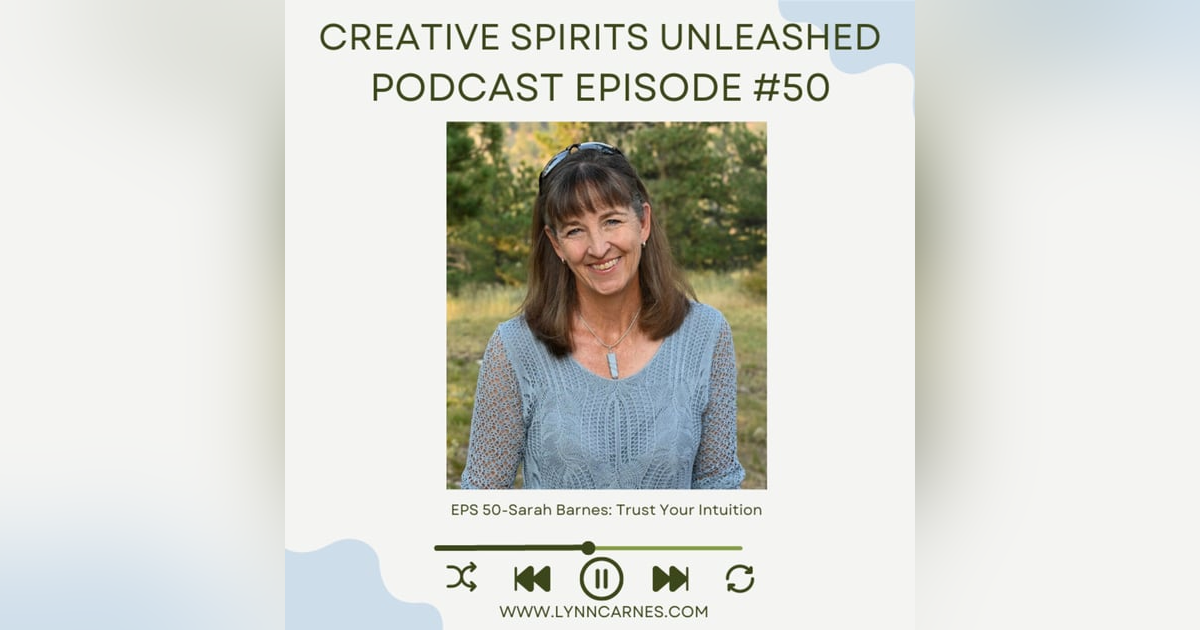


My guest for this episode of the podcast is Sarah V. Barnes, author of She Who Rides Horses. If you have ever wondered if intuition is real or questioned whether you could really trust your instincts, this podcast is for you. Sarah practiced in the logical world of academia before becoming an author. Working with horses taught her to move beyond logic. As she said in the podcast, “I feel like I’m reclaiming my birthright.” I couldn’t agree more. Sarah has a lot of wisdom to offer, both in this podcast and in her book.
The book She Who Rides Horses is a historical fiction account of the first person to ride a horse in about 4000 BCE. The story dances the tightrope between the hard evidence of what historians know about that time period and that which can’t be known. It’s a gripping tale of life, love and spirit in an era long past.
Given her background, Sarah is well-equipped to tell this story.
Sarah V. Barnes is both an historian and a horsewoman. When she is not writing stories, she practices and teaches riding as a meditative art. She also offers equine-facilitated coaching and wellness workshops. Sarah holds a Ph.D. in history from Northwestern University and spent many years as a college professor before turning full-time to riding and writing. She has two grown daughters and lives with her husband, her dogs, and her horses near Boulder, CO.
Additional Topics:
- How to follow your intuition. 2:51
- We were born to be able to understand our instincts. 9:10
- The breath is a bridge between our conscious and our subconscious. It’s the only one we have. 16:41
- The importance of paying attention to heart rate variability. 20:06
- If you’re congruent, then the horse gets an opportunity to answer the question for itself. 31:40
- The difference between communication and intimidation in horses and humans. 38:03
- The impact of horses on warfare and the world. 45:56
- What was it about the domestication of the horse that tipped the scales in favor of patriarchy in Western society? 52:25
- As a fiction writer I get to play in the gap between the evidence and the unknown. 59:34
- Don’t wrestle with what the story is already giving you. 1:06:53
- What do you do when you don’t know what you’re doing?
Website: www.sarahvbarnes.com
Intro:
Welcome to Creative spirits unleashed, where we talk about the dilemmas of balancing work and life. And now, here's your host, Lynn Carnes.
Lynn:
Welcome to the creative spirits unleashed Podcast. I'm Lynn Carnes, your host. My guest for this episode is Sarah V. Barnes. Sara and I met at the Equis Film Festival in early December and Rancho Marietta, California. And we both had books in the film and literary or in the literary contests. We both actually won her book won an award for history. It's a historical fiction book called she who rides horses. This book is something I have barely been able to put down. It is such a good story. And in this podcast, she talks about how the first chapter of this book was written, she did not set out to write a book about the first person to ride a horse. And yet here she has written the first of a trilogy of that very subject. The conversation that we had was an incredibly rich one about how to you follow your feel how, what if the horse has taught her about following her intuition and trusting in her story? What's interesting about Sarah is She's a former academic. So she lived in the world of logic and college professors and tangible evidence, and yet she's written a beautiful fiction story. That's more about feel and intuition and trust. So here's a little bit about Sarah. She's both a historian and a horse woman. And when she's not writing stories, she practices and teaches writing as a meditative art. She also offers equine facilitated coaching and wellness workshops. She holds a PhD in history from Northwestern University and spent many years as a college professor before turning full time to writing and writing. She has two grown daughters and lives with her husband and dogs and her horses near Boulder, Colorado. And as our conversation indicates, she brought lots of ideas about how to get back in your body, the role of breath, the role of staying centered and grounded, not only in working with horses, but in operating in daily life. It's a very rich conversation with lots of good little nuggets and takeaways. So I hope you enjoy this conversation with Sarah Barnes. Sarah, welcome to the podcast.
Sarah:
Lynn it's such a pleasure to be here.
Lynn:
I am really happy we're doing this. We had such an interesting meeting because I am still learning to follow my intuition. And my instincts, the horses have helped me do that a lot. And when we met, we were at the Equis Film Festival. There were a lot of people around I was kind of on my own. Wandering through that first night trying to figure out what was this thing that I was at? And I something pulled me to sit down next to you it was that instinct thing. And turned out to be a really good call because we had several good conversations. Throughout that weekend, it was one of my highlights. But my question for you is after sitting down and talking to you pretty quickly, I was like, well, you're another woman who who seems to follow her instincts. So tell me a little bit about how you've learned to develop, following your intuition, your instincts, the feel, if you will.
Sarah:
Um, as is the case with you, the horses have been my primary teacher. And in in that, that practice of following instinct. And similarly that night at the Equus Film Festival, I thought I'm just going to sit down in this comfortable chair because I don't want to stand at a cocktail reception for the next hour and a half and and see what comes. But that was definitely not the way that I operated. Before Horses came back into my life which happened about 20 years ago I was I was raised around horses and then stepped away for a number of years as often happens. College and first job and starting a family and all was things. And while as a child, I was very much kind of a wild child of, of nature, my, my mom would put me in the Labrador Retriever out in the morning and expect us to entertain ourselves. Once I started school, I definitely fell into that. What are the grownups one, it's, it's, it has to do with the rational thinking mind. And I can be very good at this school thing. And this following following reason, and that was the the mode I slept by slipped into, for really most of my later childhood and early adulthood. And fairly successfully. That's, that's the thing about depending on the the rational mind, and I, I sometimes refer to it as the curse of competency. If you if you can, if you can make your way in, in the world pretty successfully relying on intellect, then it can be hard for that little voice of I don't want to call it non rational. But it's another way of perceiving it's an it's another sense, really, it's another way of perceiving and receiving information from the world. And the culture that we live in today doesn't really support relying on that source of information. But it's really just as valid in terms of how on a neurological level we receive and process information, as is any other way of of taking in information about what's going on and processing it and making decisions about how to how to act and, and in the world. And so it really wasn't until I became much more involved with horses again, that I sort of had permission, gave myself permission was pushed by the horses in into allow allowing that, that that voice to have a part in the conversation. And being the the academic and the intellect that that I am, I of course had to figure out what is this thing called intuition, and how does it work. And that's still my, my trap that that I can fall into that. I I want to know a lot about all sorts of interests that that capture me, and I, if you look around my my office behind me, I have books about everything. But books will only get you so far when you're working with a horse. And so what they've really guided me toward is is practice and the practice of using intuition, the practice of using feel, in addition to what I know, in my head about it, and and that's that, that continues to be the, the place where that that edge where I feel like I can still, I can still grow. And in some ways, it also feels like I'm reclaiming a birthright, like something that should be mine, that that we all have the capacity for. But was sort of shut down. And that can be frustrating too, because it's like, I want that back.
Lynn:
Yeah, I love that language reclaiming a birthright because I do believe we were born, to be able to understand our instincts, if you will, or use whatever language you want. The language that horses use, is very understandable to them. It's just not to us because we're not practiced, you know, in understanding small gestures and, you know, frankly, even energy. And I know a lot of logical people, I was one of them. Especially when I was first introduced to horses. I had a problem with it. Like I was like, you know, that's just BS. It just can't be. And then I think about my phone and I can't see what the cell signal is but if my phone rings, I can talk to somebody across the world on an invisible signal, so why can't horses have invisible signals? Why can't we had an invisible signals? It's the same thing. Well, and I help my logical brain a lot. Yeah,
Sarah:
exactly. If you're willing to accept sort of the quantum physics version of the reality that we live in, and that we're, we're all vibrating. At some level. That's, that's energy. And time and space. aren't aren't relevant. So yeah, so it's, it's, it's a, it's a practice of the logical mind going, Okay, this is this is possible. And then, and then you have to say, Okay, if you agree, it's possible, then go over there and sit down and be quiet. So that we can actually explore this.
Lynn:
Yeah. And that's an interesting, so you just, you just named something, go over there and sit down and be quiet. What is a way are a couple of ways people can do that. Because I'm always this is a conversation. I've been with coaching clients a lot. How do I tune into that signal? And sometimes the logical mind feels a little bit like noise. You know, answers. It's like, it's almost like a little two year old pulling on mommy skirt going, why mommy? Why mommy? Why mommy, my mommy. And it's sort of like, what's the best way to, to get it to be a little bit quieter? Because what I've actually learned for myself anyway, is the more I fight it, the bigger it gets. Yeah, I almost have to coax it. What's your what's your take? Yeah,
Sarah:
well, so again, not surprisingly, comes back to the horses. And I think the the first thing that they taught me, when I was looking back at, you know, at a much earlier stage of this journey that we're talking about, the first thing that they taught me was to come into my body. Hmm. And, and so I think that whether whether we're talking about a day, in, in in my life, or looking back on the journey as a whole, it all starts well, it all really starts with the breath, as one of my teachers, James Shaw, who is a martial artist, and has a program of Tai Chi for equestrians. And his book is called ride from within. But what he always liked to say was, the breath isn't everything. But everything starts with the breath. And so as I look back on, on, you know, the last 20 years when I started up again, with horses, or if I look at how I need to start each day, it's that conscious decision to pay attention to my breath, and to come into my body. And if I don't do that, the consequences can be potentially catastrophic. I know that I three years ago, almost 104 years ago, now, I, I had my worst riding accident, maybe not as critical as what you experienced. But I did come off and in actually very innocuous circumstances, given what I've done in the past on horses. But I broke my hip, I fractured the neck of my of the femur. It was a complete displacement, and I was lying there on my back going, I cannot get up. But the precursor to that was that I had started my ride that day, with the thought something bad's gonna happen. Oh, and it had been one of those days, when I had a lot going on. I had moved one of my horses from one facility to another, I think I was maybe planning to go out of town in a couple of days, you know, just one of those things where that voice in your head is going and we need to do this and we need to and we need to, and I can remember very clearly, as I started that ride, I mean, something bad's gonna happen. And normally, if I have that little flash, it can be a reminder to take a breath Come into my body and pay attention. But on that day, I was so far out of being in my body, that it didn't even really register. And, and what happened in that fall was that because I was so far out of my body, I couldn't react the way I needed to react in the moment to keep myself in the saddle. And I literally, I came off like a sack of potatoes, and just like, you know, landed. And, you know, sometimes the universe gives you, you know, kind of a knock upside the head or in this case, you know, a hard, hard fall on my hip, say, hey, remember, you know, this. And it does come, you know, and there are plenty of practices, some form of meditation being one of them, that, that can help, you know, quiet that that inner voice and, and remind you to, you know, to ground and center, but really the breath is, you know, is it's, you know, it's so intrinsic to how we are in the world. And it can, you know, it's it's one of those things that we don't have to think about. And, and our, our system will, will keep functioning, but we can think about it and influence it. And it's one of those ways to hack right into the nervous system. So
Lynn:
why I, you know, when I was teaching the self awareness program, and trying to get corporate executives who breathe like to two inches into their chests to start breathing more deeply and tap into their breath. And the question would often be, why are you know, what difference does it make I, I see the breath as a bridge between our conscious and our subconscious. And it's really probably the only one we have, because we, you know, our nervous system takes care of our heart rate. I mean, we can learn to slow it, but it takes care of all the bodily functions that otherwise, you know, we die if they weren't taking care of digestion, and all of that, but the breath is either unconscious or conscious. And so it's a little way to walk the bridge across to that part of us that is really running us in the background that we don't know. Right. But here's my question, given that we're talking about intuition, and that thought you had something bad is going to happen. And I have this question a lot at different times. Did the thought create the event? Or did the thought predict the event? In other words, was it a premonition? Or did you manifest it? Um, I think both. Okay, say more.
Sarah:
Yeah. Because the thoughts? Well, okay, so it was it was my intuition talking to me. Mm hmm. So, I think that it was my intuition saying, we, we are not present in the way that we need to be, in this moment riding this horse, ergo, there's the possibility that there will be consequences to that. And I had a choice in that moment. To and this has happened multiple times to like I said, I had a choice in that moment to do something about that, what that voice was telling me Yeah, to take a breath to stop to either come come back into my body and go, Okay, I've got this, we're gonna even get off. I mean, there have been, it's been like, you know, this probably isn't a good deal. You know, I did today for whatever reason. Um, but so I did make a choice. So I, I don't think there it was sort of inevitable that that that was going to happen, you know, that the fall was going to happen. But it was predictive in the sense that, given how you are showing up in this moment, there's a very good possibility that something bad could happen. Sure. Because you're not present. You're not going to be able to react the way you need to react when the horse does XYZ. Yeah, so it wasn't it wasn't inevitable. But I did make a I did make a choice about about how to move forward when I when I got
Lynn:
that warning. So I see that I mean, that's the choice, right? And haven't we all ignored choices before? Like, we see that moment and it's like, I'll be fine. This will be fine. And sometimes we get away with it. And sometimes, you know, we don't wear the seatbelt, and we have a wreck in our car. And it's much worse than it would have been if we just put the seatbelt on.
Sarah:
Yeah. So I think that's, you know, what, what we're both getting at here is the value of paying attention to that it again, it's another source of information that our conscious thinking brain uses to to make decisions. And sometimes the conscious thinking breathing isn't the best decision maker, you either.
Lynn:
know, I've heard that. And I believe this, I think it's probably true for me, it's it we make our decisions based on emotions, and we justify them based on Yes, our logic. And, you know, we can go gather information, but I feel like every even even the strictest of scientists follow some kind of feel hunch, you know, they may be off, they may not be good at it, you know, but I think everybody has a sense. So. So if
Sarah:
we think of and I'm not, I didn't originate this idea, but that the heart is actually an organ of perception. It has its own neurons, it sounds and 80% of the information that travels back and forth between the brain in our head, and the brain, in our heart, and the brain in our gut, travels from our body to our brain. So it given that that argues that more information is coming into our sensory processing system, from our gut, in our heart and flowing up to the brain. It makes logical sense that we should pay more attention to the wisdom of
Lynn:
the body. Yeah. Are you familiar with Heart Math?
Sarah:
Yeah, I'm actually a certified. Oh, are you?
Lynn:
So I'm not certified. But I, I do use it with my clients. And it was a, it was a huge breakthrough for me. Yeah. Because again, in the logical world, for someone to begin to understand the, the, the power of being able to measure the heart as to whether or not it was in coherence. And you know what coherence really means? Because it's sort of like, wait a minute, you mean, I can, I can actually shift through my breath, and sort of almost find that zone, I can actually train myself to get in the zone. So describe since since you're, you're familiar with it, probably even more than I am. For people who are listening, what is Heart Math? Tell us? And actually, how does it apply to horses? Because I know there's a huge, yeah, connection to how they read us.
Sarah:
Yes, absolutely. And it's, it's, I actually teach a workshop on Heart Math for equestrians. So in a nutshell, that while the Heart Math Institute is is located in in California, and has been doing peer reviewed research on sort of what I was just talking about the the heart is an organ of perception for for decades. And the primary mode of measurement that they that they use is heart rate variability. And when we think of the heart rate, the the sort of assumption is that what you want your heart rate to be regular, but actually, heart rate variability, meaning that there's quite a bit of variation from beat to beat is actually a greater indication of a healthy system. And what that means is that that your heart and the rest of the autonomic nervous system that that we've sort of been talking about that unconscious functioning, is able to respond in the moment to changes both internally and externally. And so High a high heart rate variability is an indication that your system is in incoherence, if you think of a sine wave, it's, it's not chaotic, it's it, it's functioning in this very coordinated, synchronized manner and responding, again, in nanoseconds to the demands of the system as a whole. And so, heart rate variability is something that's very easy to measure. And is a is a good indicator of the, the overall health of, of a system, whether it's a human, whether it's a horse, and horses, actually 10 While they're very aware of coherence in their, in other herd members, this is part of how they stay safe as a herd as is being able to pick up on because the heart, of course, puts out a huge electromagnetic
Lynn:
field, right, it can be picked up what 10 feet away from a horse, yeah, or more
Sarah:
a, they, they this is part of how they communicate with each other is being able to, to recognize and feel essentially changes in herd mates. emotional state, which is reflected in in heart rate variability. So you can think of emotions, the energy of emotion is basically what goes out into that electromagnetic field, whether it's the emotion of, of, you know, safety, contentment, or whether whoever the century is, has, has sent something in the environment that that generates concern that that all goes out into the field and the heart rate variability changes, well, horses tend to, you know, unless their nervous system is activated, because of a sense of danger or fear, they tend to actually have healthier, meaning higher heart rate, variability, again, this can all be measured in Heart Math, it's actually done studies on horses, when we come into their presence, so imagine, that the horse has, it's almost like a, it's it's a almost looks like a doughnut, if you want to imagine it is this electromagnetic magnetic field that their heart which is 10 times the size, it's a virus puts out when we enter that field, if we allow ourselves by breathing and, and attempting to come into a more coherent state ourselves, if we allow ourselves, our heart rate variability will entrain to the horses. And so then we actually it's one of the reasons we feel better when we spend time around horses because we're literally in their energy field. And again, if we allow ourselves to be influenced by that energy field, we can we can come into a much more coherent state, and the other there's coherence and then there's also being congruent and congruent meaning we're the we're the same on the outside as we are on the inside is that
Lynn:
yeah, that's that's a big one to
Sarah:
explain it. And being congruent, is very helpful in achieving coherence.
Lynn:
You know, I learned that and one of the big, I think it's a myth of being around horses is that you should never show fear, which I think is exactly what we tend to then try to do is cover it up and become incongruent. Pretend like we're not afraid when we're shaking in our boots. And my experience is if you just kind of own the way you're feeling, first of all, it actually takes the feeling down because you're owning it, instead of it owning you. But it also shows shows the horse that you're the same inside and outside and then now they don't have to worry because you're not pretending to not want to kill them. Because they read that as a threat, I think.
Sarah:
Yes. And and one of my other primary mentors is Linda Kahan of who wrote The Tao of Equus and is the is one of the really founders of equine facilitated self development and social emotional intelligence. She talks about what she learned from the horses, which is basically that emotion to them is just information. Like I said, it's the charge that goes out through the electromagnetic field. And if if there's a disconnect in in that emotion, that's what concerns the horse. It's not the emotion itself. It's it's that disconnect, or the the, the incongruence Yeah. And so yes, you're absolutely right. You know, fear may indicate to the horse, okay, that human is afraid, but my perception of the environment is telling me that, that there's nothing that I need to be afraid of. So now, I just know this. But but that's okay. Because they're not in Congress. There's just there's just fear there. And, or the the fear can say, to the horse, oh, there must be something that I need to be concerned about as well. What are we? Right? Right. So it's not that. And I think that's where the, you know, never, never show fear to your horse comes from because they do obviously pick up on. And that's the number one concern that all of our nervous systems has, right? We're all asking, am I safe? That's the foundational question of our autonomic nervous system.
Lynn:
That's right. That's right. Yeah, go ahead.
Sarah:
Well, I was gonna say if, if you come into a situation, and at least you're congruent, then the horse gets an opportunity to answer that question for itself. And of course, it's not thinking about it rationally, its autonomic nervous system is just responding one way or the other. But then at least everybody is on common ground, and you can kind of decide together, are we safe in this situation or not. And being incongruent, trying to pretend we feel safe, when we don't, just adds a layer of misunderstanding to what should be a shared conversation.
Lynn:
Right. And that's where the harmony comes in, is if we can be on the same sort of wavelength, if you will. And we use that language a lot without even thinking, light wavelength. But you know, what strikes me as you lived it in the academic world a lot as I understand, and I lived in the corporate world, in the corporate world, for sure. congruence was almost non existent, like, there was always this feeling like what I'm seeing on the outside is not the same as what's on the inside, either. I know, I'm covering up, you know, somebody looks at you and says, you know, do you know how to do such and such, and you don't dare say, I don't know how to do such and such. So I'll go figure it out. Sure. I've got it. And then you go figure out how to do it. You know, the answer. You know, I, one of the statements that was often made, and in my corporate life was, what I think is, and I'm sure you will agree with me is we should go do XYZ. Well, at that point, we, whether we agreed or not didn't matter. We we were told what we were doing. And so now you're like in a disconnect within yourself, because it's like, boy, that is a really bad idea. But I have to go do it unless the rare person could stand up to that. And at times, I was that person. But most of the time I wasn't. So I'm curious for you. And before you, and we're going to talk about your transition from academic to author, and horsewoman. But what is what was your experience of congruence? Just to kind of in our daily lives, because I think the horses have so much to teach us about how we humans interact with each other.
Sarah:
Yeah, I think the word that comes up for me, in listening to what you were just saying is, is vulnerability. And, you know, certainly Brene Brown has talked a lot about this in a in the corporate setting, but Linda has as well. Linda Kahan of and the, in the situation that you're describing. What, what the ingredient that was missing, is permission to be vulnerable. Because it is it's that person that says, Well, wait, wait a minute, I'm not sure that this is such a good idea. If, if it's too unsafe, to raise that kind of question to be vulnerable. Then you're, then you're not going to going to do it. And the way Linda talks about it is, is predatory power. In a, in a context where, where we're predatory power is exercise, it's very difficult to be vulnerable and predatory, meaning using somebody's weakness or vulnerability against them. So you can be powerful without being predatory. You can you can exercise non predatory power, but that's it's, again, Brene, brown talks about power with or power alongside is about post power over
Lynn:
exactly exact, I actually put a chart from that I've developed myself through the years in my book about power over and power under. Yeah, and, you know, I like it to sort of the parent child dynamic, you know, from Eric burns work way back in the 70s, the transactional analysis, because it makes a ton of sense. And, frankly, when I would be in the corporate world, it looked to me like I was just looking at a bunch of dysfunctional family systems, you know, a lot of sibling rivalry people treating the boss like a dad, oftentimes, they would use that kind of energy, you know, to, like, get people to do things. And, you know, it's we're not a family, you know, we should be treating ourselves more like a sports team, if anything, but we're not a family. Yeah,
Sarah:
and a lot of times I said we are the horses teach us a lot about, about power and, and vulnerability. Yes, they do. They're inherently non predatory. Yeah. But they can be incredibly powerful. Yeah. And so how it and potentially dangerous honestly. So how do we as humans show up in a way, that if we do feel vulnerable, we can still be safe? So how can we brace our vulnerability? And how can we, we exercise power without being aggressive? Oh, domineering. You know, so, so we're particularly with with a horse that's very self confident.
Lynn:
Yes, I was about to say there,
Sarah:
show up in a in a in a way that yeah, so. And those lessons can be learned very quickly,
Lynn:
they must be learned very quickly. Because there's there is a power over under dynamic because at first with a horse, because we are the predator, and they are the prey, at least in the pecking order. You do want them to feel safe, but if they feel too safe, if they're self confident, if they recognize that you're not as confident as you should be, then they'll take the leadership role. And that's a 1200 pound animal. You probably don't want to think he has the right to run over you or whatever. Yeah, and
Sarah:
and I hesitate a little with, like the term pecking order and any sense of of hierarchy, because we're learning that for horses in herds, natural environment, they practice something that Linda refers to as consensual leadership. And this the we have to be careful about imposing our sense of, of a hierarchy and dominance. On on horses and even on on humans. But, which is not to say that there there aren't, particularly with horses that in a human environment have learned out of fear, to be to be dominant, in order to protect themselves. So sometimes if you'll if you have a horse that has been treated with aggressive dominance, they will respond with that kind of aggressive dominance. So it's not that horses don't act dominant, but that's not necessarily how they they are naturally. And that that's a that's a long conversation, but it Yeah, it has to do with being able to set boundaries and, and communication really and but again, is that it's that finding that space where we're both members of the conversation feel safe to be vulnerable? And boundaries are about creating the space to connect.
Lynn:
Isn't that connect? To feel safe? Yeah. Because yeah, you know that the distinction I've heard with my teacher is the difference between communication and intimidation. In other words, if you're like, Yeah, you know, what, what are you using? If you're using pressure, it's pressure to communicate or pressure to intimidate. And we're all using pressure all the time, when we ask somebody when something's going to be done. That's pressure. Right? And it's communication as well. Now, it can become intimidating. And it can also just be, you know, a given a take, depending on how it's done. And I think that's, I think, just the way we do it makes a big difference. Like you said, what's
Sarah:
the energy behind it? Well, the
Lynn:
energy in the exactly, it's the like you said, emotions are information, but it's also carried through an energetic field, which I do think we pick up on.
Sarah:
Yeah, and the horses are masters at that. Yeah. That's the world that they live in. And, you know, when we step into that world, we have the opportunity to learn from them about how to use all that nonverbal information to communicate and to be in relationship. Yeah.
Lynn:
Well, I want to I actually want to pick up on a thread that she mentioned earlier, which is horses, as you would in the wild. And so the reason that you were at the Equis Film Festival is film arts and arts festival, is that your book she who rides horses, was entered in the competition of the literary segment of that, and in your category, you won the award, I was thrilled to see that. You won the echos Film Festival Award for she who rides horses, which is a it's a historical fiction book about I think the way you position it is the first person to ride a horse 4000 years. BC, I believe, right? Or I go I'm not sure which,
Sarah:
yes. Right. Yeah, for 4000 BC,
Lynn:
yeah, 4000 BC, before horses were part of our lives. And because they haven't always been somebody had to be the first person to ride a horse. And back when they were still, you know, treated as something to capture or not capture, but to kill for food.
Sarah:
Right? You horses and humans had had a relationship for for, you know, 10s of 1000s of years, if not hundreds of 1000s of years. If you you know, go back to the Paleolithic and the art, the cave art in France and Spain, for example, you can see humans fascination with horses, but yes, they were they were prey they were hunted. And so that that was the the basis of the relationship for for 10s of 1000s of years, I think, a fascination on the on the human side, which is evident in in that art. But not connection in the sense of, of a relationship, that that went beyond predator and prey. Right. But but we do have evidence that somewhere around sort of 4000 to say 2500 BCE that that relationship changed. And and horses, it's a domestication was a was a process, not an event, which, you know, probably took all All in all, you know, several years. And I'm condensing it were for the sake of for the sake of the story. But it was a profound shift and probably saved the horses, the species, if it if it hadn't been for the the shift in humans relationship with horses, they almost definitely would have become extinct as as a species,
Lynn:
because we would have hunted them to extinction. Is that who extinction? Yeah.
Sarah:
And that was that process was actually well underway by the time domestication happened. But on the flip side of that, arguably the domestication of the horse changed the course of civilization more than any phenomenon any process, you know, in, in the last 6000 years,
Lynn:
because of the transportation piece, the fact that
Sarah:
well, that the Yeah, that just just think about the impact on human consciousness that happened as a result of changing our relationship to time and space. So being able to sit on the back of a horse, and move through space with the speed of a horse, and the the impact that would have just on mental processing, and are so interesting, about it possible, what's possible in the world in terms of, yeah, of travel through through space and time. But yeah, just the the addition of, of, of horsepower to what we could do agriculturally, you know, the way the way we could exchange ideas and information by being able to travel through the world, but and then the biggest, I don't want to say the biggest necessarily, but another hugely impactful thing is the the effect of riding horses and, and driving horses. On warfare,
Lynn:
I was gonna say warfare is a big piece too. But without all all of those things really dictate. I mean, like I know, in not that many years ago, and especially in the scheme of the hundreds of 1000s of years of time. That up until just a blip ago when we got the car horses were the primary means for transportation, for all of you may for years and
Sarah:
years. Yeah, they have been our partners through the whole process of for lack of a better world. Word civilization, you know, civilization.
Lynn:
Yeah, so that was a, you know, that that transition moment that you're writing about, and she who writes horses, was as big of a moment as the introduction of the automobile was just, you know, 100, a little over 100 years ago. Yeah. And arguably,
Sarah:
the one led to the other, we wouldn't be where we are today.
Lynn:
Oh, no, no, no, we wouldn't. And, you know, what's also interesting, I've, I've seen, you know, why is a railroad as wide as it is, why are our roads as wide as they are, everything is to take depicted by the size of two horse butts, right? Like, when you're driving versus, to side by side, this is how big the carriage is gonna be. This is how wide the horses are gonna be, you know, I mean, the wheels are gonna bake. And we still write our code based on
Sarah:
a story when you start pulling on threads. And yeah, and then it goes back. But, um, yeah, they're some of the research that I've been doing in connection with this is another one of my interests is I was a specialist in women's history. And trying to understand a moment ago, we were talking about sort of hierarchies and and the way our our minds tend to operate as modern Western humans in terms of qualities. And then those dualities are immediately placed in into hierarchy. And, and and we we have this construct that is operating in the background of modern Western civilization known as patriarchy. And that has a lot to do with with with hierarchy and and what is valued and, and whether the rational mind is is valued over the over intuition and, and what genders those ways of thinking are associated with and without going into too much detail. What I found is that the shift in mindset, and really a type of consciousness that produced patriarchy occur herd, and and I would argue was linked to it occurred at the same time that horses were domesticated. And the success and spread of that shift in mindset was facilitated by the horse. And so there's more going on, when we start to look at how horses were domesticated, and what that might have looked like. Then it had consequences, not just for the horse, but for for all of human civilization. And again, not just in terms of being able to plow more effectively, or travel to see your neighbors more effectively, but in terms of how humans operated in and saw the world. So those are, those are some of the questions that I'm trying to tease out until then still tell a story. So we really there was a choice point that occurred 4000 years ago, in terms of what our relationship was going to be with horses. And I think we are they, they they have stuck with us since then for the last 6000 years. And they're bringing us back to that choice point again. In in terms of, of operating on a level of consciousness that values, relationship, vulnerability, consensual leadership, all the things that you're working with your clients on, and the horses have so much to teach us about. As a historian and a storyteller. I'm going back to the beginning of that conversation, and trying to understand what the options were 6000 years ago.
Lynn:
Wow, that's, there's so many places I want to go now. Here's the question I that is burning. First is what was it about the domestication of the horse that tipped the scales in favor of patriarchy?
Sarah:
The well if if my supposition is correct, that it was the people living in the pontic Caspian steppe north of the Black Sea, forth, you know, in 4000 BC, who were the ones to, to initially experience this shift in mindset. And I'm drawing here on the work of a guy named Steve Taylor. Paul wrote a book called The Fall we can put that in the podcast notes. He is a psychologist. And he in turn draws on the work of historical geographer if it and the the geographer whose name escapes me at the moment, argues that this shift in in consciousness occurred as the result of climate change.
Lynn:
Interestingly enough, well, that's been happening from the beginning. So
Sarah:
yeah. So if those were the people to, to experience, this shift in consciousness that produce patriarchy and war and, and the subjugation of women and slavery and, and the slavery of horses. That that that then became characteristic of Western society is Western civilization as a whole. How did that way of being in the world spread? What made it so successful? You have to look at the horse
Lynn:
because they could spread that time and space piece. It didn't just happen over here, and couldn't get over there because people were so far away and yeah, the horse has created connection that we couldn't have had before. Kind of like cars did and then airplanes did Yeah.
Sarah:
Yeah. Very globalization.
Lynn:
Yes, the COPE horses were the wild
Sarah:
They were, yeah, a technology if Yeah,
Lynn:
yeah, they were. And the other thing, you, you said that I find, and of course, this is a core point in my book as well, but from a very different angle. But you know, the horses, what I have found in Bruce Anderson has really helped me see this is he says, you know, he's he's on a mission because he feels like the horses connected with him as they, I think they do everybody, it's almost like they almost give us a mission. But he said, I'm helping them to live in the world we have created, but they are bringing me back to my nature. So to him, that is the dance that we're creating with the horses is and that's what I have found is the horses teach me about my nature, as I teach them about the world we have created, which is everything from living in a stall, or, you know, being inside a fenced pan to asking them to take me somewhere, you know, putting on tech and asking him to take me somewhere. So, yeah, I just, I just really feel like, your book does that exact thing in the same in a different way of you know, the thing that's striking me and I'm about halfway through the book is it's got so many threads that you are waving together in a absolutely gripping story. It's, it's this, it's the threads of what people lived like. And so the first thing I thought of is I was as I was reading it this morning. I was I was reading a little bit before we got on because I can't put the day. And is that life for them? would be what we would call camping. Yeah. Right, like, we think, Oh, we're gonna go on vacation and go camping. But we'll go back to our walls and our electricity and our heat and so forth. But life on the step, which is where this is set is, you know, blankets and tents and fires and, you know, hunting for your food and gathering herbs. And, you know, basically what we call camping but you had to do some research to like know how people lived then and what technology they had like the obsidian knives and background dogs. That's that's part of the podcast joy. So what what kind of research did you do to follow these different threads between the timing, the location, the camping, you've, you've got some pieces in there on sort of what kind of role priests and shamans played and things like that? How did you do all this?
Sarah:
I'm relying on the secondary work of my colleagues in many different fields, archaeology, anthropology, linguistics, paleo, this and paleo that. So doing doing a lot of, of secondary reading, which definitely, you know, fed into my, the, the sort of intellectual curiosity that led me to be a historian in the first place. But honestly, what has been the most fun is that you know, is that as an historian or an academic scholar in any of these fields, whether it's anthropology, archaeology, you you're constrained by the evidence, right? So what evidence do we have of, of how people lived? Garbage heaps, our you know, are are a great source of, of information. But the evidence only takes you so far. And there's, there's what really happened in the past and what life was really like, which we will never actually know. And then there's as a as an academic scholar, what you can say about it based on you know, the the physical evidence and, and even DNA evidence now, that that we're able to find, and so there's, there's a gap between those two things. And as a fiction writer, I get to play in that gap. And it's what's really feeding my soul in a way that the academic history had had honestly ceased to do. That gap is where the imagination lives. It's where it's where the stories are. So that's, that's, that's the the space that I've really been enjoying being in. And so to the extent that you're you've been drawn into the story, and you feel like you're getting a sense of what it must have been like, to, to live in that time. Yes, I did lots of research. But it's also my imagination. And oh, my imagination is guided and inspired by that ineffable thing that we're calling intuition. It's that sort of knowing that that comes from some other dimension. And the the, the story as a whole is coming to me from that. Space, that place. Yeah, that, that, that that other world. So I've learned to in the process of writing the story, I've learned to really trust that,
Lynn:
you know, the, I love the word constraint. Because I use creative constraints a lot, you know, as an artist. And as a writer myself, what I, when you like, it really struck a nerve, when you said nerve in a good way that I play in that gap between the evidence and the unknown. And that's what I think the best creators do is, you know, whether it's solving a big problem at work or solving a problem, and a painting or solving, solving a problem, in my case, at the pottery wheel, or on the page writing, is, the constraints are actually the thing that makes it so magical, when you can creatively find a solution to the story. And what I love the most about your book is, it also follows really good storytelling principles. Because nobody wants to hear a story, that straightforward. You know, this girl sees a horse and decides to learn to ride it and times it and rides it. That is not the story. Just giving it away for anybody who wants to read the book, she takes a few twists and turns along the way. And it's those complications and those moments of truth that actually make a story worthy to read. And, and it's the thing also, I feel like, if we would remember, in our own lives, it's the thing that makes our lives interesting. You know, I find as much as I say, I love creative constraints, and I love complications and so forth. When they happen. I don't love them so much. I really, I'm in the middle of a project right now that, that I thought it was going to be so straightforward, but I should have known because my first thought was, oh, yeah, I'll do that. How hard can that be? And for me, it's always, how hard can that be as the first time that I'm about to be entering a complicated? So when you are writing this book, and thinking about those complications, and again, I don't want to completely give away anything, but I do want to entice people who are listening to go read this book, but how did you come up with the various hurdles that were going to happen? Along the way? Is that again, just your imagination? How did you get your inspiration for them? And how do you make the pieces fit together?
Sarah:
Um, well, again, the I didn't start out to write a novel. I didn't start out to write this book. I was I do love to write. But most of my writing had been, you know, in a very academic vein, other than my own sort of personal journaling. And I actually attended one of Linda Kahan ofs workshops. Mostly that was a writing rather than a writing workshop, mostly because I just like spending time learning from Linda. And we had it was the third day of a four day workshop and we've been doing a lot of very creative exercises, spending time with the horses spending time doing guided journeys. And, and at the end of the third day, she sent us out onto the land onto her property and said, just write whatever comes And, and we won't reconvene at the end of the day, just spend as much time as you want. And we'll, we'll gather again in the morning and share whatever, whatever you've written. And so I sat down and open my laptop with no prior. And this is, again, if I had managed to shut down through all the creative activities that we've done, I'd managed to shut down that that voice in my head. And so I could just sit down. And in a very sort of visceral way, start to write and what came out was the first chapter in this book wall. And so then for the next several months, honestly, I mean, I read it the next day, Linda cry, which is always a good sign. And she's like, you have to write this book. And, and I would literally sit down at the computer and say, Well, I wonder what's going to happen today. Oh, wow. And it really did feel like the story was coming through me and I still feel this way. It's, it's not my story, right? It's the story that I've been chosen to tell. I'm the storyteller. And so when you say, you know, how did you figure out what obstacles she the main character was going to need to overcome and how it I don't have an answer. Other than the story came to me, it's like, Elizabeth Gilbert's big man.
Lynn:
Yes. Big vows gonna say to you no big magic. And yes. And that is
Sarah:
absolutely the experience that this story is out there needed somebody to tell it chose me, which I feel incredible gratitude about. And I'm just telling, and I've been very conscious about not going to any sort of nuts and bolts writing workshops, not being part of a writers group. I was I was actually worried about getting into my head. Yeah. If if I became too caught up in the sort of mechanics logic, this is the way you should be doing it. This is the way you should I'm just letting the story come. Not that I don't then go back. I have a very good editor. And, you know, not not that there hasn't been a lot of revision and but at its core, the story
Lynn:
comes to me. Well, and I love work,
Sarah:
the more I tried it to to logically engineer things. Yeah,
Lynn:
the more well, and again, I think this is something that horses also teach us. You know? It's, it's somehow what's coming up for me right now is I listened to Josh Nichols, who's a horseman was on work. Schiller's podcast. And I don't have a great memory when I'm listening to podcast, I kind of listen to them, and then sort of take whatever and leave and don't, you know, couldn't tell you what was said in the podcast a couple of days later, but in this one, he said to about horses, and the interaction of the harmony with the horses is think of the horses saying don't take what is mine to give. And I feel like, in a way, what you just said is I don't take what the story is already giving me. In other words, you don't wrestle it out of the you're not wrestling with the story. You're, it's been given to you. Yeah. And I find that true for me, as well. And sometimes I you know, in fact, I think my last podcast guest Amanda held who was also at the Equus Film Festival, talked about how things she'd get downloads and I'm not even so sure we didn't even talk about on that podcast, Elizabeth Gilbert's experience, but can you describe or can you tell that story real quick? Oh, I can so people know what we're talking about. We say Elizabeth Gilbert Big Magic.
Sarah:
Yeah. She so the big magic is a book that that she wrote, she wrote, Eat Pray Love and several other books on but big magic is about the process of creativity. And so she tells a story in there about how she had this idea for a novel and And she had all the characters, the setting the, the plot everything. And as she's, as she's talking about in the book, the setting and the characters in the plot, I'm like, that sounds really familiar. I feel like I've read that book before. Well, she didn't write the book. life circumstances got in the way. And, and it just it didn't happen. And a couple of years later, she met another author and Padgett and they were both on a panel at a writing conference. And, and they'd never met before. And Padgett wrote that book. And that's I had state of wonder, I think is the name of the book. And then I had read that read the book, Elizabeth Gilbert didn't write it and did and and Elizabeth blizzards explanation for that was that idea was out there looking for somebody to manifest it. And it the idea went to Elizabeth Gilbert first she, for very valid reasons, could not carry through. And so it found somebody else who could. And that is absolutely the way this process feels to me like this, this idea was out there. King in this story we're looking for, for for someone to manifest it in this world. If you talk to Linda Kahana about everything that she's learned from the horses, she will tell you the same thing that the in she talks about the horse ancestors, that the worst thing is that stirs came to her and said, we have this information that we need to get out into the human world. And you are the conduit.
Lynn:
Yep, that's exactly the language Bruce uses as well. He said, This isn't mine. It was given to me. Yeah. And it's the deal. It's the contract I made with the horses when it was given to me. So he's like, I don't have any choice. I'm the conduit. Yeah. And,
Sarah:
yeah, I think you, I think we always do have, you know, Bruce may not feel like he has a choice, because he does. He feels this responsibility. Yeah. And that sometimes can feel like you don't have a choice. But, you know, I think I think we we all we all have that opportunity to say yes. And then once you've said yes, it may feel like you don't have the choice anymore. Because, yes,
Lynn:
we say that a lot. We say we have
Sarah:
a willingness to say yes, yes.
Lynn:
It is the willingness to say yes, I just finished reading the surrender experiment, by Michael singer. And, you know, that's kind of how he went through life is just kind of saying yes to things and taking out but I don't like this, or I don't want this out of the equation. And as I've as I played with just little bitty baby experiments with that, it's kind of interesting, what happens when you say yes to something you otherwise wouldn't have. As to see where we're at, let's see where this takes me. And I'm far too controlling to like, completely yield the way. And thus, I probably will never build a giant billion dollar software company like he did. But you know, it's really interesting when we say that language because I do agree that we always have a choice. And yet when we say we don't have a choice, it's because the alternative is so distasteful to us. Like, it's the knowing I'm not going to make that other choice. I'm not gonna go that other way. Because I do know the consequences of that. And I don't want
Sarah:
them Yeah. Well, and in my case, I just felt like this. This experience of, of telling the story has been so incredibly enriching. For for my life, then yeah, I wouldn't, I wouldn't want to have missed this. And it's just, it's just plain fun.
Lynn:
Well, it's fun to watch. I'm getting when we put post this podcast, it won't be a video podcast. It's an audio podcast, but I'm getting to watch you just light up like when you talk about the story and have any come in and it's like the joy of the joy of it is palpable. Which I think also translates to the page. You know, the reader it comes through for those of us who are reading the story.
Sarah:
I'm so glad that's the case.
Lynn:
And I'd be more what I'm also excited about because this is one of those So I can tell I'm going to be sad when it's over.
Sarah:
Well, it literally leaves you literally on a cliff. Okay. You haven't you haven't reached the end of the book. But I haven't
Lynn:
written I've haven't gotten to the cliffhanger. But now I have that to look forward to. Yeah.
Sarah:
And there there are, there are two more. It's a trilogy. And yeah, there I'm, I'm most of the way through the second volume in in the process of editing, and then and then, and then there will be book three and thrilling. I have to I'm not quite sure how the story ends. And I'm just continuing to trust in the in the story.
Lynn:
Well, isn't that the isn't that the message? If anything from our conversation here today is sort of trust, trust in your story. So that feels like a good place for us to wrap this up. Before I ask the final question is there before I ask a question, you know, I have one more question for you. But is there anything else that's coming up for you that you want to be sure we talk about?
Sarah:
Well, as you noted, I, I get more and more energized? The more I talk about this? So no, I feel like I feel like we're we're reaching a good,
Lynn:
good, good place. Well, that the thing that I like to ask my guests at the end of every podcast is what would you what either question or request, sometimes even advice would you have for the people who are listening? Who, you know, I can imagine there's people listening who have thought about writing a story, or thought about developing their intuition? Or had that little flicker of a download? Maybe like, Where's that coming from? Or are they maybe even saying, wait a minute, would horses be able to teach me about living my life better? Like, those are the kinds of topics we've touched on? But what would your advice or request or question be for my listeners who are having those thoughts floating around in their head?
Sarah:
But I think what we just what we just touched on? Say yes. Say Say say yes. And just see what happens. What do you have to lose? Yeah. Yeah. And
Lynn:
it? Yeah. So I have so I have a real quick question for you on that front. Because what sometimes when we say yes, especially something we don't know how to do, we are entering what I sometimes think of as mistake Ville. In other words, we're going to go into territory, where things don't work. It happens in my art all the time. It happened in my book, I think it's the normal state of creativity as you try things and some things work. And some things don't, or you just start feeling like that little bit of a froth, as I call it, that little bit of uncertainty, and I'm not sure if this is gonna work. What did you do with that? And what do you recommend people do with that feeling of, well, what if it's not perfect? Or how do I tolerate the discomfort on the way to the finished product? Yeah,
Sarah:
I so with this process of writing this story, I really had no ego involved. And that made the process so much easier. I had nothing tied up nothing in my previous life up to this point, including being a horse trainer. I had nothing tied up in it that said, your reputation, you're standing in the world, your location of self worth, none of it is connected to being a storyteller or a successful fiction writer or so. So in some ways, I I really didn't have anything to lose in the in the sort of conventional sense. It just made it so much easier. And that you know, even if I'd only written this story for myself and the joy of writing it, that would have been enough because I was I was enjoying it. And you know, my my husband Bless his heart. So that's, that's enough. If you're, you know, this is worth spending time on. If you if it brings you joy. Yeah. And so then the making mistakes because of course, if you never make a mistake, you never have an opportunity to learn anything. I have definitely become a better writer. Yeah. In the process of doing this. You know, so the you're absolutely right, the mistakes are part of the part of the creative process. But it's, it's being able to get that voice in your head to go over there. Sit down and be quiet. Let me do this. I mean, that's where we started the conversation. Right. Yeah.
Lynn:
And having having it in a place where it's not fighting you, but it's actually cooperating? Yeah. And that's its
Sarah:
job. Yeah. You know, it's to be in support of our, our intuitive selves,
Lynn:
right, as I testified, right. Yeah.
Sarah:
And, yeah.
Lynn:
Well, this has been such a delightful conversation, tell people how they can find you.
Sarah:
So I My website is newly revamped as of yesterday, and it's beautiful. I look though it's It's Sarah V. barnes.com.
Lynn:
And that Sarah with an H Sar. Ah,
Sarah:
yeah, Sa ra h v. Var N E s.com. And that will get you to a couple of blog posts. Where to get the book and how to contact me directly and just about anything you need.
Lynn:
Yeah. And do you follow? Do you have a Facebook group?
Sarah:
It's awesome. Yeah. I'm not an Instagram, but I am on Facebook. And if you it's she who writes horses?
Lynn:
Oh, very cool. Well, I'm looking forward to seeing future episodes and more storytelling from you and other, obviously, future conversations. So thank you very much for being on the podcast. And for those of you listening, if you like this podcast, please be sure to share it with your friends. That's how this stuff gets out there. And in the meantime, we will see you on the next episode.
Sarah:
Thank you so much, Lynn. It's been a pleasure to be here with you today.
Lynn:
You are welcome. Thanks for being here. Thank you for listening to the creative spirits unleashed podcast. I started this podcast because I was having these great conversations and I wanted to share them with others. I'm always learning in these conversations, and I wanted to share that kind of learning with you. Now what I need to hear from you is what you want more of and what you want less of. I really want these podcasts to be a value for the listeners. Also, if you happen to know someone who you think might love them, please share the podcast and of course, subscribe and rate it on the different apps that you're using, because that's how others will find it. Now, I hope you go and do something very fun today.


