#49 Amanda Held: Creating a Clear Path
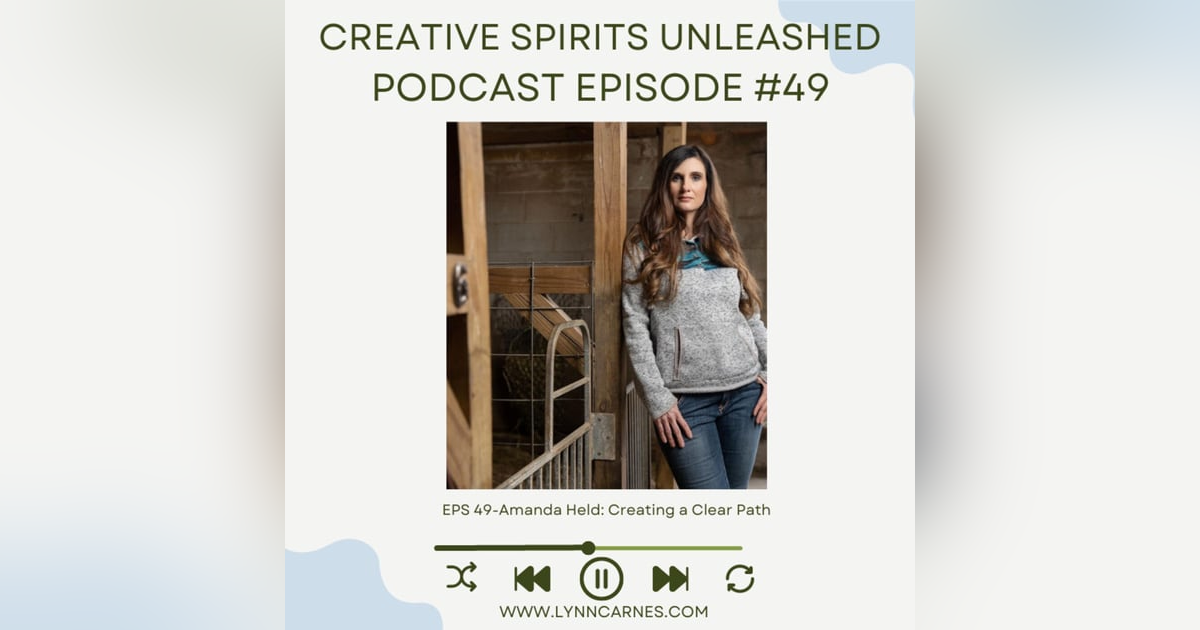


How can horses help a person be a better leader? So started this podcast with Amanda Held, an accomplished leader in a variety of settings. She shared compelling stories of what she has seen and experienced, along with quotes like this: “If you ask a question, you have to respect the answer that you get.” Early on, she tells a story of a toxic leader who transformed in a moment after getting a mustang to do something truly remarkable. Except he failed to remark, and it led him to a life defining moment that changed everything.
More than once, I was moved to tears in this conversation. Amanda truly dances the tightrope between hard-edged science and the magic of an open heart. Several times, I asked her to repeat what she said, because it was so profound.
So, who is Amanda Held? She would be the first to tell you she is much more than her bio. She truly shines through in this podcast episode. Here’s what her bio says.
Amanda Held is a Founder, CEO, Horse & Human Potential Practitioner, Healing Facilitator, Published Author, and Air Force First Sergeant. Through decades of studying horse and human behavior, Amanda has developed powerful insights and evidence-based solutions that help both horses and humans actualize their full potential.
Amanda's passion is to deliver powerful event that create a clear path for participants to access deep levels of awareness and move into cohesion and self-mastery. Amanda has earned a place in the 2022 Success Magazine's "125 People of Influence" by spending over a decade empowering veteran, equestrians, mental health practitioners, facilitators, executives, and businesses gain the clarity and confidence necessary to obtain their high-level goals with ease.
She also accepted the award for the Horses for Mental Health prize winning film at the 2022 EQUUS Film Fest, where we met at the beginning of December. The documentary trailer, HOOVES Healing Our Veterans was produced by Amanda Held and directed by Josh Nagel Productions. A beautiful and powerful message of the healing horses can bring through the wonderful programs providing these services. You can watch the 4-minute video here.
Topics:
- What is it that makes a horse a better leader than a human? 3:25
- Treatment Resistant Depression. 8:59
- What happens when you have a heart-opening experience. 14:31
- How do you open your heart so you can change? 20:32
- People that have high Iqs often have a deficit in people skills. 24:32
- The importance of being authentic and being human. 31:25
- Horses are their prey animals and they will typically flee before they will fight. 37:15
- You can’t dance with what’s happening if you’re not willing to dance with the change. 45:19
- What is entropy? 48:55
- The difference between growth and entropy -. 55:10
- Every time you prevent someone from feeling uncomfortable, you’ve robbed them of the opportunity to grow. 1:07:16
- The root cause of depression is a fantasy. 1:10:02
- Dancing the tightrope of attachment. 1:14:57
- Describe what you’re doing on that land for the veterans with the horses. 1:20:33
- How to empower your clients to be self-led and self-organized. 1:26:02
- When you can be that person, what will that allow you to do? 1:28:54
- The universal bitch slap if we ignore the feedback of our environment. 1:34:33
- Why your life matters to you. 1:40:50
Amanda's Website: https://www.equinewisdominstitute.org/
Website for Hooves: https://www.hooves.us/
Intro:
Welcome to Creative spirits unleashed, where we talk about the dilemmas of balancing work and life. And now, here's your host, Lynn Carnes.
Lynn:
Welcome to the creative spirits unleash Podcast. I'm Lynn Carnes, your host. My guest today is Amanda held. Amanda and I met at the Equis Film Festival, which was held in early December and California along with a Mustang discovery ride, or the Mustang discovery Summit, which was the end of the Mustang discovery ride. So I'm not even going into the backstory of how Amanda and I met because there were so many connections. But when you listen to this podcast, what you're going to come away with is follow the leads, follow the connections, follow your heart, because this podcast is full of connecting ideas between leadership and horses, which is where we started, because that's where I realized we needed to start in this podcast, and also between science and magic, between the tangible and the intangible, and about what it really looks like when you commit to live the life that you were meant to live. I don't want to spoil the podcast by telling you what she said. But I think that's enough of a teaser. To let you know, this is a podcast worth listening to. And I am going to give you a quick rundown on who she is. She's the founder, CEO and whoreson, human potential practitioner, healing facilitator, published author, Air Force first sergeant. So she's done a number of things. And she points out that she's lived in a lot of worlds entrepreneur, nonprofit, military business. But through decades of studying the horse in human behavior, she has developed powerful insights and evidence based solutions to help both horses and humans actualize their full potential. So with that, I'm going to send you off to this podcast. I hope you enjoy this podcast. With Amanda held. Amanda, welcome to the podcast. I'm so glad you're here. And I think I told you I don't have an opening question. Actually. My question always comes to me in that pause, as I say, welcome to the podcast. So here, here's what's coming up. For me today, as I have been thinking a lot about leadership. What does it look like? And how does it connect to horses, because I had a lot of resistance when I was first introduced 20 years ago, to horses and leadership, because I just couldn't see my Wall Street clients and my, you know, different, like industry clients and hospital clients and so forth. I couldn't see what trying to introduce horses to them. And anybody that follows me right now knows that you're just aren't going to be able to talk to me without talking about a horse's
Amanda:
Welcome to the dark side,
Lynn:
or the light side or the white side. I want to understand because people will have heard in the introduction about your work a little bit, but I want to understand, because I've experienced you as a leader. And I know you also help other leaders, especially veterans come out of some darkness that they may have gone through because of what their leadership took them through. But what is it that makes a horse make a human be a better leader?
Amanda:
Well, actually, when that is one of my most favorite questions on the planet, and I will do my best to be succinct in my answer, but also given
Lynn:
but we have time go deep if you need to.
Amanda:
Perfect. So let me start by saying that, well, horses have a very similar social hierarchy to humans, which is, I have found over the years through interaction and observation is quite profound. And the component the mechanism and the question I frequently get is, why not dogs? You know why horses? Why are horses so special and different? And so I'm going to go into a little bit of science and then I'm going to go into a little bit of magic but scientifically, horses are non predatory herd animals and so They have a really high survival instinct. And so if we observe a group, a herd of wild horses out in nature, part of their survival instinct is to through the use of mirror neurons, read what the herd is doing and follow the behavior. Because if you're the horse in the valley that stands out, you're the horse that's gonna get targeted by the wolf, right? So in leadership, we take this innate survival instinct of the horse, and we incorporate it into our behavior. And a lot of people will say, like a horses and mirror sources will mirror you. So when you put a group of humans leaders, or anyone really inside an arena with a group of horses, what that horse is going to do is it's going to start to observe through a magnified mirror neuron experience, what's going on with each of those humans. So the blink of an eye, the twitch of a nose, to the human eye might not mean anything, but to the horse, that's a clear indicator of something inside of the human. So I like to say instead of saying a horse is a mirror, I like to say, horses reflect the life inside of the human. In my teaching, I incorporate a lot of natural law and universal principles. But there's one in particular that's relevant to an I'm sorry, if I'm going like, wait, wait, no, I
Lynn:
like this is exactly what I want to understand.
Amanda:
Because something out of me right now, and I don't know, I don't know where it's coming from, but it's coming out. So. So basically, courses reflect the life inside of the human. And this is connected to what's called the natural law of correspondence, as above, so below, as within, so without, okay. So anything from my observation, over 20 years, anything that a human is repressing, the horse in front of them is going to start to express. And the more we have that repressed within us, the louder the horse is going to be with the expression. So it's an absolutely wild phenomenon. But you know, as long as I've been doing this, we always say, you know, you can't make this stuff up. It has happened to him. The one thing that has been consistent throughout my history with horses is they're never wrong. And they never fail us ever. So what I do, and I'll give you now, that's a deep, that's a deep theory. Now I'm going to give you a story that will be called that makes sense. Okay, so I had actually it was a secretary call me several years ago, and she said, Hey, listen, the entire office staff is about to walk out on our boss, nobody has been able to get through to him. He is a slave driver, and we can't take it anymore. And somebody told me that a horse might be able to help with this toxic leadership. And I said, Absolutely. We scheduled the the team building
Lynn:
authority, I just pause you right there, because I've had those phone calls before and I don't I don't work I had before I worked with horses. And I just said toxic leader fire the boss, I can't help them. So this is this is very fascinating to me, you know, because as an executive coach, I would say no to that, because I would say that's a bridge too far a hole too deep to climb out of something like that. So carry on. I just have to note, that's a big deal that you just said, yes.
Amanda:
Well, thank you to that. Because in this is the thing, like the horses. And I historically have a, you know, we kind of attract these clients that were meant to help right? To some degree. And the word that continuously comes to me is like, treatment resistant. Right? Or like just like
Lynn:
treatment resistant depression or, yeah, yeah.
Amanda:
Like and so to me, it just, you know, it's my belief that everything is figured out edible. That's what I love to say. But I've historically gotten a lot of horses, where people are like, I'm just gonna send it to slaughter because I've had it to seven trainers. And yeah, nobody can figure this out. And I say everything is figured out double. You just got to get out of your own way. And you know, just like just like how you started this call, you gotta listen to spirit. We have all the answers right? So anyway, and I love a challenge. It's just in my DNA. It's It's who I am please tell me it can't be done?
Lynn:
Then I'm gonna do it. Okay, so you said yes. Okay, the toxic, figuring out double this toxic boss?
Amanda:
Yes. And so you know, and again, like, I know that the horses are gonna get to the root of it, you can't. It's, it's not me, it's the horses, right. And that's how much confidence I have in them to change people's lives. So anyway, we get into, you know, we get into a couple of exercises. And the cool thing about these exercises that I set up in the team building, is that how we do one thing is generally how we do everything right. So I bring them and I asked them, I say here is cones, and buckets and barrels, and all these props in the arena with the horses. And I want you guys to set up an obstacle or a hurdle or a jump, that reflects your real life challenges at work. And every team does this differently. And it's all reflective right of the team and what's going on for them. And everybody gets to add a piece in the team. And this one I haven't seen done like this prior to or since then. But they built this three tier jump gauntlet, okay. And in the methodology behind it was actually quite interesting. They built a small attainable jump that was just like, looks like a standard horse jump, right, they had little ground, then they built a mid sized jump. And then they built a jump that you're like, there's no way the horse is gonna go over this. It was six feet tall, you know, it was unattainable. And so the directions are, they have to figure out a way to get a horse to go over this obstacle. And that's where the horse starts responding through mirror neurons to the energy of the group and the behaviors of the group and it basically shows them where they're ineffective. And it's always really, really interesting to watch as like a human behaviorist, it's like a playground. So anyway, this leader, the boss, grabs my Mustang mare, and doesn't take her over the first job or the second job. He goes in from the opposite direction. And he takes her right over to this unattainably high jump. And I'm just laughing I'm like, there is no way Sorry, no way. There's no way that this horse would jump this jump, especially at a standstill like they would surely need a running start. He walks her over and she's not a cooperative Mary there. She's very tenacious
Lynn:
Mustang so I'm sitting here going wait a minute, toxic boss, wild horse. unattainable goal. First step what?
Amanda:
Right right it recipe for disaster. Right? Um, and you're not gonna believe what happened. She jumped in with no problem. With from a standstill. cleared it? And I was like, I was going to pick my jaw up off the ground. Yeah. So she jumps to jump. No, from him. No praise, no celebration. Yeah, no acknowledgement, that that just happened. And I'm just over there with my mouth hanging open, you know. And of course, I'm allowing the thing to take place. So I don't say anything. He walks her right back around for a second jump. And she jumps in a second time. I could not believe it. Again, no acknowledgement, no praise, nothing. He walks around to do it a third time in like, in this moment, I'm like, Oh, I get it. Like, I just want to tell his staff Run away.
Lynn:
Run because this is what it's like to work for him. You can take the most amazing thing in the world. And he isn't gonna say good job. You're on your own. And if you do well, he's just gonna make you do it again. Absolutely.
Amanda:
Insane. So he goes to take her a third time. And you know, she's not going to take his crap. So she, he walks around again, she parks it, she gives them a real nasty look, pins or your back. And he's still like trying to make her go trying to make her go. And then she cocked her leg and she doesn't kick she doesn't do anything. But these are very clear warning signs, you know, so she had essentially transformed into the disgruntled staff. Right? So at this moment, she's reflecting the obvious, right how you would feel if somebody did that to you. So I call the session in he was smart enough like to I didn't have to intervene, like he got the memo. And he um, and you know, all of our processing is done. It's experiential. And it's done through questioning. So I'm not going to tell you how to fix your situation. But I'm going to ask you facilitative questions, and you're going to solve your own problem. And so we were, you know, the group gathered round, I think there was like 15 of them. And they were talking about the experience and what it meant to them. And then after everyone shared, my very first question was, what do you think that was like, for those horses. And this boss grabs his chest, like, I thought he might be going into cardiac arrest, he gasps and he grabs his chest. And he says, I never once thought about the horse.
Lynn:
And then I'm getting chills,
Amanda:
he looks at his team, and he says, that's what I do to you guys. I never think about you. And it's never enough. And every time you do something, instead of taking a moment to stop and celebrate you, I just give you the next task. And he had this entire, heartfelt, authentic revelation. And like we were, I was crying because it was so wrong now. Like, it was magical, magical. And he did change, he changed that one awareness. You know, and people asked me, our retreats that we offer our four days long, and people ask me all the time, can somebody really change in four days, and I say, somebody can really change in one moment, it just takes one moment, to change the trajectory of our life, you know, when we change our perception when we expand our awareness, and I love the phrase, and I can't think of who coined it right now. But um, awareness, once expanded, can never return to its original form. And that's what the horses do, they expand our awareness. Because they, they expose, but in a really safe way, all of our ineffective patterns. And it's so beautiful. And what's what's really funny about this particular group that I worked with, is that, like, three years later, I was speaking at a rotary event about my Veterans Program. And at the end, I didn't even, like, recognize the guy or think anything of it. And at the end, I asked if anyone had any questions. And he, he was there, he was at this rotary event. And he stands up in front of the whole Rotary, and he's like, working with this woman changed my entire life. And he was like, I still think about that moment. Today, in the arena with the horse of every time I'm making a leadership decision, like that memories in the forefront of my mind that will stay with me for the rest of my life.
Lynn:
So that validation, and some gratitude, you know, the thing that strikes me is you said he grabbed his chest. Yes, his heart. It is like his heart. To me, the picture I had was that his heart opened up.
Amanda:
Yes, it does it. Yeah. And everybody felt it. And that's one of the things you know, that I teach, and that we work on, in my programming, is that when someone opens their heart, it's actually you know, there's all this science now. Thank you Heart Math Institute, but um, oh, I love Heart Math. Yes, yeah. When somebody has a heart opening experience, it's like this wave of energy is blasted out from them. And the people in his group felt that and they had experienced some healing from it as well, and the horses belted as well. And you know, it was interesting, too, because when that group first got there, the horses were on the up as far away from the group as they could possibly get huddled in the corner. And when this experience happened, there were five horses that day, and all five of them came. And they stood in the group, they stood with the people. And it was just such a dramatic shift. You know, I still remember I'm like thinking about it. Now. You still remember they were like in the furthest corner, and it was a big arena. It was a show size arena. And they were as far away from those people as they could get. And then after that shift. They came back now it was interesting, because and I will in full transparency tell you that the lady that had called me I don't know she was his executive assistant or secretary or she was in some support role. She actually did end up leaving the organization after That team building that wasn't out of anger or resentment, it was that through her experience, she realized that she was not aligned in the job that she was doing. And she actually had a business idea that was on her heart. And she never had the confidence to do it. So through coming through that day, she chose to become an entrepreneur and start her own business and follow her heart. So, you know, probably not a good selling point to court. But to humanity. Beautiful, right? Yes.
Lynn:
And and you know, the thing is, I do work with a lot of people who, if they don't start this way, and working with me, they end up this way where they want people aligned, and if somebody needs to go, because that's what they need to do. They want that like, really quickly, they find out that they that life is so much better as a leader when you have people that are really in and not people who have one foot in and one foot out the door and don't care about the work. Because my theory is it's quite possible to be in a big corporate job and be completely fulfilled.
Amanda:
Absolutely. Absolutely. Oh, you're muted Lynne. Here we go. I did not.
Lynn:
I just, I had to pause my dog and my husband showed up at my at the door, and I thought they were about to interrupt our podcast. Folks, when we do these podcasts, life goes on. Even and for anybody that's following me, they know I have a new puppy and i My heart melts. When I see her I can barely stand. Like seeing her and not having her. Like come cuddle with me. She's a four month old Doberman and she is so cuddly. Sweet, and she's so smart. But she's gonna be a handful as she gets bigger. So anyway, that was my little like, hitch there. But back to but you know, that's okay. So let's talk about this heart thing, because you mentioned Heart Math. And my heart is now swelling, because my dog just walked by, and this man in the leadership realm just had his heart sort of explode and, and change. And I, I believe that the thing that keeps us from growing and changing often is because we are closed down, that we've put the armor over our hearts that we've like you use the word repete, repressed or suppressed, it could be either one, but we shut ourselves down. And then we want to change but you can't because you don't have access to the place you need to change. Because you've put yourself behind some walls. So how does one go about opening your heart? And I know you mentioned HeartMath. But just in the world, according to Amanda, how do you open your heart so that you can change?
Amanda:
Yeah, so this is actually one of my another thing that I love to talk about. And I have worked with many, many leaders on this is that what I what I found in, you know, I've had a had a very interesting life and career because I've been in the corporate world. I've been in active duty military, and then I've been in the guard for 17 years. And so I've I've kind of dipped my toe into it. I'm an entrepreneur, and I am a founder and executive director of a nonprofit. So I've kind of dipped my toe into all of the realms. And I've learned a lot of similarities and a lot of differences. But the one thing that stands out to me more than anything, is that a lot of times the people that end up in leadership roles are what we call the military semis subject matter expert.
Lynn:
Oh, yes, me is
Amanda:
that so they get promoted into these positions, because they are phenomenal at their jobs. And, but they're not always necessarily equipped with people skills, or leadership skills. And one of the things we talk about in my program is the seven areas of life and how each area has a corresponding area. And the more polarized we are in one area, the more we have a deficit in the other area. Right. So on the on the chart that I use the opposing chart, the opposing areas are mental and social. Hmm. Right. And if you think about it, people that have really high IQs often not always, but often have a deficit in EQ. Right. And I'm sure everybody can think of somebody they know that is super intelligent, doesn't have a whole lot of people skills,
Lynn:
right. And EQ, meaning emotional quotient as opposed to intelligence quotient. Yeah,
Amanda:
absolutely specific. Yep. Yes. Thank you for that. So, um, yeah, what I see happen is these people end up in leadership roles. But a lot, no. And a lot of times, and this is going to peel back some emotional and psychological layers. And I can say this because I've lived it, and I've overcome it. But a lot of times, people that are high achievers and high performers are that way, because they have something in their childhood, that's told them they aren't good enough, right. And so another thing that when we're looking at the law of correspondence as above, or, as above, so below, as within, so without, our voids in our childhood actually shape and create our values as an adult. And so if we've worked really hard to become the best in our field, sometimes that's driven by the fear of not being good enough. And if you carry that fear of not being good enough, in your heart, you're gonna be combative, even with your allies, right? Because you can be good. But if you are better than me, then you're a threat. And people respond to that, in in their leadership. And so, like a healthy leader will say, to their subordinates or their their people, we call them airmen in the Air Force, but they will say, my goal is to make you better than because I know that nobody can be me, right, we are all unique, we all just because I have the same or similar talents as someone doesn't mean they do in the same ways as I do them. So a toxic leader is fear driven, because nobody can be better than them. So they withhold information and, you know, the bring people up to a certain level, but then they start to become a threat. And then they'll sabotage either self or relationship or work, you know, or they're, or they're fear driven, that nobody can be as good as them. And so they're constantly disappointed or resentful. And so it just creates this whole web of toxicity that again, you know, humans are not as sensitive as horses, but we still feel energy, we still feel people's energy, we still read each other's mirror neurons. So even though in a lot of times, these subject matter experts don't have good communication skills. And their intentions aren't bad. And I always say like, the most toxic leaders are the people that you're like, that you'll say this about. I've really liked them as a person. But, right, because they're nice, and they're good people, they just have wounds that are preventing them from being secure in themselves. Yeah. And so when I work with people, what the horses do is they come in, and they find those deficits, and they bring them out so that they can be dealt with. And then we do have a curriculum piece in the work that we do, where we teach what I call the human blueprint. And we help everybody find their individuality. And so the thing is, if you're comparing yourself with someone else, you're gonna feel that fear of not being vital enough, right. But if you understand that you, being the best version of you will bring you more success than you could ever ask for. Then you can take that focus off of other people and say, okay, nobody can actually compete with me, there's not a person on the planet that can compete with the authentic version of myself. And when you can really grasp that, then you become a collaborative leader,
Lynn:
right? Because you are the only one, you are the
Amanda:
only you and you are amazing and perfect for what your your mission on this planet is. And so if you find yourself struggling, if you find yourself being jealous, or being fearful that somebody is going to take your position, that's just an indicator to you that you're living outside of your authentic you. Because when you're in that space of authenticity, your heart is open, and you are the most effective version of yourself. And you magnetize and you draw people in and you know, there's a lot of different ways to lead and my personal belief in preference is if you really want to build a strong team, you must lead through influence. Nobody wants to be told what to do. No, they don't. They don't. But and and lead by influence and lead by example. And so when I bring when I work with executives or leaders and I bring them in to do the work, I like to see them first alone. And I like to help them understand these concepts of you're the only you and know what you're, you're not, nobody can replace you. You're replaceable but nobody can replace you and Here's your gifts. And every time you stand in a space where your gifts are used, you can't compete, and you're the most effective you that you can be. And when they see how that works in their life, then they start to see it in all the lives of the people, their family, their friends, their workers, whatever the case may be. But we have to take the time. And, and I guess this is the pushback that I was getting as well, it takes so much time to get to know what people value. First of all, that's not true. I've actually created a questionnaire that people can fill out that helps them identify what they value very quickly. But if you can take a little bit of time at the front, at the front, and everything requires investment, right, you can't get something for nothing. But if you take that time off the top to figure out first who you are lead by example, then who your people are. And you start to communicate to them in their value systems, and help them see how the mission of the organization is serving their personal mission. You will constantly have success constantly. And it's kind of like you said, there are some people that can be in a corporate career and be completely fulfilled, if that if they can see how their highest values are being met. By working in that position, they will be loyal and they will never leave. No.
Lynn:
Because there they can be aligned. You know, every if you I'm sitting in a room as you are that is filled with the products of corporate America, like Where did our furniture come from? Where did our TVs come from? Where did this computer come from? Our iPhones, you know, it's and it's not just corporate America, its corporate the world. But you know, those products that make our lives easier are produced by people who are living in big companies that we kind of, you know, I do think it's possible I use the I use pretty strong language that it's possible to find yourself and economic slide if you're not careful. That's where you are told, or you believe that without this job, you're going to die. And therefore you'll do things and compromise your values and compromise what matters to you to keep this job or to look good, so that you can climb that ladder and find out there's nothing there. Absolutely. And you know, one of the things I one of the messages I wish I had for could get out to everybody that's working in those environments is you think your bosses have something that you don't have. And I'm telling you, I work with your bosses, and they're just as human as you are. And they have the same questions, the same concerns about whether they're good enough. And the the big unknown is if you're the CEO, and I work with a lot of CEOs, most people think, well, they've got it, they're in charge, everything rolls up to them. And I'm like, they are at the bottom of a funnel, not the top. And they are having to deal with more bosses than you are they have a board of directors, they have regulators, they have the community, they have investors, they are constantly managing a lot more bosses than you ever dreamed of. So, you know, that is not I call that X marks the spot. That is not where you want to go. If you can help but like if you're if you're just I say to people, if your desire is to have more control, go down in the organization.
Amanda:
Really? Oh my gosh, you hit the nail on the head. Yes. Couldn't be more, more true. And I guess the other thing that I see, and I see this a lot in the military, right? Because mistakes are not allowed. And sometimes mistakes can mean that people die. So it's pretty serious. And, you know, I'm sure that's not just in military, but that's my experience is that leaders want to appeared to be perfect and without mistake. They think that in their perception, that's them being strong for their people and being a good example. But that couldn't be further from the truth. And, you know, I'll tell you, I'm not perfect. Sometimes I make mistakes. But what I've done with my people in my personal organization who moves and in the military is if I make a mistake, which does happen from time to time, I fully own it, I own and I apologize, and I asked what do I need to do to make this right? And that's in I like to think that everybody loves and respects me that I work with I aim for that. It does appear to show that way. But I've had so many people come up to me and just say like thank you for being human. Like it makes me just like I can breathe, you know, because it's like mistakes are gonna happen. You're going to make mistakes, your people are going to make mistakes. But when you act perfect, people are disconnected from you because they have you on a pedestal maybe, and always say anyone on a path Other stool eventually end up in a pit. And that's not fun. But you know, just to be authentic and be real. And I think the world is moving that way. And there's so many awarenesses. And I think that's the direction that we're going in. And people are really shifting into that. But, you know, if I can, if anybody's listening to this podcast, who maybe feels like, I gotta be perfect for my people, or I'm letting them down, like, please just know that you're letting them down by trying to be something you're not? Well, you just, you know,
Lynn:
I loved your language, everything is figured out double. And in the book, I just put out dancing the tightrope, that idea of mistake is kind of the core of the book. And it's What are you doing with your mistakes, because when we, when we make a mistake, we feel this thing. It's like a little electrical charge. Now, a lot of us have numbed that over the years. Because we don't like the way it feels to feel some people label a anxiety, but it's just as an electrical charge that says something is happening, that you need to pay attention to just like the horses do, right? When something happens, they feel a little charge, and they start looking. And you can either go into what I call the mistake cycle, or the what's next cycle, you know, I call it reaching for your rules, which is the way you've always handled mistakes, or reach for your tools, which is find a way to figure it out. And it may start with taking responsibility, it may, it may be that you have to, you know, take a step backwards to take a step forwards. But I think asking the question, What's next for me helps me be relaxed under pressure. Absolutely. Because I'm not about to die. Right? Right. And I might be now I might be I fly airplanes, there are times when it is find the right field if the engines dead, to put this thing down. Yeah, I mean, or, or make sure in the stall that you don't kick the rudder the wrong way. Or you might have to recover from a spin or, or so you know, or yesterday in the round pin with the horse. For me, it was make sure that this I called him a feral horse. He's not a wild horse, but he was very touched. You know, after the video that you saw, we'll explain that in a minute. He went, I went down his side, he actually did run away. And I was paying very close attention to whether I was about to get kicked or not. Absolutely, you know, I'm one tick.
Amanda:
That's all it takes. It's interesting to that you say that because you bring up a really great point. And you know, when we're in session with these horses, I mean, they're big. Some of the horses I have here are 2500 pounds, or or Clydesdales and positrons. And they're very intimidating. But they're also again over the years, and just being in all the sessions I've been in, like I've observed that nothing ever happened in session that isn't meant to happen and doesn't have an important message. And this last horse that this last wild mustang that I got, he came here because he was attacking people, he was violent. And it's interesting, because if you know anything about horses, they're their prey animals, and they will typically flee before they will fight. Right? So fighting isn't they're not really fighting animals, but but this particular horse, the same as Montana, was very most aggressive horse I've ever seen. And I was at a point where I wasn't ready for another horse, I had lost my heart horse I had, I was not healed from that I was, you know, experiencing some organizational challenges, I was experiencing challenges with some of my employees. And here, you know, God plops this violent, wild mustang right in my lap. And I'm like, Okay, well, at least I have enough tools and understanding to know that this is for purpose, and it's going to mean something. And I think what that horse taught me now at this point, is invaluable, because the one thing I did was smart enough to know, is that because I you know, I've been training horses for 20 years, I have all the gimmicks, all the tricks, like I can get anything done, I pretty much need to if I have to. But I he gave me a clear sign from the beginning that nothing I do is going to be what I've done in the past. And I so I just made that decision. And I told him, I said, I'm gonna let you show me the way. And so instead of me thinking that I knew what was best for him. I listened. And not only did I listen, but I respected the answers that I got? And sometimes I bet is critical.
Lynn:
That's hearing. Yeah.
Amanda:
True hearing it, but the one thing that he taught me, that I that I think is profound, and I would love to share, is that because people will tell you like you can't be afraid around horses, because if you're afraid the horse will be afraid. I don't agree with that.
Lynn:
I agree I'm with you. What,
Amanda:
I fully believe that what, what happens is when we are afraid, and we're around horses, and we try to not be afraid. It's the level of incongruency with how we really feel, and how we're actually showing up. That is creating the behavior and the horse and getting that response. And so it just got to this point where I just looked him dead in the eye and I said, I'm terrified of you. You're really scary. I'm scared. And I'm scared, you're gonna bite me. I'm scared. You're gonna kick me like, I'm just really afraid of you. So please show me how to not be afraid. And it was like one of those, Matt, you know, now's where we talk about the magic of it here. It's an it's a horse. It's a wild animal. It doesn't have a prefrontal cortex like a human. But he understood something in me. And I just heard in my heart, like, just breathe. And a week later, and this has been the interesting thing about working with Montana is it hasn't actually been through my actions that I've gentleman trained him, it's really been through my inactions. And I think that that can say a lot to leaders. Because sometimes we feel like we like you said, we have to carry the burden and do all the things. But but my lesson from him was, there's so much in the unsaid and undone where we actually create a space for the other person or horse to step in, and be responsible for their own emotions and ways of showing up. And so I really just had a allowing in that moment. And within a week, I had released him into the herd, because he had to be confined in an area because he was still wild. And there's different parameters that could have. And within a week's time, I didn't do anything. I just changed my energy. And I just was honest. And now I'm starting him finally, under saddle and all of that. And the first, you know, even horses that I've trusted horses that I've trained started to the first time we put the saddle on them, they freak out and they run around. And I wasn't actually planning on saddling him that day, I had the saddle laying over the corral bars, because I had it on another horse. And he went over and touched it with his nose. And I was like, really, like, you know, I was I was taking it slow. And I had no intentions of doing this with you today. You know, I didn't have a monitor roper. I've done I've done all this at Liberty, where he's not tied up or restrained in any way. And again, like I started to feel my quote, unquote, anxiety, because it's like, well, we have this bond Now what if I put the sound on him, and he runs away, and then I damage that relationship. And then we take 10 steps back and then I was like, You know what, just get out of your head. What let's look at your let's look at reality. Let's look at your current moment. What is being said to you in this moment? And in the moment, it was like, put the saddle on. And I did, and he didn't move. And I tightened it up. Wow, goof and then I thought, well, maybe he's just stuck in fear mode. And he's frozen in fear, because he's just so afraid. And then I'm like, oh, no, that's me. halter on him, you know, and I thought surely once I, once he starts to walk, he's gonna feel that girth under his belly, and then he's gonna run. So put the halter on and start walking him. He doesn't run, he doesn't do anything except stay connected. And it's just been so profound, you know, and to tie that back into leadership. And this is something I think is also an amazing phenomenon about horses is horses are self organizing. And I feel like I don't know if that's become a buzzword yet in the corporate world, but really, at the end of the day, when we look at our team in order to stop that, that boss burnout, or that toxic leadership or whatever the case may be, creating a self organized organization is where the organization will thrive. If your organization is not self organized, it is going to enter into entropy and start to die.
Lynn:
And because it's not, you can't dance with what's happening, you can't dance with the change forces, you can't really like red dress by waiting for the bureaucracy of the hierarchy or the organizational chart to catch up with the reality of the ground. Yeah,
Amanda:
great. And the top line is burning out, because they've got all the pressure,
Lynn:
and they think they know what to do. And you know, you just hit something that was so you, I want to call out what you said, because with your this Mustang you've been talking about, I let him tell me what to do. And in, in the Chronicles, the story I chronicled in my book of getting back on the horse, you know, working with Bruce Anderson, he said over and over again, let the horse tell you what to do, when to do how to do. And, to me, the best picture of leadership was, he says, you may have the picture, we're going over there, we're doing this or that, but he has to tell you how to get there. And as I started realizing, in my work with clients, it's been the same for me my entire career, I can have the vision or the picture of where we want to go. But I don't know enough about the team and what they're facing, and what they're in and what they can do and what they can't do. I've got to let them have the space to figure out what to do what to do how to do.
Amanda:
Absolutely, absolutely. And when they do that. They are self organizing.
Lynn:
Exactly. Exactly. Then they then they can and they're also not only that they're in they're committed. Absolutely, absolutely no, this this idea of quiet quitting is not the case. They're not half assing it or pretending to work because they're doing it, whatever it
Amanda:
is. Yeah, absolutely. And it's like you bring up so many great points. And, you know, one point that specifically is taking that time to listen, you know, again, if you can help somebody see how your big picture is serving their personal big picture. Yeah, you will have dedication for life. And it that really is the key. And it's people don't take the time to listen, they might hear, but they don't listen. And like I said, it is an investment. But people are our greatest asset. We can't do anything. Without it without a team, right? If we're trying to move on a large scale, your team is more important than your product, your team is more important. Because the team is your sustainability, your longevity, your success. So yeah, it's important to to invest in ideas and products and developing those. But if you aren't developing your people first, there's going to be a tipping point. But one of the things that that I'm also a really big proponent in is the concept of fair exchange. And a lot of times when I talk to people about fair exchange, they think money, right currency. But there are so many other ways to pay people. Again, if you can listen. And you can put forth the effort to communicate to them in a way that they can see where their highest salaries are being met. And it's been interesting, because we just had our volunteer appreciation dinner last month, and there were 45 dedicated volunteers that showed up to our organizations volunteer appreciation night. And it was wow, it brought tears to my eyes. We have 45 people, some of them volunteer, up to 30 hours a week out here. That's a job. It is the job.
Lynn:
Yeah, it that's we have believable.
Amanda:
I think there's at least 10 people that basically spend as many hours out here as a part time job. That's a full time job. I have not paid these people a penny. But what I tried to do and now we're getting flooded with so many volunteers that I haven't had the opportunity to get to know every one of them yet. That's on my list of things to do. But the things that I do know about them are, you know, whatever they're getting out here is meeting something that's serving their blueprint. Right. And we've actually had some people don't want to say fight fighting is not the right word. But you know, when we were having these retreats over the summer, they would text me like when is the volunteer signup going to be out because I I need my spot. I don't want anyone else to take my spot. So that's how much these people want to come here and serve. You know, and I'm not saying it's, you know, it's not me, I'm not taking credit for that. But where I'm giving the credit to is, is these concepts, you know, if you Yeah, if you're leading an organization where where people are silently quitting, know that that's a you problem in some form or fashion. And the clear there's a clear path to change or fix that. And it is, first of all, take the time to get to know who you are at an intrinsic level, and what you value. And then do that for other people. If your focus is on making money, you're going to entropy at some point, if your focus is on helping other people get their needs met, you can never fail. Describe what
Lynn:
entropy is, because I think a lot of people kind of generally know what that word means. But it's a it's a really critical concept. So what is entropy mean? So people can understand why they don't want.
Amanda:
Yeah, yes, thank you, sorry, sometimes I get a little technical. So entropy is in, in essence, dying, it's death. Right. So you know, if you really want to learn about entropy, you can look up the conservation of energy laws, it's, you know, quantum physics and thermodynamics, you can go down that rabbit hole, that I've gone down a couple of times, but in simplistic form, entropy is the process of death. And it sets in when we live outside of our, what I call a blueprint. So when you are living inside of your fist, in your blueprint, you are attracting energy, you're energizing yourself, you're energizing your team, every time you step out of your blueprint, or become incongruent, you're breathing, you are expelling energy. And every time you expel energy, a little bit of entropy occurs. And if you expel all of your energy, we're energetic beings. That's, that's how we live, right? It's energy. And so the more energy you expel, the closer you get to the end, you know, you know, and that doesn't have to mean like physical human death, that can mean death of an organization, that can mean death of a relationship. But it is all based on energy. And it happens from a I say, a micro level to a macro level. So a cell can entropy, you can have the death cell. And it goes from that cellular level, all the way to a universal level. And it's all based on how much energy we're receiving, or how much energy is being taken from us. And it really, and so when I talk about fair exchange, it is more on an energetic level. And so if I have a relationship with you, and I'm putting in more energy than you, at some point, I'm going to leave, right? Yeah, if my needs and goals aren't being met, or vice versa, and a story a quick story, because I know, we're nearing the end of our time,
Lynn:
we will go as long as.
Amanda:
Okay, so, um, and I, I do a lot of work in speaking on the welfare of horses in this therapeutic setting as well, because the horses are impacted by people's energy as well. But if you think about it, if I call you, and I'm in crisis, and I just word vomit and dump all of my problems on you, and maybe you make some suggestions, and I just don't want to hear it, like I really just want to, I want to vent to you, and I want you to be the recipient of all my venting and then I'm going to hang up the phone with you. How does that feel?
Lynn:
More
Amanda:
or less, right, where do you feel that
Lynn:
you know? Oh, yeah, I mean, it's like I feel it like in my sort of my whole torso is just a feeling of IQ. Yep.
Amanda:
And, and when we have these feelings, we're actually like releasing cortisol and epinephrine in our bodies. And it's like, it's stressful, and it's yucky. And, but Okay, so now I want you to think about this scenario. I call you, I'm in crisis. I share my problem with you. You are able to say something back to me, that changes my perspective, and gives me insight and gives me a path to go on and improve my situation. And then you hang up the phone. How does that feel?
Lynn:
That feels like we had a rich exchange. Yeah, right. Right. I was I able to offer an ear and, and sort of take on some of your stuff but in exchange, give you
Amanda:
a way out of your stuff. Yeah. And so that's energizing. Right? Yeah. And so that really becomes that, that is the difference between growth and entropy. And so we have to be really careful in all of our exchanges. And you know, here's the reality, like, sometimes we are going to have to do stuff that doesn't align with our blueprint, sometimes we are going to have to enter into one sided conversations, and draining activities, that is just life. But I try to go on the 8020 rule. And so I tell people, if you can fill your day or your week or your month with 80%, things that align with your blueprint, you'll have the energy and space for 20% of things that are uninspiring or depleting. But any more than that, and you're really going to start to entropy. And so I always ask people, like, you know, first of all, do you know who you are? And do you know what you value? Because not? Some people have never even thought about that question. And another question I love to ask, and maybe I'll do this to you. Okay. Let's do it. Can you give me the top three most important things in your life? Thanks are values things? What are the
Lynn:
tangible things?
Amanda:
tangible things? What are the three most tangible okay?
Lynn:
Are these people or relationships or
Amanda:
can you? Me? Okay, well, then
Lynn:
what what actually comes to me right away is sort of my husband, my daughter, my family. Okay.
Amanda:
Do you notice what wasn't in that? Me? Yeah, yes, you? Right. And so I love to ask this question. Because it just shows us like where we're at. And, and the first time that I was asked this question, I started crying. Because I'm like, Oh, my gosh, I'm not not the number one most important thing in my life. And it's a beautiful question, because it brings in an awareness that can change our focus. Are we focusing on us first? Because if we're not, then it's likely the people around us are not either.
Lynn:
This is that idea of putting the oxygen mask on yourself before you put it on your seatmate?
Amanda:
Yep. Right. But here's what I love. And, you know, again, this is not a judgement, just an observation. And I've taken a lot of personal development classes, and I've listened to a lot of podcasts and speakers and everything. And we like to tell people that right prodrugs, like, you've heard that. I've heard that how many? Oh,
Lynn:
I've heard it. I've said it, you know? Yeah. And I try to live it. But you see the answer I just had. And I will tell you also, there's a social acceptable thing here. So I'm aware that this answer says something about me. And I want to look good, right? And so even if I feel like it's maybe me first, that feels socially unacceptable, unless you get a long explanation about why I put me first.
Amanda:
So good, so good. Absolutely. And another exercise that I actually do with my clients, and sometimes before I work with people, I'll do this because I don't take a lot of one on one clients anymore. And if I do take a one on one client, you've got to be ready.
Lynn:
Yeah, you gotta be well, I know this from from having spent some time with you is, you're the kind of person that knows how to get people to show up, so you better be ready, because you're going to be better. You're gonna have to be responsible.
Amanda:
We're jumping down this rabbit hole, but um, the assignment that I asked people to complete before booking a session with me is give me 10 to 20 reasons why your life is important to you. Hmm.
Lynn:
Okay, so I would say everybody listening to this podcast and you might be driving down the road or listening while you're filing bills or whatever, but make a note to do that 10 To 20 reasons why your life is important to you.
Amanda:
And, and it's important because what you're going to do is you're going to sit down and you're gonna be like my life is important because I helped my sisters cousins friend, or my life is important because of what I give to this person, that person. This can not be about anybody else, but You. So why is my life important to me? My life's important to me because I get to enjoy this beautiful gift of being with horses. My life is important to me, because a couple of weeks ago, I got to go to California and go to the beach and just be on the shore with the waves.
Lynn:
We're about to talk about your beach experience. We are not.
Amanda:
I know, I wasn't I knew I wasn't getting off this podcast without talking about this. But, you know, again, it You're so right. It's this the can I use bad language? Yes, this is bullshit systemic induced value by society that we're a slave and are in we're only valuable if we're delivering results to somebody other than our
Lynn:
delivering value, we've got to deliver value to somebody else. And you know, there's. So I've got two very important threads I want to follow because I want to talk about the beach and I want to go there now. But I want to put a bookmark in how those questions came to be how that question about why my life is valuable to make came to be okay, first, let's talk about your experience at the beach. I met I met you. Well, actually, I've met you on the phone before your experience on the beach. But describe the context describe what was happening because this is one of the coolest things I've ever heard in my life.
Amanda:
Well, it really was beautiful. And I think Bruce and I've talked every day since we've been back from the beach trip. But I met Tammy, our mutual friend Tammy and she said, Hey, this guy, Bruce is going to be out there. He's totally awesome. You gotta check out the coaching he does, it sounds like you might have some stuff in common. And so I was really, really hyped up to meet Bruce. And I, we all went down to the beach. And I've never It's on my bucket list. I've never been to Cali, I've never been to the beach there.
Lynn:
And you were finishing the Mustang discovery ride,
Amanda:
right? This was before the ride. Okay. So the girl that rode across the country, she was there, let's stand with her horses. But like just being in the position, Pacific Ocean, like I, the whole plane ride, I just been like dreaming about it, and how I was gonna go down to the water and just soak in the environment. So, you know, I inappropriately take the time that we're standing in the parking lot to introduce myself to Bruce and engage in a conversation, you know. And I don't believe there are any mistakes. But I guess if I could say like, if I was judging the situation, I shouldn't have struck up a conversation with him when I was about to go down to the beach, but it happened. And it was perfect. Because so many beautiful things came out of it. But I strike up this conversation. And you know, we're talking about I go to this thing, I don't know anybody. I've never met anybody I love to network, I love to hear about what people are doing. So I asked him what he does, well, it opens the doorway. So he tells me and he starts explaining these concepts to me. And he doesn't know what I do, or all the research that I've done or the level of understanding that I have of this work. So he starts explaining it to me and right away, I totally get what he's saying. Yeah. And I'm the type of person that like, Okay, once I get it, I get it. And I don't need to hear anymore. So that's just my I have an add. So then he we kind of head down towards the beach. And he's still sharing with me. And in he's going into more detail in, like, I find myself not being present. And I don't like that because, you know, well, you know, and I felt that anxiety, which again, I believe that anxiety is simply feedback that we're living in congruent with ourselves in that moment. I'm like, oof, okay, so the in I'm very, like, open, I have a lot of talks about my past and my journey, and I'm an open book about it. One of the things I struggle with is being a chronic people pleaser. And so for the majority, the better part of my life, I've put the needs of everyone else before my own needs. Which is why I can ask that question to people, right? Because it changed my life. But I had this conflict in this moment, because I've really been trying to have boundaries. And I hadn't actually like, implemented them in this way before. But in my mind, I was like, I'm not present. I love what he's saying. And I don't want to offend him. And I know that I'm about to offend him.
Lynn:
Because because this is like, I've invited something and then I don't want it anymore because I've got this other thing
Amanda:
Right, right. So prior to doing all of this work, I would have sacrificed like, you know, the, we didn't have all day, it was sunset, the sun was reading time was limited. And I didn't have a lot of time and I just wanted to be, I wanted to like play out my fantasy of walking on the beach. So I stopped him. And I said, Hey, listen, I love what you're saying. I really want to go to the beach right now. Because this is on my bucket list. And we're running light. And I do not want to offend you. But that's just what I need to do right now. It was horribly uncomfortable. My, my huge fear was, he was going to be offended and resent me, which happened. So my greatest fear happened. And he had to come into this space of like, sitting in that uncomfortable feeling. You know, I also had hoped that maybe Bruce and I could collaborate on some things. And I'm like, well by just killed that, you know. But, but I, so there's two perspectives there, right? And there's always two, two sides, I believe. But it was like, Yes, I totally heard this man's feelings and offended him. And he's very resentful towards me. But I just freakin stood up for myself. For really, I think the first time in my life. And that was huge for me. And it was like, okay, and in doing that my biggest fear came true. And guess what, I'm still okay, I'm alive. I'm alive. And if this person was really meant to be in my life, and this person is really meant for me, something is going to happen to resolve this conflict. And I just full full surrender to the situation well, and in celebration that I chose me. And even though Bruce was really pissed off, I could have gratitude and appreciation for what he actually gave me. And that,
Lynn:
okay, I'm going to hold my thought keep going.
Amanda:
Oh, no, you can. I was just gonna say, and then it came to I came to your talk. So what did you want to say there?
Lynn:
Well, okay, so we can we can talk about the talk. But I was I was, if you look at how many people struggle with this, I struggle with this. We are socialized in a way back to that you got to be delivering value you got to make people want to be with you. You got to keep them happy, whatever that is. And we fear pissing them off. And you're just You just told a story about how you did piss him off? Yeah. And I think that's what we have to learn how to navigate. But yeah, the question is, who's responsible for being pissed off? You are here? Well, him. Yeah. Yeah, that's his responsibility. And wait, especially I think women will often do things like try to take care of other people's feelings.
Amanda:
Oh, for sure. And here's my response to that. And this is, this is a really powerful statement to is. Every time that you save someone from experiencing discomfort, you have robbed them of the opportunity to grow.
Lynn:
Thank you. Say that again.
Amanda:
Every time you prevent someone from feeling uncomfortable, You've robbed them of the opportunity to grow. And I see I see that in people interacting with people. I also see that in people interacting with horses, I knew that's where you would go. And you know, I actually I'm, I'm working on an article right now. That is titled and I don't know, I'm still like downloading it. But the title of this article is why conflict is essential for connection with your equine partner.
Lynn:
Oh, my gosh, you know, I actually have a series of articles about why conflict is essential for teams and leadership to actually get what you want to get. And a lot of people especially conflict avoidant, people don't want to hear it. And it is the essential ingredient to crew. One of my colleagues years ago, wrote a paper on this Larry Bistro, he called it magnificent collaboration. He said, conflict is essential. And when I looked at, if I looked at it through the lens of conflict and go find all my conflicts and say, Where was the magnificent collaboration? I couldn't find it. But if I went and looked at my magnificent collaborations, and said, How did we get there? It was full Conflict.
Amanda:
Yes, yes, yes. And it's not. It's not even the conflict that causes us discomfort. It's the delusion that the conflict shouldn't be their
Lynn:
delusion, what a good word.
Amanda:
You know, and I always tell people, you will attract the opposing nightmare to the degree of the fantasy that you create.
Lynn:
Oh my God, you have to say that again, you will attract Go ahead, say it,
Amanda:
you will attract the opposing nightmare to the degree of the fantasy that you create.
Lynn:
Can you give an example of that? Because man, I'm boy, my brain cells chart and
Amanda:
I can give lots of examples. But let me say this first. Okay, what is a fantasy? A fantasy is anything that you dream up in your mind that has reward without risk, pleasure, without pain, and benefit without drawbacks, right? Because we can never have a game without a loss. And we can never have a loss without a game. So a fantasy is a polarized vision that you're going to receive something without having to pay something in return, a lack of exchange. So I learned this, and it changed my whole life because I used to be really mentally ill. And I used to be stuck in this victim mindset of like, I'm such a good person, and I do everything for everyone else. Why does life just keep constantly kicking my ass? Well, it's because I had all these fantasies, delusions about what my life should look like. And then I wasn't living up to any of them. And that's why I was depressed. And I don't want to get out of bed. Right? So I believe, and this is from Dr. John Demartini, a brilliant human behaviorist. And I fully backtest in all the work that I've done personally and with all my clients is that the root cause of depression. And this goes with the fantasy nightmare concept, the root cause of depression, it's creating a fantasy about what your life should look like, and not living up to it.
Lynn:
Wow. That rings very true to me.
Amanda:
Yep. And so in doing that, it's like, oh, you know, and I see this. And this is like, the most common thing in relationships, right? So you meet this guy, or you meet this girl, and they walk on water, and they're, they're funny and charismatic, and they have a good career, and you just start seeing all the things that they can give you. And, you know, maybe there's some little like, what do people call red flags in there? We just ignore those. And we, we just keep this fantasy, right. And then just because that person showed up in a way, in a moment with you, you now have the expectation that that's who they are all the time. And then when they're not that person, you resent them. It turns into a nightmare. You know, so if I said to you, Lynn, you're you're always authentic, you're never inauthentic. You're always happy. Never said always nice. Never mean. You know, how does that feel? To hear that?
Lynn:
That feels like a huge burden.
Amanda:
Yeah. Right. Yeah.
Lynn:
I absolutely know. None of us are those things.
Amanda:
Nice. None of us. But then if I'm like, well, you're always fake, never authentic. You're always mean never nice. You're always sad, never happy.
Lynn:
How does that feel? Just as bad. It's like, I don't get to be human. I am either a monster or I'm some on some kind of pedestal. And neither one of them is true. Yeah.
Amanda:
But if I'm like, sometimes you're authentic. Sometimes you're inauthentic. Sometimes you're nice. And then you're happy sometimes you're sad, right? Yeah. Then you're like, Oh, totally. Right. Yeah. But I think what we don't understand or the general population doesn't understand is the responses evoked within us that we have wit labeled good, bad, right, wrong. Nice mean, are simply a biological response to the support of or challenge to our value system. Right. So I kind of derailed there, but that appeal, no, no,
Lynn:
you didn't. You didn't derail? But there's, there's so much depth to what you're doing. Yeah.
Amanda:
So back to the fantasy nightmare. Oh, my gosh, it's so funny. I'm looking out the window right now. And my donkey and one of my Mustangs are like wrestling in the pasture. And it's, it's like, even Okay, so they're reflecting. They're totally. And then right next to them is another horse standing in complete balance and solidarity and yeah, anyway, you know, and that's the thing. Once you're aware of this stuff, you see it and everything and you know that it's naturally occurring around you at all times. It's just your ability to tune into it or not. Okay, so back to in 2018, I was given the opportunity to move into my dream farm. And like I had done a vision board, I had gotten specific, I wanted 30 acres on the park with a natural water source running through it. And like three days after I made this, this affirmation, I got a call from a lady and she's like, Hey, I got this farm, it's 30 acres on the park, natural water source running through it. My husband has to weigh and I just can't stay, I want to offer to before I list it, like, court course, right. And long story short, it ended up working out and we got the farm. And on the day that we were moving in, there was all these people here helping us move in. And it's like, I dreamed this, this was this was my dream come true. Now notice, I say dream, not fantasy. And so what I had to do in that moment, is I actually had to go through and list all of the drawbacks of moving into this farm. Well, it's huge, it is a lot of work. I can't do all that work. So because I can't do all that work, I have to rely on other people, I don't have a budget to have the staff that I need. So I have to rely on people that I don't pay to be here, I have to solicit donors to keep the farm going, I have to make the mortgage payment every month, I did have to hire a small staff. And now I'm responsible for five paychecks me that falls on my shoulders, you know, so it is not saying that you need to take away from the joy. But true, you know, and I get on this kick about gratitude. But you know, people think gratitude is like, Oh, I got what I wanted. And I'm so grateful. And thank you. Thank you. Thank you. Thank you. That is not actually true gratitude. True gratitude is being able to see the benefits and drawbacks, the support and the challenge, the reward and the risk. And to still say thank you for both to be grateful for both. Right?
Lynn:
So that's true. You just put in the best words I've seen yet exactly what I mean by dancing the tightrope, absolute because it's integrated of both sides of any coin. And they're all over the place. Yes. And we tend to fall on one side or the other. Yeah.
Amanda:
I haven't I have it on my nightstand. And I've not got there yet since I've been home. But I do I know.
Lynn:
That is when people say What do you mean by dancing the tightrope? It is that exact concept, which is there are two sides to every story. And the tightrope, I like dancing because it means you're free and joy with both sides.
Amanda:
Yes, and that is true. mental and emotional liberation. That is what I call it being a conscious player in the game of life. I like that language. So, um, so yeah, so and the second part of this, and I think this is really important for people who own who own businesses, especially if you have a fantasy about your business, or you have an attachment to your business, is we we had the farm. And you know, we were moving in and everything was planned out. And we had a large investor, we'd on a million dollar investor at the last minute pull out. And it crippled us. And what that meant is I had to just go out basically on my own and raise enough money to pay for the place. And in doing that, there was a high risk that we were going to lose it. And so what I actually had to do, I listed 100 benefits of losing this farm, and 100 benefits of having to rehome all the animals here. It was hard,
Lynn:
I got the half 100 is a long list
Amanda:
100. But what that did is it helps me break my attachment, right? Because when we're, when we're attached to things, we are emotionally governed by that. And now it's interesting, because now that I have no attachment. I can be a strategic thinker, I can make decisions from my executive center, and your balanced two sided decisions for the for the greatest good of the organization. And I don't have an emotional attachment. Now that might sound like crass or numb. But I don't think that it is does that does that mean I don't appreciate every single day I get to spend here, of course but it also helped me be present that I get to spend every single day here until I don't it but when I don't something equally as great is going to show up. And so now I'm more present and I'm so
Lynn:
over Yeah, so describe what you do there because I got to see You know, we just met at the Equus if we got to meet in person at the Equis Film Festival. And if there is, there's a lot of people got awards, because they have a lot of categories, a lot of entries. It was film, podcast, art, literary. And if, if there was a single big award, it was the award you got because most of the awards were recognition and a statue. There were two financial awards. You got the bigger of the two financial awards? And it's about the work you do with the horses in healing veterans on this land you're talking about? Yes. So describe, I want to hear directly from you. There's lots of videos I'm going to point people to, but I want you to describe what you're doing on that land for the veterans with the horses. Yes,
Amanda:
first of all, that award was super humbling. And it was presented by Lynn Thomas, who is like the godmother of this work. Like she's one of the founding humans who put this work into the industry. And the reason that it's, you know, she's like one of my personal heroes. And here I am not only spending time with her, but her and her group of people have selected our four minute trailer that went up against some full feature films, which was just, you know, but again, like, I mean, I did not expect that I was totally, totally honored and, and taken aback, but you know, I believe that that happened. Because we are so focused on our mission here. And my personal motto is take no credit, take no blame, just keep focused on chief aim, right. And so that's really, what we're doing here is we're focusing on the chief aim of saving the lives of troubled horses, who then in turn save the lives of troubled veterans.
Lynn:
That there's something about when you say that, you've told me this, I get teary again.
Amanda:
It's, it's very, very emotional. And it's, it's really such a gift to be able to serve in this capacity. So we offer at no cost to the veteran, or we do veterans retreats, and then we also allow their spouses or caregivers, um, because that's important as well to come and receive the exact same retreat that the veterans receive. So that's huge. Yeah. And you know, it's interesting, because a lot of the veterans will come through, and then they're like, oh, my gosh, my significant other needs to come through. And when they both come through, they're like, power couples. And they, they're just, you know, we're all about the ripple effect here. So I don't want to just help you heal, I want to empower you to heal yourself, and then share the wisdom with whoever comes into your path. Right. That's, that's how we're going to change the world is by getting it out there. Ripple Effect. But um, we offer, it's a four day program, they come in on a Wednesday night, we find them from all over the world. We've had some from Canada, hoping to have some from Australia, maybe next year. But they come in on a Wednesday night, everybody just gets to kind of relax, we have a bonfire and s'mores and they just decompress. We have a really beautiful long winding driveway with all these oak trees. And a lot of times, they'll just say like, by the time you get to our driveway is almost like a meditation path. Right. And by the time you get back to the barn, you're just kind of Zen. And so some of these people have been living in fight or flight for years or decades. You know, we had a Vietnam veteran come in September, and his healing was just so profound. I don't even have words for it. But um, I take a lot of these concepts that I've talked about today, and, you know, they apply and leadership, but what is leadership? Really, it's, it's a human, you know, it starts with being human, it starts with being self LED. So we basically teach people how to be self LED. And what they do with that varies, you know, some people come through and they get rid of their trauma triggers, and they sleep well at night. Some people come through and become entrepreneurs and start a business that helps heal the world. Or some people come through and they get connected with a career, you know, maybe they haven't been able to work because of their D habilitative. You know, conditions and we help them break through those and they want to return to the workforce and start their own business. So, you know, how can we pair them up with an organization that they're a good fit for? Because they're great workers, really great workers and we're in a staffing crisis. Everybody that owns a business knows that and everyone that doesn't own a business probably knows that so but as they come through, they do the work with the horses so they do the reflection work, we have some horse exercise says, I also have developed a curriculum based on natural law and universal principles. And so they go through, and we refer to it as the work. But basically the work is answering quality questions, like some of the questions that I've given you guys today. So Dr. Demartini likes to say the quality of your life is based on the questions you ask. So if you want a better life, ask better questions.
Lynn:
All I do, I just try to ask good questions.
Amanda:
And I'm sure you see the results of that in your life. So we give them these questions and help them start asking them so that they can come to their own conclusions. You know, and I'm a big proponent, we are a non clinical program, and I'm a big proponent of, you know, if I, if I hold the key to your healing, then I'm somehow governing your life. But if I give you the key to your own healing, then you can continue that healing. And you don't, you know, my goal is for people to not need me. And to empower them to be self led and self organized. So we have 12 different lessons, not 12 steps, it just happened to be 12. And Each lesson builds on the next one, and it teaches them who they are, how to integrate stuff from the past, how to step into their personal power. We also have some other holistic services. So we offer chiropractic, they get a massage, we have different energy workers that come in, we do essential oil classes. And we kind of hook them up to a firehose of holistic healing. Because everybody's different. And some people really love the oils. And some people are like, I need to be seeing a chiropractor, or they really liked the energy work, or the yoga or the meditation. So we're doing all of these holistic practices along with this book work along with this healing work, I actually had somebody say, and we do like a survey, at the end of the retreats, and somebody said, Maybe instead of advertising this as a retreat, you should advertise it as an intensive,
Lynn:
like, I do call mine intensives
Amanda:
we're gonna, I think that's gonna stick I think we're gonna retreats, and we're gonna call them intensives. But, um, but anyway, and then we do rage painting one of the nights, it's super, it's so cinematic and healing and cathartic. And then on Saturday night, we have wood, tabletop woodlands, and they get to leave their own pen wouldn't pen. And it's such a meditative and present healing process, and it's so beautiful, and they make these amazing pens that handcraft um, you know, and then on Sunday, we rewrite their future with those pens.
Lynn:
Oh, that is so symbolic.
Amanda:
It's, it is profound. And so then, you know, Sunday morning, we help them learn how to receive and step into their power. And we call it fair exchange. So one of the modalities that I'm actually I just started training with a guy named Steven Gardner, he owns beyond personal development, you want to talk about fundamentally dismantling belief systems like he has liberated in my mind in ways that I didn't know possible. And so this year, we've been able to incorporate his work of fair exchange into our retreats. And so what we do is we help them before we ask them who they want to be, we help them become people that are able to receive what it is they're about to write down, right. So we we help them learn how to get into fair exchange with their past and their future. So they can be really present, you know, and then we ask more questions. Now that you've, you've your blank slate. Now that you have the choice, who would you like to be? And when you can be that person? What are you going to do? When you can do those things? What will that allow you to have? And when he
Lynn:
they do have? That's an exercise I actually do with my clients? Yeah.
Amanda:
So then we ask them when you can be that person and do those things and have that. What are you going to share with humanity? What's your cause it's important that we're connected to purpose. That's the only way that we won't entropy is if we're plugged into the service of humanity in some form. And so they take this mission vision statement that they create, and they select the horse that they've connected with most while they were there, and they take that horse one on one into the round pen. And they have to read their mission and vision in front of everyone. They don't have to usually by this time, but they read their mission and vision, and they proclaim it. And then we take what they've said back to the horse and get any last the horses will pick up on any last incongruent sees with what's inside versus what they say they want. And I've actually developed these facilitation charts. And that's a whole nother podcast interview. But I've I was downloaded these charts were like, downloaded to me. And I've created them. And I've used them to facilitate and what it actually allows the horse to do is pick up on the blocked energy centers in our body. And I've attached facilitative questions to the physical feedback that the horse gives. So by the horse touching you on a certain part of your body, you know, and it's really kind of tied to like Chinese medicine, and what does that body part symbolize? And what is a question you can ask yourself to unblock the energy in that part of your body. So it's kind of like this, this last little cleanup, it's so profound, so that when they leave here, they can fully step into their power and radically change their lives. And they do. And it's so cool, because a lot of times, when they write those mission vision statements, none of it is, is manifest yet. And I can't tell you how many within one year, they come back to me and they're like, everything has happened on this list, or 90% has happened. And sometimes it happens sooner, right? But all we're doing, in essence, like to take all that complicated stuff that I just told you. In essence, what we're doing for people is we're just removing all the blocked energy so they can become a conduit to receive what God has for them.
Lynn:
Yeah, right. And, and when you said downloaded, I wanted to be clear you you were given this not downloaded on the computer, but downloaded
Amanda:
in my brain actually, I thought it was crazy. I thought it was losing my mind. I thought I'm insane. There's no way I don't know what this means. It doesn't make sense. And, you know, that's a whole nother story. But uh, but yeah, it just it appeared to me, like intuitively, you know, from Spirit, God, universe, whatever language you want to use, but um, it I believe that it is my legacy, and my gift to share with humanity while I'm on this planet. And I hope that people can take what I've done and build on it and elaborate on it or, you know, use it in a way that's suitable for their blueprints.
Lynn:
What you what you said earlier, though, this feels like it rhymes because you said, you know, what I'm doing is helping people be open to receive what the universe has for them, what's being sent to them. And you did that yourself. You, you were open to receive and, you know, is as out there as this sames I have heard so many stories from writers from musicians, I heard Rosanne Cash specifically say all about writing a song she said, I want to catch it when it's given to me. Because if I don't catch it, when it's given to me, it will go to someone else.
Amanda:
Absolutely. And that couldn't be more true. And I've had it happen. And it's frustrating. It's like, you know, don't act on it. And then a year later, somebody's out there. You're like, I was gonna do that. You know? Yeah. You know, but this is this this was meant to be but I am acting on it now. And I'll tell you, and it's interesting because when all this first happened, I was not going to act on it. You know, for obvious reasons. It sounds crazy what a horse can ask you a question based on reading the energy in your body what you know and like I thought it was crazy when it first happened but the chart I've been using for a year and a half and it hasn't been wrong one single time yet for me. But I actually in this is going to take this to another layer which we won't go too far down but just to give you a high level context. I also believe that energetically our animals namely horses but I think other animals as well. You know when we're I talked about in my course like different layers of feedback, right? So it's like a small tap to you know what I like to call the universal bitch slap if we ignore the feedback of our environment. But I was I really wanted to start the equine wisdom Institute and I didn't have time I'm going to school until When all this I don't have time, my heart was like, do it and I'm like, nope, nope, not doing it not doing it. So I have this little horse patriot. He's a miniature horse, he has Orphism. He's about 80 pounds. And every time I don't follow my heart, he gets sick or something happens to him. Wow. Yeah. And so I was one day he stood up. And he totally lost the use of his front like, right, like, couldn't move it had the bat out, that says it's nerve damage. It's not healable, which I hear a lot and don't ever listen to. But yeah, he's like, Oh, this is something that happens in draft horses, when they pull, you know, pull the collar, it's like a pinched nerve, and it's not healable. Okay, well, I have the body parts of the horse broken down into different components. And so I look at the action or inaction of the horse, and then I look at the part of the body. So what I gleaned from his disability or his condition, is that front legs represent future. He's dragging, right, and the right side represents either mental, vocational or financial. In this case, for me, it was vocational. So where am I dragging my feet occasionally, in my future, and I was like, Okay, I should do this. Listen to this, this will blow your mind that day. I get on the website, the government website, and I file my LLC for the equine wisdom Institute. Three days later, he regains full use of his leg and has never been two years had another problem with that, like, oh, man, so how do you explain that? I don't know.
Lynn:
i The question I was about to say was, how do you explain that? But you know, you, you started, I mean, throughout this conversation, what I've noticed how well is that you dance between the science and the magic?
Amanda:
Yes, because I want to be like, irrelevant, I just want to be some crazy woowoo person like in I'm always like, my own biggest critic, I can plug my laptop in really quick. You know, I want to be scientific, and you know, some of this stuff. I'm, I'm completing my master's degree right now in psychology. And, you know, my hope is that I can get some of this published at some point. Because I think science has gotten really progressive in validating that we are energetic beings, and we are communicating, and there's so much great stuff coming out. And, you know, and I want this to be credible, and I want it to be palatable for the people that it's meant for. Is everybody gonna buy into this? Absolutely not? Are some people going to think that I'm batshit? Crazy? Yeah, I've already come to terms with that. But, you know, I just got to a point where I had to ask myself, what's more important, if I hold this information in, it's not going to reach the people that need it, and are ready for it? You know, and the people that don't need it or aren't ready for it? That's totally fine, too, you know. But I'm doing a disservice for the people that need this work in their life or want this work in their life, rather. And so I just, I'm stuck.
Lynn:
Okay, so let's, let's just say that again, because that hit me in a certain place. And I know a lot of people who listen to this podcast, you know, it, we're putting work out in the world, right. And sometimes we get held back, we drag our feet. We think nobody wants to hear from us. And we think about the rejections more than we think about the disservice that we're doing for the people who are looking for it.
Amanda:
Yes, absolutely. And I tried to ask myself the question, because I'm, you know, I'm guilty of perfection paralysis. And when I get in those spaces, I just asked myself the question, Who is this about? Am I making it about me? Or am I making it about humanity? And if I'm not putting something out, because it's not perfect, or I'm afraid of criticism, that I'm making it about me, and that's not part of my mission. And, you know, there's somebody like, no matter who you are, there is something on your heart. And there are people waiting for you. And it was funny because I was taking this class on online sales and online courses. And this, this lady got me but she said, I've done all this research, and she called them her junk slides, but she was like, when I use my junk slides, I sell so much more and I get so many more people to sign up. Then when I use my what I thought were my perfect pretty He perfected slides. When I use those slides, I don't do as well as when I use my stuff that I just think is horrible. I'm not that professional. And that was such a wake up call for me because, you know, I'm, I'm the devils in the details for me. And I want to, I want to put out these slides that are beautiful and magnetic and draw people in. But, you know, what does science say sciences when you use the crappy white background sides that more people sign up for your product. So again, I feel like that plays back into people aren't looking for perfect and and like we've talked about with you and with brute like perfection is death, right? People are looking for your message. They're looking for your authenticity. And the more I think the more perfect you try to make something the more people disconnect from it. Because it's not real. It's not balanced. No,
Lynn:
it's the boys that another's there's a lot of quotes chief said today I'm gonna have to go back and listen and stuff and pull out health my Amanda quotes. So I'm just because one of the one of the things I want to connect to as we wrap up is those questions we talked about earlier, the 10 to 20 questions, that why your life matters to you. I would guess that in a group of veterans like you work with in your retreats, that a lot of them really need to hear why their life matters to them. Yes. What have you found that those questions do? Or is that where it came from to help them reconnect to why they needed to why they need to stay on this planet? Because I know the rates of suicide are very high in that population.
Amanda:
Yeah, it's interesting. You know, we we take veterans from all walks. So you know, some of them have just gotten out of the military, they're not in crisis, they just want to have a good transition. Some are in complete crisis, they've been debilitated for years, we get all types. And we do collect data on them. And so like, if you look at our overall data, not everybody that comes here is in crisis or suicidal. So, I mean, it's still an impressive improvement rate on suicidal thoughts. But if you look at our mode data, and I had a lady who's a brilliant researcher, PhD, look at look at all my data. And she was like, Amanda, if you look at your mode data, if you look at every veteran, we ask them on a scale of zero to 100. How frequently do you have suicidal thoughts or thoughts of suicide? The ones that said 100 100 100 100 100? Well, by the end of the retreat, and then we follow them up to four years, are all 00. Because it's, that is literally the most important question you could ever ask yourself. And that is a question I got from my my dear friend and mentor and trainer Stephen Gardiner. And he asked me to do that exercise. And this was years ago. I remember when he asked me to do it, like, I, I struggled like I procrastinated, like my brain would not let me even sit down and think about that. If the question has a lot of magnitude, you know, and I, I insert that question in retreats at different times, based on an intuitive flow of the group that's in front of me, because there are some groups that I could not that could not be the first question I asked. You know, sometimes I asked that question on day two. Sometimes I ask it on day four. You know, it's not always what I lead with. But I think it's a life changing question. It fundamentally changes you on the inside, when you can see why you specifically are important to you. And then the world, but you first
Lynn:
saying, well, that actually feels like a nice way to put the cherry on top of an incredible conversation. So what I what I'd like to do is we close out is can you first that first thing I asked this of almost all of my guests, and it is if you had a request from my audience of something you want them to consider to think about, but just whatever requests you might have, because we talked about questions are such an important way and I think requests can come in the form of questions. What would you what would your question or request
Amanda:
be for my audience? So I would say that, my my my hope, or my request for everybody that's listened to this is for them to really just take a moment and reflect on their unique gifts and talents and purpose and take a deep look at your life. Do they match? Because if they don't, you're doing yourself a disservice. And so I would encourage you, and if they don't match, that's okay. But I would encourage you to ask yourself, what is one thing that I can do today? To take one step closer? What's a micro initiative that you can take to get one step closer to living the authentic you to living in your blueprint? To sharing your purpose with the world? And one of my favorite quotes, we can end on this, but one of my favorite quotes of all time is from Judy Garland. And she says, why would you want to be a second rate version of somebody else when you can be the first rate version of you? Oliver? Yeah.
Lynn:
That's what life's about. How can people find you?
Amanda:
I have two different websites. So if you are passionate about veterans and rescue horses, you can check out our mission. Our four minute documentary trailer is the first thing you'll see on our website. It's www dot hooves. H O V. s.us. And then if you're more interested in the corporate or horse training, or business, I guess realm of what I do. My other website is the equine wisdom institute.org. And there you can find a little bit more about theories, practices, and I have a couple of brief online classes. Oh,
Lynn:
fantastic. I will have all of this in the show notes. And is there a place on social media people can follow you yet? Instagram, Twitter or Facebook?
Amanda:
Yep, I have. Facebook is my primary and that rolls over to my Instagram. But Facebook is where you can find me the most I haven't figured out the Twitter yet. And I'm I
Lynn:
haven't either. And I'm not sure I'm gonna figure out Twitter. It doesn't
Amanda:
feel like a priority to be so
Lynn:
yeah, no, Facebook, Instagram are good for me too. So I will also share your Facebook stuff. What is it just so people know if they're listening? And they want to make a quick note?
Amanda:
Yeah, um, so Facebook, I have my personal profile. I think I'm maxed out on friends. But you can follow my personal pages. Just Amanda held H E. L. You can find me on Facebook for the veterans at hooves, its hooves for vets. And it's not the number four. And then I also have a Facebook page for the equine wisdom Institute.
Lynn:
Good equine wisdom Institute. Well, this has been so fantastic. And we probably will have to do another round two because I have a whole whole lot of questions about that download you got and those questions with the horses. And so let me Well, thank you so much for being on the podcast, everybody. If you love this podcast, remember to share it with your friends. And if you like it and subscribe to it, we can get you more and more of the same content because this has been fun.
Amanda:
Thank you so much. And congratulations on your win at the equity. Oh,
Lynn:
thank you. Yes, I won. I won an award as well. It was.
Amanda:
Yeah. Thank you so much, Lynn.
Lynn:
Thank you for listening to the creative spirits unleashed podcast. I started this podcast because I was having these great conversations and I wanted to share them with others. I'm always learning in these conversations, and I wanted to share that kind of learning with you. Now what I need to hear from you is what you want more of and what you want less of. I really want these podcasts to be a value for the listeners. Also, if you happen to know someone who you think might love them, please share the podcast and of course subscribe and rate it on the different apps that you're using, because that's how others will find it. Now, I hope you go and do something very fun today.


