#47: Marla Steinberg: A Simple Trail Ride Turned into a Life Changing Moment
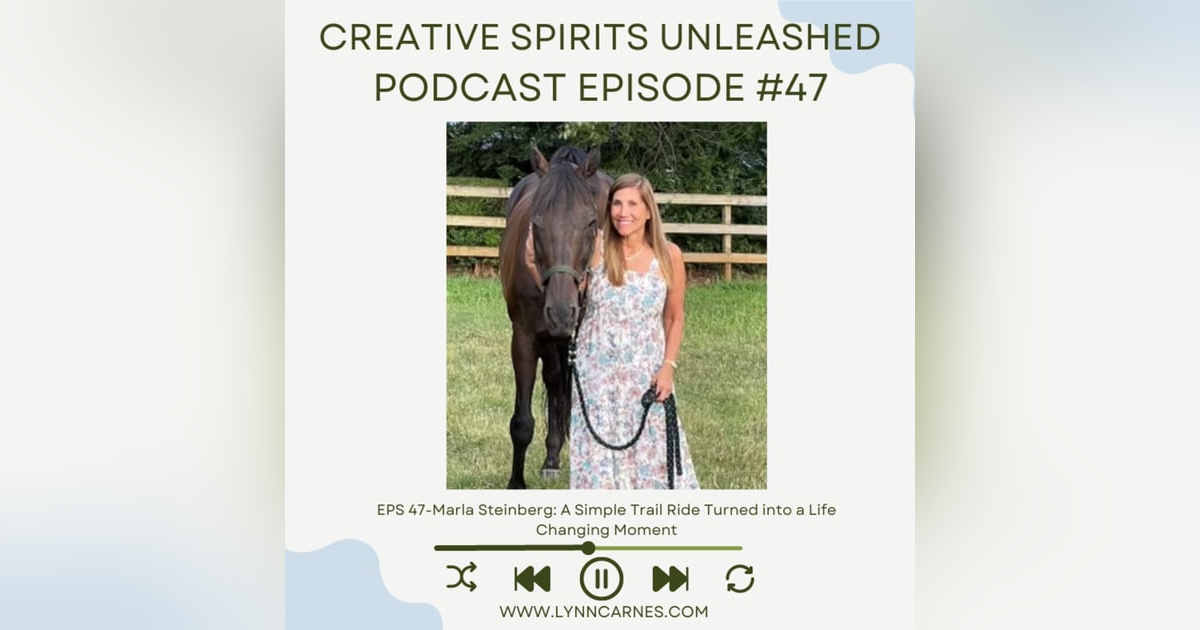


This latest podcast takes a whole new turn for me. Yet it makes complete sense in terms of the Dancing the Tightrope podcast series. Remember that this series falls under the category of “it takes a village.” In my case, the village I needed was made up of the friends, family and trainers who helped me get back on the horse after my fall in 2017.
My guest for this episode is Marla Steinberg, who happily went along with me when I finally decided to ride a horse again – in late 2018. In other words, well over a year after the fall. In this case, I decided to start with an “easy horse” at Cedar Creek Stables here in Lake Lure.
Listen as Marla and I take you through the twists and turns of what appeared to be a simple trail ride on the surface. It turned out to be life changing for Marla and also showed me how well I hid my fear – at least at first – about the whole idea of riding a horse again. I was busted as soon as we walked into the barn.
Marla and I share that story and many more in the episode.
Here’s a little bit about Marla. She’s one of my closest friends. She used to have a house in Lake Lure and we have spent many summers playing together on and around the lake. My first time to meet her involved magnificent, chef-quality food, which I’ve come to understand as her normal. No one puts more love in their food than Marla! She has three grown children who I also count as good friends, as well as her husband Hank, who has never met a stranger.
Podcasts are usually about some kind of business topic; rarely do you get to eavesdrop on two friends reflecting on some shared experiences. However, that’s exactly what you will hear in this episode. I hope you enjoy it!
Outline of Episode
· Marla’s story of how she got into riding. 3:54
· Marla’s experience with her father‘s horse. 8:13
· How Scott never had a bad experience on a horse. 13:56
· Horses are the ultimate uneducated human. 20:05
· The second time we went on the trail. 23:43
· What is a fox hunt? 29:47
· The importance of having a vest. 36:04
· How to deal with the fear of horses. 42:54
· Breathing exercises to make sure your head is clear. 46:46
· Using fear to fix fear -. 50:24
· How to build a horse that can do anything. 56:02
· Develop your mental tools, especially listening, to tune in. 1:01:14
· What happens when you’re nervous. 1:06:41
Intro:
Welcome to Creative spirits unleashed, where we talk about the dilemmas of balancing work and life. And now, here's your host, Lynn Carnes.
Lynn:
Welcome to the creative spirits unleashed Podcast. I'm Lynn Carnes, your host. Today's podcast takes a whole new turn for me. It really makes complete sense though, in terms of the dancing the tightrope podcast series. Remember, this is the series that falls under the category of it takes a village. In my case, the village I needed was made up of the friends, family and trainers who helped me get back on the horse after my Fall in 2017. My guest for this episode is Marla Steinberg, who happily went along with me when I finally decided to ride a horse again in light 2018. In other words, if you're doing the time math well over a year after I fell off the horse, in this case, I decided to start with what I would put in quotes as an easy horse at Cedar Creek stables here in Lake Lure. Now listen as Marla and I take you through the twists and turns of what appeared to be just a simple trail ride on the surface. It turned out to be life changing for Marla, and also showed me how well I had my fear, at least at first, about the whole idea of riding a horse again. Now I was busted as soon as we walked into the barn. So Marla and I share that story. It involves a horse named Ben, and many more stories in this episode. Now, here's a little bit about Marla. She is one of my closest friends. This is what's different. She's not someone who I'm going to share with you a lot of ways to get in touch with her on social media, or follow her somewhere else. This is one of my friends, and she's part of my village that helped me get back on the horse. She used to have a house I'm like Laura, and I can't even tell you how many summers we spent playing together around the lake. Eating food. Her food is Chef quality, it's filled with more love than you could hope to ever have. And she also has three kids who I've grown kids who I also consider my good friends as well. And of course her husband Hank, who met man has never met a stranger. I have learned so much about getting to know new people from watching her husband Hank in action. So, in this case, even though positive podcasts are usually my podcasts anyway, are usually around some kind of business topic. This one is more about to friends reflecting on some shared experiences. So in that way, you're gonna get to be an eavesdropper. So enjoy this episode with Marla Steinberg. Marla, welcome to the podcast.
Marla:
Welcome. I'm really glad to be here.
Lynn:
I know this is this your first podcast is a
Marla:
totally new experience for me.
Lynn:
Well, it's sort of a new experience for me too, because I was thinking, I have it. Like sometimes I know the people I have on the podcast. I know I'm pretty well. They're almost always close to work colleagues, but you and I have never been more colleagues. We're friends. Yeah, that's right brands and horse compadres and so forth. But you're here because it turned out that our journeys around the horse and getting back on the horse have been sort of parallel and for different reasons. Yeah. So for the for the folks that either have well, they weren't you know, we're recording this before the book has been published dancing the tightrope, which they heard about in the introduction, but there's a story in the book when I finally after over a year, after my accident, I decided that if I'm going to get back on the horse, I need to get back on an easy horse.
Marla:
And truthfully, I mean, I knew you that through this whole time. I it was a year and a half I find that really hard to believe. I don't know what I was doing in my life. But yeah, half went by really fast.
Lynn:
Right? Because I had the accident you you immediately did what good friends do is you showed up at the hospital with food and love. And there's nobody I know that does anything better around food and love than you so it's like, Oh, I'm gonna be fine now because I've got I've got Marla's out. But I it was September of 2017, September 16 To be precise. When I fell off the horse and went to the hospital. And you and I went to see two tables and I believe it was December 27 2018. And so, you know for those who are listening in like Laura, if I say Cedar Creek stables you totally know who I'm talking about. If you are listening to this from afar, you know if you've ever been on vacation, and said let's go ride horses. and you're at a place like in the mountain somewhere, they have these great places to go ride horses. Cedar Creek is our version of that. They're really, really awesome. And I'd never been there. So I called Marla and said, Hey, Marla, would you come with me? I think I want to try to ride a horse again. I had been on the Reiner and I'm going to have you know, Trevor Darr helped me with that. And we are going to do a podcast about Trevor as well if we can work with his schedule. But we, so you and I showed up. And what were you thinking that day when I told you like, did you have can you even remember anything other than the same? Talk about,
Marla:
I totally remember everything because my whole horseback riding experience. I started when I was probably I think I was 10 years old. And my parents allowed me I'll never forget, it was like a $5 thing for an all day Saturday. And I got to go to like a camp. And I can't say that any of my friends or no one I knew wanted to go with me. But um, they allow me to do this. And I couldn't sleep the night before. It was the most exciting thing I've ever done. And I waited, you know, once a month was about all like, they allowed me to do. And I had to pack my lunch and I went to and we rode in the morning. And what they did was they divided you up into groups. It was all kids. And then we had lunch and we we wrote in the ring, we took turns writing in the ring in the morning, and then the afternoon. If you're really good, you got to canter and you got to go on a trail ride. So it was like a that was my so even after I was a kid I never really had an opportunity to really ride. I didn't get lessons. And you know, life moves on you. I got married and I just always had a love for it. I thought I did. Yeah. And I had no fear or if we went on a family vacation. First person signed me up. Yep. All family had to go with me. Nobody really got into it except for me. But as I was writing, right, me too. And I thought that I even remember when I first got married before I had kids, they're right down the street from me there was a stable, and I convinced my husband to take lessons with me. And we went once a week and they taught us how to groom the horse and and he I was really happy that he would want to do something with me, in that we had something in common even though he really wasn't into it. He was doing it for me. And the horse stepped on his foot when he was cleaning out I have one day and that was the end of him. So
Lynn:
then didn't know at the end of him doesn't mean he died. It just means it was the end of him wanting it.
Marla:
It was the end of his. Okay, I don't want to ride horses, you know, you get stepped on if you do. Yeah, he was he moved on to other things. And, you know, very soon after I got married anyway, I started having kids and there was really no time and yeah. It wasn't an other than the family vacation things. It wasn't until you said you want to go horseback riding. And I didn't even consider any negativity on your part. Or it didn't really even dawn on me that the reason you were going is to get over a fear. Yeah, I just thought you pay well to go horseback riding. If anyone said that to me. Yes, I do. Of course. I'll go horseback riding with you.
Lynn:
Yep. Thank goodness.
Marla:
I had no there wasn't there was nothing that worried me or I didn't even know I was fulfilling. Help to you. You know to go. I just was like, Sign me up. Of course I'll go.
Lynn:
It's funny because I probably didn't tell you that. Like, I just was like, Okay, I'm gonna go ride ride horses. You know, I said yes. And so I think you picked me up because you'd like to drive like I do. And it was just a matter of who needed the other one more than the other one. So I really needed you to go with me. So you can drive
Marla:
That was because it was on that curvy road. Oh, I know.
Lynn:
And we live in an area where both of us kind of get carsick unless we're in the front seat or driving, especially if the other person, you know, is driving faster. Like, like we all do by ourselves. I mean, I drive like, you know, I drive it pretty high speeds as much as I can. So anyway, we show up. And I remember this, I think maybe even we talked about this on the way over that Jennifer, my daughter had taken my niece in October of 2017. She came into town, and they were looking for fun things to do. And they went to Cedar Creek stables. And I remember Jennifer coming back and shaking her head and going, boy, Mom, I'm really, really glad you didn't go with us. And I really couldn't have because I was still, I was still recovering like my shot. my collarbone was still broken. My rib was still bruised. You know, it was about a month after my accident. So I still couldn't do a lot of things. I had just started driving in October of 2017. But she said, Well, it's lots of hills. And of course, my accident was on a hill. And you have to walk through a creek and across the creek and all that that's the Cedar Creek stables. And she goes, I think it would have scared you to death. Well, so we showed up. And of course, there were no horses where we showed up, there was just Howard and the who's the owner of cedarcreek stables and some folks helping him. And Howard gave us a speech. At the beginning, you remember, he was like, who you're gonna get this horse and so forth. And he said, Marla, you have had doggo land you have been and he was just grinning from ear to ear, like a big twinkle in his eye when he said Ben, like Ben was suddenly
Marla:
was this huge, which we find out,
Lynn:
Oh my gosh. But then he then he went through the thing. And what I didn't also tell you was for the last year, I had been like soaking in what had happened with my accident. I had actually started working with Bruce. You know, I started working with him in March of 2018. So a good nine months before this. And so I've been a little bit around horses, just not on them. But I was the question. I
Marla:
thought you were you worked with Bruce before we
Lynn:
went to that cedar cry did for nine months, but not on?
Marla:
I don't even think I knew any of this. No, I
Lynn:
don't think I was telling you any of this. And I wasn't even trying to really ride yet. I was like circling the edges. But yeah, I was. The big question I was trying to answer. Besides the giant question was, can I ever get over this fear and get back on the horse? The other question was, well, if I'm gonna do that, how do you stop a horse? Like there's got to be, I felt like I had been on a runaway horse. Now I later learned that wasn't true. But I wanted to know how to stop 1000 to 1200 pound animal that might be deciding to run back to the bar. So Howard is there telling us okay to go forward, you kick and cluck to go back, you pull back on the reins to go left you put your left hand out to go right. You put your right hand down. And I was like, say there's the lessons. I have everything I need. And I thought I was good until we get on that little bus that took us down there. And I was I was kind of like, you know, I was a kid too that had two horses like you and I was excited. And then we walked in the barn. So do you remember what happened when we walked in the barn?
Marla:
Well, we saw Ben was big and really big. You were like, I don't I don't want to go get on that horse. Nope. And I was like, I'll be glad to.
Lynn:
I was like, no, no, no. And in fact, I You probably didn't, you know, I do have a tendency to show that I'm calm, cool and collected on the outside. But the inside was screaming. Take me home. Forget this. I've never gotten on that horse. I mean, you have to realize for those of you who know, or sizes, it's he's 18 hands. For those of you who don't know, horse sizes, that's a foot taller than the rest of the horses.
Marla:
And for me, I don't know, because I didn't fall off a horse and I never had a bad experience. And I never saw a bad experience. Yeah, I I didn't think I was not there was not one part of me that thought anything could happen.
Lynn:
Right?
Marla:
So Scott on him. It didn't matter what size horse Yeah, the bigger the better. I mean, it was a horse.
Lynn:
Sure.
Marla:
I don't that was kind of done with me.
Lynn:
Well, it probably now that you know what, you know, which we're gonna get to here in a second. Because, you know, here's the other thing. Y'all aren't seeing us on the podcast. But there's a reason Howard gave me ban. And it's because I'm tall. I have really long legs. And he was putting me on a tall horse because it's it's good to have a bigger horse, you know, for your legs and so forth. Marla is shorter than I am. And so she really looked quite tiny up there on bandwidth we got up there. Did you feel tiny
Marla:
Now, I'm telling you, there's no part of me that even questioned what size this horse was. I was just getting on a horse
Lynn:
just getting on a horse. Right? Yeah. And getting to ride and so right away, I remembered, you know, Jen had told us about,
Marla:
thought I was writing mine. I was just gonna be a passenger. Yeah, it was a ride at Disney World. I'm just sitting there. And I'm looking at the scenery and just going behind the horse. I didn't know I didn't know that. I didn't know I needed to know how to stop. I didn't know I needed to know how to turn. I was just sitting on this
Lynn:
ride at Disney. Well, and you know, I feel like if you've done a lot of trail rides like that, it almost feels like a ride on Disney.
Marla:
Well, that was all I had ever experienced. Really? Yeah. As an as an adult. I didn't Yeah, it was never any, you know, bad. No, no scary moments.
Lynn:
Well, not just not scary moments, but just where you're riding, I used to call them real horses. They're all real horses. But a horse that you actually have to direct that isn't just in a lineup of a bunch of horses. You know that it's following nose to tail up and down the hills.
Marla:
Also my experience every thing you see on TV. People who ride horses, it looks really easy.
Lynn:
Oh, yeah. It's one of those skills is kind of like waterskiing, right. It looks so simple. How hard can it be? Is my question always?
Marla:
No, no, horse skiing is much harder.
Lynn:
So so we we got to it, we you know, we had a lovely ride, there was nothing of any consequence at all, except for the part where the, at the top.
Marla:
One thing that I remember about that, talk to me, I always thought, you know, you hear in the back of your head, you be the boss of the horse. Oh, yeah, you'd be the boss. And two, and they know I remember always hearing they know, who is afraid and who is not afraid. And who knows how to ride. And even though I probably knew I didn't know how to ride, I knew if I tighten my legs real tight, that they would know. I mean business. So I got on that horse and squeezed the entire time. Right? You did not? Oh, yeah. How muscles to do that. I couldn't walk for three days.
Lynn:
No wonder.
Marla:
I didn't know that. I know now, but I didn't know at the time. That he I thought I had to have contact with the horse. The entire net. I'm surprised that horse even allowed me to sit on him. Now that I think back. But yeah, I did not let go not even for one minute. And I knew not to let him eat, you know, yeah. leaves off the side of the trail. And I knew pull him away. And and I have no fear to pull him away. Now I would be interesting. Maybe, but
Lynn:
that's, that's a little bit of a foreshadowing of where this thing went. Because we did the we did that ride. And we did a saddle check. I don't know if you remember that. What I remember up at the top, everybody else's horses would stand still. And the horse Hidalgo that I was on, was not standing still, it wasn't. And it was because I was telegraphing to him that I was absolutely scared to death. And that there was something to be worried about. And I didn't have this lesson yet. But one of the things I eventually came to understand was that the horse does not conclude that the they are the problem with the woman on their back. They don't go well I better stand still. So she's not afraid. Right? Go she's afraid so I should be afraid. That's the logic flow because I'm supposed to be the, you know, I'm the predator on their back and they're the prey and they're the fight flight animal. Mostly flight and they freeze too. So they were
Marla:
my horse must have just given up because I never released any pressure. Yeah, he probably just he just, he just froze. He just froze and just kept on walking, I guess because I never released any pressure.
Lynn:
Wow. You know, think about it. When you if you're if you're one of those horses every single day, maybe once or twice. I think they that's twice as the most they never go out on a day. But every day you get a different writer doing different things that doesn't know what they're doing. Right. And somehow you've got to just manage through somebody's pulling on your mouth somebody Just turning your head somebody squeezing you constantly. Somebody's kicking you constantly.
Marla:
I feel bad for that horse now,
Lynn:
I know well, they I kind of feel bad for all horses that have educated humans with them, you know? Yeah. So you know, me the ultimate uneducated human, we get finished with the ride, and we really enjoyed it. I don't know that I was I was maybe a little bit sore the next day, but I definitely remember having this distinct thought, as we were going through the creek at the end, I looked around and everybody looked like they were fine. I didn't feel fine. I wasn't, I was like, This horse is walking in water. i If I fall off, I'm gonna get wet, I'm probably going to die or hit my head on a rock or you know, because I remember the only two. So since October, I sorry, September of 2017. I had been on one other horse, and I had only let somebody hold the reins. But at that stage, I was like, you get on a horse, and you're coming off the horse. So I was like, I don't want to come off in this creek.
Marla:
I almost I don't even remember. I was kind of thinking you were acting a little wimpy? Yeah, well, I was. I didn't realize you had real legit reasons. Because in my mind, there was nothing scary. even remotely scary that could possibly happen. So I thought you were a little bit with me like, Okay, this is not, you know, we're just who just want a trail ride for God's sake. Yeah,
Lynn:
come on, girl, get your fear.
Marla:
plus sized horse. It's funny how your brain works. But mine was not working that day either.
Lynn:
Well, because I think I would say if we were a miles apart with you saying there was nothing to be afraid of, and me thinking we were everything is to be afraid of, we have probably much more come to the middle over the last four years, wouldn't
Marla:
she say? Oh, you know what? I don't know our journeys have gone in opposite directions still. Because you gotten over your fears. You understand your fields and and you're able to control them. And I have completely gone the opposite direction. I'm scared everything.
Lynn:
Are you serious?
Marla:
I'm so scared. Because I somehow it clicked. Oh, I can get hurt. I can fall off. A horse can get spooked. A horse is a big animal. And they are a living breathing animal that has a mind of its own. And that horse that I was on with you. I did not consider that at all. I did not I didn't even think about it. Now this horse is gonna go just like all the other horses. And nothing's going to happen. It just didn't dawn on me at all. Like it never had now i don't know I'm, I'm much worse because now, I don't I've had a few experience. I've not fallen off. Thank goodness. Yeah, but I've had a few moments where it's like, oh my gosh, is what happened to Lynn gonna happen to me.
Lynn:
Well, you Okay, so let's, we have to explain where you're going. Because people are like, well, you just took one retro ride, but actually, we took two trail rides. And I don't really talk about this in the book deeply. But it was like a week later after I decided to get back on the horse. Really get like, Okay, I'm gonna do this again. And I called you and said, Hey, you want to go ride? You showed up and you loved horses so much. Do you remember that you showed up in New riding gear?
Marla:
Oh, i i Well, at that point. The second time we rode I started taking lessons.
Lynn:
Oh, because that's right. As soon as we did that thing you said I'm gonna go get riding lessons. I can't do ride time in my life. Yeah, I'm a grown ass woman. I can go get lessons now.
Marla:
It's my turn. My kids are grown and I'm I get to do this. And so I went and started taking lessons and they required you to have boots and riding gear and helmets and and I you know, this was different than buying new clothes, fashion clothes that I was guilty of purchasing. a shopaholic I was like I may not arrive and I'm gonna look good doing it.
Lynn:
I know how to go find the right clothes.
Marla:
I I've definitely changed my tune as to what kind of things I shop for these days. I
Lynn:
know I do. Recall that there's a there's a store near as called for warm house tech store that became my favorite new your new favorite store? Exactly. Actually, I'm, as we speak, I'm writing. I'm wearing jeans because I don't write English you write English, you want to take English lessons, but I'm wearing writing jeans I got from farmhouse tech school or store as we speak. So, all right, so
Marla:
tell me, I had already gone and taken a few lessons. Yeah. When we got back together me, what's funny is when you wanted me to go on that trail ride again. Mentally, I had kind of moved on to a different kind of riding. Yeah, where you're taking a lesson in that, you know, they're telling you what to do. And you're on a real horse, and you're using skills. Whereas when I was going with you, it was like, this is this is what I used to think was writing. Yeah, now I've graduated to real writing. I graduated to real writing. And here we are, I was going along. You want to go again? Okay, I'll go again. I didn't have the same enthusiasm as I did that first time.
Lynn:
No. And actually remember, you said, why don't you come take lessons with me? Yes. And I said, not on that little bitty tiny cell. I think I'm gonna need something a little bit bigger. If you think I'm taking lessons and you were taking English lessons. So I was like, hell no.
Marla:
Well, I I remember, so I didn't start take it was like I forgot maybe it was about a year that I took lessons at that one bar. Yeah. Yeah. Before. I mean, I was I was, I was taking a lot of lessons.
Lynn:
You had been taking a lot. Remember, I came to your barn and I don't talk about this much in the book. But I did eventually. Come take lessons with you. The first lesson was January 1 2019. And that was my that was? That was in middle springs. Yeah. My first ever English lesson. I think it was my first except for No, because when I wrote Darryl xhorse Scotty I was on an endurance saddle. So I think it was my first time ever in an English saddle. I had not started taking riding lessons with Bruce yet or riding lessons with land.
Marla:
I thought oh, you weren't taking riding lessons with Bruce. But when beginning
Lynn:
we yachting lessons until much later. Yeah. At the beginning, we were doing his corporate leadership around. I see. Okay. Yeah, so I had not been on a horse didn't even conceive of getting on any of his horses.
Marla:
One of the things I also did was when I first started taking lessons there was I was introduced to an online video class. And one of the instructors on that held a camp, like a retreat for a whole week in Costa Rica. And I went signed up, it took me like a year in advance. And I remember even they had three levels of experience. And I was like, Well, if I if I'm doing it a year in advance, and I'm going to take lessons for a year, won't I be intermediate by them? And they the the girl who was registering me said, No, I think I think you need to be in the beginner group. And I was like, oh, okay, I thought I was gonna be bored because I wouldn't be in the Oh, I was in the bottom of the beginner group when I got
Lynn:
you know, that idea of needing to get ahead. You know, I throw pottery you've seen a lot of you. You have a lot of my pottery. I remember years ago being in Colorado, at a place where they were making a lot of handmade pottery, big, big place. It was kind of famous and they were showing us through the window, we could see somebody throwing a vessel and it was probably about 10 or 12 inches tall. And they were saying she's been working on that. She she's been throwing for like a couple of years to be able to do that every day. And I was looking at it going back cannot take that long. And when I got my wheel I was like I'm going to be throwing stuff like that in no time. Well, I've been at it for 10 years and I'm still struggling to get things that tall. Writing and throwing pottery and waterskiing at a high level and fill in the blank. Whatever somebody's trying to do at a high level. They are all harder than they look
Marla:
when I first started I did have visions of I was going to be a fox hunter. I was gonna take my horse To everywhere he wanted to go. I was going to meet friends and go to parks and trail riding and I was, I was gonna be in horse shows. And yeah, I was gonna be in the Grand Prix. Yeah. Well, I quickly learned that that was not quite going to happen. Well, I left in my life to fit
Lynn:
to be ready for that. Well, so you have to describe because you know better than I do. I've actually never been anywhere near a fox hunt. So what is fox hunting?
Marla:
So, I have to say that I've never actually seen a real Fox hunt either. I did go on a mock one that did not have they have you have to call them hounds their dogs, but
Lynn:
yeah, the hounds.
Marla:
This particular mock hunt. I had a horse I did at this point, I had my own horse. And I told my trainer, I said, I'm gonna go and I paid someone to haul my horse to the, to the hunt. And I had my horse. I mean, everyone was around, and I truly thought it was going to be just like the trail ride that you and I went on, I had no fear. I didn't know. I had been on this horse for about three or four months. And he was very calm to me and in the ring. And when I was taking a lesson, soon as he got there, and I got on him as soon as he got there, and saw all those other horses, the anxiety that my horse was feeling, he was kind of moving around and kind of wanting to go in circles. And he started shaking his head up and down. And I'm like, oh, something's wrong with my horse. And I kept asking, like, people, I didn't know anyone there went by myself. Oh, excuse me. Excuse me. Do you see something? Did I put his bridle on wrong? Why? Why is he acted like this? And they said, Oh, don't worry about it. No one seemed to care. Don't worry about it. Just go and I'm like, Okay, and so then I started getting really nervous. Yeah, started to go and it pretty much you just follow just kind of like a trail ride. But um, my horse wanted to go faster. And
Lynn:
yeah, cuz, doesn't foxhunting involve instead of walking, you're usually trotting or running. They have
Marla:
different levels, like you can, you can walk the whole way. And I was in the, in the group that was going to just walk. And okay, and the leader of its would say, is everybody ready to try? And okay, you know, we're like, okay, and my horse did try, you know, along with the rest of them. But then, um, and he did stop when I wanted to stop. But I think he must have gotten into some bugs or mosquitoes or I don't know, something bees, maybe something was grabbing us. And he kept on taking his his legs and scratching his belly. And that whole movement underneath. Oh, my gosh, felt like he was going to either tumble over with me on them, or, I don't know. I was like, oh, when she said, Are y'all ready to try it? I said, No, I'm not I need help. And they finally there was a girl there who was a trainer, and she said that my horse obviously could feel my tension. And that to just loosen the reins, and, and he and once I did that, we survived. I was not anxious to try it again. But we survived. And I'm and I went home and I was like, Oh my gosh, I I can't even believe I thought I could do that.
Lynn:
But I mean, that's pretty advanced.
Marla:
It was so advanced. And I don't know why. That's what I'm saying. When you don't have fear. You're too stupid to realize. Oh, that's so funny to happen to you.
Lynn:
Well, you know, okay, so let me just pause to say this because what you did was actually got you got a little bit more sane, you know about your fear, because if you had not continued to have fear, I think you could have ended up having a very bad outcome at some point.
Marla:
I think I could have done exactly what happened to you. You had no fear when you went out and fell off
Lynn:
that horse. Yeah, well, I mean, how to ride I thought I knew how to ride and once we were in a situation, I didn't know what to do with it. That's when the fear showed up. Because it's like, wait a minute, I have tried everything I know to do. And everything I know to do is not working. And in fact, things are getting worse. So what do I do now?
Marla:
I me. Like, lately, if I get into real trouble, I just get off. Yeah. And they keep telling me that's not quite what you should be doing
Lynn:
that sends a message to the horse, right? It's like, oh, well, if I start doing whatever I got you, oh, get off, right, because that's getting off as a reward as we both have learned as we've gone through our horse trading journeys. But what you did with the fox hunt, you know, because that's a trail ride, that where you're actually in control of your own horse, as opposed to being in a lineup, where really the leader of the of the thing is in control, and the people in the back are in control of the horses in between don't have much responsibility, they really are designed to just go along. They don't always I've written enough now to know they don't always, but they
Marla:
know that horses really care about their environment. And when you take them on a trailer to a new situation with horses, they don't know, a field they've never seen. They don't know what you're asking them to do something new. They're not just taking my word for it that it was going to be okay. And I didn't know
Lynn:
that. Yep. So So let me ask you a question. Was it. Had you gotten the vest by then or did you get it later? Because that's one of our great fear. Okay,
Marla:
I had not gotten the vest yet. But you
Lynn:
had I think you had friends that do foxhunting that had a vest that kept coming off their horse while galloping across the countryside.
Marla:
They didn't I don't, the best thing is a relatively new common thing. Okay, but honors, you showed me know what they're doing? Yeah. Otherwise, they wouldn't be out there like, unlike me, right. And they don't, a lot of them wouldn't wear a vest because it looks like it doesn't look good with their outfit. Because foxhunting is all about, you know, how they look and they're very prim and proper. And, okay, I mean,
Lynn:
you somewhat but so my point being somewhere in there, you found out from somebody, that there's this kind of vest, it's like an airbag for your neck and your chest. Yes. And it became like, you got yours. And then I got mine soon after, like, an essential piece of equipment, not because, like, I don't ever get on a horse, that I think I'm coming off of anymore. Me, me either. But it is always possible because as I got into this journey, and started taking lessons, you know, my land who was my, you know, horse trainer locally here for a couple of years, had had two pretty bad accidents on her horses, and she's a very accomplished rider, because the horse fell. Right? And you can't control that, you know, you know, amount of good ridership is going to keep you from getting hurt when something like that happens. And I just, you know, have to say in the horseback riding world, the truth is shit happens. And if the risk is if I look at risks, or two lenses, the probability of something happening and the magnitude of something happening.
Marla:
Well, the only person I had really known to have a bad accident was Christopher Reeves. And yeah, in my mind, he was jumping around and he he was doing things that I wouldn't ever consider doing. So how could I ever fall off? I'm not sure that stuff,
Lynn:
right? Because he was doing cross country where you're out in the field jumping over jumps.
Marla:
It's actually Fox, honey. Super, exactly.
Lynn:
Thank you is super advanced, so forth. But you know, when I looked at the air best and thought, okay, probability of something happening, I'm going to make sure it's low, but the magnitude is really high. Like, people are breaking their necks.
Marla:
Nervous now
Lynn:
was when we were there best. But you know, it, there's a lot of ways that you can get really injured, you know, coming off of a horse, especially if you're not skilled, even just in that. So I feel like one of the things I did immediately was say, okay, I can just give myself a little relaxation if I were that best. And I was really grateful that you found that
Marla:
I always felt that way. I wear it because my husband has made me promise that if I'm going to continue in this sport, you better write it. Well, you know what a day pass but I don't feel any comfort by wearing it. I have yet to have relaxed enough that Oh, well. What's the worst that could happen? The best going to I just I have to not fall off. which is, you know, I need to get over that myself.
Lynn:
Well, I mean, but so so we will, we will acknowledge right now, as we started this thing, you're in the middle of reading my book, but you haven't read it yet. And you actually haven't done the inside scenes of my journey like,
Marla:
I don't I haven't done the work on myself. Yeah, I've done the work to learn the mechanics of writing
Lynn:
of writing. And by the way,
Marla:
maybe more so than you like,
Lynn:
you're way ahead of me on what I would call the skills track.
Marla:
The Mac, yes, I was learning from the beginning. How to do it exactly. Right. Yes. Which is taking is gonna take me the rest of my life to figure that out.
Lynn:
That's right. And in my book, what I'm describing, and again, this is gonna come out probably before people have had a chance to read the book. But I'm describing two tracks, there's a skills track and a pressure track. And the the idea of the pressure track is that everybody has a point at which the pressure is too great for them to do whatever skills they have, be it walking, imagine trying to walk on a beam above the Earth, I mean, I can almost assure you anybody in earshot listening to this, if I said to you, go walk a straight line for 100 feet, and keep it within 12 inches. So just walk a 12 inch imaginary path on the ground, I would bet you that if you have the skill of walking, you can do that without fear. But if I said now do the exact same thing, but on a beam 100 feet in the air, very few people would have the ability to do that. Because the pressure is so great. The pressure and it's not the beam itself, because we've already seen you can walk on the beam on the ground. It's the pressure created by the height of the beam. Right. And that's been the work I did that was the work I didn't know existed when I started doing this because I've uh, I've been working on getting over fears. I've been working on self awareness. In my coaching journey, I've been teaching people to do things to a certain place. What I have not understood was this pressure track. Like we kind of all know it because we've seen who hasn't seen an athlete meltdown under pressure. We've all seen that. Right? We see it actually in the corporate world every day. But it never dawned on me that you could actually exercise and, and create mental tools that are the same, you know, as trainable as physical skills of how to ride. And so I feel like my track has been more on the pressure track. So witnessed what happened that day in June, when I was with you, and it was the one time I didn't have a vest on. And I got on a horse. And he decided to start trying to buck me off.
Marla:
So I don't know what I I don't know how you even got on that,
Lynn:
or how that happened, how I stayed with it. Have
Marla:
that even happened. But I do have that fear of that happening to me now. And I've never had that fear I've created. I also think that sometimes you put things out in the universe and it can happen.
Lynn:
Well, I 100% agree.
Marla:
Universite like one of my friends says, you know, if you're scared to ride, maybe I looked at some somebody pulling a cart
Lynn:
driving a horse driving. Yeah.
Marla:
And I thought, well, if I give up horseback riding, you know, that would be a safe thing for me to do. I can learn how to manipulate the horse and drive a horse. And they said, Oh, no, that is really that can be very dangerous. The most dangerous. Yeah. What do you mean? It could be? Yeah, the horse could Tabo you know, could take off, run into traffic, you know, you. There's all kinds of things that could happen. I was like, Oh, no. Well, like the very next day. My trainer was getting ready to go for a little buggy ride. And I was like, when he said, you want to go with me? I was like, Sure. And then I thought to myself, have you ever had an accident? You know, I've never seen anything. And he goes, Oh, yeah. Make sure you go off the side or he gave me a little instruction. And the whole time we were riding. I'm like, what wonder what could happen? And next day, oh, something spooked the horse. And he went off the track and I was like, Oh my God. I could have gotten hurt. Yeah, I think I just put it out there. And we did not get hurt, thankfully, but it made me realize, I don't know their stuff can happen. And then why Once I said, I wanted to learn how to launch a horse in a round pen, and a friend of I said, Can you show me how to do it to a friend? And so I asked her, I said, What? Aren't you afraid? You know, the horse doesn't have. She was doing it without a lunge line. The horse was just
Lynn:
free. That's that's how we do it with Bruce. Yep. And I was like, aren't you friend? Like,
Marla:
what if the horse comes at you? You're in a small, that's a big horse. And she says to me, oh, no, that never happens. That that just will not happen.
Lynn:
Okay, well keep reading my book, then all they did. They just,
Marla:
she's telling the horse to go around. And then she asked the horse to change direction. So when the horse changed direction, it came straight at me. Yes, full speed ahead. And I'm like, I mean, I was shocked. And he was just as shocked to see me in a place. He didn't think I would be as I was to have him running at me. And it wouldn't have been his fault. But I felt like I had put it out there. That what if that happens? And yeah, could happen.
Lynn:
All right. So what you're talking about is that principle in the book about the picture. And, you know, I talked to Bruce taught me the word to use picture, I didn't even understand it. But then when I had Warwick Schiller, who's a fairly well known horse trainer on my podcast, I asked him this very thing. I said, Can horses read my mind? Meaning Can I get the can if I have a picture of disaster or good things, right. But the picture he says, Oh, absolutely.
Marla:
i That sounds like kind of craziness, craziness. But I won. Now. I 100% believe it. And I, it's hard. I mean, I think sometimes when I before I go ride, I really do those breathing exercises to make sure my head is clear. So I don't don't do that.
Lynn:
I mean, we didn't talk about this that much. I don't think that the date has happened. And I'll just give a little background. Marla and I were down at the arena with She has since we've started this journey. By the way, she's had two three horses, she has a third horse now. He's very well suited to her. It is actually connected in near where another woman offers trail rides with what I would absolutely call real horses. These are not nags, these are good horses. And she's really good. All really good horses. In fact, at least one of them at one point. Yeah. And she says she said, Let me go get and she named the horse and I'll bring him over. And Lynn that way y'all aren't sharing one horse to ride. So I went over to help her saddle the horse up. And we had to we were talking about him and his his nature and so forth. And I didn't expect to be riding. You know, that time I came over to work with you. But I didn't keep bringing my vest. So I said, can I borrow a helmet. And when I got on, I just did something just to see if I if he would like, you know, have if he if I could put a little bend in his body just asking for a little bit of a right turn. And I didn't know I was hitting what we later learned was a sore rib. And, I mean, I get you know, if you think about it, if you've ever had anything sore on your body, and or Amin, amin, almost like you're gonna open skin, you can touch your skin and not feel it. But if it's sore and you touch it, it feels like somebody's just hurting you. So I touched him pretty lightly. But boy, he reacted as if I had just stabbed him in the side. And he started spinning and bucking. And so what I had to do was was picture a standing still. And what I wanted to do was picture my brain was offering me the opportunity to picture not standing still to like, I call it Lynn on screen one in my book, like there was a part of me still that was like, oh shit, but the other part of me was like, Okay, we have to calm down. So I started breathing even as we're bucking. I mean, he was and he started, we were out in an open area and he kept like working his way to where we were going into this area next to a fence and other things to hit on. And I was seeing polls and a fence to get hit and so forth. And all I could do was just keep picturing calm, we're gonna stand we're gonna stand I kind of in a way wrote it out but in a way that was not oh shit because I think if I had done what I did on my accident, which was get all clutching and grippy and you know, freaked out we would have had another one of those outcomes. But and it was a good I you know, I know I wrote at least eight seconds. I would say this went on for a good 10 to 15 seconds. And then he calmed down and and Karen's eyes were biggest saucers. This is the woman that has the stuff and she said, well done. You You did exactly the right thing, but oh my god, what happened and then I walked him around with her for a while. So I didn't get off right after that, because she didn't want to train him. But back to the picture, Marla, what I was saying is, I actually because of all the training I've done, I was able to put that picture in my mind of we're going to stand like I had to think about what did I want the picture to be, as opposed to what I didn't want. Because if I started picturing me on the ground, that's what would have manifested. And I know that sounds crazy, but just try like playing tennis and saying to yourself, I'm going to hit the ball away from the opponent, you'll hit it to the opponent every time, you have to say, I'm going to hit the ball to that corner over there. You know, our brains, they call our attention, fight
Marla:
the kid and you know, as a school teacher, you do tend to pick to it, the same person raises their hand, and you even though you don't want to call on that exact person, every time
Lynn:
you end up doing that, right, that's what you did is if you were a teacher at one point, and you kind of go to the thing, that your brain like, if you're not careful, your brain just follows your attention. It's just that's a principle brain
Marla:
follows your intention. That's exactly so you actually
Lynn:
the discipline is learning to create a clear and impeccable picture of what you do want, not what you don't want. Another example, if you want to test it for anybody that has a dog, is just go in and find a word that your dog likes, like ball or squirrel or something like that, and say, there's no squirrel and watch your dog go, where's the squirrel? Where's the squirrel? Where's the squirrel? Because they don't understand the know, and neither does your brain. So not fall off is not what your brain hears fall off is what your brain hears. Right. So, you know, that's, that's the work. And, you know, it's not been easy. And I had to do it with a lot of different people. And but I want one of the reasons I'm doing these podcasts to share with people the stories, but also, just to say to you how grateful I am to you for helping me out with that first ride. I don't know what I would have done, I probably would have ended up going over there. But sort of feeling like even though we were on parallel journey, sort of and sometimes together. And sometimes I didn't even know I was helping you that much. But you have helped me for the last five years. And you know, you've been on this journey. And it's given us something to kind of as friends even though we're not doing it in the same way. We've done it together. And I'm appreciative of that.
Marla:
Well, I'm in I'm trying to learn from your path. Because I almost think I need your path just as much as I need the path that I'm on because I mean, I'm at a stopping point. You know, there's Yeah, if if your fears, control, you know, if I'm not going to get out there and ride today, because I'm afraid then it's a losing battle here. I need to I need to work on the things that you've been working on as well.
Lynn:
You know, what's interesting, I use a line in the book about we, the thing we try to do to get away from fear is use fear to fix fear. And the problem is fear has a way of expanding on itself. So like, some I could argue that putting the vest on is a way of using fear to fix fear. Okay, I've got the best, I'm fine. But I'm actually the way I'm using the vest is No, I just don't want to break something. If I come off, I'm not coming. I'm not getting on if I feel like I'm going to come off. And the thing I've tried to do is put I think of it as putting fear behind me, which means I do think there is a place. I think you're foolish to get on a horse and not think you can come off. I think you're foolish to think that horses can't be dangerous. Any more than you're foolish to think your car can be dangerous. Right? We all know people who've died in car accidents. But we still get in the car anyway. Because we've learned to manage those fears. We've learned to have courage. And there's a chapter in my book called COURAGING. And it talks about the work and what I found so magical about Bruce's work is he didn't take a path that said okay, pressures bad, so have no pressure. We're going to take care of you make sure you have no pressure. And I'm in the horse world. What that looks like is okay, this happened to me at the barn when I leased the horses last year. They were like, oh, there's a plastic bag over there. Don't go out until you can't get the plastic bag. It might scare the horse. And I'm thinking you should have seen these horses when the drone flew over. I mean, they were fine because they had been encouraged. Right, right. It's like Bruce it Bruce's view is don't don't set the environment up to make sure nothing ever happens. because you can't, it's it's a pipe dream. I just cry. Don't we all. But but the other side of that is there's another side that says, well, let's just scare the bejesus out of the horse until he's desensitized to everything. And the problem with that is a horse's brain a lot like our human brain will shut down. And that doesn't mean they're not scared, it means they go inside and endure. But you never know, when you're going to get that thing that's going to cause them to blow up because they've reached the level of their endurance. They can't endure anymore. So Bruce's view is we're going to add at this is what I mean by dancing the tightrope. It's a blend of both, which is we're going to show the horse that he can handle anything by helping him build his mental tools. And if there's a message of my book, it is that you can handle anything as long as you build your mental tools. But you've got to understand consciously what they are.
Marla:
One One way that I was trying to build like my horse, he's, he's a great horse. And I really don't think he's a fabulous horse. He'll, he's, he's got to do anything. But going on these trail rides, where I met that are hilly and Rocky. And I know he's he's really has not had that experience himself that much. Instead of me riding, I had Karen ride. Yeah. And I watched her. And I wrote one of her horses that I know, tried and true and has been on these trails. So here I am on on the trail on the tried and true horse, and she's riding my horse in the front. And my horse is doing grim because I don't know what I'm sure it's because she's a great rider. But yeah, I know, horses come and my horse and I was on gets bit by a swarm of bees. And, you know, canter down here with me go whoa, you know. And my reaction to it, you know, I wish I would have had your experience.
Lynn:
Well, I
Marla:
mean, yeah. And I'm like, on the horse that I think never, you know, this is never
Lynn:
gonna do anything. 50 horse. But see, that's exactly the point. And that's why I think Bruce's work is so important. And it's that, and I think all of us need to be doing this work is we live in a pressure filled environment. We never know when those bees are going to come to us, no matter how steady we are.
Marla:
I'm so tensed up even having this conversation, you're
Lynn:
tensing up thinking about it? Yes. Well, the the whole point of this, and you know what, I actually am really glad you actually haven't done this work. And we're having this conversation. Because if you So here's what's going to happen when people read my book, they're gonna go live when you are pretty dang slow and dense. Because I it took me four years to write this book. Because it took me three years to figure out what the hell we were doing. I was so resistant. And so rushing, like I wanted to get on the horse, I wanted to learn how to stop a horse. I didn't understand we were trying to help me get over fears other than it's like, yes, Bruce, if you can teach me to get the horse to do what I want him to do, and stop when I want him to stop, then everything will be fine. And I won't be afraid anymore. That is that's where I'm at. But
Marla:
you know what to do, it's a matter of there's no way to do it without and rock it out.
Lynn:
Right? Because there's so much more in the unseen. And I'll give you you know, I know we were gonna wrap up here shortly but in a I'll give you an example that's not horse related. And it really showed me the unseen why I'm in an aeroplane for that was it. So here's what happened. You know, I'm taking flying lessons. Now IERS out of me at first even with all the work I've done, and I learned to fly when I was in my late 20s And here I am in my early 60s doing it again. But what I was noticing is I was carrying so much tension that we take off and by the time we took off and kind of leveled off and start to do the lesson I'm looking over at are going Excuse me, but I think I have to go to the gym for flying because I am really tired. And one day she actually like was going to show me a maneuver and I was this is fairly early on. And the plane just felt unsettled like you know when you saw your Karen ride your horse did he not look more settled to you? Oh yeah, then and that's exactly what I was thinking is well okay, good rider gets on a horse hits settles the horse down. But you know, this is an airplane it doesn't have a brain. So this whatever I'm feeling is the way it is because of air and bumps and whatever. So she says here it's my plan. And then we very deliberately say I've got the controls what she said. And I dropped the controls, and I got relaxed, which is lovely. And it was driving smoothly, the plane immediately settled down. And I said, Wait a minute, what just happened. And she said, I am making smaller corrections than you do. Because we're always making corrections both in altitude and direction in an airplane. And so every time the plane would get a little air bump, and they were there, my over and under corrections, which is the proof point of Bruce's tyrant mindset in the book, my over and under corrections, were actually making things worse, she was correcting, but she was letting the plane tell her how much to correct. She didn't have an oh shit moment in the middle of the correct in other words,
Marla:
I do it when Karen was doing the same thing on my horse, it just Yes,
Lynn:
it looks smooth, smoother, because she was letting the horse tell her what to do when to do how to do as you do with an airplane, as you'd like one of the keys of this journey verse calls it four missing pieces, the the four missing pieces, that's the fourth one, which is you let the situation tell you what to do, when to do how to do. And backing up to that. The third piece is you develop your mental tools, especially listening so that you can do that so that you are actually able to tune in. And then the piece before that is recognizing that the inner feeling that we have inside which he calls the negative positive pole, like a car battery has a little surge of electricity, to recognize that that little surge of electricity is not telling you something's that you are making a mistake, but that you need to pay attention to something. So it's a tuning fork, not a battering ram. And then the first missing piece backing all the way up is but recognize that you've been doing it one way your whole life. So you have a lot of muscle memory that says do it this way. Do you know whatever your oshit moments look like. And I'm sorry, y'all if I if you don't like that word, I don't know a better way to use it. Because when you're on the back of a horse, you say, oh shit. Sometimes I even use the F word. But I'm not saying that right now. But your muscle memory will take you down the old path if you haven't retrained yourself. So those four missing pieces are what helped me get out of those fears. And now have I mean, as you've been with me, on at least a couple of them. But I've had a lot of experiences that were worse in my accident on horseback and sailed right through them because my mental tools had been raised up thanks to the work to be above that level of pressure. Not that they're raised infinitely because there's there's a level of pressure where I still drop off. But it's getting higher every day, because I work on it. So that's the book. I mean, for people who are listening, going, I want to learn this. That's the book. I
Marla:
every time I talk to you, this is a great opportunity. I feel like I'm getting a counseling session.
Lynn:
That's cool. Well, Marlon,
Marla:
it's so awesome. Well, I needed counseling.
Lynn:
You know, I think you probably know this, but I still go down to Bruce every month, I was there Wednesday. And I still find some new level like there's he knows kind of where my pressure threshold is. And so he will set up a situation to raise the pressure threshold higher than than where I was before. So I have an opportunity to work on my tools. And like this last week, he likes to not tell me about the horse. All he told me was, this is only our third day of working with this horse. So you're I had day one and two, you're gonna get day three. And she's got a lot she needs a lot of work. And so my job was to go get the horse out of the field, get the fly sheet off of her and by the way for if you're listening and going okay, well what's the big deal about taking a flash sheet off of a horse? Well, for a horse you hit first have to get the horse to stand still. And in this case, he said I want you to take it off over her head. She has to be okay with a giant piece of cloth going over her eyes while we're standing in the field. You know, and then he said and put her on the trailer holler at me if you need anything. This was only my second time in my entire life to trailer a horse. And he wasn't there to help so it was my first time to trailer without anybody. They're there to help and I said Does she know how to get on the trailer and he goes we'll find out. Marla wish I could see Marla's face She's over there go.
Marla:
I know my my pressure is like
Lynn:
ah so So what So let me do it.
Marla:
I just couldn't do but let's not there yet. I can I can do my horse because someone told me you're working right on. And then I'm like, well, somebody watched me when you just to make sure I'm doing this correct. Then I have what you got.
Lynn:
That's the pole so so that feeling that you were getting while I was doing that that rising tension my paws off a lot. Yes. And and the thing about the beautiful thing is he teaches you to lower and balance your poll before you move to the next step. And so, again, we were, you know, we're not gonna go in right now to a full teaching session. But for all of you who are listening, if you're negative poll was going up, just recognize that's not a bad thing, it is one of your greatest tools. But you can't if you actually have to recalibrate it, because here's the secret, we were talking about the unseen world. Horses raise each other's poles up all the time. If you watch them in the field, a horse will first give like a stink eye look, if they want a horse to move away, and then they kind of, and before that, they probably sent a little bit of negative poll energy to the other horse, then they give a stink eye, then they pin their ears, then they do snaky head. And if that doesn't work, they bite, but they haven't been communicating, yes, or kick, communicating with unsane pressure of energy that whole time. And that's what our negative poll does to them. So we can actually use it to raise that to say, I want you to try it. Like with Bruce. I've watched people work with horses in the round pen, where it doesn't look like they did anything. And all of a sudden, the horse goes through a walk to a trot. It's like, Wait, what did you do? Like, what hand move? Did you make? Did you have something in your hand or whatever? And they're saying no, the first thing I did was, it's the energy like if you're about to stand up, if somebody wants to know how you raise your energy up, if you're sitting there right now, just imagine I'm about to stand up, and you have to raise your energy to stand up. But it also happens when you're nervous. Like I was just describing that if y'all could have seen her face, she would have said, Oh, her negative pole as a 10. So that's the kind of work we're doing continuing Mark Marlowe, because I love working with him. And I love what it's doing for me. Because now that I'm flying airplanes, I need even a an even higher pressure threshold.
Marla:
Well, now that I'm living closer to where Bruce is, maybe I'll start signing myself up.
Lynn:
Well, I can make that happen. And he'd be delighted to. He'd be like, he will be delighted to show you where your pressure threshold is. Right here, yeah. But he'll also help you move it because he was talking about mine we did we recorded a podcast. So I don't exactly know the orders of these. But for those of you listening, if you want to hear Bruce talk about all this, he and I have already recorded that podcast, we did it Wednesday. And he was describing me and he said, Yeah, you got out of the car and seemed very self assured and very self confident. And he goes, but I realized I he said I knew I hadn't met you till I saw you in the round pen with the horse. And that's when we had the meltdown. which describe I described the meltdown in my book.
Marla:
So when we first started this journey, I didn't have any pressure. I didn't even know I had one in that crazy. And now it's all consuming and I need to work on I'm in the opposite. Now. I'm not going to you know, I don't even think I'd go on that trail ride without realizing that. Hey, don't be stupid. Some good really happened.
Lynn:
Well, okay, so you. Yes, but you have just described some people have asked me why did you call it dancing the tightrope? Because on one side of the tightrope around fear, you didn't have any because you didn't know better? I didn't know any better. And on the other side of the tightrope, now that you know better you're paralyzed. You're actually paralyzed. That's probably a pretty
Marla:
I'm getting there. I'm getting there. On the other side.
Lynn:
You're so on one side, you have no fear on the other side. You're too fearful somewhere on the tightrope. I need to meet in the middle, you have fear that's accurate. I once heard LAIRD HAMILTON is a great surfer. Okay, if anybody's ever heard of him, there was a book written about him. It's called rogues freaks and Giants. And it's about big wave surfing. And I saw an interview with him. And he was talking about big wave surfing. And he said, Let me tell you something about fear. You better have fear when you're going out on the ocean. Because when you go out on the ocean, it doesn't care if you know how to swim. It doesn't care. If you fall and get beaten underneath on the on the coral reefs underneath. You better know what you're doing when you go out on the ocean because Nature doesn't care, nature's nature. And what Bruce has explained to me about horses is they are nature. Right? Trying is nature we are we are using the principles of nature to fly an airplane or horses nature. So it's not that you shouldn't have fear. You just need to build yourself up your mental tools to be where the fear can guide you not not take over.
Marla:
So it's taken us five years to get to where we're at now. And now I see how much further I gotta keep working. You Got it. But
Lynn:
what a gift what a gift because what growth you've had, and what more growth there is, and see what I love about this. It's infinite possibilities.
Marla:
I'm excited. I'm excited. That Southie Look what just happened. I'm excited about it.
Lynn:
I really awesome. That's amazing. Well, this is this is this conversation took some turns, I really didn't expect, but that's the way it works. And I cannot thank you enough for doing it with me. Well,
Marla:
I can't thank you enough.
Lynn:
I mean, and by the way, remember at the beginning, let's just say this out loud. For people that are listening. You said you were going to be a little nervous, and you were just a rockstar. So on that let yourself realize we just had a conversation. And you actually like we're able to use your words and not freak out and all that kind of good stuff. That's true, my down. Oh, that you did that. Because that's part of the part of the raising of your pressure threshold is understanding and giving yourself the reward when you did get it. Yeah, I can relax. Okay, okay. There you go. We so everybody who's listening to this, we're going to end by taking a deep breath, because it's a great way to relax, and we will see you on the next podcast. Thanks for listening, everybody. Thank you for listening to the creative spirits unleashed podcast. I started this podcast because I was having these great conversations and I wanted to share them with others. I'm always learning in these conversations, and I wanted to share that kind of learning with you. Now what I need to hear from you is what you want more of and what you want less of. I really want these podcasts to be a value for the listeners. Also, if you happen to know someone who you think might love them, please share the podcast and of course subscribe and rate it on the different apps that you're using, because that's how others will find it. Now, I hope you go and do something very fun today.


