#36 Nahshon Cook on Harmony, Balance, the Power of Breath and Vulnerability
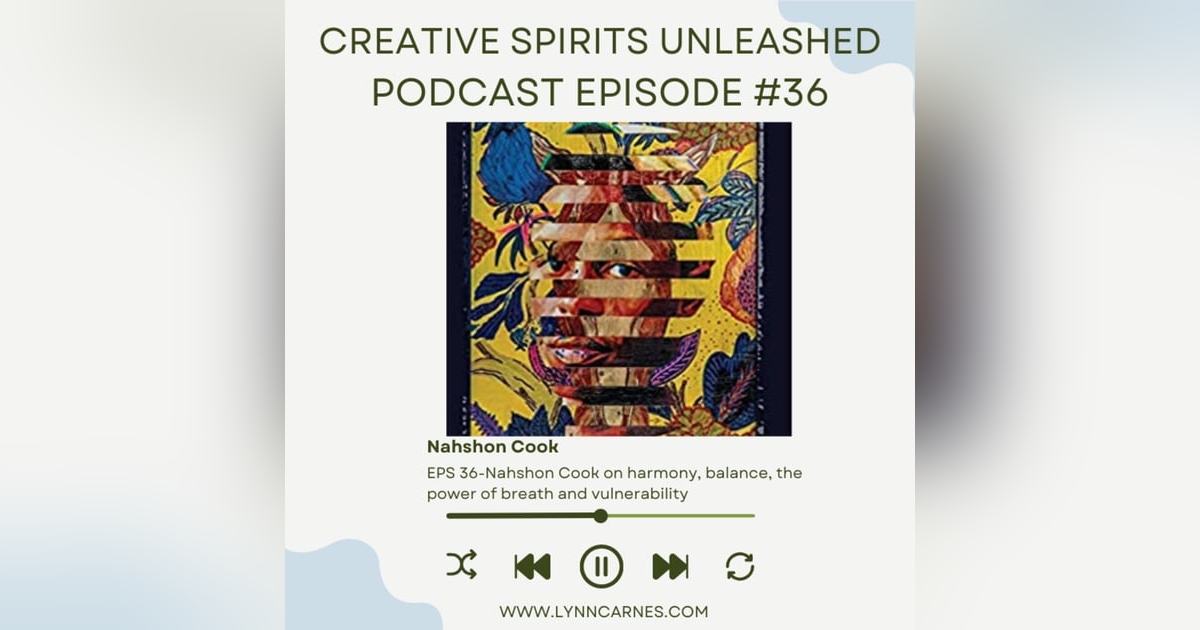


My guest for this week’s podcast is Nahshon Cook. We spoke last year in a very memorable conversation. Over the last twelve months, much has changed. He is now an author. His book is titled Being With Horses, and it was my most gifted book over the last year. He has also begun teaching intensives at his barn for horses and their people. As word of his gifts has spread, he is riding the wave of being more well known, which gives him an opportunity to personally grow in ways serve his horses and clients at an even higher level.
Nahshon’s book is a series of essays and poems and this conversation has that same feeling to it. I intentionally gave him a lot of space to riff on many topics, which created a necklace full of pearls of wisdom. I will listen and relisten to this conversation, because I learn something new every time.
Topics:
- Nahshon’s Book: Being with Horses: Meditation
- The breath helps us find the courage to own our own suffering
- Breath can be a bridge to helping us heal and be free of our trauma
- Trauma is the residue of the hurt that happened to you that you hold on to
- The only thing beyond freedom is equality
- There is nothing as powerful as a changed mind
- Mistakes: We can’t get to where we are going unless we learn how to get there
- We are all doing the best that we can do, but sometimes the best we can do at a moment may not be good enough for where we need to be, and we have to walk away.
- It’s not what we ask others to do, it’s what they THINK we are going to ask them to do.
- Awareness can be a powerful tool
- How easy it is to be disconnected from the natural world from the modern world
- Creating space in ourselves is important for connection.
- Disconnecting from breath is creating survival mode
- You can only give to someone else what you give to yourself
- Greatest hurts come from own expectations
- Relaxation can’t be forced. Telling someone to relax doesn’t make them relaxed. Them finding a place of relaxation is the real answer.
- What are the steps to relaxing?
- You can’t relax until you surrender and surrendering is vulnerability
- Having the courage to change course
- Fighting right and wrong, someone has to lose and if we don’t fight that war, no one has to lose.
- We are running out of time
- The radical ideas of giving a horse a voice
- How do we get this timeless construct in a construct of time? Presence
Additional Links
Being with Horses: By Nahshon Cook
Intro:
Welcome to Creative spirits unleashed, where we talk about the dilemmas of balancing work and life. And now, here's your host, Lynn Carnes.
Lynn:
Welcome to the creative spirit unleashed Podcast. I'm Lynn Carnes your host. My guest this week is Nahshon Cook. Nahshon is a horse person. And you may remember that we spoke last year in a very, very memorable conversation. Over the last 12 months since we last spoke, a lot has changed for him. He's now an author, and his book is titled being with horses. It's got the coolest cover you've ever seen on it. And it was my most gifted book for the last year over the last year. He's begun also teaching intensives at his barn for horses and their people. And he's making a shift from being sort of a dressage trainer to a helper of horses as their and their people as he describes it. As word of his gifts with horses has spread, he's kind of riding a wave of being more well known, which it's giving him an opportunity to personally grow in ways that you will hear about in this conversation. And it's ways that serve his horses, his clients and himself at a higher level. This book of his is a series of essays and poems, and you'll see in this conversation, it kind of has that same feeling. I intentionally gave him a lot of space here to just riff on many topics, because I have learned that he will just sort of create a lot of pearls of wisdom and this conversation, it's a necklace full of pearls of wisdom. I know I myself will listen to it and re listen to it over and over again, because I learned something new every time and I hope you will to enjoy this conversation with Nahshon Cook. Nahshon, Welcome to the podcast.
Nahshon:
Thank you. I'm so glad we're doing this. So I have to tell you how I started. Before you got on. I always meditate. Before I start a podcast, sometimes I meditate for a minute, sometimes for 10 minutes. This time, I've been looking at your book being with horses. And item number two in your book is a meditation that starts with one you're safe to this lesson is not a performance three, there's no judgment. And then it goes for several pages as you are talking to somebody on a horse, I think and having them unlock their body and watch what happens to the horse's body. As I just sat here in front of my computer and went through that, as a meditation for myself breathing into the different places, I felt my body and I'm talking tighten, loosen up, I didn't have worse. So I would love to hear about how those kind of meditations and essays came to you and was that from a real life lesson Tell me about a lot of them, a lot of them are in that in that session are in that collection. A lot of them are lessons a lot of them but also there's some of them that are just me sitting down in my room are the breath is magical because it gives us a tool by which we were able to find the courage to see the role that we're playing in our own suffering. It helps us it's a it's a bridge. It's a bridge that connects us to freedom if we want it so that we can heal and you begin to realize that that either the either the trauma that you're holding is free to be able to continue to hold you or you free yourself from it either way the freedom of one begins where the freedom of the other ends the freedom of the trauma ends where the freedom of the observation of the role that you're playing in your own suffering begins and that's how healing happens. How do you define trauma trauma is the residue of a hurt that happened to you that you hold on to doesn't have to be a big heart does it? Oh well is tightly defined her that's it? Yeah, that's a subject that's a subjective thing right like But I think our ability to be traumatized is always built off of a point of reference. Right? Like it's built off of a, it's built off of a trip of a point of reference. Like, emotionally, at least, we're taught, we're taught what hurts emotionally, and then is there if we're taught what hurts emotionally Is there a choice in what we choose to be hurt by? I think that people do that to the best of their ability, and that there are a lot of things that contains that contribute to trauma, people's ability to control their emotions, determines how and how deeply they traumatize the loved ones in their life, you know, societal stressors, socio economic stress, you know, stressors, they're all of these things, you know, how they were parented as a child, you know, if they feel like they are worthy, human beings that are, you know, I think the only thing beyond freedom is equality. You know, like, if the freedom one begins, where the freedom of another ends and freedom for everybody isn't possible, only equality is possible. That's really, but you look at it, it's the federal construct, right? Pull yourself up by your bootstraps like that, that signifies that you have shoes, some people don't have shoes. And so there's all of these things. But within within that, though, also lay the ability to choose on if you stay in the place where you don't want to be, and how, and how really, there's nothing as powerful as it changed mine. That leads me to something that I've seen a lot. And boy, we are diving in fast for people listening to this. And this is our second pod test test together. So that that helps. But one of the things I've noticed in our societal pressures, is the lack of forgiveness for people who have changed, and the lack of space we give for people to say I was wrong. I'm not saying you do that. But I see that oh, well, I think I you know, I think that we're all struggling. I think that that's Tracy Chapman. I love Tracy Chapman. She has a song that is called V and V not afraid. And it goes, I believe, in this day. And accidents. And that's the purpose of lie V. chaos and confusion. But man's rule of law and daughter will not stand unless you be and be not afraid to reach for Hey, everyone. This is the doozy she goes and I think may think that I know the true needs. But my mind soon brings me Oh, unable to see that I'm no closer to the yesterday. If tomorrow I can stay and be and be not afraid to reach for Hey, Evan. And so with that, like you begin to think of what are the you know, are the mistakes. a means to an end. If the mistakes are a means to an end. I think that I think that that's where Mercy comes in. Because we begin to understand that like we can't get to where we're going unless we learn how to get there. If they're an end in and of themselves, then it's super easy to judge You can only judge as far as you have no empathy. Yeah. So so if I, if I mean at, you know, in the process of learning to live, you know what I'm saying? I mean, it's understanding that it's also understanding that people's ability to draw those conclusions. Whatever those conclusions may be, are oftentimes the best that they can do. Which is why we have to continue to recognize that we're all doing the best we can do, so that we can be better together. Yeah, and understanding that, but it's also understanding that sometimes the best someone can do isn't good enough for you, and you have to walk away. I had this conversation with somebody the other day, it was in context of a job. But she said, what if the best I can do isn't good enough for what they want? And I said, there's a place that there's good enough for, for what they want somewhere else, and you don't want to live in this. Because you'll never ever be happy. Yeah, and I and I think, like I said, I think that and I think that I think that mistakes are really the cause of suffering. But like I said earlier, before we started recording, like, it's in suffering, that the mysteries of life revealed themselves in the form of understanding, which is always the next step in growth. Growth, say a little bit about growth, especially before we hit record, you and I, what we're speaking about our respective growth journeys over the last year, we spoke about a year ago. Yeah. How have you grown in this last year? Lord have mercy. How have I grown? Well, you've grown because the Lord had mercy. Let's start with that. And then there's more. I I've also grown, because the ways in which I can face my own fears, so that I can go and help people in the way in which people want me to help have made themselves available. So like, I was able to invite folks to my farm last year, for these intensives, which really helped me really get through a lot of my social anxiety issues. Because people can be quite scary. And I think that anybody who's followed my work up till now can can conclude that I'm quite a sensitive person. I'm not a wimp. But I am I am Ramat by the way follow Rama, I do. Take notice of how things make my heart feel. And that's really, really important information for me. Because when when I don't do that, that's when situations traumatize me. When I try to, when I try to when when I hold the hurt, that happens to me, when I hold it, hold that hurt inside, that usually happens because I try not to feel it. And so I feel it. So that it it so that it can move out of my system and go on its way and live the rest of its destiny. Because that is, you know, you're talking about trauma that we hold on to. And I'll give you my thoughts on on it to me, you can't let go of trauma without feeling the emotion. And in a way somebody asked me, I asked him if they process something the other day, he goes, What do you mean, process it and I didn't have a good way to describe it, other than let it move through you. But it's a little bit like eating a Big Mac and not letting it digest. And you Nobody wants a Big Mac sitting on their stomach. You know, you can go on through. Yeah, and I think that and I think that, let's see here. Let's see if I can find it. Because, you know, like I said, I you know, I don't I don't really understand I really don't understand life. Until and I don't know that I'm through with think until the language the language has has shown up. Um, but, you know, I think you know, I mean, the challenging thing about emotions, and I wrote about it in an essay that I'm working on right now. And it says how emotions can make you believe then disbelief then Become an enemy of what you once believed, you know, and how there has to be all of those spaces in there, it has to be room for all of those things to be felt and experienced in process so that helpful outcomes can be have a chance to live. I mean, and this is where I think my work with my horses comes in a lot like all of my horses, the place and where I am in my life with my experience with mine is I have ones who have had horrible lives before. And, and how, when they first came here, their behaviors weren't because of what I was asking them. They were they were because of what they thought I was going to ask them, you know, and so they had to have they had. And so that emotional response was like, Yeah, you know, like, I want to believe that he's not going to hurt me. But I'm, I'm going to disbelieve it because he's a person and every person so far has hurt me. And so then that means that if he's a person, like every person out every other person who's hurt me, then now he's the enemy that I have to protect myself from. That's not a reflection on me. No, you know what I'm saying. And I think that and I think that they're like, my horses, especially say, my mare Mohawk who just came in so angry and so upset and would try to kill other horses, you know, I just had to give her space, I had to give her space, I had to get her body strong. And once her body got healthy, I gave her I gave her time off and just left her alone. And, and I didn't start working with her again until she came up and said she wanted to start working again. So when you say giving a horse space, I'm going to get very practical, does that mean they get to be in turnout? You don't try to hand feed them. You don't walk up and try to do ground. Oh, I love for sure. But we don't work. We don't work. We just spend time together. The time together as the work. I cleaning their stalls, and they you know, because the thing about horses is is that routine predictability makes them feel safe. Like they have to know. Yeah, you know, I mean, and it's like how discipline how much discipline you must have to be able to hold space for aimlessness, right? How much like a meditation practice how much discipline you must have to sit down, and just be able to observe what your mind is pulling up and create space for your mind to just do what it does, until it stops doing what it does. Because it knows that it's safe in your care. And so you know, then I'll be starts racing around that's, you know, that's like a horse. That's like a horse resisting, right? And what is resistance, if not protection, the busyness of the mind, the busyness of the mind is the protection from the silence. You know what I'm saying? Because we're so we're so we're so we're so trained to be doing stuff that it's scary when we're not doing stuff. And so, you know, the the mind going nuts, out of a fear of not doing is it protecting itself from from, from you, from you being you know what I'm saying? And it's a pressure you put on yourself, and you don't even realize it's you putting it on yourself. Right? And that's the and I think that that's the brilliance of it. Because then you're able to observe, you're able to sit down and observe yourself and it's then amazing how much you can change by just observation. Awareness is in and of itself a pretty powerful mental tool, just to be able to watch. Yeah, I mean, to allow yourself to be the observer and to and to be able to move your remove yourself out of the emotional process, that living is sometimes and just experience life. And the more you experience life, the more you you really become aware how, how how you then become an are a part of nature again. The Living part pulls us away from us being able to experience that we are in in our part of the earth. I have had a lot of experience on that this year, as I've deepened in my horse journey and come to realize, you know just how disconnected from the modern world from the natural world, I was through the modern world, you know, distractions of the devices is one thing and the social media, you know, but just I've thought a lot about just what we've done to solve problems that have keep us from being our natural selves. So electricity. Well, and I think we want that for, you know, that takes me away from from nature, because it keeps me up at night when I be going to bed. Well, yeah, I think I think, I think it's really important. Like, I'm not like, I'm not feeling disdain at modernity. But I am saying that there is care that must be taken, so that we don't get lost in chasing what doesn't really exist. And how we forget that sometimes the answers that we need, and we go searching for, like our mind, and its addiction to doing come when we just sit down and follow our breath, and how, when we follow our breath, we are able to connect to ourselves. And we free ourselves from that addiction to our minds fear of doing and in that way, we were able to connect to other people their space. And I think that that's the thing about it, like, there's there's something can't be in a place that there's no space for it to be inside. Say, say that, again, something can't be inside of something, that there's no space for it to be inside of. Ah, you know, so. So you're saying that the breath, breath creates the space, you know, it quiets the mind, and quiets the mind. So that and it freeze the body. So that like. I think that what I'm saying is that the more and more you look around, the more and more you see people disconnected from their breath, because they're in survival mode. Even unconsciously, even if they have everything that they need, they're afraid of not having everything that they need. I've seen in in the cultures, I'm working with a lot of unconscious survival mode there, yeah, flight or freeze. The message of you're never enough, you don't have enough you're going to be homeless is pervasive. And that causes people to operate in fear. And indeed, they don't breathe, you can see and you look and you look out and you see how that is then carried over to some of those people who have horses in their horse practice. I have to protect myself from falling. This is why I must sit well. Great. I have to I have to I have to force my horse to be soft so that I am in control. Isn't that an oxymoron? Where is it? Where is the where will will will know the softness? Is softness from submission and not understanding. So there is softness, but it's not coming from? It's not coming from understanding it's coming from it's coming from from fear of retaliation. Right? If I don't do this all by? Yeah, well, that will that will be worse than this as opposed to retraining our and so many horses are trained out of that. What we're running from in life I've witnessed that in many barns, and it's unconscious, I don't think Yeah, and it's not a judge. It's not a judgment, right. It's just saying like, this is where we are and like, if if horses can if horses can change each other's behavior by the flick of an ear across the field like they sure they sure can feel what all of the life that you bring game. Yeah, I've spent some time watching horses out in the field at the barn where I have my two and watching the dynamics between my two and it's amazing because there's almost it's an it's just, it is it's all energy. It's absolutely, it's absolutely incredible. It's absolutely incredible. How many answers I have gotten in training for training challenges or rehab issues that have come from just spending time with the horses and watching how they move in the field. I mean, not just turning them out, but spending time with them. And I think that that's the thing like, when we're naked of our egos, then we're truly able to be with horses. And we trust, we trust and we trust that they have the answers that we need to answer the questions that we have of them. And how in doing that, then we begin to learn how to hold those, that we begin to learn how like, if we observe, we have the questions that we need for ourselves, you know, and we have, we have the answers that we need for the questions that we ask ourselves. I learned that throwing pottery. I was sitting at the wheel one night, and there's a leading Potter in the area that I wanted to ask a question of, and didn't have hadn't called him. And I couldn't call him at this time. And I did something that I've come to know as a wisdom visit now because I got very quiet. And I said, What if he was here? What would he tell me? It was almost like I called him in to sit on my show. Yeah, yeah. And I've since now learned, perhaps even the client was talking to me, but I was trying to solve a problem with bringing up the cylinder. And the answer broke open in that moment with nobody but me in the room, asking the question and asking to be show. It's never just us. Oh, there's that. I mean, I mean, really, and I think that the more the more I live, and the more you have the courage to not hide from yourself, the more of yourself you see in everybody. And even like, then you're you deal, even with conflict with another person, you deal with it with such care. You know, because love isn't only the answer when things are easy. And you can only extend what you can only give what you you can only give to somebody else which you give to yourself and to somebody yesterday, you know, I mean, it's true. It's not true. It's the truth. You know, I mean, even you know, yeah, it's like the truth. You know, what's true opposes what opposes the truth in many different ways. Like, yeah, it's true that, like, it's true, that people are different. But the truth is that we're really not. There's, it's true that we have all of these things that separate us and keep us from each other. But the truth is that like, you know, the war for you, the War for Peace is fought by people fighting for freedom, and safety, you know, with them own selves. You know what I'm saying? I do. I mean, when you look at how then this is acted out, and and the perpetrator of the pain. They're not, they're not free of inflicting pain. And they will do it on others, even though it's really about what's going on inside of themselves. A hand can even give you a shake or punch you it's the same hand. Yeah, can you can heal the hurt you? One of the things that you just said earlier about, you know, you're sensitive, but you're not a Well, I think it's where this comes in. Because I think you have also shown in our conversations, I've seen you be able to show boundaries for somebody that says no, you're not going to punish me. Yeah. Yeah. I don't think that you know, compassion. Compassion doesn't mean you allow yourself to be abused. You know, abuse is a is a product of control. And control is a product of ownership. And how can you really how can you really love what you own? How can your love for a thing, allow it only to express itself in the ways that are convenient for you? Right, and I think that that's where boundaries come from. It says, Hey, like what you did does not feel good. Please don't do that. Again. It doesn't mean that like you, you make yourself so imposing that you you make it you make yourself unapproachable. It's just saying that hey, like, I don't know where this came from, but like this didn't feel good, and please stop And if you can't stop then like, I, you know, like, it's kind of like with some clients, right? Like, if they're not safe for me, I don't, I have to let them go. And I let people know, like, you know, like, if I don't feel like I can help you, I'm not gonna act like I can help you. Yeah, you know, that's bad karma, right? Like, I'm not gonna take your, I'm not going to take your money, just because just because you think I can help you, if I don't feel like I can help you, and I'm not being effective, then I don't want I want you to find somebody else they can I have the same deal with my clients. You know, I mean, like, and like, that's, I mean, I'm like, that's the thing. It's like, like, I don't I don't do that to people. Because I don't want people to do that, to me. I don't want to be able to not sleep at night for not being honest with not being honest with the limits of my help. I'm really good at a lot of things. But I'm not trying to be good at everything. Right? And that, that keeps you away from the ego, because it's ego that says I should be able to help them no matter what. And like I said, you know, like the greatest, my greatest hurts always come from my own expectations. You know, like it does. And the thing is, is that even if I do have the skill set to help, does the horse want help? It does the person really want help. Like, if I'm saying like, you know, like, you want to ride this horse who's been through eight trainers in the last five years, like, I don't think the best thing to do right now is to ride them. This horse doesn't trust anybody. There's a reason why this horse has had so many owners. And, and the reason that this horse has had so many owners is because it wasn't ready to answer the questions that they were asking. And they didn't hear it. And they didn't give it the time. But because they're pretty. Right. And you want to be seen, like you like what is this? Who is this for? I mean, and I think that that's the thing is that I've grown so much like, I was talking to my mom about this this morning. Like, you know, there were things I was taught as a kid that I wish I wasn't taught as a kid. You know what I'm saying? And was it her? By the way? It was? Oh, no, she told I mean, as far as I mean, as far as training courses. Yeah, there were things that I was taught as a kid writing that that like, just don't make any logical sense to me. But could you give me a for instance, since I'm in this game of trying to figure out Yeah. Yeah, it's, it's, it's it, like one of the things is the importance of allowing the horse to build their top line before you ask for contact with the rain, you know, like how you have to let their body stretch over and lift the back and create the muscles that will support you and your seat, before you ask them to be in a frame in which they have to. In which they have to carry their head in a certain way and take more weight behind. And like that takes time. You know, it takes time. And like when you have horses, who when you have horses that have been through a lot of people nine times out of 10 They haven't had a correct start. And so you have to go through the process of not only trying to get them to use their bodies correctly, but you have to get them to the point to where they trust you enough to hear what you're asking them to do. And like and like how sometimes those the answered the answer doesn't come by asking the question in the way in which we have been taught to ask them, you know, how we've been taught to ask it like, you know, it's not in it's not in draw rains. And it's not in it's I mean, it's an IT thing is is that like you can't force anything to relax. Relaxation is a letting go. Right? It's being comfortable with there being something that's bigger than you and it's not gonna hurt you. You know what I'm saying? Oh, yes, and and I I've experienced that directly when I'm admonished to relax, but unless I can find a place of relaxation, telling me to relax doesn't make me relax. In fact, it's like show me how show me how to do that because you're asking you're throwing me into the ocean. Without a life this Show me short. How do I do that? When you know, because you tell people to relax and nine times out of 10, like you said, they get more tense, their stomach gets pulled in their diaphragm goes up their ears, they're out, their shoulders come up to their ears, and then they're really really bouncy as well, then I'm doing it wrong. That's right. That's right. And then it's like, relax, relax, relax. What, what the hell does that mean?
Lynn:
It means you're doing.
Nahshon:
And I think that and I think that that's the thing. Like, that's the thing like, what are the steps to know? What are the steps to know that I have gotten to where I'm where you want me to be, instead of staying stuck in the place that I am. What is the first step to relaxing through ease for me, like the first step of relaxing is just letting your belly out? Right, you just you just let your belly out. You know, you let your belly out. And you breathe as deep down, you breathe as deep down into your body as you can. But you don't force the breath there. You don't, you don't force the breath any further than it can go. And like the further down into the into the belly that you have people breathe off times, the harder it is because unconsciously they've been holding their stomach in so tight, that the muscles are tight. Mm hmm. You know, I mean, and then there's I mean, and so then, you know, with the stomach being pulled in, then the butt cheeks clench, right? And because the butt cheeks aren't relaxed, and it's impossible to sit and not bounce. That's right. And it's impossible to follow. Right, like, and I think that that's the thing is like, like, you can't relax unless you can surrender. You can't really go vulnerable unless you can surrender. And it is that vulnerability, and children habit. And the only way the only reason that children have it is because a lot of them don't have experience. And you know, they haven't lived long enough to be afraid. Right? And I don't have all that memory of holding over the years. That's what I'm saying. They haven't lived long enough to be afraid. Yeah. So they're little rubber muscles, you know, you look at kids and I ran out. So I just got off the ski slope. And, you know, I didn't start snow skiing until I was close to 30. So I have all the fear and all the height. Little kids that are close down, they just like little bumblebees, they just like roll in and come right back. And I think that we can obviously get back there physically, but we can get back there mentally and emotionally by exploring the reasons that we are truly afraid. And really going into those spaces and saying like, where did where did I learn this? And why is it valuable? And who taught me because they taught me out of their own fear. Well, it was interesting, because you said that about your mother having the conversation. That's why I asked if it was things she taught you because Oh, I do want. My mommy taught me to dream. And to understand that if I have the dream, it's because God gave it to me. And if God gave it to me, I can realize it. Yeah, yeah, Tom taught that. Well, that's what that's what my mom taught me. And I remember talking to her one time when I was in Thailand, feeding the horses, the the little bananas that I gave him his treats in the morning. And I said, I'm just so thankful that You encouraged me to trust life enough to know that there was a life to be lived. And that like and to have the courage to change course when I realized that I had made the wrong turn. So I ended up in Thailand because graduate school wasn't the right thing for me at that time. And, and and I came home, when but you have to learn how to you have to learn how to trust the signs. You have to you have to learn how to trust how to trust the omens. How have you learned to trust the signs and how did the signs show up for you? Oh, well, I think that like I come from a long line of people who, um, like, who are led through life by dreams. Like some of the biggest decisions that my mom has made in her life that she has shared with me has come from dreams. A lot of a lot of the I mean, like major life decisions, a lot of the work that I have with horses that have not been able to be helped by other people. I asked them, I'm able to ask them in a dream, and they'll, and it'll show up. And sometimes, sometimes it'll take a whole year to work through that process from that one dream. You know, but as long as I, as long as I follow, as long as I follow that feeling that I woke up with, and as long as that feeling is there, then I know that I'm on the right track, that does take some trust. Because your mind can come in and say, That's just nonsense. Yeah. And the thing is, is that I'm, I'm not afraid of not being right. I'm not afraid of my limitations. I'm, I'm not afraid to try and move beyond my limitations. That's something about course correcting. And that's how you can not be afraid to not be right, because you've got to be able to course correct. Listen, no, right and wrong is war. Somebody has to lose. I'm not fighting myself, like I said earlier, like, you know, if the fight for free, you know, the fight for freedom is, is people fighting them own selves, like, that's all work is, I've got to go conquer X, Y, and Z, that person is you. And you're acting it out on somebody else. And what causes a lot of death and mayhem is somebody does that to themselves, or somebody else do that to them? So indeed. You know, I mean, I mean, and and so yeah, it can be for people it can be, they can see it as a lot of nonsense. But, you know, the fact of the matter is, is that there have been horses that have come that nobody able that nobody else has been able to help that I have. You know, because and I'm not saying that My way is the only right way. I'm saying that there needs to be many ways. All the rivers lead to the ocean, if they haven't been dammed up. And this is this is the gift that you were given was what way you have? Yeah, and the thing is, is that and the thing is, is that like, I know, when I've reached my limitation, and when I and when I, when I reach that space, like I try to have other people that I can refer them to. And then there but then there are also moments where like, they're just really difficult horses, maybe behaviorally that I'm that like I can work with, but that I just that just aren't healthy for me to keep working. Because the thing is, is that thank you seeing that like, hey, like, and it's not because I can't do it, it's because like, is this person willing to change so that this problem doesn't prop up again? If not, then it's not fair to fix the horses problem and the person created again, that happens a lot more than most people realize. Cost. And the thing is, is that people do it in romantic relationships. People do it, people do it in business relationship, like, there are certain people who attract a certain type of person that isn't healthy for them. And until they change that part about themselves, like that type of person will keep showing up. It's the same person in a different body. It happens it it's the same thing that happens with marriages that happen over and over again, it is a wake up call like that seven years into my second marriage, because oh my gosh, I'm married a different man. And I have the same marriage the same denominator. That's right. I mean, and the thing is, is like when you see when you see yourself, you see your life. When you see yourself, you see your life. And if it's not one that doesn't work, then you learn. You either accept it for what it is, and you keep going. Or you learn how to change so that you can feel better about where you're at. Because the thing is, is that we're running out of time. Like it's so precious. So yeah. Are you saying each of us individually because of our lifespan on earth or Utah? Yeah, more than the global time? Wow. Well, I you know, I think that it can mean both really, you know, I think that there's a lot of things that are telling us that we need to pay greater attention to how we spend our time. Like and how and the repercussions of how we spend our time. Nothing is ever without consequence. I focused on that a lot because you and I are in a different age bracket. I am 63 And I kind of look at 80 is the bogey. You know, I want a really great life ad and maybe I'll live to 100. And I might not make it till it, but at the average if when my parents passed, so, fair, fair number, that's 70 more years. So I treat every minute as special. And, you know, I've buried cousins, who didn't make it to 30. Right? I've carried, I've carried their caskets. Um, there is no guarantee that I get 17 Is there. And, and so what, what have we done with what we've got. So you know, is the most valuable resource we have. And if we are intelligent, we learn how to use it as a tool. Time to give your horse off to be happy, is just as healing as focused rehab work, it's just it rehabilitates them just as much sometimes to not have the pressure of being asked to do something that they really don't understand. Because this is what I've really, really learned in bringing in is nine times out of 10. Horses who are happy in their in themselves, they they are oftentimes a lot less prone to injury, their life lot. There, it does make sense. And it's like what you know, lameness isn't just a physical thing, like, why are they feet? What Why does this keep happening? How are they feeling? Do you have the courage? Do you have the courage to try and even hear what questions they have and where they come from? And why they're asking them move you? Like, how would it feel if you spent all this money on a horse that isn't happy doing the job? It was bred to do? I have seen that. And it's so wonderful when you see the horse go from I wasn't bred to do this. But I would love to do that. Because they do seem to want a job they do like helping us. Well, I don't know, I don't know if it's even about health. I think it's about relationship. But I think that I think but you don't you can't have you know, like, can you truly have a relationship with something that you can't co create with? Instead of just no relationship? That's right. That's not a relationship. That's ownership. That's where, unless you live there, this is a radical idea, but letting the horse have a voice? And I don't know, I don't I don't really know what's so radical. That's like, I mean, that's like letting children have a voice. But that's, you know, in a lot of cultures, that's radical. And I will say, you know, I wrote a book called The delicate art say no, to unleash your performance. And I tell a lot of stories in that book of working with people at in corporate environments where they say no, was not allowed. And what I often said to my clients, when they come to me and say, we've just say yes to everything, is I said, then you you actually aren't they say we can't say no to anything. And then when I say is yes, and then what I say is, and then that means you're not saying yes to anything? Yeah, that's abuse. It is abuse. And it's normalized as just the way it is. Yeah, you know, that that just got made my shoulders really tight. And, because I know how many people live in that every day, and it's normal, I lived in it for years. And it would be alive to say that it didn't have it some value now, wouldn't it? Because people stay there because it gives them something that they want. There's a there's a you know, but but it but then we go we go again, like, you know, the freedom of one ends where the freedom of the other begins. Freedom isn't the last step. Freedom is not the last step. The quality is so what would it mean? You know, I mean, it used to be radical that black people had a voice he used to be radical that black people were considered people. I can't even imagine that. But but but the thing is, it was by law, three fifths of a person, three fifths of a person is like really, you know, I that was radical. And so when you see that, why would it be so radical when we have a history of people who could heal and help and talk to animals? When we had it when there's a history of cultures that learned from the earth I mean, you know, it's not a radical idea to them. It's not a radical idea that the earth is intelligent. No. But it's radical idea for those who want power over the people, and they don't want them learning on their own. Yeah. And and so we say that like I think that's the difference between education and indoctrination. Now listen to this has been a soapbox I've been on for a while now because Seth Godin put out a piece called what is school for, and he made it very clear that our, I'm going to put quotes on this education system was designed to create obedient people that would lock themselves for eight hours out of nature and in a factory to create whatever the powers that be wanted to be created in that factory. It was trading for obedience, not training, for true love. And we look at and we look at how we look at how that looks in the horse in our world with our horses. I see it too. And how, like, sometimes the answer, sometimes the answer, and letting the horse relax, is taking the bridle off and putting a neck rope around their neck and just moving around that way they find it which would make sense for a horse who has anxiety and travel around the rain in the hands in the bit, no matter how soft you are, like, they're gonna be afraid of what's coming because where they're at is being held hostage. And is by it's being held hostage by where they've been. It's it's was stunning to me when I took on one of the horses and she had been riding him bit less but but with a bridle I wasn't comfortable with and so she said, you know, he's good with this one bit. And he wasn't. And so I got a different style of bitless bridle and he is magnificent. Well, I mean, we look at we look at what the bit represents, right, represent numbers for a lot of horses, the bit represents power to represent subjugation. Yeah, that little piece of metal. Yeah, it represents it represents it, you know, it's, you know, I mean, there's all of this romantic stuff that's written, you know, I mean, and it's just like, and it's just like, like, and what is written may be true, but it's not, it's not always true in the experience that I'm having right now. You know, what is written isn't true for this horse, how it should be, is not what I'm facing here in my arena. And the fear then becomes, then we start working out of protection. And then we oh, we have to, we have to, we have to not allow horses to resist? What are they protecting themselves from? Right. And like, these are all really, really important questions to ask, if somebody is fighting you, what, what are they protecting themselves from? You know, if somebody is trying to hurt you, and you don't know them, why do you represent danger? It's not you. It's a personal, also. But yes, so he and even by not taking it personal, in personally and getting emotionally involved, you also don't have to stay in that situation to teach them. That's not your responsibility, either. That's a brilliant thing to remember as well. Because a lot of times we do feel like, you know, I got caught look at you calling and I'm not gonna I'm not gonna I'm not gonna be your efforts are not going to be your effort in you trying to heal yourself without me giving myself permission to choose to be here in that situation or not. Not my role. And do people over horses, right? Do I think that everybody is here for the betterment of each other? Yes, but there are some people that are some people who choose not to do that, and I can't make them do that. No. And I can't any more than you can make them relax, and I can't be and I can't be the one who I can't be the one who always tries to convince them of that, like, you know, like, that's inner work that people have to do. You know, that's inner work that people have to do. I'm around my horses the way that I'm around my horses because we both feel good with each other. We feel we all feel good with each other. I can if that's not there, we don't do it. But it's taken in some cases, three years. To find that space, My Little Pony, literally my little gray pony Yoda like he was he was super traumatized when he came here like he would not let you around his his hindquarters. And like now, just last week, he begun, he'll be here a year in April, he began, he's begun to just stand with his hind into the door so that when I walk in and open his stall door, I can scratch his butt. And you know that it's just and that that it doesn't seem like a lot, but when you see that, like, this little pony came in dribbling urine, because he was so afraid. Wow. And he came in here a year ago, dribbling urine, down my sump down my cement walkway in my stall. And, you know, I just gently massage his kidneys. And, and when he got here, and he and he just he just peed and Pete and Pete and Pete and Pete and Pete and Pete, and he had come in for training, and it just it I just knew that. I just knew that it wasn't, it wouldn't be a healthy thing for him to go back. So I bought him. Wow. When he was 17 years old, you know, he was he was trying to he was trained to be a cart pony, and then was left in some big field, Montana before he came here. And it was just it was just a tragic story. But he felt like an alien who found a place to land. Hmm. And like he had a very night when I talked to the person who had him before. She said that the night before I called to see if she would sell him to me. She had a dream, where he was in this, they were in this blue energy bubble. And there was this something that came up and just split it in half. And like that's when she knew that he wasn't hers anymore. Now, that's some dream interpretation right there. I mean, and you just you just have to you just and then the next day, I called to see if I could buy him. And and you called without knowing about her dream. Yeah, she called she told me when she could told me about it when I called her. Wow. So you kind of both got the message at the same time? Yeah, he wasn't leaving. Yeah, he was, uh, he was clear today. I asked him, I said, Hey, do you want to be mine? Do you want to stay here? And he sat up and stretched his neck and yarn and yarn and yarn and yarn. And then he looked into it and lowered his head and closed his eyes and just chilled out, man. That's pretty clear. Yeah, I mean, so the thing is, is that I mean, the thing is, is that like, yeah, they do have a voice, but like, it is not what we think it should be, which is why we don't hear it. If you don't know how to hear it, you know, if you don't have any awareness of a thing, you don't know it exists. And that's nobody's fault. Until Until you make the choice once you know, not to acknowledge it. Yeah, that's as Maya Angelou said, when we know better, we do better. Yeah. But we have to be open. We have to be open. And I think that so many people are afraid of suffering. When suffering is a really, it can be a really, it can be really, really helpful. If you know how to not stay emotionally attached to it. If you can observe it, and just see it as a snowstorm you're trying to walk through. Mm hmm. I know for myself a lot of times what I as soon as I look at it and realize I'm causing my own suffering. It's almost as if it can evaporate it looks like it's impossible until I look at it and then it it's literally not suffering anymore. It doesn't mean the snowstorms gone. But it means the snow storms not cold anymore. That's exactly right. That's exactly right. The snowstorm the snow storm, because it's not any it's because it's not something to be protected from, then it becomes something we find comfort in. It'd be you know, the adversary turns into the teacher. And those are the moments we should all be. I don't want to use the word sheet. So let me just Yeah, ma'am. either. Do I caught that right? Yeah. But, but those are the moments where we get a chance to open up to another level of growth. And that's infinite, we have the choice. That's right. And I think that that's the beautiful thing about being with horses. And what they teach me is that horses live in the infinite. They do. And in the moment, horses, horses live beyond time. Their their inner world, their inner world is beyond time. It's not even eternal, it's infinite. It's infinite. And when I show up with time on my mind, nothing gets done. Nothing gets done. There's that. It's a fun watch. It's a foreign language to them. It's a foreign language, and they don't understand it. Because I, I think I've heard this quote before, if you show up like you have 15 minutes, it will take all day. And if you act like you've got all day, it will take 15 minutes. And I am a high enter emanation. And it's hard for me to turn that clock off. But I have learned if I'm walking into the barn, the time is what the time is. That's over there. All that matters is now. And how much of a, how much of a privilege that really is, you know? Because horses mean so many different things, because I'm in the same boat, right? Like, horses means so many different things to as many people that have them. And you know, some folks, some folks only have an hour after work. And that's why I set a timer on my phone so I can forget about it. Yeah, you know, I named it. And and so it's like, and so it's like, and so it's how do we get to that place of timelessness, within the constructs of time. And I think that that's where being present happens. And I find it to be a constant game of tiny little pivots, because I have to stop and turn a little different direction. Because like today, when I got on the horse, I was riding he is a very forward horse. He's very finely tuned. And when I got on him, he told me I feel your pressure for time. Yeah, I'll accommodate you. Let's get going. Yeah. And I was like, whoa, what that energy? Yeah. And so I immediately recognized it, took a breath, took another breath. And said to him, we have all the time in the world. Yeah. And he settled, he says, Oh, well, then if that's what you're asking. It's yeah. And it's really crazy. Because like, I you know, even when I'm working with students who are, who are maybe anxious or pressed for time, like when the horse does something, that, that, because I tried to stay here in the bottom of my belly, you know, when the horse does something. And I can also feel where people are, most of the time, I can feel where they're, where they're the word the center of their attention is. And so like, like when a horse does something that I had it So say, for example, I had a lesson with someone blast to two weeks ago, with their young horse, and this horse came in, he was beautiful, big gray Mustang, and he was super, he, you know, he can be super agitated, and you know, and, you know, I mean, and, and I took the rope, and I could feel where his person lived while she was working with him. And like it, like instead of like, and like I keep my focus, you know, way down in my belly, I try to keep my energy way down in the bottom of my belly. But hers was up right in the center of her chest. And like I showed them like, like, when you take it up the horse, the horse goes up, and he starts paying attention to everything else. But like, you bring it down and the horse came back, like it was I mean, and just letting people know that like, they don't have to be victims of their own selves. Like there are things that we can do to really there are things that we can do to fine tune ourselves, so we don't have to force our horses because they don't, they, they're they're going to listen to what's happening on their back. And they have what they call the tiniest little thing. Yeah, I mean, and and they'll, I mean, they'll, they'll feel they can feel they can it's kind of I don't know if you've ever been in the situation where a horse has passed on and the truck comes to recover them and, you know, take them to be cremated or whatever happens to them. But the horses, the horses, all know that that's the truck coming to take someone away they can sleep and fart and chew on their food with trailers coming in and not flinch. But as soon as that truck shows up, they all know they can feel it. That's the death truck. I have not been in that situation. But when a baby is born, like I had the experience of being able to watch a baby, a foal be born in the field full of mayors, and they all celebrated, like they were all cantering around in the circle around the baby and like, it was a celebration. Like, you know, I mean, and and then and or like if a baby is being born on the other side of the barn in a in a mare and full stall and like, you know, like the geldings like my gelding when, when Nova when a baby was born at the light, like he was just so excited, like, you know, like they they understand, they understand and they live in that space between we live on, we live on either side of that space, but they live inside of that space. And that space is the place of beautiful. You the suffering part is letting go of ourselves so that we can experience the mystery of what being means. We don't have to choose sides. This is there. No, we do not have to choose. We don't we don't have to choose sides. We don't have to, we don't have to, nobody has to lose. I mean, they teach you that place they teach you. They teach you that connection moves beyond freedom, when you're not afraid to not take sides, when you're not afraid to not be right or wrong, when you're not afraid to just do stuff to not do stuff. Like they teach us. And they teach us also that so much suffering happens happens. Because we take one side of ourselves, we take the side one side of ourselves to the opposition of the other side of ourselves. And like I don't want to be angry, fuck that care for your anger. Love your anger. It's telling you something, I don't want to be afraid fuck that. Care for your fear? What is it need to teach you? I don't want to be anxious. No. What is it telling you to watch out for? Because it's a gift. It's there for you. It's a sign something is not beneficial to you? That's right, get that? That's right. Or like, is this a place of trauma? Right? Is this I mean, and that's where it goes like, okay, so this is a part of myself, when I dig deep that I really didn't want I didn't know that it existed. And two, I didn't know that it was hurt. I mean, and so like, and so like how do we work with that space? And it's also, it's also really important in in just allowing yourself to have permission to not be perfect, because you know what perfection is rigor mortis. If you don't want to, if you want to be perfect, you might as well just not live. There's never too late for perfection is the absence of growth. You want to stop growing and die. Yeah, because what is where are you going after your perfect, what is the point? And you're only going worse? And, and who is it for? I was talking to my partner last night. And you know, he was saying how, and we were discussing this thing. And it was this, it was this short little video clip of this guy looking at himself in the mirror. And he said, When I was the he says when I was he goes when I was always happy he goes is when I was also addicted to drugs, and nobody knew. And you begin to understand that the suffering if the suffering, were the greatest mysteries of life live and the answers come from, then the vulnerability to those mysteries means we must not be afraid to feel them. We must not be afraid of the pain. And interestingly enough in the lack of fear of the pain, the pain diminishes. It does because our brain, our brain, our brain, let you know it, it gives pain signals out of the expectation of how something should feel and not always and how it does feel. There's a book called suggestible. You describes a lot of that, and how the brain actually provides either relief or more pain. Yeah. And and it's based on the story we tell most of the time. That's exactly right. It's based on the world. It's based on the world we create for ourselves. Indeed, and so like and the only difference on whether or not I mean, and then you look at it like and so then We look at and then we were talking about how we did how we how earlier I think I don't know if you've picked up on if we started recording it. But we talked about how we define trauma, and how I said trauma suggestive. How would they encourage depends on the stories we tell ourselves. I've been in programs where there was a competition over whose trauma was the worst, right? I saw the facilitator go, you can't measure pain like that. Right. And the thing is, is subject it's not a competition, like nobody. And that's where and that's where and so and so that's and that, so that proves my point, right like that, that well, that doesn't prove a point, it affirms what I was trying to say how the freedom of one ends, you know, where one person's freedom ends, another one begins like and, and that freedom in that case was in whose pain was the worst. And it shows you how much a competition is built into our system that is so normalized, that they felt like that you could see the confusion when they were like, Wait, you're not going to try to like tell me I'm the most damaged person in the room. And this is why meditation is so hard. Because the mind does that. The mind tries to when trauma karma and the perpetuation on that trauma is built on doing. It's built on doing. And it's like if you were hit, and if you were hit by your parents, if you were abused by your parents, and you don't, and you decide to raise your kids differently. If if you don't heal with the pain and understand that maybe that was the best they had. And even though it is it sucks, then you're gonna raise your kids fighting your parents. Exactly, you're actually even more controlled by your suffering. That's exactly right, to get away from your suffering. And that's, and that's your, and that's the perpetuation of that trauma, over and over and over and over again. And so the and so that generational, the generational pain continues, because instead of really focusing on it, and, and and and really processing through it and making and, and making the best piece with it that you can, even if it's not complete, then you're raising your you're raising your children to only be half of a human being that you want to show and will perpetuate perhaps even the opposite of what you had yourself, right? Or even more, depending on how he goes about it, because it's built out of a system of controlling ownership. Mm hmm. Does that make sense? It does make sense and that idea of control and ownership. Instead of co creation. It's it's slavery instead of co creation. Yeah. It's, it's, it's that game of dominance. Yeah. And, and we have to subscribe to it. We have to subscribe to it in order to be dominated. But most of the time, what we do is try to fight dominance with more dominance. Yeah, I'm working on let me see if I can find it here. Um, it was it. I was doing a meditation on something and I wrote it. Um, so I was I was working on that in just watching my horses and, and the process of watching my horses decide that people are safe things. And, and, and like how my mayor Mohawk especially, and my little Yoda pony, and how they've changed by just me being predictable and, and like staying away when I was just not in a good space to be with him. And it says, and it says, hey, when you think about how difficult it would be to hear a person's thoughts, even when that person didn't say what they're thinking, then you begin to understand why it's so hard for for some horses to trust their people. Can you can you read that again? Because that's deep I want to when you think about how difficult it would be to hear a person's thoughts. Even when that person didn't say what they're thinking, then you'd begin to understand why it's so hard for some horses to trust their people. That's deep. You know, we can't we can't hear each other's thoughts. We just think we do. You can feel some people's thoughts though. Oh, I was about to say now I know you feel them but cuz I have I have, I'm developing that myself. Yeah, my baby, my daughter, my daughter has it very strongly and didn't understand it, especially as a mother like me. The mother I was when she was young. And her answer was to medicate with drugs. Because she didn't know what the hell she was feeling. And we look at what hearing means, right? We look at what hearing means. And sometimes hearing isn't audibles. It's so if we can just open our you know, open the definition up and say, like, we stay open to other people, you know, and how they make us feel. Even when what they're saying doesn't match how they're making us feel. Then we begin to understand somebody comes up to you, and is nice, and then does something to hurt you. After getting access to you from being nice, then you're gonna be super weary of people who are nice. Oh, yeah. Because being nice, somebody being nice to you is the trigger. Well, he exactly, it becomes a trigger, because we haven't learned to watch what people do instead of what they say. And trust ourselves. I've had people get on have really horrible horse accidents. That said, you know, I knew I shouldn't have gotten on. Yeah. And now several days for I had that feeling. And I did get on. Because, yeah, and we have, you know, I have been screaming in my head, but you came to ride and this is what you're supposed to be doing. And that's right. That's right. And that's mine does the minds addiction to doing and your heart saying back the fuck up? That's exactly right. And when we when we and, and how, and when we hear our heart, how soft and quiet it is. But like that's that space in between that horses live inside of. And I think that that's where that's where being able, you know, people saying that? Oh, yeah. Okay. Well, he can he can, you know, he says that he can sometimes find the answer in a dream. There are traditions of people whose dream guided their life. It's guided mine. Yeah. You know, I found my dreams to be an incredible guide for myself. Yeah. You know, if you look at Christianity, dreams or Bible's full of them? Well, if you look at Yeah, if you look at if you look at spiritual traditions in general like it, you know, it's it's the ability, it's the ability to, it's the ability to understand that, like, we need help. I heard somebody call it the language of God. And what is interesting to me about dreams is that they aren't, there are no parameters. No, there's no patterns. There's no limitations. And so the strangest connections get made? Yes, they make no sense. And yet, when you think they don't make they don't they don't make logical sense. But they make they make perfect sense. Perfect sense. Yes, I should say that. I like that distinction. Because when you begin to look at it, it's like, Okay, if that's the language of God, then that means there are no limitations. But you look at how many people try to control the spirit. Which is why it doesn't work. That's a whole ginormous conversation about what people try to do with it. It's, it's, it's an extension of ownership. It is. It's an extension. Yeah. If you and we, everybody lives with this, go ahead. And we and we then begin, we then begin to see how interconnected all of this is, and how and like, if you don't believe in dreams, then horses can't speak. You're equating their intelligence down to something that you can understand and exploit that you can own. And you've you've given yourself that right? To say this is what it means. And this is how I'm going to use it for my benefit. That puts a whole different light on on even some of the I'm gonna I don't have a better word for it. But some of them even the more natural methods of horsemanship have some of that in it. I think that I think that all of our relationships with all of our horses have that in it in some form or another because off times what most people do when they're when they're afraid is trying to get back in control. And that's, you know, under, under aware thing, in my experience in the horse, you know, it's like, it's like we do all of these things to us, because horses do say yes. And when they say no, then it's their problem. But it hasn't it, you know, but, you know, but it does nothing to make, you know, we don't we don't pause and say, What is the reason that we got this answer? Yeah. Why did they say no? Why? Why did they say no? And what did you do to make them feel like they had to say no, like that? Mm hmm. That's the That's the mistake. Right? And that's the guardrail guiding our way. I was gonna say, and that's that moment where it's like, okay, now I've got something to learn. That's right. That's right. One of the guys are training with Bruce Anderson, who calls his horse work, nature's view, often, at the beginning drove me crazy. He said, I don't want the horse to do the picture. Because if the horse does the picture, then we're not learning together. Yeah. And I think that that's the thing. I think that if we only asked questions to answers were looking for and only acknowledged the answers that we want, then we don't we're not being truly in relationship. Back to the difference between relationship and ownership. Yeah, it's, you know, it's a powerful distinction. And I don't think people often think about how that's different. Well, in all fairness, a lot of people don't have time. A lot of people, a lot of people, I think a lot of people want to, but a lot of people don't know how, because it requires, it requires and then a lot of people look at it, and they feel like it'll take forever. And they don't feel like they don't have enough time. But no, You never have enough time. And that's the whole point. And and if you actually begin to see how you're spending your time is nothing but a canvas on which to do this learning, as opposed to something and the thing is, is that horse work is life work. It is life work. Horse work is life work. You can't be in relationship with your horse in your life not changed for the better. Mine has changed so much in the for relationships, your relationships, like you can't you can't do that. Now. And I think that that's that's the challenge is that, you know, that so many people come not wanting horses to say no. And when they do they take it as a reflection of themselves as being some kind of failure or something. When it's not the point, you know, you don't learn the language on the first day. And it's truly Elaine's not on the 100th day and then 1000 Today you're learning Well, why? Because Because words are constantly being added to the lexicon. Because Because, because language is so limited in being able to truly express words, and able to being able to truly express what we're feeling. And like what a gift what a gift to get to be wholly incomplete. To be holding, you did not say holy and complete, you said wholly incomplete, incomplete. And, and how and holy like w h, and not the h o l y. But the thing is, and but that, that the holiness of being holy, incomplete, is that we're, we're, you know, we're always in the process of becoming what and who we are. And that process is infinite, but the process is infinite. And that's where horses live. And this is what makes them such brilliant teachers. Yeah. This is what makes them such brilliant, brilliant teachers. I am so grateful but you are the teacher that you are I am aware of I'm aware of our time so I want to I want to respect your time and and allow you to talk a little bit about how people can learn more about you because I know you're going to be at the podcast summit for example work shows podcast summit November. So am I going I'm not going to presenter isn't that cool? Ah keep going. You know I was on his podcast as well. So we're talking about maybe next year doing a presenting thing but But this year, I'm happy to go as a as a I'm going as a participant I'm going as a as a I'm frankly going as a I don't know what do you call it? A fan of you and a lot of the people there, but I'll be there in November, you know, God will and yet I, I am just I just I pinch myself every time because I read a lot of those people's books when I was a kid. And I still read that. And I have to. Yeah, right. Because this is where I, this is where I am. And who thought who thought, who thought that it would be about talking about the holiness of life, and how horses beautiful expressions that would allow me to be a partaker of being in the presence of such a such growth and love and willingness. And, and it was a big stretch for me, you know, because I was like,
Lynn:
I am scared of PayPal and blah, blah, blah. This is a lot of PayPal. This is a,
Nahshon:
this is a lot of people. And there are a lot of really brilliant minds that are going to be there. Yeah. And I'm, and it's all, you know, and I'm there because of how they've taught how these horses have taught me how to see the world. It's been it's a, it's a, but I'm so excited and thankful. And like, this is the dream. This is the dream. And and it's and I think that this is the importance of it, that like when you have the dream, and you walk and you trust it. And you just do you do what you're told to do to make the next step so that you can feel that space. Then your gifts bloom your gifts bloom, and you realize that like they bloom in the snowstorm? No, no, they bloom. And like the beauty of flowers. They offer their beauty to whoever sees it. And like, My beauty is very different. But like there are a lot of people who see it. And I'm really, really grateful for that. And even though even though it's a scary thing, I'm not afraid anymore. I'm not afraid. That's a beautiful thing that I've watched you develop over the last year. I mean, and I have stumbled along, you have to stumble, it you know, it's not a straight line. No, it's not. And it's like you really don't understand the purpose of the lesson sometimes until you're through it. And then it becomes knowledge. Right, it becomes referenceable. You know, and then and then if you can capitalize on it. And, and, and come to and draw a conclusion, then it turns into wisdom. I've heard that said the past then informs rather than interferes. That's exactly right. And it's all a choice. Because the thing is, the thing is, is that you know, depending on how you look at it, learning can be traumatic. Education can be traumatic, is you know, if it's a death of something, it is it is the old way so yeah, it is. It is it is it is and like the courage that it takes to grow into a new eyes with which to see from. Like, that's what this is all about. And like I have to, like, you know, the essay that I wrote that Bettina Drummond wrote on and like, the attention that that brings in all of that, I mean, and acknowledging that people see the beauty in what I'm doing. I'm really gross, who are who are ready to see it and those who want to because what I love is that you do not purport to do whatever you do for everyone. But you know, there are some, and I don't, and I don't and I don't have something to sell because then I become a prisoner of that thing. Yeah, all I have is my ideas in my books. Yeah. And your book. I want to mention this book and then I I actually do want to talk about how people can work with you, but you wrote this book being with horses and this cover who designed this cover. So the painting was by a friend of mine, Mauricio Arroyo and who and and Emily Kitching designed the cover. Okay, so it came from a design she does she designs a book, she did a brilliant job in the book design. And what's her name again? Emily Kitching, Emily kitchen. You know, I'm in the middle of writing this book dancing the tightrope, and I'm going to have a lot more pictures. It's a bigger book and there's a thing to book design people don't understand. Oh, she's she's, she's, she's, she's an artist. Yeah, she she did a beautiful job on that. And I really, I really, yeah, I'm really grateful for for both of them. Yeah, I probably haven't bought and gifted a book more than I have this one. Thank you. This was and I actually always make sure I have at least one in case the spirit moves me to give it to someone. Yeah, cuz that happens a lot. And, you know, it's a, if you're listening, a lot of my audience is not horse people. But if you are listening to this as a non horse person, I would say it's not about the horses reading this book. Yes, it's, uh, you know, called being with horses. And you are a horse trainer, and you reference horses, but it is about life. And it's really about being with yourself. Yeah. And it's a powerful, powerful read, that actually is more it's a series of essays and poems. Yeah. So I have found, and I'm not even sure I've read the whole thing, because what I found is I dance through it, I actually open it and read things. And then and that's how it's designed. Yeah, it's that, like, that's what she designed it for. Yeah. And that's how I write, right? I don't I, I write it as a collection of things instead of one thing. Because that's how my mind works. It doesn't it doesn't, you know, my mind works in, in snapshots, not in, in feature films. You know, well, I, here's, it's a beautiful thing for a lot of reasons. But as I'm writing, the biggest book I've ever written, whatever I realized is, the books I've written in the past were like building a one room house with no bathroom and no plumbing. And now I'm writing, writing a book that's more like a four bedroom house with a living room and several bathrooms and a kitchen and things that have to be connected, kind of to create a flow, and that is much more complex. Yeah. And I think, and there's nothing wrong with either way. They're both No, very valuable. I think it's presented how I think, right. And I think, I think in terms of steps, I think in terms of steps along the path. And like, we start, we start where we start, and we end where we end. And none of that matters if we didn't see the in between. Yeah, you know, so it's, it's just a fabulous, fabulous book, and I highly recommend it. And, and outside of the event with Borik, you have several events and intensives. So describe the Yeah, what else you've got going on this year, and I'm intensives are for close to fall. But yeah, so so the thing is, is that so like for my intensives I'm my intensives that I have here at my farm. Um, I invite people to come to my farm and work with me for five days. And I'm and they're free and I give them a lesson every day. And then with their horse, and then I'm able and then they're able to watch me work with my horses. And what that looks like, I guess, just experience my process. Yeah. It's not really discipline specific. I think that I'm crossing that bridge from being a horse trainer to more of just being the helper of horses and their people. You know, like, I don't necessarily look for right answers anymore. I look for the answers we have and what we can build from with them. That's a lot more about horsemanship. Yeah. And then that can blossom to whatever discipline somebody might choose. Yeah, or they might just or they might just choose to just have a really healthy and fruitful companion relationship with their horse if their horse if their horse you know, worst case their first can't if their horse can't do it, like for medical reasons. There's something still super helpful to be able to to have love. I you know, I haven't I haven't done any discipline. Because I came to this very late but and I'm, I'm not going to keep my horses much longer, they're least in their mom's coming home and they're going to go back to their mom in about a month. But I'll still be able to be her friend that knows the horses. And what I have found is my gift is to show up at any friend's barn and be good for their horses with whatever they need. Yeah, if they need me to lead them out and put turn them out, or they need to be written on the trail, or they need to be written in the arena, or whatever I've I've, I've decided that's my way and carry on one. care care is a beautiful art. Yeah. Yeah. So I've been I've really enjoyed getting to ride a lot of different horses and getting to know them and care for them. Yeah, Carrie, the best compliment I got was was I was I did take some barrel racing lessons in January, and I'm a barrel racer. But the horse was a metallic cat baby, which is a famous cutting horse. It's a very high level horse. But the compliment she gave me she said, you know, he just really seems to come out when you're around, his personality comes out. And I said you could not have told me something that makes me happier. Yeah. Yeah. And I think that that's the thing that the art, you know, as I'm finding it, like, you know, the goal is to is to move more into being the type of human I'd want. If I were one of the horses in my world. That's great. Yeah, rule for horses. That's what I that's what I want. For myself. That's the and that's, that's the road I'm on. Like I've competed. And I've shown and I've coached and I'm glad I got it done young. But like, this is where I'm this is where I'm at right now. In being able to give give them all the time they need to heal, or grow. You know, to mature. Good for you and good for the horses. Mostly good for the horses. Yeah. So yeah. So that's what my that's what the book is about. And like, that's what my intensives are basically about, like, horses don't act the way they act for no reason. You know, it's all information. You know, what does it mean? They're letting you know. That's right. And so, you know, it focuses if there's there, there are some classical dressage riders coming. There are some people from the natural horsemanship coming. There are people who don't ride coming, and we're just dealing with groundwork stuff. There is a young horse coming. You know, there are show people coming, you know, I'm Yeah, I mean, and so the thing is, is that, you know, like, when it's real, it's, it's real. That's exciting. And is the best way to follow you on Facebook. That's how I follow you instead. Yeah. Now, I have I have, I have a wonderful team of people who were keeping me disciplined and committed to producing a website, and I'll be offering some webinars here pretty soon. Oh, good. Yeah. So I'm excited about that. That'd be super cool. And I have a team of people who are helping me with that. And I'm working on a, I'm working on another. Well, I'm always writing and, and, and so they're, you know, there's, there's an I have a title for my next book when it's complete. And are you ready to share it? No. Notice I knew to ask. Um, and so, um, yeah. And so like, it's, uh, but like, I'm really excited. I'm really excited to see what this next year brings. I'm growing, though. Boy, I love it. Well, you know, this is the thing is, you're not static. And the interesting thing about growth is you may, especially when you're growing in a public venue, as you are, and our friend Warwick has done the same thing, and I've done the same thing is, what I have found is when you grow a little bit in the public, you may contradict yourself that you were before and that's okay. That's, I think that that's indicative of growth. Right? Because Because the thing is, is that like, the thing is, is that if you don't then you've never you've not gone anywhere. Which means you're not going to get any you're not you're never going to arrive. Either way, we're never going to arrive. That's that's and that's that's exactly the point. You you stay stuck because you think that you have to arrive. You think that you have to be you have to be a certain way to do certain things, and maybe I just contradicted myself there. I think what I'm saying is that when you don't, when you don't grow It's usually and it's not in, in some form of self contradiction. It's because you think there's a place to get to. You see what I'm saying? And because and because you feel like you're there's that place to get to, you're afraid to go outside of where you're at. When we get stuck on an I do this, I've written many, many, many of my pieces are reading on my gold star mentality, I want a gold star tell me I've arrived a joke and say, it's really a gold star, meaning I just focus on the end result. And when I give that up is when everything opens up. Yeah, I mean, and I look at it like, I there are things that I've been playing around in have been playing with my writing position and all of this stuff, because I am searching for a better answer. Which means I have to search for a better question. And if I'm searching for the better question, it means that I don't have it in my lexicon. Right now. It's a treasure hunt. Oh, that's a beautiful way to look at it. It is, you know, and so, you know, I think that that's the, that's the that's the big thing, like, and I think that that's, and I think that that's also part of the challenge is that like, when you you when you give yourself that openness, when you give that yourself that openness, and you give yourself permission to be that open, then then you begin to, you know, and of course, there are scientific, there are scientific things, you know, realities that we work with right there. They're in our bodies in ourselves and our minds and our horses bodies themselves. And minds, like these are things that we must work with, but there's still so much possibility outside of the rules. And like, that's where life is. Like, that's how that's the Renaissance. You know, life outside the rules. It's it's innovation. It's, it's, it's, yeah, you know, you know, I actually said this to somebody the other day that was concerned about the mistakes, she's an innovative job, and she was concerned about the mistakes, they were making it work. And I said, you realize that you're in an innovative role. And if you're not making mistakes, you're not innovating. You're not trying. That's right, that means that means the very thing you're supposed to be doing, you're afraid to do. Right. And I mean, and I think that that's the thing, it's like, in writing and in creating art, like the inspiration comes in the process of practice. And, you know, interestingly enough, our physicians call it the practice of medicine. Yeah. And I think that that's the thing. And I think that that's what that's I mean, and I think that that's why I'm moving more from being a horse trainer because you know, and more to just like, a real helper of people in their horses. Because it is it is it is a practice, teaching is a practice. Writing is a practice, listening is a practice, and you begin to understand, like talking then only begin, you know, if talking is only one end of the conversation, and listening the other than the listening is the love story. It's the love story. It's the listening back and forth. It's one of the most critical tools we have, and we're all born with the ability to do it. Right. And that's the thing. It's like, when we listen, and we hear and we consider then we begin to understand that like, everything has a voice. Everything has a voice, then horses having a voice isn't such an eccentric idea. Dogs being able to you know, I mean, you know, I worked I mean for years I worked with autistic children, some of who did not speak but they communicated. Yep. And they have a voice in that way. They do and and nature has a voice we're starting to see spring here. I'm not trying to make you jealous. I know you're up in Colorado, it's look cooler. And the deals are out and you know the frogs are talking and the bees are here. And it's it's it is a voice of nature. Right there's an awakening in how glorious it is. So glory you know, and like when you're and like when you have the ability to be aware of the glory and you have the you have the ability to be comfortable there in like, how could you hold a grudge? I love it. How could you? Well holding a garage is just like keeping that Big Mac in your stomach and digested it just isn't very pleasant. The snow the snow then stays cold. The snow stays cold.
Lynn:
I cannot I cannot thank you enough for doing this. This was great getting the chance to I can't wait to see you in person in November. So I will make sure we have on the show notes all the ways that people can find you. And with that, I'll say see you on the next podcast. Thank you. So listening. Thank you. Thank you for listening to the creative spirits unleashed podcast. I started this podcast because I was having these great conversations and I wanted to share them with others. I'm always learning in these conversations, and I wanted to share that kind of learning with you. Now what I need to hear from you is what you want more of and what you want less of. I really want these podcasts to be a value for the listeners. Also, if you happen to know someone who you think might love them, please share the podcast and of course, subscribe and rate it on the different apps that you're using, because that's how others will find it. Now, I hope you go and do something very fun today.


