
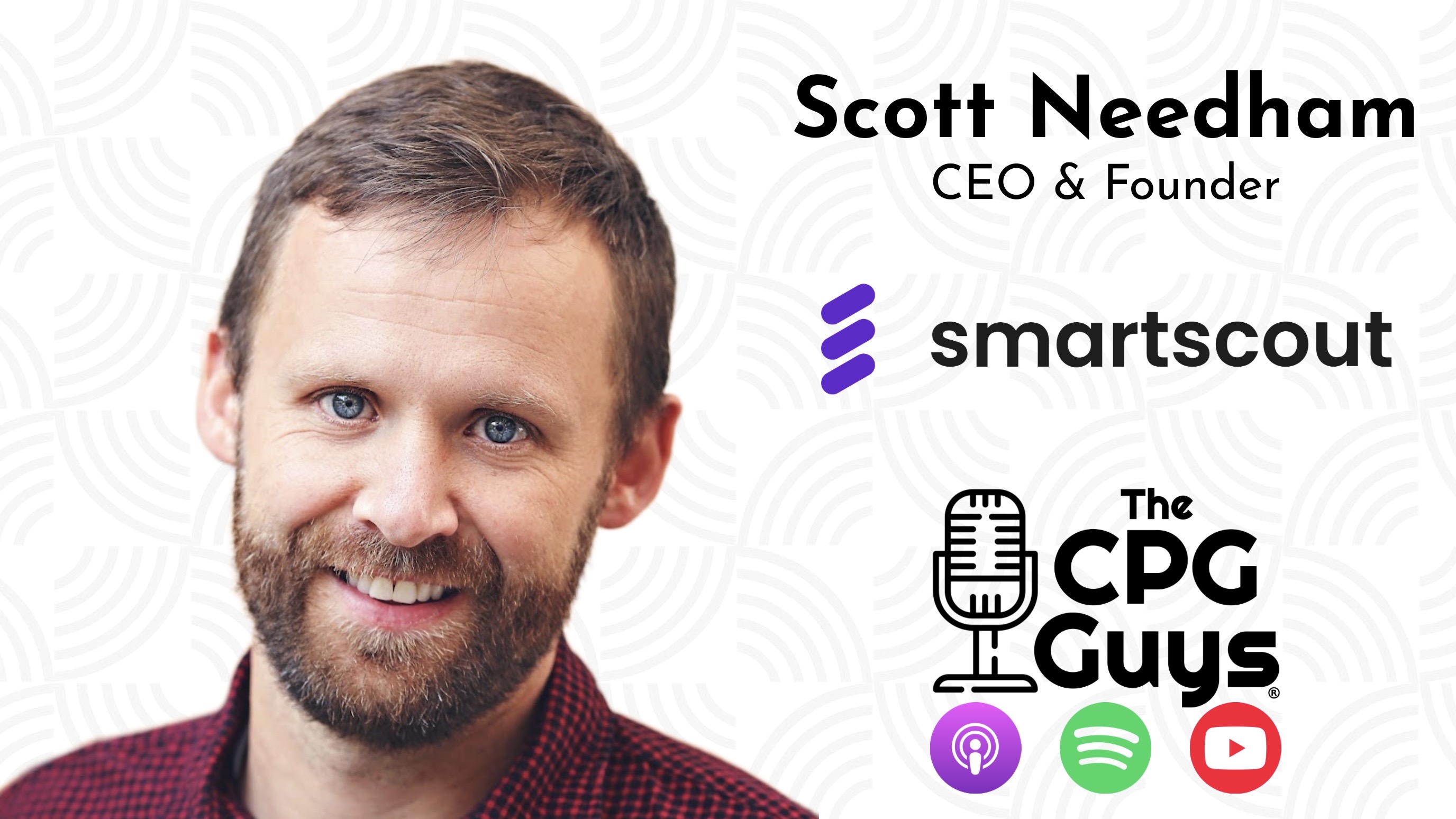
SmartScout's Scott Needham - Understanding Categories Worth Pursuing on Amazon Marketplace


 Apple Podcasts Apple Podcasts
  Spotify Spotify
  YouTube YouTube
  Overcast Overcast
  Amazon Music Amazon Music
  Audible Audible
  iHeartRadio iHeartRadio
  Castro Castro
  TuneIn TuneIn
  RSS Feed RSS Feed
  Audacy Audacy
  Castbox Castbox
  Fountain Fountain
  Goodpods Goodpods
  PlayerFM PlayerFM
  PocketCasts PocketCasts
  Podcast Addict Podcast Addict
  Podchaser Podchaser
  Podurama Podurama
  Podverse Podverse
  Podyssey Podyssey
 The CPG Guys are joined in this episode by Scott Needham, CEO and Founder at SmartScout, The most extensive Amazon brand and product finder ever made!
A tool built for Amazon sellers, by Amazon sellers. SmartScout is a tool for Amazon sellers to use as their own personal treasure map of Amazon!
This episode is sponsored by SmartScout
Follow Scott on LinkedIn at: https://www.linkedin.com/in/scott-needham-a8b39813/
Get a FREE category snapshot at: https://www.smartscout.com/cpgguys
Scott answers these questions:
- You built and sold real Amazon businesses before you ever built SmartScout. What was the recurring frustration in your own account-level data that made you say, ‘I need to build a tool for this’?
- For a large, established brand that already has strong retail measurement and thinks it has visibility into Amazon, what's the blind spot they usually don't know they have — around third-party sellers, category share, or where their business has quietly shifted?
- When you sit down with an enterprise brand for the first time and show them what's actually happening in their category, where does that conversation usually go?
- You recently launched TikTok Shop analytics. For a senior brand leader, what's the real question they should be asking — not how a video performs on TikTok in isolation, but which trends there actually translate into Amazon category growth, and which are just noise?
- Can you walk us through an example — a TikTok Shop trend that clearly moved the needle on Amazon versus one that looked exciting but never translated into real growth?
- Category concentration is one of the more interesting patterns in your data — some categories consolidating around a handful of brands, others fragmenting into hundreds of undifferentiated sellers. What does category concentration tell a brand about where to defend share and where to invest?
- How does a brand tell the difference between a category that's fragmenting because of real innovation versus one that's fragmenting because of low-quality, undifferentiated competition?
- What does good, data-led marketplace decision-making actually look like at scale — and what's the most common mistake you see when a brand treats Amazon as just another sales channel?
- If you're advising a CMO or VP of e-commerce at a mid-size CPG brand, what's the first strategic question they should be asking about their category before they touch a single tactic?
- You've offered to pull real numbers on a specific category ahead of a conversation like this one. Tell our audience about that offer — and looking ahead, where do you see the biggest opportunity for brands as AI-driven discovery and TikTok Shop-style commerce keep reshaping where purchases actually happen?
CPG Guys Website: http://CPGguys.com
FMCG Guys Website: http://FMCGguys.com
SheCOMMERCE Website: https://shecommercepodcast.com/
Rhea Raj’s Website: http://rhearaj.com
Lara Raj in Katseye: https://www.katseye.world/
DISCLAIMER: The content in this podcast episode is provided for general informational purposes only. By listening to our episode, you understand that no information contained in this episode should be construed as advice from CPGGUYS, LLC or the individual author, hosts, or guests, nor is it intended to be a substitute for research on any subject matter. Reference to any specific product or entity does not constitute an endorsement or recommendation by CPGGUYS, LLC. The views expressed by guests are their own and their appearance on the program does not imply an endorsement of them or any entity they represent.
CPGGUYS LLC expressly disclaims any and all liability or responsibility for any direct, indirect, incidental, special, consequential or other damages arising out of any individual’s use of, reference to, or inability to use this podcast or the information we presented in this podcast.
Scott (00:00)
Hi, I'm Scott Needham, the founder and CEO of SmartScout, and you're listening to the CPG Guys podcast.
Sri (00:07)
Hello folks and welcome to this episode of the CPG Guys Podcast. I'm of course Sri, your West Coast co-host and also CRO and co-founder of ThinkBlue Consulting, your trusted partner on your Omnichannel journey. You can get in touch with me at Sri at thinkblueconsulting.co. Please do listen to my younger daughter, Lara Raj at the band Katseye, who of course have just completed a full tour this fall across Europe and the US. And my older daughter, Rhea Raj, who is now a MAC Cosmetics Girl, the face of Toyota EV, and as of this week.
has been signed by Republic Records with Hybe USA. I'm of course joined today by my East Coast co host, co founder, and like me he's a fellow adjunct professor of business at the S C Johnson School of Business Peter, how you doin'? What's up for this weekend?
PVSB (00:51)
Sri, I'm doing great. Recovering from our trip down to Northwest Arkansas. You and I spent a couple days there at the Walmart Data Ventures Inspire event, recording some episodes, seeing some friends. And what am I doing this weekend? Well, I'll spend a little time with Nadia, but then I've got to pack my suitcase because we're headed to Groceryshop next week. It's a pretty pretty busy September, Sri. I hope everything is going great with you.
Sri (01:15)
Everything's going great, Peter, just getting ready for Catseye US segment of the tour. And grocery shop, as you mentioned, can't wait. We got a pack schedule, we got a bunch of podcasts going, we've got a party, we got dinners. One of them is for Dollar Generals, so we got a hands full, man. But it should be fun. let me thank all of you that listen to us and of course our sponsors. Without all of you, this podcast doesn't really exist.
I want to say thank you from the bottom of our heart. Make sure you're subscribing to our podcast on your preferred listening platform where you can get our latest episodes. Go back and consume the over 620 odd episodes we've already published. we have three quick asks to our audience if you're getting value from this conversation. The first one, subscribe to us on whatever platform you're listening on right now, whether that's Spotify, Apple, Amazon, anywhere else you get your podcast, hit that subscribe or follow button so you never miss an episode. Second.
It's not me, it's Peter. He loves a number. When you want French fries, Peter, where do you go?
PVSB (02:10)
Sri, I got a five guys. Yeah. Yeah.
Sri (02:13)
Exactly. He loves the number five. So we'd love for You guys to leave us a five-star rating. Hit smash that button and do number five, please. And third, follow us on LinkedIn. Between episodes we're publishing thought leadership, industry analysis, and content you won't find anywhere else. All built for CPG and retail communities you're already a part of. Search CPG guys on LinkedIn and hit the follow or click the link in the digital show notes of this episode.
We love for you to subscribe, rate, follow, three simple actions that help us bring you more of the conversations that matter. And now to our guest, of course. Amazon remains one of the most consequential and least understood battlegrounds in CPG, and brands winning share that are increasingly the ones with the best data, not just with the best product.
This conversation goes beyond tactics. It goes into strategy. The blind spots large brands still have around third party sellers and category concentration. What's really driving the connection between TikTok shop and Amazon growth and what disciplined data led marketplace decision making looks like at scale. Today we're joined by someone who has lived on both sides of the Amazon marketplace, as an operator who built real scale, as a seller, and now as a founder of a platform that helps others do the same with data.
Scott Needham is the CEO and founder of SmartScout, an Amazon and TikTok shop marketplace intelligence platform he built after his own experience running Buy Boxer, an Amazon wholesale business that generated tens of millions of dollars in FBA revenue. Scott also holds Amazon United, AMZ United, and spends much of his time talking directly to sellers and brands about what's actually working in the marketplace right now. If you want to understand what the data says about
where the growth is on Amazon and beyond, you wanna hear directly from Scott, and that's what we're doing today. We're gonna hear directly from Scott. Scott, pleasure to have you on the CPG guys. Welcome, man.
Scott (04:05)
Hey, thank you for having me here.
Sri (04:08)
Can't wait to get started. So to our audience, please check out the digital show notes of this episode to find a hyperlink to Scott's LinkedIn profile and to the SmartScout website to learn more as we carry on with this conversation, which I will kick off with the first question for Scott. Scott, I mentioned that you built and sold real Amazon businesses before you ever built SmartScout. What was the recurring frustration in your own account level data as you ran those businesses that made you say, I gotta build a tool for this, for the industry?
Scott (04:39)
So the true story is I've been selling on Amazon since like 2013, and we were looking for opportunities, just like categories, brands, what was doing really well. And so I have a software developer background, and so that's what I did. I just kind of kind of mapped everything out. You know, there's some complicated things that happen on Amazon,
the thousands of categories that they have and then they have brands and then there's also multiple sellers on a brand which sometimes can be kind of a pain point and so just wanted to put that all together and my first goal was just like look for opportunities like hey what brands are are growing what brands are shrinking which categories are big
And so that was the foundational questions that we had. And once we had some of those insights, we just kept adding on top of it to to get more more data, more information.
Sri (05:38)
I mean, since you've been a you've actually sold, you've found a business and actually sold on the Amazon platform before you built SmartScout. I do wanna ask you just on a day to day basis, how frustrating was it before you started SmartScout to actually pull data, go through the analysis process? Is it hours, is it days, or is it impossible?
Scott (05:59)
in some ways months and years to like kind of collect the data and organize it and be like, okay, you know, this is the relationship that's happening. And sure, you know, you could pull all the data in like a day. but getting an insight that helps people like get visibility, it's taken time.
And I'll be like like I'm not even joking, like I'm in my sixth year of this and I'm like still like so excited for like the next view that like you know feels like it unlocks a different perspective.
Sri (06:30)
And do you feel that even today that's what sellers are experiencing and that's why SmartScout exists, to enable them to not feel that experience of years and months, like you said?
Scott (06:41)
Yeah, so it just depends the the phase that someone is in. are they looking for more traffic for their listings, for their products, or are they looking to sell new products? So based off of where they're at and like what their interest is, that can actually totally change their perspective. but at the end of the day, everyone's an entrepreneur and they want to grow their sales.
And they want to beat their competition. So like those are kind of like I think the first feelings that people have when they like want data. They want that data to help them accomplish those key business like feelings.
PVSB (07:21)
Scott, welcome to the CPG Guys Podcast. Sri and I are very excited to talk to you today. We've spent a lot of time in the the past couple of years at the Amazon Accelerate event. I know it's coming up next week in Seattle. it's a very busy week. There are whole lot of conferences going on. But when we go there, we listen to the
sellers and everything you talked about and what led you to found this is something that we hear from them. and to a large degree they go to that event to create that community so they can learn and figure out collectively what they can do. but there's value also for very large established brands, the ones that that aren't necessarily at Accelerate. you know they have
They already have strong retail measurement and they think they have visibility around Amazon. But the question is, are there blind spots that they don't know they have? And particularly around third party sellers, as they look at who their competition is, right? Their category share, or where their business has been shifting and they're just not aware of it. what should they be thinking about?
Scott (08:27)
Think the questions in large businesses are perhaps even more like they're harder to get good answers to. any even legacy CPG companies to like newer ones, they all feel like digital is just like you have to win there. And sometimes they just wanna know.
Are we winning? And if not, like, are there a new entrance to the space? And how much should I be worried about them? And a lot of times we'll find like for big brands like that, they'll have a a team that's just like, hey, you're the Amazon team, you're the digital team. And sometimes those teams have a hard time conveying like that th those questions, like, should we invest more? Well.
if you want to like actually like win that argument, you kind of need to bring data to the leadership because if if they're not digital or you know, they've never been in the Amazon ecosystem, they don't actually know like some of those like scorecards, like, hey, we do a hundred million dollars on Amazon. Is that good or is that bad? I don't know. and so answering those questions and like seeing threats or seeing opportunities is kind of like
the the table stakes for what we try and work on.
PVSB (09:36)
And as a follow-up to that, at a very foundational building block level,
Do they even have problems defining what the category is? Because it's not like the hierarchy within Amazon is incredibly refined the way that brands typically pay companies like Nielsen and Circana to structure the data. I've got to imagine that that in and of itself can
Scott (10:01)
Yeah.
PVSB (10:01)
prohibit them from understanding what the real landscape is.
Scott (10:04)
Yeah,
I've seen companies kind of introduce their own, like the way that they wanna categorize it. I've kind of just like let put my hands up to the air and be like, well, however, Amazon categorizes it, they have 40,000 categories. Let's just like look inside of those. And sure, like if you want to create your own custom categories, that's actually pretty useful. I think a great example is actually like creatine right now. You know, I think
Two or three years in a row of like just doubling in size. But how is that categorizing happening? Is it creatine for women? You know, like are they like the brands that are targeting that? or is it you know, like a a premium creatine that's very expensive? There's even certain ingredients or or classifications of creatine. So, you know, you could take the way that Amazon
classifies creatine and actually split it up five different ways. And those five different ways are actually pretty meaningful for you know, a a decision maker, because like, you know, creatine's grown 400% in the last like two or three years. You gotta be beating that to actually feel like you're you're you're you're you're winning. so it but you bring up an interesting thing is that
There's there the there is some of a bit of a conflict of like how Amazon operates and how CPG brands like to operate.
Sri (11:29)
Love that and I know the larger even food brands are looking at creatine and protein today. So let's jump there. So when you sit down with an enterprise brand for the first time and you actually this is a great example you just gave of creatine, you actually show them what's actually happening in that category. Do you see deer in headlights? Do you see a wow? Are they curious? Do they want to jump in? Do they want to go right into the data and dig deep? What actually happens?
Scott (11:54)
Yeah,
it depends. Like if they're looking for the scoreboard, we've got that. You know, and there's probably what fifty creatine brands. and then maybe we'll like laser that into like, hey, this is actually your segment, you know, you're you're a premium creatine brand. This is what you're competing against. Yes, we'll we'll track the the the the inexpensive, you know, the the value players, but let's focus on
on these and then if they have any like problems with their channel for example if they have like resellers we'll highlight okay here's the resellers that are actually like you know really moving volume on that and which they all kind of the all these like things kind of play into like this final thing of like hey you know here's compared to your competitors here's how much money
your spending on retail media, Amazon ads, versus what we see. And here's where here's where you're spending it. Here's where they're spending it. So there could be some kind of differences and and kind of like all of these things, just give visibility. And I'm not going to pretend I know how everyone makes a decision, but we just want to give them as much information as possible to like, you know, help them make their strategic decisions. Some people are looking to spend more, some people are looking to spend less.
And it depends the phase, or maturity of their category.
Sri (13:26)
Peter, you're next with number four.
PVSB (13:28)
I was just
had sorry, Sri. I might Mike disregard that and edit it out and I'll get going. Sorry, I just had a problem getting the audio to come back on. So Mike, sorry Mike. Starting
Scott (13:40)
Ha ha
PVSB (13:41)
starting again, 321. So Scott, you recently launched TikTok Shop Analytics. So for a senior brand leader, what's the real question they should be asking?
Not how a video performs on TikTok in isolation, but which trends there actually translate into an Amazon category growth and which are just noise. Like how do they make sense of this?
Scott (14:07)
Yeah, so I feel like TikTok has kind of like just like really pushed social commerce into a way that is is really new and kind of like shifts the way that we think. I mean, a lot of brands are starting and kind of getting traction. Amazon feels a lot about like, hey, it's like block and tackle.
Get your products, get your listings looking good, get your advertising in place. Whereas like the social commerce is is is very much leaning in to what you just kind of described, like what are the what are the things that turn someone that's not even aware of my brand to interested? And so that's why in TikTok shop, like
or or or like just like a tick tock in general, it is actually connecting with creators that leads success on that channel. It's giving them samples, helping them become fans themselves and they can share that passion with others. And they're obviously incentivized because if they do a good job, if the creators become good job at selling the product,
Oftentimes a lot of brands will share commission with them. Instead of sending, instead of spending, you know, what 10% of your revenue on retail media, TikTok shop is more about like, how can we incentivize more creators? And then the ones that pop off, how do we dig into that? Be like, this is like this is what's turning us from you know, no awareness to like.
Someone actually just buying the product. And I mean, our our data shows right now as we connected these brands that are selling on both marketplaces. brands that have a successful TikTok shop, they're growing five times faster on Amazon. I know there's some correlation to that data, you know, the people that are like leaning digital just happen to have both channels, but
It is crazy how like successful TikTok shops kind of just like lifts other channels in in a way that we kinda haven't really seen before.
Sri (16:19)
You know, the industry still the largest brands talk about their inability to really get their flywheel going on TikTok shop, but they look at it, admire it, and they know they need to. So it'll be great to hear from you if there's an actual example you can give us. A TikTok shop trend that clearly moved the needle on Amazon versus one that looked exciting, but didn't actually result in any movement from a volume perspective.
Scott (16:45)
So yeah, TikTok shop is not just like the the the the formula while like we I described, you know, working with creators sounds great on paper. It's a little bit harder. And some categories it really makes sense for, and some of them maybe doesn't work. so I I I can point out, I know there's a lot of like there's a lot of like
people that kind of hit the dream of like started at zero and go to you know maybe a hundred million dollar brand and some some of those actually started on TikTok shop like that's that that's like happening. what's the we we actually have an employee at SmartScout who left our company at because he's he started a successful TikTok shop.
And I'm not joking, like we actually didn't have TikTok data at the time that that happened. And that was like super inspiring to me of being like, okay, I have to lean into this. There is something where he he created a grocery product, and now he's done over, you know, seven figures, over a million dollars off of both platforms and they kind of feed into each other. And actually, th this is one like quick little anecdote. He asked me, he's like, he's like, Why can charge $65 on Amazon?
When all my competition charges 45. And he's like, he's like, it's a TikTok shop. People learn about his product on TikTok shop. They go to Amazon and they buy the product that they just saw. Even though he's in a category where he's priced a little bit higher. And
so yeah.
PVSB (18:16)
Scott, is that
is that because they go right to the buy box essentially after they get to Amazon and and they don't
Scott (18:20)
Well so
PVSB (18:22)
they don't they don't shop to see what else is there that what what is it that that caught is it or is it just they saw
Scott (18:28)
They they they
PVSB (18:29)
it and they have immediate brand equity because it was on TikTok shop?
Scott (18:32)
Yeah.
They they search for the brand directly. They don't they they they're kind of like they're
PVSB (18:34)
Okay. Okay.
Scott (18:36)
like, hey, I just saw like this brand was just like I just watched a 45 second video. Some guy told me that it's what I want, and it builds a little bit of brand equity. And when it comes to stuff like specifically consumable CPG, like brand equity goes a little bit further than like I don't know.
if you're buying hardware or very basic stuff. and so yeah.
PVSB (19:00)
The minute you enter the brand term into the search
Scott (19:04)
So yeah, there they're
PVSB (19:05)
effort, that gives them the the the attention that brings them to the top of the search list. And that's why it it gets them right to the
Scott (19:13)
Yeah, so
PVSB (19:14)
PDP.
Scott (19:15)
they watch the video, they're gonna go to Amazon and just search for the brand.
PVSB (19:19)
Okay.
Scott (19:19)
So, and I mean I I hate to jump in this. Everyone, every brand out there wants like tell me the halo effect. The problem is there is so much that happens because that like that just isn't quite as trackable. Someone leaving an app and going into another app,
with like all the privacy things that are happening on like Apple, like you can't just like track that behavior. But the results are they're obvious when a video goes viral or does really well on TikTok shop, sales lift on Amazon. So I can't tell you how many times we we've seen that.
Sri (19:55)
I I gotta just reaffirm, you know, TikTok, Amazon, these are like the Achilles heels of large brands 'cause they need to learn even further. And your conversation here is testimony to how those behaviors actually work. So let me remind our audience that we're speaking with Scott Needham, CEO and founder of SmartScout. Peter,
over to you.
PVSB (20:14)
Scott, let's talk a little bit about category concentration because I think that was one of the more interesting patterns that emerged in your data set. Some categories tend to consolidate around just a handful of brands, right? Others can fragment into hundreds of undifferentiated sellers. So
I guess my question to you is what does category concentration tell a brand about where they should defend their share and where they should be investing in growth?
Scott (20:44)
Right. I would even almost add another layer, have these are these brands all new? Let let's say, you know, a new trending category. If they have only been there for less than a year, a year or two, that means it's probably still up in the air, and someone could come in and like shake it up. Whereas we see like others were like, hey, these three, they've been in this category for fifteen years. And
It's gonna be really hard to just spin up a new product and jump in. and but to your point, there's some categories that like, you know, maybe started ten brands, now there's twenty, thirty, forty, and and just really balloons up and it's it's hard. It's hard to be like, you know, differentiated and and if anything, Amazon can feel
quite challenging, but it it's it's I I do feel like as these large CPG brands pay attention, they actually have like an unfair advantage with existing brand recognition, with like budgets that you know startups can't even compete with, and they kind of buy their way back into dominance.
So definitely have seen you know the biggest CPG brands win on Amazon. And as they lean in to like what does digital, you know, what does that actually look like for their business? they they they do a good job. An example is you know a potato chip brand. for them to like lean into digital, what does that mean? Well, they can't just sell like
one bag of potato chips at four dollars. Like doesn't work. So they create SKUs that really like are optimal. And I'll be like, okay, you know, 18 bags this size and they're able to sell it for $26. And to the consumer that like maybe they're used to buying that at Costco, well they don't have to go into a crowded Costco to get what they want, to get a good value. And so
it certainly is interesting kind of how these categories actually still evolve.
PVSB (22:54)
But I guess y you made something. I just want to clarify the point here. Are you saying that while challenger brands can come in and they can start to take share away that over time the big national brands have a strategic advantage and they can wait it out, they can buy their way back in and they can push aside the challengers. Is that am I
Scott (23:13)
Yeah.
PVSB (23:13)
is is that what it is that what's going on?
Scott (23:15)
Definitely. I think you see both ends. There are some categories where the challengers were there first. And then the the incumbents with the retail awareness, you know, people that walk down the aisles. Yeah, they they have the brand equity. They
PVSB (23:29)
Br the brand equity in in what they've established.
Scott (23:32)
come in and they're like, Okay, it's time to take this seriously. You see that a lot with beauty brands that just said no to Amazon for
15, 20 years. And now they come in and they're like, we're gonna we're we see this as like an important brand position. And so that happens. Whereas sometimes the reverse happens. Let's say they've had a a long-standing one P relationship, and they've been there, but they missed a customer insight that allowed for you know, a a a new emerging CPG brand.
To come in and kind of really create a wedge. I've seen one of the largest CPG brands squirm at one of like the competitors that came in and did that. They created that wedge and started you know digital first through Amazon.
Sri (24:28)
Very well said indeed. I'll still I'm still gonna say Amazon and social media in general, which is like TikTok and others, are still the Achilles heel. So now if they wanna learn more, get in touch
Scott (24:38)
Ha ha ha
Sri (24:40)
with Scott. That easy.
I'll still tell you, Scott, that Amazon as well as social media, especially TikTok, is still very much on Achilles' heel of the largest enterprise brands today. Because I deal with a lot of them every day for a living, just like Peter. But now we've got a solution. Talk to Scott if you want to know more. That easy. so I do want to jump into and get a little geekier now. So how does a brand tell the difference between a category that's fragmenting because of real innovation?
versus one that's fragmenting because of low quality, undifferentiated competition, which is what these large brands are used to in store.
Scott (25:17)
There's a few
ways to to look into that. I think you d you do wanna understand like the search insights, let's take a category. How much of that is being driven by branded search, like customers are actually typing in, hey, I I you know, let's let's go back to creatine. I would say a healthy number of the creatine searches.
Are brand aware. Like they are typing in the brand that they want. And that becomes like you just have to be totally aware of that if you're jumping in, that like, hey, people are coming into this category already knowing a brand. Or maybe they were told about brands through ch Chat GPT, and they had a strong recommendation. And actually, CPG in general, like consumables,
Brand awareness is a lot bigger than people that are just looking for a solution where they're like, hey, I need this thing fixed in my house, and I don't care who I buy from, I'm never buying from them again. And so I see these categories. We actually do have one layer in showing which categories.
Are you know full of overseas sellers? So it's no secret that like Chinese sellers have actually eclipsed and kind of hit a little over 50% of the third-party sales on Amazon. And so we we kind of show like, hey, this category, you know, 80% of them are actually Chinese sellers, and that kind of says like, hey, this is a race to the bottom.
kind of a commodity category. fortunately, I mean I you can think however you want, but like CPG consumables, it is a little exempt from that. We look at this layer and we say like, hey, you know, grocery, fewer than one percent are like sellers from overseas. beauty and
health supplements, less than 10% are from overseas. There are some. I'm not gonna like say that like there's some categories where, like, hey, you know, we're seeing some Chinese manufacturers pop up and and kind of create these like commodity type products in those categories. But for the most part, you really see a lot of like like brands with brand equity, people aware of them outside of Amazon.
competing on Amazon.
PVSB (27:39)
Yeah, Scott, last year Sri knows about this story. I had a problem of a pesky little squirrel that had gotten into my house through a hole under an overhang on the roof. And I did my research to find out well how do what if I can get it out, how do I keep it from getting back in? And I was told, well, I needed to get some copper mesh.
And of course I went to Amazon to get it. I don't have any idea what that brand is. I'm sure it came from China. That's a category where I'm never gonna buy it again. I don't care what the brand equity is. That's one that's not important. But I trust me, when I buy my energy drink, I know exactly what I want. And that's the one I'm gonna go for. So I th I I think I I understand the model that you are articulating.
So my next question is what does good data led marketplace decision making actually look like at scale? And what's the most common mistake you see when a brand treats Amazon as just another sales channel in their portfolio?
Scott (28:37)
I think some of the mistakes I see, like they're not necessarily data decisions, but I mean I talk with Amazon sellers and brands all day, every day. And the ones that just keep leaning in to learn more. I don't care how much you've optimized, there's more.
let's take for example, I know one protein bar company that like they they changed their packaging around consumer demand. Keto, eight years ago, like the thing. And well, that's evolved, and so as like maybe like
maybe protein density now is little bit more trending. So they they just like call out different things. And so you would use the data to do that. And then you would use a kind of an Amazon leaning in methodology of like, how can we convey this messaging? Where do we put it? Do we put it in our titles and our bullets? Do we do we find a way to like have that in the image?
if someone's scrolling on their phone, they have like one inch of space. You actually can put ri readable text on your hero image. and so it to me it's like a it's like a two-fold thing. Yes, you want data and insights, but you also kind of just need to invest and learn and watch the trends and and and optimize images and and just kind of like just
Go all in. So, you know, really, Amazon has turned into something that like you just have to take seriously. So, and kind of like data's totally part of it. There's a little bit of skill and marketing and and customer awareness, that is a part of it. and and yeah, so I kind of I think full picture.
Sri (30:27)
Peter, I'm just gonna still continue to say there's so much to unpack on Amazon for enterprise brands. So if you're advising a CMO or the VP of e com at a mid sized CPG brand, what's the first strategic question they should be asking about their category before they get into like the details of any single one tactic?
Scott (30:50)
I think so you want to see like what's working now? Well it's we we could maybe go back to the the potato chip example. You can see like what's working now? Do people buy potato chips? Is this a one million dollar a month opportunity or is this a fifty million dollar a month opportunity? And a lot of brands are in multiple categories, so they could kind of choose.
which one? And then like let's take the biggest opportunity the most seriously and you know use a little bit of data of like what's the price positioning? What what what is the customer searching for? And then develop their own like just like winnable offer. Like the what I and and for some of this you kind of do have to jump into the customer. What what are they searching for? What are they saying in reviews? Like some of the review insights.
And then help them craft a product that can win. there is something about Amazon, while it has millions of products, like the the the sales curve goes real steep towards the top. If you get top of search on these like high volume searches, if you're like one of the top three, like
Those top three will often do more revenue than like the next hundred. So kind of getting to that top of search, creating that that that that product offering that just is is tailored to Amazon. It's just priced really well where the consumers feel like they get like value. it it you know it's it tends to just like
you know, w really work out on on the on the back end when like after the launch, they're like, you gotta do your prep before the you know, before you you you jump into a category so that, you know, those decisions that you live with for for years were were good decisions.
PVSB (32:42)
Scott, you made mention of user-generated content and the fact that there's a tremendous amount of learning to be had in the product ratings that are out there. LLMs have proven to be incredibly effective at surfacing and organizing those. Is that something that Amazon has started to crack down on from your perspective, restricting the ability to scrape the the reviews and get meaningful insights? What's going on there right now?
Scott (33:06)
Yeah.
no, you're totally right. I they've made it hard or even impossible to get the full, raw reviews. there's one thing that we do surface, Amazon they know that like brands want access to those the the the the sentiment. and so
We we work with their API to surface that. So it's not like that's why that's like we we want to play nicely with Amazon. We don't go in and and and download r reviews because it's against their terms of service. we do service their their their category insights where what they are basically doing is what brands would want. They are taking, the hundreds of reviews in a category.
So they have review insights for a category, and then they have review insights for products. And you could do that with your product, you can do that with your competitors' products and see what are the positive things that people are saying, what are the negative things that people are saying.
PVSB (34:11)
So, Scott, you've made a very generous offer to pull real numbers on a specific category ahead of a conversation with Amazon. Can you tell our audience about that offer and looking ahead, where do you see the biggest opportunity for brands as AI driven discovery and TikTok shop style commerce keep reshaping where purchases actually start and happen?
Scott (34:37)
with the the years of data collection, you know, it's kind of it's not hard for us to kind of shape what the the category opportunity is and like and just basically ask those like how is it going? How is this changing? And so you know if someone wants us to like put together just a quick snapshot
I actually get most excited when people like want that shit snapshot so they could like bring it to their leadership and be like, hey, this is the opportunity I've been trying to tell you about. and because sometimes without kind of like this full picture view, it does get really hard to to to to communicate of like, you know, like are we winning?
Do I smell more opportunity? And so yeah, I like to like like I said, like bring in like, you know, all the different ways that that that consumers and brands are kind of interacting with each other.
Sri (35:39)
Awesome. So Peter, I'm gonna jump right in. Summarize for us what are some of your big takeaways today?
PVSB (35:46)
the biggest thing for me is just that brands large and small are in need of understanding the interaction between things like what's happening on TikTok shop and how that's actually translating into commerce outcomes on on Amazon's platform, and understanding where they need to make their investments. Is this a category that can grow where their brand equity is going to be meaningful?
Or is this something where it's just highly commoditized and products are undifferentiated? It seems like with SmartScout, they're building a platform that helps brands make sense of the Amazon landscape and they would be served well by some platform like this.
Sri (36:28)
I'm gonna second that a little bit, Peter. You know, having lived through building Amazon businesses at firstly at Frido Lay and PepsiCo, then J and J, then Revlon, then General Mills, different categories. I can tell you fifteen years later, from when I started, brands still don't understand Amazon to the extent they understand a Walmart or a Kruger in the in-store business. Looks like what you're building, Scott.
is for them to be able to play catch up and then also advance. That's my big takeaway.
Scott, the CPG guys want to thank you for joining us on the podcast, sharing your insights, meticulously explaining what SmartScout does. So
Scott (37:11)
No, thank you.
Sri (37:12)
thank you for being with us today.
So, for our audience, if today's conversation sparked something for you, a new idea, a fresh perspective, a reminder of why this industry is worth showing up for every day, share it, tag us, tell a colleague, the more voices we bring into this community, the sharper all of us get to the over 47,000 followers we have on LinkedIn that trust us to inform, educate, and entertain you about our industry. Thank you, thank you, thank you for your trust and for your encouragement. Until next time.
Keep pushing the conversation forward. I'm Sri on behalf of my co-host Peter V S Bond. This has been the CPG Guys Podcast.