
Episodes

June 13, 2023
The 7 habits of highly effective people Summary and Analysis
"The 7 Habits of Highly Effective People" is a self-help book that provides a framework for personal growth and productivity. The book is divided into seven habits, which are: Be proactive: This habit encourages individuals to take responsibility for their lives and actions. It emphasizes the importance of choosing one's responses to different situations and being proactive rather than reactive. Begin with the end in mind: This habit focuses on setting goals and working towards them. It involves visualizing what one wants to achieve and creating a plan to get there. Put first things first: This habit emphasizes prioritization and time management. It encourages individuals to focus on important tasks rather than urgent ones and to use their time wisely. Think win-win: This habit promotes collaboration and mutual benefit. It encourages individuals to seek solutions that benefit all parties involved, rather than just themselves. Seek first to understand, then to be underst…

June 13, 2023
Jane Eyre by Charlotte Bronte Summary and Analysis
Jane Eyre is a novel written by Charlotte Bronte, first published in 1847. It is a bildungsroman, or coming-of-age story, that follows the life of the titular character, Jane Eyre, from her childhood to adulthood. The novel begins with Jane's traumatic childhood experiences as an orphan living with her cruel aunt and cousins. She is sent away to a harsh boarding school, Lowood Institution, where she befriends Helen Burns, who dies of tuberculosis. After spending eight years at Lowood, Jane applies for a job as a governess and finds employment at Thornfield Hall, where she meets the enigmatic Mr. Rochester and falls in love with him. However, their relationship is complicated by the presence of a mysterious woman named Bertha Mason, whom Rochester has hidden away in his attic. On the day of their wedding, Jane discovers Bertha's existence and leaves Rochester, eventually ending up in the care of St. John Rivers and his sisters. She learns that she has inherited a fortune from her unc…

June 13, 2023
How to Win Friends and Influence People by Dale Carnegie Summary and Analysis
"How to Win Friends and Influence People" by Dale Carnegie is a self-help book published in 1936 that has sold over 30 million copies worldwide. The book provides practical advice on how to improve communication skills, build positive relationships, and influence others. The book is divided into four parts. Part one focuses on fundamental techniques for handling people, such as avoiding criticisms and giving honest and sincere appreciation. Part two covers ways to influence people, including creating a desire in them and arousing enthusiasm. Part three offers tips on how to win people over to your way of thinking, such as listening actively and showing respect for other people's opinions. Finally, part four explores how to become a leader, by inspiring loyalty and cooperation in others. Throughout the book, the author shares numerous anecdotes, examples, and case studies to illustrate his points. He emphasizes the importance of empathy, kindness, and understanding in building su…

June 13, 2023
The Immortal Life of Henrietta by Rebecca Skloot introduction and Summary
Henrietta Lacks was a young woman living in Baltimore in the 1950s when she was diagnosed with cervical cancer. While receiving treatment at Johns Hopkins Hospital, a sample of her cancer cells was taken without her knowledge or consent. These cells, known as HeLa cells, were found to be incredibly resilient and were used in numerous scientific experiments and medical breakthroughs over the next several decades. However, Henrietta and her family remained largely unaware of the existence and use of these cells until years later, when they were contacted by researchers investigating the origins of HeLa cells. This sparked a long and complicated journey for the Lacks family, who struggled to come to terms with the fact that Henrietta's cells had been used without their knowledge, and that they had not received any compensation or recognition for their contributions to scientific research. Skloot's book sheds light on the difficult and often fraught relationship between science and …

June 13, 2023
The 4-Hour Workweek Book Summary
"The 4-Hour Workweek" is a book written by Tim Ferriss that was published in 2007. It's a self-help book that focuses on how to escape the traditional 9-5 workweek and live life on your own terms. The book is divided into four main sections: Definition, Elimination, Automation, and Liberation. Definition In this section of the book, Ferriss encourages readers to define their goals and to figure out what they really want out of life. He argues that most people are stuck in jobs that they don't enjoy simply because they haven't taken the time to figure out what they really want. Elimination The second section of the book focuses on eliminating unnecessary tasks and activities. Ferriss argues that most people waste a lot of time on things that don't really matter, such as checking email or attending meetings. He provides tips on how to streamline your life and eliminate the things that are holding you back from achieving your goals. Automation The third section of the book is…

June 13, 2023
Never Split the Difference Book Analysis and Summary
The book begins with an overview of some of the key principles of negotiation, such as the importance of active listening and the need to establish rapport with the other person. Voss also emphasizes the need to get people to say "no" in order to open up more possibilities for agreement. Throughout the book, Voss provides a number of specific tactics and strategies for negotiating effectively. Some of these include: Mirroring: This involves repeating back what the other person has said to demonstrate that you're actively listening and trying to understand their perspective. Labeling: This involves giving a name to the other person's emotions or perspective in order to acknowledge and validate them. Calibrated questions: This involves asking open-ended questions that encourage the other person to provide detailed responses. Tactical empathy: This involves using empathy to build rapport with the other person and gain insight into their perspective. Voss also discusses the impo…

June 13, 2023
Good to Great by Jim Collins Summary and Analysis
"Good to Great" is a well-researched and thought-provoking book that provides valuable insights into what makes some companies truly exceptional. The book's emphasis on leadership and culture is particularly important, as many companies struggle to establish a cohesive identity and direction. One potential criticism of the book is that its findings are based solely on the experiences of eleven companies, which may not be representative of the broader business landscape. Additionally, some critics have argued that the book overemphasizes the importance of leadership at the expense of other factors that may contribute to a company's success. Despite these limitations, "Good to Great" remains an influential and widely-read management book that has helped many companies improve their performance. Its emphasis on humility, discipline, and self-awareness continue to resonate with business leaders around the world.

June 13, 2023
Deep Work Book Summary and Introduction
"Deep Work: Rules for Focused Success in a Distracted World" is a book written by Cal Newport, an associate professor of computer science at Georgetown University. The book explores the concept of deep work, which refers to the ability to focus without distraction on a cognitively demanding task. According to Newport, deep work is becoming increasingly rare in today's world due to the constant distractions and interruptions that we face on a daily basis. Newport believes that deep work is essential for achieving success in our professional and personal lives. He argues that individuals who are able to cultivate the ability to engage in deep work consistently will be more productive, creative, and successful in their careers and lives.

June 13, 2023
Eckhart Tolle:The Power of Now Book Summary
"The Power of Now" is a spiritual guidebook written by Eckhart Tolle, published in 1997. Its main message is to help readers understand the importance and benefits of living in the present moment. In the book, Tolle explains that most humans live either in the past or in the future, rarely living in the present. He argues that this behavior causes unnecessary suffering and stress in people's lives. Tolle believes that by focusing on the present moment, we can achieve inner peace and happiness. The author also introduces the concept of "the pain body," which refers to the accumulation of emotional pain and negative experiences in our lives. He suggests that acknowledging and releasing this pain is crucial for us to live fully in the present. Tolle also emphasizes the importance of mindfulness and meditation in achieving a state of presence. He encourages readers to practice observing their thoughts without judgment, and to focus on their breath as a way to quiet the mind and c…

June 13, 2023
Summary of Man's Search for Meaning by Viktor E. Frankl
"Man's Search for Meaning" is a book written by Viktor E. Frankl, a psychiatrist and holocaust survivor who spent three years in Nazi concentration camps during World War II. The book has two parts, the first being an autobiographical account of his experiences in the concentration camps, while the second part analyzes his theory of logotherapy, which emphasizes finding meaning in life.
June 13, 2023
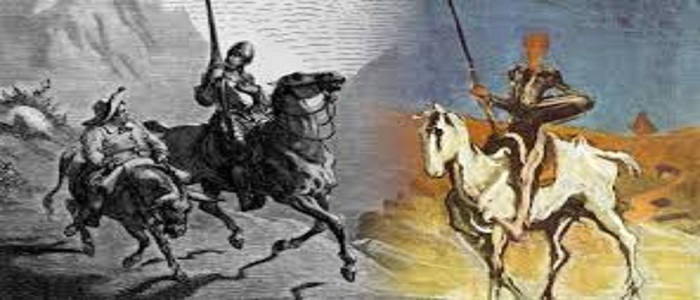
Don Quixote: An epic tale of chivalry
This article explores the classic novel Don Quixote by Miguel de Cervantes Saavedra. The article includes a summary and review of the novel, an introduction to the author, a detailed summary of each part of the book, audio book notes, powerful quotes from the book, and recommendations for other classic literature. Additionally, the article offers an easy-to-read PDF summary of the book for those who want to understand the plot and characters without reading the entire novel.

June 12, 2023
12 rules for life Book Summary
"12 Rules for Life: An Antidote to Chaos" is a book written by Canadian psychologist and professor Jordan Peterson. The book was published in 2018 and has sold millions of copies worldwide. The book consists of 12 chapters, each presenting a rule for life that the author believes can help people navigate the challenges of existence. Here is a short summary of the 12 rules: Stand up straight with your shoulders back Treat yourself like someone you are responsible for helping . Make friends with people who want the best for you . Compare yourself to who you were yesterday, not to who someone else is today . Do not let your children do anything that makes you dislike them. Set your house in perfect order before you criticize the world. Pursue what is meaningful (not what is expedient) . Tell the truth — or, at least, don't lie . Assume that the person you are listening to might know something you don't. Be precise in your speech . Do not bother children when they are skat…

June 12, 2023
the Art of War by Sun Tzu Reading Guide and Summary
The Art of War is a military treatise written by ancient Chinese strategist Sun Tzu. It is considered one of the most influential works on military strategy in history. The book is divided into 13 chapters, each of which covers a different aspect of warfare.

June 12, 2023
The art of seduction Introduction and Summary
The primary focus of The Art of Seduction is to provide readers with the tools and knowledge to become expert seducers. Greene breaks down the process of seduction into several steps, including choosing the right target, creating a desirable image, and using various psychological tactics to gain control. One of the key themes in the book is the importance of understanding human nature and psychology. By doing so, the seducer can manipulate their target's desires and emotions to their advantage. Greene also stresses the importance of patience, persistence, and adaptability in the process of seduction. Overall, The Art of Seduction is a controversial and thought-provoking book that challenges readers to think critically about the nature of power, desire, and manipulation in relationships.

June 12, 2023
Bessel van der Kolk:The Body Keeps the Score Introduction
"The Body Keeps the Score" is a book by Bessel van der Kolk, which explores the impact of trauma on the human body and brain. The book describes how traumatic experiences can affect not only our mental health but also our physical wellbeing. Van der Kolk argues that traumatic experiences can cause changes in the way our brain functions, as well as in our nervous, endocrine, and immune systems.

June 12, 2023
The Body Keeps the Score Full Chapter Book Summary
"The Body Keeps the Score" is a non-fiction book that explores the long-term effects of trauma on the human body and mind. The author, Bessel van der Kolk, is a psychiatrist who has spent decades studying trauma and its impact on individuals. The book covers a range of topics related to trauma, including the neuroscience of trauma, PTSD, dissociation, and alternative forms of therapy. Van der Kolk argues that traditional talk therapy is often not enough to help those who have experienced trauma fully heal, and he advocates for more holistic approaches that incorporate the body and movement. Overall, "The Body Keeps the Score" is a comprehensive exploration of trauma and its effects on the body and mind. It offers insights into the ways trauma affects our lives and provides hope for those seeking healing and recovery.

June 8, 2023
The Laws Of Human Nature Full Book Introduction
The Laws Of Human Nature The Laws Of Human Nature Full Book Introduction The Laws of Human Nature, written by Robert Greene, is a comprehensive guide to understanding the complexities of human behavior. Through the lens of evolutionary psychology, Greene delves into the fundamental drives that shape our actions and interactions with others. By analyzing the interplay between our inherent traits and external influences, The Laws of Human Nature helps readers gain insight into their own behavior a...

June 6, 2023
A Comprehensive Glimpse into The Great Gatsby
The Great Gatsby is a literary masterpiece that tells the story of Jay Gatsby, a mysterious and enigmatic millionaire who throws extravagant parties in an attempt to win back his lost love, Daisy Buchanan.

June 6, 2023
One hundred years of solitude Introduction And Notes
One hundred years of solitude One hundred years of solitude Introduction And Notes This novel tells the story of the rise and fall of Macondo's mythical town through the history of the Buendía family. It is dominated by universal themes such as love, war, revolution and poverty. With alternately reverent and comical elements, One Hundred Years of Solitude melds politics, personal experiences, and spirituality. The work is no less than a history of humanity. Author : Gabriel García Márquez Gabri...

June 6, 2023
Unpacking the Literary Genius of Don Quixote:Quixotic Musings
Unpacking the Literary Genius of Don Quixote:Quixotic Musings "Don Quixote" is a novel written by Miguel de Cervantes and published in two parts in 1605 and 1615. The story follows the adventures of Alonso Quixano, a middle-aged gentleman who becomes so enamored with tales of chivalry and adventure that he decides to become a knight-errant himself. He sets out on a series of misadventures with his loyal squire, Sancho Panza, often mistaking windmills for giants and inns for castles. Through his ...

June 6, 2023
Crucial Conversations Book Notes:The Art of Difficult Conversations
Crucial Conversations Book Notes:The Art of Difficult Conversations "Crucial Conversations" is a self-help book that offers practical tools and strategies to help individuals navigate difficult conversations with clarity and confidence. The authors explore how to approach high-stakes conversations, such as those at work or in personal relationships, with a focus on achieving positive outcomes and maintaining strong relationships. The book emphasizes the importance of creating a safe environment...

June 6, 2023
21 Lessons for the 21st Century Book Key Takeaways:The Road Ahead
21 Lessons for the 21st Century Book Key Takeaways:The Road Ahead "21 Lessons for the 21st Century" is a non-fiction book written by Yuval Noah Harari, an Israeli historian and professor. The book was published in 2018 and explores the most pressing issues of the present times. The author analyzes topics such as technology, politics, religion, and climate change, among others, and provides insights into the challenges we face as individuals and as a society. Harari offers possible solutions to t...

June 6, 2023
The Stranger Book Key Words:Understanding Meursault
The Stranger Book Key Words:Understanding Meursault "The Stranger" is a novel written by Albert Camus, first published in 1942. The story is set in Algiers and follows the life of Meursault, a French Algerian who kills an Arab man and subsequently faces trial. The novel focuses on the themes of existentialism, absurdism, and the meaninglessness of life. Meursault is portrayed as an emotionally detached character who struggles to find any sense of true purpose or meaning in his life. The novel ha...

June 6, 2023
Thinking Fast and Slow Essential Reading Notes:Fasten Your Mind
Thinking Fast and Slow Essential Reading Notes:Fasten Your Mind "Thinking Fast and Slow" is a book written by the Nobel Prize-winning economist Daniel Kahneman. The book discusses the two main systems that drive the way we think: System 1 and System 2. System 1 thinking is fast, intuitive, and automatic, while System 2 thinking is slow, effortful, and deliberate. Kahneman explores the ways in which these two systems interact and influence our decision-making processes, and how they can both lead...