
Unleashing Inner Freedom

 Apple Podcasts

 Spotify

 Castro

 RSS Feed

 Amazon Music

 iHeartRadio

 TuneIn

 Podcast Addict

 Podchaser

 PocketCasts

 Deezer

 PlayerFM

 Castbox
I've just wrapped up an incredible chat on my podcast, "Uncensored Advice for Men," and I'm buzzing with insights that I can't wait to share with you. My latest guest, Neal, recommended by our mutual friend Brian Webb, joined me to dive deep into the heart of what it means to be a man in today's world.
🤝 Kindness Isn't a Myth: Neal blew my mind with a simple truth – people are kinder than we think. In a world that often feels divided, he reminded us that at our core, we're not so different. It's a message of unity and peace that every man needs to hear.
🌪️ Taming the Tempest Within: Ever struggled with anger? Neal's been there, and he's come out the other side. He shared his journey from a fiery temper to a place of calm, offering practical tips on managing emotions that could change your life.
🧗♂️ Challenges as Stepping Stones: Inspired by Viktor Frankl, we explored how facing our fears head-on can actually diminish their power over us. Neil's take on transforming obstacles into opportunities for growth is a game-changer.
🔮 The Energy We Emit: Do our thoughts attract challenges? Neal doesn't think so. Instead, he believes in preparing our minds to respond with peace, which in turn, can actually prevent conflicts. It's all about the vibes we put out into the world.
🎤 Stage Fright to Spotlight: As a storyteller, Neia knows a thing or two about the jitters. He shared how to flip the script on stage fright and see it as a natural response, not a flaw. Plus, he tied in how physical strength and confidence can signal our internal fortitude.
🌐 The Art of Trade and Relationships: We wrapped up with a look at how trade and business have evolved, stressing the importance of keeping relationships personal and cooperative. It's a lesson in how commerce can actually bring us together.
I'm telling you, this episode is packed with golden nuggets that could shift your perspective and maybe even your life. So, if you're curious to hear more about these topics and ready to join the conversation, tune in to the latest episode of "Uncensored Advice for Men." Trust me, you won't want to miss this.
Stay strong and stay kind, Josh
Visit Us on the Web at - https://uncensoredadviceformen.com/
Connect With Us on LinkedIn - https://www.linkedin.com/in/joshuabrucewilson/
Next Steps
- Share your thoughts with a review - https://www.uncensoredadviceformen.com/reviews/
- Let's connect on LinkedIn - https://www.linkedin.com/in/joshuabrucewilson/
- Subscribe and Watch on YouTube - https://www.youtube.com/channel/UCI11BikVb5CbEwIwjmR89Iw
Speaker 1 (00:00:02) - Good day fellas. Welcome to on censored Advice for men. This show is for you, dudes. As always, I love you. Thanks for listening in on today's show. We have a have a guy that I just met, but highly, highly recommended from a mutual friend, Brian Webb, who said, you need to have a conversation with this storyteller. And him and I were doing an intro call, and, man, eight minutes and I go, stop. We need to record this conversation because I think it would be helpful for guys to kind of listen into, you know, if we were at a coffee shop having just a normal conversation, me and Neil like this is what would come up. But I think it's so valuable for, other guys to maybe listen in on the conversation. So I'm giving you permission to eavesdrop to be a peeping Tom into peer into our conversation. Then, as always, reach out to our guests and say thank you. Especially if they resonate, if their message resonates.
Speaker 1 (00:00:55) - So anyways, Neil, welcome to the show, dude.
Speaker 2 (00:00:57) - Great. Thank you. It's really nice to be here. Josh, I'm champing at the bit to get into this conversation.
Speaker 1 (00:01:03) - Yeah. All right. So we have a show for men, uncensored advice for men. What do you think, men of 2024? As a time of recording this, I'd like to do green. You know, green form content where it lasts forever. But like, in this time period, what do you think men need to hear and feel?
Speaker 2 (00:01:21) - okay. The number one is that people are a lot kinder than you think they are. They are, we are being told, pummeled, inundated with messages that we all hate each other and that we are that we're living in a divided society and that you should fear everybody and everything's going to hell in a handbasket if you do enough reading of old books, like really old books more than 100 years old, what you find out is that it's a it's a comedy. We've been we've been doing the same stupid shit forever.
Speaker 2 (00:01:55) - And it turns out that if you had grown up when your old man grew up and you'd lived like he lived, you'd be thinking the same things and doing the same things that he would do. And I don't know what color you are that you're listening to this or what age group you are, or what religion, background or politics or yours. I know this, that if you had had the same experiences I had, we would probably do exactly the same things. And if I'd lived your life under your upbringing and so forth, I'd probably think and do the same things you're doing. We got to give each other a little latitude that it turns out we're not that far apart. If you did, if you showed a bell curve of people's attitudes and the things we truly believe deepest in our hearts, 67% of us are going to fall within one standard deviation of the middle. But you're not getting told that what you're getting told over and over is that we're at opposite ends of the spectrum. It ain't true.
Speaker 2 (00:02:56) - I know you. I know that we differ on a lot of stuff. That's just how it goes. But it doesn't make us enemies. And we gotta grant each other a little peace and a little understanding. And don't. Don't react like everybody's your enemy. And they're out to get you because they ain't. Yeah. There. That's what I would say.
Speaker 1 (00:03:19) - Yeah I think. Well, thanks for sharing. I think that's beautiful, man. You gave me little chill bumps. It might be because of a cease blowing on me. Or maybe something that you said resonated with me, but, like, you know, like I, I know that in my heart, because I've. I've met a lot of people and I know that my heart like I've, I've only met a few bad apples who I'm like, wow, they're actually evil right out of the.
Speaker 2 (00:03:43) - You do run into it occasionally. It's not like they don't exist. They do exist. But that proportion is so small, so small that that we gotta, you know, grant each other a little more.
Speaker 2 (00:03:53) - Kind of like peace.
Speaker 1 (00:03:54) - Yeah. So what what what was the what was the the thing that helped you see it that way? Was that something you're born with? Like, was this your way? Your mom and dad talked to you?
Speaker 2 (00:04:08) - I used to have a temper, like. Like really a dangerous temper when I was a kid. And then when I got into my teens, you know? You know how it is, Josh. See, you're not really yourself until you get past your 20s, because your brain's not fully developed. My dad used to call me the mad guy because I was just angry at everything. And I had a I had a tripwire on me that it's a good thing I wasn't a big kid, or I would have been really dangerous. Yeah. And, I did have a I had a friend who was also small like me when I was a kid, and, I was six. I'm six one now, but, man, I was small as a kid. And this friend of mine, he was dangerously smart.
Speaker 2 (00:04:49) - If you crossed him and you tried to pick on him, shit was going to start happening to you that you didn't know where it was coming from. Like, you wouldn't even understand that somebody was having their revenge on you. And I had to get that under control. And what you when. As you try to control your temper and understand that you are the victim of a bad temper, you're not the. You're not the hero of that story. You're the victim of the of that story. Because when you act, when you react to the world out of anger, no good comes of this for you. So in my in my struggle to control my temper, I started to realize. I didn't think of myself as evil. I didn't think of myself as a bad guy, but I was acting like a bad one. I was too subject like road rage would have been my first response to getting cut off in traffic. Sure. But then. I can't tell you the one thing. All I can tell you is that, you know, as you're as you're struggling with a bad temper, you start to say, I'm not going to react that way.
Speaker 2 (00:06:07) - I'm not. And the way I'm going to prevent my suffering reacting that way is I'm going to look forward to somebody cutting me off in traffic so that I can demonstrate my mastery of my temper by letting it go. I'm going to. I'm going to wait with a smile on my face for the moment when somebody behaves badly so that I can demonstrate to myself. Self control.
Speaker 1 (00:06:34) - That's weird. It's like, I'm gonna. I'm gonna practice jujitsu by putting my nose out there waiting for anybody to punch me. Right.
Speaker 2 (00:06:43) - Well, sort of, in a way, what I. What I'm doing is I'm, It's actually a Viktor Frankl thing. Viktor Frankl, the author.
Speaker 1 (00:06:50) - Well, Viktor Frankl.
Speaker 2 (00:06:51) - Right, man. Search for meaning. What he would say is that if you say, for example, you get up in front of people to speak and you are frightened that you're going to sweat and you're going to put your suit out, right, so that they can see your sweat stains. Yeah. His version of that would be to say, no, no, no, no, don't fear that.
Speaker 2 (00:07:11) - Embrace that, hug that, and seek to maximize the sweat. Set a record.
Speaker 1 (00:07:19) - Yeah.
Speaker 2 (00:07:19) - Your your goal is to go. I am going to sweat the fuck out of this shirt. And what will happen is it will not have its power over you anymore of making you feel bad. You you will drain it of its power to control you. And so if you, for example. Visibly shake when you make a presentation. Yeah. Don't be afraid of it. Don't be afraid of it.
Speaker 1 (00:07:44) - Just shake it up, man.
Speaker 2 (00:07:46) - Yeah, exactly. Just embrace it. And so it's Viktor Frankl's inspiration to say, I'm looking forward to these things that happen to me that used to send me over the edge. Because now they are an occasion. It's a it's an occasion to celebrate. Things happen when I don't get angry. Yeah, now I feel good. Now I feel so. What has happened is I primed myself for a positive experience for my flight getting canceled. You know, I've framing it so that I am going to demonstrate to myself that I'm not, I'm not a weakling subject to the, you know, I, I'm a great I have anger management to myself.
Speaker 2 (00:08:32) - That's what I'm able to say.
Speaker 1 (00:08:33) - Let me ask you a question about this. All right. In the world of. We'll go world war, world woowoo. Okay. Woowoo world. Right where we feel that the the the the the events of life happen because of our internal thoughts and dialogues and such like that or energy that we project.
Speaker 2 (00:08:53) - I know just what you mean. Right? Right. So you're vibrating at a certain frequency and it's attracting or repelling.
Speaker 1 (00:08:58) - Right. And I'm an infant in this. I really don't fully understand it. But enough to ask this question is, do you think that actually looking forward to that guy cutting you off will actually create those situations that will happen?
Speaker 2 (00:09:12) - No, no, I don't at all. No.
Speaker 1 (00:09:14) - So you're just prepping your mind. You're not actually causing the matrix to happen?
Speaker 2 (00:09:19) - I may be I may be triggering the matrix for all I know, but what I'm. But my version of that is very micro. And what happens is that. I'm. You know, it's a funny thing, I.
Speaker 2 (00:09:35) - I don't forgive me for bouncing around here left and right and trying to figure out exactly what I'm about to say, but I have so much to say about it that, it's almost debilitating. Okay, so let's start with the idea of a certain energy that you're putting out in the world and, and then attracting. So when I say that I'm looking forward to these things happening, I acknowledge that the odds on a freeway in Southern California that somebody is going to behave like a d bag. Odds are good. But at the same time, I'm also saying to myself, I want to see how many times this happens. I'm going to be a student of this. I'm going to react not as somebody who has been assaulted or infringed on. Instead, I'm going to observe this differently. And I think what happens is because I deal with it peacefully. I'm actually sending peace vibes out. Let me. You know, Josh, if you've been behind the wheel for any number of years, you know you've done something stupid.
Speaker 1 (00:10:38) - Yeah, I'm the guy. Cut you off, right?
Speaker 2 (00:10:40) - I've done that hundreds of times. I've been the jerk. It's not because I had evil intent. It's just because. Oops. Shit. Sorry. So when people want to get into a lane that I'm in, I am absolutely. Go, bro. Do you think. And if somebody is aggressive about it, even then I'm like, do you think because chances are. They're in a hurry. They've had something bad happen, you know? You got. It's. I'm that guy. I've been that guy. So there's no purpose. There's no point in me being anything but gentle and accommodating. you know, I had a chance to spend a lot of time with, John McPhee. They called him the sheriff of Baghdad. He was one of those Delta Force operators in Iraq. Tough dude. Yeah. And like, they would he would do those singleton missions where it's, like, unarmed, go out into the hinterlands to go back, bring back a bad guy by himself and checkpoints and the whole thing.
Speaker 2 (00:11:38) - He doesn't speak Pashto, doesn't speak, you know, Urdu. And and he would describe to me these things that he was doing, like, like John, how do you how do you even and apparently among his legion of skills. Was an internal control. It's. That was mind boggling because he would, you know, the the shrinks would say, John, you can't do this much time out there doing what you're doing and not be affected. You're you're camouflaging the impact this is having on you. No, no I'm not I'm fine John, it's not like that. Human beings don't react like you're reacting. Well I do. And he would say to me, Neal, the people who are most adept at firearms accuracy, you know, the ones that are best with a with a firearm are the ones least likely to use it. The the ones that are highly skilled in the use of a firearm are actually quite peaceful about like when they draw it, they they only draw it when it is going it.
Speaker 2 (00:12:48) - Needed to be used. We're just about to use this. You did. You don't think of a firearm as a way to pump up your muscles. You know, to look like a badass. That's the last thing it is. Because in his business, what made him so incredibly dangerous was the sort of self-control where he was in control of any situation he was. It's not that he didn't get beer, but he doesn't experience it the way that we did. He's a physically dominant person. He's very large. not not incredibly tall, but built like a fire hydrant and skin that hard. And he just has a confidence about him that turns out to be very gentle. He has a gentle aspect. He doesn't invite trouble. He's too confident to invite trouble. Can you imagine the sort of how ignorant you would have to be to run across John McPhee and want to try to push his buttons? You know there. You would. You would be fighting every instinct in your body to take a guy like that on, and not just because he's physically imposing, but because he's radiating a confidence and peacefulness.
Speaker 1 (00:13:59) - So for for myself and for guys in the audience and maybe even for you, like what are ways that we can build towards that? I mean, I would love to have that internal fortitude of my yeah, of my self-worth, of my my skill levels, my abilities, my belief systems, my, you know, confidence. Right? Like, where does that come from?
Speaker 2 (00:14:22) - I think I, I think part of it is mental, but part of is our physical bodies are telling us things, I specialize in helping people tell stories better. And I came from 30 years in advertising where I made thousands and thousands of presentations. And so over, over the, you know, like the Beatles, the 10,000 hours that Malcolm Gladwell would talk about when you sort of master stuff because you've just got enough reps in where you don't even know what you know, you just do things that work. And in the process of of helping people be better speakers and tell stories better for the purposes of being more persuasive.
Speaker 2 (00:14:58) - They often have the problem of stage fright. Of course they do, because it is the most natural thing in the world for anybody to stand in front of an audience and have anxiety. Guess what? That's more than 100,000 years of people just like you not liking it when you're standing alone, unarmed, in front of 50 pairs of eyes, all looking at you, there was no time in nature that was a good thing. This is that was a bad thing. And your body is telling you save yourself. Remove yourself from the situation. So stage fright is a perfectly natural. It is a healthy response to what your body is telling you. Okay, now you can overcome stage fright by moving to I'm not here. I'm not afraid of this because I'm not here to fight these people. I'm here to help them. And because I'm here to help them, I'm just going to stay focused on whether I'm Pitt standing my shirt or shaking visibly or my voice is quavering is not relevant to the situation. All I'm here to do is deliver help and value, and therefore I'm going to stay focused on that.
Speaker 2 (00:16:11) - And even if I still continue to feel the stage fright, I'm not going to blame myself for it. I'm not responsible for this. This is genetic encoding. My parents gave me this. This is their fault, you know, and it's the fault of my grandparents. So I accept no blame. For this stage fright. Okay, well, somebody like a John McPhee. Is physically strong enough to where his body is telling him if push comes to shove, I got this. And having a lot of strength. Is a powerful way. Being physically strong is a powerful way for your body to signal you that you're going to be okay. That's one thing. And then another thing is my experience with the. I did a little jujitsu with the Gracie family in Torrance.
Speaker 3 (00:17:07) - Nice.
Speaker 2 (00:17:08) - Yeah. I, Henry Gracie was my personal coach back before, when he was a young guy, like, super young. I think he was 16. And, you know, I didn't stick with it. I wish I had, but he was the nicest kid.
Speaker 2 (00:17:20) - Oh, my God, he was just such a sweet choke out. Oh, few times. Yeah. And, he was he was a gifted teacher because he was so enthusiastic and and he just loved what he was doing. And he comes from this family of ass kickers where they're just not afraid of anybody. Yeah. And and because of that, because of that self position of being so, so convinced that, you know, in a kerfuffle he's going to be fine. he just radiates an energy of kindness and, That. oh. Geez. I'm sorry. I forgot where I was going with that Gracie family thing, but, it always to me, it's an energy of sweetness that comes from. Confidence and oh, now I was yeah, I was going to say just that the Gracie's about very gentle people. Yeah. Every last one of those brothers and, and, they were so gentle. Yeah. I don't know if that's true of voice. I never met hoist, but, Certainly Henner was just a he was like an example of like what a perfect young man would be.
Speaker 2 (00:18:25) - He was, he was he was sweet and and loved educating people and. Anyway, become a bit of a celebrity out there, as you know. I mean, for sure. Even without competing on an they changed the game.
Speaker 1 (00:18:38) - Right when they totally.
Speaker 2 (00:18:39) - Completely.
Speaker 1 (00:18:40) - Completely changed game. When when. Ultimate fighting and you you know the UFC and and the the no holds barred kings of the cage when all that stuff first got it start back in the day there were no rules. And you would have a sumo wrestler versus a jiu jitsu guy or a karate guy versus a boxer. And I loved that, that time frame.
Speaker 2 (00:19:03) - I remember watching, right. I remember watching the very first one. Yeah.
Speaker 1 (00:19:08) - And those guys dominated. They changed.
Speaker 2 (00:19:10) - It. Yeah. Oh, God. Did they ever. And they still, you know, they still you can feel them in the in the carpet wherever you go. yeah. It's it's interesting about what it has become. I mean, it's a, it's a juggernaut now, but they're very gentle people and they, they are a big part of their teaching is to try to help kids that are getting bullied, not to be.
Speaker 2 (00:19:34) - And part of part of getting bullied is psychological. It's not just physical. Yeah. It's having the psychological demeanor of somebody who isn't. It isn't worth it with me. I'm not scared of you. I don't know. We went down this road. But it's just my way of saying that the main thing, that every reason I bring it up is to say that a certain gentleness radiates a vibration level of energy that lessens the likelihood of danger, both on the receiving end and on the delivery end. I think that a spirit of forgiveness and gentility. Creates a society in which we progress because there is no greater skill in a human being. Than cooperation. The ability to cooperate with other people is what helps us all thrive and advance. And when you when you think, do you know there's a funny thing that I just discovered, Josh, it's crazy, but I hope you get as big a kick out of this as I did. You know how we call what we do. We call it business.
Speaker 2 (00:20:46) - They didn't used to always call this business. They used to call it trade, you know. And when it when it was called trade, there was an a natural understanding that this was give and take where we have a relationship, you know, and I exchange this for you for this. And it could be trade in the form of I give you this labor and then you give me this good or, you know, if you I'm going to send a vessel out and it's going to bring back a bunch of silk and spices and so forth, and then I'm going to trade you gold for this. And we're going to we're in a relationship. We're in trade. But then they call it business, and all of a sudden it removes that sort of personal human contact element. For example, in The Godfather. You know, they go, it's not personal, it's just business. And you go, oh, that's dangerous. When you think of business as something where you are, you literally murder people.
Speaker 2 (00:21:38) - And that's part of the process of getting ahead. Just as opposed. Right? It's just business. And once you call it that and you have removed it from the relationship that you and I have when we're trading goods and services, you you lose what I consider the coolest thing about business. The coolest thing about trade is that you and I both advance. We we live better and we depend on one another more. And they say, for example, if you want to make sure that two nations never go to war, make sure that there are people getting rich from this on both sides. And when people are getting rich from our relationship, we're never really going to trade shots. I'm not going to come to that. You know, people can they can set rebel Rattle. They're saying. A. And when push comes to shove, people with the money, you're gonna go getting rich here. Why don't you just chill out? And so when you and I have a relationship and we got a business and we're good to one another, the likelihood that we're going to fight is a lot less than the likelihood that we're going to reach an accommodation.
Speaker 2 (00:22:47) - And. And, you know, people that are people that are going out into the business world. Let me rephrase that. Going out into the world of trade. And they do so in a spirit of trying to help other people. where I have this to offer. And I think this will benefit you. They are. They're the big winners. The ones that go out in a spirit of, I think this is going to help you. Oh my God, they're the big. They're the ones that get to smile and laugh and and like what they do and what something that you and I were talking about before we started recording, which was it's kind of the ultimate freedom to do the things you want to do the way you want to do them. And I think the path to that is in generously offering value to other people and something you believe in, something you really. I'll give you a great example. When I was in advertising, I used to sell Toyotas. That was my big client and I loved it.
Speaker 2 (00:23:48) - I loved that job because I religiously believed in Toyota and I still do. I am not ashamed at all of being a total partisan in the tank for Toyota. I made sure my whole family drove Toyotas and I was proud of it. And I look at the logo and I experience pleasure and pride because I knew that when I was selling somebody a Toyota, they were getting a legit good value. It was going to it was practically bulletproof. I mean, in your figuratively. Right. You knew that if I, if I could sell somebody a Corolla, that made my day because I knew they were going to get 350,000 miles out of that thing, you know, and I knew that they weren't going to have a car payment for three quarters of the life of that vehicle. Yeah. And so, That's freedom. Freedom is when you enjoy it, when you you believe what you do and you're liking it, and you can't wait to get in there, and you have nothing to apologize for. Nothing apologize for.
Speaker 2 (00:24:52) - Yeah. Yeah. And and I think freedom is the. This is the ultimate end goal for any young man. It's. Can you? Can you get into a place where you feel free? And even though. Look, we can't. We can't gain, economic freedom as much as we would all like. But you can still exist in a very free state when you believe in what you're doing. So that the way that you get your money, even if you're not rich, even if you're not independently wealthy, to the point where you can just say fuck you to everything. No, freedom is is is doing what you believe in. Like giving your example of a young guy shows up, our water tank or water heater went out, and, this guy, I loved this guy. It was this Latino kid, and he had this big neck tattoo. But I loved him. And he comes in, and he. He's looking at my water heaters, inspecting it, and so forth. He goes.
Speaker 2 (00:25:46) - How long have you had this thing? I've had it. jeez, I guess I've had it for about 22 years. And he goes, you need to have a memorial service for this thing because it gave you 12 years. You had no right to it. It's it's only warranted for ten years. That's a that's the life expectancy of this thing. It gave you double that and then some. This thing was so good. But it's going to need to be replaced. And so Oh okay. Well what would you recommend. And he, he gives me these three alternatives where you can do this, you can replace the tank like this. Or you could do that version or you can do the tankless. Now they tell me I'm not supposed to recommend any of these to you, but you're out of your mind if you don't do the tankless. So I'm like, okay, I'm with you. So far, this guy did a brilliant job. Just brilliant, in terms of installation. And it's beautiful to look at every time I go in the garage and I see it on the wall, I think of that young guy.
Speaker 2 (00:26:41) - And I think how much pride he took in making sure everything was perfect. It's just perfect. Now he's free, even though he works for a boss. And even though he, you know, he's a plumber's apprentice or whatever he is, you know, he's free because he brings so much value and he's so confident in the recommendation he makes that he's he's got to be enjoying it. And. I can I, you know, I just the pride that he showed me when he was showing it off and talking about how to do the settings and everything, you know, and he put his he put his personal cell phone number on there. It's just call me if you have any problems, but I don't think you're going to call me. So.
Speaker 1 (00:27:25) - That's so cool. It's like, the the pride of freedom. The once, once you have freedom to do what you want. And it might not be independently wealthy with few money, and you could say no to anything, and you don't have to show up for work, but that you take pride in your work.
Speaker 1 (00:27:43) - You take joy in what you do and the value exchange that you do for other the trade of it. And you find joy and fulfillment in that, whatever that it might be, you know. Yeah, that to me.
Speaker 2 (00:27:55) - That to me is the, that's the freedom it's found there. And I'll tell you why I'm feeling this way. You would think that having a lot of money, it's is where the freedom is. But, there's a kind of strip club psychology that comes with having too much money. I'll give you a sense of what I mean. So you go to a very, very fine restaurant and you have all the money in the world, so they have to treat you like a king, and everybody's fawning over you. Oh, Mr. Hutchings, it is so wonderful to see you again. We. It was such a pleasure. When you're here and, you know, the waiters are treating you like an emperor. Well, yeah, because you're handing them money. Because you're just.
Speaker 2 (00:28:36) - Because you're bribing them to be your friend. That's no good. That's not. Really? Do you really want to live like this where you're you're never sure if anybody really likes you because you just you just handed out $100 bills. No, that's strip club psychology. That's going into a strip club and dropping a bunch of money and thinking, oh, she finds me attractive.
Speaker 1 (00:28:59) - She likes me. I think I have a chance.
Speaker 2 (00:29:03) - She's right. You can see how fake it is. She really likes me. It's just. Right. And then and you gotta love the the fact that you go in, you think you have all the power because you're like, oh, I'm, I'm the one who's in charge here. Oh, shit. Man. No, the strippers are in charge. They're doing this kabuki theater. They're they're bamboozling you into thinking. Yeah, that's how I like you. I find you hot. It's like, now give me that money. You know, that's. This is not freedom.
Speaker 1 (00:29:34) - That's not freedom.
Speaker 2 (00:29:35) - This is not freedom. This is a this is a, ersatz, you know, virtual experience compared to this young guy comes in, he does this brilliant job on my water heater. He has won a fan. I'm a legit fan of that young guy.
Speaker 1 (00:29:54) - And you didn't even have to strip for him.
Speaker 2 (00:29:59) - But, hey, you know, it wasn't cheap. I might have been willing to. I might have been.
Speaker 1 (00:30:04) - Off 100 bucks.
Speaker 2 (00:30:05) - Let's show a little skin. Yeah, for a couple hundred. It was not cheap. It was not cheap. But every time I go out to that garage and look at it, I feel pride. I feel I feel pleasure at looking at the brilliant job he did and I enjoy it was him. I like a guy who takes pride in his work to the point where now it's a brand. It's not the company that installed it was that dude. And. I venture to say that a brilliant electrician. You know, like the guy that racks all the wires and makes them.
Speaker 2 (00:30:41) - That's Picasso to me. That's just. That's so many. Have you ever seen. My pop was an architect, and so we would frequently go to jobs. when they were framing stuff and he would he he delighted in the electrical because his, his dad was an electrician. So he just delighted in showing me when a great electrician had wired a house and the way they would leave a certain amount of extra wiring, you know, so that you could pull the cables and stuff. And he would, he would point all this stuff out. And I just felt from him such admiration for electricians that to this day, I, I look at the wiring of a place, and if I see a house getting framed up and the wiring is in, I just absolutely go up there and just check it out. And that that pleasure that I'm taking in it, you know, they're feeling it. You know, they're feeling the the joy of knowing they've done it right. So good.
Speaker 4 (00:31:40) - So just the.
Speaker 1 (00:31:41) - Pride of work is I love seeing people who have that trade mentality.
Speaker 1 (00:31:47) - We're going to both that value. We're both going to walk away better from this. Like, I'm I love the work that I do. Like I love seeing that and that that juices me up. Seeing especially dudes like show up with their craft.
Speaker 2 (00:32:01) - Can you imagine what it was like to be Prince, and somebody like the record company would want to hear the recording, and he gets to press play. Like, what would that have been like? You know, or you're you're Lynyrd Skynyrd and and the record company wants to hear Freebird for the first time.
Speaker 1 (00:32:18) - Yeah, they put the headphones on.
Speaker 2 (00:32:20) - Well, yeah. You want to hear it? Okay. Let's play it for.
Speaker 1 (00:32:24) - This is a long intro played whenever we.
Speaker 2 (00:32:28) - Go, but it's the opposite of strip club psychology. It's the absolute opposite. It's like, I cannot wait to share this with you. Yeah. And, That to me is the ultimate freedom is loving what you do so much. You can't wait to share it with somebody.
Speaker 1 (00:32:48) - That's ultimate freedom right there.
Speaker 2 (00:32:50) - Yeah, I do think it is. I think I think making. Oh, hey, Josh, you may have well, you haven't seen any of my videos, but here's a story I got to tell you because you'll just love this, because it's what we're talking about. So when I was working, for Toyota, I was there when they were launching the tundra for the first time. So their first foray into the full, full size pickups, and they were doing them at state fairs. They were showing, you know, they would build a little tent and then they would do a walk around with people to show them off all the features of the tundra. And I was in the Upper West corner of Jersey. So new Jersey is really woodsy when you get out into the hinterlands. I mean, it's it's Indian country. And so we were tucked up into the northwest corner of, of Jersey at the state fair, and the tundra had their tent and the big DeKalb, it was huge.
Speaker 2 (00:33:36) - And they had these three gals given out Toyota Tundra cowboy hats to anybody that would let them do a walk around of the truck. And two of these gals were just model gorgeous. But the third was this vivacious pixie who was she had that magic touch, right? She could. She just was convincing people left and right to walk around with those cowboy hats. Up come these old boys. They look like they're red at a duck dynasty. They're wearing bib overalls, and they got long beards and they got Jimmy Caps from Ford. And fearlessly she goes up and says, hey, fellas, you guys want to come take a look at this new Toyota Tundra, this full size touchscreen? It's it's fantastic. And, they go, no. And she goes, come on, I'll give you one of these hats. And this one guy says to her, I wouldn't get in that truck if you were handing out gold bars, sweetheart. And she turns to the other guy and she says, oh, I've seen this before.
Speaker 2 (00:34:30) - He's scared. He's scared he's going to like it. And he'd rather stay ignorant, you know, and protect his feelings. And the friend goes, is that true, Dale? You scared? Because I ain't scared. And she goes, talk is cheap. Dale, you can prove me wrong right now. Just let me take you on and walk around with this truck. Okay? Now, I've overheard this, and I'm like, lady, you, You're good. I want to hear the rest of this patter. So I start shadowing them, and she's just. She's joking and laughing, and she's always grabbing Dale by the arm and shaking him, going, Dale, come on, don't you like that? And he's going, okay. Finally, she opens the back door of the cab and she says, Dale, look at the size of that backseat. And he says, is it big enough to have sex in? And she gets this look on her face and he goes, I don't know.
Speaker 2 (00:35:20) - Let's check the owner's manual. And so I'm just like, lady, you are absolutely the best I've ever seen. So inside a 20 minutes, Josh, they are walking around that fair wearing those hats. And I thought to myself, you know, being from advertising, I thought, gee, I wonder how many ads I would have had to have shown them before they would wear those hats. And the answer, of course, is. You could show them those things forever and they would never have that reaction. Yeah. And so I walked up to her afterwards. I said, you're the greatest salesperson I've ever seen in my life. And she goes, oh, I'm not a salesperson. I just love making new friends.
Speaker 5 (00:36:02) - Oh.
Speaker 6 (00:36:05) - That's the secret.
Speaker 5 (00:36:07) - That's so cool.
Speaker 2 (00:36:08) - That's the human superpower.
Speaker 1 (00:36:10) - That's the human superpower right there.
Speaker 2 (00:36:12) - She just enjoys making friends.
Speaker 1 (00:36:15) - She enjoys the process of right.
Speaker 2 (00:36:17) - She enjoys the process, right? Exactly. Yeah. Isn't that powerful? It's not powerful.
Speaker 1 (00:36:22) - Yeah.
Speaker 1 (00:36:23) - That's it man. It's when a true freedom for a dude is this in the world of work is when you're doing that which you're created to do what you love, to do what you're wired to do. Your dad likes wire, so I'm going to wrap it up with this. Do that which you're wired to do. And it's not really work. You enjoy it, it brings value and it makes money. That's called the groundhog principle. And, good to great. Right. I think you're on to something. But guess what, man? We are at a time, Neal. Oh, so why don't you tell people if they want to continue the chat with you and continue hearing you on, where could they go to find you?
Speaker 2 (00:37:01) - Well, I'm going to spell my name because you can find me at Neil ford.com. So that's n e a l f o a r d Neil ford.com. That's my little. That's my sort of a smallish website. What I do a professionally is I'm a presentation and storytelling coach and you can find that at story fire dot net.
Speaker 2 (00:37:28) - So it's like campfire but.
Speaker 1 (00:37:31) - super cool fellas. As always, reach out to our guests, say thank you for being on the show. if you would like to connect with them, their contact information will be below. As always, guys, I love you. And, if you ever need anything, you can head on over to Uncensored Advice for men. Com fill out a quick form and we'll plug you in with one of our guests or one of our resources. And if you have something to share with guys same place, fill out a form and maybe we'll get you on the show next. Till then, we'll talk to you all on the next episode. See you guys.
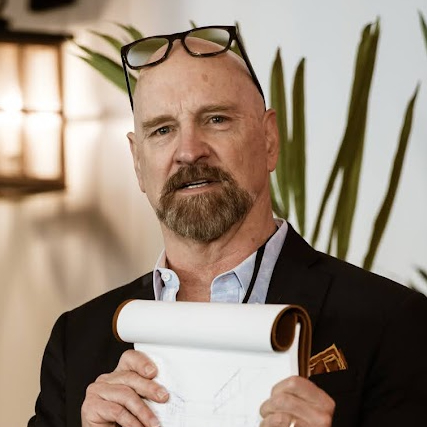
Speaker
Neal Foard has spent 30 years in advertising and marketing, creating award-winning campaigns for global power brands like Budweiser, Sony and Nokia. For his work on Toyota, Neal ranked among the top ten most awarded creative directors in the world in 2002. As the author of an innovative talent development series, Neal was named Worldwide Director of Creative Learning for global ad agency Saatchi & Saatchi. He has consulted on creative messaging for Fortune 500 companies and universities and been a featured speaker at TEDx conferences. Most recently, Neal has gained a following on social media for his inspirational videos about the kindnesses of everyday people.