
Episodes

411
May 26, 2022
411 Walt Whitman - A New Hope
In 1844, Ralph Waldo Emerson called for a new poet who would reflect the spirit and potential of America. In 1855, a then-unknown poet named Walt Whitman published Leaves of Grass, his attempt to fulfill Emerson's wish. In this episode, Jacke looks at Whitman's early life and career, contrasting Leaves of Grass with the works of a pair of poets that Emerson may have had in mind when he railed against "men of poetical talents...of industry and skill in meter" who nevertheless failed to be what Em...

410
May 23, 2022
410 What Is American Literature? (with Ilan Stavans)
America, America, America... a continent, a nation, a people, and a whole lotta books. But how does America define itself? Who defines it? Where did the idea of American exceptionalism come from? And how does literature fit into any of this? In this episode, Jacke talks to Professor Ilan Stavans about his new book, What Is American Literature? ILAN STAVANS is Lewis-Sebring Professor of Humanities and Latin American and Latino Culture at Amherst College, the publisher of Restless Books, and th...

409
May 19, 2022
409 "Fear and Trembling" (The Story of Abraham and Isaac) by Soren Kierkegaard
In our last look at Søren Kierkegaard, we left our hero after he had just left the love of his life, Regine Olsen, in favor of a life devoted to God and philosophy. In this episode, Jacke looks at one of the great products of that seismic schism: Fear and Trembling, or Kierkegaard's analysis of God's command that Abraham should sacrifice his beloved son Isaac. How does Abraham's decision fit into moral and ethical principles? And if it doesn't fit, what does that mean for our society - or for Ch...

408
May 16, 2022
408 Dylan Thomas (with Scott Carter)
Do not go gentle into this good episode! Rage, rage against the dying of the... well, things fall apart there, don't they? (Because we're not gifted poets like Dylan Thomas!) In this episode, Jacke talks to producer, playwright, and performer Scott Carter about his lifelong passion for the Welsh bard who took the U.K. by storm in the mid-twentieth-century and America by even stormier storm soon thereafter. Which poems are best? What's good about them? How did they feed into the mythic reputation...

407
May 12, 2022
407 "The Old Nurse's Story" by Elizabeth Gaskell
Elizabeth Gaskell had only written one novel when Charles Dickens started publishing her work in his journal Household Words. But soon she would become famous as the author of Cranford and North and South, two of the best novels of the Victorian era. Dickens proved to be a generous and artist-friendly editor, offering suggestions but allowing Gaskell to have the final say over her work (with one exception). In this episode, Jacke looks at the ghost story that Dickens asked Gaskell to write, alon...

406
May 9, 2022
406 A World in Turmoil - 1967-1971 (with Beverly Gologorsky)
Novelist Beverly Gologorsky joins Jacke for a discussion of the tumultuous years from 1967 to 1971, which provides the background for her new novel. In Can You See the Wind?, a working-class family in the Bronx struggles to make a better world, even as the world spins into chaos. Columbia professor (and friend of the podcast) Farah Jasmine Griffin says "Beverly Gologorsky brings a clarity of vision and purpose to this extraordinary novel—a story about the complexities and love that both bring...

405
May 5, 2022
405 Kierkegaard Falls in Love
The nineteenth-century Danish philosopher Søren Kierkegaard (1813-1855) is well known as the father of existentialism and one of the great Christian thinkers of all time. But it is in his relationship with Regine Olsen - his love for her, their brief engagement, and the horrible breakup, in which he left her for a life devoted to the pursuit of knowledge - where we see his true literary gifts. In this episode, Jacke looks at Kierkegaard's life and writing, with a special focus on the agonizing r...

404
May 2, 2022
404 Kafka and Literary Oblivion (with Robin Hemley)
Author Robin Hemley joins Jacke for a discussion of Kafka, writerly ambition, and his new novel Oblivion: An After Autobiography, which tells the story of a midlist author who finds himself in the posthumous world where authors fade from obscurity into the world of Oblivion...unless they can manage to write their way out. Additional listening suggestions: Episode 349 - Kafka's Metamorphosis (with Blume) Episode 139 - A Hunger Artist by Franz Kafka Episode 134 - The Greatest Night of Franz...

403
April 28, 2022
403 The Wonderful World of Mysteries (A Best-of-HOL Episode)
Mysteries! In this best-of episode, Jacke revisits conversations with three guests for three different angles on this popular and enduring literary genre. First, Jonah Lehrer (Mystery: A Seduction, A Strategy, A Solution) discusses what exactly makes mysteries so compelling. Then, novelist Christina Kovac, author of the mystery The Cutaway, joins Jacke for a discussion of setting a mystery in the world of television news. Gillian Gill, author of Agatha Christie: The Women and Her Mysteries, stop...

402
April 25, 2022
402 "The Open Boat" by Stephen Crane
After being given $700 in Spanish gold by some newspapers, a 25-year-old Stephen Crane set out for Florida, where he planned to travel by boat to Cuba and cover the impending Spanish-American War as a war correspondent. But the steamship he boarded capsized after hitting some sandbars, forcing Crane and 28 shipmates - most of them arms runners friendly to the Cuban insurrectionists - into lifeboats and head into the open sea. Crane was one of the last to leave, and he wound up sharing a dinghy w...

401
April 21, 2022
401 HOL Presents: Melissa Chadburn and The Throwaways (A Storybound Project) | PLUS The First Work of Literature by an African American Author
Jacke takes a look at the first work of literature by an African American author, courtesy of Fictions of America: The Book of Firsts by Uli Baer and Smaran Dayal. Then he turns things over to Storybound, a Podglomerate podcast, for a conversation with author Melissa Chadburn and excerpts from her essay "The Throwaways." Melissa Chadburn’s writing has appeared in The LA Times, NYT Book Review, NYRB, Longreads, Paris Review online, and dozens other places. Her essay on food insecurity was publ...

400
April 18, 2022
400 Anniversary Special! (with Mike Palindrome)
Celebrating 400 episodes of The History of Literature, Jacke and Mike respond to a listener poll and choose the Top 10 Episodes We Must Do in the Future. Additional listening suggestions: Episode 83 - Overrated! Top 10 Books You Don't Need to Read Episode 149 - Raising Readers (aka the Power of Literature in an Imperfect World) Episode 92 - The Books of Our Lives Help support the show at patreon.com/literature or historyofliterature.com/shop. The History of Literature Podcast is a memb...

399
April 14, 2022
399 Stephen Crane (with Linda H. Davis)
Stephen Crane (1871-1900) lived fast, died young, and impressed everyone with his prose style and insight into the human condition. While he's best known today for his novels The Red Badge of Courage and Maggie: A Girl of the Streets (along with some classic short stories like "The Open Boat," "the Blue Hotel," and "The Bride Comes to Yellow Sky"), his literary fame during his life was supplemented by his notorious exploits. Shipwrecks, romance, scandal, and high-profile court cases - and he som...

398
April 11, 2022
398 Fernando Pessoa
Questioning the nature of the self is a standard trope in literature and one of the hallmarks of the Modernist movement. But no one pushed this to the extreme like Portuguese poet Fernando Pessoa (1888-1935). While the use of a pseudonym or two is common enough, Pessoa wrote poems as more than a hundred "heteronyms" (as he called them), giving many of them their own richly developed biographies, writing styles, and distinct subject matter. The wild cast of characters, who sometimes argued with o...

397
April 7, 2022
397 Plath, Hughes, and "The Other Woman" - Assia Wevill and Her Writings (with Julie Goodspeed-Chadwick and Peter Steinberg)
In 1961, poets Ted Hughes and Sylvia Plath rented their flat to a Canadian poet and his wife, the beautiful, accomplished, and slightly mysterious Assia Wevill. Soon afterward, Ted and Assia began having an affair. Within a year, Assia was pregnant with Ted's child and Sylvia, after years of suffering from depression, had committed suicide. Six years later, Assia would do the same. It's a horribly tragic tale, like something out of Shakespeare, with genius and artistic ambition and love and s...
396
April 4, 2022
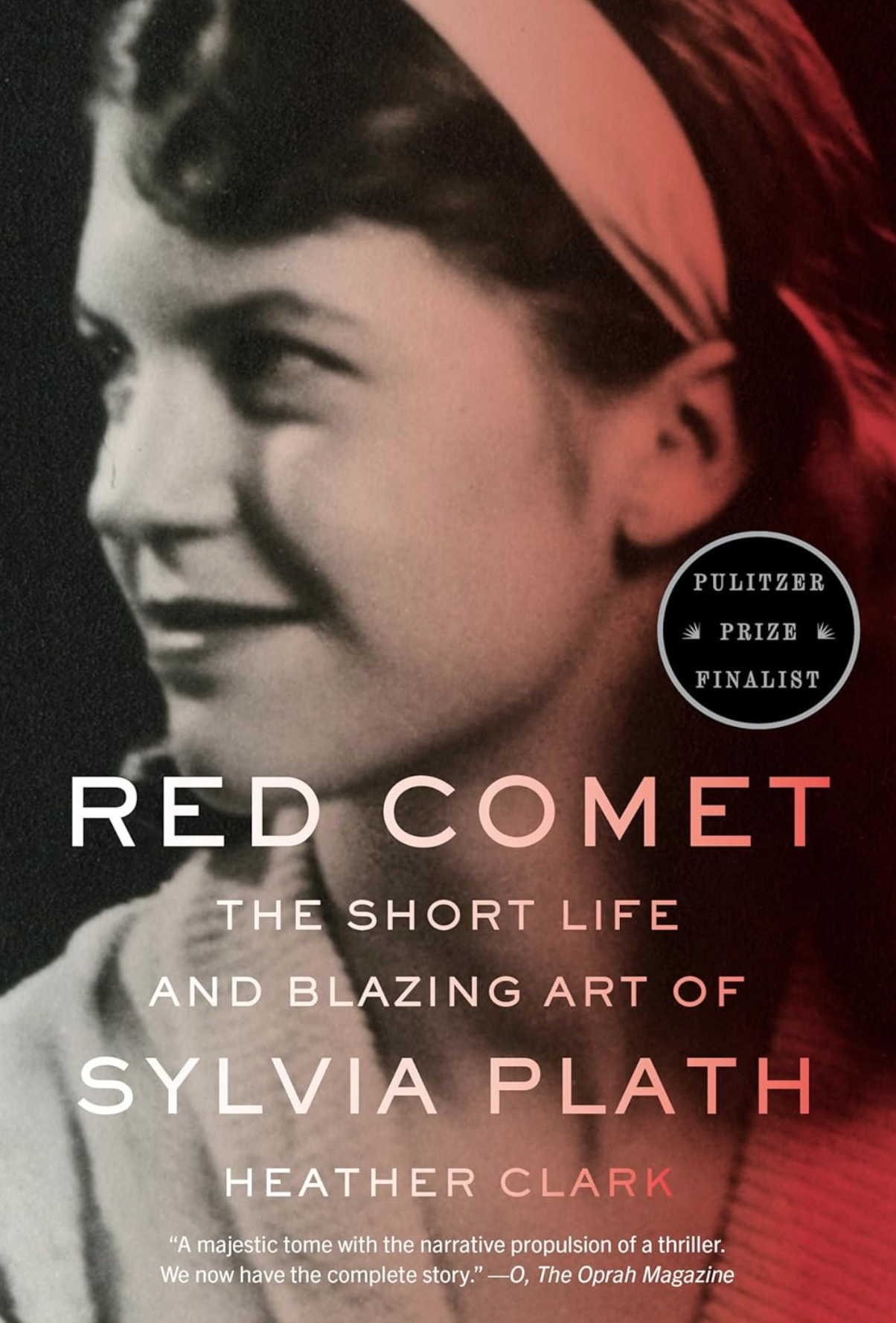
396 Sylvia Plath and Ted Hughes (with Heather Clark)
Ultimately, the marital relationship of Sylvia Plath and Ted Hughes was filled with pain and ended in tragedy. At the outset, however, things were very different. Within months of their first meeting at Cambridge, they had fallen in love, gotten married, and started having children - all while writing poetry and supporting one another's art. What did they see in each other as people and as poets? How did they inspire and encourage one another? In this episode, Jacke talks to Plath's biographer H...
395
March 31, 2022
395 Lolita by Vladimir Nabokov (A Best of HOL Episode)
Jacke plays a clip from Nabokov discussing his famous novel Lolita, in which the frantic narrator Humbert Humbert recounts his passionate (and illegal, immoral, and illicit) love for a young girl. After hearing from the author, Jacke plays clips from three History of Literature Podcast interviews: Jenny Minton Quigley, Jim Shepard,, and Joshua Ferris. Additional listening: Episode 318 - Lolita (with Jenny Minton Quigley) Episode 96 - Dracula, Lolita, and the Power of Volcanoes (with Jim S...

394
March 28, 2022
394 Freud and Fiction | PLUS An Assia Wevill Preview
What narrative techniques did Freud borrow and employ? What was the effect? And what did it mean for the literary critics who followed? Following his look at the life and major works of Sigmund Freud, Jacke describes Freud and his followers' at-times fraught relationship with fiction and fiction writers, with a particularly close look at Freud's famous work "Dora: An Analysis of a Case of Hysteria." PLUS a preview of our upcoming episodes featuring Sylvia Plath, Ted Hughes, and Assia Wevill. ...

393
March 24, 2022
393 Writers in Odessa, Ukraine's "Black Sea Pearl" | PLUS Margot Reads Boswell
Still recovering from his immersion in Sigmund Freud, Jacke looks instead to one of the world's great literary cities: Odessa. More than 300 writers have lived in, traveled through, and/or written about Ukraine's "pearl of the Black Sea" - what did they find so compelling? And what did they write about afterwards? PLUS we continue our conversation with Scottish novelist Margot Livesey, who has been reading Boswell's Life of Johnson, generally considered one of the greatest biographies ever writt...

392
March 21, 2022
392 Sigmund Freud
As the father of psychoanalysis, Sigmund Freud (1856-1939) was one of the most influential thinkers of the twentieth century. Although many of his claims and theories are still hotly debated, for decades his ideas dominated writers and thinkers around the world - and they continue to exert a major influence on how we view ourselves and our society. In this episode, we look at Freud's life and some of his most famous works, setting the stage for an analysis of Freud's impact on literature. Add...

391
March 17, 2022
391 Mark Twain's Publishing Fiasco | Great Literary Terms and Devices Part 2 (with Mike Palindrome)
Mark Twain was an enormously successful writer and a horrendous businessperson, with a weakness for gadgets and inventions that cost him a fortune.. In this episode, Jacke takes a look at his efforts to start his own publishing company, which started off strong but quickly descended into bankruptcy and ruin. What was he trying to accomplish? And what were the books that brought him down? After that, Mike Palindrome, the President of the Literature Supporters Club, joins Jacke for part two of ...

390
March 14, 2022
390 Victor Hugo
In this episode, Jacke takes a look at Victor Hugo (1802-1885), whose poetry, plays, and novels made him one of the leaders of the nineteenth-century Romantic movement. In addition to his famous novels Les Misérables and The Hunchback of Notre-Dame, we also look at some of his lesser known works; his family background; the legend of his conception in a Roman temple atop a mountain; his belief in the transformation of poetry throughout the history of human civilization; and the gusto with which h...

389
March 10, 2022
389 Thomas Pynchon (with Antoine Wilson)
"A screaming comes across the sky. It has happened before, but there is nothing to compare it to now." Such is the opening of Thomas Pynchon's Gravity's Rainbow (1973), the novel that won the National Book Award but repulsed the Pulitzer Prize Committee. Pynchon's special blend of paranoia and postmodernism made him one of the hallmark authors of the Cold War era. In this episode, Jacke takes a look at Pynchon's life and works, then is joined by a contemporary author, Antoine Wilson (Mouth to Mo...