
Episodes

435
Aug. 18, 2022
435 The Story of the Hogarth Press Part 2 - The Virginia Woolf Story That Changed Everything
In our last episode, we looked at the decision by Virginia Woolf and her husband Leonard to purchase a printing press and run it out of their home. What began as a hobby - a relief from the strains of writing - soon turned into a genuine business, as The Hogarth Press met with success. And when Virginia published one of her most famous stories "Kew Gardens," the dam burst, and the Woolfs and their press had to prepare for a dramatic increase in sales. In this episode, Jacke continues and conclud...

434
Aug. 15, 2022
434 The Story of the Hogarth Press Part 1 - Virginia Woolf's First Self-Published Story
Virginia Woolf has long been celebrated as a supremely gifted novelist and essayist. Less well known, but important to understanding her life and contributions to literature, are her efforts as a publisher. In the decades that she and her husband operated the Hogarth Press - starting with a hand-operated printer they ran on their dining room table, cranking out one page at a time - they published some Modernist classics, including works by Virginia and The Waste Land by T.S. Eliot. In this episo...

433
Aug. 11, 2022
433 Emma's Pick - "To Build a Fire" by Jack London
Is this the greatest man vs. nature story ever? Hard to say. But it just might be the purest. Kicking off a new HOL feature, producer Emma chooses a short story for Jacke to read and discuss - Jack London's classic "To Build a Fire.". Get somewhere warm and let your mind drift to the snowy Yukon for this gripping tale of man vs. nature and man vs. himself. Additional listening suggestions: 101 Writers at Work 90 Mark Twain's Final Request Edith Wharton and "Roman Fever" Help support...

432
Aug. 8, 2022
432 Hemingway's One True Sentence (with Mark Cirino)
"All you have to do is write one true sentence," Ernest Hemingway said in A Moveable Feast. "Write the truest sentence that you know." And so he did: the man wrote thousands of sentences, all in search of "truth" of some kind. What does a "true sentence" mean for a fiction writer? What true sentences did Hemingway himself write? And how much of this is in the eye of the beholder? In this episode, Jacke is joined by Mark Cirino, the host of the One True Podcast and author of the book One True ...

431
Aug. 4, 2022
431 Langston Hughes
Very few writers have had the influence or importance of Langston Hughes (1902?-1967). Best known for poems like "The Negro Speaks of Rivers," "I, Too," and "The Weary Blues," Hughes was also a widely read novelist, short story writer, and essayist - and his promotion of Black people and culture became central to the cultural explosion known as the Harlem Renaissance. In this episode, Jacke takes a look at Hughes's early years, including his childhood, adolescence, and the poems Hughes wrote in ...
430
Aug. 1, 2022
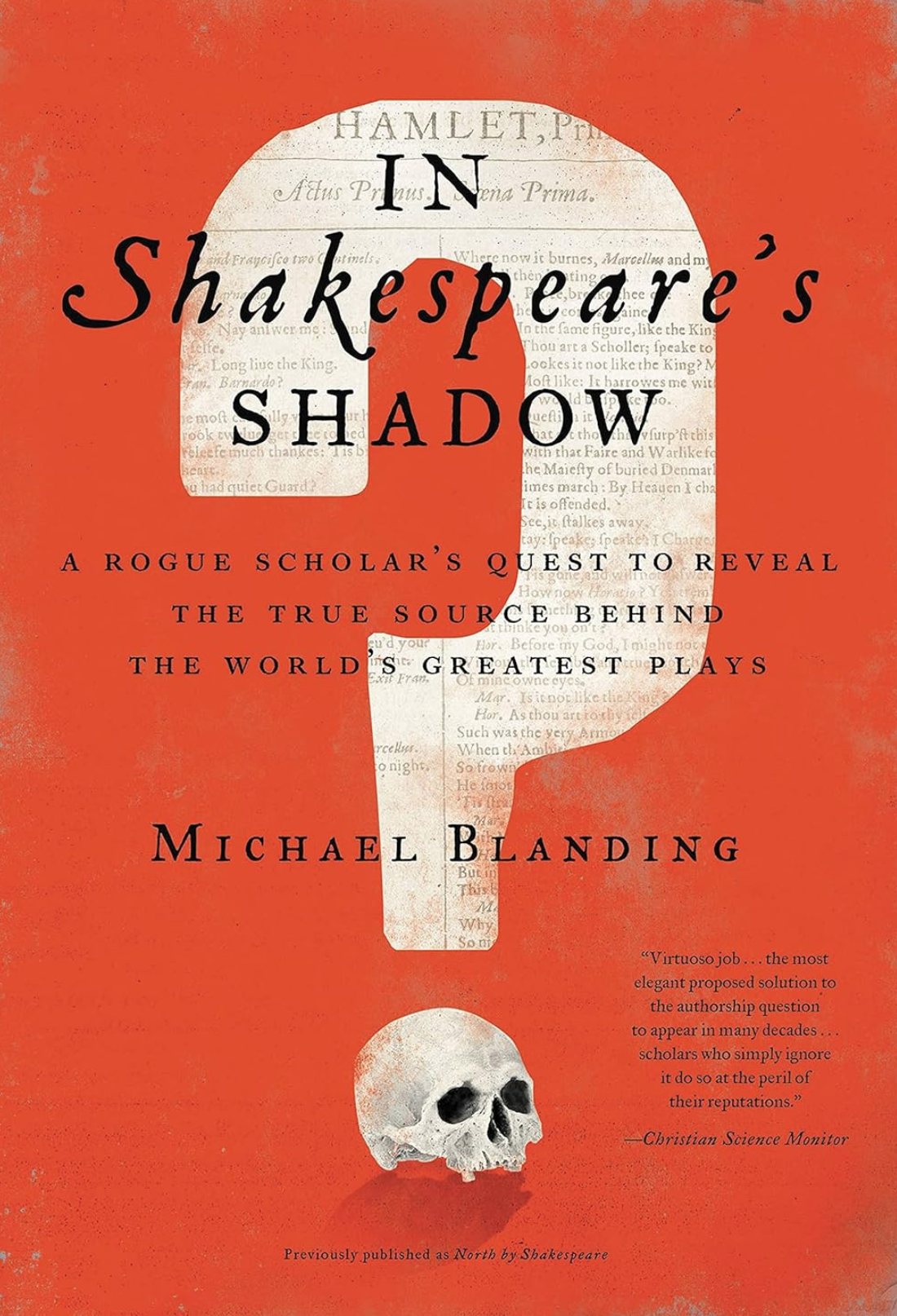
430 In Shakespeare's Shadow (with Michael Blanding)
It's a paradox that has bothered Shakespeare's fans for centuries: the man was as insightful into human beings as anyone whoever lived, and yet his own life is barely documented. This combination of literary genius plus biographical uncertainty has spun off a number of mysteries - including the question of how exactly Shakespeare came to know the things that he did. In this episode, Jacke talks to investigative journalist Michael Blanding, author of In Shakespeare's Shadow, about a renegade s...

429
July 28, 2022
429 Books I Have Loved (with Charles Baxter, Margot Livesey, and Jim Shepard)
For years, we've enjoyed talking to writers about the books they love best. In this "best of" episode, we go deep into the archive for three of our favorites: Jim Shepard and his youthful discovery of Bram Stoker's Dracula; Margot Livesey and her love for Ford Madox Ford's modernist classic The Good Soldier; and Charles Baxter telling us about his love for the poetry of James Wright. Enjoy! Additional listening suggestions: 96 Dracula, Lolita, and the Power of Volcanoes (with Jim Shepard)...

428
July 25, 2022
428 Edward Gibbon (with Zachary Karabell)
Since the first publication of his six-volume magnum opus, The History of the Decline and Fall of the Roman Empire, Edward Gibbon (1734-1797) has been ranked among the greatest historians who ever lived. What made his work different? Does it hold up today? And what lessons can a modern-day historian draw from his example? In this episode, Jacke talks with author Zachary Karabell about Gibbon's inspiration, influence, and legacy. ZACHARY KARABELL is the author of numerous books, including Insi...

427
July 21, 2022
427 Bashō's Best - Haiku and the Essence of Life
In our last episode, Jacke looked at the life of celebrated Japanese poet Matsuo Bashō (1644-1694), the widely acknowledged master of haiku. In this episode, Jacke looks deeper into the nature of Bashō's best works, organizing them into some loose categories and offering some thoughts on haiku in Bashō's world and ours. Additional listening suggestions: 425 Matsuo Bashō, Haiku's Greatest Master 75 The Tale of Genji by Lady Murasaki 418 "Because I Could Not Stop for Death" by Emily Dickins...

426
July 18, 2022
426 Matsuo Bashō - Haiku's Greatest Master
In addition to being what is probably the most widely used poetic form, haiku is almost certainly the most often misunderstood. In this episode, Jacke examines the life and works of Matsuo Bashō (1644-1694), haiku's greatest master, as he sorts through his thoughts on the uses (and potential misuses) of the haiku form. What makes much of it so bad? And how does that differ from what is truly great? Additional listening suggestions: 62 Bad Poetry 7A Proust, Pound, and Chinese Poetry 312 Yu...

425
July 14, 2022
425 Tom Stoppard (with Scott Carter)
Born Tomáš Sträussler, in what was then Czechoslovakia, celebrated playwright Tom Stoppard (1937- ) became one of the most famous British playwrights in the world. Known for his wit and humor, his facility with language, and the depth of his philosophical inquiries, he found success with plays like Rosencrantz and Guildenstern Are Dead, The Coast of Utopia, The Invention of Love, and The Real Thing. He has also been a successful writer for radio, television, and film, with scripts like Shakespea...

424
July 11, 2022
424 Karel Čapek (with Ian Coss)
Czech novelist Karel Čapek (1890-1938) might be best known as the pioneering science fiction writer who first coined the term "robot." But readers have long appreciated the transcendent humanity of his works. "There was no writer like him," Arthur Miller once said, "prophetic assurance mixed with surrealistic humor and hard-edged social satire: a unique combination...a joy to read." In this episode, Jacke talks to podcast producer Ian Coss about the life of Karel Čapek, his contributions to lite...

423
July 7, 2022
423 Roger Ebert
Jacke spends his birthday reflecting on Chicago film critic Roger Ebert (1942-2013), the Judd Apatow show Freaks and Geeks, and other literature-and-life topics. Enjoy! Additional listening suggestions: 421 HOL Goes to the Movies 79 Music that Melts the Stars - Madame Bovary by Gustave Flaubert 149 Raising Readers (aka The Power of Literature in an Imperfect World Help support the show at patreon.com/literature or historyofliterature.com/shop. The History of Literature Podcast is a mem...

422
July 4, 2022
422 Wallace Stegner (with Melodie Edwards)
During his lifetime, Wallace Stegner (1909-1993) became famous for his prizewinning fiction and autobiographical works; his dedication to environmental causes; and his initiation of the creative writing program at Stanford University that bears his name. His most celebrated works, including Angle of Repose, The Spectator Bird, and Crossing to Safety are still much-loved and widely read - even as accusations have emerged that in at least one instance, Stegner appropriated and plagiarized the work...

421
June 30, 2022
421 HOL Goes to the Movies (A Best-of Episode with Brian Price, Meg Tilly, and Mike Palindrome)
Summertime! The season for watching blockbuster movies in arctic conditions, heart-pounding suspense flicks that heat the blood, and cool-breeze dramas that stir the soul. In this best-of episode, Jacke celebrates the summer with portions of conversations with three previous guests, Brian Price, Meg Tilly, and Mike Palindrome. Additional listening suggestions: 135 Aristotle Goes to the Movies (with Brian Price) 338 Finding Yourself in Hollywood (with Meg Tilly) Alfred Hitchcock (with Mike...

420
June 27, 2022
420 Honoré de Balzac
Very few novelists can match the ambition or output of French novelist Honoré de Balzac (1799-1850). A pioneer of the great nineteenth-century "realism" tradition, his novel sequence La Comédie Humaine presents a panoramic view of post-Napoleonic France. Containing something like 90 finished novels and novellas, Balzac's achievement has influenced writers like Hugo, Dickens, Flaubert, and Henry James. In this episode, Jacke talks to contemporary novelist Carlos Allende (Coffee, Shopping, Murder,...

419
June 23, 2022
419 Christina Rossetti
It's the Christina Rossetti episode! Jacke finally musters up the energy to finish what he started, and takes a look at one of the great poets of the Victorian era (and the creator of "Goblin Market," one of the strangest poems he has ever read. How did this seemingly prim, even matronly woman, known for her religious devotion and for rejecting three suitors on mostly religious grounds, come to write such a bizarre and hedonistic poem? What did she say about posing for the pre-Raphaelites and th...

418
June 20, 2022
418 "Because I could not stop for Death" by Emily Dickinson
Because Jacke could not stop for the scheduled episode topics, a certain poem kindly stopped for him. Luckily it's one of the greatest poems of all time! It's by the 19th-century American genius Emily Dickinson, and it packs into seven short stanzas a journey through life, death, and the cosmos. Read a copy of the poem here: Because I could not stop for Death - (479) Additional listening suggestions: 120 Astonishing Emily Dickinson Shakespeare's Greatest Sonnets | Sonnet 29 ("When in d...

417
June 16, 2022
417 What Happened on Roanoke Island? (with Kimberly Brock)
It's one of the great mysteries in American history. The "lost colony" of Roanoke Island, where 120 or so men, women, and children living in the first permanent English settlement in North America simply disappeared, leaving behind nothing but a mysterious word carved into a tree trunk. While historians remain baffled, speculation has run rampant, with everything from massacre to relocation to space alien abduction taking their turns as potential theories. What happened to those people? And is t...

416
June 13, 2022
416 William Blake vs the World (with John Higgs)
In his lifetime, the Romantic poet and engraver William Blake (1757-1827) was barely known and frequently misunderstood. Today, his genius is widely celebrated and his poems are some of the most famous in the English language - and yet we still struggle to comprehend his unique way of seeing the world. In this episode, Blakean biographer John Higgs, author of the new book William Blake vs. the World, joins Jacke to discuss Blake's life, art, and visions. Additional listening suggestions: ...

415
June 9, 2022
415 "Goblin Market" by Christina Rossetti
As a devout and passionate religious observer, Victorian poet Christina Rossetti (1830-1894) lived a life that might seem, at first glance, as proper and tame. Even some of her greatest works, devotional poems and verses for children, strike us as just the kind of art a fine upstanding moralist might generate. But there was more to Christina Rossetti than that - and in fact, she produced some of the most passionate and idiosyncratic poems of her era. In this episode, Jacke takes a look at her lo...

414
June 6, 2022
414 Henry James's Golden Bowl (with Dinitia Smith) | William Blake Preview (with John Higgs)
Money. Sex. Power. Family. Those are the conceits at the heart of Henry James's late-period masterpiece, The Golden Bowl. In this episode, Jacke talks to author Dinitia Smith, whose new novel The Prince reinvigorates this classic story of a wealthy American widower, his doting daughter, her charismatic foreign husband, and the childhood friend whose secret love affairs threaten to jeopardize multiple marriages. Additional listening suggestions: 340 Forgotten Women of Literature 5 - Consta...

413
June 2, 2022
413 Walt Whitman - "Song of Myself"
In this episode, we resume our look at Walt Whitman's life and body of work, focusing in particular on the years 1840-1855. Did Whitman's teaching career end with him being tarred and feathered by an angry mob, as has long been rumored? What happened during his three months in New Orleans? And how did this printer and hack writer wind up writing the twelve poems in Leaves of Grass (1855), thereby becoming the "true poet" that Ralph Waldo Emerson had been searching for? Additional listening id...

412
May 30, 2022
412 HOL Goes to War (with Elizabeth Samet, Matt Gallagher, and Tom Roston)
In this best-of History of Literature episode, Jacke revisits the topic of war and literature with three guests: Professor Elizabeth Samet (Soldier's Heart: Reading Literature Through Peace and War at West Point), who teaches literature to military officers in training; Matt Gallagher (Empire City and Youngblood), a veteran who served in Iraq; and Tom Roston (The Writer's Crusade: Kurt Vonnegut and the Many Lives of Slaughterhouse-Five), who places Kurt Vonnegut's writing in the context of his P...