The Whisk(e)y Historian with Robin Robinson (TCGS S5 E2)
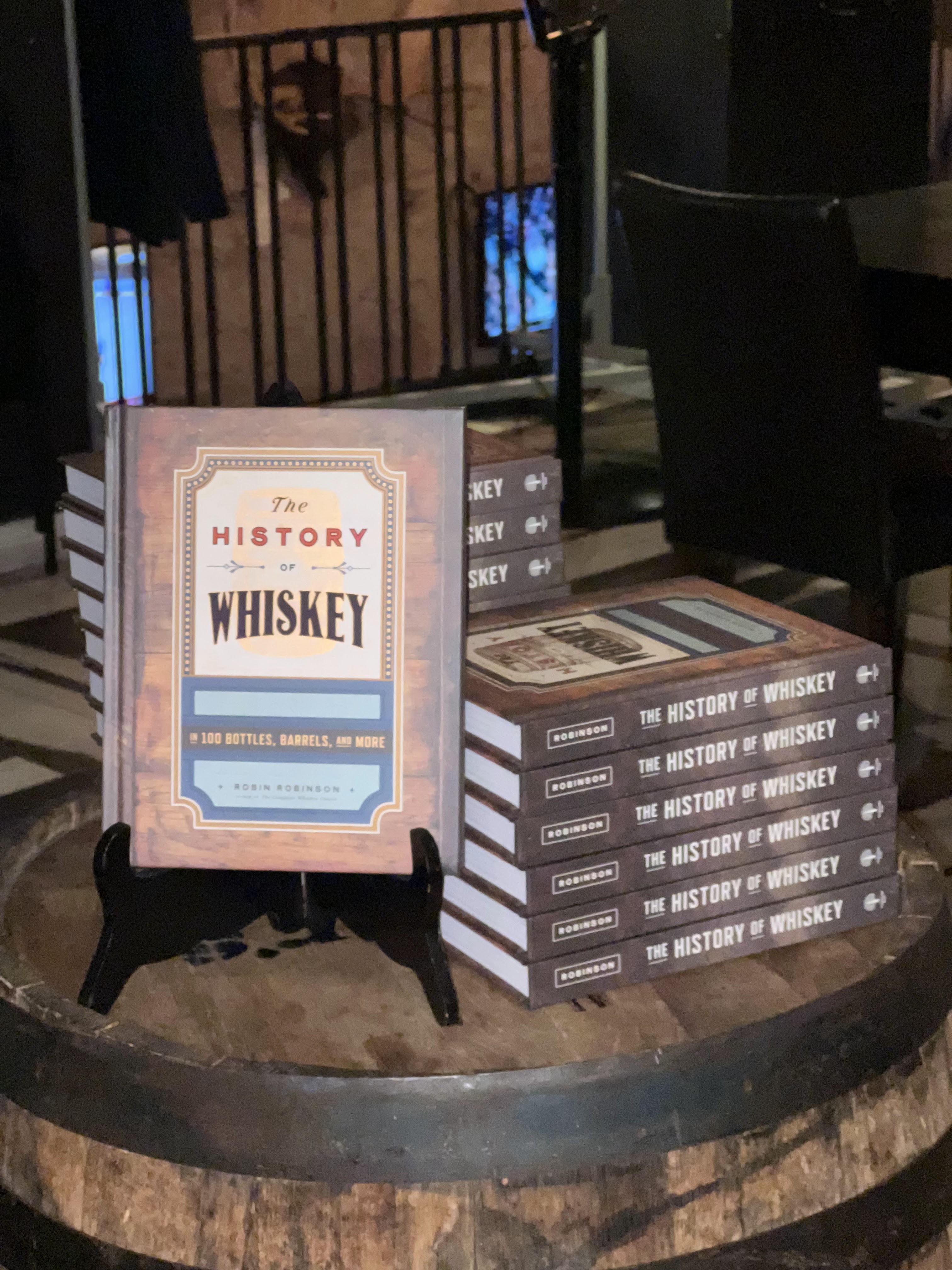
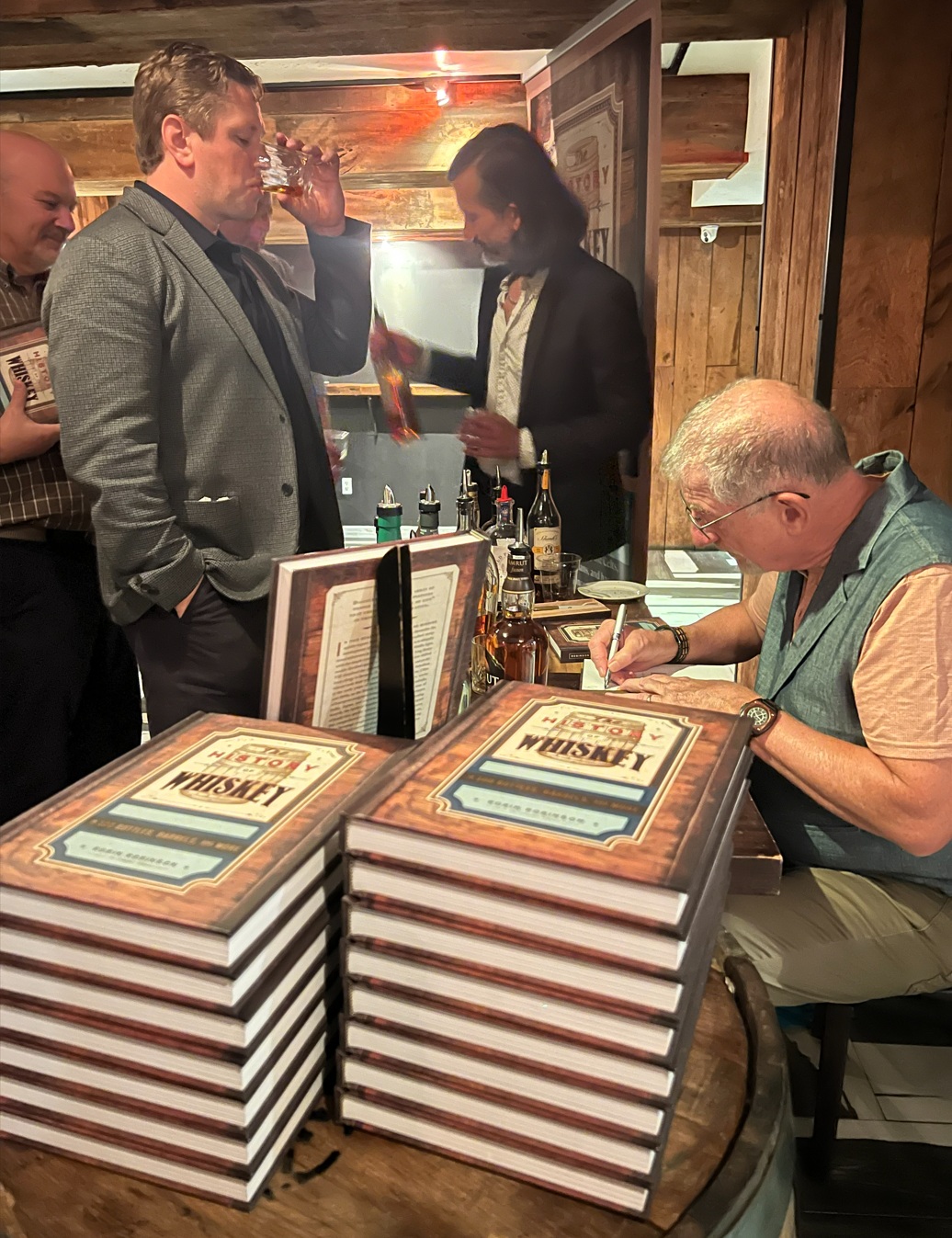
Recorded live to tape Dear Irving on Hudson in Midtown Manhattan, this lively episode of The Cocktail Guru Show brings together hosts Jonathan and Jeffrey Pogash with special guest Robin Robinson — celebrated author of The Complete Whiskey Course / The History of Whiskey.






The conversation opens with Robinson’s unexpected entry into the spirits world: while working as an actor in 1980s New York, he was hired to impersonate a Scottish distiller for a private Park Avenue tasting. That quirky gig sparked a lifelong passion for whisky, eventually transforming him into a respected educator and historian. He recounts hilarious stories from his acting days — including commercials with Wendy’s founder Dave Thomas, voiceover work, and soap opera appearances — and details his long-standing connection to hospitality through roles at legendary New Orleans institutions like Brennan’s and Commander’s Palace.
Robinson discusses how his hospitality career, storytelling background, and deep curiosity evolved into his new book — a collection of 100 short narrative chapters charting the global rise of whisky from prehistoric fermentation practices to today’s international industry. He highlights surprising origin points, from early alchemical elixirs to the pivotal influence of Scotch whisky families like the Walkers and Doers, and the marketing revolution sparked by bottled Scotch.
The conversation explores the development of Japanese whisky through innovators like Masataka Taketsuru and Shinjiro Torii, whose combined vision laid the foundation for what would become Yamazaki and ultimately Japan’s now-world-famous whisky culture.
Packed with history, humor, and insight, this episode is a celebration of storytelling, hospitality, and the colorful personalities that shape whisky traditions worldwide. Robinson closes by inviting listeners to dive deeper into his book and join him at his education programs at Astor Center in NYC.
From the Publisher:
https://wwnorton.com/books/9781682689103/about-the-book
About the Book:
Transcript is AI generated
===
Announcer: [00:00:00] Jonathan POAs is the cocktail guru, a mixologist and hospitality expert that see, yeah, you know, big words, dude. I'm, I'm the cocktail guru. Cheers Jeffries, his dad, a wine and spirits author, historian, and consultant.
Jeffrey: Oh, I do my homework.
Announcer: With decades of experience, they're always looking for the next big thing.
Announcer: Join this father and son duo for a few laughs as they explore the hottest trends in hospitality. With the service industry's leading, trailblazers and taste makers, welcome to the Cocktail Guru Show
Jonathan: The Cocktail Guru show back at it again. Live recording at Dear Irving on Hudson in Midtown Manhattan.
Jeffrey: And see, I told you, John, you have to just grab people off the street. 'cause you never know who you're going to find. And he, and we just dragged him off the street. And look, we found
Robin: an author and I, I was doing very well on the corner until you [00:01:00] interrupted me too.
Robin: So I tapped you on the
Jonathan: shoulder and we saw you and we thought, Robin, like to, would you love to be,
Jeffrey: would you like to be on our podcast? Come on the show. Anybody on the show? Show obviously. And here he is, Robin Robinson. Oh my goodness. Welcome to the Cocktail Brew Show, guys. Author, author of the History of Whiskey.
Jeffrey: Thank you. And we have have the books here, which we're gonna get
Robin: newly, newly released. Newly re uh, actually not yet released. October 21st is the actual release date. But, uh, here we are jumping ahead on the, well, this,
Jonathan: well, the episode will come out around then, so that'll be perfect. Perfect.
Robin: Okay, great.
Robin: Good? Yeah. Okay. Yeah,
Announcer: don't go away. We'll be right back with Robin Robinson.
Jonathan: At the Cocktail Guru, it's all about the experience. We want our clients to taste and feel the aroma, the temperature, the flavor to make memories when they try our cocktails. The cocktail guru was born in 2006 when there was a need for high quality cocktails, bartender training, and expertly crafted drinks for special events.
Jonathan: Then the guru team moved to Massachusetts and expanded nationally. We even provide cocktail [00:02:00] demonstrations on morning television institutions like The Today Show. Consider the guru team for all of your events. Corporate clients enjoy our entertaining team building exercises. Bachelorette mixology classes are fun for everyone.
Jonathan: We can craft a signature cocktail bar for any occasion. Plus the guru team can design cost-effective beverage programs with staff training for any bar or restaurant. And be sure to join us for the Cocktail Guru Podcast where we regularly interview some of the hospitality industry's best. So why not consider the cocktail guru for your next project?
Jonathan: Cheers.
Jonathan: So tell us about, um, your journey. If we can rewind your journey to where you are today. I mean, how did, how did you get into the world of spirits? Um, like going like way back.
Robin: Yeah. Well, here in New York City, um, uh, I was an actor. Um, that's right. For many, many years. Who
Jeffrey: wasn't?
Robin: Who wasn't? Yeah. But I actually worked, I just want you to know that you actually worked.
Robin: [00:03:00] I actually made money. Um, and, uh, but uh, a lot of it was actually doing other gigs. And one other gig was, um, uh, impersonating people, uh, for parties and like really expensive bar mitzvahs back in the eighties and like court. Parties, stuff like that. I got, um, hired by a friend of mine, uh, to imp ate a Scottish distiller, um, for a group of private people on Park Avenue to do a tasting of four single malt scotch whiskey.
Robin: So the first question was, um, well, when's the gig? Well, it's Saturday night. Okay, cool. I'm free. Um, how much does it pay? What's two 50 Cash. Okay. Yeah. I'm in it. And, uh, oh, by the way, what is a single mal Scot's whiskey? This is about 1985. Mm-hmm. Right. So, uh, I'm, I'm practicing here. My accent, you know, entire, it's very good to him that like you'll say so, but if there's a Scott in the room, they're gonna say, don't quit your day job.
Robin: You know? So, um, uh, I'm practicing the accent. Um, uh, [00:04:00] somebody from the club, it was a private club on Park Avenue. Um. Sent some magazines and pamphlets 'cause there was no internet. And I all spent all week studying these things and trying to learn these weird words and stuff like that. I went to the party, um, there were Scottish people there, men in kilts.
Robin: I'm thinking, oh God, this is gonna be terrible. I told them, I said, look, this is not gonna work out if someone understands who I am and discovers me. So here's what we're gonna do. We're gonna end the wi, we're gonna end the event with a 25-year-old Macallan. Now, I had to be explained what that meant in terms of like, okay, it's like the sier of whiskey, right?
Robin: And so, um, I said, do you have an 18-year-old Macallan? They said, yeah, we've got one at the club. I said, do me a favor. Take the whiskey, pour it into a container, and then fill the bottle back up with, um, uh, iced tea, put a little bit of the whiskey, uh, uh, pour it in the top, put that in front of my [00:05:00] setting, um, when I come in.
Robin: And so what I did, my, uh, my thinking was, um, anybody who's drinking, um, will have an attitude. And anybody who has an attitude, nobody will ask questions of them. And so here I am, a scot with an attitude drink in the inside. So I'm draining this bottle of, um, of iced tea ice. Right. With water too. 'cause that's how the, the, the scotch drank it with water.
Robin: And, um, and all of these people were just like, oh my goodness. And of course I was much, much, much younger than all of them at the time. And, um, so we're going from, I remember the, the, the, um, the, the setup was we started with a, a Glen Livet. We went to a Glen Maringi 15 back when they were make bottling fifteens.
Robin: Um, we did a, um, lare 10-year-old, and, uh, then we ended it with a 25-year-old Macallan. And you should have seen when I actually, I, I brought the lare to my nose. I'm thinking I had never, I didn't even know how to pronounce this correctly. I had never smelled it, never drank it. And I bring it. I'm going, oh my God, there's something [00:06:00] wrong with this.
Robin: This can't. Be smelling like this on purpose. And so I remember drinking it and you gotta remembered her. Now I'm a distiller from Scotland, so I just felt like the back of my head blow up against like, you know, the wall behind me. 'cause I had to keep a straight face. Yeah, that was the beginning. That was the beginning.
Robin: Um, I got paid the next morning. Um, I bought my first bottle of real Scotch Whiskey, uh, 1999, a bottle of 12-year-old Macallan. Um, I've been for years and years and years. I was that guy at the party that would kind of corner you and kind of tell you about scotch whiskey and, and everyone's going. Get me the fuck away from this guy, you know?
Robin: Mm-hmm. Because he's like boring the hell outta me. But I was that guy.
Jonathan: Wow. And did what, what kind of, what were you doing as an actor? What kind of acting gigs were you?
Robin: Oh, I did everything. Um, uh, did you voiceovers? You got a voice? Oh, I did voiceovers. Um, I did on camera commercials. I did a lot with Wendy's.
Robin: Um, me and me and Dave were like this, you know? Yeah. Yeah. Right. Did. Dave [00:07:00] Thomas, Dave Thomas. Yeah. Yeah. Um, I remember Dave, um, says, Robin, great to see you again. And I said, Hey, Dave, man, awesome. You know? And he goes, well, how's your family? 'cause you know, I had a daughter at that time. I go, well, great, thanks Dave.
Robin: And, and uh, he, he goes, uh, uh, Don, uh, give Robin one of my cards. And so Don is the card guy, so Don gives me one of Dave's business cards. You know? And so that was kind of like this big thing. Um. I did Crest, I did a commercial for Frosted Mini Wheats. Um, wow. Uh, so yeah, and I did like, uh, an episode of, uh, married with Children, which I still get ready for this.
Robin: I still get, um, residuals, residuals for it. I get a check. I think the, the. The, the check, um, uh, the cost of processing the check is more than what, more than that? The fact, what the check is. But, you know, the power of unions, man, I mean, like, you know, that's, that's pretty incredible. Yeah. So that, and I did a lot of soap operas.
Robin: Um, my mother never accepted the fact that I was an actor. Um, [00:08:00] she wanted me to be a lawyer. She wanted me to be this and this. And I, and I fell in love with acting and I said, this is essentially where my life path is at. Um, uh, and until I got cast on her, not only her. Favorite SOAP Opera Guiding Light, but it was the soap opera from which a character came that she named me from.
Jeffrey: Wow. Your kid, Robin. Robin, my mom was
Robin: into all the soap proper. She was a beautician back when I was born. And the Guiding Light had a character named Robin, and that's who she's, I'm naming my baby Robin. I don't care if it's a boy or girl. And so, um, after all those years, I get cast on, on Guiding Light and suddenly it's like my son, the actor.
Robin: Wow. That's full circle. Yeah, it was. Yeah. Yeah. That's, well, I must say
Jeffrey: I was disappointed when you decided to become an actor. 'cause I always wanted you to be a bartender.
Robin: Isn't that
Jonathan: you wanted to
Robin: be, it used to be the
Jonathan: same thing. You wanted to be an actor too.
Jeffrey: Yes, I did.
Robin: I was a bartender for a long time, um, uh, in, in private [00:09:00] events and, um, mostly down, like in New Orleans, um, I worked at Brennan's and I worked at, um, oh yeah, but no, on the floor.
Robin: Yeah, yeah. But at Brennan's, I actually took some time behind the bar and part of the Brennan's, um, a three quarters breakfast is, um, there's a, a cocktail first and then an appetizer, then the egg dish, and then some flaming dessert at the end. And, um. One of the cocktails was a ramus gen fizz, and I remember just getting slammed behind the bar and all these waiters are coming in asking ramus, gen fizz.
Robin: And so you know exactly what it takes. Yeah. And I'm thinking back. Tell him to order a fucking bloody Mary, you know, because that was easy to make.
Jonathan: So much easier to make a bloody Mary with the bloody Mary.
Robin: Oh, dry shake. Are you kidding me? What are you doing here?
Jeffrey: And he couldn't be in a better place than Brennan's.
Jeffrey: Well, yeah, it was awesome. Um, there. Tried to have as many breakfast there as I possibly Exactly. Oh yeah. The
Robin: years. Yeah. And um, I was there, I was at, um, uh, commander's Palace. Mm. Um, I had, you know, I'd been in the restaurant industry [00:10:00] since I was 14. Um, I had a first job as a pot washer. The chef couldn't stand me 'cause I was talking too much.
Robin: So he says, you're going out on the floor. So I ended up out on the floor as a busboy. Yeah. And then it just kind of progressed from there.
Jeffrey: How did you get to New Orleans?
Robin: Um, uh, I was in my, uh, transition stage, uh, after college. Um, I wanted to be an actor. I didn't really know how to do it, but I remember, um, a college professor said, just get out there and do it.
Robin: So I said, okay. So I spent four years on the road doing standup comedy, improvisational comedy, dinner theater, children's theater, anywhere. Where I can actually, you know, get on stage. And of course to support myself. I was doing all of these different jobs. I was, uh, in Houston, uh, it was a dining room, re uh, uh, uh, manager in a really elegant restaurant and some friend, and I had just left it and I was gonna start another job in a day or two.
Robin: Some friends of mine said, Hey, we're going to New Orleans for Mardi Gras. I said, oh shit, I've heard [00:11:00] of Mardi Gras. I wanna go.
Jonathan: Yeah.
Robin: So, uh, I went with them and um, I got drunk out of my mind. We got there on Saturday. Um, I had no idea what to expect. I literally had no idea what to expect. 'cause again, this is before mass communications, anything like that.
Robin: So I just went in insane and I got so drunk. Um, I ended up with some people from um, Minneapolis and they brought me up to their hospitality suite in their hotel to kind of sober up. And I did. I get downstairs and I'm going, I don't even know how to get back to where I was at. And in my wallet I had one phone number and that was the phone number of a guy who I used to work with in Houston at a restaurant, and he and his wife had moved back to her native New Orleans.
Robin: So I called him up and I said, uh, Rick. And he goes, Robin, I go, yeah, man. I go like, yeah. I'm like, I'm in. No. And he goes, you're in New Orleans? I'm going, yeah. He goes, well, where are you at? I said, I don't know man. I'm in like a hotel, but [00:12:00] you know, the, the bar's spinning. He goes, you're at the Monte Leon don't move.
Robin: I'm coming to catch you. The carousel bar. Yep. The carousel bar. Absolutely. And um, I stayed for a year and a half. Oh, wow. That's, that's a long time. I stayed for a year and a half. I was supposed to go back and, you know, his wife Judy goes. Darling, this is New Orleans. I can get you a job anywhere. Are you kidding me?
Robin: Well, you're gonna go back to a restaurant job, therefore, right. You're gonna have, you're going to forget about it. And next thing I know, I was working in Brennan's, you know.
Jonathan: Well, we, well, Dickie Brennan is a friend of the show. We've had him on twice.
Robin: Yes. Now, this was the other Brennan's, right? Exactly.
Robin: This
Jonathan: was the other side of the fence. That's right. The other side
Jeffrey: of the
Robin: family. Yeah. And it was like a blood feud. Right. And I was on the Owen, uh, Brennan. That's right. When I actually went to, oh, I got a great story button. Yes. It'll make it short. I actually, uh, ended my time at Brennan's. I did something else.
Robin: And then one of the guys I knew at Brennan's was also, uh, um, he was connected with both restaurants. Uh. A commander's palace. And uh, [00:13:00] he said, yeah, I can get you a job as a commander's palace, but not as a captain. I can get you in as a waiter. I said, that's fine. 'cause there was a very, very strict hierarchy.
Robin: Yeah. Okay. Uh, captains are the only guys who are allowed to do the tableside stuff. Okay. But I had done that tableside stuff in restaurants before. But no, you're coming in as a waiter and that's all you're gonna do. Fine. Ella, Brennan, Ella, Brennan, the great matriarch of. All things in a, in a restaurant was walking that floor every single night.
Robin: Hmm,
Jonathan: wow.
Robin: Every single night she had her eye literally on everything she finds out. I'm there and she's going, okay, what the fuck is up with this? Because that's the other side of the Brennan family, right? So already I'm now viewed with suspicion right now, br um, commander's Palace is an open kitchen, right?
Robin: So when you come in to actually go sit in the bar waiting for your table, you're walking through the kitchen. Mm-hmm. This is a very unusual experience for anybody working in a restaurant. So you kind of get used to actually kind of [00:14:00] dealing, you know, you can't. F-bombs everywhere and stuff like that, you know, you have to be careful.
Robin: So, um, at one time we're slammed one night and I'm working with a captain who was a really good guy and he and I got along, we got drinking together. And, um, uh, he knew that I knew all the whole setup, but, you know, according to the hierarchy, I'm not allowed to do it. So, um, one night, uh, we're slammed, we're in the weeds, and, uh, he goes.
Robin: Robin 21 man. Um, they need cafe Brule. Um, I can't do it. I said, got it Right. So I went in the kitchen. I had to convince the, uh, the, the, the, the kitchen staff that the captain said it was okay if I set up the brule cart 'cause I'm gonna execute. So we go, I take the brule cart out and for those people who don't know what Cafe Brule is, it's like one of the most magnificent, um, flaming coffee desserts that you'll ever see.
Robin: Oh yeah. And it was kind of created there in New Orleans. So, um, I take the cart out and, uh, so I'm heating up the, the, the mixture right here. And the first thing that you do, that's the big [00:15:00] theatrical thing, is you take the orange and you peel that into a single helix like that, right? And then you are then to actually take cloves and um, uh, and, and, and uh, dot the orange with, and while I'm doing that.
Robin: Ella is across the dining room and all of a sudden she's here. Like a second head. Yeah. Right. And I'm sticking the clothes into the orange while Ella is like breathing down my neck right here. And I finally get the whole thing done. And I'm trying to actually have funny banter. Yeah. You know, with the Oh, I'm sure that, you know, you're all, we're all, you know, this is Miss Ella Brennan.
Robin: She, you know, and, um, I'm trying to get the whole thing done and. And then, you know, you, you, um, you flame, uh, you flame the, the, the coffee and then, you know, you take the thing and you pour it over and it's this wonderful, you know, it's amazing
Jonathan: [00:16:00] presentation. It's a spectacular Yeah. Presentation. I,
Robin: I've seen Dale DeGraff do it.
Robin: Yeah. And Dale's done it. And yeah. And uh, and like, if you were like, you know, if, if you had done it for a while and you actually had. Feel while all of that blue flame is dripping down that orange, if you take the fork and the, the, the, because it's uh, it's stinking in the tines on the top. If you take the fork and just.
Robin: Flick it like that. A little bit of the flame will pop out onto the table and go poof like that. And man, your tip just goes through. Oh yeah.
Jonathan: Of course. Performance art.
Robin: Yeah, it's performance art. Yeah. So, um, yeah. So that was like my time back there in uh, yeah, in those days. Amazing. That's great. We love
Jonathan: New Orleans.
Jonathan: Yeah. We, we love New Orleans. New Orleans. We also wanna make sure we talk about, yeah, newest. We should talk about the book. Let's talk about Ya's baby. Your newest baby here.
Jeffrey: Yeah. I loved. Flipping through this book. Thank you. Reading it. Because I spent 18 years of my career representing various brands Yeah.
Jeffrey: Of Scotch whiskey. Sure. [00:17:00] Notably Johnny Walker. Yeah. And doers. Yeah. And others including. Pinch. Yeah. Or ha and
Jonathan: hay and there you go. They're all there. It's all in there. And they're all, you dedicate the book to Amy and Rose, I presume, your wife and daughter? My wife and daughter, yeah. And your daughter's Rose?
Robin: My daughter's Rose. And
Jonathan: she, is she she's in the business or no longer?
Robin: No longer. Okay. No, actually she's on, she's actually, um, uh, uh, uh, um, wrapping up, um, as of now, um, a one year solo trip. Around the world.
Jonathan: Wow. Yeah.
Robin: And right now she's actually in Georgia, um, working in a winery.
Jonathan: Wow. No kidding.
Robin: Yeah.
Jonathan: Well, well, dad and I were just talking about how interesting it is that you include a portion on the neolithic period.
Jonathan: Yes. Of all, of all periods in time. I mean, you're literally going way, way back. All the,
Robin: the whole idea about doing this, um, this is a hundred separate. Short stories. Yeah. Yeah. And I'm a story, and I'm a [00:18:00] storyteller. Uh, what I do is tell stories. I love stories. Uh, I've been born on a story. The story that I just gave you there, those are like stories that came outta real events, you know, but the story should be entertaining, right?
Robin: Otherwise, it's a shaggy dog story. And everyone's wondering, okay, where the hell is that gonna go? Aristotle told us 3000, 4,000 years ago, a story has a beginning, a middle, and end. And when you break from that format. Right. Um, you'll lose people.
Jonathan: Mm-hmm.
Robin: Right? So the whole idea of this was to actually make a hundred separate short stories, but then follow the entire course.
Robin: But when you follow the course of whiskey, well that's only 500 years, right? What happened before that? And then you start thinking, well, once that happened, then what happened before then? And then it takes you all the way back to. It all starts with a pot. Hmm. So think about that just from an anthropological, um, uh, uh, perspective of, you know, taking [00:19:00] something that held liquid and other things and you're able to mash stuff together, and then the result of that mash is something different than the individual ingredients that you put in there.
Jonathan: Right?
Robin: It's a stew. It's whatever it is. That's the beginnings of putting things together in a pot. Yeah. And so it has to go all the way. We have to start there,
Jeffrey: and I was really pleasantly surprised.
Robin: Yeah.
Jeffrey: To also see that you had included Chau Chartres. Oh
Robin: yeah.
Jonathan: Right. He loves pronouncing it. Yeah. As the friend ing his things is
Robin: fantastic because chartreuse.
Robin: Gives us our connection from when Aqua Vita, right, was a medicinal health induced un and and it was done only for those reasons. And then it moves into. Recreational drinking. Mm. And chartreuse is one of that. And Geneva, both of [00:20:00] those are like these transition periods where the stuff that is really the, the, the, the in, in the province of monks and holy men and people like that.
Robin: And they're doing, and they're making elixirs and they're making all of these things that take away all, all what ails you, but now how does that move into actually drinking this actually for the, the sake of drinking it? Right. And chartreuse is one of those connectors. Yeah,
Jonathan: absolutely. Yeah. We were just talking about Johnny Walker and you've got a whole section, Walker's grocery shop,
Robin: Walker, I mean, of all of the families.
Robin: Yeah. I mean, you think about how families, uh, have, you know, the beams, you know the doers. Oh yeah. Um, um, uh, uh, uh, all of the families that dominated it, uh, the walkers or probably the one family. Probably held sway over that whole idea of passing one thing from one family to another family to another family.
Robin: The Jameson family would be similar to that in in Ireland as well. Yeah, yeah. Well,
Jeffrey: I spent a lot of time talking about Johnny [00:21:00] Walker and the history. Oh, I'm sure
Robin: you did. And yeah. Tommy Doer you. Oh, Tommy Doer meant, yeah, very nicely in that book. This dude's like my hero. Yeah, really? Right. I even put the challenge down.
Robin: I said, he's the greatest whiskey salesman of all time. He's the quintessential marketer, whiskey marketer. You can disagree, but you'll be wrong because Yeah, he's the one that actually said, oh no, it's not. Whiskey from Scotland. It's scotch whiskey. Mm-hmm. And that right there, right there, it turned because he, they were competing with Irish whiskey and they're competing with Canadian whiskey.
Robin: Yeah.
Jeffrey: And they were competing with cognac
Robin: too. Well, cognac was the biggest, right? Yeah. But, well, actually, what happened though, and that's an interesting story. Well, what happened though? The ox plague actually wiped out the cognac. Right? So they, you know, initially it was Irish whiskey that replay replaced the brandy and soda.
Robin: Mm-hmm. Right. It was the Irish whiskey. Right, right. And then, you know, people started to kind of turn away from that. Pot [00:22:00] still style flavor, which is really big and heavy and oily and kind of grassy. And what happens with scotch whiskey is they, which the Irish didn't do, they adopted the coffee. Still, when you adopt the coffee, still you're making grain whiskey at a higher level, which has less flavor.
Robin: So just as an artist is actually taking a palette of colors, when you add white. Hmm. You actually extend the palette of colors. Sure. Grain whiskey is the white. Yeah. To the heavy green and blue and red. And now I've got a whole palette of colors. These people in Edinburgh, they like it like this. These people over in Glasgow, they like it like this in Paris.
Robin: They like it like this right Over in London. Like it like I can make something for all of them. There you go. Oh, scotch whiskey wins. Yeah. Tommy Doer says, okay, well wait a minute. You know, first of all, we gotta get away from the fact that, you know, the barrels are being delivered to the tavern, to the inn, and the barrel stays behind the bar and you bring your own [00:23:00] personal, uh, container to it.
Robin: Yeah. And you can't see
Jeffrey: the brand. You can't see it. Right. And
Robin: then Ashley. Invents, um, the bottle, uh, or the bottle making machine. And now it's actually, you know, so you've got like George Garvin Brown here in the United States that adopts it, you know, for old Forrester. And, and this is the thing, it's all of these different connections, all of these different people locking on at the same time to an idea.
Robin: Mm-hmm. And then there's, every once in a while there's somebody who comes out in front. This is where Tommy comes out in front. Tommy says, yeah, the bottle. It's kind of like a billboard, so that means something needs to go onto the bottle besides names and stuff like that. And that's when he says, whiskey from Scotland, scotch Whiskey.
Robin: Here's a Highlander in full regalia. Boom.
Jeffrey: Right.
Robin: That was it. Nails it.
Jeffrey: And they made a film as you refer to in the book, and it was downtown somewhere. It's a commercial. Yeah,
Robin: right. It was downtown somewhere. He showed it on like you probably like it was on time.
Jeffrey: Times Square [00:24:00] on top of a building.
Robin: Yeah. And yeah.
Robin: On the rooftop. Yeah. And, and, and he and he, he, he projects it onto the side of a building. Yeah. And it's, and you can find it on YouTube. Find it on YouTube. It's four drunken Scotsman.
Announcer: Yeah.
Robin: Four highly Alia like this here and you know, and that kind of quick motion that they would do back in the twenties like that.
Robin: Right. And they're looking drunk. And they are drunk and it's like, oh my god. And he, I, this guy's fucking brilliant. Amazing.
Jeffrey: That was considered by many to be the very first advertisement. Yeah, exactly. Filmed advertisement. Filmed advertisement film. Oh, wow. Oh man.
Robin: I mean, it's just co mind blowing. That's wild.
Robin: What this guy, yeah. Yeah. And then he had all of these doss, you know, which essentially are, you know, they, they're hashtags. Yeah, but they're in the book. It's, it's in here. There's four of them in there. I read that.
Jeffrey: Well, I, but I also have an
Jonathan: entire book
Robin: Yeah. Of, of do. Right. Yeah. Well, I
Jonathan: moving into kind of the modern, modern day whiskey world.
Jonathan: Yeah. You know, Japanese whiskeys are massive, [00:25:00] especially in the states. You've got a section on kind of how that originated.
Robin: Yeah. Well, there's two origin points. Yeah. Um, the first one was back in the, uh, late 1890s with. The, uh, what was called, uh, the Whiskey Trust here in the United States. It was a guy named Greenhut.
Robin: Um, and, um, essentially like, like, uh, Rockefeller's, um, standard Oil Trust. This was all about consolidating the industry in order to actually, um, dominate pricing. Right. And this goes on to, to today, right? Yeah. Um, uh, and so, um, what he had done was he had found out about this man named Yo Chichi. And yo was this brilliant biochemist from Japan who had this idea, and he comes over the United States.
Robin: He had actually, um, uh, uh, he had, um, isolated the compound, uh, epinephrine, which was, uh, medical adrenaline. Oh yeah. Right, right. That's epinephrine. He had isolated that. Right? Mm. So he's this brilliant guy, but what does he do? [00:26:00] He comes from a sake, uh, uh, a sake making family. Right. And the way they make sake and soho in Japan is using the Koji process, which is a different type of a fungus mm-hmm.
Robin: Than actually using the amylase, uh, malting process that, uh, the Western MALS did.
Jonathan: Right.
Robin: Greenhut brings him over, sets him up in a laboratory in Peor, Peoria, Illinois, which is the center of whiskey at that time in the United States, right? And he starts doing this Koji process and next thing you know, it gets out on, on, on, on the media that we found a way to actually make, uh, whiskey cheaper and faster.
Robin: Well, guess what? You know who doesn't like that? All the malting houses, right? Of course. So. Within two or three weeks after the Chicago Tribune actually, uh, had that article, his laboratory goes up in flames.
Jonathan: Oh, oof. Just by happenstance.
Robin: Yeah, by, just by happenstance that they rebuilt it and actually closed down two years later after that.
Robin: And, uh, the Koji process left Whiskey forever. Mm-hmm. Right now. [00:27:00] You jump ahead about 25 years from there, and it was the coming together of two really amazing men. I always think about what would've happened if Bill Gates and Steve Jobs had actually collaborated. Because remember, they actually had two completely separate visions of what the technological future was.
Robin: And so they both went their separate way, Microsoft and Apple. But what would've happened if they had come together? Well, what happened was actually the beginning of Japanese whiskey in Japan with um, uh, a Jiro Toi Toi and Masaka Tedo. And these both brilliant men, uh, both have one's the artist, one's the businessman.
Robin: Tedo had gone to Scotland for three years, apprentice there, comes back with a Scottish wife that he had met there, uh, comes back ready to actually bring the, the, the secrets of scotch whiskey back to the company [00:28:00] that had sent him. They de decided that Japan had gone through a little bit of a, a recession.
Robin: We're not gonna make scotch whiskey anymore. Oh, and by the way. Before you left, we actually had promised you to the daughter of the man who owns the company and who's the Scottish chick. Yeah. Mm-hmm. Right. So, um, that didn't work out. He didn't have a job, but Rita, his wife, actually connects him up 'cause she's now teaching English to the families of, well, to do Japanese people who wanna learn English and, um, uh, gets him a job, uh, as a, as a teacher.
Robin: Meanwhile, Tori. Has this, um, uh, Showan, which is a, uh, a a an import shop and he's importing all of these western liquors and liqueurs and he's blending them all together. 'cause he's, it's, it's not really hitting the Japanese palate of, of, of roundness and, and light, delicate, fruity like that. And he's gotta like, bring them down and everything like that.
Robin: So he [00:29:00] sends a letter. To a professor in Scotland to say, um, uh, can you send me a, a consultant? And, uh, I'll pay him a princely sum if he comes here to Japan, teaches me how to, uh, how to make whiskey. And the guy writes back and says, I just graduated one of your countrymen. His name is Masaka Ticket Sudo.
Robin: Oh, yeah, yeah, yeah, yeah. The guy with a Scottish life, right? Mm, yeah. Yeah. So he hires him. To be his master distiller together. They essentially create yamazaki as we know it today. Yeah. And, um, uh, they make their first whiskey, it's called, and it's, it turns out to be a market failure. Um, there was, in, immediately there was a, a, a disconnect on.
Robin: What the end result was gonna be. Um, and, and at, at this point, um, for example, uh, Teko, sudo won that argument and said it's gonna be Scottish style, so it's gonna have some smoke and some [00:30:00] depth in it like that. And they came to market. It didn't do well. They were under a 10 year contract with each other.
Robin: This is an honor shame society, so you can't fire someone like that because it actually brings dishonor on both of you. Mm-hmm. So he was demoted. Um, to, uh, head of brewing, um, in what was now bu, uh, which was, uh, this Japanese company, um, a drinks company, uh, while Tori takes over the blending of what is gonna be now today, the most successful whiskey in Japan.
Robin: Which is CCO bin. Yeah. Which is so the,
Jonathan: the, yeah. The, the early beginnings of, of Japanese whiskey. And I think it's really interesting where it's come from then until now. Right. Um, and before, before we let you go, Robin, we wanna say that this book, as of this podcast being released is most likely now available.
Jonathan: Yeah. Uh, and you also, you also do, um, classes at Astor [00:31:00] Center in New York City, which is great. And I know you've been doing that for a long time. And we used to do classes there many, many years ago. Um. But I wish we could keep talking and we could, we could keep hearing about these stories. Um, but sadly, it is time to go.
Robin: Well, now you have to read 'em
Jonathan: now. You've gotta read 'em. They're all in the book. The History of Whiskey by Robin Robinson. Robin Robinson, thank you so much for doing Thanks guys. Thanks so much for having me on. I gritty. Appreciate it.
Robin: Thank you.
BRC Ad: Now, open Barrel Room Chronicles online whiskey Shop where every bottle tells a story.
BRC Ad: Solan of us like Richard Patterson's timeless Scotch at the Delmore. Rachel Berry's elegant malts from the Glenro, Ben Ri and Glen Glass, or the bold Nevada bourbon of Ashley and Colby Frey from Hemingway Rise Call Family Legacy to Bernard Walsh's Poetic Irish whiskey and the Scully family's coastal chronic hilty.
BRC Ad: These aren't just spirits, they're stories and they pour eat BRC Whiskey. Shop the DRS we talk about now delivered.
Announcer: That's a wrap. If you enjoy what we do, please rate, [00:32:00] review, and subscribe to the show and our newsletter. To watch or listen to today's episode or to see the show notes, visit the cocktail guru show.com. You can also follow us on Facebook, YouTube X, Instagram, or TikTok. The Cocktail Guru Show is produced by First Real Entertainment and is available via YouTube, Spotify, Zencastr.
Announcer: Apple, Amazon Eats drinks tv.com, galaxy Global on Comcast and wherever you enjoy your favorite shows.
Author
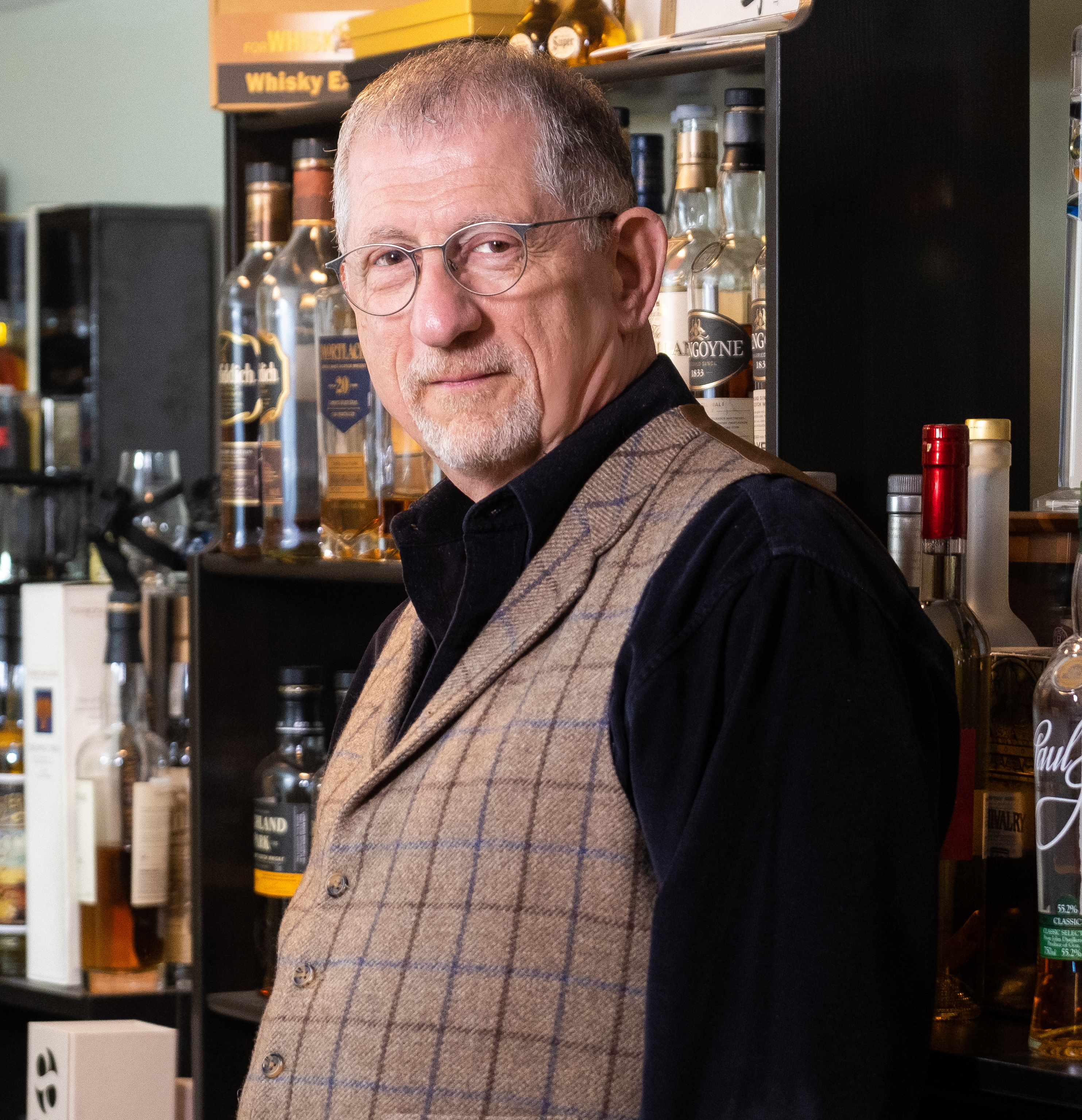
Robin Robinson is a noted educator and veteran of the whiskey industry. His whiskey class at New York City's renowned Astor Center, "Whiskey Smackdown" was the longest running whiskey class in the US, running 11 straight years up to the start of the Covid shutdown. He has since adapted the class as a virtual tasting program ("The Story of Whiskey: 60 minutes of bad standup comedy punctuated by drinking") that is marketed to financial and tech corporations across the country. He runs a boutique sales/marketing consultancy focused on start up brands, specializing in narrative construction, distributor management and sales/marketing methodology. Prior to this, he spent 6 years as the national sales and brand representative for Compass Box Whiskey, and prior to that was in the tech sector for many years as a sales representative for various Silicon Valley startups. He runs a 2 day intensive "Route-to-Market" class for Moonshine University in Louisville, KY, and has been a featured presenter on spirits, whiskey and sales at Tales of the Cocktail, BarConventBerlin, ACSA and ADI.
The Complete Whiskey Course: A Comprehensive Tasting School in Ten Lessons, is a definitive and comprehensive look at the entire world of whiskey. The book is broken into 10 "classes", ranging from its history and production; to how to taste and nose whiskey; to coverage of whiskey making and its makers in every corner of the world - US, Scotland, Ireland, Canada, Japan and the burgeoning "world" whiskey sector. Over 175 whiskies a…Read More