Shein Buying Everlane Says A Lot About Modern Retail | Fast Five Shorts
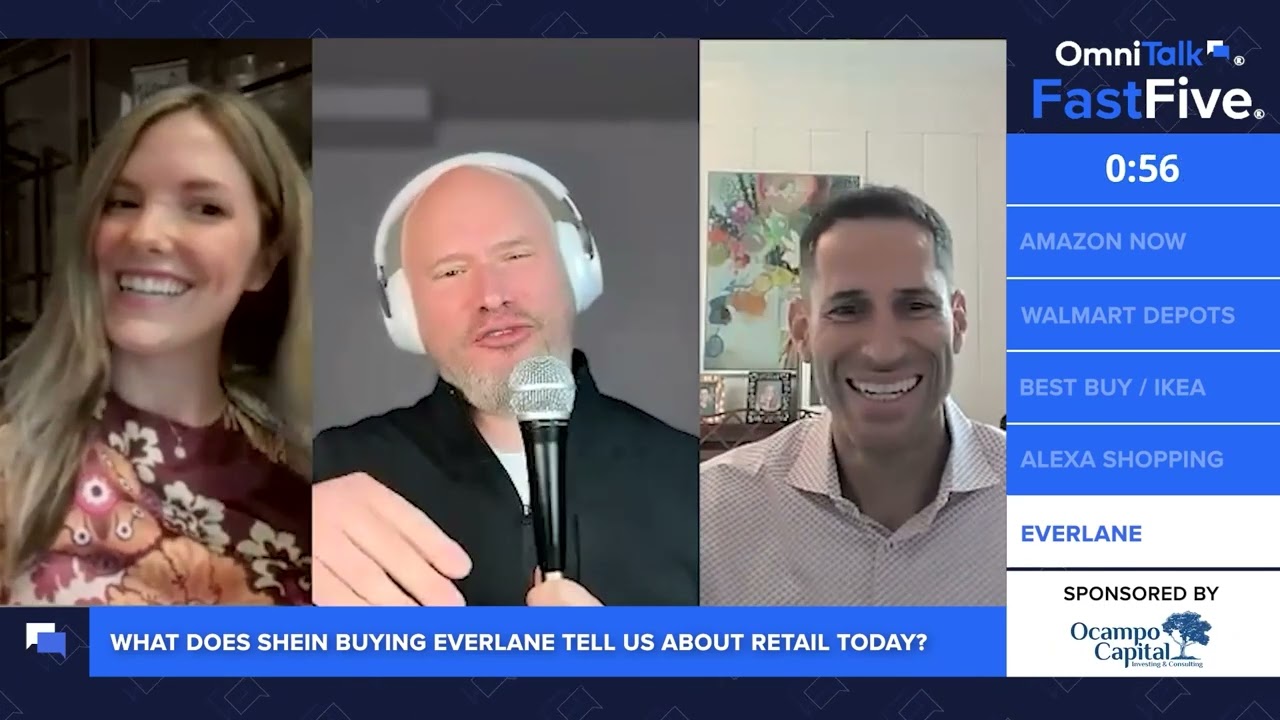


This Omni Talk Retail Fast Five segment explores Shein’s acquisition of Everlane and what it reveals about the changing realities of direct-to-consumer retail.
Chris Walton, Kelly Carey, and Chad Lusk discuss whether Shein is attempting to buy brand credibility and ethical positioning, why operational scale continues to outperform brand storytelling, and how rising customer acquisition costs have reshaped the DTC landscape.
They also unpack why this deal may represent a broader shift away from the peak “brand values first” era of ecommerce.
⏩ Tune in for the full episode here.
#Shein #Everlane #DTCBrands #Ecommerce #RetailStrategy
00:00 - Untitled
00:00 - The Acquisition of Everlane
00:43 - Analyzing the Impact of Shein's Acquisition
03:44 - The Ethics of Buying Reputation
04:55 - The Shifting Dynamics of DTC Brands
05:52 - Transitioning Perspectives: Consumer Values and Market Dynamics
07:04 - The Focus on Profit in Entrepreneurship
Everlane is being acquired by Sheehan in a deal valued at approximately $100 million.
Speaker AAccording to Puck News, Sheehan is acquiring Everlane from its majority owner, El Katterden, in a deal valued at approximately $100 million.
Speaker AAs I said before, which is a steep discount from the valuations Everlane commanded at the peak of the DTC E Commerce boom, the deal was driven largely by financial distress.
Speaker AThe irony of the transaction, however, is hard to overstate.
Speaker AEverlane was founded on the principles of sustainability and radical transparency, publishing its factory locations, markups and true cost of production.
Speaker AWhile Shein has been widely criticized as one of the fashion industry's largest environmental polluters.
Speaker AKelly, as we step back and read through the tea leaves here, what should we all take away from Sheehan's acquisition of Everlane, if anything at all?
Speaker BQuite honestly, I think there's a lot to take away from this and I don't think we're going to know the answer right away.
Speaker BBut I'm curious to wait and see.
Speaker BSo there's, there's a takeaway for Sheen and a takeaway for Everlane.
Speaker BOn the Sheehan side, it will be a bit of a wait and see, but I think this will be an interesting trial of, to your point, can you buy brand equity and in a brand position?
Speaker BSo these are two very different value propositions from a sustainability, transparency, transparency.
Speaker BAnd I, I would question is this a play of Shein to kind of piggyback off of some of that better messaging around transparency and manufacturing?
Speaker BSo I'm curious, as time goes on, does any of this rub off on Sheehan without having to do much at all?
Speaker BWe'll, we'll see where that plays out.
Speaker BBut on the Everlane side, I think this is reflective of something we're seeing across.
Speaker BA lot of similar companies like Everlane who were born in the DTC boom, had a lot of funding and backing as they, and you know, they're a very mission driven company.
Speaker BSo you have Everlane, you have other models where as time goes on and that backing slows down, we realized that the brand message and what you stand for isn't going to be enough anymore.
Speaker BYou need that kind of cost, economics and profitability to maintain the brand.
Speaker BAnd I think that's what Everlane's really struggled with.
Speaker BWe see bottom line spin struggling and now that they don't have the same backing, how do I have a model that's sustainable?
Speaker BSo I think we'll be seeing more of these like companies start to get acquired as people with more scale and more, you know, a better model are looking for ways to get into that DTC space in a new and different way.
Speaker BSo I think this will be reflective of what we see happening with a lot of these companies.
Speaker AWow.
Speaker ASo that, that's really interesting, Kelly.
Speaker ASo what you said something I hadn't thought about.
Speaker ASo you, so you know, the question is, can you buy ethics?
Speaker ABasically that's what you're saying, can you buy ethics or can you buy a reputation?
Speaker AAnd so you think that's the prime motivator here for Shein?
Speaker BI think it's one of the motivators.
Speaker BThere's also, you know, establishing more of a physical retail footprint.
Speaker BEverland's mostly D2C, but you know, I have a shop front here in D.C. that I go to.
Speaker BThey have the high quality basics.
Speaker BSo there's also a kind of a new customer base they can be getting at here.
Speaker BThey have more of the true budget.
Speaker BEverlane's a bit of more of that stretch and do high quality basics.
Speaker BSo I think there's a lot of angles for Sheehan with this acquisition.
Speaker BBut the one I'm most curious to follow is can you buy ethics?
Speaker AYeah, I wonder how, I wonder how radically Sheen could improve the cost of goods on Everlane too.
Speaker AChad, what do you think here?
Speaker CWell, it's not an Amazon headline, so am I allowed to talk about it?
Speaker ANo, no, forget it.
Speaker AWe'll skip you.
Speaker ANo, no, no, of course you are.
Speaker AOf course you are.
Speaker CNo, listen, I, I, I agree that I think there are actually tremendous takeaways to this.
Speaker CRight.
Speaker CAnd so first, just in terms of like the companies involved, right.
Speaker CLike I, I do think that there is a degree of Shein trying to buy Everlane's legitimacy, like especially on the relatively cheap year too.
Speaker CLike acquiring a trusted western facing brand with cultural cachet like helps their image and reach.
Speaker CRight.
Speaker CBut not even the angle to the story that I think is the most interesting.
Speaker CRight.
Speaker CLike what I choose to look at is that evidence here, especially in the DTC world, like brand positioning without operational advantage is brutally fragile.
Speaker CRight.
Speaker CYou know, it, it starts to feel like kind of an end of an era.
Speaker CLike, like for years DTC brands believed that storytelling and brand values could create these really durable moats.
Speaker CBut customer acquisition costs started to rise and loyalty weakened and optionality improved.
Speaker CRight.
Speaker CAnd like scale economics started to matter again.
Speaker ARight.
Speaker CLike I talk a lot in our business because we do a lot of consumer research within A and M about the difference between stated importance.
Speaker CSo what consumers say is important to them when they're shopping and derived importance.
Speaker CSo what's actually driving purchase choice?
Speaker CLike, Everly built a brand ethos and cultural relevance around things that consumers say are cool and they value.
Speaker CBut Sheen mastered the things at scale that they actually value most.
Speaker CRight.
Speaker CSpeed, cost, efficiency, novelty.
Speaker CDo consumers care about sustainability and ethics?
Speaker CLike, yes, I believe they do.
Speaker CBut it's proving out to be a little bit more of a tie breaking vote than a primary purchase driver.
Speaker CRight.
Speaker CAnd so the fundamental issue is that everything couldn't scale its model profitably.
Speaker CAnd that's the uncomfortable truth.
Speaker CRight.
Speaker CIs that operational excellence will be aesthetic positioning, you know, every time.
Speaker CUnless you have a truly differentiated product or community in some way.
Speaker CThat's, that's coming from a marketing guy.
Speaker CRight.
Speaker CAnd so, you know, Sheen has that platform and so, so, yeah, I believe it's terribly representative of, of, of kind of the era that we're at.
Speaker AYeah.
Speaker AI mean, Chad, you've got me thinking, I'm gonna make a.
Speaker AYou're Gen X.
Speaker ASo am I.
Speaker AAnd I'm gonna make a reference, a Gen X reference.
Speaker ABecause, like, you know, this is, this is making me feel like Troy from Reality Bites.
Speaker AYou know, like, I'm just, I'm just jaded about this.
Speaker AYou know, that's, that's what I come away with.
Speaker AI'm just jaded about it because, you know, to me, when I step back, you know, what our, what our, what our generation was, was known for at the time was it's always about money.
Speaker ANo matter what.
Speaker AEverything always comes down to money.
Speaker AAnd the one thing I've learned, you know, talking to a lot of entrepreneurs in the eight years of doing this show, you can say you're setting out to change the world or solve a problem, but after eight years of doing this, the really successful ones that I've seen are the ones that have their eye on the prize operationally and are.
Speaker AThey're always focused because you can hear it in the way they talk about their business.
Speaker AThey're always focused on the payoff, despite what they're telling to the media and how they're trying to brand themselves.
Speaker AThe payout is what matters.
Speaker AAnd they're laser focused.
Speaker AI hate to say it.
Speaker AThis is Troy, Troy speaking Reality Bytes.
Speaker AThey're laser focused most of the time on making themselves rich.
Speaker AAnd that's ultimately what ends up paying off.


