Is Wonder Really Worth a $9 Billion Valuation? | Fast Five Shorts
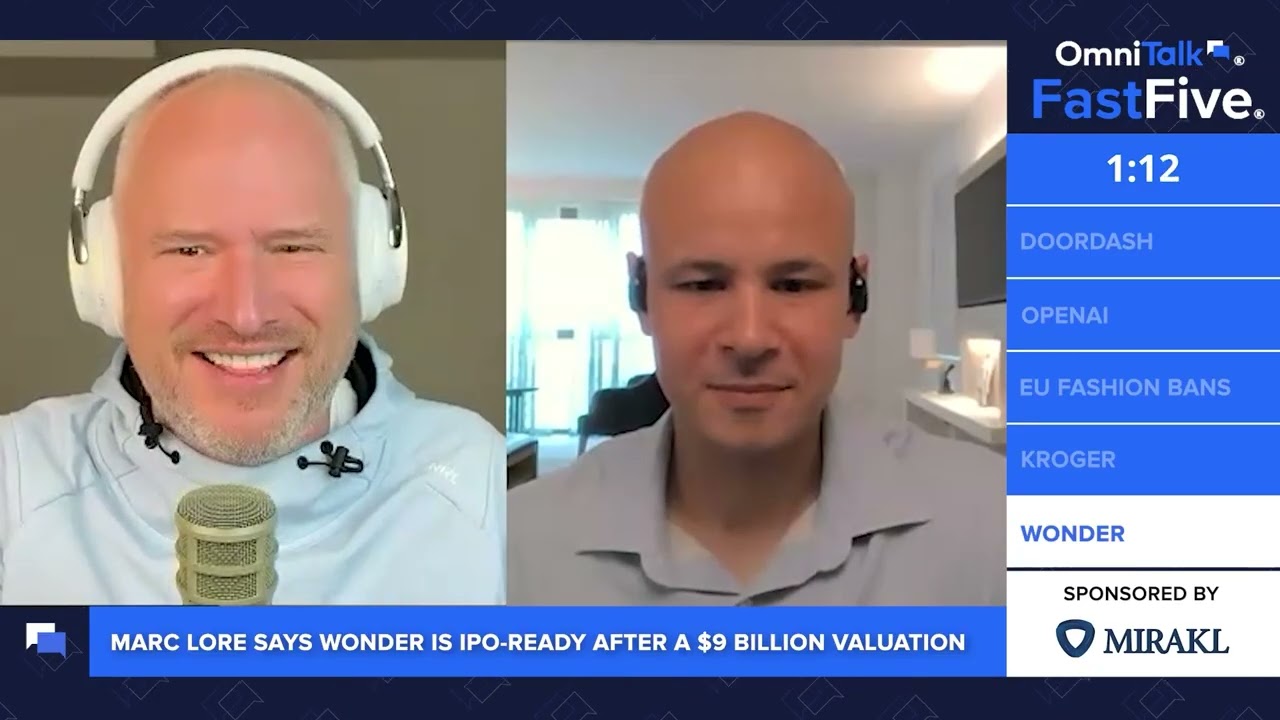


Marc Lore says Wonder is preparing to go public after raising $650 million at a $9 billion valuation, despite years of projected losses ahead.
Chris Walton is joined by Alex Brakebill and Brandon Pezely to debate whether Wonder's food hall model can justify its valuation or if investors are buying into another overhyped growth story. They discuss restaurant technology, profitability, food delivery, and what it really takes to scale a food business.
▶️ Watch the full Fast Five episode here: https://youtu.be/Jb1AcsK9Ri0
00:00 - Untitled
00:32 - Wonder's Public Offering and Financial Projections
01:31 - Skepticism Towards New Food Trends
02:51 - Analyzing the Food Business Valuation
04:18 - Skepticism Towards New Restaurant Models
06:04 - Economic Trends Impacting Food Delivery Services
06:35 - Analyzing Growth Rates in E-Commerce
Marc Laurier tells Fortune that his food haul company Wonder is quote, ready and prepared to go public early next year, end quote.
Speaker AAfter closing a $650 million Series D round at a $9 billion pre money valuation, Wonder now operates roughly 135 food halls across 10 East coast states, each running up to 30 restaurant concepts, including license names like Bobby Flay Steak out of a single kitchen, and has grown from about 46 to 140 locations since May 2025.
Speaker APer investor materials reviewed by the information Wonder projects burning nearly $2.7 billion in cash through 2029 and expects to lose roughly $618 million on an adjusted EBITDA basis this year, with positive cash flow not projected until, of course, 2030.
Speaker ALori, however, pushed back on this framing, saying the economics are often misunderstood.
Speaker AYou do need to make substantial investment upfront, he said.
Speaker AThe robotics, the ingredient library, all those suppress profitability in the long term, but there's a big prize at the end of the day, end quote.
Speaker AHe also reportedly said same service area sales are growing roughly 20% year over year and that the cost of goods sold is tracking better than planned.
Speaker AAlex Wonder, is it the idea none of us knew we needed, or is it pure snake oil?
Speaker BWell, Chris, I have to admit I, I know people that work at Wonder, so I have to be cautious of what I say here.
Speaker BBut I'm more of a skeptic, I think, than a believer in this.
Speaker BI, I do, I do believe in the underlying fundamental that, you know, the operation of these restaurants is challenging.
Speaker BIf you can get scale there, you can create a lot of profitability.
Speaker BSo I believe in that, in the scale of the ingredients, the scale of the, the actual cooking process, the scale of the marketing delivery, all those pieces.
Speaker BThat all makes sense.
Speaker BI also know that when I order from, you know, order from UberEats or DoorDash, I only order things I've been to before in person.
Speaker BAnd I find these, honestly, these generic food halls to be sort of uninspiring.
Speaker BSo I've been to a few of them in Atlanta.
Speaker BI probably wouldn't go there unless I had to.
Speaker BAnd I'm just a little concerned that it feels a little bit generic and bland versus something that people get excited about.
Speaker BSo there is a market for it.
Speaker BI just don't think it's the scale of what Mark is saying it is.
Speaker BThat being said, he's a good salesperson.
Speaker BHe sold a couple companies for lots of money.
Speaker BThose companies don't really exist in the form he sold them in anymore.
Speaker BSo we'll have to see in 2030 what's going to happen with this endeavor.
Speaker AYeah, so there's two point.
Speaker AThere's two parts you bring up there, Alex.
Speaker AI think that are.
Speaker AThey're interesting.
Speaker AThere's one part which is the food business itself, which, you know, I was looking at it like, you know, $9 billion valuation that seems high for a food business like Wendy's.
Speaker A$1.4 Billion.
Speaker AMarket cap.
Speaker AMarket cap.
Speaker A7,300 Stores globally.
Speaker AJersey Mike's just IPO today, I think they have over 3,000.
Speaker AOr they just released their valuation that they're going for with their IPO.
Speaker AThey have over 3,000 stores.
Speaker ASo 9 billion seems really high.
Speaker ASo then you have to say, okay, what else is there?
Speaker AWell, then there's the whole idea of, like the food super app that you can, you know, order whatever you want on demand, which I like as an idea, but I just don't know that we're at a place yet where we've actually seen that come to fruition because I'm not hearing anyone talk about or use it.
Speaker AAnd so the next question I have for you and Brandon, maybe you can jump in here too, given your experience.
Speaker AI don't want to throw you off too, but like, 20% growth in your same store locations in year, basically.
Speaker AWhat's year?
Speaker AYear two.
Speaker AThat doesn't seem very high to me.
Speaker ALike, am I.
Speaker AAm I nuts on that?
Speaker AThat seems really low to me.
Speaker CNo, I completely agree.
Speaker CWhen you think, like, a lot of new restaurants, right, that they've opened, like first year comp.
Speaker CYou'd expect, right?
Speaker CEspecially if it's gaining a lot of popularity to be a lot, a lot higher than this.
Speaker CI mean, I agree with, like, the overall idea, like, being able to go to one place, get a variety of different food.
Speaker CLike, as a guy with four kids, like, that sounds great.
Speaker CYou know, my kids could get everything they want.
Speaker CI could get what I want fast Service.
Speaker CI mean, I just don't know if the technology is there to really support that model.
Speaker CAnd then to Alex's point, I mean, if you look at Mark Laurie's history, I mean, like, successful exits with quidsy and with jet.com but a lot of those assets have been written off.
Speaker CAnd so I am a bit skeptical in terms of, like, is the.
Speaker CIs there really technology there?
Speaker CAnd, you know, is it advanced enough to roll this out?
Speaker CAnd when you start talking about the financials and the economics, I mean, if it looks like it's a bit of a tough road ahead, they'll have to continue to raise money and you know, not profitability for several years.
Speaker CI feel like it's just a tough spot to be in.
Speaker AYeah, and the crazy thing, I mean is these are really smart people that are continuing to invest in this, but yet all three of us are saying like, look at the pattern here.
Speaker AYou've seen kind of the pump, pump up the hype, up the concept and then sell out and then see it go away.
Speaker AAnd so are we looking at that again?
Speaker AI think is a really realistic question that we have to be asking ourselves because yeah, on the software side of things or the technology play here, I just don't get it.
Speaker AIt feels like vaporware to me.
Speaker AI mean, you know, you're rolling up basically grubhub and a restaurant chain, like that's not all that innovative.
Speaker AAnd also like, what's the utility against just using doordash to do what I want anyway?
Speaker ASo like I'm just, I'm just not, I'm not, I'm not seeing it.
Speaker AI can't, I can't get my head around how it's valued at $9 billion at this point.
Speaker AAnd so I feel like at some point somebody's going to be left holding the bag.
Speaker ABut I just, I mean the thing that bothers me about this headline most of all is like, you know, at what point do people realize this and be like, no, Mark, we're not, we're not giving you this, like, we're, we're not let.
Speaker AMaking, we're not making you another multi, multi billionaire off this idea until you show us that you've got an actual sustainable business.
Speaker ABut any one of you guys want the last word on this one?
Speaker BLook, I'll also throw in, I think the macro fundamentals are interesting because with the expansion of GLP1s, you know, I think people just eating less overall.
Speaker BAnd if you're in an industry where you're trying to sell more meals, he said something like, I want 21 meals a week being bought through my store.
Speaker BYou know, I think that's not the case anymore.
Speaker BAnd so there's just real macro trends working against him in this industry.
Speaker AYeah, that's such a hype sound bite too.
Speaker AI mean that the point I come back to too is like 20% growth in your same store locations.
Speaker ALike I just looked, Adidas is doing 20% year over year growth in E commerce.
Speaker ASo like that's nothing comparatively.
Speaker ALike you should be, you should be growth rate.
Speaker AWhat's that?
Speaker BYou're like 2000% then I'm going to get.
Speaker AYeah, right.
Speaker AIt should be, right?
Speaker AI mean, you guys are consultants.
Speaker AYou see these numbers all the time.
Speaker AThat should be a flag to you.
Speaker AOkay.
Speaker AAll right, well, who knows?


