Does Ulta Need to Get the Flock Out of Here? | Fast Five Shorts
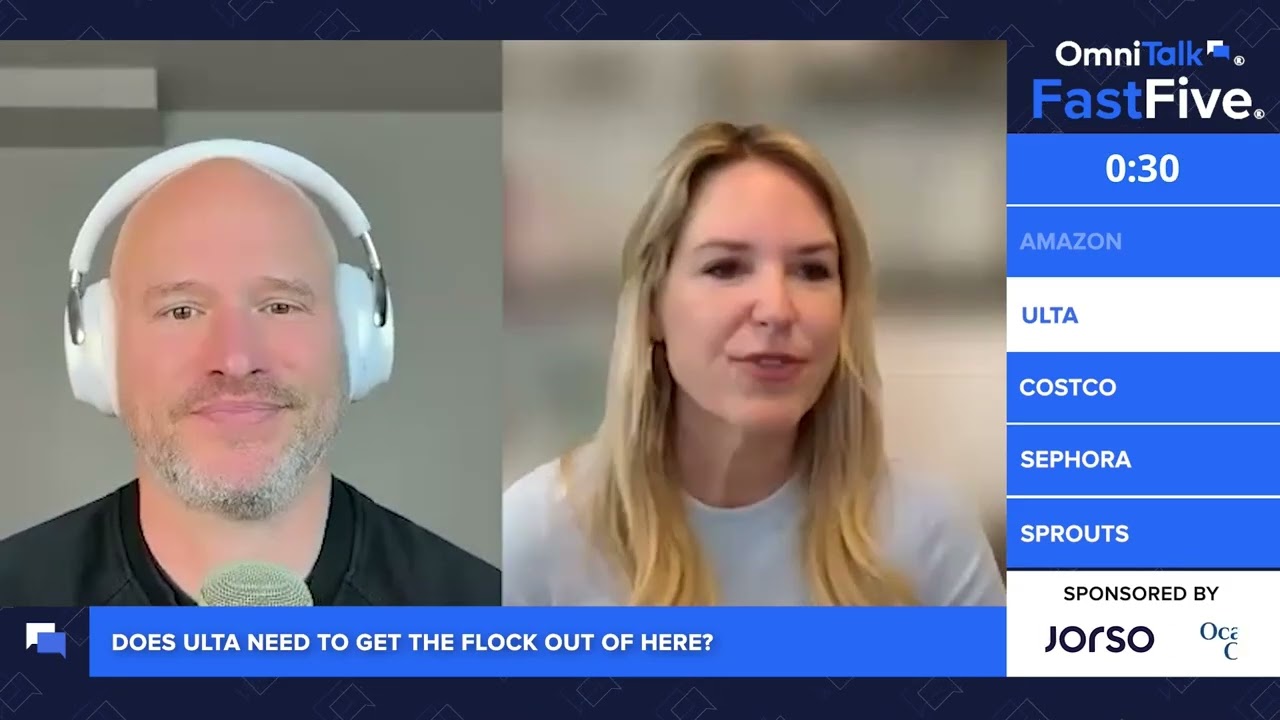


Ulta is facing backlash over its use of Flock Safety’s automated license plate reader technology, raising bigger questions about transparency, communication, and how retailers handle technology that can impact their customers.
Chris Walton and Shelley Huff discuss whether the bigger problem is the technology itself or the way Ulta communicated its use of it.
The big question: When retailers use controversial technology, how much transparency do customers deserve?
▶️ Watch the full Fast Five episode here: https://youtu.be/x4hGqvRTilY
00:00 - Untitled
00:26 - Deployment scope and facial-recognition clarification
01:21 - Communications Challenges Around Retail Surveillance
03:36 - Deploying Surveillance Tech: Communication Strategy and Managing Backlash
05:23 - Pilots in Stores — Testing, Communication & Comp Alignment
06:44 - Careers and AI: Communications as an AI‑Resistant Path
Ulta Beauty is facing a social media backlash this week after an activist campaign went viral criticizing the retailer's use of Flock Safety's automated license plate reader technology at a small number of its stores.
Speaker AAccording to Retail Dive, social media users flooded Ulta's Instagram post this week after a campaign by activist group Ultraviolet.
Speaker ACool name.
Speaker AWent viral criticizing Ulta's relationship with surveillance tech provider Flock.
Speaker AThe technology is deployed at fewer than 1% of Ulta's roughly 1500 store fleet nationwide, and a source told Retail Dive the cameras do not use facial recognition.
Speaker AFlock has faced growing public criticism and vandalism of its license plate readers in recent months, with some state and local governments reconsidering the technology's use.
Speaker AFlock's website also lists organized retail crime as a use case, and Ulta's director of organized retail crime has said the retailer sought the technology to, quote, help bridged the gap, end quote, with law enforcement after a rise in store violence following the pandemic.
Speaker ANeither Ulta nor Flock, however, responded to Retail Dive's detailed questions about the relationship.
Speaker AShelly Alta is framing this internally as an organized retail crime tool, but the online reaction is treating it as surveillance overreach.
Speaker AIs the viral backlash appropriate or is Ulta just an easy target amid the broader anti surveillance movement movement?
Speaker BWell, this is an interesting topic today, and I'll probably say this very directly.
Speaker BYeah, a retailer should not deploy technology like this unless they can actually explain it.
Speaker BAnd I think this is an example of really bad external and internal comms where there should have been a strategy around how to talk to consumers about this.
Speaker BAnd so what is even more interesting is they had an opportunity to start that discussion with Retail Dive and then they refused to comment as well.
Speaker BSo this is kind of leaving it very opaque for everybody to understand exactly what's happening.
Speaker BBut a retailer does have a responsibility to protect not only the people that work at its retail locations, but also customers.
Speaker BAnd when we talk about surveillance, and I'd be curious about your perspective, Chris, is like, where do we draw the line?
Speaker BBecause we've had cameras outside of malls during holiday times forever in order to protect people against theft.
Speaker BAnd so for me, this is not like a safety privacy question.
Speaker BIt's what is being captured, what data is being captured, for how long, and how do you explain to your consumers and people shopping at your stores what is happening?
Speaker BAnd so, yeah, I think it's interesting because I think it's more of a communication problem than I think it is a surveillance problem.
Speaker AYeah.
Speaker AAnd it's a tough Communications problem, too, right, Shelly?
Speaker AIt's a hard one to know how to get out in front of from a communication standpoint, too.
Speaker ASo my feel goes out to the PR teams as well, because it's hard to know how to couch this.
Speaker ALike, I think of.
Speaker AWe had a similar conversation.
Speaker ABen Miller, on Grocer Talk, he talked about Sainsbury's use of facial recognition, which is going, you know, a step beyond, because Flack doesn't apparently use facial recognition.
Speaker AIt's just reading license plates.
Speaker ABut, you know, Ben, you know, Ben was all for it for the reasons you said, because it was, you know, designed to help keep employees safer.
Speaker ABut yet then they had a false positive where they accused somebody of shoplifting, and then social media blew up on it.
Speaker AAnd it was like one of those things where I was like, yeah, I personally, I don't know if I'd be.
Speaker AI'd be touching this.
Speaker ABut then I come back on the flip side of it and go, yeah, but at the end of the day, I need to protect my store employees.
Speaker ALike, I need to do that.
Speaker ASo I've got to figure out a way to do it.
Speaker AAnd so I think if you're.
Speaker AIf you're going to deploy this type of tech, you either one, have to know your communication strategy to your point, or you've got to stand your ground and be ready for the backlash and give the rationale for why are you using it.
Speaker ABut I think you have to tread cautiously still and dip your toe into it, which is my hunch.
Speaker AMy hunch is that all these technologies are being deployed in this way.
Speaker AThe question I have, too, is, are they really moving the needle and are they worth art?
Speaker AIs the juice, worth the squeeze on them?
Speaker AIn terms of the social media backlash and the distraction for the comms teams internally in your organizations, I think those are the questions you have to ask, because detection and prevention are two really different things.
Speaker AAnd I'm still not sure I've seen a silver bullet on how do you actually prevent versus how do you just detect?
Speaker ABut I don't know.
Speaker AWhat do you think, Shelley?
Speaker BI think that's right.
Speaker BI think technology is going to be deployed at a faster rate than ever in the past in retail.
Speaker BSo the point is, be transparent about it and have a plan.
Speaker BIn the age that we're living in now, we can't just deploy things and not communicate them and not be transparent about them, because there's too many of our consumer bases that are now in communities talking to each other, picking up on things.
Speaker BAnd so if you don't create your own narrative.
Speaker BThe basics, right?
Speaker BIf you don't create your own narrative, somebody else is going to create it for you.
Speaker BSo I think the punchline here is the technology could be great.
Speaker BIt needs to be tested more.
Speaker BThere have been misuses of it.
Speaker BIt's great that they're trying it out in 1% of their stores.
Speaker BThey need to get more data on it, but they didn't have a plan.
Speaker BAnd so I think that's the big lesson here for other retailers that may follow suit in deploying similar types of surveillance technology.
Speaker ABut Shelly, at the same time, like, and a former, as a former CEO, I'm curious, cause I don't know the answer to this question either that I'm about to ask you is like, what does that mean for pilot implementations?
Speaker ALike this is in 1% of stores.
Speaker ALike the comp scheme's gotta be very dialed in on what the innovation teams or the tech teams are trying to learn by executing small tests in stores too.
Speaker ABecause it sounds like if you get that wrong, it can blow up.
Speaker ASo are you saying then that the comps team's got to get more involved in innovation?
Speaker BI think one of the most strategic roles that companies have to have now is communications.
Speaker BAnd I think that those roles are starting to report directly to CEOs for that reason.
Speaker BBecause you have two things kind of happening at once.
Speaker BYou have a more rapid iteration of customer experiences which I think this falls into.
Speaker BConsumers are obviously experiencing this surveillance when they come into the parking lot.
Speaker BAnd then you also have a need for increased communication with your associates.
Speaker BSo both internal and external comms have become so much more strategic, the need for those in recent years.
Speaker BAnd so I think that that role is so strategic, more and more reporting to the CEO and I think they absolutely have to be involved in every facet of the business and understand what's launching and if it's visible to a consumer, there should be plan around it.
Speaker AThat's a really good point too.
Speaker ALike for those listening too, especially people gravitated with like what's next in my career with the dawn of AI, that seems like a, in some ways an AI proof job too.
Speaker AAnd a job that would require more knowledge of the hands on operations of how the retailer works day in and day out.
Speaker ASo it actually may be a good way to transition for a career too as you're thinking about it.
Speaker ALike, you know, hey, do I start going into comms if I've been in merchandising at some point, you know, because I, I have the chops that help me understand what's actually being talked about here.
Speaker AThat's.
Speaker AThat's a really interesting insight, Shelly.


