Is Amazon Quietly Winning The Convenience War? | Fast Five Shorts
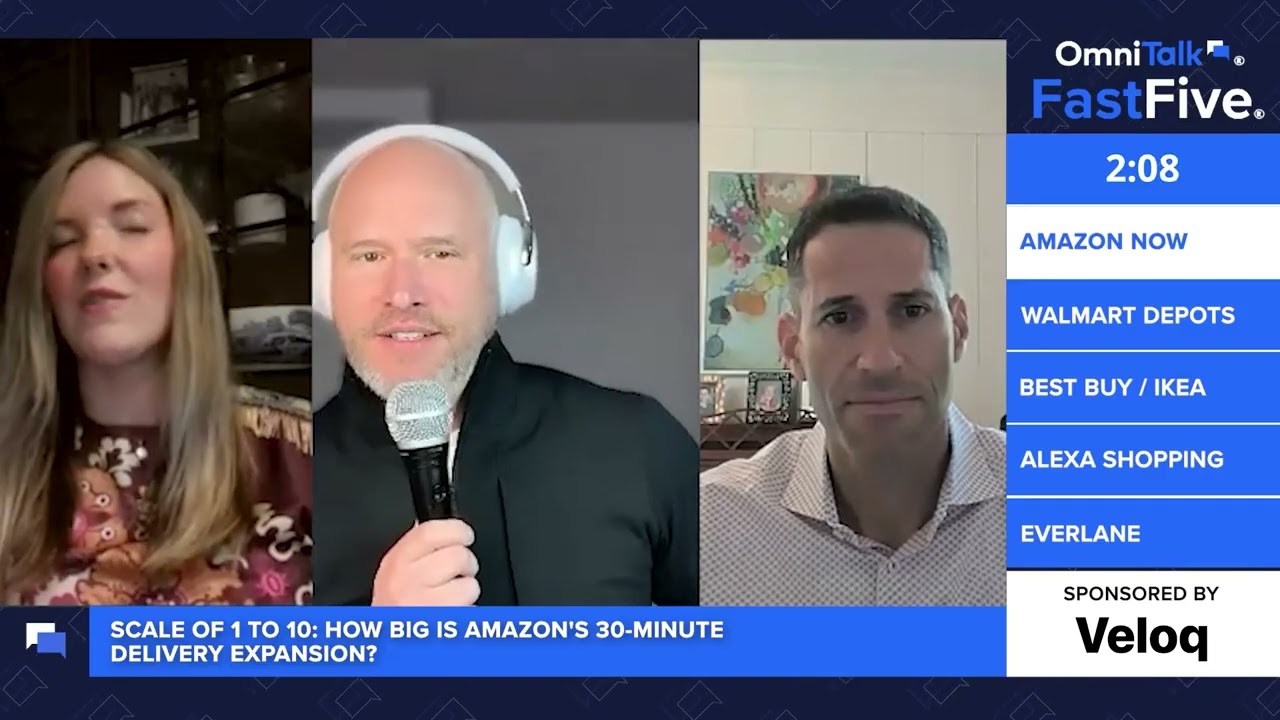


This Omni Talk Retail Fast Five segment explores Amazon’s aggressive expansion of its 30-minute delivery service and what it signals about the future of retail convenience.
Chris Walton, Kelly Carey, and Chad Lusk debate whether Amazon is quietly reshaping consumer expectations around immediacy, why speed is becoming retail’s next psychological battleground, and how this strategy could pressure traditional grocers over the long term.
They also unpack whether ultra-fast delivery is truly revolutionary or simply the next step in Amazon’s ongoing effort to make itself the default shopping destination for everything consumers need.
⏩ Tune in for the full episode here.
#Amazon #RetailNews #GroceryDelivery #Ecommerce #RetailTechnology
00:00 - Untitled
00:03 - The Impact of Amazon's Delivery Expansion
01:34 - The Evolution of Delivery Expectations
02:32 - The Psychology of Delivery Time in Retail
04:16 - The Evolution of Consumer Expectations in Delivery Services
06:26 - The Impact of Amazon on Traditional Grocery Stores
07:59 - The Impact of AI on Grocery Shopping
Chad, I said you're getting the Amazon questions today.
Speaker AI wasn't joking.
Speaker AOn a scale of 1 to 10, where does Amazon's 30 minute delivery expansion rank in terms of retail's overall impact?
Speaker BYeah, I'm going to give it a solid.
Speaker ASeven.
Speaker ASeven.
Speaker AYou say six or seven.
Speaker AI've literally,.
Speaker BI almost did it.
Speaker BNo, no, no, no.
Speaker BWe're not doing that.
Speaker BWe'll say seven.
Speaker BAll right.
Speaker AOkay, okay.
Speaker BSo here's why it's not higher or lower, right?
Speaker BSo it, you know, it's, it's not a 9 or a 10 because it doesn't itself solve a big enough problem.
Speaker BI mean, consumers aren't sitting around desperately needing toothpaste in 30 minutes instead of two hours, right?
Speaker BAnd like the way that markets have gone in urban delivery like this is a little more evolutionary, not revolutionary in its own right.
Speaker BBut that's also why it's not a three, right?
Speaker BBecause it serves to expand the competitive moat that Amazon has or inversely could help start to dry up others.
Speaker BRight?
Speaker BSo if you think about it, every city that they add is kind of another nail in the coffin for traditional retail's biggest advantage.
Speaker BRight around immediacy.
Speaker BNow you need batteries now, like maybe you went to Target or Walgreens or a C store, right?
Speaker BIt can be Amazon before you finish your beverage.
Speaker ARight?
Speaker BAnd to me, the impact isn't the 30 minutes.
Speaker BIt's psychologically what Amazon is doing to refine what quote, normal feels like.
Speaker BAnd to me, that's the real game here, right?
Speaker BLike they've been standardizing, you know, from free shipping to 2 day prime the same day.
Speaker BLike 30 minutes is the next like psychological line they're trying to blur or erase.
Speaker BYou know, not everything needs to be delivered in 30 minutes.
Speaker BThey just need consumers to believe that Amazon is the fastest, most reliable option by default.
Speaker BRight?
Speaker BAnd once that perception locks in and purchase intent automatically can shift to them before others are considered.
Speaker BAnd that's the behavior they're trying to rewire.
Speaker BAnd you know, hint, hint, foreshadowing here.
Speaker BI mean, like, it should make other retailer CEOs start asking themselves and their teams like, am I losing the immediacy war?
Speaker AOkay, interesting.
Speaker ASo there's a, there's a lot to unpack with this headline, which is why I put it first.
Speaker AI'm a little surprised to only hear a seven.
Speaker AAnd there's also a long game aspect to this.
Speaker AI want to come back, but I want to get Kelly's thoughts.
Speaker AKelly, do you agree with Chad here?
Speaker AAre you in the 7 range?
Speaker AYou think it's more?
Speaker ADo you think it's less?
Speaker ALike what's your take?
Speaker CI would probably have a similar narrative to Chad.
Speaker AOkay.
Speaker CKnowing that that 30 minute window, it is so narrow and specific, I'm curious to see what the cost they're going to attribute to it.
Speaker CLike how much is 30 minutes worth to someone versus 2 hours to really see if the economics end up working out for them for this delivery option.
Speaker AOkay, so let me ask you this then Chad, back to you.
Speaker ASo, so if I said to you what is the impact of, on retail of this announcement say five to 10 years from now versus today, does that change your answer or you still think it's a seven?
Speaker BI mean I, I suppose by you asking that question.
Speaker BRight.
Speaker BIt's a matter of, by how much is immediate delivery going to take hold in terms of consumers expectations.
Speaker BRight.
Speaker BAnd I mean I, I kind of alluded to that.
Speaker BRight.
Speaker BAnd that you know, we've, we've been coming, I mean like it at when free shipping first came out, that was an anomaly.
Speaker BRight.
Speaker BLike when, when you could get everything through Amazon in two day, you know, now we get ticked off if we can't get something same day.
Speaker BSo there's no doubt that with, with capabilities.
Speaker BRight.
Speaker BBecomes an elevated consumer expectation.
Speaker BAnd are we just going to want everything to be able to be delivered in 30 minutes or an hour?
Speaker BYou know, pick your time frame?
Speaker BYes, perhaps.
Speaker BBut that's also why I said it's kind of evolutionary.
Speaker BRight.
Speaker BAnd that, you know, I do think that this is more of a glide path toward something that will become more commonplace over time versus man.
Speaker BThis signals to me a major step change in the way that we're going to be operating now.
Speaker BSo I guess inherent in what you're saying is I agree with you that that expectations will continue to shift and we'll look back at the moves that were made by retailers to secure that infrastructure as having been material.
Speaker BTo me just right now point in time, as I saw this, it felt like, okay, I mean it makes sense that they're doing this now and by the way, others are as well.
Speaker AYeah, right, right, right.
Speaker AWhich we're going to talk about too, because that's a very important part of the story.
Speaker AYou know, it's funny, like when I first started, when I first asked you a question, I was probably like, yeah, I'm a seven too.
Speaker ABut actually hearing you talk, I think you've, you've subtly hit on something that I think we need to call out, which makes me actually kind of push my Valuation of this up a little bit, which is Amazon potentially is playing the long game here and they're doing it to starve out the local regional grocers to then pick up that space, buy them on the cheap, and then become the regional grocer across the country again.
Speaker AOr to become the national grocery in a lot of ways.
Speaker AAnd the reason I say that because this plays in with the philosophy they've been.
Speaker AThey've been espousing, which is the electronics with your milk.
Speaker AThat electronics with your milk philosophy.
Speaker AThey're just cherry picking right now.
Speaker AAnd they know, and we all know that the universal truth of speed works like, you know, people are gravitating towards this.
Speaker AIt seems like more and more people are gravitating towards it every day.
Speaker AIn fact, I just did it with Walmart, who we're gonna talk about next.
Speaker AJust the other day, to get a kid's birthday present, I need a birthday present like that day.
Speaker AAnd like, I just did it.
Speaker ANow.
Speaker ADoes it work for the pull the.
Speaker ASorry, does it work for the full grocery pantry load?
Speaker ANo, it doesn't.
Speaker AOf course it doesn't.
Speaker ALike you're not gonna substitute this for that.
Speaker ABut you know who doesn't care about that is Amazon.
Speaker ABecause Amazon can play the long game here and meanwhile they'll cherry pick the volume out of the traditional grocery stores and it just continues to go down.
Speaker AAnd so they starve them out in the long run.
Speaker AThat's what I'm thinking.
Speaker AKelly, I saw you.
Speaker AYou kind of, you kind of gave me the.
Speaker AOh, I had, you know, what were you thinking there?
Speaker AWhat's going through your head?
Speaker CYeah, that just got me kind of excited as well, of like coming at it from a different angle.
Speaker CAnd I think back to their play into Whole Foods.
Speaker CThe more that they can get ahead of that short term grocery demand.
Speaker CAnd you said, you know, starve out other grocers.
Speaker CIs there an eventual path for them to do more physical retail acquisition and actually take over some of those doors and run those as distribution hubs?
Speaker CThat would be very transformative not to use the word transform again.
Speaker ANo, no, no, hey, no, transform is an important word.
Speaker AIt just shows you how often it's getting used.
Speaker BY.
Speaker BSo it does still come down to local inventory selection ability to have how wide a birth that you can do on that.
Speaker BRight.
Speaker BAnd so, I don't know, maybe things will surprise me in five years in terms of like having these, you know, smaller depot, like local delivery elements where they can handle large amount of inventory as well as the logistics of it kind of at the same time, but that's really, really hard to do.
Speaker BSo it still feels.
Speaker BIt still feels discreet in terms of what you can actually serve in those kind of windows, right?
Speaker A100%.
Speaker A100%.
Speaker AAnd the other part of this, too, Chad, which you just got me thinking about, too, which hadn't entered my thought process at all, is we haven't talked about the AI layer on this in terms of how AI transforms the way we shop for groceries.
Speaker AAnd what is the advent of this infrastructure or how does this infrastructure play out in that realm in the long run, too?
Speaker ASo, man, there's a lot of meat on this bone, for sure.


