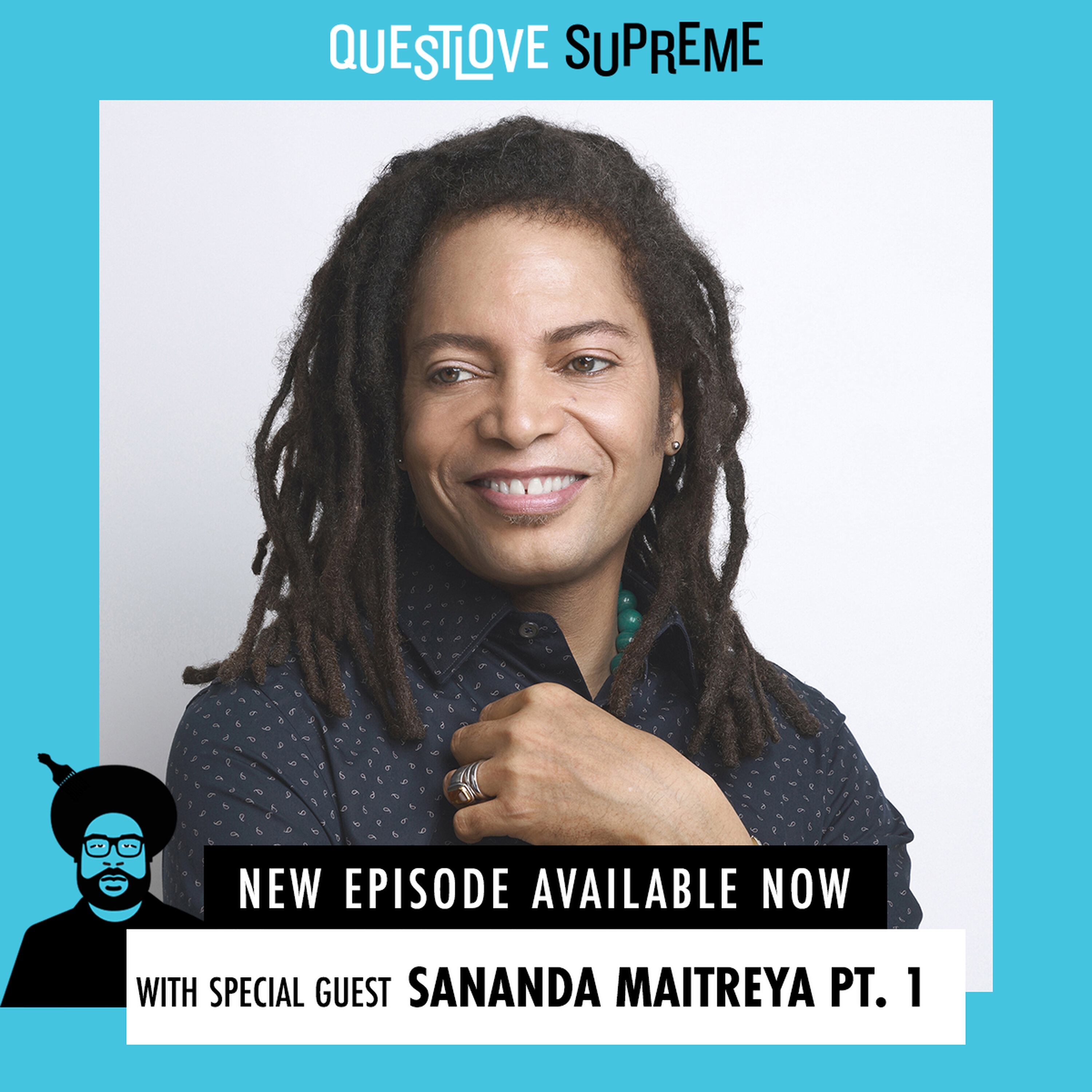
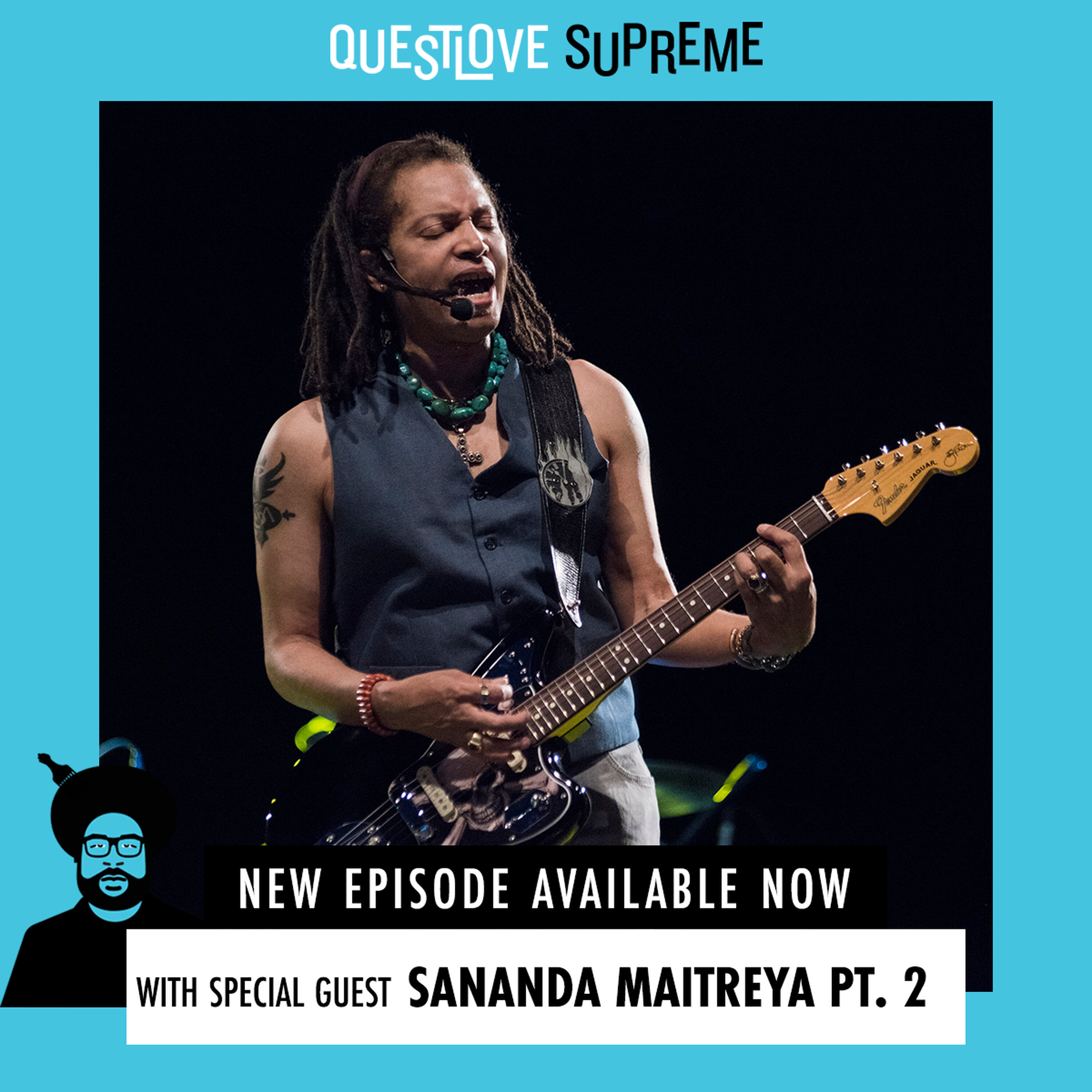
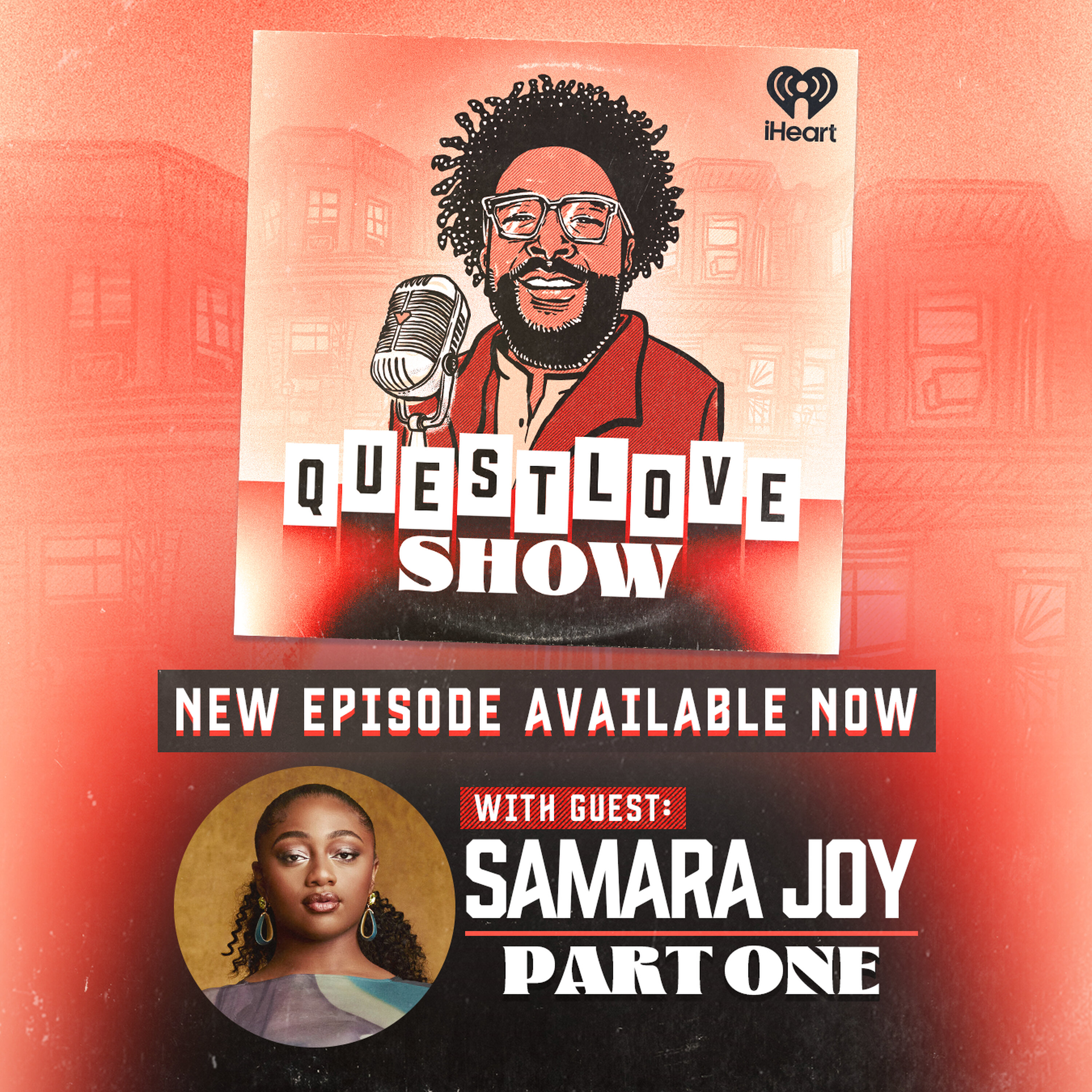
Samara Joy Part 1
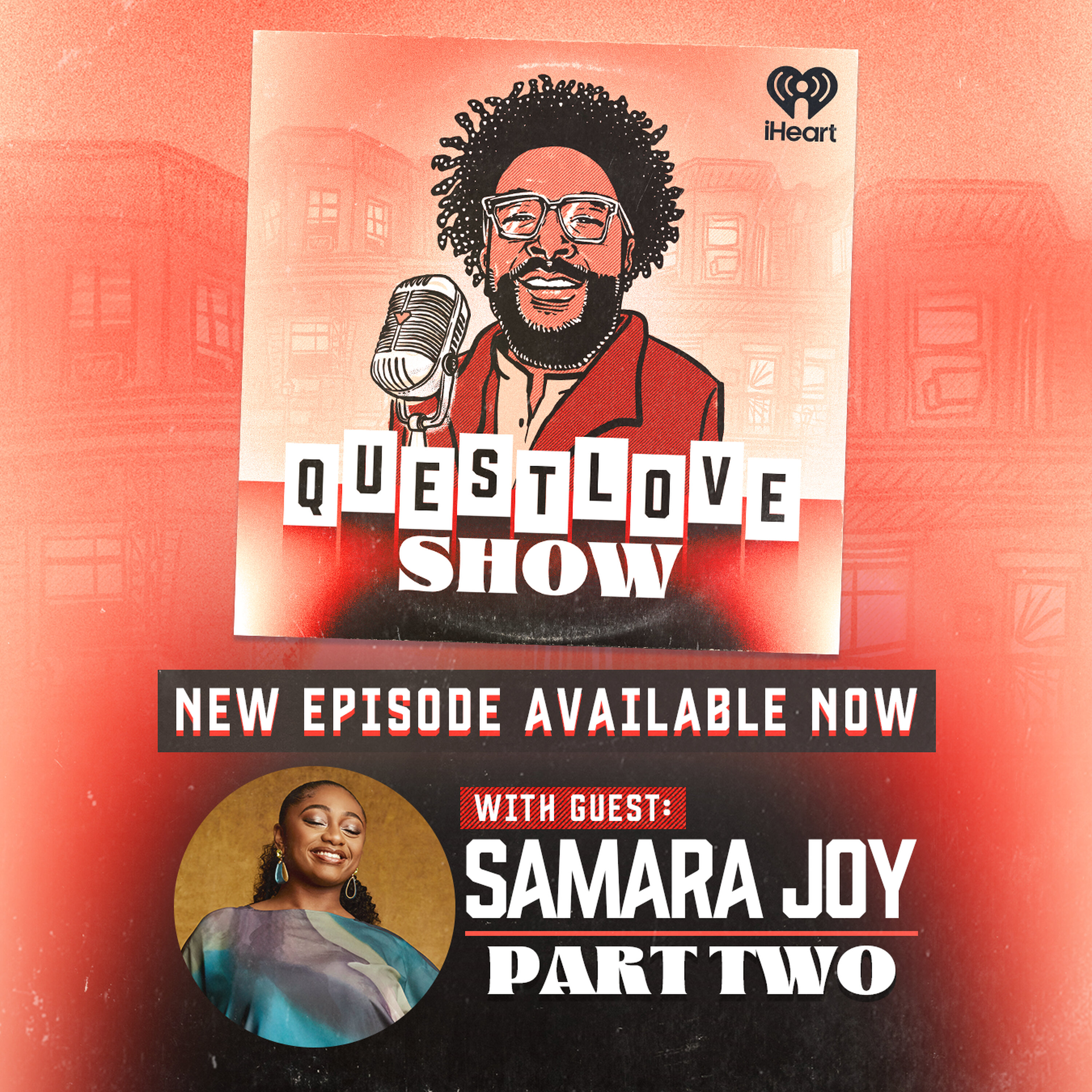
In this episode of the Questlove Show, Questlove sits down with rising jazz star and Grammy winner Samara Joy for an intimate, wide-ranging conversation. Samara looks back on her musical roots and the thrill of her first Grammy win, opening up about the influences, challenges, and defining moments that have shaped her path. The two dig into family, creative risk, mentorship, and self-belief, with plenty of warmth, humor, and rapid-fire moments along the way. Part one of this special two-part series offers a revealing look at Samara’s artistry and perspective, and a reminder of music’s power to change lives. Samara is also nominated in two categories this month for her album Portrait.


00:00:00
Speaker 1: Quest Left Show is a production of iHeart Radio. Ladies and gentlemen, Welcome to the Quest Loft Show. I cannot come up with enough superlatives to describe.
00:00:31
Speaker 2: The gift that our guest today possesses.
00:00:35
Speaker 1: Occasionally, in private, I will rant about my disdain and dissatisfaction with the state of what we.
00:00:43
Speaker 2: Call music today.
00:00:44
Speaker 1: But in twenty twenty two, when I received my Grammy ballot, and you know, I'm looking at names of people that I know personally, people that I've played with, people that I'm friends with, Anita mar Apollo, Dommy and j D. Beck, Lotto Man, Skin Money Long, Toby in a wigway, Molly Tuttle wet Leg named them all. However, I chose the right option when voting for the Best New Artist award, and that is our guest today.
00:01:19
Speaker 2: Welcome miss Joy to the show. How are you?
00:01:23
Speaker 1: I'm well, walk with me just five minutes before when you know your cat? Do you know who's like presenting your category?
00:01:32
Speaker 2: Like are you aware of these things? Oh? So you had no idea, like when it's coming up in the.
00:01:38
Speaker 3: And I was just coming from the red carpet, and so I was a little disheveled because of what happened earlier in the day. I had to change my outfit. I had my little brother with me as my date, and wait outfit was wearing. That was my second outfit. It was only for the pretail, you know what I'm saying. It was only for the live stream portion, right, and it had to change, you know, until five minutes before. I'm trying to get my seat and all these seat fillers in my seat, So I couldn't really hate that I couldn't get to my seat until the next commercial break. But me and my little brother. Of course, it was the anniversary, fiftieth anniversary a hip hop. I think that for.
00:02:13
Speaker 2: Me really, that was a nightmare for me together, Okay, Rhymes.
00:02:20
Speaker 3: Is on stage quienla tifa? It was, I mean it was. We were having so much fun. So five minutes before I was just like, there's no way this night is even happening, Like this is amazing.
00:02:29
Speaker 2: So you walked in right when the metal was happening.
00:02:32
Speaker 3: No, I was like a couple of minutes before a couple of minutes Okay, there was still some other awards being given out, so yeah, I.
00:02:38
Speaker 2: Was real for you.
00:02:40
Speaker 1: I was there at the very beginning when I believe Bad Bunny started the the telecast and he's dancing through the audience and if you saw the layout of the you know they have these like elegant cocktail tables.
00:02:55
Speaker 3: With didn't really eat.
00:02:57
Speaker 2: Yeah, she came, I don't know, like it was given that.
00:03:04
Speaker 1: Yeah, you're trying to write exactly, and so somehow the producer of the show, Jesse Collins, Now as you explained, it was, you know, hip Hop's fiftieth anniversary and the Roots put together.
00:03:19
Speaker 2: This eleven minute presentation. The thing is is.
00:03:23
Speaker 1: Because the the elaborate, sort of sprawling arrangement of the whole thing, it's not a thing where it's just like a band playing something and we can make adjustments later. Like we're on a clock, like the the light people have their cues for how it's going to go, the dancers, everything, so everything's on a clock. And you know, I'm sitting there watching Bad Bunny before him and my phone's going off and it's like literally like nine one one, like and I'm looking and I'm being told that Lil Wayne has just dropped out.
00:04:00
Speaker 2: Of the performance. No way, he just took his ball and went home.
00:04:05
Speaker 1: He had an altercation between some security person whatever.
00:04:09
Speaker 2: It was like, well I'm going.
00:04:10
Speaker 1: Home, damn, and like Barack Obama couldn't make him turn back. And the thing is is that now I'm sitting in the audience and bad bunnies like dancing on all the dancers and everything, and so I can't get up with less than an hour on the clock to figure out what plan B is going to bring. Because it's a live show, somebody has to let the light person know that whatever we have designated between four minutes and twenty seconds and six minutes and five seconds has to be edited, like you gotta go to the teleprompter person. You gotta go through like five different people.
00:04:49
Speaker 2: We fixed that. So no, Millie, We're fine.
00:04:54
Speaker 1: And then Future decides to drop out no because he lost Album.
00:04:58
Speaker 2: Of the Year to Kenchrick Labarn geez.
00:05:00
Speaker 1: He's like I'm going home, and it's like, dude, you got jeez. And this is with like mere seconds left. So right now I will say getting through that nightmare seeing you when Best New Artist, which yes I voted for you, but I kind of felt like it was a hell Mary throw from all the way in and a miracle might happen because you know, you had a stiff competition there, but I couldn't have been more happy as if it happened to me.
00:05:33
Speaker 2: So for you, though, like were you in your right mind? That day was?
00:05:39
Speaker 3: It was just it was just such an emotional weekend. This is my first time at the Grammys, and so I naturally brought my entire family what felt like, and we stayed in this Airbnb right across the way from Quincy Jones's house. So we felt very much fresh, Prince of bel Air, very you know, we feel very It felt like such a very special and I got the chance to perform and be in LA and being all these Circle See artists I only ever seen on TV. So yeah, the whole the whole weekend was insane, and so being there with my family, with my little brother, I don't know. I wasn't expecting it. I know everybody probably says that, but I really wasn't because all well, I just I had just released the album that I was nominated for that day two months prior, two and a half months prior, I had just signed with a big label, and so there were a lot of things, there were a lot of firsts, and so I wasn't expecting that to be one of them, the nomination much less the the win. So it's just I'm just grateful for it.
00:06:38
Speaker 1: Were you kind of on the impression that no Morton would know who you were or like not really familiar, see.
00:06:45
Speaker 3: Absolutely, because I was just starting. I mean yeah, up until up until that point, I only had two albums. I had never you know, it was my first tours, first performances, all that kind of stuff.
00:06:56
Speaker 1: So yeah, but you gotta look at the totality of this situation, like you're saying, I was just starting, like kind of like a first time house painter, like you know, well, I was just doing that, but you're sort of forgetting what gift you're bringing to the table, which.
00:07:13
Speaker 2: Kind of leads to my next thing.
00:07:15
Speaker 1: You know, as a New Yorker, I will say that ninety percent of the time. All right, this is the worst one percent humble brag I'll ever say.
00:07:24
Speaker 2: I'm always driving in New York. I'm not a.
00:07:27
Speaker 1: Subway in New Yorker, so people don't see me as a real New Yorker until I'm a subway.
00:07:32
Speaker 2: Okay, so good.
00:07:34
Speaker 1: So the thing is is that I'm always listening to Wbgoye and that's our beloved local MPR jazz station for the tri State and some other parts of the country that can get it syndicated. And I always joke with my high school buddy, Christian McBride. Yes, Christian has always been seventy years old, even imagine a fifteen.
00:07:59
Speaker 2: That's what you two have in common, both of you. Both of you have.
00:08:04
Speaker 1: Ancestors trapped inside you, some epogenetic thing. And usually if something moves me, I will exam it. I have no shame whatsoever mine. I will exam everything, because that's how you learn something new.
00:08:22
Speaker 2: This is weird.
00:08:22
Speaker 1: On the pop side of things, it's always Bieber Oh, Like I'll be in CVS at two in the morning and then like, oh this is cool and I.
00:08:30
Speaker 2: Look damn right.
00:08:33
Speaker 1: So on the jazz side of things, literally like after the eighth time.
00:08:38
Speaker 3: Oh my god, Chris, I'm like.
00:08:40
Speaker 1: Yo, that like, if ixam eight songs, then that means I really must be a fan of this person.
00:08:52
Speaker 2: Yo.
00:08:52
Speaker 1: They love you and that's how why I love you. So basically, like I had a whole narrative in my head. I was like, wait a minute, so one named samar Joy. She has a voice sounding like this, how come this person had to been singing for at least forty years, so I kind of thought we were in the same age bracket.
00:09:14
Speaker 3: Internally.
00:09:15
Speaker 1: Literally in my mind, I was like, Wow, she's easily forty five forty, Like I really thought there was a five on the left digit of your age, right, there's.
00:09:27
Speaker 3: The two in front of it. That's that's the only difference.
00:09:30
Speaker 1: When I'm gonna tell you a level of depression four days ago, when I really wanted to, like, I mean, I knew everything. I knew all the music and all that stuff, and so I just wanted to do general brush up things that I didn't.
00:09:41
Speaker 2: Know, like oh, where's she born? And all that stuff.
00:09:43
Speaker 1: And so when I went to Wikipedia and I saw that my first five albums are older than you, oh my god. It's a level of depression I never felt before, but also a level of ease because I was absolutely certain that anyone I tag gen Z or Jen Alpha just has an absolute disdain for anything in the rearview mirror of music. How at what age did you notice that your voice isn't like anyone else's.
00:10:22
Speaker 2: When did this voice first materialize?
00:10:25
Speaker 3: I guess I started singing and imitating what was already around me. My family is from Philly. They have many roots in Philly. My dad to Overbrook High School and Strawberry Mansion. My mom is from South Philly, and my dad, my grandfather, you know, they started. My grandfather and my grandmother, Eldergowyron Ruth mclein did started a group called the Savettes of Philadelphia and so hearing their recordings from nineteen sixty two nineteen sixty six on albums like the Sensational Savettes and Mercy Hearing my dad in his home studio writing songs from its very beginning to when it was finally finished, Singing to and from school, listening to my mom's music, Luther Vandros and Stevie Wonder and you know, all of these different influences. My dad is a bass player too.
00:11:08
Speaker 2: Could they trick you into the family business?
00:11:11
Speaker 3: It was definitely, you know, I was absorbing what was around me. You know. I listened to the Brothers Johnson, I listened to the Spinners and the Whispers and all this kind of so all of this I was kind of I don't know, I was just absorbing it. And I think because of that, maybe I just had a certain ear, certain.
00:11:28
Speaker 1: Obsession maybe with the reason why I'm asking that is because Okay, so I too grew up in a similar situation. My dad was an oldies duop singer from the fifties, and when I was in first grade, I went to a performing arts high school and our homework assignment, we all had to purchase songs in The Key of Life came out the week that I started first grade. So we all it was like, have your mommy and daddy buy you this record, and we brought the record. We all brought it in the next day, and for music appreciation class we read the liner notes. You know, this is the first time you saw like sprawling liner notes and all that stuff. And so the thing is, the next homework assignment was bring your favorite forty five in and your favorite single. And you know, the kids in my class are bringing.
00:12:26
Speaker 2: In stuff of the day.
00:12:28
Speaker 1: I come in with like Frankie Lymon and the teenagers like Wider Fools fall in Love from like nineteen fifty something, and I, honest to god, thought it was new music, like my parents. My dad tricked me to thinking that do wop and early rock was new. So I'm a six year old that knows who chuck berry Is and Bo Diddley and all this stuff in the way that my teachers laughed like they were so amused, like.
00:12:56
Speaker 2: Oh, no, this is music. Well, we were.
00:12:58
Speaker 1: Kids a mirror and were feeling like, oh, they're bringing in disco ducking y'all making me bringing like I was angry at my parents for tricking me, like I later found out, like, oh, there's old music, and there's my music. And then finally my sister started feeding me what new music was. But so for you though, like just typically that is what was heard in the household or just okay, and.
00:13:26
Speaker 3: Then what was whatever was on the radio. I mean, I think because my family, at least they made it look so easy. When I was younger, I just wanted to be able to harmonize with anything, imitate any run or riff or anything like that. And I also have to slide this in my uncle. I forget how how we're related. My uncle in law produced the album Suddenly by Billy Ocean. He like wrote the whole thing Keith Diamond. So I was just listening and absorbing and.
00:13:53
Speaker 1: Keith Diamond, Yeah god damn, okay, I know shit, Okay.
00:13:58
Speaker 3: So I was listening to his music. I was listening to my dad's, my grandparents, so a combination of that and whatever was popular, so you.
00:14:05
Speaker 1: Lived in a gospel Christian household that did not penalize you.
00:14:11
Speaker 2: For listening to secular music.
00:14:13
Speaker 1: I always wanted to meet the generational chain breaking because for a lot of other artists born in the seventies, and I mean the Clarksist is probably the best example where they're literally making up p funk songs and Stevie Wonder songs because they can't listen to that in their own households. And so you know, I always wondered, and I asked them, like when you guys are doing an overdose of the Holy Ghost, Like do they not know that's Doctor Funkenstein by Parliament?
00:14:43
Speaker 2: Like no one in your church is like objection, they're.
00:14:47
Speaker 3: Not listening to that. So you know, if they knew what it was, then maybe it would cause a problem.
00:14:52
Speaker 1: But I always wondered if there is ever going to be a day in which a Christian.
00:14:59
Speaker 2: House is not going to be somewhat overbearing in what you receive. And so okay, I think my yeah.
00:15:09
Speaker 3: My dad definitely broke that because he was a bass player, so he was just you know, He's born in nineteen sixty and during the seventies he's learning how to play bass and listening to all these things on the radio, trying to learn the song before it goes off and before his parents get home. I think he also tells a story of how he was in church playing for the first time and he played a Rick James bassline and the drummer was, yo, you gotta stop playing that man.
00:15:35
Speaker 2: I played right right.
00:15:41
Speaker 1: Yeah, I got in trouble many times, like me coming to the age of hip hop and drumming in my church. If I start playing like top Building by the audio too, or you would know as the drum beat is Real Love by Mary J. Lodge or whatever like, then the elders would start if the kids would start doing the whop or whatever, like start dancing, and the elders look at me like you're playing secular music, and I just had to sort of morph back into a boring drummer.
00:16:19
Speaker 2: Okay.
00:16:19
Speaker 1: So I would like to talk about the Ellington Festival competition at Jazz at Lincoln Center. Can you walk me through that? What song did you sing? That Wild Christian? And who else was part of the Do you know who was part of.
00:16:33
Speaker 2: The that one.
00:16:35
Speaker 3: It was actually I know what you're saying there. I actually did an essentially Ellington side thing when I was in high school. The competition that Christian McBride was a part of was the Syrevon competition, and that was when I was junior in college, Okay, And during the Seravon competition, McBride was a judge. Monifa Brown I think from WBGO, Dede Bridgewater, Jane mon Height and my former a producer and my former manager was a part of the judges in the lineup. And that was my first competition ever. Definitely, I was definitely nervous because I had only just started learning about jazz when I got to college, so I didn't feel that I was I didn't feel like I was ready yet, you know, like everything that I was learning didn't necessarily come out at the same time. Like it took a lot of I don't know, I don't know the right word ingestion is probably not the right word, but it just took a lot of learning and a lot of listening before it would actually become a part of who I was, like become a part of my language and my musical identity. But I tried anyway, and thankfully McBride in them saw a potential.
00:17:40
Speaker 1: Okay, so let's go to that. Let's go to two thousand and nine when you're ten. Okay, have you ever been to karaoke night?
00:17:49
Speaker 2: No? Not?
00:17:50
Speaker 3: At that point was yeah, no, no no.
00:17:55
Speaker 2: But I just mean, like, do you have.
00:17:57
Speaker 1: A brush in the shapur no everyday person voice?
00:18:03
Speaker 3: Oh, I would say, so I would say it was a little underdeveloped because then I was still trying to copy my dad and my my parents and my my grandparents.
00:18:12
Speaker 2: I meant.
00:18:13
Speaker 3: And at that point, I think two thousand nine was when Michael Jackson died, so I was like just becoming obsessed with him. And uh yeah, I was just starting to get into musical theater in school too, and performing in front of people, being in choir. So I was doing that kind of thing, you know, just trying to trying to sing at every at every possible opportunity, right.
00:18:31
Speaker 1: But I'm just saying that when you're emoting down or whatnot, not like, are you not noticing people or like.
00:18:37
Speaker 3: My dad definitely. I remember he called his brother and my uncle one day and he was like, she sang for me, my daughter sang for me. You got to hear, and so I think I sang his eyes on the sparrow, and.
00:18:49
Speaker 2: Oh my god, Dad put in a classic. Wait, I'm gonna tell you something. I'm gonna tell you something.
00:18:56
Speaker 1: The number one clause at my will don't say that, So I do not want his eyes on the spat. Can I tell you how many funerals I've been to, even a non Christians like Yore's.
00:19:08
Speaker 2: There's I'm not even having a funeral. That's how many times I've heard his eyes on his barrel.
00:19:13
Speaker 3: It's a classic, I know, but Laura Hill brought it to a new generation. Now everybody you know, including myself, tries to sing it like her.
00:19:21
Speaker 2: So we have sister act to to blame for this.
00:19:23
Speaker 3: No, I mean not to blame. I think I think it should be credited it.
00:19:27
Speaker 1: I did not see his sister Act too, so thus I didn't realize that. That's why I made it come back. Okay, it's a long story. I'm sorry I didn't see.
00:19:36
Speaker 3: There's a lot of things you don't like. We need to know everything.
00:19:40
Speaker 2: I'm plus love. My name is love. My name is love. Ok.
00:19:44
Speaker 3: You know his eyes on this barrow? Got it?
00:19:46
Speaker 2: Yeah?
00:19:47
Speaker 1: So in case I passed before. If they come to you, someone's trying to control.
00:19:55
Speaker 3: Me, You're come in a white robe and just descend upon the building.
00:20:00
Speaker 2: At the age of three or four. It wasn't like this, my.
00:20:03
Speaker 3: Dad Okay, sorry, sorry, my dad does have a recording, a recording of me on cassette singing you don't have to call by usher, But that was just because it was on the radio.
00:20:14
Speaker 1: I guess were you matching his tone? Like were you always this out?
00:20:19
Speaker 3: Definitely wasn't saying the words, but I think I was an altoe got it?
00:20:23
Speaker 2: Okay.
00:20:24
Speaker 1: I think around ninety seven is when the roots started this idea of doing jam sessions in my living room, and you know.
00:20:36
Speaker 2: The first generation of like I think like eleven.
00:20:42
Speaker 1: To twelve record deals were born out of that first gathering. Like this is where Kendrick the Family Soul, Jazzy Fat Nasties, Jill Scott who's working in retail Blao was in the eighth grade music worked at the pizza shop. Like I'm like, we're letting the pizza guy get on the microphone now, Like this is what.
00:21:04
Speaker 2: We're show time, Apollo, this is what we're doing. Wow.
00:21:07
Speaker 1: But at one point my boy was like, Yo, you know, my daughter's best friend has a voice like you.
00:21:13
Speaker 2: Wouldn't believe and da da da da da. But she's like, you know, eight, like nine years old.
00:21:18
Speaker 1: And I was like, oh, we can't have nine years old like in this environment or in the nightclub or whatever. But sure enough, like four years straight, Jazmine Sullivan's dad would drive her to the five spot or to Wetlands or to my crib. She'd sleep in the back of the car, and when it was the time first singing three songs, he come in, but with that voice with like nine years old but be an adult voice. And so I'm so amazed that when people get that gift early, do you have a ritual in taking care of your instrument.
00:21:50
Speaker 3: I learned that in college. I think that because it was my first time learning jazz. It was also my first time kind of taking professional voice lessons. So honestly, I just I look up different voice exercises ranging in difficulty, and I decide what I want to work on, whether it's intonation, whether it's breath support, whether it's flexibility, and I just I do that, you know, and then if I want to work on any other areas like my piano like harmony or you know, things like that. I'll study it, but it's usually just voice exercises to strengthen any weaknesses I might have that I'm working on. That's kind of how I maintain.
00:22:28
Speaker 1: Okay, Well, speaking of Michael Jackson, have you ever gone on YouTube to listen to his vocal warm ups with Seth Riggs.
00:22:35
Speaker 3: I don't think I have. I've heard like isolated tracks and stuff like from his studio sessions, but I never get his warm ups.
00:22:44
Speaker 2: Yeah, no, literally, I believe on Is it still there? Yes it is.
00:22:49
Speaker 1: It's thirty minutes long and it's literally Michael Jackson two seconds of it. So you can literally train with Michael Jackson. He's training with and doing like all those like do you have a actual vocal trainer or do you just do this on your own?
00:23:14
Speaker 3: Not at the moment, but everything that I learned about vocal maintenance I learned while I was in college from my two teachers. I had a classical teacher and a jazz voice teacher.
00:23:23
Speaker 2: Okay, so I'm still.
00:23:27
Speaker 1: Processing that you discovered jazz in college. So how old were you when music hits you? Not jazz, but music like just in general, like what's your first musical memory.
00:23:41
Speaker 3: My dad got me an iPod nano and he uploaded it with all of his music, just like right, And honestly, it was a bootleg one. I don't even think it was a real Apple product. I think it was like when you get from the corner store or something.
00:24:02
Speaker 2: Like Kobe, like the Kobe brand or.
00:24:07
Speaker 3: Oh no, it's literally just a little orange, you know. He just he downloaded so much music. My uncle too, he's a music fanatic, and he had an iPod filled with so much stuff, and so he just he just put a whole bunch of music on my iPod nano and I was listening to it, and I feel like that's when I really started noticing how the instruments interact together, especially the bass. Obviously because of him, but I was listening to people like George Duke for the first time. The song called Images of Us. I can remember being on the bus, you know, on the way to school or from school, and just wereplaying it over and over again. Same with the Luther Records, Kiki Sheard I used to listen to all the time. Shaka Yeah, I just I listened to all of them.
00:24:49
Speaker 1: So if you're discovering jazz in college in your senior year of high school, What do you think you're going to go to college for?
00:24:59
Speaker 3: I mean, I knew I wanted to sing, and so at the time, I didn't have the money to go to any of the big expensive schools, and obviously there's not a where did you go gospel program? I went to a state school called Sunny Purchase, and I didn't know. I mean, the only programs, at least from what I saw, that were available were either jazz voice or classical voice. And I definitely didn't have the training to be a classical vocalist. So I decided to just audition, you know, for as many jazz voice programs as I could, and a couple of schools. I also because I did this program after school where they helped us, and so we had to choose like six QUNI schools and four Sunnis and like two private programs, and I just wanted to make sure they had a vocal program, you know, even if I didn't end up doing that, if I went into business or you know whatever.
00:25:46
Speaker 1: So so you just wanted vocal as like an elective or just like a SID.
00:25:50
Speaker 3: To have, just to have because I didn't know. I didn't fit into I guess a specific lane or esthetic. I loved R and B, I love gospel, I love so like, but I just I didn't know if I could, if I had the I don't know if it's strength of its tenacity, if it's anything. I just didn't know if I could really pursue a career in doing this because I don't know. I just didn't feel like I had the guts. So I'm glad that I went to the vocal program at Sydney Purchase because they helped me.
00:26:18
Speaker 1: Okay, So at what point did you feel comfortable in knowing that one I landed in the touchdown zone and like, this is this is where I belong and I have a gift in zero to sixty.
00:26:38
Speaker 2: Don't even give me that I'm still deciding.
00:26:41
Speaker 3: No, I think I think my sophomore year of college, honestly, because I auditioned with Blessed Assurance, and I think Route sixty six because those are the only that was like the only jazz song I knew at the time. I didn't I hadn't heard Ella, I hadn't listened to Sarah, I hadn't listened to Bird or did or anything. So I was very new and very fresh, but I wanted to learn. And I think my goal when I was a freshman was like, even if I don't pursue jazz, even if it doesn't end up being a career, I still want to immerse myself in it and honestly just be the best student I could be. But my sophomore year, I had met so many other peers who were showing me records, my teachers who were so passionate about it, and who were playing on the scene. I started getting like little gigs here and there, and so that's kind of when I realized, like, Okay, I think I can do this. I think I can be a part of this world without letting go of what has you know, formed me and informed my music and my voice. All this time, I'm just adding another layer onto my identity as an artist. So I think that's when I was like, you know earlier to start studying and.
00:27:42
Speaker 1: Want listening me and the world, and like, we're grateful that you made this eleventh hour decision for your life to change all of our lives. So that said, I want to give you sixty seconds to convince fewtre Samaraw Joyce out there to really pursue their dream because I also believe that as black people.
00:28:09
Speaker 2: And it's changing.
00:28:09
Speaker 1: I think it's really changing with your generation more than me. Even though I was brought into a world of creativity, most of us are sort of placed in fight or flight scenarios where it's like survival. I mean, I've come from hip hop.
00:28:24
Speaker 2: Hustle is our.
00:28:25
Speaker 1: Favorite word, and hustling basically means like anything to survive. I don't hear what it is, and we're just never given the opportunity to dream and really think what is it that I want to do and make last minute decisions like.
00:28:40
Speaker 2: Most of us.
00:28:41
Speaker 1: I think the reason why I'm so like mind blown that you made this pivotal decision at such a late stage in life is because, I mean, literally, by the age of four, I'm already in the family business, you know, and it's more of a survival thing, you know, And even as a teenager, I gotta get my family.
00:29:02
Speaker 2: Out of here. I gotta get Hooker Crook. I got it. I have to, and I manifested it.
00:29:08
Speaker 1: But I would like you to convince because I'm certain that there's someone on the edge of all right, let me go to business school because you know, I can make it a cushy six figure your job there, or I could take a risk and really do something that I know.
00:29:26
Speaker 2: I'm talk to me as if I'm on.
00:29:29
Speaker 3: The Okay, sixty seconds you.
00:29:33
Speaker 2: Say, Oh, it doesn't take that long.
00:29:36
Speaker 3: Word let me see. Okay, I know you've been thinking about this for a while. Yes, and I think the fact that you wake up thinking about music, thinking about your art is a sign that you should keep going and keep investing in it. And just remember that it takes time to be great. It doesn't take that much time to be famous and get your little spotlight, but it takes time to actually be great and invest in yourself and develop your weaknesses into strengths and become a complete person, a whole person, so that you can be a whole artist. So don't shortcut, take your time, have experiences, meet people who are either of the same mindset or can help you elevate. And always remember, if this is what you're waking up thinking about, going to bed thinking about, then this is what you need to do by any means necessary.
00:30:23
Speaker 2: Oh I'm not allowed to bast the table. Yes, I appreciate that. Thank you.
00:30:28
Speaker 3: I feel like you're going to grow up and pursue your.
00:30:29
Speaker 2: Dreams now, I absolutely am, Yes, I do.
00:30:33
Speaker 1: No, I'm serious, like I think it's important for all of us. Like to me, that's the business that I'm in right now in this part of my life, is to make sure that that happens, that people understand that their dreams are way more important than safety. We've done safety for centuries. Let's try dreaming a little bit. So you definitely feel like you made the right decision.
00:31:00
Speaker 3: Yes, okay, absolutely, beauty, because I feel like I'm comfortable singing this music and interpreting it in my own way. But I also feel like I have so much growing to do, gotch and so much to explore. And we get the benefit of seeing artists that we love and seeing their entire discographies in front of us and seeing their journey and seeing what's possible. So I'm looking forward to seeing what's possible and how I can take it even further.
00:31:26
Speaker 2: God, do you have a morning routine?
00:31:30
Speaker 1: No, or what's what's the what's the first thing you did with the first thirty minutes of your day today?
00:31:37
Speaker 3: The first thirty minutes of my day today. I'm not gonna lie to snooze my alarm like like at least four times. But after that, you said an hour early, just so, just because by the time I actually do wake up, I'll be ready.
00:31:50
Speaker 2: Gotcha.
00:31:52
Speaker 3: Then I like to stew apples and put it over yogurt because I'm trying to get on my on my healthy kick after being on the road for the past year.
00:32:04
Speaker 2: Got it.
00:32:06
Speaker 1: Hotel room, serious, spaghetti bowl names too much.
00:32:10
Speaker 3: For me, and I just I put on my music and get ready pretty much.
00:32:15
Speaker 2: Okay. What is the greatest cereal of all time? Hmmm, I told you it's rapid fire time.
00:32:22
Speaker 3: When I was growing up, it was honey bunches of oats. You could not tear me away. Oh and uh Captain crunch and corn pops. That was my joint.
00:32:31
Speaker 2: You said the magic word. What is your favorite album that you ever purchased?
00:32:39
Speaker 3: Oh my god, I don't think I've purchased you. I will say.
00:32:47
Speaker 1: You started with I was born When I was born in ninety nine, I know, I know, okay.
00:32:54
Speaker 3: Loud, okay, the first. I haven't purchased an album at least I don't think. But one of my dad's friends gave me a bunch of his vinyl and uh, what was it? It was an Algebra record. It's pink, I can't remember. Well, yes, that was like one of the first records I started. I played and George Benson Love Times Love, Give Me the Night.
00:33:13
Speaker 2: Nice? Okay, okay, Well that was my next question.
00:33:17
Speaker 1: What was the album that someone put you onto that you otherwise would have known about?
00:33:21
Speaker 3: An album that somebody put me onto that nobody else?
00:33:24
Speaker 2: Uh?
00:33:25
Speaker 3: Voodoo?
00:33:27
Speaker 2: Really? Yeah? Okay, I didn't know.
00:33:30
Speaker 3: My brother started very late.
00:33:31
Speaker 2: Yeah.
00:33:31
Speaker 1: I was about to say, you were We were still finishing when I was born.
00:33:36
Speaker 2: We started when your parents were dating. Like, that's how long the Angelo takes.
00:33:42
Speaker 3: No, my brother was listening to it and I still didn't really get put on until a couple of years after that.
00:33:47
Speaker 1: Okay, all right, so what's the bravest thing that you've ever done?
00:33:52
Speaker 3: I went parasailing?
00:33:53
Speaker 2: What is that? Like?
00:33:54
Speaker 3: It was insane because I think we were in the south of France, was an off day from tour, and I was like, let's just do it. And I was up there and I was like, I really hope I don't fall because I cannot swim, but this is a beautiful view. I can't swim. I don't have a license, like I have a lot to do this winter. I have a lot to accomplish. Oh man, these are goals. Once I'm home, once I have a solid five weeks, I'm going to do everything I can to improve.
00:34:21
Speaker 2: Okay, okay, south of France.
00:34:23
Speaker 1: When I went to Nice for the first time, I didn't go to parasaling, but I went Jesky not for you.
00:34:31
Speaker 2: Wait, you want parasaling.
00:34:32
Speaker 3: I need about seven life jackets because I promise I will not make it well.
00:34:38
Speaker 1: This is next year, because you're going to be on the circuit for a long time.
00:34:42
Speaker 2: So okay. When you sing who is your north Star? Who do you channel?
00:34:48
Speaker 3: It can be a combination of things from phrase to phrase, honestly, Like sometimes I want to sing really legato and dramatic and sort of operatic, and so think of Sarah von or somebody like Jesse Norman. If I'm thinking more on the on the powerful side, I think Aretha Franklin or Mahelia sophisticated and elegant. Maybe Nancy Wilson and Abby Lincoln and Betty Carter.
00:35:16
Speaker 2: Sorry, the gods, I got it. The god. What is the first song that you ever committed to memory.
00:35:26
Speaker 3: I think O Happy Day, probably because we had to sing it in church for Easter.
00:35:30
Speaker 2: How a were you?
00:35:32
Speaker 3: I might have been like seven years old and you were singing lead? Yeah, I had a verse.
00:35:39
Speaker 2: Okay, so you had a deep, rich voice even at the age of seven.
00:35:43
Speaker 3: I mean I could say yes right now. But if they found a recording.
00:35:46
Speaker 2: You weren't sing you were singing in you.
00:35:50
Speaker 3: But I wasn't down low like Luthor either.
00:35:52
Speaker 2: I was.
00:35:52
Speaker 3: I was somewhere in the middle.
00:35:53
Speaker 2: Okay.
00:35:54
Speaker 1: So no, okay, I got all right. So you're gonna make me a mixtape for road traveling? What five songs are you choosing?
00:36:06
Speaker 3: What five songs? Okay? Who do you Love? By Bernard Right, Carmen McCrae's version of sprinking really hanging up the most?
00:36:14
Speaker 2: Um, yeah, you should be making beats.
00:36:18
Speaker 3: What's the third? What's the third? What was the third? Maybe Miles Davis. He has a song called the Maids of Cadiz on an album with Gil Evans. That's really good. No, no, no, it's it's I think it's called Plus nineteen. No, it's called Miles Ahead. I think ahead, Okay. The fourth would be Grooven High by by bird By Charlie Parker, okay, and the fifth would be I Know you, I Live you Chaka Khan.
00:36:45
Speaker 1: So wait, as a jazz student, was it required of you to memorize the entire fake book?
00:36:52
Speaker 3: No? No, no, no, no, I just listened to records.
00:36:56
Speaker 1: All right, Wow, you're just a sponge all right, people. I love this discussion with Samara Joy so much that we ended up talking for nearly two hours. So as we ease into the new year, we're breaking the conversation into two parts. No I Know could have went on forever, so be sure to come back next Wednesday for part two, and make sure you're subscribed to our YouTube channel. Please subscribe where you can find out all of our video conversations. All right, Happy New Year.
00:37:26
Speaker 2: Everybody. Quest Love Show is hosted by Me Mirror Quest Love Thompson. The executive producers.
00:37:35
Speaker 1: Are Sean g Brian Calhoun and Meet. Produced by Brittany Benjamin and Jake Payne.
00:37:44
Speaker 2: Produced for iHeart.
00:37:45
Speaker 1: By Noel Brown, Edited by Alex Convoy. iHeart video support by Mark Canton, Logos Graphics and animation by Nick Aloe. Additional support by Lance oh Man. Special thanks to Kathy Brown. Special thanks to Sugar Steve Mandel. Please subscribe, rate, review, and share The Quest Love Show wherever you stream your podcast, and make sure you follow us on socials that's at QLs. Check out hundreds and hundreds of QLs episodes, including the Quest Love Supreme Shows, in our podcast archives. The Questlup Show is a production of iHeartRadio.