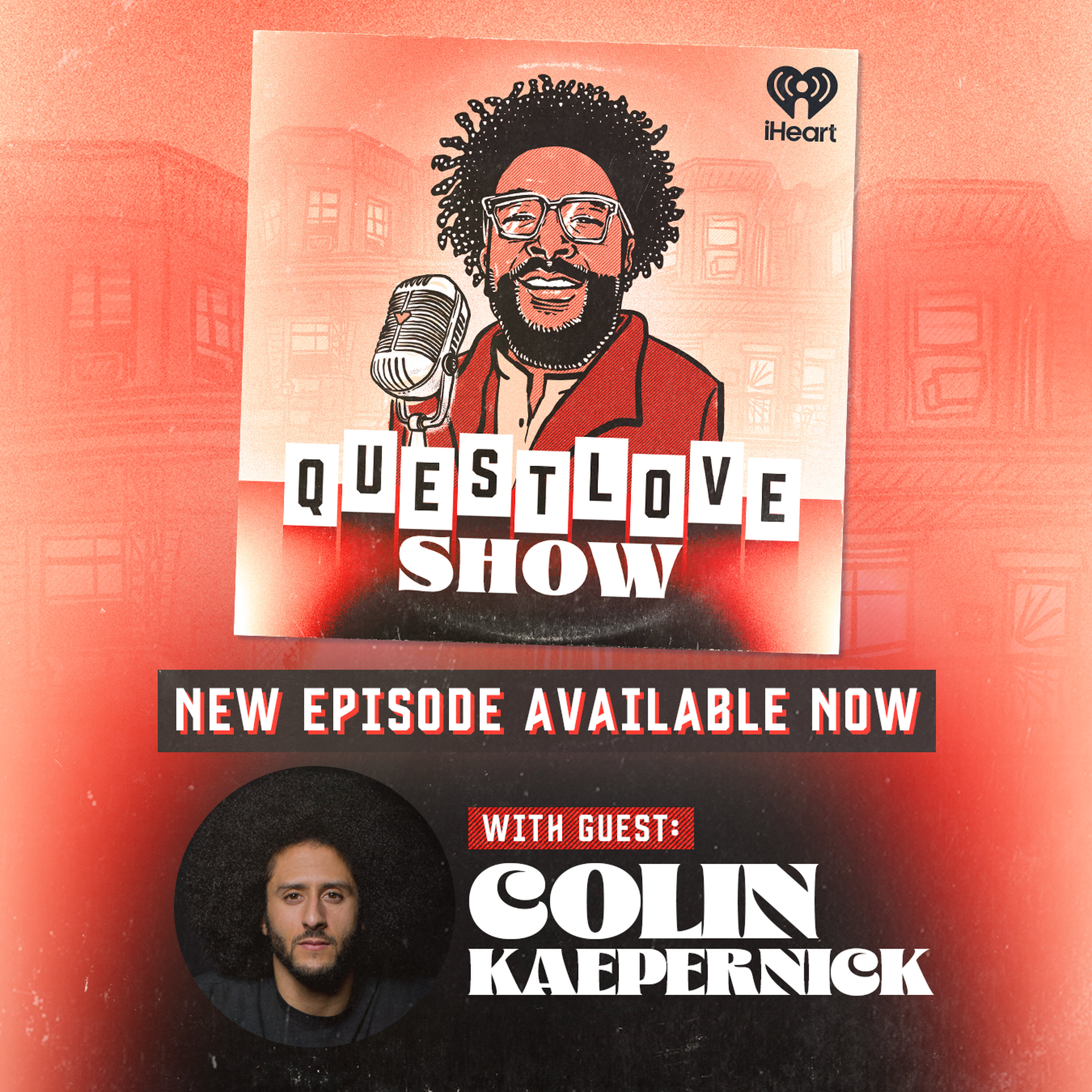
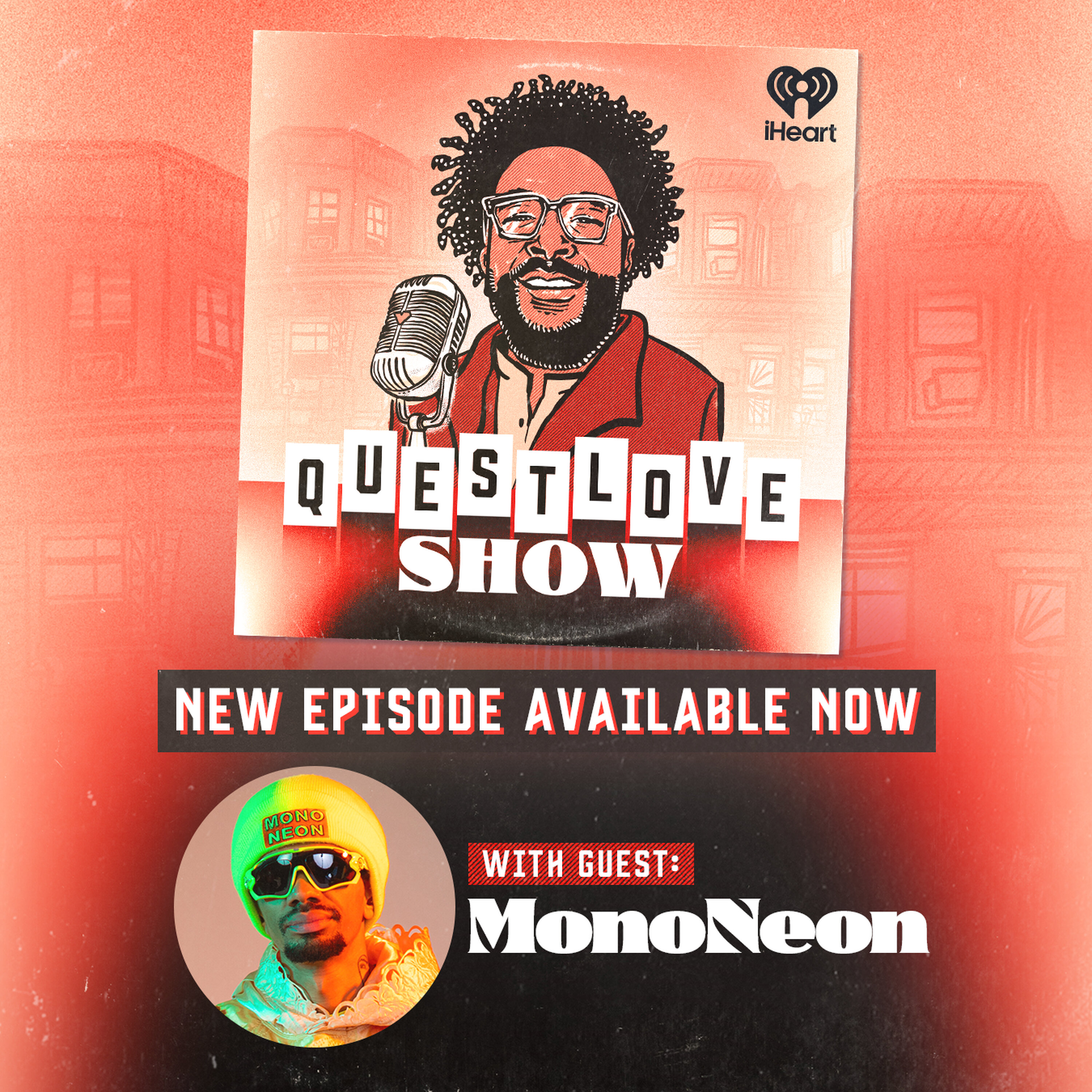
Questlove Supreme Presents: May Flowers Part 2


Questlove Supreme has always been committed to giving flowers to the artists who inspire us — whether they’re household names or unsung innovators shaping culture behind the scenes. Following last week’s Part 1 compilation, a two-hour Part 2 continues the celebration, this time with a focus on some of our favorites, with a special emphasis on Hip-Hop innovators. These moments highlight the voices and visionaries who’ve changed the game — and who deserve to hear their impact while they can still feel it.
See omnystudio.com/listener for privacy information.
00:00:00
Speaker 1: Quest Love Supreme is a production of iHeartRadio.
00:00:09
Speaker 2: Yo, Yo, what's up y'all is Questlove And as you heard me last time. You know, we've been talking about giving people their flowers, and I gotta keep that going because honestly, one episode is not enough. We're doing it this time in the month of May because it may flowers, all right. So see, given flowers isn't just about respect. It's about public record. It's about making sure the people who build the calls, carried the weight, who broke the ground, who.
00:00:33
Speaker 1: Inspired us, don't get lost.
00:00:35
Speaker 2: In the noise because we live in a moment where things fast and legends can fade if we're not intentional about keeping their names alive. So yeah, this part is all about them, and I want to challenge myself and you to think about the folks who may not get magazine covers, but who change the way we hear, think and move. Here a few more moments from QLs where we honored some great ones. Twenty twenty four, I had to sit down with another hero. Team Supreme sat down with Narda Michael Walton, who was a crucial member of the Mana Vishu Orchestra before becoming a hip producer for Whitney Houston, Franklin, Mariah Carey, Starship and so many others.
00:01:23
Speaker 1: At the beginning of.
00:01:23
Speaker 2: Part one, I got to ask him one of those always wanted to know questions about about his are you know, especially as a guy who was tasked with getting the best out of our superstars.
00:01:41
Speaker 1: I'm bringing everything I ever learned from you, man, so now you know what it is.
00:01:47
Speaker 2: I'm also realizing I've met you briefly before, and I will say that there are very few human beings that have an instantaneous disarming chip that I wish I had.
00:02:02
Speaker 1: You have a level of.
00:02:03
Speaker 2: Calm that I now know that. Of course, your resume is that impressive because I believe that you have a sort of calming element, because you produced some people that I would believe would be some of the hardest people personality wise to even step with. I've said no to a few of these people, were just like drumming with them or any of those things, because I couldn't bear to think of the thought of, you know, of dealing with that. But can I ask you, like, what when did you develop this personality of just calmness? Like you have a very disarming like, have you ever gotten angry in your life?
00:02:45
Speaker 1: Oh?
00:02:45
Speaker 3: Yeah, sure, sure I do, of course I do. It's just that I learned, like what you're speaking about in production and working with other people that I wanted to get their best and I realized that the love aspect was really powerful. It is really powerful. And then you mentioned meditation, So through meditation and the love aspect that became the most important part, and that the person I'm working with could feel that love to do their best, and then that would just make everything just go forward. So I kind of just pray, swim, you know, get myself together physically, and then getting that spirit that the person you really feel like, oh you're not here to fight with me, You're gonna be that great music. Then they start singing whatever they're gonna do, and the endorphins kick in and they were gone. But that spirit of love is really really important. That's what I want to say to you about that.
00:03:38
Speaker 4: Do you have a pre studio ritual that you do or something like the kind of get ready to get into this.
00:03:43
Speaker 3: You know, you can see behind me, I have a candle, two camels here and a candle up there. You know, I burn a little in sense every now and again, I usually bring a gift to the person I'm working with, just kind of make them feel the love on a physical level. A teddy bear flower, something sweet. And I want to say one more thing about what you're asking about, because it's really important for me. That Probably the most incredible moment along this line was after I made the songs of two songs, Who's Theming Who Until You Say you Love Me? And here and flew back to Detroit, Michigan to meet Aretha. It looking in her eyes is scary. That would that would scare you? That would that scared me? But there again, you know, I let her know in my spirit, my eyes, my love, I'm not here to fight, I'm not here to make a problem. I want I want to serve you, I love you, and help us make the best music. And then once the music comes on and then she starts opening up and singing, then again, like I said, it just gets happy. And then then it's like, well, what do you want to eat? You want cheeseburger? You want you know, fried chicken?
00:04:47
Speaker 1: What you want?
00:04:47
Speaker 5: And all that sounds happening.
00:04:51
Speaker 2: See, I wish I'd known you previously. Steve can attest to this. You know, of course I'm still here at the tonight show and lovely and I've only had one client sort of put us through the ringer to the point where I just walked away. And you know, unfortunately, I've had the pleasure of playing practically with every person I've ever idolized. But when it came to a refa and the alpha level of testing that we were put.
00:05:27
Speaker 1: Through, I failed that test. Oh you know, it was like.
00:05:36
Speaker 2: My ego was there because in my mind, I'm like, well, I'm holding up the tradition, like we are holding up the tradition of Cornell Duprix and Bernard Purty like her seventies, her seventies crack band, And you know, she wanted to have a long talk, and she wanted us to audition and all this stuff, and.
00:05:57
Speaker 1: You know, I just now regret that move. But I was just like, well, no, I'm fine.
00:06:04
Speaker 2: If you want to sing behind your karaoke track, then go ahead and do so.
00:06:08
Speaker 1: And she did so.
00:06:09
Speaker 2: And it could have been magic, but you know it was definitely I didn't know about what you just said, Like we're dealing with people and how to disarm them and all that stuff, and so.
00:06:24
Speaker 1: All right, y'all.
00:06:26
Speaker 2: In twenty twenty two, I sat down with Steve roon and a special.
00:06:30
Speaker 1: One on one.
00:06:31
Speaker 2: I'm molded so much of my drumming after Steve, but aspects of his journey and style were unknown to me, and this conversation went on over three hours and became a two parter filled with so much joy. Here's where Steve talks about going from playing with Bloodstone.
00:06:49
Speaker 6: To the Average White Band, which is how.
00:06:51
Speaker 1: I learned about it.
00:06:54
Speaker 2: I've heard many accounts of how Robbie passed away and how you got into the group. Yeah, but I've never heard an official version from official band member. How did Robbie pass away? And how did you get the gig for the Average White Band?
00:07:12
Speaker 7: Well?
00:07:12
Speaker 8: You know where were you know, we're friends. I was supposed to go to that party. I was supposed to meet um with that party. But I was, I was, I was. I was doing the film, doing the film.
00:07:21
Speaker 5: With the You're in that movie?
00:07:24
Speaker 9: No, I played, Well, I might be in them, but I did the move music for it.
00:07:28
Speaker 1: So did it ever come out?
00:07:30
Speaker 9: Yes, yes, I I think I have it. I think I got that found it.
00:07:34
Speaker 1: Oh my god, Okay, yeah, they're trained.
00:07:39
Speaker 2: Yes, when they when they were promoting that album on Soul Train. Uh, Don Cornelli showed like a minute of the clip where they're riding in the train and they're in the bunkers.
00:07:50
Speaker 1: And yeah, doing show tunes and whatnot.
00:07:53
Speaker 9: And so it is funny.
00:07:55
Speaker 8: I mean I had to go there and be on set with them and then and then we go we do re called music.
00:08:01
Speaker 1: Yeah, so you're all over that record.
00:08:04
Speaker 2: Yeah, wow, that's not you on Natural High.
00:08:07
Speaker 9: Money money is better. No, okay, it's not me a master, but but money is money. Badass. Something actually said it to me. That's why I started looking for it. I forgot all about it.
00:08:18
Speaker 1: Wow, we did that.
00:08:19
Speaker 9: All the best things in life, fore right, I get it.
00:08:22
Speaker 8: So so I was doing I was doing that, and and they were playing that.
00:08:26
Speaker 9: They were doing a run at the Troubador, and Robbie called me.
00:08:29
Speaker 8: Up and he said, come on, man, come and go and be a party on It was Sunday night or something.
00:08:34
Speaker 9: So I got to work. If I can, I'll be there. And and and as fate would have it, I didn't.
00:08:42
Speaker 8: I didn't go. Okay, and and and the next morning I woke up and my my my drum tech then guy that was working for me, guy named Terry Merchant.
00:08:52
Speaker 1: Mm hmm.
00:08:53
Speaker 9: He said, Steve Robbie.
00:08:56
Speaker 8: Stead Yeah, And I say, what did you Because Robbie, Robbie and I used to go out drinking together. Robbie was the hell of a drinker. And he said, no, no, no, he's dead, you know, he an overdose. Robbie wasn't so much of a drug taker. I could say, there wasn't so much of a drug. He's more of a drinker, right, But Robbie, this is this was the thing was Robbie.
00:09:22
Speaker 9: Robbie could drink.
00:09:23
Speaker 8: I'd seen Robbie drink Butler vodka and then he just switched to Scotch, right.
00:09:29
Speaker 9: And I get sick. But I never saw Robbie throw up. Never saw him he would pass out right.
00:09:36
Speaker 1: Yeah.
00:09:38
Speaker 8: And from from my understanding, because I wasn't there for a lot of what when when, the whole just there for the aftermath, was that he was at this party and everybody did this guy was saying some he's some cocaine, right, And so Robbie wouldn't do anything small.
00:09:56
Speaker 9: He was not that sort of a person either.
00:09:58
Speaker 1: He went bigger.
00:09:59
Speaker 8: Yeah, when he went and he went, he went bigger and and everybody, everybody else that did it got sick, and Robbie went home, went to sleep, and it stayed in his system. It was it was heroin and it was cut with strychnine, and it killed him. Jesus Christy's simple, you know, you know, I mean we talk a lot about, you know, accidental drug overdoses, you know, sometimes the house I'm saying at the moment, there was three guys that died of a fentanyl overdoses and and one of those, one of those guys was his was his nephew.
00:10:35
Speaker 9: Right, and uh, and accidental.
00:10:38
Speaker 8: I don't think anybody goes does any of that stuff to die, you know.
00:10:43
Speaker 9: I mean, if they want.
00:10:43
Speaker 8: To do that, they say, I'm I write a suicide note, right exactly, you did this to me, and then they're just do an enormous lot and they're dying. And I think they were recreation. I don't think that this guy even had a problem. And I think there was just three buddies that decided to go and around, let's let's try that stuff and see what it does.
00:11:03
Speaker 1: And unfortunately, yeah, it's a killer.
00:11:07
Speaker 9: It wasn't like that in the sixties. I can tell you that right now.
00:11:10
Speaker 8: But I don't think anything any of the drugs nowadays like they were in the sixties and seventies, and it's a it's a different animal. So, you know, Robbie, it was a tragic, a tragic accident.
00:11:24
Speaker 1: It did.
00:11:26
Speaker 8: It was a lot of pains, probably still being felt today. You know, I hadn't spoken to his widow in over twenty years. And she called me last.
00:11:34
Speaker 1: Week really England.
00:11:36
Speaker 8: Yeah, wow, he did, and and and she she was telling me that she she just just now has come to terms with the fact to be able to just say, you know, this is what it was, and not much point running around feeling resentment. And years of running around feeling resentment.
00:11:55
Speaker 1: It just make yourself that broke her heart for all those years, forty five years. It just wow, she read married.
00:12:01
Speaker 9: But yeah, still painful.
00:12:04
Speaker 8: Yeah, you know, Robbie was a great guy and a great drumma and a great guy.
00:12:09
Speaker 2: How how long does time go by before you're getting the phone call to join the average white band? And before they call you, are they trying to at least maintain the status of the name of the group and find a white guy that's funky.
00:12:26
Speaker 9: No, Well, I tell you.
00:12:28
Speaker 8: What happened was was this was that was that when when I found out about Robbie being being dead, I went and I called, I got hold of Hamish and I went over to the hotel and sat over the hotel with everybody.
00:12:42
Speaker 9: And we were all.
00:12:44
Speaker 8: Drinking because that's what we did with the Scots, and and and I said to them, listen, you know, Robbie wouldn't want you guys to stop now. You know, you just gotten to get this airplay with picked up the pieces that's happening for you. I don't know how this is all going to know, but you guys, you know you shouldn't shouldn't stop.
00:13:06
Speaker 5: Fare was talk of maybe we should stop the group.
00:13:10
Speaker 8: Well it was it was everybody was sitting around sort of like it was all over. You know, It's like it's not over, it's you know. And so I said, if there's anything I can do, let me know, and and and and I was under contract to Bloodstone, right, so what what I would do is Stick super and myself. What would happen if I couldn't do it, if I was working with a Budstone, Sticks would go and play with them.
00:13:37
Speaker 9: Yeah, And then.
00:13:38
Speaker 5: Sticks briefly joined the average white band.
00:13:42
Speaker 9: They played no average white man.
00:13:45
Speaker 8: So he go and play the gig and then and then if he could, if he couldn't do it, I do it. And then and and you know, I go and play with them. They were auditioning people s I R. There's drummers all black, white, I mean, didn't matter. They were just looking for a drummer, okay, with sticks and sticks and I would go. We'd go to the auditions and we'd sit there in the s I R. And they drummer would come in. They start playing with them, and they say, okay, no, they ain't working, and they would get more and more depressed, you know, And so either sticks or myself would go up and we jam with them and they come back to life again.
00:14:22
Speaker 9: And then they wheel in another drummer. And then we'd sit there and we'd watch them, and they would go there.
00:14:27
Speaker 1: Any any drummer of note that tried to audition for the band that didn't.
00:14:31
Speaker 8: Make nobody, nobody that I knew, But that was a lot of kids wanted to play. They would, you know, it was it was a big audition to go to and so and so I had to play this gig with them down at Long Beach at Long Beach Arena, at the old Long Beach Arena, and we down there, we sit down and come out, we start to play. I remember this gig there was. They were also like kind of state static audience. They weren't really doing too much. And then there was this one I saw this one guy sort of started to rock, you know, so I sort of hold him, owned in on him, and it kind of spread out from him, and by the end of the show, everybody was like dancing and going crazy, and it was it was a great show. And I came off the stage and this little fella came walking up to me dapper, you know, it's really well dressed.
00:15:22
Speaker 9: And I said, you know, a little bed. He walked up to me and he said, You've got to be in the band.
00:15:28
Speaker 8: And I said, I'd love to be in the band, but I'm under contract to another band.
00:15:33
Speaker 9: I can't I can't do.
00:15:33
Speaker 10: It, you know.
00:15:34
Speaker 8: And he said, you're out of that band, and you're in the band, and then he walked and he walked off. And Bruce McCaskill was the manager at the time of the banner. I said, Bruce, who the hell is that? And he said, oh, That's how I'd heard. I was out of that contract and I was in average white man, just like that.
00:15:59
Speaker 6: All right.
00:16:00
Speaker 2: Oh, in twenty eighteen, Dame Funk help us get Leon Silver's on the show. And this was epic for me because there was so much I did not know. And you here's some of that here coming out of my intro. The reason why I feel as that we commit to this show. Yes, you know, we're about the whatever, the teaching of excellence and bringing people and exposing him to the audience, you know, to audience that might not know him, stuff like that, but just sometimes you just want to nerd out on your favorite and I there's so much. There's not enough that I can say about the gentleman that we have with us right now. I can say that, you know, he is. I mean, he's such a genius in every area that he's ever done in crafting harmonies and musicianship and his songwriting. I mean, he damn near it invented a genre of music.
00:17:07
Speaker 1: He killed disco, He literally killed disco of all the like.
00:17:13
Speaker 2: He invented genres and he inspired some of our greatest I told Jimmy jam that he was coming on our show and even Jimmy jam had to bow down because of all that he learned from this man. I'm about to start crying right now. Ladies and gentlemen, please welcome to the show.
00:17:30
Speaker 1: Leon Silver's the third yes.
00:17:37
Speaker 7: To be here.
00:17:38
Speaker 6: Man.
00:17:39
Speaker 1: You don't know how happy we are right now, Like.
00:17:44
Speaker 6: We're just shout out to dang funk shout the day.
00:17:52
Speaker 1: Yeah.
00:17:54
Speaker 2: We have so many questions about your life, Like I've never idolized someone so much that I really don't know that much about because you rarely did interviews and things like that that matter.
00:18:05
Speaker 1: But let's just should we rapid fire? Do we?
00:18:09
Speaker 6: Just we?
00:18:11
Speaker 2: I want to go, Let's go through the journey. Okay, now I'm gonna say it. Let's start at the beginning. You all gotta be proud of me. I haven't said that in a while, but SA this time.
00:18:21
Speaker 1: Okay. So uh, I believe your entire families from Tennessee. Correct? Uh, please be wrong?
00:18:31
Speaker 7: Sucking everybody except me faster Agian Pat?
00:18:37
Speaker 1: Where were you born?
00:18:38
Speaker 7: I was born in South ben Indiana.
00:18:40
Speaker 1: Oh yes.
00:18:44
Speaker 7: My father was going to college out there and my mother and I was born on the campus and only stayed there three days after I was born. So I know nothing about South Ben, Indiana.
00:18:55
Speaker 1: I was born there for three days. I was there for three years. Wait, you born to South Ben Yeah, Memorial Hospital. Wow, that's amazing, That's that's crazy. Yeah. So just.
00:19:13
Speaker 2: I just want to know it all, like to talk about the beginnings in Tennessee and how music entered into that household.
00:19:23
Speaker 7: Well about Tennessee, I can't remember too much except Roy Rogers, so I was too. After about two years, we hit the train and came to LA. I think I was two or three years old, and La is where everything started the motown sound for me.
00:19:44
Speaker 1: Why did you guys move to Los Angeles?
00:19:46
Speaker 7: I think my father got a gig at what is it, uh, some kind of space company something. He was doing some kind of work I couldn't remember, but he his work brought us out there. And everybody wasn't born yet. It was just myself, Charmaine.
00:20:15
Speaker 1: Charmaine, Charmaine is the eldest sister, and you're the eldest brother.
00:20:19
Speaker 7: No, Olympia is the oldest of the family. Olympia and then myself, Charmaine and James Jonathan that was who was only four of us when we went to LA and it started with me was the Motown sound. I was into James Jamison on bass period and Benny Benjamin the drums. Uh, and that was my start in music. I was taking hangers, acting like high hats. I took the drunk, the little broom, the sweeping part, used that as a rim and snare, and the box spring I used, there's a kick drum. That's how I started music right there.
00:21:05
Speaker 2: You know, that's where most people would take the broom and make that to a guitar. You thought to make that?
00:21:11
Speaker 7: Yeah?
00:21:13
Speaker 2: Was were there any adults that were musicians that were influential in your life at that point?
00:21:20
Speaker 7: Or no, I'm just Jamison and Benny Benjamin. I didn't know nobody yet. That was only about six or seven there at seven.
00:21:29
Speaker 1: What was it about that music that called you the bass?
00:21:33
Speaker 7: I got a guitar when I was like, we did we just did four part harmony because I was teaching everybody this Lower Scudder's commercial back in the day, and my brother was three years old but he held four part harmony. So we was doing this Lower Scudder's commercial and my father heard us and started teaching us some four freshman type harmony back in the day. That high lows and all that, and so we did it real easy, and he got a manager and they put us on we would called the Little Angel, right, and they put us on Spike Jones arc Link letters show all these names from back in the day. And that's where my brother, he was three when we did our first TV show, and he held he gave everybody our parts when we forgot him, so he As far as harmony is concerned, how did you.
00:22:31
Speaker 2: Guys even know how to notate harmony? Because well, one thing I think our audience should know is I feel like the one distinction that separated you guys from any of your contemporaries Jackson stair Steps, whoever was young at that time, was you guys had the most unusual harmony structures ever.
00:23:00
Speaker 1: Was that from not knowing?
00:23:02
Speaker 2: Like who taught you those dissonant and chromatic harmonies that weren't average?
00:23:07
Speaker 7: And I think, uh, well, my father was into the four freshmen and the high lows and all that. So he he saw us doing three part harmony and one lead on this Lorscuddis commercial and I gave him their parts, but it was you know, simple stuff like you know, and he saw we can hold a no, not get off. So he started giving us harder songs, songs like It's a Blue World, and uh, well I forgot the name of those songs, but uh it was four and five part harmony, and we stayed on it and didn't get off. I don't know why. My mother could have been an opera singer. She was studying for a minute, So I guess that's why we Uh we just felt we can do it, and we just did it. You know. It wasn't no or whatever. We just did it and stayed on the notes. And I actually was the worst holding the note. Really yeah, James was the best, and then it was Charmaine, then Olympia than me. I was last. I always forget my note, you know. But James had the ear for holding the notes, and he was the youngest.
00:24:24
Speaker 1: What year was this this was?
00:24:26
Speaker 7: I was like I was like seven six.
00:24:29
Speaker 1: But I mean, like in what year was it? Like, probably was.
00:24:33
Speaker 7: This sixty fifty nine or something like. I was born in fifty three, so okay, around fifty nine or something like that or sixty.
00:24:42
Speaker 2: So there wasn't even a template out at the time to or besides maybe Frankie Lymon and the teenagers, which is more like fifty seven to fifty, But there were no kids groups or that sort of thing to no.
00:24:56
Speaker 7: Just Frankie Lyman, what's your name? Sounded kind of like a kid little anthe any back then I listened to him for a minute.
00:25:03
Speaker 2: Yeah, So were you guys instantly in pursuit of the next level? Was just to find a record deal? Or was it just like we did this television show and that's it.
00:25:14
Speaker 7: Well, back then we didn't have no leads. It was off harmony, so we would just stand there and sing, no personality, no charisma or nothing, just singing holding the notes. And we were so young that I guess the crowd thought it was amazing that we were singing that kind of stuff, But we was just ready to get off the stage and go play kind of thing. But I loved music. I was the one teaching him and actually sometime making him saying. But I got into the motown thing, and then from there we didn't get into seriously making moves to record companies till I was around I guess thirteen or fourteen or fifteen, something like that, because that's when when the Jacksons came out. That's when I got serious and I started teaching that. When my brother, because he had the most powerful voice, and I was he said I can't say. I said, well, just nothing gain. You won't do nothing unless you practice it. He had the tone. So I work with him every day and practice till after a year or so he was riffing and all that.
00:26:33
Speaker 2: You know, so all your brothers and sisters are literally coming out the wound one by one during this period. You're just waiting for them to get of age. And like everybody, there.
00:26:45
Speaker 7: Was nobody that came in my family that couldn't hold a harmony. They could do that before they could do a lead. We had to practice our leads. So as far as when they give them apart, they'd hold it and we sing to somebody else's part, they would keep and never blend into the other person's part or anything like that. We all had that, I guess, But the leads we had to work on, and Edmund worked him and Foster. But Edmund worked the hardest. Uh, and his tone reaped the benefits because I worked at it at home. And then when we got with Freddie Perrin, Uh, he heard Edman's voice right off the bat.
00:27:25
Speaker 1: So but that was the one in the Capitol years.
00:27:30
Speaker 7: Jumping too fast, go ahead.
00:27:33
Speaker 1: So what label was Pride associated with MGM?
00:27:38
Speaker 7: Yeah, a friend of Mike Curb, which was Mike Wiener Curb. Mike Curb was running MGM when we were signed and he was only twenty four years old.
00:27:48
Speaker 1: Wait, so the Mike Curb congregation. That's one of my favorite breakdews exactly, the coming down.
00:27:56
Speaker 11: Yeah, oh my god.
00:27:58
Speaker 7: Yeah, he was cool.
00:27:59
Speaker 11: He uh.
00:28:00
Speaker 7: He was the one that really hit me with the commercial thing because I was doing I was really kind of into back then that social conscious type writing, the you know, because the Black Panthers was out and all that stuff, so socially conscious music was kind of in, and I was into that from a third grip from this this history teacher, Mr Simon. But he was the one that told me, well, Leon, your music has to be more commercial, you know. And I was on that tip, like, well, what do you know? You only do pop music, you know, you know, cause we knew how MOL I mean, MGM was as far as motown was. And he's like, you're right, but even if I do pop music, it has to be commercial. You're doing R and B. It's it's got to be as commercial and I didn't want to hear that, but I did it, and I started changing after I had that meeting because he wanted to give. He made up pride after that because he told he told us to do this song called what It Takes, an old Barry Gordy song, and he wanted us to do it, and we did it, and it you know, it wasn't nothing. You know, it didn't do nothing. And this meeting with me, I didn't know it at the time, was to get inside whoever was the head of leader of the group type of thing. And I was more like trying to tell him, we know what we're do and just let us do it, because I realized they put us on the shelf for the Osmonds because they didn't Yeah, but we didn't know that when we signed, and they didn't tell, you know, we just we didn't have no records out for a year. We didn't even go in the studio for a long time after the Osmonds was out. But you know, I understand the marketing thing. You know, they didn't want no other competition out there, and we were a family group that could sing harmony and all that, so they signed us.
00:30:09
Speaker 2: Well, then I got to ask then if, because I know with one bad apple not. At one point did MGM say, hmm, this sounds close like ABC. All right, Silvers here you go, like this should be for you instead of the Osmond's or no.
00:30:24
Speaker 7: The Odumans were signed already and they were specially targeted to be the off the other side, a white group family group and a black family group. That was I understand the marketing after, but we didn't know that was the case till, like, you know, years later. And I didn't believe it even after people was telling me because I wasn't caring about that, you know, as long as we can come out, that was my thing. So their whole thing was done, and all of a sudden we heard them out and they was on MGM. Nothing was told or anything, uh and it just came out, you know, and I actually liked the record. I thought it was you know. But Mike Curb was cool because he made a pride and well he got his friend Michael Veener.
00:31:14
Speaker 1: To uh incredible bar because Incredible Bargle band.
00:31:18
Speaker 7: Oh yeah yeah, and that was a funny story too. But he they were schoolmates, Curb and Mike Veener, and he always wanted to get into record business, and Mike Curb gave him that shot and gave us put us on another label because MGM was more pop than anything. They never had no R and B groups on MGM, so Pride was the label that he put us on. Got a well KEG. Johnson, got a black promoter and Mike Veener was the head of Pride and we hit with Fool's Paradise our first record. Well it was R and B hit, you know, didn't get no pop play, but uh that was that. And when we started practicing, we went on the road and things were happening quick because we had the big naturals and people automatically oh another Jackson's and we had the bigger naturals. So can you.
00:32:20
Speaker 1: Those your natural Yeah?
00:32:23
Speaker 2: Yeah, okay, I had to know it for his wags or not because they were so perfect silvers afros for me, the real standard of the afro, not the Jackson five like that.
00:32:34
Speaker 1: You know. Well, we we.
00:32:35
Speaker 7: Had a concept. I thought, if you would we would go to bed instead of with the natural flattening it up, we would brush our hair up and take rubber bands and have a unicorn going up and go to sleep like that and we took the rubber bands off. It would just lay out like that.
00:32:52
Speaker 6: Wow.
00:32:53
Speaker 7: So that was our.
00:32:56
Speaker 2: You think, I ain't gonna do this, only braid my hair so can have that effect.
00:33:03
Speaker 1: I was like, damn, I could just unicorm my ship. You're fired, Thank you?
00:33:10
Speaker 11: I love you? Oh man?
00:33:13
Speaker 2: So uh knowing or you know, I don't. I don't know how big of a presence the Jackson Five were in you guys's life as far as like VA's the goal or if it was some sort.
00:33:29
Speaker 7: Of eclips it was, but it was oh, sorry, no, well.
00:33:34
Speaker 2: I'm asking like, was there a thing like well until we reached the status of the Jackson Five, like we haven't made it yet or that sort of thing.
00:33:43
Speaker 1: And at least with the Pride Records.
00:33:47
Speaker 7: It wasn't openly said because we were kind of controlling are We were writing our songs, we were doing our own harmony. We didn't have a corporation, and like guys that knew what they were doing, you know too, so we learned everything. So it was like a great feeling each level of it. So we wasn't even thinking. We were just happy to be in it really and doing our own music.
00:34:14
Speaker 4: So those prior records were was that you in the studio like just pretty much doing everything?
00:34:19
Speaker 1: How much was that? How much?
00:34:22
Speaker 7: But Jerry Butler had three guys, well two Cake Johnson and Jerry Peters working with his company, and he sent them first to meet us, and he met us at the six Flags Magic Mountain doing a show, and backstage after the show he brought his records. I guess that he wanted well that he did want us to hear from Jerry Butler, telling him to let him hear this. And I had my base ready in an amp and we were all sitting in a line, well in a circle, half circle, and we knew he was coming, so we was prepared to play our songs and he said I heard you all right, Keg did, and we looked at each other and said yeah yeah, And he said, okay, let me hear something. So we started playing Fool's Paradise at the w recor, our first record, and I started off with the base du and then Charmain started singing and we all you know, and Keg just walked over to the trash can and then okay, that's one, let me hear another one. And through through the records in the trash.
00:35:34
Speaker 12: In front of us.
00:35:34
Speaker 1: You know, we like that.
00:35:35
Speaker 7: We was teenagers. We was like, we looked at each other. Yeah, so that was great. We clicked right off the bat, you know when he did that.
00:35:45
Speaker 2: You know so well, even though buying these records and seeing the production and stuff, I knew that you wrote the songs, but yeah, I was trying to figure out, like how much production control you had these songs.
00:36:00
Speaker 7: I was learning then I didn't want to produce. I didn't even play on it, and I didn't want to. He asked me, did cagg was the producer, but it was supposed to be It was Keg and Jerry Peters that were the producers. Jerry Butler wasn't going to produce, but it was his company that was hired, and uh, some things went down. But Keg was the producer, and he asked me, did I want to play on it? Because he liked everything he heard, uh, and he was worried. He wasn't going to tell Jerry. Now I didn't notice at the time, but he was. He wasn't going to tell Jerry till later. Oh wow, because Jerry was busy still, he was still hot with his career. He was on tour and all that stuff. So, uh, we was actually in the studio cutting this stuff before Jerry even knew that. We didn't do his record. But I didn't know this. I just heard it from a phone conversation with my mother, Mike Wiener, and Keg because Keg was with Jerry and they were about to get rid of him, because Jerry came in and came down, and I remember I had to go in the studio and he was telling me, now, this is what I wanted y'all to do. And he played a way worse bubblegum record than one Bad Apple, and I like that. This was horrible. It was bubblegum. So I was like, you know, I was from the Nickason Garden and Watts, so yeah, I wasn't even trying to hear it. But I liked Jerry Butler, so I said, well, yeah, we're not doing that.
00:37:48
Speaker 1: That's all I said.
00:37:48
Speaker 7: I didn't want to say nothing else because I liked him. I just, you know, let me cut to the chase and I play around, we ain't doing it, and he said, oh why not? Yeah, it's too bubble gum, that's all I said. And he said, oh, okay, you sure, that's all he said. I said yeah, and he let it go. He just made sure everything went through his company, KEG, and then was gonna get fired. But I liked the way he handled hisself with us when he threw the records in the trash. So I stood up for him. I told him, Oh, if you get rid of KEG, we ain't doing nothing.
00:38:29
Speaker 1: Okay.
00:38:30
Speaker 7: I didn't know what I was I was, but I meant what I said. I was only about but eighteen, No, I was seventeen or something. But I was the one that everybody was listening to, and they like KEG, and we were doing our own things. So I just told Mike Wiener, Hey, if you get rid of KEG, we ain't doing nothing. We'll go somewhere else.
00:38:53
Speaker 4: Before y'all got into the studio, how were you writing your songs like foods preadicce writing them on base at home?
00:38:58
Speaker 7: On base? Oh, I would use the bass excuse me as a harmonic to the melody that I would sing.
00:39:06
Speaker 8: Uh.
00:39:08
Speaker 7: Always. I wouldn't do it as a you know a lot of people stay on E for the funk type thing. I would use it as a keyboard. I would always play the bass a harmonic to my melody and then the chords would you could you could hear different ones, you know as you listening to the melody and the bass.
00:39:30
Speaker 2: So are a majority of the songs that you write? Do you write it on bass? Verse before? You never on piano?
00:39:37
Speaker 7: Never on Okay, now I do because you know you got a studio in your hand. Now you know you could do anything. Really, But back then, if I did a melody, I immediately went to the bass and did the harmonic bass line because that was like my keyboard.
00:39:57
Speaker 11: So for.
00:40:00
Speaker 2: For those first four three or four initial Silvers albums, that didn't catch you on the way that showcase quote on once you guys went to Capital, But.
00:40:12
Speaker 1: Was it at all shocking to you that.
00:40:16
Speaker 2: Those records would be discovered in a new light in the era of rare groove culture and hip hop sampling, Like because even though in your mind you might think like, oh, well, okay, those first few records weren't hitting like you know, our Capital years.
00:40:32
Speaker 1: But for a lot of us, yeah, that's the holy grail.
00:40:36
Speaker 6: Oh my god.
00:40:37
Speaker 1: Yeah, I mean the first album alone with with uh wish I could talk to you.
00:40:42
Speaker 2: I'll never be ashamed, Like there's least like in my eyes, like that first Silver Records has at least six six or seven gems on it that we see in the light of sampling and how it's so was it at all shocking to you that, like some thirty five years later, forty years later, that suddenly like even in my DJ said like I'll play only one can win, as.
00:41:10
Speaker 1: So that is ain't shocking it all?
00:41:12
Speaker 7: Well, actually I felt great. I mean it was like an honor for and then I started thinking, how does that happen?
00:41:21
Speaker 8: You know?
00:41:21
Speaker 7: And then the only thing I could think of is wow, it was young people that picked that up. And I was young at the time when I wrote it. So it's like twenty years later that same spirit that you know musical DNA if you will, you know, only the young could hear that, because I was like, wow, that must be it. The same thing with Missing Me, all those songs that were sampled I wrote when I was younger than eighteen.
00:41:50
Speaker 6: Right, No, that's that's a whole twenty minute conversation just on that song.
00:41:54
Speaker 2: Yes, well what's started man with? Yeah with misdemeanor, Like, how how did you come with that?
00:42:05
Speaker 13: Uh?
00:42:07
Speaker 7: Wow? I didn't I the base came first. Uh, I was just I was stomping my foot and I was just hitting mm hmmm mmmmm. No, I was just doing the first one first, mm hmmm mm hmmm.
00:42:29
Speaker 5: Oh.
00:42:29
Speaker 7: And then I started repeating those two over and over and I would hit my foot kind of hard on the ground like a kick. And I had one of them old. It was I think it was a Signo cassette player. They only made one. It had one big giant speaker. It was a Mono radio cassette player. Man, it had the perfect compression for that mic. Because I recorded that baseline stomping my feet with that cassette. Man, it was the best sound ever. I did everything. I went and bought two of those iPhone.
00:43:08
Speaker 14: Yeah, that's what the that's what the iPhone sounds like now.
00:43:11
Speaker 2: And sort of I track a lot of my drums up withut the iPhone, like on the floor, like thirteen feet away from me, and it's the same perfect man.
00:43:19
Speaker 7: So I just loved that. I kept that cassette till it evaporated.
00:43:26
Speaker 4: You know.
00:43:27
Speaker 7: It just had that the misdemeanor vibe on it. And I just recorded that and then said the hook. I don't remember if I had the words already I did, probably didn't, I was, and I knew because I listened to that melody lower octave with the base and the same register, and it's wrong. It's the most horrible melody with the baseline because it's one of them notes that if you do an octave high you can get away with it. It sounds cool, almost funky, but if you do it in the same register like an octave lower, the worst thing to your ear. You couldn't. I hated it when I when I heard it like that, But uh, I knew what I had When I actually did the melody with the baseline, it sounded great. I just knew I had something that would people would like. I don't know why. It just had a feeling vibe, you know.
00:44:26
Speaker 1: And how old was Foster when he cut that?
00:44:28
Speaker 7: He was wrong? I think ten? Uh turn.
00:44:35
Speaker 6: Like ten years old? The funky shit out.
00:44:38
Speaker 1: Were you were?
00:44:40
Speaker 2: Because of the pristine level of musicianship that a lot of the Pride era records were under. Were you guys always using the same musicians in the studio or was it did you have a relationship with these musicians or was just like who's here today?
00:44:57
Speaker 7: We met him? Because we wanted to be at every session, so it was mainly Chuck Rainy on bass or what oh Man Felder, those two were the bass players.
00:45:10
Speaker 1: Those guys were just.
00:45:11
Speaker 7: Moon like no, they were the top.
00:45:14
Speaker 1: But I'm just saying like, like, yeah, well, Keig Keg and.
00:45:20
Speaker 7: Jerry Peters they were real good producers back then. They did Uh, Gray, what's that song that friends of friends of distinct? Yeah, they did that and uh you got me going? And and so Keig Johnson and Jerry Peters were formidable producers themselves. So and Jerry Peters was great keyboardist and arranger. So they knew all the top musicians. And I'd go to every session. David t was main guitar. Uh Felder. They'd switch up on keyboard guys because there was a lot of them, but it was always kind of jazz oriented.
00:46:00
Speaker 1: Guys, is there still alive?
00:46:02
Speaker 7: Yes he is.
00:46:03
Speaker 1: Wait, it's just hit me. Was it one of your brothers or three? Somehow? You guys were actually involved in the Jackson five.
00:46:13
Speaker 7: Cartoon Edmund he was Marlon's voice.
00:46:17
Speaker 1: Okay, here's a voice of Morl.
00:46:18
Speaker 2: Yeah all right, So in this next clip, I literally tell hip hop pioneer Lady B. Why I'm giving her her flowers. Her work on radio, which reached me in nineteen eighty one, literally set me on a course, which is why you know of a quest love Today.
00:46:38
Speaker 1: What's cool is Lady B gives Laiah some flowers here too.
00:46:44
Speaker 2: One of my favorite nights of yours was the the aforementioned Uh Steady be versus.
00:46:52
Speaker 5: Will Smith battle.
00:46:53
Speaker 2: Yeah, find dude, Okay, So Will Smith will forever, he'll for ever had my respect because he somehow got the call. He freestyled that Steady Bee was a munchie chi and I just remember at that point Steady Bee actually wanting to fight Will and them.
00:47:16
Speaker 15: Like, and I did not help matters any because I thought it was the funniest is I ever heard. And I think the fact that we all laughed made him really angry.
00:47:28
Speaker 5: Yo, we were all laughing.
00:47:29
Speaker 15: But that was the era when Shante stepped off that stage. That was the era when you had to come off off the top of your head and just you just had that. That was actually what you call free styling. That was freestyling people environment.
00:47:43
Speaker 2: They underestimated Will because they were like, well, you're not real hip hop, you're suburban.
00:47:48
Speaker 5: You talk all proper.
00:47:50
Speaker 15: First of all, he lived in my neighborhood that he wasn't out there gang banging and talk about it bee grabbing his jawn and acting. And you know, we didn't come up in a one parent household. We didn't learn how to respect women and stuff. Just because he wasn't raised like that, why not mean he wasn't a part and just as authentic and true to hip hop as everybody else. That is what I love the most about him. That's when Will was the first one, you know who made me. His lyrics made me smile. I call it happy hip hop, and everybody else was all bravado. I got a big back Cadillac. I got to know you don't you live in your mama house?
00:48:29
Speaker 5: I stopping right, you know what I mean?
00:48:31
Speaker 1: Fat?
00:48:31
Speaker 15: But Will was like the first one. I mean, you know it was it was. It was funny, it was fun it made you smile, and then you put a dope DJ like Jeff with him and it was just the greatest combination ever.
00:48:45
Speaker 5: Wow, I can I can go on and on nerding out forever.
00:48:52
Speaker 16: It's been beautiful seeing your friendship too, and how it's evolved and stuff. You Jeff and Will and how they still come out and support you.
00:48:58
Speaker 10: That shit is dope.
00:48:58
Speaker 15: I just texted the guy us on the movie set with him. I'm like, tell well, I need a one minute video of him congratulate me.
00:49:03
Speaker 5: For my fortieth.
00:49:05
Speaker 15: They got text back. He's doing it as soon as he gets out of such and such and I'm like, thank you.
00:49:09
Speaker 5: He lives for Instagram posts, So you know, no, ja you missed?
00:49:15
Speaker 15: Was my thirtieth. He came home to surprise me, like I didn't even know he was coming to the show.
00:49:19
Speaker 5: Really.
00:49:20
Speaker 15: He performed with Salt and Pepper. He did what a man. He performed with Chuck and Flave. He got out there. He was a whole s one w He did a lot of guy. He just stayed on stage all night and wait and there's more. It rained torrential rain. It was like the hip hop woods Stock. People did not leave. They stayed in the rain. Will was shaking me. Are you having as much fun as me? I'm like, I don't think.
00:49:46
Speaker 4: Wow.
00:49:47
Speaker 15: He stayed on stage all night and surprised me. It was the dopest thing ever.
00:49:52
Speaker 2: Well, you deserve all your flowers, you know, eighty one. You just you literally introduced me to the world that I get to.
00:50:02
Speaker 5: That I built it in an empire.
00:50:06
Speaker 11: That says a lot.
00:50:07
Speaker 5: I want to thank you for that.
00:50:09
Speaker 16: And forget about your radio mentees around here, because she got a lot of those in the world too.
00:50:14
Speaker 15: Oh yes, I love that one. That's that's my little mini lady because she only and does she sit up there and and act like she asked. But you ain't let nobody say nothing to her either. She was the only one that stabbed and he was to speak up. Yeah, that's right.
00:50:27
Speaker 1: He watched me.
00:50:28
Speaker 15: He watched me get one right there, proud of that one right there, and you watch me get fired to girl. So it's all good.
00:50:37
Speaker 1: You have any you got any children?
00:50:38
Speaker 2: Like?
00:50:40
Speaker 15: No, I I tried, but my sister again, I talk about her so much. She's been going for two years now. No, my sister, uh gave me kids and then my old man passed away on me and he left me kids. So am I a mother and a grandmother? Yes, to every extent of the word. I have taught them to walk, talk, potty trained school meetings.
00:51:02
Speaker 13: I am a mother and.
00:51:05
Speaker 15: I am a grandmother. And I know I literally you know. I remember when my sister took ill she had a stroke and I was taking care of her in her latter years, and the doctor asked her, you know, you don't have a high blood pressure or anything. You don't do you worry about anything. It says you have three children and seven grandchildren. She says, no, I don't do that.
00:51:24
Speaker 5: My sister does.
00:51:25
Speaker 12: And she makes it like she.
00:51:27
Speaker 15: I raised her kids. She was my She called me her baby daddy. She sent me cards on Father's Day.
00:51:34
Speaker 16: Wow, you the dopest daddy. Yeah, but that's dopey. Yes, they walk right past their mother. Come to me crazy, all right.
00:51:48
Speaker 2: So when The Roots signed their record deal in November of nineteen ninety three, our manager Richard Nichols wanted us to instantly get this record out of the way, and so, I believe because of the cheaper rates, we recorded like around like Christmas.
00:52:09
Speaker 1: Week, believe these songs.
00:52:11
Speaker 2: To mix them, we had, you know, we recorded the songs in early December and then we uh mixed them right after Christmas and New Year to get the EP out by April. We were trying to move fast, and so this is around the time when Tribe had just released Midnight Maratis, their third album. They recorded at Battery Studios because Battery was the studio owned by Jive Records, their label. We chose Battery Studios because that's also where Bob Power Tribes engineer.
00:52:43
Speaker 1: Wanted to mix our record.
00:52:46
Speaker 2: We love the way that Bob's drums sounded on Tribe albums, and it was like, hey, we want the same treatment. So that's how influential Tribe was. There was a legendary show with Dayla Soul, Soul's of Mischief and a tribe called Quests that I believe was at the Ritz and Union Square. Trek and I went to this concert. It was like, I consider that the last time that Tarik and I were civilians, and I remember that night. I remember saying, like I joke when we walk home, I said, Yo, man, you know what's crazy. The next time we come back to the United States, like we will have had an album out, Like we won't be civilians anymore.
00:53:25
Speaker 1: We're gonna be you know.
00:53:27
Speaker 2: Celebrities, stars. Like we had hope in the air that we were gonna like just come out of the box and like blow everyone away.
00:53:33
Speaker 1: That's that's that's what we that's what we planned on.
00:53:37
Speaker 2: So we kind of went to the day La Soul tribe called Quest Soul's a Mischief concert and just when the mosh pit and jumped around and ah, man, it was awesome.
00:53:50
Speaker 1: But basically it was just like I believe that Q Tip had come to Battery Studios to do a quickie remix to Oh My God.
00:54:05
Speaker 2: They were gonna do like a different version of it on stage that night, and if I recall correctly, they were using the mini rippert in loop that that's the second song on the Adventures in Paradise album.
00:54:18
Speaker 1: So if you listen to a Boom Boom, that's.
00:54:26
Speaker 2: Look up Minie Rippleton Adventures in Paradise and the song after Baby This Love I Have.
00:54:34
Speaker 1: I remember them looping me like I was like eavesdropping from the hallway.
00:54:39
Speaker 2: I'd like, go to the bathroom, but then sneak down the studio see and put my ear up against the wall to hear them loop in something.
00:54:48
Speaker 1: And they were gonna they.
00:54:49
Speaker 2: Were just making like a show debt for that particular New Year's performance, And you know, I was real shy as talk to them, even though you know they've seen.
00:54:58
Speaker 1: Us, Hey, y'all doing yeah, yeah, y'all the roots, y'all dope.
00:55:01
Speaker 2: But then I saw him in the hallway man, and it was like five weeks old, and I was like, yo, that three measure loop you do on Electric Relaxation, Like what is that about? Like it was unusual to not be an even four bar loop, Like if you listen to Electric Relaxation, it's a three bar loop. And I was just getting like two overly like nerdy and analytical. And he told me then that was the red flag. Like he's like, yo, like you talk like a journalist, you don't talk like a human being. And so I got a I got put in time out until about three albums later. Like you know, I saw him a little bit for the do You Want More? Period, but not that much because every time I saw him, it's just that likequestions to ask. And then he warmed up to us towards the end of ill Adelph Half Life and wanted to be on the album. And you know, man, he's he's my hero man, So big up to Q Tip. Here Frante gives Q Tip some flowers and he runs with it with a thoughtful response. Then we started playing clips and getting antidotes.
00:56:27
Speaker 4: I will say to if you were one of the one of my favorite producers in the sense that you always the way I've always described it is like you always kept a foot in both worlds, Like you could do a Midnight Marauders, but then could do the infamous you know what I'm saying, Or you could do like a Craig mac remix, and like you always found a way even when you work with big mainstream acts of the time, you still found a way to put your stamp on what you were doing. And I think that's and in my opinion to me, that always kept you kind of you. Never to me, never came across as like that bitter guy like a lot of the old chat So you know.
00:57:01
Speaker 1: What it is, you know why?
00:57:02
Speaker 13: And he could tell you it's not even a big secret. It's DJ right, don't you find it?
00:57:07
Speaker 2: I mean like djing' I'm smart about it now because I wasn't DJing as heavy since maybe the last three or four records where I'm now aware of it. Yeah, now now I know why Dre, Like when I saw straight out of Compton and realize the environment that Dre was DJing at at that roller skating rink where it's like you.
00:57:30
Speaker 1: Play the wrong record, that's ass.
00:57:33
Speaker 2: Now realize, oh, that's why all of Dre's stuff is taking no prisoners with with his singles and stuff like it has to just got to hit grab you by the throat.
00:57:42
Speaker 1: Now I realize that, yeah, that's That's the.
00:57:46
Speaker 13: Other thing about it too, is that it's it's you get to see what works and why, you know, because I, you know, I think that you and I we maybe I think we come from the same philosophy when we spend you know what I'm saying, It's like, you know, current, current, a little bit back on another one, throwback, temple wise, tempo match, baseline match and boom now current you know current, you know, just to try to mix and then sometimes you know that the crowd may not know the throwbacks, but you just want to see the reaction if if it's one of the yeah, because if it if it doesn't stop the grooving that you see who's moving it to it. It's a great study, you.
00:58:29
Speaker 1: Know, psychological stuff.
00:58:31
Speaker 2: If you're just tuning in, We're getting a hip hop history lesson with rapper, actor, producer DJ and member of a tripal Quest Q Tip. The reason why I brought up the record collection is because m the era of when you guys finally get your debut record out.
00:58:48
Speaker 8: Uh.
00:58:49
Speaker 2: First of all, the long ass title of People's Instinctive Travels and the Paths of Rhythm.
00:58:56
Speaker 13: Why I mean Captain Beef.
00:59:03
Speaker 1: Difficult?
00:59:03
Speaker 13: Yeah, I mean you know we title we need to stick the fuck out.
00:59:09
Speaker 1: When other options for the debut album before was the you know either or we always had like three to choose from it, they decided.
00:59:21
Speaker 13: Like, okay, now, were just like, yo, this is what it is.
00:59:24
Speaker 1: Okay. So in the era of you guys making that record.
00:59:32
Speaker 2: Well as a music producer, the first thing, the reason why I have a dividing line between the renaissance era of hip hop and the classic era of hip hop and the thin line that's in between is the fact that you guys managed to miraculously avoid James brown Well using anything from Break B Lose Ultimately and Breaks Collection, which all right for our listeners, Break Be Lou shout Out, What's Up?
01:00:06
Speaker 11: Lou?
01:00:06
Speaker 1: Lou Floores.
01:00:09
Speaker 2: Wisely came up with a Wikipedia or a cliff notes, if you will, of records.
01:00:17
Speaker 13: And Street Beat Lenny Street BT Lenny too.
01:00:19
Speaker 2: Yeah, Street B Lenny shout out of all the records that Bam and HERK and Flash and Theodore would spend back in the day, and when this compilation came out in late nineteen eighty five through nineteen eighty nine, pretty much I'll say sixty percent of most hip hop relied on these breaks for their daily diet, all these you know, synthetic substitution and peached the President. God made me funky. It was just to the point where the average record take like take a producer like Herbie Lovebug his productions on saying, like a filler cut on a kid in play record, You.
01:01:07
Speaker 1: Tell that's why?
01:01:08
Speaker 8: You mean?
01:01:09
Speaker 2: He used the drums from here and the loop from there and the baseline from there, you know, all on the same record where you really didn't do any heavy digging. So this is the first time, or at least with with the native tongues, this is the first time that I'm hearing loops that aren't on that compilation. And it's like, oh God, I gotta do some work to figure out what this is. Was that was that already a rule that like no substitution, no funky drummer, no impeach the President.
01:01:41
Speaker 6: Yeah, we were.
01:01:43
Speaker 5: It was.
01:01:44
Speaker 13: It was a crew of us, right like it was me Africa, the beat nuts.
01:01:56
Speaker 17: Who is the music head of the beat nuts. They both are who's your go to well made juju?
01:02:05
Speaker 13: I mean because that was my men, like in senior year high school, like we were me him Rashad.
01:02:14
Speaker 11: Yep.
01:02:16
Speaker 13: They all went to the No no, no, we all went to different schools, but we were all like meet up at the hubs and ship, like we just knew niggas from when you know, we was getting up getting beats and ship and you'd see dudes and be like, Yo, that dude got because we always there was a there was a small group of us who was like anti break beat, you know what I mean, Like we had to have the right ship, you know what I mean, like all right, the.
01:02:43
Speaker 1: Large professor substitution.
01:02:46
Speaker 7: Huh.
01:02:47
Speaker 1: But not once did you feel like all.
01:02:48
Speaker 13: Right, oh yeah, well after after you know, after we've established ourselves in that way, you didn't come back. There's been times I've used substitution kicks and ship like that and like.
01:03:00
Speaker 1: No, that's whatever, you can't tell yeah okay, or.
01:03:04
Speaker 13: Like you know, and like Pete would use he would use substitution a lot, you know, some of them ships. Just as a producer, you'd be like, yo, that ship is still that is that James brown Snea is still rocking. We got to boot, you know what I mean. But back then, early on, it was just about it was about the hunt, nigga, you know saying the hunt. You know that ship just had to fight. It was just like and then we got so on and we would travel out of town and flights. Me and Paul would get fucking rent cars.
01:03:36
Speaker 6: And be driving Pittsburgh.
01:03:39
Speaker 13: Yeah, all types of ship.
01:03:41
Speaker 1: You would go to Jerry's and Pittsburgh.
01:03:43
Speaker 7: Yep.
01:03:43
Speaker 13: I went to Jerry's.
01:03:44
Speaker 1: Yeah, it's yeah.
01:03:46
Speaker 2: If any beat nigger, there's seven Pilgrimage like Mecca Pilgrim, but Jerry's you'll never get past.
01:03:54
Speaker 1: Like the letter D and or C right right, right right, that's how large is where houses.
01:04:01
Speaker 13: But the crew was it was like Juju and and this is the crew like we all would know each other. We always go to spots and ship. It was Juju Diamond large myself Africa, Pete, I said Paul, right, Paul, prem had already bought a store. He already had everything. Wow, he had a store. Oh Latif Latif, I said Rashad, No, it was we was we was Mark already had he's a og so he was already. So Prem had the record store that he bought when he was in Texas and came and they just shipped him every like forty thousand records of some crazy ship. So he had everything, and Mark had everything. So we were all putting our shits together kind of at that time, you know, at the same time, you know. But it was the hunt.
01:05:12
Speaker 1: It was the hunt.
01:05:13
Speaker 13: It was like Game of Thrones and some shit.
01:05:15
Speaker 6: Dude.
01:05:15
Speaker 2: See, I'm glad you're saying this because even though my career came in the tail end of it, many a record dealer had the fear of their eyes when like, because I would just straight up ask them because they like, record dealers will do this thing where it's like, all right, they know what kind of money's walking in, right Jack.
01:05:37
Speaker 1: So they'll look at me.
01:05:38
Speaker 2: They'll look at me and like, okay, a mirror's good for ten thousand. So they have a system where it's like they'll give you all right, that's ten, that's twenty, that's ten, that's twenty, that's ten, that's twenty.
01:05:49
Speaker 1: No, that's right.
01:05:50
Speaker 2: But then they know you're itching and I'm like, so that's it, and they'll be like, well, you know, I got a shipment that just came.
01:05:58
Speaker 13: In last night, and all the warehouses up the block.
01:06:03
Speaker 1: Right, oh, take you over the block. Yeah that's all that. I got some dresses over here. Yeah. No, but that's what it's like. And then there's just a point I would tell them to just cut to the chase, like and that's the.
01:06:18
Speaker 2: Thing as a record collector, you never tell them like, look, only got a thousand, Just cut to the chase and give me the good ship, because no, they'll just do the same ship the tens, the twenties, the tens, the twenties, the tens, the twenties.
01:06:30
Speaker 1: Were you out there?
01:06:31
Speaker 2: And then they'll be like they you They will usually say like Pete Rock was always the thing, like well, yeah, we were holding some of the stuff for Pete Rock.
01:06:42
Speaker 1: You know, I'll give you an extra yeah. But then you're like you get desperate and not realize this wouldn't even be true. No, no, no, no, I realized then I realized that was the hustle.
01:06:53
Speaker 2: And then finally I found a guy where he's just like, look, this is worth a hundred, worth one fifty. This is you know, in those type of things, So of course those prices would be jacked up because they would use it like stuff already.
01:07:10
Speaker 11: So like like a.
01:07:13
Speaker 1: Prime example the Manti Alexander in Happiness.
01:07:18
Speaker 2: All right, so before you use that for Gangster bitch, I know that the album was worth like ten bucks now, but because Gangster like he cutes him, single handedly brought up.
01:07:35
Speaker 1: The stocks on all well, not just the stuff people.
01:07:40
Speaker 13: I feel bad a little bit because it just happened like okay boom.
01:07:44
Speaker 1: So yeah, my generation is now paying the extra on.
01:07:47
Speaker 6: A new Tribe album.
01:07:49
Speaker 13: I use this this for whatever. What is the Nairobi Yeah, like that ship is rocketed already.
01:08:01
Speaker 16: But give me an example of like from once it came to whence they got once Tip touched it?
01:08:07
Speaker 17: No all the time, like oh Jesus Christ, I've read Ramp is a five dollars record.
01:08:13
Speaker 2: I don't even think there's an original Ramp record. Like every Ramp album I've seen is. I just felt like they Yeah, they finally just printed it in the name of the interest of finding the Benina apple bum sample.
01:08:27
Speaker 6: So how much is that now, Ramp three hundred?
01:08:30
Speaker 2: Well you for an original press never seen an original pressing of Rent, But uh, Eugene McDaniels, I've never seen I've never seen the headless heroes under two hundred bucks original.
01:08:49
Speaker 1: Playing that. I played that ship.
01:08:59
Speaker 2: The first argument Stacey and I ever had over music, first Tasty Trees, Stacey and I ever had over music was over that record.
01:09:13
Speaker 1: She by the time we got to that song, she was like you.
01:09:20
Speaker 18: This is the latest song on McDaniel's debut album. I played everything, No, No, No, the sam just before news for this.
01:09:31
Speaker 1: For the tip Us it was jagget a dagger. It was jagged dagger. You know, we was having a ball. That's going on the mic. Weird enough.
01:09:40
Speaker 2: Jack of the Dagger was such a dig at mic. Jagger like stealing black music.
01:09:47
Speaker 1: The loop was so dope. One of the one of the last dates that we did on when Lauren.
01:09:54
Speaker 6: Released that, did you play that as he walked out?
01:09:56
Speaker 2: No, no, no, no, man, you know what he can't Yes, he was scheduled, he was scheduled to be on the show.
01:10:06
Speaker 1: We prepared that song and.
01:10:08
Speaker 2: Then he okay, okay, he didn't do it, but yeah, when he comes, dude's dagger like what they gonna do the research on it?
01:10:16
Speaker 1: Anyway.
01:10:18
Speaker 2: Last the last date, the last date of this Lauren Hill tour when she did that unplugged record Smoking Groups tour.
01:10:25
Speaker 1: I remember that right.
01:10:26
Speaker 2: So it was Thanksgiving night in Seattle and I played the Parasite and blasted it because I DJ before she came on dog the look on the art it was the best.
01:10:39
Speaker 1: I might have to play you. Yes, I gotta Can I play a whole song? Please?
01:10:42
Speaker 11: The whole song is like that.
01:10:45
Speaker 1: We can't not right now.
01:10:46
Speaker 13: I mean if you can put a little bit, just skim through, skim through certain.
01:10:52
Speaker 1: Yeah, I think it's a good close. We'll close the show with it. Okay, we will close the show. That's fair.
01:10:58
Speaker 13: Can we talk over it? And then is the show like Mystery Science Theater?
01:11:04
Speaker 1: That is kind of what we do. That's all we do, all right?
01:11:09
Speaker 2: So what making this? Making the record the debut? Yeah, people's I call it Peter Peter Ptour, Peter making that record. What is because this is a group of super producers. I mean it's a group of multiple c's, but it's also a group of super producers.
01:11:34
Speaker 1: How what is the what is the agreed upon method of making joints?
01:11:42
Speaker 16: Like?
01:11:43
Speaker 1: Is it just yo? I got this loop?
01:11:45
Speaker 11: I got this loop.
01:11:46
Speaker 1: I like that loop.
01:11:47
Speaker 2: Okay, let's work on that is it, you know, do you just come in with the finished product like I like this does a least say, Yo, what do you think about this?
01:11:55
Speaker 12: Yeah?
01:11:56
Speaker 1: That joints nice? I'll do that. It's kind of okay in the beginning, what it like? What's it like on the first album?
01:12:01
Speaker 13: Like in the beginning, Uh, A lot of it was demos that I'd done over the prior, I'd say five years maybe.
01:12:14
Speaker 2: Okay, I'm calling I'm calling an artible storytime with Q tip. All right, I'm just gonna play ten seconds of random tribe joints and you tell me, like, what comes to mind when you made this?
01:12:26
Speaker 1: Like, well, if you remember any details.
01:12:31
Speaker 13: The read it, read it the page, see what it says, read it? I mean running away roy is you know it's one of my favorite This.
01:12:45
Speaker 2: Shake catches a lot of slack like I I'll read, I'll read you know, like uh uh lists like Ego trip list or whatever, where of course this didn't description and was of course, so it catches flak as in weird debut songs by.
01:13:07
Speaker 6: Groups that were later god doubt.
01:13:10
Speaker 2: But there's nothing wrong with this loop. This is not my go to song to spend. But I was never mad at this loop or the.
01:13:20
Speaker 6: Place of the ending. It felt like a good ending for the album.
01:13:23
Speaker 12: Yeah.
01:13:24
Speaker 1: I used to run that joint and that was actually the B side was even funnier. Pubic B side talking smack comics.
01:13:35
Speaker 6: It was funny.
01:13:36
Speaker 1: It was like, it's very skipped to my loop.
01:13:38
Speaker 6: No, no, no, you know what it was.
01:13:41
Speaker 13: I had two years earlier. There was a store on Bleika, the street where you get all the fucking prints unreleased joints. Well not Bob's, but it was another joint.
01:13:57
Speaker 1: It was Generations.
01:14:00
Speaker 13: It was not Unbleaker, but it's off you know where all the chest stores. I think it was across the street and down the black from Mock Moods.
01:14:09
Speaker 1: I think there's a story where Prince actually walked in to that store and.
01:14:13
Speaker 13: Walked out with all this ship. Yeah, that had Yo, It's ill because I was in there. I would always hit there after school because Karena and I would always be in the village and ship and I would always go get I was just a huge Prince fan. So I had heard movie Star, heard Bob, George, super Califern at the front, whatever the fuck you know all of that ship. Like, I was just like stuck. I remember playing movie Star for Africa and he and we're in like eleventh grade and we're like mocking the ship and listening to all this unreleased Prince Ship, and this was like kind of like one of the.
01:14:51
Speaker 1: Who's you know about George?
01:14:53
Speaker 13: You know what I like doing all that silly ship. Underneath it is the BT Express beat, you know what I mean. I mean it's it's clearly tuned out. But it was also still an overage of disco kind of house parties that were still going on. You know, you still have Frankie Knuckles, Ip, still had Larry Levan doing parties back then, even though their houses had closed, and maybe Frankie was doing back and forth from Chicago to New York. So body, Body and Soul was being established, re established, So it was still a disco thing that was happening.
01:15:31
Speaker 1: Have you ever got to see Larry spin Yeah or his systems? Yeah?
01:15:36
Speaker 13: Well I saw him at Limelight.
01:15:39
Speaker 1: Okay, did he control the system there?
01:15:41
Speaker 13: I don't think. So this is towards because.
01:15:43
Speaker 2: When you DJ, you have the world's loudest base cabinets ever. And I know that he always you You're always aiming for a paradise.
01:15:54
Speaker 13: Yeah, I'm trying to go for that, man.
01:15:56
Speaker 1: Yeah, okay, I'm a stickler for that.
01:15:58
Speaker 13: But the first real big system I think I heard was in.
01:16:03
Speaker 10: The world what was the last record that you played yours in the club?
01:16:07
Speaker 1: And you was like, oh what feeling you play?
01:16:10
Speaker 8: What?
01:16:11
Speaker 19: Yeah?
01:16:12
Speaker 1: Wow, See, now that's weird.
01:16:14
Speaker 2: I have a rule against playing because every time I play the roots ship.
01:16:22
Speaker 1: Is the fastest for.
01:16:27
Speaker 13: Yeah, I don't, I don't.
01:16:31
Speaker 1: But no, but I'm saying they got this already.
01:16:33
Speaker 2: It's already established that you're the establishment of that level. Like you know, there's at least five tribe songs that are the mount rushmore go to songs of a party start. So even when you were djaying like it's embarrassing to play what's the captain obvious one like scenario, I.
01:16:55
Speaker 13: Don't play none of it obviously.
01:16:57
Speaker 2: So even when you were DJing in let's say nineteen ninety three and you put scenario on, knowing the motherfucker's gonna go out, they mind like is this still like a weird thing?
01:17:06
Speaker 13: Like yeah, I don't, I don't.
01:17:07
Speaker 1: I don't do that. I can't do that. I'll play, Oh you'll play some obscure shit.
01:17:13
Speaker 13: I'll play something more if like especially if it's like a I have a groog rowing or whatever. Like let's say, okay, so what is somewhere like one hundred and five bp M or some ship.
01:17:24
Speaker 1: I know what you're gonna say, what, No, I was doing?
01:17:27
Speaker 3: Do it? Do it?
01:17:28
Speaker 2: Do it? I was going to say you you would probably player no footprints foot I feel like you would play footprints a not to play print club song. But okay, you taught me this term part of my French niggaig.
01:17:53
Speaker 13: Nigga drums, nigga drums that he nigga drums, nigga drn.
01:17:59
Speaker 6: I need that dry.
01:18:02
Speaker 1: No, he's just it's just he taught me that term. He's just like it's like that's the secret.
01:18:09
Speaker 2: Like the music smooth, but the beat is so cracking and hard and just hard like it's it's it's like Freddy Fox punching you in the news.
01:18:21
Speaker 1: It's this ship over on top right, while like in my head, why was Freddy Fox? Yeah? The hip hop?
01:18:30
Speaker 2: Yeah, like damn it, we're getting a pound from busting rhymes, you know, like it's yeah, no, when busted pigs you up, it's you gotta hide your.
01:18:42
Speaker 1: Hands like him, him and the Angelo, Him and Angelo the like he pulls your finger like a thing.
01:18:50
Speaker 13: But he did is relentless deal do it all night.
01:18:54
Speaker 1: For two hours every since Primo says the same thing he has like he had after every two minutes. DM Buster, the reason why I get.
01:19:05
Speaker 2: Pounds out because they will pull your joints out of sockets, giving you.
01:19:09
Speaker 15: A pounds so hard test your manlihood.
01:19:12
Speaker 1: It's just now, it's just pounds.
01:19:14
Speaker 2: Man.
01:19:14
Speaker 1: It does.
01:19:23
Speaker 2: Somebody Q Tip work with his Diamond D, another legendary MC producer. Whereas Diamond D says the best producer on the Mic twenty twenty three, we linked in Atlanta and got to tell Diamond what he means in the cannon of hip hop production, sampling.
01:19:40
Speaker 1: And album Make It.
01:19:44
Speaker 11: Dog.
01:19:44
Speaker 2: The resume is scrown like some of my my my favorite producer moments comes from this gentleman years. I mean, we all of his records, Suns, Blunts and hip hop Hatred. I got to ask you about your your sophomore hatred, passionate infidelity like Dome Piece, the Gotham, and now your brand new joint the review which is excellent work. You've been doing quality, excellent work and sometimes it's easy to sort of take for granted. People do excellent work and they often get overlooked, and when top five lists and top ten lists are named, and you know, sometimes a person is so effortless that you tend to forget their contributions.
01:20:30
Speaker 1: But you know, that's what quest Love Supreme is for. So that's it.
01:20:33
Speaker 2: Let's welcome the one and only, finally, finally, Diamond. Am I allowed to call you Diamond D? Now?
01:20:39
Speaker 7: Of course?
01:20:40
Speaker 1: Okay, number one? Can you please?
01:20:43
Speaker 12: We allowed?
01:20:44
Speaker 1: No?
01:20:45
Speaker 6: No, no no.
01:20:45
Speaker 1: But here's the deal.
01:20:45
Speaker 2: I two versions of the album when it was like Diamond stump blumped in here and then there was Diamond.
01:20:52
Speaker 19: Well it was Diamond and psychoch Neurotics, Diamond Diamond psychoch Neurotics.
01:20:58
Speaker 2: So what was the situation with your name? It was there another Diamond D like back in the day that I.
01:21:03
Speaker 12: Don't know what.
01:21:05
Speaker 19: I'm not sure, but I think it might have been originally somebody that was signed to Weston Records of New York.
01:21:13
Speaker 6: Yeaheah. They did Tony Gardener at Heartbeat, like.
01:21:16
Speaker 12: You know, hot Shot was on that table, but I think somebody had the name.
01:21:20
Speaker 2: Yeah, okay, so yeah, well you know this is my favorite nerd out moment on Quest Love Supreme. So I'm gonna start from the beginning. What was your first musical memory? Time out? Let me go to og style. Where were you born?
01:21:36
Speaker 12: I was born in Manhattan, New York hospital.
01:21:39
Speaker 1: Wow, I never heard any Yeah, get to get to it all right, New York all right. Was raised in the Bronx. Okay, your first musical memory sitting.
01:21:51
Speaker 12: In my uncle's room and him just playing music.
01:21:53
Speaker 19: He had a large vinyl collection, So I was just sitting in his room, like eight nine years old, just didn't play records.
01:22:01
Speaker 1: What was he playing?
01:22:03
Speaker 19: Everything? Mostly mostly funk, jazz, soul, you know what I mean? Shouts out to Gary was he was?
01:22:10
Speaker 2: He very meriticulous with the collection, Like I've had an older cousin that was that way.
01:22:15
Speaker 1: But you couldn't touch the wax and.
01:22:18
Speaker 19: You know, yeah, definitely fresh, yeah, definitely. You know, you know you have to hold a record like this with both hands. He's very meticulous about his vinyls. And then you know, when I came along with the DJ and you know, we had to put our hands on the.
01:22:31
Speaker 1: Record, I was gonna say, how okay.
01:22:33
Speaker 2: So I've sometimes I try and explain to people the trouble, you know, I mean Teezy now that hip hop is and it's about to be in its fiftieth year for us also to take for you know, for granted its development and how you know far it's come. But you know, I try to explain to people that a lot of those pioneers, you know, Flash, got so much kickback or pushback if you will, you know, because the general idea is that you're going to destroy the needle or destroy the belt driver or the turntable.
01:23:07
Speaker 12: Like putting your fingers on the grooves. Those are big no nose.
01:23:12
Speaker 2: Yeah, I got punishment trying to uh, you know, like my first introduction in scratching, of course was you know, grand Master Flash on the wheels of steel and you know, trying to practice on my dad's you know, while he's not looking and see what happens and you get in trouble. But yeah, like how do you discover what that is in the bronx and where you like privy to any of those like block parties or anything.
01:23:35
Speaker 12: Oh yeah, they were like right outside, explain it.
01:23:37
Speaker 1: Take it.
01:23:38
Speaker 19: Growing up in Farvest projects me Fat Joe lor f Ness, we would all see DJs like you're in the same buildings, still the same same complex. But we would see guy like Grant with the Theadore mainly Theatre, Suntime Flash. At that point they were already making records, but we were able to just go downstairs and just see these jams going on in the parks.
01:24:02
Speaker 1: What was it? What was it like seeing?
01:24:05
Speaker 2: Because I'm assuming that you're too young for Harlem World or right, so I'm assuming that you're eleven or twelve year olday seem it? So what how does the trickle effect happen to you? Like where tapes the thing instantly or how do you get the information just.
01:24:21
Speaker 19: Watching it firsthand? You know, you've seen people out there, you know, with boxes, you know, recording or whatever. But we you know, I saw the firsthand, you know, when Flash made Grand Master Flash in the Wheels Steals, I had already seen him do some of that, you know, outside in the parks, cutting up good times, you know, shit like that. But just being close in proximity to it is what drew me and in fact quest when I was a little kid, whenever I saw the DJ reach for the damn right, I'm somebody album cover by the JB's you know, I would lose my mind because I knew he was gonna play blow your Head, and that sticked. Like even now as an adult, that always sticks out to me. A lot of times people ask me, you know, what's the first song to draw you into hip hop?
01:25:12
Speaker 12: I mentioned blow your Head.
01:25:13
Speaker 19: It's not a rap record, I know, it's just a break bead that was real popular, and as little kids we would lose our fucking mom when that shit came on.
01:25:24
Speaker 1: The hip hop legends continue.
01:25:26
Speaker 2: Eric Sherman and I had a one on one a few months ago in late twenty twenty four, and I told the EPMD co founder what a lot of fans say, even though he's from New York, he's kind of a G funk pioneer and creating a sound that was later.
01:25:41
Speaker 1: Popularized out of La Let's Listen.
01:25:47
Speaker 2: It wasn't often, especially back in eighty eight, where you would see a summit meeting of frus from opposite sides of the coast or you know, wherever they were from, like normally birds of a feather flocked together. And seeing Nwa in the Big Paypack video, it was like such a big deal for us, like yo, EPMD knows Nwa, like craz That's how me and Reek were like watching your TV reps like you are a g Funk pioneer that never got the credit, and you are also a neo soul pioneer that never got the credit. But do you think that because of the sort of the thick texture of your production for those like first two EPM D records where like the.
01:26:44
Speaker 1: Zap collaps, we like.
01:26:47
Speaker 2: Like that spoke to the West Coast more than any more than Public Enemy could have because it's touring.
01:26:54
Speaker 20: Don't forget this, it's touring, you know, So so you know that was a la was one of my biggest markets because the way they thought me. And when you hear Snoop telling the story, Snoop said, he drove to Britwood looking for me in Parish, right, because they don't forget this in Britwood in California. So he's so he's in Britwood thinking that we're from the suburbs.
01:27:14
Speaker 1: Oh okay, okay. So he told the story a.
01:27:17
Speaker 5: Couple of times.
01:27:18
Speaker 20: But anyway, being on tour, but me and Cube was tight, like like I had seven roses Zukie when I went to LAQ picked me up.
01:27:25
Speaker 5: He had seven roses Zukie, you know.
01:27:28
Speaker 20: And again at the end of the day, me and Dre was two people that was on both sides stample in Parliament.
01:27:35
Speaker 5: Don't forget them.
01:27:37
Speaker 20: He was doing it first in eighty seven before me and Parish even came out. It wasn't like, okay, people credit me. Like if you talk to dub C, he has say, yo, I gotta get the the West Coast. Hat to Eric sermon, because they showed us how to rap on this music. So while we was playing Roger, they rhyming on Roja. While we was playing Riding High, they were rapping on Riding High. So all the stuff that they hearing on the way that Me and Paris did the Funk records were different than what they was doing it, so it kind of gave them a blueprint. If you hear people talk, they say Dre enhanced the stuff I did by playing live. So if you hear woman to Woman fan but then be Bett, I just sampled it right. He did California Love and we played them. Now it's bigger so and then once epm D broke up, he was able to go to Roger too.
01:28:41
Speaker 1: You know, things of that nature.
01:28:44
Speaker 2: How are you developing your production skills and your rhyming skills in eighty seven in time for like your debut record, because you know, like how long did the epm D exist before you guys actually got strictly business.
01:29:01
Speaker 20: To the public one year see the ones that's fast. The one thing that you that we didn't know. We didn't know what the producer was. We thought every record you heard was done by that person.
01:29:14
Speaker 1: God, it's not crazy.
01:29:15
Speaker 20: So we're doing what we think we're supposed to be doing. We didn't know about we was producers. We never heard that word. We just wanted to make a record. So we took the break beach that we had that parents had out of DJ, took records from each other houses, the whole nine, and that's how we formulated epm D.
01:29:32
Speaker 5: You know, we made what was in front of us, not knowing what we were doing.
01:29:35
Speaker 1: Don't forget.
01:29:36
Speaker 12: We didn't know how to.
01:29:37
Speaker 5: Make a chorus.
01:29:38
Speaker 20: So Will Starklov called the awesome two All your two came and said, let me get that seven minutes to funk record because we just had the record looping. So when it's my thing, we said, it's my thing, there's nothing there, so Teddy ted said, give me, and he said, give me that record, so he found that for tip boom for tim boom, and then that fam f F bet So caught me how to format a chorus. I would never even known how to due a chorus or format. It was caught to me by the author too.
01:30:09
Speaker 1: So there was a version of It's My Thing that didn't have no version of this.
01:30:13
Speaker 20: Reportant record came out. The label was telling us that we needed to have a chorus and to know the chorus get ready to come in?
01:30:21
Speaker 1: Got it okay?
01:30:22
Speaker 9: Because all we had was it It's My Thing louder.
01:30:25
Speaker 20: All we had was that we didn't have the drum roll and the the horn to be like the boy can drop down and come back to the raps. We end up had to split it up so there's a chorus and then there's a part you riy on. And once we learned that, I went nuts and I started doing get down, get down. Time keeps on slipping. So now I was just knowing what to do now, And then when saying came out, I was like, to what you're saying.
01:30:53
Speaker 10: Now, we're in it.
01:30:54
Speaker 1: Now you're not a format of song.
01:30:56
Speaker 11: I get it.
01:31:00
Speaker 1: Curtis Blow was on qols in late twenty nineteen.
01:31:03
Speaker 2: He's a rap pioneer, with The Breaks being the first gold certified rap record and this clip, which celebrates Curtis. He also makes a point to honor the late Larry Smith, one of hip hop's first and most important producers, who sadly passed away.
01:31:19
Speaker 1: In twenty fourteen.
01:31:23
Speaker 16: I know, since you were the first to ever tour like this internationally, there had to be like some mistakes. There had to be like some moments where you and you and Russell were like, okay, so we're not going to do this like that again. Like there were just so many new things to you, guys, Like did you even know about writers? Did you know?
01:31:37
Speaker 13: Like what didn't you know that you learned in your first.
01:31:40
Speaker 1: How many lost pass for?
01:31:42
Speaker 10: Yes, I had to learn it all.
01:31:44
Speaker 1: I learned it all on Where's your Traveling?
01:31:46
Speaker 10: I was like that guy. Oh it was incredible.
01:31:49
Speaker 8: I was.
01:31:50
Speaker 10: I was the most sought after live act because it was just me and my DJ, just two people, two people, two turntables in the microphone. Really, yes, so not the first to start the choerage right right, So you're easy to work with. But then Russell in eighty one, Oh, boy. Yeah, so here he comes with Larry Smith. Larry Smith was playing bass, play bass on the breaks and Christmas rap and so.
01:32:24
Speaker 2: Larry Smith produced Orange Crust was the band for all those for Christmas rap.
01:32:29
Speaker 10: No no, no, no, no no, not Orange Crushed. That came after Russell took forty thousand dollars of my money and bought all his banning and he gave it to Larry. Larry bought the band equipment and they said, all right, you're going out with the band. I'm like, what how could you do that? I didn't okay this? He said, wait, hey, I'm the manager.
01:32:57
Speaker 5: Manager.
01:32:57
Speaker 1: You built Larry Larry uh Smith's career.
01:33:02
Speaker 10: Well budget that.
01:33:06
Speaker 13: Larry.
01:33:06
Speaker 10: I got to give props to him because he was excellent musician, incredible producer.
01:33:13
Speaker 12: You know.
01:33:13
Speaker 10: I remember many of the nights we sat up and talked about, you know, my sound and trying to get a sound that was in between James Brown and Chic and Larry was the man. He was definitely the man.
01:33:27
Speaker 1: I love him so who worked on like Christmas rapping and rapping blow.
01:33:32
Speaker 10: And yeah that was Larry. Larry was on the bass, but you had John Trope. I was on guitar, And we had Jimmy Braylile who actually went on to become a len drum a Lin drum programmer, and uh, he was on drums. And you know, so during that time, you know, we recorded in the studio like the seventies in the sixties, it was a live band, you know what I mean. And and and we had to rehearse and you know, let's play it one more time and record it and hopefully it would come out.
01:34:08
Speaker 14: Okay, I'm sorry, And we do White Guy in the Corner As a question, John Tropia.
01:34:15
Speaker 10: Yeah, the guitarist. Yes, so was he the guitar.
01:34:18
Speaker 14: He's a to me, he's the famous jazz guitarist.
01:34:21
Speaker 10: Right, and he's on the breaks.
01:34:24
Speaker 1: Wow, that's his work.
01:34:26
Speaker 10: That's his work on the break.
01:34:29
Speaker 21: On run DMC stuff that was not well Edie did Martinez, Eddie Martinez.
01:34:39
Speaker 14: And wow, no, I need to process. I'm not schooling on anything. I don't know too much about about him. I just have a few records.
01:34:48
Speaker 3: You know.
01:34:49
Speaker 13: He don't get blown away easily.
01:34:50
Speaker 1: But it is Curtis. That's just really yeah, weird, unexpected, unexpected name.
01:34:55
Speaker 10: Yeah, yeah, but he's he's a legend, definitely a legend, and you know, I seeing him in the studio because of my producer, JB. Moore was also a guitar player, and he couldn't do the guitars right the way we wanted it and the way he wanted it actually, and so when John came in and played it perfect, perfect rhythm and it was just immaculate, you know.
01:35:25
Speaker 5: Drives him.
01:35:26
Speaker 1: So for your first album, like, whose idea was it to do? Like taking care of business.
01:35:32
Speaker 16: To the girl? What's the other one?
01:35:34
Speaker 1: That the slow one that's like.
01:35:36
Speaker 6: All I want.
01:35:40
Speaker 10: Fir.
01:35:42
Speaker 2: People don't even credit that as the first love ballot. So it's like for you, you were making a format that was palatable. The radio was like Frankie Crocker on your mind, like okay, the label saying we need something that you know.
01:35:54
Speaker 10: Right, Well, it was all by design, of course.
01:35:57
Speaker 13: You know.
01:35:57
Speaker 10: We wanted to, you know, have a fusion and with other forms of music because they was so brand new, this thing hip hop and rap, you know, so why not rap over a rock and roll song? Why not have a reggae rap? Or I was the first to do a country in Western rap, that Way Out West song. You know, you know, we we we just tried to be different and try to give something new.
01:36:26
Speaker 16: In retrospect, though, do you see how like free you were in that moment, Because I feel like a lot of EMC's today out the gate couldn't just say I'm producing that in this different genre.
01:36:34
Speaker 13: I'm like, they won't they want to be allowed to.
01:36:37
Speaker 10: Well here's the thing. I always wanted to be a singer, and I remember singing those singing songs that every album I put on, the singing But listen, folks, it took me a couple of weeks to do those.
01:36:57
Speaker 2: In Philadelphia Party Time, very big record, yes, which of course you know well that Tracy Lee like try to bring try to bring that back. So that was the first time I ever heard Full Force on record. So how did you how did you hook up with those guys as far as like did they produce that record?
01:37:19
Speaker 1: Were they just the band or like what was how did you guys.
01:37:23
Speaker 10: They became producers after that because we sat in the studio and talked about you know, uh JB. Moore and Robert Ford and what they were doing on my stuff and how they wanted to do the same thing but differently more funkier or more creative. Uh so they were incredible. I met them through JB. Moore and Robert Ford and very very, very talented musicians and singers, and it was incredible just to be a part of that. But the Go Go song, talk about it, trouble for Wow Tub that was EU. So here it is on my birthday I turned twenty one years old. I had the number one record in the country, and so I'm going down to play the Capital Center down in d C. So I had my band, remember the Orange Crushed band. I ain't got ten bollies and oh man, we got like eight eight nine pieces.
01:38:16
Speaker 9: Right.
01:38:17
Speaker 10: We rolled down to the Capital Center and I'm headlining this concert and they have all these local bands there and I didn't know what they were, you know what it was. So I'm walking the spot. I'm here first time, that first time I'm here in Go Go you were you. The whole crowd is going crazy. I'm saying, oh, I'm about to tear this.
01:38:47
Speaker 3: Right.
01:38:48
Speaker 10: So they were going crazy and it was a band called Trouble Funk. Then another band came on, EU Freeze. Right, they went on the same thing, but now and the crowd is going crazy again, even more crazy. So I'm like, wow, Chuck Brown, was it?
01:39:08
Speaker 12: Oh my god?
01:39:09
Speaker 10: Right the Godfather he comes out and tears up the spot too. So it's my turn. So I locked it, let me music up. I throw on Christmas Wrapping and we're playing Christmas Wrapping. The band is tight, clean and everything, but the crowd is like this looking at us, like I'm like, oh my gosh, we better get to the breaks, and you know, quick on this one here right, So I'm speeding through the set and then we throw on the brakes, clap your hands over here, right right, and then like still right, number one record in the country. And so that night I got my butt tore up three or four different times. And for me, it was like my mom's always said they you can't beat them, join them.
01:40:01
Speaker 1: Hell yeah.
01:40:02
Speaker 10: So I got all that numbers.
01:40:05
Speaker 1: Nice. Nice.
01:40:06
Speaker 10: Next year, I called my boys sugar Bear.
01:40:10
Speaker 1: And the Sugar Band didn't playing on parties.
01:40:12
Speaker 10: We did a party time, damn. Okay, yeah, okay, And it's just wonderful to have them in the studio just doing that thing live.
01:40:22
Speaker 16: And how many pieces in the studio in that moment.
01:40:25
Speaker 10: Oh yeah, it was like seven eight pieces.
01:40:28
Speaker 8: Yeah.
01:40:29
Speaker 16: And so you were the first for that too. I'm guessing the first to do a go go collapse.
01:40:33
Speaker 2: Well, no, because Flash of them did. They did a live version. Well, they actually signed Trouble Funk two Sugar Records. The first live Go Go that I've.
01:40:45
Speaker 1: Heard was Trouble Funk Live on Sugar Hills. So the Robinson's got there early on that.
01:40:49
Speaker 10: And then actually actually the first sample loop right was on the song If I Ruled the World, and and the sample was Trouble Funk. You know that pump pump, pump.
01:41:04
Speaker 1: Push.
01:41:05
Speaker 10: I took the percussion part and laid it under If I Wrote the World.
01:41:19
Speaker 2: Okay, okay, how did that feel for you to have that song come back and for people to learn that you're you know, you're the origin of of of that particular song, because that's all means so much too.
01:41:33
Speaker 1: I like your harmonies, fans, and.
01:41:36
Speaker 10: You got that harmonies.
01:41:37
Speaker 5: Okay right there?
01:41:43
Speaker 1: You know it was you and Allison Williams actually right, that's Alison singing.
01:41:49
Speaker 10: Yes, yes, yes, that ters and Audrey Wheeler yes.
01:41:58
Speaker 12: Yes, yes, and so harmonies were better.
01:42:04
Speaker 11: It was.
01:42:04
Speaker 10: It was awesome. It's it's the ultimate and flattery to hear your song on the radio that you recorded some time ago. I remember when Sony sent me the tape. They sent me a cassette tape, and it was awesome. I sat there and played the tape in my car for about three hours, kept rewinding and rewinding it.
01:42:24
Speaker 1: You know.
01:42:24
Speaker 10: It was like, Oh my god, that's gotta be Laurence Hill. That's gotta be Lauryn Hill.
01:42:29
Speaker 12: You know.
01:42:30
Speaker 10: So I called them back. I said, look, Sony, you guys got a big, major, major, monster hit on you. You better put all your promotion in this because this is going platinum. It went, It went triple platinum.
01:42:42
Speaker 16: Now did you think that were too close or.
01:42:45
Speaker 10: The same thing? But I didn't hear it. I didn't hear that song. Like like I sat and you know, listened to If I Rule the World because I feel like.
01:42:54
Speaker 16: The checks are the same, like that Songlain the World right about next to close it.
01:43:00
Speaker 10: It was huge yet one song of the year. I think in nineties something Jesus Christ.
01:43:05
Speaker 1: I forgot about next.
01:43:07
Speaker 16: Christ, that song like the song that you get annoyed because it just played all the time that the dance.
01:43:16
Speaker 1: For you know, as a DJ, I need that song, so I get it.
01:43:22
Speaker 2: What better place to close than with the legendary Jimmy jam We spoke for like seven hours, and really it's all flowers. But here's the one area that I especially like. This is serious of life goals here. Yeah, let's just we're starting from the where were you born, sir?
01:43:47
Speaker 11: Minneapolis, Minnesota.
01:43:49
Speaker 1: Okay, what part of what part of Minneapolis?
01:43:54
Speaker 11: I grew up South Minneapolis, So you know, I can say like forty first in Portland Avenue, which doesn't mean a lot to anybody, but you know, if you think of downtown, it's like, you know, First Street, Second Street, you know, First Avenue, so on and so forth. I lived forty one blocks south of downtown.
01:44:10
Speaker 2: I feel like when any black person is from the south side of town, south side of east side, that means something going on.
01:44:18
Speaker 1: Like what part of what was the town part of town to not go to? In Minneapolis?
01:44:24
Speaker 11: Uh well, okay, if you were black, the northeast was where to not go to. It was called actually the northeast is what we called it. Where the white people lived. Yeah.
01:44:35
Speaker 1: Yeah, every town has the white people.
01:44:39
Speaker 11: The white people didn't didn't necessarily want us to be there, you know, because white people live every I mean, let's face it, back, growing up I think the state population was something like three percent black, and maybe it was eight percent black in Minneapolis or something like that. So pretty much white people were everywhere. But certainly, uh, you know, everybody was very tolerant, I guess, I would say, and it was very progressive town. But as you can tell from the music, it came out of there. I think that's had a lot to do with it. But no, I mean, really, the north side probably is where the folks were. You know, I was one of the only South side guy. I mean in Prince obviously because we went to school together and stuff. But on the north side of town you had you know, Morris Day, Jellybean, Terry Lewis, you know, and you had the community center called the Way, which everybody used to rehearse at and that kind of thing. So it was a lot more happening on the north side of town, I would say that on the south side.
01:45:38
Speaker 2: So in your formative years, how many of your contemporaries and peers that you were professional with would you see on a regular basis?
01:45:48
Speaker 11: Everybody? Man, it was a it was a small community, it was it was. It was a lot like I always say that Purple Rain, the movie was a kind of a It was fiction, but it was it told a lot of truth. And that was there was like a couple of clubs you could play at, and there was more bands than the clubs could hold. So it made for a very competitive situation where if your band wasn't firing, you just wouldn't be playing in the club. And so that's the way we grew up. So there was like the Elks Lounge. There was a club called the Nakarima. Nakaima was actually American spelled backwards. And you know, the Cozy Bar was another place. There was a place called the Flame, and you know, so between you know, back in that day, you had you know, my band, I had a band called Mind and Matter, Terry had Flight Time. We were together and then we were apart. We were you know, we were going back and forth a lot. And then Prince had Grand Central. Morris had a band called the Enterprise Band of Pleasure at one point, you know, so on and so forth. So what happened was there was all these bands, but there's only a couple of places to play. But all of those guys, and particularly people like and and really the best, probably the baddest dude up there was Sonny Thompson.
01:47:02
Speaker 2: Everyone speaks of Sonny Thompson like he's God. Yeah, Like, what is it about, what is the legend of Sonny Thompson.
01:47:09
Speaker 11: Well, Sonny Thompson. I remember back when I first met Terry, and I remember we put our little band together and stuff, and then they used to do these big outdoor festivals at a place called the Philliswheetlely, which is a big community center, and they used to do these outdoor concerts and I remember seeing they had a band, actually the original band that was called the Family. Sonny Thompson was in that band. But I'd never seen a brother play the guitar like that.
01:47:32
Speaker 1: I mean, he just was like.
01:47:35
Speaker 11: He was like legendary. He was like the dude. And on top of it, he had the attitude like if you didn't like him or you didn't like the way he was playing, he was gonna come down to kick your ass. Right, So he'd played the gig and stuff, and then afterwards if he'd like, look at it you and you'd say to him, oh man, he killed it, Sonny. Man, that was amazing, because you better say that. But the good news was he always what he was. He was amazing, and he was a dude. Did everybody just kind of stopped and stared and went, damn.
01:48:03
Speaker 1: What was his style of playing?
01:48:06
Speaker 11: He was a great rhythm player. He played with a lot of aggression.
01:48:09
Speaker 5: You know.
01:48:10
Speaker 11: The thing I always said about about Prince and the way he played is I've never seen anybody attack instruments the way Prince did. Like he literally attacked the instruments louder or just toned well, you know he would. I mean I always say, like, for instance, Terry, you know, Terry's a great bass player, There's no doubt about it. But you know how we always use the analogy like in basketball, people that make you better. Prince was that person, right, So Terry would be playing a bass part and Prince would take the bass from Terry and go, no, play it like this, and then he'd play it, and then he'd had Terry the bass back, and Terry would look at the bass like he'd never seen it before. You know, It's like damn, you know so that but that was the way Sonny was, and I think Prince got a lot of that from Sonny. Attack of the instruments, And it's the same with the keyboards. We used to break keyboards all the time because it wasn't like you would just hit the keyboard politely. It was like we were doing all kind of swoops and wow wow on all that kind of stuff, Like we would break keyboards. I mean that kind of stuff. I mean that was the way he wanted you to play. And so I mean that that kind of attitude, to me was the thing that you know, set him apart, along with a whole lot of other things, but it really set Prince apart for sure.
01:49:28
Speaker 2: What were the what was a gold club to play in Minneapolis at the time, Like, was First Avenue a dream that was unattainable?
01:49:38
Speaker 11: No, Actually, here's an interesting thing. Yeah, Now First Avenue was actually the first place that actually allowed like black bands to play.
01:49:46
Speaker 1: So there was a quiet segregation or oh it was not in your fleece, Oh it was, I.
01:49:52
Speaker 11: Guess, I guess you could say it was quiet. I mean, if you were a band and you were trying to play somewhere, you knew there were that were just unattainable, you just weren't going to play that club. And I thank god to this day that that happened because what it did as history has always shown with black folks is from adversity comes all good things. You know, you look at what you don't have, and then you figure out that you can't go the easy route that everybody else is going, and then you figure out a way to go get it done. So what we used to do back in the day, we knew we couldn't play I can't remember even the names of the clubs, but there was all these very fancy white clubs and they all had white bands, but they were all playing R and B music, which was ironic. We knew we couldn't play those clubs. So what we would do is, for instance, there was a hotel downtown called the Dykeman Hotel. It was a hotel that was probably about a year away from, you know, being torn down. I mean, it was just nobody stayed there. Rooms were ratty, the whole thing. But what they had was a big ballroom. What we would do is we would take you know, we'd go to the owner of the hotel and we'd say, hey, can we rent the ballroom out. We'll give you the liquor, whatever the liquor sales are, you keep and we'll take the door. We'll charge you know, three bucks at the door or whatever. And so what it did is it forced us to become entrepreneurs because it wasn't like we just had the talent we could go play. It was like, okay, we got the talent, Now we got to figure out how we're going to go play. So we would do that. Now we now back in the day, there's no Twitter and no social media, so it was go to institut prints. That was the place you go. You print up a bunch of flyers and then you put them on people's cars and you'd say, you know, ladies get in free two for one drink. So you'd say whatever the heck you needed to say to get them to get them down. And all of a sudden, you get on Saturday night, and all of a sudden, you'd get fifteen hundred people in this ballroom. Meanwhile, the white clubs are sitting empty. So now they're going, wait, where's everybody at tonight? And they're like, well, they're all going to see the band you wouldn't let play at your club. And so what happened after that was there began to be a little bit of a thing where people begin to recognize that maybe there's a talent, or maybe we should let these folks in, you know, because these guys are talent and they're obviously drawing, right. But the first person to really act upon it was Steve McClellan at First Avenue who said, we'll book you guys in what was called Seventh Street Entry, which is like the little club, right, so if you were cool there, if you could get it going there, then we'll move you to the main room. But he was the one that really gave us the shot, and he gave you know, back then, it wasn't just by the way, It wasn't just black bands, but it was like new wave bands you think about, like the Replacements and the Suburbs and all of those bands. Those bands all started, those white bands all started in that Seventh Street Entry.
01:52:53
Speaker 1: We even mix it with those guys at all, Like would you see Replacements and m.
01:52:58
Speaker 11: We didn't mix it all, not I mean just because we didn't. It wasn't it. We didn't like them. We were aware of them, and I think they were aware of us. But we know we never mixed together at all. It was just kind of the same dudes from the neighborhood that we grew up with it was all of those same guys all together.
01:53:13
Speaker 2: So kind of jumping ahead a little bit, did you have goals to make it out of Minnesota or or was it just like, Okay, we'll just be a local band here and maybe well no, I mean I'll get a job.
01:53:29
Speaker 1: Like are your parents supportive of this? Or well?
01:53:33
Speaker 11: Okay, so two really good questions.
01:53:37
Speaker 1: So my parents.
01:53:38
Speaker 11: First of all, my dad played in a band and was always a professional musician. Used to take me to rehearsals and stuff back when I was, you know, six seven years old, and I you know, at that point, I had the music bug totally, so I got to see it. I used to used to get to go to the studio and the whole thing. But he was always he never made it really where he wanted to. He was always kind of that guy on the cusp of making it.
01:54:07
Speaker 5: You know.
01:54:08
Speaker 11: He'd get on a few back in the day, there were kind of regional records that were hits, and my dad would play on those records and then they'd ask him to go tour. But because at that point of his life he had me and he had gotten married, my mom always used to kind of frown upon, you know, like, well, no, you can't. You got responsibilities, you got family, and you got you know, you can't just run off and go on tour and that kind of stuff. And that really affected what happened with me because when I got to the point where I really wanted to do music, my mom was one hundred percent behind me because she realized that my dad never had a chance to do what he the way he wanted to do it. So she really kind of stepped out of my way and was very supportive of me. So that was huge for me. By the way, and they because they separated and so or they got divorced, and so I basically stayed with my mom. So she said, you know whatever, as long as I see you doing music, you can do whatever the heck you want to do. But you know, as long as you was serious about it and that kind of thing. So that was that was important.
01:55:11
Speaker 1: What was the industry in Minnesota?
01:55:14
Speaker 2: Like if cars were Detroit and black families were there, middle class and buying instruments and stuff, and the same for factories in Indiana and the Midwest, what was the industry in Minnesota that kept was that an industry town at all?
01:55:32
Speaker 11: Well, the things I remember growing up were first of all Grain and Flower. I remember Gold Metal Flower was a big company back in the day. Pillsbury was up there, big company general.
01:55:42
Speaker 1: Yeah, I forgot I now realize.
01:55:46
Speaker 4: He said that the ghetto boys thought he had came, but it was Gold Metal Flower.
01:55:52
Speaker 1: Now I get it. It was Flower. Thank you for serving that mystery I was made because of his accent. You know, I thought so myster.
01:56:14
Speaker 11: I didn't know there was a mystery.
01:56:18
Speaker 1: No, we had it, but I just didn't.
01:56:19
Speaker 11: You didn't put it together that that's what he was saying. But all of those were up there, and obviously three M was up there to Honeywell. There were some some pretty big companies up there, for sure, but just to and just to wrap the other thing we were saying. The whole idea, yes, was to get out of town. That was our focus because we knew we couldn't sit around and depend on playing in the clubs that weren't gonna let us play, And we knew that we couldn't make it playing in a club circuit where there's two or three clubs and there's eight bands or whatever it is, like that was not going to happen. So we set our sites always on making it nationally. That was our whole thing. When Prince made it out, that showed us that it can happen. And it also because he was so unique in what he did, that then brought everybody started looking at Minneapolis like, Okay, what else is up there? Because that that happens with all talents, happened with Seattle, happens, you know, that's just the thing that happens. It's like something great comes out and it's like, oh, what what else is there? What else is there? So we were definitely the beneficiaries of that. And there's a lot of great I will say, a lot of talented white musicians playing R and B music that never made it out of Minneapolis. Some of them made it out because Jesse took a couple folks with him and when he did his band Jesse Johnson Review the Peter the Peterson's. How many Peterson's were there?
01:57:46
Speaker 1: A lot?
01:57:46
Speaker 11: Yeah, that was the That was the musical family up there. I mean, just so much talent, you know, but there were but there were other ones too, And I'm just kind of I'm blanking our names and stuff, But there was a lot of talent. But because they didn't. They were very comfortable, so they had no reason to try to think outside of getting out of Minneapolis or anything like that. Like, we were so a lot of great talent up there that people didn't know about until, like I say, until that time when you know, Jesse picked up a few people and I'm trying to think Margaret Cox, who was actually Tomorrow Margie. But yeah, but Margaret Cox was insanely talented, you know, so as a singer. So yeah, people like that.
01:58:24
Speaker 2: So when can I assume that Funky Town was the first at least indication that an escape could be made or something could happen.
01:58:35
Speaker 1: Was that just like a fluke went off in your eyes?
01:58:38
Speaker 11: Well for us, you know, Prince was the example that you could make it because see Prince was like three years before Funky I forgot yeah towns seven but no, but but but but Funky Town was eighties and that was you know, at the height of the disco craze and when it was and actually when disco was being played on the radio, not only in the clubs, but actually the format because I'm remember we had a radio station up there that went from a rock format to a disco format, which was very controversial, but disco was hot at that point in time.
01:59:09
Speaker 1: But we thought, what did you grow up listening on? Like, what were you listening to?
01:59:15
Speaker 5: Grow?
01:59:16
Speaker 11: For me, yeah, well there was nothing but pop radio up there. I mean, I grew up as a kid. My earliest memories were always you know, I always loved the harmony groups. I loved Seals and Cross America America. Yeah, you know that kind of stuff. Bred that was. I mean, to this day, that's the way I stacked my harmonies because of the way they sang those songs. Back then, a little bit later in life, I liked, like, around the time I met Terry, I was really into Chicago that was. That was my favorite band ever, you know, and me and Terry both loved them. And then Terry then turned me on to when I met him, he turned me on to earth Wind and Fired, Tower of Power, New Birth I met in seventy two. Okay, yeah, so we're just so we're talking last days in time, earth Wind and Fire and Music in my mind Stevie Wonder. You know, these were the albums and Terry turned me on to those.
02:00:10
Speaker 1: Black radio. You didn't have no black radio experience at the age of ten, twelve.
02:00:15
Speaker 11: There wasn't a black radio experience for me. When I got into high school, I was really into or junior high and into high school, I was really into Gambling, huff and everything coming out of Philadelphia. Blue Magic was my favorite all time group. I know everybody was into stylistics, but Blue Magic was my group.
02:00:31
Speaker 1: But how could you hear it or see it?
02:00:33
Speaker 9: Was?
02:00:35
Speaker 11: Oh yeah, Soul Train definitely was on and you definitely would hear it on Soul Train. But I I remember I had a friend of mine whose dad was an executive of music Land, which is one of the big retail stores back in the day. So he used to get every single record that came out. And my thing was I was always a big liner note reader and a big label reader.
02:00:56
Speaker 6: So my thing was we all collector if I's A and Ville, yes, So.
02:01:03
Speaker 11: My whole thing was. I remember there were records that would come out and I would particularly during the Motown era because I really I really loved the Motown records, all of that stuff, the Holland Dozer, Holland, like I remember I did. I remember looking at a Supremes album at a like a family reunion or something back in sixty two or something or sixty. So I was like three or four years old, and I remember that Holland Dozer Holland it was. The album was called The Supreme sing Holland Dozer Holland Gold Record, and I the gold record, right, I had no idea what that meant. Well, I kept going, what does this mean? What do you mean they singing Holland Dozer Holland, And somebody explained to me, no, they wrote the songs. The girls are the singers, but somebody wrote the songs. And something went off in my head at that point. That always made me look who wrote it, who produced it? And so I remember like all the Motown records would be the first ones I'd always go to. And I remember like staring at the first time I heard I Want You Back and five and you know Dinah Ross and Dinah Ross presents the Jackson five, and I thought, oh, wow, that's cool. And I looked down the record. I'm like, well, I don't see Donna Ross's name anywhere on here. Right, there's some dudes called the Corporation. I got to find out who the corporation is, you know. So that was always my my thing. And and and I knew that because what I learned was there were certain there were groups I like, but it was all about who produced them.
02:02:28
Speaker 1: Like it was.
02:02:28
Speaker 11: It was like, you know, like Eddie Kendricks could come out with a song and I would be like, Yeah, that's okay. And then you come out with a song, I go, oh, I love that song. Okay, who did that song? Okay, Leonard Casting and you know, Frank Wilson and okay. And then I'd hear another song that had nothing to do with Eddie Kendricks, but I'd go, oh, I like that track. Who did that? And it'd be the same dudes, right, And and that's when I got That's when I started going, Okay, that's that's my thing. And so for me, that's what always excited me. And that's what you know, ultimately made me want to become a songwriter and a producer.
02:03:04
Speaker 6: All right.
02:03:05
Speaker 2: That was Jimmy Jim And I think you all for tuning in, and please give people their flowers while they can still smell them, all right.
02:03:15
Speaker 1: Quest Love Supreme is a production of iHeartRadio. For more podcasts from iHeartRadio, visit the iHeartRadio app, Apple Podcasts, or wherever you listen to your favorite shows,