Questlove Reaches Into The Mailbag & Answers - February 1

On the latest “minisode” of The Questlove Show, Ahmir answers questions from the audience—ranging from his top five TV theme songs (pulled largely from 1970s and ’80s television, with plenty of context and backstory) to reflections on some of the show’s most challenging interviews. He talks about why asking personal questions matters, especially when guests struggle to elaborate, and how those moments can still unlock something human. Quest also shares anecdotes about the technical challenges of syncing music to film, his love of off-beat rhythms, and the lasting influence of J Dilla.


00:00:00
Speaker 1: The quest Loft Show is a production of iHeartRadio.
00:00:07
Speaker 2: What's Up, Good People? This is quest Love.
00:00:09
Speaker 1: In addition to our weekly interviews of The Quest Love Show, I'm going to be doing some things periodically where I'll tell you a little bit more about a guest or what's going on in my life.
00:00:19
Speaker 2: I think they call this musings. You know. Another thing we want to do is take your feedback, take your.
00:00:26
Speaker 1: Questions, and I will answer them to the best of my ability.
00:00:30
Speaker 2: So I'm giving you the listeners a chance to engage with me.
00:00:33
Speaker 1: You could DM me to either the QLs account. Matter of fact, only dm the QLs account. Don't DM my account because I barely check my own account. Okay, follow QLs on ig or go through Questlove Supreme dot com. And you know, We'll be recording these a few times a month where I'll basically, you know, answer letters. So we have a message from executes on ig as. What are my top five TV theme songs no particular order. The theme to Barney Miller funky bassline, but we used to do the Barney like Google or YouTube Barney Miller theme, very funky number four.
00:01:27
Speaker 2: You know it's weird one.
00:01:29
Speaker 1: It has a very odd title, which is a song called Suicide Is Painless. Suicide is Painless is also known as the theme for Mash. Mash was I've never watched one episode of Mash, but the second you heard that theme, no matter where you were, if you were.
00:01:51
Speaker 2: My age, you didn't it was time to go to bed.
00:01:55
Speaker 1: So whenever I hear Mash, suddenly the next thing that happens is.
00:02:02
Speaker 2: Go to bed. So suicide is Painless the theme to match.
00:02:07
Speaker 1: The third theme I will mention is the Bobby McFerrin version of the comedy show now known as The Huxtable Household. I can say Huxtable right, yeah, as you know each season there would be uh. I love shows that do new title cards each season or spices it up and does new things. So the all a cappella Bobby McFerrin version of that comedy show with the Huxtable family and it that, to me is a very notable when you start harmonizing with the theme that that means you onto something. So I will say that that's number three. Okay, this is weird. There's a piano player named John Costa. I believe he's Pittsburgh Late it and jazz musician and he's the sound of Fred Rogers, which we effectually known as Mister Rogers Neighborhood Show. As a child of the seventies, that's one of the shows I was allowed to watch, a very friendly you know, like it's so weird that it with just very little, very little to work with in terms of instrumentation.
00:03:32
Speaker 2: Somehow, John Costa.
00:03:34
Speaker 1: Just absolutely sort of conveys warmth and emotion and his entire scoring, the theme song and the closing song and things in between as well. Probably my favorite thing of that whole show is the sort of sign off production tag, which is the last thing that you hear. There's a really long our peggio at the very end of the show. It's like seven eight seconds, and that is the comforting like if I think of a comforting moment in my childhood, that's the soundtrack to it, just that last eight second arpeggio thing. But my number one theme song of all time comes courtesy of my all time favorite television show, which is Soul Train. Now, Soul Train is going through various themes. The most iconic of them, of course, was written by two legendary Philadelphian producers, Gamble and Huff.
00:04:41
Speaker 2: The sound of Philadelphia Soul Trained Soul Train.
00:04:46
Speaker 1: That's the most iconic one. But that's not my favorite soul train theme. The best soul training theme of all time comes courtesy of an artist named O'Brien, and that's the nineteen eighty three to nineteen eighty seven Soul Train's a Coming theme.
00:05:00
Speaker 2: There's two versions of it.
00:05:01
Speaker 1: Shout out to my boy DJ Nick Puzzo, who likes the original version, only the LP version, which is cool. I mean it sounds like zap or like West Coast, you.
00:05:14
Speaker 2: Know, trunk music.
00:05:16
Speaker 1: But the remix version of Soul Trains Are Coming, the late eighty three to the spring of eighty seven version, to me, is the best. And actually, to add on to Adilla theory, j Dill's mom made note that the sort of offbeat clapping of the final scene in the Cosby Portier trilogy movie a piece of the action. If you're a movie theater of ficionado of the seventies, you know that Bill Cosby Sidney Poitier made.
00:05:54
Speaker 2: Some classic films together.
00:05:56
Speaker 1: I'm not counting Ghost Dad, well, I think Portier The Ghost Dad, but of course I'm talking about Uptown Saturday Night, absolute classic.
00:06:06
Speaker 2: Let's do it again, absolute classic. A piece of action.
00:06:09
Speaker 1: Is not as strong as the first two, but it'll do. I believe that's the acting debut of Shirley Ralph. I mean winner Shirley Ralph as a teenager. But at the very end, it's a story about a school teacher in the public school system, and there's a scene at the end where someone brings out a boombox and they all start dancing. But you know, when they make movies, they have not admitted a device that will let you listen to music in real time and also have dialogue without bleeding music bleeding or dialogue bleeding. So oftentimes what they used to do was just have people dance to nothing. So if you're ever watching a movie and the music's not matching the movement, it's often because the directors says and and they'll just dance to anything. Nowadays, I just did a cameo on the new Mandy Kaling show, her new project, and there's a music scene in there, and what they do is they just play a click track. So they'll be in like a nightclub setting or whatever, and you'll just hear and you're supposed to respond to that. But when the editing happens, then they'll insert the song that's supposed to be in there. But in this case PC of Action, they're clapping to a song. But once they added the staple singer song to it, the clapping started to drag and a ten year old James Yancey took a note that wow, why are they clapping off rhythm? And that was his eureka moment. So for me, in Soul Train, there's a half hour mark in the theme, and in that theme there's an editing glitch, and that editing glitch causes the clap to be delayed as well. That's sort of the reason why I like playing offbeat, like just as a tribute to that my favorite theme. So they are my five favorite themes executes. All right, okay, next Mario, what's up?
00:08:26
Speaker 2: Mario?
00:08:27
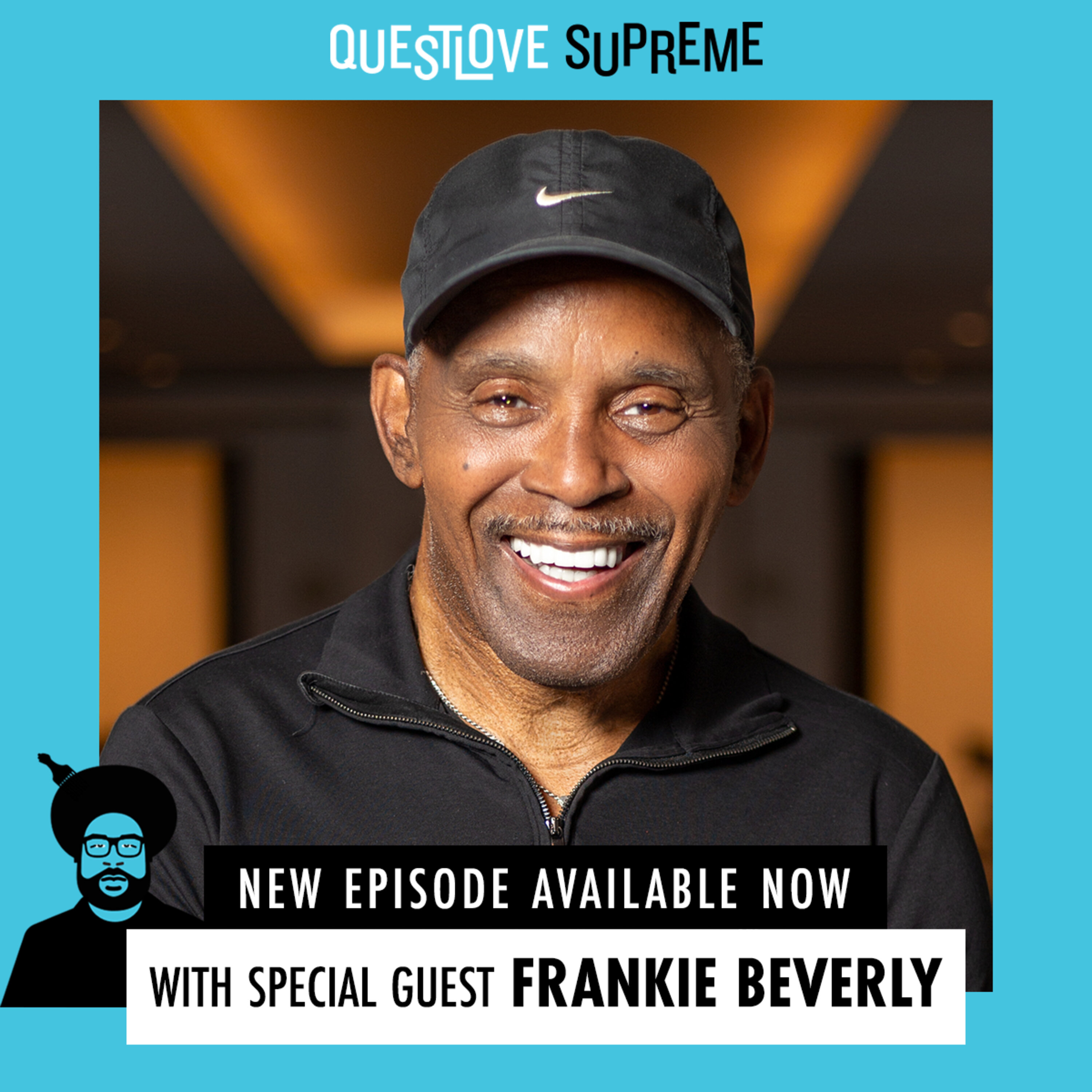
Speaker 1: Mario says question from the mailbag? All right, what's respect for you? Having the late great legend Frankie Beverly. But it was a hard listen because he really wasn't providing much in the way of details and his answers. Since you've always been finding your way with interviewing, how do you feel when you have.
00:08:44
Speaker 2: A difficult interview?
00:08:46
Speaker 1: Do you do anything special when the Frankly Beverly interview was done, or do you just treat it like it was any other show. It's hard to know what type of guest you're going to have when you're in this type of situations. Oftentimes there is kind of a cigh of relief on the end of the artist, who will usually give note back that wow, I never did an interview like that. Oftentimes I like to ask questions that no one asks. I learned this probably during Sli in the Family Stone. There was a two members of that group that I interviewed that started to tear up at the end because they said.
00:09:29
Speaker 2: To me, like, wow, I never.
00:09:32
Speaker 1: Knew how important it was for someone to ask me how do I feel? I purposely in the Sly in the Family Stone documentary, asked, hey, how do you feel about something which is different than tell me about when.
00:09:50
Speaker 2: Blah blah blah happened?
00:09:52
Speaker 1: Because how you feel causes you to question yourself and your emotions. That's how you know a person's human, and oftentimes we're not treated as human. We treat his product, and artists are especially treat his product. Tell me about your new album now. Sometimes I just want to ask where do you have for breakfast today? But in the case of Frankie Beverley, Frankie was, yeah, kind of north of seventy. But regardless, we felt it was necessary to give him his flowers, so that's why we titled it Frankie Beverly Gets his Flowers. Previously, I will say that the Roy Airs interview was a little bit difficult. We weren't prepared because he had sort of spotty memory on things, and sometimes you just gotta go with it. I too, had a lot of questions. I had read Jan Gay's book. Jan Gay is a wife widow. She just recently passed of Marvin gay and in her book, I believe it's called After the Dance, I think, and she talks about her time with Frankie Beverly and that was.
00:11:07
Speaker 2: Her version of stuff. Wow.
00:11:10
Speaker 1: Okay, so yeah, I had a lot of questions pertaining to Marvin Gaye discovering him and also his time in Philadelphia and all that stuff. But nevertheless, I'm glad to have gotten one of his last interviews.
00:11:24
Speaker 2: Very honored for that.
00:11:25
Speaker 1: But you know, sometimes you just it makes you a better communicator. I just say that having a conversation with people sometimes you're just not prepared for how open someone is.
00:11:37
Speaker 2: But I enjoyed nevertheless. But thank you for your question, Mario